




No CrossRef data available.
Article contents
Trichinella spiralis thymidylate synthase: cDNA cloning and sequencing, and developmental pattern of mRNA expression
Published online by Cambridge University Press: 01 March 2004
Abstract
The persistent expression of thymidylate synthase activity has previously been demonstrated not only in adult forms, but also in non-developing muscle larvae of Trichinella spiralis and T. pseudospiralis, pointing to an unusual pattern of cell cycle regulation, and prompting further studies on the developmental pattern of T. spiralis thymidylate synthase gene expression. The enzyme cDNA was cloned and sequencedNucleotide sequence data reported in this paper are available in the GenBank™, EMBL and DDBJ databases under the Accession number AF162691., allowing the characterization of a single open reading frame of 307 amino acids coding for a putative protein of 35 582 Da molecular weight. The amino acid sequence of the parasite enzyme was analysed, the consensus phylogenetic tree built and its stability assessed. The aa sequence identity with thymidylate synthase was confirmed by the enzymatic activity of the recombinant protein expressed in E. coli. As compared with the enzyme purified from muscle larvae, it showed apparently similar Vmax value, but higher Kmapp values describing interactions with dUMP (28·8 μMvs. 3·9 μM) and (6RS, αS)-N5,10-methylenetetrahydrofolate (383 μMvs. 54·7 μM). With the coding region used as a probe, thymidylate synthase mRNA levels, relative to 18S rRNA, were found to be similar in muscle larvae, adult forms and newborn larvae, in agreement with muscle larvae cells being arrested in the cell cycle.
Information
- Type
- Research Article
- Information
- Copyright
- 2004 Cambridge University Press
INTRODUCTION
Thymidylate synthase (EC 2.1.1.45) catalyses the reaction of reductive transfer of the methylene group from N5,10-methylenetetrahydrofolate onto dUMP with concomitant production of dTMP and dihydrofolate. This reaction, being the sole cellular source of de novo synthesis of dTMP (Carreras & Santi, 1995), is a target in chemotheraphy (Rustum et al. 1997). Thymidylate synthase specific activity rises in exponentially growing cells, and is not detected in quiescent ones (Pestalozzi et al. 1995). Although the high level of this enzyme is believed to be associated with cell proliferation, it has also been found in non-proliferating systems, e.g. unfertilized eggs of certain invertebrates (Carpenter, 1973; Rode & Szymanowska, 1976; Yasumasu et al. 1979), in accord with oocytes being arrested in the cell cycle (Sagata, 1996), hence not quiescent (cf. Rode et al. 2000).
In non-growing muscle larvae of the parasitic nematode T. spiralis, we have found surprisingly high thymidylate synthase specific activity (Dąbrowska et al. 1996; Rode et al. 2000), persisting for at least 2 years after infection. As muscle fibres infected with T. spiralis become cell cycle-activated and, following DNA replication, arrested in G2/M phase of the cell cycle (Jasmer, 1995), and assuming that parasite cells also respond to the same signals and are blocked in the cell cycle, high thymidylate synthase activity in non-growing T. spiralis muscle larvae may be a consequence of cell cycle arrest (Rode et al. 2000).
In order to learn more about the T. spiralis thymidylate synthase gene expression pattern, its cDNA was cloned and sequenced, and the coding region used as a probe to compare thymidylate synthase mRNA levels in muscle larvae, adult forms and newborn larvae. The sequence identity was confirmed by purification and characterization of the recombinant protein expressed in E. coli. The amino acid sequence of the parasite enzyme was analysed, the consensus phylogenetic tree built and its stability assessed.
MATERIALS AND METHODS
Biological material
Trichinella spiralis human isolate H2 strain from the Instituto Superiore di Sanita, Rome, Italy, ref. No. MHOM/PO/88/ISS67 (T1) was maintained in adult Swiss mice. Muscle larvae were obtained from mouse carcases with the use of pepsin-HCl digestion (Gould, 1970). Adult forms and newborn larvae were isolated according to the method described by Wranicz et al. (1998).
RNA purification
Total RNA was isolated from T. spiralis muscle larvae, adult forms and newborn larvae using TRIZOL ultra-pure reagent from GibcoBRL. Poly(A)+RNAs were prepared from T. spiralis muscle larvae RNA using PolyATract mRNA Isolation Systems kit (Promega, Madison).
cDNA synthesis
In order to obtain the first strand of cDNA, polymerization was performed on poly(A)+RNA using MMLV reverse transcriptase (Promega). Reverse transcription was done in 2 rounds of 1 h incubation at 42 °C, using a degenerate SYN2 primer (Fig. 1A), and with the full open reading frame (ORF) or the 3′ end of coding sequence 2 rounds of 1 h incubation were carried out with reverse transcriptase at 37 °C, using oligo(dT)22 primer. In order to obtain ds cDNA for amplification of the 3′ end of the coding region, the second cDNA strand was synthesized in a single polymerization step, using 50 pmol of SYN10 primer (Fig. 1A), 1 μl of thermostable DNA polymerase mixture from Expand Long Template PCR System kit (Boehringer, Mannheim) and buffer 1 from the same kit, with initial denaturation (1 min at 94 °C) followed by annealing (2 min at 46 °C) and polymerization (2 min at 68 °C). After phenol/chloroform extraction and ethanol precipitation in the presence of glycogen (20 μg/ml), ds cDNA ends were blunt ended using 2·5 units of Klenow fragment of E. coli DNA polymerase I (Promega), the latter followed by phenol/chloroform treatment and ethanol precipitation. For the 5′ end of the coding region, amplification ds cDNA was done with poly(A)+RNA using Universal RiboClone cDNA Synthesis System (Promega) and 2 rounds of 1 h reverse transcription at 42 °C, primed by RT1 primer (Fig. 1A). The resulting ds cDNA was then phenol/chloroform-extracted and ethanol-precipitated in the presence of glycogen (20 μg/ml).

Fig. 1. (A) RT-PCR primer sequences. Y indicates C or T; R indicates A or G; D indicates A or G or T; N indicates A or C or G or T. (B) Sequence alignment of oligonucleotide adaptors (LMPCR1/LMPCR2) and oligonucleotide adaptor LMPCR1 with adaptor primer LMPCRKR, used for Trichinella spiralis thymidylate synthase cDNA carboxy region amplification. Complementary sequences are in bold, identical sequences are underlined. (C) Sequence alignment of oligonucleotide adaptors (MSPPOW/BGLMALY) and oligonucleotide adaptor MSPPOW with adaptor primers (MSPPB and MSPPOW), used for T. spiralis thymidylate synthase cDNA amino region amplification. Description as in (B).
Ligation of adaptor oligonucleotides
Two pairs of unphosphorylated adaptor oligonucleotides, LMPCR1/LMPCR2 and MSPPOW/BGLMALY (Fig. 1B, C) were used for ligation with ds cDNA. Prior to ligation, ds cDNA was phosphorylated using T4 polynucleotide kinase (Promega) then phenol/chloroform-extracted and ethanol-precipitated in the presence of glycogen (20 μg/ml). A 1/10 part of the resulting preparation was ligated overnight at 16 °C with 20 pmol of each unphosphorylated adaptor oligonucleotide using T4 DNA ligase (USB, Cleveland). A 1/50 part of ligation mixture was used for PCR analysis (Płucienniczak et al. 1999).
PCR
The enzymatic reaction was performed in a final volume of 50 μl using degenerate primers (each 5 μM) or sequence-specific or adaptor primers (each 1 μM), dNTPs (each 0·2 mM), and either Taq DNA polymerase from Terpol (Sieradz) or Pfu DNA polymerase from Promega or thermostable DNA polymerase mixture from Expand Long Template PCR System kit from Boehringer. The enzyme was always added at 80 °C after an initial denaturation step (3 min at 95 °C). The final extension step was carried out for 15 min. For particular primer combinations the remaining reaction conditions were as follows: (i) SYN2 and SYN3 or SYN4, 41 cycles: 30 sec at 95 °C, 45 sec at 65 °C and 45 sec at 72 °C with 2 units of Taq DNA polymerase, (ii) SYN8 and LMPCRKR, 30 cycles: 30 sec at 94 °C, 30 sec at 58 °C and 60 sec at 68 °C with 1 μl of thermostable DNA polymerase mixture from Expand Long Template PCR System kit (Boehringer), (iii) SYN7 and MSPPB, 30 cycles: 30 sec at 94 °C, 30 sec at 54 °C and 60 sec at 68 °C with thermostable DNA polymerase mixture as above, (iv) SYN9 and POWIE, as in (iii) except for the annealing temperature being 58 °C, (v) SYNEX1 and SYNEX2, 35 cycles: 30 sec at 95 °C, 30 sec at 57 °C and 60 sec at 74 °C with 1·25 units of Pfu DNA polymerase. PCR fragments were separated and isolated from polyacrylamide gel as previously described (Dybczyński & Płucienniczak, 1988).
Cloning and sequencing
The isolated PCR fragments were digested with the appropriate restriction endonucleases (GibcoBRL), and then purified using Qiaquick-spin PCR Purification Kit (Qiagen) and cloned in pBluescript SK(+) plasmid (Stratagene) propagated in E. coli ‘DH5αF’ strain. Sequencing was performed with Taq Track Sequencing Systems kit (Promega).
Histone probe
This probe resulted from the partial sequencing of adult newborn larvae cDNA library (P. Boireau and M. Liu, manuscript in preparation). Strong identity (90%) of the selected clone (610 bp) with histone H3.3 nucletode sequence of Trichinella pseudopsiralis and other histone H3 nucleotide sequences indicated it belonged to the H3-like gene family (data not shown). This probe was used to follow the expression of mRNA for a constitutive protein of the Trichinella nuclei.
Sequence analysis
The amino acid sequence of T. spiralis thymidylate synthase was analysed with the use of the National Institutes of Health software, ENTREZ and BLAST (Altshul et al. 1997), then the amino acid sequences of various eukaryotic thymidylate synthases were aligned and the neighbour-joining tree was constructed with Clustal X programme (Thompson et al. 1994, 1997), using the default options. Three short regions of the alignment, which could not be unambiguously aligned, were omitted from the analysis. The alignment is available from the corresponding author upon request. The consensus phylogenetic tree was built and its stability assessed by posterior probabilities using Bayesian inference (Huelsenbeck et al. 2001) and general time reversible model (GTR+I+G) with the rates of amino acid substitutions, amino acid frequencies, gamma distribution shape and proportion of invariant sites estimated by Markov Chains MonteCarlo method, as implemented in MrBayes 2.01 programme (Huelsenbeck & Ronquist, 2001).
Northern blot analysis
Total RNA was size-fractionated on 1·2% agarose-formaldehyde gels then subjected to Northern transfer onto Hybond-N+ nylon membranes (Amersham) and hybridized with one of the following specific probes (i) 921 bp long cDNA fragment, corresponding to T. spiralis thymidylate synthase coding region (cf. Results), (ii) 600 bp long cDNA fragment corresponding to a part (452 bp) of the T. spiralis histone H3.3 coding region or (iii) a reference probe – 612 bp long T. spiralis rDNA fragment (Kuratli et al. 1999). All procedures were performed according to Sambrook, Fritsch & Maniatis (1989), with hybridization and autoradiography of each blot carried out 3 times in a sequence, each time with a different probe, at 68 °C in the presence of 10% dextran sulphate. The probes were radioactively labelled with the use of Prime-a-Gene Labeling system (Promega). Autoradiographic results were assessed on personal densitometer (Molecular Dynamics) using the ImageQuant program.
T. spiralis thymidylate synthase expression vector
The cDNA corresponding to the enzyme total coding region was cloned into pBluescript SK(+) plasmid (its sequence was confirmed) and subcloned into PIGDM4stop expression vector, propagated in E. coli HMS174 strain (Novagen). PIGDM4stop expression vector is a derivative of the pPIGDM1 plasmid (Mikiewicz et al. 1997), containing an ampicillin resistance gene (inserted into the putative rom gene), T7 phage promoter, transcription terminator and rare arginine tRNA genes (tRNAArg(AGG/AGA)).
T. spiralis thymidylate synthase expression system
The recombinant PIGDM4stop/T. spiralis thymidylate synthase expression vector was transformed by PEG treatment (Chung & Miller, 1988) into E. coli BL21(DE3)pLysS strain (Novagen). The procedure for the enzyme expression induction in E. coli BL21(DE3)pLysS strain was performed as recommended in the Novagen pET System Manual. For large-scale expression the trypton phosphate medium was used (Cieśla et al. 1995).
Recombinant enzyme purification and electrophoretic analysis
The previously described methods (Dąbrowska et al. 1996) were used, with the enzyme activity assayed spectrophotometrically (Wahba & Friedkin, 1961). The activity unit was defined as the enzyme amount required to convert 1 μmol of (6RS, αS)-N5,10-methylenetetrahydrofolic acid to dihydrofolic acid per 1 min at 37 °C.
Kinetic studies
Km values for interaction of the recombinant enzyme with both substrates, dUMP and N5,10-methylenetetrahydrofolate, were determined as earlier reported (Dąbrowska et al. 1996).
RESULTS
Thymidylate synthase cloning was achieved in 3 steps. The core nucleotidic sequence was amplified using degerated primers, based on a region of amino acid sequence highly conserved among known thymidylate synthases (Carreras & Santi, 1995). The 3′ and 5′ ends of the coding sequence, and the corresponding untranslated regions, were obtained separately using RT-PCR but their amplification required an increase in reaction specificity at both RT and PCR steps. Therefore reverse transcription was primed with sequence-specific primers, based on the core sequence, and the PCR step was done under conditions allowing either a PCR suppression effect (Chenchik et al. 1996; Lukyanov et al. 1997) or both PCR suppression and nested PCR effects (the latter only with the 5′ end). Ligation of unphosphorylated adaptor oligonucleotides to ds cDNA (LMPCR1 in case of the 3′ end and MSPPOW in case of the 5′ end), allowed (i) PCR suppression to take place if occasionally, in the first PCR cycle, unspecific template elongation occurred and (ii) to learn the sequences of the two untranslated regions (Chenchik et al. 1996).
Core sequence of T. spiralis thymidylate synthase coding region
Based on two different 7-amino-acid stretches, degenerate sense (SYN3 and SYN4) and antisense (SYN2) primers were designed (Fig. 1A; for reciprocal orientation cf. Fig. 3). In order to amplify the desired cDNA, the SYN2-primed reverse transcription (attempts to prime it by oligo(dT)22 failed), followed by PCR primed by the SYN2 and either SYN3 or SYN4 (Fig. 2A), were applied. Two fragments (each ca 288 bp long) resulted, each from reaction with a different primer combination: SYN2/SYN3 or SYN2/SYN4. Following digestion with Hind III and Eco RI endonucleases, cloning and sequencing, both were estimated to be of the same length (243 nt) and sequence, and the corresponding amino acid sequence highly resembled those of thymidylate synthases of other species. As expected (cf. primer design; Fig. 3), it encompassed the enzyme active site. The amino acid sequence of the latter was VALPPCH, in agreement with a high level of conservation of the corresponding sequences among other thymidylate synthases (Carreras & Santi, 1995).

Fig. 2. Schematic representation of the three-step method of Trichinella spiralis thymidylate synthase cDNA amplification. (A) the core region amplification (B) the 3′ region amplification (C) the 5′ region amplification. Degenerate primers, sequences not included in the given nt length, specific primers, adaptor oligonucleotides or adaptor primers.

Fig. 3. Nucleotide and deduced amino acid sequence of Trichinella spiralis thymidylate synthase cDNA. The orientations of primers used for cloning of its three fragments are marked above. N5,10-methylenetetrahydrofolate and dUMP binding sites are marked in bold.
Sequence of the carboxy part of the coding region and 3′ untranslated region of T. spiralis thymidylate synthase
In order to clone the 3′ part, with respect to the 243 nt-long core sequence of the enzyme cDNA, a modified RACE strategy (Frohman, Dush & Martin, 1988) was employed (Fig. 2B). Two sense primers, SYN8 and SYN10 (Figs 1 and 3) were designed, based on the identified core region sequence. Reverse transcription with oligo(dT)22 primer, the second cDNA strand synthesis with SYN10 primer and subsequent ligation with LMPCR1 and LMPCR2 unphosphorylated adaptor oligonucleotides, were performed as described in the Materials and Methods section. Adaptor-ligated cDNA was used for amplification with SYN8 and LMPCRKR (Fig. 1) primers. The resulting DNA fragment, ca 380 nt-long, was digested with Eco RI endonuclease, cloned and sequenced. It was found to contain a further part (267 nt) of the coding region of the enzyme and 32 nt of the 3′ untranslated region together with TGA stop codon. A polyadenylation signal, AATAAA, starts at the 14th position after the stop codon. The 3′ untranslated region is followed by 18 A residues.
Sequence of the amino part of the coding region and 5′ untranslated region of T. spiralis thymidylate synthase
The 243 nt-long core region of the cDNA served for antisense primer design. Each of the resulting primers, RT1, SYN7 and SYN9, was in this precedence order internal to the preceding one (Figs 1 and 3). The whole amplification procedure is depicted in Fig. 2C. Reverse transcription primed by the RT1 was followed by the second cDNA strand synthesis and ligation with unphosphorylated adaptor oligonucleotides MSPPOW and BGLMALY. On the adaptor-ligated cDNA as a template, nested PCR was performed. MSPPB (Fig. 1C) and SYN7 (Fig. 1A) primers were used in the first PCR round, then POWIE (Fig. 2C) and SYN9 (Fig. 1A) primers were used for reamplification. The resulting fragment, ca 470 nt-long, was digested with Hind III and Sal I endonucleases, cloned and sequenced. It was found to contain 25 nt of the 5′ untranslated and remaining 411 nt of the enzyme coding region sequence. Amino acids 69–71 (TTK) of the coding region, constitute N5,10-methylentetrahydrofolate binding site, highly conserved among various thymidylate synthases (Carreras & Santi, 1995).
T. spiralis recombinant thymidylate synthase expression, purification and kinetic properties
The enzyme was expressed in E. coli and purified as described in the Materials and Methods section. Thymidylate synthase specific activities, assayed in the absence of Mg2+ ions in crude extracts of E. coli BL21(DE3)pLysS cells untransformed and transformed with the PIGDM4stop/T. spiralis thymidylate synthase expression vector, were 0·20 munit/mg protein (mean result of 2 determinations in separate cultures, with the results differing from the mean by less than 1%) and 8·9 munit/mg protein (mean result of 2 determinations in separate cultures, with the results differing from the mean by 7%), respectively. The resulting enzyme preparation (purified with 16% yield) was apparently homogeneous (Fig. 4) and the specific activity of the richest fraction was 0·25 unit/mg protein, 5·5-fold higher than that of the enzyme purified from T. spiralis muscle larvae (Dąbrowska et al. 1996). As the latter preparation was only [les ]30% pure, its further purification to homogeneity would presumably result in a similar specific activity, hence also Vmax value, to that of the homogeneous recombinant enzyme. Comparison of interactions of both enzyme preparations with the substrates in a parallel experiment showed distinct differences, the apparent Km values for dUMP and N5,10-methylenetetrahydrofolate, estimated from double reciprocal plots of reaction velocity vs. dUMP or (6RS, αS)-N5,10-methylenetetrahydrofolate concentration, being higher with the recombinant (28·8 μM and 382·7 μM, respectively) than muscle larvae (3·1 μM and 54·7 μM, respectively) enzyme. In accordance, the real Km values (expressed as mean±SEM) for the recombinant enzyme interaction with dUMP and (6RS, αS)-N5,10-methylenetetrahydrofolate were 20·1±3·5 (N=3) and 102·3±22·2 (N=3), respectively (cf. Dąbrowska et al. 1996).

Fig. 4. (A) SDS-PAGE of crude extract of E. coli BL21(DE3)pLysS strain overexpressing Trichinella spiralis thymidylate synthase (lane 1: 25 μg of protein) and the purified enzyme (lane 2: 3·2 μg of protein). M: molecular weight markers with their molecular weights in Da. (B) Distribution of radioactivity following SDS-PAGE of purified recombinant T. spiralis thymidylate synthase (5 μg) pre-incubated with [3H] FdUMP in the presence of N5,10-methylenetetrahydrofolate as previously described (Dąbrowska et al. 1996).
Expression of thymidylate synthase mRNA, histone H3-like mRNA and 18S rRNA in muscle larvae, adult forms and newborn larvae of T. spiralis
The results of Northern blot analyses of T. spiralis total RNA are presented in Fig. 6. Thymidylate synthase mRNA, relative to 18S rRNA, level was found to be maintained at a constant level in T. spiralis muscle larvae, adult forms and newborn larvae (Fig. 5A). In contrast, T. spiralis histone H3-like mRNA level, also relative to 18S rRNA, was different at those three developmental stages (Fig. 5B), with the highest level observed in newborn larvae and the lowest in non-growing muscle larvae.

Fig. 5. (A) Thymidylate synthase mRNA level in Trichinella spiralis muscle larvae (ML), adult forms (A) and newborn larvae (NBL) related to 18S rRNA level. (B) Histone H.3-like mRNA level in T. spiralis muscle larvae (ML), adult forms (A) and newborn larvae (NBL) related to 18S rRNA level. (C) Thymidylate synthase, histone H.3-like and 18S rRNA bands in T. spiralis muscle larvae (ML), adult forms (A) and newborn larvae (NBL). Densitometric results (mean±SEM) are expressed as arbitrary units.
Sequence comparison between the enzyme from T. spiralis and other thymidylate synthases
Similarities found between the sequences, at nucleotide and amino acid levels, are summarized in Table 1. There are only short fragments in T. spiralis enzyme cDNA, ranging from 20 to 56 nucleotides (coding amino acids 131–137 and 212–225), that display high levels of sequence similarity with the corresponding fragments of nucleotide sequences coding different mammalian, plant and viral thymidylate synthases or the enzyme from another nematode A. suum. No such nucleotide sequence similarities were found in relation to the enzyme from the free-living nematode C. elegans. In agreement with thymidylate synthase being long known as a protein highly conserved in evolution (Carreras & Santi, 1995), the T. spiralis enzyme also showed high overall amino acid homologies with other thymidylate synthases (Table 1). The percentage of identical and similar positions is slightly higher in relation to the enzyme from mammals and plants than from another nematode, A. suum. Also the phylogenetic tree, based on the neighbour-joining method, locates T. spiralis enzyme in one clade with Viridiplantae (green plants) but the bootstrap value is too low for the observed affiliation to be significant (data not shown). Phylogenetic analysis based on a more advanced model of amino acid sequences evolution implemented in MrBayes programme indicated thymidylate synthases not only of T. spiralis, but also of A. suum and C. elegans, to belong to the clade of metazoan enzymes (Fig. 6). The protein sequences of the three nematode species form a paraphyletic assemblage with the sequences of A. suum and C. elegans, compared with T. spiralis, being closer to mammalian homologues. Such a placement suggests a relatively high level of divergence of the T. spiralis enzyme, although with the low percentage of probability (85%).

Fig. 6. Phylogenetic tree of eukaryotic thymidylate synthases. The tree was constructed with MrBayes programme run for 1000000 generations, using GTR+G+I model of amino acid substitution, and rooted by TreeView programme (Page RDM 1996) using Euglenozoa as an outgroup. The numbers at nodes are percentages of posterior probabilities of particular branches.
Table 1. Thymidylate synthase nucleotide and amino acid sequence comparisons between Trichinella spiralis and other species (chosen representative comparisons), performed with the use of BLAST (Amino acid numbering is that of T. spiralis enzyme. Number of amino acids does not agree with the corresponding nucleotide sequence length when the latter contains incomplete codon(s).)

DISCUSSION
The T. spiralis thymidylate synthase sequence, obtained from 3 individually amplified cDNA fragments, is 978 nt-long and consists of 25 nt-long 5′ untranslated region, 921 nt-long coding region and 32 nt-long 3′ untranslated region. The 3′ untranslated region is followed by a poly(A)18 tail. Polyadenylation signal AATAAA begins at the 14th position after the TGA stop codon. The enzyme coding region corresponds to a 307 amino acid-long polypeptide chain of molecular weight 35582 Da. The latter value is in good agreement with the experimentally determined molecular weight (Mr=35000) of the purified enzyme (Dąbrowska et al. 1996). No significant similarities of the nucleotide sequence were found to thymidylate synthases of other species. Short regions sharing a considerable percentage of identical positions correspond to amino acid regions (131–137 and 212–225 numbering for T. spiralis enzyme), highly conserved among various species enzymes, but not to other highly conserved regions, important for catalytic activity of the enzyme, i.e. folate (amino acids 69–71) or dUMP (amino acids 184–190) binding sites. The overall T. spiralis enzyme amino acid sequence is highly homologous to other thymidylate synthases, with the highest variability found for the enzyme 5′ end. Interestingly, the active site (dUMP binding site) has a unique composition (amino acids 184–190: VALPPCH) differing by valine in the first position and substituting, conserved in a vast majority of species, alanine (Carreras & Santi, 1995). Compared with T. spiralis thymidylate synthase active site, C. elegans enzyme active site, differing from the most conservative version by valine substituting alanine, next to methionine, contains 2 different amino acids (M and V corresponding to T. spiralis 184V and 185A, respectively). In this respect, it is worthwhile mentioning deoxyribonuclease II with differences at the purported active site histidine residue, recently found in T. spiralis and T. pseudospiralis (MacLea, Krieser & Eastman, 2003).
Expression of the recombinant protein in E. coli cells confirmed the sequence identity, and considerable differences in affinities for substrates found with highly purified preparations of the recombinant and muscle larvae thymidylate synthases pointed to possible influence of post-translational modification(s) on enzyme properties. However, a possibility of an influence of enzymes contaminating the muscle larvae enzyme preparation should not be overlooked. It should be mentioned that, although E. coli BL21(DE3)pLysS cells express their own thymidylate synthase, the present results indicate that activity of this enzyme form could participate in the recombinant enzyme preparation to the extent of only 2·2%.
Recent observations of persistent expression of thymidylate synthase activity not only in adult forms, but also in non-developing muscle larvae of T. spiralis and T. pseudospiralis (Rode et al. 2000), pointed to an unusual pattern of cell cycle regulation and prompted us to further investigate the developmental pattern of T. spiralis thymidylate synthase gene expression by studying the corresponding mRNA levels. In parallel, T. spiralis histone H.3-like mRNA levels were determined and all results related to18S rRNA expression levels, used as a reference. No differences between thymidylate synthase mRNA levels, related to 18S rRNA, were found in the muscle larvae, adults and newborn larvae. On the other hand, T. spiralis histone H3-like mRNA levels, studied in the same way, were different at these three developmental stages, with the highest and lowest levels found in fast growing newborn larvae and non-develping muscle larvae, respectively. Thus the two genes appear to be differently expressed, with thymidylate synthase mRNA level being constant, independent of the occurrence of proliferation (adults with female worms filled with proliferating embryos vs. newborns and non-proliferating newborns and muscle larvae) or development (quickly growing newborns vs. non-growing and non-developing muscle larvae).
The steady-state level of thymidylate synthase mRNA, very low in quiescent (G0) mammalian cells, is known to increase 10 to 20-fold as such cells progress to the S phase (Jenh, Geyer & Johnson, 1985; Ayusawa et al. 1986; Gribaudo et al. 2002) and decrease again with differentiation (Horie, Nozawa & Takeishi, 1992). When compared in a variety of cells and tissues, the amount of thymidylate synthase mRNA varies, reflecting differences in cell proliferation rates (Lee, Shen & Johnson, 1999). The foregoing, persistent expression of thymidylate synthase mRNA at a constant level in all T. spiralis developmental forms studied, including developmentally arrested muscle larvae, points to an unusual pattern of cell cycle regulation and is in agreement with our previous hypothesis assuming muscle larvae cells to be arrested in the cell cycle. In contrast, low histone H3-like expression in muscle larvae, relative to newborn larvae and adults, could be expected, in view of previously described downregulation of Caenorhabditis elegans histone gene family in developmentally arrested dauer larvae relative to actively growing stages (Dalley & Golomb, 1992). Interestingly, a gene homologous to histone H3 has been found to be heat-induced in T. spiralis muscle larvae (Mak, Su & Ko, 2001).
The T. spiralis thymidylate synthase amino acid sequence seems to be more similar to the corresponding sequences of mammals and plants then other nematodes. Also the phylogenetic tree based on the neighbour-joining method and a simple model of amino acid replacement implemented in Clustal X programme (Thompson et al. 1994, 1997) locates the T. spiralis enzyme in one clade with Viridiplantae, but the bootstrap value is too low to be certain that the observed affiliation is true (not shown). The more advanced, general time reversible model of amino acid sequence evolution resulted in the tree grouping all animal sequences together, although with the Trichinella enzyme branching off before the other two nematode enzymes. Whether evolution of the Trichinella sequence was influenced by intracellular parasitism (cf. Stephens et al. 1998), remains to be established.
This work was supported by the Polish State Committee for Scientific Research, grants 4P05F03011p02 and 6 P04C 021 18.
References
REFERENCES
ALTSHUL, S. F.,
MADDEN, T. L.,
SCHAFFER, A. A.,
ZHANG, J.,
MILLER, W. &
LIPMAN, D. J.
(1997).
Gapped BLAST and PSI-BLAST: a new generation of protein database search programs.
Nucleic Acids Research 25, 3389–3402.CrossRefGoogle Scholar
AYUSAWA, D.,
SHIMIZU, K.,
KOYAMA, H.,
KANEDA, S.,
TAKEISHI, K. &
SENO, T.
(1986).
Cell-cycle-directed regulation of thymidylate synthase messenger RNA in human diploid fibroblasts stimulated to proliferate. Journal of Molecular Biology 190, 559–567.CrossRefGoogle Scholar
BELFORT, M.,
MALEY, G. F. &
MALEY, F.
(1983).
Characterization of the Escherichia coli thyA gene and its amplified thymidylate synthetase product. Proceedings of the National Academy of Sciences, USA 80, 1858–1861.CrossRefGoogle Scholar
CARPENTER, N. J.
(1973).
Thymidylate synthetase in mutants of Drosophila melanogaster.
Genetics 75, 113–122.Google Scholar
CARRERAS, C. W. &
SANTI, D. V.
(1995).
The catalytic mechanism and structure of thymidylate synthase.
Annual Review of Biochemistry 64, 721–762.CrossRefGoogle Scholar
CHENCHIK, A.,
DIATCHENKO, L.,
MOQADAM, F.,
TARABYKIN, V.,
LUKYANOV, S. &
SIEBERT, P. D.
(1996).
Full-length cDNA cloning and determination of mRNA 5′ and 3′ ends by amplification of adaptor ligated cDNA.
BioTechniques 21, 526–534.Google Scholar
CHUNG, C. T. &
MILLER, R. H.
(1988).
A rapid and convenient method for the preparation and storage of competent bacterial cells.
Nucleic Acids Research 16, 3580.CrossRefGoogle Scholar
CIEŚLA, J.,
WEINER, K. X. B.,
WEINER, R. S.,
RESTON, J. T.,
MALEY, G. F. &
MALEY, F.
(1995).
Isolation and expression of rat thymidylate synthase cDNA: phylogenetic comparison with human and mouse thymidylate synthases.
Biochimica et Biophysica Acta 1261, 233–242.CrossRefGoogle Scholar
DALLEY, B. K. &
GOLOMB, M.
(1992).
Gene expression in the Caenorhabditis elegans dauer larva: developmental regulation of Hsp90 and other genes.
Developmental Biology 151, 80–90.CrossRefGoogle Scholar
DĄBROWSKA, M.,
ZIELIŃSKI, Z.,
WRANICZ, M.,
MICHALSKI, R.,
PAWEŁCZAK, K. &
RODE, W.
(1996).
Trichinella spiralis thymidylate synthase: developmental pattern, isolation, molecular properties and inhibition by substrate and cofactor analogues.
Biochemical and Biophysical Research Communications 228, 440–445.CrossRefGoogle Scholar
DAVISON, A. J. &
SCOTT, J. E.
(1986).
The complete DNA sequence of varicella-zoster virus. Journal of General Virology 67, 1759–1816.CrossRefGoogle Scholar
DYBCZYŃSKI, I. &
PŁUCIENNICZAK, A.
(1988).
A protocol for DNA fragment extraction from polyacrylamide gels.
BioTechniques 6, 924–926.Google Scholar
EDMAN, U.,
EDMAN, J. C.,
LUNDGREN, B. &
SANTI, D. V.
(1989).
Isolation and expression of the Pneumocystis carinii thymidylate synthase gene.
Proceedings of the National Academy of Sciences, USA 86, 6503–6507.CrossRefGoogle Scholar
FROHMAN, M. A.,
DUSH, M. K. &
MARTIN, G. R.
(1988).
Rapid production of full-length cDNAs from rare transcripts: Amplification using a single gene-specific oligonucleotide primer.
Proceedings of the National Academy of Sciences, USA 85, 8998–9002.CrossRefGoogle Scholar
GAMARRO, F.,
YU, P. L.,
ZHAO, J.,
EDMAN, U.,
GREENE, P. J. &
SANTI, D.
(1995).
Trypanosoma brucei dihydrofolate reductase-thymidylate synthase: gene isolation and expression and characterization of the enzyme.
Molecular and Biochemical Parasitology 72, 11–22.CrossRefGoogle Scholar
GOULD, S. E.
(1970).
Clinical pathology: diagnostic laboratory procedures. In
Trichinosis in Man and Animals (ed. Gould, S. E.), pp. 190–221.
Charles C. Thomas,
Springfield, USA.
GRIBAUDO, G.,
RIERA, L.,
RUDGE, T. L.,
CAPOSIO, P.,
JOHNSON, L. F. &
LANDOLFO, S.
(2002).
Human cytomegalovirus infection induces cellular thymidylate synthase gene expression in quiescent fibroblasts.
Journal of General Virology 83, 2983–2993.CrossRefGoogle Scholar
HONESS, R. W.,
BODEMER, W.,
CAMERON, K. R.,
NILLER, H. H.,
FLECKENSTEIN, B. &
RANDALL, R. E.
(1986).
The A+T-rich genome of Herpesvirus saimiri contains a highly conserved gene for thymidylate synthase.
Proceedings of the National Academy of Sciences, USA 83, 3604–3608.CrossRefGoogle Scholar
HORIE, N.,
NOZAWA, R. &
TAKEISHI, K.
(1992).
Identification of cellular differentiation-dependent nuclear factors that bind to a human gene for thymidylate synthase.
Biochemical and Biophysical Research Communications 185, 127–133.CrossRefGoogle Scholar
HUELSENBECK, J. P. &
RONQUIST, F.
(2001).
MrBayes: Bayesian inference of phylogenetic trees. Bioinformatics 17, 754–755.CrossRefGoogle Scholar
HUELSENBECK, J. P.,
RONQUIST, F.,
NIELSEN, R. &
BOLLBACK, J. P.
(2001).
Bayesian inference of phylogeny and its impact on evolutionary biology.
Science 294, 2310–2314.CrossRefGoogle Scholar
HUGHES, D. E.,
SHONEKAN, O. A. &
SIMPSON, L.
(1989).
Structure, genomic organization and transcription of the bifunctional dihydrofolate reductase – thymidylate synthase gene from Crithidia fasciculata.
Molecular and Biochemical Parasitology 34, 155–166.CrossRefGoogle Scholar
JASMER, D. P.
(1995).
Trichinella spiralis: subversion of differentiated mammalian skeletal muscle cells.
Parasitology Today 11, 185–188.CrossRefGoogle Scholar
JENH, C.-H.,
GEYER, P. K. &
JOHNSON, L. F.
(1985).
Control of thymidylate synthase mRNA content and gene transcription in an overproducing mouse line.
Molecular and Cellular Biology 5, 2527–2532.CrossRefGoogle Scholar
KURATLI, S.,
LINDH, J. G.,
GOTTSTEIN, B.,
SMITH, D. F. &
CONNOLLY, B.
(1999).
Trichinella spp: differential expression of two genes in the muscle larva of encapsulating and nonencapsulating species.
Experimental Parasitology 93, 153–159.CrossRefGoogle Scholar
LAZAR, G.,
ZHANG, H. &
GOODMAN, H. M.
(1993).
The origin of the bifunctional dihydrofolate reductase-thymidylate synthase isogenes of Arabidopsis thaliana.
Plant Journal 3, 657–668.CrossRefGoogle Scholar
LEE, Y.,
SHEN, G. &
JOHNSON, L. F.
(1999).
Complex transcriptional initiation patteren of the thymidylate synthase promoter in mouse tissues.
Archives of Biochemistry and Biophysics 372, 389–392.CrossRefGoogle Scholar
LIVI, L. L.,
EDMAN, U.,
SCHNEIDER, G. P.,
GREENE, P. J. &
SANTI, D. V.
(1994).
Cloning, expression and characterization of thymidylate synthase from Cryptococcus neoformans.
Gene 150, 221–226.Google Scholar
LUKYANOV, K.,
DIATCHENKO, L.,
CHENCHLIK, A.,
NANISETTI, A.,
SIEBERT, P.,
USMAN, N.,
MATZ, M. &
LUKYANOV, S.
(1997).
Construction of cDNA libraries from small amounts of total RNA using the suppression PCR effect.
Biochemical and Biophysical Research Communications 230, 285–288.CrossRefGoogle Scholar
LUO, M.,
PIFFANELLI, P.,
RASTELLI, L. &
CELLA, R.
(1993).
Molecular cloning and analysis of a cDNA for the bifunctional dihydrofolate reductase-thymidylate synthase of Daucus carota.
Plant Molecular Biology 22, 427–435.CrossRefGoogle Scholar
MACLEA, K. S.,
KRIESER, R. J. &
EASTMAN, A.
(2003).
A family history of deoxyribonuclease II: surprises from Trichinella spiralis and Burkholderia pseudomallei.
Gene 305, 1–12.CrossRefGoogle Scholar
MAK, C. H.,
SU, K. W. &
KO, R. C.
(2001).
Identification of some heat-induced genes of Trichinella spiralis.
Parasitology 123, 293–300.CrossRefGoogle Scholar
MIKIEWICZ, D.,
WROBEL, B.,
WĘGRZYN, G. &
PŁUCIENNICZAK, A.
(1997).
Isolation and characterization of a ColE1-like plasmid from Enterobacter agglomerans with a novel variant of rom gene.
Plasmid 38, 210–219.CrossRefGoogle Scholar
NELSON, K.,
ALONSO, G.,
LANGER, P. J. &
BEVERLEY, S. M.
(1990).
Sequence of the dihydrofolate reductase-thymidylate synthase (DHFR-TS) gene of Leishmania amazonensis.
Nucleic Acids Research 18, 2819.Google Scholar
PERRYMAN, S. M.,
ROSSANA, C.,
DENG, T.,
VANIN, E. F. &
JOHNSON, L. F.
(1986).
Sequence of a cDNA for mouse thymidylate synthase reveals striking similarity with the prokaryotic enzyme.
Molecular Biology of Evolution 3, 313–321.Google Scholar
PESTALOZZI, B. C.,
McGINN, C. J.,
KINSELLA, T. J.,
DRAKE, J. C.,
GLENNON, M. C.,
ALLEGRA, C. J. &
JOHNSTON, P. G.
(1995).
Increased thymidylate synthase protein levels are principally associated with proliferation but not cell cycle phase in asynchronous human cancer cells.
British Journal of Cancer 7, 1151–1157.CrossRefGoogle Scholar
PINTER, K.,
DAVISSON, V. J. &
SANTI, D. V.
(1988).
Cloning, sequencing and expression of the Lactobacillus casei thymidylate synthase gene.
DNA 7, 235–241.CrossRefGoogle Scholar
PŁUCIENNICZAK, G.,
JAGIEŁŁO, A.,
PŁUCIENNICZAK, A.,
HOLODY, D. &
STRZEŻEK, J.
(1999).
Cloning of complementary DNA encoding the pB1 component of the 54-kilodalton glycoprotein of boar seminal plasma.
Molecular Reproduction and Development 52, 303–309.3.0.CO;2-7>CrossRefGoogle Scholar
RICHTER, J.,
PUCHTLER, I. &
FLECKENSTEIN, B.
(1988).
Thymidylate synthase gene of herpesvirus ateles.
Journal of Virology 62, 3530–3535.Google Scholar
RODE, W.,
DĄBROWSKA, M.,
ZIELIŃSKI, Z.,
GOŁOS, B.,
WRANICZ, M.,
FELCZAK, K. &
KULIKOWSKI, T.
(2000).
Trichinella spiralis and Trichinella pseudospiralis: developmental patterns of enzymes involved in thymidylate biosynthesis and thymidylate synthase as a potential target in chemotherapy.
Parasitology 120, 593–600.CrossRefGoogle Scholar
RODE, W. &
SZYMANOWSKA, H.
(1976).
Developmental pattern of thymidylate synthetase activity in the silkworm Bombyx mori.
Insect Biochemistry 6, 333–337.CrossRefGoogle Scholar
ROOS, D. S.
(1993).
Primary structure of the dihydrofolate reductase-thymidylate synthase gene from Toxoplasma gondii.
Journal of Biological Chemistry 268, 6269–6280.Google Scholar
RUSSO, J. J.,
BOHENZKY, R. A.,
CHIEN, M. C.,
CHEN, J.,
YAN, M.,
MADDALENA, D.,
PARRY, J. P.,
PERUZZI, D.,
EDELMAN, I. S.,
CHANG, Y. &
MOORE, P. S.
(1996).
Nucleotide sequence of the Kaposi sarcoma-associated herpesvirus (HHV8). Proceedings of the National Academy of Sciences, USA 93, 14862–14867.CrossRefGoogle Scholar
RUSTUM, Y. M., HARSTRICK, A.,
CAO, S.,
VANHOEFER, U.,
YIN, M.-B.,
WILKE, H. &
SEEBER, S.
(1997).
Thymidylate synthase inhibitors in cancer therapy: direct and indirect inhibitors.
Journal of Clinical Oncology 15, 398–400.CrossRefGoogle Scholar
SAMBROOK, J.,
FRITSCH, E. F. &
MANIATIS, T.
(1989).
Molecular Cloning. A Laboratory Manual.
Cold Spring Harbor Laboratory Press,
New York.
SCHLICHTHERLE, I. M.,
ROOS, D. S. &
VAN HOUTEN, J. L.
(1996).
Cloning and molecular analysis of the bifunctional dihydrofolate reductase-thymidylate synthase gene in the ciliated protozoan Paramecium tetraurelia.
Molecular and General Genetics 250, 665–673.Google Scholar
SAGATA, N.
(1996).
Meiotic metaphase arrest in animal oocytes: its mechanisms and biological significance.
Trends in Cell Biology 6, 22–28.CrossRefGoogle Scholar
SINGER, S. C.,
RICHARDS, C. A.,
FERONE, R.,
BENEDICT, D. &
RAY, P.
(1989).
Cloning, purification, and properties of Candida albicans thymidylate synthase.
Journal of Bacteriology 171, 1372–1378.CrossRefGoogle Scholar
SNEWIN, V. A.,
ENGLAND, S. M.,
SIMS, P. F. &
HYDE, J. E.
(1989).
Characterisation of the dihydrofolate reductase-thymidylate synthetase gene from human malaria parasites highly resistant to pyrimethamine.
Gene 76, 41–52.CrossRefGoogle Scholar
STEPHENS, R. S.,
KALMAN, S.,
LAMMEL, C.,
FAN, J.,
MARATHE, R.,
ARAVIND, L.,
MITCHELL, W.,
OLINGER, L.,
TATUSOV, R. L.,
ZHAO, Q.,
KOONIN, E. V. &
DAVIS, R. W.
(1998).
Genome sequence of an obligate intracellular pathogen of humans: Chlamydia trachomatis.
Science 282, 754–759.CrossRefGoogle Scholar
TAKEISHI, K.,
KANEDA, S.,
AYUSAWA, D.,
SHIMIZU, K.,
GOTOH, O. &
SENO, T.
(1985).
Nucleotide sequence of a functional cDNA for human thymidylate synthase.
Nucleic Acids Research 13, 2035–2043.CrossRefGoogle Scholar
TAYLOR, G. R.,
LAGOSKY, P. A.,
STORMS, R. K. &
HAYNES, R. H.
(1987).
Molecular characterization of the cell cycle-regulated thymidylate synthase gene of Saccharomyces cerevisiae.
Journal of Biological Chemistry 262, 5298–5307.Google Scholar
TELFORD, E. A.,
WATSON, M. S.,
AIRD, H. C.,
PERRY, J. &
DAVISON, A. J.
(1995).
The DNA sequence of equine herpesvirus 2.
Journal of Molecular Biology 249, 520–528.CrossRefGoogle Scholar
THOMPSON, J. D.,
GIBSON, T. J.,
PLEWNIAK, F.,
JEANMOUGIN, F. &
HIGGINS, D. G.
(1997).
The ClustalX windows interface: flexible strategies for multiple sequence alignment aided by quality analysis tools.
Nucleic Acids Research 24, 4876–4882.CrossRefGoogle Scholar
THOMPSON, J. D.,
HIGGINS, D. G. &
GIBSON, T. J.
(1994).
CLUSTAL W: improving the sensitivity of progressive multiple sequence alignment through sequence weighting, positions-specific gap penalties and weight matrix choice.
Nucleic Acids Research 22, 4673–4680.CrossRefGoogle Scholar
VASQUEZ, J. R.,
GOOZE, L.,
KIM, K.,
GUT, J.,
PETERSEN, C. &
NELSON, R. G.
(1996).
Potential antifolate resistance determinants and genotypic variation in the bifunctional dihydrofolate reductase – thymidylate synthase gene from human and bovine isolates of Cryptosporidium parvum.
Molecular and Biochemical Parasitology 79, 153–165.CrossRefGoogle Scholar
WAHBA, A. J. &
FRIEDKIN, M.
(1961).
Direct spectrophotometric evidence for the oxidation of tetrahydrofolate during the enzymatic synthesis of thymidylate.
Journal of Biological Chemistry 236, PC11–12.Google Scholar
WANG, M.,
RATNAM, S. &
FREISHEIM, J. H.
(1995).
Cloning, nucleotide sequence and expression of the bifunctional dihydrofolate reductase-thymidylate synthase from Glycine max.
Biochimica et Biophysica Acta 1261, 325–336.CrossRefGoogle Scholar
WRANICZ, M. J.,
GUSTOWSKA, L.,
GABRYEL, P.,
KUCHARSKA, E. &
CABAJ, W.
(1998).
Trichinella spiralis: induction of the basophilic transformation of muscle cells by synchronous newborn larvae.
Parasitology Research 84, 403–407.CrossRefGoogle Scholar
YASUMASU, I.,
SAITOH, M.,
FUJIMOTO, N. &
KUSUNOKI, S.
(1979).
Changes in activities of thymidylate synthase and dihydrofolate reductase in sea urchin eggs after fertilization.
Development Growth and Differentiation 21, 237–243.CrossRefGoogle Scholar
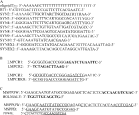
Fig. 1. (A) RT-PCR primer sequences. Y indicates C or T; R indicates A or G; D indicates A or G or T; N indicates A or C or G or T. (B) Sequence alignment of oligonucleotide adaptors (LMPCR1/LMPCR2) and oligonucleotide adaptor LMPCR1 with adaptor primer LMPCRKR, used for Trichinella spiralis thymidylate synthase cDNA carboxy region amplification. Complementary sequences are in bold, identical sequences are underlined. (C) Sequence alignment of oligonucleotide adaptors (MSPPOW/BGLMALY) and oligonucleotide adaptor MSPPOW with adaptor primers (MSPPB and MSPPOW), used for T. spiralis thymidylate synthase cDNA amino region amplification. Description as in (B).
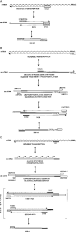
Fig. 2. Schematic representation of the three-step method of Trichinella spiralis thymidylate synthase cDNA amplification. (A) the core region amplification (B) the 3′ region amplification (C) the 5′ region amplification. Degenerate primers, sequences not included in the given nt length, specific primers, adaptor oligonucleotides or adaptor primers.
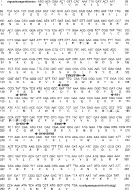
Fig. 3. Nucleotide and deduced amino acid sequence of Trichinella spiralis thymidylate synthase cDNA. The orientations of primers used for cloning of its three fragments are marked above. N5,10-methylenetetrahydrofolate and dUMP binding sites are marked in bold.
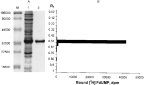
Fig. 4. (A) SDS-PAGE of crude extract of E. coli BL21(DE3)pLysS strain overexpressing Trichinella spiralis thymidylate synthase (lane 1: 25 μg of protein) and the purified enzyme (lane 2: 3·2 μg of protein). M: molecular weight markers with their molecular weights in Da. (B) Distribution of radioactivity following SDS-PAGE of purified recombinant T. spiralis thymidylate synthase (5 μg) pre-incubated with [3H] FdUMP in the presence of N5,10-methylenetetrahydrofolate as previously described (Dąbrowska et al. 1996).
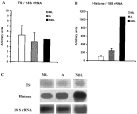
Fig. 5. (A) Thymidylate synthase mRNA level in Trichinella spiralis muscle larvae (ML), adult forms (A) and newborn larvae (NBL) related to 18S rRNA level. (B) Histone H.3-like mRNA level in T. spiralis muscle larvae (ML), adult forms (A) and newborn larvae (NBL) related to 18S rRNA level. (C) Thymidylate synthase, histone H.3-like and 18S rRNA bands in T. spiralis muscle larvae (ML), adult forms (A) and newborn larvae (NBL). Densitometric results (mean±SEM) are expressed as arbitrary units.
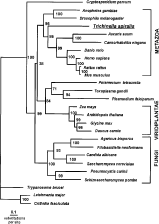
Fig. 6. Phylogenetic tree of eukaryotic thymidylate synthases. The tree was constructed with MrBayes programme run for 1000000 generations, using GTR+G+I model of amino acid substitution, and rooted by TreeView programme (Page RDM 1996) using Euglenozoa as an outgroup. The numbers at nodes are percentages of posterior probabilities of particular branches.
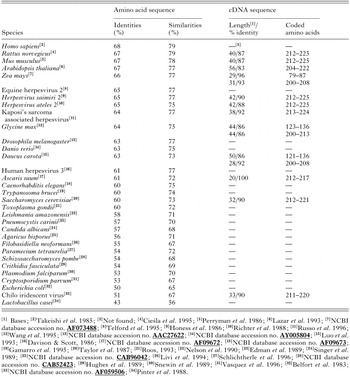
Table 1. Thymidylate synthase nucleotide and amino acid sequence comparisons between Trichinella spiralis and other species (chosen representative comparisons), performed with the use of BLAST
 You have
Access
- 15
- Cited by