INTRODUCTION
Recent studies have shown that long-term changes in the tropical marine flora can be caused by a number of natural and anthropogenic factors, and those annual and seasonal changes may be caused by both abiotic and biotic environmental factors (Fong & Zedler, Reference Fong and Zedler1993; Kennish, Reference Kennish1996; Pedersen & Borum, Reference Pedersen and Borum1996; Kentula & DeWitt, Reference Kentula and DeWitt2003; Su et al., Reference Su, Chung and Lee2009). The greatest seasonal floristic changes (especially in the intertidal zone) are known to be caused by environmental changes in light intensity, temperature, salinity, rainfall, nutrient concentration and wave action (Costa et al., Reference Costa, Zman, Nimmo and Attrill2000, Reference Costa, Attrilla, Pedrinib and De-Paulab2002; Ateweberhan et al., Reference Ateweberhan, Bruggemann and Breeman2006; Thakur et al., Reference Thakur, Reddy and Jha2008; Su et al., Reference Su, Chung and Lee2009).
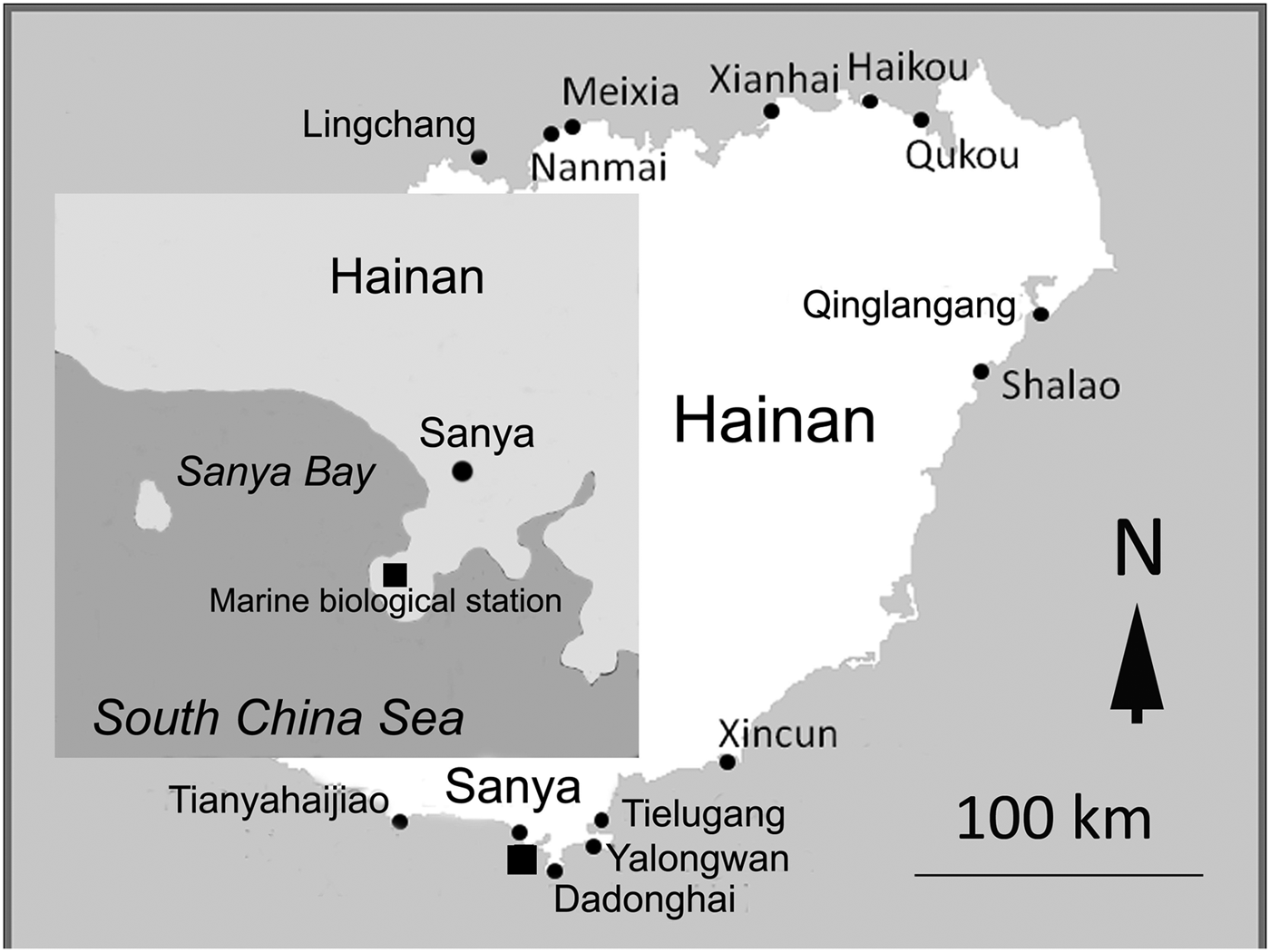
In the recently published sister study to this investigation, Titlyanov et al. (Reference Titlyanov, Titlyanova, Li and Huang2013) investigated the distribution of algal and seagrass species in the upper subtidal zone of Sanya Bay, Hainan Island, China. In this investigation, the algal and seagrass species were shown not to have changed in species numbers and composition in spite of heavy pollution by dissolved inorganic nitrogen and phosphorus in the Bay. Seasonal changes did occur in the dominant subtidal species, but the turf community appeared only to change annually or periodically with stress. The present study examines the intertidal distribution of algal species during the rainy (RS) and dry seasons (DS) near the same site at Sanya Bay where the subtidal studies took place. Hainan Island (Figure 1) is located in the South China Sea at the subtropical latitude of 18°10′−20°9′N 108°37′−111°1′E. The annual mean sea surface temperature (SST) is 26°C (1970−2002) with an average seasonal range of 12.1°C (Sun et al., Reference Sun, Gagan, Cheng, Scott-Gagan, Dykoski, Edwards and Su2005). The rainy season in the southern part of Hainan occurs from April to November and accounts for 95% of the yearly rainfall; the dry season occurs from November to April (Li, Reference Li2011).
Hainan Island (South China Sea, China) and the investigation area at Luhuitou reef in Sanya Bay.

The most common coastal ecosystems of Hainan Island are coral reefs. The highest biodiversity of coral reefs in Hainan occurred between the 1950s and 1960s (Gurianova, Reference Gurianova1959) but severely decreased during the next 20 years (Hutchings & Wu, Reference Hutchings and Wu1987; Zhang et al., Reference Zhang, Shi, Chen, Fong, Wong, Huang, Wang and Zhao2006). Since the 1970s, at least 50% of the fringing reefs in Hainan Island have been destroyed by human activities, such as overfishing, land clearing, coral mining, aquaculture expansion and pollution (Zhang et al., Reference Zhang, Shi, Chen, Fong, Wong, Huang, Wang and Zhao2006; Li, Reference Li2011). Recently, the eutrophication of Hainan coastal waters, particularly in the shallow gulfs, has increased due to greater tourist numbers, hotel building along the coast and mariculture in coastal ponds with wastes draining into the sea (Hutchings & Wu, Reference Hutchings and Wu1987; Fiege et al., Reference Fiege, Neumann and Jinhe1994; Zhang et al., Reference Zhang1996, Reference Zhang, Que, Liu and Xu2004; Hodgson & Yau, Reference Hodgson, Yau, Lessios and Macintyre1997; Tadashi et al., Reference Tadashi, Dai, Park, Huang, Ang and Wilkinson2008).
MATERIALS AND METHODS
Terminology
To shorten our descriptions, we frequently use the historical and generalized term algae when referring to the following taxonomic groups listed in AlgaeBase (Guiry & Guiry, Reference Guiry and Guiry2012): Rhodophyta (red algae), Heterokontophyta–Phaeophyceae (brown algae), Chlorophyta–Ulvophyceae and Siphonocladophyceae (green algae) and Cyanobacteria (blue–green algae). We also use the abbreviations Rh (Rhodophyta), Ph (Phaeophyceae), Ch (Chlorophyta) and Cy (Cyanobacteria) to clarify species affiliations. The term macrophyte is used to indicate only the Rh, Ph, and Ch.
Study site, time and conditions
Investigations were conducted at Luhuitou reef, Sanya Bay, Hainan Island, China. The algae were collected from the intertidal zone in front of the Marine Biological Station of the South China Sea Institute of Oceanology (Figure 1) at the end of the rainy season 2008 (6−15 October), at the end of the dry season 2009 (6−22 April), at the end of the rainy season 2010 (15 November−3 December) and at the end of the dry season 2012 (3 February−26 April).
Climatic characteristics of the investigated area
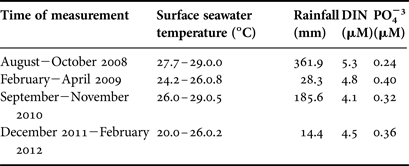
For two months before and one month during sampling (August−October 2008, February−April 2009, September−November 2010 and December 2011−February 2012), climatic characteristics such as SST, precipitation quantity, the average concentration of dissolved inorganic nitrogen (DIN) and orthophosphates (PO4−3) in seawater were measured in the investigated area. Climatic characteristics were obtained from the weather station at the Marine Biological Station, while nutrient data were obtained at the stations close to Luhuitou reef from the Chinese Ecosystem Research Network (http://www.cern.ac.cn; Huang et al., Reference Huang, Tan, Song, Huang, Wang, Zhang, Dong and Chen2003). As shown in Table 1, the rainy seasons of 2008 and 2010 differed from the dry seasons of 2009 and 2012 by a lower SST (averaging 4оС lower) and a rainfall that was 10 times higher (averaging 270 mm during the three months). The PO4−3 was higher in dry seasons than in wet seasons (averaging 0.1 µM) while there was no difference for DIN.
Climatic characteristics of the investigated area.
Collection, conservation and identification of marine algae
Marine macrophytic algae and Cyanobacteria were collected in the splash zone and in the upper, middle and lower intertidal zones. At the sites investigated, the splash zone consisted of a horizontal belt (up to 20 cm wide) on the vertical walls of an artificial dam built of dead colonies of massive corals. The upper intertidal zone consisted of a sloping shore (2−3 m wide) with hard substrates composed of stones and dead coral fragments of various shapes and sizes, tossed about by storms. The sloping shore of the middle intertidal zone (~10 m wide) consisted mainly of flat carbonate patches intermixed with coral debris and stones. The lower intertidal zone (~15 m wide) was composed primarily of dead colonies of massive and branched corals intermixed with sand and small fragments of dead branched corals. Algal sampling was carried out by foot or via snorkeling during low and high tides in an area 50 m wide along the shore. Marine algae were collected from all types of substrata. Quadrats of the following sizes were haphazardly placed, photographed and then completely cleared for the study: 10 × 10 cm2 (for algal turf communities) and 25 × 25 cm2 (for communities with large algae). More than 50 quadrats of hard substrata and 20 quadrats of sandy/muddy substrata were sampled during each season. Freshly collected material was identified using monographic publications, floristic studies and systematic articles indicated in Titlyanov et al. (Reference Titlyanov, Titlyanova, Li and Huang2013).
The systematics and nomenclature followed Guiry & Guiry (Reference Guiry and Guiry2012) (AlgaeBase, searched 2012). The collections of both macrophytes and their epiphytes were preserved as dried herbarium specimens and were deposited in the herbarium at A.V. Zhirmunsky Institute of Marine Biology, Far Eastern Branch of the Russian Academy of Sciences, Palchevskogo 17, Vladivostok, 690041, Russian Federation.
Assessment of algal communities
For qualitative studies of the species during each season, the occurrence data from all quadrats in each tidal zone were merged to compile the total counts. For quantitative assessment, the individual quadrats were used to determine both seasonal abundance and dominance. Abundance estimates were as follows: rare species were those found in 10% or less of all quadrats studied; common species were those found in at least 50% of all quadrats studied; and abundant species were those found in all (or almost all) of the quadrats studied. In Table 2 rare, common and abundant species are marked as (+), (++ ) and (+++), respectively. Algal dominance was visually or photographically estimated (Titlyanov et al., 2005) and defined as: mono-dominant if algal cover of a single species amounted to 50% of the surface area; bi-dominant if two species amounted to more than 50%; poly-dominant if more species (commonly 3−5) were involved.
Species composition and abundance of marine algae and Cyanobacteria in the intertidal zone of the Luhuitou Peninsula 2008–2012: 1, the splash zone; 2, the upper intertidal zone; 3, the middle intertidal zone; 4, the low intertidal zone; E, epiphyte; En, endophyte; +, rare; ++, common; ++ +, abundant.
RESULTS
Diversity of species in the intertidal zones
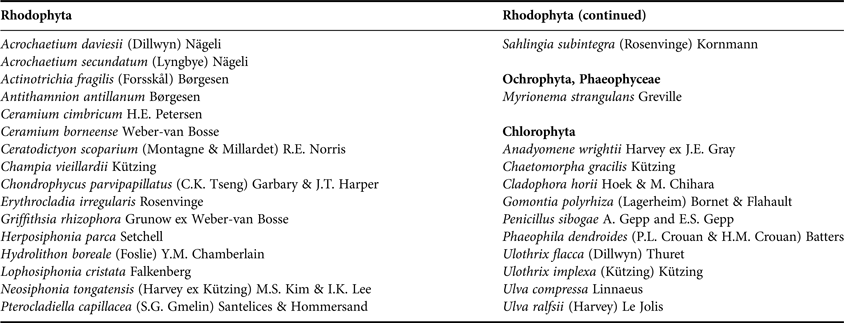
In total 176 species of marine macrophytes and Cyanobacteria were found in the intertidal zone of Luhuitou Peninsula during the seasonality investigations. However, 28 of these taxa were exceedingly rare or found only once. These taxa were, therefore, excluded from the quantitative study. The remaining more common 148 species were chosen for the seasonality study. These species, detailed in Table 2, include 65 species (44%) of Rhodophyta, 31 species (21%) of Chlorophyta, 22 species (15%) of Phaeophyceae, and 30 species (20%) of Cyanobacteria. The 28 excluded taxa are listed in Table 3.
Rarely found species excluded from the seasonality study.
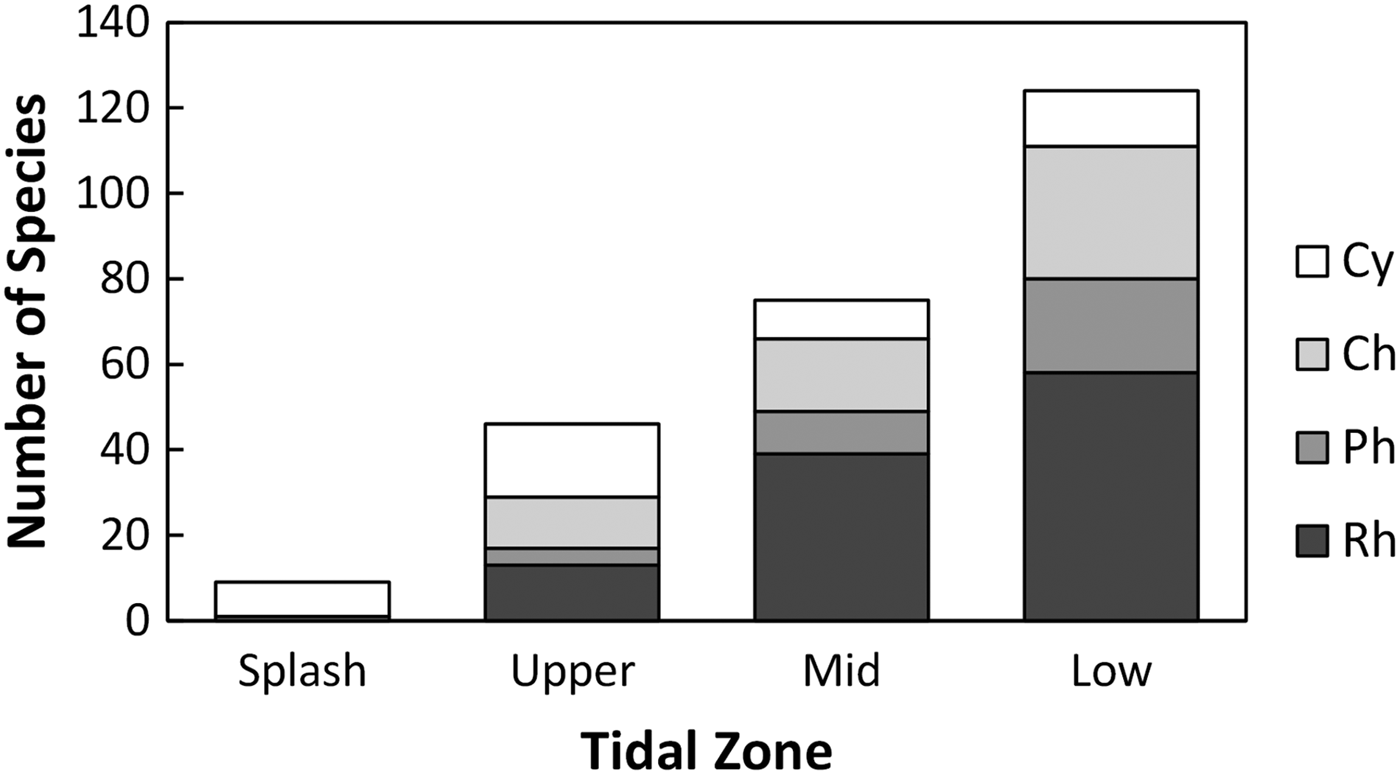
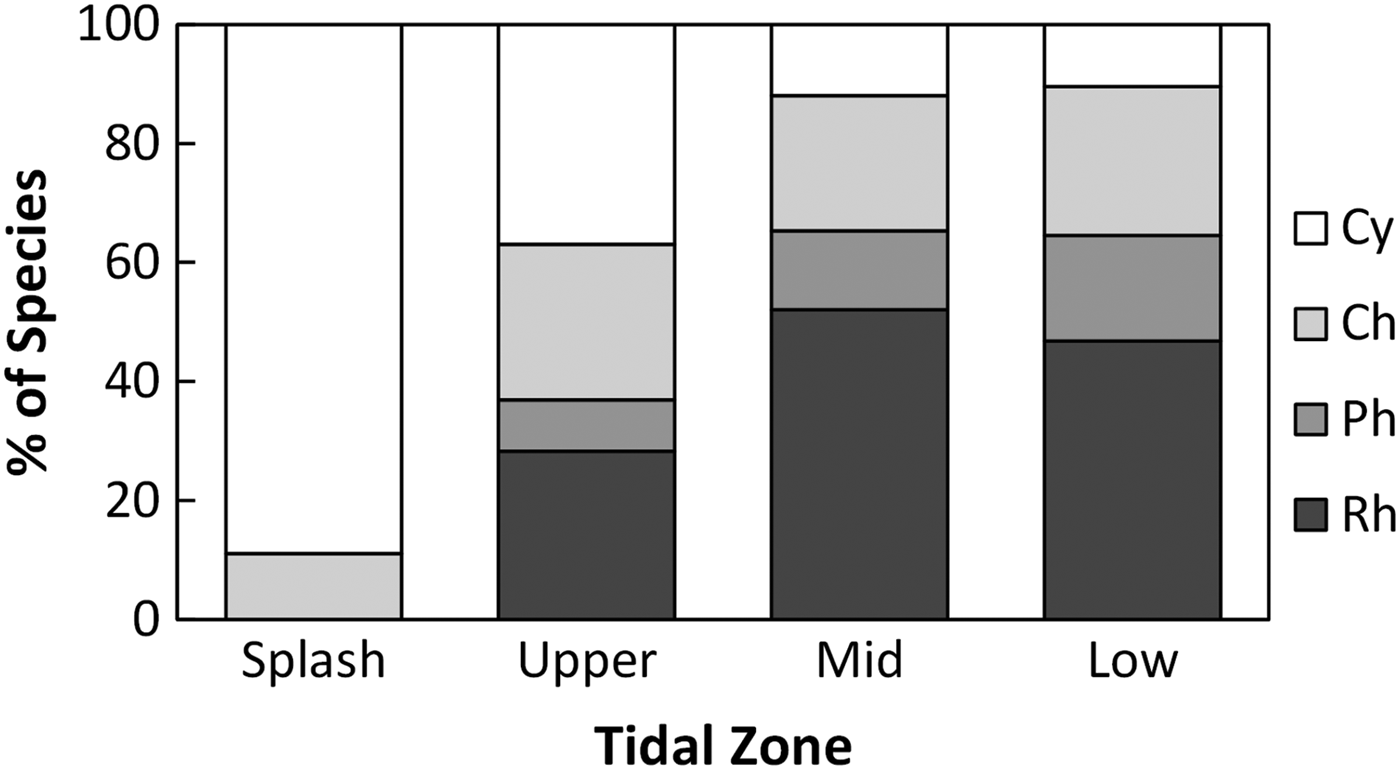
A summary of the year-around intertidal distribution of the 148 species is shown in Figures 2 and 3. A clear increasing gradient in species numbers was found to occur from the splash zone to the low intertidal zone ranging from only nine species in the splash zone to 124 species in the low intertidal zone. There was also a gradient in the tidal occurrence of the major algal groups. The splash zone consisted of almost entirely of blue–green algae (89% of the species). The upper intertidal zone was also dominated by blue–green algae (37% of the species), but red and green algae were also fairly diverse (each with ~27% of the species). The mid and low intertidal zones were both dominated by red algae (~50%) followed by green algae (~24%) with a lesser representation of both brown and blue–green algae.
Composition of the tidal zones by algal group. Cy, Cyanobacteria; Ch, Chlorophyta; Ph, Phaeophyceae; Rh, Rhodophyta.
Percentage composition of the tidal zones by algal group.
The proportions of the various algal groups and the species composition varied between the rainy and dry seasons, and both seasonal and aseasonal species were present.
Rainy season communities (2008, 2010)
DIVERSITY OF SPECIES COMPOSITION
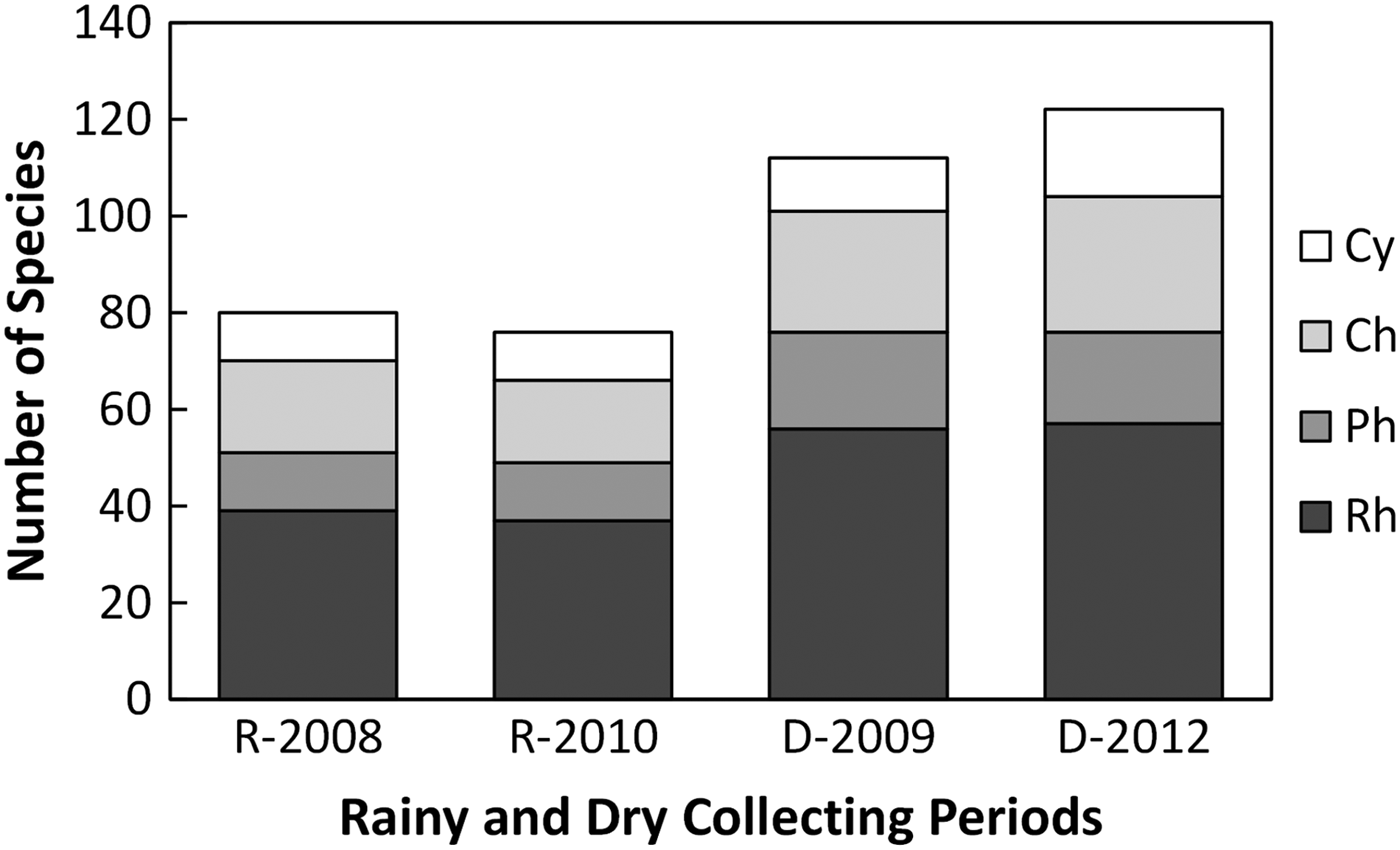
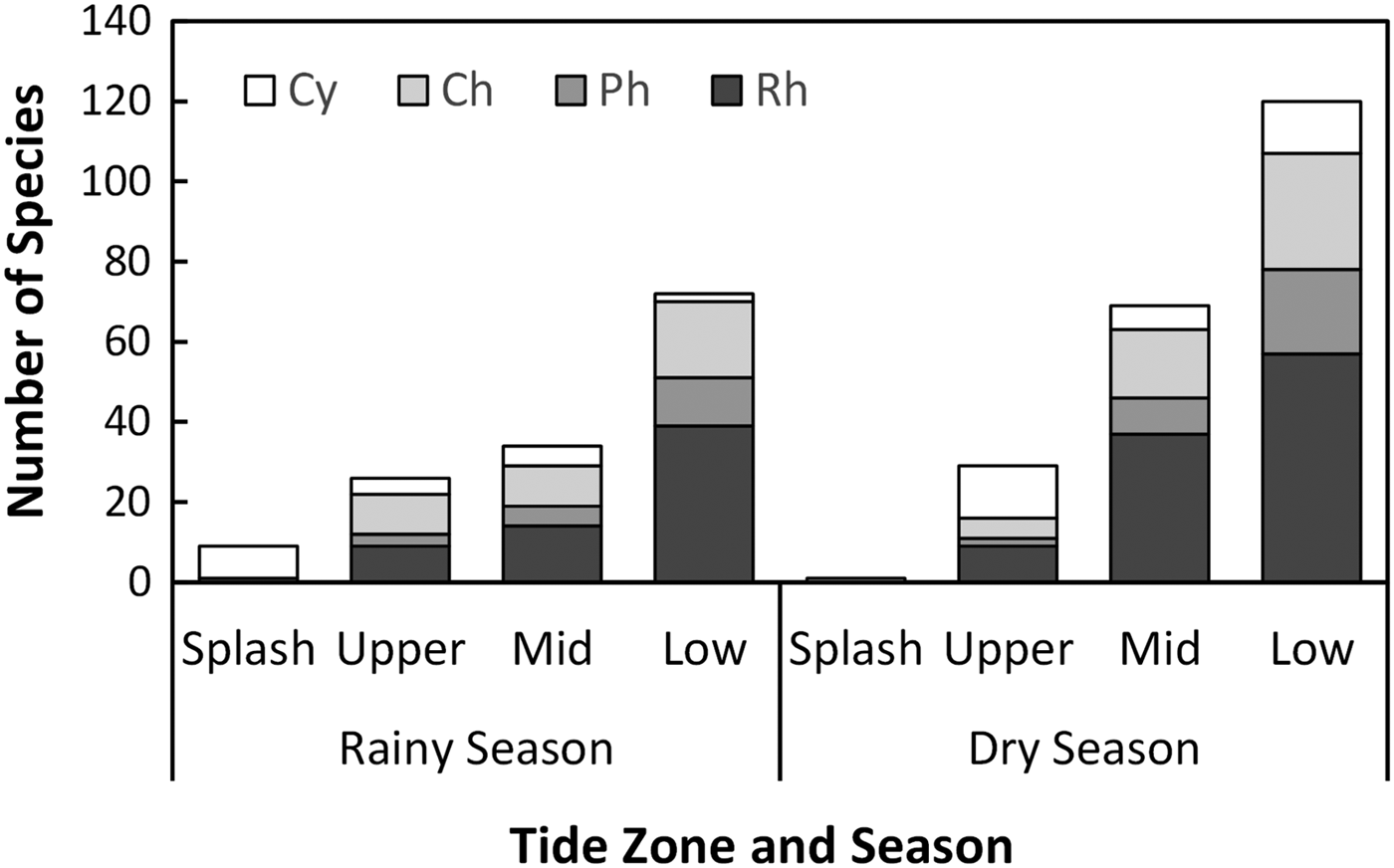
In 2008 and 2010, 76 and 80 species were collected during each rainy season, and little variation occurred between the two years (Figure 4). Each year, approximately 50% of the species were red algae, 23% were green, 15% brown, and 12% were blue–green. The two years were combined to show the tidal zone composition (Figure 5). During the rainy seasons, nine species occurred in the splash zone, and the numbers increased in each zone towards the low intertidal zone, where 72 species occurred. The blue–green algae showed a reverse trend, with eight species occurring in the splash zone and only two in the low intertidal.
Species diversity during the four collecting periods.
Seasonal occurrence of algae by tidal zone.
STRUCTURE OF ALGAL COMMUNITIES DURING THE RAINY SEASONS
In 2008 and 2010, algae were found in all zones investigated.
Rainy season of 2008
In the splash zone, algae were found in holes on the seaward side of dead coral boulders (Figure 6A). Two types of blue–green algal films were found on the surface of the holes: dark blue (almost black) and bright green colour films. Coleofasciculus chthonoplastes was dominant in the community of the dark blue film. In the bright green film, Oscillatoria limosa was dominant.
Sampling sites and algal communities in Luhuitou reef. Sampling sites (in white frame) at the splash zone (A: rainy season, 2008); the upper intertidal mono-dominant community of algal turf (B, insert: the dominant green alga Ulva clathrata, rainy season, 2008); the upper intertidal mono-dominant community of the crustose red alga Hildenbrandia rubra (C: rainy season, 2008); the middle intertidal bi-dominant community of Cladophora vagabunda and Ceramium sp. (D, inserts: (A) Cladophora vagabunda; (B) Ceramium sp.; (C) algal community, rainy season, 2008); low intertidal turf algal communities where Cladophora laetevirens (insert A), Parviphycus pannosus (insert B), and Corallophila kleiwegii (insert C) were dominating (E: rainy season, 2010); the middle intertidal mono-dominant community of Centroceras clavulatum (F, inserts: (A, B, C) the accompanying species Jania capillacea, Padina minor and Dictyosphaeria cavernosa, relatively; insert: (D) the dominant species Centroceras clavulatum; the dry season, 2012); the middle intertidal mono-dominant сommunity of Neoralfsia expansa overgrowing the crustose red alga Hildenbrandia rubra (G: dry season, 2012); the low intertidal poly-dominant community of algal turf (H, inserts: (A, B) the dominant species Padina minor (Vaughaniella stage) and the red calcareous alga Jania ungulate, dry season, 2012). Scale bars: A, 1 cm; B, 1 mm; D, 200 µm (A−B) and 5 mm (C); E, 1 mm (A), 300 µm (B) and 500 µm (C); F, 2 mm (A), 1 cm (B), 5 mm (C) and 400 µm (D); G, 5 mm; H, 1 cm (A) and 1 mm (B).
In the upper intertidal zone large coral boulders were occupied by mono-dominant communities of algal turf dominated by the green alga Ulva clathrata (Figure 6B). Some dead coral pebbles were occupied by algal turf communities dominated by Ceramium procumbens (Rh) and Cladophora vagabunda (Ch). In the upper intertidal zone, the most widespread mono-dominant community was the red algal crust Hildenbrandia rubra. This species overgrew stones but not dead coral fragments (Figure 6C). Parvocaulis clavatus, P. parvulus, Phyllodictyon anastomosans, Cladophoropsis fasciculata (Ch), Lobophora variegata, Sphacelaria rigidula (Ph), Gelidium pusillum, Parviphycus pannosus and Peyssonnelia rubra (Rh) were found on some dead coral blocks in turf communities.
In the middle intertidal zone, the algal turf consisted of a bi-dominant community of Cladophora vagabunda (Ch) and Ceramium sp. (Rh), which occupied mainly the flat carbonate reef bases (Figure 6D). Gelidium pusillum, Peyssonnelia rubra, P. conchicola (Rh), Neoralfsia expansa and Lobophora variegata (Ph) occurred just outside the community. A mono-dominant community of Hildenbrandia rubra was also found growing on stones and pebbles.
The low intertidal zone was occupied primarily by poly-dominant turf algal communities with a mosaic dominance of Amphiroa foliacea, Gelidium pusillum and Lobophora variegata. Outside the main community, Dictyosphaeria cavernosa, Neomeris annulata (Ch), Gelidiella acerosa, Jania adhaerens, J. capillacea, J. ungulata f. brevior, Peyssonnelia rubra, Lithothamnion phymatodeum (Rh), Sargassum polycystum and S. sanyaense (Ph) were often found on dead coral blocks and at the base of coral reefs.
Rainy season of 2010
In the splash zone, the seaward holes of the same dead coral boulders were overgrown by blue–green algal films that were dark green in colour and covered with sand. Microcystis reinboldii and Calothrix sp. (Cy) were predominant in the film.
Hard substrate in the upper intertidal zone was occupied by a mono-dominant community of the green turf alga Ulva clathrata. Flat stones were frequently overgrown by a mono-dominant community of the red crustose alga Hildenbrandia rubra.
In the middle intertidal zone, the algal turf community consisted of a bi-dominant community of the green alga Cladophora laetevirens and the red alga Parviphycus pannosus inhabiting mainly flat carbonate reef bases. A mono-dominant community of Hildenbrandia rubra was common on the upper surfaces of stones where Peyssonnelia rubra and P. conchicola were also found. On the shaded surface of coral boulders, a mono-dominant community of the red crustose alga Lithothamnion sp. was common. In the intertidal pools, fragments of dead branched corals were covered by a blue–green algal film composed of Oscillatoria limosa. Outside of the investigated communities, the green algae Ulva clathrata, Chaetomorpha linum and the brown alga Padina minor were also found.
The low intertidal zone was commonly occupied by turf algal communities and included a poly-dominant community (Figure 6E) dominated by the green alga Cladophora laetevirens and the red algae Parviphycus pannosus and Corallophila kleiwegii.
Vertical walls of dead coral blocks were inhabited by a mono-dominant community of the brown alga Lobophora variegata. On dead coral fragments dwelled Gelidium pusillum, Jania adhaerens, Peyssonnelia rubra, P. conchicola, Hypnea pannosa (Rh), Sargassum polycystum, S. sanyaense (Ph) and Cladophora vagabunda (Ch). On gravelly/sandy bottoms between dead coral blocks, the red alga Ceratodictyon spongiosum and the seagrass Thalassia hemprichii were common. Communities of blue–green algae dominated by Lyngbya semiplena and L. majuscula often covered the turf communities.
Algal communities during dry seasons (2009, 2012)
DIVERSITY OF SPECIES COMPOSITION
In 2009 and 2012, 112 and 122 species, respectively, were found during the dry seasons. Here as well, there was only a slight variation between the years (Figure 4). The increase in species numbers during 2012 is due primarily to the occurrence of seven additional blue–green algal species during this year. However, the overall proportion of the species groups was still very similar. Approximately 48% of the species were red algae, 23% were green, 27% were brown algae and 10−15% were blue–green. The tidal distribution of the major groups during the combined years (Figure 5) revealed a more extreme distribution trend, with only one species occurring in the splash zone and 120 occurring in the low intertidal. During the dry seasons, the blue–green algal diversity increased irregularly through the tide zones from one species in the splash zone to 13 in the low intertidal zone.
STRUCTURE OF ALGAL COMMUNITIES DURING THE DRY SEASONS
Dry season of 2009
During this season, the large coral boulders in the upper intertidal zone were occupied by a mono-dominant community of the crustose brown alga Neoralfsia expansa and by algal turf communities dominated by the red alga Lomentaria corallicola and the green alga Ulva clathrata.
In the middle intertidal zone, the algal turf community consisted of a mono-dominant community of the red alga Polysiphonia japonica var. savatieri, which occupied mainly the flat carbonate reef bases. A mono-dominant community of Ulva clathrata occupied large boulders, where the main accompanying species were Parviphycus adnatus and Herposiphonia secunda f. tenella. A mono-dominant community of the red alga Hildenbrandia rubra was common on the upper surface of stones. On the shaded surface of the coral boulders, a mono-dominant community of the red crustose alga Lithothamnion sp. was common.
The low intertidal zone was also commonly occupied by turf algal communities, where Acanthophora spicifera, Palisada perforata, Tolypiocladia glomerulata (Rh) dominated. More than 30 species were found outside of these communities. Blue–green algae often occurred on the algal turf and consisted of two kinds of spots ranging from 100 to 600 cm2 in size: dark brown spots dominated by Coleofasciculus chthonoplastes and Oscillatoria spp. and green spots of irregular form dominated by Planktothrix agardhii and Lyngbya majuscula.
Dry season of 2012
During this season, the upper intertidal zone was mainly occupied by a poly-dominant community of blue–green algae found in the surface layer (2 mm thick) of dead coral blocks. Chroococcus turgidus, Microcystis reinboldii, Hyella caespitosa, Aphanocapsa litoralis, Chamaecalyx swirenkoi, Phormidium simplicissimum, Calothrix contarenii and Mastigocoleus testarum were common. The green algae Ulva flexuosa, U. clathrata and Cladophora laetevirens were also present.
In the middle intertidal zone, the carbonate base of the reef flat was occupied by a mono-dominant community of Centroceras clavulatum (Figure 6F). The brown crusts of Neoralfsia expansa overgrew the red alga Hildenbrandia rubra on stones and pebbles (Figure 6G). Outside of the C. clavulatum community, H. rubra often occurred.
In the low intertidal zone, the flat surfaces of dead coral blocks were overgrown by a poly-dominant community of the turf-forming brown alga Padina minor (Vaughaniella stage) and the red calcareous alga Jania ungulata f. brevior (Figure 6H). Underneath the ledges and on the vertical walls of dead coral blocks, a mono-dominant community of the red crustose alga Lithothamnion sp. was overgrown by Lobophora variegata (crustose form), N. expansa and Peyssonnelia rubra. These algae were also found outside of the Lithothamnion sp. community on horizontal surfaces as well as on vertical walls.
On the border between the intertidal and upper subtidal zones and in intertidal pools, the poly-dominant algal turf community included Palisada perforata, Spyridia filamentosa, Hypnea spinella and H. valentiae (Rh).
Comparison of algal communities during the rainy and dry seasons
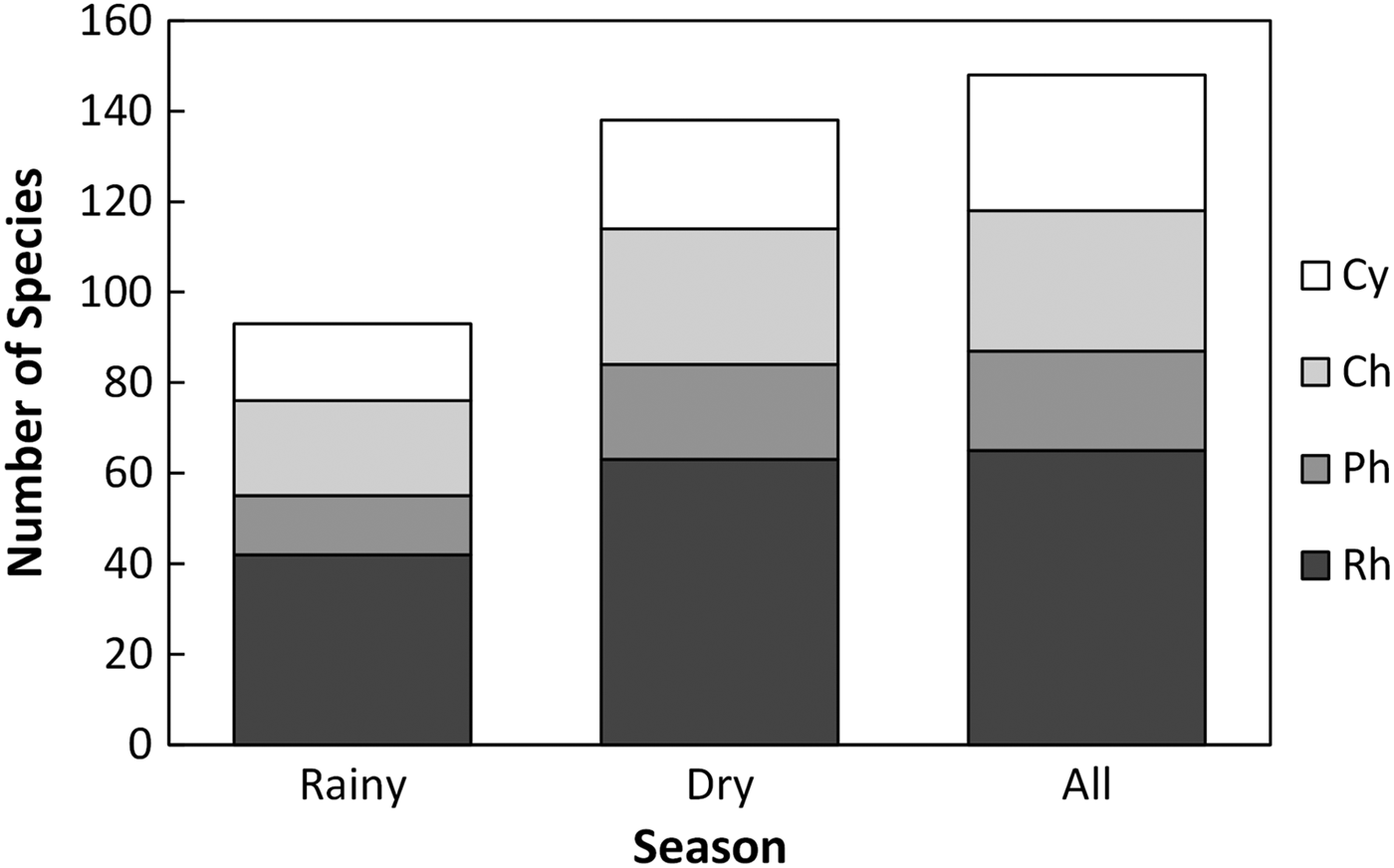
The total number of species increased by 33% from the rainy to the dry season, changing from 93 species to 138 species (Table 2, Figure 7). The seasonal increase impacted the species in the major groups at the following amounts: Rhodophyta (33%), Phaeophyceae (38%), Chlorophyta (29%), and Cyanobacteria (33%). Clearly, all groups were effected. There was considerable overlap of species between the seasons as indicated in the ‘All Season’ column. This is the result of the occurrence of both season-specific and aseasonal species.
Seasonal occurrence of the species.
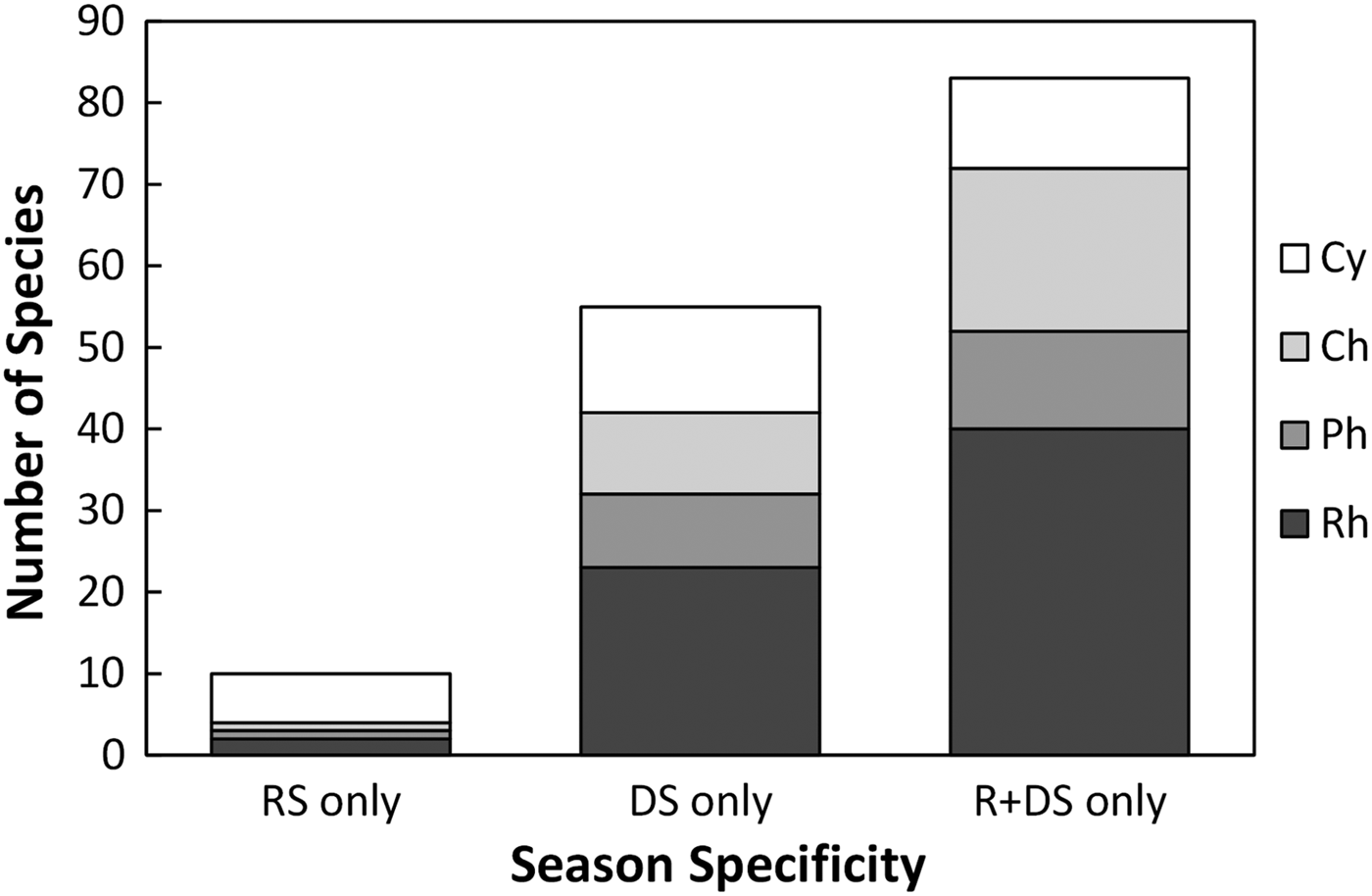
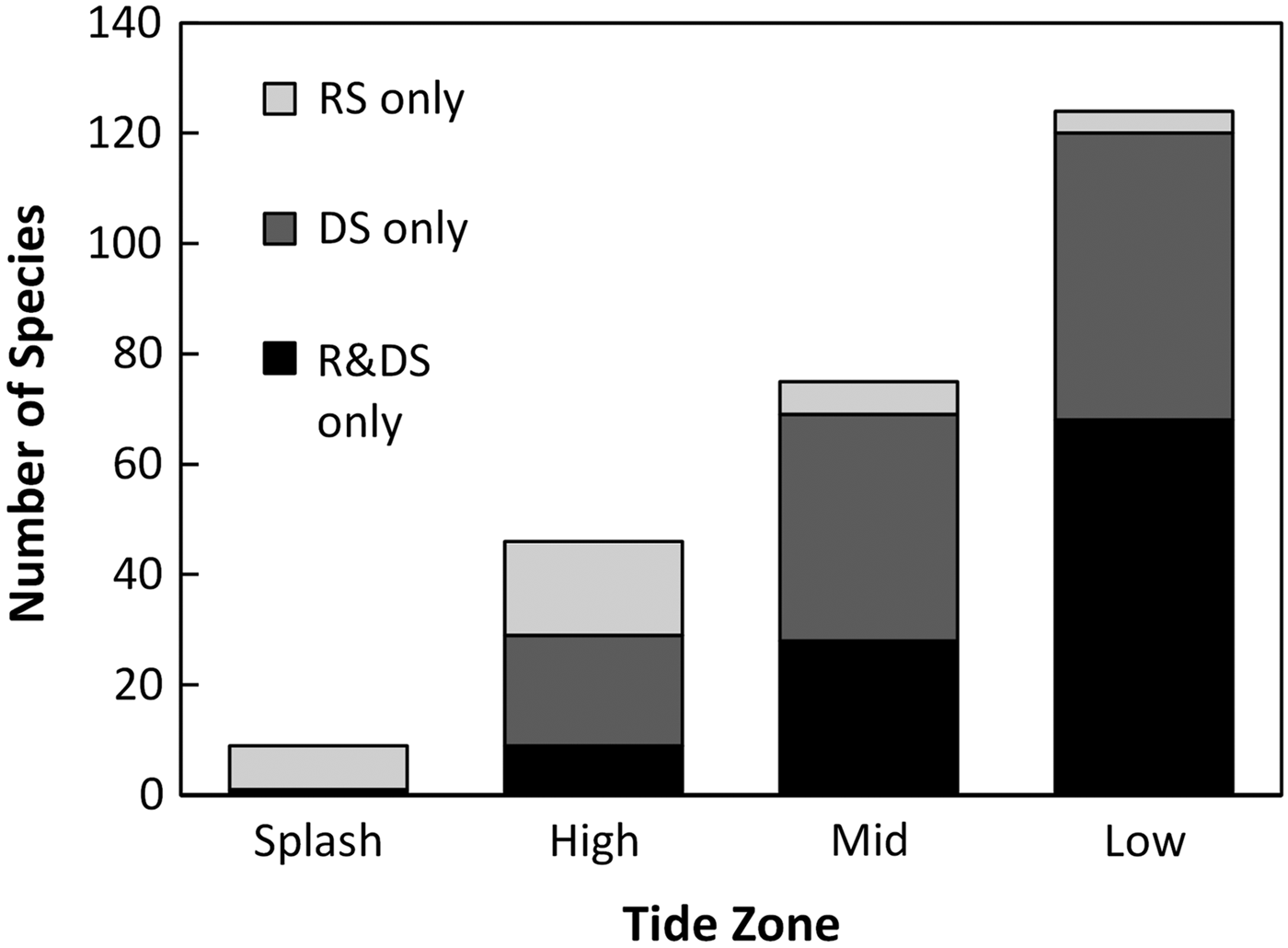
A number of the algae were season specific, occurring only during the rainy or dry season, but many were also aseasonal, occurring during both seasons (Figure 8). Of the 148 species followed during the study, 56% occurred during both seasons, 37% were specific to only the dry season, and 7% were specific to only the rainy season. Seasonal specificity occurred in all groups. In the cyanobacteria, 64% were seasonal (rainy season(RS):dry season(DS):rainy and dry seasons(R&DS) = 6:13:11) and the majority of the species occurred only during the dry season. In the other groups, most of the species were aseasonal. In the Chlorophyta, only 35% were seasonal (RS:DS:R&DS = 1:10:20). In the Rhodophyta, 37% were seasonal (RS:DS:R&DS = 2:23:40), and, in the Phaeophyceae, 45% were seasonal (RS:DS:R&DS = 1:9:12). There was some tidal separation of the season-specific algae (Figure 9). Not remarkably, rainy seasonal species were most common in the splash and high intertidal zones. Dry seasonal and aseasonal species increased progressively from the high to the low intertidal zone, where aseasonal species were predominant at 55% of the species (RS:DS:R&DS = 4:56:68).
Composition of season-specific algal groups.
Tidal distribution of season-specific algae. RS, rainy season; DS, dry season; R&DS, rainy and dry seasons.
DISCUSSION
Our study of the flora of the intertidal zone of Luhuitou reef has shown that marine macroalgae occupy mostly the hard substrata including the rocky bottom, carbonate reef bases, dead coral colonies and their debris. Living scleractinian corals were observed only in the lower intertidal zone. Intertidal algal communities included mainly turf and crustose algae. In the upper subtidal zone, fleshy, frondose and foliose algae enriched the algal turf communities.
Species diversity
The proportion of the species groups at Luhuitou reef (Sanya Bay) during our study was revealing. Including the rare species, a total of 176 taxa of macroalgae and blue–green algae (40% of all marine algae found in Hainan) were found in the intertidal zone. These consisted of 56% red, 28% green, 16% brown, and 10% blue–green algae. Similar floristic proportions were also found in the upper subtidal zone at Luhuitou reef (Titlyanov et al., Reference Titlyanov, Titlyanova, Li and Huang2013). Surprisingly, these proportions fell well within the limits of those known for coral reefs in the Indo-Pacific that are situated in regions with insignificant pollution. In these regions macroalgae have been found to be 50−60% red, 20−30% green and 10−20% brown (Lewis & Norris, Reference Lewis and Norris1987; Silva et al., Reference Silva, Basson and Moe1987; Zhang, Reference Zhang1996; Huisman & Borowitzka, Reference Huisman, Borowitzka, Wells, Walker and Jones2003; Tsuda, Reference Tsuda2003, Reference Tsuda2006).
In the literature (Morand & Briand, Reference Morand and Briand1996; Morand & Merceron, Reference Morand, Merceron and Pandatal2004; Lapointe et al., Reference Lapointe, Barile, Littler, Littler, Bedford and Gasque2005a, Reference Lapointe, Barile, Littler and Littlerb), floristic ratios of the major algal groups are reported to change dramatically between clean and polluted regions, but, in spite of significant pollution with dissolved inorganic nitrogen and phosphorus in Sanya Bay (Titlyanov et al., Reference Titlyanov, Kiyashko, Titlyanova, Yakovleva, Li and Huang2011b), the intertidal floristic ratios remained the same as those in unpolluted regions. However, we did find some subtle indicators of pollution. Four species that are most common in nitrogen-enriched areas were present in the Bay: Ulva intestinalis, U. lactuca, U. linza and Caulerpa racemosa.
Seasonal changes in species diversity and community structure in the different tidal zones
During our study the largest number of species was found during the dry seasons as compared to the rainy seasons (DS:RS = 138:93) (Table 2; Figure 3). In our opinion, this was caused by: (1) optimal conditions for the occurrence and development of algae-ephemerals (especially blue–green algae) and algae-epiphytes; and (2) the mass occurrence of young annual plants. The decrease in species richness in the intertidal zone that occurred during rainy seasons seems to be connected with the temperature drop and decrease in salinity, especially in the upper and middle intertidal zones. There was no evidence that it was caused by seawater pollution in Sanya Bay (Table 1). The annual species die off was visually noticeable during the rainy season, with the detachment and drifting ashore of the algal thalli.
Species number and composition at different tidal zones during the dry and rainy seasons showed significant differences (Table 2; Figure 5). The splash area was inhabited mainly by blue–green algae. During the dry seasons, the lack of storms and lack of high humidity and high temperature led to the near absence of algae in this zone.
In the upper intertidal zone, a few more species were found in the dry seasons than in the rainy seasons (DS:RS = 29:26). During both seasons, opportunistic ephemeral algae (Parviphycus pannosus, Erythrotrichia carnea and Ulva clathrata) were widespread throughout the upper intertidal zone, as were the perennial mono-dominant crustose algae (Hildenbrandia rubra (Figure 6C) and Neoralfsia expansa (Figure 6G)). During the dry seasons, blue–green algae were the most diverse. We think that blue–green algae and opportunistic macroalgae in the upper intertidal zone thrived during the dry season due to their tolerance to drying and to the absence of competition for the space with other algae in these extreme conditions (Nabivailo & Titlyanov, Reference Nabivailo and Titlyanov2006). During the rainy season, rainfall and moderate temperature promoted the growth of green algae (Ulva clathrata and Cladophora laetevirens) in the upper intertidal zone (Titlyanov et al., Reference Titlyanov, Titlyanova, Bangmei and Bartsch2011a).
In the middle intertidal zone, more than twice the number of species were found during the dry seasons than in the rainy seasons (DS:RS = 69:34). The higher diversity during the dry seasons in this zone was influenced by several factors. Conditions in the upper and middle intertidal zones in Sanya Bay differed not only by the duration of the exposure to air, but also by substrata. In the middle zone, hard substrata were covered by the dense layers of muddy and sandy sediments. In the upper intertidal zone, the sediments were almost absent. Marine plants inhabiting the middle intertidal zone were partially or completely submerged in the sediments, which remained wet during the low tide. The constant exposure to water provided better conditions for macroalgal attachment and growth than the often dry and hot substrate in the upper intertidal zone, and also the damp layer sheltered the spores of many annual algae. During the rainy seasons, layers of muddy and sandy sediments in the mid intertidal zone retained rain water, negatively influencing the diversity of algal species.
In the upper and middle intertidal zones, the main algal communities were mono- and bi-dominant algal crust or turf communities, overgrown by epiphytes (Figure 6F). Species composition and dominant species (mainly highly productive opportunistic red and green ephemerals) often changed more than once during each season.
The number and composition of the algal species in the low intertidal zone also changed with the seasons. This zone had many more species during the dry seasons than during the rainy seasons (DS:RS = 120:72) (Figure 5). Of these species, 55% were common to the both seasons, 42% grew only in the dry seasons and 3% only in the rainy seasons. The large number of species common to both seasons (i.e. growing during most of the year) emphasizes the moderate growing conditions in this zone. The majority of settled species were annuals and perennials, аnd the epiphytes were ephemerals. Significant decline in species number during the rainy season was caused by natural cycles, such as the death and detachment of annual and old perennial thalli. Algal communities in the lower intertidal included mainly poly-dominant algal turf communities (Figures 6E and 6H) and, less often, associations of large foliose, fleshy and leathery algae. The seasonal changes in this zone were most apparent in species dominance. The dominant species are not only short-lived opportunistic algae, but also annual or perennial fleshy, foliose and leathery algae. Here the change of dominant and accompanying species in turf communities depends mainly on annual periodicity in the replacement of old plants by newly grown ones, and detachment of algal turf patches from the substratum at least once per year.
The seasonal changes in species composition and composition of algal communities in the low intertidal zone at Luhuitou were somewhat different to those that occurred in the upper subtidal zone (Titlyanov et al., Reference Titlyanov, Titlyanova, Li and Huang2013). Here the changes in species numbers and their composition between the seasons were less extreme: 80% of the macroalgae were common to both seasons, 15% occurred only during the dry season and 2% were found only during the rainy season.
The changes in the intertidal zones appear to be caused by extreme external factors. In the upper intertidal zone factors such as high ultraviolet and visible radiation in combination with high temperature during the dry season and with seawater desalinization and frequent storms during the rainy season. These extreme factors lead to a decrease in production and to a decay of nonresistant (especially long-lived) algae (Lüning, Reference Lüning1990; Ateweberhan et al., Reference Ateweberhan, Bruggemann and Breeman2006), and provide open space for ephemeral, opportunistic and highly productive algae (McCook et al., Reference McCook, Jompa and Diaz-Pulido2001; Nabivailo & Titlyanov, Reference Nabivailo and Titlyanov2006). Biotic factors also influence the diversity and structure of algal communities. Herbivorous fish are known to consume different species during the high tides of different seasons, and some crustaceans are also known to change their diets with the seasons (Clements & Choat, Reference Clements and Choat1993; Hughes & Seed, Reference Hughes and Seed1995; Kennish et al., Reference Kennish1996; Cannicci et al., Reference Cannicci, Gomei, Dahdouh-Guebas, Rorandelli and Terlizzi2007). However, this influence is insignificant at Luhuitou Peninsula because of constant overfishing and invertebrate sampling in Sanya Bay.
Investigations of factors influencing seasonal changes in algal species composition in other tropical and subtropical regions do not contradict our results and conсlusions. In Nanwan Bay in southern Taiwan (the nearest to Hainan Island), species diversity on the lower reef flat and the reef slope (the low intertidal and upper subtidal zones) showed insignificant seasonal variations (Tsai et al., Reference Tsai, Wong, Chang, Hwang, Dai, Yu, Shyu, Shen and Lee2004). However, essential changes were observed in the intertidal zone of other subtropical and tropical regions. On coral reefs in Brazil, most of the taxa (23) were present during the summer rainy season (February–March). In the rocky intertidal of the Colombian Caribbean, the macroalgal community was most diverse in October, which historically has been the rainiest and calmest month of the year (García & Díaz-Pulido, Reference Garcia and Diaz-Pulido2006). On the Great Barrier Reef in Australia, extensive ephemeral blooms of small, fleshy brown macroalgae, such as Chnoospora and Hydroclathrus, have been observed on shallow reef flats predominantly during winter and early spring (Díaz-Pulido et al., Reference Diaz-Pulido, McCook, Larkum, Lotze, Raven, Schaffelke, Smith, Steneck, Johnson and Marshall2007). The authors of these studies believe that replacement in the vegetation at shallow sites is induced by sharp changes in climate that occur during seasonal changes. On the north-west coast of India (Port Okha), Thakur with coauthors (Reference Thakur, Reddy and Jha2008) found that seasonal variation in species composition of stranded seaweeds was correlated with natural species succession. The seaweed growing season on the Okha coast is spread over seven months, running from November to May. During this period, extensive growth and succession of different types of seaweed associations have been observed. On coral reefs in Okinawa, natural changes in vegetation are connected with a succession of algal communities that occurs in late spring (May–June) when extensive bands of drift algae were found on the shore (Titlyanov et al., Reference Titlyanov, Titlyanova, Yakovleva and Sergeeva2006).
We assumed that the pollution in Sanya Bay would greatly affect the composition of macroalgae and Cyanobacteria in the intertidal of Luhuitou reef. However, our investigation revealed that there was little impact on the floristic proportions of the algae. The species composition of the tide zones and their seasonal shifts were not unlike algal community structure in relatively clean, unpolluted regions of the Indo-Pacific. Overall, species numbers increased from the rainy to the dry seasons and also from the high to the low intertidal zones. In the splash zone, a tightly adhering film of crustose and filamentous blue–green algae was present during the dry seasons. In all three lower zones during all seasons, turf and occasional crustose algae provided the main cover, with occasional upright fronds protruding through the turf in the low zone. In the splash and upper intertidal zones the dominance of blue–green and green algae, primarily seasonal ephemerals, seemed to be due to their ability to endure or quickly recover from the extremely erratic environmental conditions in these zones. In the mid intertidal zone, a greater diversity of ephemeral red and green algae occurred, particularly during the dry season. In this zone, mud and sand frequently covered the algae and their spores, insulating them from any adverse conditions. The low intertidal zone was dominated primarily by red and brown algae that were mainly aseasonal annuals and perennials. Their occurrence and successional patterns were supported by the more stable environment and influenced by predictable annual changes in the overall flora. In our qualitative studies of macroalgal and cyanobacterial distribution, we could find no obvious influence of the urban and maricultural pollution common to Sanya Bay. However, these primarily nutritive pollutants may not yet have reached lethal amounts for the species. Continued pollution of the Bay may eventually be great enough to cause a change in the dominant algal species and heavily influence the future ecosystem of this region.
ACKNOWLEDGEMENTS
We are grateful to all members of the Marine Biological Station in Sanya City for use of their facilities and their technical help and hospitality. Without their assistance, this study would not have been possible.
FINANCIAL SUPPORT
This study was supported by the grant ‘Succession of algal communities in the seas of tropical and temperate regions’ (2007–2009) from the Russian Foundation for Basic Research, the National Natural Science Foundation of China (41106141 and 40830850), the grant ‘China–Russia special funds 2014’ from the Chinese Academy of Sciences (1439), the Postdoctoral Science Foundation of China (2013M540347) and the Open Research Fund of State Key Laboratory of Estuarine and Coastal Research (SKLEC-KF201307).