1. Introduction
Following 25 years of civil war (1977–1992), Mozambique was regarded as a poster-child of International Financial Institutions (IFI)-driven economic modernization in the 1990s and 2000s. The country achieved impressive growth rates, was extremely successful in attracting Foreign Direct Investment (FDI), and considered one of the aid-darlings of the Western world. However, from 2013 on, exactly at the time when FDI peaked, tensions between the former civil war enemies, which had been aggravating over the preceding years, started to take on a violent form. Many observers saw the country on the brink of a new civil war until a peace agreement was reached in August 2019. The current paper offers an explanation of what one might call the Mozambican paradox: How could a country that the International Monetary Fund (IMF) had praised in 2007 as ‘a success-story in Sub-Saharan Africa’ (IMF, 2007) return onto a path of open violence only a few years later? Based on the analytical framework of Limited and Open Access Orders (LAO/OAO) as developed by North, Wallis, Webb, and Weingast,Footnote 1 we argue that the destabilization of the country was the result of a toxic mix of domestic politics and a massive inflow of FDI. FDI provided rents to an increasingly dominant state party, FRELIMO, which it could appropriate one-sidedly. It could then use these rents to oppress its previous civil war enemy, now the main opposition party, RENAMO, to monopolize power. This strategy seemed to be successful until RENAMO, faced with the risk of becoming politically marginalized (and of losing its rents accordingly), returned to armed conflict in 2013.
Our paper seeks to work out the link between processes that take place at the micro-level of multinational enterprises (MNEs) and at the macro-level of national politics in the recipient country. Accordingly, the starting point of our analysis is a case study of a MNE,Footnote 2 Vodacom Mozambique (Vodacom MZ), a South-African telecommunications provider in Mozambique. The story of Vodacom MZ is that of an enterprise which originally tried to operate with a modest degree of political connectedness in a basic LAO, but was then exposed to all kinds of political pressures and close to leaving the market before it made a strategic U-turn and handed over equity stakes to the President of the country and further influential members of the ruling party. The Vodacom Mozambique story is the first part of our explanation of the link between FDI inflows and the resurgence of violence in Mozambique. The second part of the argument consists of connecting the generation of additional rents for the state party, FRELIMO, with its attempt to monopolize power and to trace how this attempt aggravated the tensions between FRELIMO and RENAMO.
We would like to emphasize that the present paper suggests an interpretation of what happened in Mozambique, not a complete explanation. Our case study deals with processes that take place in secret. Accordingly, though we did our best to reveal as much information on the operations of Vodacom in Mozambique, we are not able to answer all questions relevant for our story. And we were not able to do the same ‘investigative’ work for other MNEs who have invested in Mozambique as well. Very much the same applies regarding the question of how exactly increased rent-extraction of MNEs translated into political power struggles at the macro-level. However, we believe that our paper does offer a coherent interpretation of the recent events in Mozambique and a rough scheme of how the interdependence of the micro-level of enterprises and the macro-level of national politics as well as the international dimension could be better included into LAO/OAO research. In both regards, our hope is that our paper will stimulate further research that might close the gaps in our argument.
The remainder of the paper is organized as follows: in Section 2, we provide a brief introduction into the LAO/OAO framework and suggest modifications which allow for an improved application to the micro-level of concrete organizations, and which also include the international dimension. Preparing the ground for the empirical part of the paper, Section 2 also provides a short characterization of Mozambique as a LAO. In Section 3 we present our case study, which is based on the methodology of process tracing and on a broad variety of sources, including more than 30 interviews we have conducted in Mozambique. Section 4 analyses the channels along which the struggles over the redistribution of economic rents and political power mutually reinforced each other and finally culminated in the resurgence of violence in Mozambique. Section 5 concludes.
2. Limited and open access orders
2.1 Theory
From the perspective of the LAO/OAO framework, less developed countries function according to a logic which is fundamentally different from that of modern, Western societies. The decisive difference is that in less developed countries the state usually does not hold the monopoly of violence. Therefore, NWWW argue, they should be modeled as ‘collective states’ in which rivaling groups are competing for hegemony within the state. In view of the devastating consequences of civil wars (see, e.g. Collier, Reference Collier1999; Ghobarah et al., Reference Ghobarah, Huth and Russett2003), the most urgent tasks in collective states are to prevent the outbreak of open violence between competing groups and to guarantee individual security. The LAO/OAO framework provides a narrative of how countries pass through different stages of the LAO (fragile, basic, and mature) until they reach the ‘doorstep conditions’ and finally transform into Western-style democracies with market economies (= OAOs). Here, our main focus is on the logic of the LAO, which we regard as the most valuable part of the concept.
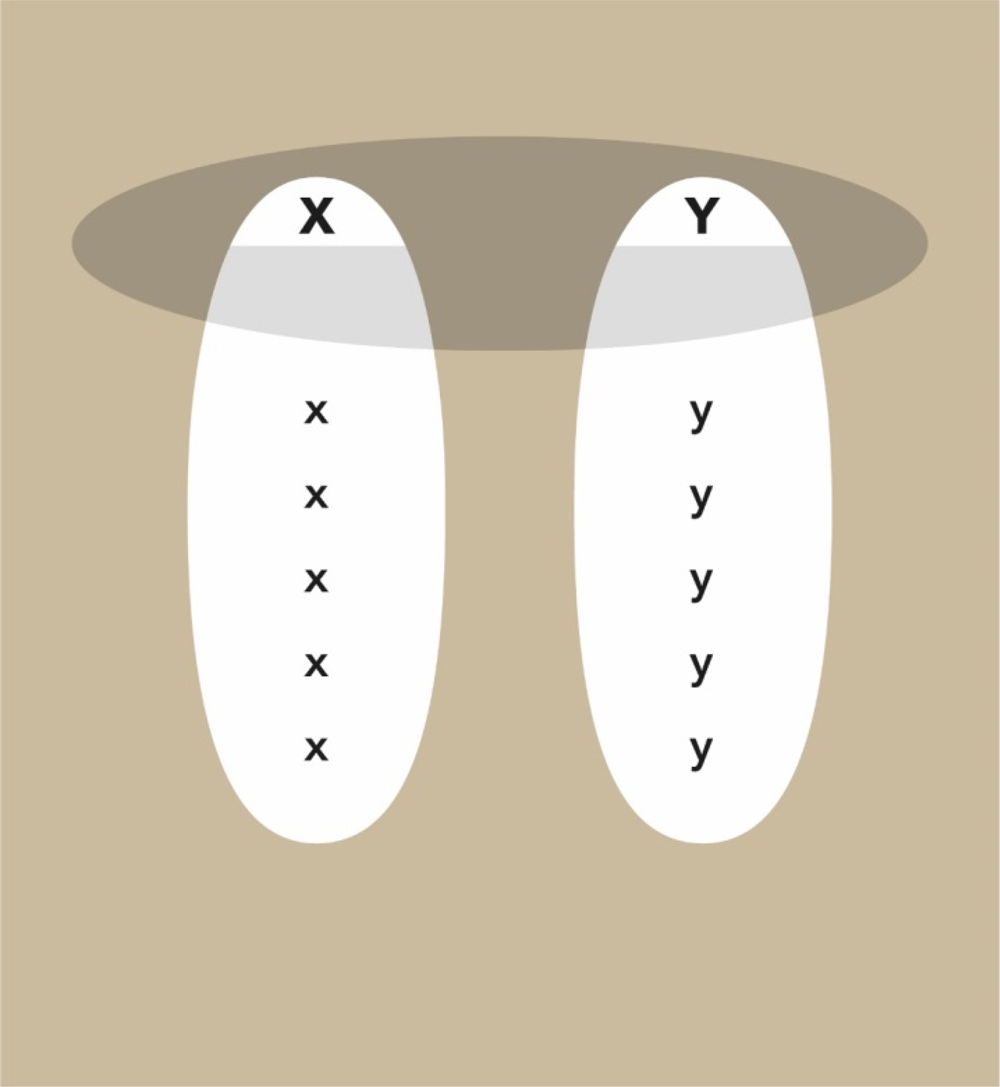
The basic ‘logic of the collective state’ (= LAO) is that two experts in violence agree ‘to divide the world into two parts, one controlled by each specialist, and then to recognize each other's rights to control the land, labor resources, and trading within their sphere’ (NWW, Reference North, Wallis and Weingast2009: 19). This basic logic leads to a ‘double balance’ between restrictions of access to political and economic competition. The agreement on political power-sharing is based on privileged access to economically valuable resources. Limiting access to economic resources to members of the ruling coalition creates rents, and these rents are crucial for the control of violence: the fear of losing one's rents incentivizes all members of the ruling coalition not to instigate violence. Figure 1 depicts this basic logic.
Basic logic of a LAO. Capital ‘X’ and ‘Y’ are members of the ruling coalition, which is symbolized by the horizontal eclipse. ‘X’ and ‘Y’ have divided the world into two parts (regionally, sectorally, e.g.). These parts are symbolized by the two vertical eclipses and populated by their ‘clients’. These clients are all kinds of organizations (including enterprises) under the protective ‘roof’ of a member of the ruling elite.Footnote 30
Source: Wallis (Reference Wallis2011: 55).

It follows from these considerations that in an LAO, stability (= successful control of violence) can be maintained only as long as there is a (rough) equivalence between each member of the ruling coalition's share of economic resources and their share of political power. Note that a political and economic equilibrium in an LAO is highly volatile: every significant increase in its relative economic position would incentivize a member of the ruling coalition to try to expand its relative political power accordingly, and every significant relative increase of political power would incentivize it to try to increase its share of economic rents.
In their studies, NWWW do not deal with cases in which there are strong power imbalances between the members of the ruling coalition. Our empirical case suggests that where the ruling coalition consists of only two members one of which is dominant, additional constraints may be needed to prevent the dominant player from attempting to monopolize both political power and access to economic rents.
As is typical for a Northian approach, the interplay between institutions and organizations (including firms) is the decisive driver of societal evolution in the LAO/OAO framework. NWWW argue that in LAOs organizations have to be embedded into the power-sharing logic and thus have to be linked to members of the ruling coalition. A new, politically unconnected enterprise would be seen as a fundamental challenge to the ruling coalition and its right to extract rents from enterprises. However volatile the equilibrium within a ruling coalition might be, as long as it exists its members co-operate when challenged by outsiders.
As the framework focusses on the co-evolution of institutions and organizations, and as it attempts to grasp the specific nature of institutions in less developed countries, one would expect that it is widely referred to in the literature on MNEs in less developed countries. We are, however, aware of only two papers that explicitly use the framework in this context (Kluge, Reference Kluge2017; Sun et al., Reference Sun, Peng, Lee and Tan2015). This might be due to two shortcomings of the concept. First, the framework is conspicuously silent about the micro-level and about actors' incentives, in particular, making it difficult for economists to adopt the approach. Second, NWWW vastly neglect the international dimension (Frankema and Masé, Reference Frankema and Masé2014; Grimmer-Solem, Reference Grimmer-Solem2015), particularly the role and significance of interactions between OAOs and LAOs or, as in our case, between organizations from a ‘mature’ (South Africa) and a ‘basic’ (Mozambique) LAO.
A recent contribution by Van Bavel et al. (Reference Van Bavel, Ansink and van Besouw2017) provides a good starting point for addressing these problems. The authors criticize that NWW, without considering individual incentives, almost take it for granted that enterprises prefer to be connected to a member of the dominant coalition in an LAO. The fact that this comes at the price of rent-sharing, van Bavel et al. argue, creates an incentive for organizations (including enterprises) to resist the pressure of the dominant coalition and stay an independent ‘warlord’. Being a ‘warlord enterprise’, however, comes with the risk of being expropriated (or otherwise forced out of the market) by the ruling coalition. For two reasons, this risk might be decisively lower for MNEs than for domestic enterprises. First, in a world in which less developed countries depend on foreign aid and FDI, domestic elites might shy away from pressuring MNEs. Second, with the support of a financially potent multi-national parent company, the subsidiary might be in a much stronger position than domestic enterprises are to take up the challenge when pressured by the dominant coalition.
For a possible link between MNE activity and outbreaks of open violence two questions are decisive. First, will an MNE from an OAO, or, as in our case, from a ‘mature’ LAO, be able to largely stick to its domestic ways of doing business when operating in a basic LAO? Or will it be forced to adapt, get (more strongly) connected to a member of the ruling coalition and thus share rents? In NWWW's studies we do not find a systematic elaboration on this problem.Footnote 3 The two papers that have tried to fill this gap empirically in LAO/OAO research so far, Kluge (Reference Kluge2017) and our own contribution, do not offer any reason for optimism that MNEs invested in LAOs can successfully ‘export’ domestic institutions into the host country. If, and we consider this likely, the MNE has to connect to and share profits with a member of the ruling elite, the second decisive question emerges, namely, how the additional rents will be distributed within the ruling coalition. As the case of Mozambique shows, an uneven distribution of vast additional rents extracted mainly from MNEs is a recipe for disaster, as it is likely to disturb the political equilibrium within the ruling coalition.
2.2 Mozambique as a limited access order
Starting from 1498, Portuguese colonialism implemented absolutist and – highly extractive institutions in Mozambique.Footnote 4 In 1951, the country was made a province of the Estado Novo and came to be ruled by a governor directly appointed in Lisbon. Migration from Portugal was actively encouraged, and the domestic population was even more strongly excluded from political participation. In the wake of the Carnation Revolution in Portugal in 1975 Mozambique gained independence and power fell into the hands of FRELIMO, a coalition of three nationalist groups united in their opposition to the colonial power. In difficult circumstances of a quick handover of political responsibility and a quick exit of the Portuguese elite FRELIMO turned to the Soviet Union for support and reconstructed the previous ‘LAO par excellence’ (Levy, Reference Levy, North, Wallis, Webb and Weingast2013: 130) under a new ideological banner.
The white minority based governments of South Africa and Rhodesia saw a Marxist–Leninist neighboring country ruled by the African majority as a threat and thus supported the anti-communist Resistência Nacional Moçambicana (RENAMO), which had its strongholds in the central regions of the country. In 1977, a civil war broke out between RENAMO and FRELIMO, which was to last until 1992 and cost more than 900,000 lives (Emerson, Reference Emerson2014). Following the end of the civil war the country has become a pseudo-democratic political system with FRELIMO and RENAMO as the dominating parties. Presidential and parliamentary elections, which were all won by FRELIMO, were held in 1994, 1999, 2004, 2009, 2014, and 2019. As of today, FRELIMO, as the ruling party, controls the vast majority of media and all larger enterprises (Rønning, Reference Rønning2011). By playing by the rules of the Washington Consensus, it has been extremely successful in attracting FDI, and since the early 1990s the country has been on a steady growth path. FDI (as a share of GDP) has been much more volatile than GDP growth with an upward trend beginning in 2005 and peaking at almost 50% of GDP in 2013. The steep decline after 2013 (down to roughly 18%) reflects two factors. First, it was due to the renewed outbreak of violence between FRELIMO and RENAMO. When undisclosed government loans worth up to 2 billion US$ were discovered in 2016, the IFIs and the international donor community lost their trust in the country.
The population has only marginally benefitted from the inflow of FDI and economic growth. According to the World Bank, every percentage point of additional economic growth led to a reduction of poverty of 0.26 percentage points between 1997 and 2009, which is approximately half of what can typically be observed in Sub-Saharan African (SSA) countries (Baez Ramirez and Olinto, Reference Baez Ramirez and Olinto2016).
The political dominance of FRELIMO raises the question whether one can really speak of a ‘collective state’ in the case of Mozambique with RENAMO as a part of the ‘ruling coalition’. In our view, this is clearly the case, as RENAMO has never handed in its weapons and the integration of the RENAMO fighters into the regular army failed.Footnote 5 Therefore, despite FRELIMO's dominant position in official politics, it still always has to take into account RENAMO's violence potential. This forces FRELIMO to include RENAMO into the distribution of political and economic stakes. Due to RENAMO's weak representation in (pseudo-)democratic institutions, this regularly happens in direct talks between the President and the RENAMO leadership.
In the case of Mozambique, we are dealing with a specific form of a LAO which seems to be characteristic for a number of SSA pseudo-democracies.Footnote 6 In these countries, ruling parties typically use what is meant to be a temporary provision of governmental power to hinder political competition. This way, they cement their power and turn into dominant state parties in a façade-democracy.Footnote 7 In other words, as the winner of elections is able to manipulate political access, the implementation of democratic forms into the basic LAOs of SSA is likely to make the distribution of political power unequal. According to the logic developed in the last paragraph, this makes the equilibrium within the ruling coalition less stable, as the dominant party has an ever stronger incentive to further extend its political and economic stakes at the cost of its rivals. When the equilibrium within the ruling coalition is hanging on a silk thread, relatively small changes in preferences of and/or constraints on the key political actors can have far-reaching consequences.
For our case study a policy shift that took place between the presidencies of Joaquim Chissano (1986–2004) and his successor, Armando Guebuza (2004–2014), is very important. In the post-civil war setting of the 1990s, Chissano's political leeway toward the international community was extremely restricted, so that there was no alternative to accepting the liberal agenda prescribed by the IFIs. And as the general elections in 1994 and especially 1999 were extremely close, he was internally constrained by tight political competition. Year 1999 marked a turning point, however; after the extremely close outcome of the 1999 election, FRELIMO changed its strategy in the direction of more aggressively countering RENAMO (Vines, Reference Vines2019: 10). The strategy of using its dominance to intimidate and harass RENAMO supporters paid off in FRELIMO's clear victory in the 2004 elections. Though the strategic shift had started before he took power, it was only under Guebuza that Chissano's strategy to undermine RENAMO's support in the central regions by compromise and patronage (Vines, Reference Vines2019: 28) was replaced with a strategy of complete domination. In political terms, Guebuza followed a strategy of ‘centralization’, entrenched FRELIMO's position as the state party and restricted freedom of expression (Regalia, Reference Regalia2017: 12). In terms of economic policy, the links between FRELIMO and business strongly intensified under Guebuza, and critics accused him of ruthlessly mixing his pecuniary and political interests (Chivangue and Cortez, Reference Chivangue and Cortez2015; Nhachote, Reference Nhachote2012). In short, under his reign one could observe a shift toward a ‘winner takes all’ attitude, increasingly excluding RENAMO from political and economic participation. Ten years after it had nearly obtained a victory in the general elections, it was now RENAMO's turn to come up with a new strategy, which turned out to be a return to armed conflict.
Our case study traces this policy shift at the micro-level of a single MNE. It shows how under Chissano a MNE entered the market with a relatively modest level of political connectedness and rent-sharing. However, after Chissano had decided not to run for re-election, the enterprise was exposed to massive political pressure under Guebuza until it finally handed over a significant stake to the President and further leading members of the FRELIMO elite network. Of course deals like this do not take place in the open. In this paper, we are not able to prove that what happened with Vodacom happened with other MNEs as well. However, a number of media reports clearly channel our interpretation that this kind of extraction of additional rents occurred in other companies as well (e.g. Nhachote, Reference Nhachote2012, Reference Nhachote2014). In addition to Vodacom MZ, another prominent example of Guebuza's involvement in an MNE is StarTimes, a Chinese media company, which won a non-open tender for the transition from analog to digital television in Mozambique in 2014.Footnote 8
3. The Vodacom Mozambique story
3.1 Empirical method
In the following, we trace the process of how Vodacom MZ over roughly a decade (2002–2011) adapted to and became an integral part of the Mozambican LAO. Our case study starts with the year 2002 when Vodacom entered the Mozambican market, and it ends in 2011 when it claimed to be the market leader in Mozambique.
Our process tracing is based on three major sources of information. The first consists of official Vodacom documents such as Vodacom Group Reports, Vodacom Financial Reports, and Vodacom trading statements. Second, we made extensive use of newspaper articles (especially from the independent Mozambican newspapers Savana and Canal de Moçambique) as well as other media sources such as AIM,Footnote 9 AllAfrica, and Africa Confidential. As typical for an LAO, most media are under the control of the ruling party and the President, and the number of independent media is very small (IREX, 2017). However, the Vodacom MZ story also had some international coverage, and we have systematically included high profile African, Asian, and European Media in our research. A third source of information is in-depth interviews. In a first round of interviews that were conducted from November 2017 to February 2018, we spoke to 32 stakeholders in the case, such as top managers of both Vodacom South Africa and Mozambique, representatives of political parties, members of Parliament, investigative journalists and members of civil society organizations. In a second round of interviews conducted from June to August 2018, we interviewed four renowned national and international investigative journalists who researched and wrote about the case. All interview questions were open-ended. Most interviews were conducted by telephone; some interviewees preferred to have a questionnaire beforehand and sent their responses via e-mail. Matching these three kinds of empirical sources with the chronology of events allowed for triangulation.Footnote 10
3.2 Entry and struggle
With nearly 110 million customers and an annual revenue of 6.3 billion US$ (90.1 billion Rand), as of March 2019, Vodacom is one of Africa's largest telecom companies (Vodacom Group, 2019). It was founded in 1994 as a 50:50 joint venture between Vodafone and the state-owned South African Telkom.Footnote 11 When entering the Mozambican market in 2002, it had already established itself in Lesotho and Tanzanis (market entries in 1996 and 1999); today Vodacom also operates in the Democratic Republic of Congo.Footnote 12
Like most SSA countries, Mozambique has a weak fixed telecommunication network and a relatively stronger mobile network. The degree of internet penetration is low even compared to other SSA countries.Footnote 13 In 1992, the National Institute for Mozambican Telecommunications (INCM), a regulatory body for the telecommunications sector, was established. In 1997, the state telecommunications company Telecomunicações de Moçambique (TDM) created the mobile telecommunications provider mCel, which had a monopoly until Vodacom's market entry.
The INCM launched the tender in March 2002. Twelve companies issued brochures, four of which finally submitted bids to the panel of adjudicators. Vodacom took the logic of an LAO into account from the very beginning. Among the bidding companies it was the only one that had integrated a local partner, Emotel (Empresa Moçambicana de Telecomunicações). All signs indicate that this holding was specifically created to become a minority shareholder (1.99%) of Vodacom MZ. The company does not have a homepage, there are no signs that it operates any other business, and it was not registered until July 2002, that is, one month before the result of the tender was to be announced. The first name listed in the commercial register is Hermenegildo Gamito, a close ally of the then President Joaquim Chissano. It was also Gamito who was appointed chairman of Vodacom MZ. However, it became clear very soon that Vodacom had backed the wrong horse. In 2004, Joaquim Chissano decided not to run for re-election and was succeeded by Armando Guebuza who, due to his outspoken eagerness to merge his political and pecuniary interests, was sometimes called ‘the businessman-president’ (Mosse, Reference Mosse2005: 431).
During the first months after its market entry, Vodacom MZ refused to begin operations, demanding that the state-monopolist mCel should increase its prices to market level and that it should be separated from TDM which also provided the infrastructure for mobile telecommunications. The government gave in to the latter demand but refused to force mCel to increase prices. Pressured by the Ministry of Transport and Communication, Vodacom MZ commenced its operations in December 2003. After Vodacom's market entry, mCel lowered prices even further and increased discounts to distributors (Vodacom Group, 2004: 46). Nevertheless, Vodacom offered a markedly better network right from the start, enabling it to rapidly achieve a market share of 11%.Footnote 14
From the very moment Vodacom entered the market different elite groups announced their desire to obtain shares. In its 2004 report, Vodacom felt the need to explicitly react to these demands: ‘We continue to assess opportunities presented to us in accordance with their ability to add to shareholder value as well as our capacity to manage and fund these operations’ (Vodacom Group, 2004: 39). During the first years of its operation, Vodacom MZ was everything but a success story. Whereas Vodacom had quickly managed to become market leader in the other African countries in which it operated, by 2006 its market share in Mozambique did not exceed 30% (Vodacom Group, 2006: 59; 2007a: 54).
Vodacom MZ struggled at various fronts, and it became ever more evident that it lacked the political support to conduct business in the Mozambican LAO. The most obvious blockade was that the government refused to conduct any business with Vodacom MZ. As experts estimate that contracts with state employees account for about 50% of the revenue of SSA mobile services providers (Caldeira, Reference Caldeira2018), this ban was a most serious obstacle and one that was most probably intended as a signal to Vodacom's top management. Though TDM and mCel had been separated, TDM still practiced ‘price differentiation’ with regard to transmission fees in favor of mCel. In 2005, Vodacom MZ filed a court case to the Administrative Tribunal against TDM and INCM for failing to enforce regulations concerning the issues of transmission fees and unfair competition (having in mind that mCel had further lowered prices after Vodacom's entry). The Court dismissed the case and ordered the parties to come to an out-of-court settlement. In August 2006, Vodacom MZ finally waived its court interdict and decided to build up its own network of transmitters.
Vodacom's business reports of the years 2004 to 2007 are filled with complaints about unfair competition and the regulation environment, and the 2007 annual report bluntly stated:
The company is functioning in an extremely challenging environment which is underpinned by fierce competition, an unstable regulatory regime as well as low minutes of use and low ARPUsFootnote 15 as a result of the impoverished environment (Vodacom Group, 2007a: 51, our italics).
By this time, it was indeed obvious that Vodacom MZ's major opponent was not mCel, the state telecom company, but the FRELIMO elite which intended to become the company's shareholder. It was no less obvious that Vodacom MZ, despite the massive support by its headquarter, was set to lose this battle. Of the two options to either leave the market or to give in to the requests of various fractions of the elite, it opted for the latter alternative.
3.3 Lessons learned
Vodacom MZ's fate started to turn with the appointment of José dos Santos as its new CEO in April 2005. As CEO of Vodacom Tanzania (Vodacom TZ) from 1999 he had created a stunning success story with Vodacom TZ becoming the undisputed market leader within the first year of operation. In July 2006, the then CEO of the Vodacom Group Alan Knott-Craig visited Mozambique and met with President Guebuza. Though not directly held in secret, media coverage of the meeting was conspicuously low. According to independent journalist Francisco Carmona (Reference Carmona2007, Reference Carmona2018), there is no doubt that Knott-Craig met the President to find political protection for Vodacom MZ and in particular to be granted the right to sign contracts with state employees. In spring 2007, it became obvious that Vodacom MZ was making a strategic U-turn. On March 8th, the company announced that Intelec Holding had acquired 5% of Vodacom MZ. Intelec, one of Mozambique's largest holdings, was controlled by no one else but the President himself. In its official press release, Vodacom was remarkably outspoken about its intentions:
Vodacom Mozambique will benefit from the additional support and oversight that can be provided by a Mozambican holding company, and particularly by Mr Salimo Abdula, Intelec's chairman, a leading businessman and current chairman of the CTA (Confederação das Accociações Económicas), a national association of chambers of trade and commerce (Vodacom Group, 2007b).
It almost goes without saying that Abdula was a close ally of Guebuza. In blatant contradiction to its 2004 reaction to elite demands to acquire shares, the company now stated: ‘It is the objective of Vodacom to ensure increasing participation of Mozambican shareholders in Vodacom Mozambique in future’ (Vodacom Group, 2007b). It was also announced that Emotel had increased its share to 5%. The same day the Minister of Industry and Business awarded the seal ‘Made in Mozambique’ to Vodacom MZ.Footnote 16 From now on, Vodacom was granted the right to conclude state subsidized contracts with civil servants and other state employees.
As it was well known to the public that Intelec was controlled by the President, its acquisition of Vodacom shares provoked critical political comments. Máximo Dias, from RENAMO, demanded in urgent words ‘to clarify things because no one knows whether these shares were purchased or were offered to the president’ (Canal de Moçambique, 2007).Footnote 17 In our research, we were not able to clarify this. However, a newspaper article by the Finance Uncovered network of investigative journalists and published in The Guardian in November 2017 revealed Vodacom's standard procedure of including political elites into their SSA subsidiaries (Turner et al., Reference Turner, Mathiason and Doward2017): As the authors document (tellingly) for Vodacom's Tanzanian subsidiary, in some cases the buyers of shares received a loan directly from Vodafone UK. According to the article, at least on one occasion, this scheme was also applied in Mozambique: in 2007, Emotel received a credit of almost 1 million US$ directly from Vodafone to purchase its additional shares.
Not only did the deal raise major concerns within the country, it also raised suspicion in South Africa. In an article ‘Vodacom dials #1 in Moz’ (Brümmer, Reference Brümmer2007a) published in Mail & Guardian journalist Stefaans Brümmer drew a direct line between Knott-Craig's visit and the inclusion of the President. Pressured by the public debate and media attention, Vodacom reacted with the following statementFootnote 18:
In Africa, and particularly in the continent's post-war and emerging economies and democracies, some degree of direct or indirect participation – by governments, parastatal bodies, public investment institutions, political parties, trade unions, empowerment groupings and government officials is the norm (quoted after Brümmer, Reference Brümmer2007b).
In December 2007, Vodacom MZ launched another surprise when it announced that the Whatana holding had purchased 5% of its shares. Whatana is controlled by Graça Machel, the widow of both the first President of the Republic Mozambique (1975 until his death in 1986) and Nelson Mandela. From this moment on, the FRELIMO elite fractions around all three previous presidents had become part of the Vodacom group and Kraig-Knott announced that the deal was part of the strategy to ‘create a truly Mozambican company’ (Balancing Act, 2008).
As a final step on its way to becoming a ‘truly Mozambican company’, Vodacom MZ appointed Salimo Abdula (the Chairman of Intelec and close ally of the President of the country) as its new CEO in April 2009. In October 2007, INCM, as had been demanded by Vodacom since 2002, forced mCel to increase tariffs.
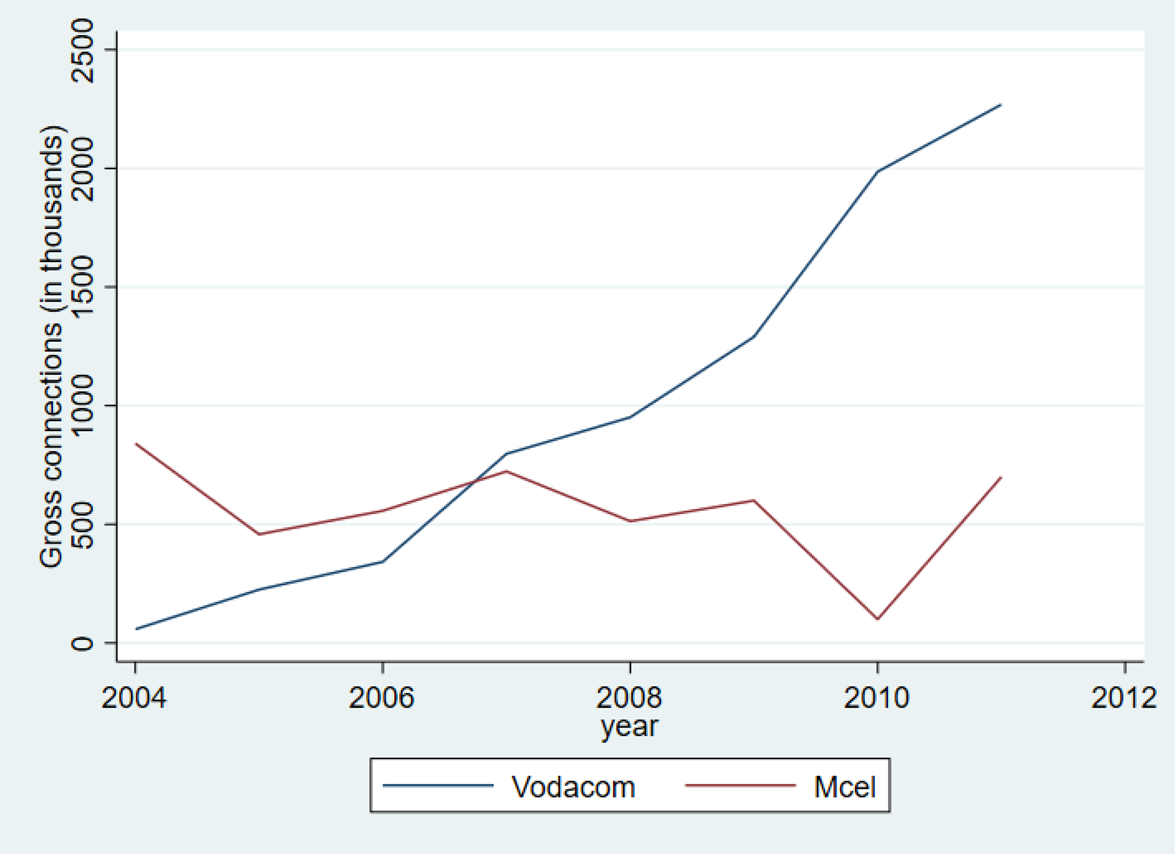
In its annual report 2012, Vodacom was finally able to announce that during 2011 its Mozambican subsidiary had achieved the position of market leader (Vodacom Group, 2012: 27). Figure 2 shows a comparison of the gross connections of Vodacom and mCel in the period covered by our case study. It illustrates how Vodacom MZ's fate started to turn after the strategic shift of 2006.
Gross connections by Vodacom and mCel.
Source: Vodacom and mCel Annual Reports.

4. FDI, rent-appropriation, and the return of violence
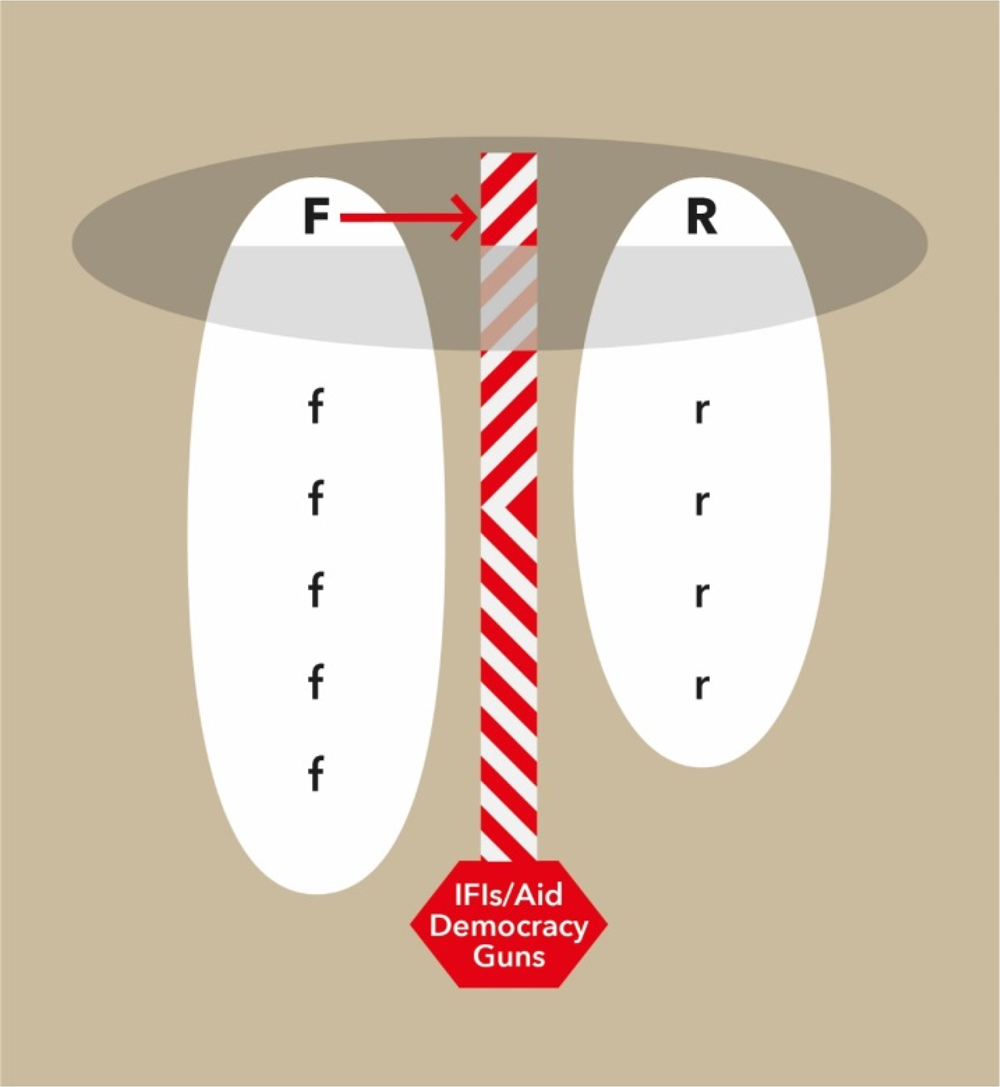
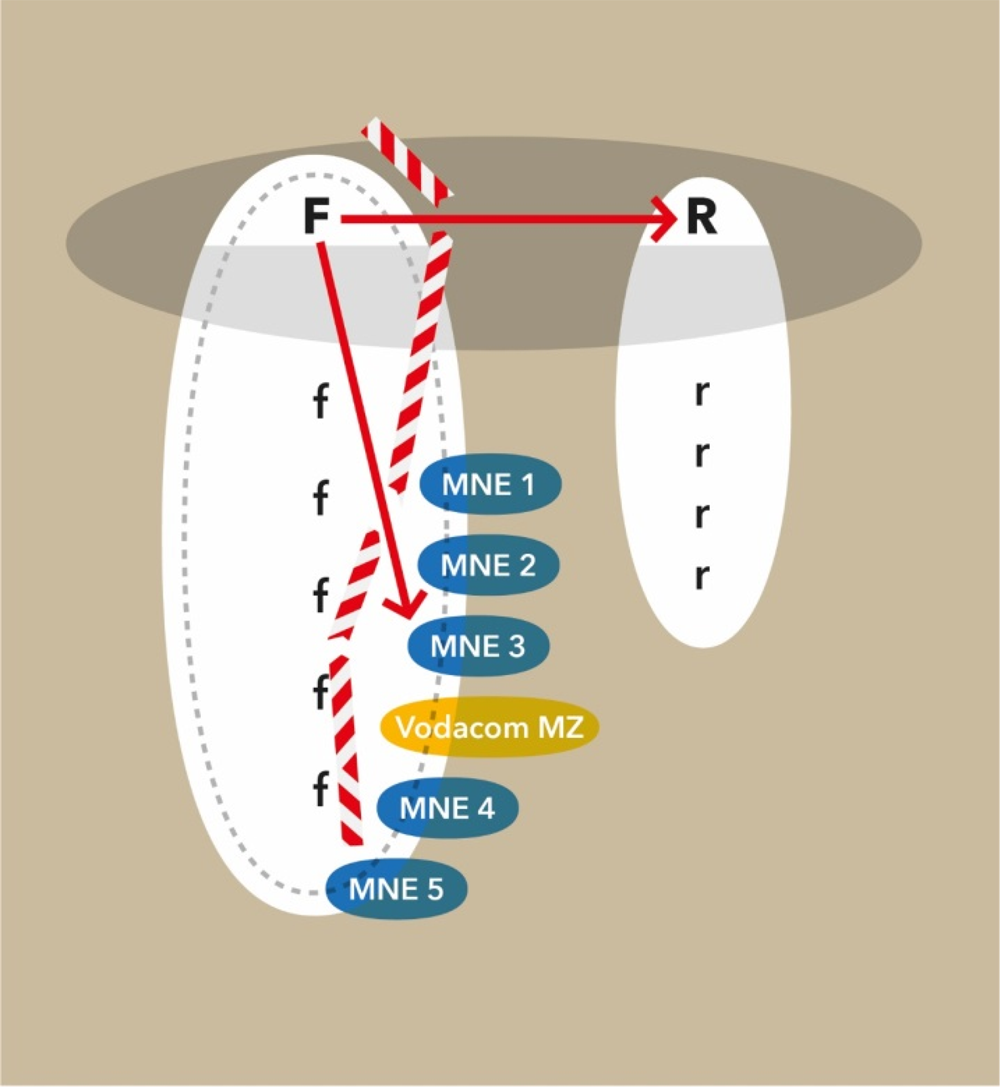
Our case study of a single MNE illustrates at the micro-level how during the presidency of Amando Guebuza FRELIMO used its dominant position to extract increasing shares of inflowing FDI and to distribute them within the networks around the leading figures of the party. As outlined in Section 2, any significant changes in the distribution of rents among the members of the ruling coalition in an LAO tend to translate into changes in the distribution of political power and vice versa. Taking the basic logic of an LAO (as illustrated in Figure 1) as our starting point, we are now able to elaborate upon the question how our case study relates to the macro-level of national politics. Figure 3 schematically depicts the Mozambican LAO after the first ‘democratic’ elections of 1994.
The Mozambican LAO after the end of the civil war (around 1994).
Source: Own illustration.

Though FRELIMO emerged as the dominant party in the first democratic elections, the power imbalance between FRELIMO and RENAMO was still not very pronounced (the vertical FRELIMO eclipse is only slightly larger than the vertical RENAMO eclipse). RENAMO's violence potential was beyond question and FRELIMO's political leeway was internally restricted by the strength of the opposition after the narrow elections and externally restricted by the country's strong dependence on IFIs and foreign aid. These three constraints (RENAMO's violence potential = gunsFootnote 19; narrow result of elections = democracy; dependence on IFIs and foreign aid = IFIs/aid) are symbolized by the diagonal bar between FRELIMO and RENAMO. The idea is that these constraints worked as a barrier against all aspirations of FRELIMO to further extend political and economic access at the expense of RENAMO.
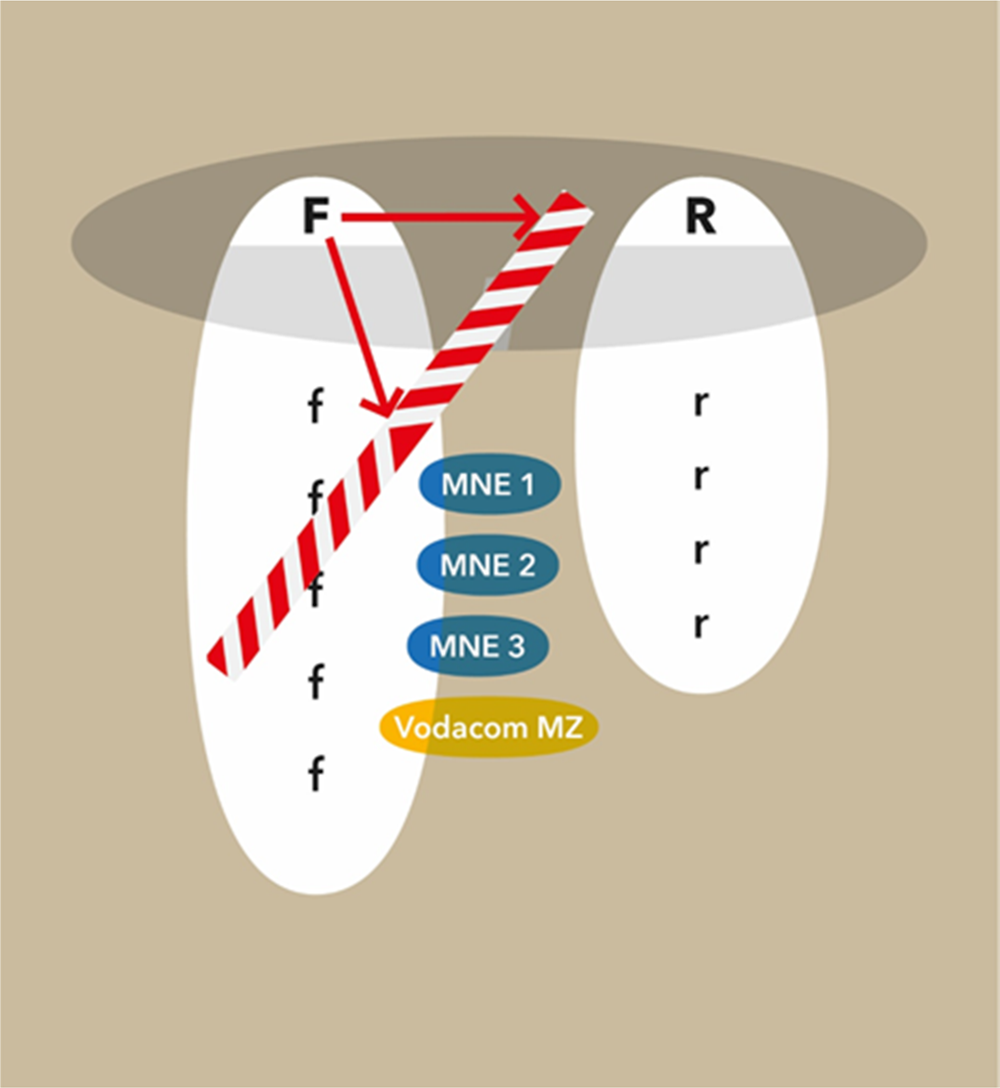
In 2002, the last year of Chissano's presidency and the year in which Vodacom entered the Mozambican market, FRELIMO had significantly expanded its dominance over RENAMO. This is symbolized by the growing relative size of the vertical ‘F’ eclipse as compared to the ‘R’ eclipse. Economically, FRELIMO's increasing dominance resulted from its ability to skim off rents from inflowing FDI. In Figure 4, we see how Vodacom MZ and other MNEs connected to FRELIMO. The intersection between the MNEs and the ‘F’ eclipse symbolizes FRELIMO's ability to skim off rents from these enterprises. The barrier of democracy, IFIs/aid and guns now prevents FRELIMO both from extending its economic access (by skimming off higher rents from MNEs) and its political access (by excluding RENAMO politically). To illustrate this double function to prevent FRELIMO from extending its economic and political dominance, the barrier is diagonal. It is important to note that the barrier is thinner than in Figure 3, symbolizing that the constraints on FRELIMO have been weakened. In particular, as compared to 1994, steady economic growth mitigated the government's dependence on IFIs and aid to some degree. Also, it was not entirely clear to what degree RENAMO was still in possession of workable ammunition ten years after the end of the civil war. But at this point, the barrier still holds.
The Mozambican LAO in 2002.
Source: Own illustration.

Figure 5 describes the situation in 2007, the year of Vodacom MZ's strategic U-Turn. As a result of the massive inflows of FDI in the early 2000s, by 2007 FRELIMO had further expanded its dominance (the vertical ‘F’ eclipse has again grown bigger). Due to FDI, sustained growth and the appearance of new donors, first of all China (Roque, Reference Roque2009), the governments' position toward Western donors improved. The image of an ‘African success story’, created mainly by the IMF, certainly contributed to expanding FRELIMO's political leeway, as it led to an uncritical attitude of Western donors (Manning, Reference Manning2010: 162). The landslide victory FRELIMO had achieved over RENAMO in the 2004 elections decisively relaxed internal constraints.
The Mozambican LAO in 2007.
Source: Own illustration.

Last but not least, 15 years after the end of the civil war it was everything but clear whether RENAMO still possessed operational guns and fighters. In short, all three constraints – the dependence on aid and IFIs, political competition with RENAMO (‘democracy’) and RENAMO's perceived violence potential (‘guns’) – had been decisively loosened. This is symbolized by a thin, and now permeable, barrier. The arrows that go through the barriers symbolize that FRELIMO is now indeed undertaking an attempt to drive RENAMO out, both economically and politically.
We consider it as a question of minor importance whether these loosened constraints or the different political preferences of Chissano and Guebuza were decisive for the policy shift of the 2000s.Footnote 20 As a matter of fact, in a situation in which FRELIMO had gained strong economic dominance, and all constraints had been loosened, Guebuza used the window of opportunity to attempt to monopolize both economic and political access. This process started at the level of MNEs by skimming off higher rents. In Figure 5, the vertical ‘F’ eclipse now cuts more deeply into the MNEs (the dotted line shows the previous ‘depth’ of rent-appropriation). The financial means generated by skimming off higher rents could then be used for the attempt to monopolize political access. In practice, monopolizing political access meant a return to the socialist practice of establishing party structures at all levels of social life – in state agencies, workplaces, and neighborhoods (Manning, Reference Manning2010: 161). In part, additional rents were also used directly to create slash funds for the regional and local administration which enabled them to distribute favors to loyal citizens (Orre and Rønning, Reference Orre and Ronning2017: 29). Toward the end of Guebuza's reign, the party and the state had once again become almost indistinguishable (Adedokun, Reference Adedokun2017; Sumich, Reference Sumich2010), and RENAMO found itself marginalized both politically and economically. The 2009 presidential elections are said to have been the most fraudulent ones in post-socialist Mozambique (Manning, Reference Manning2010: 151).Footnote 21 The disastrous performance of RENAMO leader Alfonso Dhlakama, who lost almost half of his votes and reached 16.41%, however, also reflected the fact that the party had been deprived of the material resources it needed to mobilize political support (Whitfield et al., Reference Whitfield, Therkildsen, Buur and Kjær2015: 118). FRELIMO had practically established a ‘monopoly on power at all levels’ (Manning, Reference Manning2010: 151). Yet, it did not command the monopoly on violence.
After his crushing defeat at the 2009 elections, Dhlakama appeared to have fallen into a kind of political hibernation. When he and a group of devoted ex-combatants retreated to a remote mountain camp in October 2012 (Vines, Reference Vines and Themnér2017: 138), it became obvious that RENAMO had returned to a strategy of violence.Footnote 22 It quickly turned out that despite being weakened, RENAMO was still able to spread an atmosphere of fear and terror regionally. Starting in April 2013, it carried out small attacks on police stations, military bases, and hospitals. RENAMO's attacks and the government's counter-attacks caused considerable suffering to the affected population, and in 2015 and 2016 more than 12,000 Mozambicans fled to Malawi (DW, 2016a). RENAMO also carried out minor attacks against economically important railway connections (AIM, 2016a; Lopes, Reference Lopes2013), which besides causing real economic losses had a negative impact on foreign investors' evaluation of the business climate. Indeed, ever since 2013, when inflowing FDI peaked at 6.87 billion US$, there has been a steady decline to 1.389 billion US$ in 2018 (World Bank, 2019a).
Our explanation of the resurgence of violence focuses on FRELIMO's strategic shift after the 1999 elections and especially on the period after Guebuza took office in 2004. However, the fact that RENAMO reacted to FRELIMO's winner-takes-all strategy by returning to violence was partly also a result of power struggles within RENAMO. As is typical for a former guerilla group, especially the older members of the RENAMO elite faced severe difficulties to adapt to the rules of (pseudo-)democratic politics. This was also true for RENAMO leader Alfonso Dhlakama who maintained a distance to parliamentary politics and rather, as mentioned in Section 2, relied on a strategy of settling important issues in direct negotiations between himself and the President. His disdain for parliamentary work, the strictly hierarchical structure of RENAMO and the fact that Dhlakama repeatedly ended the party careers of younger party members he regarded as potential challengers of his dominance (Vines, Reference Vines and Themnér2017: 136) led to an alienation between him and the younger and more moderate party members. In 2009, former RENAMO politician David Simango established the ‘Democratic Movement of Mozambique’ (MDM) as a moderate and more modern alternative to RENAMO. At the 2013 municipal elections which were boycotted by RENAMO, the MDM achieved a sensational success by securing 30% of the assembly seats (Vines, Reference Vines and Themnér2017: 141). In short: RENAMO's decline at the general elections in 2004 and 2009 and the emergence of MDM did not only reduce RENAMO's stakes in the struggle with FRELIMO, it also threatened Dhlakama's power within the party. This created an important additional incentive for Dhlakama to return to violence.Footnote 23
A further important factor that incentivized RENAMO to react to FRELIMO's winner-takes-all strategy with violence was the discovery of enormous gas fields off the country's coast in 2011 and 2012 (Advisory, 2013). The expected rents massively increased the opportunity costs of keeping the guns down and risk ultimate marginalization. It is to be seen in this context of a distribution struggle over present and future rents that RENAMO's return to violence was not about fundamentally challenging FRELIMO's dominance but rather about re-negotiating the elite bargain (Regalia, Reference Regalia2017: 12; Vines, Reference Vines2019: 19).
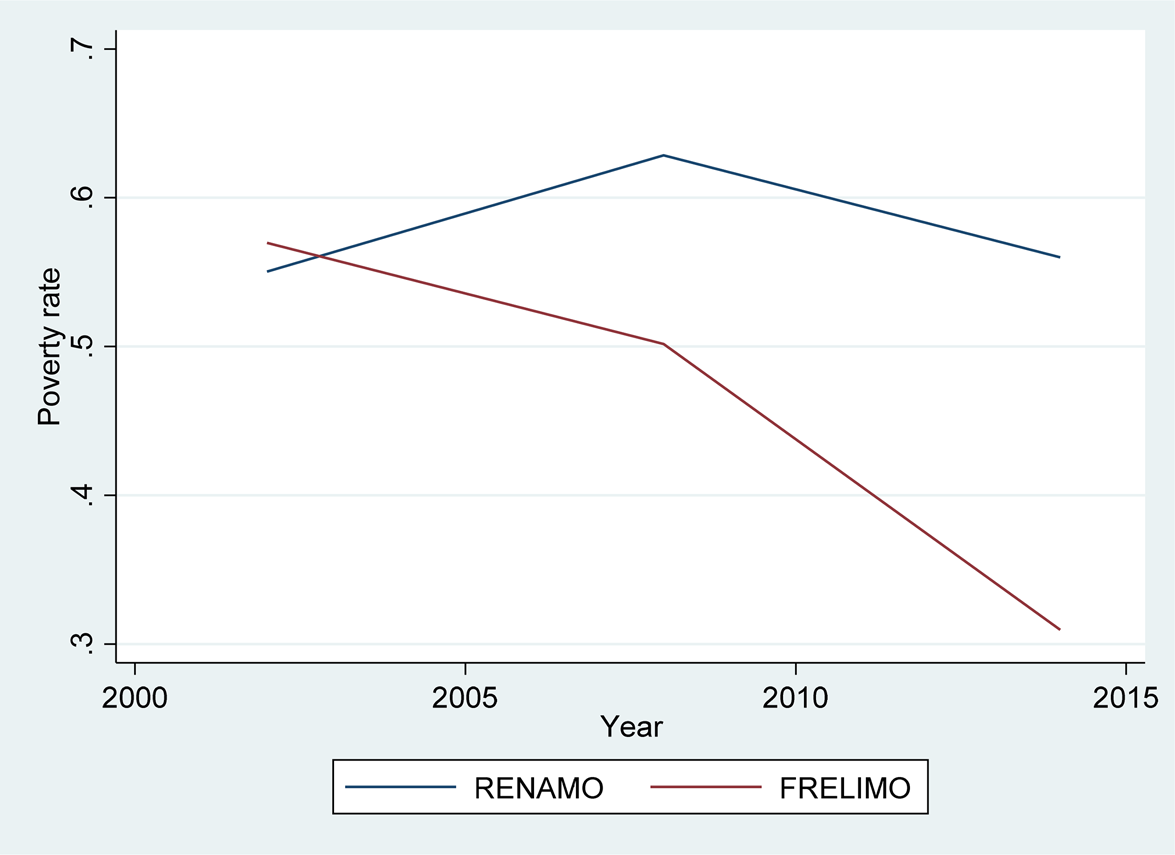
For RENAMO, the return to weapons paid off politically. During the 2014 general and presidential elections RENAMO performed much better than in previous elections. With 36.60% Dhlakama more than doubled his votes and achieved his best result since 1999.Footnote 24 To understand why RENAMO's terror hit a nerve with its supporters it has to be considered that while in the period between 1996/97 and 2002/03 there had been a drastic decline in the poverty rate, since then progress has been extremely slow (Arndt et al., Reference Arndt, Jones, Mahrt, Salvucci, Tarp, Channing and Tarp2017) and inequality has risen.Footnote 25 Politically most explosive, during the 2000s increasing regional social disparities between the regions dominated by FRELIMO and the RENAMO strongholds in the central regions of the country emerged. The following graph illustrates the development of the aggregated poverty rates in the RENAMO provincesFootnote 26 and in FRELIMO provincesFootnote 27 (DW, 2016b). In 2002/2003 poverty rates were basically equal in the FRELIMO and RENAMO regions. By 2008/09 this picture had changed dramatically, with an absolute increase of poverty in the RENAMO regions and significant progress in poverty reduction in the FRELIMO regions. This process continued in the FRELIMO regions (poverty rates had fallen from approximately 50% to approximately 30%), whereas in the RENAMO regions poverty fell from 62 to 56%, that is, to the level of 2002/03 (Figure 6).
Poverty rates across provinces.
Source: Baez et al. (Reference Baez Ramirez, Caruso, Niu and Myers2018) based on IOF2002/3, IOF2008/9, and IOF2014/15.

The political deal that was struck in August 2019 between President Felipe Nyusi and the new RENAMO leader, Ossufo Momade (Dhlakama had died of a heart attack in May 2018), to end violent conflict looks very much like a textbook illustration of the LAO/OAO logic. According to the agreement, instead of the President appointing local governors, they will now be selected by the party that wins the local elections (Pretoria News, 2018).Footnote 28 This basically boils down to granting RENAMO the right to govern regionally in its central traditional strongholds (and extract rents from them). This comes close to the basic logic of the LAO, according to which two previous warlords agree to ‘divide the world into two parts’ and then to ‘recognize each other's right to control the land, labor resources and trading within their sphere’ (NWW, Reference North, Wallis and Weingast2009: 19).
5. Conclusion
We are now able to substantiate our hypothesis that destabilization ‘was due to a toxic mix of domestic politics and a massive inflow of MNE’. As in a number of other SSA countries, a premature introduction of democratic forms into a basic LAO led to a pseudo-democracy in which the dominant state party could manipulate political access and thus cement its political dominance. As is typical for an LAO, political dominance translated into economic dominance. For an enterprise searching for political protection, it was clear that this protection could be offered only by the dominant party, which, accordingly, was able to skim off the lion's share of rents from enterprises. In this constellation, the massive inflow of FDI decisively exacerbated the economic dominance of FRELIMO. As the economic and political spheres are inseparably connected in an LAO, this translated into increasing political dominance. Guebuza's attempt to monopolize both political and economic access started with an extension of rent-extraction from MNEs. These additional rents were then used to drive out RENAMO both politically and economically. Fully in line with the logic of an LAO, RENAMO, additionally incentivized by internal power struggles and the discovery of natural resources, reacted by resorting to its guns. Inflowing FDI and MNEs thus played a double role in the destabilization process: they first exacerbated the disequilibrium between the previous civil war enemies, and the additional rents extracted from them provided the means for what was supposed to be the final monopolization of political and economic access.
We are rather confident that our modified version of the LAO/OAO approach is well-suited to explain the Mozambican paradox. At the same time, much care should be taken when it comes to the question whether and to what degree our findings are generalizable. It is not to be denied that our case (as most case studies) contains a significant number of specific features. Nevertheless, we do believe that some of the basic features (e.g. political dominance of state parties in pseudo-democracies) that are important in our case do apply to other basic LAOs as well, especially in SSA. However, more comparative research and case studies are certainly needed before any further conclusions can be drawn.
Regarding possible policy conclusions of our paper, the decisive question is how the equilibrium between the members of the ruling coalition can be stabilized in an LAO in a situation of potentially destabilizing FDI inflows. Regarding this question, the role of the IMF in Mozambique looks rather doubtful. As mentioned in the previous section, there is evidence that the fact that the IMF never tired of praising Mozambique as a great success story significantly contributed to creating the very policy space Guebuza used to limit political and economic access for persons and organizations not connected to FRELIMO. One might argue that Guebuza's strategy was not yet obvious in 2007 when the IMF for the first time used the label ‘African success story’ in its praise of Mozambique. However, as late as May 2014, and thus 1 year after the return of violence, IMF Director Christine Lagarde still spoke of the country's ‘impressive performance’ based on ‘institution-building and sound management’ and expressed her ‘high hopes’ for the country's future (IMF, 2014).Footnote 29 The story told in this paper suggests that in countries where polity and economy are inextricably interwoven by a logic of rent-sharing and in which the resurgence of violence has to be reckoned with, IFIs should more coherently take the potential conflict of goals between economic growth and political stability into account.
Acknowledgements
We are grateful to Steven B. Webb, Robbert K.J. Maseland, Janis N. Kluge, and three anonymous referees for extremely helpful comments and suggestions. The paper also benefitted very much from the feedback we received at the 3rd Lincoln DEC 2019. The usual disclaimer applies.