Historians have long recognized the significance of energy supply and use during the Second World War. In an early statement on the subject, W. G. Jensen asserted boldly that ‘the Second World War in Europe was … 100% dependent on the internal combustion engine and on oil’.Footnote 1 More recently, in a survey of wartime resources, David Edgerton highlights the importance of coal, iron ore and oil and identifies coal as ‘the key energy source’.Footnote 2 In Timothy Mitchell’s Carbon democracy, the First and Second World Wars serve as hinge events in the transition from coal to oil and the reduced leverage of labour in the production of energy.Footnote 3 Energy impacted the war, but wartime also changed systems of energy production and supply.
While the importance of fossil fuels in the Second World War was profound, this article sharpens the focus on hydroelectricity and the transmission networks designed to deliver electricity from hydraulic sources to endpoint consumers. On all sides of the conflict, hydroelectricity provided an important component of national and international electrical generation. This was perhaps most obvious in countries like Canada and Norway, where hydro provided over 90% of electricity. It was also important, however, in countries such as Germany, Britain, Japan, and the United States, where hydro represented a smaller proportion of total electrical output, but had the potential to offset dependence on coal- and fossil-fuel-powered thermal generation at a time of scarcity and threatened supply lines. In some regions within these countries, such as the Columbia river valley in the United States, or Bavaria in Germany, hydro provided the dominant generation source, and was used to produce strategic and energy-intensive materials, such as aluminium, synthetic chemicals, and plutonium.
The availability of hydro power and its significance as a component of national electricity generation proved to be critical factors in economic mobilization. Over the course of the war, states expanded hydroelectric systems to support war production, constructed transmission lines to carry electricity across regions and borders, and introduced conservation policies to manage better the limited capacity of power-generating facilities. Considerable consequences flowed from the relative failure or success of belligerents to protect and build hydro, and to connect to other systems through alliances, or capture them through territorial expansion. Reflecting on these state-led initiatives, what were the implications for war production and strategy, and how did wartime decisions structure the longer-term evolution of large technological systems?
We seek to answer these questions by comparing three of the major hydro power-producing countries in the world in 1939: the United States, Canada, and Germany. The United States and Germany ranked first and second in total power generation at that time, while the US and Canada ranked first and second for hydro power use. The comparison acknowledges the countries’ sharp differences in terms of geographical area, population, location, international relations, resource endowments, and wartime roles. While the differences are profound, particularly with respect to the war, it is worth noting that each state was nevertheless defined by federal structures of governance, operating admittedly under vastly different assumptions of power, legitimacy, and rule. Federalism, nevertheless, framed the structure of power systems in each case, as did the centralizing momentum of war. These three hydro power leaders also pursued parallel policies: imposing new forms of state authority to control and organize the hydro sector; seeking to develop hydro to offset coal and fossil-fuel demands and to meet critical wartime resource and industrial needs; and extending and interconnecting power systems over distance, and sometimes across borders, to centralize and rationalize separate systems into more integrated large-scale networks. Canada and the United States could pursue these goals in tandem and cooperation, distant from the frontlines of conflict, and deepening and lengthening the bounds of electrified regions. Germany, by contrast, struggled to complete hydro infrastructure in the face of military threats, gained new hydro generation only through annexation or conquest, and, after the intensification of the Allied bombing campaign, faced widespread electrical system failure in 1945. The different access to and use of hydro in these different states, we argue, produced a vital economic and ultimately military advantage or disadvantage.
This examination of hydroelectricity in the Second World War links the historiography of energy systems, war production, and environments. Choices made in each country to accelerate power production and transmission framed post-war energy systems which in turn physically transformed urban, industrial, and rural development and resource extraction. Thomas Hughes’s foundational study of large technological systems properly identifies the First World War as a major factor in the design and execution of power networks internationally. He argued for that war as a driver of large plant construction and system expansion.Footnote 4 More recent scholarship on global electrification tends to treat the Second World War as an anomalous interruption to a general narrative of twentieth-century expansion.Footnote 5 Several country and utility studies, however, identify the war as a significant turning point in hydro development that requires more general analysis.Footnote 6 Our focus on how wartime planning shaped systems and created path dependencies for the post-war era seeks to provide that wider view. The Second World War was not a period of exception or simply interruption, but rather a crucial phase in the restructuring of state policies and regulations and the design and implementation of networks and dams. War was also a source of inspiration and limitation in the post-war enthusiasm for electricity, dams, and large systems. We argue that central governments and power companies responded to the demands of the Second World War by reconstructing the boundaries of systems, the scale of generation projects, and the scope of state electrical policies.
A robust and growing environmental historiography of war offers insights into the links between state aggression and environmental transformation.Footnote 7 Few have attempted to focus on the electrical energy systems of wartime, thereby linking resource extraction and conversion to changes in the land. Nor have earlier works elaborated a comparative analysis. In ‘The nature of total war’, Martin Guttman called for greater dialogue between studies of the Americas and the European Axis sphere during the Second World War, as well as the connections tying discrete sites of fighting to distant environments.Footnote 8 This article attends to the spatial reach, regional and international linkages, conservation challenges, and environmental foundations of the hydroelectric systems enlisted for war production in the United States, Canada, and Germany.
Our comparative history of hydroelectricity in the Second World War begins with a brief account of how hydroelectric systems operated in the three countries under study. It then analyses how states first sought to centralize the administration of hydro power to meet wartime aims, and then executed projects to mobilize new hydro resources or to release reserve capacity over distance through building and interconnecting transmission systems. In each case, private utilities exerted both political and economic influence or resistance, and in many instances completed the physical work needed to accomplish the states’ goals. The conclusion summarizes the impact of the war on hydro and of hydro on the war, and enumerates the ways in which wartime planning and construction shaped the system characteristics of the post-war period.
Three development paths
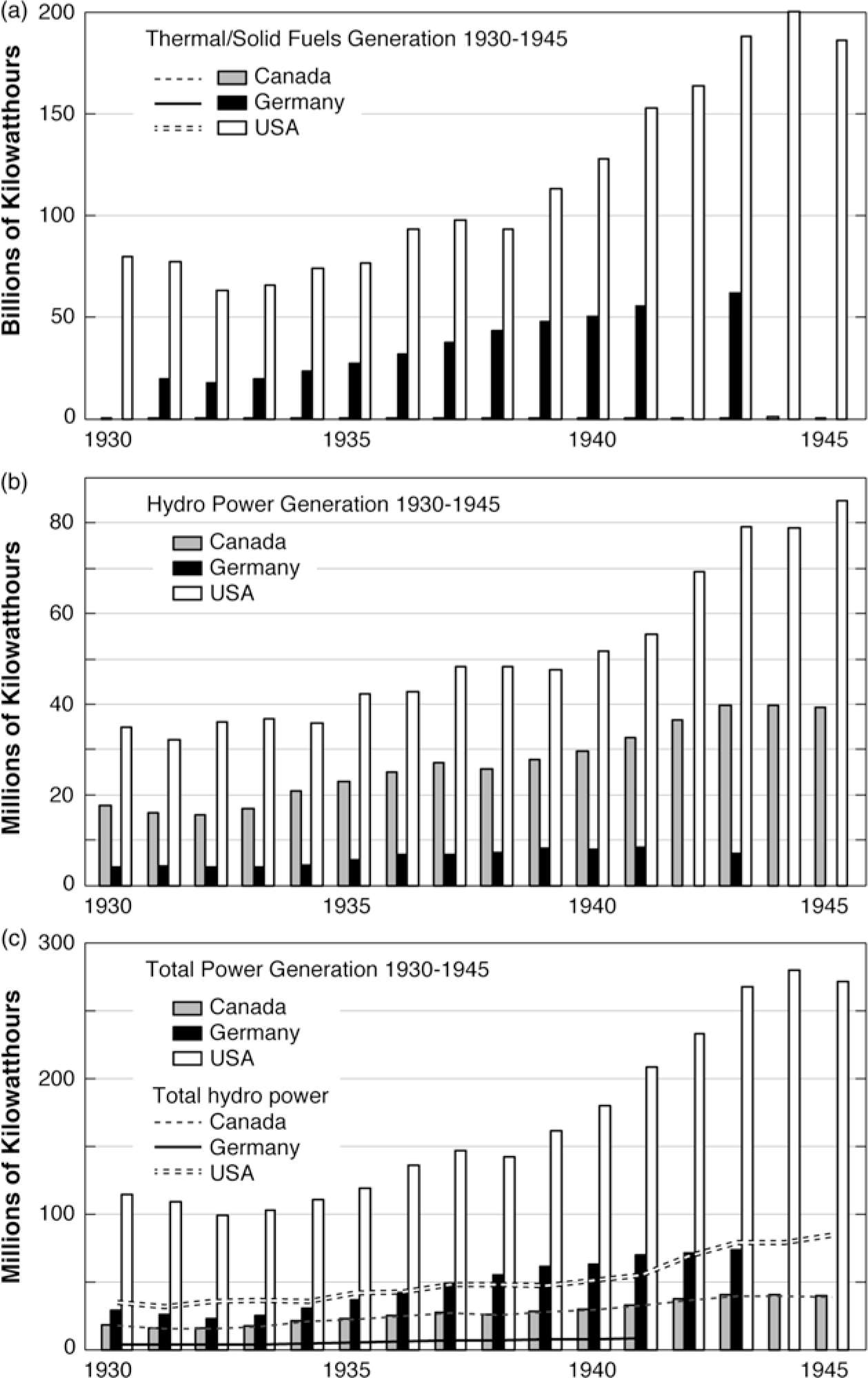
Canada, the United States, and Germany led the world in hydroelectric development in the 1930s, but they all differed in terms of the geographical structure of power systems and the reliance on hydro power as a component of total power production. Of the three countries, Canada exhibited the highest dependence on hydro power. Figure 1 illustrates the differences in each country’s reliance on hydro power and each country’s total power production before and during the war. Thermal power accounted for less than 3% of power generated in Canada in the 1930s; through the war the proportion of hydro power to thermal remained unchanged, even as both systems expanded.Footnote 9 Internationally, only Norway approached a similar level of near-total reliance on hydro. Within Canada, hydro power development exhibited strong geographical patterns, with a clustering of power plants in the near and middle north of the Canadian Shield and along the St Lawrence valley of Ontario and Québec, as well as a series of plants close to urban and industrial centres in western provinces such as Manitoba and British Columbia. Transmission systems tied together industrial regions in the St Lawrence corridor stretching from Windsor, Ontario, in the south-west to Quebec City in the east, with a few notable inter-ties to American systems at Niagara Falls and Cornwall (see figure 2).
Hydro power generation and total power generation by country. Sources: Canada: Canada Department of Trade and Commerce, Dominion Bureau of Statistics, Transportation and Utilities Branch, ‘Census of industry’, 1930–45, Ottawa, 1931–46; Germany: Statistisches Handbuch von Deutschland, 1928–1944, Munich: Franz Ehrenwirth, 1949, p. 335 (some statistics missing for 1942–1945); United States: Historical statistics of the United States from colonial times to 1970, series S, Washington, DC: Government Printing Office, 1975.
Long-distance transmission systems in Central Canada. Sources: A. H. Frampton and E. M. Wood, ‘The 220,000 volt system of the hydro-electric power commission of Ontario – II’, Hydro-Electric Power Commission of Ontario Bulletin, 28, 7, 1941, p. 214; W. R. Way, ‘Quebec rivers unite for victory: note sur l’interconnexion des réseaux électriques du Québec’, Shawinigan Journal, 1, 5, 1944, pp. 8–12. Cartography by Eric Leinberger.

The United States, by far the world’s dominant producer of electric power in the period, exhibited a mixed portfolio of hydro and thermal power generation with strong regional differences. Nationally, the US generated slightly more than 67% of its power from thermal sources, and slightly less than 33% at hydroelectric plants.Footnote 10 The Pacific and mountain states relied almost exclusively on hydroelectric power and accounted for approximately one-third of US hydro power, but only 8% of the total power capacity.Footnote 11 The much more densely populated eastern urban regions around cities such as Chicago and New York produced the bulk of US electricity, and relied heavily on fossil fuels; an industrial conurbation in northern New York State proved exceptional for its reliance on Niagara river power. Power development companies invested in high-voltage transmission lines across the US. As figure 3 illustrates, the highest density of system interconnections and long-distance transmission occurred on both the Pacific and Atlantic coasts, particularly around urban centres.
Map of continental United States showing high-voltage transmission lines in 1940. Source: Report on the status of interconnections and pooling of electric utility systems, Edison Electric Institute, 1962.

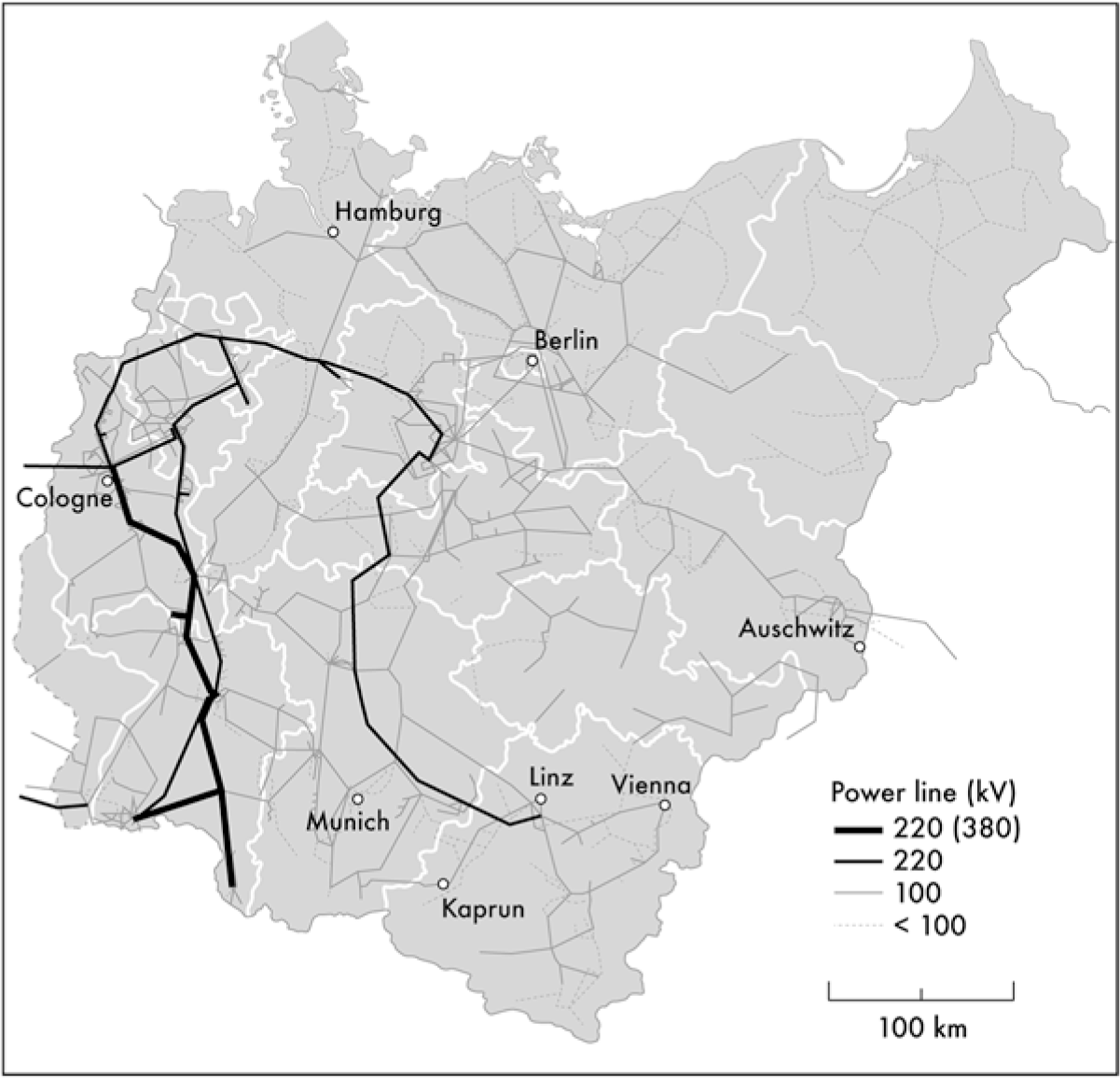
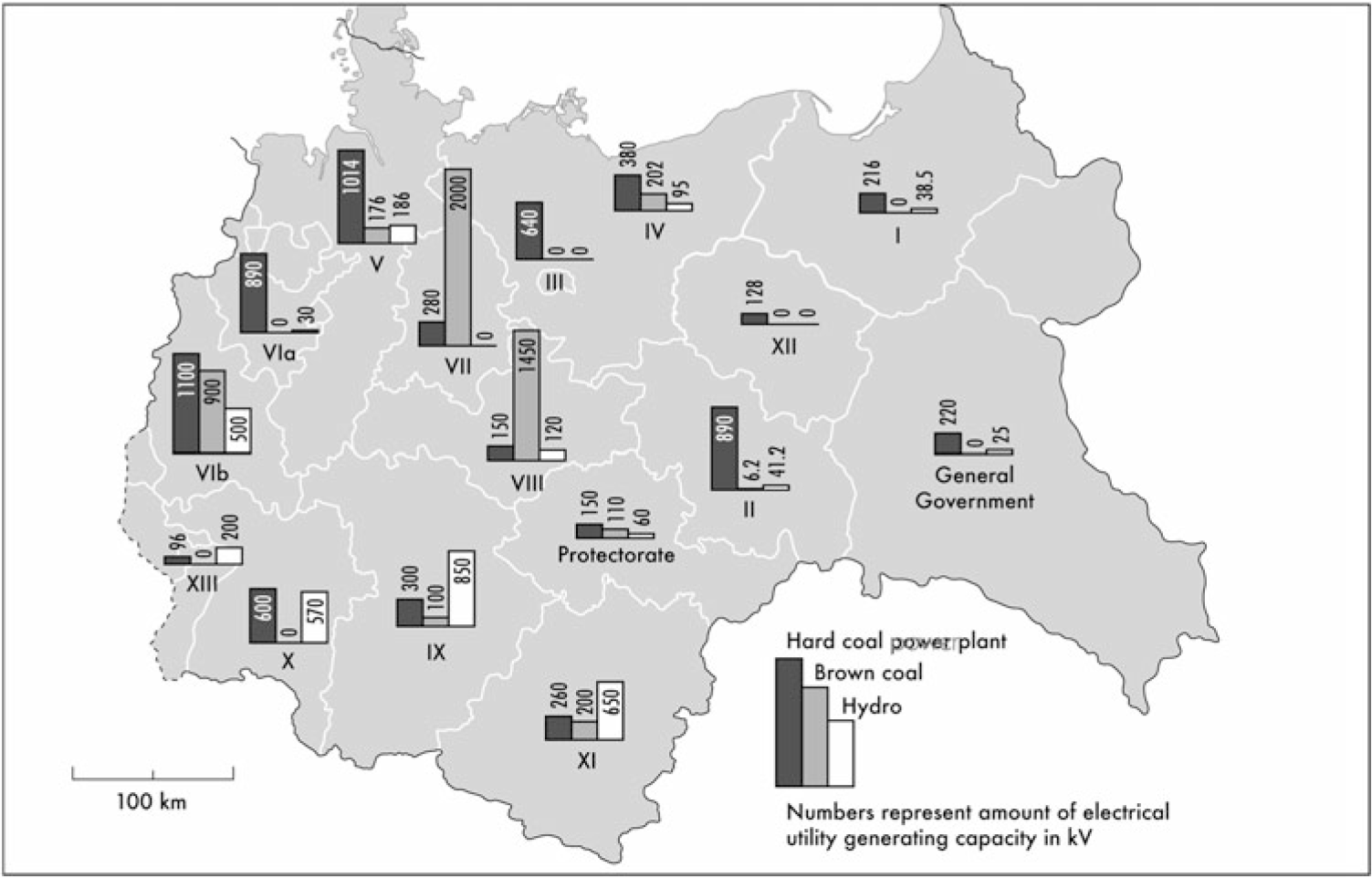
Before the Nazi takeover in 1933, German systems had crossed national lines and interconnected with both Swiss and west Austrian hydro power plants. Like the United States, Germany’s power systems relied heavily on coal-based thermal generation. On average, hydro accounted for about 15% of the country’s electrical generation in the 1930s – almost the inverse of the situation in Canada – but Germany’s total power output placed it second in the world to the United States.Footnote 12 The country’s greatest hydro power potential lay in the coal-poor southern states of Baden, Württemberg, and Bavaria, through which flowed the rivers that drain the north slopes of the Alps. Before the First World War, German utilities built some of the largest European hydro power plants as part of joint international projects on the Rhine, where the river forms the border between Germany and Switzerland. This region would prove to be the kernel of the future European grid.Footnote 13 The southern German states also innovated in the development of transmission systems to increase utilization of abundant hydro sources. The expansion of transmission networks continued after the First World War in response to calls for self-sufficiency. The interconnection of German systems through the 1930s increased the scale of operations and sought to spread the load factor over distance by exploiting different types of power generation (see figure 4). Water-powered systems in the south optimized storage in mountain reservoirs, while coal-based thermal plants in the Ruhr and farther north shored up southern systems during the winter months (see figure 5).
Map of electric transmission lines in wartime Germany, 1945. Source: United States Strategic Bombing Survey, ‘German electric utilities industry report’, Utilities Division, 13 October 1945, exhibit E. Cartography by Eric Leinberger.

Map of power generation sources by district in Germany. Source: United States Strategic Bombing Survey, ‘German electric utilities industry report’, exhibit C. Cartography by Eric Leinberger.

While the temporal boundaries of the Second World War usually encompass the years 1939–45, there are good reasons to consider hydro’s contribution to the war over a longer time scale. Since each country entered the Second World War from different starting points in terms of hydroelectric development, and indeed at different times, it is well to note the contrasts that existed over the course of the 1930s. These differences reveal much about how each country approached wartime hydro development and what opportunities and constraints existed at the beginning of the war. In Canada, at a time of slumping economic activity and surplus electricity production, private power producers cancelled expansion plans and no federal or provincial governments intervened to boost supply. Potential was recognized but not generally realized, nor were any institutions created to organize or study a national hydro programme. In the United States, President Franklin Roosevelt’s administration, with support from Congress, launched large-scale hydro projects in the 1930s, in part to offset unemployment at a time of intense struggle between public and private power development. The New Deal programme yielded major developments in the Tennessee river and Columbia river valleys, as well as in California, all of which became wartime keystones of electricity supply. In Germany, hydro development remained a minor component of energy supply in the 1930s, even as the Nazi state sought to centralize control over the electricity supply and to promote hydro development. Presaging later events, Nazi Germany conceived of hydro development in the late 1930s primarily in terms of territorial expansion and the capture of developed and potential hydro power from Alpine regions of Austria through annexation, or Anschluss.
These different development paths produced the contrasts evident in Figure 1. In Canada, weak growth during the 1930s with an increasingly close match in markets between supply and demand, combined with a limited thermal power generation sector, meant that the country would have to face spiking wartime demand with a spate of quickly realized hydro development projects.Footnote 14 Hydro plants provided all but about 2% of Canada’s power from 1930 through to the end of the war. The United States, the hydro development leader in this decade, increased its level of hydro generation as a component of total electricity output, and provided a foundation for wartime demands through its New Deal projects. On average, hydro plants generated 31% of the power used in the United States. Germany did little to expand its hydroelectric generation potential, but the steady rise of thermal generation led to the wartime problem of how to reduce that dependency when coal transport faced bottlenecks and demands for coal for various uses, including synthetic fuel production, increased the importance of hydro as an offset. In Germany, hydro provided as much as 17% of the country’s power by the mid 1930s, but this fell to 10% or less by the end of the war. The final contrast to note is the relative richness of hydro development in Canada and the United States versus Germany. Large continental states accessed vast hydro resources owing to geographical endowments and economic opportunities that would prove to be important wartime assets, safely removed from the main theatres of conflict. Germany, by contrast, envisioned the capture of resources within a spatially expansive wartime economy, but failed to achieve it with regard to hydro power.
Centralizations of authority
The governance of hydro power systems became uniformly more centralized during the war. No matter the different starting points, the US, Canada, and Germany all found it convenient, indeed necessary, to syphon control over electricity from regional authorities and private corporations to the central state. Such centralization processes moved in lock-step with other forms of state resource control exerted over industry, labour, and materials, but developed out of the different and specific contexts of pre-war electricity regulation norms. These differed significantly in the three countries. So, while the momentum for centralization showed similarities, the starting and end points exhibited marked contrasts.
The weakest level of pre-war state control existed in Canada. Owing to the division of constitutional powers in Canadian federalism, authority over rivers and hydro power fell primarily to regional governments, or provinces, except when rivers crossed provincial or international boundaries or impacted federal authority over fisheries. Provincial governments for their part sought to regulate power development activities, but only in Ontario did the Hydro-Electric Power Commission control the majority of power generation facilities, transmission, and distribution lines. Thus private utilities controlled the majority of power development across the country, with the exception of one province. In addition, industrial operations in sectors such as pulp and paper, and mineral smelting, produced hydro power for their own needs. Large utilities such as Montréal Light, Heat and Power in the east and BC Electric in the west operated with limited regulatory oversight and no connection to wider state strategic goals. The Aluminum Company of Canada (ACC), Canada’s monopoly aluminium producer located in Québec, was already primed to enter the war economy through pre-war contracts with the United Kingdom, but planned its own power development and interconnection programme with neighbouring utilities in advance of any federal consultation.Footnote 15 When Canada entered the war in 1939, therefore, there was a fractured regulatory landscape, no central direction, and no federal bureaucracy in place to organize the hydro field for strategic purposes. Private industry pursued its own agenda.
By the spring of 1940, the Canadian government realized the need for a broad programme to reorganize the economy for war. Prime Minister Mackenzie King appointed C. D. Howe as Minister of Munitions and Supply to coordinate economic mobilization and ensure supplies for fighting forces. Following British precedent, Howe instituted economic controls on raw materials and resources, including ‘power’.Footnote 16 Herbert J. Symington, a Montréal lawyer appointed as power controller, gained sweeping legal authority to regulate the power industry across Canada, to cancel and command projects, and to set and change electricity rates.Footnote 17 While provincial governments continued to regulate their respective power fields, they did so in coordination with the centre and in a much-reduced political role. Symington’s authority was nevertheless not absolute: he had few levers to compel compliance and so pursued a consultative policy with provinces to which he ceded authority at times, and offered valuable concessions and tax depreciation benefits to industry at others. Central authority in the Canadian case thus inserted a wholly new federal presence in the power field, without at the same time simply dispensing with pre-war arrangements. Canada’s centralization strategy was therefore expedient but not intended to be enduring. Of the three cases, the centralization programme in Canada started from the weakest position, and remained the least developed during the war.
Central control also ran into difficulties because of the complicating factor of the international boundary with the United States. Terms of the International Boundary Waters Treaty with the United States (1909) governed the Great Lakes–St Lawrence basin, which held many of the best hydro development opportunities in the late 1930s. This meant that to develop boundary waters, either on the border or at points that would affect border flows, Canada required formal American permission. Since the late 1920s, the US had frustrated successive Ontario governments by blocking small hydro projects that could help build the province’s power generation capacity incrementally, and by insisting on a grand settlement for hydro developments and shipping canals under a more broadly conceived St Lawrence Treaty.Footnote 18 Symington thus had to factor in American diplomacy and engage American governments in the project of expanding Canadian hydro development against previous policy, at a time when the United States had not formally entered the war. He also had to negotiate with American authorities over power supply at the border at a time of rising Canadian demand, and, as the war continued, secure hydro power in Canada for the smelting of aluminium to fulfil supply contracts with the United States.Footnote 19 Centralization in the case of Canadian federal control also involved a significant sidebar negotiation with American utilities and industrial producers, as well as the US government.
Although Canadian and American federalism bore similarities, the role of the central state in hydro power development in the United States before the war was much stronger than in Canada. In 1920, Congress enacted the Federal Water Power Act (FWPA) and established the Federal Power Commission (FPC) with the intent of managing development of hydroelectric dams on waterways.Footnote 20 Under the ‘Commerce Clause’ of the US Constitution, the federal government held regulatory authority over interstate trade, including management of navigable waterways. As a result, nearly every potential hydro power site in the United States fell under federal jurisdiction. Through the FWPA, Congress established mechanisms for exercising that jurisdiction, albeit without real teeth.Footnote 21 During the 1930s, through both legislative and administrative actions, the scope of federal authority expanded a great deal. For Roosevelt, a larger public role in electrification and oversight of investor-owned utilities had been a campaign promise and policy priority.Footnote 22 On the regulatory side, the Public Utility Holding Company Act of 1935 (PUHCA) established limits for holding company expansion and strengthened the role of the FPC. In the latter case, the FPC gained the ability to regulate rates for wholesale power trades, and to compel interconnections when it was in the national interest. On the electrification side, federal agencies old and new invested more than US$1 billion throughout the decade in power infrastructure. This included authorizations for hydroelectric dams and both direct expenditures and loans for thousands of circuit miles of transmission lines.
While this growth in federal authority over power systems contrasted with Canada’s less aggressive centralizing initiatives, it should not be mistaken for true central control. As many as fifteen different federal government agencies had a stake in the electrification process during the 1930s, and they did not always cooperate.Footnote 23 Further, as in the Canadian provinces, US state utility commissions (and, in some states, municipal governments) retained regulatory authority over utility rates and entry. Perhaps more significantly, investor-owned utilities dominated the market, controlled the vast majority of infrastructure development, and strongly resisted federal oversight, going as far as filing lawsuits against implementation of the PUHCA. The president and Congress met resistance at every level as they each attempted to consolidate power over power.
The lack of a single dominant planning and coordinating entity was evident as President Roosevelt, his agency heads, and utility leaders began to plan for a possible global war in the late 1930s. The War Department urged the abandonment of large-scale interconnections, calling for investment in new generating plants close to likely sites of war production. The FPC, by contrast, urged increased interconnection, in lieu of new generating facilities.Footnote 24 Roosevelt established a sequence of committees to develop wartime power plans, all of which were essentially abandoned after US entry into the war. In 1938, state railroad and utility commissions warned that the country’s power capacity would be insufficient in the event of war.Footnote 25 At the same time, utilities rejected federal overtures to take over planning, and claimed that the industry had ‘“tremendous undisclosed” surpluses of power’ that could be ‘brought in through interconnection’.Footnote 26 Advocates for public power inserted themselves into the process as well, turning each policy-making question at the federal level into an opportunity to lobby against privately owned power companies.
This all changed significantly once the United States entered the war, by which time Roosevelt and his administrators were already taking steps to exert more centralized authority. In May and June 1941, the FPC responded to drought conditions in the south-east, which threatened production at US aluminium plants, by urging domestic customers to limit non-defence uses of electricity.Footnote 27 Local curtailments continued into November that year. The Office of Production Management created a special unit to handle defence problems and to help utilities in the south-east and north-east create giant power pools in order to supply electricity to aluminium and magnesium producers. In November 1941, the Securities and Exchange Commission issued new rules to facilitate financing for private utilities planning to interconnect. Following the bombing of Pearl Harbor on 7 December 1941, and the US decision to enter the war, Roosevelt tightened control over power systems further and the utilities fell into line, leading to an unprecedented level of coordination across the industry through the ensuing four years.
Germany’s pre-war pattern of state intervention in hydro power was more dispersed than in the United States, though federal authority emerged at key points. Early in the life of the Weimar Republic, the Reichstag passed a law nationalizing all power plants, but failed to assure implementation. As in Canada, regional governments (states) held constitutional authority, and thus a patchwork of regulatory approaches prevailed. With greater resource opportunities, the southern states took a more active role in regulating and shaping hydro power development. Bavaria built a public, state-wide transmission grid fed by several large public hydro power projects in the 1920s. The federal state contributed financially to those that supplied the newly created aluminium and chemical industries, and also invested in cross-border projects, both between individual German states and internationally (between France, Switzerland, and Germany on the upper Rhine, and between Austria and Germany on the Inn). Canals and their accompanying hydro plants also fell entirely under the jurisdiction of the federal state after the First World War.
The Nazi takeover in 1933 led to unprecedented efforts to consolidate central control over Germany’s electricity supply, and hence hydroelectricity as well. In the spring of that year, the party moved to align German societal and economic institutions – including the electricity supply – with the goals of National Socialism. Early on, the Nazis achieved a victory for the forces of centralization with the passage of a national law regulating electricity. The 1935 Reich Energy Supply Law (Energiewirtschaftsgesetz) settled a long-standing battle within German society over the organization of the electricity supply.Footnote 28
Since the First World War, Germans had debated whether their electricity system should be based upon large-scale, centralized electricity production and long-distance transmission to centres of consumption, or a more decentralized system, in which the sources of power production were dispersed more evenly across the land. Germany’s larger utilities endorsed the former position, while cities and local interests defended the latter viewpoint. A small minority of left-leaning Nazis, led by the engineer Franz Lawaczeck, also supported a decentralized system, arguing that, just as every town in medieval Germany had had its own mill, so every centre should now have its own hydro power plant. They also feared that a centralized system would play into the hands of large capitalists and create vulnerabilities in wartime.Footnote 29
Though visions of a dispersed power landscape fit nicely with the ‘blood and soil’ aspects of Nazi ideology, they did not align with the economic necessities of a leadership bent on full-scale rearmament. Unsurprisingly, the 1935 law favoured centralization and interconnection, granting large utilities wide-ranging powers to construct new plants and transmission lines as they saw fit. Nevertheless, although the law set Germany on a path of centralized production and interconnection broadly favourable to the country’s large utilities, local interests retained an ability to subvert these intentions. Even at the height of Germany’s economic mobilization during the Second World War, municipalities and smaller regional electric utilities managed to thwart aspects of the large utilities’ rationalization plans.Footnote 30
Amid the foreign currency crisis of the summer of 1936, Hitler made the decision to dedicate the German economy to rearmament. The resulting Four Year Plan invested in twenty-five to thirty branches of the economy to meet planning goals for autarky, and paid significant attention to the electrical industry.Footnote 31 The most important sectors included the chemical industry, which received about 50% of the capital, while the expansion of coal and electricity production received about 10%. In 1937, in an effort to boost electrical generation, the central government directed 8% of all funds to problems of electricity supply at a value of 727 million Reichsmarks.Footnote 32 By 1939, this expansionist programme made Germany one of the world’s top electricity producers.
In the course of preparing the Four Year Plan, key functionaries became convinced of the special importance of hydroelectricity in Germany’s rearmament plans. Vital industrial processes – above all, synthetic oil and rubber production – required coal as a raw material. Just the production of aluminium and synthetic rubber (Buna) consumed 13% of all German electricity production.Footnote 33 Coal was also crucial for the rail system and for steel production, in addition to thermal power generation. Realizing new hydro sources equated to conserving coal. In the search for these new sources, Germany’s gaze fell less upon domestic sites, many of which had already been developed, than upon rivers to the north and south. These ideas built on interwar visions for long-distance transmission and European integration, but were now animated by principles of autarky and German domination.Footnote 34
The new directions in German electricity politics and economic investment did not, however, appreciably alter the country’s electricity situation before the start of the war. Throughout the 1930s, coal remained by far the most important source of electricity generation, and interconnection of the different German regions became the primary focus of development.Footnote 35 While expansion of power plants at the national level continued apace (rising by 30% between 1936 and 1938), the new demands of the Four Year Plan quickly outstripped this additional capacity.Footnote 36 Whereas in the mid 1930s the interconnected systems of Germany experienced a reserve capacity estimated at 35%, by 1939 it was almost nil.Footnote 37 As a result, many of the new raw material and weapons industries built their own thermal power stations using coal from the Ruhr. A year before Germany’s invasion of Poland, planners predicted that continuing to satisfy the ravenous industries of the Four Year Plan would require an expansion of up to one-third of existing annual production.Footnote 38
In recognition of the looming energy crisis, in 1939 Hermann Göring appointed Just Dillgardt, mayor of the Ruhr city of Essen, as Plenipotentiary for the Energy Supply (Generalbevollmächtigte für die Energiewirtschaft).Footnote 39 Two days after Germany’s invasion of Poland, the state established the position of Reichslastverteiler (‘Reich load dispatcher’) to manage the national grid, drawing power from both publicly owned utilities and private plants, and assigning it on a priority basis to war industry and utilities.Footnote 40 No similar position existed in either the United States or Canada. In 1941, Hitler established a ‘general inspector for water and energy’, a post filled by the Minister of Armaments and War Production, Fritz Todt, and, after his death, by Albert Speer.Footnote 41 Though a rival of Göring’s, Speer also succeeded Todt as minister. The newly created positions sought to break through the notorious chaos of Nazi governance, in which a dizzying number of institutions, agencies, and ministries often competed at cross-purposes. While Speer’s ministry centralized many functions, it also led to a profusion of committees.Footnote 42 That Hitler issued a special decree on ‘war measures in the electrical industry’ in August 1943, seeking to underline Speer’s authority in all matters pertaining to electric power, suggests the continuing problem faced by the central state in imposing electricity regulation and policy.Footnote 43
By the 1940s, the centralizing programmes of Canada, the United States, and Germany all sought to overcome institutional and political barriers to regional and utility integration, tie power planning closely to wartime production goals, and eliminate overlap and obstructions. It is noteworthy that some Nazis in Germany saw security in a disaggregated system, while some power experts in the United States argued the opposite.Footnote 44 Germans and North Americans both took precautions to protect electricity infrastructure from direct attack.Footnote 45 But overall, with a few notable exceptions, the war planners largely ignored power installations as bombing targets, whether interconnected or dispersed. Instead, systems in the three countries evolved within the context of pre-existing norms, faced constraints such as materials shortages, and contended with the countervailing efforts of vested private and government interests. It was easier to appoint a central authority than to realize central authority.
Mobilizing power and interconnecting systems
Total war demanded enormous defence production, which in turn required huge quantities of energy, especially electric power. Canada, the United States, and Germany all moved to distribute energy strategically and use it efficiently. This required the integration of systems, the regulation of use, and the development of new power sources. Mobilizing power led to improvisation along the entire continuum of electrification, and resulted in the common outcome of changed landscapes and new technological realities.
Central authority was new in the Canadian power field, development projects had been largely postponed during the 1930s, and growth would have to occur in the context of wartime shortages. Despite all of this, Canada posted large increases in generation capacity and output over six war years and realized significant gains through interconnection (see figure 1). It did so by focusing efforts on key industrial projects, most notably aluminium production, as well as on regions with established hydroelectric infrastructure. While small projects went forward in British Columbia and Alberta to produce power to support explosives manufacture and heavy water production for the Manhattan project, power policy focused largely on Québec and Ontario, Canada’s industrial heartland.
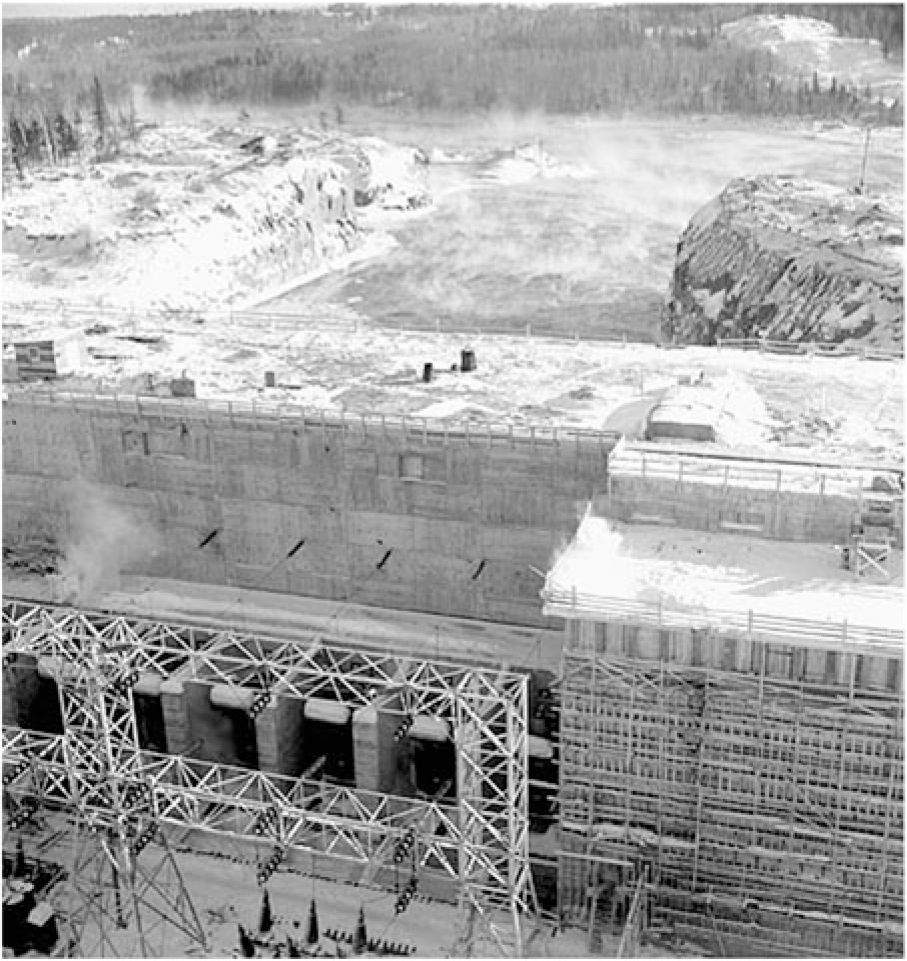
Canada’s wartime power programme circulated around two related problems: ensuring sufficient electricity for a massive expansion of aluminium output, and meeting the rising needs for industrial power, particularly in southern Ontario. Canada decided on an aluminium priority in 1940 when the United States disclosed potential production bottlenecks owing to limits on electrical supplies.Footnote 46 As a result, Symington placed immense pressure on the ACC to expand its power generation without delay.Footnote 47 By 1940, the company had already structured a deal with neighbouring power systems to interconnect. Symington’s demands coincided with the loss of potential European continental aluminium supplies for the UK following the fall of France and Norway, and with increased British aluminium orders. After the entry of the United States into the war in 1941, and a public acknowledgement of a shortfall in planned aluminium production, the US government negotiated a supply contract with the Canadian company. This contract helped the ACC to finance the construction of a new hydro power complex in eastern Québec on the Saguenay River at Shipshaw (see figure 6).Footnote 48 The Canadian government also undertook to supply aluminium facilities and chemical plants in upstate New York with hydro power for the duration of the war, notwithstanding shortages in other sectors in Canada.Footnote 49
Shipshaw powerhouse under construction, 1943. Source: Library and Archives Canada, Ottawa, Ronny Jaques, National Film Board of Canada, item no. WRM 2558A, acc. 1971-271 NPC.

By the end of the war, the ACC would supply about one-third of all Allied aluminium needs, and approximately 90% of British and Commonwealth supplies.Footnote 50 Canada increased its aluminium production by a factor of five between 1939 and the wartime peak in 1944. In that year, the country turned out more than 418,000 tons, almost one-quarter of total world production, and far outstripped Germany’s 236,000 tons in the same year.Footnote 51 As aluminium was a critical metal for aircraft production in a war that turned like none before it on airpower, this was an enormously significant material contribution that was fundamentally dependent on hydro power.
Whereas aluminium producers in Québec quickly accessed new electrical supplies through interconnection, and over the course of the war through hydro development, in Ontario the situation was less straightforward. There was little slack to be taken up, as the major industrial regions were already interconnected with power generation facilities as far east as Québec. In 1939, HEPCO officials stated that within a year Ontario would face serious power shortages as the economy converted to wartime production.Footnote 52 Development opportunities on the St Lawrence river, which had been discussed since the 1920s, remained entrapped in cross-border complications. The war, however, broke this inertia. In 1940, the United States agreed to allow Canada to increase its water taking at existing power facilities, as well as to build new diversions and power plants in northern Ontario that would cause impacts downstream in the United States.Footnote 53 For its part, Ontario and Canada supported a renewed approach to St Lawrence power development, and signed an international agreement on the St Lawrence with the United States in 1941. While no new dams were built on the St Lawrence during the war, owing to the long time frame required, the loosening of restrictions on Canadian developments in boundary waters allowed for the rapid completion of diversion, dam, and plant projects that quickly boosted Ontario’s power production.Footnote 54
The Canadian power controller imposed a sweeping set of power restrictions on the industrial and interconnected regions of Ontario and Québec to close the gap between identified shortages and completed hydro projects. Demand threatened to eclipse supply, particularly during the peak periods seasonally and daily. From 1942 until the closing stages of the war in 1945, Symington’s order PC 5 restricted the use and voltage of commercial, street, and public lighting, leading to dimmed cities and darkened streets.Footnote 55 While lighting accounted for less than 10% of total demand, utilities were so challenged to meet industrial contracts that even this small support helped.Footnote 56 The power controller also froze access to interconnected systems for a number of pulp and paper plants, and moved their production contracts to isolated plants.Footnote 57 The lighting restrictions and pulp and paper closures were two components of a conservation programme that sought to divert power away from civilian uses and towards wartime production.
In the United States, increased power generation played a crucial role in war production, but the growth was accomplished through interconnection and technical innovation as much as through new investment in dams and power plants. As fighting intensified in Europe in 1939 and 1940, investor-owned utilities in the United States projected the need for 10 million kW of new generating capacity.Footnote 58 In 1942, the War Production Board limited planned expansions of generating plants to just over half that amount.Footnote 59 This placed a burden on the power companies to meet both domestic and military demand without building substantial new coal-fired generating facilities. Power companies leaned on three elements of the nation’s power system: new federally funded hydroelectric dams, unused capacity in existing generating plants, and expanded interconnections.
During the 1930s, the Bureau of Reclamation and the Tennessee Valley Authority (TVA) completed a number of major hydroelectric dam projects, including Wheeler, Norris, Pickwick Landing, and Guntersville in the Tennessee river valley; the Hoover Dam on the Colorado river; and Bonneville Lock and Dam on the Columbia river.Footnote 60 The TVA authorizing legislation specifically called for dedicating power resources to defence activities in the event of war.Footnote 61 Together, these installations added approximately 1.5 million kW of capacity to the US power systems. Between 1940 and 1945, federal agencies completed nearly forty additional hydroelectric projects, with the majority installed in the Tennessee river basin, and including Grand Coulee Dam on the Columbia river. These represented another 3.4 million kW of capacity. Despite these major additions, installed generating capacity increased only 25% between 1940 and 1945.Footnote 62 Through other measures, total power production increased by more than 60%.Footnote 63 The key to this accomplishment lay in building new transmission lines, forming larger power pools, and adopting operating techniques that maintained system reliability while moving large quantities of electric power.
With War Production Board limits on access to construction materials, the power industry looked to maximize existing facilities. Before the war, the US power industry held a 26% reserve capacity. By 1945, the reserve capacity had dropped to less than 5%.Footnote 64 To reach new hydroelectric plants, and access reserve capacity in existing plants, the industry focused on building transmission lines. A power company could complete a transmission line more quickly than a new generating plant, at lower cost and with fewer material resources. New transmission lines that carried more power and stretched further distances reached from recently opened federal hydroelectric dams to large-scale power users, such as aluminium plants and the Manhattan Project facilities. In addition, by joining large power pools, hydroelectric power producers and their interconnected power users benefited from differences in time zones and weather conditions. Just as importantly, as plants operated with lower and lower reserves, system operators had to maintain closer control of the highly complicated behaviour of electricity on interconnected networks. They experimented with new techniques directly on the power pools they managed.
The Northwest Power Pool serves as a case in point. In 1940, with only two of the planned eight generating stations in place at Bonneville Dam, and with Grand Coulee Dam under construction, the region encompassing Washington, Oregon, Montana, Utah, and Idaho generated 6% of the nation’s power supply.Footnote 65 The Bureau of Reclamation installed additional generating stations at Bonneville in 1941 and 1942. The first powerhouse at Grand Coulee Dam came online in 1942. With the creation of the Northwest Power Pool in 1942, the dams were linked into a network of power plants, transmission lines, and distribution systems which reached from the Pacific Ocean to the northern Rocky Mountains. The pool included 130 investor-owned plants and 20 public plants, with a total power reservoir of 3,353,500 kW.Footnote 66 More significantly, solely with the investment in new interconnected transmission lines after 1942, the pool introduced the equivalent of an additional 100,000 kW in generating facilities at a saving of US$25 million.
The beefed-up Northwest Power Pool changed the face of the region’s economy. In 1939, the vast majority of war manufacturers were located in the north-eastern states, east of the Mississippi river.Footnote 67 The Department of the Interior explained that, as the country faced rearmament, ‘establishment of new industries in virgin territory [the Pacific Northwest] close to new supplies of power becomes significant … Among industries which have entered preliminary discussion with the Bonneville Power Administration are those which produce aluminum, ferro chrome, magnesium, chlorates, and alloy steel.’Footnote 68 Before the war, demand forecasts fell far short of the anticipated capacity of the new hydro facilities on the Columbia river. By the end of the war, the Pacific Northwest produced 36% of the nation’s aluminium.Footnote 69 The agency promoted its role as an economic driver in line with the war effort, as illustrated in figure 7. In addition, the region’s shipyards, aviation industries, the Hanford nuclear facility, and other wartime industries boomed, in part because of access to abundant electric power.
Poster by Lloyd Hoff, n.d. Source: Courtesy of Bonneville Power Administration.

Diversity of geography, time zones, and demand offered the opportunities for this power pool’s success. The pool moved power from areas of low industrial activity to those with high activity on an as-needed basis. Multiple time zones, different operating schedules, and variable domestic and commercial power use meant that peak demand was staggered by locale. The pool was able to take advantage of seasonal variations in water flow between watersheds as well. For example, ‘if … there is a shortage of power in the Puget Sound region, then the needed energy may be supplied from plants in Eastern Washington, Montana, Idaho or Utah, over this web of 13,000 miles of interconnecting high-voltage transmission lines’.Footnote 70 The Northwest Power Pool was sufficiently large to take advantage of multiple types of diversity across five states.
Finally, the Northwest Power Pool practised new techniques for controlling the flow of electricity across the transmission network. Using Grand Coulee as the ‘controller’, the participating utilities experimented with approaches that required both close cooperation between entities and local management of generation and power exchanges. They employed state-of-the-art analogue computing devices – network analysers – to model power flow and to plan for system expansions and increased power exchanges. Notably, the pool kept power flowing over the links between systems continuously, a new approach to shared networks in the early 1940s. This prefigured the arrangements developed and deployed across most of North America in the later twentieth century.Footnote 71
The federal government facilitated the rapid development of power pools by invoking authority over interconnections and relaxing some regulatory requirements. The FPC directed private utilities to interconnect in multiple regions, and, in the case of the Northwest Power Pool, called for the inclusion of federal facilities. In the south-eastern states, the FPC encouraged voluntary conservation by domestic power users while calling on utilities to produce power at maximum capacity.Footnote 72 Just as importantly, in 1942, the commission waived a key requirement that utilities interconnected across state lines fall under federal regulation of wholesale power rates. As long as utilities ended the interstate power trades within ninety days of the end of the war, they would escape federal regulation. This allowed investor-owned utilities in Texas, for example, which resisted federal regulation throughout the twentieth century (and still do), to join interconnections to the east and north and provide electricity to critical new defence manufacturers.Footnote 73 Through a variety of centralizing measures, the Roosevelt administration ordered interconnections, provided technical assistance to speed power pool development, facilitated financing for new transmission and interconnection facilities, allocated equipment for power system development, and took over planning in certain regions.
At the end of the war, the utilities and federal bureaucrats alike touted their wartime accomplishments, claiming that they had met all critical demands for electricity for defence production while never shorting domestic consumers.Footnote 74 Further, as a result of successfully operating very large power pools across vast regions of the continent under intense production schedules, the industry was poised for rapid expansion in the following decade. The war experience underscored the value of a federal commitment to hydroelectric power, and a private sector commitment to interconnection. After the end of hostilities, however, the private utilities quickly abandoned tight planning and coordination with central government agencies.
Germany entered the war with a highly developed and primarily coal-powered electricity grid, which was nevertheless approaching its limits. While power generation in the country in 1939 ranked second in the world after the United States, options to increase capacity were few. In the mid 1930s, utilities had experienced a surplus reserve capacity estimated at about 30%. Following the ramping up of armaments production under the Four Year Plan, utilities had almost no reserve capacity left, and the labour, metals, and materials necessary for system expansion were scarce.Footnote 75 While several hydro projects had been launched in Austria following the Anschluss, none approached completion. To maintain and expand industrial production, therefore, German utilities had to access new energy resources while also rationalizing existing systems; at the same time, the central government had to impose conservation measures on the larger population. Power planners considered such changes in a context of materials shortages, in which new generating plants and transmission lines competed for metals with armaments production. It is in this light that the administration of the integrated systems by a Reich load dispatcher takes on significance. The German power picture was precarious from the start, and required close management to ensure adequate power to wartime industry. Over the course of the war, hydro development failed to meet the Reich’s increased power needs and in fact hydro output declined after 1943. Although hydro remained a desirable offset to save coal, German systems increasingly depended on coal resources over the course of the war.Footnote 76
Before the war and in its early stages, Nazi energy planners had nevertheless believed that territorial expansion could yield new sources of hydroelectric power. Interconnection to Austrian plants in the western Alps, starting in 1926, provided one model for how to proceed. Germany’s largest private utility, based in the Ruhr, Rheinisch-Westfälisches Elektrizitätswerk (RWE), already balanced its northern coal-powered systems with Austrian hydro.Footnote 77 After the Anschluss in 1938, the Nazi state placed particular focus on the promise of power from the Alps with the intent to extend the RWE’s interconnection model. New generation sources could, after all, be rapidly deployed into existing transmission systems, and Austria’s proximity to centres of German industry suggested the practicality of the plan.
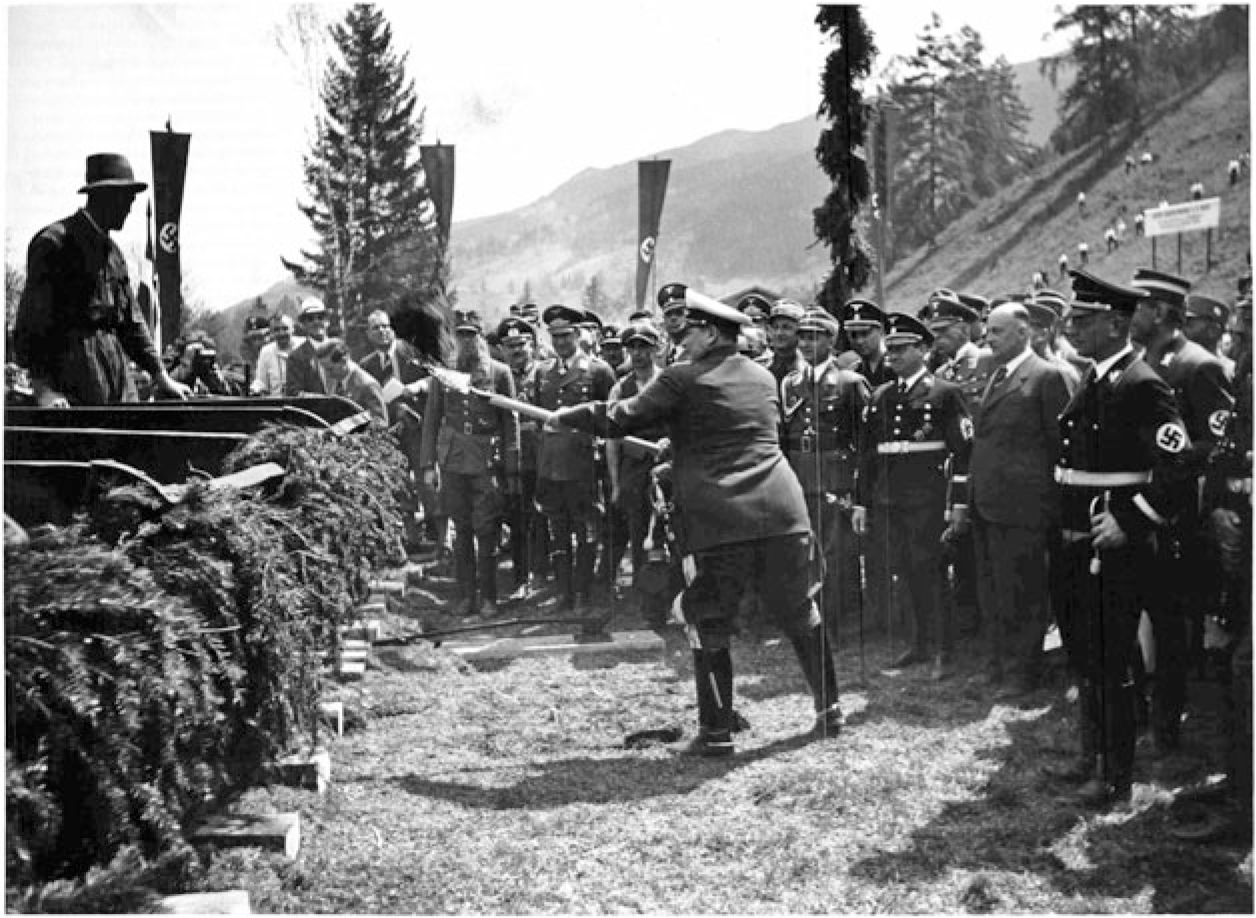
Germany launched seven separate dam and power projects, the largest and most promising in the Kaprun valley of the Salzburg Alps.Footnote 78 Rather than allow RWE to develop this energy, the Nazi state created the Alpen-Elektrowerke AG (AEW) to construct the high-altitude Kaprun storage dam.Footnote 79 With a view to powering the Four Year Plan, Göring offered strong practical and symbolic support for the project, even turning the shovel inaugurating the construction in 1938 (see figure 8).Footnote 80 Thousands of foreign workers, many of them prisoners of war working as slave labour in abysmal conditions, made up the bulk of the wartime labour force. Margit Reiter, who investigated the labour history of the dams for a special historical commission in the late 1990s, found evidence of fifty-six deaths during construction, though the number was probably higher.Footnote 81 During the war, however, the Kaprun project yielded almost no new electricity. Only in late 1944 did Kaprun manage to begin producing a small quantity of electricity, helping to power the system that supplied Auschwitz. The completion of the Kaprun project awaited the post-war period and Marshall Plan assistance.Footnote 82 Kaprun would later be celebrated as an enduring monument of modern Austria, while its Nazi past fell from view.Footnote 83
Göring conducts symbolic shovel-turning at Kaprun. Source: Österreichische Nationalbibliothek, S 108/67.

The German invasion of Norway in the spring of 1940 also brought the prospect of northern hydro power into the frame of power planning. In August 1940, leaders of major German utilities met in Oslo as part of an ‘Association for the development of Norway’s electric power’ to consider how to interconnect Norwegian and German systems.Footnote 84 In view of the technical challenges and the security threats, they debated the merits of 400kV HVAC overground transmission systems, used and favoured by RWE, or 400 kV HVDC underground cable systems. In summarizing the discussion, Fritz Todt, general inspector for water and energy, noted that underground cable systems were protected from weather conditions, could be laid efficiently in dense urban environments, did not interfere with other overground systems like telephone networks, and, perhaps most importantly, remained invisible above ground, hindering potential air attacks.Footnote 85 He did not highlight the much longer construction timeline for an underground cable system. In any event, by late 1940, in the context of materials shortages, the dream of a quick interconnection with Norway had faded. The scope of the project was too large, and technically challenging, and the time frame too long to justify priority construction.Footnote 86 The same result would probably have befallen a transmission plan designed on an overground basis.
Rather than interconnect with Norwegian hydro power systems, Nazi Germany did the second best thing: imported energy-intensive aluminium from Norway in vast quantities, thereby reducing the power demands of aluminium production in Germany.Footnote 87 This extra-territorial approach to resource mobilization paralleled other aspects of German economic activity in occupied countries, characterized by a mixture of seizure strategies and contractual arrangements with established businesses.Footnote 88 The seriousness of the German plans, and the clear connection between Norwegian resources and Germany’s air war, were in evidence by late April 1940, when Göring sent representatives of both the air ministry and the Junkers works to study and assume authority over the Norwegian aluminium industry. Göring’s team consolidated smelters owned by foreign companies into Nordische Aluminium AG and drew up contracts with Norwegian aluminium companies. Subsequently, German firms, including IG Farben, sought to partner with or take over Norwegian aluminium firms in partial contradiction to the plans of Nordische Aluminium AG, thus creating considerable legal confusion and delaying new projects. Ambitious plans to expand the Norwegian aluminium industry – and, with it, Norwegian hydro power – foundered, as the result of both organizational problems and difficulties experienced in obtaining bauxite supplies from France, Yugoslavia, and other areas under German control. Against early expectations, Norwegian aluminium output actually declined over the war, never rising above 27 million tons, and dipping in 1941 to 17.5 million tons.Footnote 89
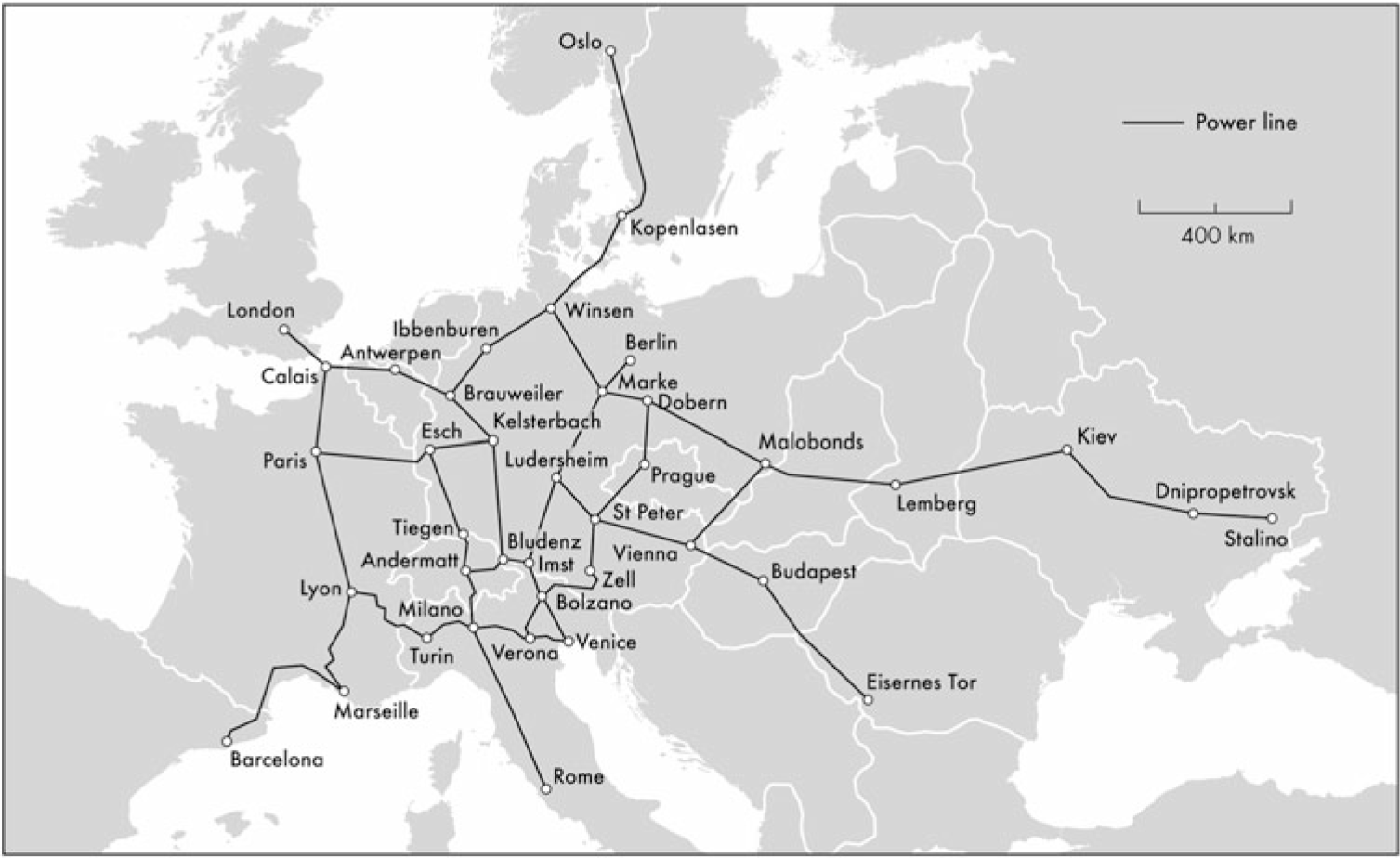
The Norwegian case in many respects typified the dashed expectations for electrical provision from an unfolding Großraumwirtschaft, or continental economy. Austrian hydro development was slow and did not have an appreciable impact on the war production programme. Existing hydro power imports from Switzerland played an important strategic role in the aluminium and electrochemical sectors, but did not offer more than 1.5% of German total power consumption during the war years.Footnote 90 An interconnection constructed to the Netherlands only came to completion in 1944; talks to interconnect with France and Hungary in 1944 occurred too late to have effect.Footnote 91 During the drive to the east, German forces captured the colossal Dnieper river power facility in the Ukraine, but the destruction of the plant by retreating Soviet forces hamstrung industry and coal mining in the region.Footnote 92 Although Nazi planners envisioned a continent-wide electrical grid in 1942 that would connect points west (London) and north (Oslo) with others south (Rome) and east (Stalingrad) (see figure 9), the reality was much more constrained.Footnote 93 Germany could not mobilize industry effectively with an autarkic electricity programme, yet it had to fight the war primarily with German power resources.
Plans for a European underground cable network, 1942. Source: adapted from original ‘Plan for a European 400 kV HVDC underground cable in 1942’, in Helmut Maier, ‘Systems connected: IG Auschwitz, Kaprun, and the building of European power grids up to 1945,’ in Erik Van Der Vleuten and Arne Kaijser, eds., Networking Europe: transnational infrastructures and the shaping of Europe, 1850–2000, Sagamore Beach, MA: Science History Publications, 2006, p. 131. Cartography by Eric Leinberger.

As a result, Germany placed renewed emphasis on large-scale thermal power generation and conservation. In 1942, Speer inaugurated a crash programme to develop thermal generating capacity with modular plants.Footnote 94 Although hydro power output declined, thermal power plants moved forward apace and accounted for an increasing share of German power production. In complementary fashion, the state also began to intervene in domestic and commercial electricity consumption in 1942, the same year in which Canada imposed similar restrictions.Footnote 95 Electricity conservation paralleled attempts by Speer to identify and eliminate wasteful production processes in war industry, to reduce hoarding of materials like aluminium, and to rationalize armaments designs to lower the demand for materials, while at the same time boosting production.Footnote 96 All of these tactics made a contribution to the continued functioning of German power systems, but none could protect against the onslaught of the air attacks in 1944 and after. The end of the war brought the complete collapse of the German electricity supply, with blackouts beginning in early 1945.
And yet, even as Germany’s energy planners struggled to maintain and expand the system in the face of an increasingly total war, the ‘leader’ of the German people made pronouncements and key decisions based upon sentimental conceptions of past water-power systems. On the occasion of his promotion of Fritz Todt to general inspector for water and energy at the Wolf’s Lair in 1941, Hitler waxed romantic to Todt about the necessity of returning Germany to its medieval power roots. Hitler also vacillated for over a year before approving Speer’s emergency centralization plans, explaining that a future German watermill operator ought to be able to produce electricity for himself and his community. Though Hitler eventually empowered Speer to take all necessary measures to direct the electricity supply for the war economy, he did not allow Speer to alter ownership structure within the industry.Footnote 97
In the final analysis, German power systems remained surprisingly viable into the final stages of the war. Although Speer and other German officials feared the results of a pointed and concerted attack on the Reich’s power generation facilities and transmission lines, the Allied bombing campaign focused on other strategic targets, such as ball-bearing works, oil refineries, and steel facilities. Allied urban bombing campaigns did destroy electrical systems, but not because they were primary targets. Only the dambuster raids (Operation Chastise) in the spring of 1943 specifically attacked dams. While partially successful and technically innovative, the breaching of the Möhne and Eder dams came at a high cost in terms of aircrews; and the Nazis quickly rebuilt the facilities in any event.Footnote 98 The Allies did not mount similar attacks again. Post-war assessments by the United States Strategic Bombing Survey identified the lack of focus on power infrastructure as a serious strategic omission.Footnote 99 After the war, Speer and other energy experts expressed ‘unhidden and very genuine surprise’ at what they characterized as the Allied decision not to bomb electric infrastructure. This eventuality was, Speer noted, every planner’s ‘nightmare’. He even joked that he might use the defence at his trial that it was not he, but Allied planners, who prolonged the war by failing to attack the grid.Footnote 100
Conclusion
In 1955 Austrians celebrated the completion of the Kaprun dam high in the Alps as a modern national project, developed with the considerable support of Marshall Plan funding. The celebrants ignored the roots of the project in Nazi war plans to bolster German power supply, and instead underlined the connections between the Western alliance and a new Austria. Although a later generation would question this legacy, in the immediate post-war era links to the recent past were discouraged. The Kaprun project was cast, rather, as pointing to a modern, national future.Footnote 101
While the Kaprun development had not significantly altered the course of the war, the wider phase of hydroelectric development that it represented did. On either side of the conflict, states sought to harness hydroelectricity to offset other fuel demands, particularly for coal, and to provide strategic nodes of power supply for industries such as synthetic chemical production and aluminium smelting. In countries like Canada and Norway, hydroelectricity underwrote the entire industrial system; in others like the United States and Germany, it supplemented the electrical supply at a national scale, and provided balance in integrated power pools, as well as the primary foundation of electrical generation in regions such as the US Pacific Northwest and the German state of Bavaria.
With limits to expansion under wartime conditions, Germany entered and exited the war with the balance of its hydroelectric facilities barely changed, despite aggressive growth plans dating back to the 1930s. Given the scale of the Allied bombardment in the final phases of the war, this result also highlights the limited focus placed by the Allies on destroying Germany’s electrical infrastructure. As a result, throughout the war, hydro offered German power planners a means to balance loads across the grid and conserve coal that was needed in other sectors that faced severe shortages. By contrast, in Canada and the United States, hydroelectric development and the construction of transmission networks increased generation and the availability of electricity across large regions. In Canada, supply increased by 40%; in the United States, by 25%. Vast new energy resources entered the North American arsenal between 1939 and 1945 and altered the economic potential of the Allies. The energy imbalance represented by hydro stood behind the changing fortunes of wartime economies and their capacity to produce and manufacture strategic materials and products.
Despite the starkly different outcomes, in each of the states considered, the wartime represented a period of radical policy change and centralization of authority over hydro resources. The existing asymmetries of federalism conditioned this drive for central control, but the pre-war rules were nevertheless redrawn in each case. In Canada, a power controller assumed primary legal authority over the power supply; in the United States, the federal government intervened to drive forward federal power projects and interconnect private networks; and in Germany, a federal load dispatcher made the national grid as efficient as possible, while a series of energy ministers sought to impose authority over national power planning. While some dimensions of these arrangements were dispensed with after the war, they nevertheless prefigured and in some respects set the terms for what William Haussman, Peter Hertner, and Mira Wilkins describe as a new international post-war ‘domestication’ of electrical systems, driven more by national-level governments than multi-national private companies.Footnote 102 By demonstrating the capacity for national intervention, the wartime states paved the way for post-war regulations and interventions. As interest in large dams, interconnections, and institutions like the TVA rose in the post-war years, models of national-scale development proved highly influential.
This not only resulted in changes to energy systems at a global scale, but also prompted a range of environmental consequences on rivers and ecosystems. Rivers in North America and Europe were canalized and flows interrupted; fish habitat was reduced and changed; new ecosystem dynamics arose; and landscapes of concrete and steel replaced meandering streams and waterfalls. None of these processes introduced new effects: similar changes preceded and post-dated the war. What the war did deliver, however, was an increasing scale of change, in terms both of a growing number of projects, and of the spatial reach of hydro projects. With the Northwest Power Pool, for example, not only were systems tied together, but so too were the river regimes which powered them. As the scale of power planning expanded over space, more and more rivers were made to flow in coordination, decoupled from historical seasonal flows and newly integrated into regional economic rhythms of demand.
In addition to changes in government policy, the war delivered hydroelectric infrastructure to the post-war economies. In Canada, the wartime drive to boost aluminium supply produced a range of new hydro projects in Québec, while power shortages pressed forward cooperative developments with the United States on the St Lawrence system. The continuing phase of St Lawrence development through the 1950s and 1960s owed its origins, like the Kaprun dam, to wartime initiatives. In the United States the much celebrated and soon to be mimicked hydroelectric complexes in the Pacific Northwest on the Columbia and in the south-east in the Tennessee valley continued to build dams and fulfil the supply contracts to large power consumers which located in these regions during the war, from aluminium companies such as Alcoa and Reynolds, to the Hanford nuclear facility, to synthetic chemical works. While regional-level grids transcended the war years, at least in one case, pre-war arrangements prevailed, as Texas power companies once again decoupled the state grid from national linkages. While German electrical networks had to be considerably rebuilt following the war, the foundations of systems dating back to the interwar period framed the possibilities. In each case, system changes directed post-war possibilities and structured outcomes.
A panoply of factors, from natural resource endowments to strategic deployment of troops and technologies, determine the outcome of every war. It is time to recognize the importance of hydroelectricity to combatants in modern wars. In some states, such as Canada, war mobilization could not have occurred without water power; in others, like Germany and the United States, hydroelectricity stabilized grids and drove strategic manufactures. Other national cases with a relatively high level of hydro power generation and dependence such as Norway, Japan, and Italy would repay further research. While there is no doubt that coal and oil proved crucial in the Second World War, energy systems were complex and electricity sources were highly varied.
Julie Cohn is a research historian at the Center for Public History, University of Houston, and the author of The grid: biography of an American technology (MIT Press, 2017).
Matthew Evenden is a professor of geography, University of British Columbia. His most recent book is Allied power: mobilizing hydro-electricity during Canada’s Second World War (University of Toronto Press, 2015).
Marc Landry is an assistant professor in history and Associate Director, Center Austria: The Austrian Marshall Plan Center for European Studies, at the University of New Orleans.