




No CrossRef data available.
Article contents
- Abstract
- IntroductionThis paper is based on a talk given at the International Workshop: History of Mathematics in the Last 25 Years: New Departures, New Questions, New Ideas. Tel-Aviv and Jerusalem, May 14-17, 2001. Much of it was adapted also from Fried and Unguru, Apollonius of Perga’s Conica: Text, Context, Subtext; however, it develops and clarifies the analogy-proportion-image relationship in ways not found in that book.
- The Latus Rectum
- The Homologue
- Images and Analogies
- Conclusion
- References
The Use of Analogy in Book VII of Apollonius’ Conica
Published online by Cambridge University Press: 01 September 2003
Article contents
- Abstract
- IntroductionThis paper is based on a talk given at the International Workshop: History of Mathematics in the Last 25 Years: New Departures, New Questions, New Ideas. Tel-Aviv and Jerusalem, May 14-17, 2001. Much of it was adapted also from Fried and Unguru, Apollonius of Perga’s Conica: Text, Context, Subtext; however, it develops and clarifies the analogy-proportion-image relationship in ways not found in that book.
- The Latus Rectum
- The Homologue
- Images and Analogies
- Conclusion
- References
Abstract
Argument
Apollonius of Perga’s Conica, like almost all Greek mathematical works, relies heavily on the use of proportion, of analogia. Analogy as the assertion of a resemblance, however, also plays a role in the Conica. The homologue, which Apollonius introduces in Book VII, is a striking example of analogia in both senses. On the one hand, the homologue is defined by means of a precise proportion relating the diameter and latus rectum of a conic section to fixed segments along the diameter. On the other hand, Apollonius’ use of the homologue in Book VII makes it clear that he meant it truly to evoke the latus rectum in the reader’s mind; in this way, Apollonius treats the homologue as an image of the latus rectum. The example of the homologue thus suggests the possibility that, in Greek mathematics, proportion was not only a vital manipulatory tool but also a means of making images.
Information
- Type
- Articles
- Information
- Copyright
- 2003 Cambridge University Press
Introduction1 This paper is based on a talk given at the International Workshop: History of Mathematics in the Last 25 Years: New Departures, New Questions, New Ideas. Tel-Aviv and Jerusalem, May 14-17, 2001. Much of it was adapted also from Fried and Unguru, Apollonius of Perga’s Conica: Text, Context, Subtext; however, it develops and clarifies the analogy-proportion-image relationship in ways not found in that book.
This paper is based on a talk given at the International Workshop: History of Mathematics in the Last 25 Years: New Departures, New Questions, New Ideas. Tel-Aviv and Jerusalem, May 14-17, 2001. Much of it was adapted also from Fried and Unguru, Apollonius of Perga’s Conica: Text, Context, Subtext; however, it develops and clarifies the analogy-proportion-image relationship in ways not found in that book.
Although this paper is on a second-century BC mathematician, I would have the reader begin by finding and placing before him a copy of Rembrandt’s well known Aristotle Contemplating a Bust of Homer (1653). Any copy will do. The reason for such an odd request is this. Rembrandt portrayed in the dress of his own time2
In fact, Aristotle’s dress in the painting is an amalgam of seventeenth- and sixteenth-century costume (see Held 1969, 15-16, for more details).
But first, I wish to return for a moment to Aristotle Contemplating a Bust of Homer. Using the painting as an image, I have set up an obvious analogy. The painting, of course, suggests its own analogies, for instance that between the richly dressed philosopher, with his expression of humility and dreamy resignation, standing beside the bust of the unadorned artist, the poet Homer, and philosophy next to poetry, or, even, the wealthy Antonio Ruffo, who apparently commissioned the painting, beside the outwardly poor, but inwardly rich, painter, Rembrandt.3
This is not a standard interpretation of the painting.
A striking instance from Apollonius can be found in the analogies between propositions concerning conic sections in the Conica and propositions concerning circles such as those in the third book of Euclid’s Elements. Consider, for example, Conica II.26: “If in an ellipse or circumference of a circle two straight lines not through the center cut each other, then they do not bisect each other,” and Elements III.4: “If in a circle two straight lines cut one another which are not through the center, they do not bisect one another”; or Conica IV.25: “A section of a cone does not cut a section of a cone or circumference of a circle at more than four points,” and Elements III.10: “A circle does not cut a circle at more points than two.” These propositions, however, are not those I wish to emphasize in this paper.4
An extended discussion can be found in Fried and Unguru 2001, chap. 7.
The Latus Rectum
To understand what the homologue is, we ought to review what is the orthia pleura or latus rectum (to use the more common Latin translation) of the figure or eidos of a conic section, say, of a hyperbola.
As in proposition I.11 for the case of the parabola and in I.13 for the ellipse, in proposition I.12, the latus rectum of a hyperbola is defined in the course of defining the section itself, and, like the section, it is defined by means of the cone. It is a line ZΛ (see fig. 1) such that the transverse diameter ΘZ has the same ratio to ZΛ that the square on AK, the line from the vertex to the base of the cone drawn parallel to the diameter, has to the rectangle contained by BK and KΓ, the segments AK cuts off from the diameter of the base circle. Its primary use is revealed in the symptoma of the hyperbola, namely, that if MN is an ordinate (i.e., if MN is a line drawn from the section to the diameter parallel to the common section of the cutting plane and the base of the cone) then the square on MN is equal to the parallelogram “…applied to ZΛ, having ZN as breadth, and exceeding by a figure ΛΞ similar to the rectangle contained by ΘZ and ZΛ.”5
That is to say, sq.MN = rect.ZO + rect. ΛΞ.

Fig. 1. Diagram for Conica I.11. Line ZΛ is the latus rectum.
Very quickly and without preparation the rectangle contained by the transverse diameter ΘZ and the latus rectum ZΛ becomes the “figure (

)” of the hyperbola. Thus, in I.14 Apollonius refers to the transverse side as “…the transverse side of the figure (

) [emphasis added], that between the vertices of the sections.…” As the upright side of the “figure,” the latus rectum has a true concrete geometric identity. Indeed, what sense has its name, “upright side (

),” and what use is its being perpendicular to the diameter, its very “uprightness,” unless it is understood as the side of a rectangle? Given the section, that is, given the cone and given the plane cutting off the particular hyperbola, the sides of this rectangle, the “figure,” are naturally given in ratio. The ratio of the sides of the “figure” comes up one way or another all through the Conica. For example, in I.21 where it is proven that in a hyperbola and an ellipse the square on a segment drawn ordinatewise is to the rectangle contained by the segments cut off from the transverse diameter as the latus rectum is to the transverse diameter (in fig. 2, sq.ZH : rect.AH,BH :: AΓ : AB :: latus rectum:transverse diameter).
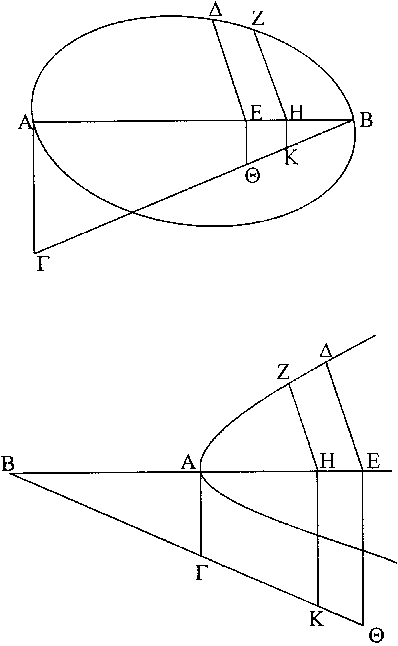
Fig. 2. Diagram for Conica I.21.
A more telling example is V.9 in which we are shown that if EΓ along the axis of a hyperbola is greater than half the latus rectum of the hyperbola (see fig. 3), and HZ:ZE is the same ratio as the ratio of transverse diameter to the latus rectum, where H is the center of the hyperbola, then if ZΘ is perpendicular to EΓ, EΘ will be a minimum line (i.e. no line drawn from E to the section will be shorter than EΘ).
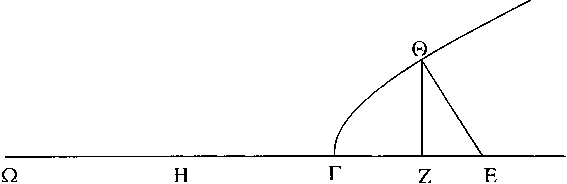
Fig. 3. Simplified Diagram for Conica V.9. HZ : ZE is the same ratio as that of the transverse diameter to the latus rectum.
In this example, as in others like it, one might view the line ZE as the counterpart of the latus rectum, where the latter is still understood as the side of the “figure” though the figure itself is “invisible.”6
The language I am using here is that of K. Saito, who in his “Book II of Euclid’s Elements in the Light of the Theory of Conic Sections” shows that “[The theory of proportion and the use of propositions in Elem. II] are not methods of treating the lines and areas as general quantities in a way similar to modern algebra, but they are the means for transforming between ‘visible’ and ‘invisible’ forms of areas” (Saito 1985, 43). Accordingly, Saito says, “The alleged algebraic methods, i.e. ‘geometric algebra’ and the theory of proportions, which have long been assumed to be the backbone of Apollonius’ thought, bear only peripheral importance to the course of the investigations of new results. Their role can be summed up as follows:
- To transform known or desired relations into a form suitable for the use of geometric intuition;
- To prove the relation already anticipated by geometric intuition;
- To transform the result into a form suitable for formal statements as a proposition” (ibid., 46).
Saito’s examples from the Conica come entirely from Books I-III. Nevertheless, the interplay between the “visible” and “invisible” realms is no less present in the later books, as we shall see.
The Homologue
The homologue makes its debut in propositions VII.2, 3 (VII.2 in the case of the hyperbola and VII.3 in the case of the ellipse); afterwards it appears over and over again in Book VII.7
It is worth noting, with Toomer, that “No text containing this term [i.e., the “homologue of the figure”] survives in the original Greek, but Halley conjectured that Apollonius had adapted the word

to this special meaning, and translated accordingly” (Toomer 1990, 595).
As one of the referees pointed out, this phrase, “in any position,” is behind the alternate positions of A and Γ, and, therefore, of the homologue AΘ, in the diagram.
“And let the line which was cut off be called the ‘homologue’.”9
All translations from Book VII are taken from Toomer 1990. However, where Toomer writes AB2, AB : CD, AB : CD = EF : GH, I have, for reasons of consistency, written, sq.AB, rect.AB,CD, and AB : CD :: EF : EG, respectively.
“Let the hyperbola be the section with extended axis AΓE [fig. 4], and let the figure of the section be ΓΔ. Let line AΘ be cut off from line AΓ, and let
ΓΘ:ΘA::ΓA:AΔ (which is the latus rectum).
We draw from point A to the section an arbitrary line, AB, and draw line BE perpendicular to the axis.
“Then I say that sq.AB : rect.ΘE,EA :: AΓ : ΓΘ.”10
The remainder of the proof, slightly paraphrased, is as follows: Set rect.AE,EZ = sq.BE. Therefore, rect.AE,EZ : rect.AE,EΓ :: sq.BE : rect.AE,EΓ. But, by Conica I.21, sq.BE : rect.AE,EΓ :: latus rectum (AΔ) : transverse diameter (AΓ). Therefore, rect.AE,EZ : rect.AE,EΓ :: ΔA : AΓ :: ZE : EΓ, and ΔA : AΓ :: ZΘ : ΘΓ. Therefore, ZE : EΓ : AΘ : ΘΓ. Therefore, ZΓ : ΓE :: AΓ : ΓΘ [so that also ZA : ΘE :: (ZΓ + AΓ) : (ΓE + ΓΘ) :: AΓ : ΓΘ]. Therefore, ZA : ΘE :: AΓ : ΓΘ. But, with AE as a common height, ZA : ΘE :: rect.ZA,AE : rect.EΘ,EA. Therefore, AΓ : ΓΘ :: rect.ZA,AE : rect AE,EΘ. But, rect.ZA,AE [= rect.(ZE + EA),AE = rect.ZE,AE + sq.AE = sq.BE + sq.AE] = sq.AB. Therefore, sq.AB : rect.AE,EΘ :: AΓ : ΓΘ.
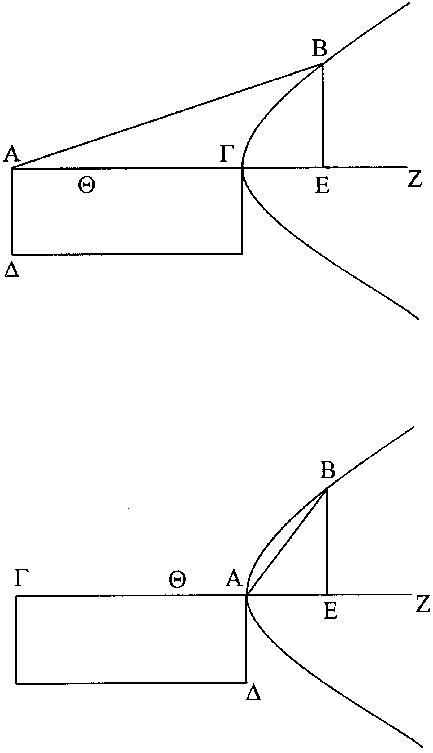
Fig. 4. Diagram for Conica VII.2. Line AΘ is the homologue.
That the proposition itself serves as counterpart to I.21, I shall leave aside,11
For details, see Fried and Unguru 2001, 309, n. 48.
Since it has a name and, therefore, also a definition, the homologue can now be associated with other line segments in the Conica that also have a name and definition, and which are intimately associated with the equally defined conic sections—lines such as the transverse diameter (diametros plagia), the upright diameter (diametros orthia), and the upright side, and, of course, the latus rectum (pleura orthia). Obviously, ΘA has the particular name, homologue, because in the proportion, ΓΘ :: ΘA :: transverse axis: latus rectum, ΘA is made to correspond to the latus rectum, and is, therefore, in this sense, homologous to the latus rectum.
But is this the only reason why the homologue earns its name? Does it function in a way that is homologous to the latus rectum? Does Apollonius want us to think of the homologue, in other words, as truly homologous to the latus rectum? A comparison between VII.2,3 and VII.1 gives a first hint that the answer is yes. Indeed, the very purpose of VII.1 seems to be that it present an analogous counterpart to VII.2,3, perhaps as a preparation for those propositions.12
I am thus in complete agreement with Toomer when he writes “Presumably VII.1 (which is not used in Book VII, although it may have been used in Book VIII) is inserted to show the analogy with the propositions for ellipse and hyperbola in VII.2-3” (Toomer 1990, 595). Regarding the possible application of VII.1 in Book VIII, Halley, at least, uses VII.1 nowhere in his reconstruction of that book, whereas he does use VII.2,3 (in VIII.5,6, for example).
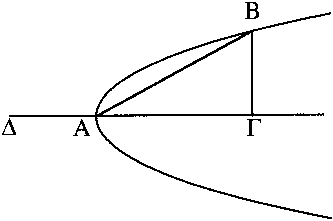
Fig. 5. Diagram for Conica VII.1.
The proof of VII.2, moreover, makes it clear that we are to relate the homologue, ΘA its defining proportion ΓΘ : ΘA :: transverse axis: latus rectum notwithstanding, directly to the latus rectum in its capacity as the upright side of the “figure.” It makes this clear by presenting us with the “figure” ΓΔ explicitly (and, with that, the diagrams accompanying VII.2,3 have drawn in them the whole rectangle whose sides are the transverse axis and latus rectum, that is, the whole “figure”), rather than only with the latus rectum, AΔ.13
There is good evidence that Apollonius’ diagrams for Books I-IV were edited and altered in late antiquity (see Decorps-Foulquier 1999), and this is no doubt true also for Books V-VII. In addition, it must be pointed out that Toomer’s diagrams, on which I have relied, are not reproductions of those in the Banū Mūsā manuscript, rather, as Toomer says, “[they] have been drawn as accurate representations of the requirements of the proposition to which they are assigned, but with due account of the orientation of the figures in the mss., and the relative position of the points in them” (Toomer 1990, xciv). Still, since the “figure,” and not the latus rectum, is set out in the ekthesis explicitly, it is more than likely that, in this particular case, the “figure” drawn in the diagrams to VII.2,3 was drawn in the original diagrams as well.
From what has been said up until now, one can see that the homologue is analogous to the latus rectum (with respect to the axis) in two senses. First, it is analogous in the strict sense that it corresponds to the latus rectum in a proportion, an analogia. But it is also analogous to the latus rectum in the sense that the homologue is assimilated to the latus rectum, that it is an image of latus rectum. Four facts support this:
- that in a given hyperbola (or ellipse) it is a fixed line;
- that it has a name;
- that it functions in VII.2,3 in a way analogous to the latus rectum of the parabola in VII.1;
- that it is put in direct comparison with the latus rectum in the latter’s fullest geometrical manifestation, namely, as the upright side of the “figure.”
Obviously, none of these facts has anything to do with the logical demands of the book; the proof of VII.2,3 is not strengthened or weakened by Apollonius’ calling AΘ the homologue. These other aspects of the homologue give us, rather, a way of thinking of the line, AΘ, of relating it to the geometrical significance of the latus rectum.
Images and Analogies
Naturally, just as the homologue corresponds to the latus rectum with respect to the axis, the remaining part of the axis corresponds to the axis itself. How the homologue induces other correspondences with other lines, or, we might say, creates new images of other lines, can be seen in a less trivial way in VII.6,7, which brings us also to one of the main concerns of the book, the conjugate diameters.
Proposition VII.6 states: “If there are constructed on the extension of the axis of a hyperbola two lines adjacent to the two ends of the axis which is the transverse diameter, each of them being equal to the line which we called ‘homologue,’ and placed as it [the homologue] is placed, and two conjugate diameters from among the diameters of the section are drawn, and, from the vertex of the section, a line is drawn parallel to the ‘erect’ diameter of the two to cut the section, and from the place where it intersects it a perpendicular is drawn to the axis: then the ratio of the transverse of the two conjugate diameters to the erect one is equal in square to the ratio of the line between the foot of the perpendicular and the end of the more remote of the two homologues to the line between the foot of the perpendicular and the end of the nearer of the two homologues; and the ratio of the transverse diameter to the parameter of the lines drawn to it [the transverse diameter] parallel to the second diameter, which [parameter] is its latus rectum, is, in length, equal to the ratio of the two lines which we mentioned previously to each other in length.” So, let the transverse axis of the hyperbola be AΓ with center Θ (see fig. 6), AN, ΓΞ be the homologues (i.e., ΓN : NA :: transverse axis : latus rectum with respect to the axis :: AΞ : ΞΓ), and ZH and BK be conjugate diameters (the latter being the transverse diameter and the former the “erect” diameter). Then, if line AΛ is drawn parallel to line ZH,14
There are two diagrams, one for the case where the latus rectum is shorter than the transverse axis, and one for the case where the latus rectum is longer than the transverse axis, but the proof, however, is the same for both. The diagrams above (as well as those for VII.7) are simplified to show only the details of the construction.
Although this is mentioned in the enunciation it is not restated in the diorismos. Toomer writes that “This may have fallen out by haplography” (Toomer 1990, 597), which is a reasonable suggestion considering that in VII.7, where the same proposition is proved for the ellipse, the analogous statement does appear in the definition of what is to be proved.
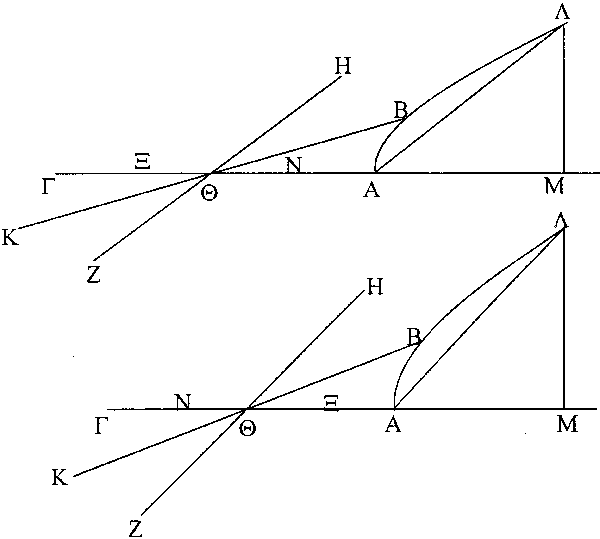
Fig. 6. Diagram for Conica VII.6. Lines ΞM and MN as “derivative images” of a diameter and its conjugate in an hyperbola.
Proposition VII.7 is the corresponding proposition for the ellipse, and the construction is identical except that the points Ξ and N, there, lie on the extension of the axis (see fig. 7).16
If one thinks of the axis, however, as one continuous line, with one part within the section (in the case of the hyperbola, within the opposite sections) and one part outside the section, then, in both cases, Ξ and N are placed in that part of the axis which is outside the section, so, in this light, the correspondence becomes somewhat closer.
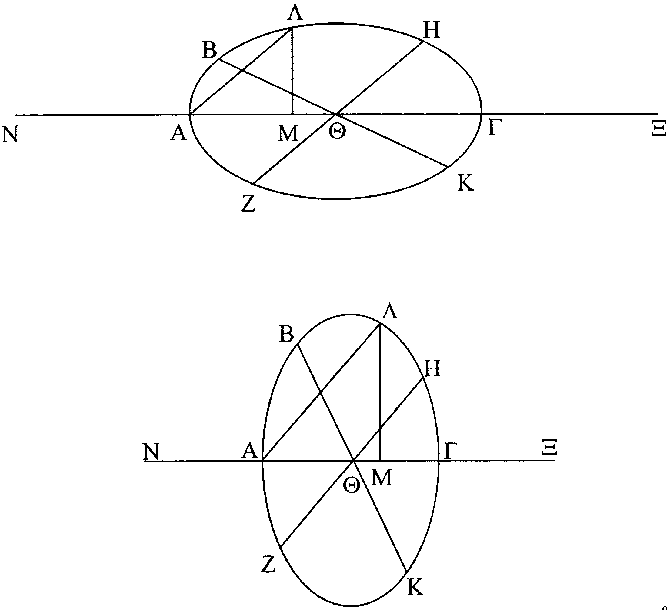
Fig. 7. Diagram for Conica VII.7. Lines ΞM and MN as ‘derivative images’ of a diameter and its conjugate in an ellipse.
For the present discussion, what is important to stress about the proofs of VII.6,7 is that while Apollonius provides a detailed argument for the first claim, that sq.BK : sq.ZH is the same ratio as ΞM : MN, he merely states the second, that BK : lr(BK) is also the same ratio as ΞM : MN, with hardly any argument at all. The second claim, in fact, requires little more than stating since the proportion BK : ZH :: ZH : lr(BK) is provided by the very definition of the second or conjugate diameter. The question is, then, why does Apollonius emphasize such an obvious conclusion in the enunciation? The reason, I believe, is this, that the purpose of these two propositions is to explain the significance of the line segments ΞM and MN, namely, that they provide a derivative image of a diameter and its conjugate, being in the same ratio as that between the conjugate diameters in square, and that they provide an image of a diameter and its latus rectum. This may be why Apollonius remarks at the end of VII.7, as an illustration, that from what was proven in the proposition, “…it will be proven that, if the perpendicular falling from point Λ on the axis passes through center Θ, then diameter KB will be equal to diameter ZH, because MΞ = MN.” In other words, it is obvious in this instance that KB will equal ZH because their images can be seen to be equal.
This interpretation of VII.6,7 helps resolve some puzzling aspects of the preceding proposition on the parabola. Proposition VII.5 states that “If there is a parabola, and one of its diameters is drawn in it, and from the vertex of that diameter a perpendicular is drawn to the axis, then the parameter of the lines drawn from the section to the diameter parallel to the tangent drawn from the vertex of the diameter, [i.e.],17
Here and afterwards brackets in the quotation are Toomer’s.
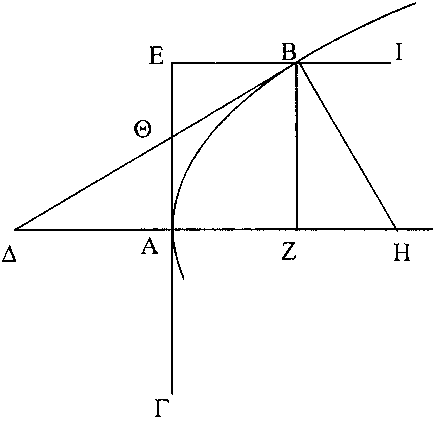
Fig. 8. Diagram for Conica VII.5.
There are three propositions in Book VII dedicated to the parabola, VII.1, 5, and 32.18
Proposition VII.32 states that “[In] every parabola, the latus rectum which is the parameter of the ordinates falling on the axis is the smallest of the latera recta which are the parameters of the ordinates falling on the other diameters; and the latus rectum which is the parameter of the ordinates falling on [one of] those diameters closer to the axis is less than the latus rectum which is the parameter of the ordinates falling on [a diameter] farther [from it].”
BΘ : BE :: ΔH : BΔ(:: 2ΔH : 2BΔ).
And therefore, by Conica I.49, we have,
BΘ : BE :: latus rectum with respect to BI : 2BΔ.19
Hereafter, I shall write lr.(BI) for the latus rectum with respect to BI. Similarly, I shall write lr.(AZ) for the latus rectum with respect to AZ, and so on.
- Therefore, 1/2 lr. (BI) = ΔH (or lr.(BI) = 2ΔH)
- But by Conica I.35 (and because ΔBH is a right triangle), it follows that,
- sq.BZ = rect.ΔZ,ZH = rect.2AZ,ZH
- And, by the symptoma of the parabola (given in Conica I.11), we have,
- sq. BZ = rect. (lr.(AZ)), AZ
- Therefore, rect. AΓ, AZ = rect.2AZ,ZH (= rect.AZ,2ZH)
- Therefore, AΓ = 2ZH
- And 4AZ = 2ΔZ
- Therefore, lr.(BI) = 2ΔH = 2ZH + 2ΔZ = lr.(AZ) + 4AZ.
Now, proposition VII.5 can be proved just as easily without drawing the line BH as follows (fig. 9):
- As before, BΘ : BE :: ΔB : ΔZ : lr.(BI) : 2BΔ by similar triangles and by Conica I.49.
- Therefore, 2sq.ΔB = rect.ΔZ,lr.(BI) = 2rect.AZ,lr.(BI) by Conica I.35.
- Therefore, sq.ΔB = rect.AZ,lr.(BI).
- But sq.BZ = sq.ΔB − sq.2AZ
- Therefore, sq.BZ = rect.AZ,lr.(BI) − 4sq.AZ
- = rect.AZ,(lr.(BI) − 4AZ)
- But sq.BZ = rect.AZ, lr.(AZ)
- So, lr.(BI) − 4AZ = lr.AZ or lr.(BI) = lr.(AZ) + 4AZ.
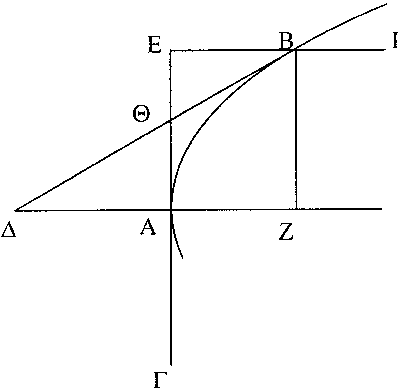
Fig. 9. Diagram for alternate proof of VII.5.
So, why does Apollonius choose to prove VII.5 as he does? In particular, why does he choose a proof that requires the extra line BH? The reason, I believe, is that by means of the line BH in Apollonius’ proof, and the subsequent relations ΔA= 1/2 lr.(BI), ZH = 1/2 lr.(AZ), and ΔZ= 2AZ, the lines of interest, lr(BI), lr(AZ), AZ, can all be seen or have visible traces in the diagram, and these traces are set along the axis just as they are in VII.6,7; in the alternative proof none of these lines, except for AZ (and lr.(AZ), but only because we are told to draw it!) can be seen in diagram—there is no image of them in the proof. So, to answer the question with which we began this discussion, Apollonius places VII.5 before VII.6,7, and not before VII.32, as the deductive structure of the book would suggest, because Apollonius can prove VII.5 in a way that will anticipate the setting up of images of latera recta and other lines which characterizes VII.6,7.
Let us now return to VII.6,7 and review what images, or, since they are such because of their place in various proportions, what analogues are contained in construction for those propositions. I shall list below only the correspondences for the hyperbola, that is, for the case of VII.6; for the ellipse the correspondences are similar. To make things easier to grasp, moreover, I shall write Tr for the transverse axis, Lr for its latus rectum, D for an arbitrary diameter, lr(D) for its latus rectum, d for its conjugate diameter or second diameter (similarly, I shall write tr for the second or “erect axis”). Moreover, I shall write Im(Tr), Im(Lr), Im(d), and so on, for the images of the transverse axis, latus rectum, diameter.
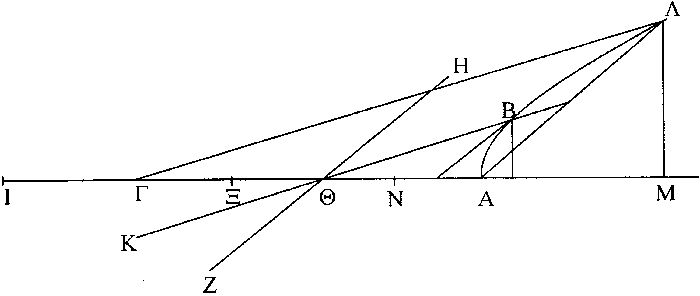
Fig. 10. Basic diagram for lines and images in the hyperbola.The diagram here is essentially the diagram for VII.8.
1) ΓΞ and AN Im(Lr)
2) AΞ and ΓN Im(Tr)
Observe, by I.15 and the definition of the second diameter after I.16, it follows that if D is any diameter and d its conjugate then D : lr(D) :: lr(d) : d,21
This is so since, using the same notation, both D : d :: d : lr(D) and d : D :: D : lr(d) are true by I.15 and the definition of a second diameter after I.16.
This alternative is indeed used by Apollonius in VII.37,41,47.
3) ΓΞ and AN Im(tr)
4) AΞ and ΓN Im(lr(tr))
5) AΓ Im(Tr + Lr)
6) NΞ Im(Tr − Lr) or Im(Lr-Tr)
(In the ellipse, it is the other way around, that is, NΞ is the analogue for the sum of the axis and its latus rectum, while AΓ is the analogue for the difference between the axis and its latus rectum.)
7) MΞ Im(D)
8) MN; Im(lr(D))
In three propositions, propositions VII.8,9,10,23
Referring to fig. 10, in which AΓ is the transverse diameter and BK (D above) and ZH (d above) are two conjugate diameters, then these propositions are as follows:
- VII.8: sq.AΓ : sq.(BK + ZH) :: rect.NΓ,MΞ : sq.(MΞ + ΞI) where sq.ΞI = rect.MN,MΞ.
- VII.9: sq.AΓ : sq.(BK − ZH) :: rect.NΓ,MΞ : sq.(MΞ − ΞI), again where sq.ΞI = rect.MN,MΞ.
- VII.10: sq.AΓ : rect.BK,ZH :: NΓ : ΞI, again, where sq.ΞI = rect.MN,MΞ.
9) ΞI; Im(d)
Although the stated goal of VII.8 is to prove “that the ratio of the square on AΓ (which is the transverse diameter) to the square on BK and ZH, the two conjugate [diameters], when they are joined together in a straight line, is equal to the ratio of rect.NΓ,MΞ to the square on a line equal to line MΞ plus the line which is equal in square to rect.MN,MΞ),” the main work of the proof and the fact which is used widely in the subsequent propositions is the proportion sq.AΓ : sq.BK :: rect.NΓ,ΞM : sq.MΞ. Since, from (7) above, sq.BK corresponds to sq.MΞ, so that, from the proportion, the analogia, we have the further correspondence:
10) rect.NΓ,ΞM; Im(sq.Tr)
The way these images make propositions in Book VII visually evident can be seen in the fifteen corollaries between propositions VII.31 and VII.32. The fifth of these corollaries, for example, states that “if there is a hyperbola in which the transverse diameter of the sides of the figure of the section constructed on the axis is greater than the latus rectum, then the transverse diameter of [each of] the figures of the section constructed on the other diameters is greater than its latus rectum.” Relying on VII.21, which states that “If there is a hyperbola, and its transverse axis is greater than its erect axis, then the transverse diameter of each pair of conjugate diameters among its other diameters is greater than the erect diameter of [that pair]; and the ratio of the greater axis to the lesser axis is greater than the ratio of the transverse diameter to the erect diameter among the other conjugate diameters; and the ratio of a transverse diameter nearer to the greater axis to the erect diameter conjugate with it is greater than the ratio of a transverse diameter farther [from that axis] to the erect diameter conjugate with it,” one can construct a rigorous proof for the fifth corollary: By the definition of the second diameter of a hyperbola given after Conica I.16,24
The definition states that “…the straight line drawn from the center [of an ellipse or hyperbola] parallel to an ordinate being a mean proportional to the sides of the figure and bisected by the center, be called the second diameter.”
But did Apollonius intend for us to reason in this way? It is not impossible that he did. To be sure, there are enough places in the Conica where Apollonius leaves the details of an argument to the reader—and often the details are longer than the argument that I have just produced above. On the other hand, there are also enough instances where Apollonius does supply such straightforward arguments to make me believe that he expected these corollaries to be truly immediate, by which I mean he expected the results to be seen rather than actually proved. To be specific, when Apollonius says at the start of this list of corollaries, “Thus it has been shown from the preceding propositions…,” I believe he means that the results, literally, appear in the diagrams for VII.6,7 (which are virtually repeated in every proposition between VII.6,7 and VII.20) when one keeps in mind the images set up in the preceding proposition. Thus, in the corollary we have been discussing, he expects the reader to see that if the transverse axis is greater than its latus rectum, AΞ will be greater than ΞΓ, that is, Ξ will be farther from A than N is. Therefore, MΞ will be greater than NΞ. Thus, it will be evident to Apollonius’s reader that the transverse diameter, whose image is NΞ, will be greater than the latus rectum of that transverse diameter, whose image is NΞ.
Conclusion
Stated by means of mathematical proportions, the list of images in the last section are all precise analogies. If one sees such precise analogies as abstract proportions only, then it would surely be stating the obvious to say that the logic of the proof of any of the propositions from which they come follows the logic of the analogies. But the proportions producing the analogies are not abstract: they relate lines along the axis to specific lines of real significance in the conic section, that is, to the axis, to diameters, to latera recta. The logic of analogies, the relating of these specific lines to their analogues turns the logic of analogies into a logic of images. It is through such images that the proof becomes intelligible, not just deductively correct. And it is what makes the propositions themselves intelligible. Of course, not every manipulation of ratios, not every use of proportion, can be thought of as a manipulation of images, but my guess is that a Hellenistic mathematician such as Apollonius especially delighted and searched for proportions that did present precise images of concrete geometric entities—and if we have learned anything during the last 25 years it is that what kind of delight ancient mathematicians took in their work is something that cannot be taken for granted, that must be explored and must be given its due weight.
References
Apollonius. 1710. Apollonii Pergaei Conicorum libri octo. Edited by Edmund Halley. Volume 2. Oxford.
Apollonius. 1891, 1893. Apollonii Pergaei quae Graece exstant cum commentariis antiquis. Edited by I. L. Heiberg. 2 volumes. Leipzig: Teubner.
Decorps-Foulquier, Micheline. 1999. “Sur les figures du traité des Coniques d’Apollonios de Pergé édité par Eutocius d’Ascalon.” Revue d’histoire des mathématiques. 5:61-82.Google Scholar
Fried, Michael N. and Sabetai Unguru. 2001. Apollonius of Perga’s Conica: Text, Context, Subtext. Leiden: Brill.
Held, Julius. 1969. Rembrandt’s Aristotle and Other Rembrandt Studies. Princeton, N.J.: Princeton University Press
Saito, Ken. 1985. “Book II of Euclid’s Elements in the Light of the Theory of Conic Sections.” Historia Scientiarum 28:31-60.Google Scholar
Toomer, G. J.1990. Apollonius Conics Books V to VII. New York: Springer-Verlag.
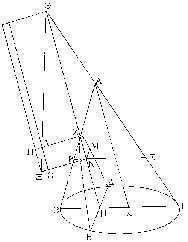
Fig. 1. Diagram for Conica I.11. Line ZΛ is the latus rectum.
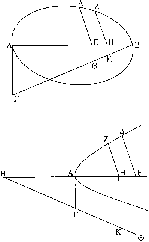
Fig. 2. Diagram for Conica I.21.
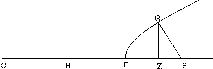
Fig. 3. Simplified Diagram for Conica V.9. HZ : ZE is the same ratio as that of the transverse diameter to the latus rectum.
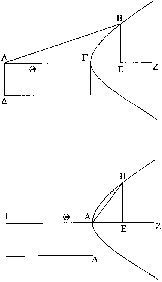
Fig. 4. Diagram for Conica VII.2. Line AΘ is the homologue.
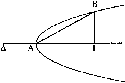
Fig. 5. Diagram for Conica VII.1.
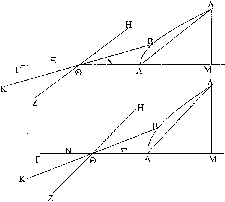
Fig. 6. Diagram for Conica VII.6. Lines ΞM and MN as “derivative images” of a diameter and its conjugate in an hyperbola.
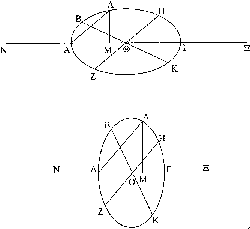
Fig. 7. Diagram for Conica VII.7. Lines ΞM and MN as ‘derivative images’ of a diameter and its conjugate in an ellipse.
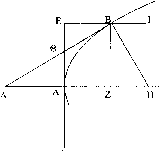
Fig. 8. Diagram for Conica VII.5.
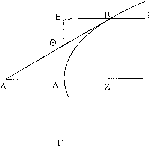
Fig. 9. Diagram for alternate proof of VII.5.
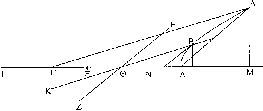
Fig. 10. Basic diagram for lines and images in the hyperbola.The diagram here is essentially the diagram for VII.8.
 You have
Access
- 4
- Cited by