

Extradyadic involvement — interactions that may include romantic feelings or behaviours directed toward someone other than one's romantic partner (Thompson, Reference Thompson1983, Reference Thompson1984) — is associated with a range of negative consequences for relationship partners (e.g., heightened guilt, shame, anger, depression, anxiety, post-traumatic stress disorder symptomology), as well as increased relationship distress, conflict, and dissolution (Amato & Previti, Reference Amato and Previti2003; Amato & Rogers, Reference Amato and Rogers1997; Brand, Markey, Mills, & Hodges, Reference Brand, Markey, Mills and Hodges2007; Cano & O'Leary, Reference Cano and O'Leary2000; Gordon & Baucom, Reference Gordon and Baucom1999; Gordon, Baucom, & Snyder, Reference Gordon, Baucom and Snyder2004; Johnson et al., Reference Johnson, Stanley, Glenn, Amato, Nock, Markman and Dion2002). Although previous studies have focused almost exclusively on sexual infidelity, extradyadic involvement can include a variety of behaviours, including non-sexual ones, and these specific behaviours linked with extradyadic involvement are under-researched (Blow & Hartnett, Reference Blow and Hartnett2005). Moreover, a broader conceptualisation of extradyadic involvement is needed in the literature, including non-sexual types of infidelity, because extradyadic behaviours that are more ambiguous (e.g., flirting with or fantasising about others; sending, receiving and/or deleting sexual messages) may be more prevalent than overt sexual behaviour, and they still cause relationship problems for the involved parties.
Understanding how different extradyadic behaviours (e.g., confiding, deceiving, sexual touching) are connected within-person, and whether types of individuals can be categorised based on their pattern of responses to different extradyadic behaviours, would be useful information for those in relationship research. For example, if an individual is engaging in sexual behaviour outside of a relationship, is it possible that other behaviours (e.g., sharing hopes and dreams, buying gifts, hiding time spent with this person from the partner) are occurring? Further, do these types of individuals differ in their own or relationship attributes? The current research employs latent class analysis (LCA) to classify subgroups of people, based on their pattern of responses to a measure that captures a diverse array of extradyadic behaviours. LCA is a type of mixture modelling used to identify qualitative differences in behaviours between groups of people. After classification, associations between subgroup membership and individual (i.e., attachment insecurity) and relational (e.g., satisfaction, commitment) characteristics are examined.
Extradyadic Involvement — Traditional and Recent Conceptualisations
Traditional conceptualisations
The prevalence rates of extradyadic involvement vary considerably as a function of how the involvement is defined, sample characteristics, and timeframe (Luo, Cartun, & Snider, Reference Luo, Cartun and Snider2010). Traditionally, research has focused primarily on two types of extradyadic behaviours: sexual and/or emotional involvement with another person outside of one's relationship (Allen et al., Reference Allen, Atkins, Baucom, Snyder, Gordon and Glass2005; Glass & Wright, Reference Glass and Wright1985; Thompson, Reference Thompson1984). Although prevalence rates differ based on the exact definition and population used, a 2007 meta-analysis suggests that 34% of married men and 24% of married women have engaged in extramarital relations (Tafoya & Spitzberg, Reference Tafoya, Spitzberg, Spitzberg and Cupach2007). Furthermore, of those who cheated, 29% considered their behaviour sexually intimate, while 28% labelled it as emotional infidelity.
Often, sexual infidelity and emotional infidelity are studied separately. To better understand the prevalence of different types of infidelity (and their overlap), Thompson (Reference Thompson1984) investigated types of extradyadic relations in married and cohabiting individuals: sexual (i.e., intercourse) only, emotional (i.e., in love) only, and both. The frequency of endorsement was similar across the three types of infidelity: 21.6% reported sexual only, 18.0% reported emotional only, and 19.0% reported both. Additionally, individuals acknowledge that sexual and emotional infidelity can co-occur. The ‘double-shot hypothesis’ refers to the notion that sexual and emotional infidelity are not mutually exclusive, and that the presence of one type of infidelity often implies the co-occurrence of the other (Carpenter, Reference Carpenter2012; DeSteno & Salovey, Reference DeSteno and Salovey1996; Dijkstra et al., Reference Dijkstra, Groothof, Poel, Laverman, Schrier and Buunk2001; Harris & Christenfield, Reference Harris and Christenfeld1996). Potentially rooted in common stereotypes about how romantic interactions develop and transpire, the double-shot hypothesis posits that emotional and sexual infidelities may often be intertwined. Recent research has begun to explore other behaviours that may precede and occur alongside different types of infidelity.
Newer conceptualisations
While previous attempts at measurement included many behaviours that are typically considered unfaithful (e.g., kissing, sexual intercourse, falling in love), other behaviours (e.g., having romantic feelings outside of one's relationship, using electronic communication to flirt) have received little attention. However, more recent examinations of extradyadic involvement have included behaviours such as flirting, texting sexual messages, and/or keeping secrets. A more recent examination by Wilson, Mattingly, Clark, Weidler, and Bequette (Reference Wilson, Mattingly, Clark, Weidler and Bequette2011) revealed three categories of behaviours: explicit (e.g., sexual intercourse, kissing), ambiguous (e.g., buying/receiving gifts), and deceptive (e.g., lying, flirting). Another recent examination found a single factor for face-to-face involvement and two factors for online involvement (sexual and emotional; Luo et al., Reference Luo, Cartun and Snider2010).
The exponential growth in the use of technology for communication has shifted social norms and changed the way individuals interact with each other. Another recent study developed a measure of infidelity judgments (Thompson & O'Sullivan, Reference Thompson and O'Sullivan2016), uncovering four factors that are perceived to represent different degrees of infidelity: sexual behaviours, emotional behaviours, technology/online behaviours, and solitary behaviours. Whereas the categories of sexual and emotional infidelity behaviours were consistent with previous research, the category of technology/online behaviours encompassed acts such as ‘sexting’ (exchanging messages of a sexual nature) and frequenting online dating sites, and the solitary behaviours category included viewing pornography, masturbating, and fantasising about others. However, this research explored variations in judgments for behaviours that may constitute infidelity, not actual engagement in such behaviours. In the current research, we were interested in: (a) understanding whether and how different extradyadic behaviours are linked to each other; (b) whether people can be grouped based on their behavioural pattern of engagement; (c) whether these groups are systematically different in their attachment styles or relationship attributes.
Infidelity and Links to Individual and Relational Characteristics
Infidelity and attachment insecurity
The concept of attachment is a valuable theoretical perspective strongly related to extradyadic involvement. Central to attachment theory (e.g., Mikulincer & Shaver, Reference Mikulincer, Shaver and Zanna2003) is the importance of feeling as if one can trust and rely on close others, as well as the implications of lacking confidence in a partner's intentions or behaviours. Individuals with higher levels of attachment anxiety display fear of abandonment and chronic uncertainty about partner availability (Brennan & Shaver, Reference Brennan and Shaver1995; Brennan, Clark, & Shaver, Reference Brennan, Clark, Shaver, Simpson and Rholes1998; Davis, Shaver, & Vernon, Reference Davis, Shaver and Vernon2004). Although the underlying mechanisms are currently unclear, anxious individuals have shown higher rates of extradyadic involvement, particularly among women (Allen & Baucom, Reference Allen and Baucom2004; Bogaert & Sadava, Reference Bogaert and Sadava2002; Fish, Pavkov, Wetchler, & Bercik, Reference Fish, Pavkov, Wetchler and Bercik2012). Two longitudinal studies of newlyweds showed that spouses were more likely to engage in infidelity if they or their partners were higher in attachment anxiety (Russell, Baker, & McNulty, Reference Russell, Baker and McNulty2013). Based on previous work showing that anxious individuals tend to feel as if their intimacy needs are not being met by their current partner (Mikulincer & Shaver, Reference Mikulincer, Shaver, Hojjat and Cramer2013) and may use sex as a way to fulfill this need (Birnbaum, Reis, Mikulincer, Gillath, & Orpaz, Reference Birnbaum, Reis, Mikulincer, Gillath and Orpaz2006), they may seek intimacy with another partner, particularly during times marked by relationship turbulence, conflict, or perceived neglect. Specifically, they may engage in behaviours signifying emotional infidelity, such as confiding in another person, developing feelings for and/or fantasising about them, to fulfill their unmet emotional needs.
In contrast, a series of eight studies by DeWall and colleagues (Reference DeWall, Lambert, Slotter, Deckman, Pond, Finkel, Luchies and Fincham2011) found no association between attachment anxiety and infidelity. Infidelity was operationalised in a variety of ways (e.g., attitudes toward infidelity, engagement in overt or physical extradyadic behaviours, interest in meeting alternative partners, a validated self-report wherein participants rated how emotionally and physically intimate they had been with an alternative partner). This final method of operationalising infidelity most closely resembles the way the current study wished to define levels of extradyadic behaviour, but in DeWall et al. (Reference DeWall, Lambert, Slotter, Deckman, Pond, Finkel, Luchies and Fincham2011), the ratings were summed to create a composite infidelity index after items showed high reliability. Considering the desire of anxiously attached individuals to feel close and connected to important others (e.g., DeWall et al., Reference DeWall, Lambert, Slotter, Deckman, Pond, Finkel, Luchies and Fincham2011), measuring a range of emotional extradyadic behaviours, and not just interest in or physical attraction to alternatives, may be more important for linking anxious attachment to infidelity. This may be why a robust set of studies supporting associations between avoidant attachment and infidelity (described below) did not find significant associations between anxious attachment and infidelity.
Research on attachment avoidance paints a clearer picture, likely driven by avoidant individuals’ fear of intimacy and desire for more independence (Brennan et al., Reference Brennan, Clark, Shaver, Simpson and Rholes1998). Avoidant individuals showed greater interest in alternatives and a greater propensity for infidelity — associations that were mediated by lower levels of relationship commitment (DeWall et al., Reference DeWall, Lambert, Slotter, Deckman, Pond, Finkel, Luchies and Fincham2011). Additional work has found associations between attachment avoidance and infidelity (Fish et al., Reference Fish, Pavkov, Wetchler and Bercik2012) and that avoidant individuals reported the highest number of extradyadic partners compared with both anxious and secure individuals (Allen & Baucom, Reference Allen and Baucom2004). Thus, greater attachment avoidance may be associated with a higher likelihood of engaging in behaviours of sexual infidelity, such as kissing, heavy petting and sexual intercourse, particularly in more casual situations (Feeney, Noller, & Patty, Reference Feeney, Noller and Patty1993; Fraley, Davis, & Shaver, Reference Fraley, Davis, Shaver, Simpson and Rholes1998). Moreover, attachment avoidance might also be associated with the greater use of deceptive extradyadic behaviours, as avoidantly attached individuals tend to dislike conflict (Domingue & Mollen, Reference Domingue and Mollen2009). Using deception may be a way to avoid potential conflict situations with partners and maintain emotional and general independence. In contrast, Russell et al.’s (Reference Russell, Baker and McNulty2013) longitudinal studies on newlywed couples found no association between one's own attachment avoidance and infidelity; however, in one of the two studies, a partner effect of attachment avoidance on infidelity emerged, where one was less likely to cheat if his or her partner was higher in avoidance. These studies, which ran for three to four years, asked both spouses to report on their own perpetrated infidelity or discovery of their partner's infidelity at each time point, with the definition of infidelity being left open to each participant.
Infidelity and relationship functioning
Researchers have also evaluated how specific relationship characteristics are linked with committing acts of infidelity. Earlier work suggested that dissatisfaction in the relationship increased the likelihood of sexual infidelity (Treas & Giesen, Reference Treas and Giesen2000), and other work echoes the idea that poor relationship quality is associated with infidelity (Gibson, Thompson, & O'Sullivan, Reference Gibson, Thompson and O'SulIivan2016). Drigotas, Safstrom, and Gentilia (Reference Drigotas, Safstrom and Gentilia1999) examined cheating among college students using an investment model (Rusbult, Reference Rusbult1980, Reference Rusbult1983) framework, with results suggesting that lower satisfaction, investment, and commitment were prospectively linked with infidelity, as was higher perceived quality of alternatives. Mattingly et al. (Reference Mattingly, Clark, Weidler, Bullock, Hackathorn and Blankmeyer2011) used broader conceptualisations of infidelity and found that lower commitment was associated with greater willingness to engage in ambiguous (e.g., buying/receiving gifts, talking on phone/internet), deceptive (e.g., withholding information/lying, fantasising, flirting), and explicit behaviours (e.g., kissing, dating, sexual intercourse). Thus, the investment model provides a useful lens through which to examine the occurrence of extradyadic involvement. It appears that people are more likely to engage in extradyadic behaviours when they feel unhappy or wavering in their relationship and believe that they may be able to achieve a better relationship with someone other than their current partner.
Current Research
Previous operationalisations of infidelity have often included a black-and-white approach to various types of sexual or emotional engagement with someone other than one's romantic partner, including asking about sexual behaviour (e.g., kissing, oral sex, sexual intercourse) or emotional attachment (e.g., falling in love, considering changing relationship partners). However, research suggests that extradyadic behaviours occur more often along a continuum (Wilson et al., Reference Wilson, Mattingly, Clark, Weidler and Bequette2011) and include behaviours other than sexual and emotional infidelity, such as deceptive behaviour (e.g., sneaking around to meet someone else) and duplicitous use of technology (e.g., deleting texts and phone calls from another person to hide them from the partner). The current research addresses these gaps in the literature by identifying classes of individuals based on their pattern of responses to different extradyadic behaviours and evaluating whether the classes are associated with differences in individual and relationship constructs.
The objectives of the current research are threefold. First, we present a new self-report measure of extradyadic involvement, wherein participants respond to a range of possible behaviours beyond those that are explicitly sexual or emotional. Second, we used LCA — a statistical approach that identifies class membership among individuals using observed variables — to categorise individuals based on their responses to the measure of extradyadic involvement. LCA, a special case of mixture modelling, is a particularly useful approach here because it places individuals into classes or groups based on their pattern of engagement in extradyadic behaviours. That is, rather than examining the subfactors of a scale, as in a traditional factor analysis, LCA explores and identifies subgroups of individuals, rather than items, based on their response patterns to all items in the measure. This technique, which is person-centred rather than variable-centred, investigates how variables combine across individuals, and can help identify at-risk individuals who are prime targets for an intervention. In the current research, we expected to identify distinct subgroups of individuals based on their extradyadic behaviour. Though we did not hypothesise a specific number of classes, based on the literature, we did expect to see a class of individuals endorsing no extradyadic involvement, a class endorsing only emotional involvement, a class endorsing only sexual involvement, and a class endorsing both emotional and sexual involvement.
Our third objective was to examine class-level differences in theoretically relevant constructs (i.e., attachment orientations and relationship functioning). In other words, we evaluated how the pattern of endorsement of these behaviours (via classes) was related to differences in attachment insecurity, relationship satisfaction, commitment, investment, and perceived quality of alternatives. We expected differences between the classes on attachment insecurity and relationship characteristics. We also expected that classes reporting greater extradyadic involvement (in any domain) would endorse higher levels of insecure attachment orientations (i.e., higher attachment anxiety and avoidance). Further, we hypothesised that classes that reported greater endorsement of extradyadic involvement would also report lower relationship functioning. Relationship functioning was measured using Rusbult's investment model (i.e., lower levels of satisfaction, investment, and commitment, and higher levels of perceived quality of alternatives) in Study 1 and perceived relationship quality (i.e., satisfaction, commitment, love, intimacy, trust, and passion) in Study 2. Based on previous work (e.g., Thompson, Reference Thompson1984), we also expected that individuals endorsing both types of extradyadic involvement to show the poorest relationship functioning, compared with those who had no involvement or only one type of involvement.
Study 1 Method
Participants and Procedure
We recruited individuals in committed heterosexual romantic relationships of at least three months in length from a large metropolitan university to participate in the first of two similar studies. We advertised the study using flyers posted around the Psychology building and an online research management system. Upon signing up for the study, participants received a link to complete the online survey. The survey contained counterbalanced measures to reduce effects from participant fatigue. All procedures were approved by the university's Institutional Review Board. Inclusion criteria for the two studies were identical: Specifically, participants had to be in a committed heterosexual romantic relationship lasting at least three months, a current student at the university, and at least 18 years old. The samples from Studies 1 and 2 did not differ in gender, age, relationship length, or any study variable; as such, the samples were combined (N = 339). Participants (88.2% female) ranged in age from 18 to 59 years (M = 23.4, SD = 5.7), and were ethnically diverse (48.8% Caucasian, 14.5% Asian, 9.8% African American, 7.1% Multi-ethnic, and 19.8% Other). Average relationship length was 2.8 years (SD = 3.9 years). Relationship status was reported as follows: casually dating (7.4%), exclusively dating (52.5%), nearly engaged (17.1%), engaged (9.1%), and married (13.9%).
Measures
Extradyadic involvement
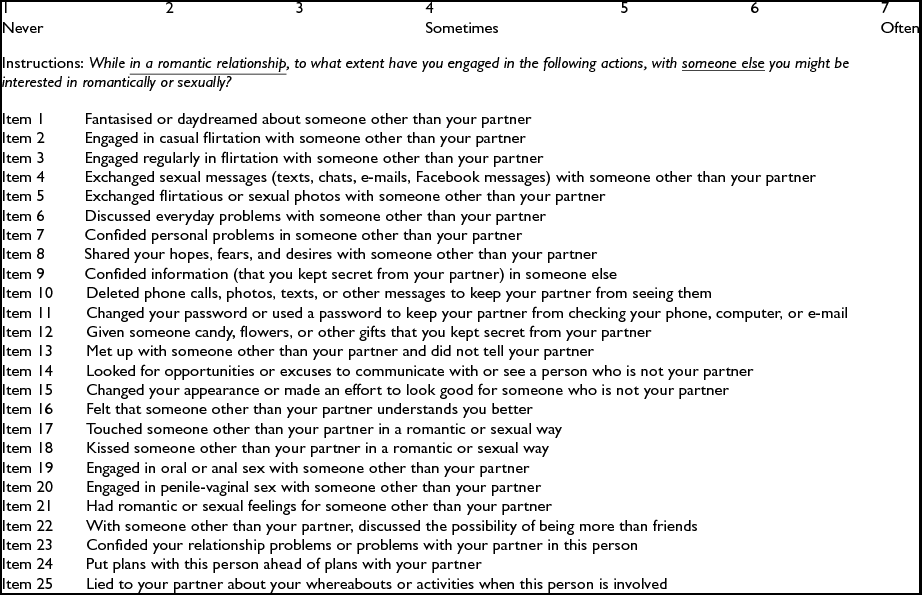
To assess behaviours that extend beyond traditional conceptualisations of infidelity, we developed the Outside a Relationship Scale (OARS) by assembling an inventory of face-valid behaviours in which individuals engage during the attraction and relationship-initiation phases of a relationship. We then considered these behaviours in light of an existing partner who might engage in relationship-protective behaviours, and additional behaviours — particularly deceptive ones — were added to the list. We refined item selection and wording via discussion. With this measure, we were specifically interested in assessing different types of behaviours, ranging along a continuum, that are indicative of romantic interest in someone other than one's current romantic partner. Participants read a prompt (‘While in a romantic relationship, to what extent have you engaged in the following actions, with someone else you might be interested in romantically or sexually?’) before completing the OARS. Example items include, ‘Engaged in casual flirtation with someone other than [partner name piped in]’, ‘Exchanged sexual messages (texts, chats, emails, Facebook messages) with someone other than [partner name piped in],’ ‘Changed your appearance or made an effort to look good for someone who is not [partner name piped in]’, ‘Had romantic or sexual feelings for someone other than [partner name piped in]’, and ‘Engaged in sexual intercourse with someone other than [partner name piped in]’. Participants responded to each of the 25 items on a 7-point Likert-type scale of 1 (never) to 7 (often). The complete measure with instructions is presented in the Appendix. Given the relatively low prevalence of frequency of engagement in these behaviours, we dichotomised responses to indicate any endorsement (1) or no endorsement (0).
Attachment orientations
We measured attachment anxiety and avoidance using the Experiences in Close Relationships — Revised Questionnaire (ECR-R; Fraley, Waller, & Brennan, Reference Fraley, Waller and Brennan2000). This 36-item measure has two subscales, each containing 18 items. Participants responded to questions about their relationships on a scale of 1 (strongly disagree) to 7 (strongly agree). The attachment-related anxiety subscale includes items such as ‘I often worry that my partner doesn't really love me’ (α = .69). The attachment-related avoidance subscale includes items such as ‘I get uncomfortable when a romantic partner wants to be very close’ (α = .81).
Investment model
The Investment Model Scale (IMS; Rusbult, Martz, & Agnew, Reference Rusbult, Martz and Agnew1998) assesses relationship satisfaction, commitment, investment, and perceived quality of alternatives. For all four subscales, participants responded on 9-point scales from 0 (do not agree at all) to 8 (agree completely). The satisfaction subscale comprises five items, such as ‘My relationship is close to ideal’ (α = .94). Commitment comprises seven items, such as ‘I want our relationship to last forever’ (α = .91). Investment in the relationship was measured using five items, such as ‘I feel very involved in our relationship — like I have put a great deal into it’ (α = .88). Perceived quality of alternative partners was assessed with five items, such as ‘If I weren't dating my partner, I would do fine — I would find another appealing person to date’ (α = .84).
Analysis Plan
We conducted LCAs (Lubke & Muthén, Reference Lubke and Muthén2005) in Mplus 7.11 to identify the smallest number of meaningful classes that differentiated types of infidelity behaviours among college students. Among its many advantages, LCA allows variance among classes to vary, and provides formal statistical fit indices for maximum accuracy when interpreting results and flexible measurement error. LCA also does not rely on the traditional assumptions of statistical models, such as normal distributions and linear relationships, which are often violated in variable-centred analyses, especially when studying low frequency outcome data such as infidelity endorsement (Atkins & Gallop, Reference Atkins and Gallop2007). Following the recommendations of Nylund, Asparouhov, and Muthén (Reference Nylund, Asparouhov and Muthén2007), we began by examining model fit associated with a one-class solution, then added classes, one at a time, until fit indices indicated no statistically significant improvement. Statistical indicators used for model selection included Akaike Information Criterion (AIC), Bayesian Information Criterion (BIC), and entropy. For both AIC and BIC, lower relative values indicate a better-fitting model. Entropy indicates what percentage of the time individual members of the sample were correctly identified in their respective classes. Entropy values improve as they approach 1, with high values above .80 (Clark & Muthén, Reference Clark and Muthén2009). The Lo-Mendell-Rubin adjusted likelihood ratio test (LMR LRT) evaluates improvement in model fit as a function of the addition of a class (e.g., the test for a four-class model evaluates whether the model is significantly improved by adding the fourth class over a three-class model). We used these statistical indicators alongside a conceptual analysis of model results, as is recommended practice (e.g., Meeus, Van de Schoot, Klimstra, & Branje, Reference Meeus, van de Schoot, Klimstra and Branje2011). Following the identification of latent classes, we fit a series of ANCOVA models to examine potential class differences for individual and relationship-relevant constructs, with appropriate follow-up tests. We included whether the couple was sexually active (coded 1 = yes, 2 = no) as a covariate in the ANCOVA models.
Study 1 Results
Frequencies of Endorsement of OARS Items
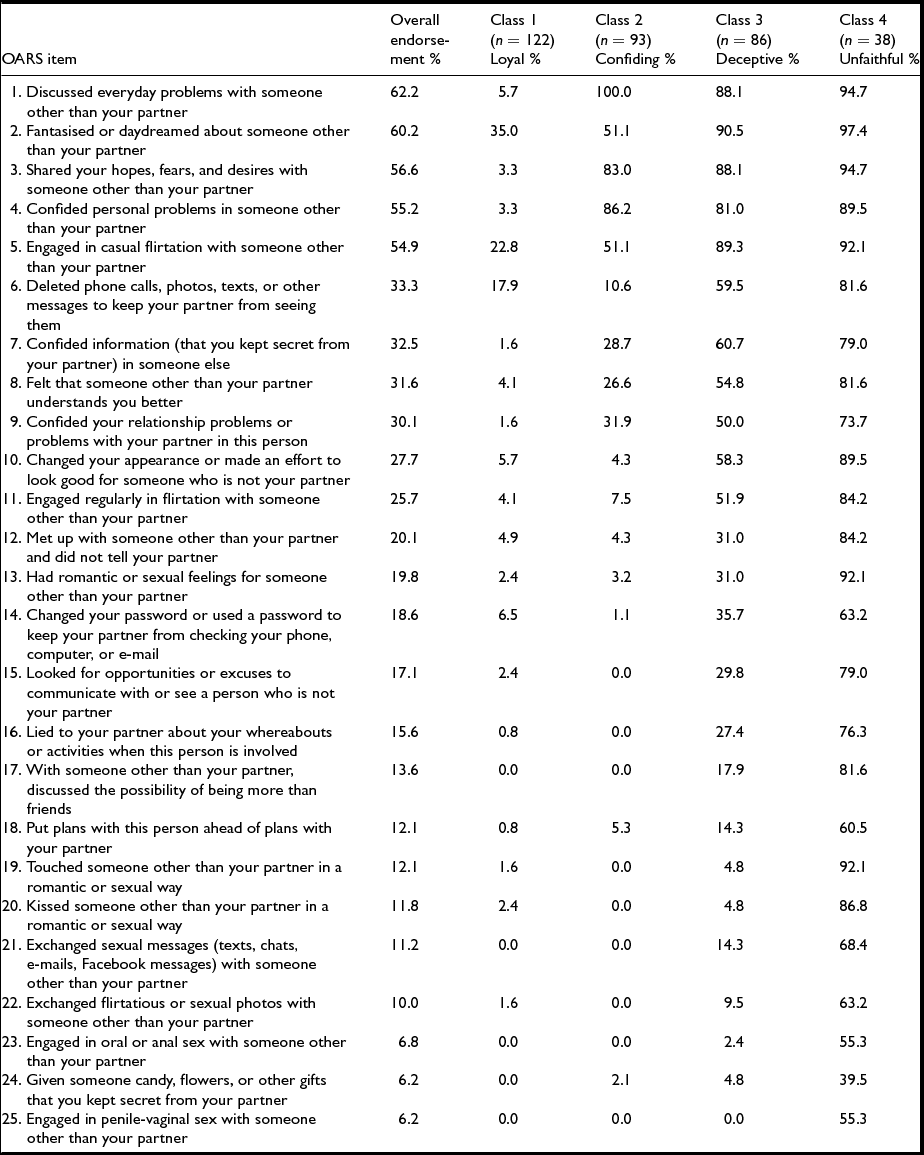
A complete list of the items, along with general endorsement rates, is available in Table 1. A majority of the sample (84%) endorsed at least one OARS item. On average, participants reported engaging in 4.9 of the 25 behaviours (SD = 4.0). Prevalence rates ranged in endorsement from 62.2% (‘Discussed everyday problems with someone other than [your partner]’) to 6.2% (‘Engaged in penile-vaginal sex with someone other than [your partner]’).
Study 1 Latent Class Profiles: Percent of Participants Endorsing OARS Items by Class

Note: The partner's name was piped into each question to personalise the experience for each participant.
Latent Class Analysis
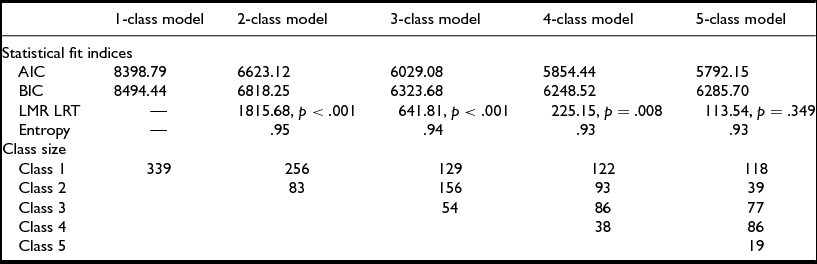
Initially, we extracted one-, two-, three-, four-, and five-class models (see Table 2). Model fit improved as the number of classes increased to four, but decreased with the five-class solution. Both BIC values and results from the LMR LRT test suggested the four-class model as the best-fitting model. Additionally, the four-class model showed an entropy value of .93, signifying a high degree of classification accuracy. Thus, the four-class model was retained for all subsequent analyses.
Study 1 Statistical Fit Indices and Class Sizes for OARS Classes
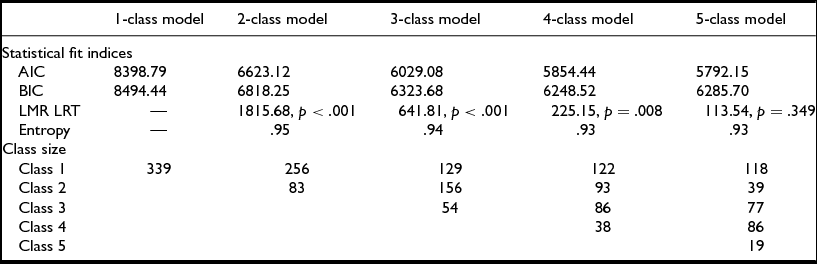
Note: AIC = Akaike's Information Criterion; BIC = Bayesian Information Criterion. The Lo-Mendell-Rubin Adjusted Likelihood Ratio Test (LMR LRT) compares the k class model against a k-1 class model to determine if the additional class improves model fit. Significant p values indicate that the current model displays significantly better fit compared with the k-1 class model.
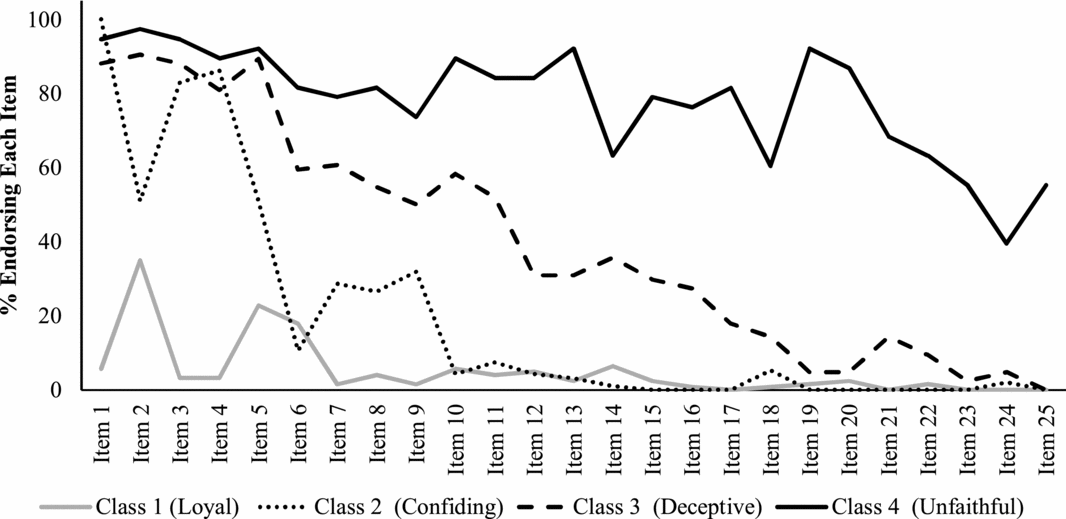
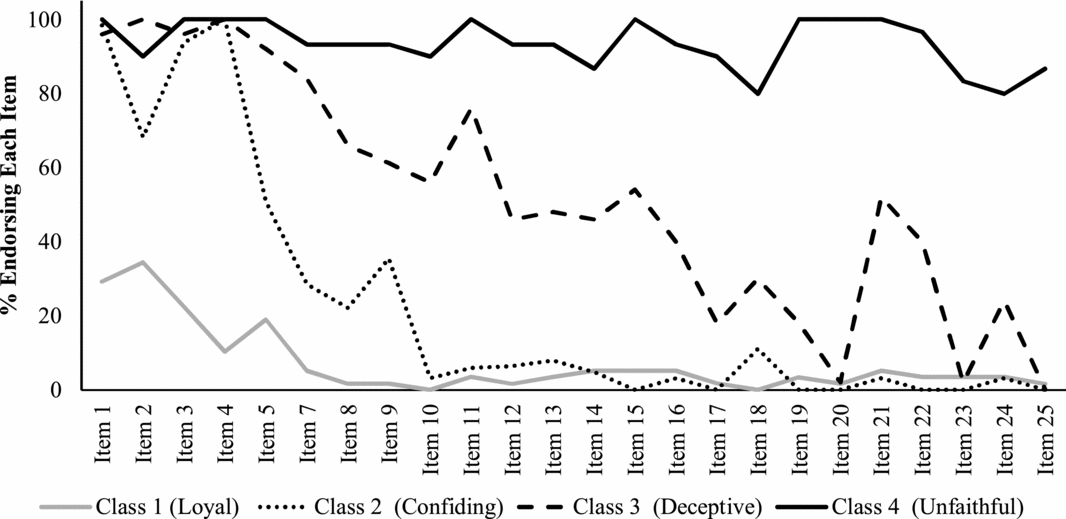
Table 1 contains endorsement rates of the 25 OARS items for each class, with a visual representation in Figure 1. We labelled classes based on their respective infidelity profile: Class 1 (n = 122; 36.0%) reflected a ‘loyal’ fidelity profile, with the lowest endorsement rates for all OARS items. Class 2 (n = 93; 27.3%) reflected a ‘confiding’ profile, characterised by the endorsement of items related to confiding in individuals other than the romantic partner (e.g., confided personal problems in someone other than your partner), but not of any other items. Class 3 (n = 86; 25.4%) reflected a ‘deceptive’ profile, demonstrating patterns of endorsement on many of the flirting, confiding, and deception items (e.g., deleted phone calls, photos, texts, or other messages to keep your partner from seeing them; changed your appearance or made an effort to look good for someone not your partner), but generally no endorsement of traditional sexual cheating indicators (i.e., engaging in physical contact or sexual intercourse with someone other than your partner). Finally, Class 4 (n = 38; 11.3%) evinced the most serious ‘unfaithful’ fidelity profile. Specifically, those in Class 4 demonstrated the highest endorsement of all OARS items, including those related to physical infidelity (e.g., kissing, touching, and engaging in sexual intercourse with someone else). Items 2 (‘Fantasised or daydreamed about someone else’), 5 (‘Engaged in casual flirtation with someone else’), 8 (‘Felt that someone other than your partner understands you better’), and 9 (‘Confided relationship problems in someone else’) were particularly useful for differentiating between classes.
Latent class analysis approach to the Outside a Relationship Scale: Study 1.

Classes and Differences in Relationship Functioning and Attachment Insecurity
Table 3 provides descriptive statistics and zero-order correlations for OARS items endorsed, attachment anxiety and avoidance, and relationship satisfaction, investment, perceived quality of alternatives, and commitment. A series of ANCOVA models were fitted to examine class differences in overall OARS item endorsement, relationship status, length, and functioning (e.g., satisfaction, commitment), as well as attachment insecurity, with Tukey follow-up tests (Maxwell & Delaney, Reference Maxwell and Delaney2004).
Descriptive Statistics and Zero-Order Correlations for Study 1 Variables
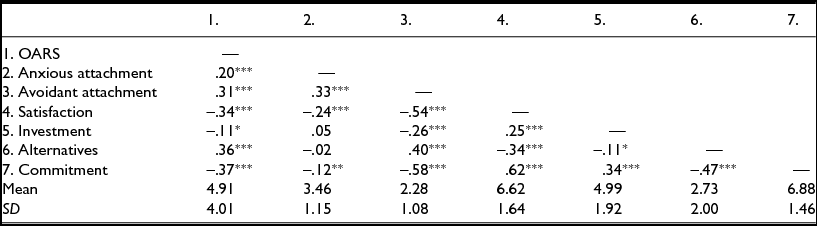
Note: OARS represents the sum of the items in the Outside a Relationship Scale.
*p < .05, **p < .01, ***p < .001
OARS item endorsement
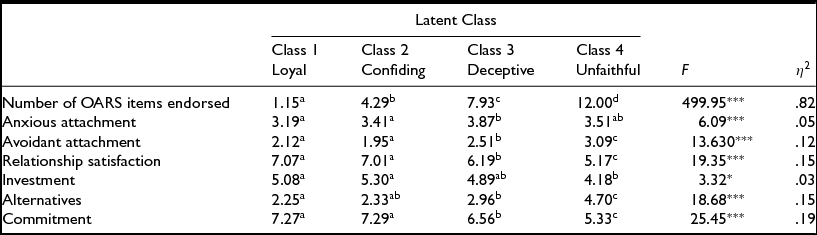
Table 4 presents the class means of endorsement of OARS items, with significance tests for the omnibus ANCOVA and pairwise comparisons, as well as effect sizes (η2 or the proportion of the total variance in the outcome that is accounted for by group membership and the covariate; Cohen, Reference Cohen1988; Lakens, Reference Lakens2013). The number of OARS items endorsed differed significantly by class, with group membership accounting for 82% of the variability in the number endorsed. Pairwise comparisons suggested that all four classes were significantly different from each other at p < .001. The differences were in the expected directions, such that the number of OARS items endorsed increased as class membership moved from loyal (M = 1.2, SD = 1.3) to confiding (M = 4.3, SD = 1.3) to deceptive (M = 7.9, SD = 2.2) to unfaithful (M = 12.0, SD = 2.4).
Study 1 Latent Class Profiles: Associations with Attachment Insecurity and Relationship Functioning by OARS Class
Note: Numbers represent mean estimates. Percentages that share a superscript are not significantly different from each other, using the Tukey adjustment.
Demographics, relationship status, and relationship length
We examined whether class membership significantly differed by age, gender, race, relationship length, and relationship status. Chi-square tests of independence found that classes did not differ with regard to gender (p = .553), race (p = .839), or age (p = .677). With regard to relationship demographics, the overall chi-square test for relationship-status differences between the classes was significant, χ2(12) = 42.79, p < .001. Individuals in the deceptive and cheating groups reported being in less-committed types of relationships. For example, among those who were casually dating their partner, class distribution was as follows: loyal class (12%), confiding (24%), deceptive (24%), and unfaithful (40%). In contrast, among those who were married, 59.6% were in the loyal class, 19.2% in the confiding class, 14.9% in the deceptive class, and 6.4% in the unfaithful class. Significant differences also emerged for relationship length; however, the only significant pairwise comparison was that those in the loyal group were in significantly longer relationships than those in the unfaithful group.
Attachment orientations
We also examined whether the classes differed in terms of attachment insecurity. The four groups differed in both attachment anxiety and attachment avoidance (all ps < .001). Pairwise comparisons on attachment avoidance showed that loyal and confiding groups displayed the lowest levels of avoidance (but were not different from each other), followed by the deceptive group, with the unfaithful group displaying the highest levels of avoidance. That is, all groups, except for loyal and confiding, were statistically different from each other. Pairwise comparisons with attachment anxiety were more complex, suggesting significant differences between the loyal and deceptive groups (loyal group reported lower anxiety) and between the confiding and deceptive groups (confiding group reported lower anxiety). When compared with the confiding and deceptive groups, the unfaithful group did not differ in attachment anxiety scores.
Rusbult investment model
We examined class differences across the investment model subscales (i.e., satisfaction, investment, perceived quality of alternatives, and commitment). Results showed that scores were significantly different across the classes for all four subscales, with large effect sizes (η2 = .15 to .19; Cohen, Reference Cohen1988) for satisfaction, alternatives, and commitment. Results, along with group means and specific pairwise tests, are presented in Table 4. The pattern of results was relatively consistent across subscales. Loyal and confiding participants scored the highest on relationship satisfaction, investment, and commitment, and lowest on perceived quality of alternatives, though they did not differ from each other. The deceptive group scored significantly lower in satisfaction, investment, and commitment (and significantly higher in perceived quality of alternatives) than the loyal and confiding groups. The deceptive group also reported significantly higher scores in satisfaction and commitment (and significantly lower scores in perceived quality of alternatives), compared with the unfaithful group, who reported the lowest scores of satisfaction, and commitment, and the highest scores of perceived quality of alternatives, compared with all other groups.
Study 1 Discussion
Study 1 successfully extracted four classes of undergraduates in relationships based on their responses to the OARS. Specifically, we identified a loyal class (endorsing no or very few items on the OARS), a confiding class (endorsing primarily items related to confiding in others), a deceptive class (endorsing deceitful behaviours, such as meeting up with someone else and not telling their partner), and an unfaithful class (endorsing the most OARS items, including sexual infidelity). Moreover, differences emerged between the classes based on their satisfaction, investment, quality of alternatives, and commitment to their current partner. Those in the loyal and confiding classes generally showed the most positive relationship characteristics, followed by those in the deceptive class, with the unfaithful class showing the poorest relationships.
One limitation of Study 1 is the unequal gender distribution in the sample. Although typical of research using psychology undergraduates, we wanted to examine latent classes and class differences in a sample with equal percentages of men and women. To address this, we collected data using Amazon Mechanical Turk (MTurk). As before, Study 2 measures included attachment insecurity, but also included perceived relationship quality (i.e., satisfaction, commitment, trust, passion, intimacy, love) as an expanded measure of relationship functioning. We expected to replicate the four-class solution and to find that those in the deceptive and unfaithful classes would report greater attachment insecurity and poorer relationship quality.
Study 2 Method
Participants and Procedure
Participants included 202 individuals (53.5% female) aged 18–26 in relationships lasting for at least two months. Participants were, on average, 23.74 years old (SD = 1.90) and had been, on average, in their current relationship for 2.34 years (SD = 2.13 years). Individuals were largely Caucasian (74.8%), with others responding as African American (8.4%), Asian (7.4%), Multi-ethnic (3.5%), and Other (5.0%). Participants reported their relationship status as follows: casually dating (1.0%), exclusively dating (57.9%), nearly engaged (17.3%), engaged (9.4%), and married (14.4%). We recruited participants via the MTurk program. They were told that the study was about technology and romantic relationship functioning. Participants received a $2.00 MTurk credit for completing the survey. All procedures were approved by the university's Institutional Review Board.
Measures
Extradyadic involvement
As with Study 1, we used the OARS to assess extradyadic behaviour. Participants responded to the prompt, ‘While in a romantic relationship, to what extent have you engaged in the following actions, with someone else you might be interested in romantically or sexually?’ Participants responded to each of the items on a 7-point Likert-type scale of 1 (never) to 7 (often). Unfortunately, item 6 (‘Deleted phone calls, photos, texts, or other messages to keep [your partner] from seeing them’) was not included in the survey due to a programming error. Thus, the OARS only comprised 24 items in Study 2. Consistent with Study 1, we dichotomised responses to indicate any endorsement (1) or no endorsement (0).
Attachment orientations
As with Study 1, we measured attachment anxiety and avoidance using the ECR-R questionnaire (Fraley et al., Reference Fraley, Waller and Brennan2000). Reliabilities were high for attachment anxiety (α = .95) and avoidance (α = .91).
Perceived relationship quality
We used the Perceived Relationship Quality Components inventory (PRQC; Fletcher, Simpson, & Thomas, Reference Fletcher, Simpson and Thomas2000) to measure relationship quality. The PRQC assesses six components of quality (i.e., satisfaction, commitment, trust, passion, intimacy, love) with three items assessing each component on 7-point Likert-type scales ranging from 1 (strongly disagree) to 7 (strongly agree). Relabilities were high for each subscale (αsatisfaction = .94, αcommitment = .92, αtrust = .91, αpassion = .88, αintimacy = .86, αlove = .90).
Study 2 Results
Frequencies of Endorsement of OARS Items
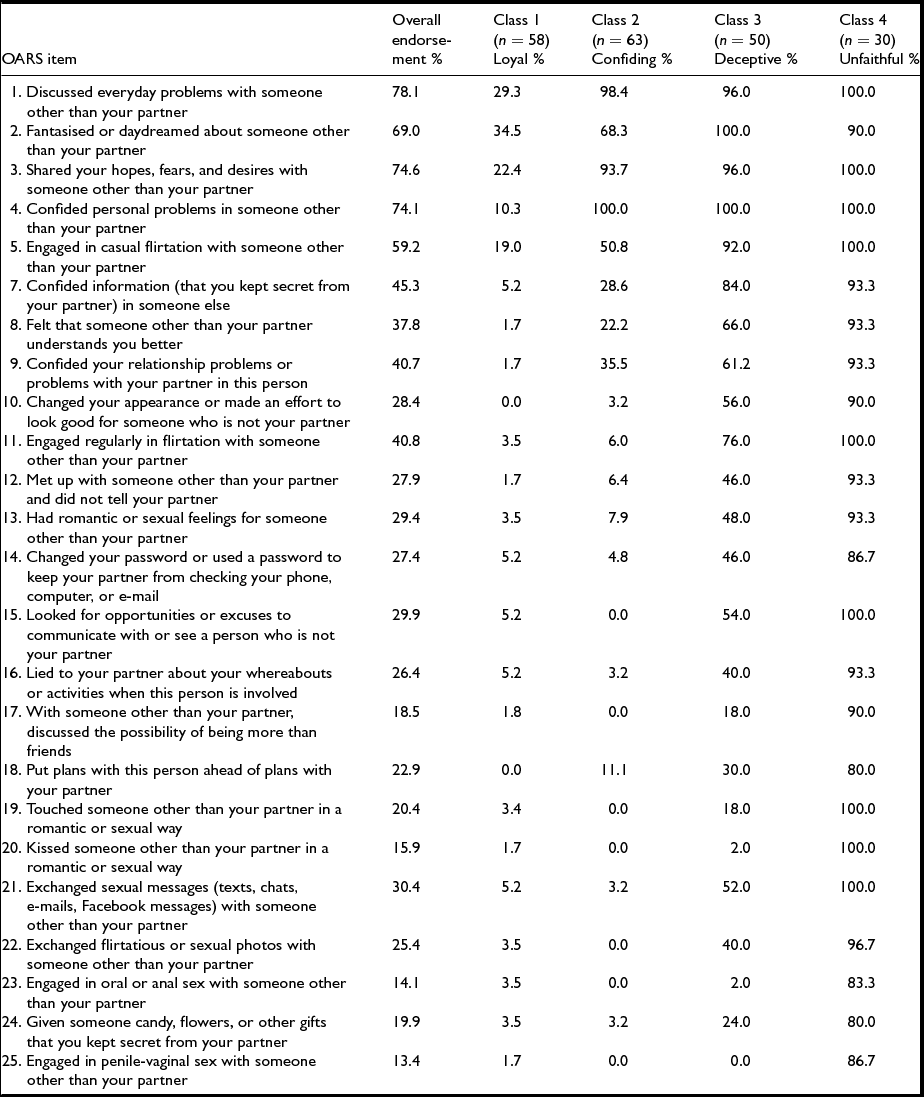
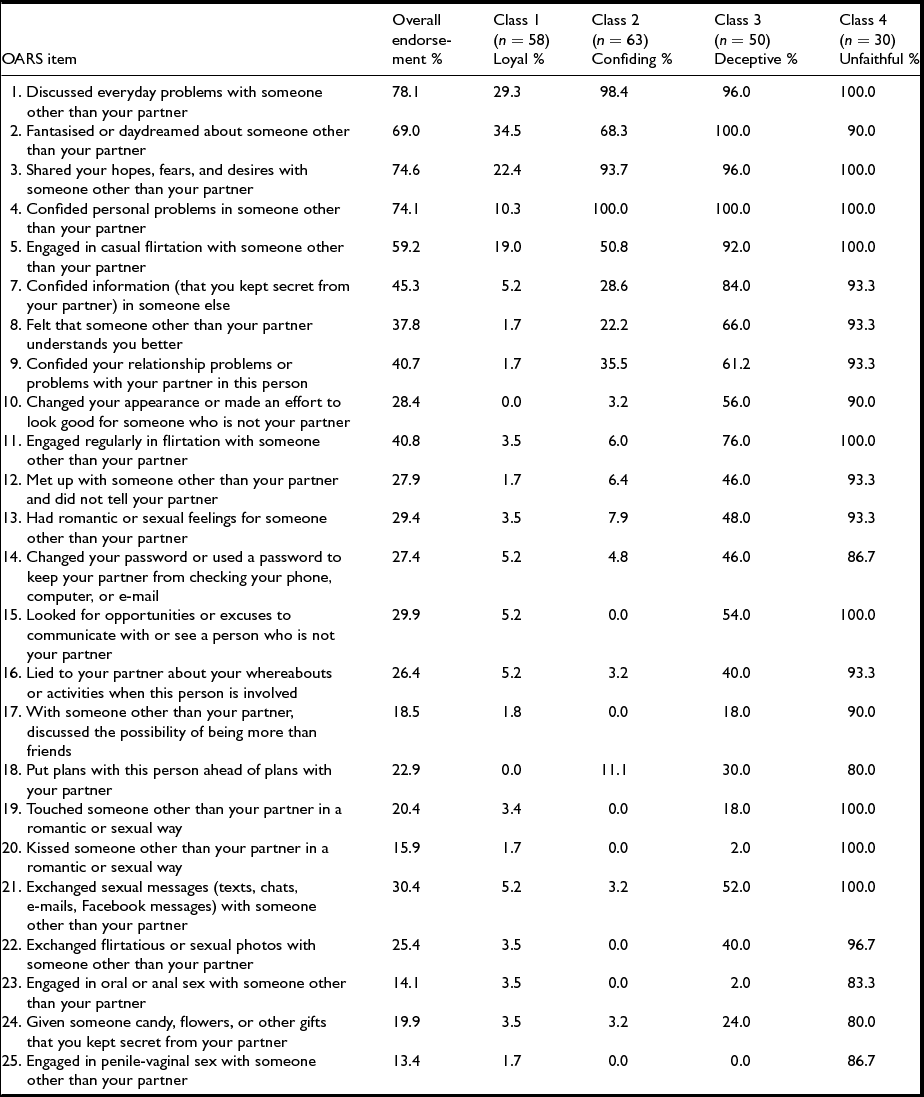
Table 5 contains a complete list of the items, along with general endorsement rates. As with Study 1, the vast majority (89.5%) endorsed at least one OARS item. On average, participants reported engaging in 8.7 of the 24 behaviours (SD = 7.3). Prevalence rates of endorsement ranged from 78.1% (‘Discussing everyday problems with someone other than [your partner]’; also the most highly endorsed item from Study 1) to 13.4% (‘Engaged in penile-vaginal sex with someone other than [your partner]’; also the least endorsed item from Study 1).
Study 2 Latent Class Profiles: Percent of Participants Endorsing OARS Items by Class
Latent Class Analysis
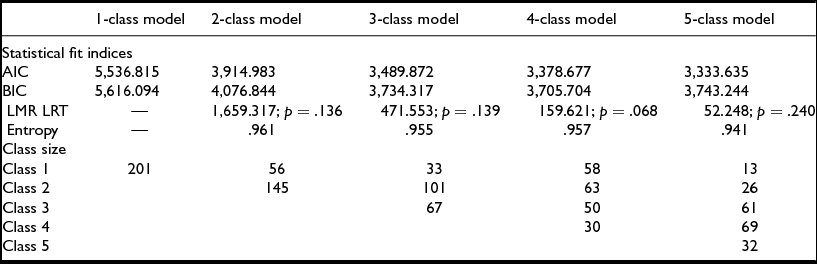
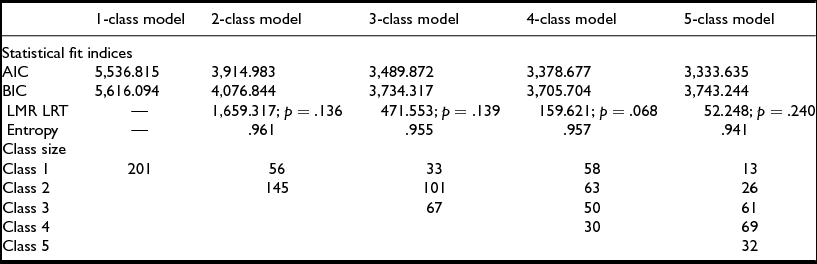
We extracted several models, specifying one through five classes (see Table 6). BIC values suggested that a four-class solution was the optimal number of classes. AIC values decreased through the five classes, but the LMR LRT test suggested that the four-class model fit the data marginally better than did the three-class model. The five-class model did not fit the data better than the four-class model, and additionally, entropy for the four-class model was also high. Thus, we retained the four-class model for all subsequent analyses.
Study 2 Statistical Fit Indices and Class Sizes for OARS Classes
Note: AIC = Akaike's Information Criterion; BIC = Bayesian Information Criterion. The Lo-Mendell-Rubin Adjusted Likelihood Ratio Test (LMR LRT) compares the k class model against a k-1 class model to determine if the additional class improves model fit. Significant p values indicate that the current model displays significantly better fit compared with the k-1 class model.
Figure 2 shows a visual representation of the four-class solution (along with endorsement rates). Classes showed a similar distribution to the four classes identified in Study 1: Class 1 (n = 58; 28.9%) reflected a ‘loyal’ fidelity profile, with the lowest endorsement rates for all OARS items; Class 2 (n = 63; 31.3%) reflected a ‘confiding’ profile, with endorsement of items related to confiding in individuals other than the romantic partner, but not of any other items; Class 3 (n = 50; 24.9%) reflected a ‘deceptive’ profile, demonstrating patterns of endorsement on many of the flirting, confiding, and deception items, but generally no endorsement of traditional cheating indicators. Finally, Class 4 (n = 30; 14.9%) showed the most serious ‘unfaithful’ fidelity profile, with the highest endorsement of all OARS items, including those related to physical infidelity.
Latent class analysis approach to the Outside a Relationship Scale: Study 2.

Classes and Relationship Functioning
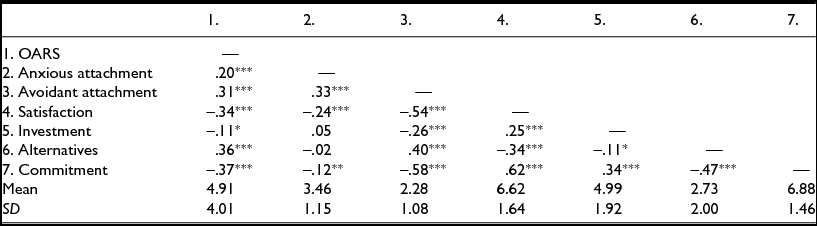
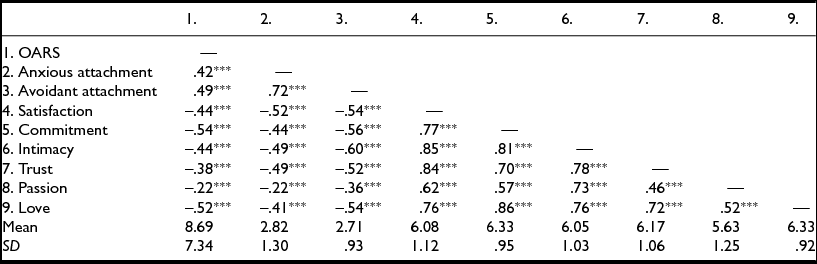
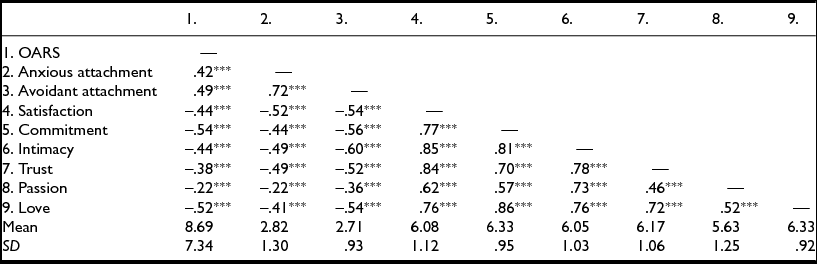
Table 7 provides descriptive statistics and zero-order correlations for all study variables. To examine class differences in OARS item endorsement, as well as in attachment insecurity and relationship functioning, we fit a series of ANCOVA models, including appropriate follow-up tests. Whether the couple was sexually active was included as a covariate.
Descriptive Statistics and Zero-Order Correlations for Study 2 Variables
OARS item endorsement
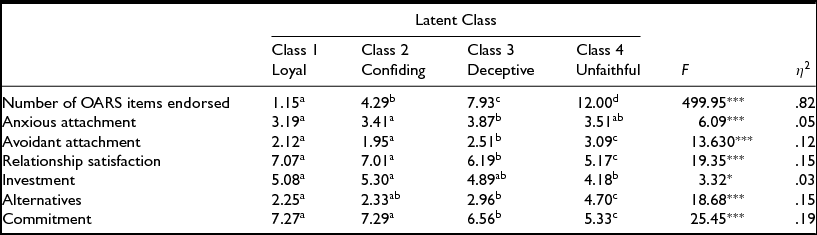
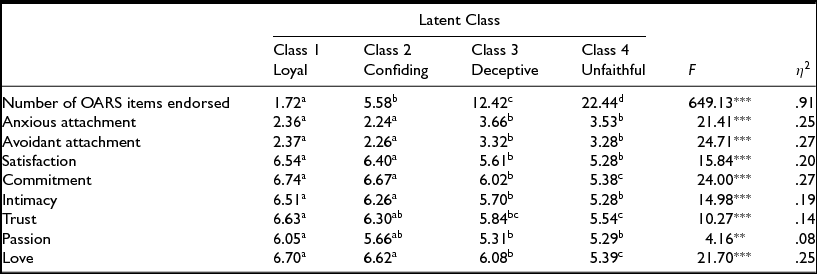
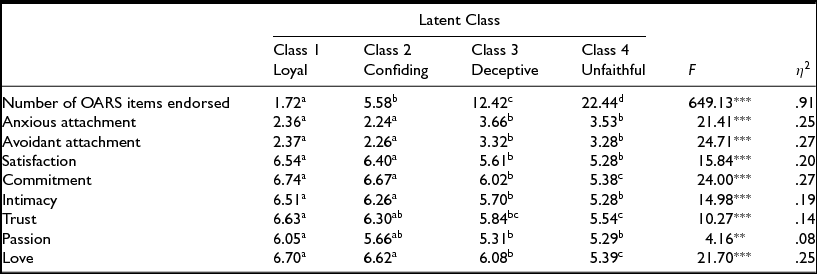
Table 8 presents the class means for endorsement of OARS items, including significance for the omnibus ANCOVA and pairwise comparisons, as well as effect sizes. Consistent with Study 1 results, the number of OARS items endorsed differed significantly by class. Additionally, pairwise comparisons suggested that all four classes were significantly different from each other (ps < .001) in expected directions, such that the number of OARS items endorsed increased as class membership moved from loyal (M = 1.7, SD = 2.2) to confiding (M = 5.6, SD = 1.6) to deceptive (M = 12.4, SD = 2.9) to unfaithful (M = 22.4, SD = 2.1).
Study 2 Latent Class Profiles: Associations with Attachment Insecurity and Relationship Functioning by OARS Class
Note: Numbers represent mean estimates. η2 is eta. Percentages that share a superscript are not significantly different from each other. ** p < .01 *** p < .001
Demographics, relationship status, and relationship length
We examined whether class membership significantly differed by age, gender, race, relationship length, and relationship status. Chi-square tests of independence found that classes did not differ with regard to race (p = .377), nor cohabitation status (p = .905), nor relationship status (p = .140). ANCOVA analyses further suggested classes also did not differ by age (p = .715), nor relationship length (p = .279). However, the test for gender differences between the classes was significant, χ2(3) = 8.228, p = .042, such that men were more likely than women to be in the unfaithful class (70% vs. 30%).
Attachment orientations
We evaluated whether the classes differed in attachment insecurity. Table 8 contains the follow-up tests with group means and specific pairwise comparisons. As in Study 1, the four groups differed in terms of both attachment anxiety and attachment avoidance (ps < .001), with large effect sizes (η2 = .25–.27; Cohen, Reference Cohen1988). Pairwise comparisons on attachment avoidance followed a consistent pattern, with the loyal and confiding groups displaying the lowest levels of avoidance (but not different from each other), followed by the deceptive and unfaithful groups, who were also not different from each other. Pairwise comparisons with attachment anxiety revealed an identical pattern: although the loyal and confiding groups were not different from each other, and the deceptive and unfaithful groups were not different from each other, the loyal and confiding groups were significantly lower in attachment anxiety than were the deceptive and unfaithful (all ps < .001).
Perceived relationship quality
We also examined class differences across different perceived relationship quality subscales (i.e., satisfaction, commitment, intimacy, trust, passion, and love). All subscale scores were significantly different across the four classes, all evincing large effect sizes (η2 = .14–.27) except for passion (medium effect size, η2 = .08). As can be seen in Table 8, and consistent with Study 1, loyal and confiding participants scored the highest on relationship satisfaction, commitment, intimacy, trust, passion, and love, though the two classes did not differ from each other. The deceptive and unfaithful classes scored lower on relationship functioning, and again, they did not differ from each other on satisfaction, intimacy, trust, and passion. The unfaithful group reported the lowest levels of commitment and love, significantly lower than all other classes.
General Discussion
A wide range of extradyadic behaviours may take place in romantic relationships, with different behaviours leveraging different consequences for the relationship. Simply examining whether people engage in sexual activities with someone other than their partner — as in most traditional research — fundamentally fails to capture the variability of extradyadic involvement; indeed, such involvement may often occur in more nebulous ways, where individuals may be gaining validation, connection, or pleasure from non-platonic engagement with another person. Moreover, such extradyadic involvement may facilitate individuals’ consideration of leaving their primary romantic relationship to be with an alternative partner. The OARS provides researchers and clinicians with a new tool to assess the prevalence and frequency of engagement in a range of extradyadic behaviours.
An overwhelming majority of participants — 84% in Study 1 and 90% in Study 2 — reported engaging in the behaviour described in at least one OARS item. We found considerable variability in the extent to which emerging adults reported extradyadic involvement. For example, in Study 1, 54.9% of students reported some extent of casual flirtation with someone other than their partner, and 33.3% reported deleting phone calls, photos, texts, or other messages to keep their partner from seeing them. About a quarter (27.7%) reported changing their appearance or making an effort to look good for someone other than their partner, and 15.6% lied to their partner about their whereabouts or activities when meeting someone who is not their partner. Approximately 10–12% of participants reported putting plans with this person ahead of plans with their partner, touching or kissing someone else in a romantic or sexual way, and exchanging sexual messages.
LCAs were able to detangle engagement in these extradyadic behaviours and place participants into one of four groups based on their response pattern. These groups included a loyal class (i.e., almost no engagement in extradyadic behaviours), a confiding class (i.e., confiding in someone who is not their partner), a deceptive class (i.e., behaving in a duplicitous manner without their partner's knowledge), and an unfaithful class (i.e., higher endorsement of all OARS items). For example, none (0.0%) of participants in the loyal and confiding groups reported discussing the possibility of being more than friends with someone else, but 17.9% and 81.6% of those in the deceptive and unfaithful classes reported doing so, respectively.
Interestingly, although we expected to find a group that only endorsed sexual involvement with no emotional or deceptive participation, those in the unfaithful group reported higher rates of all OARS items. This is consistent with the double-shot hypothesis in suggesting that when sexual engagement is present, other non-platonic and duplicitous engagement is also present. In fact, an examination of Figures 1 and 2 reveals that the classes can be considered ‘gateways’, as movement from one class to another typically encompasses behaviours endorsed in lower classes. Those in the confiding class had higher rates of endorsement for almost all items compared with the loyal class, while those in the deceptive class had higher rates of endorsement for almost all items compared with the loyal and confiding classes. Finally, those in the unfaithful class had higher rates of endorsement for almost all items when compared with all other classes.
We also examined differences in relationship characteristics and attachment insecurity based on group membership. We found that individuals in the unfaithful group were less satisfied, committed, and invested in their relationship, as well as less intimate, passionate, and loving with their partner. They also perceived higher quality of alternatives than did people in groups endorsing fewer (and less overt) behaviours. These results are in line with previous findings and consistent with past work on the investment model (Rusbult, Reference Rusbult1980, Reference Rusbult1983), as previous research has found that satisfaction and commitment (and to a lesser extent, investment and quality of alternatives) predicted physical and emotional unfaithfulness (Drigotas et al., Reference Drigotas, Safstrom and Gentilia1999). Indeed, the investment model suggests that if individuals are committed to and invested in their relationships, they are more likely to derogate potential alternatives, reducing the potential for temptation, and thus, extradyadic involvement (Drigotas & Barta, Reference Drigotas and Barta2001).
Moreover, our results indicated that people in the unfaithful group reported higher avoidant attachment. It may be that individuals who are avoidantly attached have more positive attitudes toward — and subsequently engage in — more unfaithful behaviours (Brennan et al., Reference Brennan, Clark, Shaver, Simpson and Rholes1998; Fraley et al., Reference Fraley, Davis, Shaver, Simpson and Rholes1998), perhaps as a means of escaping a committed relationship that is evoking attachment-related discomfort. Moreover, avoidantly attached individuals tend to seek out relationships that are less committed (e.g., Schmitt, Reference Schmitt2005) and thus may also enter relationships wherein having multiple partners is considered acceptable. Indeed, in Study 1, we found that individuals in less-committed types of relationships (e.g., casually dating) were more likely to be in the unfaithful or deceptive groups. Interestingly, anxious attachment was more descriptive of the deceptive group; it may be that anxiously attached individuals seek intimacy with another partner in response to their attachment-related fears of rejection. However, they may also fear losing the primary relationship, and may therefore engage in more behaviours that are deceptive so that the primary partner will not discover their extradyadic involvement.
Implications
The current research adds an interesting new perspective to the literature examining extradyadic involvement in relationships. We presented a new inventory that assesses a broader assortment of extradyadic behaviours, ranging from innocuous to overtly sexual. Our hope is that future researchers will use the OARS to capture additional variability when assessing and predicting extradyadic involvement. The measure also taps duplicitous behaviour on cell phones and social media, which constitute vital portions of the relationship picture. As technology changes, it gives people new ways to strengthen bonds, while simultaneously allowing them to shut out or sever past connections. With cell phones and social media, people can easily access a world of attractive alternatives, just as they can easily hide an affair from a primary partner. Such powerful tools at people's fingertips, ready to be deployed on a whim, can drastically change the landscape of a romantic relationship, and a modern measure of infidelity cannot ignore the fact that as technology grows, the breeding ground of extradyadic behaviours grows as well.
The LCA takes a person-centred statistical approach to understanding extradyadic involvement and its associations with attachment and relationship functioning. One benefit of person-centred approaches — particularly for relationship researchers — is the ability to recognise types of people more easily, and with this information gain a better understanding of the antecedents and consequences of particular group membership. For instance, researchers may seek to understand why individuals in the unfaithful group engage in such behaviours and how their motivations differ from those in the confiding or deceptive groups, as suggested by the attachment-related findings. Traditional continuous-outcome analyses would not be able to reveal such differences. Furthermore, group membership may also dictate people's responses to treatment and interventions; researchers may wish to examine whether some relationship-related interventions and treatments are more suited for individuals in the deceptive group than in the unfaithful group. Clinicians may be able to use a person's group classification to predict future behaviour, and as such, tailor treatment efforts to prevent individuals from repeating relationship-defeating behavioural patterns or to help them understand why they behave as they do.
Limitations and Future Directions
While the current research has a number of strengths, there are also a few limitations. First, although the survey software was programmed to pipe the partner's name into each of the OARS items, it is possible that some participants did not pay full attention to the instructions asking them to indicate how often they had engaged in the following behaviours with someone they might be interested in romantically or sexually. This may help explain why the loyal and confiding participants were not different in terms of their relationship functioning or attachment. For example, the item ‘Confiding personal problems in someone other than your partner’ could have different interpretations depending on whether the participant read the instructions. Someone who did not read carefully may have responded affirmatively to this item, counting the rest of their social support network (e.g., friends, family members, schoolmates) as someone other than their partner. The content of the other items imply that ‘someone other than [their] partner’ is a romantic interest, whereas the confiding items may not convey that message explicitly. Future researchers may wish to display the OARS instructions on a separate page to increase the likelihood that participants carefully read and understand them before proceeding. Furthermore, we chose to dichotomise the response options based on whether participants endorsed engaging in the behaviour or not. For future research and clinical applications, we recommend adjusting response options based on the population being assessed. For example, if researchers are examining extradyadic involvement in a general population or undergraduate sample (i.e., not based on risk), we recommend the dichotomous response options used in our study. However, if researchers or clinicians are actively pursuing individuals or couples who are presenting with extradyadic involvement, we recommend capturing additional variability using the frequency response options.
A second limitation of the current research is its cross-sectional design. Research on relationship constructs and infidelity indicates that typically, dissatisfaction and lack of commitment predict cheating, rather than vice versa (e.g., DeWall et al., Reference DeWall, Lambert, Slotter, Deckman, Pond, Finkel, Luchies and Fincham2011; Drigotas et al., Reference Drigotas, Safstrom and Gentilia1999). Thus, the literature would benefit from a longitudinal examination of the causes and consequences of extradyadic involvement. Such research would help answer questions regarding the trajectory of relationship satisfaction and commitment preceding the extradyadic behaviour, as well as examine whether the frequency and severity of relationship conflict may be another precipitating factor. It may be that more frequent (and severe) conflict leads to lower satisfaction and commitment, and subsequently, more involvement with extradyadic others. Moreover, longitudinal data may provide additional insight into the trajectory of extradyadic behaviours over time. For example, individuals may begin with innocuous confessions of personal problems to someone other than their partner, progress to sending text and photo messages without the partner knowing (and deliberately try to hide it), and these behaviours may culminate in physical and emotional intimacy with someone other than the romantic partner. Evaluating trajectories over time would also reveal whether belonging in a particular class at one time predicts being in the same (or different) class at a subsequent time, or in a different relationship.
Third, we did not explicitly ask participants whether they considered each of the OARS behaviours to constitute cheating. Recent work has attempted to examine the extent to which specific behaviours are perceived as cheating (Thompson & O'Sullivan, Reference Thompson and O'Sullivan2016; Wilson et al., Reference Wilson, Mattingly, Clark, Weidler and Bequette2011; see also Weiser, Lalasz, Weigel, & Evans, Reference Weiser, Lalasz, Weigel and Evans2014, who note that a central feature of the infidelity construct is deception). Future research may wish to examine whether perceptions of various behaviours as cheating mediate associations between individual and/or relationship variables and the likelihood of engaging in various extradyadic behaviours. For example, committed partners who consider behaviours such as deleting text messages to be cheating should be less likely to engage in those behaviours themselves, compared with those who believe the behaviours do not characterise cheating.
Although we screened our samples for participants who were in a committed relationship (of at least three months in Study 1 and at least two months in Study 2), we did not assess whether people were in multi-partner or open relationships. Future researchers may wish to explore patterns of responding and the extent to which the items in the OARS are considered representative of infidelity to those in consensual non-monogamous relationships (Barker & Langdridge, Reference Barker and Langdridge2010; Conley, Moors, Matsick, & Ziegler, Reference Conley, Moors, Matsick and Ziegler2012). It may be that in non-monogamous relationships — wherein partners have agreed to have extradyadic romantic and/or sexual relationships — confiding in, flirting, and engaging in sexual acts with others may be considered acceptable, while deceptive behaviour may continue to carry negative implications for the relationship.
In conclusion, the exploration of a wide spectrum of extradyadic behaviours, from innocuous to overt, allows relationship researchers to refine and capture more modern-day manifestations of this ambiguous construct. Extradyadic behaviours range on a continuum from relatively innocuous (e.g., light flirting at a social event) to overt (e.g., sexual intercourse with another person), and individuals in relationships engage in these behaviours to varying degrees. Some people may not engage in any extradyadic behaviours, while others may only engage in flirting or fantasising behaviours. Still others may engage in deceptive behaviours, such as lying, withholding information, and attempting to look attractive for someone other than their partner.
Therefore, it is of theoretical and practical import to consider individual and relationship-relevant differences in individuals who engage in these types of behaviours. The current research was able to identify and replicate groups of individuals based on their endorsement of various extradyadic behaviours. Moreover, group membership was related to systematic differences in attachment- and relationship-related characteristics. Our goal in this study was to provide an assessment tool that taps the greater variability in extradyadic behaviours, and that this body of research will continue to build toward a conceptualisation of extradyadic involvement, its antecedents, and its consequences.
Financial Support
This research received no specific grant from any funding agency, commercial or not-for-profit sectors.
Conflict of interest
None.
Ethical Standards
The authors assert that all procedures contributing to this work comply with the ethical standards of the relevant national and institutional committees on human experimentation and with the Helsinki Declaration of 1975, as revised in 2008.
Appendix
The Outside a Relationship Scale (OARS)