The Société marocaine des recherches et exploitations minières, SOMAREM (established 1953), provides an excellent example of how misleading a name can be. SOMAREM was founded as a private enterprise, but did not count a single private citizen among its shareholders. In annual reports, SOMAREM's Board of Directors never once reported making a profit or incurring a loss. Until its dissolution in 1963, SOMAREM always broke even. As for ‘Moroccan’, SOMAREM did little to serve the interests of the French Moroccan Protectorate and nothing whatever to serve those of the newly independent Kingdom of Morocco after 1955. Few outside the leadership of the French commissariat à l’énergie atomique (CEA) and the United States Atomic Energy Commission (USAEC) knew of SOMAREM's mission: to prospect for uranium. And fewer still would have known that in this it apparently failed, returning only a few measly tons of uranium oxides to France. However, in less concrete but more important matters involving nuclear geopolitics, SOMAREM succeeded in precisely the ways its initiators in the United States and France hoped. This paper explores how and why.
The SOMAREM episode should serve as a reminder of the importance of the earth sciences in the history of nuclear programmes. Uranium is the essential nuclear raw material, and the need to secure it has shaped atomic energy projects since the discovery of fission. Nevertheless, historians have too often treated the search for uranium as a given, focusing on these programmes' best-known end products, nuclear weapons and energy-producing reactors. As Itty Abraham has noted, this has obscured the essential political agreements and transfers of technology necessary for the creation of atomic programmes in the first place, as well as the unfolding of nuclear programmes in their entirety, including the efforts required to find and produce the raw materials necessary for nuclear power.Footnote 1 Those studies examining this larger picture have paid important dividends. John Helmreich's account of the American attempt to dominate uranium supplies at the beginning of the Cold War shows how crucial the vast effort was to American nuclear geopolitical strategy; Gabrielle Hecht's more recent work on the uranium trade in Africa demonstrates how markedly this aspect of nuclear programmes influenced the Cold War (and post-Cold War) global nuclear order.Footnote 2 The present history of SOMAREM is meant on a smaller scale to do the same.
Historian Michael Aaron Dennis has noted the ‘lavish attention’ given to ‘the physical sciences and engineering disciplines’ and called for more scholarly work on the earth sciences. Such attention has been forthcoming, but until now little of it has focused on geophysical research stimulated by atomic programmes.Footnote 3 And when observers of the French nuclear programme have examined France's uranium acquisition effort – Hecht is an instructive exception here – they have meticulously chronicled its material growth and successes, but missed a crucial point which Ronald Doel has made concerning US Cold War-era earth sciences: that they were ‘elements of US foreign policy’.Footnote 4 Indeed, in the case of SOMAREM, uranium prospection became for both the United States and France an important element of their foreign policies, helping to define their approach to the global nuclear order, and to Morocco's geopolitical position. This was due to the particular potency of the combination at hand – the raw-materials branches of two national nuclear programmes on the one hand, and the pursuit of wide-ranging geological researches in a territory with a disputed geopolitical status on the other. That territory, early 1950s Morocco, was many things: a French protectorate, a centuries-old kingdom, a Cold War strategic base, and a land rich with strategic resources. The leadership of the French and American nuclear programmes added to this an imagined geography of uranium deposits and mines. At the beginning of the 1950s, no one knew whether Morocco was full of uranium. Indications were that it might be, and US and French officials each felt an increasing need to find out. That the resultant programme produced negligible amounts of uranium does not mean it was in vain. This is because, while a massive lode of uranium was always a seductive possibility, the purpose that SOMAREM served did not depend on it.
SOMAREM was for mediation, of two sorts. First, it provided the US and French atomic programmes grounds for collaboration and common understanding, building trust between two institutions that had previously viewed each other with suspicion. John Krige has shown that much crucial nuclear technoscientific development has taken place at the interface between national nuclear programmes.Footnote 5 With the French–American interface which SOMAREM provided, a highly elaborated picture of Moroccan uranium geology – key knowledge for nuclear programmes – resulted. Elsewhere, Krige has noted that for nuclear and space programmes, a ‘tissue of global linkages’ sustained and advanced them.Footnote 6 Indeed, as we will see in the case of SOMAREM, both countries gave collaboration on uranium high diplomatic priority, and the original diplomatic agreement involved a richer exchange than just a meeting of prospectors on the ground in Morocco.
SOMAREM served, second, as a tool for mediation as well between diverging French and American views on the status of Morocco. On the face of it, these perspectives were not so different: Matthew Connelly notes that both countries hoped eventually to see political ties between France and Morocco loosened, economic ties secured, and the Soviets kept out. But French Fourth Republic governments found the political costs of granting Morocco any increased autonomy high, and indeed in the first half of the 1950s moved in the opposite direction. Meanwhile American officials privately and repeatedly urged their French counterparts to reform protectorate governance to give Morocco greater autonomy. This left the United States with a dilemma, described by historian Sanya El Machat: how could it answer to the Wilsonian–Rooseveltian idealism publicly expressed in the form of support for increasing native self-government, while maintaining the realism necessary to secure the West's Cold War strategic interests?Footnote 7
To solve this dilemma, SOMAREM appeared an excellent device. SOMAREM's geological researches gave the French and the Americans a chance to assess carefully Morocco's strategic nuclear value, and then act accordingly. If the Americans could assure their French allies that their motive was not to replace them as the hegemonic power in Morocco (and, as we will see, that was not easy), then both could cooperatively ensure Western strategic resource security there. In this way, uranium itself became a mediator. It took uranium – or rather the hope and fear of the presence of uranium – to convince two nuclear–diplomatic–geophysical forces to combine their efforts. Uranium was a non-human agent crucial to the construction of the nuclear network which the United States and France began to construct in the mid-1950s.Footnote 8
Not merely the accumulation of shared geophysical knowledge, but the secret accumulation of that knowledge, assured both partners of their common strategic interest in Morocco. That secrecy was to a small extent objective, a matter of new prospection instruments and techniques useful virtually anywhere. To a much larger extent, that secrecy was situational and therefore subjective: the collaborative programme itself, hidden not only from the Soviets but from allies.Footnote 9 Most pointedly, SOMAREM'S programme was kept secret from the Sultan Mohammad V and his cabinet. In this way, even while their presence as protectors remained disputed, the French maintained control over Morocco's most important strategic mineral. Control came from their unique knowledge, shared only by the Americans, of the imagined uranium geography of Morocco they were secretly creating. Meanwhile, the Americans needed the secrecy to help them solve one of their principal Maghreb conundrums, described by historian Yahia H. Zoubir: ‘The American dilemma … was how to gain the friendship of the colonial peoples without alienating the colonial powers with which it was allied’. The colonial people in question could not be offended by what they did not know.Footnote 10
This paper therefore aims to examine the little-known SOMAREM episode with these points concerning the values of Cold War geophysical researches and secrecy in mind. It first describes the French effort to explore for uranium in the immediate post-war years, especially in Morocco. It then looks at competing French and American efforts to gain intelligence on Moroccan uranium sources, when, at the beginning of the 1950s, the search for these sources intensified. The conclusion of diplomatic manoeuvring took the French and the Americans from competition to collaboration through the expedient of SOMAREM and its three years of activity in the field. The paper concludes by examining the end of SOMAREM and by offering a reflection on the significance of uranium exploration to the Kingdom of Morocco. This examination takes advantage of numerous documents recently made available.Footnote 11 What we do not have are detailed geological descriptions which were the product of SOMAREM's work. This sort of documentation is available in the archives of Areva, the parastatal successor to the CEA's former mining division. It is off-limits, at least to this author: a sign that, in the eyes of that institution, resource security trumps history.
Uranium and the French Protectorate of Morocco
The initial French effort to acquire uranium was set in the context of the American post-war attempts to dominate uranium's circulation. It was restricted to searches in France and territories under French control, and to attempts to trade for uranium abroad. The French went to this work with a will: as early as April 1945, even before the creation of the CEA, Charles de Gaulle's government suspended the granting of new mining permits in Madagascar, and in May the state expropriated Madagascar's old radium deposits.Footnote 12 In the next year, prospecting missions were sent to central France and to various colonies, as resources permitted. The material importance of the uranium exploration effort was, relative to the French atomic programme, considerable: in the first five years of their programme uranium prospection and mining took nearly half its budget. This effort to acquire uranium was technically rich and diverse, with sections dedicated to exploration, proving, borehole drilling, concentration, refining, mineralogy and topography. While French prospectors failed to find rich, easily exploitable deposits in the colonies, they did discover a vein of pitchblende (a form of uraninite, the richest of uranium minerals) in La Crouzille in the Massif Central. Meanwhile, the French sought thorium from Brazil in 1947, and uranium from the Belgians in 1947 and the Spanish in 1949. Eventually they succeeded in obtaining uranium from the Portuguese, also in 1949, signing a contract with a firm in Mozambique.Footnote 13
With the Americans carefully guarding their hoped-for uranium monopoly, uranium could not serve as a mediator. Therefore, rather than seek collaboration, the American agents kept tabs on the French, tracking French prospectors and keeping abreast of their early frustration in the colonies as well as their good fortune at La Crouzille.Footnote 14 US officials regarded the CEA's high commissioner, physicist Frédéric Joliot-Curie, as the real head of the French project (despite the fact that CEA administrator-general Raoul Dautry had constitutionally the same power), and evidenced great anxiety about his communism. The US administration's worry about the stability of the Fourth Republic – and its susceptibility to communist (or Gaullist) overthrow – fed their concern about Joliot-Curie. This anxiety only increased after the completion of the first French reactor at the end of 1948. The United States had means to counter the exertions of an atomic programme which they regarded as a rival to their own. In 1950, the French tried to reach an agreement to sell uranium to Norway. They failed, in part because Joliot-Curie insisted on too high a price, in part because US officials convinced the British to step in to keep the French out. In the end, a Norwegian–Dutch agreement was made to collaborate on a reactor, with a small stock of Dutch uranium purified by the British, urged on behind the scenes by the Americans.Footnote 15 This only made all the more obvious the value of even a modest amount of uranium, and reinforced the peculiar importance of the French effort to prospect and mine it.
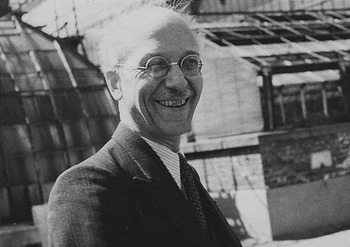
Amherst geologist George W. Bain once informed US atomic intelligence officers that if the French were ever to uncover extensive uranium reserves, it would happen in the colonies.Footnote 16 He was right. The La Crouzille find came as a surprise, but fundamentally did not change the French situation: for a large-scale nuclear programme, France would need to find uranium outside the metropole. The territory overseas that first excited the French was Madagascar. On the island were long-known radium deposits, and Jean Orcel, the chief mineralogist of the Muséum national d'histoire naturelle and the early CEA's leading consultant on uranium (Figure 1), was the world's leading expert on Madagascar's mineralogy. But the French also had their eyes on Morocco, another place Orcel knew well. In September 1945, he and palaeontologist Camille Arambourg deposited a sealed envelope at the Académie des sciences. In it they reported ‘a greenish-yellow mineral, immediately calling to mind a possible uranium salt’, that they had spotted there. The two had first observed it in the mid-1930s; in 1945, Orcel considered its existence a state secret. In a confidential memo written for the French atomic programme's leaders, Orcel listed Morocco as France's most promising colony after Madagascar, and recommended a systematic prospection of Morocco's phosphate beds.Footnote 17
Mineralogist Jean Orcel discovered a uranium vanadate mineral in Morocco and encouraged the French atomic programme to seek it out. Creator: Spiridou Manoliu, title: Jean Orcel 1947 Muséum, source: Spiridon Manoliu's pictures, https://commons.wikimedia.org/wiki/File:Jean_Orcel_1947_Mus%C3%A9um.JPG. Creative Commons Attribution-NonCommercial-ShareAlike 3.0.

The leadership of the French atomic programme discussed Orcel's recommendation, and discovered several complications. Morocco, as a protectorate, was semi-autonomous, legally outside the French Union, and its mining law placed uranium into the category of metals, which were fair game to all prospectors. This was a harbinger of difficulties to follow: Morocco's protectorate status – self-contradictory, Morocco considered as sovereign yet not independent – complicated seemingly simple steps.Footnote 18 The upshot was that the CEA had no legal monopoly on uranium in Morocco such as it had in France and the French Union. In any case, the CEA was strapped materially. It could do little more in the short run than send particle counters to aid any uranium prospection efforts mounted by the protectorate's Bureau de recherches et de participations minières (BRPM), one of several protectorate agencies involved in supporting the mining activities that exploited Morocco's many strategic metals and minerals.Footnote 19 Short of equipment, the BRPM's director contacted American electronics firm Beckman Instruments with an order for three more. This had the effect of alerting the American atomic programme to the French interest in Moroccan uranium, since all such exports had to be approved by the US Atomic Energy Commission.Footnote 20
Given fundamental deficiencies in protectorate industrial and transport infrastructure, American involvement in the form of foreign investment suggested itself.Footnote 21 The Americans were eager to join in the hunt for strategic minerals. The American legation in Casablanca evidenced this zeal with its plea to Washington for a geological expert who ‘would be entitled to unrestricted travel throughout all three zones of Morocco’, to visit areas inaccessible to US commercial interests.Footnote 22 But despite the capital that would come from foreign investment, the prospect of Americans, Belgians, Canadians, the British and others crowding the French out of the Moroccan mining business made French officials nervous.
In 1949, indications of uranium were detected in the cobalt mine of Bou Azzer. The CEA, now with a prospector on the ground, soon found out. So, too, did the Americans. In fact, by the end of October, the whole world could have found out: Reuters ran a report about ‘strict censure’ in Casablanca on any information concerning uranium at Bou Azzer. At any rate, US officials had better sources than the newspapers and export license requests. An Economic Cooperation Administration (ECA) mission sent to Morocco in May 1949 to assess its mining industry included geologist Marc C. Bandy, and the mission reported not only manganese, lead, zinc, cobalt and the like, but also the ‘radioactive minerals’ detected at Bou Azzer.Footnote 23 The radioactive mineral turned out to be brannerite, an oxide of uranium and titanium, often containing uranium, but not as rich or exploitable as pitchblende, the real holy grail of uranium prospecting.
Bou Azzer made it clear: Morocco merited more exploration to figure out what was really there. The French, however, found themselves without options. The CEA's resources simply did not permit anything as ambitious as a protectorate-wide uranium prospection programme. The ECA could aid the company operating the Bou Azzer mine – after all, Americans purchased almost 90 per cent of its cobalt output – but no American help could be forthcoming to aid uranium exploration in Morocco. Such aid would contradict American policy of the time: control all uranium deposits possible, and deny them to all others outside the narrow Anglo-American-Canadian partnership of the Combined Policy Agency (CPA).Footnote 24 At any rate, putting more boots on the ground, be they French or American, would expose tensions heretofore not readily noticed, as French and American uranium prospectors came to perceive that the grounds they were exploring were geologically unique, and politically contested.
Uranium intelligence
As 1950 began, both the French and the Americans sought uranium intelligence in Morocco. In the coming two years, the content and source of that geophysical intelligence would have a profound influence on the subsequent actions both countries took.
The Bou Azzer indications stirred the CEA leadership to send one of their best young geologists, André Lenoble, to Morocco. Early in 1950, Lenoble reported to his superiors an even more interesting find than Bou Azzer's brannerite: traces of pitchblende at the Azegour molybdenum mine. Paris sent Lenoble reinforcements, a CEA geologist and two prospectors, to be discreetly embedded with Lenoble in the protectorate's Service des mines. They posted their first report to CEA headquarters in October. Its mix of encouraging indications and limited possibilities would be typical of news from Morocco: ‘very interesting mineralization, but very sporadic, pitchblende veinlets or visible grains at several points that appear unconnected’.Footnote 25 More work would be needed to define the edges and extent of the mineralization. Lenoble suggested a cooperative effort with the Service des mines and the local mining enterprise, the Société le molybdène, combining uranium and scheelite exploration. The CEA leadership was bitterly divided on whether to pursue such a project.
The CEA's leaders might have been more minded to get the exploration under way had they known that, in the meantime, the AEC Raw Materials Division had someone undercover, on the ground in Morocco, seeking to get uranium to the United States. Frank McQuiston, deputy director in the USAEC Raw Materials Division as well as a consultant for Newmont Mining Corporation, was a metallurgist, trained at the California College of Mining, a specialist in flotation and ore leaching. After work in various parts of the United States, including examination of the phosphates of Florida, McQuiston was sent abroad. He went to the Shinkolobwe mine in Belgian Congo to aid with its milling operations, to India to investigate the thorium mining operation, and to South Africa to prepare the way for uranium to be extracted as a side product of the gold mining operations.Footnote 26 McQuiston's previous employer, the Newmont Corporation, had a 49 per cent interest in the Zellidja lead and zinc operations on the Moroccan–Algerian border at Bou Beker. In May 1950, on the pretext of a visit to Zellidja, McQuiston went to Morocco to see whether there were uranium minerals available. With a geologist and mineralogist in tow, he managed to visit the immense Khouribga phosphate deposits, in addition to meeting engineers who knew Bou Azzer well. At Bou Azzer, it was unclear whether there was enough uranium amongst the cobalt for working it as a side product of an operation which, as McQuiston observed the following year, was primitive in the extreme. At Khouribga, there were no plans to extract uranium from the phosphoric acid production, but McQuiston, on familiar territory technically, thought it could be done with substantial American aid. McQuiston revealed his connections with the USAEC to only one person, the protectorate's resident-general Alphonse-Pierre Juin, with whom he managed to arrange a meeting. The American engineer explained that exploitation of the uranium in the Moroccan phosphates might contribute to the protectorate's economy, and to the common Western defence.Footnote 27
The USAEC had McQuiston's report, as well as Marc C. Bandy's extensive account of Bou Azzer.Footnote 28 The possibility of finding uranium in Morocco was increasingly seductive. Both reports suggested that uranium ore might come as a side product of molybdenum (Azegour) and cobalt (Bou Azzer) mining, as well as in the distant future from phosphoric acid (Khourigba) production. Meanwhile, the American embassy in Paris reported to Washington that the CEA had confirmed the presence of pitchblende at Azegour with ultraviolet light analysis, had expropriated the mine and had begun a sweeping prospection programme in the Atlas range with the Pechiney firm. Although both rumours were false, they added to USAEC and State Department worries that time was running short to make a move on Morocco's uranium.Footnote 29 But how? A debate unfolded on the basis on which an approach for Moroccan uranium should be made. Officials in the USAEC's Raw Materials Division recommended that the Americans rely on ‘an influential French national’ to persuade the resident-general to allow export of uranium minerals to the United States. Opinion in the State Department differed. There, officials preferred a government-to-government approach.Footnote 30
This was because the political stakes were high. First, any move on uranium would affect relations between the countries' atomic programmes. Robert Terrill, specialist in atomic affairs at the US embassy in Paris, was carefully monitoring the CEA's situation and saw reason for hope. In April 1950, the French prime minister had dismissed High Commissioner Frédéric Joliot-Curie, replaced a year later by the more moderate (politically socialist) Francis Perrin. In the meantime, Administrator-General Raoul Dautry had the CEA's statutes altered to admit more figures from the French establishment to the CEA steering committee. The time was ripe for cooperation rather than suspicion between the American and French atomic programmes, especially with the successful Soviet atomic bomb test having taken some of the urgency out of atomic secrecy. The American reaction of ‘friendly silence’ after the 1951 French–Indian agreement to process monazite, as well as French willingness to permit the export of Moroccan beryl to the USA, were cases in point.Footnote 31
Second, the French Moroccan Protectorate was becoming an increasingly important location in the United States' Cold War strategy. A December 1950 French–American agreement permitted the Americans to build a number of air force bases, adding massively to its military presence there (previously comprising a single US naval air base). At the same time, with the outbreak of the Korean War in June 1950, maintenance of the Atlantic Alliance became an increasingly high American diplomatic priority. The French mattered, and the fragile Fourth Republic (twenty-one governments in eleven and a half years) was a constant cause for concern. No move the Americans might make should destabilize the French polity, subject as it was to forces pulling it apart from the right (the Gaullists) and the left (the communists).Footnote 32
More needed to be known on the ground in Morocco. McQuiston returned in mid-1951 for further reconnaissance; Washington urged Terrill to ‘pull in on the reins’ if McQuiston became careless.Footnote 33 It was too late. The garrulous metallurgist had talked up his real mission while in Casablanca, as well as revealing his role in negotiations for South African uranium. He had even allowed himself to be the addressee of Moroccan uranium minerals sent to Paris via French government pouch, thereby tipping off both the French government and the Communist Party.Footnote 34 The indiscretions were all the more worrisome given the press rumours of uranium circulating in Morocco, not to mention a letter sent to the White House by a French national in Casablanca, warning that if the United States ignored the reported uranium deposits, the USSR might acquire them.Footnote 35 At least McQuiston had come around to share the State Department's view of how an approach to the French must be made: not only the local mining interest, but also the protectorate administration, and even the French cabinet, must all be informed and involved in a careful diplomatic approach.Footnote 36
The Americans would have to design any such approach carefully, especially because of conflict in the background over France's handling of the Moroccan Protectorate. Resident-General Alphonse-Pierre Juin, with whom McQuiston had met, had carried out an intolerant policy, coercing the moderate but increasingly independence-minded sultan to denounce the nationalist Isqlal party, all while the United States warned the French not to go so far as to depose him. During summer 1951, the Quai d'Orsay replaced Juin with Augustin Guillaume, an army man who ‘saw his job mainly in terms of preserving Morocco's strategic value to France and NATO’.Footnote 37 He was as unyielding as his predecessor to American suggestions that the French adopt a more moderate policy towards native Moroccans. Any cooperation on uranium in Morocco would not only have to provide proper grounds for collaboration between two ambitious, high-priority national atomic programmes. It would also have to permit the Americans to navigate between the Scylla of irritating the French and upsetting the delicate Fourth Republic by appearing to side with the cause of an independent Morocco, and the Charybdis of inflaming nationalist Moroccan sentiment against the Americans themselves by appearing to prefer the French colonial presence – all while the American presence in Morocco was growing daily. Despite and in fact just because of these difficulties, on 11 October 1951, the American embassy in Paris contacted Washington to seek permission to open up contacts with French officials on the matter.Footnote 38
Meanwhile, more reports flowed in. The protectorate's director of industry and mines had spoken publicly of the existence of uranium in Morocco. His intent was not entirely clear. On the one hand, he suggested that the traces of pitchblende were so irregular as to be non-exploitable; on the other hand, he played up the sheer quantity of uranium associated with Morocco's phosphates, as well as the role of his own services in the French uranium effort.Footnote 39 While the USAEC might have had some reason to be sceptical about what Morocco had to offer (having recently received doctored mineral samples from Tangiers), an April 1952 CIA summary of the French atomic programme noted that Morocco ‘is expected to become one of the largest, if not the largest, French source of uranium’.Footnote 40 At the same time, French uranium geologists were reporting traces of uranium in the open literature. André Lenoble and his collaborators described many of the most important details concerning the radioactivity in the Moroccan phosphates – radioactivity was confined to the phosphate layer of the given beds, and CEA laboratory analyses showed the radioactivity to be characteristic of uranium vanadates, the minerals which Orcel had thought present in 1945. Other French researchers verified the presence of uranium in the phosphates, as well as the presence of uranium in the scheelite of the High Atlas.Footnote 41
Whatever the uranium in the Moroccan subsoil, and whatever the political difficulties involved in its extraction, the matter could no longer wait. The State Department started the process of creating a transnational uranium network on 4 February 1952, when the American ambassador sent a letter to the French prime minister to initiate discussions on Morocco.Footnote 42 The geologists' findings – some open, some secret – were compelling the diplomats to reveal their hands.
Uranium diplomacy
The 1952 missive to the French prime minister went out at a moment of transition for both the US and French atomic programmes. In the United States, 1951 marked the first time that uranium ore deliveries exceeded USAEC requirements. For the Americans, uranium's status as a rare ore, negotiable only as a question of immediate acquisition or future control, was beginning to change.Footnote 43 Meanwhile, the French were ratcheting up their uranium acquisition programme in congruence with the large ambitions of their five-year programme of expansion, drafted in late 1951, set to go through parliament in mid-1952. Steering the CEA through the biggest expansion in its history was new administrator-general, Pierre Guillaumat (Raoul Dautry having passed away in August 1951 aged seventy). Guillaumat was a right-leaning polytechnicien fresh from the Directorate of Fuel Supplies, who brought with him a bevy of similarly schooled deputies. All of the CEA's leaders, including High Commissioner Francis Perrin, whose mild, scholarly appearance masked hearty ambition, wished to see France's uranium stocks take on ‘a permanent market value’ as the programme embarked on a new path towards industrialization.Footnote 44
It must be noted that as the year-long negotiating process began – the Americans received the expected positive French reply on 24 March 1952 – uranium was not merely the subject of negotiations. Rather, US and French diplomats were aiming to use uranium to foster wider synergies for nuclear-programme development, for scientific and technological exchanges, and, last but hardly least, for a common approach to the sovereignty of Morocco. Such uses were to unfold over many months, and were dominated by two principal considerations: how to manage the exchange of atomic information and of uranium, and how to establish the programme without overly irritating French sensibilities about its position in Morocco. On the former point, the French were in for a pleasant surprise: for a share of Morocco's uranium, the Americans had much to give, including aid with radiometric surveying, ‘assistance on the problems of mining and processing ores’, American personnel and equipment on the ground in Morocco, and an invitation to French specialists to travel to the United States to study uranium prospecting and mining there.Footnote 45 A ‘conversation of experts’ held in Paris on 23 April clarified a number of details. Frank McQuiston, present at the meeting, left the French particularly impressed. The metallurgist explained that Morocco's pitchblende might be concentrated using the physical methods practised by the French, but that any other uranium minerals would require chemical concentration. Regardless of what minerals might turn up, the Americans promised they had the techniques required. This greatly interested Guillaumat and his colleagues, who were struggling to develop chemical concentration techniques for uranium minerals.Footnote 46
While the Quai d'Orsay could gleefully report that some ‘jealously guarded secret American techniques’ were soon to become available, the French Foreign Office speculated internally that ‘the political problem facing the government will be more “Moroccan” than “atomic”’. Questions prepared by the French for the 23 April meeting revealed French anxiety that the Americans might try to establish a presence in Morocco and lever out the French – more than once, the French demanded to know precisely the number of scientists and technicians the Americans intended to send. The Americans managed to allay French fears, and more. French officials believed that anything that increased Morocco's strategic importance in American eyes reinforced France's position in it, ‘the presence of France being the guarantor of order and security in this country’.Footnote 47 A collaborative programme to mine uranium which the Americans visibly desired, as well as the American military base building in progress, appeared excellent guarantees of American support for the French position in Morocco. They promised to outweigh whatever disapproval the Americans might express behind closed doors about French unwillingness to grant more autonomy to Moroccans.
This mattered especially as the common view that the French and Americans had on the status of Morocco appeared to be shaken during summer 1952. The French administration strong-armed the sultan into accepting ‘reforms’ that in reality granted French colonials civic powers in a country where they were legally foreigners, humiliating the sultan and enraging Moroccans. This ran directly counter to American hopes of gradual reforms in favour of Moroccan autonomy under French supervision, and in August 1952 the US delegation at the UN acquiesced when Arab and Asian countries had the Moroccan question added to the order of the day. The French president complained bitterly that this was ‘contrary to the Atlantic sprit’ (and had the satisfaction of watching the Americans then vote in France's favour following the debate).Footnote 48 Meanwhile, the International Court of Justice issued an equivocal decision on the rights of American businessmen in the protectorate, permitting them to keep their most-favoured-nation status granted by a century-old treaty, but removing extraterritoriality. The decision was sufficiently satisfactory to the French to remove the case as an obstacle to an agreement on uranium.Footnote 49 Ultimately, however, what mattered most to the United States was not extraterritorial privilege but the predictable circulation of uranium. When El Glaoui, the feudal potentate of Marrakech, got wind of uranium within his grasp, he sought to convince the USAEC to send geologists directly to him. The Americans refused – the last thing they wanted was a local strongman willing to deal uranium to the highest bidder.Footnote 50 Much, therefore, was riding on a uranium agreement, and not merely uranium. American assurances of a cooperative prospection programme in Morocco were also assurances that, despite the tensions of summer 1952, the Americans stood behind the French protectorate. An agreement would show that American officials really did view France as ‘the guarantor of order and security’ in Morocco – that the Americans stood behind the French vision of Morocco as a protectorate, and not the Moroccan nationalists’ vision of a truly independent country.
First, though, the USAEC would have to temper its desire for uranium. It was one thing for the Americans to demand the withdrawal of a clause introduced by the French permitting them to sell their share of Moroccan uranium to third parties. The French negotiating team clarified that such was not what they intended and removed it.Footnote 51 It was another thing to deny the French any uranium at all. For State Department officials, it had been clear for a long time that France would demand and must be granted a share of uranium produced in a common Moroccan programme. Officials from the USAEC Raw Materials Division had other ideas. In September 1952 negotiations nearly collapsed when they described to Francis Perrin and Bertrand Goldschmidt their hope ‘that it would be possible to obtain for the U.S., at least during the period of intense defence preparations, say to 1960, all of the ore produced in Morocco’. Perrin and Goldschmidt threatened to walk out, before State Department officials stepped in to insist that this ‘hope’ represented an abandoned view, now that the Americans better understood the needs of the French atomic programme.Footnote 52 Ultimately, a sliding scale for uranium distribution was developed: the greater the annual production, the more would accrue to the USAEC. Nevertheless, the USAEC shouldered most of the expenses, 80 per cent, the CEA assuming the remaining 20 per cent.Footnote 53
Secrecy and timing, determined mostly by French needs and weaknesses, brought the agreement to its conclusion. Part of this was atomic, where secrecy served both countries. The Americans had no wish to inform their uranium suppliers of the deal: witness their concern over the clause added and then withdrawn by the French. Meanwhile, the French feared British anger at the news that they had reached an agreement with the Americans in the nuclear field without their knowledge; they preferred to leave the British in the dark. More to the point for the French, news of an agreement that permitted Americans access to uranium from a French protectorate could be domestically devastating. Not only might the government (be it Antoine Pinay's, March 1952–January 1953, or René Mayer's, January–June 1953) stand accused of giving away a strategic resource to the Americans, who had so far refused to help in the nuclear field, but the government's resolve to maintain hegemony over the Moroccan Protectorate would also appear doubtful. Therefore, with the Pinay government having just fallen, the Americans should make haste; Howard Robinson, Robert Terrill's replacement at the Paris embassy, reminded Washington, ‘The best chance for getting what we want lies in immediate action inasmuch as the greatest government strength in France is usually attained early in the regime’.Footnote 54 The final preparations finished, the agreement was signed at the beginning of the third month of Mayer's government, on 2 March 1953. Finally, the diplomacy was done: joint French and American teams of geologists would together prospect for uranium in Morocco's deserts and mountain ranges – and in so doing, pioneer French–American atomic cooperation, and mediate French and American approaches to Morocco.
SOMAREM in search of uranium (and not)
The qualities that made uranium ideal for initiating diplomatic dialogue had to be carefully hidden. On the one hand, SOMAREM qua private enterprise was not secret. Those reading the 29 May 1953 edition of the Moroccan Protectorate's Bulletin officiel would have discovered the following announcement concerning SOMAREM:
Purpose: in Morocco, prospection and research of all deposits of metallic mines and, more generally, all mineral deposits, the study of all mining, the execution of all works having as their purpose the stated prospections, researches and studies, as well as those pertaining to the physical, chemical and metallurgical treatment of the mineral substances of the stated deposits; the purchase, the sale or the treatment and, more generally, all commercial or industrial operations pertaining to the stated mineral substances, the development and exploitation of all mineral deposits.Footnote 55
On the other hand, there was not a word about uranium, and the real arrangement behind this public facade was known to only a few officials in the US State Department and AEC, and French Foreign Office and CEA. On the enterprise's board of directors sat officials from the CEA and various protectorate mining offices. Shareholders consisted of the CEA, the protectorate offices, and those same individuals who sat on the board.Footnote 56 The USAEC had long insisted that it should hold no shares, and indeed its role in SOMAREM was deliberately obscured. A secret three-man ‘managing committee’ distinct from SOMAREM but with authority over it assured the Americans' influence.Footnote 57 It comprised one man each from the USAEC, the CEA, and the protectorate's BRPM, each with veto power.
The contrivance of a private enterprise kept the collaborative research programme secret from other national atomic programmes, from the French communists who otherwise would have stirred up trouble in the press and alerted the world, and from the sultan and his staff. The French were responsible for this latter secrecy. It began with the name of the enterprise. What started as the ‘Société chérifienne de prospection et d'exploitations minières’ mutated over several months to the ‘Société anonyme marocaine de recherches et exploitations minières’, losing the direct and risky reference (chérifienne) to the sultan's government.Footnote 58 Furthermore, while the French assured the Americans that they would inform the sultan in at least vague terms about the collaboration (as the protectorate's constitution obliged them), there is not a shred of evidence that they did, and every reason to believe they did not. After all, the French never directly informed the sultan about the French–American agreement to construct US air force bases.Footnote 59 Here the act of secrecy was most telling. The sultan, of course, learned of the presence of the bases, and perhaps learned of the uranium prospection programme too. However, the Americans and especially the French were making important assertions of who really oversaw and directed the Moroccan Protectorate's affairs.Footnote 60 They did this by using geological secrecy for the purposes of inclusion and exclusion – inclusion of French and American interests, exclusion of native Moroccan and all others.
The new partners were eager to get the uranium search under way. A preliminary survey in April took American and French geologists to Azegour, Bou Azzer and Midelt. With the summer came heat too intense for prospecting except in high-altitude areas. This set a pattern for years to come: prospecting season started in the autumn and lasted through winter and spring, while summer provided a moment for rest, annual accounting and limited prospecting operations in the High Atlas range. Even in Morocco's cooler seasons, it was not easy. There were merely ‘indications’ of uranium in Morocco's granite masses and scheelite deposits. And while the phosphate of the Kourigba region contained uranium minerals, they were hardly uranium-laden: grades ranged from 0.03 to 0.05 per cent, and even if those grades rose as one went south, the problem of extraction and concentration remained.Footnote 61 AEC labs had analysed three samples of Moroccan phosphates, found all of them very low-grade, and concluded that recovery of uranium could only come on ‘a by-product basis in the manufacture of triple superphosphate or phosphate chemicals’ – a daunting task when not a single facility for acidulation was even present.Footnote 62
The French collaborated with American geologists but ignored American diplomats' advice: in August 1953 they sent Sultan Mohammad V into exile and installed a more compliant relation on the throne. Moroccans were outraged, and the entire Arab world with them. In the protectorate, this triggered a bloody campaign pitting incensed Moroccan revolutionaries against pitiless French colonial officials, all while thousands of radio sets were sold to pick up dissenting broadcasts from Cairo.Footnote 63 Outside the protectorate, US silence signalled its implicit support of the French. US officials did not bother to inform the palace of their disapproval of the French move; on the UN Security Council as well, they voted against investigation of the incident. Their concern was with the safety of their interests, and the stability of France. The government of Joseph Laniel was shaky, faced with strikes, the war in Indochina and the controversial European Defence Community Treaty. The first of the American Strategic Air Command (SAC) bases in Morocco were almost operational. And there is every reason to think that the covert search for uranium also necessitated support for the French position in Morocco. When John Foster Dulles stated in November 1953 that ‘there is no slightest wavering in our conviction that the orderly transition from colonial to self-governing status should be carried to a completion’, the French could be assured that his signal was serious. After all, they and the Americans were intimately linked in a geological research effort, the strategic payoff for which might be profound.Footnote 64
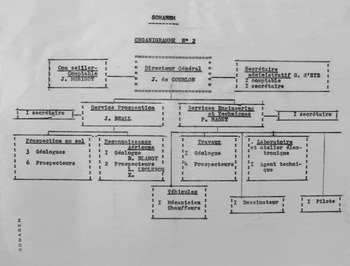
These links were interpersonal, forged in SOMAREM's prospecting teams. As the autumn 1953 prospecting season opened, there were three: two ground-based prospection teams equipped with jeeps, and one airborne prospection team with a Piper Super Cub. American and French negotiators agreed that all prospection teams should be mixed, and therefore at least one American was present in each. When not in the field, prospectors were housed in Rabat, where SOMAREM maintained headquarters, living quarters, a mineralogical laboratory, a workshop and a garage.Footnote 65 In that first full prospecting season (1953–1954), the teams swept through numerous massifs. While there were a number of promising leads (Midelt, the Ment and the province of Rehamna), there was nothing judged immediately exploitable.Footnote 66 The collaboration provided the French with new knowledge and techniques. The two Americans visible in the documents reveal what French prospectors had to learn in Morocco. Royal Stuart Foote, who had not only published on airborne exploration for uranium but also invented a gamma ray detection device suited in particular to sedimentary formations, led the airborne prospection team; John V. Beall was not only an experienced mining engineer, but a specialist in phosphates (Figure 2).Footnote 67 Meanwhile, as part of the March 1953 agreement, the DREM's top officials made a three-week American tour, starting at USAEC headquarters in Washington and ending at the sedimentary uranium deposits of Colorado and Utah.Footnote 68
SOMAREM organizational chart, 1954. Courtesy of the Archives of the Commissariat à l’énergie atomique (File FAR-2006-10-9), Fontenay-aux-Roses (archiveshistoriques-CEA©CEA).

In 1954, the French initiated the removal of at least one of the layers of SOMAREM secrecy. Following the new practice initiated by the CEA's mining division in France, SOMAREM made a public offer to purchase uranium minerals produced by mining enterprises in Morocco, in the hope that this might stimulate not only exploration but also exploitation of deposits.Footnote 69 SOMAREM itself added two more ground-based prospection teams, and reported fruitful and ‘most honest and efficient’ collaboration between various geologists and prospectors, despite ‘the diversity of languages and origins’.Footnote 70 Some of their work in 1954–1955 followed on the heels of the previous year, elaborating the examination of promising indications such as those at the Ment, as well as prospecting the Permo-Triassic sandstone of Argana. At the same time, teams fanned out into the Anti Atlas range and southern Morocco. They discovered the most interesting indicator in a quartz vein in the Ordovician sandstones at Chib er Ras, just northwest of Taouz, and began borehole drilling there. The geologists found the work fascinating, as they gained precious insight into ‘the geological formations themselves’. But the work was demanding, due to the ‘difficult topography and varied climate’, and, tellingly, although SOMAREM now claimed twenty-five separate research permits and the USAEC speculated on the presence of a uranium province,Footnote 71 its geologists turned up no deposits of ‘commercial importance’.Footnote 72
These ambiguous developments were occurring amid a deteriorating situation in Morocco. The violence that had commenced after the removal of the sultan had worsened through 1954. Leading colonial figures were assassinated, while strikes crippled vital industries. The US considered appealing to the French publicly to bring their harsh policies to a close and open a path to Moroccan independence, but, once again, Cold War geopolitics and Fourth Republic fragility persuaded them otherwise: the US could not afford to undermine Prime Minister Pierre Mendès France when he could count on only a bare minimum of support in the French parliament for the London–Paris accords.Footnote 73
In addition, just as the worsening situation in Morocco called into question SOMAREM's purpose as a symbol of French–American unity on the Moroccan question, sea changes in American atomic policy cast into doubt SOMAREM's purpose as a meeting point for two atomic programmes. In December 1953, at the Bermuda Conference, President Dwight Eisenhower informed British prime minister Winston Churchill what was coming: his famous Atoms for Peace speech a few days later at the United Nations, where he proposed that the atomic powers create a stock of fissile material for sanctioned, peaceful uses. Amendments in 1954 to the McMahon Act made exchange of at least American raw materials possible, permitting the USAEC for the first time to transfer fissile materials to friendly states (granted the material would be used for peaceful purposes). The United States was preparing for a new strategy for nuclear raw materials. The post-war goal of hoarding the world's uranium or at least denying it to all others – what Helmreich called ‘pre-emption’ – was no longer tenable, given the relative availability of uranium, as well as the existence of increasingly capable rival atomic programmes like France's. Future American strategy would rely instead on establishing (publicly announced) favourable exchanges that committed friendly countries to American technologies and peaceful uses.Footnote 74
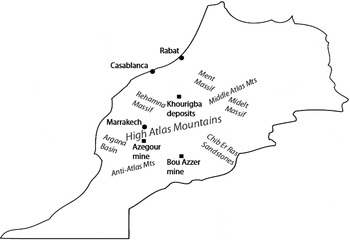
Therefore it is questionable whether by 1955 the French and American creators of the SOMAREM enterprise really wanted to find uranium. Uranium was fast losing its seductive qualities and, in its Moroccan context, was becoming downright dangerous. The hurried, scattered character of SOMAREM's last prospection campaign (Figure 3) indicates that, rather than wishing to find and exploit rich uranium deposits, SOMAREM's prospectors were on a mission to verify that easily mined uranium was not present in Morocco. ‘Detailed prospection campaigns in limited areas’ gave way to ‘wide regional reconnaissance conducted both on the ground and in the air’. As a result, nearly the entire Anti Atlas range was hastily covered, as were the Palaeozoic beds of the western High Atlas between Tizi n'Test and the Argana Basin, and the ‘red-beds’ in the Permo-Triassic south-east of Marrakech, while the aerial prospection team returned to the granites of Rehamna. The new methods led to the discovery, according to SOMAREM, of ‘numerous zones of anomalies and several uranium occurrences in new regions and types of rocks’. A handful of the findings warranted boreholes, but the conclusion was always the same: no exploitable uranium present.Footnote 75 These negative findings matched the changing American Cold War priority in the region: secure the SAC air bases if possible, deny strategic resources to the USSR, and shift American emphasis in North Africa from concern for France's stability and post-colonial ego to interest in befriending newly independent non-Europeans.Footnote 76
Map of SOMAREM's prospection campaigns in Morocco, 1953–1955. SOMAREM headquarters were in Rabat; SOMAREM's prospectors ranged over the protectorate, taking in numerous granite massifs. Map by the author, with Csilla Kőszeghy.

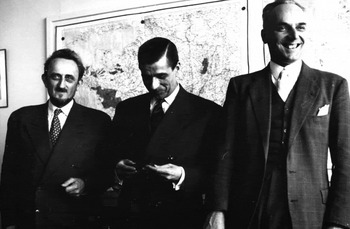
The French atomic leadership, like the American, sensed that French hegemony in Morocco could not last. Violence reached a peak during the summer of 1955, when a brutal attack by nationalists on a colonial farming community at Oued Zed provoked an equally brutal military response. US observers thought Morocco might be headed towards the sort of war that was convulsing its neighbour, Algeria.Footnote 77 Already, in a memo concerning legal hair-splitting over research permits, Pierre Guillaumat had been characteristically blunt: ‘When S.M. will be – or if it was – independent or internally autonomous, MAGHZEN ownership will likely be an additional discomfort. But all of these legal considerations will evaporate with our flags' (Figure 4).Footnote 78 SOMAREM geologists were not immune to the spreading violence. One SOMAREM dispatch reported that ‘the incidents that occurred over the summer in different regions of Morocco led the USA Consul General to ask us to send back to Rabat two American geologists … Three weeks later two French geologists were called back to the flag’. SOMAREM was now more of a liability than an asset as Morocco accelerated towards independence. Its management suspended its activities, and by the end of 1955 ‘all fieldwork had practically stopped’.Footnote 79
Left to right: CEA high commissioner Francis Perrin; State Secretary charged with atomic affairs George Guille; CEA administrator-general Pierre Guillaumat. The photo was taken in 1956; the previous year, Guillaumat had written prophetically that the legal considerations regarding uranium in Morocco ‘will evaporate with our flags'. Courtesy of the Archives of the Commissariat à l’énergie atomique, Fontenay-aux-Roses (archiveshistoriques-CEA©CEA).

Transnational exploration and the Kingdom of Morocco's uranium
SOMAREM's suspension did not signal a loss of interest in uranium altogether. To the contrary. The French were alarmed to discover undercover American efforts to send back uranium intelligence in the wider region, not to mention American investors seeking to purchase uranium research permits in Morocco independently of SOMAREM.Footnote 80 But then again the French, too, had their own extensive researches under way in North and Central Africa, ranging from promising leads in the deserts of Algeria to a big strike in Gabon and an even bigger one to follow the next decade in Niger. American and French uranium prospection efforts were transitioning to new periods in their histories. The Americans, with more ore than their programme required, were relying increasingly on plentiful domestically mined minerals, while tapering their consumption of foreign resources. Meanwhile, the French were gearing up prospection worldwide, planning on increased production for their growing atomic programme, with outputs in both the civilian and military spheres. The status of uranium geology was changing as well, shifting from widespread secrecy to strategic disclosure. The Americans were first, reporting extensively at the 1955 Atoms for Peace Conference on the uranium geology and mineralogy of the American West, as well as on ore-refining techniques. Other countries not as forthcoming in 1955 followed suit at the second Atoms for Peace Conference in 1958, France included.
Long before then, in Morocco in November 1955, Mohammad V returned in triumph, and the Kingdom of Morocco shed its protectorate status in March 1956. Both the US State Department and the French Foreign Office hastened to adjust to the new situation. The Americans replaced the consul with a chargé d'affaires, and by October 1956 named an ambassador.Footnote 81 That summer they abandoned their extraterritorial rights as well. The sultan was solidly anti-communist and in the post-Bandung world the United States could ill afford to alienate newly independent countries. The sultan's response to their initiatives was acceptably cordial. The SAC retained its bases until 1963, by which time intercontinental and submarine-borne ballistic missiles rendered them strategically non-essential.Footnote 82 There is no sign that the State Department or the USAEC fretted over the sultan discovering the SOMAREM secret.
The French Foreign Office and CEA, however, did. It was a matter of maintaining favourable postcolonial relations when revelation of the secret uranium research programme carried out behind the sultan's back might poison them. Guillaumat pressed the Quai d'Orsay to indicate whether the government of the Kingdom of Morocco had learned of SOMAREM. Neither Paris nor Rabat knew. At best, it appeared that one of the resident-general's counsellors to the sultan informed him in the vaguest of terms about uranium. About the French–‘Moroccan’ agreement that did so much to shape SOMAREM, the sultan had apparently learned nothing, at least nothing deliberately revealed by the French. This did not mean he could not know. A former US diplomat had reportedly advised the sultan and the Moroccan government to claim areas where deposits were suspected. In addition, given the BRPM's intimate participation in SOMAREM planning and operations, it seems likely that SOMAREM's statutes must have ended up in the new state's hands, and therefore were known to the sultan. In the end, without positive knowledge of what the sultan knew, the Quai d'Orsay and the CEA agreed that any information formally shared with the sultan about SOMAREM ought to be embedded in a broader conversation about the various secret, international agreements that the new Moroccan government was obliged to honour.Footnote 83 In July, the French Foreign Office in Rabat reported that, however the news had got to them, ‘The Moroccan Authorities did not manifest any particular interest in SOMAREM's activities’, nor any curiosity about how SOMAREM had come into being.Footnote 84 Given that the French–Moroccan accord creating SOMAREM in 1953 was anti-constitutional, the French hoped that the whole thing might be forgotten.Footnote 85
Yet even as SOMAREM in operation had become a liability, SOMAREM on the books still had its uses. So thought Guillaumat, even while French and American geologists departed Morocco for good, workshops and laboratories were sold off, and SOMAREM's jeeps and Piper Super Cub were rented out.Footnote 86 It was not only that SOMAREM clung to its research permits, or that its pricing scale for uranium oxides remained valid until the end of the decade. It was that the original French–American agreement for a ten-year collaboration be honoured.Footnote 87 Guillaumat knew that it had provided the CEA with important dividends. Not only had CEA officials toured parts of the North American atomic complex, but French uranium prospectors had had the opportunity to practice their craft alongside their American colleagues. Airborne prospection provides a case in point. CEA scientists had experimented with the technique in metropolitan France, but SOMAREM gave them their first chance in the field, with Royal Stuart Foote guiding them, to make aerial radiometric surveys, sweeping over large areas to identify rapidly and efficiently where to search intensely, and where not. Given the vast spaces of Africa, the method was essential, and it paid off: the biggest strike in CEA history made at Arlit, Niger, in 1960, was preceded by an aerial prospection campaign begun in 1959.Footnote 88
For the Americans, SOMAREM had provided a perfect cover for an extended look at Morocco's uranium minerals, reassuring them not that they had a new source of supply, but rather that they need not fear uranium falling into the hands of a friendly rival, or worse. Various levels of secrecy assured them that this examination did them no political harm, and that uranium could serve as an effective mediator for atomic cooperation as well as for geopolitical positioning. The contrivance of a private French enterprise masked USAEC participation. Consequently, it was not only the USAEC's uranium suppliers around the world that remained unaware of the active American interest in a new, Moroccan source of uranium; so too did Moroccan nationalists. This allowed the Americans to proceed with their risky game of not offending the Moroccans while reassuring the French. Meanwhile, the level of secrecy shifted on the ground in Morocco, as SOMAREM carefully revealed its uranium interest to other French enterprises in the hope of stimulating exploration. Secrecy had multiple levels, changed over time, and did not work entirely: the sultan, it seems, did find out. Perhaps the strongest sign that it nevertheless worked well enough is that he was not obviously troubled. Or perhaps this was subterfuge on his part: he showed no visible reaction, all the more to confuse the French.
At any rate, by 1956 secrecy had lost its value, and in fact could hamper development of uranium supplies, not only because of geopolitical change in Morocco, but also because of the changing status of uranium. The lifting of secrecy could actually benefit technoscientific development.Footnote 89 Indeed, the lifting of secrecy in uranium geology and mineralogy that came with the 1955 and 1958 Atoms for Peace Conferences stimulated a successful search worldwide for uranium deposits, leading to a glut in supply, despite the parallel stimulus in research on civilian nuclear power and applications. The Americans stopped, however, at uranium enrichment: techniques for this remained classified (despite French efforts to pry them loose at the 1958 conference), in order to keep a monopoly on enriched uranium.
The SOMAREM episode illustrates the usefulness of tracking scientists as agents of foreign policy. From start to finish, their roles were crucial: mineralogist Jean Orcel, persuading the French leadership to extend their uranium search to the Moroccan Protectorate; geologist Marc C. Bandy, alerting American officials similarly; metallurgist Frank McQuiston, ferreting out intelligence for the USAEC, then aiding diplomatic preparations for an agreement with the French; Francis Perrin (physicist) and Bertrand Goldschmidt (radiochemist), acting as key French negotiators. And we should not lose sight of the fact that the key diplomats and officials on both sides were themselves scientifically and technologically informed: they had to be. With a little digging, SOMAREM helps us to see better the entanglement of science and technology with Cold War affairs: despite the fact that the company was publicly registered and in everyone's plain sight, its implications for the Cold War were carefully concealed.
SOMAREM also demonstrated that uranium was an asset, and that even its prospect held value and diplomatic weight. On the one hand, the enterprise as an active entity was short-lived; on the other, the French kept trying. However, neither the French-backed IAEA missions of the 1960s, nor Japanese and Soviet missions of the 1970s, nor a Franco-Moroccan collaboration to extract uranium from the phosphates in the early 1980s, turned Morocco into a world uranium producer, despite the thousands of tons of reserves said to be there. A 2007 agreement between the OCP (Office chérifien des phosphates) and Areva to extract uranium from Morocco's phosphates has yet to bear fruit either, although plans have been announced to begin such production.Footnote 90
If nothing else, the Kingdom of Morocco has absorbed the lesson about uranium exploration and sovereignty – that the former serves to assert the latter. The Quai d'Orsay stated this plainly in the early 1950s. Today the Moroccan ONHYM (the Office national des hydrocarbures et des mines, the successor to the BRPM) reveals that the Moroccans got the point. It publicizes uranium-prospecting areas not only in the various territories where SOMAREM's geologists once ranged, but in the Western Sahara, its de facto colony, the ‘Southern Provinces’ where the ONHYM conducted airborne surveys in 2002 and 2004.Footnote 91 Such prospecting is an assertion of sovereignty in a disputed region.Footnote 92 The Kingdom of Morocco lives with a hope shared by Morocco's former French masters sixty years before: a transnational geophysical research operation will add legitimacy to their particular geopolitical vision of the grounds being explored.