Individuals and those close to them can face life altering and distressing changes after traumatic brain injury (TBI) (Douglas & Spellacy, Reference Douglas and Spellacy2000; Levack, Kayes, & Fadyl, Reference Levack, Kayes and Fadyl2010; Ponsford et al., Reference Ponsford, Downing, Olver, Ponsford, Acher, Carty and Spitz2014; Tate, Broe, Cameron, Hodgkinson, & Soo, Reference Tate, Broe, Cameron, Hodgkinson and Soo2005; Whiffin, Ellis-Hill, Bailey, Jarrett, & Hutchinson, Reference Whiffin, Ellis-Hill, Bailey, Jarrett and Hutchinson2019). Given its major personal and community impact, access to and involvement in rehabilitation is recommended after TBI (Turner-Stokes et al., Reference Turner-Stokes, Pick, Nair, Disler and Wade2015). Rehabilitation has evolved over time, with increasing value given to respecting and understanding each person affected by TBI, and working together with them and their close network to create an individualised approach to achieve personally meaningful aims (Danzl, Etter, Andreatta, & Kitzman, Reference Danzl, Etter, Andreatta and Kitzman2012; Ellis-Hill, Payne, & Ward, Reference Ellis-Hill, Payne and Ward2008; Ponsford, Sloan, & Snow, Reference Ponsford, Sloan and Snow2013; Prigatano, Reference Prigatano1999; Terry & Kayes, Reference Terry and Kayes2020; Wilson, Winegardner, van Heugten, & Ownsworth, Reference Wilson, Winegardner, van Heugten and Ownsworth2017; Ylvisaker & Feeney, Reference Ylvisaker and Feeney1998; Ylvisaker, Hanks, & Johnson-Greene, Reference Ylvisaker, Hanks and Johnson-Greene2002). This collaborative, dynamic process of working together in rehabilitation may lead one to consider that the quality of this ‘working together’ could have relevance to rehabilitation outcomes. The concept of ‘working together’ is recognised in the literature via several terms, including the therapeutic relationship or alliance.
The notion of a therapeutic alliance was originally identified and explored within the context of psychotherapy and research findings demonstrating the power of the alliance to facilitate change have emerged over the years (Elvins & Green, Reference Elvins and Green2008; Flückiger, Del Re, Wampold, & Horvath, Reference Flückiger, Del Re, Wampold and Horvath2018; Horvath & Symonds, Reference Horvath and Symonds1991; Martin, Garske, & Katherine Davis, Reference Martin, Garske and Katherine Davis2000; Norcross & Lambert, Reference Norcross and Lambert2018). While many authors have influenced the conceptualisation of the therapeutic alliance, Edward Bordin and Esben Hougaard made seminal contributions to our understanding of its importance within therapy. Bordin broadened the application of the alliance beyond the psychodynamic tradition (Bordin, Reference Bordin1979; Constantino, Castonguay, & Schut, Reference Constantino, Castonguay, Schut and Tryon2002; Horvath, Reference Horvath2001) and considered the therapeutic working alliance to reflect the collaborative, purposeful work of therapy (Hatcher & Barends, Reference Hatcher and Barends2006, p. 293). He proposed there was ‘a formulation of a working alliance between the client seeking change and the therapist offering to act as a change agent that incorporated a mutual understanding and agreement about change goals and the necessary tasks to move towards these goals along with the establishment of bonds to maintain the partner’s work’ (Bordin, Reference Bordin, Horvath and Greenberg1994, p. 13). Further to Bordin’s conceptualisation, Hougaard (Reference Hougaard1994) proposed a ‘generic model of the therapeutic relationship’ (Hougaard, Reference Hougaard1994, p. 67). He divided his model ‘into two major areas, the personal relationship… consisting of the socio-emotional aspects… and the collaborative relationship … consisting of the task related aspects’ (p. 70). Hougaard recognised the complex interaction of therapist and client contributions as essential to the development of an alliance.
Despite variations in conceptualisation and terminology (Elvins & Green, Reference Elvins and Green2008; Hatcher, Reference Hatcher, Muran and Barber2010; Hatcher & Barends, Reference Hatcher and Barends2006; Horvath, Reference Horvath2018; Krause, Altimir, & Horvath, Reference Krause, Altimir and Horvath2011), there is general agreement that the therapeutic alliance relates to the nature and quality of the purposeful collaborative work of therapy, with a number of interrelated features: a theme of mutuality, partnership and responsiveness; ongoing collaboration and negotiation around personally meaningful goals and the steps (tasks) involved; some kind of personal or affective bond that is at an adequate level to support the work of therapy; and an understanding that strains and ruptures are a normal part of the process and that their resolution can offer valuable opportunities for change (Bordin, Reference Bordin1979, Reference Bordin, Horvath and Greenberg1994; Constantino et al., Reference Constantino, Castonguay, Schut and Tryon2002; Del Re, Flückiger, Horvath, Symonds, & Wampold, Reference Del Re, Flückiger, Horvath, Symonds and Wampold2012; Horvath, Reference Horvath2000; Safran, Muran, & Eubanks-Carter, Reference Safran, Muran and Eubanks-Carter2011). For consistency in this paper, the term ‘therapeutic alliance’ is used, acknowledging it to also incorporate the ‘therapeutic working alliance’.
Association of the therapeutic alliance with psychotherapeutic outcomes has led to further investigation in fields beyond psychotherapy (Green, Reference Green2006). For example, researchers have investigated the alliance in cognitive behavioural therapies for depression and anxiety (Webb et al., Reference Webb, Derubeis, Amsterdam, Shelton, Hollon and Dimidjian2011; Westra, Constantino, & Aviram, Reference Westra, Constantino and Aviram2011), insomnia (Constantino et al., Reference Constantino, Manber, Ong, Kuo, Huang and Arnow2007) as well as other areas such as community mental health practice (Howgego, Yellowlees, Owen, Meldrum, & Dark, Reference Howgego, Yellowlees, Owen, Meldrum and Dark2003; Kirsh & Tate, Reference Kirsh and Tate2006) and vocational rehabilitation (Lustig, Strauser, Rice, & Rucker, Reference Lustig, Strauser, Rice and Rucker2002).
From the mid 1990s, the therapeutic alliance began to receive research attention specifically in TBI rehabilitation. Again, results suggested a positive association between the alliance and outcomes. For example, those with higher alliance ratings showed increased engagement in therapy (Manchester & Wood, Reference Manchester, Wood, Wood and McMillan2001; Prigatano, Reference Prigatano2005; Schönberger, Humle, & Teasdale, Reference Schönberger, Humle and Teasdale2006b) and better productivity outcomes (Evans, Sherer, Nakase-Richardson, Mani, & Irby, Reference Evans, Sherer, Nakase-Richardson, Mani and Irby2008; Klonoff, Lamb, & Henderson, Reference Klonoff, Lamb and Henderson2001; Lustig, Strauser, Weems, Donnell, & Smith, Reference Lustig, Strauser, Weems, Donnell and Smith2003; Schönberger, Humle, Zeeman, & Teasdale, Reference Schönberger, Humle, Zeeman and Teasdale2006). Evidence also supports that it is possible and important to develop a positive therapeutic alliance irrespective of the location of damage or nature of impairments (Prigatano, Reference Prigatano2005; Rowlands, Coetzer, & Turnbull, Reference Rowlands, Coetzer and Turnbull2020; Schönberger, Humle, & Teasdale, Reference Schönberger, Humle and Teasdale2006a, Reference Schönberger, Humle and Teasdale2007; Zelencich et al., Reference Zelencich, Kazantzis, Wong, McKenzie, Downing and Ponsford2020).
Understanding alliances between people significant in the lives of injured individuals and clinicians is also important. Several studies have demonstrated that the alliance and outcomes are better for those whose families also have a good alliance with the therapy team (Prigatano et al., Reference Prigatano, Klonoff, O’Brien, Altman, Amin, Chiapello and Mora1994; Sherer et al., Reference Sherer, Evans, Leverenz, Stouter, Irby, Lee and Yablon2007), and lower levels of family discord and stress (Evans et al., Reference Evans, Sherer, Nakase-Richardson, Mani and Irby2008; McLaughlin & Carey, Reference McLaughlin and Carey1993). Wherever possible, working collaboratively with individuals who are central in the life of each person with brain injury is a key component of TBI rehabilitation (Charles & Butera-Prinzi, Reference Charles and Butera-Prinzi2008; Foster et al., Reference Foster, Armstrong, Buckley, Sherry, Young, Foliaki and McPherson2012; Kreutzer, Marwitz, Godwin, & Arango-Lasprilla, Reference Kreutzer, Marwitz, Godwin and Arango-Lasprilla2010). As such, the development and monitoring of the quality and strength of an alliance with family members and close others is important and one needs to seek their perspectives and not just that of the treating clinicians because views of the alliance by all involved tend to differ (Schönberger et al., Reference Schönberger, Humle and Teasdale2006a, Reference Schönberger, Humle and Teasdale2006b, Reference Schönberger, Humle and Teasdale2007; Tschuschke, Koemeda-Lutz, von Wyl, Crameri, & Schulthess, Reference Tschuschke, Koemeda-Lutz, von Wyl, Crameri and Schulthess2020).
Attention to alliances with others in addition to the person with brain injury and their therapist might suggest a departure from Bordin’s theory and some have questioned whether his theory is applicable in brain injury rehabilitation (Kayes et al., Reference Kayes, McPherson, Kersten, Demaerschalk, Wingerchuk and Uitdehaag2015; Kissinger, Reference Kissinger2008). However, in light of current evidence, we consider that Bordin’s pantheoretical conceptualisation of the alliance has relevance in TBI rehabilitation and requires ongoing investigation. In the context of rehabilitation we consider the alliance as not only relating to the quality of the therapeutic interaction between a clinician and a person with TBI, but also between a clinician and others who are significant in the life of that person. A separate but also potentially relevant theory supportive of the recognition of other alliances and influences in an individual’s therapy is Pinsof’s Integrated Systems Perspective which proposes that ‘therapy is the interaction between therapist and patient systems’ (Pinsof, Reference Pinsof, Horvath and Greenberg1994, p. 174). Individual patients and clinicians and the systems of which they are a part, including the members within them, have potential involvement in, and impact on the therapeutic interaction. The alliance therefore is not just between two individuals but potentially ‘between and within therapist and patient systems’ (Kayes et al., Reference Kayes, McPherson, Kersten, Demaerschalk, Wingerchuk and Uitdehaag2015, p.17). While more research is needed to clarify the theoretical underpinnings of the alliance in brain injury rehabilitation, the above provide support to the importance of looking at the alliances between clinicians and people with TBI and also those who are significant in their lives.
Although relatively few studies have directly investigated the therapeutic alliance in TBI rehabilitation, it is broadly considered important by clinicians and researchers. For example, Giles and Manchester (Reference Giles and Manchester2006) see the alliance as an active variable in treatment that is at least as important as the therapy approach and similarly, Kayes and McPherson’s review suggests that it is a ‘fundamental and active ingredient in rehabilitation’ (Reference Kayes and McPherson2012, p. 1910). Kreutzer et al. (Reference Kreutzer, Marwitz, Godwin and Arango-Lasprilla2010, p. 114) emphasise the importance of nurturing the alliance in rehabilitation and caution that ‘there is great danger in neglecting the quality of therapeutic relationships’. Gracey and Ownsworth (Reference Gracey, Ownsworth, Haslam, Haslam and Jetten2012) suggest that a positive alliance creates a sense of safety to support individuals with TBI to try things that are challenging and to encourage open communication as they explore changes in their life and their sense of self.
More recent studies have served to develop an understanding of the nature of the alliance and support its value in neurorehabilitation after stroke and other forms of acquired brain injury (ABI). This work has included a scoping review in ABI rehabilitation as well as primary research in stroke rehabilitation (Bishop, Kayes, & McPherson, Reference Bishop, Kayes and McPherson2021; Lawton, Haddock, Conroy, & Sage, Reference Lawton, Haddock, Conroy and Sage2016; Lawton, Haddock, Conroy, Serrant, & Sage, Reference Lawton, Haddock, Conroy, Serrant and Sage2018, Reference Lawton, Haddock, Conroy, Serrant and Sage2020; Lawton, Sage, Haddock, Conroy, & Serrant, Reference Lawton, Sage, Haddock, Conroy and Serrant2018; Stagg, Douglas, & Iacono, Reference Stagg, Douglas and Iacono2019). Others have investigated related constructs such as engagement (Bright, Kayes, McPherson, & Worrall, Reference Bright, Kayes, McPherson and Worrall2018; Bright, Kayes, Worrall, & McPherson, Reference Bright, Kayes, Worrall and McPherson2015), person/client-centred practice (Bright, Boland, Rutherford, Kayes, & McPherson, Reference Bright, Boland, Rutherford, Kayes and McPherson2012; D’Cruz, Howie, & Lentin, Reference D’Cruz, Howie and Lentin2016; Jesus et al., in press) and application of a relational approach to rehabilitation (Bowen, Yeates, & Palmer, Reference Bowen, Yeates and Palmer2010; Douglas et al., Reference Douglas, Drummond, Knox, Mealings, McPherson, Gibson and Leplège2015; Worrall et al., Reference Worrall, Davidson, Hersh, Ferguson, Howe and Sherratt2010). These developments add valuable insights regarding the alliance in a neurorehabilitation context and provide important contributions to the evidence base guiding practice.
Despite a promising start and progression in the ABI literature more broadly, the evidence for understanding and developing the therapeutic alliance in TBI rehabilitation remains relatively limited. In particular, little is known about the experiences of the alliance for those with TBI and those close to them. It may be helpful to build our understanding of features associated with positive therapeutic alliances so that rehabilitation clinicians can work together with individuals to co-develop strong alliances to optimise outcomes. To begin such an endeavour, however, first requires exploration of the experiences individuals with TBI and their significant others have of working together with therapists. Given the researcher’s work focus, the community setting was selected for this study. The recognised differences in perceptions of the alliance meant that it was vital to seek the input of those who have been part of rehabilitation rather than rely on staff views. Therefore, the aim of this pilot study was to gain an understanding of the therapeutic alliance in community rehabilitation from the perspectives of adults with TBI and their close others who had completed a community rehabilitation programme.
Method
Design
As this pilot study aimed to explore people’s lived experiences of rehabilitation and working together with clinicians, a qualitative study methodology was selected. An interpretive framework based on symbolic interactionism (Blumer, Reference lumer1969) was applied. Using a grounded theory approach (Richards & Morse, Reference Richards and Morse2013, p. 62), the study sought the meanings participants attributed to the interactions they experienced during their community rehabilitation. Constant comparative analysis involving ‘concurrent data collection or generation and analysis’ (Birks & Mills, Reference Birks and Mills2011, p. 94) facilitated the process of inquiry. While exploratory in nature and limited in scope, the study aimed to draw preliminary themes from the data that might provide an initial framework for future research. Institutional ethics approvals were obtained prior to commencement.
Participants
Three participant pairs took part in the study. Each pair needed to be comprised of (a) an adult who had sustained TBI and completed a community rehabilitation programme and (b) a close other who was either a partner or parent who had involvement in the rehabilitation of the person with TBI. The community rehabilitation programme involved a specialist interdisciplinary service providing person-centred, collaborative, participation focussed interventions. The service works together with people with ABI and their close others in community, home and centre based settings. Programmes vary in length and intensity, with most programmes involving regular contact with the therapy team and lasting 3–6 months.
Selection criteria required participants with TBI to have: taken part in a rehabilitation programme that involved interdisciplinary input (≥3 staff) so that they would have experienced working with a range of staff members; completed their programme 1–24 months prior to the study to ensure they felt comfortable to respond openly; adequate communication and English skills to participate in interviews; mental capacity to independently consent to participate and have a close other willing to participate. Close others needed to have had involvement in the programme (i.e. directly communicated with rehabilitation staff at least monthly), actively supported the individual with TBI in their daily living (e.g. physical or verbal prompts, providing transport), and have adequate English skills to consent to and participate in the study. People who worked with the researcher clinically during their rehabilitation were excluded to encourage participants to be as open as possible in their responses. People who lived in institutional environments were also excluded as such arrangements preclude eligibility for the rehabilitation programme from which recruitment took place. Given a key focus of this study was the experience of people with TBI, the study also excluded those with premorbid conditions (e.g. history of drug and alcohol dependence or premorbid psychiatric diagnoses) to minimise the impact of complex comorbidities.
Sampling and recruitment
Purposeful sampling was used to recruit three participant pairs who, because of their experiences and characteristics, could provide rich data (Richards & Morse, Reference Richards and Morse2013, p. 221). The rehabilitation programme was chosen because at the time, it was the only publicly funded community programme in the state. Consistent with TBI epidemiology, the aim was to recruit two male and one female participants with TBI and to have at least one significant other who was in a spousal/partnership relationship and one in a parental relationship. Unfortunately, it was not possible to recruit a female participant with TBI in the timeframe available.
Following relevant ethics and institutional approvals, information about the study was provided to the service manager to distribute to all staff of the community rehabilitation programme for their consideration of potential participants. Staff identified individuals and their close others who might be suitable and approached them face to face or by phone. Contact details for those who expressed interest and gave their consent were then provided to the researcher for follow-up. The researcher phoned the potential participants with TBI to discuss the study and confirm identification of their chosen significant others. Significant others were followed up by phone or email to confirm their willingness to receive further information. All those who reached this point agreed to have the participant information sheets and consent forms sent to them. Individuals were deemed to be confirmed participants once the signed consent forms were received by the researcher. To de-identify participants and maintain their confidentiality, they were assigned a number and data was subsequently gathered using that number. Post-analysis they were assigned pseudonyms.
Data acquisition
Participants’ medical files were accessed for demographic, injury and rehabilitation details. In-depth interviews were the primary method for data generation (Birks & Mills, Reference Birks and Mills2011) to explore participants’ experiences of the rehabilitation process and working relationships. Each individual was interviewed separately through informal conversation supported by an interview guide. Interviews were audiotaped and took 45–90 min. Participants were asked about their experience of rehabilitation, of working with staff and their opinions about being able to work together or ‘get along’ in rehabilitation. Additional focussed questions included what they thought helped or hindered the capacity to create a positive working relationship.
Field-notes were completed after each interview. Interviews were transcribed verbatim, analysed for key themes, and transcripts sent to each participant for checking. Participants took part in a second interview to provide feedback regarding the first interview transcription and add any details. Main ideas emerging from the data were also presented for comment. These interviews were recorded and transcribed, and transcriptions provided to participants for checking.
Data analysis
Analysis moved through an iterative process using the method of constant comparison as described by Charmaz (Reference Charmaz2006). Using interview transcripts and field notes, open coding was commenced. Memos were used to record coding and analysis decisions.
As coding progressed, recurring themes or focussed codes were identified within and across interviews. As focussed codes developed through frequent revision and comparison, they were grouped into categories. Relationships between these categories were used to develop a tentative framework demonstrating the overall fit of the data. All interviews were independently coded by the second author. Where differences occurred, original interview transcripts, fieldnotes and coding memos were reviewed and the code, category or theme under consideration was discussed until consensus was reached. Rigour and trustworthiness of the research product were ensured via recognition of the researcher’s position in the study and its potential influence, effort to ensure a sense of reciprocity in interviews to address any power imbalance, use of participant checking of transcripts, use of memo writing for a clear audit trail of analysis decisions and independent coding of all interview transcriptions by both authors.
Results
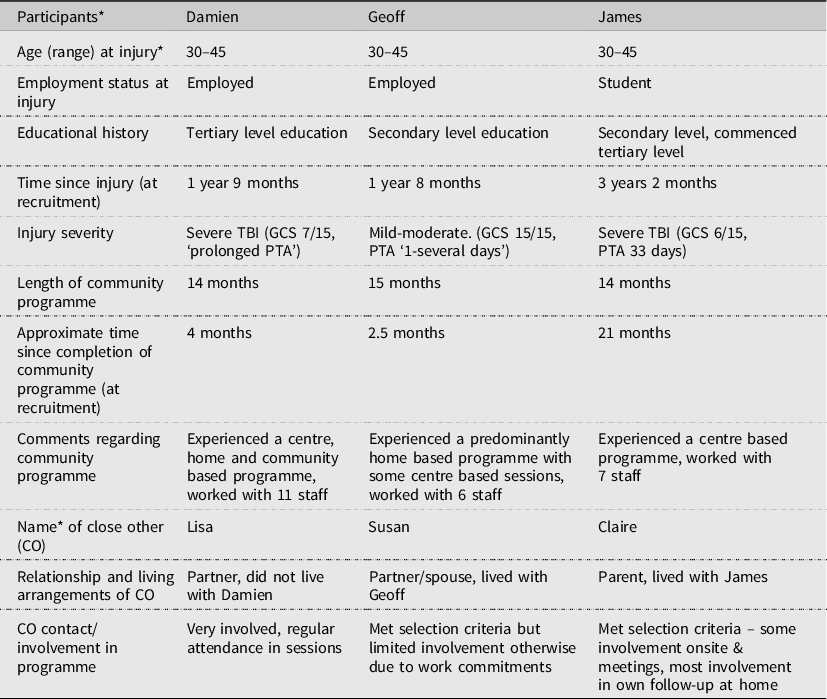
Three participant pairs were recruited to take part in the study. Participants with TBI were males aged between 30 and 45 years at the time of injury. Two had sustained severe TBI with their management involving acute care, subacute inpatient rehabilitation and community rehabilitation. One participant sustained mild-to-moderate TBI requiring community but not inpatient rehabilitation. At recruitment, participants’ time since injury ranged from 1 year 8 months to 3 years 2 months. Time from programme completion to recruitment ranged from 2.5 to 21 months. Participants’ programmes involved a mix of centre, home and community settings. Significant others were female, 30 years or older and employed or studying. Pseudonyms and age ranges have been used for optimal de-identification given the small sample size. (See Table 1 for demographic and injury details.)
Characteristics of Participants with TBI and their Close Others

GCS, Glasgow Coma Scale; PTA, post-traumatic amnesia.
* NB pseudonyms have been used and age range provided rather than actual age to maintain de-identification as much as possible.
The results that follow are presented descriptively with provision of quotes to reflect the themes that emerged from the analysis of interviews. The use of ‘…’ within quotes indicates where participants paused or where fillers (e.g. ‘um’) or word repetitions were removed to contain length for journal requirements, however the meaning of the quotes has not been compromised.
Participants’ interview data demonstrated their overarching sense of being actively involved in community rehabilitation. Comments were predominantly positive (‘we had a fantastic experience’ Clare) and consistent across groups. The therapeutic alliance emerged as a key finding sitting within the contexts of the rehabilitation programme itself and participants’ personal life experiences. These contexts included themes related to features of the rehabilitation programme (e.g. approaches used, staff and environments involved) and the personal experiences of each individual (e.g. related to their sense self, loss and change). Participants’ responses illustrated that the alliance existed for them within a more complex and integrated system of care.
The following presents the themes that relate directly to participants’ experiences of a therapeutic alliance during their rehabilitation.
The therapeutic alliance
Participants’ responses pointed to a sense of working together on shared goals in the context of a personal bond consistent with the concept of a therapeutic alliance. The alliance was developed and nurtured by all involved and applied to both those with TBI and their close others, sharing the same characteristics although with some variation in emphases.
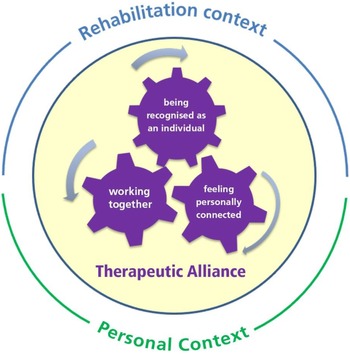
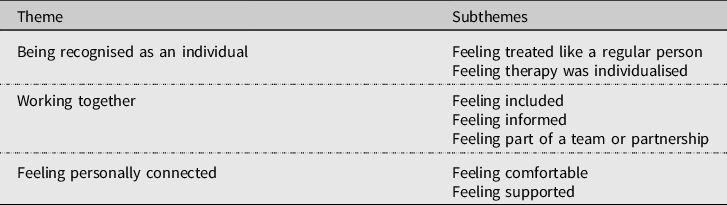
Three distinct but interconnected themes within the therapeutic alliance emerged and related to: being recognised as an individual, working together and feeling personally connected (Fig 1). The data suggest that these themes and related subthemes (Table 2) interact with each other rather than working independently. For example, an individualised approach where the participant felt understood helped them feel more relaxed, comfortable and able to work with therapists.
Participants’ perception of the therapeutic alliance in the contexts of their rehabilitation program and personal experiences.

Themes and Subthemes of Participants’ Experiences of the Alliance

Theme 1: Being recognised as an individual
This theme relates to two subthemes associated with being acknowledged as an individual by staff (see Table 2). Participants with TBI gave greater emphasis to most of these concepts, however their close others’ comments also reflected them. Subthemes (in italics) to this theme involve the following.
Feeling treated like a regular person
Participants, especially those with TBI, stated that they felt like they were treated like a ‘regular’ or ‘normal person’ and showed care and respect: ‘they show a bit of caring… they treat you like a normal person’ (Geoff). In keeping with this concept, Claire described a sense of being treated as an equal, ‘you never felt that there was a… therapeutic gap… between you and them’ and Geoff noted not feeling judged, ‘they don’t judge you at all, and make you get heaps more confidence out of it’. Related to feeling treated like a ‘regular’ person were comments about having shared interests or things in common with therapy staff (e.g., interests in sport, connections with family and friends). This aspect helped participants with TBI feel more comfortable, ‘my Dad taught [clinician’s family member]… so that kind of made it a bit easier’ (James), and more connected to the general community, ‘I’ve actually been out … and seen [staff name] out there as well, like away from [rehab], so that’s been really good’ (Damien). The act of staff sharing information about themselves demonstrated a sense of reciprocity in the alliance that reinforced the participants’ sense of being treated like a ‘regular’ person, ‘you felt that if they would share with you, what they had done… it was good, because they could not share that information with you as well’ (Damien).
Feeling therapy was individualised
Another subtheme described by participants was that therapy was individualised to suit their needs, ‘they individualise it to suit you… [staff name] had to work around a lot of my headaches a lot of the time’ (Geoff). Geoff also highlighted his experience that staff see each person as an individual and each injury as different, ‘every single one is a different injury, a different personality, a different … way to treat them’ which helped him feel staff were attending to him rather than working generically. Participants generally felt their therapy was personally relevant and seeing therapy as useful helped them to persist, feel encouraged and do the work of their rehabilitation, ‘it was really good … because I could see that what I was doing was of benefit to me’ (Damien). They also valued having explanations given in a way to suit the person so that they could understand information, ‘they actually talked to me in a way that I knew what they were talking about’ (Damien).
Theme 2: Working together
The experience of working together with staff emerged as another theme which included three subthemes (see Table 2).
Feeling included
This perception was particularly evident in responses from close others, reflecting both ‘sides’ of the experience. Some comments illustrated a strong sense of feeling included and valuing it, ‘I was pretty much involved in everything’ (Lisa), while another’s highlighted an experience of not particularly feeling part of the programme, ‘I sort of felt sometimes I wasn’t really in with it…because I just… couldn’t have time off of work all the time’ (Susan).
Feeling informed
Getting access to information in various ways was highly valued, ‘they really kept you informed of what was going on…which was really good’ (Lisa); ‘she would tell me exactly what she had to do… that was quite good, rather than not knowing’ (Damien). While there was an overall impression of feeling informed, close others did note situations where access to information was limited, ‘it was really hard to find out if there was any progress’ (Susan); ‘towards the end I wasn’t quite sure sort of what happens now… what services are there for you out there’ (Lisa). They suggested ways to improve access during and toward the end of the programme, ‘maybe…just a catch-up phone call every so often’ (Susan); ‘perhaps a little leaflet when people are leaving’ (Claire).
Feeling part of a team or partnership
This subtheme was clearly evident for all involved. Participants with TBI spoke of working together with their therapists in a partnership; for example, Geoff commented that ‘It takes two to tango…. you’ve got to listen to your person that’s working with you… and they have to listen to you’. Close others’ comments demonstrated a sense of working together cooperatively with staff to support their loved one (e.g.) ‘I think you’re all working together as a team… you’re all pulling together to get this person through’ (Claire).
All participants commented about feeling able to contribute and have a say. They felt able to speak up if they wanted to express an opinion, question, or choice or contribute information and ideas, ‘they always ask you first and they would check with you and explain what they were going to do…you can say ‘no’ there and then’ (Geoff); ‘ everyone was quite accepting … you never feel like you’re being a nuisance, chipping in anything… you really feel like it’s helping’ (Lisa).
As part of working together in partnership, participants felt staff were accessible and responsive ‘if you’ve got any questions or if you’re worried about anything we could always come and call them … that’s really reassuring’ (Lisa). Participants valued the responsiveness of staff as demonstrated by the following-up of areas brought to their attention, ‘once my work colleague mentioned it, then [staff name] really jumped on the bandwagon and made sure that I did what I had to do’ (Damien).
Theme 3: Feeling personally connected
This third emergent theme of the rehabilitation alliance was important to all participants. Their comments illustrated a range of experiences which fell under two subthemes, feeling comfortable and feeling supported (see Table 2).
Feeling comfortable
This subtheme was directly described by participants, ‘there’s not really much more that they can do to make it any more comfortable or relaxing’ (Geoff); ‘I always felt comfortable… when [staff name] was on the phone … she’s just that way… she is caring’ (Susan). Participants also recognised the effect of feeling comfortable on their capacity to work together with staff, ‘If you get along with them… you’ll feel comfortable, you’ll ask that little question… whereas if you’re not comfortable with them, you’re not going to ask’ (Geoff); ‘you need a professional relationship…but if you’re not going to relax it, that doesn’t make you as approachable …if you’re not sort of relaxed and open … I don’t think that would be very helpful… everyone’s a lot less comfortable’ (Lisa).
Other features that contributed to participants’ sense of comfort included feeling welcome, feeling staff were friendly and being able to share a laugh. All participants spoke of the importance of feeling welcome, ‘I was always made to feel welcome’ (Susan); ‘you’ve got to feel welcomed … that’s general… not just manners…but general… well…. what you sort of do’ (James). Friendliness was also mentioned as an important feature of participants’ sense of comfort, ‘the people who I met in there have been really good, they’re all … really friendly, and helpful people’ (Damien); ‘just keeping it friendly and down to earth makes it so much more relaxed, and makes a difficult time easier… that human touch to it’. (Lisa). Participants explained that staff friendliness helped them to feel comfortable to speak openly, express opinions and ask questions, which are all valuable in a therapeutic alliance, ‘if they’re not going to be so friendly … [you’re] probably not going to feel as comfortable bringing up things with them or… talking things through’ (Lisa).
Participants with TBI emphasised the importance of staff presenting with a friendly, positive manner: ‘Don’t turn up with a bad look on your face. Turn up cheery …You’ve got to be happy to be there … the person with the brain injury will pick up straight away you’re not happy’ (Geoff); ‘don’t need people who are a bit cranky… That’s the last thing you want to deal with. You want to deal with happy, friendly people’ (James).
Participants valued a sense of humour particularly given the stressful circumstances in which people present for rehabilitation, as clearly described by Lisa when she said ‘staff are just so down to earth with great senses of humour… it’s just such a relief because… everything is so terribly serious… it’s such a relief to have a laugh and make a joke out of it and laugh at yourself and it makes it easier to keep going’. Within this, however, participants also indicated the need for caution, ‘I think humour is a very important part of any therapy …although… you don’t have to be flippant… but you can inject a wee bit of humour into it’ (Claire). The potential for misjudged use of humour to strain or rupture the alliance was illustrated by Geoff: ‘[staff member] made a joke… it did not go down well’; ‘I think … [they] thought I was feeling better than what I was… And that pissed me off a little bit… if I was in a good mood and I was feeling better…it would have been wicked …but it just didn’t… work at that time’.
Feeling supported
Participants with TBI described how the support they received helped them: ‘I’d blah on about stuff and she’d listen… I just found it very useful’ (Damien); ‘a lot of the stuff [they] gave me helped me with my temper and aggro’ (Geoff). Close others also spoke about valuing access to personal support and practical assistance, ‘you were never left feeling that you were totally alone’ (Claire); ‘I think that was good… get some ideas… what you can do to help’ (Lisa). This appreciation of support and assistance remained, even when it was restricted or difficult to access, ‘I would have liked a little bit more input just because I couldn’t be there… I don’t even know what the kids went through… they didn’t really…have any input either’ (Susan), or if the timing hadn’t worked for them, ‘I think there is a need… for talking stuff through… but I think you have to be ready for that moment don’t you, and maybe my moment has come now’ (Claire).
Several features characterised the participants’ experiences of support including feeling understood, heard, valued, reassured and encouraged. As part of feeling understood, participants appreciated the specialist background and expertise of staff, ‘It’s different with you people …you understand it, you work with it’ (Geoff); ‘when you’re trying to explain to people what’s going on, it’s so difficult, so finding someone who understands is just fantastic’ (Lisa).
Not feeling understood, however, clearly had a negative or straining effect. For example, when talking of his experience of a therapist’s misjudged use of humour Geoff said ‘I don’t think [they] understood the extent of my injury’. Similarly, Lisa described a situation where she felt a therapist didn’t appreciate her level of stress and used a therapeutic approach which she found upsetting and led her to wonder whether she had been understood at all: ‘I found it terrible…[it] was like “ooh I don’t know if you’ve understood some of the other at all, because … this isn’t right”’.
The importance of feeling understood through staff sensitivity to the emotional context for each person was conveyed by a number of participants, and particularly illustrated by Lisa:
…just be mindful of what these people are going through… it’s just a highly emotional time …. and it’s possible dealing with that every day, that it just becomes ‘every day’, but for the people you’re seeing it’s not every day for them…they’re still trying to get their heads around it, and understand it all … so just be mindful of thinking what people have been through and the kind of effort that they’re having to put in to hold this all together.
Participants appreciated the experience of being able to share their observations with the team, to be heard and have their experiences validated, ‘I think you do feel listened to, and your opinions … taken into account’ (Lisa). Further, feeling valued and important was particularly identified as a priority in the rehabilitation process. James described that getting along well in rehabilitation helps one feel valued and respected and ‘I think it’s important to feel that… when you’re recovering from something like this’. Close others echoed similar sentiments: ‘just make both of the people [person with TBI and close other] feel… valued for their opinions’ (Susan). Terminology was seen as making a potential difference to people feeling valued and supported and Lisa suggested the use of ‘… “loved ones” or “support network” over “families” … because [participant]’s family didn’t help him and I did… and everything I read … said… “your family this…” and “you and your family members are...”’. The use of ‘family’ for some people may be quite acceptable but Lisa’s experiences highlight the importance of ensuring rehabilitation and the communication involved is always tailored to suit the needs of each individual.
Reassurance gained from being able to access services and see progress was important to participants ‘it’s just … really reassuring to come in and be able to see the progress’ (Lisa); ‘it is scary at first. But once you start seeing a little bit of improvement, that’s when all the worries go away’ (Geoff). Participants also commented about the significance of feeling encouraged, but for close others it was more about the encouragement their loved ones received rather than themselves, ‘they were always so …helpful to Geoff and always encouraging him’ (Susan). The value of positivity and encouragement was also emphasised: ‘if they’re feeling a bit down and their therapist is very positive, and say “… it’s ok … you’ll do this, don’t worry” or “you can do this”… just gives them confidence… and might cheer them up’ (James).
Being able to work together: Does the therapeutic alliance matter?
When exploring participants’ experiences and opinions of working together with rehabilitation staff, they all considered that being able to ‘get along’ and work together with staff was important. For example, Geoff commented ‘it matters’, ‘the better the relationship… the better it works for your rehab’, ‘If you don’t get along… then you’re not going to do your rehab properly, you’re not going to listen to them properly, you’re not going to concentrate. You’re not going to ask those little questions’. Lisa noted ‘I think it helps… you can… talk a little bit more candidly … and… work on that which you might not be so comfortable doing’ and James said ‘it makes you want to work a bit more’.
While valuing it for themselves, some participants with TBI suggested that a positive therapeutic alliance may matter less to some people or perhaps its importance may vary from time to time (e.g. James said it ‘depends on how you look at it… it might not matter if you’re a different type of person’ and ‘some days it might matter more than others… some days you might… just want to get in there and get out’).
Participants also described their perceptions of the nature of the alliance. They spoke of a personal connection, of a friendliness and familiarity ‘as if it was a relative or a friend, or somebody that you could talk to’ (Claire), but some also recognised it’s not the same as ‘being friends’: ‘they’re sort of like friends… but they’re not exactly friends’ (Damien); ‘it’s like being on a job site… you’re working together… you’ve got to be in the same sync’ (Geoff). Participants’ descriptions reflected that the alliance was clearly related to a positive sense of connection and partnership in the work of therapy.
Discussion
This pilot study uniquely captures the perspectives of the therapeutic alliance from adults with TBI who completed a community rehabilitation programme and their close others. The emergent interconnected themes provide a preliminary framework of the alliance grounded in participants’ lived experience. It was clear that for these participants therapeutic alliances were crucial to their experiences of rehabilitation. This finding is consistent with reports in the TBI rehabilitation literature (Bowen et al., Reference Bowen, Yeates and Palmer2010; Bright et al., Reference Bright, Boland, Rutherford, Kayes and McPherson2012; Prigatano et al., Reference Prigatano, Klonoff, O’Brien, Altman, Amin, Chiapello and Mora1994; Schönberger et al., Reference Schönberger, Humle and Teasdale2006b; Wilson, Gracey, Evans, & Bateman, Reference Wilson, Gracey, Evans and Bateman2009; Ylvisaker & Feeney, Reference Ylvisaker and Feeney1998).
Participants’ descriptions of working together with their rehabilitation teams on shared goals clearly reflected the experience of being part of a therapeutic alliance. Bordin, Reference Bordin1979, Reference Bordin, Horvath and Greenberg1994) and Hougaard (Reference Hougaard1994) described a work or collaborative component (agreement on goals and tasks of therapy) and an affective component (some form of emotional bond or connection) of the therapeutic alliance. The three alliance themes identified in this study also convey a sense of working together or collaboration, combined with affective qualities associated with being recognised as individuals and feeling personally connected.
In terms of function, a positive alliance helped participants do the work of rehabilitation. They spoke of being more comfortable, willing and confident to try tasks, concentrate, listen to information, ask questions, speak candidly, be more likely to respect both the information conveyed and the person sharing it, and generally get better outcomes. Such concepts have been noted previously in the literature (e.g. Ackerman & Hilsenroth, Reference Ackerman and Hilsenroth2003; Bordin, Reference Bordin1979; Danzl et al., Reference Danzl, Etter, Andreatta and Kitzman2012; Hatcher, Reference Hatcher, Muran and Barber2010; Manchester & Wood, Reference Manchester, Wood, Wood and McMillan2001; Ownsworth, Reference Ownsworth, Wilson, Winegardner, van Heugten and Ownsworth2017; Schönberger et al., Reference Schönberger, Humle and Teasdale2006a; Ulvenes et al., Reference Ulvenes, Berggraf, Hoffart, Stiles, Svartberg, McCullough and Wampold2012).
The results also support previous findings showing that the bond or affective component is an important part of the collaborative work of therapy and may vary as a function of the type of therapeutic endeavour (Bordin, Reference Bordin1979; Hatcher, Reference Hatcher, Muran and Barber2010). In situations where participants needed to work in a short-term way with staff (e.g. for medical reviews, neuropsychological assessments), there was a need for ‘enough’ alliance to complete the tasks at hand, but not the need to develop the same kind of bond as they did with staff they worked with regularly over time. The participants’ descriptions of their rehabilitation experience sit well with Hatcher and Barends’ (Reference Hatcher and Barends2006) notion of the bond as a ‘work supporting bond’ and suggestion that a key question is not whether one likes or respects their therapist or client. Rather, the point is whether individuals ‘…like and respect [their] therapist enough to do the work [they] expect to do in [their] therapy?’ and whether their ‘therapist [respects and appreciates them] enough to permit [them] to work effectively in therapy?’ (p. 296). The participants’ responses generally supported an affirmative answer to both questions, indicating positive bonds and overall alliances.
The results also align with Hatcher’s (Reference Hatcher, Muran and Barber2010) reflections on the concept of the ‘work supporting bond’ (Hatcher & Barends, Reference Hatcher and Barends2006) and its components involving a potentiating bond and appreciating bond, which ‘contribute to making collaborative purposeful work possible’ (Hatcher, Reference Hatcher, Muran and Barber2010, p. 13). The ‘potentiating bond’ is developed by providing the person with a sense of optimism and confidence in the effectiveness of the therapy, particularly when combined with information from best evidence about the intervention, and conveying the therapist’s interest, enthusiasm and belief. The ‘appreciating bond’ is developed by showing ‘genuine interest and appreciation for the patient as a person [and] showing empathy and a desire to understand the patient’s experience’ (Hatcher, Reference Hatcher, Muran and Barber2010, p. 13). This study’s participants reflected experience of these types of bonds through their sense of confidence in the therapists’ skills, experience of therapists’ commitment and enthusiasm for each person, the rehabilitation process and the tasks involved, and also a clear feeling that therapists were interested to understand their situation and perspective.
With regard to the nature of the alliance, similarities with previous findings were apparent. Participants spoke of their experience of working together (i.e. the alliance) being like something they experience with friends, family, or co-workers who need to be ‘in sync’ with each other. Although reciprocity in the alliance or relationship was appreciated and could be experienced through sharing personal information, the relationship was predominantly seen as one-way where therapists got to know much about clients to help them and clients got to know a little about therapists. This depiction fits with discussions in the literature, where concepts of close, genuine relationships are described but also of there being differences in quality that make them unlike other personal or social relationships. For example, Callaghan et al. (Reference Callaghan, Naugle and Follette1996) reflected that therapeutic relationships are close and personal but different to other types of ‘friendship’ relationships, as the latter do not have an agenda for change nor time limitations. Krause et al. (Reference Krause, Altimir and Horvath2011) noted that while clients may view the therapy relationship as special and personal, it also has characteristics that include viewing the therapist as an expert, assurance of confidentiality and no obligations of reciprocity in terms of clients needing to ‘give’ emotionally in return to therapists.
Of interest was how the therapeutic alliance was experienced by those who have an injury compared to their close others. In this study, while the concept of working together was present and valued across participants, there was evidence of some subtle differences between the two groups. Those with TBI spoke of various staff and their interactions and connections with them. They appeared to speak of several partnerships that occurred during their rehabilitation, rather than a sense of working as a team as a whole. The close others’ descriptions contained a mix of views, providing a sense of working together with staff as a team to encircle their loved one with support, and also of more specific partnerships with staff, either in pursuit of benefit for their loved one, or in regard to supports for themselves. Further, all participants conveyed a sense of an overall connection or alliance with the service as an entity itself. They initially developed alliances with staff, and then over time, developed an alliance with the service. These experiences are congruent with Bordin, Reference Bordin1979, Reference Bordin, Horvath and Greenberg1994) and Hougaard’s (Reference Hougaard1994) offerings regarding alliances and also Pinsof’s (Reference Pinsof, Horvath and Greenberg1994) perspective of therapy involving interaction between clinician and client systems.
Although there were many consistencies with the published literature in participants’ experiences of the alliance, there was one variation of note. While strains and ruptures are normal and can be expected in brain injury rehabilitation and other interventions, they may not necessarily present therapeutic opportunities for change and progress for individuals to strengthen the alliance per se as seen in the psychotherapeutic field (Ackerman & Hilsenroth, Reference Ackerman and Hilsenroth2003; Bordin, Reference Bordin, Horvath and Greenberg1994; Eubanks-Carter, Muran, & Safran, Reference Eubanks-Carter, Muran, Safran, Muran and Barber2010). In the present study it seemed the experience of strain and rupture did create disruption in alliances between some participants and their therapists. However, in keeping with Horvath et al. (Reference Horvath, Del Re, Flückiger and Symonds2011) and Horvath and Greenberg’s (Reference Horvath, Greenberg, Horvath and Greenberg1994) pragmatic suggestion that the development of a ‘good enough’ alliance in therapy is what matters, it was also apparent that the experience of having an alliance at a level that was at least ‘good enough’ (Schönberger et al., Reference Schönberger, Humle and Teasdale2007; Sherer et al., Reference Sherer, Evans, Leverenz, Stouter, Irby, Lee and Yablon2007; Thompson et al., Reference Thompson, Bender, Lantry and Flynn2007) may have assisted individuals and their therapists to ‘get past’ incidents that led to strain and rupture, maintain a level of good will and contribute to some kind of ‘repair’. It is also worth noting though, that the times of strain and the opportunity to work through them did not appear to be of obvious benefit to the alliance itself, nor of therapeutic value to the participants in the situations they described. It’s possible that there may be benefit but it was not described by participants in this study.
Practice implications
This pilot study offers information about the therapeutic alliance that helps to contribute to the knowledge base in ABI rehabilitation more broadly and has potential relevance in clinical practice. The proposed framework may help clinicians reflect on how a person with TBI and their close others are experiencing the three alliance themes in their rehabilitation, i.e. being recognised as an individual, working together and feeling personally connected. It could assist clinicians to be more alert to what themes and subthemes are active, how they are interacting and what aspects may require focus, all to facilitate optimal conditions for rehabilitation and outcomes.
Limitations of the study
Although this study is novel in its in-depth exploration of the alliance from the perspective of people with TBI and their close others, it was limited by its small sample size and recruitment from the one rehabilitation service. The findings are therefore preliminary only. Further, the retrospective nature of the investigation may have helped participants to talk openly about their experiences, but may have also introduced potential for recall bias in the data. While the interviewer was not part of the treating team for any of the participants, the fact that they were a staff member from the rehabilitation service may also have increased reporting bias.
Implications for future research
Continued research regarding the alliance in community brain injury rehabilitation is warranted. For example, it would be valuable to expand the current study to gather data from more individuals with TBI and their close others and to add the perspective of clinicians. A prospective longitudinal study of individuals while they participate in community rehabilitation, capturing the perspectives of all involved at different time points by an independent interviewer would also be beneficial. Further exploration of associations between the alliance, engagement and outcomes would be useful, as would attention to the nature, experience and impact of strain and ruptures in ABI rehabilitation. Finally, measurement tools and staff training approaches suitable for brain injury rehabilitation are worthy of research attention.
Conclusion
While the results of this pilot study are not sufficient to generate a substantive theory for broader application, they do provide valuable insights into the experiences of those who participate in community rehabilitation. By so doing, these findings build on existing knowledge to emphasise the importance of developing positive therapeutic alliances to support the work of rehabilitation and maximise outcomes.
Acknowledgements
The authors would like to acknowledge and express gratitude to the individuals who contributed their time and insights to this study. Thanks are also extended to family, friends and colleagues, especially Dr Tim Feeney and (the late) Professor Mark Ylvisaker.
Financial Support
This research received no specific grant from any funding agency, commercial or not-for-profit sectors.
Conflicts of Interest
This study was conducted as part of a Post Graduate Diploma in Health Research Methodology completed by Liz Williams. Liz is also an employee of the clinical service from which participants were recruited for the study but did not receive payment nor incentive to undertake this research and has no other conflicts of interest to disclose. Jacinta Douglas has no conflicts of interest to disclose.
Ethical Standards
The authors assert that all procedures contributing to this work comply with the ethical standards of the relevant national and institutional committees on human experimentation and with the Helsinki Declaration of 1975, as revised in 2008.