



1. Introduction
Domain theory Gierz et al. (Reference Gierz, Hofmann and Keimel2003), originating from the work of Dana Scott Scott (Reference Scott1970, Reference Scott1972), serves as a formal foundation for the semantics of programming languages. Searching for cartesian closed categories is one of the fundamental problems in domain theory.
To obtain the maximal cartesian closed categories of the category of algebraic domains, the concepts of bifinite domains and
 $FS$
-domains were introduced. The study of bifinite domains was initiated by G. D. Plotkin in his work on SFP objects (sequences of finite inductive partial orders) Plotkin (Reference Plotkin1976). M. B. Smyth proved that the category
 $\mathbf{SFP}$
of SFP domains is a largest cartesian closed full subcategory of the category
 $\omega \mathbf{ACPO}$
, which consists of countably based algebraic dcpos with least elements Smyth (Reference Smyth1983). The category of bifinite domains is cartesian closed Jung (Reference Jung1989, Reference Jung1990a). Thus, the category consisting of retracts of bifinite domains, called
 $RB$
-domains, is a cartesian closed subcategory of the category of domains. To investigate the maximality of this category, the concept of an
 $FS$
-domain was introduced by Jung (Reference Jung1990b). He showed that
 $FS$
-domains form a maximal cartesian closed subcategory of the category of continuous domains. It is well known that every
 $RB$
-domain is an
 $FS$
-domain. However, whether every
 $FS$
-domain is an
 $RB$
-domain is an open problem that has remained unsolved for more than three decades. This problem has motivated continuous research and discussion in the domain theory community Gierz et al. (Reference Gierz, Hofmann and Keimel2003); Heckmann (Reference Heckmann2010); Jung (Reference Jung1989, Reference Jung1990a,b); Liang and Keimel (Reference Liang and Keimel1999); Lawson (Reference Lawson2008); Liu and Zhao (Reference Liu and Zhao2013); Yao and Li (Reference Yao and Li2019); Yuan et al. (Reference Yuan, Zhang and Kou2019); Zou et al. (Reference Zou, Li and Guo2018). A series of works has been devoted directly or indirectly to this problem. On the one hand, shortly after the concept of SFP domains was introduced, an internal characterization for SFP-objects was given by Plotkin in Theorem 5 of Plotkin (Reference Plotkin1976). Later, this result was generalized to a characterization of bifinite domains (Theorem 1.32 in Jung (Reference Jung1989)). On the other hand, characterizations of
 $FS$
-domains have led to a series of results. In Liang and Keimel (Reference Liang and Keimel1999), it was proved that
 $FS$
-domains, continuous
 $B$
-domains, and compact continuous dcpos are all equivalent for
 $L$
-domains. In Heckmann (Reference Heckmann2010), a characterization of
 $FS$
-domains by means of power domains was given. In Zou et al. (Reference Zou, Li and Guo2018), the notion of super finitely separating functions was introduced to characterize
 $RB$
-domains. However, the problem of whether
 $FS$
-domains coincide with retracts of bifinite domains remains open. A concrete example due to Lawson that may serve as a test for this problem is given in Jung (Reference Jung1990b): Is the
 $FS$
-domain of closed discs in the plane isomorphic to the image of some bifinite domain under a Scott-continuous projection? This problem is still open.
In this paper, we show that the
 $FS$
-domain of closed discs in the plane is a retract of a bifinite domain. The basic components of this bifinite domain are closed circular rings. Our inspiration to use circular rings comes from the following observations: (1) every circle can be viewed as the intersection of circular rings containing it; (2) there exists a gap between the outer circle and the inner circle of a circular ring, which allows us to construct finitely many rings that serve as minimal upper bounds for finitely many circular rings whose inner discs have a non-empty intersection. There are two obstacles we need to overcome. (1) The process of constructing minimal upper bounds must terminate in finitely many steps. (2) We need to reorder these rings in a suitable manner. Elegant geometric and topological properties of the real plane enable us to solve the first problem. In addition to the usual containment relation for circular rings, new order construction techniques will be introduced.
The paper is organized as follows. Section 2 lists some preliminary notions and results in domain theory. In Section 3, some properties of mub-closure that will be used in the construction of a Plotkin-poset are presented. In Section 4, an approach to constructing a Plotkin-poset based on a finite set of circular rings is developed. In Section 5, a bifinite domain is constructed based on a countable set of circular rings. Furthermore, an embedding-retraction pair is established between the
 $FS$
-domain of closed discs and the bifinite domain constructed above.
2. Preliminaries
For brevity, unexplained notations and concepts can be found in Gierz et al. (Reference Gierz, Hofmann and Keimel2003).
Let
 $P$
be a poset,
 $A\subseteq P$
, and
 $p\in P$
. As usual, we define
 $\downarrow _{P} A=\{x\in P \mid \exists a\in A,\ \mathrm{s.\ t.}\ x\leq a\}$
.
 $\downarrow _{P}\{p\}$
is denoted by
 $\downarrow _{P} p$
. Dually, we can define
 $\uparrow _{P} A$
and
 $\uparrow _{P} x.$
If no confusion arises, the subscript will be omitted. If
 $A=\downarrow A$
, then
 $A$
is called a lower set. We say
 $x$
is covered by
 $y$
, written as
 $x-\llap {\lt }y$
, if
 $x\lt y$
and
 $x\leq z\lt y$
implies
 $x=z$
. The set of all minimal upper bounds of
 $A$
is denoted by
 $\mathrm{mub}(A)$
. A subset
 $D\subseteq P$
is called directed if for any
 $a, b\in D$
, there exists a
 $c\in D$
such that
 $a, b \leq c.$
A directed lower set is called an ideal. The set of compact elements of
 $P$
is denoted by
 $K(P).$
A mapping
 $f: P\rightarrow Q$
between posets is Scott continuous if for any directed subset
 $D\subseteq P$
for which
 $\bigvee D$
exists in
 $P$
, we have
 $f(\bigvee D) = \bigvee f(D)$
. It is well known that if
 $P$
and
 $Q$
are dcpos, then
 $f$
is Scott continuous if and only if it is continuous with respect to the Scott topology Gierz et al. (Reference Gierz, Hofmann and Keimel2003).
A retraction-embedding pair
 $(r, e)$
for dcpos is a pair of Scott-continuous functions
 $Q{\stackrel {r}{\longrightarrow }}P{\stackrel {e}{\longrightarrow }}Q$
such that
 $r\circ e=1_{P}.$
In this case, we say
 $P$
is a retract of
 $Q$
.
Let
 $P$
be a poset.
 $\mathrm{Id}P$
denotes the set of ideals in
 $P$
ordered by set inclusion. Then,
 $\mathrm{Id}P$
is a dcpo in which the supremum of a directed family of ideals is given by set union. Furthermore,
 $\mathrm{Id}P$
is an algebraic dcpo, and the set of compact elements of
 $\mathrm{Id} P$
is the set of principal ideals.
3. Plotkin-Poset
In this section, we present some properties of mub-closure that will be used in the inductive construction of a Plotkin-poset.
Definition 3.1.
Abramsky and Jung (Reference Abramsky, Jung, Abramsky, Gabbay and Maibaum1994) Let
 $P$
be a poset.
(1) We say that
 $P$
is mub-complete (or has property m) if for every upper bound
 $x$
of a finite subset
 $M$
of
 $P$
, there exists a minimal upper bound of
 $M$
below
 $x$
.
(2) For a subset
 $A$
of
 $P$
, let its mub-closure
 $mc(A)$
be the smallest superset of
 $A$
that contains
 $\mathrm{mub}(M)$
for every finite subset
 $M\subseteq \mathrm{mc}(A)$
.
(3) We say that
 $P$
has the finite mub property if it is mub-complete and every finite subset has a finite mub-closure. A poset with the finite mub property is called a Plotkin poset. If, in addition,
 $P$
has a least element, then we call it a bottomed Plotkin-poset.
(4) An algebraic domain whose basis of compact elements is a bottomed Plotkin-poset is called a bifinite domain.
Lemma 3.2.
Let
 $P$
be a poset with property m. Let
 $P_{1}, P_{2},\cdots , P_{n},\cdots$
be subposets of
 $P$
such that
 $P_{1}\subseteq P_{2}\subseteq \cdots \subseteq P_{n}\subseteq \cdots$
and
 $P=\bigcup _{n=1}^{\infty }P_{n}$
. If
 $P_{n}$
has the finite mub property for every
 $n\in \mathbb{N}$
and
 $\mathrm{mc}_{P}(F) = \mathrm{mc}_{P_{n}}(F)$
for every finite subset
 $F\subseteq P_{n}$
, where
 $\mathrm{mc}_{P}(F)$
and
 $\mathrm{mc}_{P_{n}}(F)$
are the mub-closures of
 $F$
in
 $P$
and
 $P_{n}$
, respectively, then
 $P$
has the finite mub property.
Proof.
Let
 $F$
be a finite subset of
 $P$
. Then, there exists a least
 $n$
such that
 $F\subseteq P_{n}.$
Since
 $P_{n}$
has the finite mub property, we have
 $\mathrm{mc}_{P}(F) = \mathrm{mc}_{P_{n}}(F)$
, which is a finite set.
Given a poset
 $P$
with property m, for any subset
 $A\subseteq P$
, Jung defined the
 $U^{\infty }$
-operator as follows Jung (Reference Jung1989):
 \begin{equation*}U^{0}(A)=A,\end{equation*}
 \begin{equation*}U^{n+1}(A)=\{x\in P\mid x\ \mathrm{is\ a\ minimal\ upper\ bound\ for\ some\ finite\ subset\ of\ } U^{n}(A)\},\end{equation*}
 \begin{equation*}U^{\infty }(A)=\bigcup _{n=0}^{\infty }U^{n}(A).\end{equation*}
It is easy to see that
 $U^{\infty }(A)=\mathrm{mc}(A)$
. As a consequence, we have the following result.
Let
 $\mathbb{N}=\{1,2,3,\cdots \}$
be the set of natural numbers.
Lemma 3.3.
Let
 $P$
be a poset with property m. Let
 $P_{1}, P_{2},\cdots , P_{n},\cdots$
be subposets of
 $P$
such that
 $P_{1}\subseteq P_{2}\subseteq \cdots \subseteq P_{n}\subseteq \cdots$
,
 $P=\bigcup _{n=1}^{\infty }P_{n}$
and
 \begin{equation*}\mathrm{mub}_{P_{n}}(F)= \mathrm{mub}_{P}(F)\end{equation*}
for every finite subset
 $F\subseteq P_{n}$
, where
 $\mathrm{mub}_{P_{n}}(F)$
and
 $\mathrm{mub}_{P}(F)$
are the sets of minimal upper bounds of
 $F$
in
 $P_{n}$
and
 $P$
respectively. Then
 \begin{equation*}\mathrm{mc}_{P_{n}}(F) = \mathrm{mc}_{P}(F)\end{equation*}
for every finite subset
 $F\subseteq P_{n}$
and
 $n\in \mathbb{N}$
, where
 $\mathrm{mc}_{P_{n}}(F)$
and
 $\mathrm{mc}_{P}(F)$
are the mub-closures of
 $F$
in
 $P_{n}$
and
 $P$
, respectively.
Proof.
Let
 $F$
be a finite subset of
 $P_{n}$
. Then,
 $U^{0}_{P_{n}}(F)=F=U^{0}_{P}(F)$
. Suppose
 $U^{k}_{P_{n}}(F)=U^{k}_{P}(F)$
. Then,
 $U^{k}_{P_{n}}(F)=U^{k}_{P}(F)$
is a subset of
 $P_{n}$
. For every finite subset
 $G\subseteq U^{k}_{P_{n}}(F)$
,
 $\mathrm{mub}_{P_{n}}(G)= \mathrm{mub}_{P}(G)$
, thus
 $U^{k+1}_{P_{n}}(F)=U^{k+1}_{P}(F)$
. Therefore, for every
 $m\in \mathbb{N}$
,
 $U^{m}_{P_{n}}(F)=U^{m}_{P}(F).$
Hence,
 $\mathrm{mc}_{P_{n}}(F) = \mathrm{mc}_{P}(F)$
.
Lemma 3.4.
Let
 $P$
be a poset. Let
 $P_{1}, P_{2},\cdots , P_{n},\cdots$
be subposets of
 $P$
such that
 $P_{1}\subseteq P_{2}\subseteq \cdots \subseteq P_{n}\subseteq \cdots$
and
 $P=\bigcup _{n=1}^{\infty }P_{n}$
. Suppose the following conditions hold for all
 $n\geq 1$
:
(1) for every
 $x\in P_{n+1}\setminus P_{n}$
,
 $\uparrow _{P_{n+1}} x\cap P_{n}=\emptyset$
,
(2) for every
 $x\in P_{n+1}\setminus P_{n}$
,
 $\downarrow _{P_{n+1}} x\cap P_{n}\neq \emptyset$
implies that
 $\downarrow _{P_{n+1}} x\cap P_{n}$
has a greatest element.
Then
 \begin{equation*}\mathrm{mub}_{P_{n}}(F) = \mathrm{mub}_{P_{n+1}}(F)= \mathrm{mub}_{P}(F)\end{equation*}
for every finite subset
 $F\subseteq P_{n}$
, where
 $\mathrm{mub}_{P_{n}}(F)$
,
 $\mathrm{mub}_{P_{n+1}}(F),$
and
 $\mathrm{mub}_{P}(F)$
are the sets of minimal upper bounds of
 $F$
in
 $P_{n}$
,
 $P_{n+1}$
, and
 $P$
, respectively.
Proof.
Let
 $F$
be a finite subset of
 $P_{n}$
. Then,
 $F$
is a subset of
 $P_{m}$
for all
 $m\geq n.$
Suppose
 $x\in \mathrm{mub}_{P_{n+1}}(F)$
. (i) If
 $x\in P_{n+1}\setminus P_{n}$
, then
 $F\subseteq \downarrow _{P_{n+1}} x\cap P_{n}$
, whence
 $\downarrow _{P_{n+1}} x\cap P_{n}\neq \emptyset$
. By condition (2),
 $\downarrow _{P_{n+1}} x\cap P_{n}$
has a greatest element, say
 $x_{0}$
. Then,
 $x_{0}$
is an upper bound of
 $F$
in
 $P_{n}$
and
 $x_{0}\lt x.$
This contradicts
 $x\in \mathrm{mub}_{P_{n+1}}(F)$
. Thus,
 $x \in P_{n}$
, so
 $x\in \mathrm{mub}_{P_{n}}(F)$
. (ii) If
 $x\in P_{n}$
, then it is clear that
 $x\in \mathrm{mub}_{P_{n}}(F)$
.
Conversely, suppose
 $x\in \mathrm{mub}_{P_{n}}(F)$
. Then,
 $x$
is an upper bound of
 $F$
in
 $P_{n+1}$
. If there exists a
 $y\in P_{n+1}\setminus P_{n}$
such that
 $y$
is an upper bound of
 $F$
in
 $P_{n+1}$
and
 $y\lt x$
, then
 $x\in \uparrow _{P_{n+1}}y\cap P_{n}$
. This contradicts condition (1). Thus,
 $x\in \mathrm{mub}_{P_{n+1}}(F)$
.
Therefore, we conclude that
 $\mathrm{mub}_{P_{n}}(F) = \mathrm{mub}_{P_{n+1}}(F)$
. By induction, we can deduce that
 $\mathrm{mub}_{P_{n}}(F) = \mathrm{mub}_{P_{m}}(F)$
for every
 $m\gt n.$
Suppose
 $x\in P\setminus P_{n}$
is an upper bound of
 $F$
. Then, there exists a least
 $m\gt n$
such that
 $x\in P_{m}$
. By similar arguments as above,
 $x$
is not a minimal upper bound of
 $F$
in
 $P_{m}$
, so
 $x$
is not a minimal upper bound of
 $F$
in
 $P$
. Thus,
 $\mathrm{mub}_{P}(F)\subseteq P_{n}$
, so
 $\mathrm{mub}_{P}(F)\subseteq \mathrm{mub}_{P_{n}}(F)$
. By condition (1), we can deduce that
 $\mathrm{mub}_{P}(F)\supseteq \mathrm{mub}_{P_{n}}(F).$
Hence,
 $\mathrm{mub}_{P_{n}}(F) =\mathrm{mub}_{P}(F)$
.
Lemma 3.5.
Let
 $P$
be a bottomed Plotkin-poset in which every element is compact. Then, the ideal completion
 $\mathrm{Id}(P)$
is a bifinite domain.
Proof.
It is well known that
 $I\in \mathrm{Id}(P)$
is compact in
 $\mathrm{Id}(P)$
if and only if
 $I$
is a principal ideal. Since the map
 $i: P\longrightarrow K(\mathrm{Id}(P))$
defined by
 $x\mapsto \downarrow x$
is an order-isomorphism, we conclude that
 $K(\mathrm{Id}(P))$
is a bottomed Plotkin-poset. Since
 $\mathrm{Id}(P)$
is always an algebraic dcpo, we conclude that
 $\mathrm{Id}(P)$
is a bifinite domain.
4. The construction of a Plotkin-poset based on a finite set of circular rings
In this section, we construct a Plotkin-poset based on a finite set of circular rings. We first fix notations for discs, circular rings, and circles.
Let
 $\mathrm{Disc}(x, y)(r)$
be the closed disc in the
 $x$
-
 $y$
plane with center
 $(x, y)$
and radius
 $r$
. Let
 \begin{equation*}\mathrm{Disc}=\{\mathrm{Disc}(x, y)(r) \mid x, y, r\in \mathbb{R},r\geq 0\}.\end{equation*}
For
 $D_{1}, D_{2}\in \mathrm{Disc}$
, we define
 $D_{1}\leq D_{2}$
if and only if
 $D_{1}\supseteq D_{2}.$
For
 $D\in \mathrm{Disc}$
, let
 $r_{D}$
denote the radius of
 $D.$
For a disc
 $D=\mathrm{Disc}(x, y)(r)$
and a real number
 $\mu$
with
 $\mu \gt -r$
, let
 $D^{+\mu }=\mathrm{Disc}(x, y)(r+\mu )$
. It is well known that
 $\mathrm{Disc}$
with a bottom element adjoined is a countably based
 $FS$
-domain Jung (Reference Jung1990b).
Let
 $\mathrm{Cir}(x, y)(r)$
be the circle with center
 $(x, y)$
and radius
 $r$
. For a circle
 $C$
, let
 $r_{C}$
denote the radius of
 $C.$
Let
 $\mathrm{Ring}(x, y)(r_{1},r_{2})$
be the closed circular ring in the
 $x$
-
 $y$
plane with center
 $(x, y)$
, where
 $r_{1}$
and
 $r_{2}$
are the radii of the inner and outer circles, respectively. For convenience, a closed circular ring is simply called a circular ring or a ring. Let
 \begin{equation*}\mathrm{Ring}=\{\mathrm{Ring}(x, y)(r_{1},r_{2}) \mid x, y, r_{1}, r_{2}\in \mathbb{R}, r_{2}\gt r_{1}\gt 0\}.\end{equation*}
For a closed circular ring
 $R=\mathrm{Ring}(x, y)(r_{1},r_{2})$
, let
-
a.
 $R^{intD}$
be the closed disc
$\mathrm{Disc}(x, y)(r_{1})$
;
-
b.
$R^{outD}$
be the closed disc
$\mathrm{Disc}(x, y)(r_{2})$
; -
c.
$w_{R}=r_{2}-r_{1}$
be the width of
$R$
; -
d.
$R^{int+\mu }=\mathrm{Ring}(x, y)(r_{1}+\mu ,r_{2})$
where
$-r_{1}\lt \mu \lt r_{2}-r_{1}$
.


We note that the set
 $\mathrm{Ring}$
of closed circular rings is not currently equipped with an order.
For a family of closed discs
 $\{D_{i}\}_{i\in I}$
, if
 $\bigcap _{i\in I}D_{i}$
is non-empty, then
 $\bigcap _{i\in I}D_{i}$
is closed and bounded, hence compact and convex. For a set
 $S\subseteq \mathbb{R}^{2}$
and a disc
 $D\subseteq S$
,
 $D$
is called a maximal internal disc in
 $S$
if for every disc
 $D^{\prime }\subseteq S$
,
 $D\subseteq D^{\prime }$
implies
 $D=D^{\prime }$
.
Next, we introduce the concept of an intermediate cover for a finite set of circular rings. This is one of the basic concepts in this paper.
Definition 4.1.
Let
 $\{R_{i}\}_{i\in I}$
be a finite set of circular rings such that
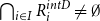 $\bigcap _{i\in I}R_{i}^{intD}\neq \emptyset$
. We say a set of circular rings
 $\{K_{j}\}_{j\in J}$
is an intermediate cover of
 $\{R_{i}\}_{i\in I}$
, denoted by
 \begin{equation*}\mathrm{IntCov}(\{ R_{i}\}_{i\in I}),\end{equation*}
if the following conditions hold:
(a)
 $K_{j}^{outD}\subseteq R_{i}^{outD}$
for every
 $i\in I, j\in J,$
(b) for every maximal internal disc
 $C$
in
 $\bigcap _{i\in I}R_{i}^{intD}$
, there exists a
 $j\in J$
such that
 $C\subseteq (K_{j})^{intD},$
(c) for every
 $j\in J$
, there exists a maximal internal disc
 $C$
in
 $\bigcap _{i\in I}R_{i}^{intD}$
such that
 $K_{j}^{intD}\supseteq C.$
For
 $K\in \mathrm{IntCov}(\{ R_{i}\}_{i\in I})$
, every element in the set
 $\{ R_{i} \mid i\in I\}$
is called a one-step underlying element of
 $K$
. The set of one-step underlying elements of
 $K\in \mathrm{IntCov}(\{ R_{i}\}_{i\in I})$
is denoted by
 \begin{equation*}\mathrm{OSU}(K).\end{equation*}
For a subset
 $\mathcal{R}\subseteq \mathrm{IntCov}(\{ R_{i}\}_{i\in I})$
, let
 \begin{equation*}\mathrm{OSU}(\mathcal{R})=\bigcup _{K\in \mathcal{R}}\mathrm{OSU}(K).\end{equation*}
An intermediate cover is said to have width
 $\omega$
if the width of every
 $K_{j}$
is
 $\omega .$
An intermediate cover for
 $\{R_{i}\}_{i\in I}$
with width
 $\omega$
is denoted by
 \begin{equation*}\mathrm{IntCov}^{\omega }(\{ R_{i}\}_{i\in I}).\end{equation*}
The motivation for introducing the notion of an intermediate cover is to construct a finite set of minimal upper bounds for a family of circular rings with a non-empty intersection of inner closed discs.
Condition (a) means that each
 $K_{j}^{outD}$
is contained in every
 $R_{i}^{outD}$
. Condition (b) is equivalent to the statement that for every disc
 $D$
contained in
 $\bigcap _{i\in I}R_{i}^{intD}$
, there exists an
 $j\in J$
such that
 $D\subseteq (K_{j})^{intD}.$
This is not equivalent to
 $\bigcap _{i\in I}R_{i}^{intD}\subseteq \bigcup _{i\in I}(K_{i})^{intD}.$
Condition (c) ensures that every element in an intermediate cover covers at least one maximal internal disc.
The width of an intermediate cover is less than or equal to the width of every
 $R_{i}$
. If
 $K$
belongs to an intermediate cover, then the radius of the outer circle of
 $K$
is less than or equal to the radius of the outer circle of every
 $R_{i}$
, that is,
 $r_{K^{outD}}\leq r_{R_{i}^{outD}}$
for every
 $i\in I.$
To meet our requirements, we focus on the existence and construction methods of intermediate covers. Next, we prove that an intermediate cover exists for any finite set of circular rings with a non-empty intersection of inner closed discs. More importantly: (1) under certain conditions, an intermediate cover contains exactly one circular ring; (2) the decrease in the width of circular rings in a cover can be controlled by a lower bound; (3) the radius of the outer circles decreases faster than the width of the rings in a cover. These properties will be used to guarantee that we can construct a finite set of upper bounds for a finite set of rings.
The Vietoris topology
 $\tau _{V}$
on
 $\mathrm{Disc}$
is the subspace topology induced by the Vietoris topology Michael (Reference Michael1951); Nadler (Reference Wanes and Nadler1999) on the hyperspace
 $CL(\mathbb{R}^{2})$
of all non-empty closed subsets of
 $\mathbb{R}^{2}$
. The basic open sets in
 $(\mathrm{Disc}, \tau _{V})$
are of the form:
 \begin{equation*}\lt U_{1}, U_{2}, \cdots , U_{k}\gt =\Bigg\{D\in \mathrm{Disc} \mid D\subseteq \bigcup _{i=1}^{k}U_{i}\ \mathrm{and}\ D\cap U_{i}\neq \emptyset \ \mathrm{for\ each}\ i\Bigg\},\end{equation*}
where
 $U_{1}, U_{2}, \cdots , U_{k}$
are open sets in
 $\mathbb{R}^{2}$
and
 $k\in \mathbb{N}.$
Let
 $\mathbb{R}^{+}=[0, \infty )$
. Let
 $\mathbb{R}^{2}\times \mathbb{R}^{+}$
be the parametrized space equipped with the product topology. The bijection
 $\phi : \mathbb{R}^{2}\times \mathbb{R}^{+} \rightarrow \mathrm{Disc}$
, defined by
 $((x, y), r)\mapsto \mathrm{Disc}(x, y)(r)$
, is a homeomorphism.
Lemma 4.2.
Let
 $\{R_{i}=\mathrm{Ring}(x_{i}, y_{i})(r_{i},r_{i}+\varepsilon _{i})\in \mathrm{Ring}\}_{i\in I}$
be a finite set of rings such that
 $\bigcap _{i\in I}R_{i}^{intD}\neq \emptyset$
. Suppose
 $i_{0}\in I$
satisfies
 $r_{i_{0}}=\mathrm{min}\{r_{i} \mid i\in I\}$
. Let
 $r=r_{i_{0}}$
and
 $\varepsilon =\mathrm{min}\{\varepsilon _{i} \mid i\in I\}.$
Then, for every
 $\delta$
with
 $\varepsilon \gt \delta \gt 0,$
there exists a finite intermediate cover
 $\{K_{j}\}_{j\in J}$
of
 $\{R_{i}\}_{i\in I}$
with width
 $\varepsilon -\delta$
.
Proof.
An intermediate cover for
 $\{\mathrm{Ring}(x_{i}, y_{i})(r_{i},r_{i}+\varepsilon )\}_{i\in I}$
is also an intermediate cover for
 $\{R_{i}\}_{i\in I}$
. Thus, we work with
 $\{\mathrm{Ring}(x_{i}, y_{i})(r_{i},r_{i}+\varepsilon )\}_{i\in I}.$
For
 $i_{1}\in I$
, if there exists an
 $i_{2}\in I$
such that
 $\mathrm{Disc}(x_{i_{1}}, y_{i_{1}})(r_{i_{1}})\subseteq \mathrm{Disc}(x_{i_{2}}, y_{i_{2}})(r_{i_{2}})$
, then an intermediate cover for
 $\{\mathrm{Ring}(x_{i}, y_{i})(r_{i},r_{i}+\varepsilon )\}_{i\in I\setminus \{i_{2}\}}$
is also an intermediate cover for
 $\{\mathrm{Ring}(x_{i}, y_{i})(r_{i},r_{i}+\varepsilon )\}_{i\in I}$
. Thus, we may further assume that no disc in
 $\{\mathrm{Disc}(x_{i}, y_{i})(r_{i})\}_{i\in I}$
contains another.
We identify the set of closed discs in the plane with
 $\mathbb{R}^{2}\times \mathbb{R}^{+}$
via the homeomorphism
 $\phi$
. Let
 $C=\bigcap _{i\in I}R_{i}^{intD}$
. Then,
 $C$
is a non-empty closed set. Let
 $D\subseteq C$
be a closed disc with center
 $(x_{0}, y_{0})$
and radius
 $r_{0}$
. Let
 \begin{equation*}\widehat {D}=\{((x, y), r) \mid D\subseteq \mathrm{Disc}(x, y)(r)\subseteq C\}.\end{equation*}
Then,
 $\widehat {D}$
is sequentially closed in
 $\mathbb{R}^{2}\times \mathbb{R}^{+}$
. Thus,
 $\widehat {D}$
is closed and bounded, hence compact, in
 $\mathbb{R}^{2}\times \mathbb{R}^{+}$
. Since the projection onto the
 $r$
-coordinate is continuous, there exists a closed disc
 $D^{*}\in \widehat {D}$
with center
 $(x^{*}, y^{*})$
and radius
 $r^{*}$
such that
 $r^{*}$
is maximal among such discs. Thus,
 $D^{*}$
is a maximal closed disc containing
 $D$
and contained in
 $C$
. Hence, every closed disc contained in
 $C$
is contained in a maximal closed disc contained in
 $C$
. By the homeomorphism
 $\phi : \mathbb{R}^{2}\times \mathbb{R}^{+} \rightarrow \mathrm{Disc}$
, the set of closed discs contained in
 $C$
is compact in
 $(\mathrm{Disc}, \tau _{V})$
.
For every maximal closed disc
 $D^{*}$
in
 $C$
with center
 $(x^{*}, y^{*})$
and radius
 $r^{*}$
, define the ring
 $R_{D^{*}}=\mathrm{Ring}(x^{*}, y^{*})(r^{*}+\delta , r^{*}+\varepsilon )$
, where
 $0\lt \delta \lt \varepsilon$
. Then, the interior
 $\mathrm{int}((R_{D^{*}})^{intD})$
is an open set containing
 $D^{*}$
. In the Vietoris topological space
 $(\mathrm{Disc}, \tau _{V})$
,
 \begin{equation*}\big\{\!\lt \mathrm{int}((R_{D^{*}})^{intD})\gt \mid D^{*}\ \mathrm{is\ a\ maximal\ closed\ disc\ in\ }C\big\}\end{equation*}
is an open cover of the compact set of closed discs contained in
 $C$
. Thus, there exists a finite subcover
 \begin{equation*}\Big\{\lt \mathrm{int}\Big(\Big(R_{D_{j}^{*}}\Big)^{intD}\Big)\gt \Big\}_{j\in J}.\end{equation*}
Then, we obtain a finite set of rings
 \begin{equation*}\{R_{D^{*}}\}_{j\in J}\end{equation*}
that satisfies the properties of a finite intermediate cover with width
 $\varepsilon -\delta$
.
For two points
 $O_{1}$
and
 $O_{2}$
, let
 $d(O_{1}, O_{2})$
denote the distance between
 $O_{1}$
and
 $O_{2}$
.
Lemma 4.3.
Let
 $R_{1}=\mathrm{Ring}(x_{1}, y_{1})(r_{1},r_{1}+\varepsilon _{1})$
and
 $R_{2}=\mathrm{Ring}(x_{2}, y_{2})(r_{2},r_{2}+\varepsilon _{2})$
be two circular rings such that
 $R_{1}^{intD}\cap R_{2}^{intD}\neq \emptyset$
. Let
 $r=\mathrm{min}\{r_{1}, r_{2}\}$
and
 $\varepsilon =\mathrm{min}\{\varepsilon _{1}, \varepsilon _{2}\}.$
Let
 $O_{1}=(x_{1}, y_{1})$
and
 $O_{2}=(x_{2}, y_{2})$
. Then, we have the following conclusions:
(1) If
 $r\leq \frac {1}{4}\varepsilon$
or
 $r_{1}+r_{2}-d(O_{1}, O_{2})\geq 2r-\frac {1}{2}\varepsilon$
, then there exists a circular ring
 $K$
with
 $w_{K}\geq \frac {1}{2}\varepsilon$
such that
 $\{K\}$
is an intermediate cover of
 $\{R_{1}, R_{2}\}.$
(2) If
 $r\gt \frac {1}{4}\varepsilon$
and
 $r_{1}+r_{2}-d(O_{1}, O_{2})\lt 2r-\frac {1}{2}\varepsilon$
, then for every
 $\delta$
with
 $\varepsilon \gt \delta \gt 0,$
there exists a finite intermediate cover
 $\{K_{j}\}_{j\in J}$
of
 $\{R_{1}, R_{2}\}$
with width
 $\varepsilon -\delta$
and
 $r_{K_{j}^{intD}}\leq r+\delta -\frac {1}{4}\varepsilon$
for every
 $j\in J$
.
Proof.
An intermediate cover for
 $\{\mathrm{Ring}(x_{1}, y_{1})(r_{1},r_{1}+\varepsilon ), \mathrm{Ring}(x_{2}, y_{2})(r_{2},r_{2}+\varepsilon )\}$
with width
 $\varepsilon -\delta$
is also an intermediate cover for
 $\{R_{1}, R_{2}\}$
with width
 $\varepsilon -\delta$
. Thus, we work with
 $\mathrm{Ring}(x_{1}, y_{1})(r_{1},r_{1}+\varepsilon )$
and
 $\mathrm{Ring}(x_{2}, y_{2})(r_{2},r_{2}+\varepsilon )$
. Furthermore, we may assume that
 $r_{1}\geq r_{2}$
,
 $x_{1}\leq 0\leq x_{2}$
,
 $x_{1}=-x_{2}$
, and
 $y_{1}=y_{2}=0$
. If
 $R_{1}^{intD}\cap R_{2}^{intD}$
is a singleton, then
 $R_{1}^{intD}\cap R_{2}^{intD}=\{(0, 0)\}$
and
 $r_{1}+r_{2}-d(O_{1}, O_{2})=0$
. In case (1), let
 $K=\mathrm{Ring}(0, 0)(\frac {1}{4}\varepsilon , \frac {3}{4}\varepsilon )$
. Then,
 $\{K\}$
is an intermediate cover of
 $\{R_{1}, R_{2}\}$
with width
 $\frac {1}{2}\varepsilon$
. In case (2), for every
 $\delta$
with
 $\varepsilon \gt \delta \gt 0,$
let
 $K=\mathrm{Ring}(0, 0)(\delta , \varepsilon )$
. Then,
 $\{K\}$
is an intermediate cover of
 $\{R_{1}, R_{2}\}$
with width
 $\varepsilon -\delta$
and
 $r_{K^{intD}}\leq r+\delta -\frac {1}{4}\varepsilon$
.
Relative order of intersection points (Case 1(i)).

Table 1. Long description
A table listing values for integers with specific conditions. The table has four columns and five rows, including the header row. The columns are labeled k, 1, 2, and 3. The rows are labeled 1, 2, 3, and an ellipsis indicating continuation. The values in the table are as follows: Row 1: k, 1, 2, 4. Row 2: 1, 1, 2, 4. Row 3: 2, 3, 5. Row 4: 3, 6. The table defines the values of k for integers with specific conditions and lists the values accordingly.
Now assume that
 $R_{1}^{intD}\cap R_{2}^{intD}$
contains more than two points. Then the circles
 $\mathrm{Cir}(x_{1}, y_{1})(r_{1})$
and
 $\mathrm{Cir}(x_{2}, y_{2})(r_{2})$
intersect at two points. Thus, the circles
 $\mathrm{Cir}(x_{1}, y_{1})(r_{1}+\varepsilon )$
and
 $\mathrm{Cir}(x_{2}, y_{2})(r_{2}+\varepsilon )$
also intersect at two points. Suppose the intersection points of the line
 $O_{1}O_{2}$
with
 $\mathrm{Cir}(x_{1}, 0)(r_{1}+\varepsilon )$
,
 $\mathrm{Cir}(x_{1}, 0)(r_{1})$
,
 $\mathrm{Cir}(x_{2}, 0)(r_{2}+\varepsilon )$
,
 $\mathrm{Cir}(x_{2}, 0)(r_{2})$
are
 $A, D$
;
 $B, C$
;
 $E, H$
;
 $F, G$
respectively. The relative order of
 $A, B, O_{1}, C, D$
is fixed. The relative position of
 $E, F, O_{2}, G, H$
is also fixed. Since
 $\mathrm{Disc}(x_{1}, y_{1})(r_{1})\cap \mathrm{Disc}(x_{2}, y_{2})(r_{2})$
contains more than two points, the position of
 $B, F, C, G$
is fixed. Since the circles
 $\mathrm{Cir}(x_{1}, y_{1})(r_{1}+\varepsilon )$
and
 $\mathrm{Cir}(x_{2}, y_{2})(r_{2}+\varepsilon )$
intersect at two points, the position of
 $A, E, D, H$
is fixed. The length of
 $FC$
is
 $r_{1}+r_{2}-d(O_{1}, O_{2}).$
(1) (i) Suppose
 $r\leq \frac {1}{4}\varepsilon$
. Then,
 $|FG|=2r\leq \frac {1}{2}\varepsilon \lt \varepsilon \lt |FC|+|CD|=|FD|$
. Thus, the point
 $G$
lies between
 $C$
and
 $D$
. Hence,
 $|CG|\lt |FG|=2r\leq \frac {1}{2}\varepsilon$
and
 $|GD|=|CD|-|CG|=\varepsilon -|CG|\gt \frac {1}{2}\varepsilon$
. The configuration for this case is shown in Figure 1.
(ii) Suppose
 $|FC|\geq 2r-\frac {1}{2}\varepsilon$
. Since
 $|FC|=|FG|-|CG|=2r-|CG|$
, we have
 $|CG|=$
 $2r-|FC|\leq \frac {1}{2}\varepsilon$
. Thus,
 $G$
lies between
 $C$
and
 $D$
and
 $|GD|\geq \frac {1}{2}\varepsilon$
. The configuration for this case is shown in Figure 2.
Let
 $K=\mathrm{Ring}(x_{2}, 0)(r, r+\frac {1}{2}\varepsilon )$
. Then,
 $K$
is the desired ring.
(2) By Lemma 4.2, there exists a finite intermediate cover
 $\{K_{j}\}_{j\in J}$
of
 $\{R_{1}, R_{2}\}$
with width
 $\varepsilon -\delta$
. We only need to show that
 $r_{K_{j}^{intD}}\leq r+\delta -\frac {1}{4}\varepsilon$
for all
 $j\in J$
.
The configuration for this case is shown in Figure 3, where the relative order of
 $E, F, C, D$
is fixed. This fact will be used below.
Suppose
 $r\gt \frac {1}{4}\varepsilon$
and
 $|FC|\lt 2r-\frac {1}{2}\varepsilon$
. Then,
 $\frac {1}{2}|ED|=\frac {1}{2}(2\varepsilon +|FC|)\lt r+\frac {3}{4}\varepsilon .$
Let
 $x_{0}=$
 $\frac {1}{2}(x_{F}+x_{C})$
, where
 $x_{F}$
and
 $x_{C}$
are the
 $x$
-coordinates of
 $F$
and
 $C$
, respectively. For a
 $0\lt \delta \lt \varepsilon$
, let
 $K_{1}=\mathrm{Ring}(x_{0}, 0)(\frac {1}{2}|FC|+\delta , \frac {1}{2}|ED|).$
Then,
 $w_{K_{1}}=\varepsilon -\delta ,$
 $r_{K_{1}^{outD}}=\frac {1}{2}|ED|\leq (r+\varepsilon )-\frac {1}{4}\varepsilon$
,
 $r_{K_{1}^{intD}}\leq r+\delta -\frac {1}{4}\varepsilon$
. Furthermore,
 $r_{K_{j}^{intD}}\leq r_{K_{1}^{intD}}\leq r+\delta -\frac {1}{4}\varepsilon$
for every
 $j\in J$
.
Relative order of intersection points (Case 1(ii)).

Table 1. Long description
A table listing values for integers with specific conditions. The table has four columns and five rows, including the header row. The columns are labeled k, 1, 2, and 3. The rows are labeled 1, 2, 3, and an ellipsis indicating continuation. The values in the table are as follows: Row 1: k, 1, 2, 4. Row 2: 1, 1, 2, 4. Row 3: 2, 3, 5. Row 4: 3, 6. The table defines the values of k for integers with specific conditions and lists the values accordingly.
Position relation of intersection points (Case 2).

Table 1. Long description
A table listing values for integers with specific conditions. The table has four columns and five rows, including the header row. The columns are labeled k, 1, 2, and 3. The rows are labeled 1, 2, 3, and an ellipsis indicating continuation. The values in the table are as follows: Row 1: k, 1, 2, 4. Row 2: 1, 1, 2, 4. Row 3: 2, 3, 5. Row 4: 3, 6. The table defines the values of k for integers with specific conditions and lists the values accordingly.
Theorem 4.4.
Let
 $\{R_{i}=\mathrm{Ring}(x_{i}, y_{i})(r_{i},r_{i}+\varepsilon _{i})\in \mathrm{Ring}\}_{i\in I}$
be a finite set of rings such that
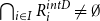 $\bigcap _{i\in I}R_{i}^{intD}\neq \emptyset$
. Suppose
 $i_{0}\in I$
satisfies
 $r_{i_{0}}=\mathrm{min}\{r_{i} \mid i\in I\}$
. Let
 $r=r_{i_{0}}$
and
 $\varepsilon =\mathrm{min}\{\varepsilon _{i} \mid i\in I\}.$
Let
 $O_{i}=(x_{i}, y_{i})$
for
 $i\in I.$
Then, we have the following conclusions:
(1) If
 $r\leq \frac {1}{4}\varepsilon$
or
 $r_{i_{0}}+r_{i}-d(O_{i_{0}}, O_{i})\geq 2r-\frac {1}{2}\varepsilon$
for every
 $i\in I \setminus \{i_{0}\}$
, then there exists a circular ring
 $K$
with
 $w_{K}\geq \frac {1}{2}\varepsilon$
such that
 $\{K\}$
is an intermediate cover of
 $\{R_{i}\}_{i\in I}$
.
(2) If
 $r\gt \frac {1}{4}\varepsilon$
and
 $r_{i_{0}}+r_{i_{1}}-d(O_{i_{0}}, O_{i_{1}})\lt 2r-\frac {1}{2}\varepsilon$
for some
 $i_{1}\in I \setminus \{i_{0}\}$
, then for every
 $\delta$
with
 $\varepsilon \gt \delta \gt 0,$
there exists a finite intermediate cover
 $\{K_{j}\}_{j\in J}$
of
 $\{R_{i}\}_{i\in I}$
with width
 $\varepsilon -\delta$
and
 $r_{K_{j}^{intD}}\leq r+\delta -\frac {1}{4}\varepsilon$
for every
 $j\in J$
.
Proof.
(1) Let
 $K=\mathrm{Ring}(x_{i_{0}}, y_{i_{0}})(r, r+\frac {1}{2}\varepsilon )$
. Then, by Lemma 4.3 (1),
 $K$
is the desired circular ring.
(2) By Lemma 4.2, for every
 $\delta$
with
 $\varepsilon \gt \delta \gt 0,$
there exists a finite intermediate cover
 $\{K_{j}\}_{j\in J}$
of
 $\{R_{i}\}_{i\in I}$
with width
 $\varepsilon -\delta$
. Since
 $K_{j}^{outD}\subseteq R_{i_{0}}^{outD}\cap R_{i_{1}}^{outD}$
, we have
 $2(r_{K_{j}^{outD}}-\varepsilon )$
is less than or equal to the length of the segment
 $line(O_{i_{0}}O_{i_{1}})\cap R_{i_{0}}^{intD}\cap R_{i_{1}}^{intD}$
, which equals
 $r_{i_{0}}+r_{i}-d(O_{i_{0}}, O_{i})$
. Thus,
 $r_{K_{j}^{outD}}\leq (r+\varepsilon )-\frac {1}{4}\varepsilon$
for every
 $j\in J$
. Furthermore,
 $r_{K_{j}^{intD}}=r_{K_{j}^{outD}}-(\varepsilon -\delta )\leq r+\delta -\frac {1}{4}\varepsilon$
for every
 $j\in J$
.
Definition 4.5.
Let
 $\{R_{i}\}_{i\in I}$
be a set of circular rings such that
 $\bigcap _{i\in I}R_{i}^{intD}\neq \emptyset$
. An intermediate cover
 $\{K_{j}\}_{j\in J}$
for
 $\{R_{i}\}_{i\in I}$
is called an extended intermediate cover with
 $\delta$
extension if for every disc
 $D$
whose center lies in
 $\bigcap _{i\in I} R_{i}^{intD}$
,
 $D\subseteq \bigcap _{i\in I} (R_{i}^{intD})^{+\delta }$
implies that there exists some
 $K_{j}$
such that
 $D\subseteq K_{j}^{intD}.$
The notion of an extended intermediate cover can be regarded as a strengthened version of an intermediate cover. An extended intermediate cover for
 $\{R_{i}\}_{i\in I}$
not only covers discs in
 $\bigcap _{i\in I} R_{i}^{intD}$
but also covers discs
 $D^{+\delta }$
where
 $D$
is contained in
 $\bigcap _{i\in I} R_{i}^{intD}$
. This is not equivalent to (precisely, weaker than) covering all discs in
 $\bigcap _{i\in I} (R_{i}^{intD})^{+\delta }$
.
A finite extended intermediate cover for
 $\{ R_{i} \mid i\in I\}$
with width
 $w$
, greatest inner radius
 $r$
(i.e.,
 $\mathrm{max}\{r_{(K_{j})^{intD}} \mid j\in J\}=r$
) and
 $\delta$
extension is denoted by
 \begin{equation*}\mathrm{ExtIntCov}_{r}^{w}(\{ R_{i}\}_{i\in I})_{\delta }.\end{equation*}
Lemma 4.6.
Suppose
 $\{K_{j}\}_{j\in J}$
is an intermediate cover of
 $\{R_{i}\}_{i\in I}$
with width
 $\omega$
,
 $D$
is a disc with center in
 $\bigcap _{i\in I}R_{i}^{intD}$
, and
 $0\lt \mu \lt \omega$
. If
 $D\subseteq \bigcap _{i\in I}(R_{i}^{intD})^{+\mu }$
, then there exists a
 $K_{j}$
such that
 $D\subseteq (K_{j}^{intD})^{+\mu }$
.
Proof.
The conditions that the center of
 $D$
is contained in
 $\bigcap _{i\in I}R_{i}^{intD}$
and
 $D\subseteq \bigcap _{i\in I}(R_{i}^{intD})^{+\mu }$
imply
 $D^{-\mu }\subseteq \bigcap _{i\in I}R_{i}^{intD}$
. There exists a
 $K_{j}$
such that
 $D^{-\mu }\subseteq K_{j}^{intD}$
. Thus,
 $D\subseteq (K_{j}^{intD})^{+\mu }$
.
By this lemma, we can construct an extended intermediate cover from an intermediate cover. Thus, we have the following proposition.
Proposition 4.7.
If
 $\{K_{j}\}_{j\in J}$
is an intermediate cover for
 $\{R_{i}\}_{i\in I}$
with width
 $\omega$
, then
 $\{K_{j}^{int+\delta }\}_{j\in J}$
is an extended intermediate cover for
 $\{R_{i}\}_{i\in I}$
with width
 $\omega -\delta$
and extension
 $\delta$
for every
 $0\lt \delta \lt \omega .$
Theorem 4.8.
Let
 $\{R_{i}=\mathrm{Ring}(x_{i}, y_{i})(r_{i},r_{i}+\varepsilon _{i})\in \mathrm{Ring}\}_{i\in I}$
be a finite set of rings such that
 $\bigcap _{i\in I}R_{i}^{intD}\neq \emptyset$
. Suppose
 $i_{0}\in I$
satisfies
 $r_{i_{0}}=\mathrm{min}\{r_{i} \mid i\in I\}$
. Let
 $r=r_{i_{0}}$
and
 $\varepsilon =\mathrm{min}\{\varepsilon _{i} \mid i\in I\}.$
Let
 $O_{i}=(x_{i}, y_{i})$
for
 $i\in I.$
Then, we have the following conclusions:
(1) If
 $r\leq \frac {1}{4}\varepsilon$
or
 $r_{i_{0}}+r_{i}-d(O_{i_{0}}, O_{i})\geq 2r-\frac {1}{2}\varepsilon$
for every
 $i\in I \setminus \{i_{0}\}$
, then there exists a circular ring
 $K$
with
 $w_{K}\geq \frac {1}{2}\varepsilon -\delta$
(
 $0\lt \delta \lt \frac {1}{2}\varepsilon$
) such that
 $\{K\}$
is an extended intermediate cover of
 $\{R_{i}\}_{i\in I}$
with extension
 $\delta$
.
(2) If
 $r\gt \frac {1}{4}\varepsilon$
and
 $r_{i_{0}}+r_{i_{1}}-d(O_{i_{0}}, O_{i_{1}})\lt 2r-\frac {1}{2}\varepsilon$
for some
 $i_{1}\in I \setminus \{i_{0}\}$
, then for every
 $\delta , \mu$
with
 $\varepsilon \gt \delta \gt 0$
and
 $0\lt \mu \lt \varepsilon -\delta$
, there exists a finite extended intermediate cover
 $\{K_{j}\}_{j\in J}$
of
 $\{R_{i}\}_{i\in I}$
with width
 $\varepsilon -\delta$
, extension
 $\mu$
, and
 $r_{K_{j}^{intD}}\leq r+\delta +\mu -\frac {1}{4}\varepsilon$
for every
 $j\in J$
.
Proof. This follows from Theorem4.4 and Proposition 4.7.
For convenience in describing how to construct a Plotkin poset from an arbitrary finite family of circular rings, we adopt the following convention.
Convention 4.9.
Let
 $R_{i}=\mathrm{Ring}(x_{i}, y_{i})(r_{i},r_{i}+\varepsilon _{i})\in \mathrm{Ring},$
where
 $x_{i}, y_{i}, r_{i}, \varepsilon _{i} \in \mathbb{R}$
,
 $r_{i}\gt 0, \varepsilon _{i}\gt 0,$
 $i\in I$
, and let
 $I$
be a finite index set. Suppose
 $i_{0}\in I$
satisfies
 $r_{i_{0}}=\mathrm{min}\{r_{i} \mid i\in I\}$
. Let
 $r=r_{i_{0}}$
and
 $\varepsilon =\mathrm{min}\{\varepsilon _{i} \mid i\in I\}.$
Let
 $O_{i}=(x_{i}, y_{i})$
for
 $i\in I.$
(1) Suppose
 $\bigcap _{i\in I}\mathrm{Disc}(x_{i}, y_{i})(r_{i})\neq \emptyset$
. If
 $r\leq \frac {1}{4}\varepsilon$
or
 $r_{i_{0}}+r_{i}-d(O_{i_{0}}, O_{i})\geq 2r-\frac {1}{2}\varepsilon$
for every
 $i\in I \setminus \{i_{0}\}$
, then by Theorem
4.8
(1), we may assume that
 $\mathrm{ExtIntCov}(\{ R_{i}\}_{i\in I})$
consists of a single circular ring with width
 $w=\frac {1}{4}\varepsilon$
and
 $\frac {1}{4}\varepsilon$
extension.
(2) If
 $\bigcap _{i\in I}\mathrm{Disc}(x_{i}, y_{i})(r_{i})=\emptyset$
, then we set
 $\mathrm{ExtIntCov}(\{ R_{i}\}_{i\in I})=\emptyset .$
(3) If the index set
 $I$
is a singleton, then we set
 $\mathrm{ExtIntCov}(\{ R_{i}\}_{i\in I})=\emptyset .$
Now we can construct a finite intermediate cover for a finite set of rings. To construct an infinite poset with the finite mub property based on rings, we start with a single ring and inductively add new rings one by one. When a new ring is added to a finite set, new subsets with non-empty intersections of inner discs may arise. Next, we describe the process of constructing a poset of rings with the finite mub property when a new ring is added.
Let
 $R_{i}=\mathrm{Ring}(x_{i}, y_{i})(r_{i},r_{i}+\varepsilon _{i})\in \mathrm{Ring},$
where
 $x_{i}, y_{i}, r_{i}, \varepsilon _{i} \in \mathbb{R}$
,
 $r_{i}\gt 0, \varepsilon _{i}\gt 0,$
 $i\in I$
, and let
 $I$
be a finite index set. Given a circular ring
 $R^{\ast }=\mathrm{Ring}(x^{\ast }, y^{\ast })(r^{\ast },r^{\ast }+\varepsilon ^{\ast })\in \mathrm{Ring}$
, let
 $r=\mathrm{min}\{r_{i} \mid$
 $i\in I\}\wedge r^{\ast }$
and
 $\varepsilon =\mathrm{min}\{\varepsilon _{i} \mid i\in I\}\wedge \varepsilon ^{\ast }.$
We construct a sequence of sets of circular rings as follows.
Step 0: Let
 \begin{equation*}L_{0}:=\{R_{i} \mid i\in I\}\cup \{R^{\ast }\}.\end{equation*}
Step 1: Set
 $\delta _{1}=\frac {1}{2^{3}}\varepsilon ,$
and define
 \begin{equation*}L_{1}:=\bigcup _{R^{\ast }\in \mathcal{R}\subseteq L_{0}}\mathrm{ExtIntCov}_{r_{1}}^{\omega_{1}}(\mathcal{R})_{\delta _{1}},\end{equation*}
where
 $r_{1}\leq r+2\delta _{1}-\frac {1}{4}\varepsilon$
and
 $\omega_{1}=\varepsilon -2\delta _{1}.$
(Note: (1). The condition
 $R^{\ast }\in \mathcal{R}$
ensures that we only construct intermediate covers for new subsets containing
 $R^{\ast }$
; the rest remain unchanged. (2). By Convention 4.9,
 $\mathrm{ExtIntCov}_{r_{1}}^{\omega_{1}}(\mathcal{R})_{\delta _{1}}$
is empty unless
 $\mathcal{R}$
has a non-empty intersection of inner discs).
Step 2: Set
 $\delta _{2}=\frac {1}{2^{4}}\varepsilon ,$
and define
 \begin{equation*}L_{2}:=\bigcup _{\mathcal{R}\subseteq L_{1}}\mathrm{ExtIntCov}_{r_{2}}^{\omega_{2}}(\mathcal{R}\cup \mathrm{OSU}(\mathcal{R}))_{\delta _{2}},\end{equation*}
where
 $r_{2}\leq r_{1}+2\delta _{2}-\frac {1}{4}\omega_{1}$
and
 $\omega_{2}=\omega_{1}-2\delta _{2}.$
(Note: A new condition  is introduced here. This ensures that we construct intermediate covers for families of rings whose inner disc intersections are contained in the inner discs of the underlying elements. In turn, this guarantees that the centers of newly generated rings lie within the inner discs of the underlying rings.)
Step 3: Set
 $\delta _{3}=\frac {1}{2^{5}}\varepsilon ,$
and define
 \begin{equation*}L_{3}:=\bigcup _{\mathcal{R}\subseteq L_{2}}\mathrm{ExtIntCov}_{r_{3}}^{\omega_{3}}\left (\mathcal{R}\cup \mathrm{OSU}(\mathcal{R})\cup \mathrm{OSU}^{2}(\mathcal{R})\right )_{\delta _{3}}\!,\end{equation*}
where
 $r_{3}\leq r_{2}+2\delta _{3}-\frac {1}{4}\omega_{2}$
and
 $\omega_{3}=\omega_{2}-2\delta _{3}.$
(Note: We define
 $\mathrm{OSU}^{2}(\mathcal{R})=\mathrm{OSU}(\mathrm{OSU}(\mathcal{R}))$
. For
 $i\geq 3$
,
 $\mathrm{OSU}^{i}(\mathcal{R})$
is defined inductively.)
 \begin{equation*}\vdots \end{equation*}
Step n: Set
 $\delta _{n}=\frac {1}{2^{n+2}}\varepsilon ,$
and define
 \begin{equation*}L_{n}:=\bigcup _{\mathcal{R}\subseteq L_{n-1}}\mathrm{ExtIntCov}_{r_{n}}^{\omega_{n}}\left (\mathcal{R}\cup \bigcup _{i=1}^{n-1}\mathrm{OSU}^{i}(\mathcal{R})\right )_{\delta _{n}},\end{equation*}
where
 $r_{n}\leq r_{n-1}+2\delta _{n}-\frac {1}{4}\omega_{n-1}$
and
 $\omega_{n}=\omega_{n-1}-2\delta _{n}.$
(Note: Intermediate covers for subsets of rings are added in each step. Subsets are naturally ordered by inclusion, and this ordering extends to their intersections. However, the structure of an intermediate cover does not depend on the order of the sets involved. An intermediate cover is uniquely determined by the collection of subsets, not by their inclusion order. For this reason, we may safely disregard the inclusion order when introducing intermediate covers, as it has no impact on the final construction.)
Finally, define
 \begin{equation*}L:=\bigcup _{i=0}^{n}L_{i}.\end{equation*}
Since
 $\sum _{i=1}^{n}\delta _{i}=\frac {1}{2^{2}}(1-\frac {1}{2^{n}})\varepsilon ,$
 $\omega _{k}=\frac {1}{2}\varepsilon +\frac {1}{2^{k+1}}\varepsilon ,$
and
 $\sum _{k=1}^{n-1}\omega _{k}=\frac {n}{2}\varepsilon -\frac {1}{2^{n}}\varepsilon$
, we have
 \begin{equation*}r_{n}\leq r+2\sum _{i=1}^{n}\delta _{i}-\frac {1}{4}\left (\varepsilon +\sum _{k=1}^{n-1}\omega _{k}\right )\leq r+\left (\frac {1}{4}-\frac {n}{8}-\frac {1}{2^{n+2}}\right )\varepsilon .\end{equation*}
The right-hand side of this inequality becomes negative for sufficiently large
 $n$
, so there exists a smallest
 $N\in \mathbb{N}$
such that
 $r_{N-1}\leq \frac {1}{4}\varepsilon .$
Thus,
 \begin{align*} &\bigcup _{\mathcal{R}\subseteq L_{N+1}}\mathrm{IntCov}(\mathcal{R})=\emptyset . & &\mathrm{(Terminal\ Condition\ T)} \end{align*}
This implies that the intermediate cover construction process terminates after the
 $N$
-th step. Since
 $\delta _{N}=\frac {1}{2^{N+2}}\varepsilon$
, the extension in the final step is
 $\frac {1}{2^{N+2}}\varepsilon$
. In this case, we denote
 $L$
by
 \begin{equation*}\mathrm{PLP}_{\delta }(\{R_{i}\}_{i\in I},R^{\ast })\ (\mathrm{or}\ \mathrm{PLP}(\{R_{i}\}_{i\in I},R^{\ast })\ \mathrm{for\ short}),\end{equation*}
where
 $\delta =\frac {1}{2^{N+2}}\varepsilon.$
Definition 4.10.
For two rings
 $R$
and
 $R^{\prime }$
, we say
 $R$
is an underlying element of
 $R^{\prime }$
if there exists a sequence of elements
 $R=R_{1}, R_{2}, \cdots , R_{k}=R^{\prime }$
such that
 $R_{i}$
is a one-step underlying element of
 $R_{i+1}$
for all
 $i=1, 2, \cdots , k-1$
.
We now define a suitable partial order on
 $\mathrm{PLP}(\{R_{i} \mid i\in I\},R^{\ast })$
such that elements of an intermediate cover can act as minimal upper bounds. Suppose a partial order
 $\leq$
is defined on
 $L_{0}$
. For
 $R, R^{\prime }\in \mathrm{PLP}(\{R_{i} \mid i\in I\},R^{\ast })$
, we extend the partial order by defining
 $R\leq R^{\prime }$
if and only if one of the following conditions holds:
-
1.
$R\leq R^{\prime }$
in
$(L_{0}, \leq )$
; -
2.
$R$
is an underlying element of
$R^{\prime }$
; -
3.
$R= R^{\prime }$
.


Remark 4.11. The following properties hold for
 $\mathrm{PLP}(\{R_{i} \mid i\in I\},R^{\ast })$
:
(1) Since the index set
 $I$
is finite and a finite intermediate cover can be constructed for any finite family of circular rings, we conclude that
 $\mathrm{PLP}(\{R_{i} \mid i\in I\},R^{\ast })$
is a finite poset.
(2) If
 $R$
and
 $R^{\prime }$
are maximal elements of
 $\mathrm{PLP}(\{R_{i} \mid i\in I\},R^{\ast })$
, then
 $R^{intD}\cap (R^{\prime })^{intD}=\emptyset$
or
 $R^{intD}\cap (R^{\prime })^{intD}$
is a singleton.
(3) If
 $R\in \mathrm{PLP}(\{R_{i}\}_{i\in I},R^{\ast })\setminus \{R_{i}\}_{i\in I},$
then
 $R^{\ast }\leq R.$
(4) By the finiteness of
 $\mathrm{PLP}(\{R_{i} \mid i\in I\},R^{\ast })$
, it follows that
 $\mathrm{PLP}(\{R_{i} \mid i\in I\},R^{\ast })$
has the finite mub property. Thus,
 $\mathrm{PLP}(\{R_{i} \mid i\in I\},R^{\ast })$
can be regarded as a Plotkin poset based on
 $\{R_{i} \mid i\in I\}\cup \{R^{\ast }\}$
. This is the reason for the symbol
 $\mathrm{PLP}$
.
(5) If
 $R$
is a one-step underlying element of
 $R^{\prime }$
, then
 $R\,-\hspace {3pt}\llap {$\lt $}\,R^{\prime }$
.
Proposition 4.12.
Let
 $I$
be a finite index set, and for each
 $i\in I$
, let
 $R_{i}=\mathrm{Ring}(x_{i}, y_{i})(r_{i},r_{i}+\varepsilon _{i})\in \mathrm{Ring}$
where
 $x_{i}, y_{i}, r_{i}, \varepsilon _{i} \in \mathbb{R}$
,
 $r_{i}\gt 0,$
and
 $\varepsilon _{i}\gt 0$
. Let
 $R^{\ast }=\mathrm{Ring}(x^{\ast }, y^{\ast })(r^{\ast },r^{\ast }+\varepsilon ^{\ast })\in \mathrm{Ring}$
, and set
 $\varepsilon =\mathrm{min}\{\varepsilon _{i} \mid i\in I\}\wedge \varepsilon ^{\ast }.$
Let
 $D$
be a disc.
(1) If there exists a non-empty subset
 $I_{0}\subseteq I$
such that
 $D\subseteq (\bigcap _{i\in I_{0}}R_{i}^{intD})\cap (R^{\ast })^{intD}$
, then the set
 \begin{equation*}\mathrm{Under}(D):=\left \{Q\in \mathrm{PLP}(\{R_{i} \mid i\in I\},R^{\ast }) \mid Q^{intD}\supseteq D\right \}\end{equation*}
has a greatest element.
(2) If there exists a non-empty subset
 $I_{0}\subseteq I$
such that the center of
 $D$
lies in
 $(\bigcap _{i\in I_{0}}R_{i}^{intD})\cap (R^{\ast })^{intD}$
, and there exists
 $\mu$
with
 $0\lt \mu \lt \frac {1}{2^{3}}\varepsilon$
such that
 $D^{-\mu }\subseteq (\bigcap _{i\in I_{0}}R_{i}^{intD})\cap (R^{\ast })^{intD}$
, then the set
 \begin{equation*}\mathrm{Under}(D):=\left \{Q\in \mathrm{PLP}_{\frac {1}{2^{N+2}}\omega }(\{R_{i} \mid i\in I\},R^{\ast }) \mid Q^{intD}\supseteq D\right \}\end{equation*}
has a greatest element.
Proof.
Let
 $L_{j}$
denote the sets defined in the construction of
 $\mathrm{PLP}_{\frac {1}{2^{N+2}}\omega }(\{R_{i}\}_{i\in I},R^{\ast })$
for
 $j=0,1,\cdots , n.$
Define
 \begin{equation*}\mathrm{Under}(D)_{1}:=\left \{Q\in \bigcup _{R^{*}\in \mathcal{R}\subseteq L_{0}}\mathrm{ExtIntCov}_{r_{1}}^{w_{1}}(\mathcal{R}) \mid Q^{intD}\supseteq D\right \},\end{equation*}
and for
 $k=2, 3, \cdots , n$
,
 \begin{equation*}\mathrm{Under}(D)_{k}:=\left \{Q\in \bigcup _{\mathcal{R}\subseteq L_{k-1}}\mathrm{ExtIntCov}_{r_{k}}^{w_{k}}\left (\mathcal{R}\cup \bigcup _{t=1}^{k-1}\mathrm{OSU}^{t}(\mathcal{R})\right ) \mid Q^{intD}\supseteq D\right \}.\end{equation*}
(1) Since
 $D\subseteq (\bigcap _{i\in I_{0}}R_{i}^{intD})\cap (R^{\ast })^{intD}$
, we have
 $\mathrm{Under}(D)_{1}\neq \emptyset .$
If
 $\mathrm{Under}(D)_{1}$
is a singleton, then this element is the desired greatest element. If
 $|\mathrm{Under}(D)_{1}|\gt 1$
, then
 $\mathrm{Under}(D)_{2}\neq \emptyset .$
If
 $|\mathrm{Under}(D)_{2}|\gt 1$
, we repeat the process. By the terminal condition, there exists
 $n_{D}\in \mathbb{N}$
such that
 $\mathrm{Under}(D)_{n_{D}}$
is a singleton; this is the desired greatest element.
(2) By the definition of an extended intermediate cover,
 $\mathrm{Under}(D)_{1}\neq \emptyset .$
The result then follows by arguments analogous to those in (1).
5. The construction of a bifinite domain based on a denumerable family of circular rings
In this section, we construct a Plotkin poset from a countable family of circular rings, whose ideal completion is a bifinite domain.
To index the elements of a countable family of rings properly, we first establish some preliminary notation.
Let
 $\mathbb{Q}$
denote the set of rational numbers, and let
 $\mathbb{Q}^{+}=\{q\in \mathbb{Q} \mid q\gt 0\}.$
For integers
 $k, l\in \mathbb{N}$
with
 $1\leq k\leq l$
, define
 $a_{k,l}=\frac {(l-1)l}{2}+k.$
The values of
 $a_{k,l}$
are listed in Table 1. For any two such indices
 $a_{k_{1},l_{1}}$
and
 $a_{k_{2},l_{2}}$
, the following hold:
-
1.
$a_{k_{1},l_{1}}\lt a_{k_{2},l_{2}}$
if and only if either
$l_{1}=l_{2}$
and
$k_{1}\lt k_{2}$
, or
$l_{1}\lt l_{2}$
; -
2.
$a_{k_{1},l_{1}}= a_{k_{2},l_{2}}$
if and only if
$l_{1}=l_{2}$
and
$k_{1}=k_{2}$
.


We first note that
 $\mathbb{Q}\times \mathbb{Q}\times \mathbb{Q}^{+}$
is a countable set, and thus there exists a bijection between
 $\mathbb{Q}\times \mathbb{Q}\times \mathbb{Q}^{+}$
and
 $\mathbb{N}$
. For any element
 $(q_{1},q_{2},q_{3})\in \mathbb{Q}\times \mathbb{Q}\times \mathbb{Q}^{+}$
, we denote its image under this bijection by
 $N_{(q_{1},q_{2},q_{3})}$
.
The value of
 $a_{k,l}$

Table 1. Long description
A table listing values for integers with specific conditions. The table has four columns and five rows, including the header row. The columns are labeled k, 1, 2, and 3. The rows are labeled 1, 2, 3, and an ellipsis indicating continuation. The values in the table are as follows: Row 1: k, 1, 2, 4. Row 2: 1, 1, 2, 4. Row 3: 2, 3, 5. Row 4: 3, 6. The table defines the values of k for integers with specific conditions and lists the values accordingly.
Next, we introduce a set of closed circular rings with rational centers and rational radii. Let
 \begin{equation*}\mathrm{QRing}\end{equation*}
be the following set of closed circular rings in the plane:
 \begin{align*} \left \{\mathrm{Ring}(q_{1},q_{2})\Big(q_{3}+\frac {1}{10^{a_{k,l}}}, q_{3}+\frac {2}{10^{a_{k,l}}}\Big) \mid q_{1},q_{2}\in \mathbb{Q}, q_{3}\in \mathbb{Q}^{+}, k=N_{(q_{1},q_{2},q_{3})}, l\in \mathbb{N}, k\leq l\right \}. \end{align*}
The centers and radii of rings in
 $\mathrm{QRing}$
are rational numbers. The widths of rings in
 $\mathrm{QRing}$
are pairwise distinct. For
 \begin{equation*}R=\mathrm{Ring}(q_{1},q_{2})\Big(q_{3}+\frac {1}{10^{a_{k,l}}}, q_{3}+\frac {2}{10^{a_{k,l}}}\Big), R^{\prime }=\mathrm{Ring}(q_{1}^{\prime },q_{2}^{\prime })\Big(q_{3}^{\prime }+\frac {1}{10^{a_{k^{\prime },l^{\prime }}}}, q_{3}^{\prime }+\frac {2}{10^{a_{k^{\prime },l^{\prime }}}}\Big)\in \mathrm{QRing},\end{equation*}
we define
 $R\leq R^{\prime }$
if and only if one of the following conditions holds:
-
1.
$a_{k,l}\leq a_{k^{\prime }, l^{\prime }}$
and
$R^{intD}\supseteq (R^{\prime })^{outD},$
-
2.
$R= R^{\prime }.$


Then,
 $(\mathrm{QRing},\leq )$
is a poset. For
 $R, R^{\prime }\in \mathrm{QRing}$
, if
 $R\lt R^{\prime }$
, then
 $w_{R^{\prime }}\leq \frac {1}{10}w_{R}.$
This means that elements in
 $\mathrm{QRing}$
are ordered not only by inclusion but also such that greater elements have narrower widths. For every
 $R\in \mathrm{QRing}$
, since there are finitely many elements below
 $R$
,
 $R$
is compact. Furthermore,
 $\mathrm{QRing}$
is an algebraic poset.
It is noteworthy that for every triple of rationals
 $(q_{1},q_{2},q_{3})\in \mathbb{Q}\times \mathbb{Q}\times \mathbb{Q}^{+}$
,
 \begin{equation*}\left \{\mathrm{Ring}(q_{1},q_{2})\Big(q_{3}+\frac {1}{10^{a_{k,l}}}, q_{3}+\frac {2}{10^{a_{k,l}}}\Big)\in \mathrm{QRing} \mid k=N_{(q_{1},q_{2},q_{3})}, l\in \mathbb{N}, k\leq l\right \}\end{equation*}
is totally ordered, and
 \begin{equation*}\mathrm{Disc}(q_{1},q_{2})(q_{3})=\bigcap \left \{\mathrm{Disc}(q_{1},q_{2})\Big(q_{3}+\frac {2}{10^{a_{k,l}}}\Big) \mid k=N_{(q_{1},q_{2},q_{3})}, l\in \mathbb{N}, k\leq l\right \}.\end{equation*}
For a disc
 $D\in \mathrm{Disc}$
, let
 $D^{o}$
denote the interior of
 $D$
. Furthermore, for every
 $D\in \mathrm{Disc}$
, the set
 $\{R\in \mathrm{QRing} \mid D\subseteq (R^{intD})^{o}\}$
is a directed subset of
 $\mathrm{QRing}$
, and we have
 \begin{equation*}D=\bigcap \left \{R^{outD} \mid R\in \mathrm{QRing},D\subseteq (R^{intD})^{o}\right \}.\end{equation*}
These properties are useful for the construction of a retraction map later.
For
 $n\in \mathbb{N}$
, there is a unique pair of natural numbers
 $k, l$
such that
 $a_{k,l}=n$
. Furthermore, there is a unique triple of rational numbers
 $(q_{1},q_{2},q_{3})$
such that
 $N_{(q_{1},q_{2},q_{3})}=k.$
Let
 \begin{equation*}\mathrm{QR}_{n}=\mathrm{Ring}(q_{1},q_{2})\Big(q_{3}+\frac {1}{10^{a_{k,l}}}, q_{3}+\frac {2}{10^{a_{k,l}}}\Big)\end{equation*}
such that
 $a_{k,l}=n$
and
 $N_{(q_{1},q_{2},q_{3})}=k.$
. We have
-
1.
$w_{\mathrm{QR}_{n}}=\frac {1}{10^{n}}$
; -
2.
$\{\mathrm{QR}_{n} \mid n\in \mathbb{N}\}=\mathrm{QRing}.$


Thus, elements in
 $\mathrm{QRing}$
are indexed such that a larger index corresponds to a smaller width. For
 $n_{1}, n_{2}\in \mathbb{N}$
with
 $n_{1}\lt n_{2}$
, if there exist natural numbers
 $k, l_{1}, l_{2}$
with
 $l_{1}\lt l_{2}$
such that
 $a_{k,l_{1}}=n_{1}$
and
 $a_{k,l_{2}}=n_{2}$
, then
 $(\mathrm{QR}_{n_{1}})^{intD}\supseteq (\mathrm{QR}_{n_{2}})^{outD}.$
Next, we inductively construct a Plotkin-poset based on
 $\mathrm{QRing}$
. The main idea is as follows. We start with the first element of
 $\mathrm{QRing}$
. Then, we use the next element from
 $\mathrm{QRing}$
to construct the Plotkin-poset in the next step. When constructing the next stage, we work “disjointly” from the existing structure so that minimal upper bounds remain unchanged. To achieve this separation, we use primed elements. The pattern will become clearer from Step 3 onward.
Step 1: For
 $n=1,$
let
 \begin{equation*}\mathrm{QR}_{1}^{\prime }=\mathrm{QR}_{1},\end{equation*}
 \begin{equation*}L_{1}=\{\mathrm{QR}_{1}^{\prime }\}.\end{equation*}
Step 2: For
 $n=2,$
let
 \begin{equation*}\mathrm{QR}_{2}^{\prime }=\mathrm{QR}_{2},\end{equation*}
 \begin{equation*}L_{2}^{\prime }=\{\mathrm{Ring}(x, y)\Big(r, r+\frac {1}{10^{2}}\Big) \mid \mathrm{Ring}(x, y)(r, r^{\prime })\in L_{1}\},\end{equation*}
 \begin{equation*}L_{2}=L_{1}\cup \mathrm{PLP}_{\delta _{2}}(L_{2}^{\prime },\mathrm{QR}_{2}^{\prime })\setminus L_{2}^{\prime }, \omega _{2}=\frac {1}{10^{2}}, \delta _{2}=\frac {1}{2^{N_{2}+2}}\omega _{2},\end{equation*}
where
 $N_{2}$
is the natural number representing the number of steps in the construction of
 $\mathrm{PLP}_{\delta _{2}}(L_{2}^{\prime },\mathrm{QR}_{2}^{\prime })$
. The existence of
 $N_{2}$
is guaranteed by the termination condition
 $\mathrm{T}$
. The meanings of
 $N_{3}, \cdots$
in subsequent steps are analogous to that of
 $N_{2}$
.
Step 3: For
 $n=3,$
let
 \begin{equation*}L_{3}^{\prime }=\{\mathrm{Ring}(x, y)\Big(r, r+\frac {1}{10^{3}}*\delta _{2}\Big) \mid \mathrm{Ring}(x, y)(r, r^{\prime })\in L_{2}\},\end{equation*}
 \begin{equation*}\mathrm{QR}_{3}^{\prime }=\mathrm{Ring}(q_{1},q_{2})\Big(q_{3}+\frac {1}{10^{a_{k,l}}}, q_{3}+\frac {1}{10^{a_{k,l}}}+\frac {1}{10^{a_{k,l}}}*\delta _{2}\Big)\end{equation*}
with
 $a_{k,l}=3$
and
 $N_{(q_{1},q_{2},q_{3})}=k.$
Also let
 \begin{equation*}L_{3}=L_{2}\cup \mathrm{PLP}_{\delta _{3}}(L_{3}^{\prime }, \mathrm{QR}_{3}^{\prime })\setminus L_{3}^{\prime }, \omega _{3}=\frac {1}{10^{3}}, \delta _{3}=\frac {1}{2^{N_{3}+2}}\omega _{3}.\end{equation*}
 \begin{equation*}\vdots \end{equation*}
Step n: Let
 \begin{equation*}L_{n}^{\prime }=\{\mathrm{Ring}(x, y)\Big(r, r+\frac {1}{10^{n}}*\delta _{n-1}\Big) \mid \mathrm{Ring}(x, y)(r, r^{\prime })\in L_{n-1}\},\end{equation*}
 \begin{equation*}\mathrm{QR}_{n}^{\prime }=\mathrm{Ring}(q_{1},q_{2})\Big(q_{3}+\frac {1}{10^{a_{k,l}}}, q_{3}+\frac {1}{10^{a_{k,l}}}+\frac {1}{10^{a_{k,l}}}*\delta _{n-1}\Big)\end{equation*}
with
 $a_{k,l}=n$
and
 $N_{(q_{1},q_{2},q_{3})}=k.$
Also let
 \begin{equation*}L_{n}=L_{n-1}\cup \mathrm{PLP}_{\delta _{n}}(L_{n}^{\prime },\mathrm{QR}_{n}^{\prime })\setminus L_{n}^{\prime }, \omega _{n}=\frac {1}{10^{n}}, \delta _{n}=\frac {1}{2^{N_{n}+2}}\omega _{n}.\end{equation*}
(Note: The widths of elements in
 $L_{n}^{\prime }$
and
 $\mathrm{QR}_{n}^{\prime }$
are equal to
 $\frac {1}{10^{n}}*\delta _{n-1}$
, which is less than the least extension
 $\delta _{n-1}$
in
 $L_{n-1}$
.)
 \begin{equation*}\vdots \end{equation*}
Finally, we define
 \begin{equation*}\mathrm{PQRing}=\bigcup _{n=1}^{\infty }L_{n}.\end{equation*}
Let
 $\mathrm{QRing}^{\prime }=\{\mathrm{QR}_{n}^{\prime } \mid n\in \mathbb{N}\}$
. Elements in
 $\mathrm{QRing}^{\prime }$
are in one-to-one correspondence with those in
 $\mathrm{QRing}$
, so we can define an order on
 $\mathrm{QRing}^{\prime }$
using the order on
 $\mathrm{QRing}$
. Then,
 $\mathrm{QRing}^{\prime }$
shares many properties with
 $\mathrm{QRing}$
, which are listed in the following proposition.
Proposition 5.1.
(1)
 $\mathrm{QRing}^{\prime }$
is an algebraic poset.
(2) For every triple of rational numbers
 $(q_{1},q_{2},q_{3})\in \mathbb{Q}\times \mathbb{Q}\times \mathbb{Q}^{+}$
,
 \begin{equation*}\{\mathrm{QR}_{n}^{\prime }\in \mathrm{QRing}^{\prime } \mid k=N_{(q_{1},q_{2},q_{3})}, l\in \mathbb{N}, k\leq l, n=a_{k,l}\}\end{equation*}
is a directed subset of
 $\mathrm{QRing}^{\prime }$
.
(3) For every triple of rational numbers
 $(q_{1},q_{2},q_{3})\in \mathbb{Q}\times \mathbb{Q}\times \mathbb{Q}^{+}$
,
 \begin{equation*}\mathrm{Disc}(q_{1},q_{2})(q_{3})=\bigcap \{(\mathrm{QR}_{n}^{\prime })^{outD} \mid k=N_{(q_{1},q_{2},q_{3})}, l\in \mathbb{N}, k\leq l, n=a_{k,l}\}.\end{equation*}
(4) For every
 $D\in \mathrm{Disc}$
,
 $\{R\in \mathrm{QRing}^{\prime } \mid D\subseteq (R^{intD})^{o}\}$
is a directed subset of
 $\mathrm{QRing}^{\prime }$
and
 \begin{equation*}D=\bigcap \{R^{outD} \mid R\in \mathrm{QRing}^{\prime }, D\subseteq (R^{intD})^{o}\}.\end{equation*}
Since
 $\mathrm{QR}_{i}^{\prime }\in \mathrm{PLP}(L_{i}^{\prime },\mathrm{QR}_{i}^{\prime })$
for
 $i=2,3,\cdots ,n$
, we have
 $\mathrm{QRing}^{\prime }\subseteq \mathrm{PQRing}.$
The set
 $\mathrm{PQRing}$
consists of two parts. One part is
 $\mathrm{QRing}^{\prime }$
. The other part comprises elements generated by the construction of extended intermediate covers. Every element in
 $\mathrm{PQRing}\setminus \mathrm{QRing}^{\prime }$
has a set of underlying elements. These underlying elements are constructed from
 $\mathrm{QRing}^{\prime }$
. By construction, we have
 $L_{1}\subseteq L_{2}\subseteq \cdots \subseteq L_{n}\subseteq \cdots .$
In the construction of
 $\mathrm{PQRing}$
, a new element from
 $\mathrm{QRing}^{\prime }$
is added at each step. In the construction of
 $L_{n}$
for
 $n\geq 2$
, we work with
 $L_{n}^{\prime }$
. This is to keep the minimal upper bounds for every subset of
 $L_{n-1}$
unchanged in subsequent steps. We will explain this in detail after an order is defined.
Elements in
 $L_{n}^{\prime }$
form bridges between elements in
 $L_{n-1}$
and elements in
 $L_{n}\setminus L_{n-1}$
. An element
 $R$
in
 $L_{n-1}$
is called a one-step underlying element of the corresponding element
 $R^{\prime }$
in
 $L_{n}^{\prime }$
. If
 $R^{\prime }\in L_{n}^{\prime }$
is an underlying element of an element
 $T\in L_{n}$
, then
 $R$
is called an underlying element of
 $T$
by transitivity.
For convenience in describing the order on
 $\mathrm{PQRing}$
, every element is regarded as an underlying element of itself.
We now define an order on
 $\mathrm{PQRing}$
.
Definition 5.2.
Suppose
 $R_{1}, R_{2}\in \mathrm{PQRing}.$
We define
 $R_{1}\leq R_{2}$
if and only if there exist natural numbers
 $n_{1}, n_{2}\in \mathbb{N}$
such that
 $n_{1}\leq n_{2}$
,
 $R_{1}\in L_{n_{1}}\setminus L_{n_{1}-1}$
,
 $R_{2}\in L_{n_{2}}\setminus L_{n_{2}-1}$
, and one of the following conditions holds:
(1)
 $R_{1}$
is an underlying element of
 $R_{2}$
.
(2) If
 $R_{1}$
is not an underlying element of
 $R_{2}$
, then there exists an underlying element
 $T$
of
 $R_{2}$
with
 $T\in \mathrm{QRing}^{\prime }$
such that
 $S^{intD}\supseteq T^{outD}$
for every underlying element
 $S$
of
 $R_{1}$
.
Proposition 5.3.
 $(\mathrm{PQRing}, \leq )$
is a poset.
Proof.
To verify that the order on
 $\mathrm{PQRing}$
is well-defined, the key is to check transitivity and antisymmetry.
Suppose
 $R_{1}, R_{2}, R_{3}\in \mathrm{PQRing}$
with
 $R_{1}\leq R_{2}$
and
 $R_{2}\leq R_{3}$
.
-
• If
$R_{1}$
is an underlying element of
$R_{2}$
and
$R_{2}$
is an underlying element of
$R_{3}$
, then
$R_{1}$
is an underlying element of
$R_{3}$
, that is
$R_{1}\leq R_{3}$
. -
• If
$R_{1}$
is an underlying element of
$R_{2}$
but
$R_{2}$
is not an underlying element of
$R_{3}$
, then by
$R_{2}\leq R_{3}$
, there exists an underlying element
$T$
of
$R_{3}$
with
$T\in \mathrm{QRing}^{\prime }$
such that
$S^{intD}\supseteq T^{outD}$
for every underlying element
$S$
of
$R_{2}$
. Since every underlying element of
$R_{1}$
is an underlying element of
$R_{2}$
, we obtain
$R_{1}\leq R_{3}$
. -
• If
$R_{1}$
is not an underlying element of
$R_{2}$
but
$R_{2}$
is an underlying element of
$R_{3}$
, then there exists an underlying element
$T$
of
$R_{2}$
with
$T\in \mathrm{QRing}^{\prime }$
such that
$S^{intD}\supseteq T^{outD}$
for every underlying element
$S$
of
$R_{1}$
. By transitivity of the underlying relation,
$T$
is an underlying element of
$R_{3}$
. Thus, we conclude that
$R_{1}\leq R_{3}$
. -
• If neither
$R_{1}$
is an underlying element of
$R_{2}$
nor
$R_{2}$
is an underlying element of
$R_{3}$
, then there exists an underlying element
$T$
of
$R_{2}$
with
$T\in \mathrm{QRing}^{\prime }$
such that
$S^{intD}\supseteq T^{outD}$
for every underlying element
$S$
of
$R_{1}$
, and there exists an underlying element
$U$
of
$R_{3}$
with
$U\in \mathrm{QRing}^{\prime }$
such that
$V^{intD}\supseteq U^{outD}$
for every underlying element
$V$
of
$R_{2}$
. It follows that
$S^{intD}\supseteq T^{outD}\supseteq T^{intD}\supseteq U^{outD}$
for every such
$S$
, so
$R_{1}\leq R_{3}$
.


To sum up, transitivity holds.
Now suppose
 $R_{1}, R_{2}\in \mathrm{PQRing}$
with
 $R_{1}\leq R_{2}$
and
 $R_{2}\leq R_{1}$
. There exist natural numbers
 $n_{1},$
 $n_{2}\in \mathbb{N}$
such that
 $R_{1}\in L_{n_{1}}\setminus L_{n_{1}-1}$
and
 $R_{2}\in L_{n_{2}}\setminus L_{n_{2}-1}$
. Since
 $R_{1}\leq R_{2}$
, we have
 $n_{1}\leq n_{2}$
. Since
 $R_{2}\leq R_{1}$
, we have
 $n_{2}\leq n_{1}$
. Thus,
 $n_{1}= n_{2}$
, so
 $R_{1}$
and
 $R_{2}$
are underlying elements of each other. Hence
 $R_{1}= R_{2}$
.
Therefore, the order on
 $\mathrm{PQRing}$
is well-defined.
Remark 5.4. Since the only underlying element of
 $R\in \mathrm{QRing}^{\prime }$
is
 $R$
itself, we deduce that
 $\mathrm{QRing}^{\prime }$
is a subposet of
 $\mathrm{PQRing}$
.
Lemma 5.5.
For every
 $n\in \mathbb{N}$
, we have
(1) for every
 $T\in L_{n+1}\setminus L_{n}$
,
 $(\!\uparrow _{L_{n+1}} T)\cap L_{n}=\emptyset$
,
(2) for every
 $T\in L_{n+1}\setminus L_{n}$
,
 $(\!\downarrow _{L_{n+1}} T)\cap L_{n}\neq \emptyset$
implies that
 $(\!\downarrow _{L_{n+1}} T)\cap L_{n}$
has a greatest element.
Proof.
(1) follows directly from the definition of the order on
 $L_{n+1}$
.
(2)
 $(\!\downarrow _{L_{n+1}} T)\cap L_{n}\neq \emptyset$
implies that there exists a greatest integer
 $k$
with
 $1\leq k\leq n$
such that
 $\mathrm{QR}_{k}^{\prime }\leq T$
. Then by the maximality of
 $k$
and the definition of the order on
 $L_{n+1}$
, we have
 $(\!\downarrow _{L_{n+1}} T)\cap L_{n}\subseteq L_{k}.$
For
 $T\in L_{n+1}\setminus L_{n}$
, we know either
 $T=\mathrm{QR}_{n+1}^{\prime }$
or
 $T\in \mathrm{PLP}(L_{n+1}^{\prime },\mathrm{QR}_{n+1}^{\prime })_{\delta _{n+1}}\setminus (L_{n+1}^{\prime }\cup \{\mathrm{QR}_{n+1}^{\prime }\}).$
(i) Suppose
 $T=\mathrm{QR}_{n+1}^{\prime }$
. Then,
 $k$
is the greatest integer less than or equal to
 $n$
such that
 $(\mathrm{QR}_{k}^{\prime })^{intD}\supseteq T^{outD}$
. Thus, by Proposition 4.12 (1), the set
 $\{Q\in \mathrm{PLP}_{\delta _{k}}(L_{k}^{\prime },\mathrm{QR}_{k}^{\prime }) \mid Q^{intD}\supseteq T\}$
has a greatest element, denoted by
 $\overline {T}$
. By the order on
 $L_{n}$
and the maximality of
 $k$
, every element in
 $L_{n}\setminus \downarrow \mathrm{PLP}_{\delta _{k}}(L_{k}^{\prime },\mathrm{QR}_{k}^{\prime })$
is not less than
 $T.$
Hence,
 $\overline {T}$
is the greatest element of
 $(\!\downarrow _{L_{n+1}} T)\cap L_{n}$
.
(ii) Suppose
 $T\in \mathrm{PLP}(L_{n+1}^{\prime },\mathrm{QR}_{n+1}^{\prime })_{\delta _{n+1}}\setminus (L_{n+1}^{\prime }\cup \{\mathrm{QR}_{n+1}^{\prime }\}).$
Then,
 $T$
is generated by the inductive construction of extended intermediate covers. Specifically, there exists a subset
 $\mathcal{R}_{T}\subseteq$
 $(\!\downarrow _{L_{n+1}} T)\cap L_{n}\subseteq L_{k}\subseteq L_{n+1}$
such that
 $T\in \mathrm{PLP}(\mathcal{R}_{T}^{\prime },\mathrm{QR}_{n+1}^{\prime })_{\delta _{n+1}},$
where the elements of
 $\mathcal{R}_{T}^{\prime }$
correspond to those of
 $\mathcal{R}_{T}$
with width
 $\frac {1}{10^{n}}*\delta _{n-1}.$
Meanwhile,
 $\mathcal{R}_{T}^{\prime }\subseteq L_{k}^{\prime }$
. By the maximality of
 $k$
and the definition of the order on
 $L_{n+1}$
, we have
 $(\!\downarrow _{L_{n+1}} T)\cap L_{n}\subseteq \downarrow _{L_{k}} \mathrm{PLP}_{\delta _{k}}(L_{k}^{\prime },\mathrm{QR}_{k}^{\prime })\setminus L_{k}^{\prime } \subseteq L_{k}.$
Moreover, by the construction of an extended intermediate cover, the center of
 $T$
lies in the inner discs of all elements in
 $\mathcal{R}_{T}$
.
(ii-1) If
 $T^{outD}\subseteq \bigcap _{R\in L_{n},R\leq T}R^{intD}$
, then by arguments similar to those in case (i),
 $(\!\downarrow _{L_{n+1}} T)\cap L_{n}$
has a greatest element.
(ii-2) Suppose
 $T^{outD}$
is not contained in
 $\bigcap _{R\in L_{n},R\leq T}R^{intD}$
. Since
 $T^{outD}\subseteq \bigcap _{R\in \mathcal{R}_{T}^{\prime }}R^{outD}$
and the widths of elements in
 $\mathcal{R}_{T}^{\prime }$
are equal to
 $\frac {1}{10^{n}}*\delta _{n-1}$
, there exists some
 $\mu$
with
 $0\lt \mu \lt \frac {1}{10^{n+1}}*\delta _{n}$
such that
 $(T^{outD})^{-\mu }\subseteq \bigcap _{R\in L_{n}, R\leq T}(R^{\prime })^{intD}$
. Thus, by Proposition 4.12 (2), the set
 $\{Q\in \mathrm{PLP}_{\delta _{k}}(L_{k}^{\prime },\mathrm{QR}_{k}^{\prime }) \mid Q^{intD}\supseteq T\}$
has a greatest element
 $\overline {T}$
. Furthermore, by the maximality of
 $k$
,
 $\overline {T}$
is the greatest element of
 $(\!\downarrow _{L_{n+1}} T)\cap L_{n}$
.
Lemma 5.6.
Let
 $\mathrm{PQRing}_{\bot }$
be
 $\mathrm{PQRing}$
with the whole plane added as a bottom element. Then,
 $\mathrm{PQRing}_{\bot }$
is a bottomed Plotkin-poset in which every element is compact.
Proof.
For every
 $n\geq 1$
,
 $L_{n}$
is a finite poset. For every
 $R\in \mathrm{PQRing}$
, there exists a least
 $n$
such that
 $R\in L_{n}$
. Since
 $\downarrow R$
is a subset of
 $\bigcup _{i=1}^{n}L_{i}$
,
 $\downarrow R$
is finite. Thus,
 $\mathrm{PQRing}$
is a poset with property m. The result now follows from Lemmas 5.5, 3.4, 3.3 and 3.2.
According to Lemmas 3.3 and 5.6, we obtain the following result.
Theorem 5.7.
The ideal completion
 $\mathrm{Id}(\mathrm{PQRing}_{\bot })$
of
 $\mathrm{PQRing}_{\bot }$
is a bifinite domain.
Define maps
 $e: \mathrm{Disc}\longrightarrow \mathrm{Id}(\mathrm{PQRing}_{\bot })$
and
 $r: \mathrm{Id}(\mathrm{PQRing}_{\bot })\longrightarrow \mathrm{Disc}$
as follows:
 \begin{equation*}e(D)=\downarrow _{\mathrm{PQRing}_{\bot }}\{R\in \mathrm{QRing}^{\prime } \mid D\subseteq (R^{intD})^{o}\}\ \mathrm{for\ every}\ D\in \mathrm{Disc},\end{equation*}
 \begin{equation*}r(I)=\bigcap _{R\in I} R^{outD}\ \mathrm{for\ every}\ I\in \mathrm{Id}(\mathrm{PQRing}_{\bot }).\end{equation*}
Theorem 5.8.
The pair
 $\mathrm{Id}(\mathrm{PQRing}_{\bot }){\stackrel {r}{\longrightarrow }}\mathrm{Disc}{\stackrel {e}{\longrightarrow }}\mathrm{Id}(\mathrm{PQRing}_{\bot })$
is a retraction-embedding pair.
Proof.
Clearly,
 $r$
and
 $e$
are well-defined and order-preserving.
Suppose
 $\{I_{j}\}_{j\in J}$
is a directed subset of
 $\mathrm{Id}(\mathrm{PQRing}_{\bot })$
. Then,
 \begin{equation*}r\left (\bigvee _{j\in J}I_{j}\right )=r\left (\bigcup _{j\in J}I_{j}\right )=\bigcap _{R\in \bigcup _{j\in J}I_{j}}R^{outD}=\bigcap _{j\in J}\bigcap _{R\in I_{j}}R^{outD}=\bigvee _{j\in J}\bigcap _{R\in I_{j}}R^{outD}=\bigvee _{j\in J}r\left (I_{j}\right ).\end{equation*}
Thus,
 $r$
is Scott-continuous.
Suppose
 $\{D_{j}\}_{j\in J}$
is a directed subset of
 $\mathrm{Disc}$
. Then,
 $e\left (\bigvee _{j\in J}D_{j}\right )=e\left (\bigcap _{j\in J}D_{j}\right )=\downarrow _{\mathrm{PQRing}_{\bot }}\{R\in \mathrm{QRing}^{\prime } \mid \bigcap _{j\in J}D_{j}\subseteq (R^{intD})^{o}\}=\bigcup _{j\in J}\downarrow _{\mathrm{PQRing}_{\bot }}\{R\in \mathrm{QRing}^{\prime } \mid D_{j}\subseteq (R^{intD})^{o}\}=\bigvee _{j\in J}e(D_{j}).$
Thus,
 $e$
is Scott-continuous.
For
 $D\in \mathrm{Disc}$
,
 \begin{equation*}re(D)=\bigcap _{R\in e(D)} R^{outD}=\bigcap \{R^{outD} \mid R\in \mathrm{QRing}^{\prime },D\subseteq (R^{intD})^{o}\}=D.\end{equation*}
6. Conclusion
Based on circular rings, we have constructed a bifinite domain for which the FS-domain of closed discs in the plane is a retract. It is known that the domain of closed formal balls in a totally bounded complete metric space with a bottom element adjoined is an FS-domain Lawson (Reference Lawson2008). Generalizing these results to that setting or to the domain of closed formal balls is an interesting, though likely non-trivial, problem. These problems are related to the open problem of whether
 $FS$
-domains coincide with retracts of bifinite domains. Another related open problem is whether the
 $FS$
-domain of the probabilistic power domain of a finite reversed tree is an
 $RB$
-domain Jung and Tix (Reference Jung, Tix, Edalat, Jung, Keimel and Kwiatkowska1998).
Acknowledgments
The author would like to thank the referee for his/her useful comments and suggestions to improve the quality of the paper. This work is supported by the National Natural Science Foundation of China (Grant No. 11871320) and the Natural Science Basic Research Program of Shaanxi Province (Program Nos. 2022JM-032, 2021JQ-213).
Competing interests
The author(s) declare none.


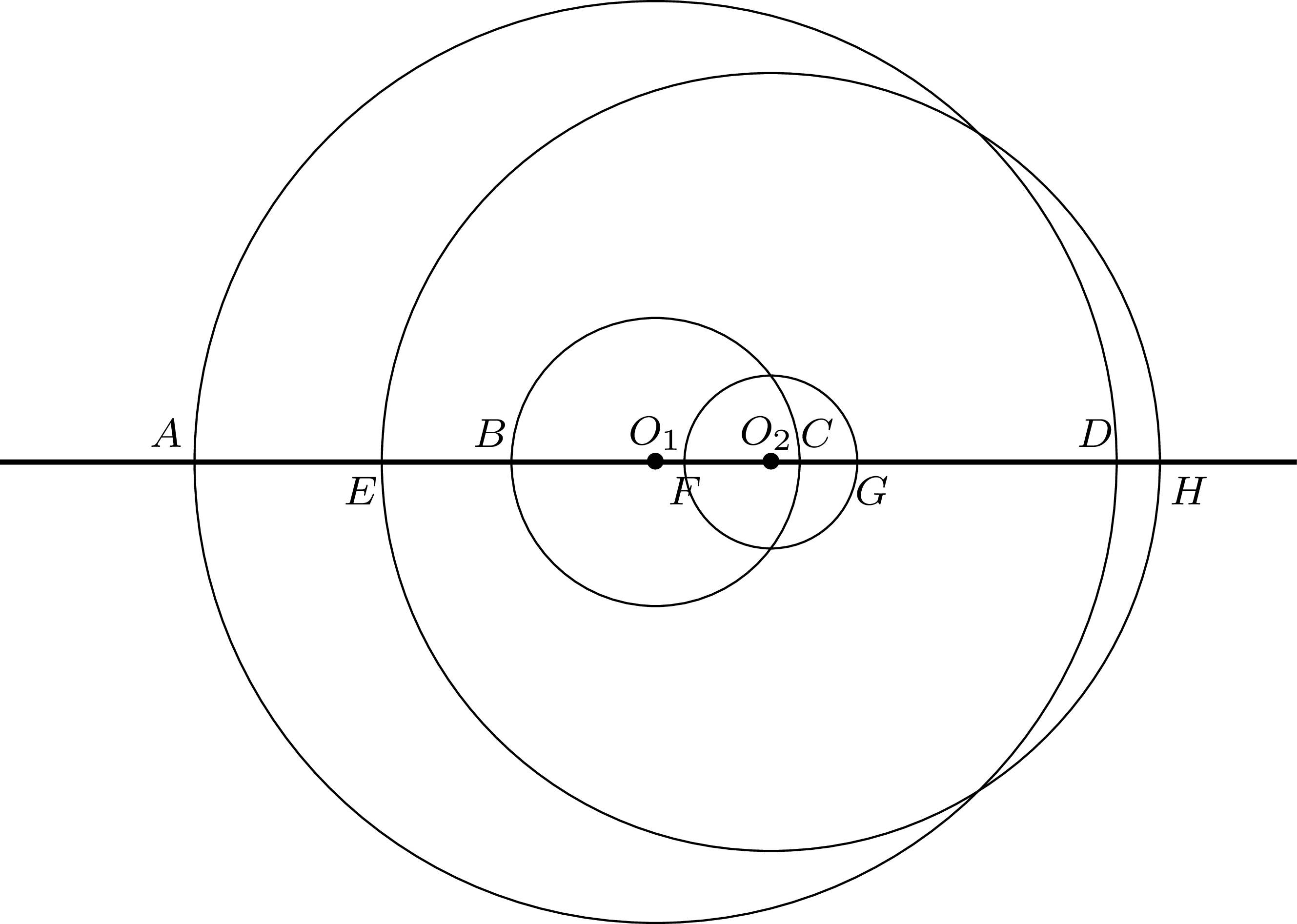
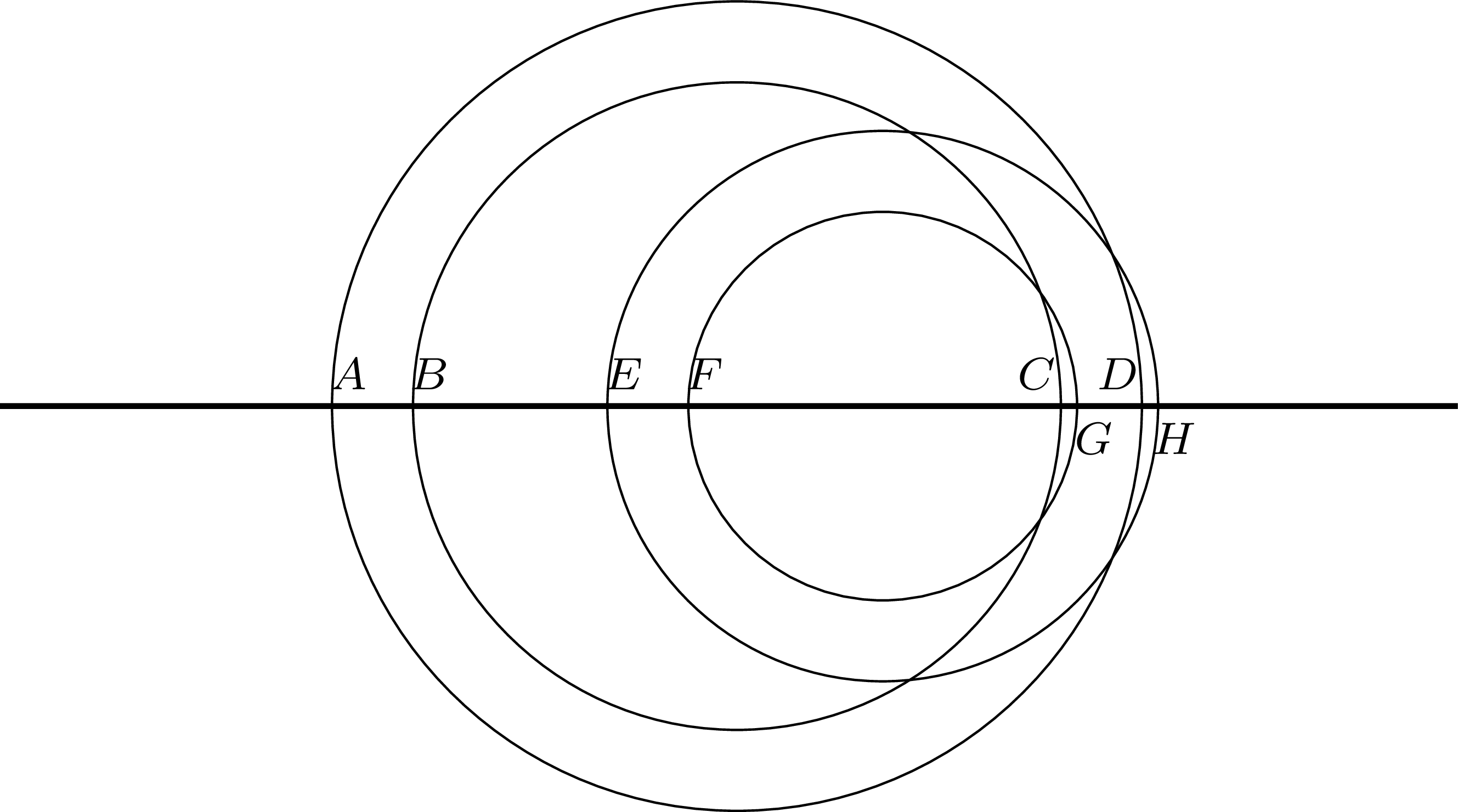
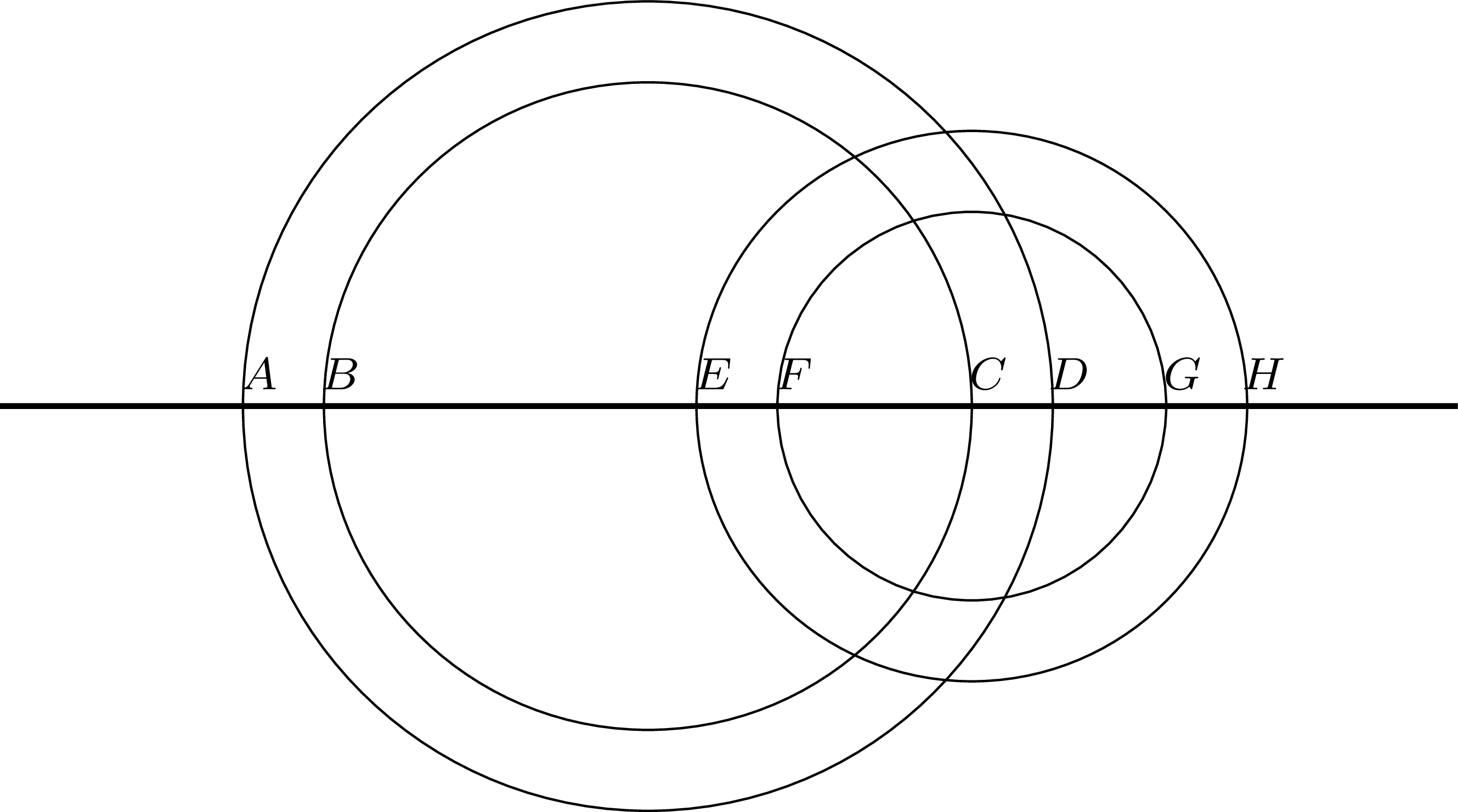
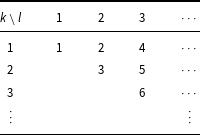
 ak,l


