Primary progressive aphasia (PPA) is a clinical dementia syndrome caused by neurodegenerative disease (Mesulam, Reference Mesulam1982). Currently, experts recognize three variants of PPA each with a unique pattern of linguistic impairments and associated with specific patterns of distribution of cortical atrophy and neuropathology (Gorno-Tempini et al., Reference Gorno-Tempini2011). This study reports on semantic variant PPA (svPPA, also known as semantic dementia) which is characterized by impaired single word comprehension and impaired naming in the absence of impaired motor speech or grammatical ability. Understanding of the neural and anatomical bases of PPA and the associated cognitive and linguistic impairments has increased dramatically over the last decade but very few studies have directed attention to conversation (Kindell et al., Reference Kindell, Sage, Keady and Wilkinson2013). This study aims to investigate aspects of natural conversation in svPPA.
At present, there are no disease-modifying treatments to delay or halt the insidious deterioration of language that occurs in PPA. Non-pharmacological, behavioral interventions are therefore needed to facilitate quality of life for individuals with PPA, their families and caregivers (Hodges and Patterson, Reference Hodges and Patterson2007; Kortte and Rogalski, Reference Kortte and Rogalski2013). Effective, evidence based interventions to increase success in conversation will promote positive social relationships and assist with maintaining independence in daily life.
While there are many resources for caregivers of people with dementia providing valuable advice about maximizing communication success, much of this literature is not relevant to people with PPA. Preservation of cognitive abilities in the early stages of PPA differentiates people with PPA from people with other presentations of dementia, such as those usually seen in Alzheimer's disease. Instead, the conversation of people with early stage non-fluent variant PPA (nfvPPA) and logopenic variant PPA (lvPPA) is more like the conversation of people with acute onset aphasia, but acute onset aphasia resources often do not meet the needs of people with PPA and their families because of the progressive nature of the disease and the additional clinical symptoms that emerge in PPA (Taylor et al., Reference Taylor, Croot, Power, Savage, Hodges and Togher2014). This investigation of conversation in svPPA was motivated by the clinical need for communication interventions specifically targeted to svPPA (Taylor et al., Reference Taylor, Miles Kingma, Croot and Nickels2009; Wong et al., Reference Wong, Anand, Chapman, Rackley and Zientz2009).
Semantic variant PPA
SvPPA is characterized by marked anomia and single word comprehension deficits, thought to result from gradual degradation of conceptual knowledge (Gorno-Tempini et al., Reference Gorno-Tempini2011). With disease progression, anomia increases such that word retrieval is generally restricted to high frequency words, circumlocutory behaviors may occur frequently, and speech may become empty of content. This has a deleterious effect on the communicative abilities and psychosocial well-being of the individual with svPPA (Hodges and Patterson, Reference Hodges and Patterson2007) and contributes to caregiver burden (Mioshi et al., Reference Mioshi2013).
Neuroimaging studies reveal that people with svPPA, at least in the early- to mid-stages of the disease, have bilateral but asymmetrical patterns of atrophy, and clinical symptoms differ depending on which hemisphere is most affected (Hodges and Patterson, Reference Hodges and Patterson2007). Language deficits (anomia and impaired single word comprehension) are more pronounced in those with left dominant atrophy whereas those with right dominant atrophy have greater impairment of facial recognition, are more socially awkward and more lacking in insight (Hodges and Patterson, Reference Hodges and Patterson2007). More extensive right temporal lobe atrophy predicts greater impairment on non-verbal semantics whereas more extensive left temporal lobe atrophy predicts poorer performance on expressive verbal tasks (Mion et al., Reference Mion2010).
Conversation in PPA
Knibb and colleagues highlighted the value of investigating conversation in PPA as difficulty in conversing is a primary complaint of people with PPA and their carers. They provided a detailed quantitative description of semi-structured interviews of 15 people with nfvPPA and they observed that increased grammatical and speech sound errors with simplification of spoken syntax were consistent problems for people with nfvPPA in conversation (Knibb et al., Reference Knibb, Woollams, Hodges and Patterson2009).
Wilson et al. (Reference Wilson2010) provide a comprehensive description of the monologic connected speech of 50 individuals with PPA. While not conversation, it provides valuable information about the speech and language features of each PPA variant in connected speech rather than single word or phrase production. Mild-moderate cases of nfvPPA had the slowest rate of speech of all three variants, sparse output, and speech distortions. svPPA had the maximum speech rate of all three variants with preserved motor speech and syntactic function and did not differ from controls on measures of other disruptions to fluency. Those with lvPPA produced speech at a rate that was intermediate between nfvPPA and svPPA. They produced few or no speech sound distortions and their lexical retrieval difficulties typically resulted in word finding pauses and re phrases (Wilson et al., Reference Wilson2010).
The current authors, in a previous study, investigated trouble and repair behavior during the natural conversations of three dyads: in two dyads one partner had nfvPPA and in one dyad one partner had lvPPA. The method used, was described by Watson et al. (Reference Watson, Chenery and Carter1999) in their study of the conversations of ten people with dementia of the Alzheimer type (DAT) and their partners. Natural conversations of approximately 10-min duration were investigated for trouble indicating behaviors (TIBs), repair types and repair trajectories. In this method, “trouble” signifies that understanding between the partners in a conversation is breaking down and can be flagged using two types of TIBs (Ferguson, Reference Ferguson1994): interactive TIBs that require a response from the conversation partner, or non-interactive TIBs that do not call on the partner to respond (Ferguson, Reference Ferguson1994). Watson and colleagues term the mechanism whereby mishearing or misunderstandings are corrected or resolved and meaning is restored, allowing the interaction to continue, as “repair.” A repair is judged successful or non-successful based on the next speaker's response. Another TIB indicates that the repair was not successful, whereas if the next speaker's turn is acknowledged or reinforced the repair is considered accepted and successful (Ferguson, Reference Ferguson1992).
In our earlier study, of three dyads where one person had PPA and three control dyads, we observed that the people with nfvPPA and lvPPA used a variety of TIBs (Taylor et al., Reference Taylor, Croot, Power, Savage, Hodges and Togher2014), and this was in contrast to people with DAT who used mainly non-interactive TIBs (Watson et al., Reference Watson, Chenery and Carter1999). The trouble and repair behaviors observed in people with PPA were more like those of people with acute onset aphasia. The conversation samples of the three dyads revealed three very different conversational profiles and provided valuable information about the individual strengths and communication difficulties of people with PPA. While interesting and clinically relevant patterns were observed, the small cohort precluded the authors from making broader conclusions about conversation in PPA. In particular, it was not possible to determine whether conversational behaviors were due to PPA variant, individual differences and/or a combination of both (Taylor et al., Reference Taylor, Croot, Power, Savage, Hodges and Togher2014). The study highlighted the need for further investigation of trouble and repair in the conversations of people with each of the PPA variants, especially svPPA, for which conversation breakdown has not yet been investigated.
To date, little is known about conversation in svPPA, nor about how communication strengths and difficulties impact conversation (Kindell et al., Reference Kindell, Sage, Keady and Wilkinson2013; Kindell et al., Reference Kindell, Sage and Cruice2015). In a single case study of a man with svPPA, Kindell and colleagues observed that in spite of the severity of language impairment demonstrated in neuropsychological testing, the participant had developed an effective conversation strategy of enacting (acting out or performing meaning). In another single case study, Wong et al. (Reference Wong, Anand, Chapman, Rackley and Zientz2009) identified residual communication abilities, including non-verbal abilities, of a man with svPPA. These were incorporated into a discourse-based intervention, which successfully fostered communication (Wong et al., Reference Wong, Anand, Chapman, Rackley and Zientz2009).
Conversation in DAT
There is an existing literature addressing strategies to enhance the effectiveness of communicating with people with DAT. Perkins et al. (Reference Perkins, Whitworth and Lesser1998) highlighted that communication in dementia is compromised because of the combined effects of impaired language and other cognitive processes such as memory. Watson et al. (Reference Watson, Chenery and Carter1999) added to this literature by examining conversational trouble and repair, and showed that people with DAT predominantly use non-interactive TIBS. The two TIBs predominantly used by people with DAT were described as Lack of up-take/Lack of continuation (failure to continue the topic or follow on in conversation) and Reprise/Minimal dysfluency (revision or repetition of sounds, syllables and words, and use of fillers such as “um”, “er”, “ah”). This study will replicate the Watson et al. (Reference Watson, Chenery and Carter1999) method to examine the conversational interactions of dyads where one person has svPPA.
Aims and hypotheses
The current study aimed to add to the scant literature on conversational strengths and weaknesses in svPPA by examining the conversational productivity (number of words and turns per speaker) and the trouble and repair behaviors in seven participants with svPPA and their partners, compared with matched healthy control dyads, replicating the approach taken in our previous study of nfvPPA and lvPPA. We hypothesized the following:
-
1. People with svPPA would show similar conversational productivity measures to controls because they do not have the sparse output seen in other PPA variants. For this reason, we also expected that people with svPPA would show higher conversational productivity measures than people with nfvPPA, lvPPA, and DAT.
-
2. The svPPA dyads would have more trouble and repair in conversation than control dyads because of their cognitive and linguistic impairments. The patterns of trouble and repair in svPPA dyads would, however, be different to those previously reported in nfvPPA, lvPPA, and DAT dyads because the cognitive and linguistic impairments differ across these dementia syndromes.
-
3. Assuming that people with svPPA would have a high level of trouble in conversation, the success of conversation would depend to a large extent on the communication partner.
Method
Participants
The participants were seven individuals with svPPA and seven matched healthy controls each conversing with their most frequent communication partner. Participants with svPPA were diagnosed by the multidisciplinary assessment team at FRONTIER (the Frontotemporal Dementia Research Group) at Neuroscience Research Australia, Sydney, according to the clinical diagnostic criteria (Gorno-Tempini et al., Reference Gorno-Tempini2011) and recruited from the FRONTIER clinic. Healthy controls recruited through local community groups were matched for gender, age, and education to the individuals with PPA and had no reported history of neurological disorder. This study was approved by the Human Research Ethics Committee of South Eastern Sydney Local Hospital District.
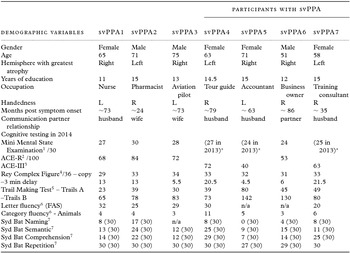
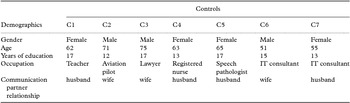
The mean age of participants with svPPA was 65 years, ranging from 51 to 75 years. See Table 1 for demographic information and speech, language and cognitive testing results for each participant with svPPA. Participants with semantic dementia met criteria for dementia on the Addenbrookes Cognitive Examination (ACE-R/ACE-III, Mioshi et al., Reference Mioshi, Dawson, Mitchell, Arnold and Hodges2006; Hsieh et al., Reference Hsieh, Schubert, Hoon, Mioshi and Hodges2013), and showed the pattern characteristic of pronounced semantic impairment in category fluency, and the SydBat (Savage et al., Reference Savage, Hsieh, Leslie, Foxe, Piguet and Hodges2013) picture naming, semantic association and comprehension tasks, and variable performance across visuo-spatial, visual memory, and speeded executive function tasks. Cognitive testing data were gathered by the FRONTIER group for a larger FTD cohort study and was provided to this study with the informed consent of the participants. The mean age of control participants was 63 years, ranging from 51 years to 75 years. See Appendix A for demographic information for controls. All people with svPPA and controls spoke English as their primary language.
Demographic and clinical characteristics of participants with semantic variant primary progressive aphasia

KEY: 1 = Mini Mental State Examination (Folstein et al., Reference Folstein, Folstein and McHugh1975), 2. ACE-R = Addenbrooke's Cognitive Examination Revised Cognitive Examination Revised (Mioshi et al., Reference Mioshi, Dawson, Mitchell, Arnold and Hodges2006), 3. Addenbrooke's Cognitive Examination III (Hseih et al., 2014), 4. Rey Complex Figure Test (Meyers et al., 1999), 5. Trail Making Test (Tombaugh, Reference Tombaugh2004), 6. FAS and Animal fluency (Tombaugh et al., Reference Tombaugh, Kozak and Rees1999), 7. Sydney Language Battery (Savage et al., Reference Savage, Hsieh, Leslie, Foxe, Piguet and Hodges2013).
L= left.
R= right.
*=MMSE not administered in 2014 review.
n/a= not available.
Procedure
Participant dyads were asked to engage in 10 min of conversation about everyday life. A 10-min sample usually provides an adequate representation of a longer parent conversation (Boles and Bombard, Reference Boles and Bombard1998). Conversations between participants with PPA and their partners took place in an interview room at the PPA research facility and were audio and video recorded. Conversations between controls and their partners took place in their homes. The investigator was not present during any conversations. The participants were given instructions to, “talk about your plans for the near future; the days and weeks ahead,” the recording equipment was activated, and the investigator left the room.
Data analysis
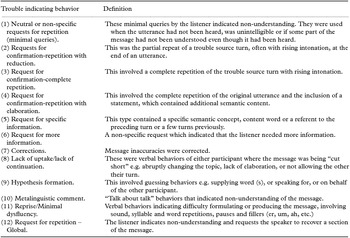
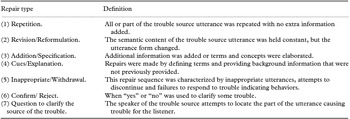
This study replicated the analysis methods used in our previous study of trouble and repair in conversation where one partner in a couple had nfvPPA or lvPPA (Taylor et al., Reference Taylor, Croot, Power, Savage, Hodges and Togher2014). The productivity measures (number of words and turns per participant) were obtained following the procedures described by Herbert et al. (Reference Herbert, Best, Hickin, Howard and Osborne2008). The examination of trouble and repair was conducted using techniques described by Watson et al. (Reference Watson, Chenery and Carter1999). TIBs were identified in all the conversation samples and categorized into one of the 12 categories described by Watson et al. (Reference Watson, Chenery and Carter1999). A description of each TIB is given in Appendix C. Repairs were also examined and categorized into the seven repair types described by Watson et al. (Reference Watson, Chenery and Carter1999) (see Appendix D). Finally, the success or non-success of repairs was determined also following the method used by Watson et al. (Reference Watson, Chenery and Carter1999) which was in turn derived from Ferguson (Reference Ferguson1992). As described earlier, the success or non-success of the repair is judged on the basis of the next speaker's turn; acceptance of the repair indicates its success while a subsequent TIB indicates that the repair was not successful. TIBs, repair types, and percentage of successful repairs were counted for each participant in each conversation.
Statistical analysis
Descriptive statistics were performed and the data were screened for normality using the Shapiro–Wilks test as this test is powerful for small data sets (Yap and Sim, Reference Yap and Sim2011). Distributions did not differ significantly from normal. However, due to the small sample size, we performed both parametric and non-parametric statistical comparisons. As there were no differences in the results, we report the parametric analyses and outcomes below.
To examine contribution to conversation we used descriptive statistics (means and confidence intervals for number of words, words per minute, number of turns, and length of turn). To characterize the TIBs used in conversation by people with svPPA and their partners, we conducted two pairs of paired t-tests, first comparing people with svPPA and their partners, and people with svPPA and controls, and then comparing controls and their partners, and svPPA partners and control partners, using α = 0.025 to control the family wise error rate for multiple comparisons to α = 0.05 within each pair of tests. Finally, to examine associations between psycholinguistic variables (naming, comprehension, and semantic knowledge) and success in repair we used Spearman rank based correlation coefficients.
Reliability
All conversations were orthographically transcribed by a professional transcription service. The first author (CTR) then independently transcribed approximately 30% of the conversational data. Two conversations were randomly selected from both the svPPA group and the control and partner group. The word agreement between the two transcribers for the four conversations was calculated at 99%. The inter-rater reliability for the identification of trouble and repair behaviors was established between the first author and a second independent speech pathologist experienced in the method. A κ coefficient was calculated for agreement of type of TIB observed in the sampled conversations of dyads with a person with svPPA and controls; k = 0.872 was very good. Similarly, a κ coefficient was calculated for agreement between types of TIB observed in the sampled conversations of control dyads. This was calculated as k = 0.797 and was considered good. The agreement between raters for success of repairs was calculated for the sampled conversations of dyads with a person with svPPA and the strength of agreement was perfect at k =1. A κ coefficient could not be calculated for the agreement of success of repair ratings for the sampled conversations of control dyads as all repairs were successful and agreed upon.
Results
Contribution to conversation
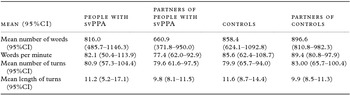
Total conversation time for people with svPPA and their partners ranged from 8:53 (min:sec) to 10:9. For controls and their partners total conversation time ranged from 9:53 to 10:8. Table 2 shows that people with svPPA continued to maintain turn taking in conversation, and generally were able to take an equal share in the turns at conversation. There was a range of 48 words per minute (wpm) through to 143 wpm produced by people with svPPA. The output of their partners ranged from 53 to 100 wpm and was similar to the range of output of controls and their partners at 55–123 wpm. The mean length of turn (MLT) of people with svPPA was not necessarily less than the MLT of their partner: in two cases (svPPA3 and svPPA6) it was notably less (svPPA3: 4.48 words, svPPA3 partner: 10.03 words; svPPA6: 9.2 words, svPPA6 partner: 13.3 words), whereas in two cases (svPPA2 and svPPA7) it was twice that of their partner (svPPA2: 20.7 words, svPPA2 partner: 10.4 words; svPPA7: 19.8 words, svPPA7 partner: 8.0 words). In this study, then, we found that two people with svPPA were notably less talkative than the other participants whereas two were garrulous/very talkative.
Means and confidence intervals for number of words, number of turns and length of turns for all participants

Trouble and repair behaviors
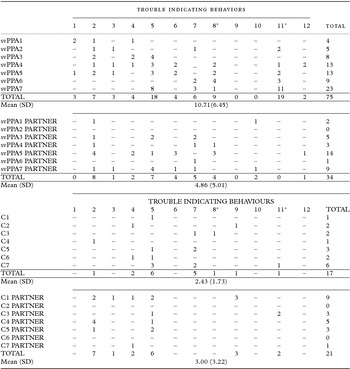
Four paired t-tests were conducted to compare groups (see Table 2). As a group, people with svPPA (pwsvPPA) demonstrated twice as many TIBs as their partners, (t = 3.01, p = 0.02 df = 6) producing 6 TIBs (pwsvPPA: 95% CI: + 4.78, partners of pwsvPPA 95% CI + 3.71) more than their partners (see Table 3). One third of all TIBs demonstrated by people with svPPA were non-interactive TIBs. Two TIBs were not used by people with svPPA at all, “hypothesis formation” where the speaker supplies or guesses a word for their partner or speaks on behalf of their partner, and “metalinguistic comment” where a comment about the talk indicates non-understanding of the message. Participants with svPPA were observed to have an average of eight TIBs more than controls (t = 4.31, p = 0.005, df = 6, pwsvPPA 95% CI + 4.78, controls 95% CI + 1.28). There was no significant difference between controls and their partners (Controls mean: 2.43 SD: 1.73 95% CI + 1.28 Partners of controls mean: 3.00 SD: 3.22 95% CI + 2.39) or between the two groups of partners (svPPA partners mean: 4.86 SD: 5.01 95% CI + 3.71, control partners mean: 3.00 SD: 3.22 95% CI + 2.39) in the number of TIBs observed.
Summary of number and type of TIB for each person with svPPA and their communication partner and each control and their communication partner

TIB= trouble indicating behavior.
1. = Neutral or non-specific request for repetition. 2. = Requests for confirmation-repetition with reduction. 3. = Request for confirmation- complete repetition. 4. = Request for confirmation- repetition with elaboration. 5. = Request for specific information. 6. = Request for more information. 7. = Corrections. 8. = Lack of uptake/ lack of continuation. 9. = Hypothesis formation. 10. = Metalinguistic comment. 11. = Reprise/Minimal dysfluency. 12. = Request for repetition – Global.
pwsvPPA= person with semantic variant primary progressive aphasia.
*Non-interactive TIB.
Controls and partners
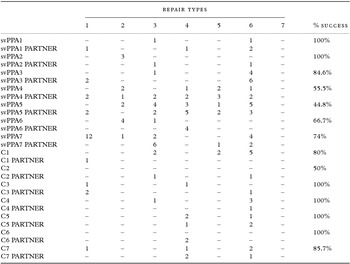
The control couples generally demonstrated fewer TIBs, with a mean of 2.6 and a range of 0–9, and a smaller number of types of TIBs (Table 3). When trouble occurred, the majority of repairs were self-repairs, revising a reprise or minimal dysfluency, or the addition of information in response to a request. There was a high rate of success of repair (Table 4), with six out of seven control dyads achieving greater than 85% success in contrast to only two out of seven svPPA dyads.
Summary of repair types for each participant and overall success of repairs for each dyad

Repair types.
1. = Repetition. 2. = Revision/reformulation. 3. = Addition/specification. 4. = Cues/explanation. 5. = Inappropriate/withdrawal. 6. = Confirm/reject. 7. = Question to clarify the source of the trouble.
People with svPPA and partners
The people with svPPA used a wide variety of repair types, and the relationship between TIBs and successful repair tended to fall into three main patterns across the seven svPPA dyads. Two dyads (those of svPPA1 and svPPA2) had a small number of TIBs in their conversation and 100% of repairs were successful. Three dyads (those of svPPA3, svPPA6, and svPPA7) had more TIBs and less success with repair but more repairs were successful than not. The final two dyads (those of svPPA4 and svPPA5) had a high number of TIBs and low success rates with repair (see Table 4). Examples of each pattern are provided below.
Low trouble/high success of repair: svPPA2 and partner
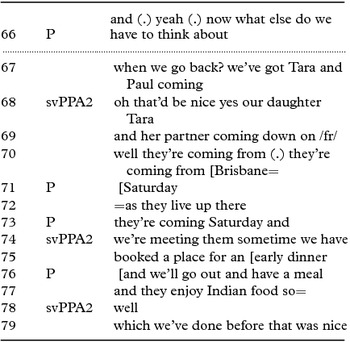
svPPA2 was a garrulous speaker and used twice as many words, words per minute, and words per turn as his partner. This was a relatively successful conversation with only 5 TIBs observed and with successful repair following each TIB. In Example 1 below, svPPA2 has difficulty with an utterance and trouble is indicated with the TIB type reprise/minimal dysfluency (see lines 69–70). svPPA2’s partner listens and affirms his comments. She provides cognitive support at times by providing factual details (Cognitive support includes: gives information when needed; uses memory, organization supports; gives cues in a conversational manner; responds to errors by giving correct information in a non-punitive manner (Togher et al., Reference Togher, McDonald, Tate, Power, Ylvisaker and Rietdijk2002-2015). An example of cognitive support is provided below (see line 70).
Example 1: svPPA2 and partner.

(.) denotes a micropause of equal to or less than one tenth of a second. [brackets denote overlap between speakers’ talk. ? denotes rising intonation. = equal signs link talk from the same speaker, and usually signify that a speaker's talk smoothly continues, even though a transcription line is ending.
High trouble/high success of repair: svPPA7 and partner
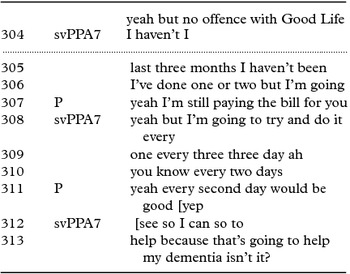
svPPA7 was also a garrulous speaker and produced more than twice the number of words, words per minute, and words per turn as her partner. With 23 TIBs she indicated more trouble in the conversation than other participants. There were only four types of TIBs: over half were non-interactive, and the remainders were corrections, and repetitions with request for specific information. Her partner demonstrated nine TIBs of various types. Although there were many indicators of trouble, these were generally resolved quickly and 74% of repairs were successful. This may have been due to the supportive contribution of the communication partner. For example, when svPPA7 asked for specific information, he supplied it quickly. When he prompted or cued her, he supplied additional information that provided cognitive support (see Example 2, line 311). He also affirmed and verified her contribution to the conversation. The example below demonstrates some of these behaviors.
Example 2: svPPA7 and partner.

All transcription markings as per Example 1.
High trouble/low success of repair: svPPA4 and partner
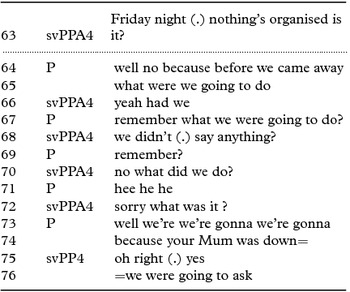
In this conversation, both partners made similar contributions in terms of number of words and turns produced. A relatively large number of TIBs were observed and these were primarily in svPPA4’s talk: svPPA4 had 13 TIBs and her partner had 3. svPPA4 used a wide variety of TIB types to signal that conversation was breaking down. Only 55.5% of repairs in this conversation were successful. svPPA4’s partner was observed to reveal svPPA4’s incompetence by asking testing questions (see lines 67 and 69 in Example 3). He prompted svPPA4 to recall names and details but this appeared to result in further trouble, and the breakdown of understanding appeared to continue longer than may have been the case if more cognitive support had been provided. At times svPPA4’s partner attempted repair with complete repetition of svPPA4’s trouble source; not adding any new information to assist resolution of trouble (see line 67). svPPA4 was also observed to fail to continue topics at times, possibly due to her anticipation of failure.
Example 3: svPPA4 and partner.

All transcription markings as per Example 1.
Factors predicting success of repairs
As variables were not normally distributed, Spearman rank-based correlation coefficients were calculated to examine the relationships between Syd Bat Naming score and percent success of repairs, Syd Bat comprehension and percent success of repairs, and Syd Bat semantic score and percent success of repair. A moderately strong positive correlation between Syd Bat Naming score and percent success of repair (p value from table: 0.1>P>0.05, ρ = 0.770) was observed. That is, the higher the naming score the greater the percent success of repairs occurred for dyads with a person with svPPA. The other correlations did not indicate a relationship between the variables.
Discussion
The aim of this study was to better understand conversation in svPPA by examining contribution to conversation (conversational productivity measures), trouble and repair behaviors, and effectiveness of repairs. We aimed to compare the findings of the present study with previous reports of the trouble and repair behaviors of people with other variants of PPA and DAT.
The first hypothesis was that the contribution to conversation of people with svPPA would differ from controls, and from people with nfvPPA, lvPPA, and DAT, and this hypothesis was supported. People with svPPA maintained contribution to conversation in terms of turn taking and number of words per turn and did not present with the reduced output frequently observed in DAT. This level of contribution was also unlike people with nfvPPA and lvPPA in our previous study and that of Knibb et al. (Reference Knibb, Woollams, Hodges and Patterson2009). The participants with svPPA in this study did not have sparse output; instead some people with svPPA in this study even had excessive output, typical of the garrulous profile that has been described in the literature (Meteyard and Patterson, Reference Meteyard and Patterson2009).
The second hypothesis that the svPPA dyads would have more trouble and repair in conversation than control dyads was supported. As well, we predicted that the patterns of trouble and repair would be unlike the patterns observed in our earlier study of people with nfvPPA and lvPPA, and unlike those seen in DAT (Watson et al., Reference Watson, Chenery and Carter1999), and this too was supported. In our earlier study, one participant with nfvPPA primarily used reprise/minimal dysfluency, where conversation was interrupted by difficulty formulating the turn and this was attributed to the speech sound errors and lexical retrieval difficulties that occur in nfvPPA (Taylor et al., Reference Taylor, Croot, Power, Savage, Hodges and Togher2014). A second participant with nfvPPA had indicated trouble in conversation on only two occasions and so no conclusions could be made about the types of TIBs she used. The participant with lvPPA typically used interactive requests for specific information when she had lexical retrieval difficulties, a clinical characteristic of lvPPA. In the current study, by contrast, a wide variety of interactive and non-interactive TIBs was observed in the talk of the people with svPPA. For example, seven and eight different types of TIB were observed in the conversations of svPPA5 and svPPA4 respectively. The most frequent interactive TIB observed across the group was request for specific information. This had also been observed in lvPPA (Taylor et al., Reference Taylor, Croot, Power, Savage, Hodges and Togher2014). There were also many examples of the non-interactive TIB, reprise/minimal dysfluency, with approximately 38% of TIBs across the group being non-interactive. This was unlike the patterns observed in the earlier study with nfvPPA and lvPPA (Taylor et al., Reference Taylor, Croot, Power, Savage, Hodges and Togher2014). It was also different to the pattern observed by Watson et al. (Reference Watson, Chenery and Carter1999) in DAT, where people with DAT were observed to use a very high proportion of non-interactive TIBs.
The third hypothesis was that, assuming a high level of trouble in svPPA dyads, the contribution of the communication partner would be crucial for conversation success, and this hypothesis was also supported. Communication is a collaborative achievement of the partners in a dyad and studies of acute onset aphasia have shown that training the person with aphasia's communication partner can improve the success of a dyad's communication. In their study of people with acute onset aphasia and volunteers, Simmons-Mackie and Kagan (Reference Simmons-Mackie and Kagan1999) sought to understand what constitutes “good” as opposed to “poor” speaking partners, where “good” partners used strategies that were “face saving” for people with aphasia (Simmons-Mackie and Kagan, Reference Simmons-Mackie and Kagan1999). These were behaviors such as acknowledgements, congruent overlap, and clarification sequences. Unhelpful behaviors used by communication partners, such as inattentiveness, dismissive language, and pedagogic activities, have also been identified in acute onset aphasia. In our study, despite the large amount of trouble, and the relative severity of svPPA7’s language and cognitive impairments, 74% of repairs were successful. svPPA7’s partner was observed to use the behaviors of “good” speaking partners (Simmons-Mackie and Kagan, Reference Simmons-Mackie and Kagan1999) including clarification sequences, acknowledgements, and verification.
Conversely, repair in the conversation of svPPA4 and her partner was far less successful, and fewer facilitative behaviors by the partner, such as pedagogic activity and dismissive language, were observed. Similarly, svPPA5 and her partner had very low rates of success with repair. svPPA5 had significant language and cognitive impairment, trouble in the conversation was frequent, and only 44.8% of repairs were successful. The “semantics of incompetence” (Simmons-Mackie and Kagan, Reference Simmons-Mackie and Kagan1999) were suggested in comments by svPPA5’s partner such as “chicken stuff what d'you mean chicken stuff?” There was little congruent overlap and affirmation often was only observed at the completion of protracted sequences of repeated trouble and repair.
The heterogeneity of the cognitive profiles of the participants with svPPA in this study suggests that couples with a partner with svPPA of varying severity and with a range of accompanying cognitive strengths and weaknesses would be suitable candidates for conversation training intervention. There was no association between success of repairs with scores on measures of comprehension impairment or impairment of semantic knowledge, but a trend for preservation of naming ability to be associated with success of repairs. Given the small sample size, this trend requires further investigation in a larger cohort study, but suggests that the core semantic abilities indexed by picture naming ability and progressively declining in svPPA contribute to conversational success in svPPA.
A limitation of this study was the location of conversation sampling. The control conversations were collected in the participants’ own homes which may be assumed to be a more naturalistic setting than the clinical setting in which the conversations of the couples with a person with PPA were collected.
Clinical implications
This study adds further support to the recommendation that people with svPPA should be referred to speech pathologists for assessment of conversation (Sapolsky et al., Reference Sapolsky, Domoto-Reilly, Negreira, Brickhouse, McGinnis and Dickerson2011), given that valuable information is gained by examining the conversational interactions of the person with svPPA (Kindell et al., Reference Kindell, Sage, Keady and Wilkinson2013; Wong et al., Reference Wong, Anand, Chapman, Rackley and Zientz2009). By contrast, results on isolated assessments of cognitive and linguistic impairment may not reflect performance in everyday conversation. By examining 10-min conversations with the most frequent conversation partner, the clinician may observe the support provided by the partner and the repair behaviors employed by both; the adaptive strategies that have been acquired or that may be of benefit.
As in acute onset aphasia, the identification of more and less facilitative behaviors in conversation may be useful in developing interventions such as targeted partner training to promote success in conversation. In this study, quick and successful repair was observed when partners employed behaviors such as affirmation, congruent overlap, verification, and addition of information. Protracted trouble and unsuccessful repair was observed when behaviors such as pedagogic activities, dismissive language, and repetition of questions without addition of information occurred.
Conclusion
This study highlights the different patterns of trouble and repair in conversation in svPPA. It demonstrates the communicative strengths of the person with svPPA, but also the amount of trouble they experience in conversation, showing that the contribution of the conversation partner is a significant factor in conversational success. By examining trouble and repair in conversation in svPPA, speech pathologists may better develop and deliver effective conversation interventions, effect improvement in communication, and promote positive social relationships and the maintenance of independence in daily life. Although disease progression cannot be halted at this time, behavioral interventions such as those provided by speech pathologists may benefit both the person with svPPA and their families and caregivers and should form part of comprehensive care.
Conflict of interest
None.
Description of authors’ roles
C. Taylor Rubin designed the study, conducted the data collection, statistical analysis, and wrote the paper. K. Croot assisted with writing the article and aspects of the study design. E. Power assisted with study design and provided feedback regarding the manuscript. S. Savage and J.R Hodges were the leaders of the team at FRONTIER and enabled participant recruitment and conducted all neurological and neuropsychological assessments. As well, Dr Savage and Professor Hodges provided feedback regarding the manuscript. L. Togher assisted with all aspects of the project.
Acknowledgments
This work was supported by funding to Forefront, a collaborative research group dedicated to the study of frontotemporal dementia and motor neurone disease, from the National Health and Medical Research Council (NHMRC) of Australia program grant (#1037746) and the Australian Research Council Centre of Excellence in Cognition and its Disorders Memory Node (#CE110001021).
We would like to thank Dr Jennifer Peat, University of Sydney, for her advice regarding statistical design.
Appendices
Demographic characteristics of control participants

Categories of trouble indicating behaviors (TIBs)

Categories of repair type (Rty) used by participants