




Introduction
Food insecurity exists when people do not have ongoing physical, economic, and social access to safe and nutritious food to meet their dietary needs and food preferences for a healthy and active life(1). To address this, the United Nations’ (UN) Sustainable Development Goal (SDG) 2 focuses on eradicating hunger, ensuring food security, improving nutrition, and supporting sustainable agriculture(2). Despite global reductions in food insecurity in the early 2000s, hunger and food insecurity have re-emerged as significant social and economic challenges in recent times(2).
The Food Insecurity Experience Scale (FIES) serves as a global standard of food insecurity measurement, either at the household or individual level. It is based on respondents providing direct yes/no answers to eight concise questions concerning their ability to access sufficient food(Reference Gallup3). Using the FIES, the UN Food and Agriculture Organization (FAO) has estimated that the global prevalence of moderate to severe food insecurity increased in 2020 following the COVID-19 pandemic and has persisted, impacting 2.4 billion individuals in 2022(4). Indeed, the global gender gap in food insecurity significantly widened between 2020 and 2021 as a result of the COVID-19 pandemic, with 31.9% of women compared to 27.6% of men affected by moderate or severe food insecurity in 2021(4).
Across the world, the African region is the most affected by severe food insecurity, with a prevalence of 24.0% (341 million people) in 2022(4). In the same year, at a subregional level, West Africa’s prevalence of moderate and severe food insecurity was 66.4% and 22.0%, respectively(4). While the prevalence of moderate or severe food insecurity in Africa is similar between women (59.9%) and men (58.7%), even a small percentage difference translates to millions more women experiencing food insecurity. This is likely to reflect gendered experiences of food insecurity across the region(5).
Women play a crucial role in ensuring food security for African communities by actively engaging in farming, food processing, and prioritising household nutrition and food consumption(Reference Agarwal6). Women also often encounter gendered societal expectations, roles, and norms that not only limit their direct access to food but also restrict their access to essential resources, such as income, land, credit, and markets, which further impacts their access to food(Reference Agarwal6). Additionally, gendered expectations that women will manage home and caring responsibilities can limit their economic, educational, and employment opportunities, which are key drivers of nutrition and health outcomes across their life course(7). These entrenched social and cultural norms, which perpetuate gender inequalities, pose a significant challenge to achieving SDG 2 (zero hunger) and SDG 5 (to achieve gender equality and empower all women and girls)(8).
Existing systematic reviews have examined various aspects of food insecurity among women in Africa. These include the relationship between food insecurity and violence against women and girls in low- and middle-income settings (including Côte d’Ivoire, Ethiopia, Kenya, Liberia, South Africa, Eswatini, Uganda)(Reference Hatcher, Page and Eck9), the impact of female-headed households (FHH) on the prevalence of food insecurity in Ethiopia(Reference Negesse, Jara and Habtamu10), and gender differences in food insecurity prior to the COVID-19 pandemic in multiple regions, including Africa(Reference Jung, Neutzling, Pattussi, Pauli and de Bairros11). These studies found a relationship between food insecurity and violence against women and girls, a higher prevalence of food insecurity among FHH, who had 1.98 times the odds of experiencing food insecurity compared to male-headed households (MHH) in Ethiopia, and a 75% higher food insecurity prevalence among FHH compared to MHH around the world. However, no recent systematic synthesis has comprehensively examined the prevalence and drivers of food insecurity among women in West Africa, a region projected to become one of the world’s most populous, with Nigeria’s population alone expected to reach 378 million by 2050(12). Understanding the unique challenges faced by women in West Africa is essential to informing and advocating for gender-transformative, targeted, and context-specific policy and programmes that equitably alleviate food insecurity.
We aimed to systematically review and synthesise the evidence describing the extent of food insecurity among women in West Africa, focusing on prevalence, drivers, and gender inequalities. Specifically, this review sought to address the following questions: (1) What is the prevalence of food insecurity among women in West Africa?; (2) What are the drivers of food insecurity among women in the region?; and (3) To what extent do gender inequalities contribute to women’s experiences of food insecurity in West Africa?
Methods
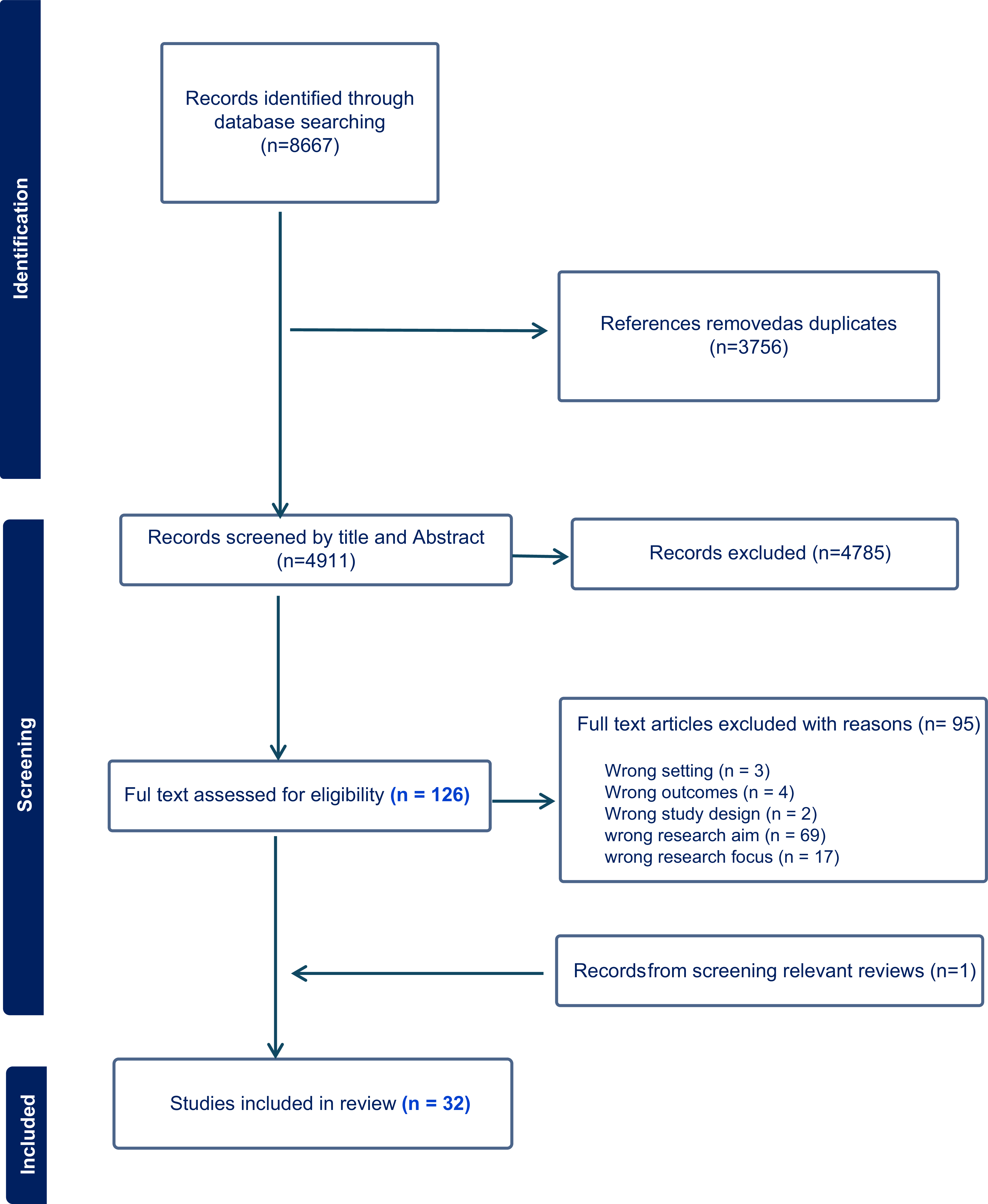
We conducted a systematic review of published academic literature to identify all research on the prevalence and drivers of food (in)security among women in West Africa, including studies reporting on gender inequalities in these outcomes. The Preferred Reporting Items for Systematic Review and Meta-analyses (PRISMA) flow diagram illustrates the selection process (see Figure 1). The protocol was registered with the international prospective register of systematic reviews (PROSPERO: CRD42024520964).
PRISMA flow diagram outlining the study selection process.

Search strategy
The search strategy included three key terms: food insecurity, women, and West Africa. Boolean operators ‘AND’ and ‘OR’ were used to combine these terms with their synonyms and truncations. These search terms were systematically applied to five academic databases: Global Health, MEDLINE, Web of Science, Academic Search Complete, and Scopus. See Table 1 for the complete search strategy.
Complete search strategy

Table 1. Long description
A table with three columns and four rows, plus an additional row for limits. The columns are labeled ‘Concepts’, ‘Search Terms’, and ‘Limits’. The first row under ‘Concepts’ lists ‘Food insecurity’, with corresponding ‘Search Terms’ including various synonyms and related terms like ‘food security’, ‘malnutrition’, and ‘hunger’. The second row under ‘Concepts’ lists ‘Women’, with ‘Search Terms’ including terms like ‘gender equity’, ‘female’, and ‘household head’. The third row under ‘Concepts’ lists ‘West Africa’, with ‘Search Terms’ including countries like ‘Nigeria’, ‘Benin’, and ‘Chad’. The ‘Limits’ row specifies the publication year range from 2000 to 2023.
Study selection
Quantitative and qualitative studies were included if they reported data on the prevalence or drivers of food insecurity (as defined by the FAO) among women or by gender in West Africa. Studies published between 2000 and 2023 (November 2023) were included, where the year 2000 marked the beginning of the Millennium Development Goals, which specified key global priorities to end hunger and food insecurity. Studies were excluded if they only examined diet and related health outcomes.
All search results were exported into EndNote and imported into Covidence for screening. Duplicates were eliminated, and the remaining articles were screened by title and abstract against the eligibility criteria. To confirm study inclusion, full texts were reviewed by two reviewers (CA and CZ), with discrepancies resolved via discussion.
Data extraction
Data from included studies were extracted into a standard Microsoft Excel template. This included extracting data on location/country, study design, measures of food insecurity, population group, sample size, prevalence, and other statistical estimates of food insecurity among women or disaggregated by gender, drivers of food insecurity (type of drivers and effect estimates if available), the study authors’ conclusions and reported limitations. CA extracted 100% of the data and CZ cross-checked the results extracted from 10% of the included studies to ensure reliable use of the extraction template.
Quality appraisal
The Mixed Methods Appraisal Tool (MMAT) v.2018(Reference Hong, Pluye, Fàbregues, Bartlett, Boardman, Cargo, Dagenais, Gagnon, Griffiths, Nicolau, O’Cathain, Rousseau and Vedel13) was used to assess the quality of all included studies. The MMAT allows for the appraisal of the methodological quality of five types of studies: qualitative research, randomised controlled trials, non-randomised studies, quantitative descriptive studies, and mixed methods studies(Reference Hong, Pluye, Fàbregues, Bartlett, Boardman, Cargo, Dagenais, Gagnon, Griffiths, Nicolau, O’Cathain, Rousseau and Vedel13). The quality of each study was assessed by rating methodological rigour in terms of sampling, measurement validity, data analysis, and appropriateness of conclusions. MMAT criteria are rated as ‘Yes’, ‘No’, or ’Can’t tell’. The number of ‘Yes’ responses was divided by the total number of applicable criteria to calculate a percentage score, e.g., 100% (if all criteria are met), 86 % (if six out of seven criteria are met), 71% (if five out of seven criteria are met), and so on.
Data synthesis
Study characteristics and results were summarised overall and by West African country. The main outcomes synthesised included: (i) the prevalence of food insecurity in West Africa for women or by gender and (ii) drivers of food insecurity among women in West Africa, including drivers of gender inequalities. The drivers were grouped into four categories (sociodemographic and household, socioeconomic, agricultural inputs and productive resources, and individual knowledge and autonomy) to aid interpretation. Findings are narratively reported to present individual article information in a way that accounts for heterogeneity across the studies.
Results
The literature search returned 8,667 results, including 3,756 duplicates that were removed. A total of 4,911 search results were screened by title and abstract, with 126 papers meeting the criteria for full-text screening. Ninety-five studies were excluded for not meeting the inclusion criteria, resulting in 32 included articles.
Study characteristics
Of the included studies, most were from Nigeria (n = 21)(Reference Ezeama, Ibeh, Adinma, Epundu and Chiejine14–Reference Oyediran and Olajide34), with the remaining from Ghana (n = 8)(Reference Vercillo, McCordic and Frayne35–Reference Saaka, Oladele, Larbi and Hoeschle-Zeledon42), Benin Republic (n = 2),(Reference Egah, Zakari and Idrissou43,Reference Egah, Yegbemey, Menouni, Baco and Kestemont44) and Côte d’Ivoire (n = 1)(Reference Fong, Gupta, Kpebo and Falb45). Ten studies focused exclusively on female populations(Reference Ezeama, Ibeh, Adinma, Epundu and Chiejine14,Reference Ibrahim, Ojo and Osikabor15,Reference Madugu18,Reference Elum and Digitemie20,Reference Ozioko, Nwigwe and Asadu24,Reference Ujah, Olaore, Ogbu, Okopi and Kirby27,Reference Wemakor, Mohammed and Awuni37,Reference Essilfie, Sebu, Annim and Asmah40,Reference Saaka, Oladele, Larbi and Hoeschle-Zeledon42,Reference Fong, Gupta, Kpebo and Falb45) . Across all studies, the age of the women ranged from 18 to 89 years. Two studies specifically focused on pregnant women between 15–35+ and 15–49 years(Reference Ujah, Olaore, Ogbu, Okopi and Kirby27,Reference Saaka, Oladele, Larbi and Hoeschle-Zeledon42) .
Twenty-six studies utilised a cross-sectional design, with nine of these analysing secondary data(Reference Dasgupta and Robinson17,Reference Ashagidigbi, Afolabi and Adeoye19,Reference Nnaji, Ratna and Renwick23,Reference Ujah, Olaore, Ogbu, Okopi and Kirby27,Reference Edafe, Osabuohien, Matthew, Olurinola, Edafe and Osabohien31,Reference Oyediran and Olajide34,Reference Adjei-Mantey, Kwakwa and Adusah-Poku38–Reference Essilfie, Sebu, Annim and Asmah40) . Four studies used longitudinal designs(Reference Nwaka, Akadiri and Uma28,Reference Obayelu and Akpan29,Reference Obayelu, Akpan and Ojo32,Reference Dzanku41) and three studies employed mixed methods approaches(Reference Ajaero22,Reference Edafe, Osabuohien, Matthew, Olurinola, Edafe and Osabohien31,Reference Egah, Yegbemey, Menouni, Baco and Kestemont44) . Sample sizes varied widely depending on the data source, ranging from 72 to 49,005 participants(Reference Ozioko, Nwigwe and Asadu24,Reference Tsai and Senah39) .
Among the included studies, some classified food insecurity into different levels of severity, while the majority (n = 22) used a binary classification, distinguishing only between food secure and food insecure. Different instruments were used to assess food insecurity, including the Household Food Insecurity Access Scale, Food Insecurity Experience Scale, Food Security Index, Foster & Thornback, Household Food Insecurity Experience Scale, Household Food Security Survey Module, and others. Supplement 1 provides additional instrument details.
The study samples generally included data collection at the individual (n = 11) or household level (n = 21), with the latter mostly constituting MHH and FHH. Assessment of food insecurity at the household level assumes that all individuals within a household share the same probability of being food insecure, according to the FAO (2021), and this was therefore used as an indicator of individual level food insecurity among women in many instances (n = 19). Most of the studies (n = 18) stratified the prevalence of food insecurity by gender of the household head(Reference Omonona and Agoi16–Reference Ashagidigbi, Afolabi and Adeoye19,Reference Nwaka and Akadiri21,Reference Ajaero22,Reference Otekunrin, Otekunrin, Sawicka and Pszczółkowski25,Reference Olumba, Olumba and Okpara26,Reference Nwaka, Akadiri and Uma28–Reference Akerele, Momoh, Aromolaran, Oguntona and Shittu30,Reference Obayelu, Akpan and Ojo32–Reference Oyediran and Olajide34,Reference Kolog, Asem and Mensah-Bonsu36,Reference Adjei-Mantey, Kwakwa and Adusah-Poku38,Reference Dzanku41,Reference Egah, Zakari and Idrissou43) . One study examined women’s control and access to resources (livelihood assets that enable individuals and households to generate income and food such as land, credit, cash, seeds, fertilisers, ownership of assets, housing, training/education) in a household(Reference Egah, Yegbemey, Menouni, Baco and Kestemont44). Another study stratified food insecurity based on gender regardless of whether the respondent was the household head(Reference Vercillo, McCordic and Frayne35). Supplement 2 provides the details of the 32 included studies.
Quality appraisal results
The methodological quality of the included studies ranged from 29% to 100% of the MMAT criteria being met (Supplement 3a, b). Of the 32 studies, 23 scored 100%, one scored 86%, three scored 71%, two scored 57%, and three scored less than 50%.
Key findings on the prevalence of food insecurity
Prevalence of food insecurity among women in West Africa
Eleven studies exclusively reported on the prevalence of food insecurity among women in Nigeria, Ghana, and Côte d’Ivoire (none from Benin).
In Nigeria, seven studies reported varying levels of food insecurity ranging from 23.0% in a 2021 study among rural women who were mostly married and aged between 18 and 53 years (mean age 47 years)(Reference Elum and Digitemie20), to 78.0% in a 2014 study among a sample (n = 650) of Nigerian women from urban households who were mostly married (n = 431), had some level of education, and had a mean age of 37.9 years(Reference Ibrahim, Ojo and Osikabor15). Furthermore, the prevalence of food insecurity was 75.0% in a 2021 study among pregnant rural women who were mostly married with a mean age of 29.0 years(Reference Ujah, Olaore, Ogbu, Okopi and Kirby27). In another study among middle-aged women (31–51 years) in rural households, 63.8% experienced food insecurity(Reference Madugu18). One study among FHH did not provide prevalence estimates but noted a significant level of gross food insecurity within these FHH. Ezeama et al.(Reference Ezeama, Ibeh, Adinma, Epundu and Chiejine14) reported a food insecurity prevalence of 61.0% among women with a mean age of 30.9 years, who were mostly traders, while a similar prevalence (59.1%) was reported in a 2010 study among rural women who were mostly widows and between 18 and 60 years(Reference Ashagidigbi, Afolabi and Adeoye19).
Three studies from Ghana reported food insecurity, ranging from 34.0% among adult women(Reference Essilfie, Sebu, Annim and Asmah40) with an average age of 35 years, to 77.5% among married pregnant women who were mostly farmers and aged between 15 and 48 years (mean age 26.2 years)(Reference Saaka, Oladele, Larbi and Hoeschle-Zeledon42). The third study reported a food insecurity prevalence of 51.6% among mothers aged 24–40 years and older, who were mostly married and had no formal education, with 43.4% of the sample also being farmers(Reference Wemakor, Mohammed and Awuni37).
One study from Côte d’Ivoire reported a prevalence of 24% severe food insecurity among urban women, who were mostly married and employed in informal or unstable jobs, with an average age of 33 years(Reference Fong, Gupta, Kpebo and Falb45).
Gender differences in the prevalence of food insecurity in West Africa
In 19 of the included studies, the prevalence of food insecurity was higher among females compared to males. Two Nigerian studies, in 2013 and 2020 respectively, found that food insecurity ranged from 24.2% for MHH and 32.5% for FHH whose primary occupation was agriculture(Reference Nwaka and Akadiri21), to 79.4% for MHH and 96.8% for FHH who were smallholder farmers aged between 41 and 50 years with low levels of education(Reference Otekunrin, Otekunrin, Sawicka and Pszczółkowski25).
In Ghana, the prevalence of food insecurity was 45.8% for MHH, compared to 67.2% in FHH who were involved in both farming and off-farm employment(Reference Kolog, Asem and Mensah-Bonsu36). Another study that examined food insecurity in two survey waves reported a food insecurity prevalence of 38.5% in FHH and 41.8% in MHH (2008), with gender inequalities increasing to 40.0% in FHH and 48.4 in MHH in the second study wave (2015)(Reference Dzanku41). One Ghanian study stratified the prevalence of food insecurity based on gender irrespective of whether the respondent was the head of the household, finding the prevalence of food insecurity to be 11.9% for males and 15.8% for females(Reference Tsai and Senah39).
In Benin, a study comparing the prevalence of food insecurity for MHH and FHH using a score- based scale found mean food insecurity levels to be 3.1 and 3.2 out of 8, respectively(Reference Egah, Zakari and Idrissou43).
Key findings on the drivers of food insecurity among women in West Africa
Eighteen studies reported on the drivers of food insecurity among women or drivers of gender inequalities in food insecurity(Reference Ezeama, Ibeh, Adinma, Epundu and Chiejine14,Reference Ibrahim, Ojo and Osikabor15,Reference Madugu18–Reference Elum and Digitemie20,Reference Nnaji, Ratna and Renwick23,Reference Ozioko, Nwigwe and Asadu24,Reference Olumba, Olumba and Okpara26–Reference Nwaka, Akadiri and Uma28,Reference Akerele, Momoh, Aromolaran, Oguntona and Shittu30,Reference Oyediran and Olajide34,Reference Wemakor, Mohammed and Awuni37–Reference Tsai and Senah39,Reference Saaka, Oladele, Larbi and Hoeschle-Zeledon42–Reference Egah, Yegbemey, Menouni, Baco and Kestemont44) . However, the statistical significance of the drivers varied across included studies (described below). The identified drivers of food insecurity are presented in Figure 2.
Conceptual framework of the drivers of food insecurity among women in West Africa.

Sociodemographic and household drivers
Gender of household head
The gender of the household head was found to shape access to resources, social status, and economic opportunities, which in turn were found to be drivers of food insecurity outcomes for women. Eleven studies in Nigeria reported that the gender of the household head was a significant determinant of food insecurity, with FHH being more food insecure or more vulnerable to food insecurity than MHH(Reference Omonona and Agoi16,Reference Dasgupta and Robinson17,Reference Elum and Digitemie20,Reference Nwaka and Akadiri21,Reference Nnaji, Ratna and Renwick23,Reference Otekunrin, Otekunrin, Sawicka and Pszczółkowski25,Reference Nwaka, Akadiri and Uma28,Reference Obayelu and Akpan29,Reference Kolog, Asem and Mensah-Bonsu36,Reference Essilfie, Sebu, Annim and Asmah40,Reference Egah, Zakari and Idrissou43,Reference Obayelu, Akpan and Ojo46) . For instance, a 2021 study in Nigeria found that MHH had a reduced probability of being food insecure(Reference Obayelu and Akpan29,Reference Obayelu, Akpan and Ojo46) . This was found to be attributable to MHH having lower dependency ratios where both male and female adults were engaged in income-generating activities.
One study in Ghana also found that MHH were more likely to be food secure compared to FHH, and suggested that MHH have more access to productive resources that, in turn, improved their access to food relative to their FHH counterparts(Reference Kolog, Asem and Mensah-Bonsu36).
Age
Four studies from Nigeria investigated age as a determinant of food insecurity among women; however, the findings were not statistically significant. One study reported that increasing age was marginally associated with a greater likelihood of experiencing food security among women (logistic regression coefficient [B] = 0.040; OR: 1.041; p = 0.092)(Reference Elum and Digitemie20). Madugu(Reference Madugu18) reported a positive but non-significant (p = 0.122) relationship between age and food security in a sample of women aged between 31 and 50 years. Similarly, Ezema et al.(Reference Ezeama, Ibeh, Adinma, Epundu and Chiejine14) found that younger women (<29 years) were more likely to experience food insecurity compared to older women (OR: 1.09; 95% confidence interval (CI): 0.79–1.49; p = 0.577). Likewise, Ibrahim et al.(Reference Ibrahim, Ojo and Osikabor15) found no significant relationship between age and food insecurity among a sample of women aged between 18 and 82 years (mean 38 years).
Two studies from Ghana examined age as a determinant of food insecurity among women. One study(Reference Wemakor, Mohammed and Awuni37) found a significant association between younger mothers (≤ 24 years) and a higher likelihood of food insecurity compared to mothers aged 30–34 years (adjusted odds ratio (AOR): 2.68; 95% CI: 1.45–4.96; p = 0.002). Conversely, another study(Reference Essilfie, Sebu, Annim and Asmah40) reported that, as age increased, the likelihood of moderate food insecurity significantly increased among a sample of women aged 11–86 years (mean age 36 years) (OR: 0.986; p = 0.006).
Household size and parity
Five studies among FHH in Nigeria identified household size to be a determinant of food insecurity among women. Madugu(Reference Madugu18) found a negative but statistically significant (p < 0.001) association between household size and food insecurity in a sample of women aged between 31 and 50 years. Similarly, Elum and Digitemie(Reference Elum and Digitemie20) reported that a larger household size is associated with lower odds of food security among women (OR: 0.615; p < 0.001). Another study by Ezeama et al.(Reference Ezeama, Ibeh, Adinma, Epundu and Chiejine14) found that FHH with more than five members were significantly more likely to be food insecure compared to those in smaller households (OR = 2.05; 95% CI: 1.23–3.42; p = 0.006). Ashagidigbi et al.(Reference Ashagidigbi, Afolabi and Adeoye19) also reported a significant and positive relationship, indicating that additional household members increased respondents’ food insecurity status. Additionally, Ujah et al.,(Reference Ujah, Olaore, Ogbu, Okopi and Kirby27) in a study among pregnant women, reported a significant positive association between household size and food insecurity (OR = 1.41; 95% CI: 1.15–1.71; p < 0.001).
Two studies from Nigeria(Reference Ezeama, Ibeh, Adinma, Epundu and Chiejine14,Reference Ujah, Olaore, Ogbu, Okopi and Kirby27) reported that women in households with five or more children were more likely to experience food insecurity due to increased food needs and expenses, although this was not statistically significant (p = 0.078) in one of the studies(Reference Ezeama, Ibeh, Adinma, Epundu and Chiejine14).
Two studies from Ghana reported on household size as a determinant of food insecurity among women. One of these studies found that household size was significantly and inversely related to food security among FHH, suggesting that larger households were less likely to be food secure (p < 0.01)(Reference Adjei-Mantey, Kwakwa and Adusah-Poku38). Conversely, another study(Reference Essilfie, Sebu, Annim and Asmah40) found that each additional household member increased the likelihood of married women experiencing mild or no hunger by about 10% (p < 0.05). This effect was more pronounced when additional family members were not dependents, as resources could be better allocated to enhance food security within the household.
One study in Ghana among pregnant women found that having more than four children significantly raised the risk of food insecurity (OR = 6.85; 95% CI: 2.13–22.05)(Reference Saaka, Oladele, Larbi and Hoeschle-Zeledon42).
Marital status
Three studies(Reference Ibrahim, Ojo and Osikabor15,Reference Ashagidigbi, Afolabi and Adeoye19,Reference Ajaero22) in Nigeria consistently found that single and married women were less food insecure compared to widowed and divorced women.
Gender role attitude
One study among adult female respondents in Nigeria found that food insecurity increased as respondents’ gender role attitudes were more traditional(Reference Ibrahim, Ojo and Osikabor15).
Access to household water and fuel resources
Two studies reported that household water source was a determinant of food insecurity among women. One study from Nigeria reported that women in households with access to tap water were significantly (OR = 0.195; p = 0.004) less likely to be food insecure compared to those without access(Reference Elum and Digitemie20).
In Ghana, mothers from households with unsafe drinking water were approximately three times more likely to experience food insecurity compared to those with access to safe (improved) drinking water (OR = 2.70; 95% CI: 1.62–4.48)(Reference Wemakor, Mohammed and Awuni37). Safe drinking water included piped water, packaged water, boreholes, and protected dug wells.
Adjei-Mantey et al.(Reference Adjei-Mantey, Kwakwa and Adusah-Poku38) reported that FHH using wood fuel for cooking (one of the cheapest forms of fuel, which takes significant time to collect and can potentially limit income-generating activities) were more likely to be food insecure compared to those using other fuels (p < 0.001).
Socioeconomic drivers
Educational level
Three studies analysed education as a driver of food insecurity among women in Nigeria(Reference Ezeama, Ibeh, Adinma, Epundu and Chiejine14,Reference Ibrahim, Ojo and Osikabor15,Reference Madugu18) . Ezeama et al.(Reference Ezeama, Ibeh, Adinma, Epundu and Chiejine14) found that women with only secondary education levels had significantly higher odds of being food insecure compared to women with tertiary education levels (OR: 3.97; 95% CI: 2.06–7.64). A similar relationship was seen for women with primary education or less(Reference Ezeama, Ibeh, Adinma, Epundu and Chiejine14). Ibrahim et al.(Reference Ibrahim, Ojo and Osikabor15) also reported that education was negatively related to food insecurity (p < 0.05) among women in a metropolitan city in Nigeria(Reference Ibrahim, Ojo and Osikabor15). Similarly, a study among FHH showed higher levels of education increased the likelihood of being food secure (p = 0.006)(Reference Madugu18).
In Ghana, one study found that each additional year of women’s schooling increased the likelihood of women experiencing mild food insecurity or no hunger by 15%, as opposed to lower levels of schooling (p < 0.01)(Reference Essilfie, Sebu, Annim and Asmah40). Similar findings were found in other studies examining education and food insecurity among FHH in Ghana by Adje-Mantey et al.(Reference Adjei-Mantey, Kwakwa and Adusah-Poku38) and Kolog et al.(Reference Kolog, Asem and Mensah-Bonsu36).
Low socioeconomic position and poverty
Two studies from Nigeria reported on low socioeconomic position and poverty as drivers of food insecurity among women. One found that women living in households in upper and middle socioeconomic positions (who may possess significant wealth, have access to higher education, earn a steady moderate income, work in professional fields, or run their own businesses) were less likely to experience food insecurity compared to those living in lower socioeconomic households (upper versus lower: OR = 0.19; 95% CI 0.09–0.43; p < 0.001; middle versus lower: OR = 0.36; 95% CI 0.23–0.57; p < 0.001)(Reference Ezeama, Ibeh, Adinma, Epundu and Chiejine14). Nwaka et al.(Reference Nwaka, Akadiri and Uma28) also found that poverty was a significant determinant of food insecurity among FHH in Nigeria (p < 0.01).
One study from Ghana found that women in households with a lower wealth index were five times more likely to be food insecure (OR = 5.14; CI: 2.88–9.18)(Reference Saaka, Oladele, Larbi and Hoeschle-Zeledon42).
Region of residence
Three studies from Nigeria reported on region of residence as a determinant of food insecurity among women. One study reported that women in rural households were almost four times more likely to experience food insecurity compared to those in urban households (OR = 3.72; 95% CI = 2.66–5.19)(Reference Ezeama, Ibeh, Adinma, Epundu and Chiejine14). Nwaka et al.(Reference Nwaka, Akadiri and Uma28) reported similar findings among rural FHH. However, another study found that FHH in both rural and urban regions were similarly food insecure(Reference Ashagidigbi, Afolabi and Adeoye19).
One study from Ghana reported that region of residence was not a significant determinant of food insecurity among FHH, with a similar prevalence of food insecurity in both rural and urban regions(Reference Adjei-Mantey, Kwakwa and Adusah-Poku38).
Access to agricultural inputs and productive resources
In Nigeria, two studies reported access to agricultural resources and inputs as drivers of food security among women. Olumba et al.(Reference Olumba, Olumba and Okpara26) found that the probability of food security among women increased significantly with farm size (OR: 2.68; p < 0.01) and farm income (OR: 1.00; p < 0.05) among FHH. This study also reported that gender differences in farm sizes contributed most (33.6%) to the observed gender gap in food insecurity between MHH and FHH (p < 0.01)(Reference Olumba, Olumba and Okpara26). Similarly, a study by Nnaji et al.(Reference Nnaji, Ratna and Renwick23) found that FHH with additional access to land were more likely to report food security (p < 0.05).
One study in Ghana reported that FHH who had credit access were more likely to be food secure and less likely to be severely food insecure (p < 0.01)(Reference Kolog, Asem and Mensah-Bonsu36).
In North Benin, Egah et al.(Reference Egah, Yegbemey, Menouni, Baco and Kestemont44) found that women’s lack of access to and control over productive resources (land, labour, capital) was a key driver of food insecurity among women, with their food expenditure being greater in households where they had access to and control over resources (p < 0.05).
Individual autonomy and knowledge
Two studies from Ghana reported on autonomy and nutrition knowledge as drivers of food security among women. One study found that women’s autonomy in decision-making was a statistically significant factor influencing food security among women (p < 0.05)(Reference Essilfie, Sebu, Annim and Asmah40).
Another study reported that women with inadequate nutrition knowledge were nearly five times more likely to experience food insecurity compared to those with adequate nutrition knowledge (OR = 5.23; 95% CI: 3.15–8.68)(Reference Wemakor, Mohammed and Awuni37).
Discussion
This systematic review provides a comprehensive synthesis of the prevalence, drivers, and unequal gender experiences of food insecurity among women in West Africa. Across multiple studies included in this review, food insecurity prevalence among women ranged from 24.0% to 78.0%, demonstrating a persistent and substantial burden with potential consequences for nutritional status, health outcomes, and household wellbeing. Our review further highlights the role of gender inequalities in shaping women’s experiences of food insecurity across the region. On balance, our review underscores the extensive barriers that women in West Africa face in accessing sufficient and nutritious food, requiring ongoing attention by researchers, policymakers, and non-governmental organisations (NGOs).
According to global estimates, in 2021, 32% of women and 28% of men experienced moderate to severe food insecurity(4). In contrast, regional FAO estimates for Western Africa (2024) show higher prevalence: 63.4% of women and 63.1% of men experienced moderate or severe food insecurity (severe: women 20.5%, men 20.1%)(47). Compared to these global estimates, studies included in our systematic review generally reported higher prevalence estimates among women in West Africa, specifically in Nigeria, Ghana, and Benin Republic. However, comparisons should be interpreted cautiously because the included studies used a mix of individual and household-level food insecurity measures and often did not clearly distinguish between mild, moderate, and severe food insecurity. We found larger gender inequalities in the prevalence of food insecurity in several countries across West Africa. That is, the prevalence of food insecurity among women ranged from 24.0% in Côte d’Ivoire, 34.0–77.5% in Ghana, and 23.0–78.0% in Nigeria. In Benin, a study using the HFIES reported a mean score of 3.2. Gender inequalities in the prevalence of food insecurity have also been reported in other regions of the world, with some regions and countries affected more than others. For instance, in South Asia, 31.9% of women experience food insecurity compared to 27.6% of men(48). Specifically, in India, 39.3% of women experience moderate to severe food insecurity, compared to 29.0% of men(48). These regional variations demonstrate the importance of consistently monitoring the gendered nature of food insecurity.
Our findings suggest that the high prevalence of food insecurity among women in West Africa can be attributed to different drivers at various levels that are deeply rooted in gendered social norms(Reference Agarwal and Herring49). These norms include the prioritisation of boys’ education over girls’ education, cultural expectations that girls marry young, and patriarchal household structures that limit women’s decision-making power and create unequal access to resources and credits (including agricultural resources). These systemic disadvantages disproportionately place women at a higher risk of experiencing food insecurity compared to men(Reference Agarwal and Herring49). Moreover, land ownership is primarily held by men and passed down through generations to male heirs, further restricting women’s ability to secure the necessary resources for food production and economic independence(50). Additionally, cultural practices, such as the appropriation of land from widows by their late husband’s kinsmen, further exacerbate women’s vulnerability to food insecurity, as highlighted by Ajero et al.(Reference Ajaero22). In times of food scarcity, which is a persistent challenge in Africa, some cultures prioritise men’s eating, exacerbating the vulnerability of women and children to malnutrition(Reference Kabeer51). One cross-sectional study included in our review assessed attitudes to gender roles and their effect on food insecurity among women in Nigeria, finding that beliefs aligning with more traditional patriarchal gender roles were associated with increased food insecurity(Reference Ibrahim, Ojo and Osikabor15).
Our review also found that other structural barriers, such as limited income, employment, and education opportunities, further contribute to social inequities that drive food insecurity among women in West Africa(50). In some Nigerian contexts, for example, women are systematically excluded from employment in leadership positions. At the national level, only 4.5% of parliamentary seats (National Assembly) are held by women, compared to 95.5% by men(52). This exclusion can limit women’s decision-making power to influence policies and programmes that equitably address food security challenges(Reference Agarwal53). Without their input, policies may fail to address gender-specific challenges, such as unequal access to resources, including land rights, or income and social protection, which are crucial for improving food security outcomes for women(Reference Quisumbing, Meinzen-Dick, Raney, Croppenstedt, Behrman and Peterman54). Furthermore, a study included in this review by Nnaji et al.(Reference Nnaji, Ratna and Renwick23) found that FHH were 14% more likely to experience food insecurity than MHH in Nigeria, partly due to MHH having 3.4 times more farm income and 1.4 times more non-farm income. These farm and non-farm income gaps not only stem from FHH having less access to agricultural land than MHH, but also because FHH can also lack sufficient family labour, market access, and agricultural inputs to farm productively(Reference Nnaji, Ratna and Renwick23). Furthermore, women in West Africa often find themselves relegated to informal and low-paying jobs(Reference Nnaji, Ratna and Renwick23), which severely constrains their ability to afford adequate food provision for themselves and their families. Finally, our review highlights the critical role of advancing education for women and girls in West Africa, with several studies from Ghana showing that each additional year of women’s schooling increased the likelihood of them experiencing mild food insecurity or no hunger, by up to 15%(Reference Tsai and Senah39,Reference Essilfie, Sebu, Annim and Asmah40) . The likely explanation behind this is that a woman’s ability to assert her rights across the region often depends on her educational background, employment opportunities, and financial resources. Beyond Africa, these drivers are similar to what is observed in many parts of South Asia. For instance, in India the high prevalence of food insecurity among women is primarily attributable to patriarchal norms and intra-household inequalities where women and girls often eat last and least(48). However, these findings should be interpreted with caution, as the available evidence was predominantly cross-sectional and heterogeneous in its measurement of food insecurity, limiting causal inference and direct comparisons across studies.
Implications for policy and research
Overall, our findings highlight the need for a more comprehensive and gender-transformative approach to addressing food insecurity among women in West Africa. While current policies are either gender-neutral or gender-sensitive(55), they remain insufficient to address the structural and societal inequalities that underpin women’s vulnerability to food insecurity. There is a need for additional policies that challenge and change structural and societal norms that disadvantage women’s food security status and overall wellbeing. These policies are ultimately gender-transformative and comprise actions to address the unique challenges faced by women(55,56) . In effect, a comprehensive approach that spans both upstream and downstream food security interventions for women in West Africa is required. Such actions are also important for advancing SDGs 2 and 5, given the close links between women’s food security, empowerment, and broader development outcomes.
Upstream efforts should focus on equitably improving girls’ and women’s educational levels in West Africa, keeping them in school and providing them with opportunities to engage with tertiary education, as it empowers them with the knowledge and skills needed to secure better employment, access resources, and advocate for their rights, all of which can predict their vulnerability to food insecurity(55,57) . Downstream efforts should include gender-transformative food security policies like reforming land tenure laws to prioritise women’s land ownership and inheritance rights; ensuring women’s involvement in local, national, and international food policy decision-making bodies; ensuring equal access to credit and agricultural inputs (such as seeds, tools, and fertilisers); improving existing cash subsidy programmes; and providing training for women farmers to foster greater equality in access to agricultural knowledge and resources(Reference Tavenner, Leder, David and Castellanos58,59) .
The implications of our review for future research include the need for ongoing representative prevalence studies across all West African countries to better understand the extent and nature of food insecurity among women (i.e., Gambia, Burkina Faso, Guinea, Cape Verde, Côte d’Ivoire, Guinea-Bissau, Liberia, Mali, Mauritania, Niger, Senegal, Togo, and Sierre Leone). Additional research is also needed to clarify the mixed relationships we observed for several drivers of food insecurity among women, including age, household size, and region of residence. There is also a need for future research to prioritise standardised tools like the FIES to enhance consistency and comparability in measuring both individual and household-level food insecurity. Finally, research is needed to examine the effectiveness of current policy actions and inform the development of gender-transformative food security policies that can address the multifaceted drivers of food insecurity among women in West Africa.
Strengths and limitations
To the best of our knowledge, our review is the first to systematically collate the evidence on the prevalence and drivers of food insecurity, including gender inequalities, among women in West Africa.
Our synthesis offers a comprehensive perspective by examining food insecurity among women at multiple levels; household (disaggregated by MHH and FHH), as well as studies focused exclusively on FHH and individual women. This comprehensive synthesis aligns with SDGs 2 and 5, demonstrating priority populations where equitable access to nutritious food can be improved for all women and girls.
A key limitation of this review is the variation in food security measurement tools utilised, which precluded any meta-synthesis and made cross-study comparisons challenging. Moreover, many studies classified food insecurity using a binary measure (food secure versus food insecure), while others classified it into varying levels of severity. This contrasts with globally standardised tools like the FIES, which provides comparable assessments of food insecurity across different severity levels. The predominance of cross-sectional study designs in the available evidence limits the ability to infer causal relationships between identified drivers and food insecurity. Additionally, our findings are limited to only Nigeria, Ghana, Côte d’Ivoire, and Benin Republic (North Benin), with no data identified in the literature from the other West African countries. Therefore, the findings cannot be generalised to all groups of women across the region.
Conclusions
Our review confirms that women in West Africa experience a high burden of food insecurity, especially when compared to their male counterparts. There is consistent evidence that marital status, education, parity, traditional gender roles, autonomy, and access to and control over productive resources increase the risk of food insecurity among women in West Africa. These findings highlight the importance of more routine and consistent monitoring of food insecurity and its drivers among women in West Africa, with a focus on women who are most at risk, to inform gender-transformative interventions and policies to address these disparities. Adopting a gender-transformative approach in policy formulation and programme implementation is core to progressing SDGs 2 and 5 by empowering women, closing the gender gap in agriculture, and ensuring equitable access to nutritious foods to eradicate food insecurity for all.
Supplementary material
The supplementary material for this article can be found at https://doi.org/10.1017/S0954422426100547
Acknowledgements
None.
Author contributions
Conceptualisation and methodology: CA, CZ, KB. Formal analysis and investigation: CA, CZ. Writing – original draft preparation: CA. Writing – review and editing: CA, CZ, KB. Supervision: CZ, KB.
Financial support
CA was supported by the Deakin University Postgraduate Research Scholarship. CZ was supported through a Victorian Health Promotion Foundation Postdoctoral Research Fellowship. KB was supported by a Heart Foundation Future Leader Fellowship [106716] from the National Heart Foundation of Australia.
Competing interests
None.


 Open access

