Implications
The response to maize silage inclusion in grass silage-based diets of beef cattle depends on maturity at harvest and level of inclusion in the diet. Maize silage with a dry matter concentration of 304 g/kg offered as the sole forage resulted in the highest level of performance because of a combination of increased forage intake and improved efficiency of utilization of metabolizable energy. Maturity of maize silage had no impact on animal performance when offered as 0.5 of the forage. Maize silage has a daily concentrate-sparing effect per steer of up to 2.4 kg. Therefore, increasing the inclusion of maize, harvested at the optimum stage of maturity, in the diet of beef cattle either reduces the finishing period or maintains animal performance at a lower concentrate feed level relative to medium feed value grass silage.
Introduction
In Ireland, maize for ensiling can be grown either in the open or under the complete cover plastic mulch (CCPM) system. The CCPM system involves total cover of maize plants with a thin (6 μm) clear film and the use of later maturing higher-yield varieties, which are sown earlier than crops in the open. Use of the CCPM system considerably increases forage yield by up to 50% (Keady, Reference Keady2005; Keady and Hanrahan, 2013).
The major factor determining the cost of forage production is dry matter (DM) yield (Keady et al., Reference Keady, Kilpatrick, Cushnahan and Murphy2002). Keady et al. (Reference Keady, Kilpatrick, Cushnahan and Murphy2002) concluded that maize could be grown under the CCPM at a similar cost to grazed grass and cheaper per tonne of DM than either maize grown in the open or high feed value grass silage. To reduce the cost of growing maize in the open one option is to use later maturing varieties, with the intention of producing high forage yield; however, these have low DM and starch concentrations owing to poorer cob formation.
As maize crops mature, major changes occur in the chemical composition of the plants; ADF, NDF and CP concentrations decline, whereas starch and DM concentrations increase (Phipps et al., Reference Phipps, Sutton, Beever and Jones2000; Keady et al., Reference Keady, Kilpatrick, Mayne and Gordon2008a). Although the optimum stage of maturity to harvest grass silage for feeding to finishing beef cattle and lactating dairy cows is at the leafy immature stage (Gordon, Reference Gordon1980; Keady et al., Reference Keady, Mayne, Fitzpatrick and Marsden1999, 2003, Reference Keady, Kilpatrick, Mayne and Gordon2008a and Reference Keady, Lively, Kilpatrick and Moss2008b), for maize silage the intention is to increase starch concentration and consequently harvest as a mature crop. Previous studies have shown that the optimum stage of maturity, for milk output of dairy cows, to harvest maize for ensiling is at a DM concentration of ~300 g/kg (Phipps et al., Reference Phipps, Sutton, Beever and Jones2000; Keady, Reference Keady2005; Keady et al., Reference Keady, Kilpatrick, Mayne and Gordon2008a). From a review of the literature, Keady (Reference Keady2005) reported a quadratic effect of maturity of maize at harvest on subsequent dairy cow performance and concluded that milk yield differed by 0.16, 0.11, 0.05, −0.02 and −0.08 kg per 10 g/kg increase in maize silage DM at DM concentrations of 200, 250, 300, 350 and 400 g/kg, respectively.
Previous studies have yielded variable effects on animal performance from the inclusion of maize silage in grass silage-based diets. Keady (Reference Keady2005), from a review of 34 and 9 comparisons of including maize silage in the forage component of grass silage-based diets offered to lactating cows and beef cattle, respectively, concluded that the mean response was an increase of 1.4 kg/day in milk yield per cow and 0.11 kg/day in carcass gain per head for finishing beef cattle. However, the response varied from −1.1 to +5 kg/day for milk yield and from −0.13 to +0.3 kg/day for carcass gain (Keady, Reference Keady2005). Although many studies (Keady, Reference Keady2005) have yielded differences in the response to the inclusion of maize silage in grass silage-based diets offered to beef and dairy cattle, few have included an evaluation of whether the response depends on the feed value of maize silage or the level of inclusion in the diet.
In beef production, when the price of concentrate relative to animal product and to forage is high, one of the potential benefits of including maize silage in the diet of finishing cattle is the ability to maintain animal performance while reducing the level of concentrate supplementation required (Keady et al., Reference Keady, Lively, Kilpatrick and Moss2007), consequently reducing the costs of production. The objective of the present study was to evaluate the effects of level of inclusion of maize silages, differing in maturity at harvest, on animal performance, carcass composition and meat quality of beef cattle. Furthermore, the potential concentrate-sparing effect of maturity of maize at harvest and the effect of level of inclusion in the forage component of grass silage-based diets were also determined.
Material and methods
Forages
Grass silage was ensiled from the primary regrowth of predominantly perennial ryegrass swards on 1 July and ensiled following treatment with a bacterial inoculant (Sil-All, Alltech, Stanford, Lincolnshire, England) at the rate of 2 l/t, following a 24 h wilting period. The herbage was mown using a mower fitted with a V-spoke grass conditioner and harvested using a self-propelled precision-chop forage harvester.
Low DM maize was harvested on 1 November from the variety Nescio, which had been sown on 10 May. High DM maize was harvested on 18 October from the variety Justina, which had been sown under the CCPM system on 27 April. The two maize silages were ensiled following treatment with a bacterial inoculant containing potassium sorbate (Ecocorn, Ecosyl Products Limited, Stokesley, North Yorkshire, England) applied at the rate of 2 l/t. The maize silages were ensiled direct cut using a self-propelled forage harvester (John Deere 6850, John Deere, Moline, IL, USA) fitted with a crimper header (Kemper model Champion 4500, Stadtlohn, Germany). The harvester was fitted with a corn cracker.
All forages were ensiled in trench silos. During filling, the forage in each silo was consolidated between loads by rolling with an industrial loader and for a further 60 min after filling was completed. Following consolidation, two polythene sheets were used to seal each silo. The entire surface was then weighted down with a layer of tyres.
Animals and management
The two maize silages were offered to steers either as the sole forage or in combination with grass silage at a 1 : 1 ratio on a DM-based maize silage : grass silage, and supplemented with concentrate (4 kg/day per steer). The grass silage was offered as the sole forage supplemented with either 4 or 8 kg concentrate per head daily. These six treatments were offered to 72 continental cross-beef steers with mean initial live weight of 522 kg (s.d. 23.5) in a randomized design experiment for 146 days. Twelve cattle were allocated to each treatment at random, balanced with respect to breed, live weight and conformation classification (European Carcass Classification Scheme (Kempster et al., Reference Kempster, Cuthbertson and Harrington1982) applied to the animals) and were allocated to the treatments at random within each block. The experimental animals received a medium feed value grass silage, supplemented with 3 kg concentrate daily, for 1 month before the start of the study. The cattle were housed in slatted pens (three pens of four animals per treatment).
The forages were mixed in a paddle-type complete-diet mixer wagon (Redrock, Armagh, Northern Ireland) for 5 min once daily, and offered in sufficient quantities to allow a refusal of 50 to 100 g/kg offered. The fresh weight of the forages to be placed in the mixer wagon was based on the mean DM concentration of the silages offered during the previous week. Blocks of silage were removed from the silos and transferred into the mixer wagon using a shear grab (1.8 m cutting width). Concentrate was offered as a loose mix (unpelleted) in two meals daily, separately from the forages. The concentrate consisted of (g/kg): barley (500), maize meal (140), sugar beet pulp (180), soya bean meal (150) and molasses (30). All cattle received 100 g/day of a beef mineral and vitamin mix (Ca, 221 g/kg; P, 40 g/kg; Na, 120 g/kg; Mg, 8 g/kg; CuSO4, 1600 mg/kg; sodium selenite, 20 mg/kg; vitamin A, 400 000 IU/kg; vitamin D3, 80 000 IU/kg; alpha-tocopherol, 2000 IU/kg) with the concentrate feed offered in the afternoon.
Measurements
Silage and concentrate intakes were recorded daily for the duration of the study. Silage DM intake was calculated as described by Keady et al. (Reference Keady, Steen, Kilpatrick and Mayne1994). Concentrate offered was sampled daily for the determination of oven DM, and samples were bulked weekly for the determination of CP, ash, ADF, NDF, gross energy (GE) and starch.
Silages offered, and the refusals, were sampled daily for determination of oven DM, and the dried samples of offered silage were bulked weekly for the determination of ADF, NDF and ash. Further composite samples of fresh offered silage were taken twice weekly and analysed for alcohols, GE, CP, ammonia nitrogen, acetate, propionate, butyrate, valerate and lactate concentrations and pH. A further composite sample of fresh silage was obtained once weekly and dried at 60°C for 48 h and analysed for the concentration of water soluble carbohydrate (WSC; grass silage) and WSC and starch (maize silages).
Steers were weighed on 2 consecutive days at the beginning and end of the experiment, and live-weight gain was calculated using the mean values at each time point. Four steers per treatment, consisting of one pen, were slaughtered when the treatments had been imposed for 134, 149 and 155 days, respectively. The animals were bled immediately after stunning at an EU-approved abbatoir that had routine veterinary inspection provided by the Department of Agriculture for Northern Ireland. Carcass weight was recorded at slaughter. The initial carcass weight of each steer was estimated using the relationship between live weight and carcass weight developed using similar steers (Keady and Kilpatrick, Reference Keady and Kilpatrick2005) and this was used to calculate daily carcass gain. Carcasses were classified for conformation and fatness by visual assessment according to the European Carcass Classification Scheme as described by Kempster et al. (Reference Kempster, Cuthbertson and Harrington1982). The weights of perinephric plus retroperitoneal fat were recorded for every animal during the dressing procedure. All carcasses were changed from achilles suspension at 45 min postmortem to suspension from the aitch bone (tenderstretch) and chilled under standard commercial conditions as described by Keady et al. (Reference Keady, Lively, Kilpatrick and Moss2007). At 48 h postmortem, the carcass was quartered between the 10th and 11th rib, and the depth of subcutaneous fat was measured at points 0.25, 0.50 and 0.75 over the m. longissimus dorsi (LD). Marbling of the LD and the area of the LD at the 10th rib on each side of the carcass was determined as described by Keady et al. (Reference Keady, Lively, Kilpatrick and Moss2007). Sampling for sarcomere length and measurement by laser diffraction was as described by Keady et al. (Reference Keady, Lively, Kilpatrick and Moss2007).
A sample joint (termed fore-rib joint in the United Kingdom) was removed from the left forequarter of each carcass; a cut was made between the 6th and 7th rib from the backbone to a point not more than 5 cm from the lateral tip of the LD. The joint was removed from the flank by making a cut perpendicular to the ribs 5 cm from the lateral tip of the LD. The LD was removed from the fore-rib joint, on day 7 postmortem, for meat quality assessment. The remainder was retained for dissection into lean, fat and bone as described by Keady et al. (Reference Keady, Lively, Kilpatrick and Moss2007). The composition of the carcass of each animal was estimated from the composition of its fore-rib joint using the equations given by Steen and Robson (Reference Steen and Robson1995) for animals that were considered to be of predominantly Charolais breeding; adjusted versions of these equations, as given by Steen and Kilpatrick (Reference Steen and Kilpatrick2000), were used for the Simmental-cross animals and, as given by Steen and Kilpatrick (Reference Steen and Kilpatrick1995), for Limousin and Blonde d'Aquitaine crosses. The quantity of lean previously removed for analysis was added back before calculation.
At 7 days postmortem, a steak (3 cm in thickness) was removed from the LD at the 11th rib and, with the freshly cut side facing upwards, left to bloom for 1 h before measuring lean and fat colour by reflectance spectra (380 to 800 nm) as described by Keady et al. (Reference Keady, Lively, Kilpatrick and Moss2007). The CIELAB colour space values (L* (lightness), a* (redness) and b* (yellowness)) were calculated as described by Keady et al. (Reference Keady, Lively, Kilpatrick and Moss2007). A 1 g sample of LD muscle was taken from the freshly cut surface and homogenized in 10 ml of distilled water and the pH of the homogenate measured using a Sentron pH meter (Sentron Europe B.V., Roden, Netherlands), 7 days postmortem.
Cooking loss and shear force were assessed, as described by Keady et al. (Reference Keady, Lively, Kilpatrick and Moss2007), at 7 and 21 days postmortem on a slice (35 to 40 mm thick) of the LD, cut transversely relative to the long axis of the muscle fibres, from the posterior end of the fore-rib joint.
Eighteen additional steers (three per treatment) of similar live weight to the experimental steers that had been given the diets for 20 days, were used to determine the total tract digestibilities and N retention for each diet for a 6-day period. Procedures for the determination of digestibility were as described by Keady et al. (Reference Keady, Lively, Kilpatrick and Moss2007). The metabolizable energy (ME) concentration of each diet was calculated as described by Keady et al. (Reference Keady, Steen, Kilpatrick and Mayne1994).
Corrected silage DM was determined as described by Porter and Murray (Reference Porter and Murray2001). Chemical composition of silage, concentrate, urine and faeces were determined as described by Keady et al. (Reference Keady, Mayne and Marsden1998, Reference Keady, Mayne, Fitzpatrick and Marsden1999).
Statistical analysis
Animal performance and carcass data were analysed as randomized design using a factorial model to test for the main effects of maize maturity and inclusion level, and their interactions, and concentrate feed level offered with the grass silage. For the analysis of live-weight gain, carcass gain, carcass classification, meat quality assessments, carcass composition and diet digestibilities, the steer was the experimental unit, whereas for food intake the mean values obtained for each pen of four steers was the experimental unit. Final live weight and carcass weight data were adjusted, by covariance, for initial live weight; analysis of food intake involved the 7-day pre-experimental mean pen intake and initial live weight as covariates; analysis of carcass conformation and fat classifications involved pre-experimental conformation and fat classification, respectively. Total ration digestibilities were analysed as a randomized design experiment using each steer as an experimental unit. The statistical program used in the present study was Genstat 12.2 (12th edition, VSN International, Hemel Hempstead, Hertfordshire, UK). When significant (P < 0.05) main effects were found, differences between the individual factor levels were tested using Student's t-test.
Results
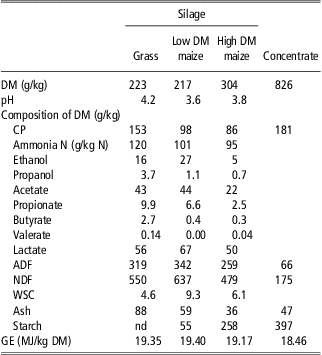
The chemical composition of the silages and the concentrate offered in the present study are presented in Table 1. The silages were well preserved, as indicated by the pH and concentrations of ammonia N and butyrate. The two maize silages differed in maturity at harvest, as indicated by the concentrations of DM, ADF, NDF and starch.
Chemical composition of the silages and concentrate as fed
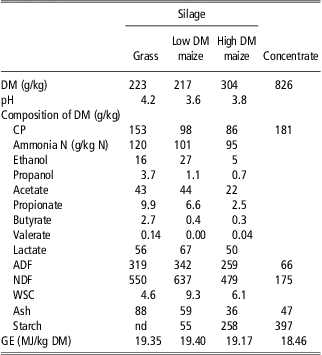
DM = dry matter; N = nitrogen; WSC = water soluble carbohydrate; GE = gross energy.
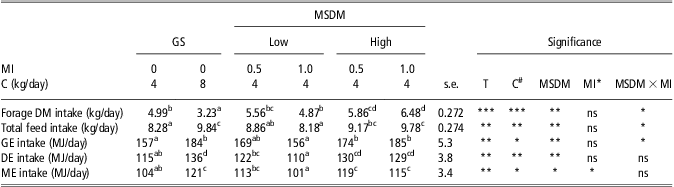
The effects of maize maturity and level of inclusion, and concentrate feed level on food and energy intakes are presented in Table 2. Increasing concentrate feed level with the grass silage reduced forage intake (P < 0.001) and increased GE (P < 0.05), digestible energy (DE; P < 0.01) and ME (P < 0.05) intakes. Increasing the maturity of maize increased the intakes of forage (P < 0.01), total DM (P < 0.01), GE (P < 0.01), DE (P < 0.01) and ME (P < 0.01). Increasing level of maize inclusion reduced ME intake (P < 0.01). There was a significant interaction between maturity of maize and level of inclusion on forage, total DM and GE intakes. Increasing maize silage inclusion tended to reduce forage, total DM and GE intakes when offered the low DM maize but tended to increase the intakes when offered the high DM maize.
Effects of silage type, concentrate feed level and maize maturity and inclusion level on food and energy intakes
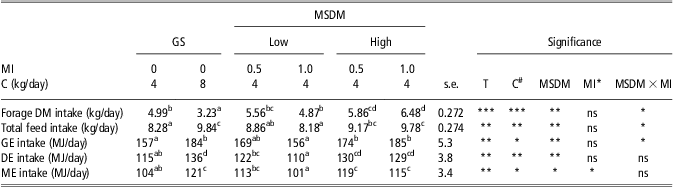
T = treatment; DM = dry matter; MSDM = maize silage DM; GS = grass silage; MI = maize inclusion; C = concentrate; GE = gross energy; DE = digestible energy; ME = metabolizable energy.
#Concentrate level offered with grass silage.
*MI as a proportion of the forage DM in the diet.
a,b,c,dWithin rows separately for treatments, means not showing a common superscript differ significantly, (P < 0.05).
ns = P > 0.05; *P < 0.05; **P < 0.01; ***P < 0.001.
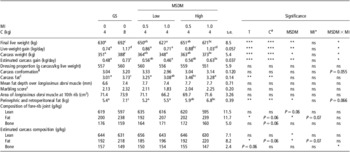
The effects of maize maturity and level of inclusion, and concentrate feed level on animal performance and carcass assessments are presented in Table 3. Increasing the level of concentrate offered with the grass silage increased final live weight (P < 0.001), daily live-weight gain (P < 0.001), carcass weight (P < 0.001), carcass gain (P < 0.001), carcass fat classification (P < 0.01), perinephric plus retroperitoneal fat (P < 0.01) and tended to increase carcass fat concentration (P = 0.06). Increasing the maturity of maize at harvest increased final live weight (P < 0.01), daily live-weight gain (P < 0.01), carcass weight (P < 0.05), the weight of perinephric plus retroperitoneal fat (P < 0.01), carcass fat concentration (P < 0.05) and reduced carcass lean concentration (P < 0.05). Increasing the level of inclusion of maize silage in the diet tended to increase carcass fat concentration (P = 0.07).
Effects of silage type, concentrate feed level and maize maturity and inclusion level on animal performance and carcass measurements

T = Treatment; DM = dry matter; MSDM = maize silage DM; GS = grass silage; MI = maize inclusion; C = concentrate.
‡EUROP scale: 5 (best); 4, 3, 2, 1 (worst), respectively.
§Five-point scale: 1 = leanest; 5 = fattest.
∥Eight-point scale: 1 = leanest; 8 = fattest.
#Concentrate level offered with grass silage.
*MI as a proportion of the forage DM in the diet.
a,b,c,dWithin rows separately for treatments, means not showing a common superscript differ significantly (P < 0.05).
ns = P > 0.05; *P < 0.05; **P < 0.01; ***P < 0.001.
There was a significant interaction between maturity of maize and the proportion of maize silage in the diet for final live weight (P < 0.05), daily live-weight gain (P < 0.05), carcass weight (P < 0.05), carcass gain (P < 0.05) and carcass bone concentration (P < 0.05). Final live weight, daily live-weight gain, carcass weight and carcass gain tended to increase with increasing level of inclusion of the high DM maize, but tended to decline with increasing level of inclusion of the low DM maize. The carcass bone concentration tended to decline with increasing level of inclusion of the high DM maize, but tended to increase with increasing level of inclusion of the low DM maize. There was a trend towards a significant interaction between maturity of maize and the proportion of maize in the diet for carcass conformation (P = 0.06) and the weight of perinephric and retroperitoneal fat (P = 0.07).
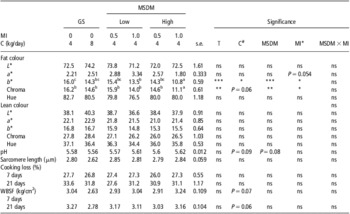
The effects of maize maturity and level of inclusion, and concentrate feed level on fat and lean colour and on meat quality are presented in Table 4. Increasing concentrate feed level reduced (P < 0.05) the yellowness (b*) of fat and tended to reduce chroma of fat (P = 0.06), lean pH (P = 0.09) and Warner Bratzler shear force (WBSF; P = 0.07). Increasing the maturity of maize at harvest reduced b* (P < 0.001) and chroma (P < 0.01) for fat and tended to increase lean pH (P = 0.08). Increasing the level of inclusion of maize silage in the diet reduced b* (P < 0.05), chroma (P < 0.05) and a* (P = 0.054) for fat colour.
Effects of silage type, concentrate feed level and maize maturity and inclusion level on fat and lean colour and meat quality

T = treatment; DM = dry matter; MSDM = maize silage DM; GS = grass silage; MI = maize inclusion; C = concentrate; WBSF = Warner Bratzler shear force.
#Concentrate level offered with grass silage.
*MI as a proportion of the forage DM in the diet.
a,b,cWithin rows separately for treatments, means not showing a common superscript differ significantly, (P < 0.05).
ns = P > 0.05; *P < 0.05; **P < 0.01; ***P < 0.001.
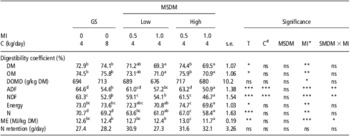
The effects of maize maturity and level of inclusion, and concentrate feed level on diet digestibility are presented in Table 5. Increasing concentrate feed level, with the grass silage, reduced digestibility of NDF and ADF (P < 0.001). Increasing the inclusion level of maize silage reduced digestibility coefficients of ADF (P < 0.001), NDF (P < 0.001), DM (P < 0.01), organic matter (OM; P < 0.01), GE (P < 0.01) and N (P < 0.01); digestible organic matter digestibility (DOMD; P < 0.05) and ME concentration (P < 0.001). There was a significant interaction between maturity of maize and level of inclusion on the digestibility of NDF (P < 0.01) and ADF (P < 0.01) and on ME concentration (P < 0.05). Increasing maize inclusion resulted in a greater reduction in the digestibility of ADF and NDF, and in ME concentration for the high DM maize relative to the low DM maize silage.
Effects of silage type, concentrate feed level and maize maturity and inclusion level on total diet digestibilities and N retention

N = nitrogen; T = treatment; DM = dry matter; MSDM = maize silage DM; GS = grass silage; MI = maize inclusion; C = concentrate; OM = organic matter; DOMD = digestible organic matter digestibility; ME = metabolizable energy.
#Concentrate level offered with grass silage.
*MI as a proportion of the forage DM in the diet.
a,b,c,dWithin rows separately for treatments, means not showing a common superscript differ significantly, (P < 0.05).
ns = P > 0.05; *P < 0.05; **P < 0.01; ***P < 0.001.
Discussion
Although the main aim of the current study was to evaluate the effects of maturity of maize silage and level of inclusion, and potential interactions, in grass silage-based diets offered to beef cattle, the results enabled the potential concentrate-sparing effects of replacing grass silage with maize silage to be determined. The concentrate was formulated so that the diet with the lowest CP concentration would have sufficient protein to meet animal requirements. In the current study, the diet containing high DM maize silage offered as the sole forage had the lowest CP concentrations being 118 g/kg DM.
The grass silage offered in the present study was representative of the average grass silage produced in Ireland on the basis of its fermentation and feed value characteristics (Keady, Reference Keady2000). The two levels of concentrate supplementation offered with the grass silage accounted for 40% and 67% of the total DM intake and were representative of the range of concentrate used by many commercial beef finishers offering grass silage-based diet in Ireland and the United Kingdom. The two maize silages differed in stage of maturity as determined by DM and starch concentrations.
Maturity of maize at harvest
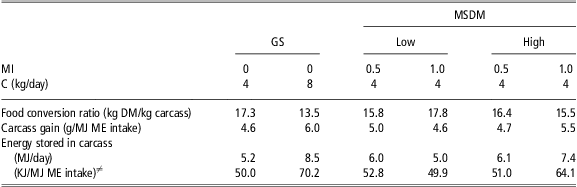
When ensiling maize the aim is to increase starch content, consequently crops are harvested mature. In the current study, the high DM maize was harvested at the optimum stage of maturity, as determined by Phipps et al. (Reference Phipps, Sutton, Beever and Jones2000), Keady (Reference Keady2005) from a review of the literature and Keady et al. (Reference Keady, Kilpatrick, Mayne and Gordon2008a) to improve animal performance. Replacing grass silage with the low and high DM maize silage altered ME intake by −0.03 and +0.11 and carcass gain by −0.04 and 0.31, respectively. The efficiency with which ME intake was converted to carcass gain is presented in Table 6. The high DM maize silage when offered as the sole forage resulted in a higher efficiency than the other forages supplemented with the same level of concentrate. The efficiency on an energetic basis is also shown in Table 6. For the calculation of ME available for production, maintenance energy requirements given by Agricultural and Food Research Council (AFRC) (1990) have been used on the basis of the mean live weight of the animal during the experimental period. For the calculation of energy stored in the carcass, energy concentrations of 23.6 and 39.3 MJ/kg have been assumed for protein and lipid, respectively. Protein and lipid concentrations of 220 and 46 g/kg lean and 34 and 850 g/kg for separable fat have been assumed, as these concentrations have been obtained previously for these tissues (Steen and Robson, Reference Steen and Robson1995). Using these assumptions, the efficiency with which ME was converted to carcass energy was proportionally 0.04 lower and 0.42 greater for the diets containing the low and high DM maize silages offered as the sole forage relative to grass silage offered as the sole forage. When the efficiency of utilization of ME intake was expressed relative to gain in carcass energy, replacing grass silage with the low and high DM maize silages altered efficiency of ME utilization by 0.00 and +0.28, respectively. Data from this study illustrated that the efficiency of utilization of ME from including maize silage in the diet varied with maturity and level of inclusion. Efficiency of energy storage in the carcass was improved when the mature maize silage totally replaced grass silage in the diet. Previously, Keady et al. (Reference Keady, Lively, Kilpatrick and Moss2007) reported that replacing 0.50 of grass silage with maize silage, harvested near the optimum stage of maturity, in beef cattle diets improved the efficiency of energy storage in the carcass.
Effects of silage type, concentrate feed level and maize maturity and inclusion level on estimated efficiency of gain (using treatment means)
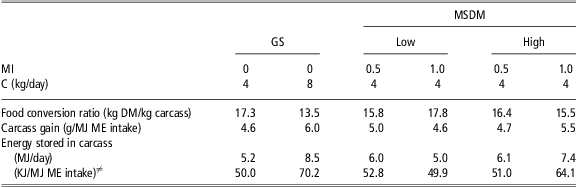
DM = dry matter; MSDM = maize silage DM; GS = grass silage; MI = maize inclusion; C = concentrate; ME = metabolizable energy.
≠Based on ME requirements for maintenance given by AFRC (1990).
Regional variation in beef production practices effect consumer perception of what constitutes ‘normal’ fat colour of beef. In the current study, fat was whiter (brighter, b* reduced) when grass silage was replaced with maize silage, the response depending on level of maize silage inclusion in the diet and maturity at harvest. Previously, Keady et al. (Reference Keady, Lively, Kilpatrick and Moss2007) reported that when maize silage replaced 50% of grass silage in the forage component of the diet, there was no effect on fat colour, similar to the absence of a significant effect as occurred in the current study when the mature maize was offered as 0.5 of the forage in the diet. The greatest effect on fat colour occurred when the mature maize was offered as the sole forage and is probably associated with maize having lower concentrations of carotenoids, which have been shown to affect fat whiteness (Dunne et al., Reference Dunne, Monahan, O'Mara and Moloney2009).
Interaction between maturity of maize and level of inclusion
One of the main objectives of the current study was to determine whether there was an interaction between maturity of maize at harvest and level of inclusion of maize silage in the forage component of grass silage-based diets. The response, in terms of animal performance, was due to the effects of maize silage maturity and level of inclusion on forage intake characteristics and ME concentration. Although Steen et al. (Reference Steen, Gordon, Dawson, Park, Mayne, Agnew, Kilpatrick and Porter1998) concluded that the main factors affecting grass silage intake are forage digestibility, rumen degradability and the concentrations of the N and fibre fractions, these findings do not explain the increased forage intake characteristics of replacing grass silage with maize silage in the diet. In developing a model to predict silage intake of dairy cows offered mixed forage diets, Keady et al. (Reference Keady, Mayne, Offer and Thomas2004) included a term for forage starch concentration. More recently, Keady et al. (Reference Keady, Kilpatrick, Mayne and Gordon2007 and Reference Keady, Lively, Kilpatrick and Moss2008a) concluded that the higher intake characteristics of maize silage can be attributed to a combination of DM, fermentation and digestibility characteristics and lower concentrations of NDF and ADF. In the current study, relative to grass silage, the low DM maize silage had similar fermentation characteristics and DM concentrations, and higher concentrations of ADF and NDF, while having a low-starch concentration, thus explaining the absence of an effect on intake when offered as the sole forage. Meanwhile, the high DM maize had higher DM and starch concentrations, and lower ADF and NDF concentrations relative to both the low DM maize and grass silages, thus explaining its higher intake characteristics. When both maize silages were offered as 0.5 of the forage component, they resulted in similar improvements in forage intake. Similarly, Keady et al. (Reference Keady, Kilpatrick, Mayne and Gordon2008a) concluded that maize silage DM had no effect on the increased forage intake when maize accounted for 0.4 of the forage in the diet.
The lower ME concentration for the high DM maize silage compared with that for the low DM maize silage, when offered as the sole forage, reflects the reduction in NDF and ADF digestibilities. This reduction in fibre digestibility is probably due to the high-starch concentration and its impact on rumen pH. Furthermore, the high DM maize silage had a lower GE concentration, probably due to the lower concentrations of alcohols and volatile fatty acids.
Concentrate-sparing effect
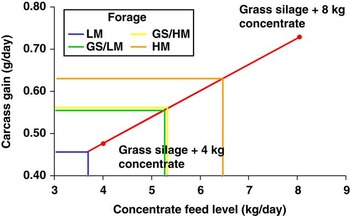
If the cost of concentrate is high relative to the price of beef, one of the potential benefits of including maize silage in the diet of finishing cattle is the opportunity to maintain animal performance while reducing concentrate input. In the current study, the grass silage was offered as the sole forage ad libitum supplemented daily with 4 or 8 kg/steer. In the current study, it was assumed that any response in carcass gain was linear between these two levels of concentrate. Steen et al. (Reference Steen, Kilpatrick and Porter2002) reported that increasing the proportion of concentrate from 0.2 to 0.8 in a diet consisting of medium feed value grass silage linearly increased carcass gain. In the study by Steen et al. (Reference Steen, Kilpatrick and Porter2002), diets that had similar concentrate feed levels as in the current study had similar total diet digestibilities. The data presented in Figure 1 indicate that the potential concentrate-sparing effect of maize silage was influenced by the level of inclusion and crop maturity. At the 0.5 and 1.0 inclusion levels supplemented, with 4 kg concentrate, the low and high DM maize silages sustained the same daily carcass gain as the grass silage would if the daily concentrate supplement level was 5.3, 3.7, 5.3 and 6.4 kg/steer, respectively. Thus, the corresponding concentrate-sparing effects were 1.3, −0.3, 1.3 and 2.4 kg. Keady et al. (Reference Keady, Lively, Kilpatrick and Moss2007), using beef cattle, and Keady et al. (Reference Keady, Kilpatrick, Mayne and Gordon2008a), using dairy cows, reported daily concentrate-sparing effects >2 kg/steer and up to 3.4 kg/cow, respectively, because of the inclusion of maize silage in grass silage-based diets.
Carcass gain of cattle offered diets differing in maize maturity and level of inclusion, supplemented with 4 kg concentrate relative to grass silage offered as the sole forage (assumed a linear response to increased concentrate feed level with the grass silage) to determine potential concentrate-sparing effect. At the 0.5 and 1.0 inclusion levels, the low and high DM maize silages had daily concentrate-sparing effects of 1.3, −0.3, 1.3 and 2.4 kg, respectively. LM = low dry matter (DM) maize; HM = high DM maize; GS = grass silage.

Effects of concentrate feed level on animal performance
Increasing the level of concentrate offered increased carcass gain by 75 g/1 kg increase in concentrate DM intake. This response is considerably higher than the response of 21 to 27 g carcass gain per 1 kg increase in concentrate DM intake reported by Keane et al. (Reference Keane, Drennan and Moloney2006) and Keady et al. (Reference Keady, Lively, Kilpatrick and Moss2007 and Reference Keady, Lively, Kilpatrick and Moss2008b), but is similar to the response reported by Steen et al. (Reference Steen, Kilpatrick and Porter2002). The higher response in the current study was probably because of the lower substitution rate (0.53 kg/kg for silage DM by concentrate), which reflects the low intake characteristics of the grass silage. The higher level of performance achieved in response to increased concentrate feeding resulted in an improvement in the efficiency of feed utilization (carcass gain relative to ME intake) similar to the results of previous authors (Steen and Kilpatrick, Reference Steen and Kilpatrick2000; Steen et al., Reference Steen, Kilpatrick and Porter2002) using similar feed value grass silages as in the present study.
The ‘paler’ fat colour associated with increased level of concentrate feeding, contrary to previous studies at this centre (Keady et al., Reference Keady, Lively, Kilpatrick and Moss2007 and Reference Keady, Lively, Kilpatrick and Moss2008b), is probably due to reduced intake of carotenoids, as cereal-based diets have a lower concentration of carotenoids than grass-based diets (Dunne et al., Reference Dunne, Monahan, O'Mara and Moloney2009). Furthermore, the animals offered the high-concentrate diet accreted more adipose tissue and that may have diluted the carotenoids present.
The trend for increased concentrate feed level to improve meat tenderness (WBSF) was probably associated with a more rapid growth rate before slaughter, which has been reported to produce more tender beef (Fishell et al., Reference Fishell, Aberle, Judge and Perry1985). The absence of a greater effect of concentrate feed level on meat tenderness is probably because of the method by which the carcasses were hung. In the current study, the carcasses were suspended from the aitch bone (tenderstretch), and Lively et al. (Reference Lively, Keady, Moss, Farmer, Gault, Tolland, Patterson and Gordon2006) concluded that differences between breeds that existed when carcasses were suspended by the Achilles tendon were greatly reduced relative to carcasses suspended tenderstretched. Previous studies at this centre (Lively et al., Reference Lively, Keady, Kilpatrick and Moss2005 and Reference Lively, Keady, Dawson, Moss and Kilpatrick2008; Keady et al., Reference Keady, Lively, Kilpatrick and Moss2007 and Reference Keady, Lively, Kilpatrick and Moss2008b) have not revealed an effect of concentrate feed level on meat tenderness.
Conclusions
It is concluded that response to maize silage depends on the stage of maturity at harvest and level of inclusion in the diet. Maize silage with a DM of 304 g/kg offered ad libitum increased carcass gain by 31% and produced a paler fat colour. Maize silage has a daily concentrate-sparing effect of up to 2.4 kg/steer.