INTRODUCTION
This article seeks to offer a deeper historical and analytical context for understanding today’s American criminal justice system—both its rise to such a remarkable size and its stunning racial disproportionality.Footnote 1 Although today’s rate of incarceration is both historically unprecedented and internationally unparalleled, its racially discriminatory character is not. And, these points are related in important ways. Only by taking a close look at the long and deeply racialized history of the American criminal justice system, and more specifically at the regularly discriminatory application of the law as well as the consistent lack of equal justice under the law over time, can we fully understand why the American criminal justice system today remains so discriminatory despite the victories of the civil rights era, as well as why prison populations rose so dramatically precisely when they did.
CONQUEST AND CRIMINALIZATION: THE BIRTH OF THE NATION
Unsurprisingly, this nation’s origin story is complex and scholars who have sought to recover it differ a great deal regarding what aspects of story should be highlighted for the general public. Some scholars, particularly of the older, Frederick Jackson Turner, generation, sought to celebrate the heart-wrenching and herculean histories of bravery, self-reliance, the frontier, and Manifest Destiny. Such renderings tended to focus on larger-than-life figures such as Davy Crockett, or the scores of homesteaders who risked everything to settle the West, or those who amassed a fortune building the railroads. The more recent historical scholarship, however, has recovered, and now feels honor-bound to share with the public, a much grimmer origin story. This scholarship is rife with tales of conquest and nothing less than genocide. This literature makes crystal clear that there was nothing “natural” about Whites coming to have the bulk of the power in this country or eventually owning the vast majority of its resources. As scholars such as Patrick Wolfe (Reference Wolfe2006) point out, such power and ownership was made possible only because the “native” had, in effect, been eliminated.
The newest literature also brings to light that where the act of conquest and practice of genocide failed to secure dominance in the political, social, and economic spheres, Whites quickly embraced another way to secure it—criminalization.Footnote 2 Indeed, White settlers, who for a century had attempted to control Indian land with guns or had acquired it by the spread of disease, still met serious opposition to their colonial desires (Madley Reference Madley2016; Smith Reference Smith2005). What cemented White dominance was the criminalization of Native populations—for example, marking their child-rearing practices as backward and removing their children to boarding schools across the nation (Chávez-García Reference Chávez-García2012; Gram Reference Gram2016). Some were literally enslaved as punishment as well (Miles Reference Miles2015; Reséndez Reference Reséndez2016). Similarly, White settlers and government officials seeking to expand the borders of the United States didn’t rely solely on violence to secure full control over, for example, Mexicans, Hawaiians, (and later) Puerto Ricans (Clayton Reference Anderson2005; Fischer Reference Fischer2015; LeBrón Reference LeBrón2019). They Also understood as well that to criminalize the original residents of those areas was to mark them as unfit to rule or to manage their own rich resources.
As White explorers and settlers eliminated and criminalized native populations on this soil and as far away as Hawaii, they meanwhile also controlled and profited off of the land in the southern half of the nation by conscripting the labor of people of African descent whom they had brought to this land as slaves (and then enslaved the children they birthed). Notably, in the long period before the abolition of slavery, prisons as we know them today largely didn’t existFootnote 3. Although still regularly criminalized during slavery, when African Americans were accused of wrongdoing they most often were punished well outside of the court system and rarely were imprisoned.
This did not mean, however, that this nation’s understandings of who was “deviant” or most “criminal” were not already, and from the nation’s inception, deeply racialized. From the earliest White portrayals of Indians as “savages” bent on murdering helpless homesteaders on the plains and prairies, to their regular claims that African Americans were sexual “brutes” who must be prevented from raping White women, the notion that Brown and Black people must be controlled and confined due to their innate and inherent criminal and deviant natures is, as historian Khalil G. Muhammad puts it, “embedded in the cultural DNA of the nation”. Even the most basic descriptions and artistic renderings of evil in America from its earliest days were presented in terms of “black” and were juxtaposed always to the purity and virtues of “white.”Footnote 4
That the growth and demographic profile of the modern American criminal justice system would be directly informed by Whites’ deeply held notions about innate Black and Brown criminality was not obvious as long as slavery was legal. But with the abolition of slavery, penal institutions in existence began immediately to fill with people of color in numbers well out of proportion with their presence in the population. As historians such as Talitha LaFlouria (Reference LeFlouria2015), Sarah Haley (Reference Haley2016), Mary Ellen Curtin (Reference Curtin2000), and Alex Lichtenstein (Reference Lichtenstein1996) show, within one generation of the abolition of slavery the percentage of Black prisoners skyrockted because of specific newly-adopted laws intended to target newly freed Blacks; because of existing laws that were applied with particular vigor to newly freed Blacks; and because of both legal and extra-legal efforts on the part of southern Whites to police Black behavior and spaces. As Khalil G. Muhammad (Reference Muhammad and Thompson2012) has written:
Black Codes, Pig Laws, convict leasing, and chain gangs were all manifestations of new criminal justice policies intended to limit political, economic, and social agency among the newly freed. Proponents of these laws and punishments claimed they were about crime control. Indeed, newspapers and white crime victims alike frequently claimed that black theft was common. Detractors, including federal officials, however, pointed out time and time again that black voting, landowning, contract negotiating, retailing, self-defense, and simple unemployment or leisure could lead to a long sentence of hard labor on a prison farm, in a coal mine, or on a road crew (p. 8).
The upshot of this response to Black claims on equality was that, virtually overnight, prisons across the South transformed from being all White to virtually all Black. In Alabama, for example, the state’s prison population was only 1% Black in 1850, but a mere five years later it was 75%, and by the late 1880s, it was a full 85% (Curtin Reference Curtin2000). Notably, the ability to fill the nation’s penal institutions so disproportionately with Black bodies after the Civil War depended upon the longer pre-history of equating Blackness with inherent criminality. As important in this period was the fact that White southerners’ entire economy depended upon Black labor. Significantly the 13th amendment that outlawed slavery also included an exception for anyone convicted of a crime and, by filling penal institutions and prison farms with Blacks, Whites could once again force Blacks to labor for no remuneration. Thanks to a key clause in the Fourteenth Amendment, being convicted of a crime also meant losing any right to vote, which was a central reason why the criminalization of newly freed Blacks also allowed Whites to keep complete political control over the South as well.
The specific origins of this nation’s first major spike in incarceration—that which largely took place in the American South in the immediate wake of 1865—are deeply instructive. They make crystal clear that the economic and political anxieties and desires of Whites with power, not crime per se, determined both the rate of incarceration, as well as who in this nation would most likely find themselves first criminalized and then confined. Notably, northern and western penal institutions mirrored this process in the same period. Although African Americans were a minority in, say, New York, by 1920 (as were Native Americans and Mexican Americans by that time in cities such as Los Angeles), their disproportionate policing and monitoring ensured the disproportionate presence in non-southern institutions too. Historian Khalil G. Muhammad (Reference Muhammad2010) delves deeply into this post-Civil War northern story and shows a consistent pattern in which police attention shifted quickly and markedly from poor White immigrants to newly arrived Blacks, overnight making them the most criminalized group in northern cities. As historians Kali Gross (Reference Gross2006) and Cheryl Hicks (Reference Hicks2010) show, Black women and girls were also disproportionately and excessively criminalized. And, even though northerners have always assumed themselves to be less bigoted and backward than southerners, a close look at the penal institutions of the North in the period between the Civil War and WWII indicates otherwise. They could be as brutal as any southern prison farm or penitentiary (Thompson 2010).
THE CRIMINAL JUSTICE SYSTEM BEFORE MASS INCARCERATION
Both the crime rate and the imprisonment rate continuously fluctuated in the decades prior to, during, and immediately after World War II, and, importantly, there was a marked lack of correlation between them. Nevertheless, Whites’ deep-seated association between Blackness, Brownness, and criminality continued to inform who was policed, arrested, and ultimately imprisoned, and southern Blacks felt the ill-effects of White assumptions about their inherent criminality particularly acutely.Footnote 5 No matter the decade, people of color continued to fill American prison farms and jails in numbers well out of proportion to their presence in the population and often disconnected from who in this Nation was also breaking the law (Childs Reference Childs2015).
African Americans living both south and north of the Mason Dixon line also continued to be singled out for policing, arrest, and incarceration. As even more southern Blacks moved north seeking economic and social opportunity during and after WWII than had migrated in the wake of the Civil War and at the onset of WWI (nearly five million people), northern prison populations became as markedly racially disproportionate as southern ones.Footnote 6 As important, historian Kelly Lytle Hernández (Reference Hernández2010, Reference Hernández2017) and sociologist Victor Rios (Reference Rios2011) each show clearly that these same racialized patterns of imprisonment played out in the West as well, with Mexican Americans being targeted by law enforcement and locked up in numbers well out of line with their presence in the overall population. U.S. territories and far flung states such as Puerto Rico and Hawaii engaged in significantly racialized criminal justice practices as well (Debrah Reference Debrah2012; LeBrón Reference LeBrón2017).
Of all racial groups, however, the racial disproportionality of African Americans in the U.S. prison population continued to stand out after WWII. As the U.S. Department of Justice (DOJ) concluded in its study of racial patterns of incarceration from 1926 to 1986, “From 1926 to 1986 the recorded black percentage among admissions to State and Federal prisons more than doubled from 21% in 1926 to 44% in 1986. Importantly, this growth is not explained by general population trends. The number of blacks relative to the general population was about the same in both years: 10% in 1926 and 12% in 1986” (Langan Reference Langan1991).
As Bruce Western and Becky Pettit (Reference Pettit and Western2010) point out, despite “the demographic erosion of Jim Crow through the migration of Southern African Americans to the North,” racial disparities in incarceration increased everywhere through the first half of the twentieth century” and, in fact, the racial disparities in incarceration rates were actually “higher in the North than the South” (p. 9). Just as it had been in the South, this disparity up North was made possible by laws that singled out Blacks over Whites, and policing that did as well. From new ordinances that criminalized the act of “loitering” or neighborhood “blight” in areas of cities where only Blacks resided, to enforcing existing laws against, say, after-hours drinking establishments only in those same areas, laws and policing were used regularly by Whites to control Black spaces (Balto Reference Balto2019; Krinitsky Reference Krinitsky2017).
That the law was applied unequally and that it was racialized at every point, is particularly obvious if one looks closely at the history of northern cities such as Detroit after WWII. In this period there was, in fact, a dramatic upsurge of crimes committed by Whites against African Americans who tried to move into White neighborhoods or work in factories that had previously hired only Whites in this period (Boyle Reference Boyle2005; Miller Reference Miller2014). Rarely, however, were Whites arrested for engaging in such criminal acts. From the so-called “hate strikes” in places like Detroit’s Packard Plant or the Philadelphia Transit strike of 1944, to the mob violence that Black families experienced trying to move into public housing and residential neighborhoods across the nation—when Whites attacked Blacks they rarely were arrested (Roediger Reference Roediger1994).
Although 200 police officers were on duty at the Sojourner Truth Homes in Detroit, a federal housing project, when Black families tried to move in, White mobs attacked them. Ultimately at least forty citizens were badly injured from the many pick axes that Whites wielded and stones that they threw. Although police officers arrested 220 people in the melee, even The New York Times remarked that 217 of those arrested were the African Americans who were defending themselves from mob violence.Footnote 7 Likewise, a month later White mobs roamed again through Detroit attacking Blacks during a major three-day race riot. When a Black man was severely beaten getting off of a bus on Woodward Avenue in front of four policemen, no effort was made to protect the victim or arrest the Whites committing the assault (Baulch and Zacharias, Reference Baulch and Zacharias1999). Even when four White youths actually shot and killed a 58-year-old Black man named Moses Kiska during the riot because, they explained, “we didn’t have anything to do,” they were found guilty only of manslaughter and were given sentences ranging from one to fifteen years (Baulch and Zacharias, Reference Baulch and Zacharias1999). Ultimately in that thirty-six-hour riot, twenty-five African Americans were killed and, although there were more than 1,800 people arrested during the upheaval, the vast majority of those were also Black (Baulch and Zacharias, Reference Baulch and Zacharias1999).
Not only did law enforcement across the country single out Blacks over Whites for arrest during and after the Second World War, by the 1950s city officials were bombarded with complaints filed against members of local police forces indicating that they also actively mistreated the African Americans in their charge.Footnote 8 By 1957, for example, the Detroit NAACP went public with a study that it had conducted of the scores of police brutality complaints that Black residents had filed between January 1956 and July 1957 so that the mayor might deal with what it felt had become a serious problem in that city. Their study noted with alarm that the most frequent type of complaint involved “physical assault followed by racial epithets” and that, as importantly, “90% of the complainants are working people without a previous record who believe they are subjected to unwarranted abuse because of their race” (Thompson Reference Thompson2001, p. 22). The experiences of Chicanos in cities like Los Angeles and Native Americans in states such as South Dakota were no different (Chávez Reference Chávez2002; Peltier Reference Peltier2000).
By the 1960s the discriminatory way that law enforcement treated people of color, both in personal interactions with them and in terms of singling them out for arrest, meant that prison populations were both remarkably high overall in that decade, and were notably and even more disproportionately Black and Brown than they ever had been.
Importantly, African Americans were not merely being policed, arrested, and incarcerated at rates out of sync with their presence in the population and with crimes actually committed by the 1960s; they were also singled out for excessively harsh treatment while serving time (Berger Reference Berger2014). That such abuses took place in the South surprises few observers today. In fact, northerners often decried such acts of barbarism such as the case in which one “fourteen-year-old black youth who had been serving ninety days for shoplifting” was, for no apparent reason, “shot in the face by a trustee, ... causing total blindness and permanent brain damage,” or ones in which black men like George Humes were “handcuffed to bars, on tiptoes for 2 days without food, water, or bathroom facilities” while men such as Walter Nathan were “handcuffed and hung from tree” (Oshinsky Reference Oshinsky1997, pp. 238, 243). We tend to understand such horrors to be rooted in the fact that Southern prisons were, in essence, modern day slave plantations. Of course guards acted like overseers using everything from “Black Annie” (a thick strapped whip) to the notorious “Tucker Telephone” (with live electric wires to be attached to inmates’ genitals) to keep their captive workforce in line (Murton and Hyams, Reference Murton and Hyams1969; Thompson Reference Thompson, Lassiter and Crespino2010b).
Just as it had been in the period before WWII, however, the treatment of Black prisoners in the North was also disproportionately abusive and grim throughout the postwar period. There too disproportionate policing, arrest, and conviction also meant disproportionately bad treatment once incarcerated. After seeing prisons at work in both regions, professor Bruce Jackson (Reference Jackson1968) called attention to how badly prison officials treated inmates in the South but was quick to say “so does the North, and no one likes to talk about it.” Jackson was particularly appalled by the Massachusetts Correctional Institution at Bridgewater, which he dubbed “one of the most wretched” prisons in the country and the “worst place” he had “visited, north or south” (1968). This facility had much company, however. African American inmates in Philadelphia, for example, were routinely used during the 1950s and 1960s as test subjects for medical experimentation. Indeed, inspired by the successes of medical experimentation on the insane and the incarcerated in other states such as Ohio, Michigan, and California, officials at Holmesburg Prison granted the University of Pennsylvania Medical School carte blanche with its wards beginning in the 1950s. During the Vietnam War the concentration of test subjects at Holmesburg Prison was also most attractive to the U.S. Department of Defense. According to the official photographer for Dr. Albert Kligman, one of Holmesburg’s primary experimenters, “They were just preying on people. Using an inmate was cheaper than buying a chimpanzee, and the results were better” (Hornblum Reference Hornblum1999, pp. 24; Thompson Reference Thompson, Lassiter and Crespino2010b). Medical experimentation was also taking place in famous northern prisons such as Attica in this period (Thompson Reference Thompson2017).
THE IRONIC ORIGINS OF MASS INCARCERATION
The overzealous policing of people of color, and their disproportionate subjection to ill treatment at the hands of police in the nation’s cities and correction officers in the nation’s prisons, eventually led them to rebel in the 1960s. While it is beyond the scope of this paper to recount the full history of either the movements for African American, Chicano, Native American, or prisoner civil rights, or the movements for independence that sprang up in countries such as Puerto Rico in this period, it is important to note the deeply ironic history that followed.Footnote 9 In short, although the unrest of the 1960s had been a response to this nation's long history of racialized policing and punishment with protest, most tragically, the nation's reaction to these same protests was to erect an even larger and more punitive apparatus for criminalizing and confining people of color.
It is clear from the historical record that from Watts, to Detroit, to DC, to Newark, the civil rights activism and urban protests of the 1960s were fueled by African Americans’ desire for city officials to remedy the fact that members of law enforcement were singling them out for surveillance, arrest, ill-treatment, and imprisonment.Footnote 10 As President Johnson’s Commission on Civil Disorders noted, one of the most serious problems facing the nation’s inner cities was strained “police-community relations” and, significantly, according to this study, “police actions were ‘final’ incidents before the outbreak of violence in 12 of the 24 surveyed disorders” that erupted in these same cities with police actions being a “prior” precipitating factor in the remaining twelve incidents of urban unrest (U.S. Kerner Commission 1968).
Prisons also experienced a number of dramatic protests in this period and, like in the cities, the issue of how prisoners of color were being singled out for poor treatment within penal facilities was central.Footnote 11 At Attica, for example, even White inmates acknowledged the extent to which racial discrimination shaped the lives of the Black and Puerto Rican prisoners in ways palpable (Thompson Reference Thompson2016). As White prisoner William Jackson put it when asked whether he thought that guards applied “rules differently to black inmates and white inmates,” yes, “very much so” (McKay Commission 1972a, p. 160). He went on to chronicle specific examples of how White guards treated non-White inmates differently than they did prisoners like him whom they could better “relate to” (p. 40). Although they usually denied it, from time to time even the White guards themselves would admit that such discrimination flourished at Attica. One, a sergeant Cochrane, for example, grudgingly conceded that “the same amount of prejudice that society does have, put into a strictly authoritarian circumstance, results in it being a much more oppressive thing than in the outside society where that kind of prejudice is avoidable” (McKay Commission 1972b, p. 290). Unsurprisingly, then, when prisoners took over Attica on September 9, 1971, central among their demands was that the state “Educate all officers in the needs of inmates,” that it “[i]nstitute a program for the employment of black and Spanish-speaking officers,” and that it “[e]stablish an inmate grievance delegation comprised of one elected inmate from each company which is authorized to speak to the administration concerning grievances, and develop other procedures for community control of the institution” (McKay Collection).
Without question, Black and Brown activism against racially discriminatory treatment in the nation’s cities and prisons for a time netted concrete improvements in police-community relations (leading to landmark Supreme Court rulings such as Miranda v. Arizona, 1966), and in prison conditions (with crucial rulings such as Monroe v. Pape, 1961; Robinson v. California, 1962; and Holt v. Sarver, 1969). It is clear from the historical record, however, that such challenges to the political and racial status quo also led simultaneously to: 1) Whites increasingly maintaining that minorities were most responsible for crime; 2) an even more aggressive policing of communities of color; and 3) a dramatic increase in monetary and institutional support for law enforcement as well as tougher laws that would, in turn, lead to more policing, more arrests, and significantly higher rates of incarceration in the United States.
Indeed, historians have documented well that America’s White citizenry viewed such unrest as merely criminal behavior and it responded by calling for more, not less, policing of Black and Brown residents of the city.Footnote 12 Historian Michael Flamm (Reference Flamm2007) most clearly illustrates this connection between White anxieties about Black activism—anxieties, he argues, that were “at fever pitch” in the 1960s in no small part because of “urban riots, and political demonstrations” and the association they made between this unrest and an escalation in “street crime” (p. 168). As one White Detroiter wrote to the mayor of that city, “We Whites are getting sick! Sick! Of the crying Do-gooders, NAACP, etc.—that are always on the side of the person who robs, kills, or beats a person to death just for kicks” (Thompson Reference Thompson2001, p. 41). Another wrote, “believe me, without police protection our civilization will go back to jungle law and cannibalism in a very short time” (p. 41).
Notably, this popular view was actively fueled by well-respected politicians. Vesla Weaver (Reference Weaver2007), for example, provides strong evidence that in their speeches to constituents, 1960s-era politicians regularly “attached civil rights to lawlessness by arguing that civil disobedience flouted laws and would inevitably lead to more lawless behavior” and they expressly made the argument that “movement activists” were “the major culprit in the crime increase” (p. 247). Never mind the fact that “[t]his claim was empirically unfounded” and that even the arrests [that were] “related to collective action protests did increase during this time” were “not of a scale” to explain any “aggregate crime rate increase,” by the mid-1960s a “new doctrine” had emerged and the idea that “civil rights demonstrations amounted to violence and created a climate of lawlessness” had become gospel to large segments of the American voting public (p. 247).
Significantly, it wasn’t just the White residents of cities such as Detroit, nor mayors of cities like Los Angeles, nor southern politicians such as George Wallace who had grown increasingly convinced by 1964 that crime was the nation’s most pressing problem and that the origins of this rise in crime was Black militancy. The President of the United States and Great Society liberal Lyndon Johnson had come to the same conclusion. Not only was Johnson speaking regularly about the nation’s crime problem as early as 1964, but in 1965 he took an historic step to deal with the “crisis” of crime most aggressively with passage of the Law Enforcement Assistance Act (LEAA) of 1965 which immediately and preemptively provided unprecedented financial, bureaucratic, and tactical support to law enforcement agencies across the country.Footnote 13 In concert with, and in aid of, LEAA’s crime fighting agenda, the nation’s legal system underwent important changes as well. Within ten years of LEAA’s passage, numerous new crime bills and laws had also passed—all oriented toward making certain long-standing human actions—particularly those related to the actions of poor urbanites—illegal, and making the penalties for breaking existing laws much stiffer.
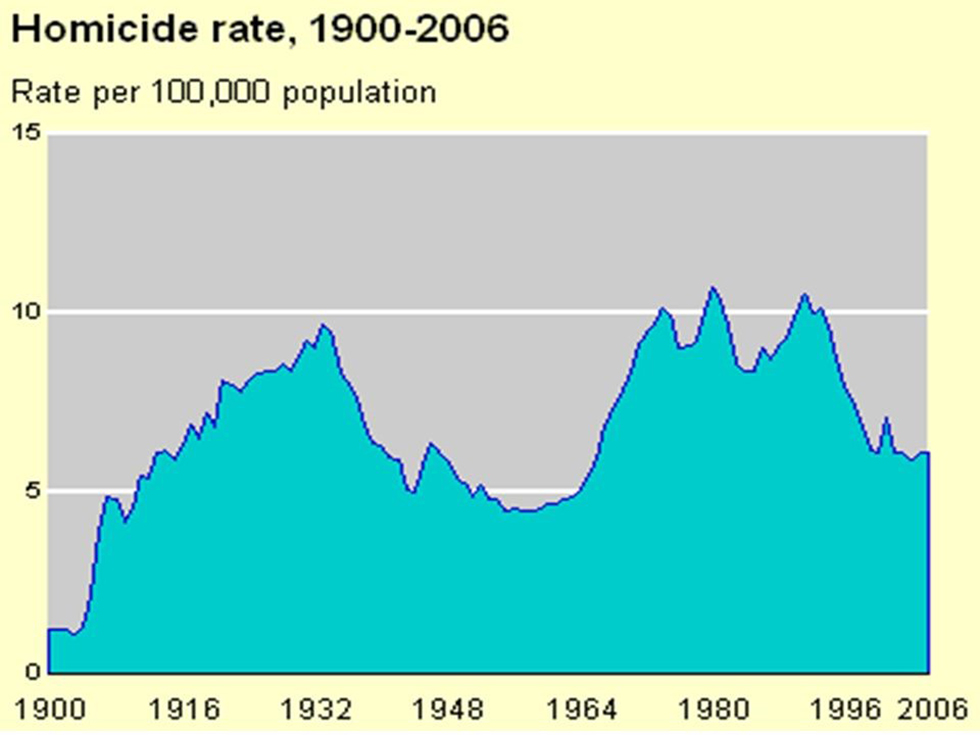
That Johnson initiated a major new War on Crime in the year 1965 is in fact very significant. Of course it shows, as political scientists Naomi Murakawa (Reference Murakawa2014) and Marie Gottschalk (Reference Gottschalk2016), and historian Elizabeth Hinton (Reference Hinton2016), all argue in careful detail, that the rise of historically unprecedented incarceration rates was always a liberal as well as conservative effort. As important, however, it indicates that this nation began the War on Crime not due to rising crime levels, but rather as a political response to Black claims on the polity and economy. Indeed, as Hinton (Reference Hinton2015) indicates clearly, the Johnson administration tagged Black youth as “potential” criminals in ways that dictated where greater resources for policing would be dispensed long before crime rates rose. Julilly Kohler-Hausmann (Reference Kohler-Hausmann2017) too provides ample evidence of the ways in which certain, particularly Black and Brown, communities were targeted as likely criminal, and thus generated crime-fighting rhetoric and resources divorced from actual evidence of criminality. Indeed when one historicizes the crime rate of the specific decades in which the War on Crime began it quickly becomes apparent that the rate of violent crimes like murder in 1964 was not only unremarkable for that decade (the homicide rate in 1962 was 4.8 and in 1964 it was only 5.1) but it was also historically unremarkable since, for example, far more murders were committed in 1924 and 1934 than were committed in 1964.Footnote 14
Key Facts at a Glance: Homicide Trends, 1900-2006. Bureau of Justice Statistics

Even if one takes the violent crime rate overall, it is clear that American citizens were in far greater danger of being victimized by violence once the War on Crime was in full swing and had been our nation’s main policy priority for several decades than they had been when politicians decided that such a war was necessary to wage. Notably, whereas the violent crime rate in 1965 was 200.2 per 100,000, by 1985 it was 556.6 in 1985 and by 1994 it was 684.6.Footnote 15
Not only were crime rates historically unremarkable when the War on Crime began but, historically, when crime rates did begin to climb in the wake of LEAA even those numbers are misleading. With LEAA came a major incentive for urban police departments to change the way that they categorized and counted crime. In short, higher crime rates translated directly into more federal support. As my own research (2001), and that of Elizabeth Hinton (Reference Hinton2015) on “preemptive” policing, makes clear, a good case in point comes from the city of Detroit. When crime rates began to inch up in the late 1960s, Detroit’s mayor and police brass admitted that “new methods of counting crime” had played an important role in “distorting the size of the increase” (New York Times 1967).Footnote 16 This phenomenon of police manipulating crime statistics upward in order to get more resources played out in much later decades as well. As one investigation of Florida’s police departments found, many of them “fudged crime statistics and exaggerated local drug crimes in an effort to get more military weaponry” (Murphy and Freedburg, Reference Murphy and Freedberg2003). One panhandle town, Lynn Haven, actually “reported a 900 percent rise in armed robberies….without telling regulators that the raw number of robberies rose from 1 to 10, then fell to 1 again just as quickly” (Murphy and Freedburg, Reference Murphy and Freedberg2003).
Still, by the close of the 1960s, and certainly by the 1980s and 1990s, crime rates were clearly higher than they had been in, say, the late-1950s. Again, though, as Vesla Weaver (Reference Weaver2007) reminds us, “rising crime” does not explain the advent of high rates of incarceration because “the historical record is replete with cases when crime rose but was not followed by punitive legislation or a national campaign, including rising crime in the post WWII period” (p. 235). According to Weaver (Reference Weaver2007), the assumption that increases in crime are behind changes that led to increasing prison populations is “simplistic” because it fundamentally “ignores the politicization of the issue, how target groups were socially constructed, and elite incentives and agency” (p. 235 ). She also points to the timing of LEAA’s passage in 1965—noting that it had much more to do with the passage of the Civil Rights Act of 1964 than with crime rates.
As Weaver (Reference Weaver2007) argues, by both turning the nation’s attention to the crime issue at the very moment that Civil Rights Act of 1964 passed, and by successfully “pitting the priorities of crime and civil rights against each other” in the mind of the voting public, conservative politicians who disliked this law were able to “eclipse the dominance of the civil rights issue” (p. 237). And conservative success at undermining a national civil rights agenda was actively facilitated by liberal politicians. Such politicians were well aware that their voter base—the coalition of Black and White voters that had put them in office—was cracking, and passing LEAA but one year after passing the Civil Rights Act of 1964 would, they hoped, keep their party strong and in office. In the case of both conservative and liberal politicians of the 1960s, “crime” was first and foremost a rhetorical tool to meet political goals.
Although the historical record is clear that today’s high rates of incarceration are rooted in the political tumultuousness of the 1960s rather than in a spike in crime, there are additionally important elements of the rise of mass incarceration that merit serious.
In addition to locating, for example, Marie Gottschalk (Reference Gottschalk2006) shows the ways in which the activist movements of this period themselves also helped to fuel prison growth. “The victims’ movement, the women’s movement, the prisoners’ rights movement, and opponents of the death penalty [also] mediated the construction of the carceral state in important ways” she writes (p. 8). According to Gottschalk’s evidence, it was the very success of these movements in clamoring for new protections under the law that helps to explain the bloated carceral state we have today—their successes at replacing death sentences with life sentences, their successes at stronger penalties for crimes such as rape, and so on. As Gottschalk (Reference Gottschalk2006) notes, if we really want to understand the causes of high rates of incarceration, we must “look more systematically at groups and movements who are not the usual suspects in penal policy and yet have played pivotal roles in making public policy more punitive” (p. 9). This point is important because it again reminds us that changes in crime policy are rooted in politics, not crime.
Bruce Western and Katherine Beckett also deepen our understanding of why incarceration rates begin to rise in the latter third of the twentieth century and alert us to the political and economic nature of this shift. Specifically they call our attention to the fact that incarceration rates first rose, specifically, in states with weaker social welfare systems and, as importantly, they rose nationally as welfare programs eroded (Western and Beckett, 2001). Western and Beckett’s point, it seems applies to the erosion of social spending even beyond that on welfare programs clearly marked as such. Indeed, over time, there was also a correlation between a declining budget for schools and increases in the size of the carceral state. Nationwide, as education budgets fell, corrections budgets rose so that, by 2007, for every dollar that the state of Michigan spent on higher education, for example, it spent ninety-eight cents on corrections. Interestingly, every one of the five U.S. states that were spending at least as much, if not more, on corrections than they spent on higher education by that year were in the North, a region of the country usually credited with valuing education (as opposed to the South).
Of course, by showing the positive correlation between the citizenry’s diminished access to the welfare state and its increasing imprisonment, Beckett and Western’s data and analysis also makes clear why such a large percentage of the nation’s prison population is comprised of people of color.
Just as Western and colleagues further flesh out the causes of mass incarceration by looking more closely at poor peoples’ eroding access to resources in the late-twentieth century, so does Loïc Wacquant. According to Wacquant (Reference Wacquant2001, Reference Wacquant2002), we must locate the rise of the carceral state not only in the tumult of the 1960s, but also in the economic downturn of the 1970s. With deindustrialization, he argues, Black neighborhoods atrophied and, since Blacks had few skills and little cultural capital, their unemployment rate grew. Prisons, then, became the place where this newly and increasingly poor population ended up.
Perhaps the most interesting new work regarding why incarceration rates rose so dramatically when they did, but more importantly, why they remained so racially disparate, comes from law professor James Forman, Jr. Although Forman (Reference Forman2017) also locates the rise of more punitive laws and more aggressive policing of Black spaces in a draconian White response to Black civil rights, he notes that the notion of Black criminality and fear of Black crime was so powerful that it soon shaped the way Black prosecutors dealt with Black defendants, too. In short, Black police and Black prosecutors eventually were also responsible for the historically unprecedented rise of prison populations in this country.
FROM THE WAR ON CRIME TO THE CRISIS OF MASS INCARCERATION
While the timing and political context of the War on Crime indicates that it was not launched initially due to a marked jump in the nation’s crime rate, the issue of crime is nevertheless crucial here. Specifically, dramatic changes to criminal law, changes to penalties associated with committing a crime, and changes that communities experienced as a result of hyper-criminalization, all made incarceration rates climb as soon as politicians began waging their new War on Crime. What is more, the very particular way that these changes played out help to explain why those incarcerated in the period of 1970 to the present were even more increasingly people of color.
It is well understood that a revolution in drug law was one of the most important changes to criminal law that took place vis-à-vis impacting this nation’s incarceration rate over time. Interestingly, as Julilly Kohler-Hausmann’s (Reference Kohler-Hausmann2010) important historical work shows, we must locate even the dramatic changes in drug law in the broader political context of the transformative 1960s. Like Vesla Weaver, Kohler-Hausmann’s work makes clear that politicians’ move away from the notion that addicts were people with a disease who needed help to the idea that addicts were the disease that needed to be contained had everything to do with the racial tensions of this period.
Moreover, it wasn’t simply that politicians were deciding in the late-1960s that resources were wasted on rehabilitation and that it was time to pass laws criminalizing both addicts and pushers. As, Kohler-Hausmann (Reference Kohler-Hausmann2010) notes, “the addict/pusher targeted by [new] laws was almost universally understood to be a Black or Puerto Rican man [and] these characterizations had widespread political implications at a time when society wrestled over civil rights activists demands for full, equal citizenship” (p. 74). For one thing, new draconian drug laws served to delegitimize the proponents of civil rights by equating them with weakness, disease, and danger. For another, according to Kohler-Hausmann, this “punishing legislation worked to salvage and remake state legitimacy, as well as to rationalize racial and other equalities spotlighted by the social unrest of the period” (p. 72). In the post-Rockefeller Drug Law world, Blacks were not disproportionately poor, unemployed, and imprisoned because of any social, economic, or political inequality or injustice. They were all of these things because they involved themselves with drugs. Important new work by historian Matthew Lassiter (Reference Lassiter2015) and Donna Murch (Reference Murch2015) show not only that this criminalization of drugs was, from the beginning after WWII, racialized, but also that Blacks and Latinos were well aware that their communities were in particular being ravaged by the War on Drugs.
Due to these same racialized drug laws, incarceration rates rose precipitously after 1973. In the 1980s, while the number of arrests for all crimes had risen by 28%, the number of arrests for drug offenses rose 126% (Austin and McVey, Reference Austin and McVey1989). Whereas there had been only 322,300 drug-related arrests in 1970, in the year 2000 there were a staggering 1,375,600 (Dorsey and Zawitz, Reference Dorsey and Zawitz2005). Significantly, by 2010 the majority of federal inmates were serving time for drug offenses and less than 10% of them were there for a violent offense (Guerino et al., Reference Guerino, Harrison and Sabol2011).
As Jonathan Simon (Reference Simon2007) finds, however, it was not merely addressing the problem of drug addiction through the lens of crime and criminality that caused imprisonment rates to soar in this nation. By the close of the twentieth century virtually all social problems, institutions, and interactions were viewed, understood, and governed through the lens of crime and criminality. As crime discourse became an increasing part of general public discourse, “collective insecurities” were produced that could “be addressed only by incapacitating incarceration” and, in turn, prison populations grew (Simon Reference Simon2007, p. 202). Notably, by 2010, a full 35% of inmates in federal prison were there for committing so-called “public-order offenses” (Guerino et al., Reference Guerino, Harrison and Sabol2011). Mass incarceration was “an inevitable effect of reshaping political authority around crime” (Simon Reference Simon2007, p. 8). The circumstances which merited the attention of law enforcement in this new fear-of-crime era were, Simon concludes, “circumstances highly correlated by race” (p. 142).
Today’s high rate of incarceration also resulted from the fact that the sentences meted out for committing a crime lengthened dramatically over the course of the late-twentieth and into the twenty-first centuries. One of the first major bills calling for mandatory minimum sentences at the federal level was introduced as early as 1976 in the U.S. Senate and, with more stringent sentencing laws passing across the country thereafter, prison terms across the country grew substantially longer within a mere three decades. According to a report by the Urban Institute, between the 1980s and the 1990s, the likelihood one would serve a prison sentence following arrest increased dramatically as did the length of the sentences served. (Sabol et al., Reference Sabol, Rosich, Mallik-Kane, Kirk and Dubin2002). Significantly, with regard to the racialized nature of this nation’s eventually staggering rates of incarceration, by the 1980s Black juveniles who were arrested “were thirty-seven percent more likely to be transferred to adult courts, where they faced tougher sanctions” (Alexander Reference Alexander2012, p. 97) and African Americans of every age “were more likely than whites to be committed to prison instead of jail, and they were more likely to receive longer sentences” (Weiman and Weiss, Reference Weiman, Weiss, Raphael and Stoll2009, p. 81).
New federal criminal laws and longer sentences each did their part to fuel the high rates of incarceration we have today. So too did the fact that the police dramatically stepped up the number of drug raids they engaged in, as well as the number of times they stopped and frisked citizens in public spaces. No-knock police raids, for example, increased from approximately 2,000 to 3,000 a year in the mid-1980s to initiating between 70,000 to 80,000 a year by the new millennium (Barnett and Alongi, Reference Barnett and Alongi2011). Just as this dramatic spike in no-knock raids led, over time, to a higher arrest and incarceration rate in the United States, so did the marked increase in so-called “Terry Stops” and “Terry Frisks”—what would come to be known simply as “Stop and Frisk”—each year after 1968 (Nash Reference Nash2014). Whereas NYC police officers made 97,296 such stops in 2002, in 2003 they made 160,851 stops and in 2011 they engaged in 685,724 stop-and-frisk encounters, the highest level ever recorded (Baker Reference Baker2012). In total, NYC’s stops increased 600% from 2002 to 2011 (Haberman Reference Haberman2012). Notably, because of an increase in both drug raids and Terry Stops, the number of arrests for marijuana, for example, skyrocketed between 1990 and 2000. “[M]arijuana arrests increased 155% during the 1990s, from 287,850 in 1991 to 734,498 in 2000” (Gettman Reference Gettman2005, p. 21).
In addition to a dramatic increase in the policing of private and public spaces after the 1960s, policing and prosecutions grew ever more racially selective which, importantly, helps to explain why rising arrest and incarceration rates were also so racialized. Consider stop and frisk policing in precincts where Black and Latinos made up less than 10% of the population. According to a report by the New York State Attorney General (1999), “individuals identified as belonging to these racial groups nevertheless accounted for more than half of the total ‘stops’ during the covered period. Blacks accounted for 30% of all persons ‘stopped’ in these precincts; Hispanics accounted for 23.4% of all persons ‘stopped’” (p. viii). Even when one accounts for the “differing crime rates” in predominantly White versus predominantly black or Latino areas of the city, “blacks were ‘stopped’ 23% more often than Whites, across all crime categories….[and] Hispanics were ‘stopped’ 39% more often than Whites across crime categories” (Office of the Attorney General 1999, p. x).
With regard to the racialized result of drug raids, according to the Office of Drug Abuse and Law Enforcement, even as early as the 1970s, “the majority of the arrested were black.” Nationally, when it comes to arresting marijuana users, the arrest rate for Blacks is 94% higher than the rate for all users” (Gettman Reference Gettman2005, p. 65). Michael Tonry (Reference Tonry2010) explains:
Group differences in violent crime do not explain racial disparities in prison. What does explain them is a combination of police practices and legislative and executive policy decisions that systematically treat black offenders differently, and more severely, than whites. Policy makers emphasized law enforcement approaches to drug abuse over preventive ones. Police drug law enforcement focused effort on inner-city, primarily minority, neighborhoods, where many black Americans live, and on crack cocaine, of which blacks are a large majority of arrested sellers. Police officers engaged in widespread racial profiling and stopped blacks on streets and sidewalks much more often than is justifiable in terms of objective, race-neutral criteria. More broadly, legislatures and administrative agencies established policies in the 1980s and 1990s that mandated sentences of historically unmatched severity for violent and drug crimes, for both of which blacks are disproportionately often arrested and prosecuted (p. 274).
And, with regard to the question of who ends up serving time once arrested, the work of John Pfaff (Reference Pfaff2007) shines important light. As he notes, prosecutors have extraordinary power, and one of their most-used tools when confronting usually Black or Brown and always poor, defendants, is the plea bargain. Because poor Black and Brown people who find themselves under arrest and facing charges worry mightily about taking their chances before a jury (because they have poor legal representation and/or because prosecutors have threatened them with serving unimaginable time should they be found guilty), an astounding 95% of people arrested find themselves behind bars by agreeing to plead guilty—whether they did or did not do what officers accused them of doing.Footnote 17
Finally, while changes in criminal law, sentencing policy, policing, and prosecutorial practices all help to explain today’s high rate of incarceration as well as why that rate is so racially skewed, ironically, today’s high rate of incarceration itself is also a factor. Prisons are criminogenic. Not only are they schools of crime, they also destroy the social fabric of families and communities, according to Todd Clear (Reference Clear2009). Because of mass incarceration’s scale and impact on poor communities of color, the children of incarcerated adults experience greater poverty as well as increased anti-social behavior and illegal activity. The results are higher rates of policing, more incarceration, more poverty, and so on. “Mass incarceration was not simply, as the sociologist Loïc Wacquant suggests, ‘a political response to the collapse of the ghetto.’ It was a historical phenomenon that—like deindustrialization and White flight—itself caused crisis, collapse,” and more incarceration (Thompson Reference Thompson2010a, p. 716 ).
The devastation caused by high rates of incarceration in general, and of high rates of racialized incarceration in particular, is hard to exaggerate. Detroit, an overwhelmingly African American city, not only sends more of its residents to prison than any other city in Michigan but the percentage of Detroit families living below the poverty line is also more than 72% higher than the state average. As one local paper put it: “The community los[t] the resources of its young men because so many are jailed” (Detroit News 2004). Indeed in 2000 a full 41% of prisoners from Wayne County, Michigan returned to only eight particularly devastated zip codes in the city of Detroit. And Detroit’s story has played out in other all-Black neighborhoods across the country (Thompson Reference Thompson2010a). By the close of the twentieth century, entire swaths of the New York City borough of Brooklyn, and specifically its most African American and Puerto Rican areas, were similarly ravaged by mass incarceration, and they had become, by the new millennium, so-called “million dollar blocks” for what it cost to incarcerate so many of its residents.
And, of course, while most attention is focused on high rates of incarceration and why they are so racialized today, it is important not forget that. Black and Brown citizens have always been disproportionately criminalized in this country, and their relentless criminalization is what actually helps to make sense of explains why the nation’s prison population is so high today. Rose so dramatically after the 1960s. As important, because Black and Brown non-citizens (from Somalis to Mexicans to Guatemalans to those who herald from countries such as Syria or Iran) have also, always, been unremittingly criminalized, we can’t understand the spike in immigration detention in this country either, without understanding that long history of criminalizing race.
CONCLUSION
Today’s high rate of incarceration is fundamentally rooted in this nation’s centuries-long, economic, and racial history. This nation, from its founding responded to social and political upheaval with criminalization, and in every century, it is people of color who have always been most marked as troublemakers in general, and criminals in particular. Whether it was Native Americans thought to be standing in the way of progress in the West, native Hawaiians seeming an impediment to the desires of Whites in the Pacific, Puerto Ricans who challenged discrimination in cities like New York, or Mexicans seen as flooding the borders and taking jobs, the police have always been deployed disproportionately to monitor the behavior of non-Whites in this country and, as a result of this disproportionate policing, U.S. prisons have always been more of a reflection of White desires for dominance than of those who commit harm in society. And, as the demographics of our prisons and jails make clear, African Americans been particularly targeted by laws and singled out for policing. Whether one is examining this nation’s historical record during the moment of emancipation, migration, depression, or civil rights revolution—all historical moments of intense social, political, and economic upheaval—one sees not only a move toward more draconian laws, more policing, and more arrests, but also an intensification of racially disproportionality across the entire system.
Therefore, what is unique about high rates of incarceration today is neither the origins nor the demographic profile of those imprisoned. What is noteworthy is merely its magnitude which, itself, is the result of a most deeply racialized response to the myriad freedom struggles of the 1960s. It is crucial that scholars of today’s carceral crisis read the historical record carefully so as to avoid misreading the contemporary data before them. All must be leery of embracing the popular argument that high rates of incarceration were a legitimate response to out of control crime and actually look at the history of crime rates over time and year by year in the decade of the 1960s.
As importantly, all must reject the notion that the disproportionate numbers of people of color ensnared in today’s criminal justice system indicate anything about Black and Brown, versus White, criminality. The long history of this country should make clear that high arrest and incarceration rates of people of color say far more about White notions of Black and Brown criminality than it does about who actually commits harm in our society. Finally, all must understand that the consequences of high rates of racialized incarceration today are just as devastating as they have always been. Any incarceration that is so racially concentrated and disproportionate directly impoverishes, orphans, erodes, and devastates communities. In short, as American history shows clearly, no justice system we have ever had has been just because it has, from this nation’s origins, always been racially defined as well as determined.