1. Introduction
The Japan archipelago is situated at the eastern margin of the Eurasian continent as a result of early–middle Miocene back-arc formation (Baba et al. Reference Baba, Matsuda, Itaya, Wada, Hori, Yokoyama, Eto, Kamei, Zaman, Kidane and Otofuji2007; Sawada et al. Reference Sawada, Mishiro, Imaoka, Yoshida, Inada, Hisai, Kondo and Hyodo2013) by the clockwise and anticlockwise rotations of SW and NE Japan, respectively (Otofuji, Matsuda & Nohda, Reference Otofuji, Matsuda and Nohda1985), or of late Oligocene – middle Miocene spreading axes in the Sea of Japan (Yanai, Aoki & Akahori, Reference Yanai, Aoki and Akahori2010). The formation of the Sea of Japan after the (at the latest) late Oligocene regional tectonic events and global sea-level changes (e.g. Zachos, Dickens & Zeebe, Reference Zachos, Dickens and Zeebe2008) led to the formation of many sedimentary basins in Japan and the preservation of continuous fossil records after the early Miocene period. However, little is known regarding the pre-Oligocene (Palaeogene) fossil assemblages because of the limited sedimentological record. The lifespan of ostracods (Crustacea) does not include a planktonic larval stage (Horne, Cohen & Martens, Reference Horne, Cohen, Martens, Holmes and Chivas2002). The abundantly preserved shells and limited environmental and trans-oceanic distribution capabilities of these organisms have been widely used to reconstruct palaeoenvironments of basins and infer the palaeobiogeography of animals. Previous studies have focused on clarifying ostracod assemblages in Japan from the early–middle Miocene period (Ishizaki, Reference Ishizaki1963, Reference Ishizaki1966; Yajima, Reference Yajima, Hanai, Ikeya and Shizaki1988, Reference Yajima1992; Irizuki & Matsubara, Reference Irizuki and Matsubara1994, Reference Irizuki and Matsubara1995; Irizuki et al. Reference Irizuki, Ishizaki, Takahashi and Usami1998, Reference Irizuki, Yamada, Maruyama and Ito2004; Tanaka et al. Reference Tanaka, Seto, Mukuda and Nakano2002, Reference Tanaka, Itami, Kurosawa, Yoshioka, Yokota, Arai, Idehara and Hayashi2013; Irizuki, Reference Irizuki2003; Tanaka, Reference Tanaka2003; Tanaka, Tsukawaki & Ooji, Reference Tanaka, Tsukawaki and Ooji2004; Tanaka & Nomura, Reference Tanaka and Nomura2009; Matsuura, Irizuki & Hayashi, Reference Matsuura, Irizuki and Hayashi2013; Tanaka, Nomura & Hasegawa, Reference Tanaka, Nomura and Hasegawa2012). However, only seven studies have reported a Palaeogene ostracod assemblage in Japan (Yamaguchi, Reference Yamaguchi2004, Reference Yamaguchi2006; Yamaguchi, Matsubara & Kamiya, Reference Yamaguchi, Matsubara and Kamiya2005; Yamaguchi, Nagao & Kamiya, Reference Yamaguchi, Nagao and Kamiya2006; Yamaguchi & Kamiya, Reference Yamaguchi and Kamiya2007, Reference Yamaguchi and Kamiya2009; Yamaguchi & Kurita, Reference Yamaguchi and Kurita2008). Furthermore, no reports have described Palaeogene coastal-estuarine ostracod assemblages in Japan or East Asia. These coastal-estuarine ostracods are very important with respect to the speciation and biogeographic distribution of marine animals because, unlike many other littoral and bathyal ostracods, the true habitats of coastal-estuarine ostracods are restricted to embayments (Abe, Reference Abe, Hanai, Ikeya and Shizaki1988).
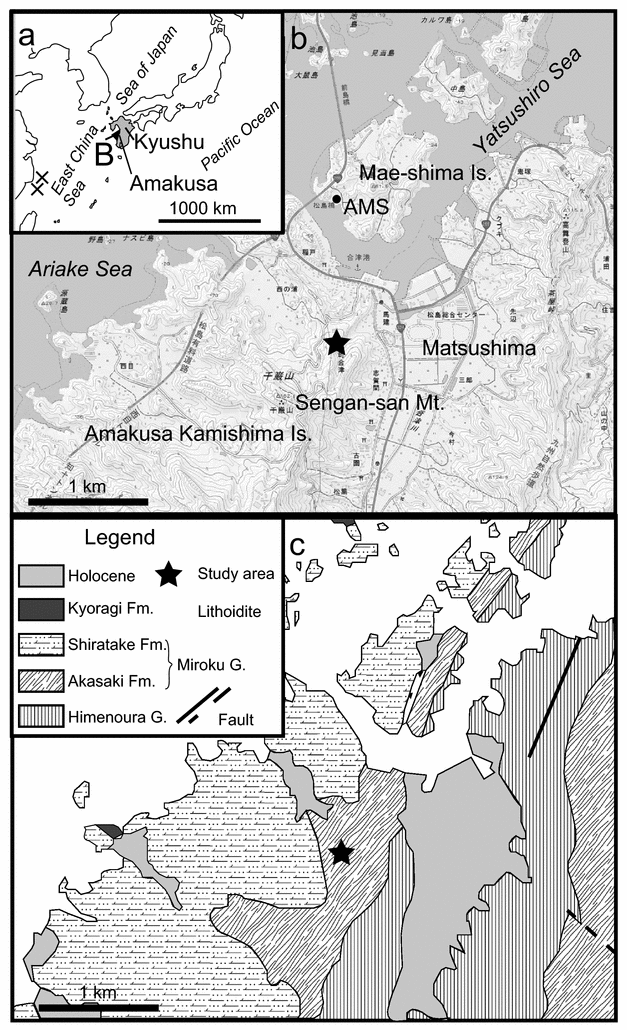
Palaeogene fossiliferous deposits are widely distributed around northern Kyushu Island, Japan (Reference NagaoNagao, 1926a–e, Reference Nagao1927, Reference Nagao1928a, b; Matsushita, Reference Matsushita1949; Takai & Satoh, Reference Takai and Satoh1982; Takai, Bojo & Harada, Reference Takai, Bojo and Harada1997); recently compiled chronostratigraphic studies (see fig. 8 of Yamaguchi, Tanaka & Nishi, Reference Yamaguchi, Tanaka and Nishi2008) have been based on molluscan assemblages (Reference MizunoMizuno, 1962a, b, Reference Mizuno1963, Reference Mizuno1964; Matsubara & Ugai, Reference Matsubara and Ugai2006), transgression and regression based on sedimentological studies (Sakai, Reference Sakai1993), planktonic foraminifers (Ibaraki, Reference Ibaraki1994; Yamaguchi, Tanaka & Nishi, Reference Yamaguchi, Tanaka and Nishi2008) and calcareous nanofossils (Okada, Reference Okada1992; Yamaguchi, Tanaka & Nishi, Reference Yamaguchi, Tanaka and Nishi2008). The Amakusa area (Fig. 1) covers the longest and oldest Palaeogene deposits in Kyushu; these range in age from early Eocene (c. 49 Ma) to late Eocene (c. 36 Ma) (see fig. 8 of Yamaguchi, Tanaka & Nishi, Reference Yamaguchi, Tanaka and Nishi2008; Miyake et al. Reference Miyake, Tsutsumi, Miyata and Komatsu2016). In particular, during early–middle Eocene time (c. 49–45 Ma) successive floodplain to deep-sea marine deposits were only distributed on Amakusa Kamishima Island, providing the best exposure for the study of coastal-estuarine assemblages. In the study area, the early–middle Eocene Miroku Group overlaps with the Late Cretaceous Himenoura Group as a result of stratigraphic unconformity or fault contact (Fig. 1c). The Miroku Group can be subdivided into the Akasaki Formation and the Shiratake Formation, and is covered by the Kyoragi Formation. The thicknesses of the Akasaki and Shiratake formations are 120–220 m and c. 190 m, respectively (Inoue, Reference Inoue1962).
Location of the study area in (a, b) Matsushima town, Amakusa Kamishima Island and Kamiamakusa city, Kyushu Island, Japan. (c) Geological map of (b) based on a Misumi–Kyoragi–Minamata surface geological map (1:50,000) generated by Toyohara & Hase (Reference Toyohara and Hase1991). Two crosses in the East China Sea (a) indicate the borehole locations described by Yang, Chen & Wang (Reference Yang, Chen and Wang1990). AMS – Aitsu Marine Station of Kumamoto University.

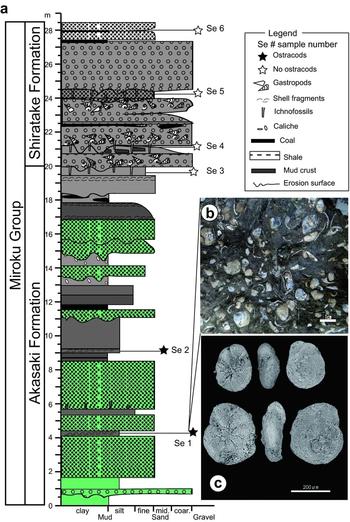
The study area is located c. 700 m NE of Sengan-san Mountain (Fig. 1), with continuous exposure of the uppermost layer of the Akasaki Formation to the lowermost layer of the Shiratake Formation (Fig. 2). Furthermore, this section provides a record from the brackish tidal-flat environment to the shallow-sea environment, according to sedimentary structures and molluscan assemblages (Tanaka, Kondo & Tashiro, Reference Tanaka, Kondo and Tashiro1997).
Columnar section of the study area (asterisk in Fig. 1). (a) Detail from columnar section showing ostracod collected horizon (Se-number). (b) Many ostracods were extracted from Se 1 sample which contained many bivalves (mostly Pitar and some Anomia species) and (c) benthic foraminifer (Ammonia cf. beccarii).

2. Materials and methods
Six ostracod materials were collected from a study area near the Sengan-san Mountain, Amakusa Kamisima Island, Kyushu, Japan. A total of 233 ostracod specimens were acquired from c. 800 g of consolidated muddy-silt via the sodium tetraphenyl borate method (Yasuda, Takayanagi & Hasegawa, Reference Yasuda, Takayanagi and Hasegawa1985). Water was used to wash the residues over a 16-mesh (1 mm) sieve and subsequent attached 120-mesh (125 μm) sieve; the residues were then collected in a beaker and dried in an oven at 80 °C for 2 days, selected under a binocular microscope (SZH-10; Olympus Corp., Tokyo, Japan) at ×30 magnification and stored on faunal slides. Uncoated ostracod specimens were analysed and imaged using a microscope (TM-1000; Hitachi Corp., Tokyo, Japan) under a low vacuum at Aitsu Marine Station, Center for Marine Environment Studies, Kumamoto University, Japan.
3. Palaeoecology and palaeoenvironment
In terms of numbers, the ostracod assemblage is dominated by Neomonoceratina iwasakii sp. nov., the second characteristic species Paijenborchella amakusensis sp. nov. and Parakrithella sp., as well as the less-abundant Propontocypris sp. The ostracod assemblage occurred together with that of the abundant benthic foraminifer Ammonia cf. beccarii (Fig. 2c; identified by R. Nomura of Shimane University), mollusca Terebralia? sp. and Charophyceae oogonium, suggesting an coastal-estuarine environment with inflowing freshwater. However, different species of Paijenborchella (Liu, Reference Liu1989) and Propontocypris (Paracypris spp. described by Liu, Reference Liu1989; Yamaguchi, Reference Yamaguchi2006; considered to belong to Propontocypris from the anterior and dorsal outlines) have been reported from marine depositional facies in other Palaeogene localities. The extant species Parakritherella pseudadonta (Hanai, Reference Hanai1959) lives at depths of 0–17.5 m and attaches to algae or burrows in substrate (Tanaka, Reference Tanaka2016). Ostracods have also been discovered in muddy siltstone which contains abundant molluscs such as Pitar sp. and some Anomia sp. (Fig. 2b). Extant genera of Pitar and Anomia live in marine environments (Tanaka, Kondo & Tashiro, Reference Tanaka, Kondo and Tashiro1997). No planktonic foraminifers were identified on the ostracod-bearing horizon (Se 1) of the Akasaki Formation, suggesting that the depositional environment was not an open-sea environment. Moreover, the ostracod-containing muddy siltstone was sandwiched between massive greenish sandstone layers indicative of river deposits. Furthermore, most ostracod specimens were juvenile with carapaces, indicating rapid burial in situ or near their original microhabitats (Whatley, Reference Whatley and Maddocks1983, Reference Whatley, De Decker, Colin and Peypouquet1988). Liu (Reference Liu1989) reported Neomonoceratina donghaiensis from the Paleocene Lingfeng Formation along with the genera Cytherella and Krithe, and suggested a littoral to neritic depositional environment with planktonic foraminifers. Carbonel & Hoibian (Reference Carbonel, Hoibian, Hanai, Ikeya and Shizaki1988) discussed the relationship between ornamentation development on extant Neomonoceratina spp. and the influence of deltaic freshwater, and concluded that poorly ornamented species inhabit brackish inlet areas of the deltaic front, whereas strongly ornamented species flourish in the marine coastal zone of the deltaic front. In summary, the ostracod assemblage of the Akasaki Formation was determined to be unique, with a habitat in the euryhaline environment of a closed coastal estuary.
4. Palaeobiogeography of coastal-estuarine ostracod assemblages during Eocene time
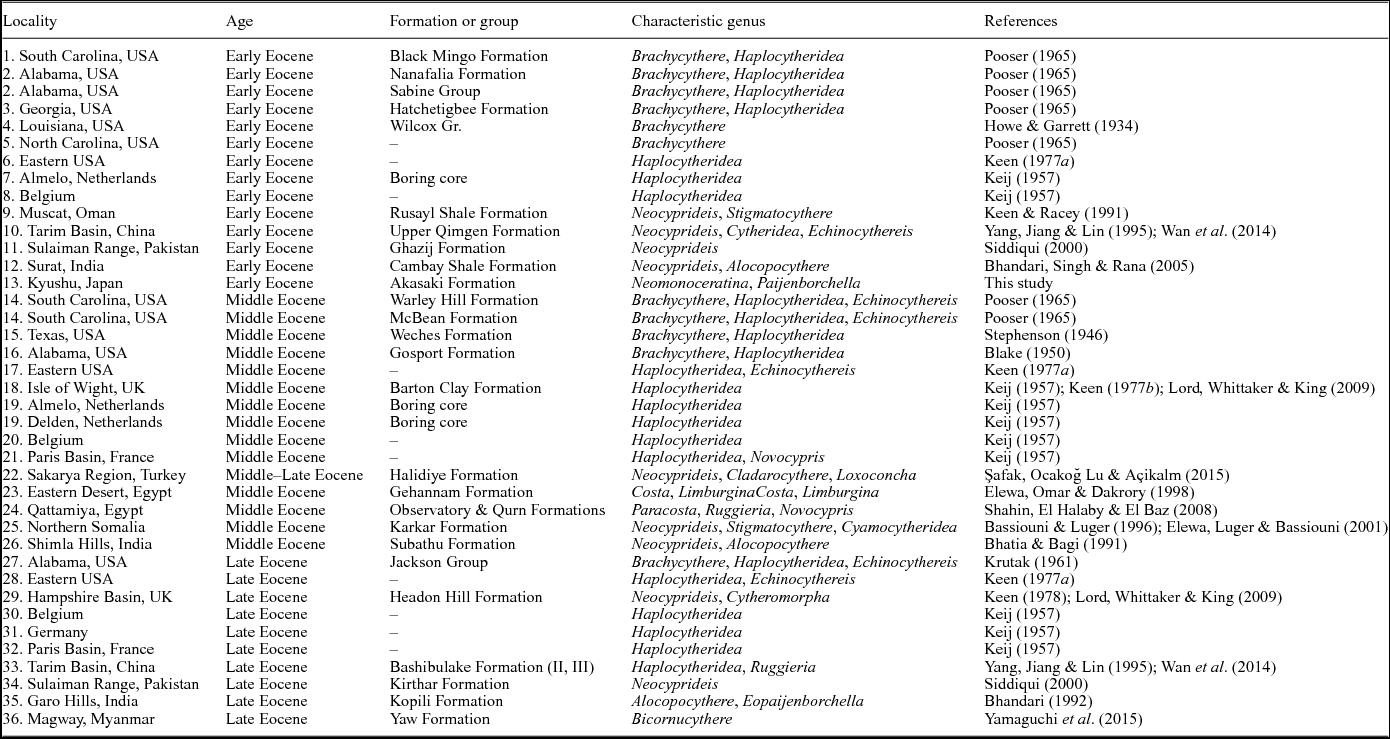
Many papers have described Eocene ostracods worldwide; however, few studies have evaluated coastal-estuarine ostracod assemblages because of the limited number of depositional environments relative to normal marine environments. Including this study, Eocene coastal-estuarine ostracod assemblages in 36 localities worldwide have been reported (Table 1). Of the 36 localities, 13 localities (localities 1–13) were of early Eocene age, 13 localities of middle Eocene age (14 –26) and 10 localities (27–36) were of late Eocene age (Table 1).
Characteristic Eocene ostracods from around the world

The Eocene ostracod assemblages from coastal-estuarine environments listed in Table 1 are characterized by dominant occurrences of one or more species similar to extant ostracods living in estuary (e.g. Athersuch, Horne & Whittaker, Reference Athersuch, Horne, Whittaker, Athersuch, Horne and Whittaker1989; Ikeya & Shiozaki, Reference Ikeya and Shiozaki1993; Tanaka, Seto & Takayasu, Reference Tanaka, Seto and Takayasu1998). Estuarine environments usually have highly varying salinities, pH values and levels of dissolved oxygen over any given year (Tanaka, Seto & Takayasu, Reference Tanaka, Seto and Takayasu1998). Generally, many ostracods have strong tolerances of environmental change (Williams et al. Reference Williams, Perrier, Bennett, Hearing, Stocker and Harvey2015), and estuarine environments receive much organic matter from the land (e.g. Irizuki, Matsubara & Matsumoto, Reference Irizuki, Matsubara and Matsumoto2005). These combined facts mean that the estuary is one of the most preferable places for ostracods to escape predators and find food. Based on their strong tolerance of environmental change, all taxa seem to have an equal potential of invading the estuarine environments from the sea and/or river. If this hypothesis is true, the characteristic inner-bay ostracods are different from those of (palaeo-) estuaries.
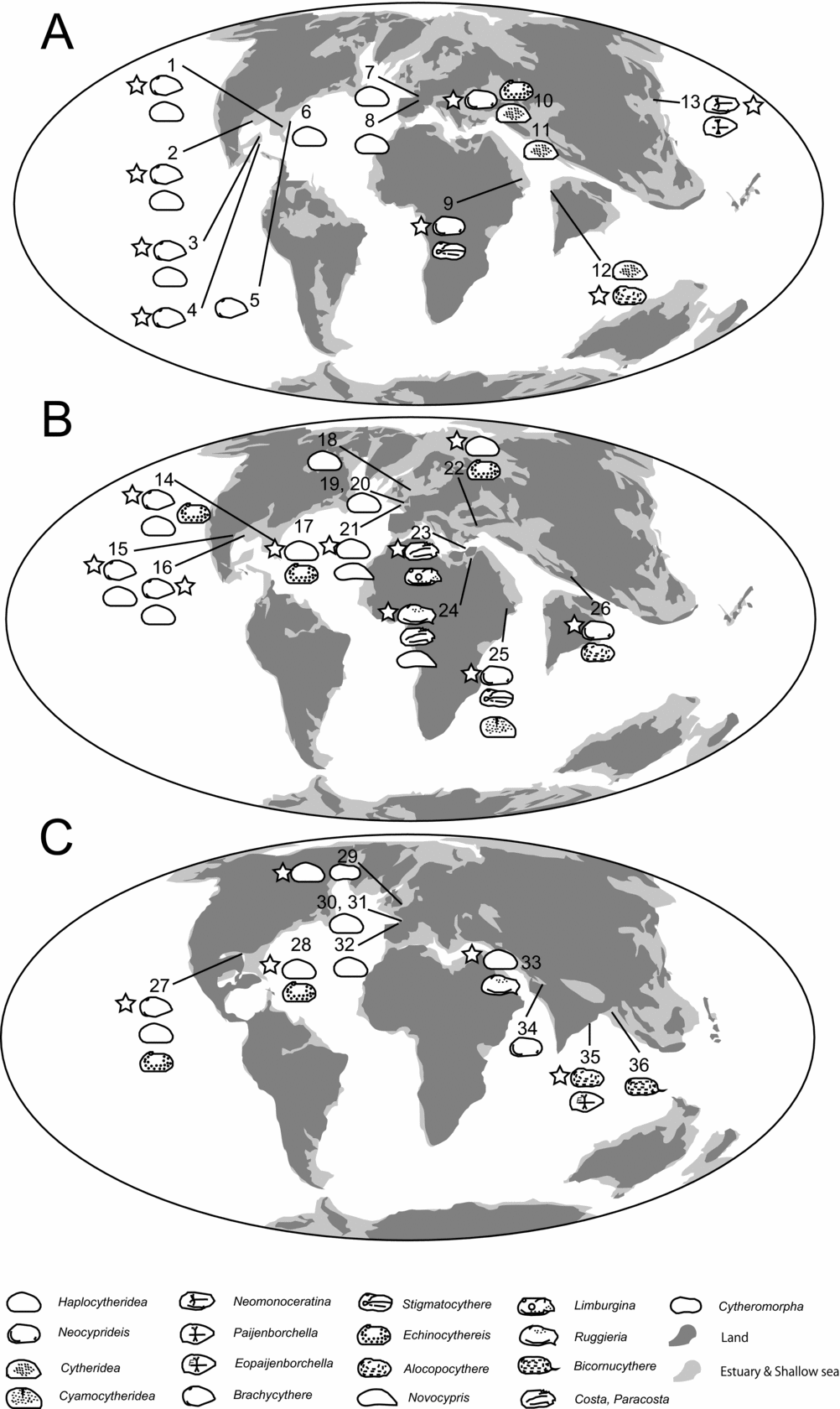
To test this hypothesis, we investigated early, middle and late Eocene ostracod palaeozoogeography (Fig. 3). Five early Eocene ostracod provinces have been recognized (Fig. 3a): (1) North America and Europe, characterized by Haplocytheridea and Brachycythere; (2) Middle East, dominated by Neocyprideis and Stigmatocythere; (3) Central Asia, which consists of Cytheridea, Neocyprideis and Echinocythereis; (4) Indian subcontinent, represented by Cytheridea and Alocopocythere; and (5) East Asia, which consists of Neomonoceratina and Paijenborchella. The genus Haplocytheridea is widely distributed along the eastern coast of the USA and across the Atlantic Ocean in Europe; in contrast, the genus Neocyprideis is distributed in the Tethys (the Middle East and the Central Asia provinces). Other genera are observed sporadically in limited regions, such as Brachycythere, Echinocythereis, Stigmatocythere, Alocopocythere, Neomonoceratina and Paijenborchella. Even for widely distributed species such as Haplocytheridea, differences in the species are observed between the eastern coast of USA and the Europe, indicating that the genus Haplocytheridea migrated independently between America and Europe towards coastal-estuaries until early Eocene time from one common ancestor. On the other hand, the eastern margin of the Eurasian continent was already isolated (along with the Tethys) by the Indochina blocks that connected the Eurasian continent (Fig. 3a). Furthermore, the genus Neomonoceratina was reported in lower Paleocene (66.0–61.6 Ma) sediments from the eastern coast of India (Khosla & Nagori, Reference Khosla and Nagori2002), the middle Paleocene Lingfeng Formation in borehole cores from the East China Sea (Liu, Reference Liu1989) and the lower Eocene Crescent Formation in SW USA (Yamaguchi & Goedert, Reference Yamaguchi and Goedert2009), which represent deposits from marine environments. The oldest fossil record of Neomonoceratina, discovered in India, is a closely related common ancestor of the Neomonoceratina-Spinileberis and Parakrithella clades according to molecular phylogenetic estimations (Clarke & Boyd, Reference Clarke and Boyd2015) (52.97 Ma by penalized likelihood in r8s software; 96.71–38.89 Ma, mean: 67.80 Ma by mean path length implemented in PaThd8 software; 106.73–25.83 Ma, mean: 66.28 Ma by Bayesian analysis). Although more data concerning pre-Eocene ostracods are needed, existing data indicate that Neomonoceratina spp. originated on the Indian subcontinent during the early Paleocene period, along with the northern drift of the Indian subcontinent; subsequently, these species diversified west and east with the equatorial current and counter-current via the Tethys and reached the eastern margin of the Eurasian continent among the various eastwards-migrating species, where one species ultimately adapted to the coastal-estuarine environment. Notably, the coastal-estuarine ostracod assemblage of the eastern margin of the Eurasian continent differs completely from that of the Tethys during the Eocene period. Furthermore, it is important that the genus Paijenborchiella already existed in the normal early Eocene marine environment of the Europe (Keij, Reference Keij1957). The genus Paijenborchella could not be characteristic coastal-estuarine species in Europe, because the coastal-estuarine environments were already occupied by Haplocytheridea.
(a–c) Palaeogeographical distribution of the Eocene estuarine ostracods. (a) Early Eocene (Ypresian, 52.2 Ma). (b) Late Middle Eocene (Bartonian, 38.8 Ma). (c) Late Eocene (Priabonian, 35.6 Ma). This palaeogeographical map come from PALEOMAP Project (Reference ScoteseScotese, 2013a–c). Asterisks show main genera in each locality. See Table 1 for details of localities 1–36.

During middle Eocene time, although ostracods are not reported from East Asia, at least six other ostracod provinces are recognized (Fig. 3b): (1) North America, characterized by the early Eocene assemblage Haplocytheridea, Brachycythere plus Echinocythereis; (2) Europe, dominated by the early Eocene characteristic genus Haplocytheridea and newcomer Novocypris; (3) NE Africa, which consists of newcomers (different genera from early Eocene time in this area) Costa, Paracosta, Novocypris, Limburgia and Ruggieria; (4) Middle East, represented by the genus Echinocythereis and newcomer Haplocytheridea; (5) East Africa, comprising two genera of the early Eocene Middle East province, namely Neocyprideis and Stigmatocythere and also newcomer Cyamocytheridea; and (6) India, represented by Alocopocythere from early Eocene time and newcomer Neocyprideis.
During middle Eocene time, different species of genus Novocypris appeared in the coastal-estuarine environments of Europe and NE Africa. Haplocytheridea had already appeared in the early Eocene coastal-estuarine environments of North America and Europe, indicating that their descendant migrated eastwards (the Middle East province) until middle Eocene time. McKenzie (Reference McKenzie, Adams and Ager1967) suggested that, during the early Tertiary period, the Tethys acted as a latitudinal E–W-aligned corridor for marine ostracod genera; the results support this hypothesis. Many genera which appeared in the coastal-estuarine environments of the Tethys region (North Africa, Middle East and East Africa provinces), namely Costa, Paracosta, Novocypris, Limburgia, Ruggieria, and Cyamocytheridea, are especially interesting when considering the ‘hotspot’ (area of highest number of newly emerging genera) of the middle Eocene coastal-estuarine ostracods.
The late Eocene coastal-estuarine ostracod provinces, excluding East Asia from which ostracods have not been reported, are divided into at least six ostracod provinces (Fig. 3c): (1) North America, from which the same genera as the middle Eocene assemblage (Haplocytheridea, Brachycythere and Echinocythereis) have been reported; (2) Europe, which is also dominated by the middle Eocene characteristic genus Haplocytheridea and newcomer Cytheromorpha; (3) Middle East, which is represented by the middle Eocene genus Haplocytheridea and Ruggieria; (4) West India, characterized by the middle Eocene genera Neocyprideis; (5) East India, represented by the middle Eocene genus Alocopocythere and newcomer Eopaijenborchella; and (6) Myanmar, characterized by the newcomer Bicornucythere. The genus of Bicornucythere of late Eocene age from Myanmar is the oldest fossil record in the world showing adaption to the coastal-estuarine environment (Yamaguchi et al. Reference Yamaguchi, Suzuki, Soe, Htike, Nomura and Takai2015). With the genus Bicornucythere, Yamaguchi et al. (Reference Yamaguchi, Suzuki, Soe, Htike, Nomura and Takai2015) reported Cytheromorpha? sp. from the same material. The genus Cytheromorpha appeared in coastal-estuarine environments in Europe (Keen, Reference Keen, Bate and Robinson1978; Lord, Whittaker & King, Reference Lord, Whittaker, King, Whittaker and Hart2009) and Myanmar (Yamaguchi et al. Reference Yamaguchi, Suzuki, Soe, Htike, Nomura and Takai2015) in middle Eocene time. The genus Cytheromorpha is recorded in marine deposits of pre-Eocene age from Trinidad (Van den Bold, Reference Van den Bold1957) and Europe (Ozsvart, Reference Ozsvart1999) and in coastal-estuarine environments of early Paleocene age from India (Khosla & Nagori, Reference Khosla and Nagori2002), indicating that they independently migrated from normal marine environments in India and migrated east- and westwards via the E-W-aligned corridor of the Tethys (McKenzie, Reference McKenzie, Adams and Ager1967). To summarize, many genera adapted to coastal-estuarine environments in the Tethys and migrated east- and westwards. The Eocene period is characterized by global warming (e.g. Zachos, Dickens & Zeebe, Reference Zachos, Dickens and Zeebe2008), and many estuarine environments were formed around the world (Fig. 4) during this time.
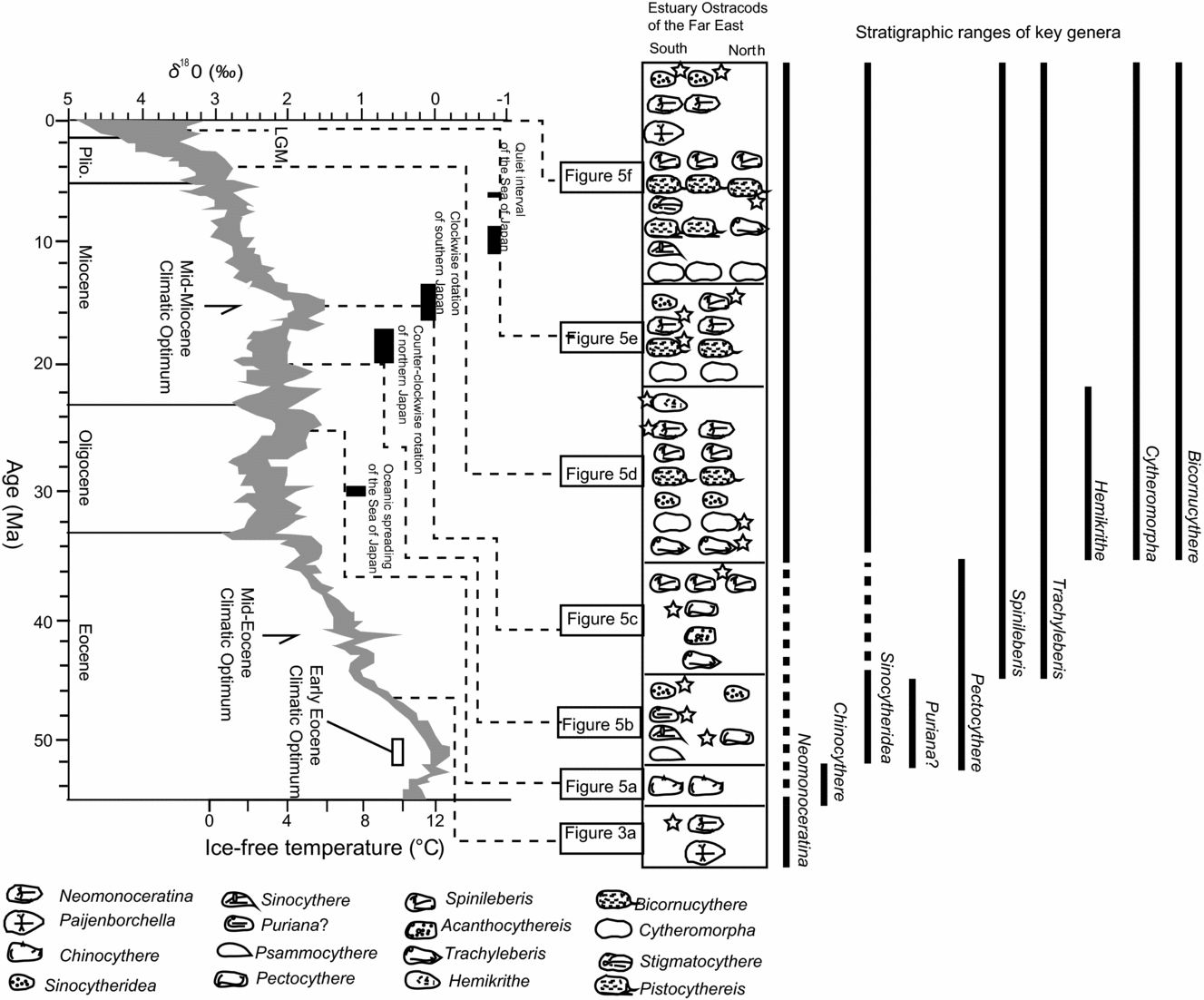
Global climate changes according to deep-sea benthic foraminifars (grey curve) after the Eocene period (Zachos, Dickens & Zeebe, Reference Zachos, Dickens and Zeebe2008), regional tectonic events in the Far East (Jolivet, Tamaki & Fournier, Reference Jolivet, Tamaki and Fournier1994) and changes in the characteristic estuarine ostracod genera. Asterisks show main genera in each locality.

5. Changes in the post-Oligocene estuarine ostracod assemblage in the Far East
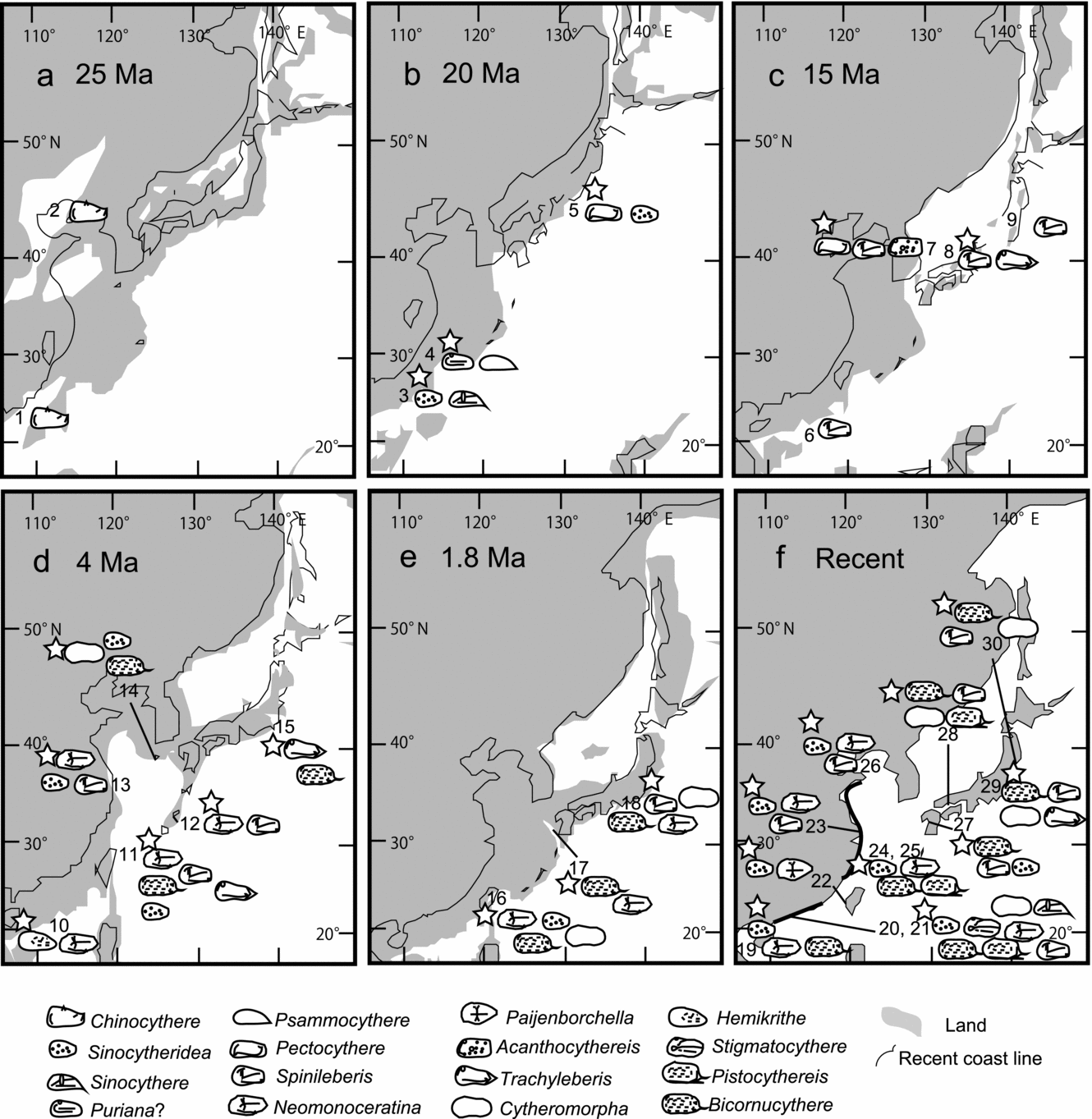
To date, one report of ostracod assemblages has indicated the presence of an estuarine environment in the Far East during Oligocene time. Wang et al. (Reference Wang1985) reported on the early–late Oligocene coastal-brackish-water ostracod Chinocythere from the coast of China (Fig. 5a), currently the only such report from China.
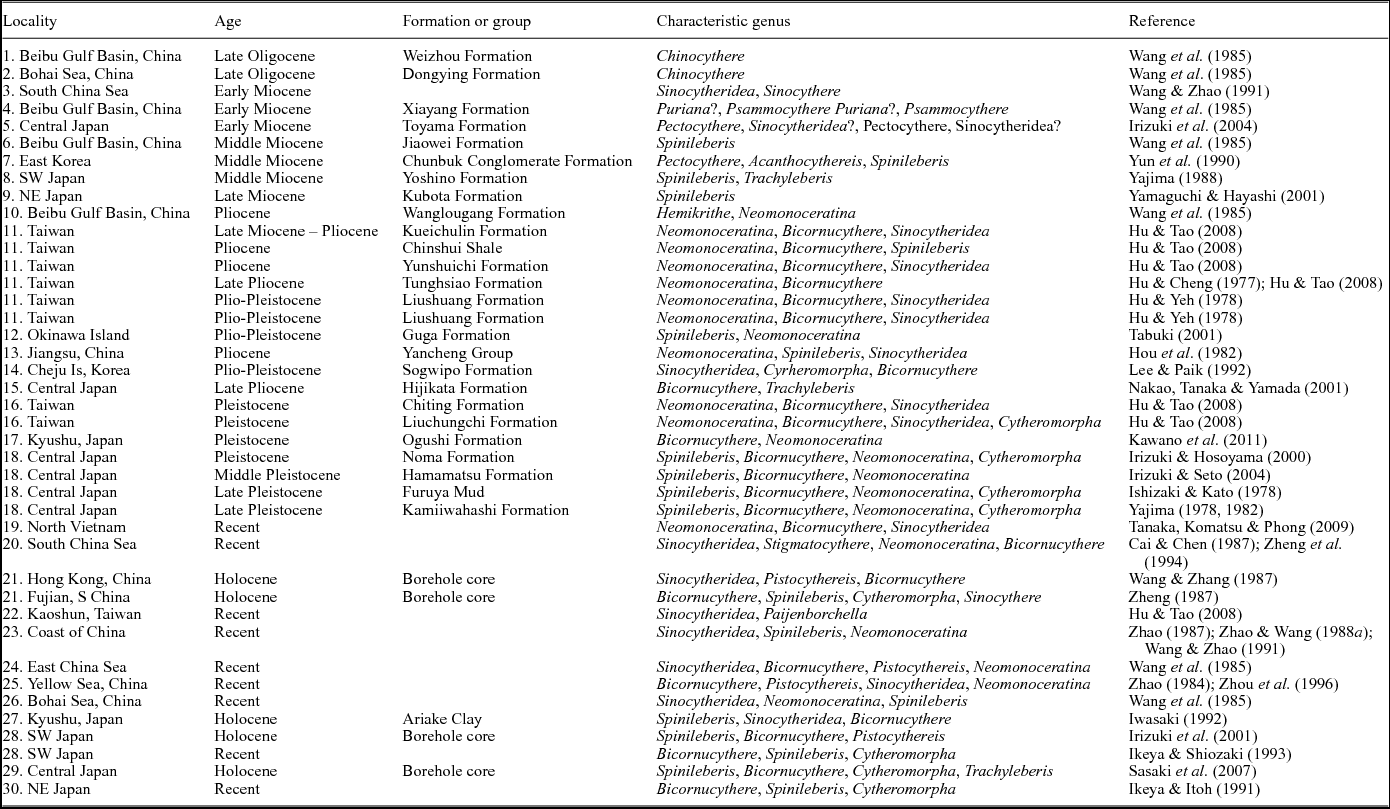
(a–f) Palaeogeographical distribution of estuarine ostracods in the Far East after Oligocene time. Palaeogeographical maps were downloaded from the online service of the Ocean Drilling Stratigraphic Network (http://www.odsn.de) and are also based on the findings of Jolivet, Tamaki & Fournier (Reference Jolivet, Tamaki and Fournier1994). Pliocene map (d) is partly based on the data from Iijima & Tada (Reference Iijima and Tada1990). See Table 2 for details of localities 1–30. Asterisks indicate main genera in each locality.

With the formation of the Sea of Japan after the (at the latest) late Oligocene period in conjunction with regional tectonic events and global sea-level changes (e.g. Zachos, Dickens & Zeebe, Reference Zachos, Dickens and Zeebe2008) many sedimentary basins were formed in Japan, allowing the preservation of continuous fossil records after the early Miocene period. Early Miocene estuarine ostracod assemblages are composed of completely different genera than those found in both the Eocene (Neomonoceratina, Paijenborchella) and the Oligocene (Chinocythere) assemblage, and contain some endemic genera that are only found in the Far East (Fig. 5b). Among these, Sinocytheridea is widely distributed from the northern and southern margins of the Far East; however, other genera are only reported in limited areas (Fig. 5b). Although Sinocytheridea is the most ubiquitous genus in brackish-water conditions from the post-Miocene to Recent periods along the coast of China and Taiwan (Fig. 5d–f), species of this genus do not currently inhabit the mainland of Japan (Fig. 5f, Table 2). Compared with other regions, Sinocytheridea is also typical of the euryhaline species in this region where Cyprideis species flourish under current euryhaline environments (Zhao & Whatley, Reference Zhao and Whatley1992). The early Miocene period (c. 20 Ma) is one of global cooling (Zachos, Dickens & Zeebe, Reference Zachos, Dickens and Zeebe2008); Sinocytheridea widely occupied and adapted under the cool coastal-estuarine environment of the Far East.
Characteristic estuarine ostracod genera in the Far East after Oligocene time

Spinileberis first appeared during the middle Miocene period, and was broadly distributed throughout the Far East (Fig. 5c). The geographical distribution and fossil record of the genus Spinileberis is limited to the Far East (Tanaka, Kuroda & Ikeya, Reference Tanaka, Kuroda and Ikeya2011). The characteristic genus of the Far East estuarine environment therefore shifted from Sinocytheridea to Spinileberis during the middle Miocene period, and possibly appeared in many (coastal-) estuarine environments due to global warming (Mid-Miocene Climatic Optimum) and the formation of many archipelagos (Japan) in the Far East (Fig. 4).
The oldest fossil record of the genus Bicornucythere, which is of late Miocene age, was found in Taiwan (Table 2). This genus originated in South Asia during late Eocene time (Yamaguchi et al. Reference Yamaguchi, Suzuki, Soe, Htike, Nomura and Takai2015) and possibly migrated toward the Far East along the coast of the Indochina Peninsula.
The Pliocene climate experienced a drastic change from warm to cool (Fig. 4) and many new coastal-estuarine ostracods, such as Hemikrithe, Neomonoceratina and Cytheromorpha, appeared in the Far East; Spinileberis, Bicornucythere and Sinocytheridea already existed there (Fig. 5d). Among these, Hemikrithe and Neomonoceratina are distributed in the southern part of the Far East and the coast of China (Fig. 5d); however, the genus Cytheromorpha tends to be distributed in the northern area (Fig. 5d). Furthermore, the oldest fossil record of Cytheromorpha is reported from the Plio-Pleistocene Sogwipo Formation, which was deposited under cold-water influence (Lee & Paik, Reference Lee and Paik1992).
During the Last Glacial Maximum (LGM, c. 1.8 Ma), only five ostracods remained in the coastal-estuarine environment of the Far East (Figs 4, 5e); other Pliocene species disappeared from this region. After the LGM, the diversity of the coastal-estuary ostracods in the Far East increased with the appearance of many coastal-estuary environments as a result of global warming and sea-level rise (Figs 4, 5f). In particular, the number of genera characterizing the Recent coastal-estuary ostracod assemblages tends to increase for lower latitudes (i.e. towards the equator). Two extant ostracods (Neomonoceratina delicata and Sinocytheridea impressa) are widely distributed throughout the mud to sandy mud areas of SE Asian and south Chinese estuaries (Zhao & Whatley, Reference Zhao and Whatley1989; Dewi, Reference Dewi1997; Tanaka, Komatsu & Phong, Reference Tanaka, Komatsu and Phong2009; Zhao & Wang, Reference Zhao and Wang1988b). However, fresh shell specimens of the two genera have not been reported in the mainland of Japan except for the west coast of Kyushu Island; the population of Neomonoceratina and Sinocytheridea therefore seemed to disappear from Japan during the Holocene Epoch (Fig. 5, Table 2).
The oldest fossil record of coastal-estuarine ostracods such as Neomonoceratina, Chinocythere, Sinocytheridea and Spinileberis were found in the Far East and their Recent distributions are also restricted to the area spanning the Far East to South Asia, indicating that the four genera first invaded the coastal-estuarine environment in the Far East. The genus Bicornucythere originated in South Asia and migrated to the Far East during late Miocene time. However, Cytheromorpha first appeared in the Plio-Pleistocene under cool environmental conditions. Coastal-estuarine Cytheromorpha has a continuous late Eocene – Recent fossil record in North America and Europe (e.g. Keij, Reference Keij1957; Swain, Reference Swain1974; Gemery et al. Reference Gemery, Cronin, Briggs, Brouwers, Schornikov, Stepanova, Wood and Yasuhara2017), suggesting that Cytheromorpha invaded from North America or Europe via the Arctic region. To summarize, even in cooler environmental conditions, new ostracods invaded and adapted to wider range of temperature such as Sinocytheridea and Cytheromorpha. Local geological history has also affected the geographical distribution of the coastal-estuarine ostracods.
6. Conclusions
Dark grey silty claystone samples containing Pitar and Anomia species from the uppermost layer of the Akasaki Formation (Miroku Group, Kyushu Island, Japan) also contained a Neomonoceratina-dominated ostracod assemblage. This, the first record of coastal-estuarine ostracods from the Eocene Epoch along the eastern margin of the Eurasian continent, reveals that a different estuarine ostracod assemblage flourished in this region before the Neogene Period.
Neomonoceratina species originated on the Indian subcontinent during early Paleocene time (or earlier) and, with the northern drift of the Indian subcontinent, later diversified west and east via the Tethys along the equatorial current and counter-current; eventually, one of the eastwards-migrating species reached the eastern margin of the Eurasian continent and adapted to the estuarine environment. Accordingly, the estuarine ostracod assemblage along the eastern margin of the Eurasian continent differs completely from that of the Tethys during the Eocene period.
After the Oligocene period, coastal-estuarine ostracod assemblages in the Far East shifted along with global sea-level changes and regional tectonic effects.
7. Systematic palaeontology (by Gengo Tanaka)
The classification and morphological terminology suggested by Horne, Cohen & Martens (Reference Horne, Cohen, Martens, Holmes and Chivas2002) were followed here. Classification of the genera Neomonoceratina and Paijenborchella was conducted according to Benson et al. (Reference Benson, Berdan, van den Bold, Hanai, Hessland, Howe, Kesling, Levinson, Reyment, Moore, Scott, Shaver, Sohn, Stover, Swain, Sylvester-Bradley, Wainwright and Moore1961) because of the subsequent detailed morphological analyses of these genera (Hanai, Reference Hanai1970). All specimens described here were collected from the uppermost part of the lower Eocene Ypresian, Akasaki Formation, Miroku Group (49.1±0.4 Ma by Miyake et al. Reference Miyake, Tsutsumi, Miyata and Komatsu2016).
All illustrated specimens have been deposited in the collections of the Goshoura Cretaceous Museum (GCM IVP number).
Class Ostracoda Latreille, Reference Latreille1802
Order Podocopida Müller, Reference Müller, Friedlaender and Berlin1894
Family Schizocytheridae Howe, Reference Howe and Moore1961 (in Benson et al. Reference Benson, Berdan, van den Bold, Hanai, Hessland, Howe, Kesling, Levinson, Reyment, Moore, Scott, Shaver, Sohn, Stover, Swain, Sylvester-Bradley, Wainwright and Moore1961)
Genus Neomonoceratina Kingma, Reference Kingma1948
Type species Neomonoceratina columbiformis Kingma, Reference Kingma1948
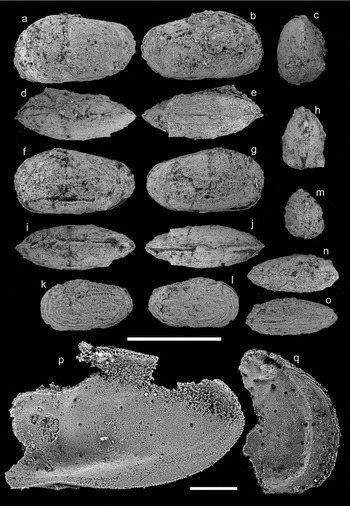
Neomonoceratina iwasakii sp. nov. (Fig. 6a–q)
Holotype. Carapace (GCM-IVP3495) Figure 6i–e
Scanning electron micrographs (SEMs) of Neomonoceratina iwasakii sp. nov. from the Akasaki Formation. (a–e) GCM-IVP3495: female carapace from (a) left lateral; (b) right lateral; (c) posterior; (d) dorsal; and (e) ventral views. (f–j) GCM-IVP3496: (f) male carapace from left lateral; (g) right lateral; (h) posterior; (i) dorsal; and (j) ventral views. (k–o) GCM-IVP3497: (k) juvenile carapace from left lateral; (l) right lateral; (m) posterior; (n) dorsal; and (o) ventral views. (p) GCM-IVP3498: internal view of a fragmented female right valve. (q) GCM-IVP3499: internal view of a fragmented female left valve.

Derivation of name. Named after Professor Emeritus Yasuhide Iwasaki (Kumamoto University), a former head of the Aitsu Marine Station who studied ostracods from Kumamoto.
Type locality and horizon. Approximately 700 m NE of Sengan-san Mountain, Matsushima town, Kamiamakusa city, Kumamoto Prefecture, Kyushu, Japan (32°30′51.5″N; 130°25′26.7″E). A sample shown at Se 1 of Figure 2 comprised dark grey silty claystone with Pitar and Anomia spp. in the uppermost region of the Akasaki Formation, Miroku Group.
Material. A total of 196 specimens.
Diagnosis. Straight and posteriorly inclined dorsal margin is observed. Two murus extend from the anterodorsal to posterodorsal area, parallel from the anterior to posterior margins. Primary reticulation is visible at the posterior half. The left valve overlaps the right valve dorsal and ventral margins.
Description. Carapace forms a sub-rectangle from a lateral view. The anterior margin is evenly rounded, the dorsal margin is straight and inclined posteriorly, the posterior margin is obliquely and acutely rounded with a weak caudal process and the middle of the ventral margin is sinuated. A distinct dorsomedial sulcus and weak anterodorsal and posterodorsal tubercles are present. Two parallel murus extend from the anterodorsal to posterodorsal area from the anterior to posterior margins. A short muri slopes from the dorsomedial sulcus to an area just dorsoposterior of the centre. A short ala projects posteroventrally in the posteroventral area. Primary reticulation of the posterior half is visible. The outer carapace surface is entirely covered with pitted fossa. The left valve overlaps the right valve dorsal and ventral margins. In the ventral view the carapace appears arrowhead-shaped, with tapering anterior and posterior ends and prominent posteriorly directed ala. The posterior view reveals a rounded, dorsally pointing pentagonal shape. A Schizodont hinge is observed; the left valve contains an anterior hinge socket and small tooth at the anterior of the median hinge groove, and the right valve features a median bar with crenulations and an elongated posterior tooth. Inner anterior, posteroventral and posterior margins had developed. A selvage had developed along the anterior inner margin. Distribution of several normal pores can be observed. No ocular sinus is present. Adductor muscle scars had developed on the median ridge; these correspond to the dorsomedial sulcus from the outer lateral view. Sexual dimorphism is prominent: in the lateral view, the male appears longer and more slender than the female. In addition, the dorsal margin is more steeply inclined on the male compared to the female. Furthermore, the posterior margin of the male is more acutely rounded than that of the female. In the ventral and posterior views, the male appears to be more slender than the female.
Remarks. The new species, with its short muri slopes on the dorsomedial sulcus and pitted fossa over the entire carapace, is similar to Neomonoceratina donghaiensis, which was originally described from the Paleocene Lingfeng Formation among borehole core materials in the East China Sea (Liu, Reference Liu1989). However, Neomonoceratina iwasakii sp. nov. features an evenly rounded anterior margin, a more gently curved posterior margin and a slender lateral outline. Neomonoceratina iwasakii sp. nov. is similar to Neomonoceratina bullata, described by Yang & Chen, Reference Yang, Chen, Hou, Chen, Yang, Ho, Zhou and Tian1982 (in Hou et al. Reference Hou, Chen, Yang, Ho, Zhou and Tian1982) from the Eocene Funing Group, Jiangsu, China, with respect to an evenly rounded anterior margin and sub-rectangular outline in the lateral view; however, the new species is distinguished by the presence of two murus from the anterodorsal to posterodorsal area, primary reticulation of the posterior half and pitted fossa over the outer surface of carapace.
Genus Paijenborchella Kingma, Reference Kingma1948
Type species Paijenborchella iocosa Kingma, Reference Kingma1948
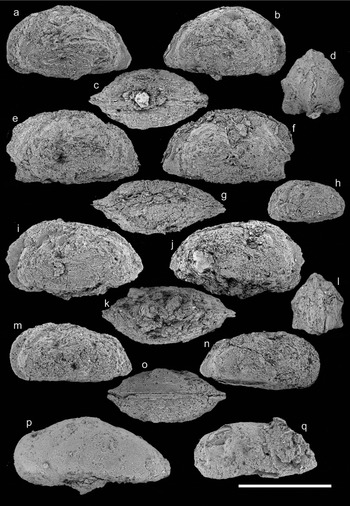
Paijenborchella amakusensis sp. nov. (Fig. 7a–o)
Holotype. Carapace (GCM-IVP3504) Figure 7i–k
Scanning electron micrographs (SEM) of ostracods from the Akasaki Formation. (a–o) GCM-IVP3500, Paijenborchella amakusensis sp. nov.: (a) left lateral, (b) right lateral; (c) ventral; and (d) posterior views of a juvenile carapace. GCM-IVP3501: (e) left lateral; (f) right lateral; and (g) ventral views of a female carapace. (h) GCM-IVP3502: left lateral view of a juvenile carapace. (i–k) GCM-IVP3504: (i) left lateral; (j) right lateral; and (k) ventral views of a male carapace. (l–o) GCM IVP number 05: (l) posterior; (m) left lateral; (n) right lateral; and (o) ventral views of a juvenile carapace. (p) GCM-IVP3505, Propontocypris sp.: left lateral view of a carapace. (q) GCM-IVP3506, Parakrithella sp.: left lateral view of a carapace.

Derivation of name. Named after the province in which the specimens were found.
Type locality and horizon. Approximately 700 m NE of Sengan-san Mountain, Matsushima town, Kamiamakusa city, Kumamoto Prefecture, Kyushu, Japan (32°30′51.5″N; 130°25′26.7″E). The sample, from Se 1 of Figure 2, comprises dark grey silty claystone containing Pitar sp. and Anomia sp. The sample was collected from the uppermost part of the Akasaki Formation, Miroku Group.
Material. A total of 22 specimens.
Diagnosis. The carapace has a sub-trapezoid shape in the lateral view. The dorsal margin is gently arched. Prominent muri, extending from anterodorsal area and widely arched midventral area, terminates at the posteroventral area. The left valve overlaps the right valve dorsal margin.
Description. The carapace has a sub-trapezoid appearance from a lateral view. The anterior margin is obliquely rounded, the dorsal margin is gently arched, the posterior margin slopes to the ventral margin with a prominent caudal process, and the ventral margin is sinuated as a result of midline and slightly posterior muri projections. A distinct dorsomedial sulcus and anterodorsal tubercle are present. Prominent muri extend from the anterodorsal area and widely arched midventral area to terminate at the posteroventral area. Short muri also developed from the dorsomedial sulcus and terminated slightly posterior to the central area. Flattened anterior and posterior marginal areas are visible. The left valve overlaps the right valve dorsal margin. In a ventral view the carapace appears spindle-shaped, with anterior and posterior tapering. Sexual dimorphism is prominent. In the lateral view, the male appears longer and more slender than the female. In addition, the posterior margin of the female exhibits a steeper posteroventral incline compared with that of the male.
Remarks. This species is similar to Paijenborchella optima (Liu, Reference Liu1989) from the Eocene Wenzhou Formation, detected in borehole core samples from the East China Sea, with respect to the widely arched mid-ventral muri and anterodorsal tubercle, but differs with respect to the presence of short muri developed on the dorsomedial sulcus, a more elongated lateral outline and wider, flattened anterior and posterior marginal areas. Paijenborchella amakusensis sp. nov. is also similar to Paijenborchella simplex Yang, Reference Yang, Yang, Jiang and Lin1995, discovered in the lower Tertiary strata of the western Tarim Basin in China, with respect to the wider, flattened anterior and posterior marginal areas; however, the new species is distinguished by the presence of a left valve that overlaps the dorsal margin of the right valve, a gently arched dorsal margin, pitted fossa on the outer surface of the carapace and prominent muri extending from the anterodorsal to posteroventral areas.
Family Krithidae Mandelstam (in Bubikyan, Reference Bubikyan1958)
Genus Parakrithella Hanai, Reference Hanai and Moore1961 (in Benson et al. Reference Benson, Berdan, van den Bold, Hanai, Hessland, Howe, Kesling, Levinson, Reyment, Moore, Scott, Shaver, Sohn, Stover, Swain, Sylvester-Bradley, Wainwright and Moore1961)
Type species Neocyprideis pseudadonta Hanai, Reference Hanai1959
Parakrithella sp. (Fig. 7q)
Remarks. Although we recovered 12 specimens from the material, many were fragmented and juvenile and therefore could not be described as novel. This species is similar to Parakrithella pseudadonta (Hanai, Reference Hanai1959) from Recent sediments obtained from beach sand in Hayama-cho, Kanagawa Prefecture, Central Japan with respect to the broadly arched dorsal margin, but differs with respect to the strongly protruding caudal process, more sinuated ventral margin and obliquely rounded anterior margin. Parakrithella sp. is similar to Parakrithella? arca (Yang, Reference Yang, Yang, Jiang and Lin1995) from the lower Tertiary strata of the western Tarim Basin, China, with respect to the broadly arched dorsal margin, but differs with respect to the sinuated anteroposterior margin, obliquely rounded anterior margin and prominent caudal process.
Family Pontocyprididae Müller, Reference Müller, Friedlaender and Berlin1894
Genus Propontocypris Sylvester-Bradley, Reference Sylvester-Bradley1947
Type species Pontocypris trigonella Sars, Reference Sars1866
Propontocypris sp. (Fig. 7p)
Remarks. Only three specimens were recovered from the material and could not be described as novel. This species is similar to Paracypris donghaiensis from the borehole core samples of the Eocene Wenzhou Formation in the East China Sea described by Liu in 1989 with respect to the smooth outer surface, but differs with respect to the strongly arched dorsal margin, sinuated anterodorsal margin and short caudal process. Propontocypris sp. is also similar to Paracypris? kuritai from the late Eocene Funazu Formation (data by Yamaguchi, Nagao & Kamiya, Reference Yamaguchi, Nagao and Kamiya2006), Nagasaki Prefecture, Japan, with respect to the strongly arched dorsal margin, but differs with respect to the sinuated anteroposterior margin, absence of surface ornamentation and shorter caudal process.
Acknowledgements
We are grateful to staff of the Amakusa Geopark for permitting the geological survey and collection of microfossils. The helpful comments of Professor Ashraf Elewa (Minia University), an anonymous referee and Professor Paul Upchurch (editor of the Geological Magazine) are appreciated. The authors express their gratitude to Crimson Interactive Pvt. Ltd for editing the English. This study was partly supported by a Grant-in-Aid for Science Research from the Ministry of Education and Science of the Government of Japan (No. 16K05592 to GT).