Clostridioides difficile infection (CDI) is a major cause of healthcare-associated infection (HAI); it occurs in ~500,000 individuals and accounts for ~12% of all HAIs in the United States annually.Reference Burke and Lamont1–3 Patients with CDI have more adverse outcomes such as prolonged length of stay and mortality, and they incur considerably greater economic burden than those without CDI.Reference Lessa, Mu and Bamberg4–Reference Desai, Gupta, Dubberke, Prabhu, Browne and Mast6
In the past few decades, the epidemiology of CDI has evolved. The incidence and severity of CDI has continued to rise,Reference Depestel and Aronoff7,Reference Kelly8 corresponding to the emergence of new hypervirulent strains (eg, PCR ribotype 027, toxinotype III, and pulsed-field gel electrophoresis pattern North American pulsed-field type 1).Reference Warny, Pepin and Fang9,Reference Kuijper, Coignard and Brazier10 Thus, C. difficile has become a particularly problematic pathogen as a result of its toxin production and widespread resistance to antibiotics.
Ongoing efforts to prevent CDI and increased attention to improve adherence to infection prevention strategies (eg, antibiotic stewardship programs, contact precautions, hand hygiene, and patient and caregiver education) may have resulted in reducing the rate of CDI,Reference Patton, Davey, Harbarth, Nathwani, Sneddon and Marwick11,Reference Balsells, Filipescu, Kyaw, Wiuff, Campbell and Nair12 but because it is difficult to identify the specific time when prevention strategies were initiated and the extent to which they are followed in various clinical settings, demonstrating the real-world impact of interventions remains challenging.
A major risk factor for developing CDI is broad-spectrum antibiotic therapy.Reference Bartlett and Gerding13 In addition to antibiotic exposure, other medications (eg, proton pump inhibitors [PPIs], histamine-2 blockers [H2 blockers]) that influence the gastric pH or gut bacteria also increase the risk for CDI.Reference Eze, Balsells, Kyaw and Nair14,Reference Trifan, Stanciu and Girleanu15 Some individual-level host factors associated with increased risk for CDI include age, gender, and comorbidities (eg, diabetes mellitus, solid organ transplant, and previous history of CDI).Reference Eze, Balsells, Kyaw and Nair14 Multiple studies have demonstrated that C. difficile can easily spread directly or indirectly through contamination of the hospital environment.Reference Weber, Anderson and Rutala16,Reference Bobulsky, Al-Nassir, Riggs, Sethi and Donskey17
Although studies have been conducted to elucidate the pathogenesis and risk factors of CDI, few studies have examined temporal changes in the prevalence or risk factors associated with CDI. Given recent changes in the incidence of CDI and prevention efforts, we investigated temporal changes over a period of 11 years—from 2006 to 2016—in incidence and risk factors for CDI.
Method
Sampling and setting
The sample for this study included pediatric and adult inpatients discharged from 1 of 3 hospitals (ie, a 745-bed tertiary-/quaternary-care hospital with adult wards, a 196-bed community hospital, and a 269-bed pediatric hospital) in metropolitan New York City between January 1, 2006, and December 31, 2016, totaling >100,000 patient admissions annually. The dataset has been derived from a federally funded grant (no. R01 HS024915) and extracted from various electronic databases (eg, admission-discharge-transfer system, electronic health record, a clinical data warehouse, departmental records). This study was approved by the institution’s institutional review board.
Definitions and outcomes
Trends in the total incidence of CDI, hospital-associated CDI (HA-CDI), and community-associated CDI (CA-CDI) were examined. In the study institutions, a patient with CDI was identified until September 1, 2009, as having a positive toxin detection by enzyme immunoassay (EIA) from an unformed stool. Beginning September 1, 2009 the more sensitive Xpert real-time polymerase chain reaction (PCR) test (Cepheid, Sunnyvale, CA) from an unformed stool was used.
The total CDI rate includes all positive stool specimens collected during the hospitalization. HA-CDI was defined as CDI but diagnosed ≥3 calendar days after admission. CA-CDI was defined a CDI present on admission or CDI diagnosed <3 calendar days after admission. In cases of multiple admissions of the same patient, consecutive positive C. difficile stool specimens occurring within 2 weeks of the previous positive test (ie, repeated infection timeframe) were excluded.18
Risk factors
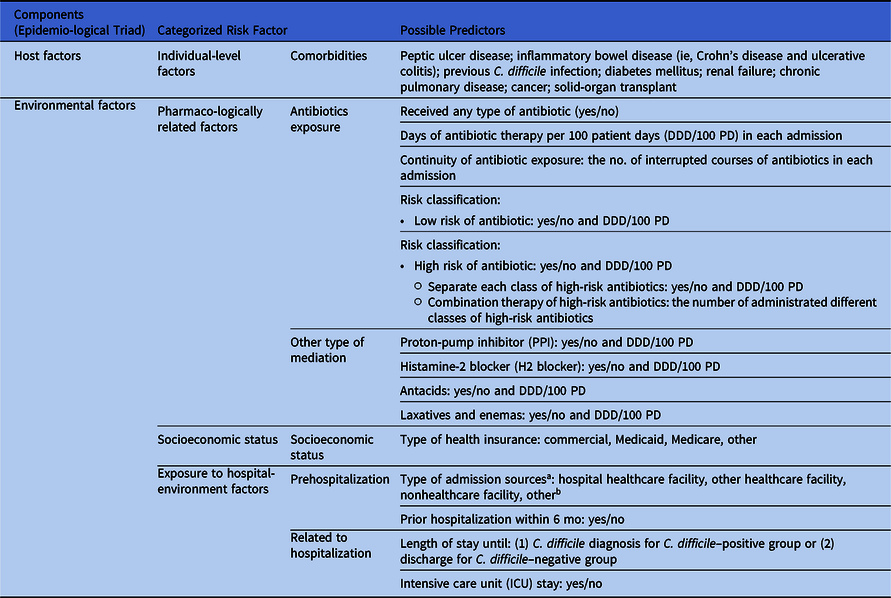
Table 1 lists the risk factors examined, which include individual-level host factors, pharmacological factors, and environmental factors. The host factors include demographic characteristics (age on admission and gender), severity of illness as measured by Charlson comorbidity index,Reference Charlson, Pompei, Ales and MacKenzie19 and International Classification of Disease, Ninth Revision, Clinical Modification (ICD-9-CM) principal procedure codes. The most important pharmacological factor is antibiotic exposure which was measured in several ways: (1) whether a patient received any antibiotic (yes or no); (2) ‘days of antibiotic exposure,’ the cumulative total days of antibiotic therapy per 100 patient days or incidence density (defined daily dose [DDD] per 100 patient days); (3) ‘number of antibiotic courses, calculated by counting the number of interrupted courses of antibiotics separated by ≥48-hour antibiotic-free interval between antibiotic exposures; (4) the ‘use of high-risk antibiotics’ that have been previously associated with increased risk of CDI including aminoglycosides (amikacin), broad-spectrum penicillins, carbapenem, cephalosporins (except first generation), clindamycin, fluoroquinolones, glycylcyclin (tigecycline), and monobactam (aztreonam),Reference Slimings and Riley20,Reference Thomas, Stevenson and Riley21 calculated as DDD per 100 patient days; and (5) ‘combination therapy of high-risk antibiotics,’ defined as the number of different classes of high-risk antibiotics a patient received. See Appendix 1 (online) for a list of all antibiotics and antibiotics designated as ‘high risk’ included in this study. In addition to the antibiotic exposure, the receipt of (yes or no) and DDD per 100 patient days were also examined for PPIs, H2 blockers, antacids, and laxatives or enema. Environmental factors included prior healthcare exposures, including admission source and prior hospitalization within the previous 6 months, and current hospitalization factors including length of stay and whether the stay was in an intensive care unit. These variables were measured up to 1 day prior to C. difficile diagnosis for the C. difficile–positive group and until hospital discharge for the C. difficile–negative group.
Definitions for Potential Predictors for Clostridioides difficile

a Nonhealthcare facility includes clinic referral and admission from non–healthcare facility point of origin.
b Healthcare facility (other) refers the transferred from ambulatory surgery center, hospice/hospice plan, skilled nursing facilities or intermediate-care facility, or another healthcare facility.
Statistical analyses
Time trend for CDI incidence
The annual incidence of CDI was calculated as the number of CDI occurrences per 10,000 admissions. Because the more sensitive PCR test has been used in this institution since September 1, 2009, the incidence of CDI is separately presented before and after the PCR test to investigate the related trends. To examine temporal trends in CDI incidence, the Cochran–Armitage test for trend was used at a significance level of <.05.
Risk factors for HA-CDI
Because of the change of laboratory diagnostic method for CDI, only the period after implementation of the PCR test (September 1, 2009, to December 31, 2016) was included in the risk factor analysis. Patients <1 years of age and those whose length of hospitalization was <3 days were excluded. The bivariate association between the overall CDI incidence and each potential risk factor was analyzed using simple logistic regression.
Because of multicollinearity between the length of stay and the total cumulative days for risk factors, patients with and without HA-CDI were matched at a ratio of 1:4 by length of stay. For patients with HA-CDI, length of stay was calculated as the days from admission to C. difficile diagnosis and for noncases, from admission to discharge. Then, using multivariable logistic regression, the relationship between HA-CDI and the pharmacological risk factors was analyzed, adjusting for confounders identified in the previous simple logistic regression.
Temporal changes in trends of risk factors for HA-CDI
Each risk factor, which was identified through the simple or multivariable logistic regression, was independently assessed for temporal changes over time using Mann-Kendall trend tests for continuous variables (eg, days of antibiotics exposure) and Cochran–Armitage test for categorical variables (eg, receipt of antibiotics, yes or no). As an ecological aspect of the trend analysis, the temporal change of risk factors was investigated not only for the selected patients through matched case-control design but for all patients admitted to the hospitals after September 1, 2009 (ie, all cohort and the patient with HA-CDI, separately). All statistical analyses were performed using SAS version 9.4 software (SAS Institute, Cary, NC).
Results
Incidence of C. difficile infection
During the study period, 6,038 of 694,849 (0.87%) patients had at least 1 positive test for C. difficile during their hospitalization. Of these, 2,659 of 6,038 (44%) were identified as HA-CDI (38 per 10,000 admissions) and 3,379 of 6,038 (56%) were CA-CDI (48 per 10,000 admissions).
Temporal changes in incidence of C. difficile infection
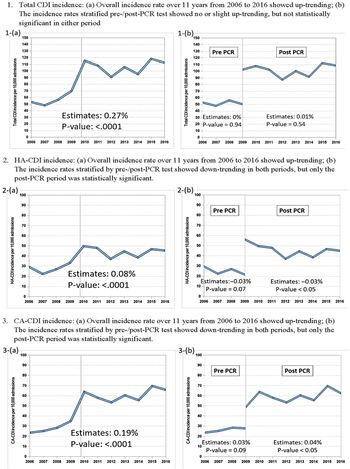
Figure 1 illustrates the temporal changes in total CDI incidence, total HA-CDI incidence, and the total CA-CDI incidence for (1) the overall total and (2) stratified by pre- and post-PCR periods. After stratifying for the change to a more sensitive diagnostic test, the temporal change in the incidence rate of HA-CDI decreased slightly by –0.03% annually in both the pre- and post-PCR test periods; while the incidence rates of CA-CDI increased by 0.03% and 0.04% annually during the same periods.
Temporal changes in the incidence rate of total CDI, HA-CDI and CA-CDI.

Cohort demographics
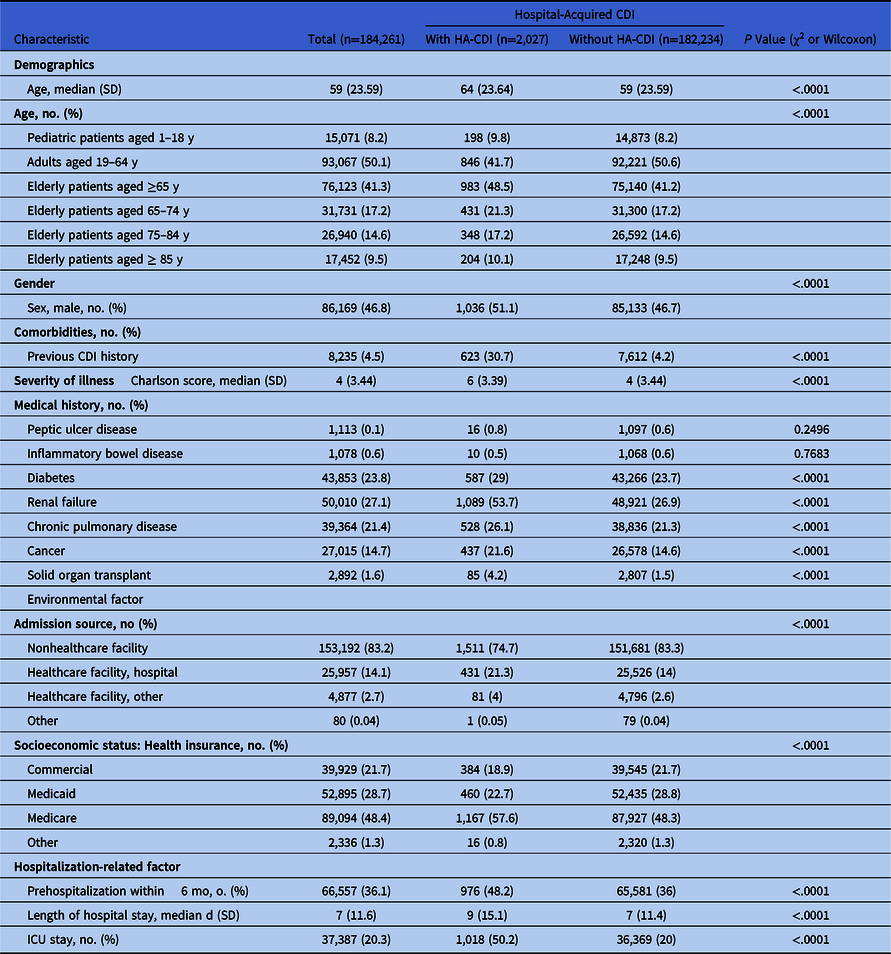
Table 2 lists the characteristics of the patients included in further analyses and compares patients with and without HA-CDI. The median age was 6 years older in patients with HA-CDI than those without. The proportion of males was larger among those with HA-CDI (51.1 vs 46.7%), and the median Charlson score was significantly higher in patients with HA-CDI (6 vs 4; all P < .001).
Characteristics of the Study Participants Aged ≥1 year and With a Length of Stay ≥3 Days in the Post-PCR Period
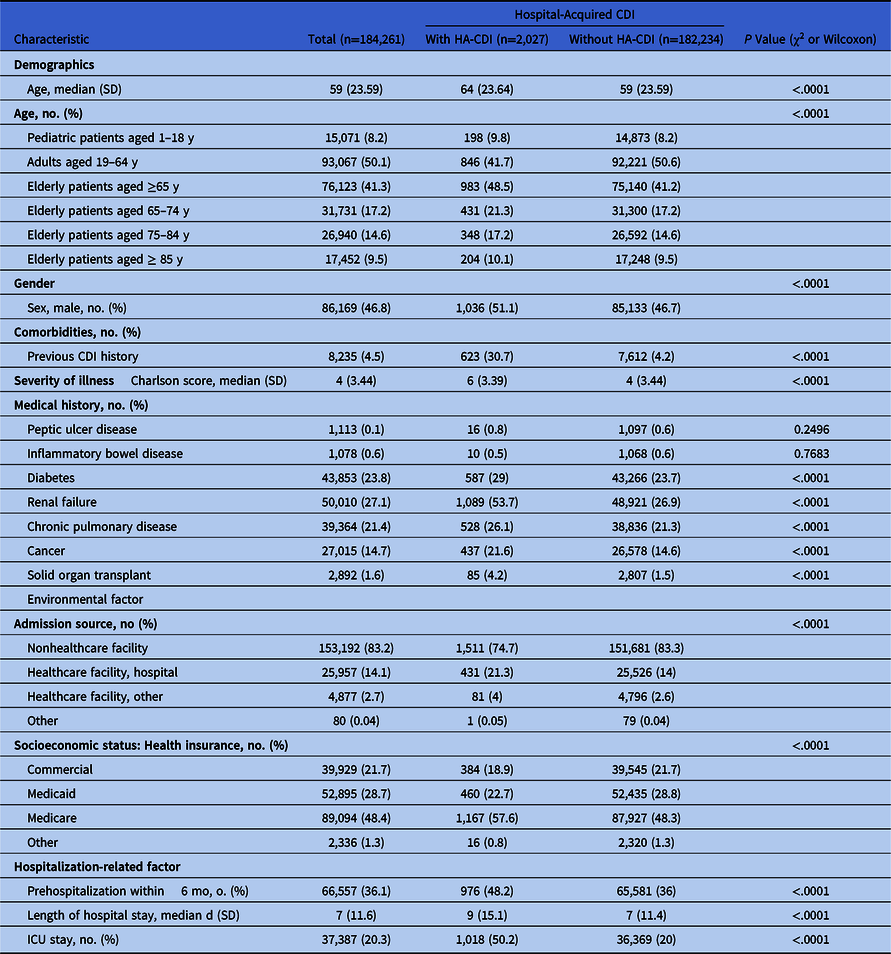
Note. PCR, polymerase chain reaction assay; CDI, Clostridioides difficile infection; HA-CDI, hospital-acquired CDI; SD, standard deviation; ICU, intensive care unit.
Risk factors for HA-CDI
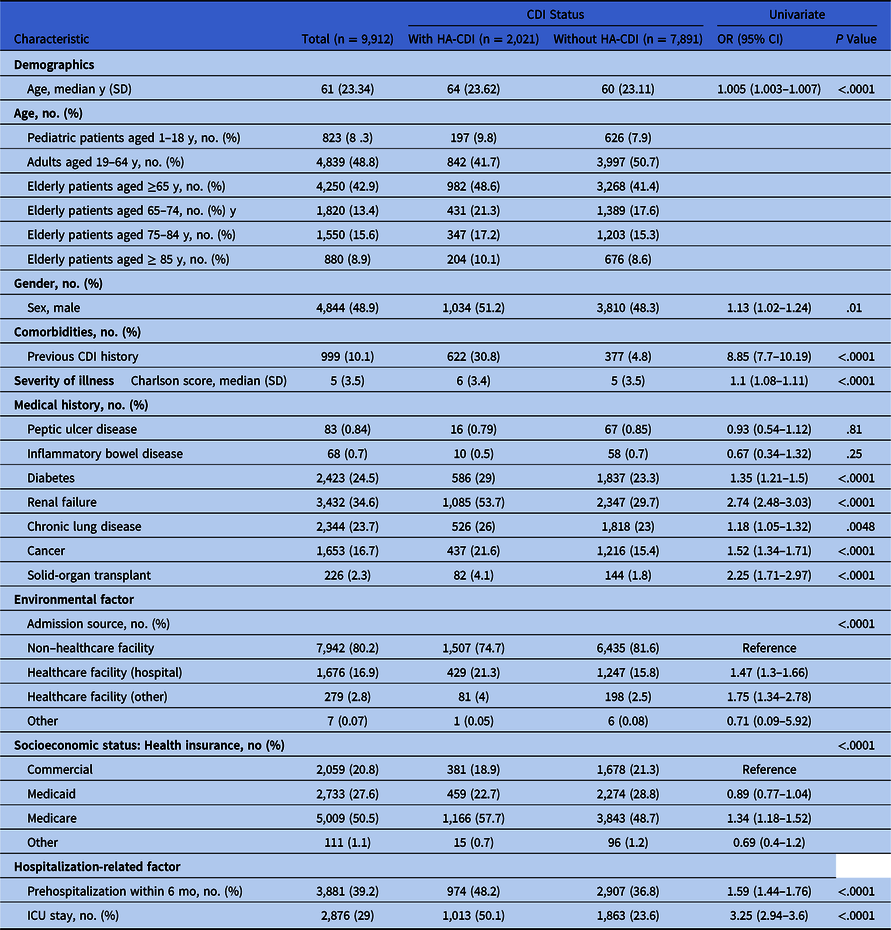
In the bivariate analysis, all factors except the presence of peptic ulcer or inflammatory bowel disease varied significantly between those with and without HA-CDI (Table 3); results of the multivariable logistic regression assessing the relationship between exposure to antibiotics and other type of medications and HA-CDI are summarized in Table 4.
Association Between Individual/Environmental Factors and Risk of HA-CDI (Simple Logistic Regression): Matched Case-Control at a Ratio of 1:4 by Length of Stay
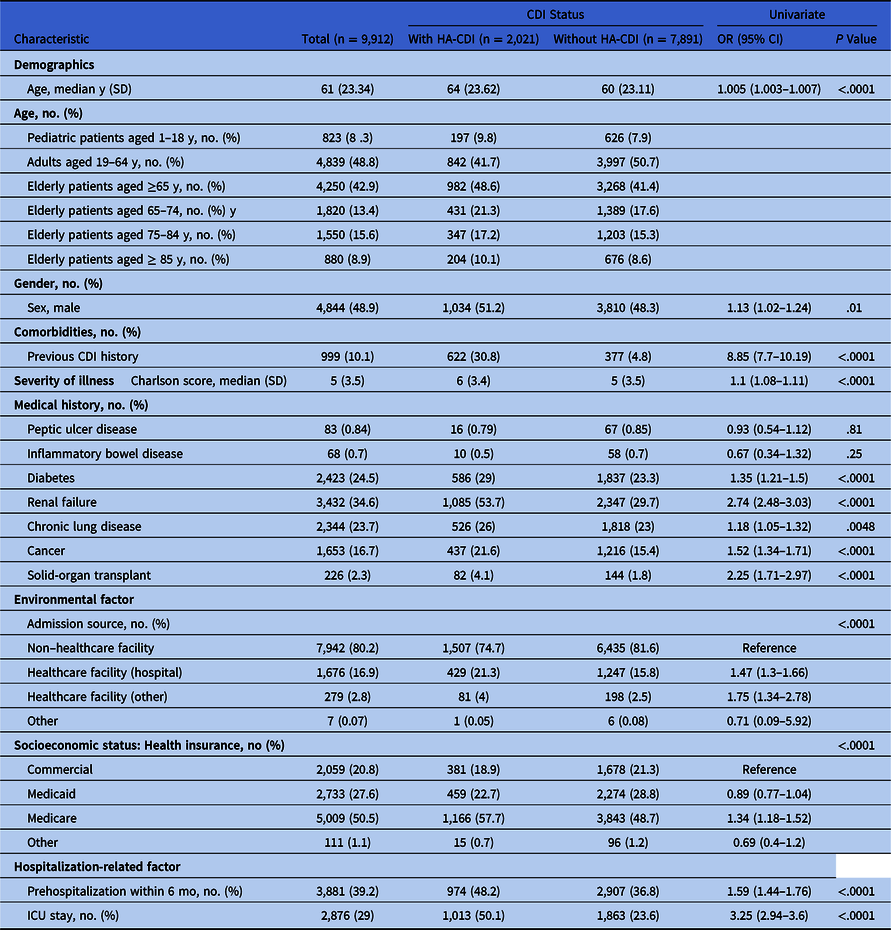
Note. CDI, Clostridioides difficile infection; HA-CDI, hospital-acquired CDI; OR, odds ratio; CI, confidence interval; SD, standard deviation; ICU, intensive care unit.
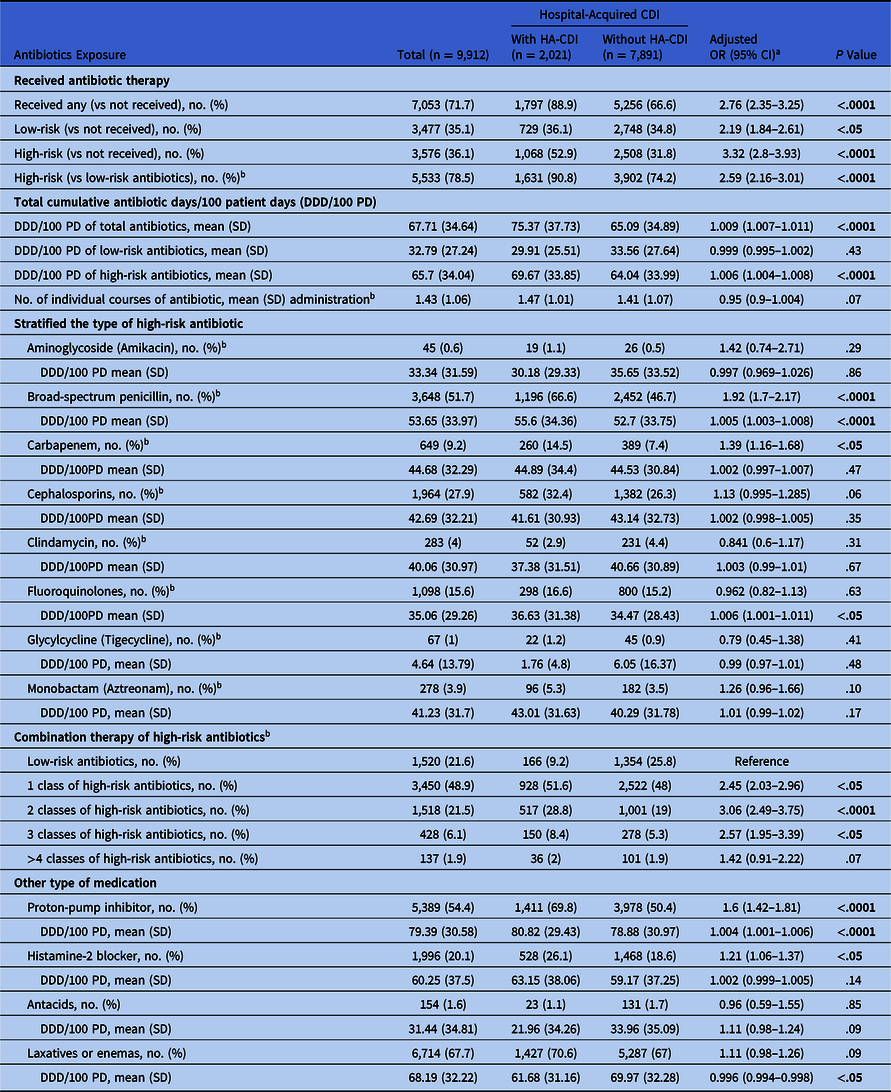
Association Between Therapeutic Agents and Risk of HA-CDI (Multivariate Logistic Regression)
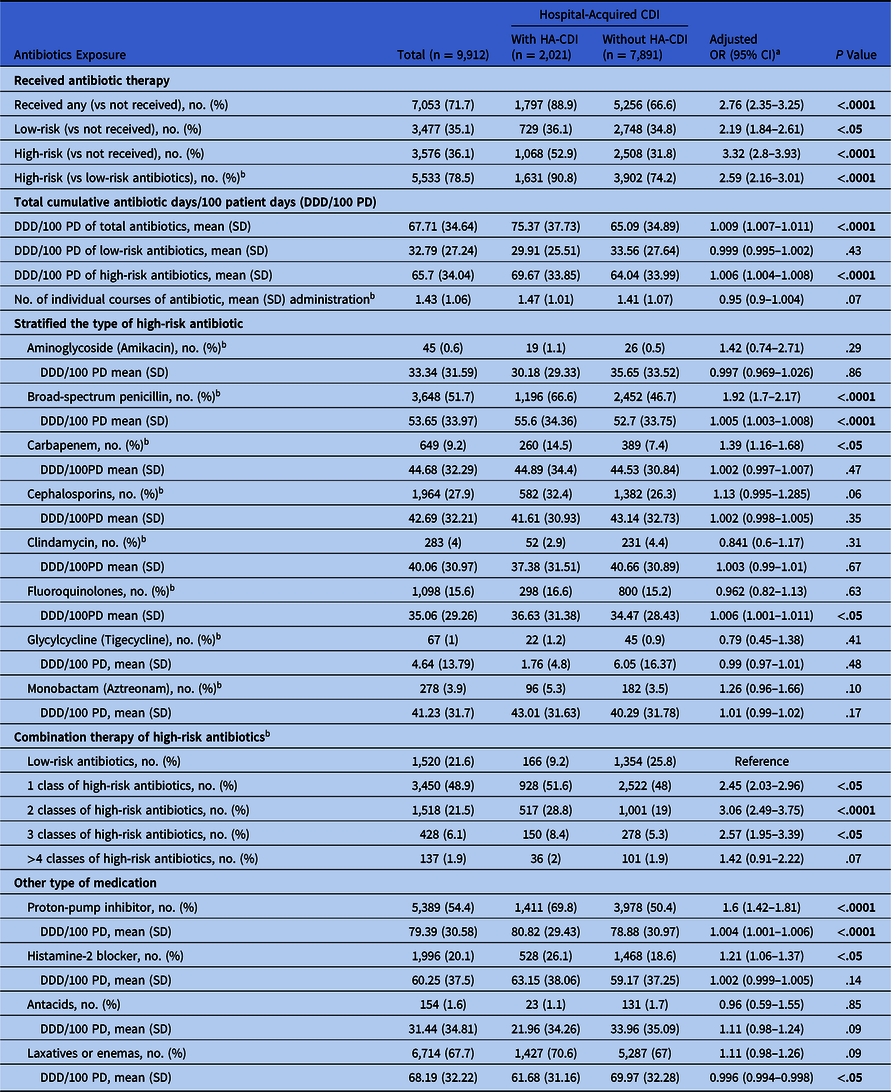
Note. CDI, Clostridioides difficile infection; HA-CDI, hospital-acquired CDI; OR, odds ratio; CI, confidence interval; DDD, defined daily dose; PD, patient days; SD, standard deviation; ICU, intensive care unit.
a Adjusted for age, gender, previous CDI history, Charlson score, admission source, health insurance, prehospitalization within 6 months and ICU stay.
b Descriptive statistics and multivariate regression analyses were calculated within only all antibiotic recipients.
Of 9,912 patients, 7,053 (71.2%) received antibiotics at least once during their hospitalization: 1,797 of 2,021 (88.92%) among those with HA-CDI and 5,256 of 7,891 (66.61%) among those without HA-CDI. Antibiotics were administrated for 75.4 days per 100 patient days and 65.1 days per 100 patient days among cases and controls, respectively. Antibiotic exposure was associated with increased risk of HA-CDI (odds ratio [OR], 2.76; 95% confidence interval [CI), 2.35–3.25), as was longer antibiotic administration (OR, 1.009; 95% CI, 1.007–1.011). Risk of HA-CDI was greater among patients who received both low- and high-risk antibiotics (OR, 2.19; 95% CI, 1.84–2.61) than those who received no antibiotics (OR, 3.32; 95% CI, 2.8–3.93). Among all antibiotic recipients, 5,533 of 7,053 (78.45%) received high-risk antibiotics; 1,631 of 1,797 (90.8%) in the group with HA-CDI and 3,902 of 5,266 (74.24%) in the group without HA-CDI. Of these antibiotic recipients, high-risk antibiotic exposure was associated with increased risk of HA-CDI (OR, 2.59; 95% CI, 2.16–3.01), as was longer high-risk administration (OR, 1.006; 95% CI, 1.004–1.008). There was no clear trend in risk of HA-CDI among patients who received multiple classes of antibiotics compared with those receiving a ‘low risk’ antibiotic. Recipients of PPI had increased the risk of HA-CDI (OR, 1.6; 95% CI, 1.42–1.81), as did those receiving PPI for longer periods of treatments (OR, 1.004; 95% CI, 1.001–1.006). Receiving H2 blockers also increased the risk of HA-CDI (OR, 1.21; 95% CI, 1.06–1.37; all P < .05).
Temporal changes in risk factors for HA-CDI
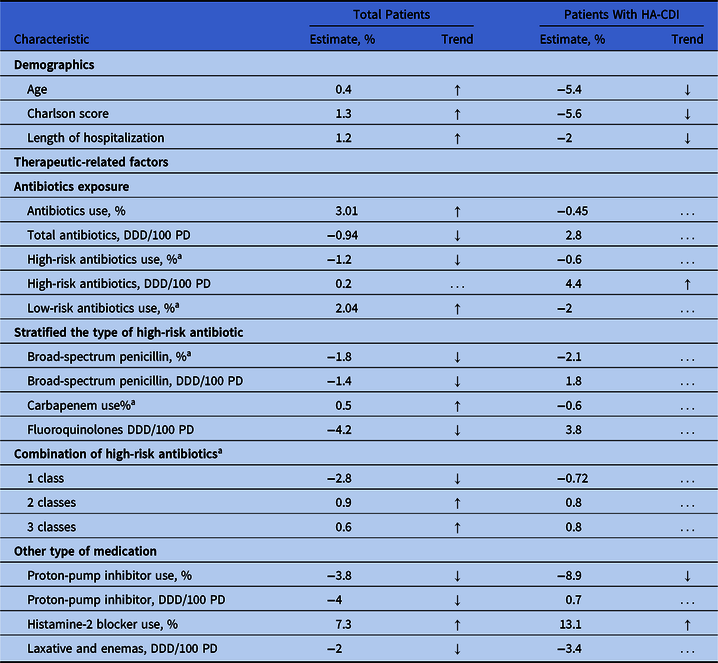
The temporal changes of risk factors for HA-CDI were investigated in the post-PCR test period, from September 1, 2009, to December 31, 2016 (Table 5 and Appendix 2 online). The average patient age, Charlson score, and length of stay increased over time. However, the trend among patients who developed HA-CDI was younger age (from 62.7 to 55.4 years; –5.4% per year [per year]), lower severity of illness (ie, the Charlson score fell from 6.2 to 5.3; –5.6% per year), and shorter hospitalization over time (from 14.7 to 12.3 days; –2% per year).
Temporal Changes in Risk Factors for HA-CDI
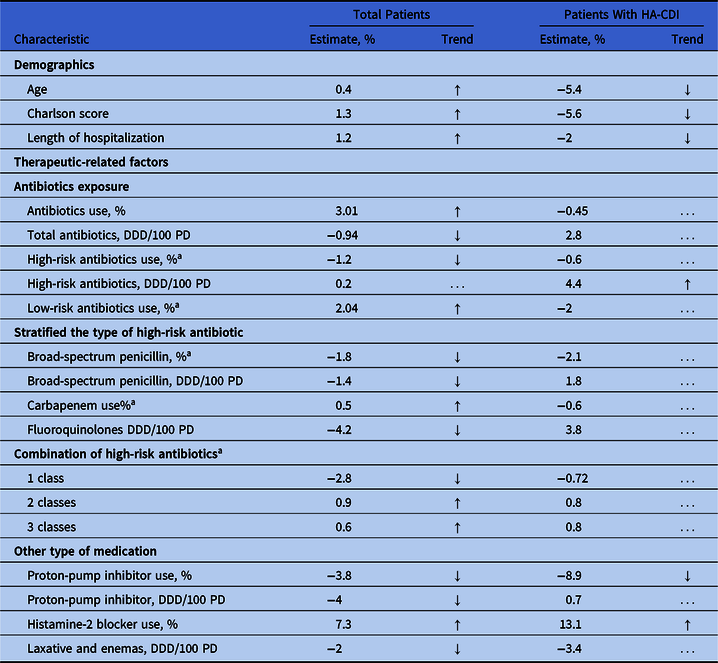
Note. ↑, upward trend; ↓, downward trend; …, no trend (at P trend = .05); CDI, Clostridioides difficile infection; HA-CDI, hospital-acquired CDI; DDD, defined daily dose; PD, patient days.
a Trends were assessed within only all antibiotic recipients.
Overall, the proportion of antibiotic recipients increased over the study period from 61.2% in 2009 to 70.2% in 2016 (+3% per year), but the DDD per 100 patient days of antibiotics became shorter, from 67 to 65.3 days per 100 patient days (−0.94% per year). Statistically significant trends were not observed in patients with HA-CDI. In contrast to the total antibiotic use, the proportion of high-risk antibiotic recipients declined over time from 71% to 68.8% (–1.2% per year), whereas the DDD per 100 patient days of high-risk antibiotics increased in patients with HA-CDI from 67.3 to 74.9 days per 100 patient days (+4.4% per year) and the proportion of low-risk antibiotic recipients increased from 51.9% to 55.8% (+2.04% per year).
In terms of specific types of high-risk antibiotics, the use of carbapenem increased (+0.5% per year), whereas the use and the duration of broad-spectrum penicillins (–1.8% and –1.4% per year, respectively) and the duration of fluoroquinolone use (from 42.1 to 36 days per 100 patient days, –4.2% per year) decreased. The use of combinations of high-risk antibiotics of 2 or 3 different classes increased from 14.6% to 17.3% and from 2.9% to 4.5%, respectively. Some high-risk antibiotics (ie, cephalosporin, clindamycin, and monobactam) were not associated with HA-CDI, but there were notable trends in their use and duration (upward trends in recipients +1.9%, +0.5%, and +0.4% per year; downward trends in DDD per 100 patient days –2%, –6.1% and –2.2% per year, respectively). A steeper incline in cephalosporin use was observed among those with HA-CDI (+5.7% per year).
PPIs were used less often and for shorter periods of for all patients (–3.8% and –4% per year, respectively), and this decrease was greater among those with HA-CDI (–8.9% per year). In contrast, the trend in the use of H2 blockers showed an increase from 9.3 to 22.8% (+7.3% per year) with a steeper increase among those with HA-CDI (+13.1% per year; all P trend < .05).
Discussion
In this study, we examined the temporal changes over 11 years— from 2006 to 2016—in incidence and risk factors for HA-CDI. In terms of temporal changes in C. difficile incidence, we confirmed the impact of the PCR test on C. difficile detection.Reference Song, Min and Kim22–Reference Berry, Sewell and Jafri24 Over 11 years, CDI incidence increased, but after stratifying rates before and after introduction of the PCR test, there was no overall trend in rates of total CDI, but a decrease in HA-CDI and an increase in CA-CDI. This downward trend in HA-CDI is consistent with recent studiesReference Burns, Berger, Pozzuoli and Woods25,Reference Zacharioudakis, Zervou, Shehadeh, Mylona and Mylonakis26 and a recent report from the CDC that described a 12% decrease of HA-CDI.27 The increasing trend of CA-CDI incidence also is consistent with previous longitudinal studies.Reference Reveles, Pugh and Lawson28,Reference Gupta and Khanna29 The shifting epidemiology of C. difficile may be associated with increased infection control efforts in the hospital setting (eg, daily cleaning, surveillance, increased awareness of hand hygiene or standard precaution),Reference Barker, Alagoz and Safdar30 or overprescription of high-risk medications including antibiotics and PPIs in the community.Reference Hawker, Smith and Smith31,Reference Luo, Fan, Xiao and Chen32
In addition, this study reconfirmed the established host and environmental risk factors for HA-CDI using a larger dataset than has been previously reported, which made it possible to control for numerous confounders that have not been addressed in previous studies.Reference Khanna, Aronson, Kammer, Baddour and Pardi33–Reference Baxter, Ray and Fireman37 Furthermore, we examined several characteristics of antibiotic administration including cumulative days, specific classes of high-risk antibiotics, and combination. After controlling for confounders, antibiotic exposure and longer periods of antibiotic administration were associated with an increased risk of HA-CDI.Reference Brown, Fisman, Moineddin and Daneman38 Although receiving more individual courses of antibiotic was not significantly associated with risk, we detected a trend toward lower risk that warrants further investigation. In this study, some antibiotics previously reported as risk factors were not consistently associated with HA-CDI in this current study, even though our sample size was large. Confounders in some previous studies may have resulted in spurious findings, and other unmeasured factors may not have been considered in this study. Contrary to previous findings,Reference Stevens, Dumyati, Fine, Fisher and van Wijngaarden39 we found no incrementally increased risk of HA-CDI when >1 class of high-risk antibiotics was used. However, the insufficient sample size in the groups who received 3 and 4 or more classes of high-risk antibiotics might have been not enough to prove the dose–response relationship. Therefore, further study is warranted incrementally increased risk of CDI with more different classes of antibiotic exposure.
Notably, we detected a significant association between HA-CDI and the incidence density (DDD per 100 patient days) for only certain antibiotics (broad-spectrum penicillins and fluoroquinolones) and PPI. As recognized by the World Health Organization (WHO) as an initiative of quantifying medication, incidence density rather than just a yes or no for receiving an antibiotic is the appropriate metric to assess the relationship between administration of an antibiotic and risk of HA-CDI.40
In our trend analysis, patients who developed HA-CDI were younger in age, their severity of illness was milder, and they had shorter hospitalizations over time. Such findings could be associated with earlier recognition, diagnosis of asymptomatically colonized patients, or increased prescribing or misuse of antibiotics among patients in the community setting, but our study was limited in that outpatient antibiotic use was not available in this database. Considering the high reoccurrence rate of HA-CDI, having HA-CDI at a younger age means greater risk of CDI infection over time. Thus, further attention is required to trends in changes of demographic factors. Through the trend analysis of therapeutic-related risk factors for HA-CDI, we identified potential targeted areas of interventions to improve infection prevention. For example, antibiotic stewardship efforts should be required to reduce the use of not only high-risk but also low-risk antibiotics. Combination therapy was associated with an increased risk of HA-CDI and should therefore be avoided when possible. In addition, incidence density, which is the more powerful metric than the administration of antibiotics (yes or no) to measure medication exposure, demonstrated that a shorter duration of use for total antibiotics, broad-spectrum penicillin, fluoroquinolones, and PPI over time, which was one potential factor associated with the decreased incidence of HA-CDI over the study period.
Our study has several limitations. Certain previously identified risk factors (eg, peptic ulcer and inflammatory bowel disease) are almost certainly underreported in ICD-9 or -10 codes and, therefore, were underreported in our data. For some antibiotics, sample size was insufficient to assess any potential associations with risk of HA-CDI. Also, other confounders may not have been not available or identified in this database, and changes in diagnostic stewardship (eg, restrictions aimed to limit testing in asymptomatic patients) were not included. In addition, because the Cochran–Armitage or Mann-Kendall trend tests were used to investigate linear trends in proportions, a trend might not be observed statistically in this study due to the natural fluctuation of the proportions. A testing bias would have occurred in patients with longer hospitalization because patients with longer stays are more likely to be tested. Importantly, data regarding antibiotics prescribed in the community or other healthcare facilities were not available. Because of the retrospective study design, we were able to infer the temporal changes in associations between risk factors and HAI, but we were unable to impute causality.
In conclusion, the incidence of HA-CDI appears to be decreasing over time, while CA-CDI is simultaneously increasing. Continued efforts to maximize judicious use of antibiotics in inpatient and community settings is clearly vital. Measuring the actual the level of exposure (incidence density) of an antibiotic (rather than simply recording whether an antibiotic was received) should be used for ongoing surveillance and assessment of risk factors. Furthermore, the association between temporal trends in risk factors and rates of HA-CDI should be followed as changes in practice are implemented.
Acknowledgments
Financial support
This study was supported in part by the Agency for Healthcare Research and Quality (R01HS024915), Nursing Intensity of Patient Care Needs and Rates of Healthcare-associated Infections (NIC-HAI), and by The Jonas Center for Nursing and Veterans Healthcare.
Conflicts of interest
All authors report no conflicts of interest relevant to this article.
Supplementary material
To view supplementary material for this article, please visit https://doi.org/10.1017/ice.2020.206