The sustainability of drug reimbursement systems is increasingly under pressure by continuously rising healthcare expenditures. A detailed comparison of various European drug reimbursement systems provides an overview of systems’ similarities and differences, and could help identify systems’ strengths and weaknesses and thus provide opportunities to improve their efficiency and sustainability.
Previous studies have investigated the use of health technology assessment (HTA) in coverage decision making (Reference Drummond, Jönsson and Rutten5;Reference Harris, Buxton and O'Brien9;Reference Sorenson19;Reference Stevens and Milne20), specific drug policies (Reference Niezen, de Bont and Stolk16), or parts of drug reimbursement systems (Reference Cohen, Faden and Predaris2;Reference Cohen, Stolk and Niezen3;Reference Levy, Mitton and Johnston14;Reference Wirtz, Cribb and Barber25), such as pricing and reimbursement (Reference Drummond, Jönsson and Rutten5;Reference Garattini, Cornago and De Compadri6), stakeholder involvement (Reference Vuorenkoski, Toiviainen and Hemminki24), and the role of reimbursement criteria (Reference Anell1;Reference Cohen, Stolk and Niezen3;Reference Le Pen, Priol and Lilliu13;Reference Stolk and Poley21). However, based on a literature review, Vuorenkoski et al. (Reference Vuorenkoski, Toiviainen and Hemminki23) concluded that most studies are descriptive in nature. They suggest that more analytically oriented studies would enhance our understanding of how reimbursement decision-making processes perform against system objectives. Therefore, we compare five European drug reimbursement systems, providing a detailed and comprehensive comparative analysis between the systems’ objectives, institutions, processes, formal reimbursement criteria, and output and implementation in real life. In specific, the degree of detail in our analysis, the link with policy goals, and the breadth of our investigations improves upon previous research. We draw general conclusions with respect to systems’ similarities and differences, strengths and weaknesses, and formulate policy recommendations.
METHODS
We used the analytical Hutton Framework (Reference Hutton, McGrath and Frybourg10) to describe, analyze, and compare the Belgian, Austrian, Dutch, French, and Swedish drug reimbursement systems. Although the country selection was partly arbitrary aiming to include our own countries, the selection of the other countries was based on observed important differences in systems’ structure, organization, and procedures. Our sample includes systems with (i) various historical contextual backgrounds such as having a Beveridge-type (Sweden), Bismarck-type (Austria, Belgium, France, and the Netherlands), and managed competitive (the Netherlands) system; (ii) various types of final decision makers, i.e., the reimbursement agency (Austria and Sweden) or minister of health (Belgium, France and the Netherlands); and (iii) various implementation levels (national in Austria, Belgium, France, and the Netherlands and regional in Sweden).
We investigated policy documents, explored literature, and conducted interviews. Experts in each country validated individual country reports. The aim of the interviews was to retrieve (up-to-date) information unavailable in policy documents and literature, and to obtain further insight into how the systems work in practice. The selection of interviewees was based on their specific involvement in drug reimbursement. Interviewees were policy makers, representatives of the reimbursement agency/ social insurance institution, expert committee members, patients, or representatives of the pharmaceutical industry. Interviews were performed by mail questionnaire (1), phone (Reference Cohen, Faden and Predaris2), or face-to-face (34), totaling fifty-seven persons (3, 24, 5, 14, and 11 in Austria, Belgium, France, the Netherlands, and Sweden, respectively). The number of interviewees was deliberately higher in our own countries in which we started; because of time restrictions, but mainly due to learning effects we could reduce the number of interviewees in the subsequent countries.
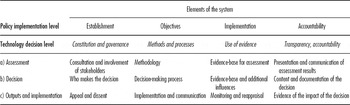
The descriptive Hutton framework provides a structure that comprehensively details reimbursement systems (including drug reimbursement systems), distinguishing between policy implementation and technology decision levels (Reference Hutton, McGrath and Frybourg10). The policy implementation level describes how the system is embedded in the broader political system. It encompasses the (legal) establishment, objectives, implementation, and accountability of the system. The technology decision level describes the process of an individual reimbursement request and its phases: assessment, decision making, and outputs and implementation. Based on the framework, information on the characteristics of reimbursement systems can be grouped into a four-area research matrix: constitution and governance, methods and processes, use of evidence, and accountability and transparency (Table 1).
Elements of the Hutton Framework

Note. Source: Hutton et al. 2006 (Reference Hutton, McGrath and Frybourg10).
We added the concept of appraisal at the technology decision level. Assessment is the quantification of the clinical, pharmacotherapeutic, and pharmacoeconomic value of a drug. It is descriptive in terms of quality and uncertainty of evidence. Appraisal seeks to gauge society's willingness to pay for a drug by weighing assessment outcomes against other (societal) criteria which reflect health system objectives. Decision making is a value judgment from a broader societal perspective, considering health system objectives as well as non–healthcare-related objectives.
RESULTS
Contextual Background
All five countries have healthcare systems that cover more than 99 percent of their populations. The Swedish system originates from a Beveridge-type national health system; the other four originate from a Bismarck-type social insurance system. The Dutch system uses managed competition between providers and insurers. Health policy is mainly developed and regulated at the national level, but implementation and financial responsibility can be regional or rely on external actors (e.g., insurers).
Based on OECD 2008 figures, healthcare expenditure varies from 9.4 to 9.9, 10.2, 10.5, and 11.2 percent of GDP in Sweden, the Netherlands, Belgium, Austria, and France, respectively (17). A larger variation is observed in pharmaceutical expenditure as a share of total healthcare expenditure: 11.0, 13.2, 13.3, 16.4, and 16.4 percent in the Netherlands, Sweden, Austria, Belgium, and France, respectively (17).
The countries share similar system objectives: system sustainability, equity, and quality of care. Countries can make different trade-offs to balance the objectives and obtain a socially acceptable equilibrium. All have an open-ended pharmaceutical budget moderated by annual goals. Although pricing policies are not within the scope of this study, pricing and reimbursement are often strongly linked. All five countries use budget control mechanisms and supply/demand-side tools such as price regulations, international price referencing, internal reference pricing, financial risk-sharing agreements, (incentivized) prescription guidelines, and co-payments. The final price or reimbursement basis at least partially depends on the drug reimbursement evaluation.
Policy Implementation Level
All five drug reimbursement systems explicitly seek equitable and affordable access to high-quality health care in a sustainable manner. Other shared objectives are transparency toward pharmaceutical companies and rewarding innovation and investments in research and development (R&D). None of the systems is clear about the actual place of such “non-health” objectives. In the past decade, all countries have reformed their reimbursement systems’ legal basis. The reforms aimed to improve efficient decision making in the context of increasing healthcare expenditure and were partly triggered by the EU Transparency Directive 89/105/EEC, requiring transparency of the decision-making process.
Except for expensive inpatient drugs in the Netherlands and ad-hoc procedures initiated by the reimbursement agency in Austria, the reimbursement process for a new product is initiated by the manufacturer. In all countries, outpatient drugs need to be assessed and enlisted to be eligible for reimbursement. Systems for inpatient drugs vary: they are part of the drug reimbursement system in Belgium, France, and the Netherlands (expensive drugs only), the responsibility of county councils in Sweden, and hospitals, Länder, communities, and other hospital owners in Austria.
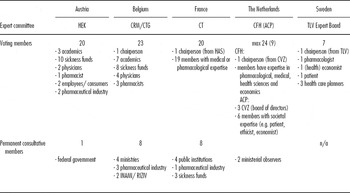
A shared characteristic is the existence of a national reimbursement agency: HVB in Austria, INAMI/RIZIV in Belgium, HAS in France, CVZ in the Netherlands and TLV in Sweden. In all countries, a technical department is responsible for compiling scientific evidence. The department prepares the assessment and drafts the preliminary summary report. An independent expert committee assesses and appraises the evidence and is responsible for advising the final decision maker (i.e., the minister of health in Belgium, France, and the Netherlands, HVB in Austria). In Sweden, the expert committee also makes the final decision. Expert committees are considered independent because members, who must disclose conflicts of interest, are appointed for their scientific skills and expertise as representatives of society's prevailing interest. Only the Netherlands has, besides the expert committee (CFH), a separate appraisal (ACP) committee that also advises, based on societal considerations, the final decision maker. A closer look at the composition of the expert committees reveals divergences (Table 2). Belgium has the largest expert committee (thirty-one members, twenty-three of which have voting rights); Sweden has the smallest.
Composition of the expert committees

Note. ACP, Appraisal committee (Advies Commissie Pakket); CFH, Expert Pharmaceutical Advisory Committee (Commissie Farmaceutische Hulp); CRM/ CTG, Drug Reimbursement Committee (Commission de Remboursement des Médicaments/ Commissie voor Tegemoetkoming Geneesmiddelen); CT, Transparency Committee (Commission de la Transparence); CVZ, Health Care Insurance Board (College voor Zorgverzekeringen); HAS, Natianal Authority for Health (Haute Autoritée Santé); HEK, Pharmaceutical Evaluation Board (Heilmittel-Evaluierungskommission); INAMI/ RIZIV,National Institute for Health and Disability Insurance (Institut National d'Assurance Maladie-Invalidité); TLV, Dental and Pharmaceutical Benefits Agency (Tandvårds- och Läkemedelsförmånsverket).
We distinguished two main differences in the composition of the committees. The Belgian and Austrian committees represent all relevant stakeholders. Sweden, the Netherlands, and France rely heavily on academic and other scientific experts. Stakeholders can be consulted but are not entitled to deliberate or vote. In 2010, Sweden reduced the number of committee members, replacing scientific experts with healthcare planning experts. The Belgian and French committees include consultants from the pharmaceutical industry without voting rights. The Austrian committee has two representatives of employees and consumers. The Dutch appraisal committee and the Swedish expert committee have a patient representative. The reimbursement advice (or decision) is based on majority voting or, in the Netherlands, consensus. Belgium is unique in that a two-thirds majority is required; without it no advice is formulated.
In all countries, the minister of health is responsible for defining the overall drug reimbursement policy and steering the system; the ministry is accountable to Parliament. All systems have a trend toward increasing the transparency of decision making, but all systematically assess the impact of the system by monitoring drug expenditure rather than other system objectives.
Technology Decision Level
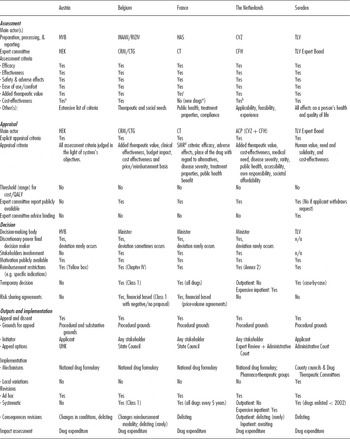
Table 3 provides a summary of our findings regarding the technology decision level for individual drug reimbursement requests.
Technology Decision Level

aQuality and uncertainty of evidence.
bRobustness of evidence.
c New law (Article 14; Law No 2011–2012 December 29th, 2011): drug reimbursement applications are assessed relative to therapeutic strategies, where available, under conditions defined by decree in Conseil d'Etat –Council of State– (conditions not yet published at time of publication).
dHAS is currently drafting a proposal to replace the SMR and ASMR to one single criterion (Relative Therapeutic Benefit).
eHAS recently received an extended remit to assess methodological quality of economic assessments of new technologies (decree under review Conseil d'Etat –Council of State–).
ACP, Appraisal committee (Advies Commissie Pakket); CFH, Expert Pharmaceutical Advisory Committee (Commissie Farmaceutische Hulp); CRM/ CTG, Drug Reimbursement Committee (Commission de Remboursement des Médicaments/ Commissie voor Tegemoetkoming Geneesmiddelen); CT, Transparency Committee (Commission de la Transparence); CVZ, Health Care Insurance Board (College voor Zorgverzekeringen); HAS, National Authority for Health (Haute Autoritée Santé); HEK, Pharmaceutical Evaluation Board (Heilmittel-Evaluierungskommission); HVB, Main Association of Austrian Social Security Institutions (Hauptverband der Ősterreichischen Sozialverzicherungsträger); INAMI/ RIZIV, National Institute for Health and Disability Insurance (Institut National d'Assurance Maladie-Invalidité); TLV, Dental and Pharmaceutical Benefits Agency (Tandvårds- och Läkemedelsförmånsverket); UHK, Independent Pharmaceutical Commission (Unabhängige Heilmittelkommission).
Assessment and Appraisal
The authorities responsible for the final reimbursement decision rely on advice from the expert committees. Reimbursement advice results from the often-intertwined processes of assessment and appraisal. The technical department starts the assessment and informs the expert committee, which appraises the reimbursement request and advises the final decision body. Even though the Netherlands has separate assessment and appraisal committees, the processes are still intertwined.
Therapeutic Value: A common key characteristic is the evaluation of the therapeutic value. All interviewees acknowledged that efficacy, effectiveness, safety, and adverse effects were the most important formal criteria. Although the criteria are related, they are subject to different interpretations and have various outcomes. In Austria and France, therapeutic value is rated in categories. Austria applies six categories ranging from “no added benefit” to “important benefit for the majority of patients.” France distinguishes five levels of improvement in the medical service rendered (ASMR) ranging from “no improvement” to “major improvement”. It should be noted that the French agency is currently drafting a proposal to replace the SMR and ASMR to one single criterion (Relative Therapeutic Benefit). Sweden uses a sliding scale such that price depends on the drug's cost-effectiveness. In contrast, the added therapeutic value is a binary yes/no decision in Belgium (class 1 or 2) and the Netherlands (list 1A or 1B).
In all countries, only drugs with added therapeutic value can obtain a higher reimbursement basis; in France, the added value also determines the level of patient cost share. For drugs with similar therapeutic value, the implications vary. In France, such drugs are reimbursed only if they realize savings. Dutch therapeutically equivalent drugs are grouped and reimbursed equally. In Belgium, the reimbursement basis equals that of the comparator. Austria assigns such drugs a lower consumer price than the best therapeutic and reimbursable alternative.
Cost-Effectiveness: All countries but France use cost-effectiveness as formal criterion. Although the French agency is explicitly encouraged to use cost-effectiveness, the expert committee has until now been reluctant to take it into account for assessing new drugs. France does consider cost-effectiveness in revision processes. The French Agency recently received an extended remit to assess methodological quality of economic assessments of new technologies (decree under review Council of State -Conseil d'Etat-). In Belgium and the Netherlands, cost-effectiveness is taken into account only for drugs with recognized added therapeutic value. In Sweden and Austria, cost-effectiveness evidence requirements are most extensive for drugs claiming added therapeutic value.
Further exploration reveals divergence in countries’ assessment of cost-effectiveness. In Austria and the Netherlands, only the quality of evidence and its level of uncertainty are assessed. The Swedish and Belgian committees, in contrast, also consider the actual cost-effectiveness ratio.
Even though four countries have cost-effectiveness as a formal criterion, none applies a strictly defined or transparent cost-effectiveness threshold (range). Most interviewees indicated that if one existed, it would be an increasing threshold depending on factors such as disease severity and medical need. They also acknowledged being more lenient toward orphan drugs and drugs for severe and life-threatening diseases.
Appraisal: Appraisal criteria and the weighing process are far less transparent than assessment. Belgium uses five appraisal criteria: added therapeutic value, price, budget impact, cost-effectiveness, and therapeutic importance in light of unmet medical and societal needs. Austria has an exhaustive list of assessment elements and uses system objectives as appraisal criteria. In France, the medical service rendered (SMR) evaluation includes the following criteria: level of efficacy relative to adverse effects, disease severity, treatment properties (preventive, curative, symptomatic), the drug's position in therapeutic strategy, and public health benefit. In the Netherlands, the appraisal committee has developed formal appraisal criteria such as medical need, disease severity and rarity, public health, accessibility, societal and patient affordability, and lifestyle. In Sweden, the three priority principles—human value, need and solidarity, and cost-effectiveness—set formal appraisal criteria. Sweden promotes a value for money system; budget impact is thus not a formal national level criterion.
All systems apply various reimbursement criteria without an explicit hierarchy. Although the appraisal criteria are often derived from system objectives, they remain somewhat implicit and are often not transparent.
Decision
All European countries are required to make a final reimbursement decision within 180 days (excluding clock stops). Austria, France, and Belgium apply strict timelines for advice (90, 90, and 150 days, respectively) and the reimbursement decision (180 days). For the Netherlands and Belgium, expert committee members’ limited time and limited technical staff were frequently mentioned as bottlenecks.
In Austria, Belgium, France, and the Netherlands, decision making occurs in two phases. First, the expert committee comes to reimbursement advice. Second, the minister of health (or in Austria the association of Austrian Social Security Institutions [HVB]) makes the final reimbursement decision based on the advice. The Swedish expert committee makes the final decision without an advice phase. Although the minister in Belgium, France and the Netherlands rarely deviates from the advice, in Austria and Sweden the minister has neither final decision right nor discretionary power with respect to individual reimbursement decisions.
All countries but Austria publish their reimbursement advice (decision) reports although their extensiveness varies by country. (Additional) appraisal criteria especially are often not transparent and the weighing process is often not documented.
Outcomes of the decision-making process are similar: reimbursement, no reimbursement, or conditional reimbursement. All countries can apply restrictions for specific indications, patient groups, access restrictions and the like. In Austria, drugs in the so-called red box (i.e., newly launched drugs and drugs that have applied for reimbursement) can already be reimbursed on an individual basis conditional on an ex-ante approval of a sickness fund “head physician” before the reimbursement decision has been made.
Use of temporary decisions varies by country. All positive decisions in France are re-assessed after 5 years. No decisions in Austria are temporary. Only decisions on drugs with recognized added therapeutic value in Belgium and expensive inpatient drugs in the Netherlands are temporary. The Swedish reimbursement agency decides temporary reimbursement on a case-by-case basis which is based on uncertainty of the evidence.
Outputs and Implementation
Applicants have formal opportunities in all countries to express their point of view or disagreement during the reimbursement process. They are also entitled on procedural grounds to appeal to the final decision at an administrative court.
All countries have mechanisms to support implementation by disseminating scientific evidence and improving appropriate drug use by means of national drug formularies and prescription guidelines. Only in Sweden every county council has its own guidelines. Impact assessment is often restricted to monitoring prescription volumes or drug expenditure.
We found substantially diverging policies regarding revision of enlisted drugs. The Austrian system has no systematic policy-enforcing revision process. In contrast, France systematically revises all decisions every five years, potentially changing reimbursement level or drug price. Sweden currently evaluates all drugs from the old reimbursement scheme (listed before 2002) according to therapeutic class. So far, this has resulted in guideline changes as well as delistings. In Belgium, all innovative drugs are systematically revised after 18 to 36 months. Changes in the reimbursement conditions occur but drugs are rarely delisted. Since 2006, expensive inpatient drugs in the Netherlands are revised after four years. No revision has been finalized thus far, hence its consequences are not clear. Recently, the Dutch minister announced that temporary decision making will be extended to outpatient drugs.
DISCUSSION
We compared five European drug reimbursement systems and provided a detailed analysis of systems’ similarities and differences to obtain insight into their strengths and weaknesses and to formulate policy recommendations.
Systems’ Strengths
At the policy implementation level, all five countries have enforced a national system that evaluates the societal value of a drug and determines whether the drug is worth reimbursement. All systems share clear objectives: system sustainability, quality of care and equity. System performance is monitored in terms of pharmaceutical expenditure, addressing system sustainability.
At the technology decision level, all put forward formal criteria which reflect systems’ objectives. HTA is used at some phase in the decision-making process to trade-off between the objectives. All systems are prepared to pay for drugs with sufficient added therapeutic value. Stakeholder involvement is ensured either through consultation or direct representation in the expert committee. Mechanisms to support implementation are used by means of guidelines and drug formularies.
Systems’ Weaknesses
At the policy implementation level, none of the systems systematically evaluates its performance regarding the quality of care and equity objective. All countries have a so-called supply driven system: the process starts with a manufacturer's reimbursement request and proceeds on a case-by-case basis. In principle this might lead to “pragmatic incrementalism” (Reference Klein11), risking a low degree of consistency across decisions. Furthermore, most systems make limited use of tools to systematically (re-) evaluate drugs’ relative value for money throughout their life cycle.
At the technology decision level, assessment and appraisal are in practice often strongly intertwined. All systems seem to use similar reimbursement criteria. However, none of the systems applies a formal hierarchy and the actual role of each criterion in the decision-making process is often not transparent; especially appraisal criteria lack transparency. Although all countries recognize the importance of HTA, all experience difficulties in defining its role and weight in the decision-making process.
Study Limitations
Our study only includes five countries. Nevertheless, we observed important differences in structure, organization, and procedures. The degree of detail in our analysis, the link with policy goals, and the breadth of our investigation contribute to previous studies and show opportunities to improve system efficiency and sustainability. Our analysis did not study individual reimbursement cases; such a case series analysis is part of our current work. This could produce additional insights.
Implications for Policy and Recommendations
To increase legitimacy of societal decision making, all systems could improve transparency, especially the use of appraisal criteria and their role in the decision-making process. Assessment and appraisal could be better disentangled. We believe it would be possible to develop standard European guidelines for the assessment of clinical, pharmacotherapeutic, and pharmacoeconomic evidence; especially because countries already keep track of the evaluation in other countries which most likely influences their own evaluation of especially the clinical evidence. EUnetHTA has been exploring such activities for relative effectiveness assessment, though not for pharmacoeconomic evaluations (Reference Kristensen, Lampe and Chase12). On the other hand, appraisal should remain country-specific because social values might vary across countries. Having the final reimbursement decision in the hands of the Ministry of Health (Belgium, France, and The Netherlands), might reflect central governments’ wish to keep discretionary power.
Drug reimbursement decisions are inevitably made under uncertainty. Although tools to reduce consequences of uncertainty, such as (financially-based) risk-sharing schemes and temporary reimbursements have been introduced and seem to gain more attention, not all systems are currently sufficiently equipped to systematically deal with uncertainty. Results from risk-sharing agreements in France are promising (Reference Grandfils8;Reference Van Ganse, Chamba, Bruet, Becquart, Stamm, Lopes and Marty15), as well as results from systematic revisions in France (Reference Grandfils8;Reference Sermet, Andrieu and Godman18) and Sweden (22). After reimbursement, evidence development using outcomes research and patient registries could improve monitoring real-world outcomes (Reference Dreyer and Garner4;Reference Garrison, Neumann and Erickson7). Full package revisions might improve consistency of decision making over time and enhance overall value for money and thus ensure sustainability. Furthermore, countries could make better use of HTA to obtain value for money. HTA could play a more prominent role to systematically assess and determine the level of added societal value and set the price or reimbursement level accordingly.
Currently, the countries only evaluate performance of the system regarding sustainability. We recommend developing tools to assess the impact of drug reimbursement on the other two objectives: quality of care and equity. Finally, policy makers could reconsider the current supply-driven system; they could also consider shifting toward a more demand-oriented system in which they state for which new drugs addressing unmet medical needs they are willing to pay.
CONTACT INFORMATION
Margreet Franken Scientific Researcher, MSc, Institute of Health Policy and Management, Erasmus University, Rotterdam, the Netherlands
Maïté le Polain Scientific Researcher, MSc, Belgian Health Care Knowledge Centre, Brussels, Belgium
Irina Cleemput Senior Expert Economic Analysis (Belgian Health Care Knowledge Centre, Brussels, Belgium) and Professor of Health Economics (Hasselt University, Diepenbeek, Belgium), PhD, Belgian Health Care Knowledge Centre, Brussels, Belgium
Marc Koopmanschap Associate Professor of Health Economics and Health Technology Assesment, PhD, Institute of Health Policy and Management, Erasmus University, Rotterdam, the Netherlands
CONFLICTS OF INTEREST
Margreet Franken and Marc Koopmanschap report a grant and travel support to their institution from Top Institute Pharma, Leiden, the Netherlands. The other authors report no potential conflicts of interest.