One of the most noble incarnations of a people’s genius is its cultural heritage. The vicissitudes of history have nevertheless robbed many peoples of this inheritance. They … have not only been despoiled of … masterpieces but (were) also robbed of a memory. … These men and women have the right to recover these cultural assets which are part of their being.Footnote 1
Forty years after this plea and some 20 United Nations (UN) declarations later, the lingering discussion about colonial takings in Western museums seems to have entered a new phase.Footnote 2 In November 2017, President Emmanuel Macron of France set the stage by announcing a policy of restitution of African artifacts from French museums.Footnote 3 This change in attitude is not limited to France, as illustrated by the presentation in Germany in March 2019 of new government policy to enable the return of colonial takings, and guidelines of a group of ethnological museums in the Netherlands.Footnote 4 In France this was followed by President Macron’s decision to return statutes and regalia that were taken as war booty during a punitive colonial expedition in 1892 from the Kingdom of Dahomey to Benin,Footnote 5 a claim that had been rejected not long before.Footnote 6 And in May 2018, the German Prussian Cultural Heritage Foundation—one of the main “universal” museumsFootnote 7—returned artifacts with the argumentation that these were “taken without the consent of the Alaska Natives and were therefore removed [...] unlawfully.”Footnote 8
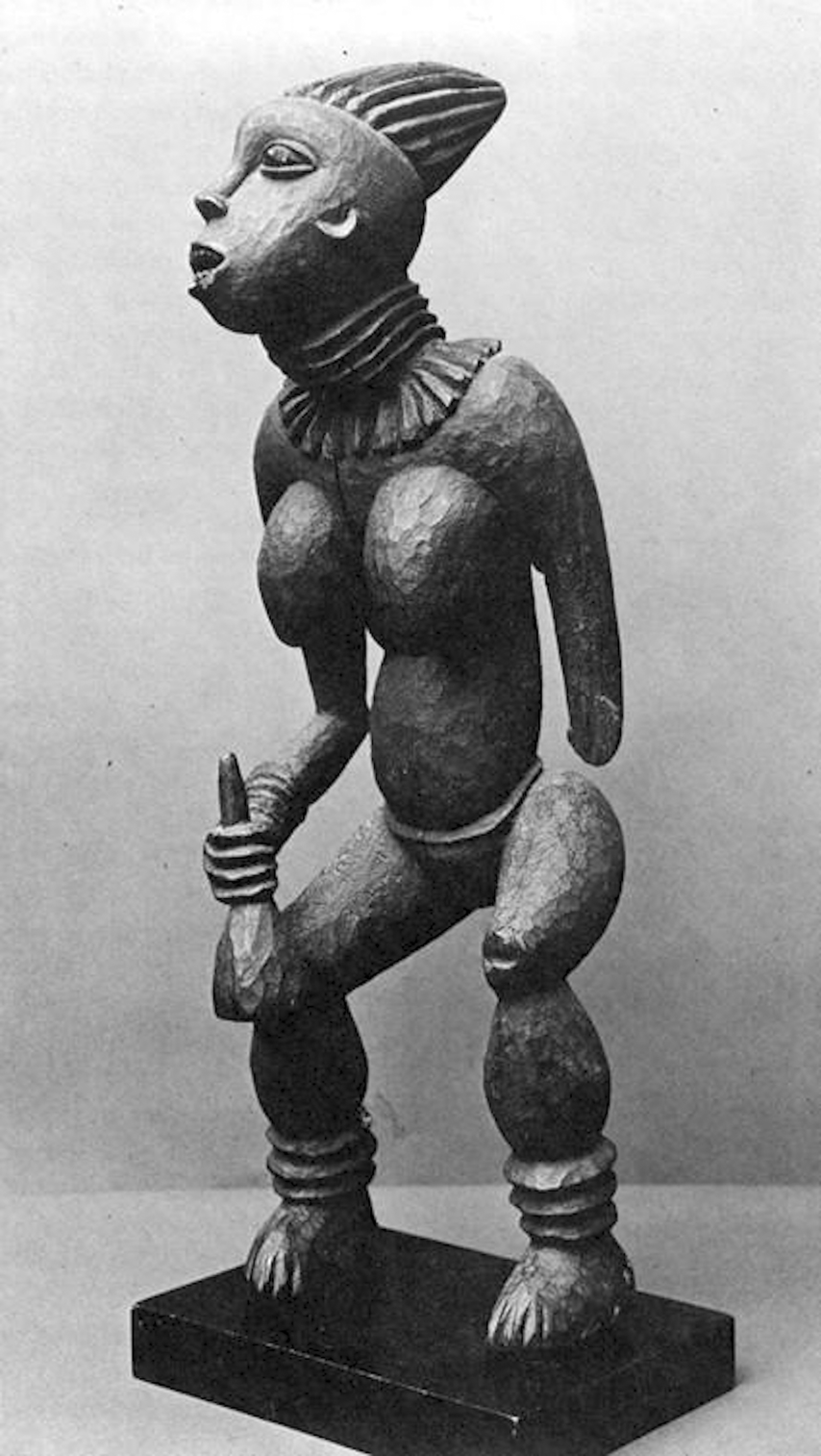
These are remarkable developments given that a common response to such claims is that they lack legal grounds. In this article, the view is taken that it is not a lack of legal norms that explains this belated discussion but, rather, the asymmetrical application of such norms. Moreover, it is suggested that a human rights law approach as taken in the 2007 United Nations Declaration on the Rights of Indigenous Peoples (UNDRIP), offers useful tools to structure this field.Footnote 9 As a case example, it will evaluate a claim regarding an African ancestral sculpture known as the “Bangwa Queen” (Figure 1) on its merits under international law.
The Bangwa Queen, photographed sometime in the 1950s or 1960s when the Bangwa Queen was in the United States. Reproduced from Brain and Pollock 1971, 125.

The Bangwa Queen is a wooden ancestor sculpture of spiritual importance to the Bangwa, a people indigenous to the western part of Cameroon. SheFootnote 10 was lost during an expedition by German colonizers who invaded the Bangwa territory in the latter years of the nineteenth century and, today, is part of a French museum collection. She was recognized in 2014 by a Bangwa chief, and, in 2017, their representative contacted the museum.Footnote 11 The background and factual circumstances of this case are discussed in the first section of the article. An overview of international standards relevant to this case will follow in the second and third sections.
An analysis of the traditional legal framework in the next section will illustrate that norms that protect cultural objects from pillage and destruction have always existed throughout history. At some point, these evolved into (customary) international law under the rules of warfare. Therefore, certain acquisitions that occurred at the close of the nineteenth century might well be characterized as unlawful under contemporary international law, notwithstanding Western justifications. Not seldom, though, the exact circumstances of a loss are unclear, as in the Bangwa case. Besides, even if it can be argued that a loss was unlawful, a number of legal hurdles may implicate that claims, based on events in a distant past, today are “stale.”
On the other hand, the rights of former owners to their involuntarily lost artifacts are increasingly acknowledged in soft law instruments, even if a loss predates conventional law that arranges for the return of misappropriated artifacts, regardless of whose hands the objects are found in today. Although these instruments mostly have the status of legally non-binding declarations or guidelines, this article proposes they reflect evolving human rights law norms. This will be the topic of the third section of this article. In this regard, the UNDRIP is important when it comes to the category of artifacts lost as a result of colonial rule. It formulates the rights of Indigenous peoples regarding their lost cultural heritage, ranging from a right to access, use, and control to repatriation. Its relevance for the African Bangwa case will be dealt with in the third section.
What follows, in short, is a proposition for a legal approach to cases and claims that are often set aside as merely “moral” in nature.
THE BANGWA QUEEN AND HER LOSS
The Sculpture and Her Meaning
Today, the wooden sculpture known as the Bangwa Queen is part of the collection of the Dapper Foundation exhibited in the Musee du Quai Branly Jacques Chirac in Paris.Footnote 12 Since her transfer to Berlin in the latter years of the nineteenth century, and her subsequent acquisition by collector Arthur Speyer in 1926, she gained fame as a major work of art.Footnote 13 She was featured in a series of photos taken by Man Ray in the 1930s and was part of several important exhibitions such as the 1935 African Negro Art exhibition in New York and, most recently, the 2011 Heroic Africans: Legendary Leaders, Iconic Sculptures exhibition of the Metropolitan Museum of Art. Her “iconic” importance is illustrated by the fact that the Musée Dapper reportedly set a record for the purchase of African art by paying US $3.4 million for her in 1990.Footnote 14
To her creators, the Bangwa people, who are indigenous to the grasslands region of present-day Cameroon,Footnote 15 the Bangwa Queen is not a work of art but, rather, is sacred.Footnote 16 She is a so-called lefem figure, personifying a special ancestor.Footnote 17 In Bangwa tradition, individuals may own artifacts, but once a statue is carved, which is a symbol of authority, it must be presented to the king and, through a series of traditional procedures, is transformed into a cultural and religious symbol of authority of the chief.Footnote 18 According to Bangwa representatives, this custom is still revered. The Bangwa Queen was such a statue, and she was meant to be kept in the royal shrine for praying and consultation purposes by the reigning king of the Bangwa kingdom Lebang, Fon Asonganyi, the belief being that lefem statues render the ancestor present.Footnote 19 This connotation is confirmed by the Metropolitan Museum of Art, which is home to her counterpart, a male ancestral figure seemingly with the same provenance:
Because of their important status, memorial figures are honored and well cared for while being housed in a secure place within the king’s palace. This work was assembled with other portrait figures from previous generations, including representations of other chiefs, as well as queen mothers, princesses, titled brothers, and favorite wives. The assembly served as a concentrated symbol of dynastic power and continuity, a visual record of family history that inspired deference and obedience. During the ceremonies that surround a chief’s funeral and the installation of his successor, his lefem is exhibited publicly, again as a means to maintain social and political continuity as well as to encourage faith in the strength of royal ancestral power.Footnote 20
To the religious Bangwa people, this spiritual meaning did not extinguish upon the loss of these statues but continues today; misfortunes that have hit the kingdom since the loss are attributed to the absence from the shrine of the lefem figures like the Bangwa Queen.Footnote 21 Moreover, she symbolizes the lost lives and injustices that occurred at the time.Footnote 22
Her meaning thus varies in different settings and to different people: from an ancestral portrait in between the human and spiritual world in her original African context, to an exotic ethnographic specimen for European scientists at the turn of the nineteenth century, to a famous work of art that has inspired artists and a commodity for Western collectors.Footnote 23 As the Bangwa have largely maintained their religious practices and social-cultural structure, this connotation of the Bangwa Queen continues to exist. Several years ago, the late fontem was informed that the Bangwa Queen was in the Metropolitan Museum of Art in New York, presumably on the occasion of the 2011 Heroic Africans exhibition. He visited the United States to ascertain that this was true and recognized the Bangwa Queen.Footnote 24 In late 2017, contact was established with the Dapper Foundation, which, however, did not lead to a meeting or dialogue.Footnote 25
The Loss
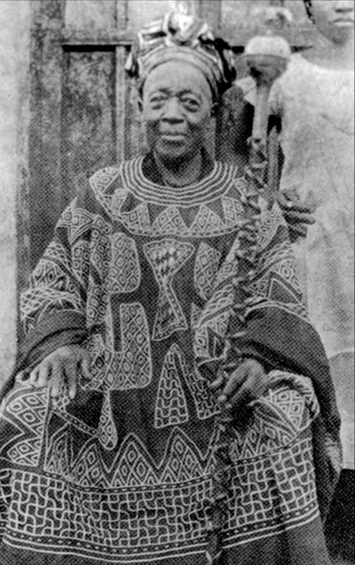
Bangwa historical accounts report that the Bangwa Queen, together with other lefem figures, were looted by German soldiers when they invaded the palace of the then ruling Fontem Asonganyi (Figure 2) during their conquest of the Bangwa region in 1899/1900.Footnote 26 While his quarters were invaded and plundered, Fontem Asonganyi escaped.Footnote 27 After years in hiding, he turned himself in to stop the punitive German military campaign.Footnote 28 The Bangwa consider a voluntary transfer of the statues by Fontem Asonganyi unthinkable as that would mean a relinquishment of his spiritual and political powers.Footnote 29
Fon Asunganyi, reigning Chief of Fontem in the 1890s (deceased 1951). Image taken in the 1940s, courtesy royal family through Chief C. Taku.

Where Bangwa sources cast no doubt on the loss of the lefem figures by pillage, research by Andreas Shlothauer and Bettina von Lintig indicates that a German named Gustav Conrau acquired these statues between June and September 1899 for the Ethnological Museum in Berlin—just before the punitive military actions that started in December 1899.Footnote 30 Conrau’s letters from that period to the director of the Berlin museum mention his “secret” acquisition of “quite beautiful fetishes” that were “carefully hidden.” Conrau hints in his letter that the acquisition was with the consent of Fontem Asonganyi.Footnote 31 And whilst Shlothauer characterizes the acquisition as peaceful trading, Von Lintig leaves that conclusion open.Footnote 32 Obviously, “consent” in these circumstances is a matter of interpretation.Footnote 33
Notwithstanding the uncertainty concerning the exact circumstances of the loss and diverging views on its voluntary nature,Footnote 34 the following circumstances are certain. First, the Bangwa Queen was part of a collection of Bangwa statues taken by Germans in the last year of the nineteenth century and dispatched to the Museum für Völkerkunde (Ethnological Museum) in Berlin. This was shortly after the colonial powers had arranged for the division of Africa at the Berlin Conference on West Africa in 1884–85, justifying the appropriation of land and resources by relying on the terra nullius argumentationFootnote 35 and their religious duty to spread the “blessings of civilization.”Footnote 36 By introducing the principle of “effective control” as a base for territorial claims by European powers, this instigated a period of conquest of African territories by expeditions to hitherto unknown territories in the following years.Footnote 37 Germany had claimed the Bangwa territory at the Berlin Conference as part of the territory they named “Kamerun,” having had a port colony at Douala since 1884. In this context, the expeditions into the Bangwa territory should be seen as being military and political in nature.Footnote 38
Second, Gustav Conrau had a central role in the transaction relating to the Bangwa Queen. Conrau, a “recruiter, collector on commission, elephant-hunter, researcher and businessman,” also had a role in the German colonial organization.Footnote 39 He seems to have been the first European to be in contact with the Bangwa in 1898.Footnote 40 At the time, he held a position at the German concession company Gesellschaft Nordwest-Kamerun.Footnote 41 Indicators of his role as a colonial agent are that he recruited laborers to work at plantations along the coast and that he asked Fontem Asonganyi to raise the German flag during his stay with the Bangwa in 1899.Footnote 42 Conrau died on his third visit to the Bangwa in December 1899, reportedly by killing himself to avoid being captured by the Bangwa.Footnote 43 The cause of the incident leading to his death appears to have been that Fontem Asonganyi had provided Conrau with a number of Bangwa men on his earlier expedition in the expectation that these men would return.Footnote 44 Instead, they did not return, and it can be assumed that they were used or sold as forced laborers on rubber plantations in the coastal region.Footnote 45
In other words, the Bangwa’s initial friendly attitude toward Conrau changed after the purpose of the expedition emerged: the recruitment of forced laborers and the collection of valuables. As noted by Elizabeth M. Chilver on the basis of German colonial archival records, “[t]he north-west hinterland—Bangwa territory—was increasingly viewed as a labour reservoir rather than as an outlet for trade-goods or as a producer of raw materials.”Footnote 46 In an account in which the lefem figures, which included the Bangwa Queen, were handed to Conrau with the permission of Fontem Asonganyi, as hinted to by Conrau in his letters to the director of the Berlin museum, a misunderstanding similar to the “lending” of the Bangwa men may have occurred. Indeed, one source notes that the conflict between Fontem Asonganyi and Conrau arose over the missing “secret” objects.Footnote 47
The German colonial army dispatched several military punitive expeditions after the death of Conrau from late December 1899 on, causing the death of many Bangwa and the destruction of Fontem Asonganyi’s palace.Footnote 48 Fontem Asonganyi was eventually caught by German soldiers and sent into exile; however, after the area came under British colonial rule (1915–61), he was able to return.Footnote 49 Regarding the German colonial period, a study notes:
Of all the major social changes experienced in the Bangwa area the German colonial period was perhaps the most sudden and violent. The population was conscripted into forced labour both on the plantations and in the building of a road which linked the grasslands and the lower forest area, following the traditional trade route. Many Bangwa died in these ventures.Footnote 50
Subsequent Ownership History
In summary, it can be concluded that the Bangwa Queen was taken as part of a bigger collection of Bangwa figures during the annexation of the Bangwa territory, most likely in 1899 by a German named Conrau. While many objects remained in Berlin,Footnote 51 the Bangwa Queen was sold and changed hands many times between her arrival at the Museum für Völkerkunde in Berlin in 1899 and the acquisition by the French Dapper Foundation in 1990. Her history of ownership is well documented; she was in the Ethnological Museum in Berlin until 1926, after which she was subsequently owned by collectors Arthur Speyer, Charles Ratton, Helena Rubinstein, and Harry A. Franklin before the Musée Dapper acquired her at an auction in 1990.Footnote 52
LEGAL STANDARDS
The Bangwa people wish to bring home the Bangwa Queen since she is sacred for them and personifies the ancestors of their epic Chief Fontem Asonganyi. Moreover, she symbolizes the injustices of colonial rule. For an analysis of such a claim under international law, what needs to be assessed is: (1) the unlawfulness of the acquisition according to international law at the time or (2) the existence of a subsequent rule of international law that entitles the Bangwa to rights with regard to their lost cultural property. What follows is, first, an overview of the traditional legal framework for restitution claims, with the aim of achieving clarity on the question of the legality of the taking at the time, whereas new rules that may entitle the Bangwa to rights concerning their lost cultural property will be addressed in Section 3.
Unlawful Taking?
It is often said that the looting of cultural objects occurred throughout history and was lawful at the time. This statement, however, depends on the perspective taken: that of the Bangwa, the conquerors, or the international law standards? From the perspective of the Bangwa’s customs and laws, the appropriation of a lefem figure was not allowed. It may suffice here to recall the special status of the Bangwa Queen: she was sacred and was to be kept by the ruling fontem in his shrine for praying purposes and as a symbol of his power and of his ancestors.Footnote 53 On the other hand, such foreign customs or laws under which certain objects are inalienable are often not recognized in other jurisdictions.Footnote 54 In France, for example, litigation on behalf of the Hopi Native Americans to stop the auction of their lost sacred “Katsina,” referred to as “friends” that represent incarnated spirits of their ancestors, was soon stranded in court proceedings in 2013.Footnote 55 The auction was considered legitimate by the French court since the claim by the Hopi that these Katsina were their communal and inalienable patrimony has no legal basis in French law.Footnote 56 Then again, if the Katsina were held by a US museum, the situation would be different given that the 1990 American Graves Protection and Repatriation Act (NAGPRA) recognizes the inalienability of cultural objects with an “ongoing historical, traditional or cultural importance central to the Native American Group.”Footnote 57 This is a path-breaking approach to tackle such cultural differences. However, for the Bangwa Queen or her counterpart in New York, this law is of no avail or direct relevance since the NAGPRA only applies to the cultural objects of Native American communities in the United States.
Leaving the particularities of local laws aside, the question raised in this article is how such claims fit in the international legal framework. After a general sketch of that legal framework, the question how historical claims fit in will be assessed, after which this section ends with some words on specific problems relating to colonial takings as a sui generis category.
International Law Standards
Cultural objects have a protected status in international law because of their intangible “heritage” value to people: as symbols of their identity. It is precisely this identity that is often targeted in looting and plundering practices. The Arch of Titus in Rome, depicting the spoils taken after the sacking of the Temple in Jerusalem, is a textbook example of this scenario.Footnote 58 Identity was at stake in Nazi-looting practices and, similarly, in the colonial context. European powers, for example, justified their presence in Africa by referring to their religious duty to bring to the “natives” the “blessings of civilization.”Footnote 59
That being so, it is remarkable how old the notion is that harming other people’s cultural objects is uncivilized. Cicero, in his speeches on the case against the Gaius Verres, argues that an honorable Roman should show respect for the culture of conquered people; while pillage was allowed (ius praedae), one should not appropriate religious and historical items of special importance to their owners. Footnote 60 Early examples of Hindu, Muslim, precolonial African, and Japanese rules protecting sites and objects of spiritual and cultural significance illustrate its global nature.Footnote 61 In the European setting, this rule gained legal importance through the writings of the founders of international law like Hugo Grotius and Emer de Vattel. To cite Grotius,
[t]here are some things of such a nature, as to contribute, no way, to the support and prolongation of war. ... Polybius calls it brutal rage and madness to destroy things, the destruction of which does not in the least tend to impair an enemy’s strength, nor to increase that of the destroyer. Such are porticos, temples, statues, and all other elegant works and monuments of art. Cicero commends Marcellus for sparing the public and private edifices of Syracuse, as if he had come with his army to protect them rather than to take the place by storm.Footnote 62
The obligation to respect cultural objects implicates a prohibition to take them away. The corollary of this rule is a duty to return (restitute) pillaged artifacts: “[W]hat is stolen should be returned.”Footnote 63 Over time, the obligation to return looted artifacts gained force as the international standard. In this development, the 1815 Congress of Vienna is often quoted as a turning point; at that moment, the European powers agreed, as a principle of justice, on the obligation to restitute artifacts that had been looted by Napoleon.Footnote 64 During the negotiations, Viscount Castlereagh, on behalf of the British delegation, stated that it was a legal duty to return the spoils of war taken by Napoleon to their place of origin in order to “effectuate what justice and policy require.”Footnote 65 In other words, not winners takers and reparation for war damages but, rather, restitution as the legal standard for looted artifacts. And, indeed, the duty to return looted artifacts was what Judge Croke, in the much-cited Marquis de Sommerueles case, held in 1813 to be part of the “Law of Nations, as practiced by all civilized countries.”Footnote 66
The protected status of cultural objects was codified in the first multilateral treaty on the laws of war, the 1899 Hague Regulations Concerning the Laws and Customs of War on Land.Footnote 67 Eventually, after the massive looting during World War II, specific treaties on the protection of cultural objects were concluded: the 1954 Hague Convention for the Protection of Cultural Property in the Event of Armed Conflict and its Protocols, the 1970 UNESCO Convention on the Means of Prohibiting and Preventing the Illicit Import, Export and Transfer of Ownership of Cultural Property (1970 UNESCO Convention), and the 1995 UNIDROIT Convention on Stolen or Illegally Exported Cultural Objects (UNIDROIT Convention).Footnote 68 To summarize in broad terms, the norm in these treaties is that cultural objects enjoy special protection, both in times of war and peace; the transfer of cultural objects during foreign occupation is prohibited; and unlawfully exported works of art should be returned. Under certain conditions, a good faith new possessor in whose hands the object is found may be entitled to compensation on its return. Such rules, however, need implementation on the national level to have effect.
Privileged Status of Objects of Spiritual Importance
Under these standards, objects of spiritual or religious importance have a privileged position. In the view of Hugo Grotius: “. . . there is still greater reason why it [the protective rule, EC] should be obeyed in respect to things devoted to the purposes of religion. Thucydides says that it was a law among the Greeks of his time, in all their invasions of each other’s territories, to forbear touching the edifices of religion: and Livy likewise observes that, upon the destruction of Alba by the Romans, the temples of the Gods were spared.”Footnote 69 In many cultures, such objects are commonly owned or inalienable and form a special category of property as res extra commercium.Footnote 70 For today’s cases, even John Merryman, the proponent of a liberal art trade, makes an exception for “objects of ritual or religious importance to living cultures” that should “remain with or be returned to those cultures.”Footnote 71 As an example, Merryman cites the case of the Afo-a-Kom, a statue that embodies the “spiritual, political and religious essence” of the people of the Kom kingdom in Cameroon, which was found in the hands of a US collector in the 1970s.Footnote 72
Given the holistic and spiritual vision of life by Indigenous peoples, based on common material and spiritual, intergenerational values, this distinction is of significance in the context of colonial takings from local (Indigenous) peoples.Footnote 73 Legal instruments in the field of Indigenous peoples’ rights, like NAGPRA and the UNDRIP, make this distinction and will be discussed in the third section of this article. In conventional law, this privileged status is addressed in Article 5(3) of the UNIDROIT Convention, which holds that arrangements should be made for the return of a cultural object “if the … removal of the object … significantly impairs … the traditional or ritual use of the object by a tribal or indigenous community.”Footnote 74
The Legal Framework for Historical Claims
Claims to artifacts lost during the colonial era fall within the category of “historic claims.” In the context of this article, such claims include those that are based on a loss that predates international conventions that arrange for restitution. The UNIDROIT Convention’s provision mentioned above regarding objects of ritual importance, for example, applies to losses after the Convention entered into force in the relevant states.Footnote 75 Here, the Operational Guidelines to the 1970 UNESCO Convention, which were adopted in May 2015, are instructive:
The general rule of public international law embodied in Article 28 of the Vienna Convention on the Law of Treaties does not provide for retroactive application of treaties. ... However, the Convention does not in any way legitimize any illicit transaction of whatever nature which has taken place before the entry into force of this Convention nor limit any right of a State or other person to make a claim under specific procedures or legal remedies available outside the framework of this Convention for the restitution or return of a cultural object stolen or illegally exported before the entry into force of this Convention.Footnote 76
In other words, codification should not be understood as a cut-off line.Footnote 77 The legality of a loss should be assessed on the basis of the law in force at the time—the concept of inter-temporal law under international law.Footnote 78 A first observation, if we revisit the evolution of the law in this field, is that the protected status of (sacred) cultural objects was recognized in various cultures by early scholars and was included in early peace agreements and international instruments.
Legality of Seizing Cultural Objects under the Laws of War?
The question of whether the loss of the Bangwa Queen was unlawful according to contemporary standards depends, first, on how to qualify colonial conquest and rule; can it be compared with a situation of an armed conquest, war, and belligerent occupation? In the Bangwa case, this question can be limited to an evaluation of the character of the 1899 expedition of Conrau and subsequent military actions, as it remains unclear exactly how the Bangwa Queen was lost.
At the time of the Berlin Conference on West Africa in 1885, the division of African territories amongst European nations—and the appropriation of resources—was justified by relying on the terra nullius argumentation and the “religious duty” to bring civilization to Africa.Footnote 79 Moreover, Indigenous peoples in Africa were excluded from the “family of civilized nations” and from protection of international law well into the twentieth century.Footnote 80 Although such views may explain historic events, they cannot be invoked to justify their legality and certainly not if such acts have a continuing effect today.Footnote 81 In the 1975 Western Sahara case, the International Court of Justice rejected the notion of terra nullius for inhabited territories altogether.Footnote 82 The correct perspective, as argued by Mamadou Hébié, is that colonial sovereign rule in Western Africa in the event of opposition from local rulers, as in the Bangwa territory, was established by means of conquest.Footnote 83 In other words, this is a situation that, by all means, can be compared to an armed conflict.
The lawfulness of the appropriation of cultural objects would then depend on what (general) contemporary international law has to say on this subject. For that, we have to revert to the rules of warfare. With respect to those, the 1863 Lieber Code is usually quoted as the first document to codify the laws of war; it provides an exemption of cultural objects from appropriation by parties in a conflict.Footnote 84 This special status was repeated in both the Brussels Declaration of 1864 and the Oxford Manual on the Laws of War on Land of 1880.Footnote 85 Although none of these are binding treaties, they are considered to reflect customary international law at the time. In fact, the provisions regarding cultural objects have almost the same wording and, afterwards, soon found their way into the Hague Regulations of 1899 and 1907, which were binding.Footnote 86 The Hague Regulations read:
The property of municipalities, that of institutions dedicated to religion, charity and education, the arts and sciences, even when State property, shall be treated as private property. All seizure of, destruction or willful damage done to institutions of this character, historic monuments, works of art and science, is forbidden, and should be made the subject of legal proceedings.Footnote 87
At what exact moment the prohibition of looting and the ensuing obligation to return looted objects gained customary status is a matter of legal debate.Footnote 88 It is well accepted, however, that at the time of the codification of the 1899 Hague Regulations this was the case. For example, Woljciech Kowalski concludes:
Through time, a ban on looting works of art became customary international law, and eventually, found its way into regulations of the codified law of war. The obligation of the restitution of a looted work of art correlates with the ban on pillaging. As early as the nineteenth century, it was based on the principle of identification, … as well as on the principle of territoriality, according to which an item is returned to the place from which it was taken. In many cases, when claims were examined, the period of time that had passed since the loss of the object was not taken into account. ... All the principles relating to the restitution of works of art were fully recognized and developed in the peace treaties signed after World War I.Footnote 89
As to the legality of punitive military actions, the 1880 Oxford Manual is instructive:
Impositions in kind (requisitions) demanded from communes or inhabitants should be in proportion to the necessities of war as generally recognized, and in proportion to the resources of the country. Requisitions can only be made on the authority of the commander in the locality occupied.Footnote 90
In other words, if the Bangwa Queen was taken by seizure or theft during the annexation of the Bangwa area in 1899, such an appropriation would arguably be unlawful in contemporary international law. As noted above, the German annexation of the Bangwa area commenced with the expeditions of Conrau, illustrated by the fact that he carried the German flag.Footnote 91 Article 1 of the 1899 Hague Regulations states in this regard that the laws apply not only to the military but also to others with “a fixed distinctive emblem recognizable at a distance.”Footnote 92 Notwithstanding justifications at the time, one would expect that such standards under today’s inter-temporal law standards would apply to European takings in Africa in 1899–1901.
State Practice: Colonial Takings a Sui Generis Category?
Although the seizure of artifacts in the course of a military action at the close of the nineteenth century may well be unlawful under the laws of warfare, not all acquisitions can be seen in that light. Often, the exact circumstances are unclear, as in the Bangwa case. As Ana Filipa Vrdoljak and Andrzej Jakubowski propose, the return of cultural objects after decolonization may therefore better fit in with the concepts of state succession or the right of self-determination—the restitution of dispersed cultural objects after a period of foreign rule or changes in territorial sovereign rule.Footnote 93 After the dissolution of the Austrian-Hungarian Empire in Europe, for example, a legal framework was set up by which cultural objects were redistributed to successor states on the basis of territoriality and the “reconstruction of artistic and historic patrimony.”Footnote 94
After World War II, such a general legal obligation to return cultural property on the basis of territoriality—understood as a bond between an object, land, and people—was confirmed. For example, the 1947 Peace Treaty with Italy provided for the return of cultural objects to Yugoslavia that were also taken in the period before World War II on the basis of territoriality, and the Allied restitution system, likewise, arranged for the return of artifacts taken by the Nazis from occupied territories, irrespective how such objects had been removed and notwithstanding later acquisition by good faith new possessors.Footnote 95 In fact, such state practice convinced scholars such as Woljciech Kowalski that restitution of dispersed cultural patrimony on the basis of territoriality was a customary rule of international law.Footnote 96
And, indeed, in the period after decolonization, the 1973 UN General Assembly resolution “on restitution of works of art to countries victim of expropriation” was promising for former colonies.Footnote 97 It linked the return of cultural objects to independence, being a necessary element of the cultural development of new states.Footnote 98 A 1975 Dutch–Indonesian agreement to return objects “directly linked with persons of major historical and cultural importance or with crucial historical events” may be seen in this context.Footnote 99 Notheworthy, but exceptional in its acknowledgement of a legal duty, is the return to Libya of the Venus of Cyrene by Italy, after the Italian Supreme Administrative Court ruled that the right of self-determination of former colonies implicates that cultural objects should be returned.Footnote 100
On the whole, however, colonial collections were not returned. Hence, a separation between two scenarios of restitution of dispersed cultural objects became the legal reality. Colonial takings were to be discussed as a matter of “return” on moral grounds—in the setting of the UNESCO Intergovernmental Committee for Promoting the Return of Cultural Property to its Countries of Origin or Its Restitution in Case of Illicit Appropriation (ICPRCP)Footnote 101—as opposed to restitution on legal grounds in the European context. Vrdoljak provides insight into a process where former colonial states came to act on the basis of the paradigm that it is in the best interest of civilization for them to remain custodians of the material culture of their former colonies.Footnote 102 The 2002 Declaration on the Value and Importance of Universal Museums may be seen in this light.Footnote 103
Recent European Developments
Increasingly, former colonial powers do honor claims for the return of colonial takings on an ad hoc basis. Such returns are usually portrayed as exceptions to the general rule under which Western states have gained ownership and a matter of “cultural diplomacy.” For example, in France in 2002 the mortal remains of Saartjie Baartman were repatriated to South Africa;Footnote 104 in 2010, a mokomokai, a mummified tattooed Maori human head, was returned to the New Zealand Te Papa Tongarewa Museum;Footnote 105 and, in 2011, historically important manuscripts were returned to Korea on the basis of a renewable five-year loan agreement.Footnote 106 The 2018 decision to return statues and regalia from the Kingdom of Dahomey to Benin in 2018, mentioned in the introduction, might well be the first example of a return of important cultural objects—beyond the category of human remains—to an African country based on a wider policy.Footnote 107 In their November 2018 report to the French president, Felwine Sarr and Bénédicte Savoy recommend a generous French policy of restitution of
any objects taken by force or presumed to be acquired through inequitable conditions from Africa over the last 150 years, including objects taken “through military aggressions, whether these pieces went on directly to France or whether passed through the international art market before finding their way into French collections” as well as objects taken by “active administrators” or through “scientific expeditions prior to 1960.Footnote 108
Whether and how these recommendations will be implemented in France remains to be seen as well as if it will affect a private collection like the Dapper Foundation.Footnote 109 In Germany, on the other hand, both the 2018 Museum Association’s Guidelines as well as the 2019 governmental policy framework underline the importance of research, dialogue and cooperation with source communities.Footnote 110 The governmental policy framework explicitly also aims to enable the return of cultural objects that were acquired in a way that “by today’s legal or ethical standards is not justifiable.”Footnote 111 The return of grave finds, mentioned in the introduction, on the grounds that the loss was “unlawful” in this regard may be a telling example of a change in moving toward a more structured legal framework.
NEW HORIZONS: AN EVOLVING HUMAN RIGHT?
For cases like the Bangwa Queen, a traditional legal approach provides no ready solutions. In addition to the challenge of establishing the legality or illegality of a loss so long ago, hurdles arise in terms of accountability and access to justice. If the appropriation of the Bangwa Queen could be held to be unlawful under customary international law, and is attributable to the state, this would amount to an international law obligation by the state responsible for the looting.Footnote 112 This might be relevant for Bangwa figures that are still in Berlin; however, the Bangwa Queen is not in possession of the state responsible for the taking but, rather, in the hands of a third party, the Dapper Foundation. Another hurdle is access to justice: which court assumes jurisdiction over such a claim? Claims based on a loss of property that occurred so long ago will most likely be held inadmissable ratione temporis. Footnote 113 In other words, an approach that focuses on the unlawfulness of the loss of ownership so long ago will most likely lead to the conclusion that historic claims are stale. This state of affairs is increasingly being challenged by “softer” legal norms that address the intangible value of artifacts for people today and the continuing injustice of remaining deprived of certain objects.
Soft Law Instruments: Signs of an Evolving Norm?
Since the end of last century, the adoption of soft law instruments has illustrated a need to find solutions for restitution claims that are time barred under positive law. Such declarations and ethical codes tend to have a similar pattern and focus on (1) good faith negotiations with source communities or former owners (dialogue) and (2) equitable solutions for title disputes that honor the interests of former owners as well as the interests of new (innocent) possessors.Footnote 114
For example, the 1998 Washington Conference Principles on Nazi-Confiscated Art (Washington Principles) follow this outline.Footnote 115 This document concerns a set of principles signed by over 40 states and underlines the importance of finding “fair and just solutions” for title claims to works of art that were confiscated by the Nazis or sold under duress by former owners in a setting of persecution.Footnote 116 This instigated a practice of settlements and returns, initially restricted to national public collections but soon followed by the private sector, notwithstanding legal obstacles under positive law. Today, works that are “tainted” by a possible history of Nazi looting are unsalable on the international art market. The reputation of a work of art and its market value has come to fill in a gap where the law is lacking. In some European countries, government committees were installed to act as mediators. This extra-legal “ethical” approach, however, does have a drawback: the field is hampered by a lack of clear rules and compliance mechanisms.Footnote 117 It has been suggested that a similar instrument to the Washington Principles should be developed for colonial takings, which would, indeed, underline a political will to act.Footnote 118 It should be noted, however, that the Washington Principles themselves are not more specific or legally binding as existing soft law instruments in the field. Some examples are provided below, while the most relevant instrument in this field, the UNDRIP, will be discussed later in this article.
International Council of Museums Code and the International Law Association Principles
Museums are expected to adhere to the ethical principles as adopted in the 1986 International Code of Ethics by the International Council of Museums (ICOM).Footnote 119 Similar to the approach outlined above, these guidelines state that museums, with regard to restitution issues, should collaborate with source communities. Insofar as this concerns claims, the provisions implicate a cooperative stand, preferably on a non-governmental level. The relevant provisions read:
Museums should be prepared to initiate dialogues for the return of cultural property to a country or people of origin. This should be undertaken in an impartial manner, based on scientific, professional and humanitarian principles as well as applicable local, national and international legislation, in preference to action at a governmental or political level.
When a country or people of origin seeks the restitution of an object or specimen that can be demonstrated to have been exported or otherwise transferred in violation of the principles of international law and international conventions, and shown to be part of that country’s or people’s cultural or natural heritage, the museum concerned should, if legally free to do so, take prompt and responsible steps to co-operate in its return.
The 2006 Principles for Cooperation in the Mutual Protection and Transfer of Cultural Material, adopted by the International Law Association (ILA), emphasize a general duty of institutions and governments to enter into “good-faith negotiations” regarding restitution claims by persons, groups or states.Footnote 120 The principles also list what should be taken into account during those negotiations: “[T]he significance of the requested material for the requesting party, the reunification of dispersed cultural material, accessibility to the cultural material in the requesting state, and protection of the cultural material.”Footnote 121 In as far as it concerns the outcome, the focus is on “caring and sharing” and, as alternatives to restitution, the principles mention loans, the production of copies, and shared management and control.Footnote 122 Two categories are singled out: Principle 4 sets the obligation “to respond in good faith and to recognize claims by indigenous groups or cultural minorities whose demands are not supported by their national governments,” whereas Principle 5 confirms the special status of human remains with a straightforward obligation of repatriation.
Apart from such guidelines of an operational character, numerous UN and UNESCO declarations have been adopted that underline the importance of the return of a representative part of a country’s lost cultural patrimony.Footnote 123 In this regard, the ICPRCP was established in 1978 to assist member states with return requests that concern cultural property “which has a fundamental significance from the point of view of the spiritual values and cultural heritage of the people of a Member State or Associate Member of UNESCO and which has been lost as a result of colonial or foreign occupation or as a result of illicit appropriation.”Footnote 124 In various UN resolutions, attention is drawn to the services of the ICPRCP, and the 2015 Operational Guidelines to the 1970 UNESCO Convention repeat this concern.Footnote 125 Notwithstanding this appreciation and the development of a special mediation procedure, the relatively low number of cases referred to the committee implies that the state-centric approach of the ICPRCP creates a (political) setting that is not per se suitable to solve these matters.Footnote 126 It therefore mainly acts as a forum for best practice examples and for governments to state certain claims.
The Right to One’s Cultural Object as a Human Right?
Whereas return claims that concern colonial takings are still usually set aside as a matter of ethics, not the law, the wider legal framework for cultural objects has undergone changes. This “humanization” of cultural heritage law may be understood as the increased attention for the intangible and social aspects of artifacts, as opposed to property and preservation, and a shift in focus from state interests to the interest of communities.Footnote 127 The relevance of this change for the present case surfaces in the approach taken in the UNDRIP, but, first, what follows is a short introduction to such changing notions on the intersection of human rights and cultural property law.
A clear example can be found in the Council of Europe’s Framework Convention on the Value of Cultural Heritage for Society (Faro Convention). It quotes in its preamble “the need to put people and human values at the centre of an enlarged and cross-disciplinary concept of cultural heritage” and defines cultural heritage as a “group of resources inherited from the past which people identify, independently of ownership, as a reflection and expression of their constantly evolving values, beliefs, knowledge and traditions.”Footnote 128 As right holders to cultural heritage, the Faro Convention introduces “heritage communities.”Footnote 129 These are “people who value specific aspects of cultural heritage which they wish, within the framework of public action, to sustain and transmit to future generations.” This concept facilitates the acceptance of a collective title to cultural objects by communities and is reminiscent of the “cultural affiliation” concept adopted in NAGPRA that links objects to communities as a title for rights to cultural objects.Footnote 130 Furthermore, in as far as it concerns competing claims to cultural heritage, the Convention requires states to “establish processes for conciliation to deal equitably with situations where contradictory values are placed on the same cultural heritage by different communities.”Footnote 131 This is in line with the obligation to enter into a dialogue—good faith negotiations—in the soft law instruments discussed above. Although the Faro Convention does not create enforceable rights, but, rather, voices policy aims for governments, it opens the door to a new understanding of cultural objects and their title holders.Footnote 132
The Right of Access to Culture
In the quest for a legal framework for cases like the Bangwa Queen, of key importance is the evolution of a right of “access to one’s culture” as developed from the right to culture in the International Covenant on Economic, Social and Cultural Rights (ICESCR).Footnote 133 According to General Comment no. 21 on the “right of everyone to take part in cultural life” of Article 15(1)a of the ICESCR,Footnote 134 the right to take part in cultural life has come to include “access to cultural goods.”Footnote 135 Moreover, this obliges states to adopt “specific measures aimed at achieving respect for the right of everyone … to have access to their own cultural ... heritage and to that of others.”Footnote 136 The 2011 report of the independent expert in the field of cultural rights, Farida Shaheed, gives a further explanation of this right and concludes that
[t]he right of access to and enjoyment of cultural heritage forms part of international human rights law, finding its legal basis, in particular, in the right to take part in cultural life, the right of members of minorities to enjoy their own culture, and the right of indigenous peoples to self-determination and to maintain, control, protect and develop cultural heritage.Footnote 137
Similar to the concept of “heritage communities” in the Faro Convention, Shaheed notes that “varying degrees of access and enjoyment may be recognized, taking into consideration the diverse interests of individuals and groups according to their relationship with specific cultural heritages.” She notes the following hierarchy:
• “source communities,” people who are keeping cultural heritage alive and/or have taken responsibility for it;
• individuals and communities, including local communities, who consider the cultural heritage in question an integral part of the life of the community, but may not be actively involved in its maintenance;
• scientists and artists; and
• members of the general public accessing the cultural heritage of others.Footnote 138
This would implicate, in the event of disputes, a weighing of interests that different right holders may have in the same object.
In this regard, the reference to a right of everyone to have access to one’s own culture in recent Western-European policy instruments is noteworthy. French President Macron, in his November 2017 policy announcement, for example, underlined the need that Africans have to be able to access their own culture and, hence, it cannot be accepted that most of that is in European collections. Likewise, and even more poignant, the German policy framework of March 2019 gives as rationale for this new policy that “all people should have the possibility to access their rich material culture […] to connect with it and to pass it on to future generations.”Footnote 139 It mirrors the development of “humanisation” of cultural property law, described above.
UNDRIP
While the right of “access to culture” in the binding ICESCR may seem vague and unspecified,Footnote 140 the non-binding UNDRIP is clear and specific in its obligations. Since its provisions can be seen as an interpretation of the right of access to culture in as far as it concerns Indigenous peoples’ cultural heritage, this is an important instrument.Footnote 141 The UNDRIP entitles Indigenous peoples to rights with regard to their cultural heritage,Footnote 142 including to their lost cultural property. In Article 11(2), this is defined as a right of “redress through effective mechanisms, which may include restitution, developed in conjunction with indigenous peoples, with respect to their cultural, intellectual, religious and spiritual property taken without their free, prior and informed consent or in violation of their laws, traditions and customs.”Footnote 143 Article 12 deals with rights to objects of special importance—namely, a right to “use and control” where it concerns lost ceremonial objects, while for human remains a straightforward right to repatriation applies.Footnote 144 Since the loss of the Bangwa Queen appears to have been “in violation of the Bangwa laws, traditions and customs,” and it concerns a ceremonial figure, this loss would fall under the definition of Article 12 of the UNDRIP, resulting in certain rights to “use and control.”
Defining “Indigenous People”
The UNDRIP deliberately abstains from defining Indigenous peoples, following the advice of Special Rapporteur Erica-Irene Daes who suggested that “justice would best be served by allowing the scope of this concept to evolve flexibly over time, through practice.”Footnote 145 In 2010, the following criteria were suggested by the ILA’s Working Committee on Indigenous Peoples’ Rights:
• self-identification: self-identification as both indigenous and as a people;
• historical continuity: common ancestry and historical continuity with pre-colonial and/or pre-settler societies;
• special relationship with ancestral lands: having a strong and special link with the territories occupied by their ancestors before colonial domination and surrounding natural resources. Such a link will often form the basis of the cultural distinctiveness of indigenous peoples;
• distinctiveness: having distinct social, economic or political systems; having distinct language, culture, beliefs and customary law;
• non-dominance: forming non-dominant groups within the current society;
• perpetuation: perseverance to maintain and reproduce their ancestral environments, social and legal systems and culture as distinct peoples and communities.Footnote 146
Within the context of a complaint by the Endorois people from Kenya, the African Commission on Human and Peoples’ Rights gave its view on this matter in 2009 and noted that Indigenous communities can be distinguished by the link between people, their land and culture, and self-identification as a distinct community.Footnote 147 The commission agreed that the Endorois “considered themeselves to be a distinct people, sharing a common history, culture and religion” and, therefore, were entitled to the protection of their collective rights under the African Charter.Footnote 148 Given the fact that the Bangwa identify themselves as an Indigenous people,Footnote 149 and would seem to meet the ILA criteria, there is no reason to assume they would not be entitled to the special protective framework of the UNDRIP.
Legal Status
The UNDRIP was adopted after 20 years of negotiations.Footnote 150 France voted in favor it at the adoption. In May 2016, Canada officially removed its objector status, while the other three objectors have also, to various degrees, changed their vote.Footnote 151 While it is not binding as a UN General Assembly declaration, the UNDRIP’s strong status follows from the reference to it in General Comment no. 21 as forming part of the right of access to culture.Footnote 152 According to authors like Frederico Lenzerini, the right of Indigenous peoples to reparation for the loss of their cultural heritage has, today, crystallized into a principle of customary international law.Footnote 153 For the time being, however, this still contrasts with European practice, as the outcome in the 2013 and 2014 French Hopi Katsina cases illustrates.Footnote 154 Irrespective of its binding status as customary law, states that have adopted the UNDRIP are under an obligation to work towards fulfilling its aims.Footnote 155 This means that states are expected to assist Indigenous peoples in providing “redress through effective mechanisms” and to “enable the access and/or repatriation of ceremonial objects and human remains in their possession through fair, transparent and effective mechanisms developed in conjunction with indigenous peoples concerned.”
Interestingly, from a 2015 study by the Expert Mechanism on the Rights of Indigenous Peoples, it appears that the UNDRIP is aimed not only at state collections but also at private collections: “While the role of public authorities is crucial to ensuring such repatriation, the repatriation of ceremonial objects and human remains requires the cooperation of the places where the objects and remains are stored, such as museums and auction houses.”Footnote 156 Such efforts could lead to a similar pattern as occurred in the field of Nazi-looted art claims; while the Washington Principles were initially thought to be aimed and implemented at state-controlled collections, they soon had their effect on the private sector.
Access to Justice and Wider Developments
In several settler states, policies or laws have been adopted in response to Indigenous peoples’ cultural property claims that follow an approach that is similar to what is found in the UNDRIP. The United States took a pioneering step in this regard with the adoption of NAGPRA, introducing the “cultural affiliation” prong to allocate rights to (Indigenous) cultural objects on the basis of (1) a shared group identity and (2) the (continued) existence of an identifiable Indigenous group for property claims.Footnote 157 Where NAGPRA is effective only within the national territory and applies to federal institutions, other settler states have adopted policies to pursue repatriation claims of objects containing human remains on behalf of their Indigenous peoples from abroad.Footnote 158 The new Canadian Indigenous Human Remains and Cultural Property Act, passed in February 2019, takes things one step further. It implements the aims of the UNDRIP and promotes the return of Indigenous human remains as well as cultural property, wherever situated, to the Indigenous peoples of Canada.Footnote 159 This means that Canadian authorities will actively pursue the international repatriation of Indigenous Canadian cultural objects. The fact that a human rights law approach is not restricted to Indigenous peoples’ cultural property claims may be illustrated furthermore by China, which publicly invoked in April 2018 the “cultural rights of the Chinese people” in a claim to artifacts seized from the Old Summer Palace in the nineteenth century that were on auction in the United Kingdom.Footnote 160 Although the request was to no avail, in this instance, the influential role and active stance of the Chinese government in its efforts to reclaim lost cultural objects makes this claim noteworthy.
Access to Justice
For African communities like the Bangwa who are not supported by strong governments, access to justice poses an additional obstacle. What forum could evaluate a human rights claim based on the argument that the continued deprivation of sacred cultural objects is an infringement of the right to “access to culture” and the UNDRIP? Since 2013, the Optional Protocol to the ICESCR offers a complaints procedure. This procedure, however, appears to be limited to nationals or groups in the state responsible for the alleged violation.Footnote 161 In the Bangwa case, it concerns an African community claiming an object from a French foundation.
What about developments in the regional human rights systems? With respect to the European human rights system, one stumbling block may be that the European Convention on Human Rights does not include a right to culture.Footnote 162 The right (of access) to tangible cultural objects has been addressed in case law but always from the perspective of the right to property of Article 1 of the First Protocol.Footnote 163 Whether the European Court of Human Rights (ECtHR) would be ready to acknowledge historical claims remains to be seen. In its rejection of a claim brought by an Athenian organization for the return of the Parthenon Marbles in 2016, the ECtHR deemed the claim inadmissible, amongst others, under referral to the considerable time that had passed since the loss of the marbles.Footnote 164 A claim to sacred cultural objects lost by Indigenous people might be another matter. Obviously, a problem is that this system is meant for states parties to the European Convention. In the Nowakowski case, the ECtHR did acknowledge the “sentimental” value of a cultural object to a certain person—in this case, a collection of fire arms that had been confiscated by Polish authorities—and gave that interest preference over other (public) interests.Footnote 165
The African human rights system acknowledges in the African Charter the right to culture and expressly refers to communal traditional values and communal rights, which implicates that respect for Indigenous customs and laws is guaranteed by this human rights system, as underlined by the Endorois case mentioned above.Footnote 166 And, although the inter-American human rights system has no direct relevance, the jurisprudence of the Inter-American Court of Human Rights—including the 2015 case Kaliña and Lokono Peoples v. Suriname—is noteworthy in its recognition of pre-existing Indigenous peoples’ collective property rights and the participatory solutions found.Footnote 167 However, as in the African example, these cases dealt with Indigenous peoples’ land rights, not with cultural property.
Lastly, an interesting roadmap for Indigenous peoples on how to proceed with claims regarding cultural objects in foreign museums was given by the Colombian Constitutional Court in a 2017 case concerning the “Quimbaya Treasure.”Footnote 168 In its ruling, the court ordered the Columbian government to pursue restitution from Spain of a treasure of 122 golden objects, taken at the close of the ninteenth century, on behalf of the Indigenous Quimbaya people. The court argued that, by today’s standards of international law—and, here, it was referring to human rights law (UNDRIP) as well as cultural property law (the 1995 UNIDROIT Convention and other conventions)—Indigenous peoples are entitled to the restitution of their lost cultural heritage. How such a claim is pursued by the Colombian government is left to the discretion of the government. In the first reaction to the subsequent request by the Colombian authorities for a dialogue on the return of the Quimbaya Treasure, the Spanish authorities declined on the grounds that the Quimbaya Treasure has become Spanish patrimony and is inalienable.Footnote 169 As seen earlier, this is not an uncommon European reaction. The 2018 decision by President Macron to return statues and regalia taken during a punitive colonial expedition from the Kingdom of Dahomey to Benin,Footnote 170 for example, had earlier been denied by French authorities according to the inalienability of French public collections.Footnote 171
Notwithstanding the uncertain state of the law, developments in the field of human rights law do unmistakably point in a certain direction. That direction is toward the acknowledgement of heritage interests of communities—and their rights—with regard to certain categories of involuntarily lost cultural objects, irrespective of a proven illegality of the acquisition at the time.
CONCLUDING REMARKS
With German colonial rule the chiefs began their subservience to an outside authority. ... Gone was their invincibility. … Gone too, were many of the royal ancestor statues which formed a link with the past and were an essential feature of the Lefem. [T]oday they stare glumly from their pedestrals in the alien Lefems of European and American museums.Footnote 172
This article has analyzed the legal framework for a claim regarding an African ancestral sculpture known as the Bangwa Queen that was taken in the course of colonial annexation of the Bangwa territory in 1899. Often it is argued that, according to the law at the time, such acquisitions were lawful, a conclusion that has been challenged for the present case. Nevertheless, even if one could argue that a specific loss was unlawful, the traditional legal framework is not well suited for claims like the Bangwa case. An important reason is that former colonial powers, on the whole, did not acknowledge a legal obligation to return cultural objects taken from their former colonies, as it was in similar instances in the European context.
In the meantime, views on the possession of “tainted” cultural objects have changed, resulting in the adoption of soft law instruments. These instruments promote equitable solutions for claims regarding artifacts looted in the past, even in the absence of a clear basis for claims in positive law and notwithstanding later acquired ownership rights by new possessors. The rationale of such soft law norms lies in the intangible “heritage” value of the artifacts for individuals or communities. Evolving human rights law norms mirror this development. In this sense, international cultural property law is evolving from a property framework towards a human rights framework.Footnote 173 A human rights law approach to restitution claims can be understood as the acknowledgement of a right to possess, access, or control certain involuntarily lost cultural objects on the grounds of their intangible heritage interests for specific people, independent of ownership. A key element of this model is the reliance on a continuing human rights violation of remaining separated from certain objects (and therefore being denied access to participate in own’s cultural life), as opposed to a focus on the unlawfulness of the acquisition at the time in an ownership-focused approach. A noteworthy element is that communities, and not only states, may be collective right holders.
A human rights law approach as adopted in the UNDRIP is a useful tool to address claims that concern cultural objects lost in the course of colonization. The UNDRIP contains a right of redress with respect to cultural objects taken without the “free, prior and informed consent” of Indigenous peoples. Depending on the cultural importance of the artifact, redress may vary from a right to “access and control” to a straightforward right to repatriation of human remains. To fulfill this aim, states are expected to provide assistance—“effective mechanisms in conjunction with indigenous peoples”—in addressing claims. States might want to consider, in this light, adopting policy measures and setting up claims procedures.Footnote 174 Given the strong legal status of the UNDRIP, such human rights claims may also find their way to regular courts of law.
For claims such as the one involving the Bangwa Queen, this approach would mean that her present-day spiritual importance to the Bangwa people is a point of focus, instead of the legality of the events in the past. This is important for cases where present possessors could hardly be held accountable for acts in the past. In this respect, it is interesting to note that the 2015 study by the Expert Mechanism in the field of Indigenous cultural rights underlines that states should work toward a general acceptance of the UNDRIP’s aims beyond collections under their direct authority.Footnote 175 A human rights law approach may also pave the way to creative solutions, beyond an all-or-nothing-outcome in a property focused approach.
Summarizing the findings in this article, the following arguments would seem to support the Bangwa people in their quest for their lost Bangwa statues:
• Cultural objects have a protected status under international law and pillage of such objects is prohibited by customary international law, arguably since the end of the nineteenth century.
• Pillage of cultural objects in the course of colonial (military) expeditions falls under the scope of this prohibition and is unlawful.
• Sacred objects of ceremonial importance to a living culture have an enhanced protected status under these rules.
• The UNDRIP is considered to be an interpretation of the right to culture in the ICESCR insofar as it concerns Indigenous peoples’ cultural heritage, and provides a legal basis for Indigenous peoples’ collective cultural property claims insofar as objects were taken “without their free, prior and informed consent or in violation of their laws, traditions and customs.”
• States that adopted the UNDRIP have committed themselves to its aims and should provide assistance—“effective mechanisms in conjunction with indigenous peoples”—in addressing claims, which implies that state authorities should support equitable solutions that honor the rights of Indigenous peoples to access and control their ceremonial objects.
Usually, it is said that such cases are a matter of ethics and not law. Indeed, an ethical approach and alternative dispute resolution may provide for a constructive non-adversarial setting for culturally and politically sensitive claims. Nevertheless, general standards are needed to see that similar cases are dealt with similarly. For this reason—and as a guarantee for access to justice for less powerful parties—this article proposes a human rights law approach to claims that often are set aside as being merely moral in nature.