Introduction
Sustainable development includes the need for humans to grow food by means of agriculture as well as to maintain natural environments for ecological services other than foodReference Daily1–Reference Sydorovych and Wossink5. The search for a convergence between production and protection is therefore a major challenge to future society at both local and global level. In order to achieve sustainable human activity systems such as agriculture, scientists should supply the necessary data for establishing a responsible culture for sustainability. In Europe, which has old agricultural traditions, examples of rural development should be better acknowledged, explored and, if sustainable, disseminated as meaningful case studies of traditional knowledge and wise land useReference Hampicke6. Traditional types of agriculture, more tailored to both environmental constraints and local population requirements, are likely to meet sustainability principles more than modern (conventional) agriculture, where the uniformity and homogeneity of large fields of monocrops and the exclusion of livestock are often incompatible with environmental quality and the conservation of biological resourcesReference Poudel, Horwath, Lanini, Temple and van Bruggen7. Among the activities for improving planning and management systems, data and information collection is crucial; therefore, it is recommended8 that ‘countries could develop systems for monitoring and evaluating progress towards achieving sustainable development by adopting indicators that measure changes across economic, social, and environmental dimensions’. In agroecology, the tools suitable for this task9–Reference Deike, Pallutt and Christen17 are generally called Agriculture Sustainability Indicators (ASIs) and their development and use have been largely promoted in research as a necessary instrument for understanding agroecosystems performance, facilitating judgments and suggesting solutions for improving sustainability in agriculture. Generally, ASIs are developed on the base of the general input/output model of agroecosystem analysis according to the paradigm systemReference Tellarini and Caporali12, Reference Edwards, Grove, Harwood and Pierce Colfer18.
From the system point of view, sustainability is regarded an emergent characteristic of ecosystemsReference Caporali19, which is the result of integration among the ecosystem components where ecological integrity is recognized as a driving force in promoting sustainability and its outcome gives us the possibility of maintaining a balanced and adaptive community (biological integrity) to continue self-organized development in a sustainable wayReference Müller, Hoffmann-Kroll and Wiggering20. There is a double purpose for developing ASIs, both epistemological and practical, representing, respectively: (a) an efficient instrument of enquiry for studying agroecosystem functioning and performance according to an input/output approach; and (b) a relevant knowledge base for both the designing of sustainable agroecosystems and decision-making processes.
This study concerned an assessment of agricultural sustainability on Terceira Island (Azores, Portugal) and in the Province of Viterbo (Central Italy), based on the use of ASIs and a comparison approach, in order to achieve the following results: to produce knowledge for constructing a science of sustainability in agriculture based on the use of transdisciplinary tools, such as indicators of agricultural sustainability at farming system levels; the production of knowledge useful for expressing judgments on the sustainability of different cropping and animal system management, facilitating the identification of some best agricultural practices; for identifying various agroecological problems of the agroecosystems in question, and to find the causes of these problems in the farms’ management approach (spontaneous or induced). The two areas were chosen in order to pursue these objectives analyzing the agricultural and rural result of different historical paths, one of which (Terceira) relatively short and isolated and the other (Viterbo) millennial and layered.
Material and Methods
The Azores archipelago and Terceira Island
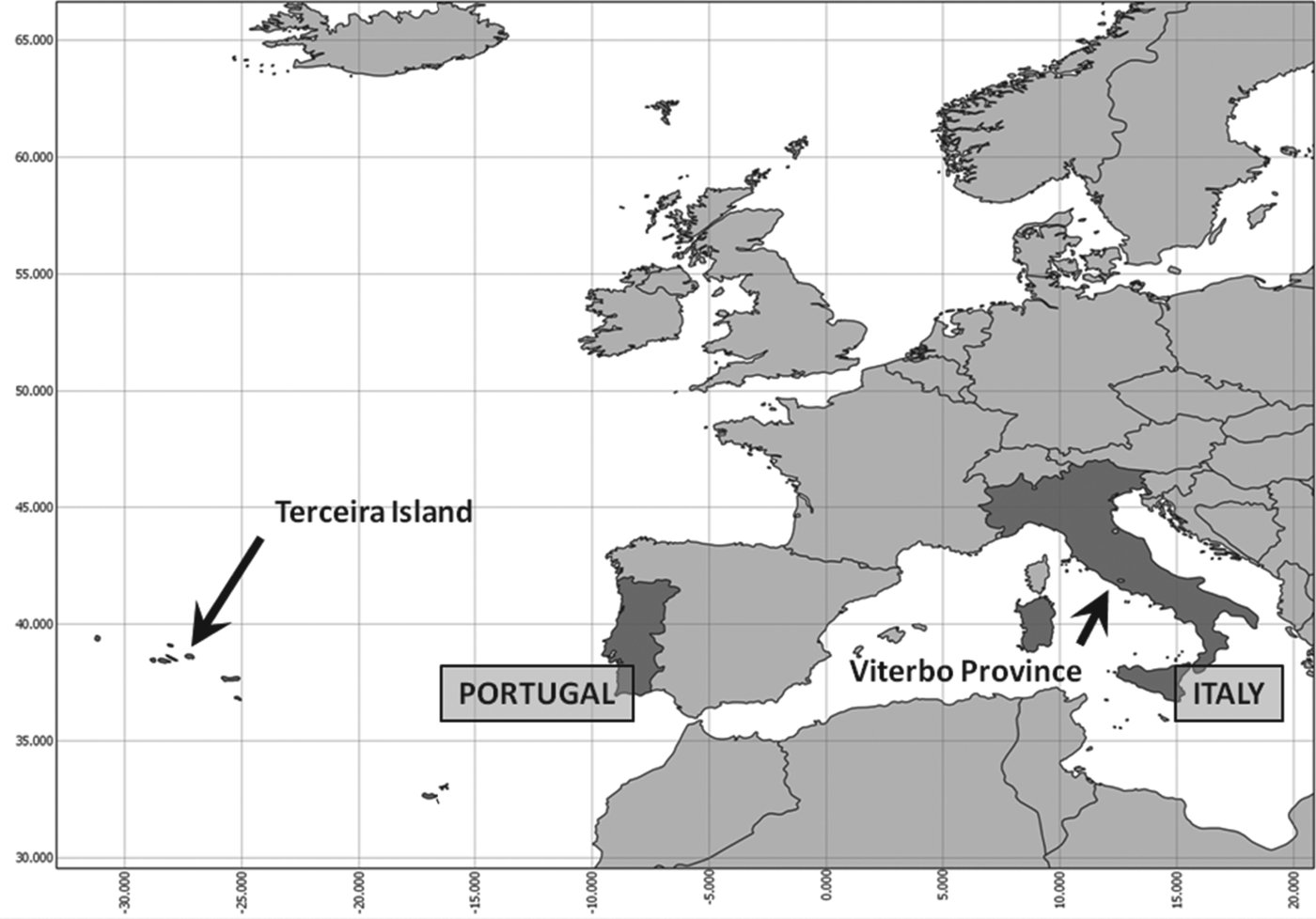
The Azores archipelago, located in the high subtropical zone (northern hemisphere; Fig. 1), was discovered in 1439, there were no inhabitants, and the islands were gradually populated by settlers. Today (Table 1), the Azores are an autonomous region (three groups consisting of the nine main islands; São Miguel, Terceira, Pico, São Jorge, Santa Maria, Faial, Flores, Graciosa, and Corvo) of the Portuguese Republic. The Azores are a predominantly rural territory (with a demographic density less than 150 inhabitants km−2).
Geographical representation of the compared areas (Terceira Island and Viterbo Province).

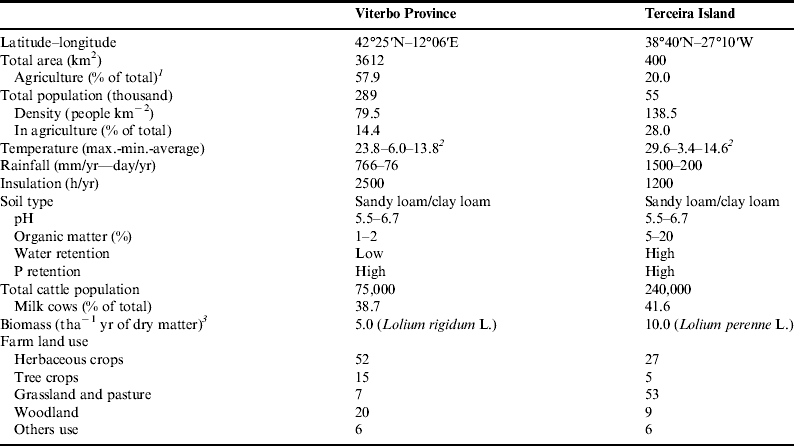
Viterbo Province and Terceira Island features.
1 Reported to utilized agricultural area.
2 Respectively, from weather observations in low land—hilly areas (0–600 m a.s.l.) and in hilly pasture areas (400 m a.s.l.).
3 Average for lower and higher lands.
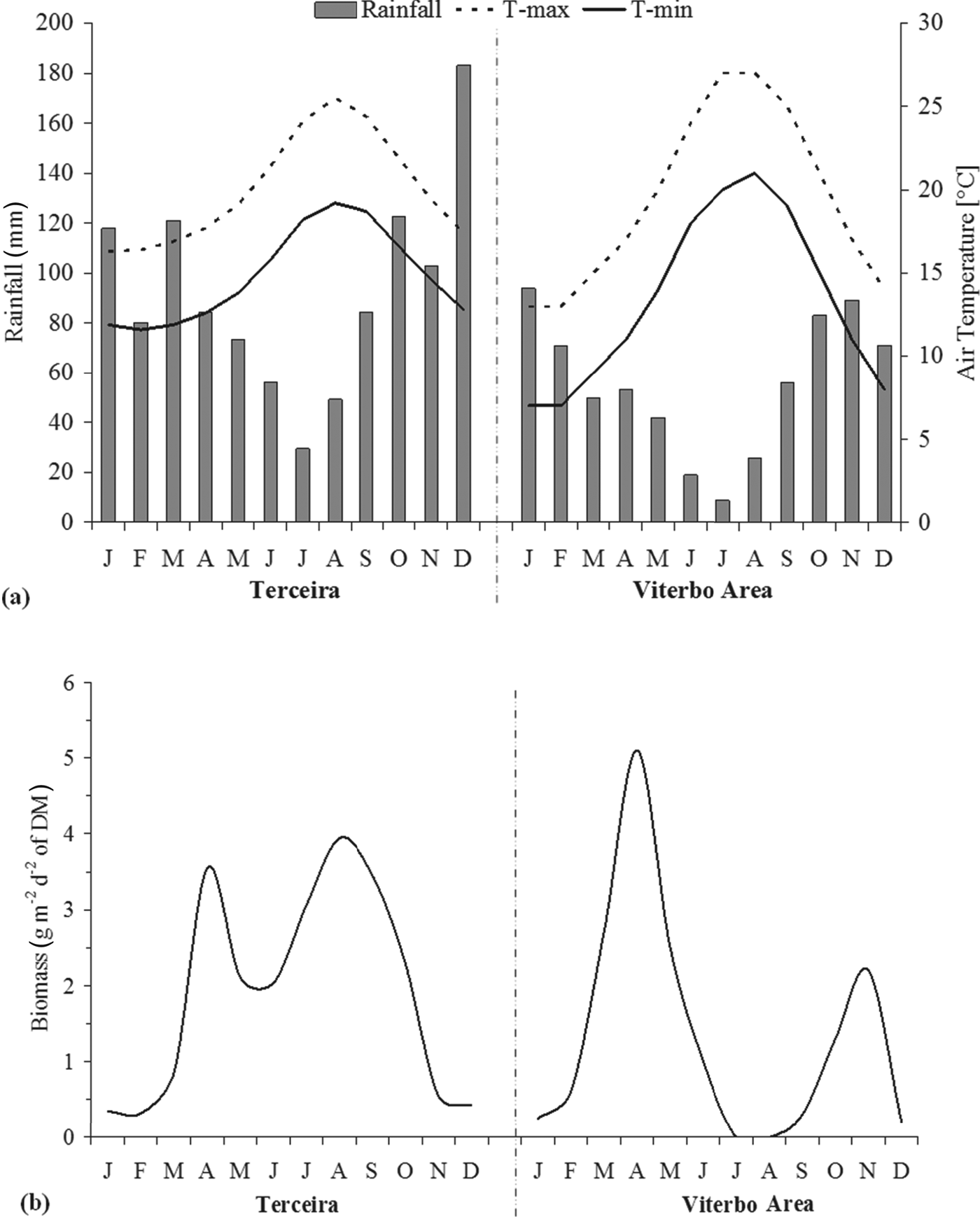
In terms of climate (Table 1), the Azores are located in a large subtropical semi-permanent center of high atmospheric pressure called the ‘Azores High’ (also known as North Atlantic High-Anticyclone or Bermuda High-Anticyclone), which is the dominant factor for the average archipelago meteorological conditions (which may lead to summer water deficit in agriculture). Local climate (Table 1; Fig. 2a) can be classified as wet temperate; and as temperature changes with altitude, the climate can be cold and wet in the mountains where it rains intensively. The air moisture content (annual average around 80%) increases from east to west in the archipelago, from south to north on each island and generally with altitude. Therefore, a climatic phenomenon called the ‘North Atlantic Oscillation’ (due to seasonal atmospheric pressure fluctuations at sea-level, between the Icelandic Low and the Azores High) is responsible for much of the variability of weather conditions; during this season the agricultural activity is affected by storms and winds transporting salt, which damages the vegetation. Owing to the volcanic origin of the Azores, the soil is andisols (highly permeable, with a high content of organic matter, rich in potassium and nitrogen; Table 1).
General tendency of rainfall and average temperature (a), and biomass accumulation in monitored grassed swards (b) in Terceira and Viterbo area.
The edapho-climatic conditions of the islands offer excellent conditions for cattle production and determine that the rural landscape is dominated by pastures. In economic and technical terms, the agriculture in the Azores is principally supported by dairy production, in extensive or semi-extensive regime, where meat is becoming an important product. Grasslands for dairy production are generally located at different altitudes: below 400 m (‘lower grasslands’) and between 400 and 600 m high (‘upper grasslands’). The productivity of the lower grasslands decreases in summertime, between June/July and October. During that period the herds move to the fresh upper lands, where there is more moisture in the soil. During the coldest period of the year, between October and March/April, the grass grows thicker in the lower lands due to the higher temperatures, and so the herds are transferred to the lower lands (Fig. 2b).
The cultivation of cereals (especially wheat) was the first agricultural attempt to establish a local economic activity. The best agricultural methods such as rotation and legume cultivation were not used and this caused a decrease in soil fertility. Cereals were therefore substituted by different crops, creating monoculture cycles. During the second half of the 19th century, some agricultural practices improved cattle breeding and, interspersed with some periods of crisis, some decades later the industrialization of dairy products transformed the sector into the most important economic activity in the archipelago. Today, the relative importance of agriculture in the regional economy is significantly higher when compared with European and national averages.
Despite the intrinsic heterogeneity of the Azores, for this study we chose the Island of Terceira as it represents the status of agriculture in the Azores better than the other islands (i.e., São Miguel). In the Azores, Terceira Island represents 20% of the utilized agricultural area, 23% of the agricultural holdings of the Azores, 23% of the agricultural population and 25% of the bovine population21. In general terms, the Azorean economy is a typical example of a small insular and peripheral region.
The Province of Viterbo in Central Italy
The Province of Viterbo (also called Tuscia) is located in Central Italy (Fig. 1) in the Northern part of the Region of Latium in a territory (about 70% hilly) that can be divided roughly into four geographical regions: coastal-plain area; hilly area, mountain area and inland plain area (Tiber valley). Only 15% of the resident population lives in rural areas and agricultural workforce represents 7% of the total inhabitants of the Province (2% is the national average). Central Italy has a typical Mediterranean climate with different microclimates, principally due to altitude and distance from the sea. Rainfall occurs principally during the winter season (Fig. 2a) and in spring and autumn the availability of water is guaranteed from winter stocks and moderate and frequent rainfall, respectively; in summer, the high temperatures and limited rainfall affect the crop yields. Mainly for these reasons, the crop biomass production occurs principally during springtime (Fig. 2b) forcing farms with cows (or other herbivores) to provide for the dry season with fodders and silages. The soil in this area is volcanic and it is classified as sandy loam and sandy clay loam, with low water retention, 5.5–6.7 of pH, 1–2% of organic matter and high phosphate retention (Table 1). This territory has a long agricultural history and traditions. The rural development of this area is linked to rural Greek and Roman metaphysical reflections on human–land relationships, as expressed in the concept of ‘agricultural thinking’ which also includes non-agricultural activitiesReference Forni and Marcone22. During Roman times, the original family-farm structure was partially replaced with a land cultivation model based on large market-oriented plots owned by aristocrats with a predominantly servile labor force frequently called latifundia 23. In most of Central Italy, the family-farm structure continued to operate in medieval times and created a synergic effect between the people and the fields. Later in the Renaissance, several new types of crops coming from the ‘New World’ were grown and large amounts of swamp land were reclaimed and cultivated. This type of family farm agriculture can be well defined as ‘promiscuous’ due to intimate sustainable conjunction of its components (e.g., the human activities, the natural resources and the territory). In the second half of the 20th century, conventional agriculture based on farm specialization, heavy external inputs and a different vision of rurality undermined the basic structure and functioning of traditional family-farm agroecosystems, replacing the flow of solar energy with the flow of auxiliary energy derived from fossil fuelsReference Conforti and Giampietro24, Reference Ediger, Hoşgör and Sürmeli25. Today's conventional farming tends toward monoculture, homogenizing the production, the inclusion of necessary chemical fertilizers and chemical pesticides, with a long-term goal of establishing a nearly ideal industrial growing environment for crops and animalsReference Poudel, Horwath, Lanini, Temple and van Bruggen7. In such a scheme, major structural changes, such as the tendency to separate crops from animal husbandry and the renunciation of the cultivation of perennial fodder crops in rotation, are inevitably linked together. Today, there are 38,000 farms in the Province of Viterbo (2.5% with cattle and 0.7% dairy farms—in 2000 there were about 39% fewer farms than 1990) distributed on 280,000 hectares of agricultural land (the average farm area is 7.4 ha). Farmers are about 7% of the total population. The land area used for agricultural activities in the province is between 60 and 70% of the total land area. The percentages of the land use are as follows: 52% herbaceous crops (37% durum wheat, 21% annual forage—mainly clover, 14% perennial forage—mainly alfalfa, 7% industrial crops, 3% corn, and 18% other herbaceous crops), 15% tree crops (42% hazelnut, 34% olive, 12% vineyard, 7% chestnut and 5% other tree crops), 7% grassland and pasture, 20% woodland, 3% non-utilized land and 3% of other use. In the Province, there are more than 29,000 cattle (in 2000 there were about 12.9% fewer cattle than in 1990) and an average of 34 milking cows per farm26.
Farm sustainability issues
In agroecology, agroecosystem sustainability indicators (developed on the base of input/output models elaborated from the system paradigm) have become a useful tool in research as an instrument for studying agroecosystems; furthermore, in line with recent protocols, indicators of farm structural diversity can be equated to farm sustainabilityReference Fjellstad27, 28. Therefore, the proposed indicators (i) are calculated on incoming and outgoing farm materials, and (ii) some aspects of the farm layout are also taken into account. Despite their apparent simplicity, these indicators are readily interpretable by farmers and bridge communication between scientists and society.
The input/output model of agroecosystem analysis has already been adopted in previous studies concerning ASIsReference Tellarini and Caporali12, Reference Caporali, Mancinelli and Campiglia14, Reference Osman and Goktolga29–Reference Di Felice, Mancinelli, Pröulx and Campiglia33. By analyzing a farm system as a process that transforms inputs into outputs in terms of energy, money, material and/or information, it is possible to calculate indicators of transformation efficiency and thus assess and judge the functioning of the agroecosystem. This methodology allows for rationalizing the on-farm choices and decisions, since it is possible to focus on three modifiable factors: the type-amount of input, the type-amount of output and the organization of the agroecosystem components. In this context, it is important to note that today the on-farm choices, and the decision-making processes that affect them, are not significantly influenced by the results of the indicatorsReference Bauler34.
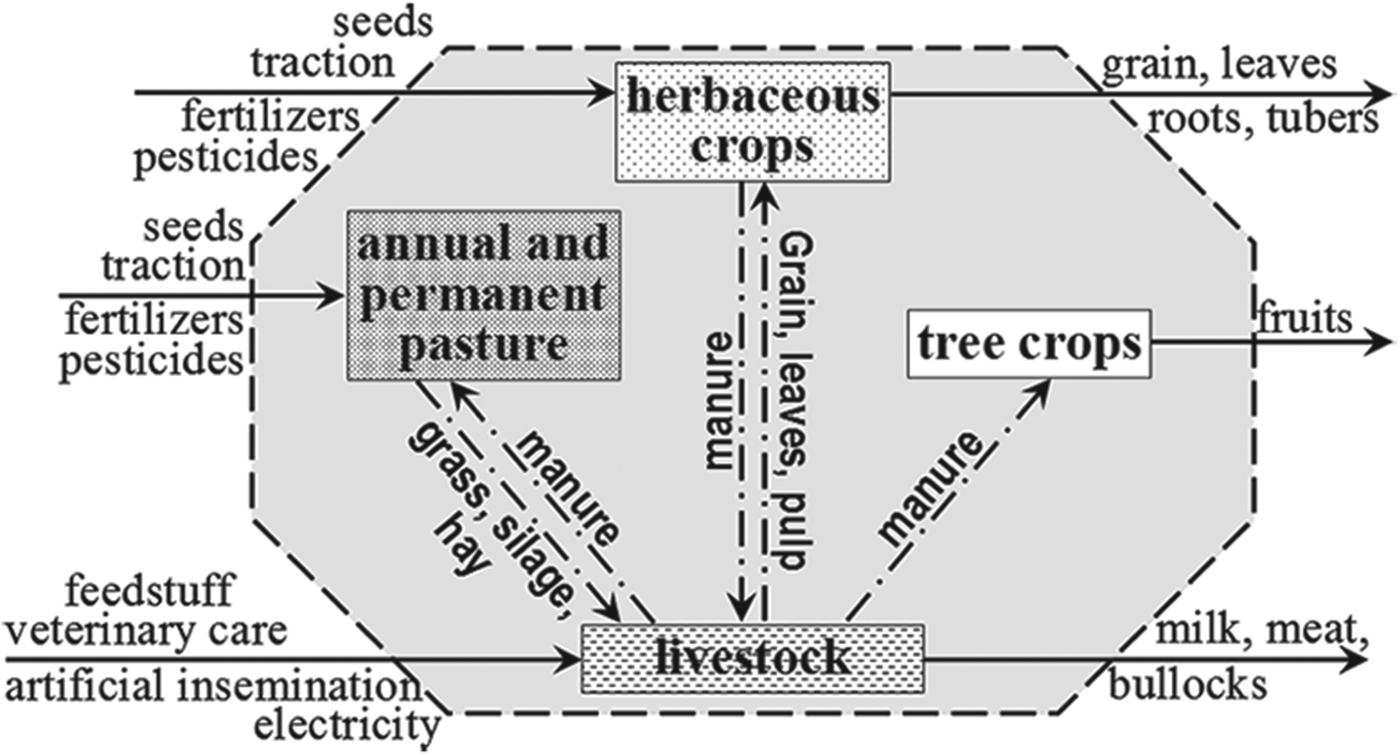
In this study, a hierarchical model of agroecosystem input/output analysis was used where a farm is regarded as a whole with interacting subsystems (Fig. 3), such as different cropping systems and the animal husbandry system, each monitored according to the input used and the output produced.
Hierarchical model of agroecosystem input/output analysis.
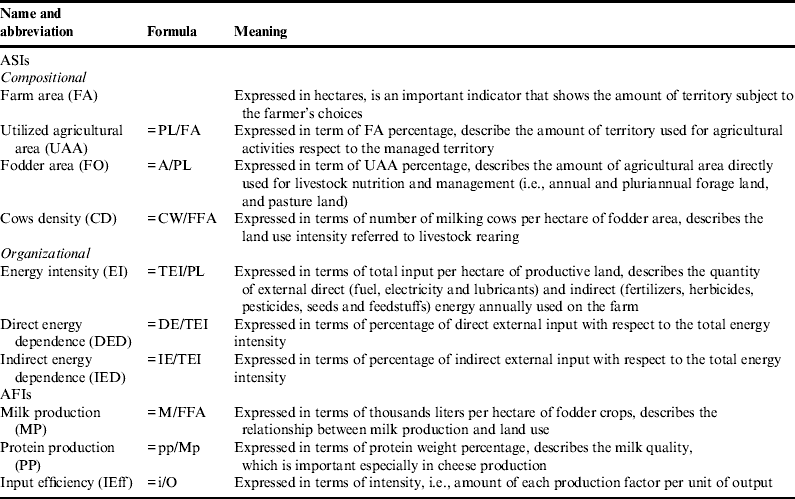
For an assessment and comparison of agroecosystem performance in different farming systems, it is essential to establish how they are: (i) composed (i.e., land use, crop and livestock diversity) and organized (i.e., prevalent use of solar energy or auxiliary energy), and (ii) how they transform resources. In order to describe these two characteristics, in this study the indicators were divided into two groups: ASIs and agroecosystem functional indicators (AFIs) (Table 2), due to the need for understanding the complex nature of agroecosystems. ASIs describe the composition and organization of the system's components (i.e., the resources that were used in the production process such as land, crops, animals and materials) and AFIs describe the efficiency with which those resources were used (i.e., output/input or input/output ratios). Both kinds of indicators were calculated in terms of money and energy values on all incoming and outgoing materials managed by the farmers and therefore dependent on their decisions. With this approach, and using energetic and monetary accounting criteria, the farm was analyzed in economic (socio-cultural values) and thermodynamic (bio-physical entities) terms. The AFIs were used to highlight the most suitable organization for making better use of the system's natural resources (e.g., solar radiation, soil organic matter and atmospheric nitrogen) rather than the imported, non-renewable resources.
ASIs and AFIs.
PL, hectares of productive land directly used for agricultural activities as herbaceous crops, tree crops and pastures (roads, stables, wells, and other human infrastructures are excluded); A, hectares of productive land used to gratify animals in terms of food and movement (roads, stables, and other human infrastructures are excluded); CW, number of milking cows; FFA, hectares of fodder area in the farm; TEI total energy input; DE, total amount of direct energy placed in the farm during 1 year; IE, total amount of indirect energy placed in the farm during 1 year; M, 1000 liters of milk products in the farm during 1 year; pp, 1000 kg of protein products in the farm during 1 year; Mp, 1000 kg of milk products in the farm during 1 year; I, amount of input from one production factor; O, amount of output from the final product (i.e., milk, crop yield).
In 2003, two groups of typical farms of Central ItalyReference Di Felice, Mancinelli, Pröulx and Campiglia33 and Terceira IslandReference Rodrigues, Dentinho, Silva and Azevedo35 were selected. A group of 31 farms was identified in the Province of Viterbo, 16 of which were mixed farms (farms with crops and livestock; four of which were dairy farms) and 15 were non-mixed farms (farms without livestock). Following the same pattern (0.08% of the regional number of farms), a group of ten mixed farms was identified on Terceira Island (exclusively dairy farms, as the main support of local agriculture).
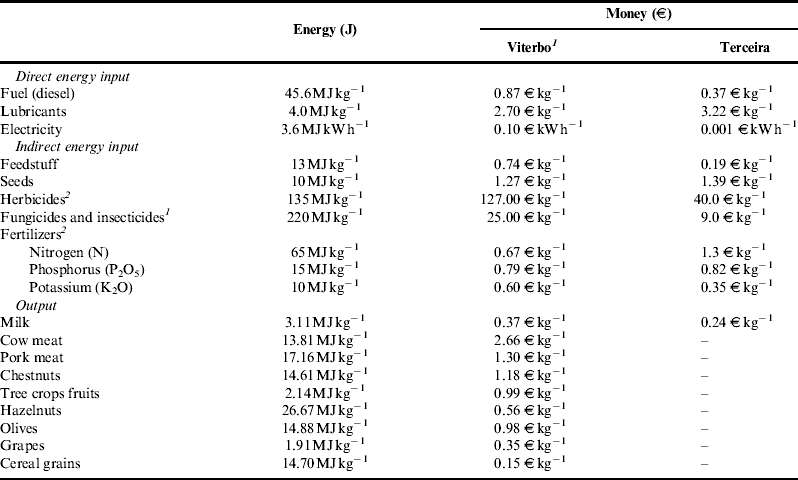
The database for the study was obtained by integrating data from farming associations, account books and other documents (e.g., application forms for European funds) with data from direct interviews with the farmers (both referring to 5 years of information, 1998–2002). Only the variable costs were considered among economic inputs and human labor was not included. In order to obtain both an energy and a monetary analysis, each input and output (defined in terms of quantity) was translated into energetic values (converting the biomass of inputs and outputs into energetic terms, by means of conversion factors derived from the reported scientific literature) and monetary values (referring to market prices in 2000 in Province of Viterbo and Terceira Island, respectively). Only milk was considered as an output in the analysis of milk production since meat and other subproducts were not considered. The principal energetic and monetary conversion factors used are reported in Table 3.
Conversion factors: principal energetic and monetary values applied.
1 Prices are referred to conventional farm products but some Italian farms analyzed are organic and for these organic prices were considered.
2 Values are referred to units of active principle in solution or fertilizer units and different active principles or commercial products are used in the two ecoregions.
Results
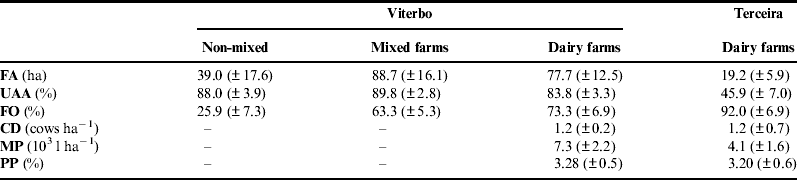
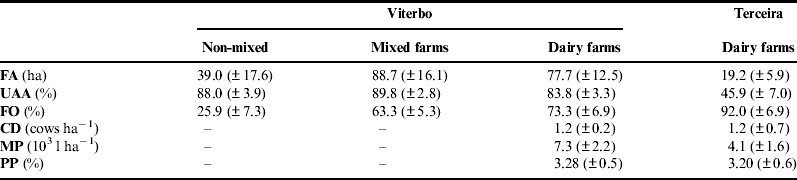
The results (Table 4) show that the presence of livestock plays an important role in defining the farm size in the Province of Viterbo and that an average dairy farm on Terceira Island is a quarter of the size compared with those in the Province of Viterbo (19.2 ha versus 77.7 ha, respectively). The UAA indicator shows that about one-tenth to one-fifth of the selected farm area in the Province of Viterbo is non-cultivated land (mainly represented by small woods and hedges), whereas on Terceira Island these values are much higher (mainly represented by large field borders—hedges and dry stone walls—and woods at higher altitudes). In the Province of Viterbo, the largest percentage of land cultivated with fodder crops was observed on dairy farms (73.3%) but non-mixed farms (without animals) also include fodder crops in the crop rotations (25.9%), mainly legumes for N-fixation. On the other hand, on Terceira Island, fodder crops cover a much larger area of farm land than other crops. Concerning the surface of farm land cultivated with fodder, similar values were observed regarding cow density on Terceira Island and in the Province of Viterbo, while milk production was higher in Viterbo even if in both areas the Frisona race was the most numerous breed.
Description of the selected farm agroecosystems through some ASIs and AFIs (standard error values are reported in brackets).
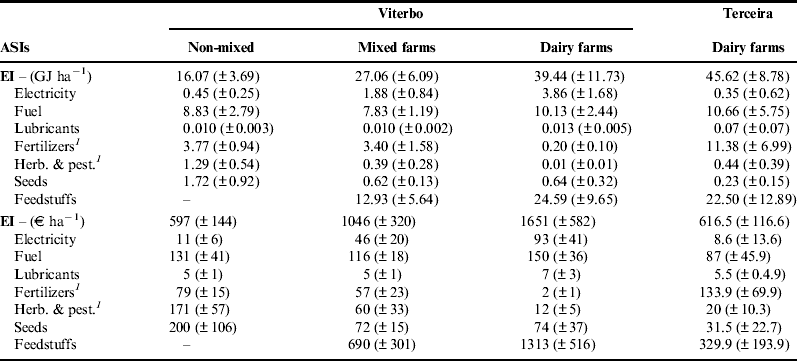
In terms of energy intensity (GJ; Table 5), the results of ASIs show that in Viterbo the energy input increases in the presence of livestock (EI is more than double on dairy farms compared with non-mixed farms; 39.44 and 16.07, respectively). On Viterbo dairy farms, feedstuff and fuel represent the most relevant input (62 and 26%, respectively). On Terceira, feedstuff and fertilizers are the main components of energy input (49 and 25%, respectively). In monetary terms (€; Table 5), in Viterbo EI increases in the presence of livestock and is almost triple on dairy farms compared with non-mixed farms (€1651 and €597, respectively). On dairy farms in Viterbo, EI is about 2.7 greater than on Terceira Island and the value of feedstuff is greater than fuel (80 and 9%, respectively). On Terceira Island feedstuff is the highest energy value (53%), followed by fertilizers (22%) and fuel (14%).
ASIs of energetic and monetary intensity (standard error values are reported in brackets).
1 Annual average of the whole crop rotation.
By considering energy inputs as direct and indirect (Table 6), the results show that on the farms in Viterbo the use of direct energy inputs decreases in mixed farm systems and is at its minimum on dairy farms. On Terceira farms, the use of direct energy inputs is practically half compared with those observed in Viterbo. On the other hand, the use of indirect energy inputs (fertilizers, pesticides, etc.) is significantly greater on Terceira farms compared with those in Viterbo (0.76 versus 0.60, respectively). In monetary terms, there is little difference concerning the use of direct and/or indirect energy inputs between Viterbo and Terceira farms: the monetary distribution of direct (0.19 versus 0.17) and indirect (0.81 versus 0.83) energy inputs on dairy farms have similar values.
ASIs: direct (DED) and indirect (IED) energy dependence indicators (standard error values are reported in brackets).

1 Annual average of the whole crop rotation.
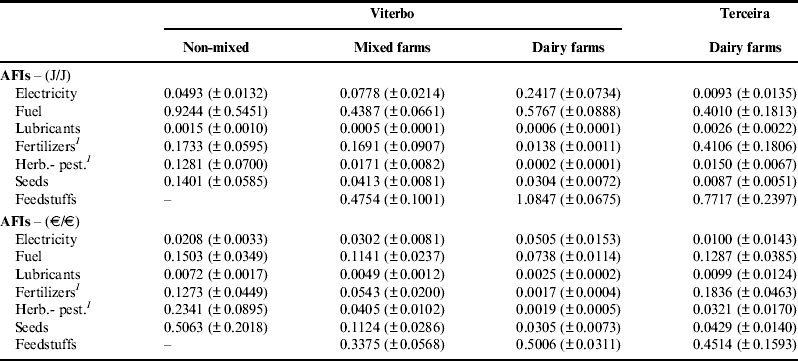
Table 7 shows the difference concerning the role of production factors related to the type of farm and the importance of economic assessment of energy required for production factors. On non-mixed farms in Viterbo, the three main production factors (as expressed by the selected input/output AFIs) are fuels (0.92), fertilizers (0.17) and seeds (0.14), in terms of energy, while in monetary terms they are seeds (0.50), herbicides–pesticides (0.23) and fuels (0.15). These values show that there is strong discrepancy concerning the assessment of resource transformation efficiency when the evaluation is carried out in energy or monetary terms. According to the above-mentioned values, 92 units of fuel are required in order to produce 100 units of output on non-mixed farms when measured in joules (energetic units) but only 15 units are required when measured in euros (monetary units).
AFIs: production factors input efficiency (IEff) in energetic and monetary terms (standard error values are reported in brackets).
1 Annual average of the whole crop rotation.
On mixed farms in Viterbo, the three main production factors are feedstuffs (0.48), fuel (0.44) and fertilizers (0.17) if the transformation efficiency is measured in energy terms, and feedstuffs (0.34), fuels and seeds (0.11) when measured in monetary terms.
On dairy farms in Viterbo, the three main production factors are feedstuffs (1.09), fuels (0.58) and electricity (0.24) when measured in energy terms, and feedstuffs (0.50), fuels (0.07) and electricity (0.05), when measured in monetary terms. On dairy farms on Terceira Island, the three main production factors are feedstuffs (0.77), fertilizers (0.41) and fuels (0.40) when measured in energy terms, and feedstuffs (0.45), fertilizers (0.18) and fuels (0.13) when measured in monetary terms. The energetic efficiency analysis of dairy farm systems both in Viterbo and on Terceira Island shows that the main production factor is feedstuff.
Discussion
Despite the presence of some common features such as volcanic soil and market-oriented organization, the agroecosystems of the two ecoregions in question have some fundamental structural and functional differences (Table 4), depending on their climate and history (e.g., in Viterbo Province the presence of low anthropized ecological infrastructures close to the fields, such as small woods, hedges or rivers, has positive effects on the agroenvironment such as mechanical barriers, biological filters and biological reservoirs).
Generally speaking, the main difference between Viterbo and Terceira dairy farms is that milk production is the only output for Terceira farms (specialization) and the main output for Viterbo farms (diversification) is characterized by both crop and livestock production. The difference in MP (4.1 versus 7.3; in Terceira and Viterbo, respectively) is related to the difference in the climatic and management conditions between the two areas and probably due to the performance of the Frisona breed.
On Terceira farms, the use of direct energy input is practically half compared with Viterbo and this is mainly due to the less intensive farm livestock management. On the other hand, the use of indirect energy inputs (fertilizers, pesticides, etc.) is significantly higher on Terceira farms compared with Viterbo (0.76 versus 0.60, respectively) and this is due to the need for Terceira farms to supply livestock and fodder crops with external energy sources. In fact, the simplified crop rotation, the relatively high presence of alien weeds in imported feedstuffs and seeds, and the low diffusion of legume crops such as forage crops, creates the need for using chemicals (herbicides and pesticides) and encouraging the use of fertilizers (especially nitrogenous fertilizers) and feedstuffs. In monetary terms, there is less difference in the amount and use of direct–indirect inputs of energy required between Viterbo and Terceira farms: the monetary distribution of direct (0.19 versus 0.17) and indirect (0.81 versus 0.83) energy inputs on the dairy farms shows similar values. The main reason for this situation is the low cost of direct energy on Terceira Island compared with Viterbo (€0.37 versus €0.87 kg−1 of diesel, respectively) (Table 3), which is due to the Portuguese and European economic support policy in the Azores. A different economic weight of the same energy resource is enough to establish significant agroecological differences between the two dairy farm systems in Viterbo and on Terceira Island.
In Viterbo, the feedstuff value is higher due to the fact that the farmers purchase larger amount of this produce from the market. This means that the environmental cost of grain crop cultivation (i.e., the ecological footprint) is ‘loaded on other places and/or countries in the world’ where feedstuff is produced and exported. Terceira Island is more affected by these environmental costs because more fodder crops are grown on its farmland by providing external inputs. As a consequence, animal breeding is on the increase which is based on feed purchased on the market. The availability of nitrogen from industrial sources makes the presence of legume fodder in rotations unnecessaryReference Nemecek, von Richthofen, Dubois, Casta, Charles and Pahl36. Without poliannual crops in rotation there is no control over weeds and other harmful biological agents and treatments with chemicals are necessary. In the future, it would be useful to evaluate the possibility of implementing alternative renewable energy sources on dairy farmReference Rodrigues, Dentinho, Silva and Azevedo35 and remodeling farms in a more sustainable wayReference Zimmermann, Heckelei and Domínguez37.
Currently, the human consumption of food of animal origin, which is frequently under scientific discussion, negatively affects the environment (e.g., greenhouse gas emissions), human health (e.g., saturated fatty acids) and ethical aspects. Vieux et al.Reference Vieux, Darmon, Touazi and Soler38 suggested that changing the structure of the diets by reducing the consumption of animal-based products is probably not an effective approach for significantly reducing greenhouse gas emissions. In addition, theyReference Vieux, Darmon, Touazi and Soler38 observed that the environmental and human health effects resulting from the reduction of meat consumption are not always both positive. Therefore, the iso-caloric replacement of animal-based products with fruit and vegetables may simultaneously have a positive effect from a heath point of view and a negative effect from an environmental point of view.
The concept of farm as a ‘system’ composed of various components to be organized in a sustainable way, in accordance with socio-economic and environmental goals, was already scientifically established in the 19th century by Cuppari (1862)Reference Caporali, Francis, Caporali, Lieblein, Von Fragstein and Francis39. Crops and livestock were regarded as the complementary components of a mixed farm, due to the integration of the grazing and detritus chains which allows the farm to operate as a self-sustaining agroecosystem. Draghetti (1948)Reference Caporali, Francis, Caporali, Lieblein, Von Fragstein and Francis39 was one of the first Italian scholars in the 20th century to clearly define the model of circulation of matter-energy on a farm and to carry out the experimental trials at the farm level in order to quantify the benefits of the integration of crop and animal husbandry for yield increase and soil fertility maintenanceReference Gamborg and Sandøe40. The results of this study are partially in contrast with the above agroecological concept as the input requirement is higher on mixed farms. This is due to the fact that the grazing and detritus chains are stressed in both areas since farms buy feedstuff rather than calibrate the number of animals raised on the available fodder area. Furthermore, the detritus chain is not improved and the use of chemical fertilizers can produce a negative impact on the state of the environment (i.e., nitrogen pollution).
However, there are some limitations concerning this study since it only focuses on the energetic and monetary flows of food production without bearing in mind other important aspects such as nutritional (i.e., conversion of sugars, fats, protein, vitamins, amino acids and other elements), and social (e.g., farmer education, inclusion of women, unemployment) aspects.
In the attempt to find useful ASIs, energy and monetary results appear not to offer a single coherent account of farming systems sustainability also because the bio-physical and socio-economical readings of the situation are not yet in agreement. This explains why there is an urgent need to discover an environmental accounting method capable of integrating the ecological and economic aspectsReference Tellarini and Caporali12.
Recently, when facing new problems of increasing risks for human health and the environment, and due to the recent development of conventional agriculture, the European agricultural policy has been promoting new models of sustainable agriculture that have their roots in the principles of both traditional agriculture and the modern science of agroecologyReference Altieri41–Reference Mancinelli, Campiglia, Caporali and Di Felice43. Therefore, it is essential to promote a greater use of sustainability indicators in policy and management decision-making processesReference Bauler34 translating into practice the use of ASIs, also in order to be able to assess their real validity.
Conclusions
This study identified some key components for achieving the sustainable development of agroecosystems in the two ecoregions in question. One component would be to increase the autonomy of farms, so that strategic decisions can be taken at the farming level in order to maintain productivity without compromising the long-term sustainability of the farm. This flexibility in the management of agroecosystems may be particularly important in the larger context of a free market economy and enforcement of (inter)national agricultural policies.
To assess the sustainability of agriculture and the provision of environmental services, it is essential to balance the complex interactions between the environmental, economical and social dimensions of agroecosystems. We suggest that particular attention should be paid to how the farm's structural characteristics relate to its agroecosystem performance at regional level, while considering the sustainability of agroecosystems.
With the development and use of ASIs, agroecological research is becoming part of the structure of civil society, improving its role of scientific service for public utility. The step of introducing ASI as a scientific topic of research at academic level is extremely relevant in order to develop a new transdisciplinary science of sustainability. Building on this foundation, there is now a tremendous opportunity to advance a new global scientific research paradigm—the generation and implementation of the science of sustainability.
The political recognition of agriculture as a multipurpose activity in society has created the need to invest more intellectual and financial resources into research for monitoring and measuring sustainability conditions in agriculture.
Acknowledgements
The authors would especially like to thank Fabio Caporali for his activity in coordinating the project, funded by the Italian Ministry of University, which has led to the realization of this study. The availability of these funds has created the mobility of researchers in Europe and therefore given us the opportunity to study two very different rural environments as ecoregions, both belonging to the European Union and subject to the Common Agricultural Policy. The authors would also like to thank Eleanor Lea for her assistance in controlling the paper.