Introduction
Increasing crop yield is one of the main purposes of agricultural production, thus fertilization has been a widely used agricultural management tool to improve soil fertility and productivity over the years. However, continuous and excessive applications of chemical fertilizers (CF) can lead to environmental pollution, soil degeneration and crop quality decline (Zhu and Chen, Reference Zhu and Chen2002; Ju et al., Reference Ju, Xing, Chen, Zhang, Zhang, Liu, Cui, Yin, Christie, Zhu and Zhang2009; Zhang et al., Reference Zhang, Dou, He, Ju, Powlson, Chadwick, Norse, Lu, Zhang, Wu, Chen, Cassman and Zhang2013). Organic fertilizers have been suggested as substitutes due to their efficiency for increasing crop yields, as well as their high potential for improving soil quality and fertility (Diacono and Montemurro, Reference Diacono and Montemurro2010). However, it is unclear whether similar positive effects of organic fertilizers could be obtained for both above- and below-ground crops under the same farming conditions.
Soil physicochemical properties generally affect crop yield and quality directly. Compared with non-fertilized soil, soil supplied with extra fertilizer would have significant improvement in soil nutrients no matter what type of fertilizer is used (Haynes and Naidu, Reference Haynes and Naidu1998). However, there are some differences between chemical and organic fertilizers. CFs usually release available nutrients immediately, while the multiple macro- and micronutrients contained in organic fertilizers are released slowly and continuously over a longer time (Diacono and Montemurro, Reference Diacono and Montemurro2010). Organic fertilizers can also increase soil organic matter, improve soil structure, enhance water and nutrient holding capacity and reduce erosion (Liu et al., Reference Liu, Tu, Hu, Gumpertz and Ristaino2007; Diacono and Montemurro, Reference Diacono and Montemurro2010; Singh Brar et al., Reference Singh Brar, Singh, Singh and Kaur2015). Thus, organic fertilizers are expected to have potential to improve the growth and yield of both above- and below-ground crops.
Soil-biological properties such as basal respiration, microbial biomass and microbial quotient can provide additional valuable information for soil-quality assessment (Bending et al., Reference Bending, Turner, Rayns, Marx and Wood2004; Fließbach et al., Reference Fließbach, Oberholzer, Gunst and Mäder2007). Soil microorganisms which contribute to biochemical cycles and energy flows play critical roles in maintaining soil structure and function (Morris and Blackwood, Reference Morris, Blackwood and Paul2015). Many studies have demonstrated that organic fertilizers improve soil-biological activities through increasing soil-microbial biomass and altering microbial communities (Tejada and Gonzalez, Reference Tejada and Gonzalez2009; Chaudhry et al., Reference Chaudhry, Rehman, Mishra, Chauhan and Nautiyal2012; Lazcano et al., Reference Lazcano, Gómez-Brandón, Revilla and Domínguez2013; Reilly et al., Reference Reilly, Cullen, Lola-Luz, Stone, Valverde, Gaffney, Brunton, Grant and Griffiths2013; Lupwayi et al., Reference Lupwayi, Benke, Hao, O'Donovan and Clayton2014), and strong positive correlations have been found between crop yield and soil-biological properties (Insam et al., Reference Insam, Mitchell and Dormaar1991; Alves de Castro Lopes et al., Reference Alves De Castro Lopes, Gomes De Sousa, Chaer, Bueno Dos Reis Junior, Goedert and De Carvalho Mendes2013; Lupwayi et al., Reference Lupwayi, Harker, O'Donovan, Turkington, Blackshaw, Hall, Willenborg, Gan, Lafond, May and Grant2015). In contrast, the application of CFs has destroyed a large number of beneficial microorganisms and decreased soil-microbial activities, although the responses of specific microbial groups depend on environmental and crop management-related factors (Treseder, Reference Treseder2008; Ramirez et al., Reference Ramirez, Craine and Fierer2012; Geisseler and Scow, Reference Geisseler and Scow2014). In addition, organic fertilizers may also promote microbial activities indirectly through increasing root biomass and root exudates (Ebhin Masto et al., Reference Ebhin Masto, Chhonkar, Singh and Patra2006). It is hypothesized that higher soil-biological activities can be obtained with organic fertilizers than with CFs for both above- and below-ground crops.
Soil-biological activities are interconnected with many soil physical and chemical properties. For example, soil organic matter and pH can affect the activities of many soil microorganisms, which can in turn influence carbon and nutrient cycling, and reform soil physical structure (Paul and Clark, Reference Paul and Clark1996; Nannipieri et al., Reference Nannipieri, Ascher, Ceccherini, Landi, Pietramellara and Renella2003). Although it is accepted that organic fertilizers can improve crop yield through increasing soil-biological activities (Insam et al., Reference Insam, Mitchell and Dormaar1991; Alves de Castro Lopes et al., Reference Alves De Castro Lopes, Gomes De Sousa, Chaer, Bueno Dos Reis Junior, Goedert and De Carvalho Mendes2013; Lupwayi et al., Reference Lupwayi, Harker, O'Donovan, Turkington, Blackshaw, Hall, Willenborg, Gan, Lafond, May and Grant2015), several other studies discovered no significant correlations between soil-biological properties and crop productivity across regions and species (Franco-Otero et al., Reference Franco-Otero, Soler-Rovira, Hernández, López-De-Sá and Plaza2012; Tian et al., Reference Tian, Wang, Li, Zhuang, Li, Zhang, Xiao and Xi2015). Adding extra nutrients into the soil through fertilizer applications would absolutely increase soil fertility and facilitate the growth of plants directly; meanwhile, the fertilizers might also boost soil-microbial activities, which in turn facilitate additional release of soil nutrients. Soil-microbial activities play important roles in soil nutrient release and accumulation but might not link to crop yield directly. Thus, no significant effects of soil-biological activities on crop yield would be found when the covariate effects of soil-chemical properties were removed.
Although many studies have demonstrated the effects of organic or organic–inorganic complex fertilizers on soil quality and productivity, whether consistent effects exist for both above- and below-ground crops under the same farming conditions is still worth exploring. The objective of the current study was to evaluate whether organic fertilizers could improve the soil biochemical properties and yields for both above- (rapeseed) and below-ground (sweet potato) crops.
Materials and methods
Site and experimental design
The study was conducted at the Jiangxi Institute of Red Soil (116°55′N, 28°13′E, 45 m a.s.l.), Jiangxi Province, China. The field site is located in the typical sub-tropical monsoon landscape zone of South China, with mean annual rainfall of 1788 mm, mean annual evaporation of 1359 mm and mean annual temperature of 17.6 °C. The experimental site was in an abandoned agricultural field that supported double-cropping of local varieties of rapeseed (Brassica napus L.) and sweet potato (Ipomoea batatas L.). Rapeseed and sweet potato were harvested in May and September, respectively. The soil was sandy loam derived from quaternary real clay, with very low soil organic matter in the topsoil (pH, 5.83; total C, 5.73 g/kg; total N, 0.41 g/kg; total P, 0.31 g/kg). The soil is classified as an Ultisol (Soil Survey Staff, 1999), which is usually called red soil in China.
The fertilization experiment was established in 2014. Three treatments with three replicates were arranged in a completely randomized design: (1) CF, (2) organic manure (OM) and (3) organic manure plus CF (MCF). Plot size was 5 × 4 m2 and separated by concrete barriers (60 cm deep and 10 cm above-ground). The CF treatment, which reflected local fertilizer practice, received 152.72 kg nitrogen (N)/ha, 116.20 kg phosphorus pentoxide (P2O5)/ha and 166.32 kg potassium oxide (K2O)/ha. Urea was used as the N source, calcium superphosphate as the phosphorus (P) source and potassium chloride as the potassium (K) source. This treatment was chosen as the control for comparing and assessing the effect of local application of fertilizer on soil fertility and crop yield. For the OM treatment, 11 290 kg/ha composted pig manure was applied (total N, 13.6 g/kg; total P, 2.67 g/kg; total K, 1.51 g/kg; available phosphorus (AP), 0.61 g/kg and available K, 0.15 g/kg), which had the same total N as the CF treatment. For MCF, the composted manure and CF were mixed in a 60 : 40 ratio to maintain the same amount of N as in the CF and OM treatments. The CFs and OM were applied as basal fertilization before planting sweet potato each year, and mineral fertilizers (152.72 kg N per ha, 116.20 kg P2O5 per ha and 166.32 kg K2O per ha) were applied to all plots before planting rapeseed. The marketable yields of the crops were harvested manually. The dry seeds of rapeseed and fresh tubers of sweet potato were gathered and weighed after harvest.
Soil sampling
Soil samples were collected at a depth of 0–20 cm in May, after rapeseed was harvested, and in September, after sweet potato was harvested. For each plot, five soil cores with a diameter of 4 cm were collected randomly and mixed together as one composite sample per plot after removing the roots and rocks. The samples were sealed in plastic bags and stored at 4 °C until soil biochemical properties were analysed.
Analysis of chemical and biological properties
Soil total organic carbon (TOC) and total nitrogen (TN) were analysed using an automated elemental analyser (Vario MAX CN, Elementar Co., Germany) after the soil samples had been air dried. Total phosphorus (TP) was analysed by sodium hydroxide (NaOH) fusion and colorimetric procedures (Olsen and Somers, Reference Olsen, Somers, Page, Miller and Keene1982). AP was determined colorimetrically using molybdate after extracting samples with 0.5 m sodium bicarbonate (NaHCO3; Olsen, Reference Olsen1954). Soil nitrate (NO3−) and ammonium (NH4+) were measured with an auto analyser (AA3, Bran and Luebbe, Germany) after extracting with 2 m potassium chloride (KCl) solution (Lu, Reference Lu1999).
Microbial biomass carbon (MBC) and microbial biomass nitrogen (MBN) were estimated by a fumigation–extraction method (Vance et al., Reference Vance, Brookes and Jenkinson1987). Briefly, two fresh soil samples (10 g dry weight equivalent) were placed in 250 ml centrifuge tubes and one was fumigated for 24 h by adding 0.5 ml ethanol-free chloroform to the tube. Both fumigated and non-fumigated soils were extracted with 40 ml 0.5 m potassium sulphate (K2SO4) solution. The carbon (C) and N in extracts were determined by an automated C/N analyser. The factors used to convert the extracted organic C and N to MBC and MBN were 0.38 and 0.45, respectively (Vance et al., Reference Vance, Brookes and Jenkinson1987). Soil respiration (SR) was measured by weighing fresh soil (equivalent to 5 g dry mass) into jars, then calculating carbon dioxide (CO2) concentration by gas chromatography after incubating at 25 °C for 12 h.
Statistical analysis
Analysis of variance (ANOVA) was used to compare the effect of fertilizer treatments on soil-chemical properties, biological properties and crop yield. Since soil-biological properties were correlated with many soil-chemical properties, analysis of covariance (ANCOVA) was adopted to determine whether soil-biological properties were different among treatments. In the ANCOVA, soil-biological properties were used as dependent variables, with treatment as a fixed factor, and soil-chemical properties as the continuous covariates. Prior to the ANCOVA procedure, the number of variables of soil-chemical properties was reduced by principal component analysis (PCA) for rapeseed and sweet potato separately. Partial regression analysis was also used to assess how crop yield was explained by each of the biological variables independently after accounting for the variation of soil-chemical properties. Data from 2015 and 2016 were analysed separately, due to continuous rainfall in the spring of 2016 that led to a significant decline in the yield of rapeseed (leaving many small and stunted pods). All analyses were performed in R 3.2.3 (R Core Team, 2016).
Results
Soil-chemical and -biological properties
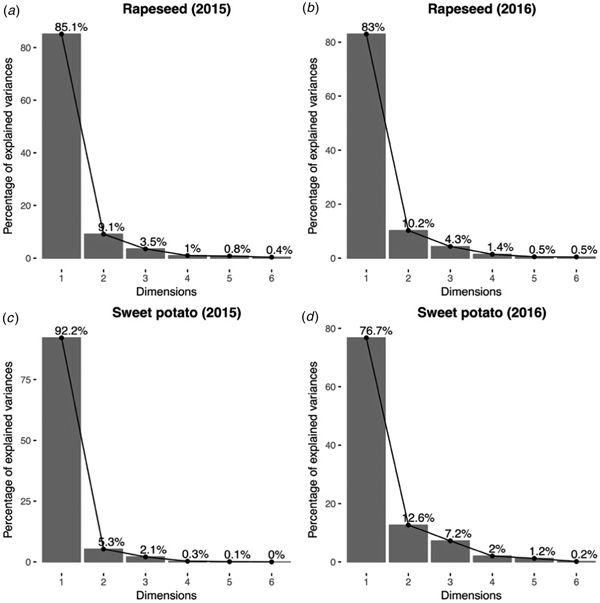
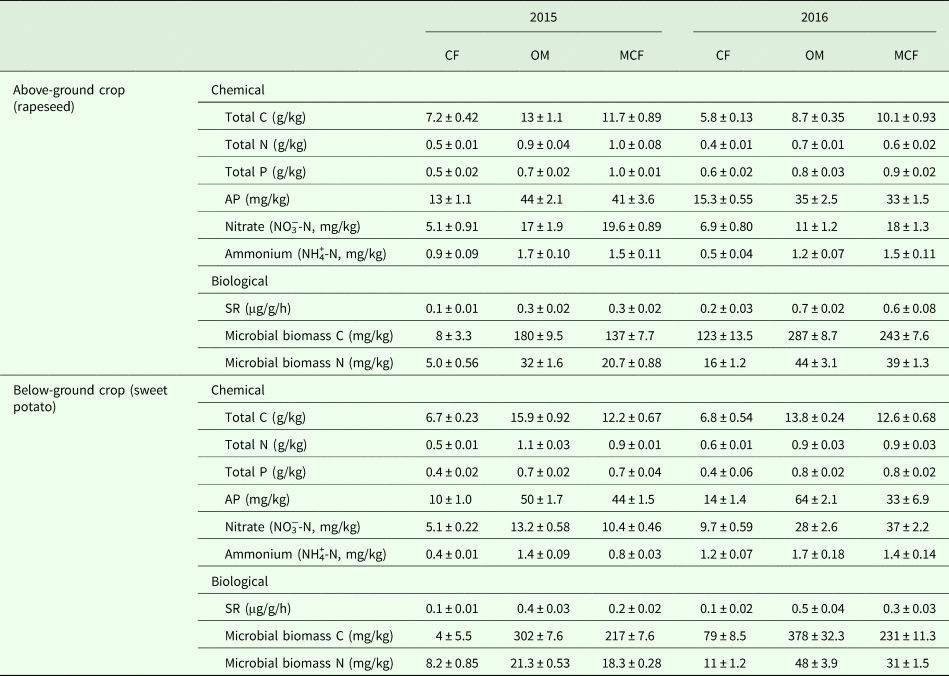
Compared with the CF treatment, organically fertilized treatments (OM and MCF) had significantly higher soil TOC, TN, TP, AP, NO3−-N and NH4+-N for both crops (all P < 0.01; Tables 1 and 2), except that no significant improvement was detected in NH4+-N in the sweet potato phase in 2016. Generally, soil-chemical properties showed consistent improvement with OM and MCF. In the rapeseed phase, the MCF treatment had a higher content of TP than the OM treatment. In the sweet potato phase, the OM treatment increased TOC, TN, NO3−-N and NH4+-N in 2015, and increased AP in 2016 compared with MCF. The highest NO3−-N was found in 2016 under MCF treatment for both crops (Table 1). To reduce the dimensionality of soil-chemical variables, and to minimize the impact of inherent collinearity of these variables, the first principal component (PC1) of a PCA of soil TOC, TN, TP, AP, NO3−-N and NH4+-N was used to represent soil-chemical properties for subsequent analyses. The PC1s explained 77–92% of the total variance in soil-chemical properties for both crops (Fig. 1).
Percentage of variances explained by each principal component for both crops.

Chemical and biological properties (mean ± standard error) of soils under different fertilizer treatments for both above- (rapeseed) and below-ground (sweet potato) crops

CF, chemical fertilizer; OM, organic manure; MCF, organic manure plus CF.
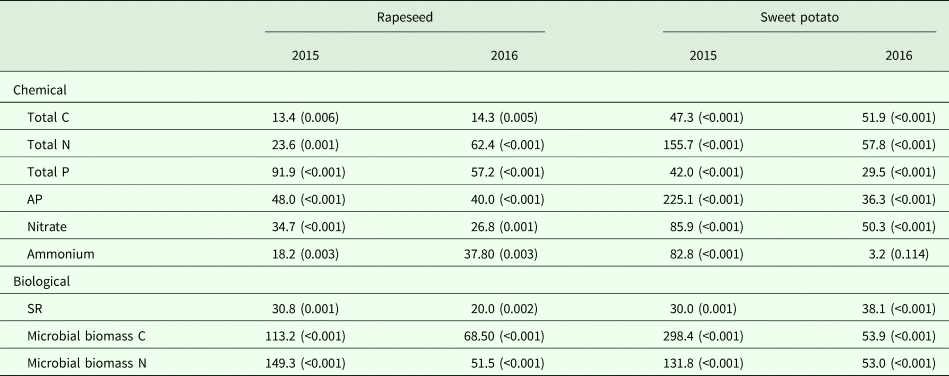
ANOVA (F value [P value]) for soil-chemical and biological properties under different fertilizer treatments
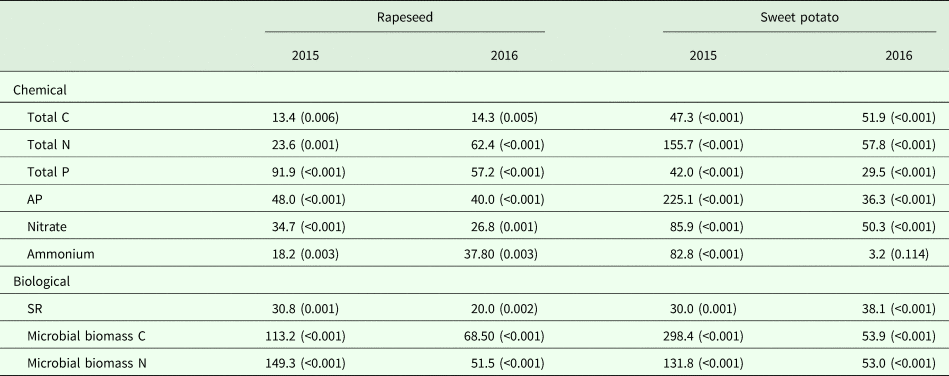
Organically fertilized treatments (OM and MCF) also had significantly higher levels of SR, MBC and MBN for both rapeseed and sweet potato in the 2 years (all P < 0.01; Tables 1 and 2). Generally, the OM treatment performed better in improving the soil-biological properties for both crops than the other two treatments (CF and MCF) (Table 1). The OM treatment had 1.3–3.6 times higher SR, 1.2–6.3 times higher MBC and 1.1–6.4 times higher MBN than the CF and MCF treatments in both phases. Moreover, the results of ANCOVA showed that there were significant effects of fertilizer treatment on all biological properties when the effects of soil-chemical properties were controlled (all P < 0.01; Table 3).
Significance of fertilization treatment effects on soil-biological properties when effects of soil-chemical properties were controlled for

The table shows F values with P values in parentheses. The soil-chemical properties were represented by the first principal component (PC1) of a PCA analysis based on soil-chemical properties of TOC, TN, TP, AP, NO3−-N and NH4+-N, and the PC1s explained more than 77% of the total variance for each crop.
Crop yield and its relationship with soil biochemical factors
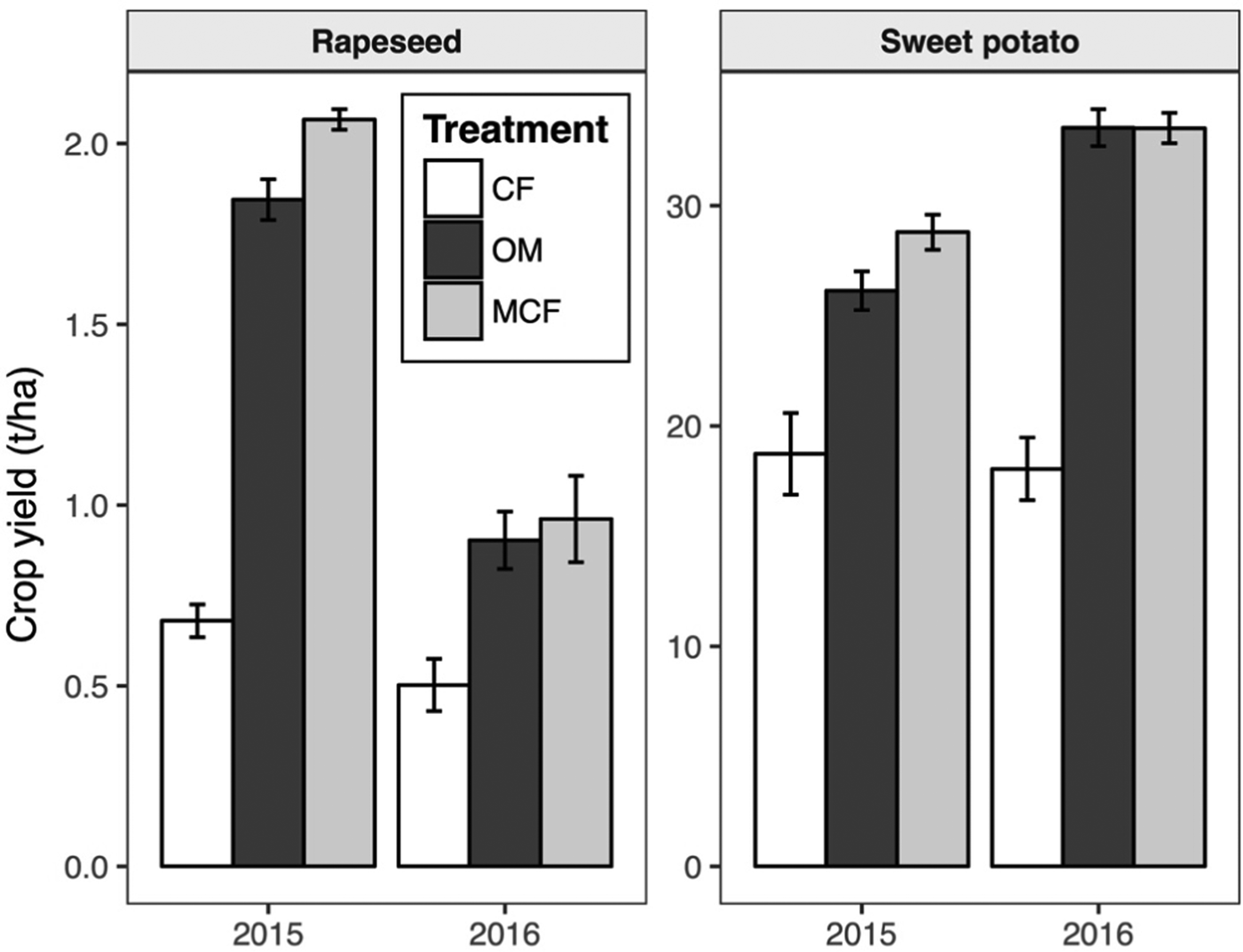
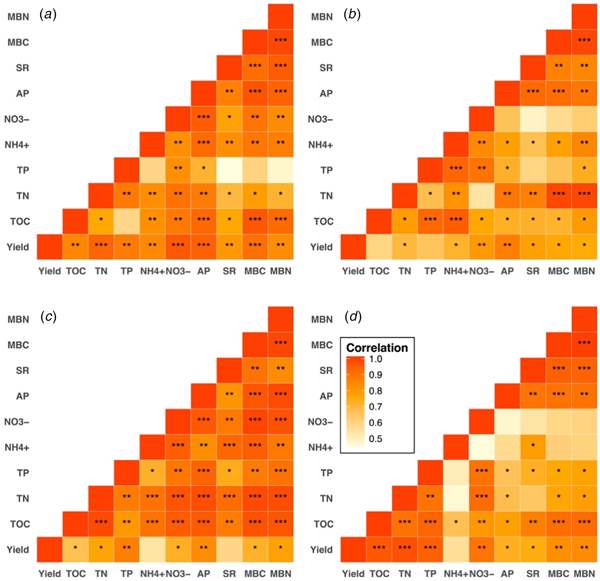
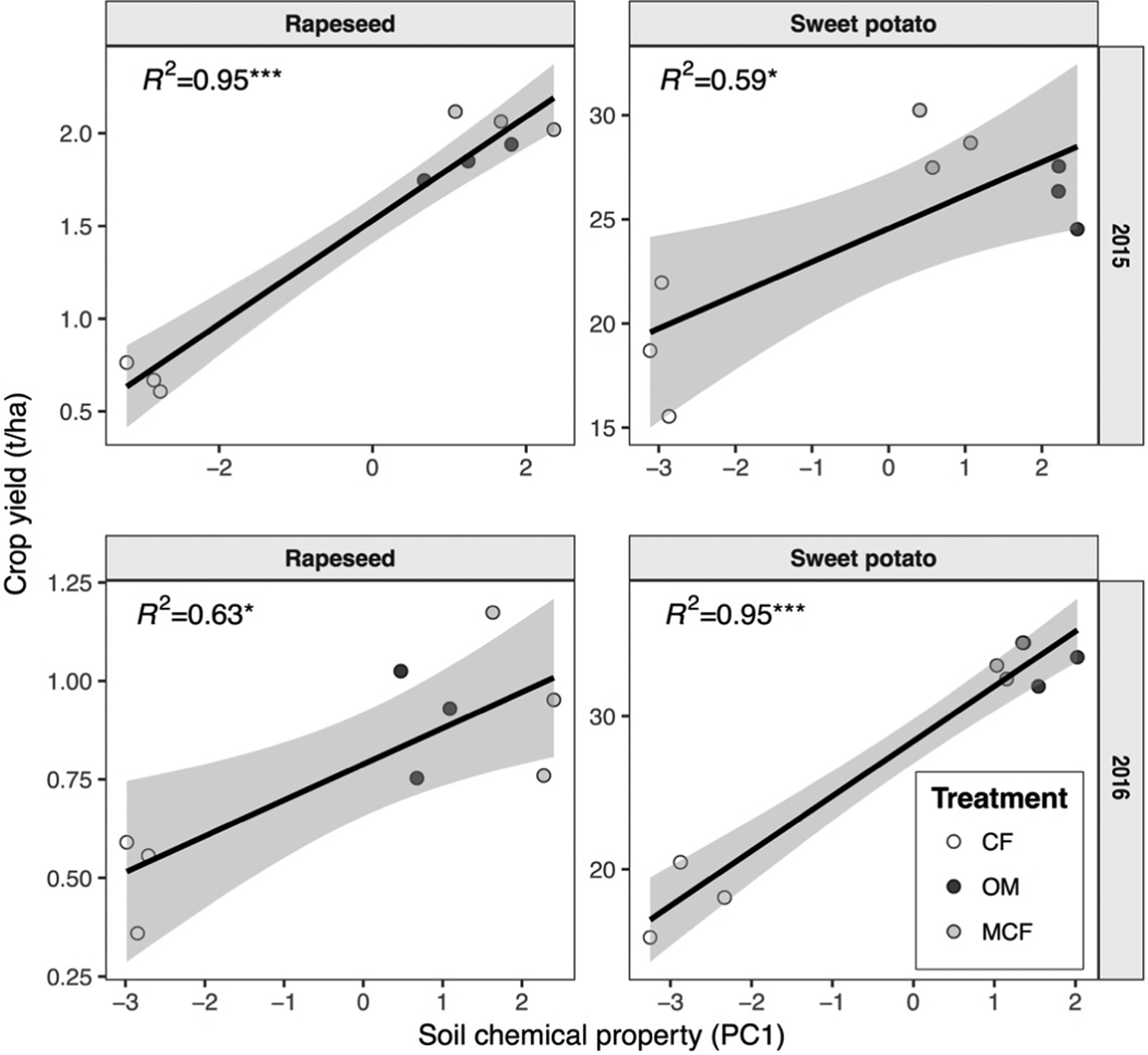
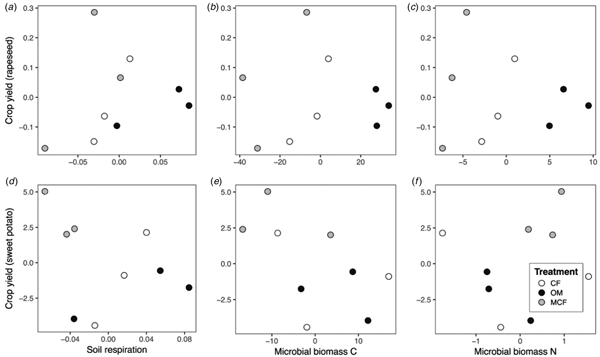
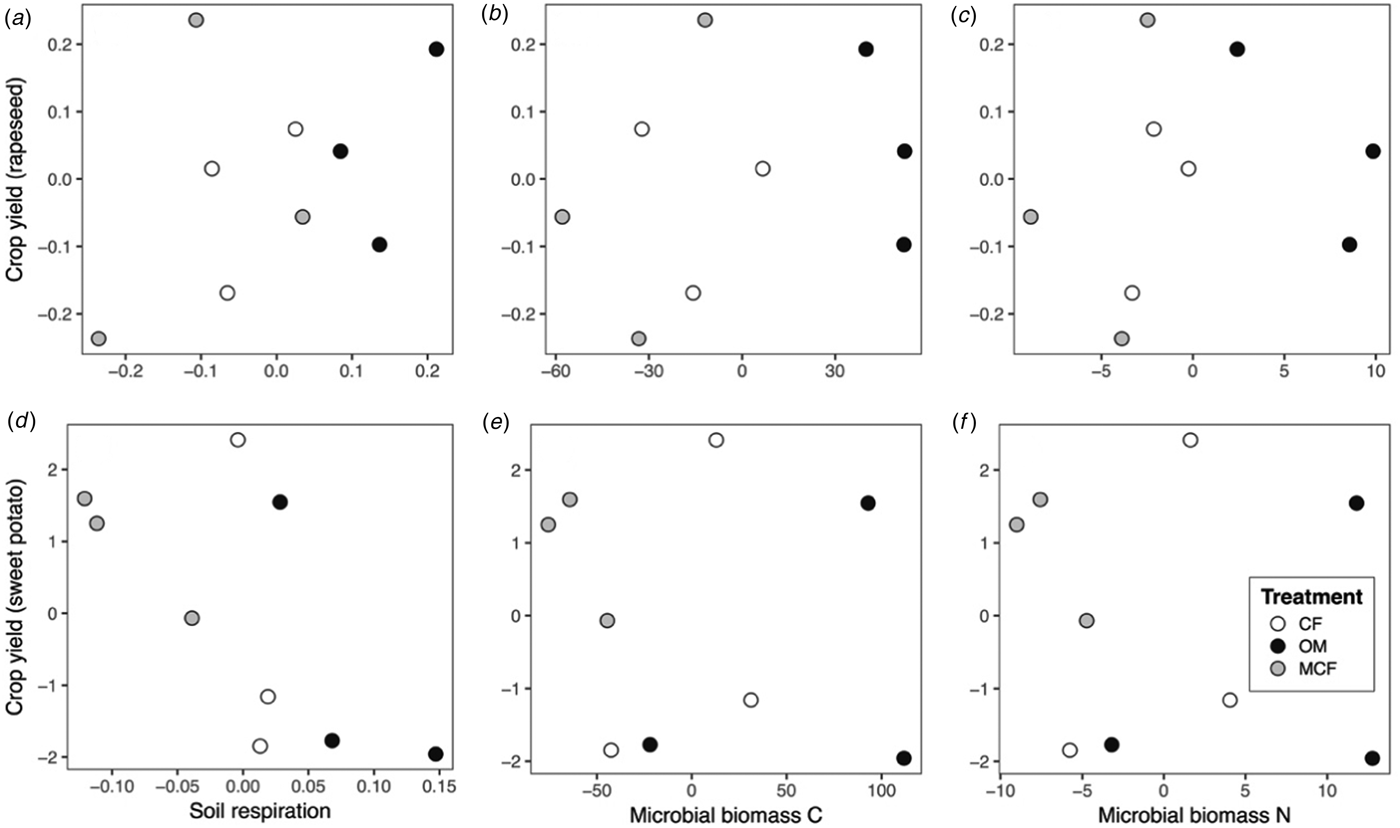
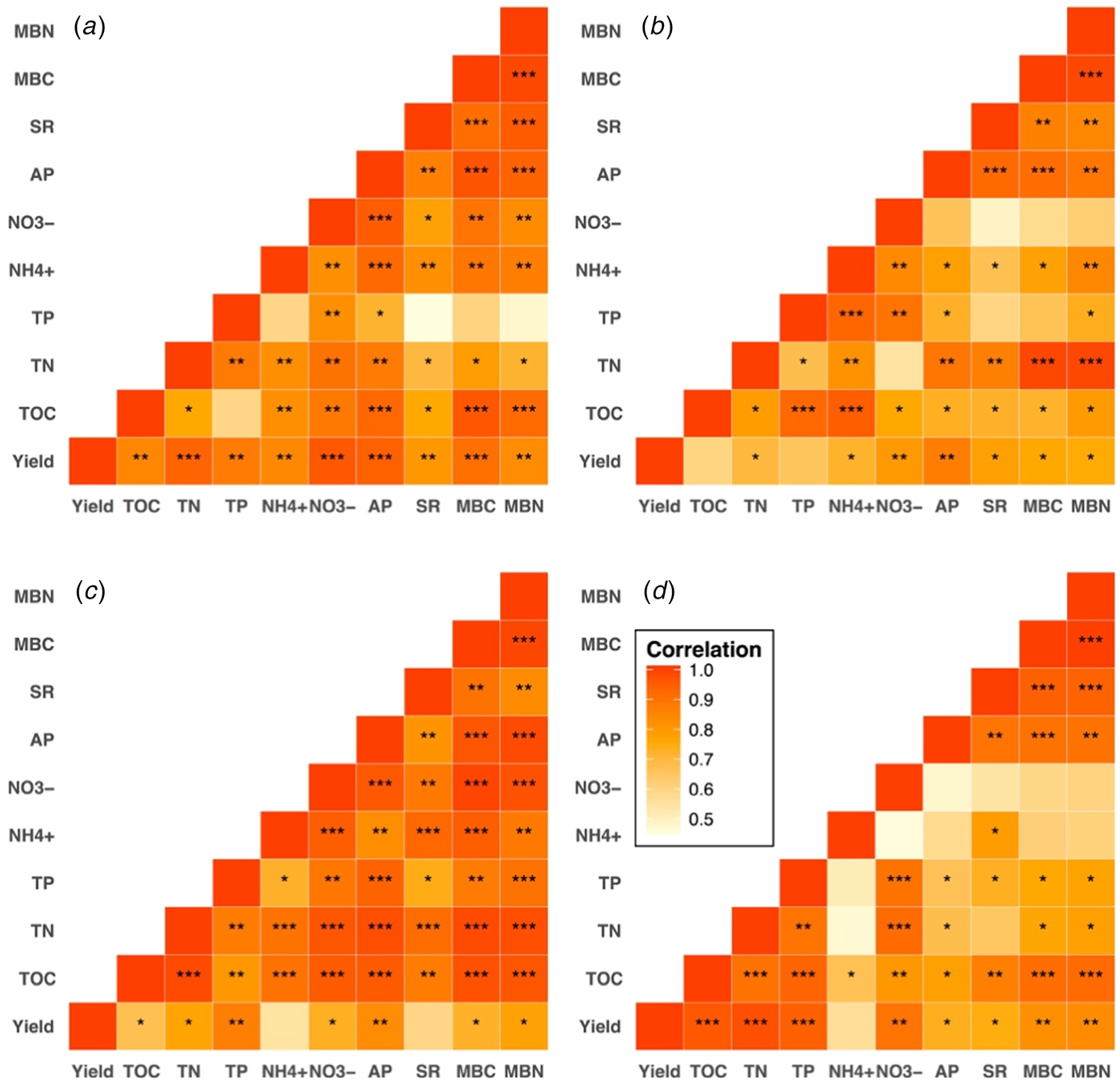
Crop yields with organic fertilization (OM and MCF) were higher than those with chemical fertilization (CF) (Fig. 2). The yields of rapeseed ranged from 0.7 to 2.1 t/ha in 2015 and from 0.5 to 1.0 t/ha in 2016. Although heavy rain in the spring of 2016 caused a significant decrease in rapeseed yield, positive effects of OM application on yield were still detected (Fig. 2). Seed yield of rapeseed in organic treatments (OM and MCF) was 80–204% higher than that in the CF treatment. The tuber yield of sweet potato differed greatly between fertilizer treatments and was 1.4–1.86 times higher in the organic fertilizer treatments (26.1–33.5 t/ha in OM and 28.8–33.5 t/ha in MCF) than in the CF treatment (18.1–18.7 t/ha in CF). Significantly higher yield of rapeseed was only found in the MCF treatment when compared with the OM treatment in 2015 (P = 0.03). The yields of both crops were positively correlated with most of the soil biochemical properties (Fig. 3). The first component of the PCA of soil-chemical properties explained most of the variance in crop yield (R 2 ranges from 0.59 to 0.95, Fig. 4). There was no significant relationship between crop yield and soil-biological properties for either crop when the effect of soil-chemical properties was controlled by a partial correlation analysis (all P > 0.05; Table 4, Figs 5 and 6).
Yields of rapeseed and sweet potato under different fertilizer treatments. CF, chemical fertilizer; OM, organic manure; MCF, organic manure plus CF.

(Colour online) Correlations between crop yield, soil-chemical and biological properties for rapeseed (a, 2015; b, 2016) and sweet potato (c, 2015; d, 2016). The number of asterisks indicates different significance levels (***P < 0.001; **P < 0.01; *P < 0.05).
Relationship between crop yield and soil-chemical properties for rapeseed and sweet potato in the 2 years. The soil-chemical properties were represented by the first principal component (PC1) of a PCA of TOC, TN, TP, AP, NO3−-N and NH4+-N, and the PC1s explained more than 77% of the total variance for rapeseed and sweet potato separately. The contribution of PC1 to the variations in the yield was demonstrated by the proportion of the total variance explained (R 2) by a simple linear regression model, and the number of asterisks indicates the significance level of the model (***P < 0.001; *P < 0.05). CF, chemical fertilizer; OM, organic manure; MCF, organic manure plus CF.

Partial regressions between crop yields and soil-biological properties after controlling for the effects of soil-chemical properties in 2015. CF, chemical fertilizer; OM, organic manure; MCF, organic manure plus CF.

Partial regressions between crop yields and soil-biological properties after controlling for the effects of soil-chemical properties in 2016. CF, chemical fertilizer; OM, organic manure; MCF, organic manure plus CF.

Partial correlation coefficients (with P values in the parentheses) between crop yield and soil-biological properties after controlling for the variation of soil-chemical properties (represented by the first principal component of a PCA)

Discussion
It was demonstrated that organic fertilizers not only supply soil with chemical nutrients, but also improve soil-biological properties and crop yields. The current results also suggested that organic fertilizers have consistent positive effects for both above-ground (rapeseed) and below-ground (sweet potato) crops. The current study found organically fertilized treatments improved multiple soil nutrient parameters significantly, such as TOC, TN, TP, AP, NO3−-N and NH4+-N. Similar results have been shown in previous studies using various types of organic amendments across different soils (Whalen et al., Reference Whalen, Chang, Clayton and Carefoot2000; Cherr et al., Reference Cherr, Scholberg and McSorley2006; Herencia et al., Reference Herencia, Ruiz-Porras, Melero, Garcia-Galavis, Morillo and Maqueda2007; Lithourgidis et al., Reference Lithourgidis, Matsi, Barbayiannis and Dordas2007; Liu et al., Reference Liu, Yan, Mei, He, Bing, Ding, Liu, Liu and Fan2010). Increases in soil TOC with application of OM could be due to the addition of organic materials, and also to the return of more roots and crop residues (Kundu et al., Reference Kundu, Bhattacharyya, Prakash, Gupta, Pathak and Ladha2007; Liang et al., Reference Liang, Chen, Gong, Fan, Yang, Lal and Kuzyakov2012). A slow release of N from organic fertilizer and higher biological N-transformation frequencies stimulated by manure may contribute to the increase in soil organic and inorganic N (Kundu et al., Reference Kundu, Bhattacharyya, Prakash, Gupta, Pathak and Ladha2007; Bhattacharyya et al., Reference Bhattacharyya, Kundu, Prakash and Gupta2008). Inputs of P with OM in excess of crop requirement can result in a higher concentration of both TP and AP in soil (Singh et al., Reference Singh, Reddy, Singh and Rupa2007; Liu et al., Reference Liu, Yan, Mei, He, Bing, Ding, Liu, Liu and Fan2010). In addition, it is well known that many nutrient cycling processes in the soil are coupled with the C cycle and that applications of OM are beneficial for the accumulation of soil organic matter and other soil nutrients over a long period (Whalen and Chang, Reference Whalen and Chang2002; Braschi et al., Reference Braschi, Ciavatta, Giovannini and Gessa2003; Varinderpal-Singh et al., Reference Varinderpal-Singh and Brar2006).
The current study found a significant increase in microbial activities (indicated by microbial biomass and respiration) after addition of organic fertilizers, which is in agreement with some other studies (Marschner et al., Reference Marschner, Kandeler and Marschner2003; Böhme et al., Reference Böhme, Langer and Böhme2005; Gu et al., Reference Gu, Zhang, Tu and Lindström2009). Soil organic matter supplied by organic fertilizers provides carbon sources for intensive activity of microbes, which would result in higher soil-microbial biomass and community functional diversity (Marschner et al., Reference Marschner, Kandeler and Marschner2003; Zhong and Cai, Reference Zhong and Cai2007; Tejada and Gonzalez, Reference Tejada and Gonzalez2009; Chang et al., Reference Chang, Wang, Chen and Chung2014). In addition, the increase in root biomass and root exudates promoted by OM application may also contribute to the improvement of microbial biomass (Ebhin Masto et al., Reference Ebhin Masto, Chhonkar, Singh and Patra2006). In contrast, as Bünemann et al. (Reference Bünemann, Schwenke and Van Zwieten2006) summarized, the toxicity of metal contaminants contained in CFs and the acidic soil environment created by application of these fertilizers might cause the loss and reduction of soil-microbial communities.
Higher crop yields were obtained under OM treatments for both rapeseed and sweet potato in the current study. Although there is no report from the same cropping system, similar effects have been reported by other studies for rapeseed and sweet potato separately. For example, Lupwayi et al. (Reference Lupwayi, Lea, Beaudoin and Clayton2005) found rapeseed yields increased by 46% with pig manure, and 24% with cattle manure compared with the yield in soil with CF application. Agbede (Reference Agbede2010) recorded that poultry manure and CF plus poultry manure increased sweet potato root yield by 4 and 32% relative to the yield under CF treatment. In the current study, compared with CF treatment, mean yields of rapeseed and sweet potato were increased by 132 and 62% under OM only and increased by 156 and 69% under CF plus manure application, respectively. The high increment indicated that the infertile red soil may have high productivity potential when proper fertilization practices are performed. Generally, the results confirmed that organic fertilizer is effective at increasing crop yield for both above- and below-ground crops (Saleque et al., Reference Saleque, Abedin, Bhuiyan, Zaman and Panaullah2004; Yang et al., Reference Yang, Malhi, Song, Xiong, Yue, Lu, Wang and Guo2006; Zhang et al., Reference Zhang, Wang, Xu and Fan2009).
The high yields obtained in the current study should be due largely to the enhancement of soil nutrient level. High correlations between yields and soil nutrients were found in the current study, and the first principal component of the PCA of all soil-chemical properties explained most of the variance in the yields for both crops. Although different crops or different plant organs have distinctive nutrient requirements, the comprehensive advantages provided by organic fertilizers promote the growth and yield of many crops. For example, rapeseed has a relatively high requirement for soil N and sulphur (S), but it can utilize soil P and K more effectively than many cereal crops (Grant and Bailey, Reference Grant and Bailey1993; Jackson, Reference Jackson2000). In addition, micronutrient deficiencies are not common for rapeseed, although its seed yield may be restricted on specific soils (Grant and Bailey, Reference Grant and Bailey1993). Thus, organic fertilizers might be beneficial to the growth of rapeseed by sustaining the levels of N and S in the soil. Although higher N applications might cause more N to be taken up in the non-marketable plant parts such as vines (Hartemink et al., Reference Hartemink, Johnston, O'Sullivan and Poloma2000), the relatively balanced nutrients supplied by organic fertilizers, together with the improved soil physical structure caused by organic fertilizers, might play more important roles in promoting the tuber yield of sweet potato (Haynes and Naidu, Reference Haynes and Naidu1998; Mukhtar et al., Reference Mukhtar, Tanimu, Arunah and Ba2010). In contrast, for CF, the release rates of nutrients to the soil are usually faster than crop absorption rates, which may lead to greater nutrient losses (Ju et al., Reference Ju, Xing, Chen, Zhang, Zhang, Liu, Cui, Yin, Christie, Zhu and Zhang2009; Zhang et al., Reference Zhang, Wang, Xu and Fan2009; Cameron et al., Reference Cameron, Di and Moir2013).
Although there were positive relationships in the current study between the crop yields and soil-biological properties in both crops, no significant associations were detected when partial regression analysis was used to assess the effect of soil-biological characteristics on crop yield, independently of soil-chemical characteristics. Some previous studies have demonstrated that high microbial activities increased crop yield, based on simple bivariate correlations (Insam et al., Reference Insam, Mitchell and Dormaar1991; Alves de Castro Lopes et al., Reference Alves De Castro Lopes, Gomes De Sousa, Chaer, Bueno Dos Reis Junior, Goedert and De Carvalho Mendes2013; Lupwayi et al., Reference Lupwayi, Harker, O'Donovan, Turkington, Blackshaw, Hall, Willenborg, Gan, Lafond, May and Grant2015); however, these studies failed to control the multicollinearities between soil-microbial parameters and soil-chemical properties. Considering the direct effects of improvements in soil-chemical nutrients, high microbial activities could influence crop yields indirectly for both above- and below-ground crops. It is suggested that the soil nutrient condition should be more acceptable and straightforward in assessing the productivity of soil.
Some studies found that combined application of CF and organic amendment would be better than using organic fertilizer alone (Dhull et al., Reference Dhull, Goyal, Kapoor and Mundra2004; Mukhtar et al., Reference Mukhtar, Tanimu, Arunah and Ba2010). However, in the current study, OM plus CF treatment only had higher nitrate for both crops in 2016, and higher total P for rapeseed for the 2 years compared with OM only. Generally, these two treatments have similar positive effects on soil productivity and fertility.
After applying three fertilizer treatments (CF, OM and OM plus CF) on both rapeseed and sweet potato in red soil for the 2 years, the current study demonstrated that organic fertilizers can improve the soil biochemical properties and crop yields significantly for both crops, which expands our understanding of the effects of organic fertilizers on both above- and below-ground crops.
Acknowledgements
We are grateful to Ting Liu for the valuable comments and suggestions in improving the manuscript.
Financial support
This work was supported by the National Key Research and Development Program of China (2016YFD0200106) and the Special Fund for Agro-scientific Research in the Public Interest (201503121).
Conflict of interest
The authors declare no conflict of interest.
Ethical standards
Not applicable.