Over the last few decades, due to the improved survival rates of children and adolescents with CHD, there is an increased interest in quality-of-life issues in all age-groups among this population.Reference Bertoletti, Marx, Hattge and Pellanda 1 In the literature, there are an increasing number of studies elaborating even further the notions of mortality and morbidity by considering real-time data for reported long-term physical functioning, quality of life, health perceptions, and psycho-social well-being.Reference Marino, Uzark, Ittenbach and Drotar 2 – Reference Moons 8 In addition, there is evidence that the presence of CHD can have a direct impact on the child’s physical, motor, cognitive, and neurological development;Reference Bertoletti, Marx, Hattge and Pellanda 1 however, the conflicting results from current research, concerning quality-of-life issues in children with CHD, reveal a lack of methodological and conceptual rigour.Reference Bertoletti, Marx, Hattge and Pellanda 1 Nevertheless, despite any limitations, a number of studies try to identify determinants of quality of life in this heterogeneous group of patients with cardiac malformations including acyanotic, cyanotic, and obstructive heart defects.Reference Apers, Luyckx and Moons 9 – Reference Limbers, Emery and Uzark 10
Congenital heart defect refers to a wide spectrum of simple, moderate, and complex lesions, caused by abnormal heart development during endometrial life. CHDs are considered to be the most common type of birth defect, with a worldwide prevalence of 9.1 per 1000 live births.Reference Van Der Linde, Konings and Slager 11 The advances in foetal cardiology, paediatric interventional cardiology, paediatric cardiac surgery, and paediatric intensive care medicine are responsible for the increased percentage of children with CHD who survive into adulthood.Reference Moons, Sluysmans and De Wolf 12 – Reference Latal, Helfricht, Fischer, Bauersfeld and Landolt 14 Nevertheless, even after a successful operation, a number of children continue to face cardiac risks, with the respective percentage reaching in some cases upto 50%, requiring a sequel of operations later in life.Reference Limbers, Emery and Uzark 10
According to the World Health Organization, “The quality of life is the individuals’ perception of their position in life in the context of the culture and value systems in which they live and in relation to their goals, expectations, standards, and concerns. It is a broad ranging concept affected in a complex way by the person’s physical health, psychological state, level of independence, social relationships, personal beliefs and their relationship to salient features of their environment”. Thus, quality of life describes a child’s ability regarding the following distinct domains: physical health status and functioning, psychological status, and social functioning. 15
Moreover, it is widely hailed that health-related quality of life is a multi-dimensional, subjectively perceived concept, influenced by health, illness, or disease, and must be viewed as a continuous life evaluation or a process that changes with ageing.Reference Pike, Evangelista and Doering 16 Health-related quality of life expresses the impact of a chronic disease such as CHD and its therapy on a child’s ability to function and to cope in a variety of life contexts as well as the ability to obtain satisfaction from physical, psychological, and social functioning.Reference Mellion, Uzark and Cassedy 17 In addition, a number of disease-specific measures have been developed for use in children with CHD, with or without a parent form, and their clinical utility has been confirmed.Reference Ferguson and Kovacs 18 – Reference Uzark, King and Spicer 19
Evidently, knowledge of the main determinants of health-related quality of life in children with CHD may lead to early recognition of children at the greatest risk for impaired health-related quality of life, and it may allow timely interventions to promote health-related quality of life or to prevent negative effects on it.Reference Werner, Latal, Buechel, Beck and Landolt 20 The main purpose of this systematic review is to assess the research findings concerning quality of life in children with CHD. More specifically, we aim to outline the relationship between the severity of CHDs and quality of life, to describe the level of agreement among child and parental (proxy) report concerning quality of life, and to identify the main determinants of quality of life in children with CHD.
Methodology
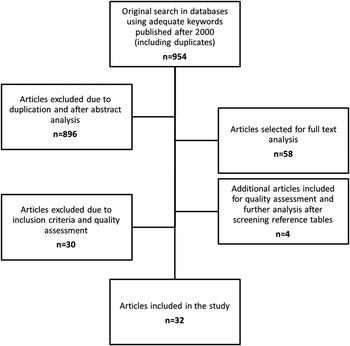
A comprehensive review in PubMed, Scopus, and Cinahl was carried out using the following key-terms: quality of life, congenital, heart defects, children, and adolescents. We included articles published from 2000 to August 2014. A systematic search and control for duplicates led to the initial selection of 896 published articles (Fig 1). Abstract analysis concluded in the removal of a total number of 832 publications, as these studies were not relevant to the scope of this paper. In total, 62 published articles were selected for full-text reading, and from those 30 papers were excluded as they were found to belong to one of the following categories: studies were not written in English (n=6); articles utilised samples where adolescents were above 18 years of age (n=7); papers studied samples only with acquired heart disease (n=7); papers that were only testing or assessing questionnaires’ validity and reliability of quality of life in children and adolescents with CHD (n=4); and studies did not pass successfully the quality assessment (n=6). In total, 32 papers were included in the systematic review.
Flowchart of the systematic review process. Numbers of articles for each step of the process are indicated.

Inclusion and exclusion criteria
The inclusion criteria were as follows: (i) articles written in English, (ii) original articles, (iii) studies that were ethically approved by a committee, (iv) papers published after 2000, (v) published in medical or nursing journals and followed quantitative design, (vi) articles that included in their study children with CHD or a sample of mixed population of children with CHD and acquired heart disease or healthy population, (vii) studies with a sample aged between 0 and 18 years, (viii) studies that used the variable quality of life as a measure, and (ix) articles that assessed reports of children and/or their parents regarding their quality of life.
On the other hand, the exclusion criteria were as follows: (i) books or book chapters, (ii) articles with a study sample that referred only to acquired heart disease, (iii) studies that were only testing or assessing questionnaires’ validity and reliability of quality of life in children and adolescents with CHD, (iv) studies with a qualitative design, and (v) studies with a mixed age population, in the sense that adults were included.
Quality assessment
Studies that met the inclusion criteria were read and assessed on their quality following the criteria, as outlined in the Joanna-Briggs Institute Reviewers’ Manual: 2008 Edition, 21 and the use of an evaluation checklist. Quality assessment was conducted by two of the authors independently. Differences in assessments were met with a discussion in order to reach consensus. Figure 1 illustrates the flowchart of the systematic review.
Results
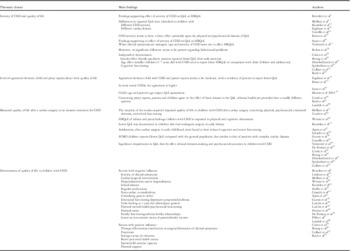
In total, 32 articles from a variety of origin met the inclusion criteria and were assessed. Table 1 provides a comprehensive summary derived from the main findings of these studies. Studies were classified into four distinct clusters based on the following factors: (a) the severity of CHD (n=12), (b) the level of agreement between child and parent reports regarding quality of life (n=6), (c) the measured quality of life after a cardiac surgery or an invasive treatment for a congenitally malformed heart (n=12), and (d) factors associated with quality of life in children with CHD (n=14). Apparently, a number of studies lay in the intersection of two or more clusters identified above.
Summary derived from the main findings of the included studies

ECMO=extracorporeal membrane oxygenation; HRQoL=health-related quality of life; QoL=quality of life
Severity of CHD
An investigation of the relationship between the severity of CHD and quality of life was examined in 12 studies. According to the findings, seven studiesReference Mellion, Uzark and Cassedy 17 , Reference Knowles, Day and Wade 22 – Reference Costello, O’Brien and Wypij 24 , Reference Tahirović, Begić, Nurkić, Tahirović and Varni 27 – Reference Cohen, Mansoor, Langut and Lorber 29 reported lower quality of life in children and adolescents with complex CHD than those with less-severe cardiac problems. The differences lay primarily upon the physical and psycho-social domains; however, in a study of extracorporeal membrane oxygenation, patients reported similar measured quality of life as patients having complex CHD.Reference Brosig, Mussatto, Kuhn and Tweddell 30 Moreover, two studies showed no relationship between the level of health-related quality of life and the severity of CHD;Reference Bertoletti, Marx, Hattge and Pellanda 1 , Reference Spijkerboer, Utens and De Koning 32 however, in four studies,Reference Kwon, Mussatto and Simpson 25 , Reference Sears, Hazelton and Amant 26 , Reference Spijkerboer, Utens and De Koning 32 , Reference Krol, Grootenhuis and Destrèe-Vonk 34 medical severity of CHD was found to have a positive effect on the quality of life of children.
Level of agreement between child and parent reports about their quality of life
Among all, six studies investigated the level of agreement between child and parent reports about their quality of life. More specifically, in one study,Reference Eagleson, Justo, Ware, Johnson and Boyle 23 proxy and child reports were in close agreement concerning health-related quality-of-life measurements. In particular, children with hypoplastic left heart syndrome and their parents were found to have both diminished health-related quality of life and lower physical and psycho-social quality of life compared with tetralogy of Fallot children.Reference Eagleson, Justo, Ware, Johnson and Boyle 23 On the contrary, five studiesReference Kwon, Mussatto and Simpson 25 , Reference Sears, Hazelton and Amant 26 , Reference Krol, Grootenhuis and Destrèe-Vonk 34 , Reference Uzark, Jones, Slusher, Limbers, Burwinkle and Varni 36 , Reference Landolt, Buechel and Latal 48 reported that children with CHD had greater quality of life scores than that reported by their parents. In this context, according to Krol et alReference Krol, Grootenhuis and Destrèe-Vonk 34 “Parents of younger children reported their children to experience more negative emotions than the parents of older children did about their children”. Finally, one study mentioned that parents of children with cardiovascular disease reported lower quality of life than that reported by their children. Nevertheless, this was not the case when their child had a severe cardiac disease.Reference Uzark, Jones, Slusher, Limbers, Burwinkle and Varni 36
The measured quality of life after a cardiac surgery or an invasive treatment for CHD
A total of 12 research articles assessed the measured quality of life in children with CHD after cardiac surgery or an invasive treatment. In particular, eight studiesReference Mellion, Uzark and Cassedy 17 , Reference Werner, Latal, Buechel, Beck and Landolt 20 , Reference Costello, O’Brien and Wypij 24 , Reference Uzark, Jones, Slusher, Limbers, Burwinkle and Varni 36 , Reference Schaefer, Von Rhein and Knirsch 38 – Reference Da Fonseca, Evans, Teske, Thikkurissy and Amini 41 reported impaired quality of life in children with CHD after cardiac surgery concerning physical, psycho-social, emotional, and school functioning. On the contrary, two studiesReference Brosig, Mussatto, Kuhn and Tweddell 30 – Reference Hövels-Gürich, Konrad and Skorzenski 31 reported no significant differences between diagnostic groups of children after surgery for CHD repair. Another study, however,Reference Spijkerboer, Utens and De Koning 32 reported that the quality of life in the paediatric cardiac diagnostic groups was impaired compared with normative population, despite the fact that there were no significant differences between the diagnostic groups. In addition, the comparison of health-related quality of life between children with CHD and those with other chronic diseases was discussed.Reference Mellion, Uzark and Cassedy 17
Interestingly, one studyReference Culbert, Ashburn and Cullen-Dean 33 reported higher quality of life after cardiac surgery for CHD repair in childhood. More precisely, this research article assessed the quality of life in children after a transposition of great arteries repair, and found that children seemed to have better quality of life than published normative data. In this context, according to recently published data, ECMO children were found to have lower quality of life compared with the general population, but similar to that of patients with complex cardiac diseases, while psycho-social quality of life was similar across all groups.Reference Costello, O’Brien and Wypij 24 Moreover, in another study that compared quality of life between children who underwent surgery for transposition of great arteries and children with hypoplastic left heart syndrome, no significant difference was found. Nevertheless, children with hypoplastic left heart syndrome faced more psycho-social problems compared with children who underwent transposition of great arteries repair. In addition, parents of children who underwent surgery for hypoplastic left heart syndrome faced augmented parenting stress in comparison with parents of children who underwent transposition of great arteries repair.Reference Brosig, Mussatto, Kuhn and Tweddell 30
Finally, Uzark et alReference Uzark, King and Spicer 19 examined the clinical utilisation of health-related quality of life. According to their findings, significant impairments in quality of life directly affected clinical decision-making and psycho-social outcomes in children with CHD.
Factors associated with quality of life in children with CHD
In general, the frequency of clinical symptoms and functional status of the child with CHD had a great impact on health-related quality of life.Reference Bertoletti, Marx, Hattge and Pellanda 1 In fact, individualisation from the family and autonomy seem to be important indicators of cope among adolescents and help adolescents improve their self-esteem and their overall perception of quality of life.Reference Bertoletti, Marx, Hattge and Pellanda 1 In total, 14 (n=14) studies examined determinants that were related with quality of life in children with CHD. In this context, physical limitations due to impaired physical performance, lower activity levels, lower maximum oxygen uptake, and parental or therapy restrictions have a direct impact on children’s health-related quality of life.Reference Mellion, Uzark and Cassedy 17 , Reference Knowles, Day and Wade 22 In addition, deficits in neurodevelopmental outcome in children with CHD are related to poor academic performance, regular school misses, feelings of isolation, and social incompetence that affect directly many dimensions of health-related quality of life.Reference Mellion, Uzark and Cassedy 17 , Reference Knowles, Day and Wade 22 Moreover, depressive mood seemed to have a positive correlation with lower physical and psycho-social quality of life. A research article reported that quality of life in children is affected by lower socio-economic status and severe CHD, as both factors seemed to produce cognitive problems.Reference Limbers, Emery and Uzark 10 In a recent study, the findings suggested that family income, as a socio-economic status measure, has the greatest influence on health-related quality of life.Reference Cassedy, Drotar and Ittenbach 43 A prospective study reported that quality of life in adolescents with CHD, assessed in two periods, is predicted by perceived health status, socio-economic status, and parental support.Reference Luyckx, Missotten, Goossens and Moons 44 A different study that used measurement of three periods in the same study populationReference Luyckx, Goossens and Rassart 45 suggested that depressive symptoms and loneliness affect negatively the quality of life in adolescents with CHD. Furthermore, paternal support was found to affect positively the internalising symptoms and quality of life in this population. Characteristically, a study examined the effect of oral health on quality of life in infants with CHD. Oral health seemed to affect quality of life in infants with CHD, while their parents were found to be more guilty and upset about their child’s oral health and dental problems compared with the general population.Reference Da Fonseca, Evans, Teske, Thikkurissy and Amini 41 In a recent study, it was noted that parental mental health moderates the efficacy of exercise training on health-related quality of life in adolescents with CHD.Reference Dulfer, Dupen and Van Dijk 42 In a comparative study, at 4 years of age, significant differences were evident between children with CHD and healthy controls.Reference Werner, Latal, Buechel, Beck and Landolt 20
Moreover, the severity of clinical symptoms, the need for haemodynamic or surgical interventions, and the recurrent hospitalisations along with the general health status have a direct effect on quality of life. In addition, in a research article, duration of bypass, hospitalisation, need for medications, and adverse family relationships were found to have a negative effect on proxys’ assessment of the child’s health-related quality of life after a cardiac surgery for CHD. These factors, however, were not associated with children’s assessment of their health-related quality of life.Reference Landolt, Buechel and Latal 48
A recent follow-up study described the relationship between sense of coherence and quality of life. Better quality-of-life outcomes were found to be correlated with stronger sense of coherence and better perceived physical health.Reference Apers, Moons and Goossens 37 Finally, in another study, the authors concluded that sense of coherence can stand as a stable predictor of quality of life in children with CHD.Reference Neuner, Busch and Singer 46
Discussion
Over the last two decades, increasing attention has been paid to the quality of life of children with CHDs, although clinical research has turned its interest towards their long-term morbidity assessment.Reference Marino, Uzark, Ittenbach and Drotar 2 According to our analysis, children with CHD are a high risk population for impaired quality of life due to major functional impairments. In this context, a variety of determinants of the quality of life are identified along with a number of possible barriers regarding its assessment. To this end, it seems that sense of coherence, reconciliation with the disease and/or its limitations, and compliance with therapy are areas that need to be explored in more depth in relation to quality of life.
Physical and psycho-social domains seem to be more affected in children with CHD. In a number of studies, children and adolescents with mild or complex CHD reported lower quality of life than those with less-severe cardiac problems or healthy children;Reference Tahirović, Begić, Nurkić, Tahirović and Varni 27 however, this does not seem to be the case. For example, Kwon et alReference Kwon, Mussatto and Simpson 25 reported that quality of life in children and adolescents with repaired tetralogy of Fallot was not analogous to the severity of their residual disease. Sears et alReference Sears, Hazelton and Amant 26 reported that medical severity and implantable cardioverter defibrillator discharges did not seem to have a negative effect on children’s quality of life, and other studies concluded that medical severity of CHD may even have a positive effect on children’s quality of life. A closer look at all these studies will reveal that frequency and severity of symptoms along with physical limitations and parental restrictions should be considered as more important determinants of health-related quality of life, due to the impairments they cause in daily life, than the complexity of the medical condition.Reference Bertoletti, Marx, Hattge and Pellanda 1 , Reference Mellion, Uzark and Cassedy 17 , Reference Knowles, Day and Wade 22
Marino et alReference Marino, Beebe and Cassedy 49 found that quality of life outcomes in children and adolescents with complex CHD were statistically significantly predicted by executive functioning, gross motor ability, and mood. Goldbeck and MelchesReference Goldbeck and Melches 7 commented that the combination of medical and social stress had the strongest negative impact on the quality of life in the diseased child or adolescent, regardless of its severity. Therefore, a family with sufficient resources can cope better and restrain the adverse effects on the quality of life, even with a severe disease condition. Social support stands as an important variable that promotes adaptation to the disease.Reference Bertoletti, Marx, Hattge and Pellanda 50 In conclusion, in children with CHD, the severity of CHD, in sense of the clinical symptoms and the number of surgical procedures or health interventions, seemed to have a marginal effect. To this end, Jackson et al in their meta-analysis concluded that adolescents with CHD did not differ in emotional functioning from healthy controls; however, they acknowledged a trend for degree of lesion severity to moderate emotional functioning. They concluded that differences in emotional functioning may exist across lesion severities, and individuals with moderately severe lesions are emotionally thriving.Reference Jackson, Misiti, Bridge, Daniels and Vannatta 51
In the relevant literature, a great number of general and disease-specific instruments have been used to assess quality of life using self-reports and/or proxy reports.Reference Marino, Shera and Wernovsky 4 – Reference Berkes, Pataki and Kiss 6 , Reference Marino, Drotar and Cassedy 52 – Reference Uzark, Jones, Burwinkle and Varni 55 Parental proxy reports and self-reports on quality of life in patients with CHD are considered as complementary perspectives. Goldbeck and MelchesReference Goldbeck and Melches 3 noted that, in the clinical setting, the integration of different viewpoints allows a more comprehensive assessment of quality of life, as parental reports cannot substitute child reports or vice versa. In general, a moderate agreement was observed regarding the level of agreement between child and the parent (proxy) reports concerning the child’s quality of life, with a tendency for children to report greater quality of life scores than their parents.Reference Sears, Hazelton and Amant 26 , Reference Krol, Grootenhuis and Destrèe-Vonk 34 , Reference Uzark, Jones, Slusher, Limbers, Burwinkle and Varni 36 , Reference Landolt, Buechel and Latal 48 Across all age sub-groups, it seemed that parents with younger children tend to report more negative emotions for their children, reduced physical activity, and lower quality of life outcomes compared with parents’ reports with older children.Reference Ferguson and Kovacs 18 From a general viewpoint, the level of agreement between self-reports and proxy reports seems to be related to patient’s age and medical severity of CHD,Reference Ferguson and Kovacs 18 , Reference Tahirović, Begić, Nurkić, Tahirović and Varni 27 , Reference Uzark, Jones, Slusher, Limbers, Burwinkle and Varni 36 while diagnosis of CHD impacted on the level of stress and adjustment of these families.Reference Marino, Beebe and Cassedy 49 To this end, in a recent study, it was stressed that parental mental status had a direct impact on the level of physical activity of children with CHD.Reference Dulfer, Dupen and Van Dijk 42 Goldbeck and MelchesReference Goldbeck and Melches 3 proposed that clinicians should take into account the limited ability of caregivers to recognise the patients’ subjective health perception, mainly in less directly observable domains of well-being and functioning.
The measured quality of life of children and adolescents seems to be affected by cardiac surgery for CHD. Current data suggest that children with CHD undergoing cardiopulmonary bypass surgery may face impaired quality of life at follow-up.Reference Latal, Helfricht, Fischer, Bauersfeld and Landolt 14 Impairments in physical, emotional, cognitive, school, and social functioning are evident both in self- and proxy assessments; however, they are more frequently reported by parents than by the patients themselves. Notably, a limited number of studies reported upgraded quality-of-life scores after an invasive treatment for CHD in childhood.Reference Sears, Hazelton and Amant 26 , Reference Culbert, Ashburn and Cullen-Dean 33 In these studies, the improvement of patients’ functional status seems to be the strongest determinant. In this context, Landolt et al reported that transposition of great arteries, despite being a severe cyanotic heart defect, has an excellent overall medical and neurodevelopmental outcome, and this may have contributed to the relatively good health-related quality of life in patients.Reference Landolt, Buechel and Latal 48 Another strand of the literature suggests that surgeries for CHD repair should also be evaluated regarding surgery complexity.Reference Jacobs, Jacobs and Lacour-Gayet 56 – Reference Jacobs, Jacobs and Jenkins 57 To this end, future research studies should concentrate in examining the potential effect of surgery complexity on quality of life.
In comparison with other chronic diseases in childhood, it seems that children with CHD face an impact on their health-related quality of life similar to the impacts of asthma, obesity, and end-stage renal disease, whereas the impact of mild CHD approximates the impact of diabetes mellitus.Reference Mellion, Uzark and Cassedy 17
Multiple factors seem to be associated with quality of life, but the findings in the literature are inconclusive. In our analysis, a number of factors that influence and/or determine the measured quality of life in children and adolescents with CHD are outlined. In adolescence, measured quality of life was found to be predicted by perceived health status, sense of coherence, and parental support.Reference Luyckx, Missotten, Goossens and Moons 44 Moreover, the existence of loneliness and depressive symptoms in teenagers with CHD seemed to have a negative effect on their quality of life.Reference Luyckx, Goossens and Rassart 45 In contrast, the existence of stronger sense of coherence, better perceived physical health, parental support, and family consistency were found to affect positively their quality of life and internalised symptoms.Reference Apers, Moons and Goossens 37 , Reference Luyckx, Missotten, Goossens and Moons 44 – Reference Neuner, Busch and Singer 46 On the other hand, measured quality of life, regarding parental support, was found to be negatively affected by duration of bypass, hospitalisation and length of hospital stay, medication need, and adverse family relationships.Reference Landolt, Buechel and Latal 48 Finally, family income as a socio-economic status measure showed great fidelity with health-related quality of life.Reference Cassedy, Drotar and Ittenbach 43
At this point, it is worth mentioning that an emerging strand of the literature suggests that optimism plays a vital role on the Quality of Life of children and adolescents with CHD. In particular, Wang et al, utilising a sample of adolescents with CHD, aged between 12 and −20 years, found that their health-related quality of life was positively correlated with a low level of anxiety and depression, a good knowledge of their cardiac condition, feelings of optimism, adequate social support, and a strong sense of coherence. The authors concluded that adolescents’ knowledge and understanding together with an improved sense of well-being had a positive influence on their health-related quality of life.Reference Wang, Hay, Clarke and Menahem 58 In this context, dispositional optimism has garnered ample attention as an important source of resilience, although current data suggest that people who are high on optimism maintain confidence in achieving an outcome and persevere even when confronted with adversity. In addition, optimists are more likely to engage in health-promoting behaviours and to use more adaptive and flexible coping strategies, which contribute to better emotional and physical health outcomes. Moreover, an optimistic life orientation seems to promote psychological resiliency and positive health outcomes in individuals with chronic diseases such as CHD.Reference Carver and Scheier 59
In a different vein, the relevant literature suggests that sense of coherence represents a salutogenic factor, which is related to successful coping with daily adversities and chronic stress, and it was found to be an overtime predictor of quality of life.Reference Luyckx, Missotten, Goossens and Moons 44 , Reference Antonovsky 60 – Reference Antonovsky 61 Growing up with CHD has been hypothesised to influence positively the development of sense of coherence, because these patients have learned to cope with CHD (understandability and manageability), and having CHD often has high existential implications (meaningfulness).Reference Luyckx, Goossens and Rassart 45 Individuals with strong sense of identity presented better results in relation to health-related quality of life and psycho-social functioning.Reference Bertoletti, Marx, Hattge and Pellanda 50
Moreover, depressive mood seems to have a positive correlation with lower physical and psycho-social quality of life.Reference Dulfer, Dupen and Van Dijk 42 This is more obvious during adolescence, as depressive symptoms and loneliness affected negatively the quality of life in adolescents with CHD.Reference Luyckx, Goossens and Rassart 45 In general, children with CHD may face significant internalising, externalising, and attention problems compared with the healthy population.Reference Spijkerboer, Utens, Bogers, Verhulst and Helbing 62 Therefore, family support and family’s functioning may play a key role in order to cope with the illness or invasive treatment and to improve their quality of life. Luyckx et al found that parental support leads to relative increases in quality of life over time.Reference Luyckx, Goossens and Rassart 45 High family cohesion, high expressiveness, and few inter-familial conflicts positively influenced health-related quality of life in children with CHD.Reference Landolt, Buechel and Latal 48 Therefore, a supportive home environment has a protective function in coping with CHD; however, in presence of additional social stress factors, this protective function may be weakened.Reference Goldbeck and Melches 7 In conclusion, the role of parents in psycho-social and behavioural functioning of children with CHD is central; however, the perceived parenting style determines this effect.Reference Luyckx, Goossens, Missotten and Moons 63
To sum up, quality of life is a subjective concept, and therefore patient-reported outcomes are of utmost importance. Nevertheless, they are inconsistent and vary across the world mainly due to cultural differences and geographic barriers. From our point of view, new international studies such as APPROACH-IS, designed specifically for children and adolescents with CHD along with their caregivers, will increase the understanding concerning the experiences and well-being of these children, and will have major implications to optimise their care.Reference Apers, Kovacs and Luyckx 64 As a simple example, Re et al pointed out that a suitably qualified and experienced cardiologist, helping mothers to tell their story about the diagnosis and their children’s cardiac surgery/intervention, may provide a valuable, brief, and very cost-effective therapeutic intervention for these mothers and children. It also has the potential to reduce maternal distress, developing mother–child relationship, reducing child morbidity, and enhancing the quality of life for both the child and mother.Reference Re, Dean and Menahem 65
Methodological limitations
Methodological differences among the studies, such as research design – lack of conceptual and methodological rigour – inclusion criteria, follow-up, tools, and outcome measures make it difficult to compare findings.Reference Marino, Beebe and Cassedy 49 Moreover, according to Sandelowski and Barroso, the results from a systematic review should be assessed with caution, and have to be reviewed not as definite search results but rather as results that unveil the questions and subjective preferences of the authors.Reference Sandelowski 66 – Reference Sandelowski and Barroso 67
Conclusion
It is widely accepted that quality of life in children and adolescents with CHD should be evaluated according to age, disease severity, acceptability of the disease, and personality features. The related literature suggests that the quality of life in children and adolescents with CHD is comparable with the quality of life in normative/healthy population, when the disease-induced limitations are controlled and compliance with treatment is satisfactory. The early identification of significant determinants of quality of life, such as (a) neurodevelopmental impairments in academic progress, language, attention, and memory skills, (b) psycho-social impairments in family and psycho-social functioning – anxiety, depression, parental stress, behavioural and emotional problems – and (c) physical impairment in physical functioning and diminished exercise capacity, could have a direct impact in the clinical outcomes of children with CHD. In addition, children’s socialisation, family consistency, early identification of learning, cognitive and emotional problems, as well as participation in physical activities are acknowledged as important determinants of quality of life improvement.
Programmes providing psycho-social support for children with CHD and their caregivers should be both family-focussed and personalised. Moreover, both medical and psycho-social factors must be acknowledged. Therefore, it is of great importance to sensitise the cardiologist/cardiac surgeon about the importance of the development of psycho-social aspects of their patients that he/she cares for rather than only focussing on their cardiological well-being. Creating individualised care plan at home, regular follow-up in a consistent manner, and continuous co-operation with parents are crucial, and they decisively affect quality of life in these children. Thus, the assessment and management of parental distress must be implemented as a routine intervention, especially for parents who perceive CHD as a stigma. Moreover, interventions to promote optimism might minimise the impact of adversity and may enhance perseverance and adaptive coping.
Furthermore, it is highly recommended that clinicians should assess quality of life systematically with the use of appropriate generic and/or disease-specific instruments, and collect data in “real-time” in the clinical area, so that intervention procedures would lead on by quality of life evaluation. Yet, both patient and parent responses should be assessed in order to have a more complete picture. The overall approach must be child-centred or family-centred in order to promote adequate cope strategies, normal family functioning, and effective social inclusion.
In conclusion, the present study aimed to update important themes concerning quality of life in children with CHD and to unveil its potential determinants. According to our findings, research concerning quality of life in this high-risk population should focus on the improvement of their everyday functioning – that is, physical and psycho-social – and family support.
Acknowledgements
None.
Financial Support
This research received no specific grant from any funding agency, commercial, or not-for-profit sectors.
Conflicts of Interest
None.
Supplementary material
For supplementary material referred to in this article, please visit http://dx.doi.org/10.1017/S1047951115000086