Introduction
In tropical Africa, chickpea (Cicer arietinum L. [Fabaceae]) is widely grown in countries such as Ethiopia, Sudan, Eritrea, Kenya, Tanzania and Malawi (Bejiga and van der Maesen, Reference Bejiga and van der Maesen2006). Ethiopia, with a total chickpea-cultivated area of 194,981 ha and an average productivity of 1.19 t/ha (CSA, 2009), contributes 46% of the total chickpea production in Africa (Kassie et al., Reference Kassie, Shiferaw, Asfaw, Abate, Muricho, Ferede, Eshete and Assefa2009). Chickpea takes the second largest share of the area of the pulses grown in Ethiopia preceded only by faba bean (Vicia faba L. [Fabaceae]) and third in the volume of production next to faba bean and field pea (Pisum sativum L. [Fabaceae]) (CSA, 2009). It is grown in several regions of the country with residual moisture, mostly on black vertisol soils (Bejiga and van der Maesen, Reference Bejiga and van der Maesen2006; Kassie et al., Reference Kassie, Shiferaw, Asfaw, Abate, Muricho, Ferede, Eshete and Assefa2009). Chickpea is produced for different purposes including food and feed, and cash and foreign currency earnings. In addition, it replenishes soil fertility, as it fixes a substantial amount of atmospheric nitrogen (Kassie et al., Reference Kassie, Shiferaw, Asfaw, Abate, Muricho, Ferede, Eshete and Assefa2009).
Despite the significant economic and ecological importance, similar to many other countries (Winter et al., Reference Winter, Staginnus, Huettel, Jungmann, Pfaff, Benko-Iseppon, Rakshit, Pinkert, Baum and Kahl2004; Upadhyaya et al., Reference Upadhyaya, Furman, Dwivedi, Udupa, Gowda, Baum, Crouch, Buhariwalla and Singh2006), the productivity of chickpea in Ethiopia is far below the potential (Bejiga and van der Maesen, Reference Bejiga and van der Maesen2006). The biological limitations of the crop, particularly the inherent low-yielding potential of the indigenous cultivars, are among the most important production constraints. It is believed that the Debre Zeit Agricultural Research Center, then under the Alemaya College of Agriculture, started chickpea breeding in the 1950s. The main objective was to improve the productivity of the crop through the generation of productive cultivars under different production domains. As a result of the breeding efforts made so far, over 15 improved varieties with better grain yield, seed quality (particularly size and colour), resistance to diseases and good adaptation under different production domains have been developed and released to farmers (MoARD, 2009). Some comparative observations in variety trials by breeders and results of field demonstrations and popularization programmes by different stakeholders showed that the released varieties have resulted in increased productivity over local cultivars. It is assumed that genetic potential for chickpea yield under ideal conditions on experimental plots may reach 5 t/ha and only 2 t/ha may be attainable on farmers' fields (Muehlbauer and Tullu, Reference Muehlbauer and Tullu1997). Improved varieties released in Ethiopia may yield 2.8 t/ha on research stations (Kassie et al., Reference Kassie, Shiferaw, Asfaw, Abate, Muricho, Ferede, Eshete and Assefa2009) and 1.8 t/ha on farmers' fields (Jarso et al., Reference Jarso, Keneni and Wolabu2011), both showing significant improvement over the national average yield of 1.19 t/ha (CSA, 2009).
Plant breeding, though indispensably important, is not immune to some undesirable consequences (Rubenstein et al., Reference Rubenstein, Heisey, Shoemaker, Sullivan and Frisvold2005). For instance, failures of some crop varieties shortly after release mainly due to their susceptibility to major diseases have already been encountered in crops such as maize and wheat in Ethiopia, and the varieties became obsolete immediately after release (Keneni and Wakjira, Reference Keneni and Wakjira2004). It is common knowledge among farmers that sorghum (Sorghum bicolor L. [Moench: Poaceae]) cultivars released in Ethiopia are more susceptible to attack by birds (Quelea quelea L. [Ploceidae]) than local landraces. It is possible that these negative issues can be worse in African agriculture due to the subsistence nature of production and also that the economic potential of farmers neither permits them to shoulder the risk nor to use purchased inputs for crop protection. Therefore, information on genetic progress achieved over time from a breeding programme, be it positive or negative, is absolutely essential to monitor recent developments and take corrective measures when technical shortcomings are observed (Waddington et al., Reference Waddington, Ransom, Osamanzi and Sounders1986; Ustun et al., Reference Ustun, Allen and English2001). In chickpea, where the adzuki bean beetle (Callosobruchus chinensis L. [Coleoptera: Bruchidae]) is among the most important storage insects causing losses of up to 50% in Ethiopia (Ali and Habtewold, Reference Ali and Habtewold1994; Damte and Dawd, Reference Damte and Dawd2006), most of the breeding efforts are focused on improved grain yield and seed quality with better adaptation and disease resistance. Even though limited information is available on the breeding progress of different crops in Ethiopia including cereals (Tarekegn, Reference Tarekegn1994; Teklu, Reference Teklu1998; Worku and Zelleke, Reference Worku and Zelleke2007; Fekadu, Reference Fekadu2010), pulses (Bezawuletaw, Reference Bezawuletaw1999; Keneni et al., Reference Keneni, Jarso and Asmamaw2002; Temesgen, Reference Temesgen2008) and oil crops (Lirie, Reference Lirie2010), none of these studies focused on the drawbacks of past breeding endeavours.
The accurate estimation of genetic progress realised from long-term breeding efforts made over time is a difficult task. However, among the available procedures, the performance of popular cultivars in common environments regressed over years of release as a continuous quantitative variable provided the most direct estimate of genetic progress from breeding and has been widely used in different crops (Cox et al., Reference Cox, Ben-Huli, Stears and Martin1988). Chickpea breeding in Ethiopia began in the 1950s and whether or not efforts to develop varieties combining better yield with good seed quality have inadvertently increased susceptibility to the adzuki bean beetle has not been systematically studied. The objective of this study was, therefore, to assess the amount of genetic progress attained in seed size and yield through the breeding of chickpea in Ethiopia, with the associated changes in resistance level to the adzuki bean beetle.
Materials and methods
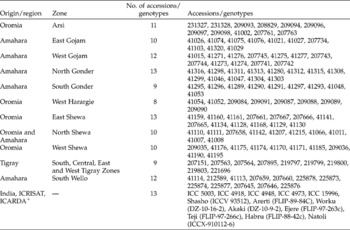
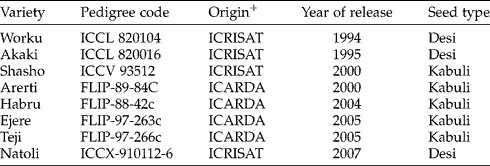
Data were collected from a trial on seeds of 130 chickpea germplasm accessions/genotypes, including 117 germplasm accessions and 13 improved genotypes (Table 1). The accessions were collected from the major chickpea production areas of Ethiopia, representing over 10% of the chickpea germplasm kept by the Ethiopian Institute of Biodiversity Conservation (IBC). Thirteen improved genotypes originally from the International Center for Agricultural Research in the Dry Areas (ICARDA) and the International Crops Research Institute for the Semi-Arid Tropics (ICRISAT) were included for evaluation separately and together with the accessions. Eight of the improved genotypes were varieties released in Ethiopia while the remaining five constitute introductions for some desirable agronomic merits from the ICRISAT. The description of the genotypes is given in Table 2.
Number of sources of the test accessions/genotypes

+ ICRISAT, International Crops Research Institute for the Semi-Arid Tropics; ICARDA, International Center for Agricultural Research in the Dry Areas.
Detailed description of the varieties released in Ethiopia and evaluated in the study
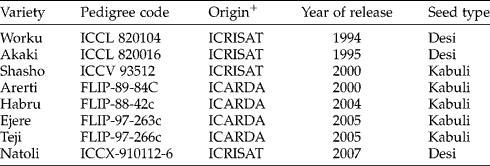
+ ICRISAT, International Crops Research Institute for the Semi-Arid Tropics; ICARDA, International Center for Agricultural Research in the Dry Areas.
Freshly harvested seeds with moisture content adjusted to 9.0–9.5% were disinfected in a deep freezer at about − 20°C for a month prior to the study. Seeds with no insect damage were hand-sorted and exposed to infestation from April to June 2009. The test period coincides with the period of the year when losses are expected from high temperature and relative humidity. The experiment was conducted in entomological laboratories under ambient temperature and relative humidity at Holetta, Ambo and Debre Zeit Agricultural Research Centres, Ethiopia, at an average temperature of 25°C and relative humidity of 45% as described elsewhere (Keneni et al., Reference Keneni, Bekele, Getu, Imtiaz, Dagne and Asefa2011). Adzuki bean beetles were collected from the Holetta Agricultural Research Center (Entomology Research Section) and mass reared in the laboratory at the same centre on a bulk of chickpea seeds of one of the susceptible Kabuli cultivars, Shasho (own observation). Two hundred seeds of each genotype were put in a 250 ml plastic jar with openings at one end for free air circulation. Fourteen adult insects, 1–2 days old, were randomly picked, assuming a male-to-female ratio of 1:1 (Lemma, Reference Lemma1990), and introduced into the jars. The adult insects were kept in the jars for egg laying for 10 days and then removed. The experiment was conducted in a randomized complete block design (RCBD) with three replications. The accessions/genotypes were assigned to the jars at random within each block.
Data on the total number of eggs, the number of uninfested seeds, the number of emerged adults, the percentage of adult recovery and seed weight loss (g), were collected. Data on the first and second progenies of the beetle were recorded, but this analysis was based only on results from the first progeny with the exception of seed weight losses, which was taken from the second progeny for convenience, as it was more apparent than losses by the first progeny in terms of magnitude. The detailed biology of the insect with days to emergence of the first and the second generations is presented in Keneni et al. (Reference Keneni, Bekele, Getu, Imtiaz, Dagne and Asefa2011).
Seed quality attributes including seed size (1000 seed weight, g), the proportion of seed coat by weight (%) and grain yield (g/five plants) (IBPGR, ICRISAT and ICARDA, 1993) were taken from a field trial conducted using a RCBD with four replications where the same accessions/genotypes were grown. The field experiment was conducted in 2009/10 (September to January) on a vertisol soil with residual moisture at two locations, namely Ginchi (09°00′N latitude; 38°10′E longitude; 2200 m above sea level (masl) altitude; rainfall = 10–80 mm or on average 35 mm per month; relative humidity (RH) = 30–65%; temperature = 10–26°C) and Ambo (09°00′ N latitude; 37°22′ E longitude; 2225 masl altitude; rainfall = 5–80 mm or on average 38 mm per month; RH = 45–70%; temperature = 10–25°C). The locations represent the major chickpea production areas in Ethiopia.
Weight loss adjusted to 10% moisture was calculated for each genotype at the end of the experiment by separating healthy seeds (without holes) from each jar, as suggested by Shaheen et al. (Reference Shaheen, Khaliq and Aslam2006):

Data based on count and percentage values were log- and arcsine-transformed, respectively, for statistical analysis when necessary (Little and Hills, Reference Little and Hills1978; Gomez and Gomez, Reference Gomez and Gomez1984). Untransformed means were used for all the analyses except for pooled analyses of variance (ANOVA), which was computed to quantify the total variation among the accessions/genotypes using SAS software (SAS Institute, 1996) with the following model:

where P ijk is the phenotypic observation on accession/genotype j in block i at location k (i = 1…B, j = 1…G, and k = 1…L); G, L and B, the number of accessions/genotypes, location and block, respectively; μ, the grand mean; (b/l)ik, the effect of block i (within location k); g j, the effect of genotype j; l k, the effect of location k; (gl)jk, the interaction effect between genotype j and location k; e ijk, the residual or effects of random error.
Some means were adjusted for initial seed weight as a covariate whenever significant covariance was observed. Significant differences among the accessions/genotypes were determined using the F-test. Genetic progress through breeding for grain yield, seed size, proportion of seed coat weight and the associated increase in susceptibility to infestation by C. chinensis was estimated by regression analysis. Linear regression models were fitted and the mean performance of accessions/genotypes at all locations was regressed on years of release starting from 1994 to 2007 (Cox et al., Reference Cox, Ben-Huli, Stears and Martin1988) as:

where Y is the mean value of the dependent variable; x, the mean value of the independent variable; a, the constant value; and b, the regression coefficient.
The coefficients of regression of varietal means on the years of release were used as estimates of the annual genetic progress of the traits (Cox et al., Reference Cox, Ben-Huli, Stears and Martin1988), calculated as:

where x is the year of variety release; y, the mean value of each character for each variety; Cov, the covariance; and Var, the variance.
Because almost all varieties recommended and released before 1990 are currently not in production, we limited ourselves to the most popular varieties released thereafter. The variety ‘Worku’ was considered as the oldest reference base for the estimation of the temporal changes as a result of genetic progress. Pearson's correlation coefficients between the traits were calculated using the standard procedure.
Results and Discussion
Overall performance of the accessions/genotypes
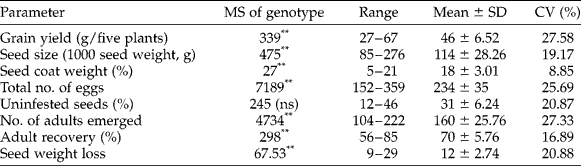
Combined ANOVA showed significant differences among the accessions/genotypes for all the traits except percentage of uninfested seeds (Table 3). Significant differences were also reported for most of the attributes related to C. chinensis infestation from previous studies on Ethiopian chickpea germplasm accessions (Lemma, Reference Lemma1990; Alemayehu, Reference Alemayehu2005). The improved cultivars, particularly the Kabuli types, which have large seed size, were found to be generally more susceptible to the adzuki bean beetle than the Desi types and the local accessions. This may somehow be related to the relatively stable nature of populations when compared with the improved genotypes (Bekele, Reference Bekele1985) that have been forced to attain genetic uniformity. Primitive landraces are usually more stable and flexible to pest attack than the improved varieties, as they have co-existed with and been constantly exposed to insect pests on an ‘evolutionary time scale’ (Acosta-Gallegos et al., Reference Acosta-Gallegos, Kelly and Gepts2008). In the improved varieties, on the other hand, artificial selection might have interfered with and dismantled the equilibrium for harmonious co-existence and the pattern of evolution. Therefore, the genotypes might have been forced to evolve in a different direction by artificial selection than it would have been in landrace populations (Bekele, Reference Bekele1985; Keneni and Simane, Reference Keneni and Simane2003). Improvements associated with grain quality for human consumption may also result in higher susceptibility of the improved cultivars when compared with the local cultivars (Shaheen et al., Reference Shaheen, Khaliq and Aslam2006).
Mean square (MS) of genotype, range, mean, standard deviation of mean (SD) and coefficient of variance (CV) from the combined analysis of variance for the whole set of accessions/genotypes tested for the response to the adzuki bean beetle at three locations in Ethiopia
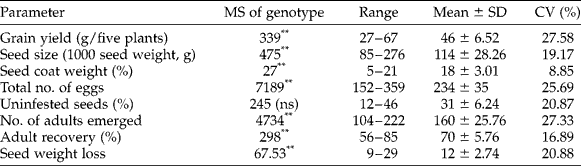
** Highly significant (P < 0.01); ns, non-significant (P>0.05).
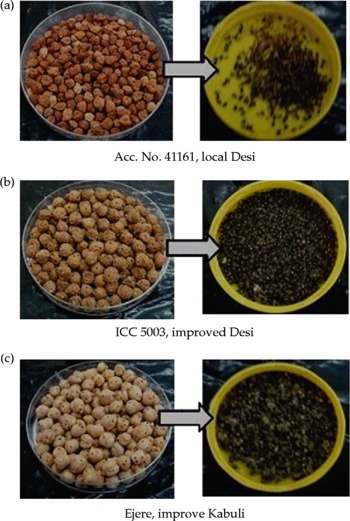
Even though a single genotype combining all the attributes of resistance may be of rare occurrence, a number of accessions, including 41320, 41289, 41291, 41134, 41315, 207658, 41103, 41168, 41142, 41174, 41029, 41207, 209087, 231327, 41161 and 41008, were found to have relatively better combinations of the resistance attributes (least number of eggs laid, adults emerged, adult recovery and seed weight loss) both in terms of infestation level and seed damage (Keneni et al., Reference Keneni, Bekele, Getu, Imtiaz, Dagne and Asefa2011). As an example, one of the most resistant accessions, 41161, is demonstrated along with two of the most susceptible improved varieties, ICC 5003 (Desi) and Ejere (Kabuli) (Fig. 1). A number of other reports indicated that improved varieties might be more susceptible than landraces (Desroches et al., Reference Desroches, Elshazly, Mandon, Duc and Huignard1995; Lale and Kolo, Reference Lale and Kolo1998). Yadav et al. (Reference Yadav, Kumar, Yadav, Singh, Yadav, Turner and Redden2006) also reported the tendency that Kabuli types compared with Desi types are more susceptible to insect attack. The fact that Desi types are more resistant to C. chinensis than the Kabulis may be true, but it is not ruling out the existence of Desi chickpeas that are as susceptible or even more susceptible than some Kabuli chickpeas in specific cases, as shown in Fig. 1. A large-seeded Desi type released in Ethiopia, Natoli, was also found to be as susceptible as the released Kabulis. The latter may also be characterized with thinner seed coats than the Desi type (Fig. 2). Nevertheless, complete resistance was not observed in Ethiopian chickpea germplasm accessions unlike previous reports (Pacheco et al., Reference Pacheco, Bolonhezi, Sartori, Turatti, Paula and de Lourencao1994; Shaheen et al., Reference Shaheen, Khaliq and Aslam2006).
Partial view of the amount of seed damage (left) and adult emergence (right) in one of the relatively resistant Ethiopian chickpea germplasm accessions: (a) Accession No. 41161, with improved Desi, (b) ICC 5003 and (c) Kabuli, Ejere, varieties showing more relative susceptibility to the adzuki bean beetle. This is the second generation of the beetle (a colour version of this figure can be found online at journals.cambridge.org/jti).

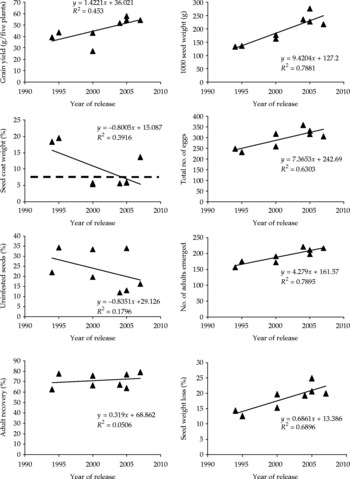
Bi-plots of grain yield and attributes of seed quality and response of improved chickpea varieties to infestation by the adzuki bean beetle against years of release using Worku as an oldest base reference showing that improvements in seed quality had resulted in susceptibility to the adzuki bean beetle (the Kabulis have thinner seed coat weights as shown below the broken horizontal line in the second graph on the left-hand side). The varieties compared in an ascending chronological order of release include Worku, Akaki, Shasho, Arerti, Habru, Ejere, Teji and Natoli.

Disaggregated comparison of all other released varieties with Worku showed that the magnitude of temporal increases from breeding progresses in grain yield and seed size varied among the varieties. This could be attributable to the stage and purpose of variety development. For instance, the Kabuli variety Shasho was primarily released for its relative seed size and white colour compared with the previously released Desi types, Worku and Akaki. This variety, though attractive for its seed quality, has become more susceptible to ascochyta blight Ascochyta rabiei Kovatsch. (Mycosphaerellaceae; G. Keneni, unpublished data).
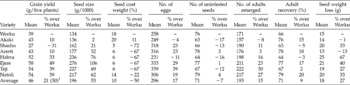
Disregarding Shasho, which was low in yield, the temporal yield increments from breeding during the last 15 years ranged between 10 and 49%, the average being 30%. However, the corresponding increments in seed size ranged between 2 and 106%, with an average of 53%. Similar results with more dramatic increments in seed size than in grain yield were also reported from faba bean breeding in Ethiopia (Temesgen, Reference Temesgen2008). On the other hand, the proportion by weight of seed coat to the total seed weight dramatically reduced as a result of breeding, which may be associated not with intentional selection for thin seed coat types as such but with the general move from the Desi to the Kabuli types and even in Kabuli to a more large seed size, which is characterized by thin seed coats.
The temporal changes in magnitudes of adzuki bean beetle infestation and seed damage, when compared with their magnitudes in Worku as a base reference variety, more or less followed the incremental trends in seed size. On average, the total number of eggs increased by 17%, the number of adults emerged by 15%, adult recovery by 9% and seed weight loss by 27% (Table 4). Higher susceptibility to the adzuki bean beetle of the recent varieties may therefore be associated with the increment in seed size than it may be associated with the increment in grain yield as discussed below.
Temporal trends in mean performance and their percentage increments of grain yield (g/five plants), seed size, proportion by weight of seed coat (%) and attributes of response to infestation by the adzuki bean beetle in chickpea varieties released during the last 15 years in Ethiopia

1 The value given in parentheses indicates the mean value for yield increment excluding Shasho.
Genetic progress from breeding
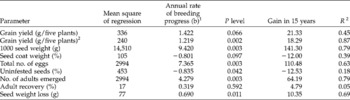
Genetic progress achieved from breeding efforts in the last 15 years has been considered with more focus on temporal changes in grain yield and seed quality as associated with changes in infestation levels and seed damage by C. chinensis. The genetic progress attained since 1994, using the average yield performance of the Worku variety as the reference base, ranges between negative gains for Shasho and close to 50% gains for Ejere varieties. The annual rate of genetic progress for grain yield was 1.42 g/five plants/year or over 21 g/five plants in 15 years (r 2 = 0.45). The negative gain of the Shasho variety could be attributed to its limited initial yield potential and recent susceptibility to diseases.
Better genetic progress was attained from breeding for seed size than for grain yield. Results from faba bean breeding in Ethiopia showed the same trends (Temesgen, Reference Temesgen2008). There are results from other crops showing no yield gain at all from breeding, which was implicated as the attainment of yield ‘plateaus’ (Egli, Reference Egli2008). From the linear regression of seed size against years of release in this study, we obtained an annual rate of genetic progress of 9.42 g/1000 seeds (r 2 = 79), i.e. more than 141 g/1000 seeds in 15 years. Recent varieties showed higher breeding progress for seed size. Past breeding efforts have therefore resulted in substantial progress in improving seed size in chickpea. While grain yield is the primary trait of interest and a prime objective in most of the Ethiopian crop breeding programmes for the last decades, seed size received special attention recently at international and national levels in response to the current move to meet the export-market demand for seed quality, particularly for large seed size that fetches high prices on the world market (EARO, 2000). In chickpea, preferences vary from place to place, but larger seeds with a lower proportion of husk are mostly preferable (Singh, Reference Singh1987). It also appears that there is a slight shift from the Desi types that are mostly small-seeded to the Kabulis that are large-seeded, which is again emanated from market demand. The introduced Kabuli contributed much to the improvement of seed size as all of the released varieties have their origins in introductions from the ICRISAT and ICARDA (Table 2), where increasing seed size is the primary breeding target.
It was nevertheless observed in this study that the genetic progress in seed size, as an attribute of great economic importance and prime breeding objective, is not immune to technical shortcomings. Characters for response to C. chinensis including the total number of eggs laid, the number of adults emerged and seed weight loss showed simultaneous increments with the gains in seed size. With the assumption of smaller seed size to designate primitive landraces and bigger seed size to advanced cultivars, it may be possible to speculate that the higher the degree of domestication, the more susceptible the cultivar will be. On the contrary, the number of uninfested seeds decreased with the increasing seed size over time. This indicated that improvement in seed size had inadvertently increased susceptibility of the improved cultivars to the pest (Table 5 and Fig. 2). However, this was not observed in a previous study by Lemma (Reference Lemma1990) who found that small-seeded chickpea accessions were preferred by C. chinensis for oviposition and adult emergence rather than the large-seeded ones. These differences can be attributed to the fact that the previous study focused almost entirely on local germplasm accessions that may not sufficiently vary for seed size.
Trends in genetic progress from breeding chickpea for better grain yield and seed quality during the last 15 years with the associated increments in susceptibility to the adzuki bean beetle

1 b values corresponding with P level ≤ 0.05 are significant; 2 the second grain yield results exclude Shasho as an outlier for lower grain yield.
Why recent varieties are more susceptible to infestation by the adzuki bean beetle may need an independent study, but a few logical speculations may be made based on the available evidence and sources. First, it was observed in this study that the proportion by weight of seed coat to the whole weight was periodically reduced through breeding for better seed quality (Fig. 2). Morphologically, varieties with smooth, soft and thin seed coats may be preferred for oviposition than those with rough, hard, wrinkled and somewhat spiny seed coats (Ahmed et al., Reference Ahmed, Khalique, Afzal, Tahir and Malik1989; Shaheen et al., Reference Shaheen, Khaliq and Aslam2006). Desroches et al. (Reference Desroches, Elshazly, Mandon, Duc and Huignard1995) found that the seed coat in faba beans acts like a physical barrier against penetration by C. chinensis and C. maculatus Fab. Secondly, seed size showed a significantly positive relationship with the response to the adzuki bean beetle such as the number of eggs laid, adults emerged and weight loss. This may have something to do with the physical suitability of large-seeded cultivars in terms of insect behaviour such as the existence of more inter-seed space for easy movement during oviposition. Previous studies also showed that the larger the seed size in chickpea, the thinner the seed coat may be (Singh, Reference Singh1987), and the more susceptible it would be to storage insects (Yadav et al., Reference Yadav, Kumar, Yadav, Singh, Yadav, Turner and Redden2006). That improved crop varieties with better seed quality may be more susceptible to storage insects when compared with landraces has also been reported earlier (Desroches et al., Reference Desroches, Elshazly, Mandon, Duc and Huignard1995; Lale and Kolo, Reference Lale and Kolo1998), as improvements associated with grain quality for human consumption might also result in higher susceptibility of the improved cultivars when compared with local cultivars (Shaheen et al., Reference Shaheen, Khaliq and Aslam2006). Large-seeded chickpeas with thin seed coats are generally assumed to have better cooking quality than smaller seeds with thick seed coats (Cubero, Reference Cubero1987).
Cause–effect relationships between the characters
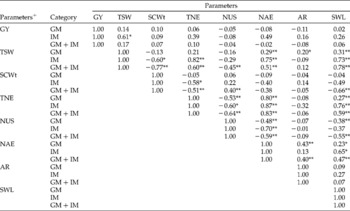
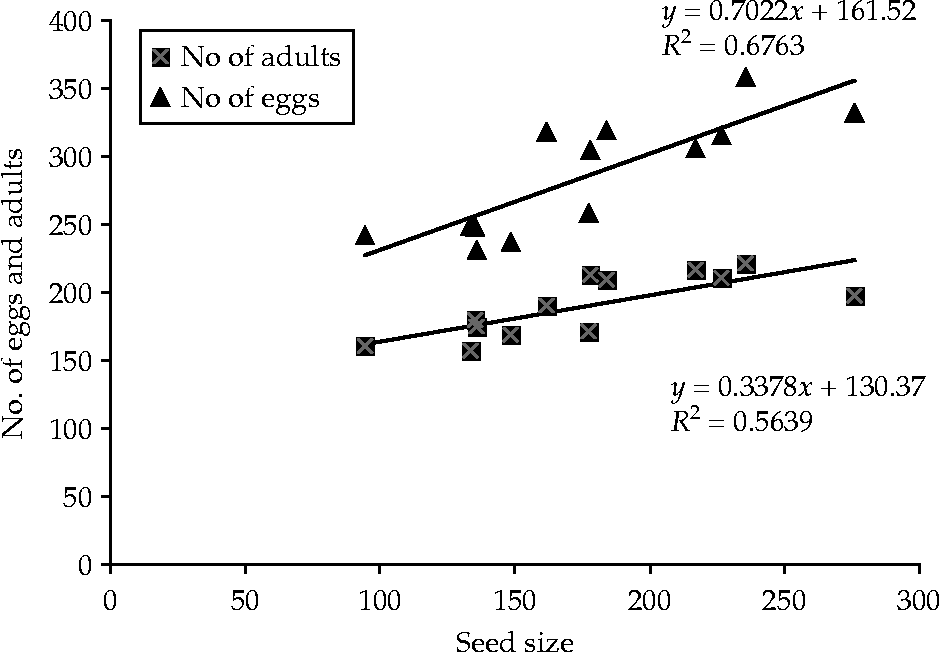
The magnitude of interrelationship between the characters was completely different when the population as a whole was evaluated and when the germplasm accessions and the improved genotypes were disaggregated. For instance, seed size in the germplasm accessions had no definite association with grain yield, seed coat weight, the number of eggs and the proportion of uninfested seeds. On the other hand, strong positive associations were observed between seed size and grain yield, the number of eggs laid, adults emerged and the ultimate seed weight loss in the improved genotypes, constituting the varieties released in Ethiopia and a few new introductions from the ICRISAT. Seed size also showed a strong negative association with seed coat weight in the improved genotypes, i.e. the larger the seed size, the thinner the seed coat. This kind of relationship has been observed for a long time (Williams and Singh, Reference Williams and Singh1987). The thinner the seed coat, the higher would also be the number of eggs laid. There was a consistent positive association of the number of eggs with adults emerged and seed weight loss as expected in all categories of genotypes (Table 6 and Fig. 3).
Correlation coefficients (r) of grain yield and seed quality with attributes of response to the adzuki bean beetle showing different magnitudes of interrelationships in chickpea germplasm (GM, n=117), improved genotypes (IM, n=13) and their combination (GM+IM, n=130)

+ GY, grain yield; TSW, seed size (1000 seed weight, g); SCWt, seed coat weight (%); TNE, total no. of eggs; NUS, no. of uninfested seeds; NAE, no. of adults emerged; AR, adult recovery (%); SWL, seed weight loss (g).
* Significant.
** Highly significant.
Relationship of seed size (1000 seed weight, g) with number of eggs laid and adults emerged in improved chickpea genotypes showing that improvements in seed size resulted in susceptibility to the adzuki bean beetle
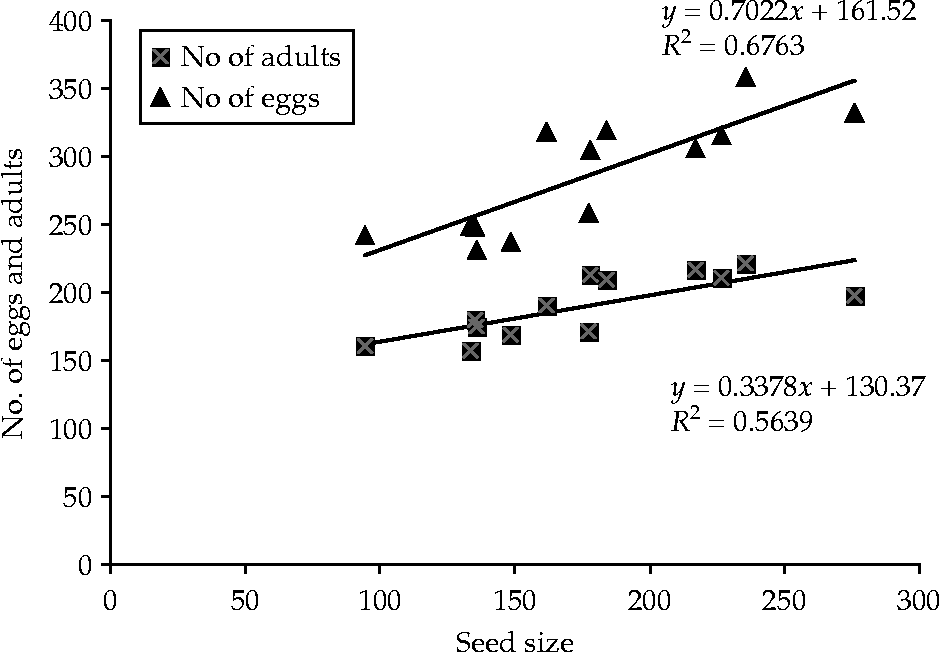
Existence of a strong correlation is the indication that the two traits are conditioned by the same set of genes, be it in a positive or negative direction, while the absence of a strong correlation, as in most of the cases for adult recovery, with other traits may show independent genetic control between the traits (Falconer, Reference Falconer1989). More systematic studies may be needed to investigate the nature of the co-variation between these characters, i.e. whether linked genes or pleiotropic gene effects, or both, are involved. Significant positive correlation coefficients have also been reported between a number of traits for infestation level and seed damage (Aslam et al., Reference Aslam, Shaheen, Abbas and Saba2006). Thus the cause–effect inter-relationship between the characters did not appear to follow a simple trend in terms of magnitude (but not in terms of direction) due only to the differences in the nature of variation between the different categories of the test accessions/genotypes.
Conclusions
As the past chickpea breeding efforts in Ethiopia have resulted in the identification of agronomically desirable genotypes, the released varieties should not, by any means, be questioned. Good levels of genetic progress have been recorded from breeding for seed size and grain yield during the last 15 years. Nevertheless, it is clearly shown that chickpea breeding for better seed quality in Ethiopia has inadvertently increased susceptibility to the adzuki bean beetle.
The most practical way to control C. chinensis to date may be through the use of synthetic insecticides. However, where poor farmers cannot afford to confer proper protection with insecticides to their crops, the continued effort to improve grain yield and seed quality should be integrated with simultaneous perpetuation and enhancement of resistance to C. chinensis. To avoid negative gains for resistance to this beetle when breeding for other agronomically desirable traits, in the future, two stepwise strategies may need to be followed.
First, it may be strategically advisable that future breeding efforts for resistance to this pest should build on past successes. Starting breeding programmes from scratch may take a longer time and/or ultimately show lesser probability of success to generate good results. The conversion of the otherwise well-adapted varieties into more resistant versions through the incorporation and introgression of resistance genes seems to be the best short-term strategy not only in terms of time saving but also in terms of effectiveness and economic feasibility. The genetic control of resistance to C. chinensis may be monogenic and oligogenic in some legumes (Chen et al., Reference Chen, Liv, Kuo, Chien, Sun, Huang, Lin and Ku2007; Somta et al., Reference Somta, Ammaranan, Ooi and Srinives2007). If selection for better seed quality, by its nature, may result in a negative selection for resistance to the adzuki bean beetle, breeders or entomologists, for that matter, may be forced to compromise for resistance at the expense of seed quality within a limit or they must set minimum standards for resistance to the adzuki bean beetle while selecting for better seed quality.
Secondly, resistance to C. chinensis should receive more attention and be given priority as one of the prime objectives of future breeding. The gene base for resistance should somehow be broadened with introduction and introgression of new resistance genes from other sources in addition to retaining and maintaining the already available ones. A search for sources of complete resistance must be continued among cultivated landraces or wild relatives in Ethiopia or elsewhere for broader genetic basis and breeding efficiency. Existence of sources of complete resistance has been reported in both wild relatives and cultivated chickpea (Pacheco et al., Reference Pacheco, Bolonhezi, Sartori, Turatti, Paula and de Lourencao1994; Shaheen et al., Reference Shaheen, Khaliq and Aslam2006).
To this effect, a concerted effort is needed between agricultural entomologists, on the one hand, to understand the nature of seed responses to the pest and the legume breeders, on the other hand, to beneficially change responses of the seeds to the pest in a balanced and integrated manner with other agronomically desirable traits.
Acknowledgements
The first author wishes to acknowledge the EIAR, ICARDA and Addis Ababa University for material, technical and financial support as a component of his PhD thesis. The test genotypes were received from the IBC, ICRISAT, ICARDA and the National Chickpea Research Project in Ethiopia. The authors would also like to thank Dr Nigussie Alemayehu for reviewing the manuscript and staff members of Holetta, Debre Zeit and Ambo Agricultural Research Centers for help in trial management and data collection.