Introduction
Among the main biotechniques assessed, the manipulation of oocytes included in preantral ovarian follicles is highlighted due to the growing interest in minimizing the deleterious effects of follicular atresia and oxidative stress. The aim of this study was to compare different concentrations of acid ascorbic and evaluate the oxidative stress among the treatments, trying to avoid the marked follicular loss in vivo, which is approximately 99.9% of the follicles (Matsuda et al., Reference Matsuda, Inoue, Manabe and Ohkura2012; Araújo et al., Reference Araújo, Gastal, Figueiredo and Gastal2014; de Sá et al., Reference de Sá, Ferreira, Sousa, Duarte, Paes, Cadenas, Anjos, Fernandes, Rosseto, Cibin, Alves, Rodrigues, Rondina, Gastal and Figueiredo2020). We also include a modification in the conventional culture system (Bizarro-Silva et al., Reference Bizarro-Silva, Santos, Gerez, González, Lisboa and Seneda2018; Gomes et al., Reference Gomes, Silva, González, Oliveira, Max, Lisboa, Barreiros, Santos, Sarapião, Gastal and Seneda2018), by performing follicular culture in a system with an extracellular matrix of agarose gel, with the purpose to prevent direct contact of the samples to the bottom of the culture plate (Silva et al., Reference Silva, Bergamo, Búfalo, Bonato and Seneda2017b).
To develop a favourable environment for the ideal growth of preantral ovarian follicles under in vitro conditions, the manipulation of oocytes included in preantral ovarian follicles has allowed us to better understand the events involved in the initial phase of formation and growth of follicles present in the ovaries. To evaluate the culture medium, growth factors, antioxidants, and hormones that influence follicular development, the use of preantral ovarian follicles, mainly from cattle, horses, sheep, goats, and mice, has become an important resource for studies related to human reproduction to assist couples undergoing infertility treatments and/or reproductive diseases (Araújo et al., Reference Araújo, Gastal, Figueiredo and Gastal2014; Gomes et al., Reference Gomes, Lisboa, Silva, Max, Marino, Oliveira, González, Barreiros, Marinho and Seneda2015; Frydman and Grynberg Reference Frydman and Grynberg2016; Silva et al., Reference Silva, Ribeiro, Menezes, Barberino, Passos, Dau, Costa, Melo, Bezerra, Donato, Peixoto, Matos, Gonçalves, van den Hurk and Silva2017a; Bizarro-Silva et al., Reference Bizarro-Silva, Santos, Gerez, González, Lisboa and Seneda2018; Gomes et al., Reference Gomes, Silva, González, Oliveira, Max, Lisboa, Barreiros, Santos, Sarapião, Gastal and Seneda2018; Max et al., Reference Max, Bizarro-Silva, Búfalo, González, Lindquist, Gomes, Barreiros, Lisboa, Morotti and Seneda2018; de Sá et al., Reference de Sá, Ferreira, Sousa, Duarte, Paes, Cadenas, Anjos, Fernandes, Rosseto, Cibin, Alves, Rodrigues, Rondina, Gastal and Figueiredo2020).
Another important factor in the development of an ideal in vitro culture system is the excessive release of reactive oxygen species (ROS), resulting in oxidative stress (Gomes et al., Reference Gomes, Lisboa, Silva, Max, Marino, Oliveira, González, Barreiros, Marinho and Seneda2015, 2018; de Sá et al., Reference de Sá, Ferreira, Sousa, Duarte, Paes, Cadenas, Anjos, Fernandes, Rosseto, Cibin, Alves, Rodrigues, Rondina, Gastal and Figueiredo2020). Oxidative stress can cause irreversible cell damage in follicular cells and have deleterious effects on the female reproductive system (Andrade et al., Reference Andrade, van den Hurk, Lisboa, Hertel, Melo-Sterza, Moreno, Bracarense, Landim-Alvarenga, Seneda and Alfieri2012).
In previous studies, ascorbic acid improved the viability and promoted the activation of in vitro cultured primordial follicles and growing follicles from several species (Melo et al., Reference Melo, Oskam, Celestino, Carvalho, Castro, Figueiredo, Rodrigues and Santos2011; Silva et al., Reference Silva, Araújo, Duarte, Chaves, Silva, Lobo, Almeida, Matos, Tavares and Campelo2011; Andrade et al., Reference Andrade, van den Hurk, Lisboa, Hertel, Melo-Sterza, Moreno, Bracarense, Landim-Alvarenga, Seneda and Alfieri2012). This antioxidant also acts directly on ROS elimination and metal chelation, as well as in the prevention of DNA mutations that are induced by oxidation and the protection against lipid peroxidation (Barja et al., Reference Barja, López-Torres, Pérez-Campo, Rojas, Cadenas, Prat and Pamplona1994; Packer et al., Reference Packer, Witt and Tritschler1995; Lutsenko et al., Reference Lutsenko, Cárcamo and Golde2002). However, there have been no studies on the use of ascorbic acid supplementation with an extracellular matrix of agarose gel in an in vitro culture of bovine preantral ovarian follicles to assess the follicular development, morphological integrity, and the oxidative stress of follicles. A possible benefit of the matrix of agarose gel would be better availability of the culture medium to all surfaces of the samples as no sides of the ovarian fragments would be in direct contact with the bottom of the culture plate (Silva et al., Reference Silva, Bergamo, Búfalo, Bonato and Seneda2017b; He et al., Reference He, Meng, Wang, Dong, Zhang and Quan2020).
Therefore, we aimed to evaluate the follicular development, morphological integrity, and oxidative stress of preantral ovarian follicles from Bos taurus indicus females cultured in vitro with ascorbic acid.
Materials and methods
Unless otherwise noted, all chemicals used in this experiment were purchased from Sigma-Aldrich (St. Louis, MO, USA).
Obtaining and processing ovaries
Ovaries (n = 20) were collected from cyclic bovine females (n = 10), Bos taurus indicus, of the Nelore breed, with a body condition score between 3 and 4 (scale from 0 to 5); (Ayres et al., Reference Ayres, Ferreira, de Souza Torres-Júnior, Demétrio, de Lima and Baruselli2009). To analyze morphology and follicular development (classical histology), 10 ovaries were used, and the other 10 were used for oxidative stress [thiobarbituric acid reactive substances (TBARS), nitroblue tetrazolium (NBT), and ferric reducing antioxidant power (FRAP)] evaluation. All processes involving ovarian fragmentation were carried out immediately after slaughter, and the fragments were transported to the laboratory.
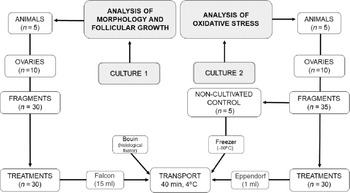
After collection, the adjacent tissues surrounding the ovaries were removed with the aid of sterile forceps and scalpels to better visualize the cortical region. The ovary pairs were washed individually three times with saline solution (0.9%; JP Farma, São Paulo, Brazil) and twice with 70% alcohol. Subsequently, the ovaries were fragmented with the aid of a sterile and disposable dermatological punch (6 mm; Kolplast, São Paulo, Brazil), resulting in fragments approximately 9 mm2 in size. In the slaughterhouse, the fragments were washed three times with saline solution (0.9%; JP Farma, São Paulo, Brazil) and twice with minimum essential medium (MEM; Gibco BRL, Rockville, MD, USA; osmolarity 300 mOsm/l, pH 7.2) in a 24-well plate. Five fragments were individually packed into Eppendorf microtubes (1 ml), kept in a thermal container (4°C), and stored in a freezer at −80°C until the oxidative stress analysis was carried out. The fragments (n = 30) intended for follicular morphology and development analyses (classical histology) were placed in Falcon tubes (15 ml) containing MEM and antibiotics (100 µl of penicillin and 100 µl of streptomycin). The fragments (n = 30) destined for oxidative stress analysis were placed in Eppendorf tubes (1 ml). All fragments were transported at a temperature of 4°C until arrival at the laboratory (Fig. 1).
Steps used to obtain and process the ovaries at the slaughterhouse.

In vitro culture of preantral ovarian follicles
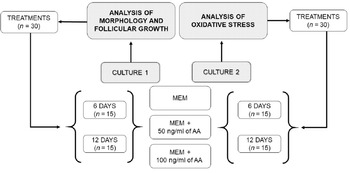
In the laboratory, the fragments (n = 60) of the ovarian cortex were placed in well labelled 24-well plates containing MEM only or MEM supplemented with 50 or 100 ng/ml ascorbic acid on an extracellular matrix agarose gel (Agarose Molecular Biology Grade; Kasvi, Brazil). The samples were subsequently grown for 6 or 12 days in an incubator at 38.5°C in a 5% CO2 atmosphere with air and saturated humidity (Fig. 2).
Steps used to distribute samples for the in vitro culture of preantral ovarian follicles for 6 or 12 days using different concentrations of ascorbic acid for morphology and follicular growth analyses and oxidative stress evaluation. AA, ascorbic acid; MEM, minimum essential medium.

To prepare the extracellular matrix of the agarose gel, 3 g of powdered agarose (Agarose Molecular Biology Grade; Kasvi, Brazil) was added to 200 ml of distilled water to obtain a 1.5% agarose solution. After complete dilution, the solution was sterilized in an autoclave for 15 min. The solution was then packed in a sterile glass Petri dish to enable gel solidification. Upon obtaining a gelatinous structure, the plate was kept in a 37°C incubator for 24 h for sterilization. Thereafter, the gel was broken up into fragments of approximately 1 cm3 (Silva et al., Reference Silva, Bergamo, Búfalo, Bonato and Seneda2017b), stabilized, and hydrated with MEM for 24 h. Each fragment was then placed in a 24-well plate. The MEM was supplemented with ITS (6.25 mg/ml of insulin + 6.25 mg/ml of transferrin + 6.25 mg/ml of selenium), 0.23 mM pyruvate, 2 mM glutamine, 2 mM hypoxanthine, 1.25 mg/ml bovine serum albumin (BSA; Gibco BRL, Rockville, MD, USA), 20 IU/ml penicillin, and 200 mg/ml streptomycin. Every 2 days, 100% of the culture medium was replaced. The culture period length was based on previous studies carried out with other species (Gomes et al., Reference Gomes, Lisboa, Silva, Max, Marino, Oliveira, González, Barreiros, Marinho and Seneda2015, 2018; Figueiredo et al., 2018; de Sá et al., Reference de Sá, Ferreira, Sousa, Duarte, Paes, Cadenas, Anjos, Fernandes, Rosseto, Cibin, Alves, Rodrigues, Rondina, Gastal and Figueiredo2020). The fragments were placed on a 1.5% agarose gel (Agarose Molecular Biology Grade, Kasvi, Brazil).
Morphology and follicular growth analyses
The preantral ovarian follicles, which were cultured in vitro for 6 or 12 days, were classified according to their stage of development into primordial follicles (containing a layer of flat granulosa cells around the oocyte) or developing follicles. They were considered as primary follicles if they presented a single layer of cuboidal granulosa cells surrounding the oocyte, or as secondary follicles if they had two or more layers of cuboidal granulosa cells. To evaluate follicular growth, the follicles were classified according to the different stages of development (primordial, primary, and secondary) after in vitro culture for 6 or 12 days, using the different treatments.
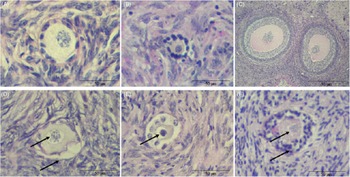
The follicles were also classified according to their morphology as intact follicles when the oocytes had non-pycnotic nuclei and were surrounded by granulosa cells organized in layers, or as degenerated follicles when the oocytes showed pycnotic nuclei, the presence of cytoplasmic vacuoles, and were surrounded by granulosa cells arranged in a disorganized manner (Búfalo et al., Reference Búfalo, González, Silva, Lindquist, Bergamo, Costa, Marinho and Seneda2016). Follicles were evaluated based on the treatment and culture time. The percentages of primordial, primary, and secondary follicles were calculated after 6, and 12 days of culture. To avoid recounting, preantral ovarian follicles were counted only in the section in which the oocyte nucleus was observed (Fig. 3).
Histological illustration of the morphology of antral preantral ovarian follicles of Bos taurus indicus deer stained with periodic acid Schiff (PAS) and haematoxylin stains. (A) Intact primordial follicle (×40). (B) Intact primary follicle (×40). (C) Intact secondary follicles (×10). (D) Degenerate primordial follicle (retracted oocyte and disorganized granulosa cells: arrows; ×40). (E) Degenerated primary follicle (retracted oocyte and pyknotic nucleus: arrows; ×40). (F) Degenerate secondary follicle (retracted oocyte and disorganized granulosa cells: arrows; ×40).

After the culture period, the fragments (n = 30) were fixed in Bouin’s fixative for 24 h and kept in 70% alcohol. Thereafter, the fragments were dehydrated in increasing concentrations of alcohol, clarified and diaphanized in xylol, and embedded in paraffin blocks for histological analysis. To mount the histological slides, each block was individually sectioned to 5-μm thickness with an interval of 10 sections of ovarian tissue using a rotating microtome (Leica®, Wetzlar, Germany). Before staining, the excess paraffin contained in the slides was removed using xylol. The slides were subsequently rehydrated using 70% alcohol. The slides were stained with Schiff’s periodic acid and haematoxylin. The histological slides were read and follicular classification was performed by a single person using optical microscopy at magnification values of ×10 and ×40 (Nikon, Tokyo, Japan).
Oxidative stress analysis
The fragments (n = 30) subjected to treatment with ascorbic acid and cultured in vitro for 6 or 12 days were subjected to oxidative stress analysis using the FRAP, TBARS, and NBT kinetic-colorimetric tests to determine the capacity of the ovarian tissue to resist oxidative damage and determine lipid peroxidation and the production of superoxide anion, respectively. The tests were performed as previously described by Pinho-Ribeiro et al. (Reference Pinho-Ribeiro, Zarpelon, Mizokami, Borghi, Bordignon, Silva, Cunha, Alves-Filho, Cunha, Casagrande and Verri2016).
Evaluation of the antioxidant activity using a FRAP assay
For the FRAP assay, the ovarian fragments were crushed and homogenized using a potassium chloride buffer solution (KCl; 500 μl; 1.15%) and centrifuged (1500 rpm) for 10 min (4°C). Subsequently, 30 μl of ultrapure water and 150 μl of FRAP reagent were added to the supernatant (20 μl) of the sample. Using a spectrophotometer and a 96-well microplate reader, the absorbance of the plate was measured at 595 nm (Multiskan GO Thermo Scientific). The results are presented as nmol equivalents of Trolox per mg of protein.
Evaluation of lipid peroxidation using a TBARS assay
The TBARS assay was performed according to the levels of malondialdehyde (MDA), an intermediate product of lipid peroxidation. To perform this test, the homogenate (50 μl) obtained in the FRAP test was transferred to an Eppendorf (1 ml) tube containing iron chloride (FeCl3; 5 μl), ascorbic acid (5 μl), trichloroacetic acid (TCA; 50 μl; 2.8%), and thiobarbituric acid (TBA; 50 μl; 1.0%). The mixture was stirred and kept in a water bath (90°C) for 15 min. Subsequently, the samples were cooled in an ice bath, stirred for 15 min (4°C), and centrifuged (3000 rpm). The supernatant contained in the microtubes was distributed throughout the 96-well plates, and the MDA levels were determined based on the difference between the absorbance values at 535 and 572 nm (Multiskan GO, Thermo Scientific) using a spectrophotometer and a microplate reader. The results of the TBARS assay are presented as optical density (OD) per mg of protein.
Evaluation of superoxide anion production using an NBT assay
The NBT test was used to measure the production of superoxide anions. The reduction in NBT was measured using a microplate reader spectrophotometer at 600 nm (Multiskan GO, ThermoFisher Scientific). Briefly, the homogenate (50 μl) was added to NBT (100 μl; 1 mg/ml) in 96-well plates. After the incubation period (15 min), all samples were discarded from the plate, and potassium hydroxide (KOH; 120 μl) and dimethyl sulfoxide (DMSO; 120 μl) were added. The results are presented as OD per mg of protein.
Statistical analysis
The proportion of intact follicles was determined from the total number of follicles evaluated (intact and degenerate) at each stage of development and for each treatment. Differences between the proportions of primordial and developing follicles (primary and secondary) for each treatment (cultured control and different concentrations of ascorbic acid at different times) were analyzed using the chi-squared test and/or Fisher’s exact test. For a significant difference, the proportions were compared using a 2 × 2 proportion test to establish a ranking between treatments. For descriptive analysis, data are presented as percentages (%). All analyses were performed using the Minitab® 18.1.1 statistical program. The data from the oxidative stress analyses were subjected to analysis of variance (ANOVA), followed by the Bonferroni test, using GraphPad Prism software (version 7.0). Values were considered significant at P ≤ 0.05.
Results
Morphology and follicular growth analyses
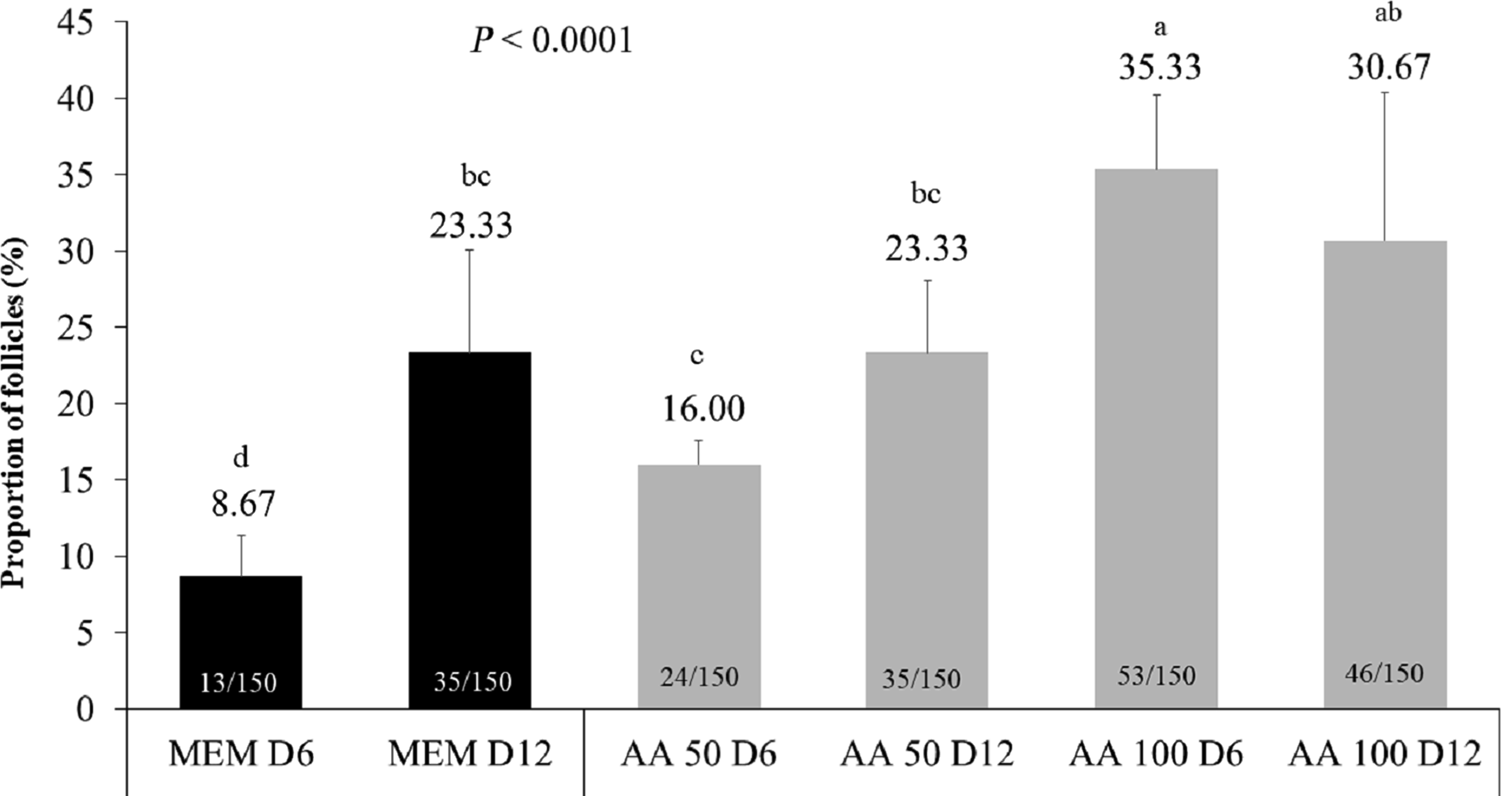
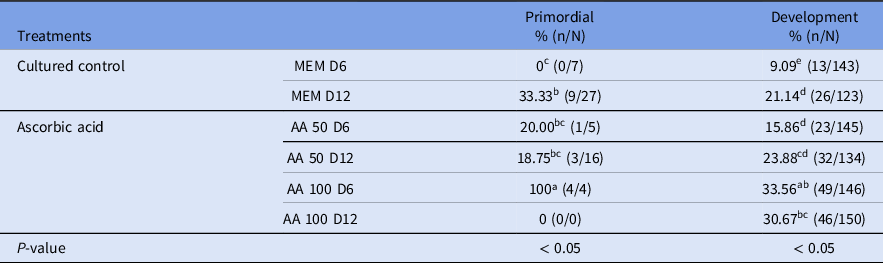
Supplementation with 100 ng/ml ascorbic acid promoted follicular development during the 6 days of in vitro culture (35.33%; 53/150; P < 0.05) compared with the other treatments. Regarding follicular integrity, the use of 100 ng/ml ascorbic acid also favoured a higher proportion of intact developing follicles (33.56%; 49/146; P < 0.05; Fig. 4) after 6 days of culture compared with the other treatments (Table 1).
Proportion of total preantral ovarian follicles, classified as healthy, of fragments of the ovarian cortex of Bos taurus indicus females, cultured for 6 or 12 days in minimum essential medium (MEM) supplemented with different concentrations (50 or 100 ng/ml) of ascorbic acid (AA). Different lowercase letters (a–e) indicate the differences (P < 0.05) between treatments. D6, 6 days; D12, 12 days.

Percentage of intact, primordial, and developing preantral ovarian follicles, evaluated after in vitro culture of fragments of Bos taurus indicus females, grown for 6 or 12 days in minimum essential medium supplemented with different concentrations (50 or 100 ng/ml) of ascorbic acid

Different lowercase letters (a–e) in the same column indicate the differences between treatments.
AA, ascorbic acid; MEM, minimum essential medium. D6, 6 days; D12, 12 days.
Oxidative stress analysis
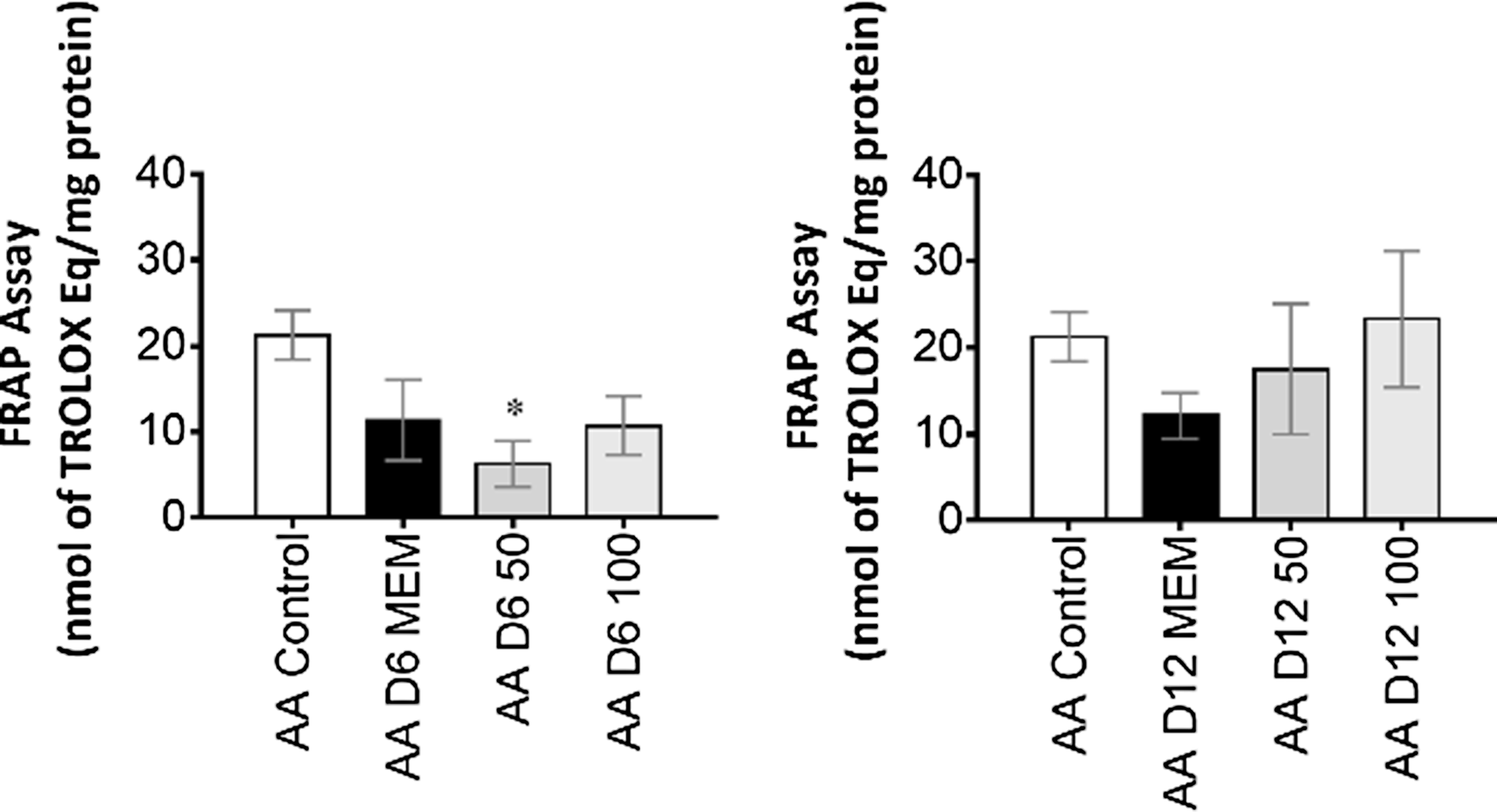
In the evaluated periods of 6 and 12 days of in vitro culture, there were no differences in the parameters of oxidative stress between the cultured control group (MEM) and the non-cultured control group (D0). After 6 days of in vitro culture, only the 50 ng/ml concentration (6.27 ± 2.68 nmol of Trolox Eq/mg protein) of ascorbic acid decreased (P ≤ 0.05) the antioxidant capacity, evaluated using the FRAP assay, relative to the non-cultured control (21.27 ± 2.86 nmol of Trolox Eq/mg protein; Fig. 5). After 12 days of in vitro culture, there were no differences (P > 0.05) in the FRAP levels between any of the groups evaluated.
Effect of ascorbic acid (AA) supplementation of minimum essential medium (MEM; 50 or 100 ng/ml) on the ability of the ovarian tissues to resist oxidative damage by reducing iron [ferric reducing antioxidant power (FRAP)], after in vitro culture for 6 or 12 days. Results are expressed as mean ± SEM (n = 5 per group). P < 0.05 compared with control group. ANOVA followed by Bonferroni’s test. *Differs from the non-cultured controls (D0).

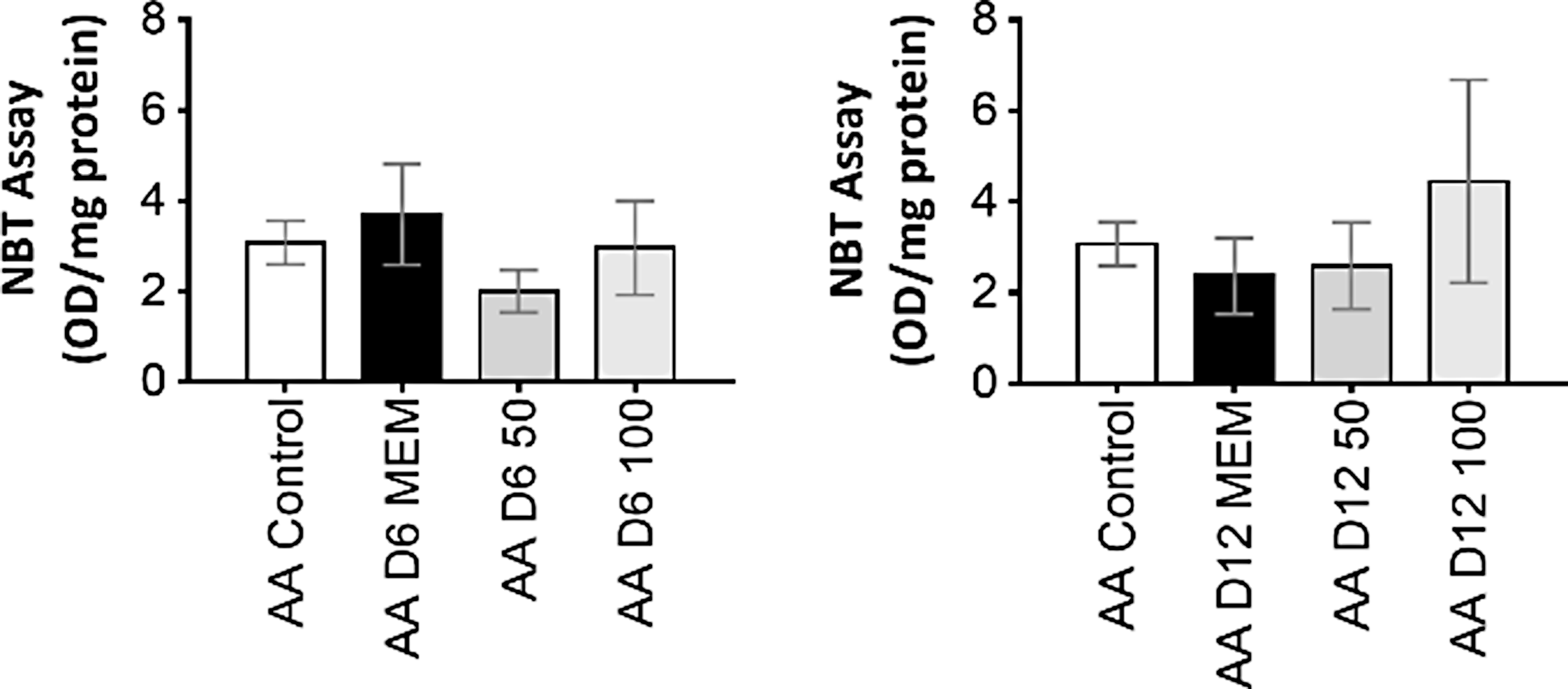
Regarding the production of superoxide anions, as assessed using the NBT assay, no significant differences in the production of free radicals were observed (P > 0.05) between samples supplemented with different concentrations of ascorbic acid and the control at days 6 and 12 in vitro culture (Fig. 6).
Effect of ascorbic acid (AA) supplementation of minimum essential medium (MEM; 50 or 100 ng/ml) on the production of superoxide anion [tetrazolium nitro azul (NBT)] after in vitro culture for 6 or 12 days. Results are expressed as mean ± SEM (n = 5 per group). ANOVA followed by Bonferroni’s test.

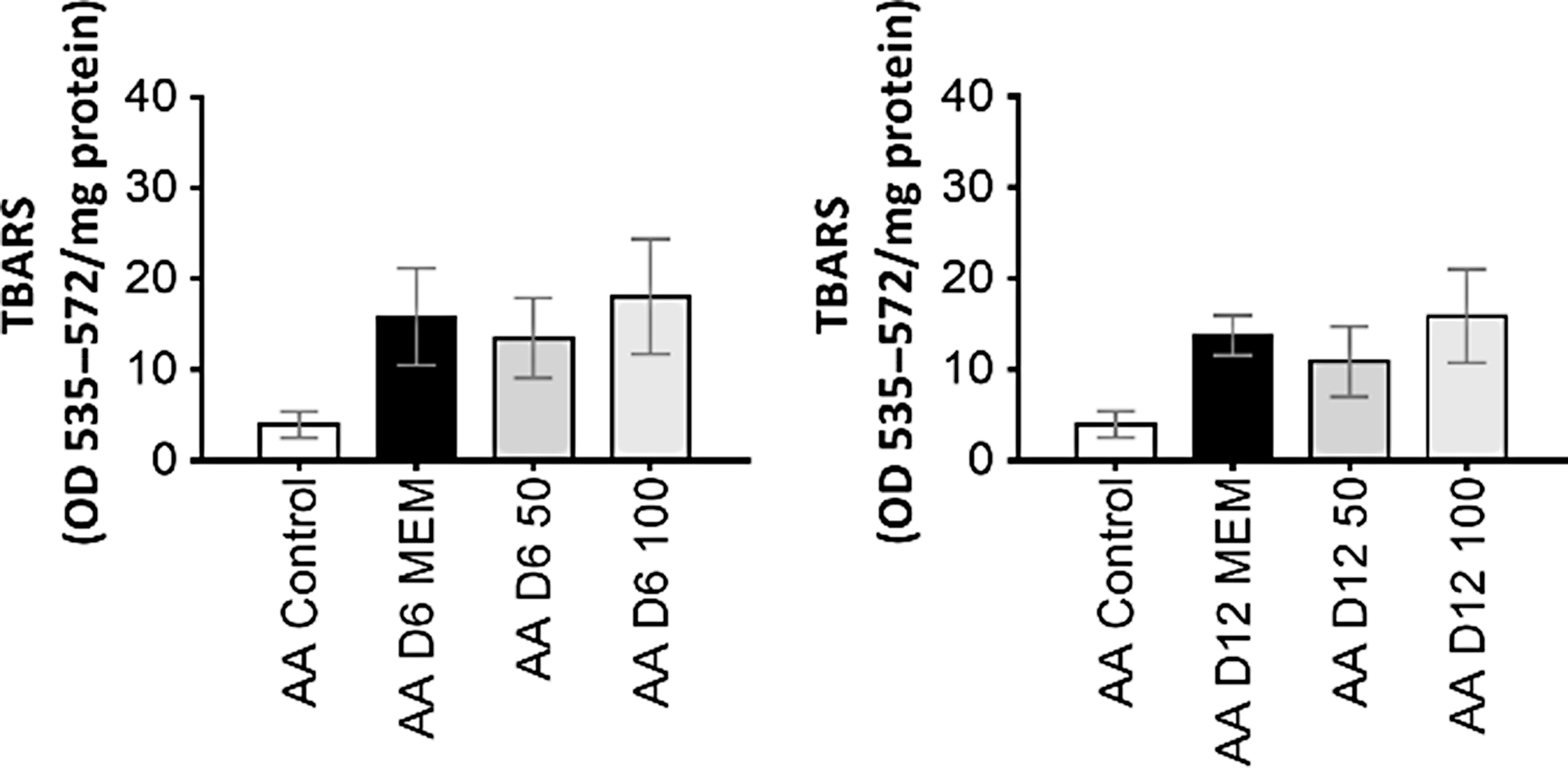
When the oxidative degradation of lipids was evaluated using the TBARS test (mean ± SEM), no differences (P > 0.05) were found between the treatments with different concentrations of ascorbic acid and the control at 6 and 12 days of in vitro culture (Fig. 7).
Effect of ascorbic acid supplementation of minimum essential medium (MEM; 50 or 100 ng/ml) on lipid peroxidation [thiobarbituric acid reactive substances (TBARS)] after in vitro culture for 6 or 12 days. Results are expressed as mean ± SEM (n = 5 per group). ANOVA followed by Bonferroni’s test.

Discussion
In the present study, the supplementation of the MEM with 100 ng/ml ascorbic acid at 6 days of in vitro culture was found to result in better conditions for the development of bovine preantral ovarian follicles compared with the other treatments. Supplementation with 100 ng/ml ascorbic acid also favoured an increase in the proportion of healthy follicles compared with the other concentrations tested. To the best of our knowledge, this is one of the few studies using an extracellular matrix based on agarose gel during in vitro culture to assess the follicular development and integrity of preantral ovarian follicles of bovine female ovaries obtained from a slaughterhouse and evaluate the oxidative stress induced by ascorbic acid supplementation over 12 days of in vitro culture. The matrix agarose gel prevented a constant, direct contact of the sample with the bottom of the culture plate. This gel matrix approach possibly provided a better supply of the culture medium to ovarian fragments, being considered a viable strategy for the culture of reproductive tissues (Sato et al., Reference Sato, Katagiri, Gohbara, Inoue, Ogonuki, Ogura, Kubota and Ogawa2011; Silva et al., Reference Silva, Ribeiro, Menezes, Barberino, Passos, Dau, Costa, Melo, Bezerra, Donato, Peixoto, Matos, Gonçalves, van den Hurk and Silva2017a; He et al., Reference He, Meng, Wang, Dong, Zhang and Quan2020).
In a study in which in vitro culture of ovarian follicles from bovine females was performed for 8 days, there was a positive effect on growth when the culture medium was supplemented with 50 µg/ml ascorbic acid (Andrade et al., Reference Andrade, van den Hurk, Lisboa, Hertel, Melo-Sterza, Moreno, Bracarense, Landim-Alvarenga, Seneda and Alfieri2012). A similar finding was related after 12 days of the in vitro culture of bovine ovarian follicles, with the activation and the preservation of follicular viability and integrity (Thomas et al., Reference Thomas, Leask, Srsen, Riley, Spears and Telfer2001). Comparing our data with those reported by Andrade et al. (Reference Andrade, van den Hurk, Lisboa, Hertel, Melo-Sterza, Moreno, Bracarense, Landim-Alvarenga, Seneda and Alfieri2012) and Thomas et al. (Reference Thomas, Leask, Srsen, Riley, Spears and Telfer2001), our best results were found from the group treated with 100 µg/ml ascorbic acid. Perhaps our choice of culture with an agarose matrix gel may have intensified the cellular metabolism of the ovarian cells and the higher concentration of the ascorbic acid favoured the follicular development. Recently it was demonstrated that ascorbic acid, in addition to antioxidant effects, presents several benefits to the ovarian tissue, mainly to follicular development (Abdollahifar et al., Reference Abdollahifar, Azad, Sajadi, Shams Mofarahe, Zare, Moradi, Rezaee, Gholamin and Abdi2019).
Ascorbic acid accumulates in the oocytes, granulosa cells, luteal cells, and internal teak, resulting in the formation of ascorbate, a very stable free radical that significantly reduces the damage caused by ROS. At physiological concentrations, antioxidants protect cells from the damage caused by ROS (Thomas et al., Reference Thomas, Leask, Srsen, Riley, Spears and Telfer2001; Lutsenko et al., Reference Lutsenko, Cárcamo and Golde2002). Considering that oxidative stress is a very common event during in vitro culture, in our model the production of ROS was not observed in any of the periods and concentrations tested. Although due to the parameters evaluated, no increase in post culture oxidative stress has been observed, the supplementation with ascorbic acid was recognized to maintain stable ROS levels over the culture period, except for the dose of 50 ng/ml after 6 days of culture. When the culture medium was supplemented with ascorbic acid, this antioxidant was found to have a beneficial effect on the preantral ovarian follicles grown in vitro; this finding was previously reported in studies with mice, cattle, horses, and goats (Murray et al., Reference Murray, Molinek, Baker, Kojima, Smith, Hillier and Spears2001; Thomas et al., Reference Thomas, Leask, Srsen, Riley, Spears and Telfer2001; Silva et al., Reference Silva, Araújo, Duarte, Chaves, Silva, Lobo, Almeida, Matos, Tavares and Campelo2011; Andrade et al., Reference Andrade, van den Hurk, Lisboa, Hertel, Melo-Sterza, Moreno, Bracarense, Landim-Alvarenga, Seneda and Alfieri2012; Gomes et al., Reference Gomes, Lisboa, Silva, Max, Marino, Oliveira, González, Barreiros, Marinho and Seneda2015). However, it is important to consider that ascorbic acid may improve follicular development in addition to the antioxidant effect (Abdollahifar et al., Reference Abdollahifar, Azad, Sajadi, Shams Mofarahe, Zare, Moradi, Rezaee, Gholamin and Abdi2019).
To provide a balanced environment to promote adequate in vitro development and reduce the levels of ROS produced by the system, we sought to identify the best concentration of ascorbic acid (100 ng/ml) and the best time (6 days) for the in vitro culture of preantral ovarian follicles from Bos taurus indicus females in the present study. The reproductive potential of these females is directly influenced by the damage caused by oxidative stress, which is caused by an imbalance in ROS production in cells. Notably, ascorbic acid can reduce this damage (Thomas et al., Reference Thomas, Leask, Srsen, Riley, Spears and Telfer2001; Lutsenko et al., Reference Lutsenko, Cárcamo and Golde2002).
In conclusion, supplementation of the culture medium with ascorbic acid in an in vitro culture of preantral ovarian follicles based on agarose matrix gel promoted better conditions for follicular development. A concentration of 100 ng/ml ascorbic acid, after 6 days of culture, was efficient at maintaining follicular integrity, as well as stable levels of ROS.
Financial support
This research was supported by the Coordination for the Improvement of Higher Education Personnel (CAPES).
Conflict of interest
The authors declare no conflicts of interest.
Ethical standards
This study was conducted according to the standards of the Ethics Committee for Animal Experimentation of the University of Londrina, following the rules established by Law 1,283 for ovaries obtained from slaughterhouses.