Introduction
Cholesterol was first isolated from an alcohol-soluble fraction of human gallstones and described by French chemists in 1789 (Gibbons, Reference GIBBONS2002; Nes, Reference NES2011). It is not essential for the animal cell, but is synthesised and found in almost every cell including brain and nervous tissue. Cholesterol is a main component of cell membranes, a precursor of bile acids and steroid hormones such as aldosterone, progesterone, cortisol, oestrogen, and testosterone (Daniels et al., Reference DANIELS, KILLINGER and MICHAL2009). Biosynthesis of cholesterol in the body typically contributes two-thirds of the total body input (Dietschy, Reference DIETSCHY1984). Dietary cholesterol can be obtained from only animal sources i.e. meat, butter, cheese, and eggs. Chicken egg is one of the main sources of cholesterol in the human diet and contains about 213 mg cholesterol (USDA, 1991). Because of the cholesterol content, guidelines of the American Heart Association (AHA) in 1993 recommended restricting egg consumption and daily intake of cholesterol to ≤300 mg/day (Chait et al., Reference CHAIT, BRUNZELL and DENKE1993) in an attempt to reduce the CVD risk and the level of plasma LCL-C considered as a major class of atherogenic lipoprotein. This recommendation led to ‘cholesterol phobia’ in all over the world and decreased the consumption of eggs (Zeidler, Reference ZEIDLER2000; Djoussé and Gaziano, Reference DJOUSSÉ and GAZIANO2008). Cholesterol phobia has been considered as a major cause of decline in per capita egg consumption (Brown and Schrader, Reference BROWN and SCHRADER1990; Ballesteros et al., Reference BALLESTEROS, CABRERA, SAUCEDO and FERNANDEZ2004; Mizrak et al., Reference MIZRAK, DURMUŞ, KAMANLI, DEMIRTAŞ, KALEBAŞI, KARADEMIR and DOĞU2012). In the United States, increasing public concern over dietary cholesterol is reflected in annual per capita egg consumption, which has declined from 303 to 256 during the past 35 years (USDA, 2002). A recent study showed that the phobia about cholesterol still had an important impact on the egg intake (Mizrak et al., Reference MIZRAK, DURMUŞ, KAMANLI, DEMIRTAŞ, KALEBAŞI, KARADEMIR and DOĞU2012). About 33% of the subjects were reported to be not consuming eggs because of the phobia (Mizrak et al., Reference MIZRAK, DURMUŞ, KAMANLI, DEMIRTAŞ, KALEBAŞI, KARADEMIR and DOĞU2012). This review focuses on egg consumption, blood LDL-cholesterol and the risk of CVD in humans.
Regulation of cholesterol biosynthesis in human body
Serum cholesterol is regulated by mainly liver and intestine where it is biosynthesised and absorbed, respectively (Lehninger et al., Reference LEHNINGER, NELSON and COX1993). It is synthesised from acetyl-CoA in almost all tissues including liver, intestine, adrenal cortex, ovary, testis, placenta, and brain. Unlike other tissues where it is derived from either de novo or dietary means, cholesterol is primarily derived from de novo synthesis in the brain (Orth and Bellosta, Reference ORTH and BELLOSTA2012). Cholesterol homeostasis is maintained by balancing intestinal cholesterol absorption and endogenous cholesterol synthesis (Dietschy et al., Reference DIETSCHY, TURLEY and SPADY1993). The small intestine is a unique organ regulating cholesterol absorption as chylomicrons. This organ is also important for reabsorbing biliary cholesterol in the body (Lammert and Wang, Reference LAMMERT and WANG2005).
Plasma lipoproteins are classified as chylomicrons, very-low-density lipoproteins (VLDL), intermediate-density lipoproteins (IDL), low-density lipoproteins (LDL), and high-density lipoproteins (HDL) (Cox and García-Palmieri, Reference COX and GARCÍA-PALMIERI1990). Each of the lipoproteins is carrier for the cholesterol and cholesteryl esters in the bloodstream and has a specific lipid and apolipoprotein content (Lehninger et al., Reference LEHNINGER, NELSON and COX1993). A high level of serum LDL-C is considered to be a major risk factor for CVD (Wu et al., Reference WU, TREVISAN, GENCO, FALKNER, DORN and SEMPOS2000).
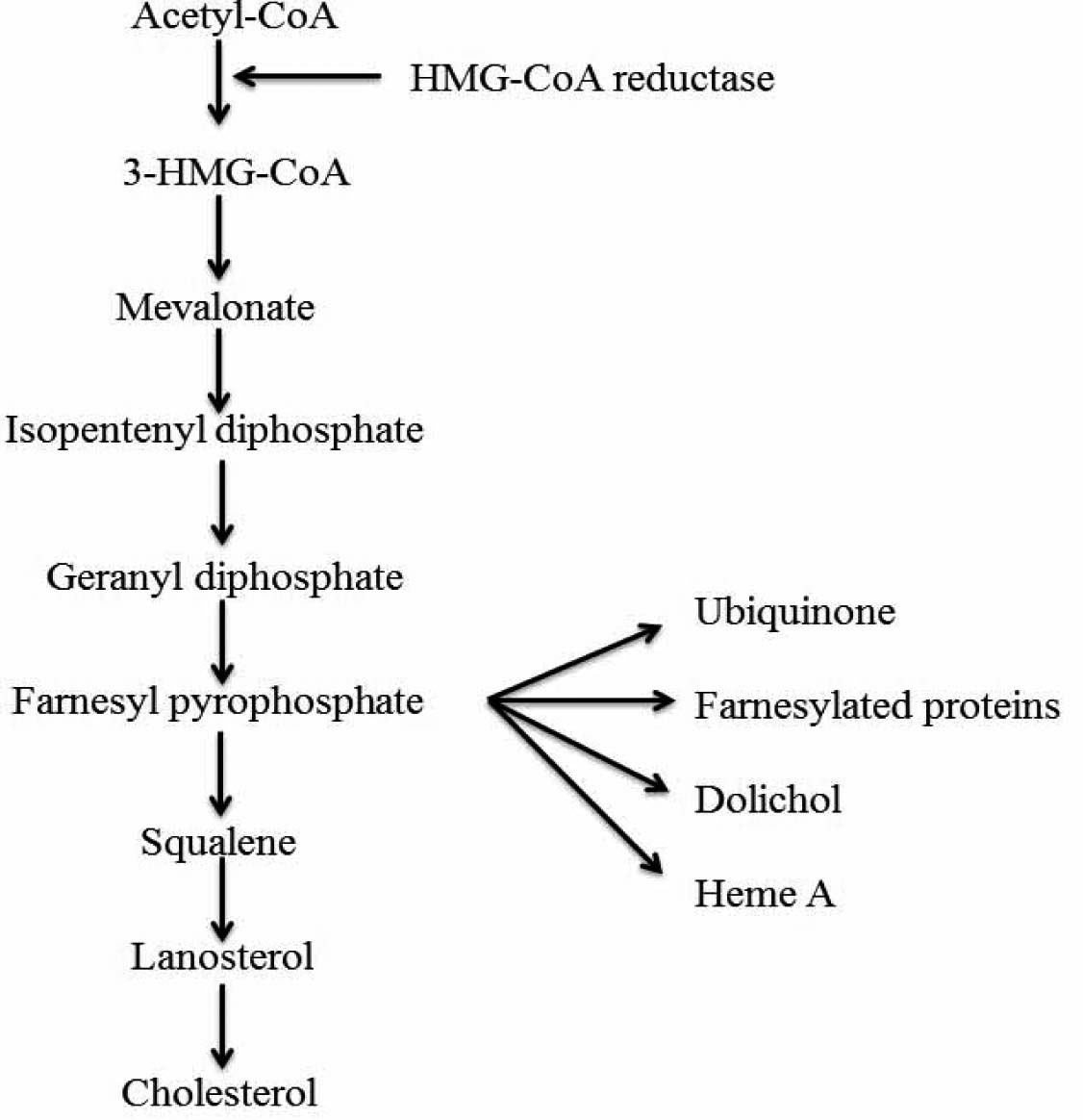
LDL particles in the serum contain apoB-100 as a major apolipoprotein. Under normal conditions, this apolipoprotein is recognised by LDL-receptors found in the liver cell during the removal of LDL particles (Lehninger et al., Reference LEHNINGER, NELSON and COX1993; Bezkorovainy and Rafelson, Reference BEZKOROVAINY and RAFELSON1996). This LDL cholesterol is also an important regulator of the cholesterol metabolism in the liver (Goldstein and Brown, Reference GOLDSTEIN and BROWN2009). Once internalised back into the liver cell, the LDL-C directly lowers cholesterol synthesis in the hepatocyte by inhibiting 3-hydroxy-3-methyl-glutaryl-Coenzyme A reductase (HMG-CoA reductase) (Goldstein and Brown, Reference GOLDSTEIN and BROWN1984). The HMG-CoA reductase enzyme which is a rate-limiting enzyme of the mevalonate pathway in the cholesterol biosynthesis is the target of statins known as cholesterol-lowering drugs (Cohen, Reference COHEN2008). Normally, many vital intermediates such as ubiquinone, dolichol and squalen are synthesised during synthesis of the cholesterol ( Figure 1 ). Therefore; statins used in the treatment of CVD influence the synthesis of those vital intermediates having important roles against chronic illnesses such as age-related macular degeneration (AMD), cancer, neurodegenerative diseases, and atherosclerosis in the humans (Coskun et al., Reference COSKUN, SERTESER and UNSAL2013).
Cholesterol biosynthesis in the body.

Egg intake, plasma cholesterol and CVD in humans
Extensive research has not clearly established a link between egg consumption and the risk for CVD (McNamara, Reference MCNAMARA2000; Kritchevsky, Reference KRITCHEVSKY2000; Jones, Reference JONES2009; Barona and Fernandez, Reference BARONA and FERNANDEZ2012; Dimarco et al., Reference DIMARCO, NORRIS, MILLAR, BLESSO and FERNANDEZ2017). A previous study showed that six weeks of egg consumption increased serum HDL-C and total cholesterol (TC) levels, whereas the ratio of TC/HDL-C was not changed significantly (Schnohr et al., Reference SCHNOHR, THOMSEN, RIIS HANSEN, BOBERG-ANS, LAWAETZ and WEEKE1994). Serum TG and LDL-C levels were not changed (Schnohr et al., Reference SCHNOHR, THOMSEN, RIIS HANSEN, BOBERG-ANS, LAWAETZ and WEEKE1994). Gillingham et al. (Reference GILLINGHAM, LINDA CASTON, LEESON, HOURTOVENKO and HOLUB2005) reported that consuming docosahexaenoic acid-enriched eggs did not change TC levels in statin-treated hyper-cholesterolemic male patients. Similarly, Vishwanathan et al. (Reference VISHWANATHAN, GOODROW-KOTYLA, WOOTEN, WILSON and NICOLOSI2009) showed that consuming two or four eggs per day for five weeks significantly increased HDL-C level without an increase in LDL-C in an elderly population taking statin medications. Eggs rich in carotenoids such as lutein and zeaxanthine were shown to increase serum lutein and zeaxanthine levels (Vishwanathan et al., Reference VISHWANATHAN, GOODROW-KOTYLA, WOOTEN, WILSON and NICOLOSI2009). Consumption of one egg per day in the individuals >60 years of age increased serum lutein and zeaxanthin concentrations without altering the levels of TC, LDL-C, HDL-C and triglycerides (TG) in the blood (Goodrow et al., Reference GOODROW, WILSON, HOUDE, VISHWANATHAN, SCOLLIN, HANDELMAN and NICOLOSI2006). In a randomised controlled crossover trial, the effects of egg consumption were tested on endothelial function (Katz et al., Reference KATZ, EVANS, NAWAZ, NJIKE, CHAN, COMERFORD and HOXLEY2005). It was shown that egg intake for six weeks did not have any adverse effect on the levels of TC or LDL-C in heathy individuals (Katz et al., Reference KATZ, EVANS, NAWAZ, NJIKE, CHAN, COMERFORD and HOXLEY2005). And they concluded that short-term egg intake did not adversely affect the endothelial function in the healthy adults (Katz et al., Reference KATZ, EVANS, NAWAZ, NJIKE, CHAN, COMERFORD and HOXLEY2005). Daily egg consumption was shown to be non-detrimental to endothelial function and serum lipids in hyperlipidemic individuals (Njike et al., Reference NJIKE, FARIDI, DUTTA, GONZALEZ-SIMON and KATZ2010). In a cohort study conducted in 9734 individuals (aged 25-74), Qureshi et al. (Reference QURESHI, SURI, AHMED, NASAR, DIVANI and KIRMANI2007) reported that eating one egg per day did not increase the risk of CVD (Qureshi et al., Reference QURESHI, SURI, AHMED, NASAR, DIVANI and KIRMANI2007). There was no association found between egg consumption and carotid atherosclerosis in the Northern Manhattan study (Goldberg et al., Reference GOLDBERG, GARDENER, TIOZZO, KUEN, ELKIND, SACCO and RUNDEK2014).
A cross-sectional study was conducted in 30,068 individuals (Korean) to determine association between dietary cholesterol and subclinical atherosclerosis and showed that dietary intake of cholesterol was not associated with LDL-C or risk for calcification of coronary artery (Rhee et al., Reference RHEE, RYU, LEE, LEE, CHEONG, PARK, PARK, WON, KIM, CHO, CHUNG and SUNG2017). Another recent study was performed to assess the association between egg consumption and CVD in a large Mediterranean cohort where approximately 50% of participants had type2 diabetes (Díez-Ezpino et al., 2016). And it was shown that low to moderate egg intake was not related to the risk of CVD in diabetic or non-diabetic individuals (Díez-Ezpino et al., 2016).
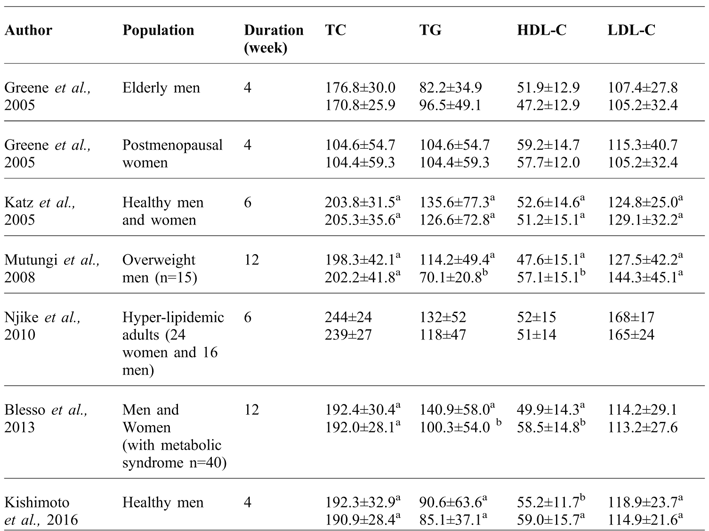
It is believed that the greater the HDL-C in the plasma is the lower the risk of CVD. Table 1 represents the effects of egg consumption on the levels of TC, TG, HDL-C and LDL-C in different populations. In the study conducted in overweight men consuming a carbohydrate-restricted diet, it was shown that egg intake increased plasma HDL cholesterol (Mutungi et al., Reference MUTUNGI, RATLIFF, PUGLISI, TORRES-GONZALEZ, VAISHNAV, LEITE, QUANN, VOLEK and FERNANDEZ2008). In the same study, it was shown that the levels of LDL-C in the plasma as well as the ratio of LDL-C: HDL-C did not change during the intervention (Mutungi et al., Reference MUTUNGI, RATLIFF, PUGLISI, TORRES-GONZALEZ, VAISHNAV, LEITE, QUANN, VOLEK and FERNANDEZ2008). Blesso et al. (Reference BLESSO, ANDERSEN, BARONA, VOLEK and FERNANDEZ2013) investigated that if daily egg intake, along with carbohydrate restriction would alter lipoprotein metabolism in men and women with metabolic syndrome. Egg consumption in those individuals improved the lipoprotein profiles and insulin sensitivity to a greater extent than the control (Blesso et al., Reference BLESSO, ANDERSEN, BARONA, VOLEK and FERNANDEZ2013). Individuals consuming eggs had a greater increase in the HDL-C levels and decrease in the total VLDL levels compared to the control (Blesso et al., Reference BLESSO, ANDERSEN, BARONA, VOLEK and FERNANDEZ2013). Statin treated hypercholesterolemic male patients consuming docosahexaenoic enriched eggs were shown to have greater levels of HDL-C, omega-3 fatty acids such as docosahexaenoic acid and eicosapentaenoic acids (Gillingham et al., Reference GILLINGHAM, LINDA CASTON, LEESON, HOURTOVENKO and HOLUB2005). Elderly people consuming three eggs per day were shown to have greater levels of LDL-C and HDL-C in the blood (Greene et al., Reference GREENE, ZERN, WOOD, SHRESTHA, AGGARWAL, SHARMAN, VOLEK and FERNANDEZ2005). In the same study, it was shown that consuming three eggs daily did not cause any change in the ratios of LDL-C:HDL-C or the TC:HDL-C, which is often associated with increased atherogenicity (Greene et al., Reference GREENE, ZERN, WOOD, SHRESTHA, AGGARWAL, SHARMAN, VOLEK and FERNANDEZ2005). Consuming one egg daily was reported not to cause any increase in the plasma LDL-C or HDL-C in the subjects (Goodrow et al., Reference GOODROW, WILSON, HOUDE, VISHWANATHAN, SCOLLIN, HANDELMAN and NICOLOSI2006).
Changes in LDL-C, HDL-C, triglycerides, and total cholesterol levels.

TC: total cholesterol (mmol/l); LDL: low density lipoproteins (mmol/l); HDL: high density cholesterol (mmol/l); TG: triglycerides (mmol/l)
Previously, the Framingham Heart Study examined the serum cholesterol in high versus low egg consumption and found no significant difference in either men or women (Dawber et al., Reference DAWBER, NICKERSON, BRAND and POOL1982). The Nurses Health Study (80,082 women) and the Health Professionals Follow Up Study (37,851 men) showed no association between egg intake (one per day) and risk of CVD (Hu et al., Reference HU, STAMPFER, RIMM, MANSON, ASCHERIO, COLDITZ, ROSNER, SPIEGELMAN, SPEIZER, SACKS, HENNEKENS and WILLETT1999). The association among egg consumption, serum total cholesterol and CVD was studied in a Japan Public Health Centre-based prospective study (Nakamura et al., Reference NAKAMURA, OKAMURA, TAMAKI, KADOWAKI, HAYAKAWA, KITA, OKAYAMA and UESHIMA2004). In that study a total of 90 735 subjects (19856 men and 21408 women, aged 40-59 years in cohort I; 23463 men and 26008 women, aged 40-69 years in cohort II) were followed from 1990-1994 to the end of 2001 and it was concluded that eating eggs every day was not associated with the increase in CVD incidence for middle-aged men and women (Nakamura et al., Reference NAKAMURA, OKAMURA, TAMAKI, KADOWAKI, HAYAKAWA, KITA, OKAYAMA and UESHIMA2004).
Recently, in a meta-analysis, it was concluded that the egg consumption was not associated with the risk of CVD or cardiac mortality (Shin et al., Reference SHIN, XUN, NAKAMURA and HE2013). Similarly, in a dose-response meta-analysis of prospective cohort study, egg consumption and the risk of CVD and stroke were analysed (Ying et al., Reference YING, LI, TINGTING and YADONG2013) and concluded that daily consumption of the eggs was not associated with the increased risk of CVD or stroke (Ying et al., Reference YING, LI, TINGTING and YADONG2013). The most recent study similarly showed that consuming one egg per day for four weeks at breakfast did not influence serum lipids such as TC, TG, and LDL-C in the health individuals (Kishimoto et al., Reference KISHIMOTO, TAGUCHI, SUZUKI-SUGIHARA, SAITA, USUDA, WANG, MASUDA and KONDO2016). They reported that individuals consuming eggs for four weeks had a significantly greater plasma HDL-C levels compared to the negative controls (Kishimoto et al., Reference KISHIMOTO, TAGUCHI, SUZUKI-SUGIHARA, SAITA, USUDA, WANG, MASUDA and KONDO2016). In a study conducted in moderately hypercholesterolemic male individuals, it was shown that intake of one egg daily for four weeks did not have any effect on serum TC or LDL-C (Kishimoto et al., Reference KISHIMOTO, TAGUCHI, SAITA, SUZUKI-SUGIHARA, NISHIYAMA, WANG, MASUDA and KONDO2017). It was also shown that dietary egg intake significantly increased serum lutein plus zeaxanthin content in hypercholesterolemic individuals and lowered oxidised LDL-C (Kishimoto et al., Reference KISHIMOTO, TAGUCHI, SAITA, SUZUKI-SUGIHARA, NISHIYAMA, WANG, MASUDA and KONDO2017).
It was recently shown that intake of one egg per day was sufficient to increase HDL function and large LDL-C particle concentration (DiMarco et al., Reference DIMARCO, NORRIS, MILLAR, BLESSO and FERNANDEZ2017). DiMarco et al. (Reference DIMARCO, NORRIS, MILLAR, BLESSO and FERNANDEZ2017) concluded that intake of three eggs daily favoured less atherogenic LDL particle profile, improved HDL function and increased plasma antioxidants in young and healthy individuals (DiMarco et al., Reference DIMARCO, NORRIS, MILLAR, BLESSO and FERNANDEZ2017).
In some studies, paradoxically, people eating fewer eggs were shown to have greater levels of blood cholesterol than those eating more eggs. In the Third National Health and Nutrition Survey (NHANES III) 20,000 people participated were evaluated and it was found that individuals eating less than one egg per week had a higher cholesterol than those consuming more than four eggs per week (Song and Kerver, Reference SONG and KERVER2000). Interestingly, daily consumption of additional three eggs to the regular diet increased the level of HDL-cholesterol and decreased the ratio of LDL-cholesterol to HDL-cholesterol in the hyperlipidemic subjects treated with lipid-lowering drugs (Klangjareonchai et al., Reference KLANGJAREONCHAI, PUTADECHAKUM, SRITARA and ROONGPISUTHIPONG2012). A recent study in Eastern Finland was conducted to investigate the associations of intakes of cholesterol and eggs with carotid intima-media thickness and the risk of incident coronary artery disease (CAD) in middle-aged and older men (Virtanen et al., Reference VIRTANEN, MURSU, VIRTANEN, FOGELHOLM, SALONEN, KOSKINEN, VOUTILAINEN and TUOMAINEN2016) and reported that egg intake was not associated with the increased CAD risk, even in the highly susceptible individuals (i.e., ApoE4 carriers). An earlier study showed that a small but significant increase in total cholesterol was seen after four weeks in the group eating seven eggs a week compared with that in the group eating two eggs a week, but this was no longer apparent after eight weeks (Edington et al., Reference EDINGTON, GEEKIE, CARTER, BENFIELD, FISHER, BALL and MANN1987).
Conclusions
Eggs are relatively inexpensive as a food and provide an excellent source of amino acids, fatty acids, vitamins, and minerals. Since 1972, poultry scientists have been seeking ways to decrease egg cholesterol concentrations, because of recommendations to limit egg consumption by the public. However, efforts to modify egg cholesterol contents have demonstrated that it is extremely difficult to decrease egg cholesterol by ordinary means. During the past decades, research efforts directed toward decreasing shell egg cholesterol content have centred on genetic selection or alteration of the diet of laying hens with various nutrients, natural products, non-nutritive factors, or pharmacological agents (Elkin, Reference ELKIN2007). As reviewed in the present article, there is no clear evidence relating to the egg consumption, LDL-C and CVD risk. The latest nutrition recommendations by the AHA do not limit the number of eggs consumed as long as one's total dietary cholesterol is limited to no more than 300 mg per day. However, health professionals still advice limiting egg consumption. This recommendation negatively influences per capita egg consumption. It is estimated that the number of elderly people (>60 years old of age) in the worldwide will be reached one billion by the year 2020 (Herron and Fernandez, Reference HERRON and FERNANDEZ2004). Therefore, elderly people who limited the egg intake will be more susceptible to the certain diseases such as cancer, dementia, bone problems, and AMD. AMD was reported to influence 5% of the people at age 65 and older (Goodrow et al., Reference GOODROW, WILSON, HOUDE, VISHWANATHAN, SCOLLIN, HANDELMAN and NICOLOSI2006). Egg nutrition is also important and positively influences the growth of children. Children not consuming sufficient nutrients will be influenced negatively. Author believes that dietary cholesterol is not the cause of CVD. Therefore, extensive clinical controlled studies should be conducted to demonstrate if there is a relationship between egg intake and risk for CVD.