Dialectical Behaviour Therapy: From Past to Present
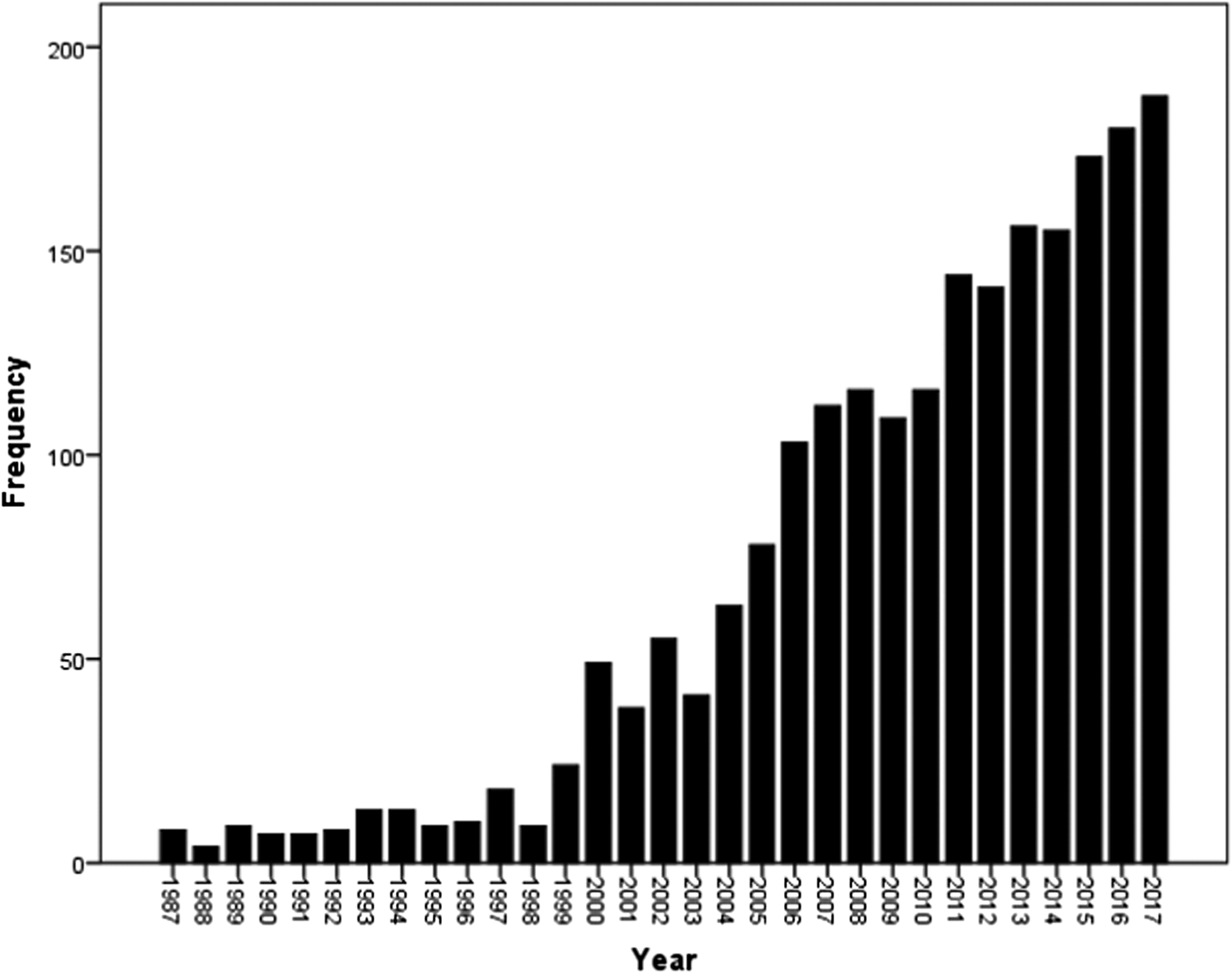
Since the advent of the seminal Linehan (Reference Linehan1987) paper introducing dialectical behavioural therapy (DBT) as a potential treatment strategy for borderline personality disorder (BPD), there have been high expectations and increasing research interest regarding its treatment efficacy. A PsycINFO search of all publications containing the term dialectical behavioural therapy over the past 30 years has revealed an exponential rise in publication output, principally within the last 15 years (see Figure 1). Kliem, Kröger, and Kosfelder (Reference Kliem, Kröger and Kosfelder2010) state that DBT has become one of the most frequently investigated psychological treatments for BPD. This level of research interest is unsurprising, given that individuals with BPD have a suicide rate 50 times greater than that encountered in the general population (Substance Abuse and Mental Health Services Administration [SAMHSA], 2012), and previous attempts to treat the disorder were often unsuccessful (Tucker, Bauer, Wagner, Harlam, & Sher, Reference Tucker, Bauer, Wagner, Harlam and Sher1987).
Frequency of Publications containing the term ‘Dialectic* AND Behavio?r* AND Therapy’ or DBT from 1987 to December, 2017 on PsycINFO.

Development and Background of DBT
DBT was initially developed as a cognitive-behavioural treatment to target symptoms of severe emotion dysregulation commonly experienced by those diagnosed with BPD (Linehan, Reference Linehan1993). BPD has been conceptualised by the American Psychiatric Association (APA, 2013) as a condition of pervasive emotion dysregulation that subsequently affects everyday functioning. Individuals who present with this disorder often experience significant difficulty forming interpersonal relationships, which are often highly unstable; they have difficulty establishing a sense of self, in addition to engaging in highly impulsive behaviours with adverse consequences. Often, such individuals present with chronic suicidal or self-harming behaviour. These features generally arise during early adolescence and persist into adulthood across multiple contexts (Biskin, Reference Biskin2015).
According to Linehan's (Reference Linehan1993) biosocial model, it is believed that such pervasive emotional dysregulation evolves via an interaction between the individual's biology and their social environment, beginning in childhood. Often such individuals present with high emotional sensitivity and intensity in that an emotional response is more likely to be provoked in a given situation at a more extreme level, and subsequently lasts longer as the individual experiences a slow return to their original emotional baseline. There is some preliminary but inconclusive neuroimaging evidence to support these claims (see van Zutphen, Siep, Jacob, Gobel, & Arntz, Reference van Zutphen, Siep, Jacob, Goebel and Arntz2015, for a review). Furthermore, such individuals often have difficulty modulating their responses to aversive emotional states, often engaging in chronic inhibition, and have difficulty shifting and controlling their attention in the presence of aversive emotional stimuli (Marissen, Meulemen, & Franken, Reference Marissen, Meuleman and Franken2010; Posner et al., Reference Posner, Rothbart, Vizueta, Levy, Evans, Thomas and Clarkin2002).
Linehan (Reference Linehan1993) purports that not all individuals with an emotionally sensitive temperament develop BPD. Rather, this development is dependent on the fit between the individuals’ temperament and the social environment in which they are raised (including the influence of caregivers, siblings, peers, or their school environment). For example, if an individual's emotional sensitivity is consistently met with invalidating, erratic or punishing responses, it is more likely that they will develop patterns of pervasive emotional dysregulation, as they do not have the opportunity to learn requisite means of coping with and understanding their emotional experiences. Furthermore, Linehan states that such individuals may develop a mistrust of their emotional experiences, in addition to having to escalate their emotional responses to an extreme level to get their needs met. It is then that the transaction between the individual's emotional response and their invalidating social environment creates a vicious cycle where pervasive emotional dysregulation becomes ingrained.
Indeed, although Linehan (Reference Linehan1993) noted that many existing cognitive-behavioural approaches focus on changing behaviour, focusing solely on change without acceptance may work to reinforce the invalidating social environment in which the individual ordinarily operates. DBT thus attempts to address features of emotional dysregulation using an integrated, synthesised approach primarily focused on validating one's experience of the self, others and the world using Zen principles and a practice that emphasises acceptance. At the same time, DBT attempts to extinguish problem behaviours and reinforce adaptive responses to emotional states using existing cognitive-behavioural approaches that emphasise problem solving (Robins & Chapman, Reference Robins and Chapman2004).
Inherently, the goal of DBT is to create a life that the individual perceives as worth living. Treatment is often delivered across different stages reflecting the diverse treatment targets involved to achieve this aim. Stage 1 of treatment targets life-threatening behaviours such as suicidal or para-suicidal behaviours, where the principal goal is to extinguish these behaviours. Stage 2 of treatment involves exposing the individual to their emotional states to experience and respond to these in an adaptive way, while also addressing therapy interfering behaviours (e.g., attending and participating in all treatment sessions). Stage 3 of treatment involves focus on decreasing quality-of-life interfering behaviours (e.g., substance use or other risk-taking behaviours) and increasing general happiness, self-esteem, and the quality of one's relationships. Finally, Stage 4 of treatment focuses on building connection with the self, others and life, in addition to increasing opportunities for joy and finding meaning. During this last stage, focus moves to achieving mastery of skill use and greater autonomy is taken by the individual within the treatment process.
Treatment is typically delivered using a multimodal format on an outpatient basis, including group skills training, individual treatment, telephone coaching between sessions, and ongoing therapist consultation meetings. The multimodal format assists to achieve the four key functions of DBT, including: (a) assisting the individual to develop new skills to help regulate their emotions; (b) addressing obstacles to engaging in skill use; (c) emphasising skill generalisation to everyday settings; and (d) reducing therapist burnout (Robins & Chapman, Reference Robins and Chapman2004). Skills are taught according to four modules: (1) core mindfulness skills to assist individuals to become more attuned to their lived experiences in an authentic, non-judgmental way; (2) emotion regulation skills to identify and modulate emotional states in an adaptive way; (3) distress tolerance skills to identify crisis situations and modulate emotional states so as not to make the situation worse (e.g., by using impulsive behaviour); and (4) interpersonal effectiveness skills to help the individual foster interpersonal relationships and respond to demands and conflicts assertively (Valentine, Bankoff, Poulin, Reidler, & Pantalone, Reference Valentine, Bankoff, Poulin, Reidler and Pantalone2015). Originally, DBT was developed to be delivered across 12 months, with the first 6 months focusing on skill acquisition, and the later 6 months focusing on skill generalisation (Linehan, Reference Linehan2015).
State of the Current Research
Given the growing body of literature within DBT research, several meta-analyses have been conducted over the past 10 years investigating the effectiveness of this approach. Findings to date demonstrate that the majority of research has focused on examining the effectiveness of DBT on Stage 1 treatment targets (reducing life-threatening behaviour), with limited research examining further treatment targets. Kliem et al. (Reference Kliem, Kröger and Kosfelder2010) investigated the effectiveness of DBT for BPD for suicidal behaviour and self-harm and found a moderate effect size for DBT treatment as compared with treatment as usual (TAU; e.g., community therapy by experts). However, this effect was reduced when compared with more BPD-specific treatments (e.g., transference-focused psychotherapy), and the effect of DBT compared with TAU decreased at follow-up (up to 12 months). Panos, Jackson, Hasan, and Panos (Reference Panos, Jackson, Hasan and Panos2014) similarly found a global effect of DBT across trials in reducing suicide risk (pooled OR = .31) and parasuicidal behaviour (pooled Hedges’ g = −.62) compared with TAU. However, although DBT was also demonstrated to have lower attrition throughout treatment as compared with TAU, DBT was similarly effective relative to TAU in reducing symptoms of depression. More recently, Cristea et al. (Reference Cristea, Gentili, Cotet, Palomba, Barbui and Cuijpers2017) concluded psychotherapies such as DBT for BPD were generally effective in the short term, and DeCou, Comtois, and Landes (Reference DeCou, Comtois and Landes2018) demonstrated evidence for the efficacy of DBT in targeting suicidal and self-harm behaviours relative to TAU (e.g., waitlist control or psychotherapy/case management). However, this effect did not hold for suicidal ideation. Thus, it can be concluded that while DBT appears to be primarily efficacious for suicidal behaviour and self-harm, principally in the short term, this is influenced by the comparison group.
Research has also started to examine whether modifications to Linehan, Armstrong, Suarez, Allmon and Heard's (Reference Linehan, Armstrong, Suarez, Allmon and Heard1991) original protocol alters the effectiveness of treatment. Bloom, Woodward, Susmaras, and Pantalone (Reference Bloom, Woodward, Susmaras and Pantalone2012) concluded in their systematic review that DBT may be effective for use within inpatient settings; however, there is considerable variability as to how DBT interventions are implemented. In addition, a further, more recent systematic review conducted by Valentine et al. (Reference Valentine, Bankoff, Poulin, Reidler and Pantalone2015) provided preliminary evidence that skills training alone may be effective in treating symptoms of Axis I disorders (including major depressive disorder [MDD], attention-deficit hyperactivity disorder [ADHD] and binge-eating disorder [BED]). However, they were unable to make conclusions regarding the efficacy for DBT skills training alone in reducing suicidal or self-harming behaviours, given the high variability across the included studies and the several limitations in the research evidence reviewed. These limitations included a lack of standardisation with regard to delivery of content across studies, limited use of randomised controlled designs, lack of active treatment comparison groups, and limited follow-up periods.
The Current Review
Despite clinical consensus that DBT is considered a treatment for pervasive emotional dysregulation, and ER is perceived as a key mechanism of change (Rudge, Feigenbaum, & Fonagy, Reference Rudge, Feigenbaum and Fonagy2017), there has been little research literature examining the direct link between DBT and ER (Lynch, Chapman, Rosenthal, Kuo, & Linehan, Reference Lynch, Chapman, Rosenthal, Kuo and Linehan2006). This is unexpected, given there is increasing literature examining DBT in non-BPD populations who experience emotion dysregulation, such as bulimia nervosa (Safer, Telch, & Agras, Reference Safer, Telch and Agras2001), BED (Telch, Agras, & Linehan, Reference Telch, Agras and Linehan2001), substance use disorders (Dimeff & Linehan, Reference Dimeff and Linehan2008), and problem gambling (Christensen et al., Reference Christensen, Dowling, Jackson, Brown, Russo, Francis and Umemoto2013).
Furthermore, preliminary research has found that use of DBT skills acts as a mediator for change in treatment outcomes in BPD clients (Neacsiu, Rizvi, & Linehan, Reference Neacsiu, Rizvi and Linehan2010). Given that one of the primary purposes of DBT is to increase ER abilities to promote a life worth living, it is imperative that a more systematic investigation is conducted to examine whether DBT delivers on this outcome. In order to meet this timely objective, the current review attempted to qualitatively synthesise the existing research regarding the effectiveness of DBT in improving ER abilities. Given the heterogeneity in defining and understanding ER conceptually, the current focus examined ER as defined by the Difficulties in Emotion Regulation Scale (DERS; Gratz & Roemer, Reference Gratz and Roemer2004). Importantly, DERS scores are one of the most common outcome measures used to evaluate the effectiveness of DBT in improving emotion dysregulation. The DERS examines the following facets of ER: (a) emotional awareness and understanding; (b) emotional acceptance; (c) ability to enact impulse control and engage in desired goal-directed behaviour in the face of negative emotion; and (d) ability to adaptively employ appropriate ER strategies, depending on contextual or situational demands. It was hypothesised that overall, DBT would produce significant reductions in DERS scores relative to control treatments.
Method
Search Strategy and Screening
The following systematic review adheres to the Preferred Reporting Items for Systematic Reviews and Meta-Analyses (PRISMA) guidelines (Moher et al., Reference Moher, Shamseer, Clarke, Ghersi, Liberati, Petticrew and Stewart2015). Studies were identified using PsycINFO, PubMed, MEDLINE and EMBASE databases. Electronic searches of published literature were conducted up to April 2018. The following key terms were searched [dialectic* AND behaviour* AND therap* (OR DBT) AND (emotion*OR affect) AND (regulat* OR dysregulation)]. No date or language exclusions were applied. Searches were restricted to published literature and research performed with human participants. Additional manual searching of reference lists of past meta-analyses and systematic reviews, in addition to articles indexed on the Behavioural Tech (2017) website, was conducted.
Initially, the titles and abstracts identified from database and manual searches were merged, with duplicates removed. Titles and abstracts were subsequently screened according to the inclusion and exclusion criteria listed below. Screening was initially performed independently by two reviewers with good interrater agreement (κ = .75). Any disagreements were resolved by consensus. A third independent reviewer was consulted in cases where consensus could not be reached. Following this, full-text articles were retrieved and again screened independently by two reviewers according to the specified inclusion and exclusion criteria. Where articles were not published in English, the corresponding author of these papers was contacted, and an English version was requested. Articles were excluded if no response was obtained.
Selection Criteria
Given the broad conceptualisation of ER, lack of consensus regarding definition of the construct, and multiple measures examining overlapping constructs, the definition for the current review was adopted from the most widely used measure within the DBT literature, the Difficulties in Emotion Regulation Scale (DERS; Gratz & Roemer, Reference Gratz and Roemer2004). The current review thus included studies that adopted this measure to ensure consistency in measuring ER as a construct. Eligible studies were comprised of (1) controlled clinical trials (either randomised or non-randomised), (2) those published in peer-reviewed journals that (3) included a DBT-based intervention and (4) examined difficulties in ER using the DERS. There were no age restrictions on samples included.
Publications were excluded if (a) the treatment group was provided an intervention that was not based on a pure-DBT treatment (e.g., DBT and family therapy provided simultaneously) or (b) data collection was not finalised or still ongoing (e.g., study protocol).
Eligible Studies
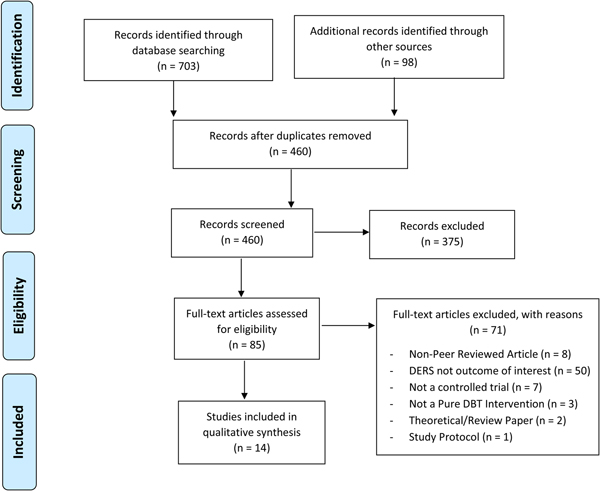
Initially, 703 citations were retrieved from databases. A further 98 citations were located from articles indexed on the Behavioural Tech (2017) website and from hand searching reference lists. Following removal of duplicates, 460 titles and abstracts were screened according to the specified inclusion and exclusion criteria. Eighty-five articles were identified as suitable for full-text review based on selection criteria once 100% agreement was reached between the two independent reviewers. Following full-text review, 14 articles were deemed eligible for inclusion. A flow chart of this process is reported in Figure 2. The more frequent reasons for exclusion included the absence of the DERS as an outcome measure, non-peer-reviewed article (e.g., conference proceedings or poster) or no comparison group identified within the study design.
PRISMA Flow Chart highlighting the search strategy and results for the current systematic review.

Data Extraction and Quality Assessment
The following data were extracted from the 14 articles meeting the inclusion criteria: (a) author, (b) year, (c) study location, (d) study design, (e) sample characteristics (sample size, gender, age and recruitment setting), (f) participant inclusion/exclusion criteria, (g) delivery and format of the DBT intervention, (h) intervention provided to the comparison group, and (i) points of assessment. Effect sizes were calculated by dividing the difference between group means by the pooled standard deviation (Cohen's d) where this information was available.
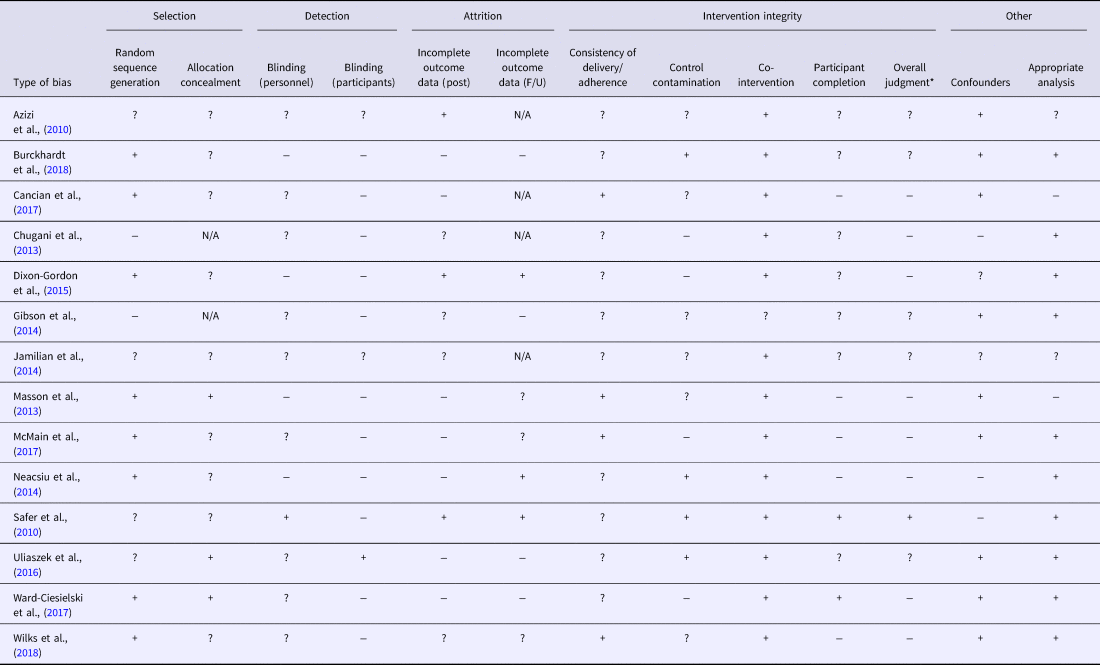
A risk of bias assessment was performed on the included studies according to items based on the Cochrane Risk of Bias Tool (Higgins & Green, Reference Higgins and Green2011). These included: selection bias (sequence generation, allocation concealment); performance bias (blinding of participants and study personnel); attrition bias, and relevant other sources of bias, namely management of confounders and whether appropriate analyses were used. Intervention integrity was also assessed to examine: risk of bias in outcomes due to inconsistency and non-adherence in treatment delivery, risk of contamination within the control condition, risk of another intervention being provided in addition to the specified DBT intervention, and risk of bias in outcomes due to participants not actually completing or engaging sufficiently within the interventions provided.
Results
Summary of Included Studies
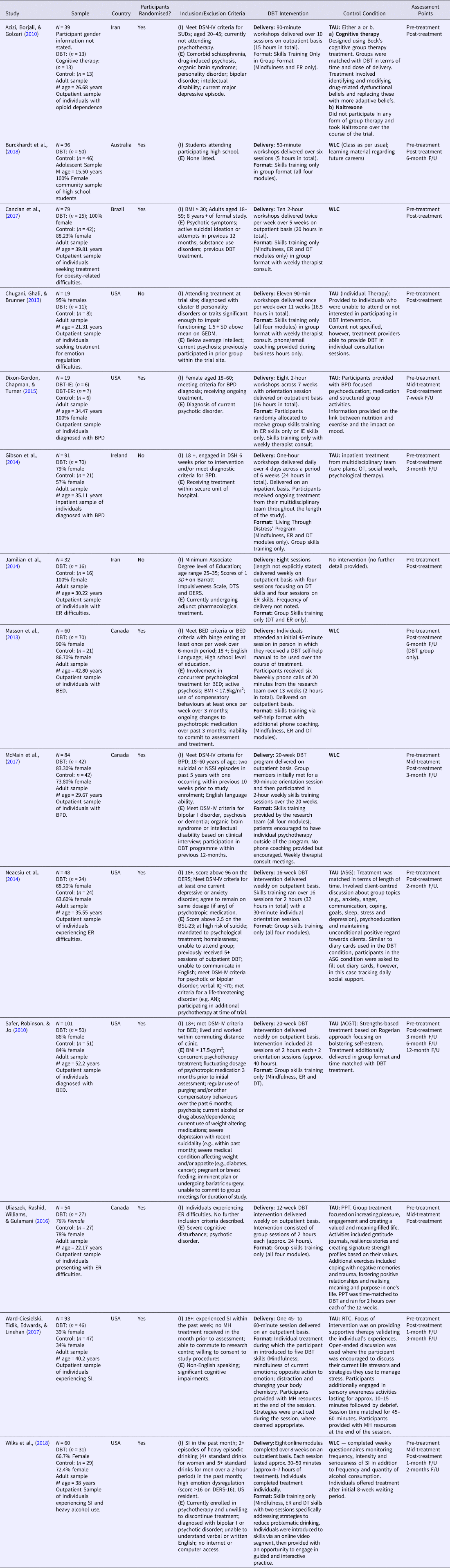
A summary of the included studies is provided in Table 1. A total of 875 participants were included and participants between the ages of 14 and 60 years were recruited. The mean age of participants across the 14 samples was 33.12 years. Sample size ranged from 19 to 101 (median = 60 participants). Three studies (Burckhardt et al., Reference Burckhardt, Manicavasagar, Shaw, Fogarty, Batterham, Dobinson and Karpin2018; Chugani, Ghali, & Brunner, Reference Chugani, Ghali and Brunner2013; Uliaszek, Rashid, Williams, & Gulamani, Reference Uliaszek, Rashid, Williams and Gulamani2016) examined ER outcomes in young people, whereas the remaining studies (k = 11; 78.57%) examined ER outcomes in adults. Three samples included female participants only.
Study Characteristics

Note: ACGT = active comparison group therapy; AN = anorexia nervosa; ASG = activities-based support group; BED = binge eating disorder; BMI = body mass index; BSL-23 = Borderline Symptoms List – 23; DSH = deliberate self-harm; DT = distress tolerance; DTS = Distress Tolerance Scale; ER = emotion regulation; F/U = follow-up; GEDM = General Emotion Dysregulation Measure; IE = interpersonal effectiveness; MH = Mental Health; NSSI = nonsuicidal self-injury; OT = Occupational Therapy; PPT = positive psychotherapy group; RTC = relaxation training control; SI = suicidal ideation; SUD = substance use disorder; TAU = treatment as usual; WLC = waitlist control.
Studies included individuals undergoing treatment for general ER difficulties (k = 4), BPD (k = 3) or obesity or binge-eating related difficulties (k = 3). A further study recruited individuals seeking treatment for suicidal ideation (Ward-Ciesielski, Tidik, Edwards, & Linehan, Reference Ward-Ciesielski, Tidik, Edwards and Linehan2017), and another looked at a sample with suicidal ideation and comorbid heavy alcohol use (Wilks et al., Reference Wilks, Lungu, Ang, Matsumiya, Yin and Linehan2018). One study examined a sample seeking treatment for opioid dependence (Azizi, Borjali, & Golzari, Reference Azizi, Borjali and Golzari2010), with a final study investigating a DBT intervention in non-treatment-seeking adolescents (Burckhardt et al., Reference Burckhardt, Manicavasagar, Shaw, Fogarty, Batterham, Dobinson and Karpin2018). Most studies examined DBT interventions delivered in an outpatient setting (k = 12; 85.71%). One study was delivered in an inpatient setting (Gibson, Booth Davenport Keogh, & Owens, Reference Gibson, Booth, Davenport, Keogh and Owens2014) and another in a high school setting (Burkhardt et al., Reference Burckhardt, Manicavasagar, Shaw, Fogarty, Batterham, Dobinson and Karpin2018). Studies were primarily conducted in North America (United States and Canada; k = 9; 64.29%) between 2010 and 2018.
Study Designs and Treatment Conditions
Most of the studies (k = 11; 78.57%) were conducted using a randomised controlled trial design. Three studies were non-randomised controlled trials. Four studies (28.57%) were described as pilot or feasibility studies. Five studies (35.71%) used a waitlist control design (WLC) whereas eight studies (57.14%) used a TAU design. One study did not report on the type of comparison group and stated that no intervention was provided to this group (Jamilian et al., Reference Jamilian, Malekirad, Farhadi, Habibi and Zamani2014). There was variability in the treatments delivered in TAU conditions. Of the eight studies that employed a TAU comparison condition, three studies delivered various forms of supportive psychotherapy (Neacsiu, Eberle, Kramer, Wiesmann, & Linehan, Reference Neacsiu, Eberle, Kramer, Wiesmann and Linehan2014; Safer, Robinson, & Jo, Reference Safer, Robinson and Jo2010; Ward-Ciesielski et al., Reference Ward-Ciesielski, Tidik, Edwards and Linehan2017); one study delivered a positive psychology intervention (Uliaszek et al., Reference Uliaszek, Rashid, Williams and Gulamani2016); one study delivered psychoeducation within a group setting in addition to medication (Dixon-Gordon, Chapman, & Turner, Reference Dixon-Gordon, Chapman and Turner2015); one study provided inpatient treatment as usual by a multidisciplinary team comprising of both pharmacological treatment in addition to psychoeducation groups in addition to individual treatment delivered by either an occupational therapist, social worker or psychologist (Gibson et al., Reference Gibson, Booth, Davenport, Keogh and Owens2014). Another study (Chugani et al., Reference Chugani, Ghali and Brunner2013) provided individual psychotherapy but did not specify what this entailed; and lastly, Azizi et al., (Reference Azizi, Borjali and Golzari2010) involved two separate forms of TAU: either cognitive therapy or medication (naltrexone).
As for the specific DBT interventions, none of the included studies implemented a standard DBT treatment protocol (including ongoing individual psychotherapy, phone coaching and DBT therapist consultation in addition to the group skills-training component) as part of their treatment program. Most treatments incorporated a face-to-face group skills-training component alone (k = 12; 85.71%), with two studies providing individual skills training only either via a guided self-help format (DBT-gsh; Masson, von Ranson, Wallace, & Safer, Reference Masson, von Ranson, Wallace and Safer2013) or an online intervention (iDBT; Wilks et al., Reference Wilks, Lungu, Ang, Matsumiya, Yin and Linehan2018). Only five studies (35.71%) delivered all four modules as part of the group skills training. Six studies (42.85%) delivered content from three out of the four modules; namely, the mindfulness, emotion regulation, and distress tolerance modules. One study (Jamilian, Malekirad, Farhadi, Habibi, & Zamani, Reference Jamilian, Malekirad, Farhadi, Habibi and Zamani2014) only provided content from emotion regulation and distress tolerance modules, and Azizi et al. (Reference Azizi, Borjali and Golzari2010) provided content from the mindfulness and emotion regulation modules. One other study provided either emotion regulation content or interpersonal effectiveness content depending on which condition participants were randomly allocated (Dixon-Gordon et al., Reference Dixon-Gordon, Chapman and Turner2015).
There was high variability in the duration of DBT interventions provided, ranging from a single intervention session to sessions delivered over 20 weeks. The number of sessions delivered across the 14 studies ranged from 1 to 24 (median = 10), with session length ranging from 20 minutes to 2 hours. Nine studies (64.29%) included a follow-up period for evaluation of outcomes. The length of this follow-up varied across studies from 7 weeks post-intervention to 12 months post-intervention.
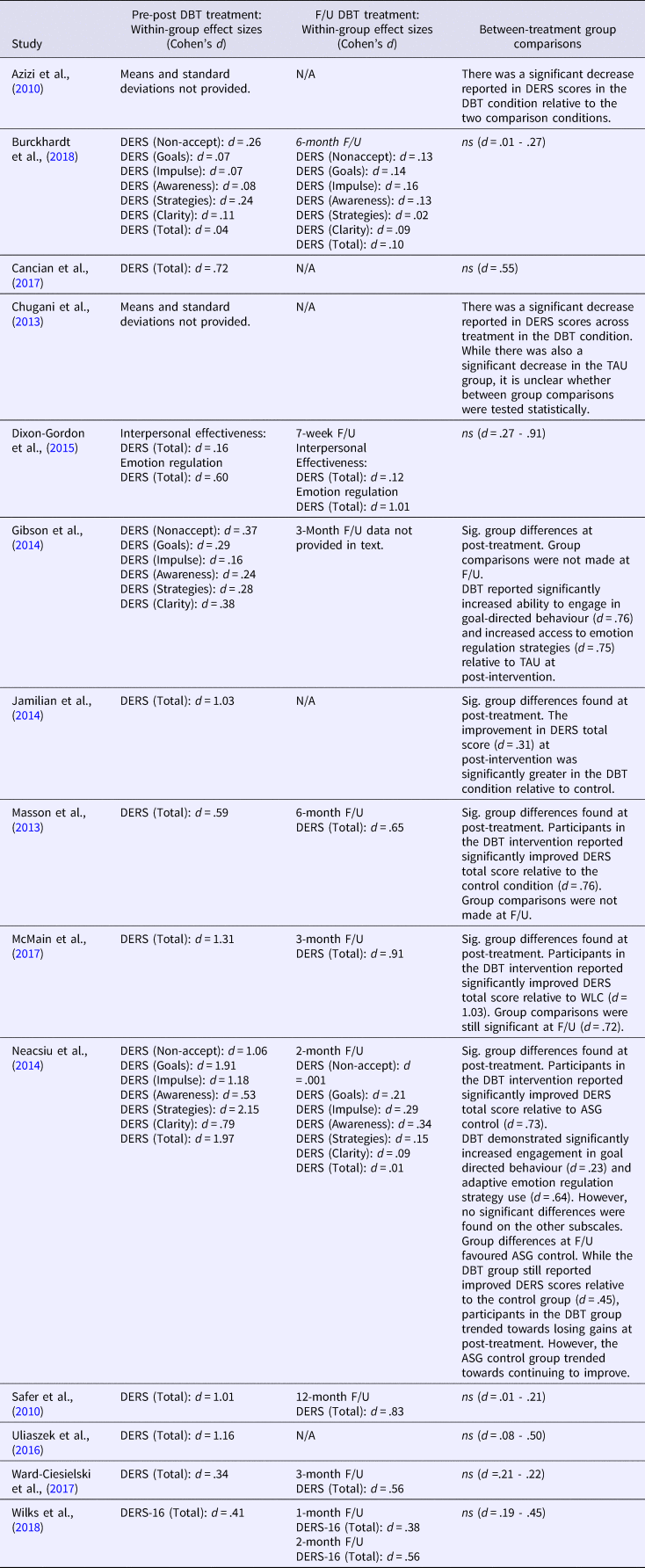
Synthesis of Findings on ER (see Table 2)
Pre- to post-treatment effects
Six studies (42.86%) reported significant between-group improvements in ER favouring DBT on the DERS immediately at post-treatment. Effect sizes in the 12 studies where this information was available to be calculated ranged from d = .31–1.03, indicating small to large between-group effects. While one study (Chugani et al., Reference Chugani, Ghali and Brunner2013) reported a significant decrease in DERS scores within the DBT condition, it is unclear as to whether there was a significantly greater change over time when compared with the control condition. Overall, within-group effect sizes when examining the effectiveness of the DBT intervention ranged from d = .04 to 1.16 (trivial to large), indicating high variability in ER outcomes.
Study Outcomes at Post-Treatment and Follow-Up on Emotion Regulation as a Function of DBT Treatment

Though the majority of studies reported on the DERS total score, three studies explored discrepancies across subscales. Two studies demonstrated significant results. Gibson et al. (Reference Gibson, Booth, Davenport, Keogh and Owens2014) found that DBT skills training specifically resulted in significantly increased ability to engage in goal-directed behaviour and significantly increased access to ER strategies. Neacsiu et al. (Reference Neacsiu, Eberle, Kramer, Wiesmann and Linehan2014) demonstrated that DBT skills training similarly improved access to a wide range of ER strategies and additionally demonstrated significantly greater emotional awareness and clarity among those participating in the DBT skills training intervention compared with TAU.
Pretreatment to follow-up effects
Of the nine studies that included follow-up of outcomes, seven studies reported on these outcomes. Of these, only one study reported significant between-group differences at follow-up (3-months), with an effect size of d = .91. Overall, within-group effect sizes for DBT treatment on DERS scores ranged from d = .02 to 1.01 (trivial to large), again indicating high variability in outcomes. One study (Neacsiu et al., Reference Neacsiu, Eberle, Kramer, Wiesmann and Linehan2014), which reported significant between-group effects at post-treatment, demonstrated that although participants in the DBT condition improved at a significantly faster rate initially on the DERS total score relative to TAU at post-treatment, across follow-up the difference in this rate of improvement between conditions was no longer significant.
Active treatment versus waitlist control
Of the studies that employed a WLC design, two out of the five demonstrated significant between-group comparisons (40%). Overall, effect sizes for WLC designed studies examining DBT versus WLC on DERS outcome scores ranged from d = .01 to 1.03. Of the studies that employed a TAU design, three out of the eight (37.5%) demonstrated significant between-group comparisons. Effect sizes ranged from d = .01 to .76.
Treatment effects for specific samples
Of the three studies that investigated the effectiveness of DBT on DERS in a BPD sample, two out of the three studies demonstrated significant between-group comparisons. Overall, within-group effect sizes of DBT on DERS for BPD samples ranged from d = .16 to 1.31. Two out of four studies demonstrated significant between-group differences when examining samples with general ER difficulties (within-group effect sizes ranging from d = 1.03 to 1.16 in the 12 studies where available to be calculated). One out of three studies demonstrated significant between-group differences when examining samples with obesity or binge-eating related difficulties (effect sizes d = .59 to 1.01).
Assessment of Risk of Bias (see Table 3)
Overall, the risk of bias across the 14 studies was high, as evidenced by the proportion of information indicating unclear or high risk of bias. Although the 11 RCTs often used a random allocation sequence generation, clear statements about whether allocation was concealed was missing in 10 studies. Furthermore, within the majority of studies (k = 11), participants and personnel were not blinded to treatment condition, or it was not clear whether a blinding process had been undertaken, allowing for potential biases in attributional effects of the treatment. There was varied attrition across the studies, with eight studies reporting significant attrition (20–60%), principally in the control conditions. Although most studies attempted to control for confounders and conducted appropriate analyses (e.g., intention-to-treat analyses, imputation of missing values using the expectation-maximisation [EM] method), in other studies (k = 2) this was unclear or inappropriate analyses were used, such as using the last observation carried forward method, whereby follow-up missing data is imputed using the participant's previous observed score (Lachin, Reference Lachin2016). Furthermore, risk of bias was increased in one study (Chugani et al., Reference Chugani, Ghali and Brunner2013), which used a comparison group comprised of people unavailable or unwilling to attend the intervention.
Risk of Bias Assessment Using Cochrane Handbook for Systematic Reviews of Interventions (Higgins & Green, 2011)

Note: + = low risk of bias; - = high risk of bias; ? = unclear risk of bias (i.e., insufficient information available to determine risk of bias) ; N/A = not applicable. *For intervention integrity, an overall rating of high was given if at least one high rating (-) was recorded for the four components. A lower risk of bias was given if a study was deemed to have met at least three of the intervention integrity criteria (+). An overall rating of unclear (?) was given if at least two components were rated as unclear.
As for intervention integrity, the majority of the DBT interventions (92.86%) were adapted from the DBT Skills Training Manual (Linehan, Reference Linehan1993, Reference Linehan2015). However, there was little examination of whether DBT interventions were delivered in a consistent manner and whether facilitators adhered to the treatment manual. This was unclear across ten studies. Furthermore, four studies reported control conditions where there was risk of overlap between content taught across both DBT and control conditions. In addition, across seven studies, it was unclear as to whether the majority of participants (i.e., above 80%) completed the majority of sessions delivered (i.e., above 80%). Across studies that did report information about completions, five out of seven studies indicated that the majority of participants did not receive the full dose of treatment.
Discussion
The last 30 years have seen increasing interest in the implementation of DBT interventions in research and community settings to treat pervasive emotion dysregulation (Feigenbaum et al., Reference Feigenbaum, Fonagy, Pilling, Jones, Wildgoose and Bebbington2012; Prendergast & McCausland, Reference Prendergast and McCausland2007; Zalewski, Lewis, & Martin, Reference Zalewski, Lewis and Martin2018). While there has been increasing cause for optimism with the treatment of suicidal behaviours and self-harm, there has been little exploration in the literature of further outcomes, such as reduced difficulties in ER. The current review systematically reviewed the current literature to address this empirical gap. The review identified 14 studies that provided inconclusive evidence regarding the effectiveness of DBT in treating ER difficulties, relative to treatment as usual or waitlist control designs.
Additionally, the literature examining this research question is hampered by several methodological limitations that hinder the reliability of studies and their outcomes; namely, underpowered studies with significant attrition rates (up to 60%), lack of blinding, and limited ability to replicate studies with high variability regarding comparison group and the nature of the DBT intervention delivered.
Interpretation of Outcomes
The large variability in treatment effects of DBT in improving ER is indicative of the high variability in study design and methodologies analysed in this review. These ranged from examining the effectiveness of treatment in inpatient settings with individuals diagnosed with BPD to non-treatment-seeking individuals attending high school. Indeed, when DBT was examined in treatment-seeking populations, effect sizes ranged from small to large; however, when examined in a non-treatment-seeking high school group, effect sizes were trivial. Thus, there appears to be disparity across treatment contexts. Furthermore, many studies were underpowered to detect effects given the significant attrition rates, with four studies listed as pilot or feasibility studies.
In addition, it is difficult to make any firm conclusions about the effectiveness of DBT in reducing ER difficulties, as there was high variability in the interventions delivered. No study in this review delivered the full standard protocol as specified by Linehan (Reference Linehan1993, Reference Linehan2015), with most studies solely delivering the skills training component. Furthermore, the content of skills training varied across studies. Currently, there is no ‘best practice’ protocol for delivering DBT treatment to address emotional regulation, with limited replication across interventions. The lack of a ‘best practice’ protocol hinders the conclusions that can be made about DBT skills-training interventions, as it remains unclear what the necessary and sufficient components are that can effectively improve ER abilities. Future research should focus on attempting to understand the critical components of DBT skills training through the conduct of studies with replicable interventions. This will assist to develop consensus in the literature as to the optimal and critical components of DBT skills training to target ER ability.
In the current systematic review, many comparison groups consisted of waitlist designs that may overinflate the relative efficacy of DBT intervention. One study reported that the control group was simply provided with no intervention and no further detail was specified. Where other studies used TAU designs, the comparison group was often not described in detail, and across three studies, it was not explicit as to whether the comparison treatment was delivered in a manualised format. Furthermore, across some studies it is likely that the content was not distinct enough from that offered as part of the DBT intervention, potentially resulting in contamination across conditions. For example, one study (Dixon-Gordon et al., Reference Dixon-Gordon, Chapman and Turner2015) used a psychoeducation group as a comparison, where the content involved understanding the link between nutrition and exercise and the impact of mood, a skill that is covered throughout DBT in the Emotion Regulation module. Another study (Ward-Ciesielski et al., Reference Ward-Ciesielski, Tidik, Edwards and Linehan2017) used a relaxation training control where participants were encouraged to engage in a sensory awareness exercise, which may overlap with the content of the DBT Distress Tolerance and Mindfulness modules.
From the studies reviewed, it is additionally unclear the extent to which individuals are engaging in the interventions themselves. No studies reviewed included diary card entries or homework practice in their analyses to understand a possible moderating effect on improvement of ER difficulties. Given the importance of mastery in skill development, studies will need to incorporate this data into their research designs to further understand the effectiveness of such intervention practices on enhancing ER abilities. The effectiveness of DBT may be underrated in the current review simply because individuals are not attending sessions and engaging in skills practice outside of session. Aside from Ward-Ciesielski et al., (Reference Ward-Ciesielski, Tidik, Edwards and Linehan2017), who administered one session, across the remaining interventions either the majority of participants did not receive the full dose of treatment or this information was not reported. Future research needs to focus on how to maximise engagement in treatment to ensure that the efficacy of DBT is not being underrepresented. This is especially important, as within research settings, individuals are often self-selected into research trials and may have more motivation to seek treatment than is seen in the general population. Indeed, Little, Tickle, and das Nair (Reference Little, Tickle and das Nair2018) report that increasing self-efficacy in skills use is a key component identified qualitatively by DBT participants as a determiner of change. Further research needs to investigate this more systematically to understand if increasing self- efficacy and mastery of skills use occurs over time in DBT which promotes increased ER ability.
The development of ER is a dynamic process that continuously develops across one's lifespan (Cole, Reference Cole2014). In order to examine the effect of DBT on improving ER ability, the short-term nature of the programs included in the current review (up to 24 sessions) may hinder our ability to understand the nature of this effect. It may be that the driving force of such programs is to initially increase knowledge of alternative ER strategies. Indeed, two studies that explored findings on this subscale on the DERS produced significant effects. However, improving non-acceptance of emotional responses, improving emotional awareness and clarity, and reducing impulse control difficulties in the face of intense emotions to engage in goal-directed behaviour may require mastery of skills use developed over the long term.
More research is thus needed with longer follow-up of outcomes. Only half of the studies in the current review reported follow-up of outcomes. Given the dynamic and complex nature of ER development, more research is needed to look at how this develops over time following DBT treatment. Indeed, Neacsiu et al. (Reference Neacsiu, Eberle, Kramer, Wiesmann and Linehan2014) found that while improvements in DERS occurred at a significantly faster rate throughout and immediately post-treatment in the DBT group relative to TAU, at follow-up, the rate of change in the TAU group continued to increase, whereas changes in DERS outcomes across the DBT group appeared to stabilise. The authors note that this may relate to the significant level of coaching, monitoring and validation provided within the DBT intervention. However, once individuals complete their training, there may be a perceived lack of accountability for skills use. Further research is thus needed to understand trajectories of skills use over time.
Limitations
A meta-analysis was not considered appropriate for this review given the limited number of studies and heterogeneity observed in the DBT interventions delivered. The current systematic review is limited to published literature, and thus there may have been further studies eligible for inclusion that have not been considered. Nevertheless, this was done to increase quality of the studies included in the review. Furthermore, given the lack of consistency in operationalisation of ER as a construct, the studies included were limited to those examining difficulties in ER ability as operationalised by the DERS (Gratz & Roemer, Reference Gratz and Roemer2004).The DERS was chosen as it purports to map onto key processes involved in ER such as emotional awareness and clarity, emotional acceptance, and the ability to engage in goal-directed and avoid impulsive behaviour in the face of aversive emotional state via access to ER strategies perceived as being adaptive within the specified context, as opposed to mood regulation or coping with stress. The DERS is additionally one of the most common measures used within the DBT literature to examine efficacy of outcomes on difficulties regulating emotions. Indeed, the lack of a unified construct and measure is a further limitation within this field to assist in understanding of the effects of DBT on ER abilities (Koechlin, Coakley, Schechter, Werner, & Kossowsky, Reference Koechlin, Coakley, Schechter, Werner and Kossowsky2018). This may limit the conclusions made. Finally, the current review was limited to a self-report measure that may carry inherent biases, as participants report on their perceived ability to regulate emotions that may not accurately reflect their ability or may carry an expectancy effect following participation in treatment to help improve ER ability. As a consequence, it may be that such measures are capturing perceived self-efficacy as opposed to ER ability itself.
Conclusion
The current systematic review evaluated the empirical literature concerning the effectiveness of DBT interventions in reducing difficulties in ER ability, relative to existing psychological treatments. While there is some promise, at present, the literature is inconclusive as to the effectiveness of DBT in improving ER difficulties relative to existing psychological treatments. DBT appears to be a viable treatment option targeting emotion dysregulation; however, caution must be taken not to overstate claims at present regarding its effectiveness in targeting ER difficulties. Further studies are needed addressing the methodological limitations outlined in this review before such conclusions can be made.
Acknowledgments
We thank the following individuals for their assistance and comments in the review process: Ms. Rachel Maunder, Ms. Karina Grunewald Zola, Ms. Rebecca Crabb and Ms. Stephanie Allen.
Declarations of interest
The authors declare no potential conflicts of interests with respect to the research, authorship and/or publication of this article.
Role of funding
This research did not receive any specific grant from funding agencies in the public, commercial, or not-for-profit sectors.