




No CrossRef data available.
Article contents
In vitro effects of three woody plant and sainfoin extracts on 3rd-stage larvae and adult worms of three gastrointestinal nematodes
Published online by Cambridge University Press: 10 June 2004
Abstract
Most studies on the effects of tanniferous plants on nematodes have examined forages but have neglected the woody plants. Therefore, in vitro effects of extracts from 3 woody plants (Rubus fructicosus, Quercus robur, Corylus avellana) have been tested on trichostrongyles and compared to sainfoin, a legume forage. Because some in vivo results indicated that the effects of tannins differed depending on the parasitic species and/or stages, the effects were measured on 3rd-stage larvae (L3) and adult worms of Teladorsagia circumcincta, Haemonchus contortus and Trichostrongylus colubriformis. The effects of plant extracts varied according to the plant sources, the parasite species and stages. For the woody plants, significant inhibitory effects were obtained on both stages of abomasal species. Results for T. colubriformis were more variable. Effects of sainfoin extracts were significant on T. colubriformis and H. contortus L3, and on abomasal adult worms. In order to assess the implications of tannins, polyethylene glycol (PEG), an inhibitor of tannins, was added to hazel tree, oak and sainfoin extracts. Without PEG, significant inhibitory effects on L3 and adult worms were confirmed. After addition of PEG, the larval migration and motility of adult worms were restored in most cases. These results confirm variations in effects depending on factors related to plants or parasites and suggest that tannins are partly responsible for the effects.
Information
- Type
- Research Article
- Information
- Copyright
- © 2004 Cambridge University Press
INTRODUCTION
Gastrointestinal parasitism with nematodes remains a major threat to efficient production in small ruminants. Up to now, the control of these parasitic diseases has largely relied on the repeated use of anthelmintics. However, the prevalence of anthelmintic resistance in nematode populations is constantly increasing, especially in goats (Jackson & Coop, 2000). The prevalence of resistance in this last host species now severely impairs the control of trichostrongyloses. In addition, in lactating animals, the use of anti-parasitic chemical molecules is drastically restricted. These reasons, plus the increasing demand of consumers to limit the use of chemical substances in farm industry, explain the current research seeking alternative or complementary solutions to chemotherapy for the control of gastrointestinal parasitism. Amongst these solutions, the possibilities offered by tanniferous plants have been explored in several studies (Kahn & Diaz-Hernandez, 2000). The initial results have been obtained from field studies, showing that the consumption of tanniferous forages by parasitized sheep affected the egg output and the worm burdens (Niezen et al. 1998a,b, 2002). In addition, some in vivo assays in experimentally infected sheep, using quebracho extracts as a rich source of condensed tannins, tended to confirm the results obtained in natural infections (Athanasiadou et al. 2000a,b, 2001). Data in goats are scarce, but have tended to confirm the results reported in sheep (Paolini et al. 2003a,b,c; Min et al. 2003). In addition, in this host species, results from assays under controlled conditions suggested differences in effect of quebracho depending on nematode species and parasitic stages (Paolini et al. 2003a,c).
Major differences in metabolism, digestive physiology and immune response exist between the two small ruminant species. It is now recognized that results obtained in sheep should not be directly transposed to goats. One of the main differences between the two hosts is also related to their feeding behaviour. Goats are usually considered as natural browsers whereas sheep are grazers (Gordon, 2003). Consequently, it is usually acknowledged that goats are more tannin-tolerant than sheep and exhibit a better ability to exploit the vegetation of rangelands (Silanikove et al. 1996; Silanikove, 2000; Landau et al. 2000). Despite this adaptation, the vast majority of studies performed on the effects of condensed tannins on the gastrointestinal parasites, in goats as in sheep, were performed using tanniferous forages. Only two studies in goats showed that the consumption of woody plants composing the browse and containing tannins could significantly modulate nematode infections (Kabasa, Opuda-Asibo & Ter Meulen, 2000; Kahiya, Mukaratirwa & Thamsborg, 2003). Similarly, all the in vitro assessments of the effects of tanniferous plants on nematodes have been restricted to extracts from forages.
The objectives of the current study were therefore to screen the effects of woody plants consumed in rangelands by goats, on 3 of the most common species of nematodes: Teladorsagia circumcincta, Haemonchus contortus and Trichostrongylus colubriformis. In addition, the effect of one fodder crop, the sainfoin, was tested for comparison. Sainfoin was selected due to previous positive results acquired in infected goats (Paolin et al. 2003b). Because of the differences in results depending on the parasitic stages observed from in vivo controlled studies, this screening also aimed at comparing the actions of extracts on both 3rd-stage larvae and adult worms. Last, these in vitro tests also aimed at verifying a direct action of tannins from woody plants and sainfoin, as suggested previously in vivo with quebracho and in vitro with other legume forages (Athanasiadou et al. 2000a,b; Paolini et al. 2003a,c; Molan et al. 2000a,b).
MATERIALS AND METHODS
Experimental design
In vitro experiments were conducted to test the effects of tanniferous plants on the motility of the ensheated 3rd-stage larvae and on the motility of adult worms of the 3 most common nematodes in small ruminants: T. circumcincta, H. contortus and T. colubriformis. The different plants which were tested could be divided into two groups: a forage legume, sainfoin (Onobrychis vicifolia), and 3 woody plants composed of brambles (Rubus fructicosus), oak (Quercus robur) and hazel tree (Corylus avellana). Lucerne (Medicago sativa) and rye-grass (Lolium perenne) were used as controls because of their low percentages of tannins (Niezen et al. 2002; Molle et al. 2003).
Preparation of plant extracts
The plants were collected in the fields in the southern part of France at the end of spring. For sainfoin, lucerne, rye-grass and brambles, the stems and leaves were collected. For oak and hazel tree, the samples were limited to the leaves. Five grams of each plant sample were reduced to powder by crushing and extracted by 100 ml of water at 90 °C for 2 h. The filtrate was concentrated under low pressure at low temperature (40 °C), frozen and lyophilized for 24 h to obtain a grounded dry sample (in powder). Plant extract solutions applied to 3rd-stage larvae and adult worms were prepared as follows. The powders were dissolved in phosphate-buffered saline (PBS; 0·1 M phosphate, 0·05 M NaCl; pH 7·2) and serially diluted immediately prior to incubation. The range of dilutions which were examined were 300, 600 and 1200 μg/ml for the bioassay on larval migration inhibition and 75, 150, 300, 600 and 1200 μg/ml for the assay on the adult worms.
Condensed tannin analyses
Total condensed tannin contents from each plant extract were measured by the butanol–HCl method described by Jackson et al. (1996). The condensed tannins used as a standard were the commercial quebracho extracts, from the bark of the tropical tree Schinopsis spp., manufactured by UNITÀN s.a.i.c.a. (Buenos Aires, Argentina).
Larval migration inhibition bioassay (LMI)
The LMI bioassay developed by Wagland et al. (1992) and modified by Rabel, Mc Gregor & Douch (1994) was used to determine the inhibiting effects of plant extracts at the different concentrations on T. circumcincta, H. contortus and T. colubriformis. The infective larvae were obtained respectively from donor sheep infected with a pure strain of either H. contortus or T. colubriformis and a donor goat infected with T. circumcincta.
The concentrations of plant extracts used for incubations were 300, 600 or 1200 μg/ml. Five hundred microlitres of a larval solution concentrated at 2000 L3/ml (~1000 L3) were added to microtubes containing either PBS without condensed tannins, anthelmintic control (levamisole at 0·5% concentration) or a range of plant extract concentrations for each plant species. All incubations were carried out for 3 h at 20 °C. Thereafter, the L3 were washed and centrifuged (at 3180 g during 5 min) 3 times in PBS. After the last washing, the L3 were retrieved in 800 μl of PBS and added to inserts equipped with a 20 μm mesh, positioned in a conical tube, with the mesh just above PBS. The 20 μm mesh size was selected in order to ensure that migration of larvae through the sieves was an active phenomenon. Three replicates were run for each plant concentration as well as for the PBS and anthelmintic controls. After 3 h at room temperature, the inserts were retrieved. According to the protocol of Wagland (1992) and Rabel, Mc Gregor & Douch (1994), the number of L3 present in the PBS i.e. those which had actively migrated through the mesh, were counted under a stereomicroscope at a magnification of ×40. The percentage migration was calculated as (T−M)/T×100, where T is the total number of L3 deposited in the sieve and M the number of L3 present in PBS, after migration.
Effects on adult worms
Adult worms were obtained from goats which were experimentally infected with a pure strain of either T. colubriformis, H. contortus or T. circumcincta. Four weeks after infection, the animals were euthanized with pentobarbital injection. Immediately after death, the small intestine or the abomasum was collected, opened, the lumen content was retrieved and the mucosa washed gently. The worms were collected using a modified Baermann method, with saline solution at 37 °C. After 2 h, the worms having migrated to the saline were collected and quickly placed in 24-(for T. colubriformis or T. circumcincta) or 48-(for H. contortus) multiwell plates. One ml of the different concentrations (from 75 to 1200 μg/ml) of plant extracts diluted in PBS (with penicillin and streptomycin 4%), were added to the wells. Levamisole (concentrations from 0·125 to 1%) as an anthelmintic control and PBS controls were included on each plate. All the measurements were performed in triplicate. The mean numbers of worms per well were respectively 11·51 (±S.D.=4·9) for H. contortus; 14·43 (±S.D.=6·28) for T. circumcincta; and 26·36 (±S.D.=10·17) for T. colubriformis. The supernatants were changed every 24 h. The motility of adult worms was noted by careful observation under a stereomicroscope at a magnification of ×40 after 6, 24, 48 h for T. colubriformis and H. contortus. The observation was extended to 72 h for T. circumcincta. At each time, a motility index was calculated as the ratio between the number of immobile worms/total number worms in the 3 wells per concentration.
Addition of polyethylene glycol (PEG)
PEG is a specific inhibitor of tannins (Jones & Mangan, 1977). In order to ascertain the role of tannins in the in vitro effects on the 2 parasitic stages of the 3 species of nematodes, an additionnal assay was performed. Sainfoin was used as an example of tanniferous legume forage. Hazel tree and oak leaves were selected from the woody plants due to their high tannin contents. In addition, extracts of rye-grass were used to provide negative control, since this plant has a very low tannin content. Incubations were made with the 4 plant extracts at 1200 μg/ml with or without polyethylene glycol (PEG provided by SIGMA; Av.Mol.Wt 3350; 1 μg/μg plant extract). Levamisole and PBS controls were used. The methods used to assess the effects on the L3 and on the adult worms were similar to those previously described.
Statistical analyses
LMI bioassay
Significant differences in means for the LMI rates between treatments and at the different concentrations were assessed using a general linear model (GLM) procedure with Systat 9 software (SPSS Ltd, 1999).
Assay on adult worms
For each treatment (plant extract and dose), the number of immobile worms was recorded depending on time and concentrations in the 3 wells. The survival curve was analysed by applying the non-parametric, stratified Cox regression test, using Systat 9 software (SPSS Ltd, 1999).
RESULTS
Condensed tannin analyses
The different percentages of condensed tannins for the plant extracts were expressed according to a quebracho standard. The percentages of condensed tannins from the negative controls were 0·4% for lucerne, and 1·1% for the rye-grass extracts. For the sainfoin, the percentage of condensed tannins was 3·2%. For the 3 woody plants, the percentages of condensed tannins were, respectively, 7·4% for bramble, 5·3% for oak leaves, and 14·2% for hazel tree leaf extracts.
Larval migration inhibition bioassay (LMI)
Effects of plant extracts
For T. circumcincta (Fig. 1A), the percentage migration for the PBS control was 67%. With levamisole at 0·5%, only 2·65% of the larvae were able to migrate. Overall, the plant extracts reduced the migration of larvae. The effect was significant for oak extracts (P<0·01) and close to significance for hazel tree (P<0·06) and brambles (P<0·07). There was no effect of lucerne and sainfoin. A significant dose-effect for oak (P<0·02) and bramble (P<0·03) extracts was also observed.
For H. contortus (Fig. 1B), the migration rate for the PBS controls was 58%. With anthelmintic at 0·5%, only 2% migration was observed. Extracts of oak, sainfoin and hazel tree showed a significant, inhibitory effect (respectively P<0·01 for oak and hazel tree, P<0·02 for sainfoin) on the migration of L3 when compared to the PBS controls. In contrast, no difference was found in the percentage of migration between lucerne and the PBS control values. There was no significant effect on L3 migration for brambles.The response was significantly dose-dependent for oak and hazel tree (P<0·02), and close to significance for sainfoin (P<0·07).
Concerning the intestinal species T. colubriformis (Fig. 1C), the PBS controls showed a rate of migration close to 70%. With levamisole at 0·5%, only 7% of the larvae migrated. Compared to the PBS control values, the migration was affected after incubation with several plant extracts. Sainfoin (P<0·05) and lucerne (P<0·05) induced a significant decrease in migration. For brambles, the results were close to significance (P<0·07), but not with oak or hazel tree extracts. A significant dose-response was evident for brambles (P<0·03), but not for sainfoin and lucerne.

Fig. 1. Effects of sainfoin, lucerne, bramble, oak, hazel tree extracts at concentrations 300, 600 and 1200 μg/ml on the migration of infective larvae of Teladorsagia circumcincta (A), Haemonchus contortus (B) or Trichostrongylus colubriformis(C). Results are shown as means (±S.E.) of triplicates. *Indicates a result close to significance. **Indicates a significant result.
Effects of plant extracts at 1200 μg/ml with or without PEG
PEG had no significant effect on the migration of larvae from the species (Table 1), when added to PBS, in the absence of plant extracts (78% to 93% migration with or without PEG for the PBS controls). In addition, PEG did not modulate the migration of larvae when added to levamisole (2·5% to 4·66% migration with or without PEG for the anthelmintic controls).
Table 1. Percentage migration of infective larvae of Teladorsagia circumcincta, Haemonchus contortus or Trichostrongylus colubriformis after incubation with extracts at 1200 μg/ml (±S.E.) of rye-grass, hazel tree, oak, or sainfoin with or without PEG (** Indicates a significant result.)

The rye-grass extracts did not show any inhibitory effect on the migration of the 3 species of nematodes compared to the values of the PBS controls. The addition of PEG did not modify the migration rate significantly.
Whatever the nematode species, a significant decrease in larval migration was found with the 3 plant extracts at the concentration of 1200 μg/ml. In contrast, the addition of PEG restored the percentage migration to values which did not differ significantly to those found with PBS plus PEG.
Effects on adult worms
For the sake of clarity, the figures shown to illustrate the effects of the different plant extracts on the 3 species of nematodes, correspond only to the observations obtained at 48 h.
Effects of plant extracts
For T. circumcincta, at 6 and 24 h, all the worms were mobile, except those corresponding to the anthelmintic controls (the percentage immobility ranged from 76% to 87%). The results acquired after 48 h are represented on Fig. 2A. After the 72-h observations, statistical analysis showed a significant effect only for oak extracts (P<0·02) and close to significance for sainfoin (P<0·07).
For H. contortus, all the worms were mobile after 6 h (data not shown), except those in contact with the different concentrations of anthelmintic. The results acquired with this species are shown on Fig. 2B. Over the 48 h of observations, the statistical analysis showed a significant effect for sainfoin (P<0·001). Concerning the woody plants, oak (P<0·01) and hazel tree (P<0·001) extracts also showed a significant effect on the mobility of the adult worms. The results acquired with bramble extracts were close to significance (P<0·07).
For T. colubriformis, at 6 h (data not shown), all the worms were mobile except those in contact with the different concentrations of anthelmintic. The results acquired with this intestinal species after 48 h are presented on Fig. 2C. Sainfoin and lucerne extracts had no effect on T. colubriformis. Over the 48-h observations, the statistical analysis showed a significant effect for oak and hazel tree extracts (P<0·001).

Fig. 2. Effects at 48 h of sainfoin, lucerne, bramble (rubus), oak and hazel tree extracts at concentrations of 75, 150, 300, 600 and 1200 μg/ml on the plot viability of the adult worms Teladorsagia circumcincta(A), Haemonchus contortus (B) or Trichostrongylus colubriformis(C). The concentrations of the anthelmintics are 0·125%, 0·25%, 0·5% and 1%.
Effects of plant extracts at 1200 μg/ml with or without PEG
PEG had no significant effect on the motility of the adult worms for the 3 species (Table 2), when added to PBS, in the absence of plant extracts. In addition, PEG did not modulate the effect of levamisole on the worms.

The rye-grass extracts did not show any effect on the motility of the 3 species of nematodes compared to the values of the PBS controls. The addition of PEG to rye-grass extracts did not modify the motility of the adult worms.
Sainfoin and the woody plant extracts had a significant effect on the motility of the 3 adult worms species (Table 3). After addition of PEG, the effects of sainfoin were non-significant for the 3 species of nematodes. The effects of oak with PEG were non-significant for the abomasal species and significant for T. colubriformis. For hazel tree extracts with PEG, the effects were non-significant for T. circumcincta and significant for T. colubriformis and H. contortus (Table 3).
Table 3. Statistical results on the motility of adult worms after incubation with extracts at 1200 μg/ml of rye-grass, sainfoin, hazel tree or oak, with or without PEG, compared to values obtained with PBS or PBS+PEG (N.S., Non-significant result.)

DISCUSSION
Different in vitro studies have been previously performed to assess the effects of tanniferous plants on gastrointestinal parasites. Molan et al. (2000a) have tested 7 different forages on T. colubriformis larvae. Effects from sulla extracts (Hedysarum coronarium) were also measured on three species of nematodes (Molan et al. 2000b). However, only extracts of legume forages were examined and no information is currently available on the possible effects of woody plant extracts, despite their palatability for some ruminants, particularly goats (Silanikove, 2000) and deer (Kumar & Vaithiyanathan, 1990) under rangeland conditions. In addition, the effects of extracts were examined on eggs or 3rd-stage larvae, but in vitro data are still missing on adult worms.
Two main objectives were therefore assigned to the current study. Firstly, we aimed at assessing the effects of 3 woody plant extracts, which are usually browsed by goats. For comparison, extracts of one forage, sainfoin, were also included in the study. Secondly, in in vivo controlled conditions, some differences on the effects of quebracho on 2 parasitic stages have been described in goats. On established populations of adult worms, quebracho induced a significant reduction in egg output but without any change in worm numbers. In contrast, the main consequence of quebracho on incoming larvae of T. colubriformis and T. circumcincta was a significant reduction in the worm number (Paolini et al. 2003c). Since the results differed according to the parasitic stages and the nematode species, the effects of plant extracts were tested concomitantly on both L3 and adult worms. The larval migration inhibition bioassay is a method recognized to measure the inhibitory effects of anthelmintics on nematodes (Rabel et al. 1994). In contrast, no standardized in vitro method has been previously described to assess the anthelmintic properties of various substances on adult worms. In the current study, we therefore used a motility index to assess the effects of plant extracts on adult worms. The results on T. circumcincta and T. colubriformis appeared coherent. Those for H. contortus were more difficult to interpret because of a lower index of motility in the controls. Despite these limits, the method allowed assessment of statistical effects on adult worms of various species. These effects did not always correspond with those obtained by the LMI bioassay but in vivo studies suggested that tannins could act differently on incoming larvae and adult populations (Paolini et al. 2003c).
In vitro tests are useful in order to screen the effects of different plants on the L3 and on adult worms and also to investigate the possible direct effects of tannins on the worms. In some instances, a good relationship has been found in results acquired from both in vitro and in vivo studies. For example, Molan et al. (2000a,b) showed that purified condensed tannins from several herbages reduced the motility and migration ability of the 3rd-stage larvae of nematodes and these results agreed with those observed in vivo in ruminants (Athanasiadou et al. 2000a,b; Paolini et al. 2003a,c). However, caution is required before transposing in vitro results to the in vivo conditions. Firstly, the chemical components of the plants could be modified after passage in the gastrointestinal tract. In particular, the ruminal conditions can affect tannins because of bacterial degradation (Makkar, 2003) and/or formation of complexes with proteins. Secondly, the question of the physiological significance of concentrations of tannins tested in vitro is also relevant. In sheep, the range of total condensed tannin concentrations in the abomasal digesta of animals fed diets containing tannins was estimated to 1100 to 2800 μg/ml whilst the extractable condensed tannins ranged between 350 and 900 μg/ml (Terrill et al. 1994; Molan et al. 2000a). The concentrations applied in the present study on both larvae and adult worms were thus within the range of the physiological concentrations measured in sheep digesta. Last, the toxicity of tannins for the ruminants can not be tested in vitro. It is well known that the hydrolysable tannins of acorn (Jean-Blain, 1998) and oak leaves (Garg et al. 1992) are dangerous for ruminants and specially for cattle. High concentrations and astringent condensed tannins reduce live-weight gain and productivity and can cause death (Waghorn & McNabb, 2003). However, the tannin excess in the diet of the ruminants is mainly worrying in tropical conditions (Jean-Blain, 1998; Waghorn & McNabb, 2003) and their toxicity is linked to their nature and their concentrations.
Two main conclusions can be drawn from our study. Firstly, the different plant extracts showed an effect on the 3rd-stage larvae and adult worms. In particular, the present study is the first record on in vitro effects of woody plants on parasitic nematodes. However, some modulations appeared according to the nematode species and the plant sources. Overall, the 2 abomasal species were found more susceptible to the plant extracts than T. colubriformis. For example, the 3 woody plants were effective on H. contortus and T. circumcincta, but less on T. colubriformis. Secondly, the effects of plant extracts varied also according to the parasitic stages. For example, the effects of sainfoin, oak and hazel tree extracts on T. colubriformis differed according to the parasitic stages. On the 2 abomasal species, the results observed with oak and hazel tree extracts were similar on adult worms and L3, but the results differed between L3 and adult parasites with the bramble extracts for H. contortus and with sainfoin for T. circumcincta. These in vitro results tend thus to confirm previous in vivo data obtained with quebracho tannins on the 2 parasitic stages of T. circumcinta and T. colubriformis (Paolini et al. 2003c).
In vivo studies showing an effect of tanniferous plants on the gastrointestinal nematodes are now numerous in sheep, goats, and deer. The tannins have generally been proposed as the secondary plant compounds responsible for these effects. In some cases, this hypothesis was partly supported by the use of polyethylene glycol, which has the property to inactivate the tannins (Jones & Mangan, 1977). In vitro results showed that the addition of 2 μg PEG/μg to condensed tannins of different legume forages eliminated 81–93% of the inhibitory effects on T. colubriformis (Molan et al. 2000a). In the current study, after addition of PEG, the plant effects on the parasites were reduced, and usually did not differ statistically from the PBS values. These data were coherent for the 3 species, and the 2 parasitic stages. These results confirmed that tannins were the source of inhibition of motility of the 3rd-stage larvae and adult worms. However, the restoration of activity, related to PEG, was only partial for adult parasites. One possible explanation for this partial effect is that other substances could be involved. For example, Guarrera (1999) showed that other non-tannic secondary compounds, from garlic and a naphthoquinone contained in walnut were active components towards nematodes. Moreover, Molan et al. (2003a) observed that crude sesquiterpene lactones, extracted from chicory, had a profound effect on the larval motility.
Condensed tannins from different plant species differ in their molecular weight and in chemical composition (Foo et al. 1982, 1996, 1997; Singh et al. 1997; De Bruyne et al. 1999). It could be hypothesized that this variability in quality and chemical composition of tannins could explain the variation in effects on species and/or parasitic stages. Supporting this hypothesis, it has recently been shown that the inhibitory activities of condensed tannins might be influenced by the prodelphinidin[ratio ]procyanidin ratios (Molan et al. 2003b).
The efficiency of woody plant extracts on nematodes raises the question of the role of plants in the regulation of host–parasite relationships in browsing animals but these in vitro results clearly need further in vivo confirmation. The variability of results obtained depending on the parasite species, stages and the plant species underlined the complexity of the tannin/parasite interactions. Because in naturally infected ruminants, multispecific infections are the rule, it is important to understand the causes of this variability and the mechanisms of action of tannins. Nevertheless, our results confirmed that the use of condensed tannins of several sources against gastrointestinal parasites could represent an attractive approach to infrapopulation regulation and could provide a valuable alternative to chemotherapy.
The authors would like to acknowledge the financial support from the European Union through the Contract WORMCOPS (number QLK5-CT 2001-01843) which is part of a collaboration between Denmark, UK, the Netherlands, Sweden, Spain and France.
References
REFERENCES
ATHANASIADOU, S.,
KYRIAZAKIS, I.,
JACKSON, F. &
COOP, R. L.
(
2000 a).
Effects of short term exposure to condensed tannins on adult T. colubriformis.
Veterinary Record
146, 728–732.Google Scholar
ATHANASIADOU, S.,
KYRIAZAKIS, I.,
JACKSON, F. &
COOP, R. L.
(
2000 b).
Consequences of long-term feeding with condensed tannins on sheep parasited with T. colubriformis.
International Journal for Parasitology
30, 1025–1033.Google Scholar
ATHANASIADOU, S.,
KYRIAZAKIS, I.,
JACKSON, F. &
COOP, R. L.
(
2001).
Direct anthelmintic effects of condensed tannins towards different gastrointestinal nematodes of sheep in vitro and in vivo studies.
Veterinary Parasitology
99, 205–219.CrossRefGoogle Scholar
DE BRUYNE, T.,
PIETERS, L.,
DEELSTRA, H. &
VLIETINCK, A.
(
1999).
Condensed vegetable tannins: Biodiversity in structure and biological activities.
Biochemical Systematics and Ecology
27, 445–459.CrossRefGoogle Scholar
FOO, L. Y.,
JONES, W. T.,
PORTER, L. J. &
WILLIAMS, V. M.
(
1982).
Proanthocyanidin polymers of fodder legumes.
Phytochemistry
21, 933–935.Google Scholar
FOO, L. Y.,
LU, Y.,
McNABB, W. C.,
WAGHORN, G. &
ULYATT, M. J.
(
1997).
Proanthocyanidins from Lotus pedunculatus.
Phytochemistry
45, 1689–1696.CrossRefGoogle Scholar
FOO, L. Y.,
NEWMAN, R.,
WAGHORN, G.,
McNABB, W. C. &
ULYATT, M. J.
(
1996).
Proanthocyanidins from Lotus corniculatus.
Phytochemistry
41, 617–624.CrossRefGoogle Scholar
GARG, S. K.,
MAKKAR, H. P. S.,
NAGAL, K. B.,
SHARMA, S. K.,
WADHWA, D. R. &
SINGH, B.
(
1992).
Toxicological investigations into oak (Quercus incana) leaf poisoning in cattle.
Veterinary Human Toxicology
34, 161–164.Google Scholar
GORDON, I. J.
(
2003).
Browsing and grazing ruminants: are they different beasts?
Forest Ecology and Management
181, 13–21.Google Scholar
GUARRERA, P. M.
(
1999).
Traditional anthelmintic, antiparasitic and repellent uses of plants in Central Italy.
Journal of Ethnopharmacology
68, 183–192.CrossRefGoogle Scholar
JACKSON, F. S.,
BARRY, T. N.,
LASCANO, C. &
PALMER, B.
(
1996).
The extractable and bound condensed tannin content of leaves from tropical tree, shrub and forage legumes.
Journal of Sciences, Food and Agriculture
71, 103–110.3.0.CO;2-8>CrossRefGoogle Scholar
JACKSON, F. &
COOP, R. L.
(
2000).
The development of anthelmintic resistance in sheep nematodes.
Parasitology
120, 95–107.CrossRefGoogle Scholar
JEAN-BLAIN, C.
(
1998).
Aspects nutritionnels et toxicologiques des tanins.
Revue de Médecine vétérinaire
149, 911–920.Google Scholar
JONES, W. T. &
MANGAN, J. L.
(
1977).
Complexes of the condensed tannins of sainfoin (Onobrychis viciifolia scop.) with fraction 1 leaf protein and with submaxillary mucoprotein and their reversal by polyethylene glycol and pH.
Journal of Sciences, Food and Agriculture
28, 126–136.Google Scholar
KABASA, J. D.,
OPUDA-ASIBO, J. &
TER MEULEN, U.
(
2000).
The effect of oral administration of polyethylene glycol on faecal helminth egg counts in pregnant goats grazed on browse containing condensed tannins.
Tropical Animal Health and Production
32, 73–86.CrossRefGoogle Scholar
KAHIYA, C.,
MUKARATIRWA, S. &
THAMSBORG, S. M.
(
2003).
Effects of Acacia nilotica and Acacia karoo diets on Haemonchus contortus infection in goats.
Veterinary Parasitology
29, 265–274.CrossRefGoogle Scholar
KAHN, L. P. &
DIAZ-HERNANDEZ, A.
(
2000).
Tannins with anthelmintic properties. Tannins in Livestock and Human nutrition: Proceedings of an International workshop, Adelaide, Australia.
ACLAR proceedings 92, 130–138.Google Scholar
KUMAR, R. &
VAITHIYANATHAN, S.
(
1990).
Occurrence, nutritional significance and effect on animal productivity of tannins in tree leaves.
Animal Feed Science and Technology
30, 21–38.CrossRefGoogle Scholar
LANDAU, S.,
PEREVOLOTSKY, A.,
BONFIL, D.,
BARKAI, D. &
SILANIKOVE, N.
(
2000).
Utilization of low quality resources by small ruminants in Mediterranean agro-pastoral systems: the case of browse and aftermath cereal stubble.
Livestock Production Science
64, 39–49.CrossRefGoogle Scholar
MAKKAR, H. P. S.
(
2003).
Effects and fate of tannins in ruminant animals, adaptation to tannins, and strategies to overcome detrimental effects of feeding tannin-rich feeds.
Small Ruminant Research
49, 241–256.CrossRefGoogle Scholar
MIN, B. R.,
POMROY, W. E.,
HART, S. P. &
SAHLU, T.
(
2004).
The effect of short-term consumption of a forage containing condensed tannins on gastro-intestinal nematode parasite infections in grazing wether goats.
Small Ruminant Research
51, 279–283.CrossRefGoogle Scholar
MOLAN, A. L.,
ALEXANDER, R. A.,
BROOKES, I. M. &
McNABB, W. C.
(
2000 a).
Effect of an extract from Sulla (Hedysarum coronarium) containing condensed tannins on the migration of three sheep gastrointestinal nematodes in vitro.
Proceedings of New Zealand Society for Animal Production
60, 21–25.Google Scholar
MOLAN, A.,
DUNCAN, A.,
BARRY, T. &
McNABB, W.
(
2003 a).
Effects of condensed tannins and crude sesquiterpene lactones extracted from chicory on the motility of larvae of deer lungworm and gastrointestinal nematodes.
Parasitology International
52, 209–218.Google Scholar
MOLAN, A. L.,
MEAGHER, L. P.,
SPENCER, P. A. &
SIVAKUMARAN, S.
(
2003 b).
Effect of flavan-3-ols on in vitro egg hatching, larval development and viability of infective larvae of Trichostrongylus colubriformis.
International Journal for Parasitology
33, 1691–1698.Google Scholar
MOLAN, A. L.,
WAGHORN, G. C.,
MIN, B. R. &
McNABB, W. C.
(
2000 b).
The effect of condensed tannins from seven herbages on Trichostrongylus colubriformis larval migration in vitro.
Folia Parasitologica
47, 39–44.Google Scholar
MOLLE, G.,
DECANDIA, M.,
FOIS, N.,
LIGIOS, S.,
CABIDDU, A. &
SITZIA, M.
(
2003).
The performance of Mediterranean dairy sheep given access to sulla (Hedysarum coronarium L.) and annual ryegrass (Lolium rigidum Gaudin) pastures in different time proportions.
Small Ruminant Research
49, 319–328.Google Scholar
NIEZEN, J. H.,
CHARLESTON, W. A. G.,
ROBERTSON, H. A.,
SHELTON, D.,
WHAGHORN, G. C. &
GREEN, R.
(
2002).
The effect of feeding sulla (Hedysarum coronarium) or lucerne (Medicago sativa) on lamb parasite burdens and development of immunity to gastrointestinal nematodes.
Veterinary Parasitology
105, 229–245.CrossRefGoogle Scholar
NIEZEN, J. H.,
ROBERTSON, H. A.,
WAGHORN, G. C. &
CHARLESTON, W. A. G.
(
1998 a).
Production, faecal egg counts and worm burdens of ewe lambs which grazed six contrasting forages.
Veterinary Parasitology
80, 15–27.Google Scholar
NIEZEN, J. H.,
WAGHORN, G. C. &
CHARLESTON, W. A. G. (
1998 b).
Establishment and fecundity of Ostertagia circumcincta and Trichostrongylus colubriformis in lambs fed Lotus (L. pedunculatus) or perennial ryegrass (Lolium perenne).
Veterinary Parasitology
78, 13–21.Google Scholar
PAOLINI, V.,
BERGEAUD, J. P.,
GRISEZ, C.,
PREVOT, F.,
DORCHIES, Ph. &
HOSTE, H.
(
2003 a).
Effects of condensed tannins on goats experimentally infected with Haemonchus contortus.
Veterinary Parasitology
113, 253–261.Google Scholar
PAOLINI, V.,
DORCHIES, Ph. &
HOSTE, H.
(
2003 b).
Effects of sainfoin hay on gastrointestinal nematode infections in goats.
Veterinary Record
152, 600–601.Google Scholar
PAOLINI, V.,
FRAYSSINES, A.,
DE LA FARGE, F.,
DORCHIES, Ph. &
HOSTE, H.
(
2003 c).
Efficacy of condensed tannins on established populations and on incoming larvae of Trichostrongylus colubriformis and Teladorsagia circumcincta in goats.
Veterinary Research
34, 331–339.Google Scholar
RABEL, B.,
McGREGOR, R. &
DOUCH, P. G. C.
(
1994).
Improved bioassay for estimation of inhibitory effects of ovine gastrointestinal mucus and anthelmintics on nematode larval migration.
International Journal for Parasitology
24, 671–676.CrossRefGoogle Scholar
SILANIKOVE, N.
(
2000).
The physiological basis of adaptation in goats to harsh environments.
Small Ruminant Research
35, 181–193.CrossRefGoogle Scholar
SILANIKOVE, N.,
GILBOA, N.,
PEREVOLOTSKY, A. &
NITSAN, Z.
(
1996).
Goats fed tannin-containing leaves do not exhibit toxic syndromes.
Small Ruminant Research
21, 195–201.CrossRefGoogle Scholar
SINGH, S.,
McCALLUM, J.,
GRUBER, M. Y.,
TOWERS, G. H. N.,
MUIR, A. D.,
BOHM, B. A.,
KOUPAI-ABYAZANI, M. R. &
GLASS, A. D. M.
(
1997).
Biosynthesis of flavan-3-ols by leaf extracts of Onobrychis viciifolia.
Phytochemistry
44, 425–432.CrossRefGoogle Scholar
TERRILL, T. H.,
WAGHORN, G. C.,
WOOLLEY, D. J.,
McNABB, W. C. &
BARRY, T. N.
(
1994).
Assay and digestion of 14 C-labelled condensed tannins in the gastrointestinal tract of sheep.
British Journal of Nutrition
72, 467–477.CrossRefGoogle Scholar
WAGHORN, G. C. &
McNABB, W. C.
(
2003).
Consequences of plant phenolic compounds for productivity and health for ruminants.
Proceedings of the Nutrition Society
62, 383–392.CrossRefGoogle Scholar
WAGLAND, B. M.,
JONES, W. O.,
HRIBAR, L.,
BENDIXSEN, T. &
EMERY, D. L.
(
1992).
A new simplified assay for larval migration inhibition.
International Journal for Parasitology
22, 1183–1185.CrossRefGoogle Scholar
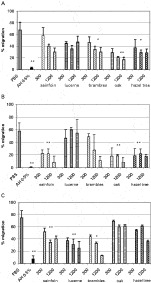
Fig. 1. Effects of sainfoin, lucerne, bramble, oak, hazel tree extracts at concentrations 300, 600 and 1200 μg/ml on the migration of infective larvae of Teladorsagia circumcincta (A), Haemonchus contortus (B) or Trichostrongylus colubriformis(C). Results are shown as means (±S.E.) of triplicates. *Indicates a result close to significance. **Indicates a significant result.

Table 1. Percentage migration of infective larvae of Teladorsagia circumcincta, Haemonchus contortus or Trichostrongylus colubriformis after incubation with extracts at 1200 μg/ml (±S.E.) of rye-grass, hazel tree, oak, or sainfoin with or without PEG
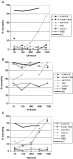
Fig. 2. Effects at 48 h of sainfoin, lucerne, bramble (rubus), oak and hazel tree extracts at concentrations of 75, 150, 300, 600 and 1200 μg/ml on the plot viability of the adult worms Teladorsagia circumcincta(A), Haemonchus contortus (B) or Trichostrongylus colubriformis(C). The concentrations of the anthelmintics are 0·125%, 0·25%, 0·5% and 1%.
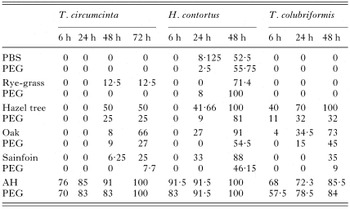
Table 2. Percentage mortality of adult worms of Teladorsagia circumcincta, Haemonchus contortus or Trichostrongylus colubriformis after 6, 24 or 48 h (and 72 h for T. circumcincta) of incubation with extracts at 1200 μg/ml of rye-grass, hazel tree, oak, or sainfoin with or without PEG
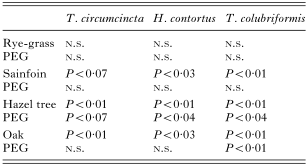
Table 3. Statistical results on the motility of adult worms after incubation with extracts at 1200 μg/ml of rye-grass, sainfoin, hazel tree or oak, with or without PEG, compared to values obtained with PBS or PBS+PEG
 You have
Access
- 88
- Cited by