




No CrossRef data available.
Article contents
Evaluation of anthelmintic properties of some plants used as livestock dewormers against Haemonchus contortus infections in sheep
Published online by Cambridge University Press: 06 August 2004
Abstract
Gastrointestinal helminth infections remain a major constraint to livestock production globally. This study evaluated anthelmintic efficacy of 7 plants used as dewormers by farmers and pastoralists in Kenya. Thus 3 commercial anthelmintics and 7 plant preparations were tested in lambs infected with 5000 or 3000 L3 Haemonchus contortus in 4 experiments. In the first experiment, ivermectin, levamisole and albendazole were tested in 46 lambs. Seven plant preparations of Hagenia abyssinica, Olea europaea var. africana, Annona squamosa, Ananas comosus, Dodonea angustifolia, Hildebrandtia sepalosa and Azadirachta indica were tested in 151 lambs in 3 experiments. All 3 anthelminitics were highly effective in reducing faecal egg counts (FEC) and total worm counts (TWC) in lambs. Plant preparations had varying levels of crude proteins from 2·6% for O. europaea to 18·4% for A. indica. Compared with controls, no significant reductions in FEC were observed for any of the treated groups either 2 or 3 weeks post-treatment. Lambs treated with A. squamosa and A. comosus were slaughtered 4 weeks post-treatment. No significant differences were observed in mean TWC or number of eggs per female worm between treated animals and the controls. No significant improvements in weight gain were observed in treated lambs.
Information
- Type
- Research Article
- Information
- Copyright
- 2004 Cambridge University Press
INTRODUCTION
Parasitic diseases remain a major constraint to livestock production across all agro-ecological zones and production systems of Africa. This has been graphically illustrated by the findings of a comprehensive review, involving many experts, on the impact of animal disease on rural poor communities in the tropics (Perry et al. 2002). Gastrointestinal parasitism in ruminant livestock emerged as having the highest global index within a wide range of disease constraints that affect the livelihood of the poor. In addition, this review specifically identified haemonchosis to be among the top 20 conditions having an impact on sheep and goats belonging to the poor globally, and among the top 10 most important conditions having an impact on sheep and goat production in East Africa. Worm infections in sheep and goats are one of the main causes of slow growth rate, poor reproductive performance and death (Coop & Kyriazakis, 2001). The main way of controlling nematode parasites of livestock has been with the use of synthetic anthelmintics. However, these drugs may not be readily available to smallholder farmers, or to remote pastoralist communities. Additionally, there have been recorded cases of poor or adulterated drugs in Kenya (Monteiro et al. 1998) which, because of their low price, command a substantial share of the anthelmintic market in this country. Another complication in the use of anthelmintics in the high rainfall regions of Kenya is the development of resistance by nematode parasites of small ruminants to these drugs (Wanyangu et al. 1996; Maingi et al. 1998), which is following the world-wide trend (Waller, 1997; Sangster, 2001).
Parasite control by grazing management, such as rotational grazing, is almost certainly impractical for smallholder farmers and pastoralists due to complications in land ownership and restrictions in the size of individual farms. Although parasite-resistant indigenous breeds are common in these locations, young, poorly fed animals often succumb to parasitism (Roberts & Adams, 1990; Haile et al. 2002). Alternative approaches to nematode control are needed to circumvent some of the above constraints. These approaches include the use of plants with anti-parasitic properties. In Africa, many plants have been used as anthelmintics (Kokwaro, 1993; Bizimana, 1994). Some of these plants which contain condensed tannins have been demonstrated in vivo to be active against nematode parasites of small ruminants (Kahiya, Mukaratirwa & Thamsborg, 2003), while others have been shown to have in vitro activity (Alawa et al. 2003). In Kenya, ethnoveterinary knowledge has been applied in an attempt to control nematode parasites (Anonymous, 1996). This includes the use of herbal preparations and may offer a cheaper and sustainable alternative to synthetic drugs, provided of course that they have reasonable levels of efficacy. A number of plants have been used in various areas against nematode parasites. These include Hagenia abyssinica, Olea europaea var. africana, Annona squamosa, Ananas comosus, Dodonea angustifolia, Hildebrandtia sepalosa and Azadirachta indica.
The aim of this study was to evaluate the anthelmintic properties of these plants in sheep infected with Haemonchus contortus. The anthelmintic efficacy was assessed indirectly by the faecal egg count reduction (FECR) test. Commercial anthelmintics, namely ivermectin (IVM), levamisole (Lev) and albendazole (BZ), were also investigated, both to validate the test system and to assess any resistance to these drugs by the strain of H. contortus used in these experiments.
MATERIALS AND METHODS
Plants
Hagenia abyssinica
This tree is found in the upland and high mountain rainforest regions of Kenya, growing to 20 m in height with a leafy and rounded crown. The dried female flower heads serve as a reputed, powerful remedy for intestinal worms, especially tapeworms. It is also claimed that the bark cures diarrhoea and stomach ache in humans; however, it is also reputed to cause abortions (Dharani, 2002). Hagenia abyssinica has been used as an anthelmintic in ruminants (Anonymous, 1996) and also against tapeworms in humans (Desta, 1995; Giday et al. 2003).
Dodonea angustifolia
This is an evergreen, shrubby tree attaining a height of 3–8 m and distributed widely from sea level to 2700 m on rocky, stony or lava sites and forest margins in East Africa. It also has the advantage of being fire tolerant, and thus increases in abundance in areas that are regularly burnt. A decoction of the leaves and twigs is used as a remedy for stomach disturbances and diarrhoea in humans (Dharani, 2002).
Olea europaea var. africana (O. africana)
This is a tall tree that grows to 20 m high with a rough dark, brown bole and spreading grey branches with numerous lenticels. Olea europaea var. africana bark decoctions have been used for treating tapeworms and as a general anthelmintic in humans (Kokwaro, 1993; Fratkin, 1996).
Ananas comosus
Large plantations of this plant, commonly known as pineapple, are found in the central and coastal regions of Kenya. The leaves and skin of the fruit have been used in Asia as anthelmintic preparations for livestock (Jovellanos, 1997; Baldo, 2001). The pineapple plant contains cysteine proteases (bromelain), which are believed to have some anthelmintic properties. Cysteine proteases derived from papaya latex were considered to cause the anthelmintic activity observed against Heligmosomoides polygyrus infected mice (Satrija et al. 1995).
Annona squamosa
This is commonly known as sugar apple, or custard apple. As for A. comosus, the leaves of this tree have been used in Asia as an anthelmintic for livestock (Jovellanos, 1997).
Hildebrandtia sepalosa
This is a small shrub of 0·5–2 m in height that grows in arid and semi-arid bush land of Kenya. Hildebrandtia sepalosa is used by the Samburu of Northern Kenya as an anthelmintic for animals (unpublished personal information) and against stomach problems in humans (Heine, Heine & König, 1988; Fratkin, 1996).
Azadirachta indica
The tree is synonymously known Melia azadirachta L and is commonly referred to as the neem tree. It is a hardy tree growing to 15–20 m in height, and is usually found throughout the tropics and subtropics. It flourishes in arid and semi-arid areas of Eastern Africa. Azadirachta indica is used throughout the tropics against various ailments including helminth parasites (Deka, Majumdar & Dutta, 1983). An infusion of Neem leaves was drenched to cows in Trinidad and Tobago, where 3 or 4 branches were stripped of their leaves, which were then ground, strained and given to the cow to drink in a pint bottle, every 3 months (Lans & Brown, 1998).
However, most of the literature available on usage of this plant as well as the other studied has not been published in peer-reviewed journals.
Animals
In total, 197 male lambs aged between 3 and 6 months at the time of purchase were used in 4 experiments. Dorper and Red Maasai lambs and their crosses purchased from Kapiti, Machakos District were used in experiments A and D, while Dorper lambs purchased in Laikipia District, 200 km North of Nairobi were used in Experiments B and C (Table 1). In all instances, the lambs were purchased after weaning and therefore could have had prior exposure to nematode parasites. After purchase the lambs were moved indoors and given a period of 3 weeks to accustom them to feeding on concentrate pellets and hay. During this period the animals were dosed with injectable IVM at 200 μg/kg body weight, treated with a long-acting tetracycline and sprayed with an acaricide to remove ectoparasites according to manufacturers' instructions. After ascertaining that the lambs were not shedding nematode eggs, they were inoculated 4 weeks after purchase with 2 doses of 1500 or 2500 infective larvae (L3) of freshly harvested Haemonchus contortus given on consecutive days, as shown in Table 1. The origin of the parasite used has been described earlier (Githiori et al. 2002).

Four weeks post-infection the lambs were divided into 4 blocks (within breed for Experiments A and D). The lambs were first put into 2 blocks on the basis of high and low faecal egg count (FEC). Then each block was further divided into 2 sub-blocks on the basis of high and low live weight (LWT) using measurements taken 1 day pre-treatment. The lambs were then randomly allocated from within sub-blocks to treatment and control groups.
Efficacy of commercial anthelmintics (Experiment A)
Forty six, 8-month-old lambs were used in this trial. Following randomization to treatment the lambs were then weighed and treated with IVM (Ivomec®, Merial), Lev (Nilzan®, Coopers) and BZ (Valbazen® Pfizer) according to manufacturers' instructions based on the individual live weight of each sheep. The lambs were then monitored for 14 days with FEC and packed cell volume (PCV) being determined 3 times a week. After 2 weeks post-treatment the lambs were slaughtered and total worm counts (TWC) from the abomasum determined.
Efficacy of plant materials (Experiments B, C and D)
Following randomization the animals were treated with the appropriate herbal preparation according to the methods previously described (Anonymous, 1996; Baldo, 2001; Chandrawathani et al. 2002) or those used by traditional healers (J. Githori, unpublished data). Each treatment and control group included at least 15 animals, although a few died of causes other than haemonchosis leaving 14 animals in 3 of the treatment groups for statistical analysis. A dose-titration system was applied among the treated animals: 5 lambs were treated with the ‘traditional’ doses (Table 1) of the plant preparations, 5 received half, and 5 double the traditional doses. Nematode FEC and PCV were determined from samples collected daily for Exp. B, or every 2 days for Exps C and D in the first week post-treatment, every 2 or 3 days in the second week, and twice in the third week. Faecal egg counts were determined using the modified McMaster method with a sensitivity of 50 eggs per gram (epg) of faeces (Hansen & Perry, 1994) and PCV determined using the microhaematocrit method (Hansen & Perry, 1994). The lambs were monitored daily for changes in behaviour, feeding or general activity during the post-treatment period. Live weight gain was estimated by weighing the lambs once a week pre- and post-treatment.
Two of the treatment groups and the control animals in Exp. C were slaughtered 4 weeks post-treatment and TWC, FEC and PCV determined (Hansen & Perry, 1994). The 2 treatment groups were selected for necropsy on the basis of an increase in PCV (A. comosus) and the highest reduction in FEC (A. squamosa) by week 3. Twenty female worms were taken from each slaughtered animal and the average number of eggs per female determined with minor modifications according to the method described by Mugambi (1994). Briefly, the worms were placed in a 5 ml glass tissue grinder and 5 ml of water added. The worms released eggs and the resulting suspension was thoroughly mixed and the number of eggs counted in McMaster slides used for sedimentation.
Preparation of plant material
All plant preparations were extracted using water and according to the instructions from traditional healers, or from methods previously described (Anonymous, 1996). Except where stated, all extractions in water were carried out overnight as done by the healers and all extraction methods followed the instruction and observations made from traditional healers.
Experiment B
The female inflorescence of H. abyssinica was used in this study. Thirty grams of the flowers were immersed in 500 ml of water and shredded in a blender. This was sieved and administered orally to each lamb at a dose rate of 1 g/kg body weight for those lambs receiving the traditional dose, and at half and double this dose for the other lambs.
Experiment C
Fresh D. angustifolia leaves (30 g) were shredded in a blender with 300 ml of water to make up the traditional dose per animal. This was later lyophilized (freeze-dried) and stored until required for use. The dose was reconstituted with 200 ml water to give a dose rate of 1 g/kg body weight per sheep for those lambs receiving the traditional dose, and at half and double this dose for the other lambs.
The traditional dose of H. sepalosa is composed of 50 g of sun dried root bark added to 300 ml of water and blended. To ease application, the plant preparation was lyophilized and the traditional dose given by reconstituting the material with 100 ml of water to provide a dose rate of 1·6 g/kg body weight for those lambs receiving the traditional dose, and at half and double this dose for the other lambs.
Experiment D
Fresh leaves of A. indica were collected 3 times per week and molasses was added to increase palatability. The leaves were offered to the lambs every morning after all feed had been withdrawn. Having consumed the leaves the lambs were provided with the normal ration of pellets and hay in the afternoon. Animals receiving the same dose were housed in one pen and fed together. The amount of waste each day was calculated and that amount added to top up the feed the next day so that by the end of week 3 the required daily dose rate of 500 mg/kg body weight for the traditional dose, and half and double for the other doses, had been achieved.
Anona squamosa leaves were collected and air-dried. The preparation was lyophilized before application and reconstituted to give a dose rate of 1 g/kg for those lambs receiving the traditional dose, and half and double this dose for the other lambs.
Ananas comosus leaves were air-dried. The leaves were then milled to provide a traditional dose of 1 g/kg body weight and half and double this dose for the other lambs. To ease application, the plant preparations was lyophilized and reconstituted at the time of treatment.
Bark from O. europaea var. africana was pounded and soaked overnight in water. A strip weighing 60 g was used to provide a traditional dose of 2 g/kg body weight and lighter and heavier strips were used for the other 2 dose groups.
Feed analysis
All the plant materials collected were ground prior to carrying out proximate analysis (Lloyd, MacDonald & Crampton, 1978). This was to determine nitrogen (for protein), ether extract (for fat), crude fibre and ash (mineral salts) and soluble carbohydrate in Weende analysis (Ranjhan, 1993).
Statistical analysis
Mean FEC and PCVs were calculated over each week (days 0–7, 8–14, 15–21) and weekly weight measurements from weeks 0 to 3 post-treatment for Exps B, C and D. Measurements for FEC and PCV were taken thrice in the first week and twice weekly thereafter in all experiments. The mean FECs were then transformed to log (y+25), while TWCs were log transformed to log (y+1) prior to statistical analysis. Faecal egg count, PCV, average daily weight gain and TWC were then analysed using repeated measures analysis of variance using SAS software in order to compare control and treatment means over time. Terms for breed and block within breed for Exps A and D and for block in Exps B and C were included in the model. Block was found to be non-significant and so initial FEC and PCV were included instead as covariates in the analysis of FEC and PCV, respectively. Thus the statistical model eventually used was:

where yijkl is the response variable (weight gain, PCV, log(Fec+25)), with terms bi for breed in experiments A and D, gj (j=1,…, ng where ng=number of groups), for treatment groups, tk (k=1,…, nk, where nk is number of measurement times) and a covariate term βxijkl for initial weight, PCV and FEC respectively, depending on the response variable.
Least squares linear regression was applied within groups to test for any dose titration effect. The faecal egg count reduction (FECR) was determined by the method described by (Coles et al. 1992) using the formula FECR%=100×(1−T/C), where T and C are the geometric means of the number of eggs in the treated and control groups, respectively, at Week 2 for Exps A and B and Week 3 post-treatment for the other experiments. A similar formula was used for percentage TWC reduction (TWCR).
It was considered, a priori, that efficacy of the plant preparations would be biologically significant if a reduction in FEC and TWC above 70% occurred. The sample sizes of 15 sheep were chosen, based on residual variations observed in previous experiments, in order to detect such a reduction in FEC in the treatment group as statistically significant (P<0·05). All statistical analyses were performed using SAS system for Windows version 8.2 (SAS Institute Inc., Cary, NC, 1999). PROC GLM and PROC MIXED in SAS were used for all statistical analysis. Pairwise comparison between treated and control groups was done by the statement LSMEANS/TDIFF option in PROC GLM. The standard error of difference (S.E.D.) calculation was based on the square root of residual variance multiplied by (1/n1+1/n2) where n1 and n2 are the number of observations per treatment group respectively for the two means to be compared and was calculated using the statement LSMEANS/DIFF option in PROC MIXED.
RESULTS
Commercial anthelmintic (Experiment A)
All 3 anthelmintic drugs were highly effective in reducing the worm counts (Table 2). Levamisole and BZ had similar reductions on both FEC and TWC (99%) by Week 2. Lambs treated with IVM showed a lower reduction in FEC (92%) while the reduction in TWC was 96%.

Feed (proximate) analysis
Proximate analysis indicated varying levels of crude protein, as well as minerals and soluble carbohydrate content of the plant materials (see Table 3). Olea europaea var. africana had the lowest and A. indica the highest protein content.

Effect of plant preparations
Animals on the high dose rate of A. indica (1000 mg/kg body weight) ate the leaves poorly even after the addition of molasses. The inoculum of 5000 L3 H. contortus used in Exp. B was reduced to 3000 in all other experiments after some animals exhibited signs of haemonchosis and 2 of them died. Otherwise, no behavioural changes were observed in any of the animals after treatment with the plant preparations.
No significant reductions in FEC were observed between the control and treated lambs by 2 weeks post-treatment in Exp. B and by 3 weeks post-treatment in Exps C and D (Table 4), nor was there any significant dose effect. No breed effect was observed in Exp. D. Dodonea angustifolia and A. squamosa produced the highest, though non-significant, reductions in FEC. Lambs treated with the traditional and the double doses of A. indica showed reduced feed intake, and significantly higher FECs were observed in lambs fed on this plant than in controls (Table 5).


Animals treated with A. comosus had significantly higher PCVs than control animals by Week 3 (Table 5). No other plant preparations resulted in a significant effect on PCV and by Week 4 the mean PCV in the A. comosus group had declined closer to the controls (Table 6). A time with group interaction was observed for animals treated with A. indica which appeared to lose more weight than control lambs, although not significantly so (Table 5). Animals treated with the other plants did not significantly gain, or lose, more weight than control lambs. Although control animals as well as experimental animals lost weight on average over the 3 weeks observation period, the magnitude of these losses were considered insignificant in view of the short length of observation period.

No significant differences were observed between TWC and eggs per female worm in animals treated with A. squamosa or A. comosus and control animals (Table 6). Similarly there were no significant differences between FEC and PCV in animals treated with A. squamosa or A. comosus and control animals determined on the day of slaughter (Table 6).
DISCUSSION
All the commercial anthelmintics significantly reduced the number of H. contortus worms, as well as the faecal egg counts in lambs. Levamisole and BZ caused reductions of 99% or greater in FEC and TWC, confirming previously reported technical data of anthelmintic efficacy of these two drug classes for sensitive strains. The efficacy of IVM was slightly less than expected. Anthelmintic efficacy tests recently conducted in the same ranch (Kapiti Plantation Ltd) had indicated a high degree of efficacy of injectable IVM and an oral preparation of Lev but a lower response to BZ (J. M. Mugambi, unpublished data). In contrast, an oral preparation of IVM was used in our study.
None of the plants resulted in any significant reduction in FEC, either after 2 or 3 weeks post-treatment, and there was no significant dose response. No differences in nematode egg counts were observed in a previous study in goats with natural parasite infections when treated with H. abyssinica, although some reduction in cestode egg counts was reported (Abebe et al. 2000). The plant H. abyssinica is reputably active against tapeworms in humans (Desta, 1995; Giday et al. 2003) and purportedly has some effect against Moniezia spp. in sheep (Mesfin & Obsa, 1994), but in this study no activity was shown against nematode parasites.
The lack of effect on FECR observed in lambs feeding on leaves of the neem tree (A. indica) in this study is in contrast to other studies where significant reductions in FEC were observed in animals either fed daily on fresh neem leaves (Pietrosemoli et al. 1999; Chandrawathani et al. 2002). In contrast to the study in Malaysia (Chandrawathani et al. 2002), leaves were collected 3 times per week and stored before use in our study, as opposed to the daily offering of fresh leaves in Malaysia, where it was reported that such fresh material is readily consumed by young sheep. The significant increase in FEC compared to control lambs in this study may have been due to the reduced feed intake observed in animals feeding on the medium and high dose rates of neem. No indications of the anthelmintic properties of this plant were observed in the present study. Similarly no anthelmintic activity was observed in sheep artificially infected with H. contortus and Trichostrongylus colubriformis and treated with powdered A. indica seeds (Hordegen et al. 2003).
Similar to our studies, young pineapple (A. comosus) fruit juice had no in vivo anthelmintic activity against the cestode Hymenolepis nana and pinworm Aspicularis tetraptera although in vitro activity was demonstrated (Satrija et al. 2001). However, anthelmintic activity of the same juice has been reported against the nematode Ascaris lumbricoides (Kaleysa, 1975) and against nematodes in cattle and sheep fed boluses made of pineapple leaves in the Philippines (Jovellanos, 1997; Baldo, 2001). Aqueous and alcoholic extracts of the plant have also been described to have significant taenicidal activity (Feroz, Khare & Srivastava, 1982). However, in contrast to observations by Baldo (2001) and Jovellanos (1997), no significant reduction of FEC (or TWC) occurred in lambs treated with A. comosus in our study. A similar lack of effects on FEC as observed in our study, was recently observed by Hordegen et al. (2003) in sheep treated with powdered pineapple leaves.
The fruit of A. squamosa has been described to have anthelmintic properties (Asprey & Thornton, 1955) and a reduction of 95% in FEC was demonstrated in cattle treated with a bolus of dried A. squamosa leaves (Jovellanos, 1997). In contrast, although A. squamosa had one of the highest effects on FEC in the present study, the reduction in FEC was not significant. No necropsy was carried out in the study by Jovellanos (1997), and so no effect of the plant on TWC reduction was recorded. Another plant in Nigeria of the same genus, Annona senegalensis, has also been found to have activity in vitro against H. contortus and against Nippostrongylus brasiliensis in rats (Alawa et al. 2003).
Infusion of the bark of O. europaea var. africana has been described to relieve colic in animals, and a leaf infusion has been used for treatment of babesiosis (Minja, 1994) and for treatment of eye conditions amongst the Samburu pastoralists (Githiori, J., unpublished data). Although the bark decoction has previously been described to have anthelmintic properties (Kokwaro, 1993) none, however, were observed in this study. The plant has also been reported to have anthelmintic properties against human tapeworms (Heine et al. 1988; Fratkin, 1996). However, there was no mention of the effect of these plants against animal tapeworms, or nematodes.
Various uses of D. angustifolia have been recorded including treatment of fever, colds, influenza, rheumatism, arthritis and wounds in humans (van Wyk, van Oudtshoorn & Gericke, 1997). Although D. angustifolia had the highest effect of the plants tested in this study against nematodes, the FECR value of 31% was not statistically significant and well below the level of 70% deemed to be of biological significance.
The root infusion of H. sepalosa has been used against constipation in humans (Beentje, 1994) but there is no report of veterinary usage. No effect on FEC was observed.
In conclusion, commercial anthelmintics were highly effective against the strain of H. contortus used to artificially infect the animals indicating that this strain was highly sensitive to these drugs. Most of the published information on the purported anthelmintic efficacy of plants has not been scientifically validated and often appears in un-refereed reports. None of the 7 plants tested in the current study caused any significant reduction of FEC at the doses and preparations used. Similarly, no effect on TWC among lambs was observed for the 2 treatments in which total worm counts were determined.
The authors are grateful to traditional healers in the Mbeere, Samburu and Turkana communities for demonstrating their methods of plant preparation for animal medication. The authors are also grateful to the staff of the Animal Unit and the Helminthology Lab at ILRI, Nairobi. This work is being financially supported by the Swedish International Development Cooperation Agency (SIDA/SAREC). We also wish to acknowledge Drs D. Gray and J. Rowlands for advice on experimental design and for their review of the paper. This is ILRI publication No. 200359.
References
REFERENCES
ABEBE, G., DAWSON, L. J.,
DETWEILER, G.,
GIPSON, T. A. &
SAHLU, T.
(
2000).
Hagenia abyssinica (Kosso) for internal parasite control in goats. In
The Opportunities and Challenges of Enhancing Goat Production in East Africa (
ed. Merkel, R. C.,
Abebe, G. & Goetsch, A. L.), pp. 190–195. Debub University, Awassa, Ethiopia.
ALAWA, C. B. I.,
ADAMU, A. M.,
GEFU, J. O.,
AJANUSI, O. J.,
ABDU, P. A.,
CHIEZEY, N. P.,
ALAWA, J. N. &
BOWMAN, D. D.
(
2003).
In vitro screening of two Nigerian medicinal plants (Vernonia amygdalina and Annona senegalensis) for anthelmintic activity.
Veterinary Parasitology 113, 73–81.CrossRefGoogle Scholar
ANONYMOUS (
1996).
Ethnoveterinary Medicine in Kenya: A Field Manual of Traditional Animal Health Practices.
Intermediate Technology Development Group and International Institute of Rural Reconstruction,
Nairobi.
ASPREY, G. F. &
THORNTON, P.
(
1955).
Medicinal plants of Jamaica. III.
West Indian Medical Journal 4, 69–82.Google Scholar
BALDO, R. C.
(
2001).
Comparative efficacy of pineapple (Ananas comosus) leaves bolus and albendazole against gastrointestinal nematodes of sheep. Doctor of Veterinary Medicine, University of the Phillipines, Los Banos, Phillipines.
BEENTJE, H. J.
(
1994).
Kenya Trees, Shrubs and Lianas.
National Museums of Kenya,
Nairobi.
BIZIMANA, N.
(
1994).
Traditional Veterinary Practice in Africa.
Deutsche Gesellschaft für Technische Zusammenarbeit (GTZ), Roßdorf,
Germany.
CHANDRAWATHANI, P.,
BRELIN, D., NOR FASIHA, A. S.,
ADNAN, M., JAMNAH, O.,
REHANA, A. S.,
HOGLUND, J. &
WALLER, P. J.
(
2002).
Evaluation of the neem tree (Azadirachta indica) as a herbal anthelmintic for nematode parasite control in small ruminants in Malaysia.
Tropical Biomedicine 19, 41–48.Google Scholar
COLES, G. C.,
BAUER, C., BORGSTEEDE, F. H.,
GEERTS, S., KLEI, T. R.,
TAYLOR, M. A. &
WALLER, P. J.
(
1992).
World Association for the Advancement of Veterinary Parasitology (W.A.A.V.P.) methods for the detection of anthelmintic resistance in nematodes of veterinary importance.
Veterinary Parasitology 44, 35–44.Google Scholar
COOP, R. L. &
KYRIAZAKIS, I.
(
2001).
Influence of host nutrition on the development and consequences of nematode parasitism in ruminants.
Trends in Parasitology 17, 325–330.CrossRefGoogle Scholar
DEKA, L., MAJUMDAR, R. &
DUTTA, A. M.
(
1983).
Some Ayurvedic important plants from District Kamrup (Assam).
Ancient Science of Life 3, 108–115.Google Scholar
DESTA, B.
(
1995).
Ethiopian traditional herbal drugs. Part I: studies on the toxicity and therapeutic activity of local taenicidal medications.
Journal of Ethnopharmacology 45, 27–33.Google Scholar
DHARANI, N.
(
2002).
Field Guide of Common Trees and Shrubs of East Africa.
Struik Publishers,
Cape Town.
FEROZ, H., KHARE, A. K. &
SRIVASTAVA, M. C.
(
1982).
Review of scientific studies on anthelmintics from plants.
Journal of Science Research on Plants and Medicine 3, 6–12.Google Scholar
FRATKIN, E.
(
1996).
Traditional medicine and concepts of healing among Samburu pastoralists of Kenya.
Journal of Ethnobiology 16, 63–97.Google Scholar
GIDAY, M., ASFAW, Z.,
ELMQVIST, T. & WOLDU, Z.
(
2003).
An ethnobotanical study of medicinal plants used by the Zay people in Ethiopia.
Journal of Ethnopharmacology 85, 43–52.CrossRefGoogle Scholar
GITHIORI, J. B.,
HOGLUND, J., WALLER, P. J. &
BAKER, R. L.
(
2002).
Anthelmintic activity of preparations derived from Myrsine africana and Rapanea melanophloeos against the nematode parasite, Haemonchus contortus, of sheep.
Journal of Ethnopharmacology 80, 187–191.CrossRefGoogle Scholar
HAILE, A., TEMBELY, S.,
ANINDO, D. O.,
MUKASA-MUGERWA, E.,
REGE, J. E. O.,
YAMI, A. &
BAKER, R. L.
(
2002).
Effects of breed and dietary protein supplementation on the responses to gastrointestinal nematode infections in Ethiopian sheep.
Small Ruminant Research 44, 247–261.CrossRefGoogle Scholar
HANSEN, J. &
PERRY, B.
(
1994).
The Epidemiology, Diagnosis and Control of Helminth Parasites of Ruminants: A Handbook.
International Livestock Research Institute,
Nairobi.
HEINE, B., HEINE, I. &
KÖNIG, C.
(
1988).
Plant Concepts and Plant Use. An Ethnobotanical Survey of the Semi-arid and Arid Lands of East Africa. Part V: Plants of the Samburu (Kenya). Verlag Breitenbach Publishers, Saabrucken.
HORDEGEN, P.,
HERTZBERG, H.,
HEILMANN, J.,
LANGHANS, W. &
MAURER, V.
(
2003).
The anthelmintic efficacy of five plant products against gastrointestinal trichostrongylids in artificially infected lambs.
Veterinary Parasitology 117, 51–60.CrossRefGoogle Scholar
JOVELLANOS, J. M. M.
(
1997).
Efficacy of three selected herbal plants on gastrointestinal parasites of cattle. Doctor of Veterinary Medicine (D.V.M.), University of the Philippines, Los Banos, Philippines.
KAHIYA, C., MUKARATIRWA, S. &
THAMSBORG, S. M.
(
2003).
Effects of Acacia nilotica and Acacia karoo diets on Haemonchus contortus infection in goats.
Veterinary Parasitology 115, 265–274.CrossRefGoogle Scholar
KALEYSA, R. R.
(
1975).
Screening of indigenous plants for anthelmintic action against Ascaris lumbricoides: Part II.
Indian Journal Physiology and Pharmacology 19, 47–49.Google Scholar
KOKWARO, J. O.
(
1993).
Medicinal Plants of East Africa,
2nd Edn. Kenya Literature Bureau,
Nairobi.
LANS, C. & BROWN, G.
(
1998).
Ethnoveterinary medicines used for ruminants in Trinidad and Tobago.
Preventive Veterinary Medicine 35, 149–163.CrossRefGoogle Scholar
LLOYD, L. E.,
MacDONALD, B. E. &
CRAMPTON, E. W.
(
1978).
Fundamentals of Nutrition,
2nd Edn.
W. H. Freeman,
San Francisco.
MAINGI, N., BJORN, H.,
GICHOHI, V. M.,
MUNYUA, W. K. &
GATHUMA, J. M.
(
1998).
Resistance to benzimidazoles and levamisole in nematode parasites of sheep in Nyandarua District of Kenya.
Acta Tropica 69, 31–40.CrossRefGoogle Scholar
MESFIN, T. & OBSA, T.
(
1994).
Ethiopian traditional veterinary practices and their possible contribution to animal production and management.
Review of Science and Technology 13, 417–424.Google Scholar
MINJA, M. M.
(
1994).
Medicinal plants used in the promotion of animal health in Tanzania.
Review of Science and Technology 13, 905–925.CrossRefGoogle Scholar
MONTEIRO, A. M.,
WANYANGU, S. W.,
KARIUKI, D. P.,
BAIN, R., JACKSON, F. &
McKELLAR, Q. A.
(
1998).
Pharmaceutical quality of anthelmintics sold in Kenya. Veterinary Record 142, 396–398.CrossRefGoogle Scholar
MUGAMBI, J. M.
(
1994).
Comparative studies on breed resistance to ovine haemonchosis in Kenya.
Ph.D.,
University of Glasgow, Glasgow, UK.
PERRY, B. D.,
RANDOLPH, T. F.,
McDERMOTT, J. J.,
SONES, K. R. &
THORNTON, P. K.
(
2002).
Investing in Animal Health Research to Alleviate Poverty.
ILRI (International Livestock Research Institute), Nairobi,
Kenya.
PIETROSEMOLI, S.,
OLAVEZ, R., MONTILLA, T. &
CAMPOS, Z.
(
1999).
Empleo de hojas de Neem (Azadirachta indica A. Juss) en control de nematodos gastrointestinales de bovinos a pastoreo.
Revista de la Facultad de Agronomía de LUZ 16, 220–225.Google Scholar
RANJHAN, S. K.
(
1993).
Animal Nutrition in the Tropics,
3rd Edn. Vikas Publishing House Pvt Ltd,
New Delhi.
ROBERTS, J. A. &
ADAMS, D. B.
(
1990).
The effect of level of nutrition on the development of resistance to Haemonchus contortus in sheep.
Australian Veterinary Journal 67, 89–91.CrossRefGoogle Scholar
SANGSTER, N. C.
(
2001).
Managing parasiticide resistance.
Veterinary Parasitology 98, 89–109.CrossRefGoogle Scholar
SATRIJA, F., NANSEN, P.,
MURTINI, S. &
HE, S.
(
1995).
Anthelmintic activity of papaya latex against patent Heligmosomoides polygyrus infections in mice. Journal of Ethnopharmacology 48, 161–164.CrossRefGoogle Scholar
SATRIJA, F., RETNANI, E. B.,
RIDWAN, Y. &
TIURIA, R.
(
2001).
Potential use of herbal anthelmintics as alternative antiparasitic drugs for small holder farms in developing countries. In
Livestock Community and Environment. Proceedings of the 10th Conference of the Association of Institutions for Tropical Veterinary Medicine. (
Copenhagen,
Denmark).
VAN WYK, B.-E.,
VAN OUDTSHOORN, B. &
GERICKE, N.
(
1997).
Medicinal Plants of South Africa.
Briza Publications,
Pretoria, South Africa.
WALLER, P. J.
(
1997).
Nematode parasite control of livestock in the tropics/subtropics: the need for novel approaches.
International Journal for Parasitology 27, 1193–1201.CrossRefGoogle Scholar
WANYANGU, S. W.,
BAIN, R. K.,
RUGUTT, M. K.,
NGINYI, J. M. &
MUGAMBI, J. M.
(
1996).
Anthelmintic resistance amongst sheep and goats in Kenya.
Preventive Veterinary Medicine 25, 285–290.CrossRefGoogle Scholar
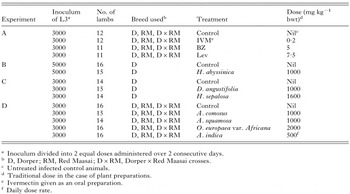
Table 1. Experimental design showing the inoculum, breed, drugs, plants and traditional dose used in each of the Experiments A to D in lambs infected with Haemonchus contortus
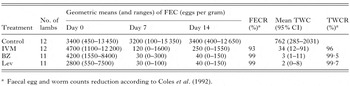
Table 2. Geometric means (and ranges) of faecal egg counts (FEC) on days 0, 7 and 14 and means (and 95% confidence intervals) of total worm counts (TWC) on day 14 post-treatment in sheep treated with IVM, BZ and Lev
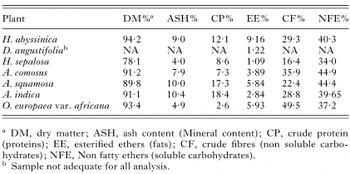
Table 3. Proximate analysis of the plants used in Experiments C to D
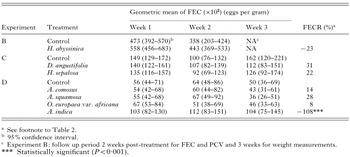
Table 4. Geometric mean faecal egg counts (FEC) and 95% confidence intervals for Week 1 to Week 3 post-treatment for controls and lambs treated with different plant preparations (average group size 15) after infection with Haemonchus contortus
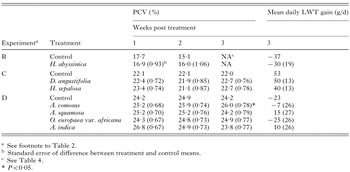
Table 5. Mean packed red cell volume (PCV) in Weeks 1 to 3 and average daily live weight (LWT) gain from 0 to 3 weeks post treatment in controls and lambs treated with different plant preparations infected with Haemonchus contortus
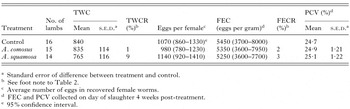
Table 6. Mean total worm counts (TWC), faecal egg counts (FEC) and mean number of eggs per female in recovered worms for control and sheep treated with A. comosus and A. squamosa leaf preparations after infection with H. contortus
 You have
Access
- 75
- Cited by