I am getting reports that the territory of the testing site can already be put to use. There are 1.5 million hectares of land. Scientists, both Kazakhstani and Russian, say there is no radiation [at the Semipalatinsk Nuclear Test Site] and the lands can be used.… [L]et's make them part of our economy again and use them to our advantage.
—Kazakhstan president Nursultan Nazarbayev Tengri News, June 27, 2013I first heard of “radioactive coal” in the summer of 2012, when I was living in the small village of Koyan, one of many settlements in Eastern Kazakhstan that hosted the Soviet-era Semipalatinsk Nuclear Test Site.Footnote 1 A scandal over the sale of radioactive coal had erupted in the fall of 2011 when local media began reporting on a train from Kazakhstan carrying more than eight thousand tons of it (in 130 wagons) to a heating plant in Bishkek, Kyrgyzstan. Upon discovering that radioactivity in the shipment was eight times higher than normal, Kyrgyz authorities had it removed from the Bishkek's central heating plant.Footnote 2 Rather than discarding it, they put it to use elsewhere, including in the heating stoves of more than one orphanage, a kindergarten, and several rural schools. When media covered this development, public outcry forced Kyrgyz politicians to demand that the coal be returned to Kazakhstan; allegations of corruption and arrests of Kyrgyz officials ensued. Political wrangling over responsibility and refunds meant that negotiations between Kazakh and Kyrgyz authorities took more than a year to complete. Finally, Kazakhstan allowed the coal to be returned.
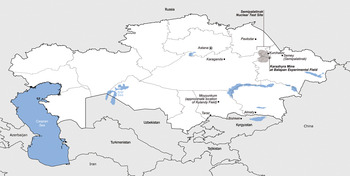
To my surprise, the radioactive ore did not come from what I considered the likely culprit, the now-closed Semipalatinsk nuclear test site and its coal field—the open pit mine at Karazhyra (see figure 1). Rather, it was from the Kulandy field in southern Kazakhstan, with no known record of high radioactivity. Nevertheless, when news of the scandal about the shipment and its protracted return to Kazakhstan reached the residents of Koyan, it started an illuminating discussion. For several weeks, people expressed surprise about Kazakhstan government officials’ concern about the coal shipment. No one in the government, I was told, seemed to be troubled about the mostly unregulated trade of commodities originating from the Semipalatinsk region and possible risks they could pose to the village. The meat, milk, dairy products, and wild berries Koyaners consume; the coal they use to heat their homes; and the hay they collect to feed their livestock are all sourced on the former nuclear testing grounds. These products are consumed locally and sold in city bazaars, but rarely, if ever, are they tested for radiation. The Kazakh-Kyrgyz coal debacle and the mostly unregulated trade in potentially dangerous commodities raise the questions about the global and local scales of risk that are examined in this series of articles.
Kazakhstan, showing the location of the Semipalatinsk Nuclear Test Site. Map by Travis Bost.

Anthropologists Merrill Singer and Hans Baer (Reference Singer and Baer2008) observe that despite local and international trade regulations, the expanding global flow of commodities has made it difficult to monitor how products are manufactured, sold, and consumed. This lack of sustained oversight poses serious health and safety risks to consumers: Singer and Baer (Reference Singer and Baer2008, 2) refer to particularly dangerous products as “killer commodities,” or “goods that are sold for profit that result, either directly during use, indirectly through their impact on the environment, or during manufacture on workers, in a notable burden of injuries to death.” Although the concept may seem attractive to scholars examining the relationship between toxic environments and human health, in Kazakhstan's nuclear test site region defining “killer commodities” is not easy. In this article, I engage with their discussion of the trade in “killer commodities” and bring it to the issue of radioactive risk. Specifically, economic opportunism, together with the scientific practices of the Institute of Radiation Safety and Ecology, which is charged with overseeing Semipalatinsk, shape local knowledge in ways that encourage complicity with efforts to conceal radioactive risk at the nuclear test site. These forces increase the likelihood of toxic commodities circulating and going unnoticed.
Bruno Latour (Reference Latour2010) has described “regimes of invisibility”: complex networks of scientists, experts, technologies, and practices that make legible what is invisible (germs, viruses, radiation). In Semipalatinsk, the “regimes” also work to obscure evidence of contamination. Similar to the toxic legacies of the Bhopal disaster in India (see Hanna, this volume), the national drive for regional economic growth in Kazakhstan, along with a lack of both proper radiation monitoring and public health infrastructure, have paved the way for products to move relatively freely in and out of the Semipalatinsk region. Although the burden of toxic contamination is borne by the mostly poor and marginalized residents who have little choice but to stay in the region and “eat radiation,” as is the case with the Chernobyl or Fukushima disasters, radioactive contamination can easily become “transnational” (Broinowski Reference Broinowski2013), moving across national borders and local contexts (see also Toon, this volume). Thus, “killer commodities” from Semipalatinsk that move across local and national borders can become “invisible harms” (Goldstein and Hall Reference Goldstein and Hall2013, Reference Goldstein and Hall2015) to people far removed from the sources of pollution (see also Boudia and Jas Reference Boudia and Jas2014).
Development of Semipalatinsk
When the Soviet Union dissolved in 1991 and Kazakhstan became an independent state, it inherited and put an end to nuclear testing on the Soviet-era Polygon, as Semipalatinsk is known locally. The 19,000-square-kilometer site had been in operation since 1949, and over a forty-year period more than 450 nuclear detonations released unknown quantities of radioactive particles into the atmosphere, soil, and ground water (Holloway Reference Holloway1994). With each successive test, the surrounding environment and hundreds of thousands of people were exposed to elements like radioactive potassium, thorium, strontium, cesium, plutonium, americium, and countless other elements with long half-lives that cause illness and death with repeated contact. At the same time however, this Cold War military zone, together with the villages located in the vicinity, was incorporated into a vast Soviet agricultural industrial complex centered on livestock breeding and cereal harvesting, which provided work for hundreds of thousands of people living in the region and more throughout the former Soviet Union.
With this historical-geographic context in mind, in 1991, President Nursultan Nazarbayev staked Kazakhstan's sovereignty on rejecting nuclear weapons and closing the Polygon (one of the first acts of independence from the Soviet Union); he vowed to turn Kazakhstan into an “epicenter of peace” (Nazarbayev Reference Nazarbayev2001). In keeping with this self-assigned role, in May 1992, at the former headquarters of the Semipalatinsk military-industrial complex in Kurchatov, the National Nuclear Center's Institute of Radiation Safety and Ecology (IRSE) was born. With help and financial support from the international scientific community, including the International Atomic Energy Agency (IAEA), the IRSE was charged with liquidating military infrastructure, remediating the environment, and creating a research sector for the development of peaceful atomic energy. Importantly, the IRSE was also tasked with the Polygon's economic diversification—a point of much interest here.
Since the demilitarization of Semipalatinsk, this once–scientific experimental zone is now a buzzing entrepreneurial space. In time, the former Polygon has the potential to become one of Kazakhstan's most important mining and agricultural regions (NNC 2011). The IRSE's mission statement, “from national tragedy to national pride,” includes among other things, reclaiming up to 90 percent of the land and making it available for commercial use, including mining, as well as industrial scale agriculture and livestock breeding (NNC 2011, 47). However, an environmental activist working in the region I spoke with in 2012 believes that the drive to privatize the former nuclear test site lands will transfer responsibility for monitoring and cleanup from the IRSE to local authorities, which are ill equipped to deal with radioactivity. These concerns are routinely dismissed by the IRSE as irrational, emotional, and “radiophobic.”
Since Kazakhstan's independence and the shift to a free market economy, the Polygon has become a target of local and international entrepreneurs and multinational corporations looking to develop its vast wealth of mineral resources. Although farming and livestock grazing remain illegal activities (licenses cannot be obtained), mining is not. Geological mapping has revealed extensive deposits of copper, molybdenum, tungsten, manganese, beryllium, iron, fluorite, gold, and coal. Through the IRSE's administrative channels, land has been brokered to a host of multinational mining operations with licenses to operate on the former nuclear test site. One such venture is the Karazhyra coal mine, located near some of the most radioactive areas found in the region.
Developed during the period of serious economic crisis that followed the Soviet Union's disintegration, since the mid-1990s the Karazhyra mine has been the largest supplier of coal in Kazakhstan. It provides high-quality coal at a cheap price due to its proximity to large urban centers (Moushel Parkman Reference Parkman2004). For over two decades, the coal from this open pit quarry has been used as heating fuel by hundreds of thousands of people living in Semey, Ust-Kamenogorsk (Ust-Kamen), Pavlodar, and other cities in Kazakhstan, as well as in the countless villages and winter settlements found throughout the region. The coal is also exported to Russia and Kyrgyzstan. With an area of more than 6,300 acres, the site is located within an underground nuclear detonation crater and in the vicinity of 105 more underground nuclear borehole explosions where high concentrations of strontium, cesium, americium, and plutonium exist in “hot spots” and have been recorded (NNC 2011). Officially, the larger area is known as the Balapan experimental field: in Kazakhstan Balapan is most famous for its “Atomic Lake”—100 meters deep and 400 meters in diameter—which was created by a nuclear explosion in 1965.Footnote 3 In recent years, there has been growing concern about the coal from Karazhyra among a group of investigative journalists, radio-ecologists, medical doctors, local nongovernmental organizations (NGOs), as well as a number of individuals responsible for the environmental monitoring of Karazhyra itself. This group believes the commodity and the site are dangerous, claiming that mining operators hide the truth about radioactivity from the public by paying bribes to government officials (Chernyavskaya Reference Chernyavskaya2010; Kratenko Reference Kratenko2011; Vasiliev Reference Vasiliev2011). While it is not uncommon to hear of bribery and corruption, the more typical objects are property theft or post-Soviet nepotism, not public health.
The radioactivity of the Karazhyra coal has recently appeared as the subject of national media exposés. In 2010, for example, an article titled “Radiation in the Furnace” appeared in the newspaper Megapolis. It suggested that despite the IRSE's assurances, because Karazhyra coal is a poorly regulated commodity it is impossible to discern whether people who heat their homes with it are inhaling radioisotopes that can lodge in their lungs, liver, stomach, and bones. In the article, Leonid Rikhvanov, professor of engineering geology and geochemistry at the Tomsk Polytechnic Institute in Russia, who has also spent years working as a scientist on the Semipalatinsk nuclear test site, is reported to have said that the deliberate sale of the Karazhyra coal in Kazakhstan is tantamount to “environmental terrorism in action” (Chernyavskaya Reference Chernyavskaya2010). After the article's publication, the Karazhyra mining company responded with an anti-defamation lawsuit against the newspaper.
More surprising, perhaps, are the statements made by one of the former leaders of the IRSE. This individual was once a strong advocate of wholesale development through privatization of the Polygon region, but in recent years, following retirement, has spoken out against this plan. The former leader contends that migration of radioactive particles (especially plutonium, which has a half-life of 24,000 years, unlike strontium and cesium, each with half-lives of about 30 years) in the soil, water, and air is a process that cannot be controlled by simply putting warning signs on contaminated land. Environmental remediation is expensive and requires (at minimum) the removal of the top layer of soil and blocking groundwater contamination by chemically treating water as it moves through a series of barriers.Footnote 4 This has yet to be done on the test site because clean-up is prohibitively expensive and difficult.
On the Polygon, one of the more formidable radionuclides, plutonium, remains unevenly distributed, and, like other radioisotopes, migrates in the environment. An alpha emitter, plutonium cannot be detected by a common Geiger counter, yet can be stopped by a sheet of paper. It can cause significant lifelong damage, however, by lodging in the lungs or spreading to bones and liver when it enters the body through inhalation or ingestion. A person who takes in just a few milligrams of plutonium—while driving through the test site or by ingesting food contaminated with it, for example—is at a higher risk of developing cancer (US Department of Health and Human Services 2010). As to industrial agriculture or coal mining, the former leader of the IRSE believes that the rates of cancer in the region are a result of lax monitoring of the test site, a lapse that allows radioactive particles, especially plutonium, to find their way into people's bodies (Guzeeva Reference Guzeeva2013; Savabieasfahani Reference Savabieasfahani2009). But whether chronic exposure to radiation poses serious risks to human health has been intensely debated in Kazakhstan. This is, in part, because there is no systematic research on present-day exposure in and around the Polygon, and furthermore, illnesses associated with this exposure may appear years, or even decades, later. It is doubly difficult to link lung, liver, or throat cancers to excess radioactive plutonium, for instance, since many factors, including tobacco and alcohol use or indoor air pollution may also contribute to their development.
Although the general consensus among scientists is that people are more resistant than other animals to the effects of radiation—a finding that has stayed with us since the Hiroshima/Nagasaki studies of the atomic bomb survivors (Goldstein and Stawkowski Reference Goldstein and Stawkowski2015)—there is no data that establishes a clear link between cancer and low-dose radiation exposure (under 10,000 millirem per year) (Byrne et al. Reference Byrne, Rasmussen, Steinhorn, Connely, Myers, Lynch, Flannery, Austin, Holmes, Holmes, Strong and Mulvihill1998; National Research Council 2006; Neel Reference Neel1998; Neel et al. Reference Neel, Schull, Awa and Yoshimoto1990; UNSCEAR 2008). In low doses especially, effects are difficult to measure given the latency period between exposure and the appearance of disease. Although several studies have suggested that in small doses radiation can have a mutagenic impact on human DNA for generations to come, it is unclear whether these genetic mutations cause cancers (Dubrova, Bersimbaev et al. Reference Dubrova, Bersimbaev, Djansugurova, Tankimanova, Mamyrbaeva, Mustonen, Lindholm, Hultén and Salomaa2002; Dubrova, Nesterov et al. Reference Dubrova, Nesterov, Krouchinsky, Ostapenko, Neumann, Neil and Jeffreys1996). Nevertheless, what information is available about the health effects associated with exposure to nuclear tests at Semipalatinsk shows substantially increased rates of lung, stomach, esophagus, and breast cancer among residents living in and around the Polygon as compared to a control group (Bauer et al. Reference Bauer, Gusev, Privina, Apsalikov and Grosche2005).
“Polygonal” Science
There has been no systematic research examining present-day human radiation exposure on the test site, nor are local residents given dosimeters or Geiger counters to monitor radioactivity in the region on their own. Moreover, radioactive contamination of the Polygon is still being studied (Evseeva et al. Reference Evseeva, Belykh, Geras'kin and Majstrenko2012). Different risk estimation and safety norms associated with radiation exposure sharply diverge between local and international standards. As a result, although the IAEA considers the Balapan site “radioactive waste,” in Kazakhstan, Balapan's radioactivity concentrations are considered safe (Evseeva et al. Reference Evseeva, Belykh, Geras'kin and Majstrenko2012). In the summer of 2011, I spoke with a number of scientists at the IRSE who believe fears expressed in the local media about Karazhyra coal, or the Polygon in general, are reflective of a larger problem found in the region, that of psychological trauma rooted in an irrational fear of radiation, or radiophobia. According to the Institute's leading figures, well-meaning but grossly uninformed NGO workers, medical doctors, and members of the local media, who lack proper scientific understanding of radiation, are fueling radiophobia. I was told “the general public has an incorrect understanding of radiation because of negative information about nuclear tests.” As was the case in post-Fukushima Japan, claims are being made about radiophobia as if there were scientific consensus about the risk of low-level radiation exposure and about standards that could be used to distinguish between “radiophobia” and legitimate fear (Jacobs Reference Jacobs2016). Yet risk assessments based on epidemiological data concerning the effects of low-level radiation exposure on humans are intensely debated in scientific peer-reviewed journals (Garrett Reference Garrett2011; Harmon Reference Harmon2012).
In the past, radiological assessments of the Karazhyra mining area conducted by a review team sent by the United Nations Economic Commission for Europe (2000) discovered high tritium concentrations in groundwater that they found to be excessive and of significant risk to miners’ health. Their report noted the absence of radiological protection for the workers (like dosimeters), and no monitoring in place for the mined ore before it was sold. Currently, such assessments are made by the IRSE, and show something entirely different. Now, radiation levels are safe and neither the mining area nor the coal itself poses danger to human health, even though clean-up of the site has not taken place. According to the IRSE, “for the entire period of monitoring [since 2001] no radiation dose to personnel has been detected that would exceed the permissible levels. Values of the measured radiation parameters, content of radionuclides in the soil, air, deposit outcomes are not dangerous” (NNC 2011, 44). The three million tons of coal extracted there each year has a concentration of naturally occurring radionuclides that “corresponds to values of average activity for coal [coal is naturally radioactive containing uranium and thorium that decay into radium and radon]” (NNC 2011, 44). Yet, when I spoke with Institute scientists, some of them suggested that the coal is not always properly monitored. It is possible, I was told, that contaminated ore could be sold accidently. Nevertheless, according to the scientists at the Institute, the proper development and utilization of the mine, as well as the goal of reclaiming 90 percent of the nuclear test site for agriculture, is an important step in advancing the national economy (NNC 2011). Portraying the Semipalatinsk region as a hazardous place to live and work, I was told repeatedly, will only harm the rural population: these are the people who will end up paying the ultimate price when economic developments in the region are thwarted.
The IRSE's scientific findings are full of contradictions that show the interrelationship between economic development, politics, and its research. For one, although Institute employees are aware that commercial and agricultural activities occur in areas that should be restricted, as their own research suggests, there is little they can do about this. It is not in their power to forbid these activities, I was told. Second, the nuclear test site's size makes it incredibly expensive to monitor people's access to and use of the territory. Finally, the lack of funding means that only some of the most hazardous areas can be properly secured. This is the case with the Degelen site, where 209 underground nuclear tests were carried out in tunnels. These have now been sealed and are off limits to the public. But the Opytnoye Pole (experimental field) where 116 above-ground nuclear explosions took place, the Balapan field designated for 105 below-ground nuclear tests and location of the Karazhyra coal mine and the Atomic Lake, as well as several craters found throughout the site are freely accessible by local people living in and around the Polygon. These unsecured places are where people bring their livestock to feed. For a moderate price, others can visit these sites too. These so-called “disaster tourists,” usually vacationing foreigners who want an opportunity to experience catastrophes for themselves without getting hurt, can access the test site through the IRSE. The Institute has been giving tours of Semipalatinsk for more than a decade, providing transportation and an experienced guide who talks about history and monitors background radiation with a Geiger counter. To ensure safety, the IRSE performs its job well: visitors are given protective suits, footwear, and respirators. Occasionally, a strange scene of parallel radioactive worlds unfolds when the safety-conscious tour crosses paths with locals who wear none of the protective gear while grazing animals on pastures, an activity that would seem to require a respirator.
The Institute has conducted research on the distribution of radionuclides in the bodies of farm animals. Goats, sheep, cows, and horses have been bred at several “experimental farms” located on the test site and fed vegetation laced with plutonium 239 and 240, tritium, cesium-137, and strontium-90. These studies confirmed that none of these radionuclides accumulate in the soft tissues of animals beyond levels that would exceed average exposure (NNC 2011). According to one of the key scientists I spoke with, the results of this research “show that it's possible to grow agricultural crops and breed livestock safe for human consumption.” At the same time, however, the IRSE estimates that local residents hold approximately 30,000 sheep, 4,000 cows, and 3,000 horses throughout the territory. In some of these animals, the IRSE's research has found elevated levels of tritium in milk samples in wintering farms located on the Polygon, as well as strontium in the bones of animals at the experimental farm. Bone marrow and milk products are part of the regional diet, yet none of these are systematically tested. Thus despite the IRSE's own studies that have “shown the need to restrict access to radioactively contaminated areas … and the need for science-based control system of agricultural products produced at STS [Semipalatinsk Test Site],” the Institute insists the Polygon is a safe place to live and work (NNC 2011, 46). Yet, on a 19,000-square-kilometer site, for whom is safety being measured?
Even though the IRSE is of the opinion that the majority of present and future activity on the Polygon is safe (although many said that they cannot guarantee that people will not bring radioactive meat to the city bazaars), its studies are sporadic, selective, and border on being fundamentally flawed. This is because there is no systematic monitoring of public health on the Polygon. For example, when in 2005 a local environmental NGO sent a formal request to nearly thirty government agencies, including the IRSE, asking who is responsible for monitoring public health in the region or monitoring food products, the answer given was unclear. In 2015, when I spoke with the director of this NGO, a man in his late forties with more than twenty years’ experience researching environmental issues in Kazakhstan, he explained:
The answers we received from the few government agencies willing to even talk to us were typical of what you find in Kazakhstan. When it comes to the Polygon, the Ministry of Health Protection said that the local akimat [mayorat] was responsible for public health and safety. The akimat said the Ministry of Emergency Situations was responsible. They, on the other hand, said it was the National Nuclear Center and the IRSE. In other words, no one is responsible for people's health on the Polygon. Not surprisingly, no one monitors what people eat or where people go.
But whatever the findings of the Institute might be, no information is shared with the people who live in Koyan or other villages found in and around the Polygon, the ones that consume and circulate potentially “killer commodities.”
Local Economies
As to the radioactive coal, most Koyaners were rather surprised at the amount of media attention given to the story. No one was shocked that the coal would be highly radioactive. Why would the government of Kyrgyzstan be surprised? Most people in the village were of the opinion that in Kazakhstan, like elsewhere in Asia and the post-Soviet region, corruption and lax environmental regulations consistently allow anthropogenic agents to destroy natural environments (Ammarell Reference Ammarell2014).
But for Koyaners, the push to legalize economic activities on the Polygon is a welcome change. Although the moratorium on nuclear testing was a political success and hailed throughout Kazakhstan, the simultaneous collapse of the Soviet command economy meant that people, including those living in Koyan, lost their jobs. In Kazakhstan's transition to the free market, the former tractor drivers, hay reapers, and stock breeders not only were dispossessed of their collective property, but also lost social protections, including access to health care and education. Indeed, those who were once on the road to building a Soviet utopian future now find themselves at the dystopian “short end of the neoliberal stick” (Ortner Reference Ortner2011). In short order, the Soviet-era skill sets that once made Koyaners a desirable labor force became inadequate, even seen by Kazakhstan's new regime as maladjusted to capitalism. While post-Soviet development strategies at the national and international levels have had some measure of success in Kazakhstan, in the village of Koyan people find themselves at a great distance from the cosmopolitanism and economic opportunities characteristic of the glamorous new capital, Astana (Koch Reference Koch2014). As a result, those unable to find jobs elsewhere (everyone who currently lives in Koyan) prefer to stay in the village where they can raise livestock and find occasional work at several mines operating on the Polygon.
Unlike residents of post-Fukushima Japan, where there is some recognition of the “trauma of irradiation” (Kilpatrick Reference Kilpatrick2015) and where large swaths of radioactive land remain unsettled (Azimi Reference Azimi2014), Koyaners are not afraid. This is because they have come to believe that decades of exposure allowed them to adapt, and thus they dismiss any concerns about pollution or demands that the state regulate toxic environments (Stawkowski Reference Stawkowski2016). Burkut, a man in his eighties who was born in Koyan, claimed that by eating radiation all these years, people's bodies adapted to it, so much so that most “can't live in clean air and need radiation to survive.” The belief that one is a biologically enhanced “posthuman” (Bostrom Reference Bostrom2009), that is, a being with an enhanced capacity to survive in a toxic environment, belongs to what I have called elsewhere a “mutant” subjectivity (Stawkowski Reference Stawkowski2016). This subjectivity (or modes of perception and affect) is a way to cope with post-Soviet life in the region. Indeed, the Polygon has remained a constant in the lives of those who choose to stay—the only place that can provide individuals with economic opportunities and a semblance of control they are unable to find elsewhere.
To heat their homes in winter, everyone in Koyan and most people living elsewhere in the Polygon region purchase the Karazhyra coal, but because it is cheaper, they do so on the black market. In November 2011, for example, I observed a large, unmarked truck deliver coal to my host family late one night. It brought six tons of coal from Karazhyra. By then I already knew that traveling merchants frequently stop in Polygon villages to sell diesel and coal from the area mines. Oftentimes these merchants also work in the mines, making extra money by selling goods they manage to procure. Due to the informal nature of this nighttime transaction, whether this coal was stolen, radioactive, or passed inspection is impossible to determine. What is known, however, is that the host family ordered the coal from a friend, and it was delivered and paid for at night.
In contrast to the mineral and energy industries on the Polygon, nearly all of the small-time economic activities are not monitored because there is practically no infrastructure in place to do so or to keep them from taking place. While the meat, milk, dairy products, and most of the collected metal are used locally, some of these products end up in city bazaars where they are sold, forming new, multiple, and interconnecting, albeit invisible, “ecological linkages” (artifacts of the Anthropocene and toxic Soviet imperial debris) across the borders of the Polygon and beyond (Hudson Reference Hudson2014). The nature of these ecological linkages is invisible because whether these goods have radioactive tritium, strontium, cesium, or other radionuclides that endanger local and/or global human health remains an open question, and is likely only answerable on a case-by-case basis. As steward of the former nuclear test site, the IRSE is the only actor in the position to even attempt such monitoring.
Koyaners’ survival depends on their proximity to the Polygon and what they have access to because of this—black-market diesel and coal from mines, scrap metal, pasturelands, and water. In this context, the movement of toxic commodities from the Polygon is potentially a much larger problem than anyone could calculate. The kinds of formal and informal networks of exchange add up to obfuscating what “killer commodities” are and the avenues through which things sourced on the Polygon travel outside its borders. The confusing science, as well as the absence of regulation and the assurances that this implies—for Koyaners it is proof that local inhabitants are immune to radiation—equates to enormous potential for the spread of “killer commodities.” Thus, it is at the intersection of the increasing centrality of the market and the reluctance to regulate access to the nuclear test site that one can see the emerging trade of potentially poisonous goods, both locally and across borders. Questions of social or environmental justice—rooted in what many would consider to be responsible and ethical business and trade—are seen by the local populations and the IRSE scientists alike as an economic “death sentence” for those living in the region.
Concluding Remarks
Scientists working at the IRSE are convinced that “obtained data assure us that the present-day SNTS [Semipalatinsk Nuclear Test Site] provides no negative impact on the population living in territories adjacent to the site excluding people in the water basin of the river Shagan” (NNC 2011, 47). Indeed, the Institute has come to support plans for returning a large portion of the territory to commercial agriculture where industrial-scale farming of beets, wheat, and other grains can take place. The assurances that the test site is safe, however, are perhaps one of the reasons why the Polygon remains mostly unsecured. The seasonal roads beaten down by village vehicles crisscrossing the mostly grassy Kazakh steppe indicate that people regularly access some of the most radioactive areas found on the territory.
In the summer of 2012, when I was traveling through the test site, the highest ionizing radiation reading I obtained from an unmarked “hot spot” on the Polygon was from severed wires and rebar protruding from a cement pylon. The reading was 11.000 mR/hr (millirem per hour). To put this number in perspective, in the state of North Carolina where I live right now, the average background radiation is 0.010 mR/hr. This means that in twenty-four hours a person standing on this particular unmarked area of the test site would receive more than a year's worth of what is considered to be average background annual exposure (300 millirem). It is easy to imagine someone taking a nap or spending a couple of hours there digging for buried metal that could be used or sold. At this specific site I observed horses, cows, and sheep grazing, as well as people traveling in cars, most likely on their way to visit relatives at a nearby village or town.
Koyan residents, who possess skills that are deemed useless in the new free market economy, have come to depend on the nuclear test site for their own economic survival. Because there is no official monitoring of radiation in the soil, water, food, and animals in the area of Koyan, it is unclear whether people are receiving more radiation than what is considered average. Furthermore, during late spring, summer, and early fall, the test site remains the main thoroughfare to the cities of Semey and Pavlodar, as well as other villages found in the region. Because most of the test site is unmarked, it is likely that some individuals stop and rest in highly radioactive areas. People also venture into the test site for work. Aside from Karazhyra, several other mining ventures currently operate within the borders of the test site, providing employment opportunities for men and women from the surrounding communities. Furthermore, the tall grasses of the Polygon regularly experience seasonal fires. It is not clear whether the fires burn in highly radioactive areas, since many radioactive spaces remain unmarked. As a result, it is uncertain whether higher rates of cancer, anemia, and developmental delay in the region are due to radiation exposure in the past or present, or to other factors such as diet or sanitation problems (Gusev, Abylkassimova, and Apsalikov Reference Gusev, Abylkassimova and Apsalikov1997; IAEA 1998; Kassenova Reference Kassenova2009). Efforts to raise awareness about radioactive pollution remain inadequate and currently there are no programs with the specific aim of educating people most at risk for accidental radiation exposure.
Although many people in the village of Koyan have come to see themselves as victims of Soviet–era nuclear testing, present-day exposure to radiation is of no concern to them and “nuclear trauma” (Kilpatrick Reference Kilpatrick2015) remains rarely recognized. Today, Kazakhstan finds itself balancing the legacy of Soviet exploitation, economic growth, and protecting its populations. Yet in a region where the nuclear test site provides the only viable economic opportunities for those who live there, questions of social and environmental justice are rarely discussed. As Kazakhstan attempts to address the legacies of Soviet-era exploitation and establish itself as a global economic force, the questions of the Polygon's “killer commodities” remain of little concern. Brett Walker (Reference Walker2010) observes that deleterious effects of industrial pollution, especially magnified among the most marginalized individuals, have to be understood as a result of hybrid forces, where lax environmental laws, government policies, experts, subjectivities, and natural ecosystems help “co-produce” (Jasanoff Reference Jasanoff and Jasanoff2004) polluted landscapes. This is certainly the case in Kazakhstan.
Acknowledgments
This research was assisted by an award from the Eurasia Program of the Social Science Research Council, the International Research and Exchanges Board, and the Center to Advance Research and Teaching in the Social Sciences at the University of Colorado Boulder. I am especially grateful for the crucial comments and suggestions of the article's anonymous reviewers. This article also benefited from insights and significant input from Donna Goldstein, Robert Kopack, Molly Mullin, Timothy Oakes, Emily Yeh, and Vasilina Orlova. Many thanks to the participants of the “Catastrophic Asia Symposium” at the University of Colorado Boulder, as well as of “Futures and Ruins: A Workshop on Crisis and Possibility” at Duke University, who offered suggestions. Special thanks also to colleagues at Stanford University, including David Holloway, Edward Geist, and Kyoko Sato. My deepest gratitude goes to the people of Koyan and their generous engagement with this project.