I was born a slave on a plantation in Franklin County, Virginia. I am not quite sure of the exact place or exact date of my birth, but at any rate I suspect I must have been born somewhere and at some time. As nearly as I have been able to learn, I was born near a cross-roads post-office called Hale’s Ford, and the year was 1858 or 1859. I do not know the month or the day. The earliest impressions I can now recall are of the plantation and the slave quarters—the latter being the part of the plantation where the slaves had their cabins.
My life had its beginning in the midst of the most miserable, desolate, and discouraging surroundings. This was so, however, not because my owners were especially cruel, for they were not, as compared with many others. I was born in a typical log cabin, about fourteen by sixteen feet square. In this cabin I lived with my mother and a brother and sister till after the Civil War, when we were all declared free.
Of my ancestry I know almost nothing. In the slave quarters, and even later, I heard whispered conversations among the colored people of the tortures which the slaves, including, no doubt, my ancestors on my mother’s side, suffered in the middle passage of the slave ship while being conveyed from Africa to America. I have been unsuccessful in securing any information that would throw any accurate light upon the history of my family beyond my mother.
—Booker T. Washington, Up from Slavery: An Autobiography Footnote 1
The negro is then, both as word and as fact, inseparably bound up with the creation of the plantation system.
—Sylvia Wynter, Black Metamorphosis: New Natives in a New WorldFootnote 2
Washington, Tuskegee, and “The Religious Life of the Negro”
Booker T. Washington (ca. 1858–1915), the founder of the Tuskegee Normal and Industrial Institute, was a complex figure, and his allegiances with white elites and his support of interracial cooperation has been the subject of much scholarly debate, most notably, in his public disagreements with W. E. B. Du Bois (1868–1963), then history and economics professor at Atlanta University, and one of the founding members of the National Association for the Advancement of Colored People.Footnote 3 In chapter three, “Of Mr. Booker T. Washington and Others,” in his tour de force The Souls of Black Folk, for example, Du Bois, who was the first African American to earn a PhD at Harvard University in 1895, detested Washington’s belief that “the Negro can survive only through submission.”Footnote 4 More specifically, he was against the idea of giving up Black political power for the sake of racial harmony, the quieting of Black demands for civil rights legislation, and Washington’s discouragement of higher education for African American youth in exchange for common-school and industrial training. Du Bois observed, “Booker T. Washington arose as essentially the leader not of one race but of two—a compromiser between the South, the North, and the Negro. Naturally the Negroes resented, at first bitterly, signs of compromise which surrendered their civil and political rights, even though this was to be exchanged for larger chances of economic development.” Du Bois continued, “after a confused murmur of protest, it silenced if it did not convert the Negroes themselves.”Footnote 5 To Washington’s insistence on fixing “the Negro problem,” Du Bois retorted, “How does it feel to be a problem? I answer seldom a word.”Footnote 6 Both men, however, sought ways to address the precarity of Negro life post-slavery, and at times, they collaborated to publicly engage questions of race, class, religion, and politics. For example, Du Bois’s “The Talented Tenth” was the second essay after Washington’s “Industrial Education for the Negro,” included in Washington’s edited collection, The Negro Problem (1903), which featured other authors such as Paul Laurence Dunbar, Charles W. Chestnutt, Wilford H. Smith, H.T. Kealing, and T. Thomas Fortune. Du Bois and Washington would also later come together in the publication of The Negro in the South, His Economic Progress in Relation to His Moral and Religious Development, Being the William Levi Bull Lectures for the Year 1907, following a series of endowed lectures at the former Philadelphia Divinity School.Footnote 7
While many scholars have focused on Washington’s debates with Du Bois, his views on agricultural education, and perhaps most prominently, his assimilationist politics and allegiances with the white bourgeoise, there is rather scant attention to the professor’s perspectives on Black religion, even as there is a rich body of work on Du Bois’s perspectives on Black religion.Footnote 8 This article uses Washington as a case study to interpret how coloniality structured Black Protestant institution-building in the late nineteenth and early twentieth centuries in the United States in response to the plantation as the structuring apparatus of Negro life in the New World. In this vein, I think alongside my second epigraph from Sylvia Wynter’s observations in Black Metamorphosis in which she long observed, “The negro is then, both as word and as fact, inseparably bound up with the creation of the plantation system.”Footnote 9 Washington, who as noted in the first epigraph, was born a slave on a plantation in Franklin County, Virginia sometime around 1858 or 1859, was quite literally reared on a plantation, and spent most of his public career trying to work “up from slavery,” as the title of his autobiography also confirms. In the afterlife of the plantation, his Protestant social respectability, Protestant work ethic, and Protestant institution—which were perfected while a young boy at the Tinkersville School in Malden, West Virginia beginning in 1865 (the purported year of “emancipation”)—largely recapitulated the plantation system as an adult in his embrace of agriculturalism, industrialism, and in his political and ethical commitments to gendered normative order and Black sexual Victorianism.Footnote 10 In my invocation of the term “the afterlife of the plantation,” I am indebted to the literary historian Jarvis C. McInnis who describes it as “an institution that at once extended and refined the racial and managerial logics of the antebellum plantation” and “the institutions, logics, and practices that evolved in the wake of emancipation, yet were specifically tied to the physical spaces and biopolitical functions of the plantation as a mode of labor organization and large-scale commodity production for global markets.”Footnote 11 In his recently published book, McInnis compellingly argues, “[Tuskegee] was a locus for teaching formerly enslaved peoples and their descendants how to navigate the social and ecological carnage wrought by the plantation and the new forms of unfreedom it engendered—a geography of rehumanization where they could reclaim their ancestral roots as stewards of the earth using modern, scientific methods.”Footnote 12
The Tuskegee Normal and Industrial Institute—the product of Washington’s time at Tinkersville, the Hampton Normal and Agricultural Institute, and Wayland Seminary—was founded on the Nation’s fifth Independence Day, on 4 July 1881, and it later built its foundation on a 100-acre abandoned plantation. In 1891, on the occasion of the institution’s tenth anniversary, school authorities observed, “The school was opened in an old church and shanty with one teacher and thirty students, and has been from the first under the control of colored teachers. During the ten years’ existence of the school it has grown in the matter of students until there is an attendance of 511 young men and women.” They went on to note, “They come from thirteen states, but the bulk of them reside in Alabama, Georgia, Mississippi and Florida, and have their homes on the cotton plantations, and it is those who reside on these plantations that the Tuskegee Institute aims, principally, to reach and help, though its graduates go into the towns and cities as well.”Footnote 13 In the eyes of its leaders, the objectives of Tuskegee were clear and effective in bringing those consigned to the plantations of the Black Belt in slavery and in the afterlife of slavery, to study and be trained on Tuskegee’s reconfigured plantation in order to enter the modern world as refined citizens and contributors to global society. This point is further elucidated by school leaders’ assertation that “the Tuskegee School has the advantage of being located right among the masses of the people it seeks to elevate,” such that Tuskegee was not only a reconfigured plantation, but it was a highly resourced plantation, one that had been funded by white philanthropic missionaries and “Northern friends,” that branded itself as more conducive for the intellectual and spiritual maturation of its inhabitants, otherwise regarded as ex-slaves and students.Footnote 14 Tuskegee’s motto was “educate head, hand, and heart,” and to carry out the school’s “industrial work,” its leaders committed to three main objectives: “1st. To teach the dignity of labor. 2nd. To teach the students how to work, giving them a trade when best. 3rd. To enable students to pay a portion of their expenses of board, books, etc, in labor.”Footnote 15 Labor, according to the Oxford English Dictionary, refers to “bodily or mental exertion particularly when difficult, painful, or compulsory; (hard) work; toil; esp. physical toil.”Footnote 16 In effect, for Washington, “labor” in slavery differed from “labor” in the afterlife of the plantation in name only; the plantation’s laborers were no longer slaves, but students, and the plantation’s owners were no longer “planters” or “masters” but “funders” and “friends,” and its enforcers were no longer “overseers” but “principals,” “teachers,” “trustees,” and “officers.”Footnote 17 Case in point, as McInnis observes in his critical, yet sympathetic reading of Washington’s The Future of the American Negro (1898), “Instead of condemning plantation slavery as the violently coercive and extractive institution it unquestionably was, Washington, a formerly enslaved person, curiously reimagined it as a quasi-industrial school and the originary scene of Black modernity.”Footnote 18
To be clear, many scholars have rightly reiterated ad nauseum that the university is, and is an extension of, the plantation.Footnote 19 What I seek to show here is that Tuskegee, in particular, like many other Normal and Industrial Institutes before it, alongside it, and after it, such as Hampton, Utica, Snow Hill, Haines, and Laurinburg, among others, set the stage for the reconfigured Black plantation insofar as it essentially canonized the blueprint that the other Normal and Industrial Institutes coveted and copied, and against which they ultimately competed. Case in point, many school founders had either attended Tuskegee, considered themselves mentees of Washington, or traveled to Alabama to observe Tuskegee’s inner workings. It is worth noting that there is a robust discourse among historians and Black studies scholars about historically Black colleges and universities founded with white philanthropic and missionary dollars, recapitulating the logics of the plantation in the afterlife of the plantation.Footnote 20 This article functions additively and joins this critical discourse, by underscoring how Washington’s Protestant work ethic repackaged plantation “labor” as a site of Black dignity amidst Jim Crow terrorism.Footnote 21 Indeed, the kinds of labor extracted from students included “farming, brick-making, brick masonry, plastering, blacksmithing, wheel-wrighting, carpentry, painting, mattress-making, shoe-making, cooking, sewing, laundrying, printing, tinning, harness-making, and sawmill work.”Footnote 22 Students also cultivated 350 acres of land and built many of the school’s buildings within the first ten years of its existence.Footnote 23 Insofar as these ex-slaves and plantation inhabitants could not avoid painstaking labor as a point of survival, Washington’s institution and the training that ensued on its plantation provided people of African descent with a new grammar for interpreting the terms upon which they worked and were compensated. On the slave plantation they were forbidden from reading, for example, but at Tuskegee, they could read and do so proudly in the light of day. Likewise, the enslaved once worked solely in the service of the Nation’s economy as they lined the pockets of Southern planters and agriculturalists, but at Tuskegee, ex-slaves and those consigned to the plantation in the late-nineteenth and early-twentieth centuries could work to pay for their education. Of course, it is worth contemplating how the Tuskegee model differed from that of debt peonage (which was also a feature of many other types of reconfigured plantations across the South in the afterlife of the plantation post-1865), especially as Washington insisted that Tuskegee now stood on what he described as “the farm.”Footnote 24 In this vein, we should also interrogate what distinguishes a “plantation” from a “farm” given the dispossessed conditions of bondspeople, of migrants, and of Tuskegee’s students living in the Jim Crow South. McInnis offers that “Washington deployed a material, aesthetic, and rhetorical strategy,” or what he terms “the repurposed plantation,” in which “[Washington], along with Tuskegee’s faculty and students, reterritorialized a former cotton plantation into a modern farm and transnational educational institution aimed at ensuring Black vitality through agriculture, industry, and economic self-help. Tuskegee was thus an experiment in altering the plantation by investing it with new and, ultimately, more just meanings.”Footnote 25 These “just meanings” were multiple and complex, and this article grapples specifically with the Protestant coloniality at the helm of them.
It was on Tuskegee’s campus that Washington lauded Protestant Christianity as an essential component of racial uplift and demonized the indigenous religions of the African diaspora and of the ex/slave as “fetishes.” In this way, he was not all that distinct from other white and Black founders of reconfigured plantations during the period who demonized “fetishes.” Jason R. Young reminds us, “The fetish was all the West was not,” further confirming Washington’s Protestant coloniality.Footnote 26 In 1905, for example, Washington penned, “The Religious Life of the Negro,” in which he described African diasporic religions as “primitive” manifestations of “fetichism.” The famed orator continued, “The Negro came to America with the pagan idea of his African ancestors; he acquired under slavery a number of Christian ideas, and at the present time he is slowly learning what those ideas mean in practical life. He is learning, not merely what Christians believe, but what they must do to be Christians.”Footnote 27 In his theology, Washington belittled Black religious survivalisms that had been cultivated by bondspeople in slavery, and signaled his familiarity with the discourse on “fetichism” circulating during the period as a means of authenticating his own modernism and asserting himself as an equal to other intellectuals debating “world religions” in the early twentieth century, largely through the exclusion of Black and indigenous peoples.Footnote 28 In this way, Washington was concerned with what it would take for Black people “to be Christians” in light of the pressing “Negro problem,” or the insistence by whites and Black elites that Black people were a problem people, and not necessarily a people with problems caused by colonialism, enslavement, poverty, and racial and sexual terrorism.Footnote 29
Washington’s theological training made his work more appealing to the broader Black Atlantic world. Washington biographer Louis R. Harlan has observed, “As his writings were translated into many foreign languages, he became the most famous black man in the world, and his fame drew foreigners to him like a magnet. All manner of men, American missionaries, European colonialists, African nationalists, Buddhist reformers, and Japanese modernizers sought to enlist his aid.”Footnote 30 Washington’s theology and Protestant work ethic also piqued the interest of German-speaking Europe, as Tuskegee graduates were invited to the Kolonial Wirtschaftliches Komitee to develop cotton plantations in the German colony of Togo, taking Washington’s industrial blueprint with them and extending the Southern plantation’s reach.Footnote 31 Despite his and his students’ wide-ranging interactions and engagements with an international audience, Harlan later notes, “[Washington] drew the line against back-to-Africa movements, took no part in the worldwide race conferences of his day, and never went to Africa, Asia, or the West Indies, though he found time for three trips to Europe.”Footnote 32 Washington, however, regularly participated in venture capitalist and colonialist projects with white investors and business partners on the continent of Africa, specifically in Liberia and South Africa.Footnote 33 In return for his cooperation with these efforts, “Washington had correspondence or visits from those in charge of schools in West, East, and South Africa, and students came from all over Africa to attend Tuskegee.”Footnote 34 As a result of these exchanges, “Tuskegee became a mecca for not only Africans but West Indians and Asians” along with Cubans, Puerto Ricans, Jamaicans, and Haitians.Footnote 35 Given Washington’s commitment to his Protestant work ethic and his settler engagements with the African continent, he was most certainly a part of a larger cadre of African Americans who participated in what Sylvester Johnson has described as “the Black Christian settler colony.” While the individuals Johnson describes pursued emigration to “create self-determination and refuge from white domination,” Washington firmly contested emigration to Africa.Footnote 36 Yet, Washington’s motivations for his business partnerships with African countries was part of a settler colonial plan rooted in the extraction of resources and foreign bodies from Africa to the Americas. Washington was disinterested in a return to Africa and was more captivated by extending Tuskegee’s reach throughout American occupied territories and lands colonized by Euro-Americans. Washington’s settler colonialism notwithstanding, Pan-Africanists like Marcus Mosiah Garvey, the Jamaican founder of the Universal Negro Improvement Association who was also heralded as a “Negro Moses” like Washington, found inspiration in Washington’s colonial project and used the Tuskegee movement as a model for his own political and religious work in the new century.Footnote 37 The church historian Andrew E. Barnes has also noted that “African Christians pictured Tuskegee as a place that turned indignant African American freed slaves into morally disciplined, economically competitive, community-minded Christians. Establishing versions of Tuskegee, they believed, would bring about the Christian regeneration of Africa.”Footnote 38 These efforts to fully civilize the African failed, Barnes contends, due to “lack of money and community cooperation and, in part, because European missionaries and colonial authorities opposed the initiatives.”Footnote 39 What Barnes reveals is that the Black Protestant coloniality that developed in the afterlife of the plantation became just as desirous to those on the other side of what Wynter describes as “the socio-economic sea change” à la the Trans-Atlantic slave trade—specifically in West and South Africa—and it is through these colonial desires that we come to know the pernicious underbelly of transnational global markets run by both African and African American Protestants in the face of white supremacist violence.Footnote 40 Indeed, Washington like many Black men during the nineteenth century longed for recognition in the colonial category of “Man,” which in Wynter’s formulation referred to a normative mode of being human, implying not only gender, but also race, religion, and economic class, and accordingly, Washington and his contemporaries saw racial uplift and theological education as avenues for their masculinizing.Footnote 41 Indeed, he had been born a slave—a non-Man—and wanted to make sense of the world in which he lived in deeply theological terms, hoping to challenge the terms of his undue subjugation. While it is unclear if Washington initially wanted to become a preacher, he did learn how to teach at the predominately Black Wayland Seminary in Washington, DC between 1878–1879, around the age of twenty. The New York-based American Baptist Home Mission Society founded Wayland in 1865, the same year Congress ratified the Thirteenth Amendment, as a training school for Black male preachers, and eventually other men and women interested in general education courses.Footnote 42 Historian Nicole Myers Turner has argued concerning the post-emancipation period that “theological education for ministers became a de facto kind of gender training for black men. Available only to recognized leaders of black churches, theological education reinforced the ministry as a male domain.”Footnote 43 Washington, having attended Wayland as a non-minister, however, suggests that theological education functioned as gender training for Black men both within and beyond the space of the Black Protestant church pulpit—a space in which they not only discussed theology, but also what it meant to be “men” in the wake of slavery and in the afterlife of the plantation which had “emasculated” them.Footnote 44 While dominant narratives about Washington mention his time at Hampton Institute (where he attended between the ages of sixteen and twenty-years-old), few speak to his time at Wayland. Historian Kenneth M. Hamilton has observed that writers of Washington’s obituaries in the early twentieth century only mentioned his time at Wayland due to their own “desire to acknowledge [his] embrace of religion and thus more closely identify the Tuskegee movement with Christianity.”Footnote 45
Religion at Historically Black Colleges in Slavery’s Wake
Tuskegee’s principles most certainly reflected its Protestant influences. Founding Tuskegee in 1881, Washington believed that young African Americans should not only be challenged physically and stimulated intellectually, but also spiritually. In a lecture at Fisk University, Washington observed, “The idea has been too prevalent that the educated colored man must either teach, preach, be a clerk or follow some profession. The educated colored man must, more and more, go to the farms, into the trades, start brickyards, sawmills, factories, open coal mines; in short, apply his education to conquering the forces of nature.”Footnote 46 Some years later, in Working with the Hands, the sequel to Up from Slavery, he similarly wrote, “Mere hand training, without thorough moral, religious, and mental education, counts for very little. The hands, the head, and the heart together should be so correlated that one may be made to help the others.”Footnote 47 In this vein, Washington flaunted Tuskegee as the exemplary model for all Black schools and churches as it related to cultivating the Protestant work ethic in young Black students seeking to learn various trades and make an earnest living in the Jim Crow South. He often noted the school’s religious influences and commitments, writing,
In the rapid growth of the institution along academic and industrial lines, the spiritual side of the school has not been neglected. During the last fifteen years a regularly appointed chaplain, an ordained evangelical minister, has been connected with the school, which is non-denominational, but by no means non-religious. It has much of the machinery of most regularly organized churches, although, for good reasons, it has not seemed best, yet, to organize a church in connection with the institution. It has, in fact, a much better equipment than most churches about it, both as to its house of worship and auxiliary services.Footnote 48
Washington continued by explaining how Tuskegee held a regular preaching service every Sunday and that the institution divided students into thirty-six Sunday school classes. Male students joined the YMCA “to look after sick and needy persons, especially the poor,” and “the young women students, under the leadership of lady teachers, sustain three societies among themselves”—The One Cent Missionary Society (auxiliary to the Woman’s Home Missionary Association of Boston), the Edna D. Chaney Missionary Club, and the YWCA.Footnote 49 The Tuskegee Women’s Club, a branch of the National Association of Colored Women, and the Mother’s Council, a group of married women who met to discuss household matters, and the Christian Endeavor Society met weekly on Tuskegee’s campus. Every evening, “the whole school assemble[d] in the spacious chapel for devotional services,” and every Friday evening the chaplain hosted a prayer meeting for teachers and students. On some of those evenings, Washington delivered addresses that sounded much like sermons, and press writers took note of his oratory style in regard to which the Times-Picayune in New Orleans described the professor as “Rev. Booker. T. Washington” on two separate occasions, and the Southwestern Christian Advocate, also in New Orleans, styled him the “Apostle of Industrial Education,” and William Anthony Aery of the Hampton Institute called Washington “a missionary junket carrying the gospel of co-operation, educational and economic, to black folk and white.”Footnote 50 In his published writings, Washington also made clear that he was most proud of the institution’s Bible Training School, which he developed so that “poor young men and women might be enabled, on the Tuskegee plan, to fit themselves for the Christian ministry and other active religious work.”Footnote 51 For neighboring “farmers and other laboring men” Washington created a night class as part of the Bible school. He wrote, “They come twice a week for an hour and a half, some them walking two, three, four, and five miles each way, and show the greatest interest in the lessons. Most of them are pastors and members of churches in their communities.”Footnote 52 Tuskegee, much like Wayland Seminary, functioned as a space for both theological and general education courses. Washington reasoned, accordingly, “All these forces are working more and more for good, and the School is in an encouraging and healthy religious condition,” given its centralizing of theological education.Footnote 53
Washington created a subdivision within Tuskegee dedicated to theological education to bolster his critiques of, and offer support to, Black ministers throughout the South. In Preaching on Wax, historian Lerone Martin has argued concerning the New Negro era of the 1920s that “the new black intelligentsia contested the status of black ministers as the default embodiment of political, social, cultural, business, and moral leadership.”Footnote 54 Washington’s critiques, however, demonstrate that black ministerial leadership had actually been a contested category as early as the late-nineteenth century, and said critiques only intensified into the New Negro era. For instance, in 1890, Washington called for “the education of the colored ministry” and likened Black Southerners to the “people in Africa or Japan. . . in need of missionary efforts as those in foreign lands.”Footnote 55 For Washington, theological education was the only way Black Southerners would come to know “the true Christianity, as taught by Christ” and as communicated in such places as Andover, Hartford, or Union Theological Seminaries. It is striking, however, that Washington did not list Wayland, the largely Black institution that trained him, in this list of “model” seminaries.Footnote 56 With rage, however, W. Bishop Johnson, a professor at Wayland and pastor of the Second Baptist Church in Washington, DC submitted an opinion editorial in response to Washington’s essay, facetiously stating, “If such a large portion is mentally and morally unfit to preach and lead, then the race is in a very bad state from a mental and moral standpoint, because they support these wicked and illiterate men.”Footnote 57 Many more ministers vehemently disagreed with Washington. Du Bois took note of this in Souls, writing,
This triple paradox in Mr. Washington’s position is the object of criticism by two classes of colored Americans. One class is spiritually descended from Toussaint the Savior, through Gabriel, Vesey, and Turner, and they represent the attitude of revolt and revenge; they hate the white South blindly and distrust the white race generally, and so far as they agree on definite action, think that the Negro’s only hope lies in emigration beyond the borders of the United States.Footnote 58
One of these individuals was Bishop Henry McNeal Turner, a leading African Methodist Episcopal pastor in Georgia, who, in his claim “God is a Negro” and in his engagement with Ethiopianism, offered Black religious nationalism as a way forward for people of African descent, calling for mass emigration back-to-Africa.Footnote 59 Following Washington’s “Atlanta Compromise,” Turner wrote in his self-published periodical The Voice of Missions in October 1895, “With all due respect to Prof. Washington personally, for we do respect him personally, he will have to live a long time to undo the harm he has done to our race.” Turner claimed, “the professor. . . practically denies that Negroes are prepared for the exercise of all the privileges enjoyed by the whites.”Footnote 60 Other Black ministers and leaders joined forces as part of the Niagara Movement, a pan-Africanist civil rights group founded in 1905 by Du Bois and William Monroe Trotter, and declared, “Especially are we surprised and astonished at the recent attitude of the church of Christ—of an increase of a desire to bow to racial prejudice, to narrow the bounds of human brotherhood, and to segregate black men to some outer sanctuary. This is wrong, unchristian and disgraceful to the twentieth century civilization.”Footnote 61 It is striking nonetheless that Washington’s allegiances with white elites was characterized as an extension of the “church of Christ,” further evidencing the Protestant coloniality of the Tuskegee movement and demonstrating Washington’s commitments to upholding white American Christian hegemony.
Washington’s Reach
Despite the professor’s complicated transnational recruitment and business projects and his run-ins with Black Protestant denominational ministers and civil rights leaders, Washington was still able to proselytize many in the South who would spread his gospel of self-help and industrialization while reinterpreting it using their own strategies throughout the Jim Crow South. Reverend LaForest A. Planving (born Petrus LaForest Albert Plantevigne) is perhaps the most prescient example. A carpenter, American Missionary Association worker, and friend of Washington, he founded the Pointe Coupee Industrial College in Oscar, Louisiana in 1900, following the example of Tuskegee.Footnote 62 The New Orleans Item observed, “Already he has established in this parish an industrial school, which is the largest colored school of its kind in the State outside of New Orleans. The colored farmers are now being organized in the various parts of the state.”Footnote 63 Planving, most likely Black Creole, had encountered Washington during one of the professor’s many stops throughout Louisiana in either New Orleans, St. Bernard Parish, New Iberia, Crowley, Lake Charles, Lafayette, Southern University, Baton Rouge, Alexandria, Gibsland, Shreveport, and Mansfield. Hampton’s William Anthony Aery observed during Washington’s last speaking engagement in New Orleans, “Negroes came on mule back, in carriages, and in wagons, long distances—ten, twenty, thirty, and even forty miles. They gathered in thousands at railway stations to see the ‘wizard of Tuskegee.’ They stood for hours to get a chance to hear the most distinguished member of their race tell them of progress and of the opportunities in the Southland. There were literally miles of people and vehicles.”Footnote 64 Planving, an avid horseback rider like Washington who also viewed the horse as a symbol of masculine power, was most certainly one of these individuals, as he knew well the storied roads between New Orleans and the rural parishes of Louisiana.Footnote 65 The carpenter was born in Point Coupee in 1868, and he later graduated from New Orleans’s historically black Straight University’s Normal Department in 1895, then Straight’s Theological Department in 1897 (where he delivered “The Changes in the Conditions of Society Require Corresponding Changes in the Ministry” at graduation), and Straight’s College Department in 1899.Footnote 66 Raised Roman Catholic, Planving was licensed to preach in 1897 and ordained in 1898 by the Louisiana Congregational Association. He later pastored the Howard Congregational Church at 1015 Spain Street in New Orleans for two and a half years.Footnote 67 The Congregationalist and Christian World described Planving, who spoke French and English fluently, as “a highly educated, self-sacrificing, race-serving Negro,” who demonstrated “his upright, manly character, his sacrificial devotion to the elevation of his people and to the service of our common country and to his devout, Christian life.”Footnote 68 In 1901, for instance, Planving spoke on the status of African Americans before the fifty-fifth annual session of the American Missionary Association.Footnote 69
Two years later, on 28 August 1903, Planving gave his last speech to a group of Black laborers, in which he “[advised] them not to work for or have anything to do with white people.” The preacher also “told them to buy plantations in Pointe Coupee, and that then they would have white people working for them.” Some African Americans in the community along with white vigilantes did not take well to Planving’s “incendiary speech” and he was ambushed and killed while riding his horse in a cotton field. It was rumored that community members and parish officers knew who assassinated Planving but did not arrest him.Footnote 70 Pointe Coupee historian Brian Costello has observed, “Generations of oral tradition, white and black. . . have assigned names to as many as three white men alleged to have been Planving’s assassin(s). Regardless, no arrests were made.”Footnote 71 The Topeka Daily Herald confirmed this sentiment, writing, “[Planving’s] address was made in the hearing of a good many of the white citizens of the community in which Planving lived and it so angered them that it was decided to put him out of the way.”Footnote 72 Other local residents lamented Planving’s passing, commenting on how he brought educational opportunities to the parish for African Americans, and how “the people were not only friendly to the school, but that they had actually contributed the money to build it, and took a great interest in the institution, always desirous of seeing it prosper.”Footnote 73 Following his death, Planving’s wife Bettie was appointed administrator of his estate, and she sold the school in 1905 and moved to Baton Rouge then to New Orleans with their three children, Lena, Jessica, and Albert. In the wake of Planving’s murder, the New Orleans Times-Democrat also reported, “The situation here is such that families are unable to obtain help either around the houses or farms, and the opinion is there will be a general cleaning out of undesirable negroes in this parish. Booker T. Washington was to have visited Oscar and New Roads next month to lecture, and be the guest of Planving.”Footnote 74
Here, a word is necessary on the distinction between Planving’s conception of the plantation and that of Washington’s. Whereas Washington’s Tuskegee plantation sought to signify Black labor as a site of “dignity,” albeit in the homes of white people as domestics or on white land as agricultural laborers, Planving ultimately believed that there was no dignity to be found in working on land owned by white people or in working for white people. Indeed, Planving reinterpreted Washington’s Tuskegee model and called for Black Southerners, or ex-slaves and students, to buy plantations in Pointe Coupee and to enlist white people to work for them. Whereas Washington’s students were instructed to work within the confines of white society, Planving imagined more for his students, ultimately conjuring a radical, liberationist ethos that incited his murder. One American Missionary Association writer Joseph E. Roy praised Planving as “a Negro martyr” who died “for the cause of saving his people” and who “[incited] the colored people to be more than menials.”Footnote 75
Despite his revolutionary sensibilities, even Roy concluded that given Planving’s close relationship with Booker T. Washington, he must “have been of the conservative type.”Footnote 76 This was confirmed by an address delivered two years before his untimely death, in 1901, before the American Missionary Association, in which Planving opined, “The teachers, feeling keenly the great responsibility of their sacred charge, and seeing the great possibilities for good in their students, throw their whole heart and soul in the work. The students in turn having seen the light irradiated by the lives and purposes of the teachers, join hand and heart in the work of their enlightenment.” Planving reiterated Tuskegee’s motto, “educate head, hand, and heart” in his speech, and confirmed that at Pointe Coupe students engaged in the same “industrial work” as their peers at Tuskegee. He noted, “Together they work in the schoolroom, the printing and carpenter shop, sewing room, laundry and working schools, until the session is ended.. . . They then, feeling as it were, divinely commissioned, go in their various communities and hold out the light of intelligence and true Christianity to their people who are groping in the darkness of ignorance.”Footnote 77 Planving recapitulated the same Protestant coloniality or “true Christianity” so central to Washington’s theology, in which he characterized the religions of the (slave) plantation to be “groping in the darkness of ignorance.”Footnote 78 It is no surprise, then, that Washington heralded the achievements of Black educators and founders of industrial institutions like Planving in front of Northern audiences following the teacher’s death, because those educators functioned as an embodied, diverse portfolio of his handiwork in the world.Footnote 79 For example, in 1910, before the trustees of the Armstrong Association, an organization committed to economic success that was named after Hampton founder Samuel C. Armstrong, Washington proclaimed in Carnegie Hall, “All through the South you will find the negro settling down to hard work, service of the hand and of the heart. The negro is growing moral. He is cleaner. I always look for a bathtub nowadays when I visit a negro’s home and I generally find it.. . . We keep constantly in mind the fact that the South is an agricultural country and that the negro is better off cultivating the soil than in any other occupation.”Footnote 80 Washington’s invocation of the word “moral” alongside “cleaner” was due largely to his commitments to the social hygiene movement during the era of sexual Victorianism. Historian Christina Simmons has argued, “African Americans’ ideas and programs resembled those of the larger white social hygiene movement. They favored ‘high’ moral standards, sexual continence, the provision of basic venereal disease information, and the leadership of professional experts. In the 1920s programs addressed students at normal schools and colleges—that is, the future middle class—in order to reach teachers in training and, through them, their future students.”Footnote 81 Similarly, historian Vaughn Booker has also contended, “Middle-class black Protestants operated as religious race professionals: cultural critics whose pursuit of modern religious identities resulted in their debates to determine the appropriateness of recreation, entertainment, and theatricality in both the daily lives and religious aesthetics of black Protestants.”Footnote 82 Washington’s lecturing, preaching, and organizing efforts most certainly confirmed these sentiments. For him, cleanliness functioned as a multilayered metaphor for religious, racial, sexual, and class purification. Recall again his words from 1905, as aforementioned, in which he claimed that “[Christianization] would give to the Negro religion more of that missionary spirit, the spirit of service, that it needs to purge it of some of the worst elements that still cling to it.”Footnote 83 Indeed, Washington, like many of his contemporaries, insisted that Black people in the Jim Crow South needed to denounce slave religion and the residue of illicit sexual activity on the plantation, including premarital sex due to rape and prohibitions against slave marriages.Footnote 84 Black queer theorist Roderick Ferguson deftly characterizes Washington’s patriarchally-informed moralizing and its class inferences in his discussion of racialized sexuality as a form of Foucauldian governmentality during the late-nineteenth and early-twentieth centuries. He writes, “The black middle class, as Washington avers, would inherit modernity by adhering to gender and sexual propriety. That is, the black middle class would be the first U.S. model minority, championing civic ideals around industry, citizenship, and morality.”Footnote 85 In effect, Washington, an ex-slave, argued for recognition as “Man” through Tuskegee’s Protestant coloniality, even as he ultimately reconfigured the plantation in his call for industrial and theological education for Black Southerners.
Black Protestant Hypocrisies and Sexual Misconduct
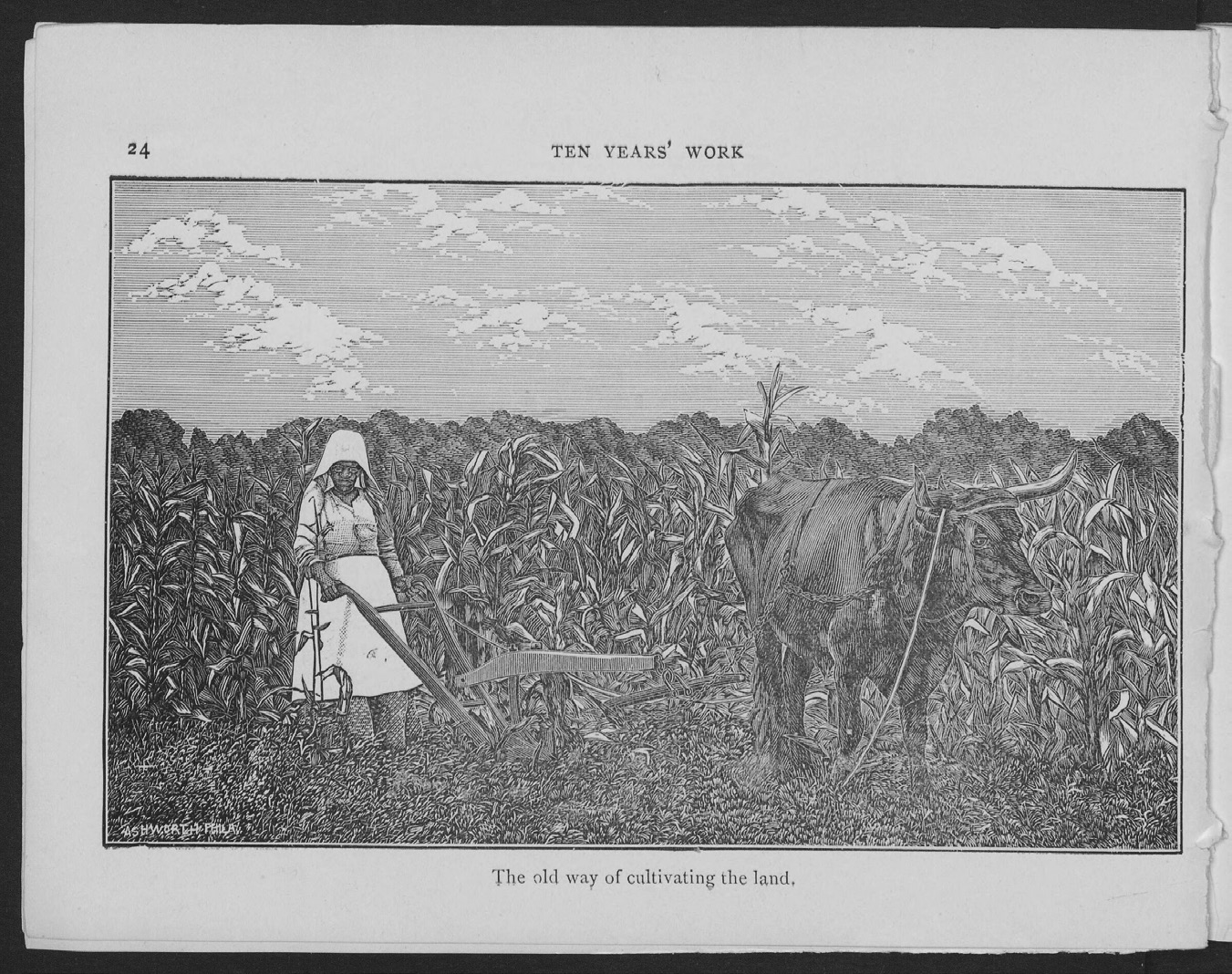
Bearing in mind the tense and, at times, complex relationships between Black middle-class Protestants in collusion with the state against the poor and working class, and especially those who still lived on plantations in the post-emancipation era, we must examine the hypocrisies and gendered contradictions embedded in Black Protestant coloniality as it pertains to Washington and his contemporaries. One such example revolves around the issue of sexual misconduct involving the Rev. Edgar James Penney, the chaplain of Tuskegee, who was accused by several women students at Tuskegee and Atlanta University of sexual assault. While historian Adele Logan Alexander has meticulously narrated this case, here I am paying attention specifically to how Black Protestants improperly addressed the issue of sexual misconduct in the age of Black sexual Victorianism to elucidate the moral failings of these ideologies, paying particular attention to communal efforts to hold Black clergymen accountable for sexual misconduct.Footnote 86 This scenario and its reenactment are a reification of the plantation whereby bondswomen were not only summoned to the domestic sphere and to the land as laborers (see Fig. 1) but were also victim to unrelenting sexual violence.Footnote 87 As Angela Davis argued in 1971, “Given the already terroristic texture of plantation life, it would be as potential victim of rape that the slave woman would be most unguarded.”Footnote 88 Whereas Davis focuses exclusively on the white master’s violation of “the black slave woman,” we must consider how black slave men also violated black slave women, as the historian Darlene Clark Hine has intimated, and we must interrogate how this legacy further crystalized on the reconfigured plantation at Tuskegee, a site where the strictures of missionary efforts imbued in the plantation church during the time of slavery evolved into Black theological education and religious service in the chapel.Footnote 89 Indeed, “The Rule of Gospel Order,” as the historian Albert Raboteau called it in Slave Religion, would later be re-employed by Black men.Footnote 90
Black Woman on “Plantation” or “Farm”
“The Tuskegee Normal and Industrial Institute, 1891,” 24.
Repository Collection Development Department, Widener Library, Harvard University. Public Domain

Fig. 1: Long description
The illustration depicts a woman dressed in traditional attire, guiding a cow pulling a plow through a field of tall crops. The scene is set under a partly cloudy sky, with a dense line of trees in the background. The woman appears to be engaged in agricultural work, symbolizing traditional farming methods. The text at the top reads 'TEN YEARS' WORK,' and at the bottom, it states 'The old way of cultivating the land.'
In 1907, Flavia Ridley, a student at Tuskegee, alleged that Penney kissed her and forced himself upon her to have sexual intercourse, on a few different occasions, and in both his office and in his home which was located on Tuskegee’s campus. Due to an extensive illness, Ridley had been boarding in Penney’s home along with his wife and daughter. It was assumed on the part of Tuskegee’s administrators that the young woman would find solace in the sanctuary of the chaplain’s home, but she was anything but safe. In his correspondences with Washington, Penney confessed, “I have no recollection of a conscious intention of ‘pulling’ at her dress or ‘pushing’ her, on our way home. I may have jostled her, as we walked along the half lighted street, but I was not, nor am I now, aware of doing so.”Footnote 91 Washington responded, referencing a previous incident of alleged sexual misconduct involving Penney and a female student at Atlanta University, writing, “I am compelled to reach the opinion that there is nothing left for me to do but to suggest that it will be better for all concerned for you to present your resignation. The plain fact that I must face is that this last occurrence, together with the other one, brings us to the point where it is practically impossible for you to render any further service to the institution that will be of any value.”Footnote 92 The fact that Penney was offered a job at Tuskegee despite his previous alleged offences at another historically black college, demonstrates how Black male clergy were often allowed to move forward with their lives and careers without any communal reckoning or calls for accountability for their alleged sexual misconduct.
Penney, like many Black male preachers during the period, came from humble beginnings and worked his way into a successful career. He was born on 15 January 1852 in Oxford, Georgia, he was a member of the first class of five students to graduate from Atlanta University in 1876, and he graduated from Andover Theological Seminary in 1880.Footnote 93 During the following year, on 5 January 1881, he married Estelle Crosby, his childhood friend and Atlanta University classmate, and together they had five children—Emma, Theo, Horace, Grace, and Earnest.Footnote 94 For most of his career, Penney jumped from church to church, school to school, and from town to town, presumably trying to escape rumors of his sexual misconduct and to preserve his treasured name. He was the pastor of the Congregational Church in Marietta, Georgia and then eventually in Selma, Alabama, where he “accepted the call from Booker T. Washington to become chaplain of the then young and struggling Tuskegee Institute in Alabama.”Footnote 95 Washington wrote a letter to the Congregationalist minister on 30 April 1890 in which he confessed, “My visit to Selma resulted in my making up my mind to secure if possible, your services for the coming school year beginning Sept 1st for the reasons that we need you and that you might not be available at the end of another year. Of course, you understand that the Bible Training School is not assured as yet, is only in prospect—but I think it will come, but I think it will take at least one or two years to get it on foot.”Footnote 96 It is unclear, however, when exactly Washington caught wind of Penney’s alleged history of sexual misconduct, which suggests that knowledge of his past and present actions functioned much like an open secret, a thing everyone knew but did little about.Footnote 97 It is also true that Washington, too, had also been subject to rumors about his own alleged sexual improprieties during his travels away from his wife, Margaret Murray Washington. In 1908, for example, Washington had been caught near the Tenderloin District in New York City, which was notorious for vice, and “Washington had gone there for an assignation with a white prostitute.”Footnote 98 In this way, Washington could have certainly known about Penney’s alleged sins, and Penney could have known about Washington’s alleged dirt. Yet both men publicly espoused Black Christian social respectability and a commitment to Black sexual Victorianism, and behind closed doors archival sources suggest that they played out their own erotic fantasies, often to the detriment of the Black women and girls in their personal and professional lives.
Issues of sexual misconduct were common during the period of Black sexual Victorianism, and Black Protestant churches were forced to cultivate strategies for addressing it.Footnote 99 For instance, Baptist ministers associated with Washington’s alma mater, Wayland Seminary in Washington, DC, had laid the blueprint for handling cases of sexual misconduct and other forms of gendered physical abuse. In 1885, Black clergymen came together denouncing “Prof. G. M. P. King, Principal of Wayland Seminary, for his repeated assaults upon female students, and his ungentlemanly bearing toward them.” They continued, “No one with the sense of right would suppose that any person or class of persons would stand idly by and see their women insulted, abused and even assaulted, and not resent it in the most emphatic manner.”Footnote 100 The Baptist clergymen stood on the side of Black women students at Wayland, in ways that Mr. and Mrs. Washington and Tuskegee’s administrators did not stand with and ultimately protect Flavia Ridley.
Men like Penney were quite powerful and influential. Outside of the church, he was an active alumnus and board member at both Atlanta University and Andover Theological Seminary. From 1891 to 1907, he served as chaplain of Tuskegee Normal and Industrial Institute and dean of the Phelps Hall Bible School. After he resigned from his position at Tuskegee due to his alleged sexual assault against Flavia Ridley, Penney moved to Muskogee, Oklahoma where he pastored the Congregational Church from 1907 to 1910. Then, he moved to Mason City, Iowa where he pastored the Plymouth Congregational Church from 1910 to 1912. His next move took him back South to be an instructor of Bible and English studies at the Pineywood School in Braxton, Mississippi from 1913 to 1914. The following year he moved to Oskaloosa, Indiana where he stayed for a year, before moving back to Mason City, Iowa where he stayed until his death on 26 June 1935, at the age of eighty-three, just over one thousand miles away from Tuskegee’s campus.Footnote 101
While it is true that Washington forced Edward James Penney to resign, it is also true that both Booker T. and his wife Margaret Murray Washington did not defend Flavia Ridley. Instead, they portrayed her as a lascivious young woman, tempting a devout and well-respected male preacher.Footnote 102 In her discussion of the Washingtons’ vested interests in protecting the Penneys, and Tuskegee’s reputation throughout the South, Alexander contends, “The Penneys and Washingtons had been friends for more than fifteen years. Estelle Penney, the chaplain’s spouse, often cared for the Washington children and had nursed them and Margaret Washington herself through several illnesses.”Footnote 103 Their conjoined interpersonal and professional connections worked against Ridley. Although Penney was fired, Ridley was expelled and sent home to New Orleans. Unfortunately, her family also did not believe her and even wrote a letter of apology to the Penneys. It is no surprise that Black women like Ridley, as Darlene Clark Hine has argued, “as a rule, developed and adhered to a cult of secrecy, a culture of dissemblance, to protect the sanctity of inner aspects of their lives.”Footnote 104 Indeed, few believed or protected Black women survivors of sexual violence, especially as it pertained to intraracial assault during a period abounding with white-on-black sexual violence.Footnote 105 Indeed, Black women and girls like Flavia Ridley have often been obscured and forced into silence, in which they involuntarily joined a long genealogy of survivorship on the plantation (and the reconfigured plantation) that extends back to the black slave woman.
Conclusion
This painful legacy was the product of myriad contradictions and hypocrisies at the helm of Black sexual Victorianism amidst Jim Crow modernity. It emerged by way of the recapitulation of the plantation’s coloniality—a coloniality that shaped Washington and his contemporaries, and a coloniality that led many of them to ultimately believe that they had to denounce their African ancestors in order to emerge as modern New Negro subjects.Footnote 106 In his attempt to rationalize this violent Christianizing process so vital to the master class, Washington, who had been born a slave on a plantation in Franklin County, Virginia, lauded Christianization for gifting Black people with “morality,” such that his calls for “the uplifting of the race” acted as his own form of evangelism or religious dictatorship. In his observations of southern Black religious life, specifically that of Black Protestants at the turn of the century, Washington, like many of his contemporaries during the period, Du Bois included, demonized certain aspects of “the Negro church” for being overly “emotional” and superstitious, and ultimately assumed by critics to exist in opposition to rationality in the West. He argued that “the Negro church [needed] a more definite connection with the social and moral life of the Negro people.”Footnote 107 Washington’s critique of Black religious emotionalism was rooted in his and other Black intellectuals’ assessment of Black Protestant preachers and their supposed lack of theological training and an expressed commitment to social issues during the early-twentieth century.Footnote 108 Moreover, Washington’s critique of Black religious emotionalism, or what might more aptly be understood as African cultural and religious inheritances, stood as a proud embrace of Black sexual Victorianism. This manifested as a set of governing beliefs largely encouraged by white elites which structured the New Negro’s gender performance, sexuality, and relation to what Sylvia Wynter describes as “the multi-tribal African” in Black Metamorphosis, who underwent “the historical process, the socio-economic sea change, the cultural metamorphosis” to become “the native of that area of experience that we term the New World.”Footnote 109 To Wynter’s point, what Washington unfortunately misses—and I believe Du Bois attempted to underscore in Souls—was that the Negro would always be indebted to the plantation. In fact, there is no way to fully flee the plantation, because the plantation is the manifestation of that horrific “sea change” and the plantation was the site where the African effectively became Negro. Thus, there is no New Negro without the Negro of the plantation and the reconfigured plantation, and as evidenced in Washington’s autobiographical account, both the New Negro and the ex-slave were the product of Protestant coloniality—the former in its denunciation of the plantation’s slave religions and the African ancestor, and the latter in its forced Christian nativity on Tuskegee’s reconfigured plantation.