Introduction
A substantive body of research has highlighted the strong association between negative psychological states such as depression, anxiety, and psychological distress, and an increased risk of death or poor health among community-dwelling older adults (Cuijpers and Smit, Reference Cuijpers and Smit2002; Suls and Bunde, Reference Suls and Bunde2005). In contrast, there has been comparatively little research linking positive psychological well-being with longer and high-functioning survival.
The concept of well-being refers to perceived optimal psychological functioning, with two schools of thought distinguishing between hedonic and eudaimonic approaches (Ryan and Deci, Reference Ryan and Deci2001). The hedonic approach focuses on happiness and defines well-being in terms of pleasure attainment and pain avoidance, whereas the eudaimonic approach focuses on self-actualization in accordance with one's daimon, or true self (Ryan and Deci, Reference Ryan and Deci2001). Prior research examined hedonic well-being (often termed subjective well-being) and life expectancy (Diener and Chan, Reference Diener and Chan2011) and found that higher subjective well-being influences health and longevity in healthy populations. However, research on the impact of eudaimonic well-being (EW) on longevity and late-life functioning among community-dwelling older adults and especially among those in the oldest-old age group remains scarce.
Few observational studies suggest a link between life expectancy and eudaimonic markers of human flourishing such as sense of purpose in life (PL) and personal growth (PG; Vaillant, Reference Vaillant2002; Buettner, Reference Buettner2008). In-depth interviews with high-functioning centenarians around the globe consistently demonstrated that PL and perceived PG were among the factors associated with the healthiest survival into advanced age (Buettner, Reference Buettner2008). Similar conclusions resonated in US-based Long-Life Observational Study of Vaillant (Reference Vaillant2002), which also underscored the importance of PL and perceived PG as longevity-associated strategies. Moreover, “meaningfulness” was one of the defining elements embedded in the Sense of Coherence construct, which in turn was linked to better psychological and physical health, and to longer survival in aged cohorts (Antonovsky, Reference Antonovsky1987; Wiesmann and Hannich, Reference Wiesmann and Hannich2008; Lundman et al., Reference Lundman2010; Nilsson et al., Reference Nilsson, Leppert, Simonsson and Starrin2010).
While there are many scales for assessing aspects of psychological well-being, Ryff's scale is ideal for studying EW because it operationalizes the distinct eudaimonic dimensions of PG, PL, environmental mastery, autonomy, positive relations with others, and self-acceptance (Ryff and Keyes, Reference Ryff and Keyes1995). Prior research examining possible biological underpinnings of eudaimonic constructs showed that individuals with higher levels of PG and PL demonstrated a slower increase in daily salivary cortisol, which is suggestive of favorable stress response, than those with lower levels of PG and PL (Ryff et al., Reference Ryff2006). Similarly, PG levels were negatively correlated with total/high-density lipoprotein cholesterol ratio, considered protective against cardiovascular disease risks. Each of these biological markers has been implicated in the aging process (Varadhan et al., Reference Varadhan2008; Rahilly-Tierney et al., Reference Rahilly-Tierney, Spiro, Vokonas and Gaziano2011), suggesting a plausible physiological sequence.
Previous literature suggested that the PG and PL dimensions play an important role in later-life physical and emotional health in aged cohorts (Wood and Joseph, Reference Wood and Joseph2010; Friedman and Ryff, Reference Friedman and Ryff2012); however, the association of these psychological factors in octo- and nonagenarian populations is limited. In this context, we examined Women's Health Initiative (WHI) data to empirically estimate the association of PG and PL constructs with healthy survival to the age of 85 years and older. This study will be the first to examine the effects of psychological well-being on living healthy into latest-life adulthood.
An examination of body mass index (BMI) as a predictor of healthy survival with and without disease and disability among women aged 85 years and older in the WHI was recently published (Rillamas-Sun et al., Reference Rillamas-Sun2013). Using outcomes modeled after this body of work, we aimed to understand how psychological factors relate to healthy survival and longevity in older women. Specifically, our objectives were:
-
1. To describe the distribution of PG and PL dimensions of EW in women at least 85 years of age.
-
2. To examine the relationship of PG and PL with healthy survival to at least 85 years of age without major chronic disease and mobility disability.
We hypothesized that individual measures of EW would vary widely in this older population of women. We also anticipated that higher levels of PG and PL would be associated with lower odds of disease, disability, and death.
Methods
Study sample
The multiethnic WHI Clinical Trial and Observational Study cohort of 161,808 postmenopausal women, aged 50 to 79 years at study entry, was enrolled between 1993 and 1998 across 40 US clinical centers. Details of the scientific rationale, study design, eligibility requirements, data collection protocols, and baseline characteristics of the cohort were previously published (Anderson et al., Reference Anderson2003). In 2004–2005, WHI participants from the main study were invited to participate in the first extension study (2005–2010). A second extension study began in 2010, with completion expected in 2015. Mailings were sent annually to participants, who completed forms pertaining to incidence of clinical outcomes and changes in functioning. Adjudication by a study physician of cerebrovascular disease, cardiovascular disease, cancer (excluding non-melanoma skin cancer), and hip fractures were completed for women from the main WHI study and a subsample of women from the extension studies. In 2012, as part of the second extension study, participants completed a Lifestyle Questionnaire, which included a modified version of Ryff's PG and PL scales (Ryff and Keyes, Reference Ryff and Keyes1995). This analysis included women who were 85 years of age and older by the time of the latest clinical outcome evaluation on December 1, 2013, and who provided complete data on the PG and PL measures.
Outcome measures
The outcome measures were five mutually exclusive classifications modeled after the study by Rillamas-Sun et al. (Reference Rillamas-Sun2013):
-
1. Healthy: lived to the age of 85 years without major chronic disease or mobility disability.
-
2. Prevalent: lived to the age of 85 years and had at least one chronic disease at WHI baseline, but did not develop new disease or a mobility disability during study follow-up.
-
3. Incident: lived to the age of 85 years and developed at least one chronic disease, but did not develop mobility disability during study follow-up.
-
4. Disabled: lived to the age of 85 years and developed mobility disability, regardless of major chronic disease status.
-
5. Deceased: died before December 1, 2013, but after the collection of PG and PL measures in the second extension study.
Chronic diseases included cardiovascular disease, cerebrovascular disease, cancer (excluding non-melanoma skin cancer), type-2 diabetes, and hip fracture. These conditions were selected because they are highly prevalent in older women and greatly increase a woman's risk of death and disability. Disabling conditions, such as arthritis, were captured through identification of impaired mobility. Except for diabetes, which was identified by a self-report of doctor's diagnosis and medication use, all diseases were physician-adjudicated throughout most years of study follow-up. Participants’ death records were centrally adjudicated by study physicians using hospital records, autopsy reports, and death certificates. Periodic checks of the National Death Index for all participants, including those lost to follow-up, were performed; the latest update was available through December 1, 2013. Mobility disability was defined as self-reported difficulty walking one block or climbing one flight of stairs or a self-reported need to use crutches, a walker, or a wheelchair to move on a level surface. As in Rillamas-Sun et al. (Reference Rillamas-Sun2013), we also excluded women who did not provide health information within 18 months of their 85th birth year and those who reported a mobility disability at baseline.
Eudaimonic constructs
PG and PL constructs were each assessed in 2012 using a modified seven-item measure derived from the Psychological Well-Being scale of Ryff and Keyes (Reference Ryff and Keyes1995; see Table S1, available as supplementary material attached to the electronic version of this paper at www.journals.cambridge.org/jid_IPG). Although each of the original subscales included 20 items designed to measure these constructs, several shortened versions (ranging from 3 to 14 questions) have been developed and validated psychometrically (Ryff and Keyes, Reference Ryff and Keyes1995; Abbott et al., Reference Abbott, Ploubidis, Huppert, Kuh, Wadsworth and Croudace2006). Participants rated their level of agreement with each item (e.g. “I have a sense of direction and purpose in life”) in the past week on a five-point scale that ranged from 0 to 4. The construct scores were calculated by summing the score for the seven items, resulting in a possible range of 0 to 28 for each measure. Higher scores were suggestive of higher levels of PG and PL. The oldest-old women with at least five of the seven items non-missing for the PG (n = 9,028) and PL (n = 8,988) constructs were included in the analysis. The modified measures used for this analysis had acceptable reliability for the PG and PL scales (Cronbach's α's of 0.73 and 0.65, respectively). These two scales’ scores were divided into quartiles for analysis, based on their observed distribution.
Covariates
Data on demographic variables (race/ethnicity, family income, highest level of education) were obtained by self-report at the WHI baseline during the period 1993–1998. Self-reported frequency of alcohol consumption (Never; <1 drink per week; 1–4 drinks per week; >4 drinks per week) and total minutes of recreational physical activity (including walking, mild, moderate, and strenuous exercise) were collected in 2012. Additional variables, such as baseline obesity measured by BMI categories, depressive symptoms assessed using the Burnam adaptation of the Center for Epidemiological Studies Depression Scale short form (Burnam et al., Reference Burnam, Wells, Leake and Landsverk1988), self-reported binary indicators (Y/N) of living alone, and baseline smoking status (Never smoker; Past Smoker; Current smoker) were also included as adjustment variables. Depressive symptoms and living status were collected concurrently with EW measures. Existing literature suggested that the above-mentioned factors are plausible confounders of the relationship between EW and healthy survival (Boyle et al., Reference Boyle, Barnes, Buchman and Bennett2009; Reference Boyle, Buchman, Barnes and Bennett2010).
Statistical approach
We examined the distribution of the EW measures and other covariates by the outcome groups using descriptive statistics. Because the outcome was composed of five nominal categories, the association of the PG and PL constructs was examined using multinomial logistic regression. Multinomial logistic regression uses maximum likelihood to estimate the log odds of being in a given outcome category (Prevalent, Incident, Disabled, or Deceased) compared with the reference category (Healthy), allowing for separate slope estimates (Long, Reference Long1997). The adjusted prediction of quartiles of PG and PL by the outcome categories and their 95% CIs were calculated and reported. The partially adjusted models controlled for age, race, and education (see Table S2, available as supplementary material attached to the electronic version of this paper at www.journals.cambridge.org/jid_IPG). The fully adjusted models controlled for age, race, education, income, alcohol use, depression, obesity, physical activity levels, smoking, and whether the participant lived alone. Tests for trend were performed by contrasting log-likelihood ratios of the models that differed by having either factorial or linear terms of PG or PL measures included. All p values reported are for two-tailed tests. The statistical software STATA, version 11.2 (StataCorp, College Station, TX), was used for the statistical analysis.
Results
Of the 9,986 women who were at least 85 years of age by December 1, 2013, 889 (8.9%) participants had missing information on EW measures and 196 (2.0%) had missing information on study outcomes, leaving a total analytical sample of 8,880 women. Age distribution was different between those with missingness on PG and PL measures and those with complete information (average age 88.5 (SD 2.5) and 88.0 (SD 2.3), p < 0.001 in excluded and analytical samples respectively) and similar between excluded and retained women with respect to study outcomes (average age 88.3 (SD 2.4) and 88.0 (SD 2.3), p = 0.11 in excluded and analytical samples respectively). A total of 3,395 women (38.2%) were classified as healthy, and 1,273 (14.3%) lived to the age of 85 years and maintained the same number of selected chronic conditions as at the WHI baseline. Of the remaining women, 2,163 (24.4%) developed at least one of the selected chronic conditions during study follow-up and before their 85th birth year; 1,685 (19.0%) lived to the age of 85 years and developed mobility disability without regard to disease status; and 364 (4.1%) died.
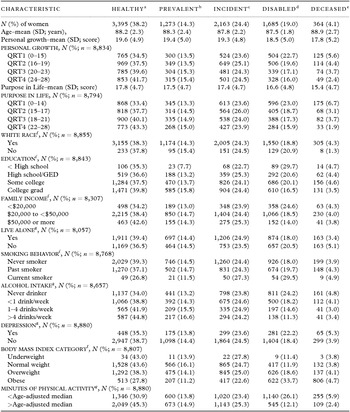
Table 1 displays univariate characteristics of the five outcome categories. Assessment of the EW indicators across outcome categories revealed a gradient decline in percentage of individuals reporting the highest quartile of PG and PL, ranging from 41.7% and 43.3% for those in the Healthy category to 2.4% and 1.9% for those in the Deceased group. In addition, women in the Healthy group were more likely to have higher levels of PG and PL, whereas women in the Disabled group were more likely to have lower levels of PG and PL.
Baseline and concurrent characteristics of the 8,880 participants 85 years of age and older in the Women's Health Initiative (WHI) study, by survival phenotype category

aNo disease and no mobility disability.
bBaseline disease but not incident disease or mobility disability.
cIncident disease but not mobility disability.
dIncident mobility disability with or without disease.
eDid not survive to December 1, 2013.
fMeasure was collected at the WHI baseline during the period 1993–1998.
gMeasure was collected in 2012.
GED = tests of general educational development; QRT = quartile.
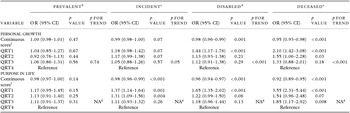
Table 2 shows the fully adjusted odds ratios (ORs) for the EW-related variables. Although not all ORs were statistically significant, consistently higher ORs for the Incident, Disabled, or Deceased categories versus the Healthy group were found in those reporting low levels of PG and PL as compared with higher levels. For example, those who reported the lowest levels of PG had 1.44 (95% CI = 1.17–1.76) odds of being in the Disabled rather than the Healthy category compared with their counterparts in the highest PG quartile. Likewise, women with the lowest PL levels had a 1.37 (95% CI = 1.14–1.64) odds of being in the Incident category relative to being in the Healthy group. Furthermore, women with the lowest levels of PL had a 3.6-fold higher risk of being in the Deceased versus the Healthy category, and, similarly, those who reported the lowest levels of PG had a 2.1-fold higher risk of dying relative to the reference category. Interestingly, ORs for Prevalent versus Healthy survival were not strongly associated with the EW levels, although a gradual increase in the odds of being in the Prevalent category could be clearly observed when contrasting higher with lower PL levels.
Adjusted odds ratios (ORs) and 95% CIs of quartiles of “Personal Growth” (N = 7,704) and “Purpose in Life” (N = 7,675) constructs for Prevalent, Incident, Disabled, or Deceased categories at 85 years of age in Women's Health Initiative study participantsa

Note. Results are from multinomial logistic regression adjusted for age, race, education, income, alcohol use, depression, body mass index, physical activity, smoking status, and whether the participant lives alone. The higher value of the quartiles indicates higher personal growth and purpose in life.
aReference category is those living to age 85 years or older with no disease and no mobility disability.
bBaseline disease but not incident disease or mobility disability.
cIncident disease but not mobility disability.
dIncident mobility disability with or without disease.
eDid not survive to December 1, 2013.
fHigher score indicates more favorable status.
gNull results for the test for linear trend.
QRT = quartile; OR = odds ratio.
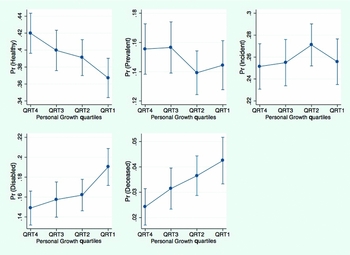
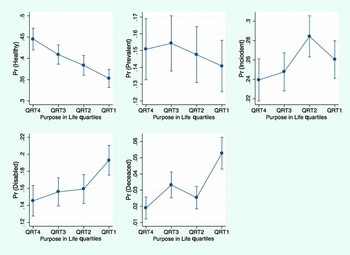
Figures 1 and 2 illustrate the estimated probabilities of an average study participant being in the Healthy, Prevalent, Incident, Disabled, or Deceased categories at different levels of PG and PL constructs when holding all other variables in the model at their means. The vertical lines are likelihood-ratio-based 95% CIs for the predicted probabilities. For PG, the probability of being in the Disabled or Deceased categories increases almost linearly as PG levels decline (p for linear trend <0.001). A similar pattern was observed in the Incident and Disabled categories for the PL construct, although in the latter model log-likelihood estimates did not support the linear-trend assumption. Finally, the probabilities of being in the Healthy category increased directly as higher levels of the EW indicators were considered.
Estimated adjusted probabilities of Healthy, Prevalent, Incident, Disabled, or Deceased categories of survival phenotype for 88-year-old woman among Women's Health Initiative participants (N = 7,704) by quartiles of Personal Growth construct. Categories denote: survived without major chronic disease and without disability (Healthy); survived with one or more major chronic diseases at baseline, but without disease or disability (Prevalent); survived and developed one or more major chronic morbidities, but not disability, during study follow-up (Incident); survived and developed mobility disability with or without disease (Disabled); and did not survive (Deceased). Results are from multinomial logistic regression adjusted for race, education, income, alcohol use, depression, body mass index, physical activity, smoking, and whether the participant lives alone. The higher value of the quartiles indicates higher Personal Growth. Error bars indicate likelihood-ratio-based 95% CIs.

Estimated adjusted probabilities of Healthy, Prevalent, Incident, Disabled, or Deceased categories of survival phenotype for 88-year-old woman among Women's Health Initiative participants (N = 7,675) by quartiles of Purpose in Life construct. Categories denote: survived without major chronic disease and without disability (Healthy); survived with one or more major chronic diseases at baseline, but without disease or disability (Prevalent); survived and developed one or more major chronic morbidities, but not disability, during study follow-up (Incident); survived and developed mobility disability with or without disease (Disabled); and did not survive (Deceased). Results are from multinomial logistic regression adjusted for race, education, income, alcohol use, depression, body mass index, physical activity, smoking, and whether the participant lives alone. The higher value of the quartiles indicates higher Purpose in Life. Error bars indicate likelihood-ratio-based 95% CIs.

Discussion
We examined the association of PG and PL with survival to 85 years of age and older among almost 9,000 women, and found that these constructs of EW were independently associated with late-life risk of death and higher odds of having a mobility disability and major chronic morbidity before the age of 85 years. Older women who reported lower levels of PG and PL had respectively higher risk of death in the next two years of study follow-up than women who had higher levels of PG and PL. Furthermore, late-life survivors reporting lower levels of PG and PL had higher odds of having a mobility disability at 85 years of age or older compared with their counterparts who had a more favorably perceived psychological well-being. Among women who lived to late adulthood without mobility disability, having lower perceived levels of the selected EW constructs was associated with higher odds of having developed a major chronic morbidity than with the process of living with chronic conditions from baseline. Conversely, those who did not escape mobility disability were more likely to report lower levels of PG or PL than their able-bodied and healthier counterparts. To our knowledge this is the first study to examine the association between selected dimensions of the EW and patterns of survival in the oldest-old age group. However, one important caveat needs to be taken into consideration, as the limited prospective nature of the study precludes conclusive statements on the directionality of the effects. It is possible to assume that women who developed chronic morbidity or disability during years of follow-up also experienced a decline in PG and PL given that EW measures were collected on average 15.5 years after baseline assessments.
The PL construct underscores one's perception of having meaning, purpose, and direction in life, whereas PG reflects the extent to which respondents make use of their personal talents and potential (Ryff and Keyes, Reference Ryff and Keyes1995). High scores on these measures in latest adulthood suggest that psychological flourishing is possible even in the face of advanced aging processes.
Observational and empirical evidence suggest that psychological factors of human flourishing in latest adulthood are related to high-functioning survival. In the widely publicized book The Blue Zones, Buettner (Reference Buettner2008) presented evidence that having a strong sense of PL was one of the main themes shared by a relatively large cohort of high-functioning centenarians around the globe. Echoing these findings, US-based Long-Life Observational Study of Vaillant (Reference Vaillant2002) also highlighted that perceived PG and PL were among the factors associated with the healthiest survival into advanced age. In recent years cross-sectional and prospective studies have consistently demonstrated an association between PL and a reduced risk of all-cause mortality (Boyle et al., Reference Boyle, Barnes, Buchman and Bennett2009), reduced risk of Alzheimer disease, and mild cognitive impairment (Boyle et al., Reference Boyle, Buchman, Barnes and Bennett2010), reduced risk of developing functional dependence (Boyle et al., Reference Boyle, Buchman, Barnes and Bennett2010), and reduced risk of frailty syndrome (Andrew et al., Reference Andrew, Fisk and Rockwood2012). Similar studies examining the effects of PG on clinical outcomes are surprisingly scarce.
At present, mechanisms for the association of PL and PG with healthier survival are unknown. Physiological mechanisms for the relationship between EW and health have been hypothesized, including a direct enhancement of neuroendocrine, immune, and cardiovascular systems functioning (Ryff et al., Reference Ryff, Singer and Love2004; Steptoe et al., Reference Steptoe, Wardle and Marmot2005) or indirect effect on health by buffering the effects of stress (Pressman and Cohen, Reference Pressman and Cohen2005). Biological studies have provided partial support for these assertions, demonstrating that some aspects of psychological well-being are associated with important disease biomarkers such as salivary cortisol, the proinflammatory cytokine interleukin-6, and high-density lipoprotein cholesterol (Ryff et al., Reference Ryff2006; Friedman et al., Reference Friedman, Hayney, Love, Singer and Ryff2007). Given the well-described association of low-grade inflammation with poor health and poor functioning in older adults, it is plausible that the beneficial effects of the eudaimonic markers of human flourishing on late-life health might be mediated through a physiological milieu. Thus, pending further research, one cautious interpretation is that eudaimonic indicators of well-being such as PL and PG might promote late-life physical health through favorable alteration of neuroendocrine signaling and an enhancement of stress-resistance mechanisms.
Engagement in health-promoting behaviors is another sensible explanation for the link between psychological well-being and having better health. It is plausible to assume that those oldest old who have a favorable perceived psychological outlook also have a higher proclivity for health-promoting behaviors. However, in the current study, accounting for alcohol consumption, physical activity, smoking, and BMI did not substantially affect the association of PG and PL with the outcomes, suggesting that other factors may be involved (see Table S2, available as supplementary material attached to the electronic version of this paper at www.journals.cambridge.org/jid_IPG).
Our findings bear an important public health message. Psychological well-being is an integrative factor of one's physical health. Although it is still unclear whether the perceived sense of one's psychological flourishing is amenable to intervention in late adulthood, our findings highlight the importance of comprehensive psychological well-being assessment as one of mortality- and morbidity-sensitive measures. In addition, our results indicate that boosting EW in even the oldest adults – for instance, through community volunteer programs such as the Experience Corps (Carlson et al., Reference Carlson2008) – might engage them in activities likely to promote their sense of PL and their PG (Greenfield and Marks, Reference Greenfield and Marks2004).
Although we identified a relationship between lower levels of PG and PL and the risk of dying within two years post follow-up, we acknowledge that temporal ambiguity limits our ability to estimate risk associations of EW on the mobility disability and incident chronic disease outcomes. Because the evaluation of incident disability and disease occurred prior to the assessment of the PG and PL measures, it is reasonable to believe that women who developed these conditions might be more likely to report lower EW measures later in life. Yet, several studies report that levels of within-person EW are relatively stable over time, especially in older populations (Ryff, Reference Ryff1991; Springer et al., Reference Springer, Pudrovska and Hauser2011). This suggests that the women with lower levels of PG and PL in our sample may likely have had these low levels prior to their development of disability or disease. Thus, we believe there is a relationship between lower PG and PL levels and the risk of developing a mobility disability or major chronic disease; however, confirmation of these relationships in a prospective study is needed. The validation is especially pertinent given that the above-mentioned within-person stability in EW markers has yet to be confirmed among frail older adults and those with incident disability.
This study limited the scope of psychological constructs to measures of EW, even though other constructs, such as optimism, social support, and hedonic or emotional well-being, that have been measured in the WHI cohort might influence the relationship of PG and PL to physical health. In addition, PG and PL were only two of six constructs constituting Ryff's Psychological Well-Being scale (Ryff and Keyes, Reference Ryff and Keyes1995). Although each of the six constructs can be used independently, the availability of the complete scale would offer a more comprehensive psychological profile (Ryff, Reference Ryff2014). Next, older women with low levels of functioning and health were less likely than women with higher levels of functioning to complete self-reported questionnaires. Loss to follow-up may underestimate the proportion of older women at risk of being in unfavorable survival categories. However, rather than determining the prevalence of survival groups, the aim of this analysis was to describe the association of the selected dimension of EW with patterns of survival to 85 years of age in older women. Finally, this oldest-old WHI cohort had a higher frequency of college education attainment than older women in the general population and was relatively homogeneous in terms of race; therefore, the cohort might not be fully representative. However, our models included adjustment for common indicators of prosperity, such as education and income, and statistically significant associations were still observed.
The study strengths are an assessment of PG and PL for a large group of older women. We also minimized misclassification bias of the outcomes by completing a detailed central adjudication performed by a trained clinical staff. Last, our rich database permitted examination of a wide array of likely confounders on the association of selected dimensions of EW with healthy survival.
In sum, these results add to a growing literature on the potential salutary effects of positive psychological functioning, and they suggest that even among oldest-old adults, experiences of purposeful life engagement and continuing PG may contribute to better health outcomes. Future prospective studies, however, are needed to better understand the dynamics between positive psychological factors and patterns of survival into advanced age.
Conflict of interest
The WHI program is funded by the National Heart, Lung and Blood Institute; the National Institute of Health; and the US Department of Health and Human Services through Contracts N01WH22110, 24152, 32100-2, 32105-6, 32108-9, 32111-13, 32115, 32118-32119, 32122, 42107-26, 42129-32, and 44221. The funding agency had no role in the design or conduct of the study; collection, management, analysis, or interpretation of the data; or preparation, review, or approval of the manuscript.
Description of authors’ roles
Dr O. Zaslavsky, Dr E. Rillamas-Sun, Dr B.B. Cochrane, Dr N.F. Woods, and Dr A.Z. LaCroix had full access to all of the data used in the study, and take responsibility for the integrity of the data and accuracy of the data analysis. Dr O. Zaslavsky, Dr E. Rillamas-Sun, Dr N.F. Woods, and Dr A.Z. LaCroix were involved with the study concept, design, interpretation of data, and preparation of manuscript. Dr O. Zaslavsky and Dr E. Rillamas-Sun carried out the data analysis and visualization. H. Tindle, M.L. Stefanick, and L.F. Tinker were involved with the preparation of manuscript.
Supplementary material
To view supplementary material for this article, please visit http://dx.doi.org/10.1017/S1041610214001768
Acknowledgments
The authors thank the WHI investigators and staff for their dedication and the study participants for making the program possible. A listing of WHI investigators can be found at https://cleo.whi.org/researchers/Documents%20%20Write%20a%20Paper/WHI%20Investigator%20Short%20List.pdf.