


The relationship between comparative politics and area studies is long and contentious (Bates Reference Bates1997; Beissinger Reference Beissinger and Milutinovic2019; Hanson Reference Hanson2009; Kohli et al. Reference Kohli, Evans, Katzenstein, Przeworski, Rudolph, Scott and Skocpol1995; Lijphart Reference Lijphart1971; Rustow Reference Rustow1968; Sigelman and Gadbois Reference Sigelman and Gadbois1983; Szanton Reference Szanton2004b; Verba Reference Verba1967). Yet a sense that area studies and the social sciences are inherently in tension became particularly pronounced in the 1990s, when rational choice theory was ascendant and cross-national regression analyses were the methodological frontier. It was also a time of vituperative exchanges on this topic, with the prominent scholar Robert Bates (Reference Bates1996, 1) describing area studies specialists as a “center of resistance to new trends in the discipline” who “tend to lag behind others in terms of their knowledge of statistics, their commitment to theory, and their familiarity with mathematical approaches to the study of politics.” By the 2000s, proclamations of the decline or even “death” of area studies expertise had become common (e.g., Yalowitz and Rojansky Reference Yalowitz and Rojansky2014), as had concerns about the devaluation of regionally specific substantive political knowledge relative to social-scientific theory and methods (Bershidsky Reference Bershidsky2017; Demirjian Reference Demirjian2015; Stent Reference Stent2014).Footnote 1
These perceptions of area studies’ decline are based on an outdated view of its relationship to the discipline of political science. In this article, we show that comparative politics is more closely aligned with area studies than it has been for decades. Moreover, comparative research in contemporary political science is highly compatible with area studies, and comparativists of all generations express strong support for area studies training, regionally specific course offerings, and the hiring of scholars with area expertise.
Our argument draws on an original survey of American Political Science Association (APSA) members and an original analysis of approximately 4,500 hand-coded comparative politics articles in six top political science journals.Footnote 2 We use these data to document several key developments that have transformed the subdiscipline of comparative politics over the past three decades. These include shifts (1) away from research prioritizing theoretical contributions toward research prioritizing empirical contributions, with a particular emphasis on original data collection; (2) away from large-N cross-national datasets toward research concentrated on specific regions or often on a single countryFootnote 3; (3) away from a focus on macro-level units of analysis (e.g., nation-states) toward micro-level units of analysis (e.g., individuals, public officials, or firms); and (4) away from descriptive correlations toward causal inference using experiments and other design-based approaches. As we argue later, multiple factors have contributed to these developments, but a central theme that emerges from our discussion is how a growing emphasis on the internal validity of estimates of cause and effect has shaped the practice of empirical research in the social sciences, including the prominence and nature of area studies.
Based on these findings, we conclude that the tension between political science and area studies is neither intrinsic nor static. Rather, it waxes and wanes alongside the discipline’s theoretical and methodological proclivities and broader political and technological trends. The discipline’s present-day emphasis on empirically oriented, locally focused research clearly overlaps with traditional area studies’ emphasis on regional expertise and data collection through extensive in-person fieldwork. Less appreciated are the ways in which micro-level, causally focused research is not merely compatible with deep regional expertise but also requires it to produce high-quality scholarship (Gallagher Reference Gallagher2024; Malesky Reference Malesky2008). Accordingly, current developments in the discipline provide an opportunity to strengthen area studies and to celebrate its merits both in partnership with the discipline and for the inherent value of area-specific research.
We also recognize room for improvement. Compared to the ambitious vision of area studies’ founders in the post–World War II period (Lust Reference Lust2024), the new area studies in political science falls short. Potentially concerning trends include declines in graduate student language training, time spent conducting dissertation fieldwork, and participation in area studies associations and institutions. To some extent, these trends reflect the internationalization of higher education, the emergence of new technologies, and the transformation of data in a digitized world. For example, one reason for declines in language training is that the composition and skill sets of today’s graduate cohorts have changed. Students in US and European PhD programs hail from around the world and often conduct fieldwork in their home regions using their native language; others enter graduate school with advanced language skills from time spent studying or working abroad. Nevertheless, preserving an area studies–comparative politics synthesis based on regional knowledge, in-person fieldwork, and interdisciplinarity will require continued attention to these issues, especially as keeping pace with technological and methodological advances places growing demands on students’ time even as funding constraints increase pressure to reduce the time to degree.
Our article proceeds as follows. We first review the evolution of area studies, political science, and their interactions, examining long-standing critiques of area studies from inside and outside the political science discipline. Drawing on this analysis, we contrast emerging conceptions of a “new” area studies with the area studies model of the mid- to late twentieth century. The latter model was broad and systemic, relying on intensive immersion and extensive fieldwork to produce seminal works on how countries around the world are governed, which in turn facilitated comparative theory-building. The former is narrow and focused, requiring intimate knowledge of the institutional, cultural, and historic details required to produce original data, design and implement experiments, and make causal claims credible. We next introduce our data and use it to document the resilience of regional expertise in comparative politics, trends in theoretical and empirical scholarship that favor a new model of area studies, and comparativists’ views on the relationship between area studies and qualitative and quantitative methodologies. We also document several of the concerning trends—declines in language study, extensiveness of fieldwork, and interdisciplinary collaboration—and countervailing trends that, to some extent, mitigate these concerns.
Our arguments are both empirical and aspirational. Trends within political science make it increasingly compatible with area studies, but we are concerned that the discipline has yet to fully take advantage of these emerging opportunities. We accordingly adopt a prescriptive stance. For the new model of area studies to fulfill its potential, comparative politics must renew its emphasis on descriptive research, place greater weight on macro-level political analysis, and address the ongoing challenges of generalizability from local contexts. More broadly, to strengthen the discipline and its engagement with area studies, comparative politics must embrace area studies’ prominent role in comparative scholarship, encourage new models of collaboration, and create material incentives for area studies contributions.
The Origins and Evolution of Area Studies
Area studies describes an academic mode of inquiry that emphasizes local knowledge, fieldwork, language learning, and interdisciplinarity. Szanton (Reference Szanton and Szanton2004a, 4) summarizes the dominant view of area studies throughout the latter half of the twentieth century:
“Area Studies” is best understood as a cover term for a family of academic fields and activities joined by a common commitment to: (1) intensive language study; (2) in-depth field research in the local language(s); (3) close attention to local histories, viewpoints, materials, and interpretations; (4) testing, elaborating, critiquing, or developing grounded theory against detailed observation; and (5) multi-disciplinary conversations often crossing the boundaries of the social sciences and humanities.
This understanding of area studies is still common among contemporary political scientists. In our survey of APSA members (the details of which we introduce later), respondents frequently defined an area studies specialist as:
-
• “A person trained to understand the culture, language, geography, and politics of a particular country or region”
-
• “(Someone) with a deep knowledge of the language, history, politics, and culture of a region or country”
-
• “A researcher or academic with deep knowledge of a country or region’s politics, history, and economy gained through both fieldwork and desk research”
Many respondents supplied additional details—sometimes critical—but overall there is remarkable consensus among political scientists about what area studies means.
In the US higher education system, area studies is usually supported through interdisciplinary programs, centers, or initiatives. Before the second Trump administration, the federal government supported area studies research through grants under Title VI of the Higher Education Act of 1965. Professional organizations such as the Association for Asian Studies, the African Studies Association, and the Council for European Studies support professional networks across universities and research institutions. Importantly, in the United States, researchers who pursue area studies research often do not hold a primary appointment in an area studies center or program; instead, their primary appointment is in a disciplinary department such as political science, history, anthropology, or a related discipline. Academic departments of Asian Studies, African Studies, Middle Eastern Studies, or Latin American Studies—where they exist—tend to be smaller than disciplinary departments.
Outside the United States, other organizational models are more common (Goodman and Pepinsky Reference Goodman, Pepinsky, Ahram, Köllner and Sil2025). The Soviet Union established research and training institutions devoted to area studies, a model being replicated today in the People’s Republic of China (van Dongen Reference Van Dongen2025), whereas European governments developed area studies expertise and training through universities (e.g., the School of Oriental and African Studies of the University of London) and research institutions (e.g., the German Institute of Global and Area Studies). As Sil (Reference Sil2020) argues, these institutions have adapted to changing geopolitical circumstances in recent decades but retain a fundamental commitment to interdisciplinary scholarship shared by area studies programs and centers in the United States.
Area Studies and Its Critics
The history of area studies is intertwined with global politics and trends within the disciplines of political science, other social sciences, and the humanities. As a result, the model of area studies that is emerging within political science today is different from the version that emerged in the mid-twentieth century.
The area studies that arose and flourished during the Cold War reflected the security interests of the United States; countless works have analyzed the role of US military, political, economic, and ideological interests in the development of area studies (see, among others, Rafael Reference Rafael1994; Sidaway Reference Sidaway2013; Slocum and Thomas Reference Slocum and Thomas2003; Solovey Reference Solovey2001).Footnote 4 In the post–Cold War era, area studies suffered a striking decline in the United States, driven in part by changing disciplinary norms in the social sciences and humanities and by a decline in federal support (on these and other forces, see Bates Reference Bates1996; Katzenstein Reference Katzenstein2001; Ludden Reference Ludden2000; Szanton Reference Szanton2004b). The era of globalization that followed the Cold War further contributed to a sense that area studies, at least as traditionally practiced, had become outdated (Katzenstein Reference Katzenstein2001; Szanton Reference Szanton and Szanton2004a).
Area studies also found itself besieged on several intellectual fronts. One set of critiques came from humanities and critical social science scholars, who accused area studies of reifying geographic boundaries that reflected strong Western-centric biases. These scholars called for a new approach that challenges Western conceptions of world regions as fixed, geographically organized social units, as well as the institutional and political forces that structure knowledge production around these categories (Black Reference Black2023; Houben Reference Houben, Mielke and Hornidge2017; Schäfer Reference Schäfer and Arjomand2014).Footnote 5 In parallel with these critiques of area studies, fields such as Global Studies have embraced processes of globalization and transnationalization that highlight flows across regions, rather than borders and distinctions between them (Steger et al. Reference Steger, Juergensmeyer, Sassen and Faessel2018). Diaspora Studies and related fields have problematized the very idea of constructing academic fields based on territory, rather than community (Chakrabarty Reference Chakrabarty1998).
These alternative approaches have had limited effects on the comparative politics subdiscipline. Comparativists have responded ably to the criticisms that have motivated critical scholars. Examples include theorizing cross-regional comparisons that emphasize the portability of concepts and insights, rather than generalizability across contexts (Ahram Reference Ahram2011; Ahram, Köllner, and Sil Reference Ahram, Köllner and Sil2018), with emphasis on the continued importance of area-specific training (see contributions in Ahram, Köllner, and Sil Reference Ahram, Köllner and Sil2025); incorporating borderlands into the comparative politics mainstream (Braun and Kienitz Reference Braun and Kienitz2022); and exploring alternative spatial and geographic conceptions of what comprises a region or area (Acharya Reference Acharya2014; Scott Reference Scott2009). In these ways, contemporary comparative politics has actually embraced many of the arguments offered by critics of standard world regions, but instead of conceptualizing these intellectual developments as a new kind of area studies, political scientists view these developments as invitations to strengthen social science research.
A different intellectual challenge to area studies emerged from the rational choice revolution and the resulting tensions between area studies and the discipline about the fundamental purpose of social inquiry (Bates Reference Bates1996; Hanson Reference Hanson2009; Sil Reference Sil2020; Szanton Reference Szanton2004b). Just as the post–World War II behavioral revolution had sought to develop general accounts of human behavior through systematic observation and measurement (Dahl Reference Dahl1961), the rational choice revolution brought a deductive approach rooted in logical positivism to develop general principles of human interaction. Perhaps unsurprisingly, the clashes between discipline-oriented political scientists and area studies proponents in the 1990s echoed, to a remarkable extent, the vitriolic debates between behavioralists and area experts from several decades before (Hanson Reference Hanson2009). Although it was certainly possible for strict rationalists and dedicated behavioralists to turn their sights on research questions in particular countries or regions, such work had a greater affinity for research that presented results in general, decontextualized terms. Rational choice’s ascendance also coincided with the emergence of desktop computing and the creation of global datasets.Footnote 6 The resulting wave of studies using cross-national regressions seemed, at least initially, to neatly align with a discipline oriented toward generalizable empirical findings.
At the height of these debates, many discipline-oriented comparativists held that area studies was best viewed as an input to the process of social-scientific research. For those intent on establishing general theories, area specialists are data gatherers and interpreters whose work is useful primarily in service of social scientists’ broader goals. This viewpoint rationalizes the division of labor between area studies as an interdisciplinary activity and political science as a discipline with intellectual foundations and scholarly ambitions that differ from those of area specialists. Of course, many area experts sharply criticized this conception of a division of labor as artificial, arguing that theory and empirics necessarily interact (see, e.g., several contributors in Kohli et al. Reference Kohli, Evans, Katzenstein, Przeworski, Rudolph, Scott and Skocpol1995).
Even beyond the rational choice revolution, comparative politics in the 1990s was marked by a tendency to organize comparative inquiry paradigmatically, emphasizing high-level principles like structure, institutions, culture, and rationality (e.g., Lichbach and Zuckerman Reference Lichbach and Zuckerman2009). This created incentives for area specialists to fit their work within broad intellectual debates, rather than developing accounts of specific places that prioritized local knowledge. By the early 2000s, however, paradigms were on the decline as an organizing principle in comparative politics (Bryman Reference Bryman, Alasuutari, Bickman and Brannen2008; Geddes Reference Geddes2003; Lichbach Reference Lichbach, Lichbach and Zuckerman2009), and behavioralism and rational choice theory were no longer the revolutionary vanguards. Laitin (Reference Laitin, Katznelson and Milner2002) proposed a middle position in which theories would be expressed in logical terms, shown to make general predictions, and illustrated by specific examples. New work in qualitative methodology created a common framework for reconciling case studies with general comparative approaches (Gerring Reference Gerring2004). And quantitative methodologists began to embrace new approaches to using statistics to make causal inferences.
The most important development in twenty-first-century political science, and the axis around which the most contentious debates occur today, is the credibility revolution in empirical social science and the concomitant rise of experiments and design-based inference. The term “credibility revolution” refers to the movement in empirical social science aimed at strengthening the internal validity of causal estimates. In practice, this movement emphasizes the explicit specification of causal quantities of interest; the identifying assumptions required to estimate those quantities with a given research design; and the adoption of designs whose assumptions are most plausible, subject to ethical and practical constraints (Angrist and Pischke Reference Angrist and Pischke2010; Torreblanca et al. Reference Torreblanca, Dinneen, Grossman and Xu2025). Indeed, the credibility revolution could be understood as a new paradigm for organizing political science scholarship, defined not by its theoretical orientation but by its methodological commitments and assumptions about the goal of empirical social research. Rather than debating rationality versus culture, contemporary comparative politics is working out the place of description in a world dominated by causal inference (de Kadt and Grzymala-Busse Reference De Kadt and Grzymala-Busse2025; Gerring Reference Gerring2012; Munger, Guess, and Hargittai Reference Munger, Guess and Hargittai2021; Spirling and Stewart Reference Spirling and Stewart2025).
As we argue later, the decline of the “paradigm wars” over theoretical assumptions and methodological commitments (Bryman Reference Bryman, Alasuutari, Bickman and Brannen2008) and the shift of political science’s methodological frontier from formal models and cross-national regressions to empirically focused causal inference have created a propitious environment for area studies. The emerging model of area studies, however, differs from the model of the late twentieth century, and each has advantages and shortcomings. In that earlier period, the dominant style of area studies was broad and systemic. Scholars drawing on extensive field research produced landmark studies that illuminated modes of governance and shaped comparative theory-building.Footnote 7 Yet, because these works often paid less attention to stringent hypothesis testing, their causal claims rested on fragile ground despite their deep engagement with the local and national context. In contrast, the new area studies researchers tend to conduct empirical inquiry in a narrow and focused way. Given concerns about establishing internal validity, they probe the institutional, cultural, or historical contexts most pertinent to their causal arguments, generating rich new datasets about particular regions and evaluating narrowly defined hypotheses following an experimental template. However, information not directly tied to these aims frequently remains unreported, making it challenging to piece together more comprehensive understandings of political systems.
One of the most promising recent trends in political science, the emergence of historical political economy (HPE), illustrates both the promise and potential challenges of the new area studies. HPE is a field of study that uses the analytical frameworks of political economy and the empirical methods of social science to address questions of historical relevance (Jenkins and Rubin Reference Jenkins, Rubin, Jenkins and Rubin2024). It is characterized by a strong commitment to empirically focused causal inference, the collection of original historical data (often from archival sources), and close attention to the contextual features of economic and political processes. And it is clearly a form of area studies: the puzzles HPE addresses are informed by area-oriented historical scholarship, it is inherently interdisciplinary, and nearly all the data collection in HPE requires area studies skills (e.g., linguistic, cultural, and historical expertise and familiarity with archives and historical documents). In terms of influence, HPE has been manifestly successful, garnering a prominent place in the discipline’s journals (Charnysh, Finkel, and Gehlbach Reference Charnysh, Finkel and Gehlbach2023) and awards.Footnote 8 Yet, precisely because of its emphasis on establishing internal validity in particular historical and cultural contexts, HPE has also been criticized—much like area studies writ large—for failing to produce generalizable theories (Callis, Dunning, and Tuñón Reference Callis, Dunning, Tuñón, Jenkins and Rubin2022; Rozenas Reference Rozenas2021).Footnote 9
The Path to Contemporary Area Studies
How did we get from the old to the new area studies? As the evidence we present makes clear, the credibility revolution was central in shaping the contours of the new area studies. The discipline’s embrace of experiments and design-based causal inference has fundamentally reconfigured how a large segment of regionally oriented political scientists conduct empirical research. Yet the credibility revolution did not occur in a vacuum. Its emergence was preceded by and contemporaneous with technological changes and political trends that were essential for the emergence of the new area studies.
Among these was the development of the internet, followed by the dissemination of low-cost videoconferencing applications and online survey platforms. These, in turn, transformed the survey experiment into a viable, low-cost strategy for testing hypotheses about the impact of information on political beliefs and attitudes around the world—and into one of comparativists’ most commonly used quantitative causal inference tools (see panel C of table 4 and panel B of figure 3). The emergence of videoconferencing applications permitted country specialists to collaborate in real time with coauthors overseas, conduct preliminary interviews of subjects, and work extensively with research assistants, even when physically located outside the country of focus (Butler, Butler, and Rich Reference Butler, Butler and Rich2008; Howlett Reference Howlett2022; Winkler et al. Reference Winkler, Glänzel, Levin and Stephan2015). Declining costs of international communication also facilitated complex, team-based endeavors like field and lab-in-the-field experiments, making these methodologies more accessible to significant numbers of scholars. Meanwhile, along with the diffusion of the internet came movements for greater data access, particularly with respect to information collected by governments. These allowed scholars to obtain troves of fine-grained digitized administrative data that, combined with requisite local knowledge, are conducive to design-based causal research methods. Together, technologies such as the internet, low-cost videoconferencing, and digitization transformed not only the methods used but also scholars’ access to their regions of expertise, the process of data collection, and the very nature of analyzable data.
The credibility revolution also reshaped comparativists’ opportunities for interdisciplinary collaboration. After its genesis in statistics, the credibility revolution was adopted by empirical economists and subsequently by political scientists. Consequently, a larger share of regionally oriented comparativists in political science came to share the epistemological commitments and toolkit of their counterparts in economics, particularly those within development economics, which led to valuable regionally focused interdisciplinary collaborations across the two disciplines.Footnote 10
But in contrast to the humanities’ central role in the post–World War II vision of interdisciplinarity in area studies (Lust Reference Lust2024; Szanton Reference Szanton2004b), partners in the humanities are relatively uncommon in the new area studies. Even though research in humanistic disciplines such as literary studies has progressively become more focused on issues such as power and historical legacies—which are also core concerns of comparativists—it has at the same time become less compatible with the epistemology of mainstream empirical comparative politics research. The rise of postmodern “high theory” led to a focus on the subjectivity of knowledge and a rejection of Enlightenment principles, especially positivism, creating a fundamental wedge between what many humanities scholars and comparativists hoped to accomplish with their scholarship (Goldstone and Underwood Reference Goldstone and Underwood2014).Footnote 11 The result is that political science collaborations with the humanities have become more natural for political theorists than for comparativists specializing in particular regions of the world. Indeed, the epistemological mismatch explains why fields like HPE, which ostensibly should lend themselves to collaborations between political scientists and historians, do not feature such pairings as often as those between political scientists and historically oriented economists.
For the past decade and a half, changes in the international system have converged with these disciplinary and technological trends to favor the revitalization of area studies. Whether the era of globalization ever merited scholars’ turn away from local context (we think not), that era is now over. In its place is an order in which issues of national identity and belonging are political life’s animating concepts. Populism’s global rise and the wrenching debates over immigration reflect a reality in which political contestation’s central axis in many countries is about who has a legitimate claim on the rights and privileges accorded to members of the nation (Brubaker Reference Brubaker2017; Mudde and Rovira Kaltwasser Reference Mudde and Kaltwasser2017; Norris and Inglehart Reference Norris and Inglehart2019). Productive engagement with contemporary ideological and policy debates requires a thorough grounding in the cultural and historic realities and narratives that delineate the boundaries of nationhood. To understand politics today, it is more important than ever to understand the stories that nations tell about themselves. Comparativists with deep country knowledge—with expertise in the languages, cultures, and histories of specific regions of the world—are especially well equipped to elucidate debates about the politics of national belonging.
These overarching trends provide context for the analyses of several novel sources of data on comparative politics and area studies, to which we now turn.
New Data on Area Studies and Political Science
To better understand how contemporary comparative politics scholarship engages with area studies, we surveyed members of APSA about their views on area studies, the role of theory and method in political science, and other related topics. We also coded articles published in the three top general-interest political science journals and the three top subdiscipline journals in comparative politics between 1980 and 2020.Footnote 12
APSA Member Survey
Our first original data source is a survey of APSA members, fielded from December 2022 to March 2023. The sample frame was all active and recently lapsed APSA members whose primary subdiscipline is comparative politics or whose primary subdiscipline is international relations and secondary subdiscipline is comparative politics. With the support of APSA, we distributed this survey via email and collected response data via Qualtrics. Our response rate was 19% (1143/5994). Appendix table A.1 provides summary statistics from our respondents and compares them to those of our sample frame. Our respondents are remarkably representative of our sample frame as measured by gender, age, and region of university.Footnote 13
In most of our survey analyses, we separate respondents into three cohorts: those with PhDs from 2000 or earlier, those with PhDs from 2001–10, and those with PhDs after 2010. These roughly correspond to late-career, mid-career, and early- and mid-career cohorts. Comparing across these three cohorts allows us to compare political scientists’ views on area studies across generational cohorts.
As with all survey data, ours have limitations. Our sample frame is current and recently lapsed APSA members, not all political scientists around the world; our inferences do not generalize beyond this sample frame. We also have a disproportionately smaller number of pre-2000 PhDs, which is surely driven by retirements among older cohorts but also may be a product of fewer senior academics maintaining their APSA memberships. Another limitation of our survey data is that our sample frame comprises political scientists rather than area specialists, so we are likely to miss area specialists who are trained as political scientists but who no longer identify primarily with the discipline. Finally, our sample disproportionately covers political scientists who are employed in US higher education institutions, although it is worth noting that 37% of respondents are employed at institutions outside the United States (see table A.1). Future research in other national contexts may help put our APSA-specific findings in comparative perspective. It also warrants emphasis that, to the extent our sample underrepresents area studies-oriented political scientists who no longer engage with APSA, our findings regarding respondents’ general receptiveness to area studies are all the more noteworthy.
Database of Comparative Politics Articles
We complement our survey data with a comprehensive analysis of every comparative politics article, 4,473 in total, published in American Political Science Review, American Journal of Political Science, Journal of Politics, Comparative Political Studies, Comparative Politics, and World Politics between 1980 and 2020.Footnote 14 We hand-coded each article along a number of dimensions, including number of countries, unit of analysis, research methodology, and use of original data. These data provide us with a comprehensive picture of publication patterns in the three most prominent general-interest political science journals and the three most prominent comparative politics subdiscipline journals.Footnote 15 Appendix table A.2 shows the total number of articles in our sample by journal and year. Although our primary focus is on comparative politics articles, in appendix B we present analyses of trends in international relations and American politics using an extended dataset. These analyses show that, although American politics is clearly a distinct subdiscipline, nearly all trends discussed in this article apply in equal measure to comparative politics and international relations.
Our journal data have their own limitations. The six journals from which we draw are not necessarily representative of research published in other political science journals. Our dataset also does not include articles published in area studies journals. And although we present supplementary analyses of trends in book manuscripts in appendix D, our main analyses draw primarily on our journal data. Yet, given that our central concern is the interaction between and compatibility of area studies and political science, focusing on the journals most widely acknowledged as leading outlets for publishing comparative politics research—a strategy pioneered by Sigelman and Gadbois (Reference Sigelman and Gadbois1983)—provides an appropriate window into area studies as it appears within the political science discipline. Moreover, our sample is especially appropriate for assessing whether trends in the disciplinary mainstream are creating new opportunities for reintegration of area studies into the field’s top journals. Naturally, scholars working on area studies from different disciplinary perspectives may follow our approach, with adjustments as necessary to match publication norms in other disciplines and for different audiences.
The Resilience of Regional Expertise
We begin by looking at how comparativists evaluate their own expertise and research specialization. Table 1 compares our three cohorts of respondents according to the depth and nature of their regional expertise. The data are clear: despite concerns in the 1990s and early 2000s that an emphasis on theorizing and cross-national generalizations would displace localized knowledge about countries and regions, there has been basically no change in the proportion of APSA members who consider themselves to be specialists in a geographic region. More than three-fourths of survey respondents indicated that their research focuses primarily on a specific region or regions; a similar percentage indicated that their dissertation research was regionally specific.
Regional Expertise among Comparativists

Table 1 Long description
The table is divided into three columns by PhD year: Before 2001 (n = 250), 2001 to 2010 (n = 279), and After 2010 (n = 603). Standard errors are provided in parentheses below each mean.
Panel A: Regional focus (percentages)
* Research focuses on specific geographic region: 80.4 (Before 2001), 78.6 (2001 to 2010), 77.4 (After 2010).
* Dissertation focused on specific geographic region: 88.8 (Before 2001), 81.9 (2001 to 2010), 84.6 (After 2010).
* Consider themselves area studies experts: 77.1 (Before 2001), 68.5 (2001 to 2010), 56.2 (After 2010).
Panel B: Regional expertise (means on a 7-point scale)
* Knowledge of day-to-day politics: 5.61 (Before 2001), 5.69 (2001 to 2010), 5.60 (After 2010).
* Knowledge of history: 6.11 (Before 2001), 5.93 (2001 to 2010), 6.12 (After 2010).
* Knowledge of classic works of literature: 4.01 (Before 2001), 3.94 (2001 to 2010), 4.21 (After 2010).
Notes: Standard errors in parentheses. Area studies expertise refers to respondents’ self-ratings of 5 or higher on a 7-point scale ranging from “I definitely do not consider” to “I definitely do consider myself an area studies expert.” Knowledge variables refer to respondents’ self-ratings on a 7-point scale ranging from “not at all knowledgeable” to “highly knowledgeable.” Panel B questions were presented only to respondents whose research has a regionally or country-specific focus (n = 201, 216, and 474 by cohort).
At the same time, we see evidence in table 1 of a decline in self-professed area studies expertise across the three cohorts. Although most respondents continue to affirm that they specialize in a region of the world and follow the day-to-day politics of this region consistently, we observe a decline in the proportion who identify as area studies experts. We also see a modest decline in the proportion who consider themselves knowledgeable about history and literature, two important markers of area studies knowledge beyond the subject of politics. (We discuss foreign-language proficiency, another key marker of area studies knowledge, in the section “Concerning Trends and Mitigating Factors.”) Nevertheless, despite these declines, a clear majority profess area expertise, as measured as a 5 or greater on a 7-point scale ranging from “I definitely do not” to “I definitely do consider myself an area studies expert.”
These initial results are more reassuring about the state of area knowledge in comparative politics than scholars of the 1990s might have anticipated. In table 2 we show how comparativists evaluate the fit between area studies and comparative politics, again comparing across cohorts. Panel A finds strong support for area studies training. More than three-fourths of the sample agrees that all comparativists should have extensive knowledge of at least one country or region; only a slightly smaller proportion agrees that all comparativists should be proficient in at least one foreign language. Support for each of these statements has declined among recent cohorts, but there is overwhelming agreement about the importance of offering regionally or country-specific undergraduate classes. Perhaps surprisingly, even among the most recent cohorts, a majority supports additional graduate-level area studies training, even at the expense of methods training. Support for area studies comprehensive exams, which in many departments have gone out of fashion in favor of strictly subdisciplinary exams, is also higher than might be expected. Nearly 50% of respondents agree they should be offered, although support is again lower among the most recent cohorts.
Support for Regional Expertise and Area Studies

Table 2 Long description
The table presents the percentage of respondents agreeing with statements across three cohorts based on Year of PhD: Before 2001 (n = 250), 2001 to 2010 (n = 279), and After 2010 (n = 603). Standard errors are provided in parentheses below each percentage.
Panel A: Importance of area studies training.
* Extensive knowledge of at least one country or region: 85.6 percent (Before 2001), 81.4 percent (2001 to 2010), 71.2 percent (After 2010).
* Proficiency in at least one foreign language: 80.7 percent (Before 2001), 73.1 percent (2001 to 2010), 60.4 percent (After 2010).
* More training for area studies even at the expense of methods: 65.1 percent (Before 2001), 60.6 percent (2001 to 2010), 51.4 percent (After 2010).
* Offer area studies comprehensive exams: 51.6 percent (Before 2001), 50.2 percent (2001 to 2010), 40.2 percent (After 2010).
* Importance of undergraduate courses on specific regions: 92.7 percent (Before 2001), 89.1 percent (2001 to 2010), 83.8 percent (After 2010).
Panel B: Importance of hiring regional experts.
* Value regional expertise in hiring: 89.2 percent (Before 2001), 83.9 percent (2001 to 2010), 83.8 percent (After 2010).
* Hire faculty to cover all or nearly all world regions: 74.7 percent (Before 2001), 76.0 percent (2001 to 2010), 76.5 percent (After 2010).
Panel C: Importance of area studies journals.
* Valuable for empirical information: 92.8 percent (Before 2001), 90.6 percent (2001 to 2010), 88.3 percent (After 2010).
* Valuable for social science theories: 71.9 percent (Before 2001), 69.3 percent (2001 to 2010), 65.4 percent (After 2010).
* Valuable for policy debates: 69.8 percent (Before 2001), 66.9 percent (2001 to 2010), 64.1 percent (After 2010).
Notes: Standard errors in parentheses. Agreement refers to respondents who “somewhat agree” or “strongly agree” on a 5-point scale from “strongly disagree” to “strongly agree.”
Support for the hiring of area studies experts and for area studies journals is similarly robust. Panel B shows that supermajorities believe that political science departments should value regional expertise when making hiring decisions for comparative politics positions. Resources permitting, clear majorities across all cohorts also agree that departments should aspire to hire and retain faculty with expertise on all or nearly all world regions. Similarly, as shown in panel C, respondents overwhelmingly believe that area studies journals provide valuable empirical, theoretical, and policy-oriented contributions. Respondents are particularly likely to recognize these journals’ empirical contributions, with approximately 90% believing that area studies journals are valuable because of the access they provide to empirical information about specific countries or regions.
Especially noteworthy is that respondents overwhelmingly reject the 1990s notion that political science and area studies are inherently in tension. Table 3 shows that only around 28% of the sample agrees that contemporary political science’s methodological focus makes it incompatible with area studies. And younger cohorts are even less convinced of such incompatibilities than older cohorts. Agreement with the claim that political science’s recent emphasis on causal analysis is incompatible with area studies is similarly low. Meanwhile, only about 20% of the sample believes that research generating knowledge that generalizes across countries or regions is more valuable than research generating regionally specific knowledge; once again, younger cohorts are even less convinced that cross-national generalizability is more important than regionally specific knowledge.
Compatibility of Social Science and Area Studies

Table 3 Long description
The table presents the percentage of respondents agreeing with statements across three cohorts based on Year of PhD: Before 2001 (n = 250), 2001 to 2010 (n = 279), and After 2010 (n = 603). Standard errors are provided in parentheses below each percentage.
* Statement 1: Contemporary political science’s methodological focus in general makes it nearly incompatible with area studies. Agreement: Before 2001 is 38.2 (3.1); 2001–10 is 32.7 (2.8); After 2010 is 21.8 (1.7).
* Statement 2: Contemporary political science’s focus on causal analysis in particular makes it nearly incompatible with area studies. Agreement: Before 2001 is 25.0 (2.8); 2001–10 is 22.7 (2.5); After 2010 is 24.1 (1.8).
* Statement 3: Research generating knowledge that generalizes across countries and/or regions is more valuable than research generating regionally specific knowledge. Agreement: Before 2001 is 27.6 (2.8); 2001–10 is 24.5 (2.6); After 2010 is 17.3 (1.5).
Notes: Standard errors in parentheses. Agreement refers to respondents who “somewhat agree” or “strongly agree” on a 5-point scale from “strongly disagree” to “strongly agree.”
We investigate respondents’ beliefs about the compatibility of area studies and political science in more depth in the section “Area Studies and Methodology.” But first we seek to make sense of the sharp contrast between the widespread perception of area studies’ decline discussed in preceding sections and the high levels of support for regional expertise and area studies in general seen in our survey data. Part of the answer, we argue, lies in changing trends in political science over the last two decades, as we next discuss.
Trends in Comparative Politics: Evidence from Journal Data
Four key trends have contributed to the compatibility between area studies and comparative political science in recent decades. In this section, we use our journal data to show that comparative politics research has become more empirical, more regionally specific, more focused on micro-level analysis, and more explicit about causal inference. Although few would dispute that comparative politics’ increasingly empirical and regionally specific focus aligns well with area studies, it is less obvious how the turn to micro-level analysis and causal inference has also enhanced compatibility, as we discuss later in this section. Our central claim is that the shifting methodological orientation of the discipline toward causal inference has had important implications for the conduct of empirical research in comparative politics, encouraging scholars to invest in regional expertise and types of data collection that have helped reinvigorate area studies, albeit of a form distinct from that which existed previously.
Comparative Politics Is More Empirical than Ever
Figure 1 examines the prevalence of empirical data across the six journals in our sample between 1980 and 2020. We are interested in three features of these data: whether articles contain empirical data (those without are conceptual or theoretical in nature), whether the empirical data in those articles are original (the alternative is secondary analysis of existing data), and whether articles contain formal models.
Empirical Focus of Comparative Politics Articles (1980–2020)
Notes: Solid lines show locally weighted regression (LOESS) curves, with 95% confidence intervals depicted by shaded regions. Dotted lines show five-year moving averages. AJPS = American Journal of Political Science; APSR = American Political Science Review; CP = Comparative Politics; CPS = Comparative Political Studies; JoP = Journal of Politics; WP = World Politics.

Figure 1 Long description
The image consists of six line graphs arranged in three rows (A, B, C) and two columns. The x-axis for all graphs is Year of Publication from 1980 to 2020. The y-axis represents the proportion from 0.00 to 1.00.
Row A: Proportion of Articles With Empirical Component.
* Left panel (A J P S, A P S R, J O P): Shows a steady upward trend from approximately 0.75 in 1980 to 0.90 in 2020.
* Right panel (C P, C P S, W P): Shows a consistently high proportion near 0.95 throughout the entire period.
Row B: Proportion of Articles With Formal Models.
* Left panel (A J P S, A P S R, J O P): Three lines are shown. ‘All’ peaks at 0.30 around 1990 before declining to 0.20. ‘Without Empirics’ follows a similar but lower path, while ‘With Empirics’ remains low but slightly increases toward 0.10.
* Right panel (C P, C P S, W P): All lines remain near zero, indicating very low usage of formal models.
Row C: Proportion of Empirical Articles Using Original Data.
* Left panel (A J P S, A P S R, J O P): ‘No Original Data’ and ‘Mostly Original Data’ both hover around 0.40 until 2010, after which ‘No Original Data’ declines and ‘Mostly Original Data’ rises sharply to 0.60. ‘Some Original Data’ remains low near 0.10.
* Right panel (C P, C P S, W P): ‘No Original Data’ starts high at 0.75, peaks near 0.85 in 1990, then drops sharply to 0.25 by 2020. Conversely, ‘Mostly Original Data’ and ‘Some Original Data’ both show upward trends starting around 2000, ending near 0.45 and 0.25 respectively.
As discussed in the section “The Origins and Evolution of Area Studies,” a fundamental concern of the 1990s debates was that political science was becoming overly theoretical—following the model of economics in which theories would be expressed as formal mathematical statements with conclusions derived logically from their premises. In a 1993 letter published in the APSA-CP newsletter, for example, incoming section president David Laitin (Reference Laitin1993) wrote ominously that “a specter is haunting comparative politics; it is the specter of pure theory.” Indeed, in the late 1980s and early 1990s, our data show that more than one in four articles in the top general-interest journals were entirely theoretical, with no empirical component. But this has declined markedly over time, and in recent years the proportion of non-empirical articles in top political science journals has dropped to just over 10%, as shown in panel A of figure 1. When we look at comparative politics journals, we find that nearly all articles published since 1980—more than 90%—have an empirical focus.
Panel B in figure 1 shows that Laitin’s concerns about the “specter of pure theory” coincided with the heyday of rational choice and formal modeling in political science. The overall proportion of articles in top political science journals employing formal models was nearly 30% in the late 1980s and early 1990s and only declined notably in the 2010s, falling to around 15% by 2020.Footnote 16 But whereas four decades ago, the clear majority of formal modeling articles were purely theoretical, by the 2000s at least half of all articles featuring a formal model also included an empirical component. Of course, a decline in pure theory does not imply that contemporary comparative politics research is atheoretical. Rather, the relative balance of emphasis has shifted because contemporary research is more likely to be judged on its empirical than on its theoretical contributions.
The trend toward collecting and analyzing original data is even more striking, per panel C in figure 1. Before around 2010, a substantial proportion of published articles that included empirical data—including a majority of those published in comparative politics journals—presented secondary analyses of preexisting datasets; for example, analyses of union density and wage bargaining drawing on cross-national datasets or analyses of cross-national survey data. Since 2000 in comparative politics journals and since 2010 in general-interest journals, we find a sharp rise in the prevalence of empirical articles that use original data, which include findings from qualitative fieldwork, as well as original survey data or administrative data collected from official sources but never previously analyzed or published.
The historical prevalence of articles in comparative politics journals that do not use original data may seem surprising, but it speaks to the evolution of the subdiscipline and the relative value accorded to theory versus data. The articles captured in the black lines in the right side of panel C are indeed empirical, not purely theoretical or conceptual in nature. Yet their contributions were using existing data to frame and synthesize existing literature or findings, rather than introducing new empirical materials to refine or extend those debates.
Single-country Research Remains Dominant
Recent work on trends in comparative politics research has found a decline in cross-national comparative research designs from their previously dominant position in the 1990s (Pepinsky Reference Pepinsky2019). Our more comprehensive journal data reinforce those conclusions.
Panel A of figure 2 confirms that cross-national articles, especially those that largely relied on cross-national regression, partially displaced single-country studies in comparative politics articles between the 1980s and early 2000s. However, that trend reverses beginning in the mid-2000s in the general-interest journals and around 2010 in the comparative journals. Single-country articles make up a larger proportion of articles in top comparative politics journals in recent years than they ever did in the past, comprising well over half of all articles.Footnote 17
Cross-national vs. Country-specific Focus of Comparative Politics Articles (1980–2020)
Notes: Solid lines show locally weighted regression (LOESS) curves, with 95% confidence intervals depicted by shaded regions. Dotted lines show five-year moving averages. Cross-national regressions are coded as articles using regressions with a unit of analysis at the nation-state level.

Figure 2 Long description
The figure consists of four panels arranged in a two-by-two grid. The x-axis for all panels is Year of Publication from 1980 to 2020. The y-axis represents the proportion from 0.00 to 1.00.
Top Row: Panel A, Proportion of Empirical Comparative Politics Articles By Country Sample Size.
* Left Panel (Journals: A J P S, A P S R, J o P): The ‘1 Country’ line (black) starts at 0.55, dips to 0.40 around 2005, then rises to 0.65 by 2020. The ‘2-10 Countries’ line (gold) remains relatively flat near 0.25. The ‘11-20’ line (blue) peaks at 0.20 in 2005 before declining. The '>20’ line (green) shows a steady increase from 0.05 to a peak of 0.35 in 2010, then declines.
* Right Panel (Journals: C P, C P S, W P): The ‘1 Country’ line starts at 0.55, declines to 0.30 by 2010, and rebounds to 0.55. Other categories remain below 0.35, with '>20’ showing a gradual rise.
Bottom Row: Panel B, Proportion of Empirical Comparative Politics Articles With Cross-National Regressions.
* Left Panel (Journals: A J P S, A P S R, J o P): A single blue line shows a rise from 0.15 in 1980 to a peak of 0.35 in 2005, followed by a sharp decline to 0.10 by 2020.
* Right Panel (Journals: C P, C P S, W P): The blue line remains low at 0.10 until 2000, peaks at 0.25 in 2010, and declines toward 0.15 by 2020.
All panels feature solid L O E S S regression curves with shaded 95 percent confidence intervals and dotted five-year moving averages.
Panel B of figure 2 further illustrates these trends. It shows that the proportion of published articles employing regressions with the nation-state as the unit of analysis rose noticeably until around 2010, peaking at higher than 40% of articles in the general-interest journals. This trend reversed starting in the late 2000s. Even though cross-national regressions were never a majority of published research in comparative politics, it is remarkable to observe—given the tenor of the methodological debates in political science in the late 1990s and early 2000s—that in recent years they are nearly absent from the most prominent journals in political science and comparative politics.
Micro-level Research Has Displaced Macro-level Research
As previous research has documented (Pepinsky Reference Pepinsky2019), the return of country-specific studies coincides with a shift in analytical focus toward micro-level (e.g., citizens and voters) and away from macro-level analysis (e.g., nation-states), as is apparent in panel A of figure 3.
Micro-level and Causal Focus of Comparative Politics Articles (1980–2020)
Notes: Solid lines show locally weighted regression (LOESS) curves, with 95% confidence intervals depicted by shaded regions. Dotted lines show five-year moving averages. “Design-Based” refers to research designs for causal inference with observational data (e.g., difference-in-differences, regression discontinuity, synthetic control technique, and natural experiments). “Experiments (all types)” refers to the proportion of articles employing survey experiments, field experiments, or lab experiments.

Figure 3 Long description
The image consists of four line graphs arranged in a two-by-two grid. The X-axis for all graphs is Year of Publication from 1980 to 2020. The Y-axis represents the proportion of articles from 0.00 to 1.00.
Panel A, Top-Left: Journals A J P S, A P S R, J o P. Shows units of analysis. Nation-States (black line) and Citizens or Residents (gold line) fluctuate between 0.25 and 0.40. Sub-National (blue), Public Officials (green), and Other (purple) remain below 0.25.
Panel A, Top-Right: Journals C P, C P S, W P. Nation-States (black line) starts at 0.50, peaks near 0.70 in the late 1990s, then declines sharply toward 0.25 by 2020. Other categories remain relatively low and stable.
Panel B, Bottom-Left: Journals A J P S, A P S R, J o P. Shows causal methods. Design-Based (black line) shows an exponential increase starting around 2000, reaching nearly 0.40 by 2020. Experiments (all types) (gold), Survey Experiments (blue), and Field Experiments (green) also show upward trends after 2010. Lab Experiments (purple) remains flat near zero.
Panel B, Bottom-Right: Journals C P, C P S, W P. Shows a similar but more muted upward trend for Design-Based and Experimental methods starting after 2010, with all values remaining below 0.25.
Whereas studies with a national focus comprised nearly 75% of articles in comparative politics journals by the year 2000, the nation-state as the level of analysis has all but disappeared both in general- interest political science journals and comparative politics journals. Although much of this change can be attributed to the growth of surveys, micro-level administrative data, and public opinion research in comparative politics, it also reflects comparativists’ embrace of subnational comparative research designs (Snyder Reference Snyder2001).
The Credibility Revolution Has Transformed Comparative Politics
The turn toward micro-level research designs also reflects the causal turn in empirical political science research, part of the credibility revolution in the social sciences (Angrist and Pischke Reference Angrist and Pischke2010) that has shaped methodological discussions in the discipline for the past 25 years. Indeed, as seen in panel B of figure 3, these trends begin around 2000 in general-interest journals and accelerated since around 2010. Today, more than half of all comparative politics articles in general-interest journals use either experiments (mostly survey experiments) or research designs for causal inference with observational data, which we label as “design-based” in figure 3 (e.g., difference-in-differences, regression discontinuity, natural experiments, etc.). Our journal data indicate that the adoption of designs for causal inference began earliest and became most frequent in the general-interest journals, with the comparative politics journals following suit shortly thereafter. Had we extended our data past 2020, we strongly suspect that these trends would continue.
These Trends Are Interrelated
Taken together, these four trends amount to a significant reorientation of comparative politics research relative to the early 1990s. Whereas Laitin (Reference Laitin1993), Johnson (Reference Johnson1997), and others expressed concern about the hegemony of pure theory and the push to identify generalized patterns across time and space, subdiscipline trends since 2000 point in an entirely opposite direction. The modal comparative politics article published in prominent general-interest and subdiscipline journals focuses on a single country, introduces new data, and makes primarily empirical contributions. These features of contemporary comparative politics research clearly are compatible with and conducive to traditional conceptions of area studies. Less apparent may be the ways in which the credibility revolution and accompanying shift toward micro-level analyses are also enhancing the compatibility of comparative politics and area studies. Yet, as Malesky (Reference Malesky2008) and Gallagher (Reference Gallagher2024) have emphasized, rigorous causal inference nearly always requires deep contextual knowledge, substantive familiarity with case materials, and in-depth fieldwork: hallmarks of area studies specialists.
Our analyses of publication trends further attest to the interrelated nature of the credibility revolution and comparative politics’ empirical, regionally specific focus. Consider, first, the intrinsic link between experimental research and original data collection. True experiments require randomization of a treatment by the researcher to observe outcomes. As is the case for any researcher-led intervention in the social world, the consequence is the production of original data. But we also find that within our sample of journal articles, 65% of those that employ design-based inference rely on observational data collected by the researcher; the corresponding figure for observational research designs that do not follow design-based inference is just 39%.
These patterns also overlap with the return of single-country research in comparative politics. In our journal data, 80% of experimental articles focused on just a single country, compared to 58% for design-based observational studies and just 41% for observational studies without an explicit design for causal inference. The journal data tell a consistent story in which the rise of country-specific research in comparative politics is associated with more attention to causal inference using original data.
Might our conclusions about the changing nature of comparative politics research differ if we had examined trends in book publications rather than articles (see also Samuels Reference Samuels2013)? Although a full analysis of trends in book publishing in comparative politics is beyond the scope of our article, in appendix D we examine methodological trends in book publications in four prominent university presses in comparative politics from 1980 to 2020. Unsurprisingly, books exhibit far higher rates of qualitative and mixed-method scholarship than articles, underscoring the extent to which they have remained, throughout the period we study, a refuge for area studies scholarship and qualitative research more broadly. Yet the core of our argument remains unchanged. In the high-profile journals where theory and methodology have long carried particular weight, recent methodological shifts have made these outlets more amenable to area studies scholarship. The fact that area-focused research has reemerged in top disciplinary journals—arguably the least likely outlets to prominently feature area studies—speaks to the prospect for reconciliation between area studies and the discipline.
Of course, as indispensable as an empirical focus and country-specific knowledge may be, these features alone do not constitute area studies. As discussed later, lingering questions about the mastery of local languages and interdisciplinarity must be considered. It also may be the case that the causal revolution is especially conducive to a specific type of area studies, one with many upsides but also considerable shortcomings. For instance, the decline of macro-level analyses, which often present considerable challenges from a causal inference perspective, suggests that important features of regional politics are receiving insufficient attention in mainstream political science journals. Before turning to these issues, we examine in greater detail methodological trends in comparative politics and how these are shaping the subdiscipline’s compatibility with area studies.
Area Studies and Methodology
In this section, we document methodological shifts in comparative politics research and graduate student training and investigate survey respondents’ perspectives about the conduciveness of specific types of methods to area studies. We find that some scholars, particularly among older cohorts, continue to perceive qualitative methods as distinctively aligned with area studies, but that younger generations increasingly recognize the compatibility of micro-level, causally focused quantitative methods. By contrast, cross-national regressions and game theory—the methodological frontier of the 1990s and early 2000s—are seen as far less compatible.
The methodological trends presented in table 4 offer a starting point for our analysis. As shown in panel A, qualitative methods continue to play a significant role in comparative politics. Even among the youngest cohort of survey respondents, a majority use case study methods. That said, there is a striking decline relative to older cohorts, from four of five to three of five. The use of ethnographic methods has declined by roughly the same amount, but from a much lower baseline. Meanwhile, panels B and C show that, in line with the publication trends previously discussed, the decline in qualitative research methods occurred in tandem with a rise in quantitative methods, especially those designed for causal inference. Three of four respondents in the youngest cohort report using regression-based methods for observational data, nearly 50% report using design-based methods, and a similar percentage use survey experiments (the use of laboratory experiments, by contrast, remains low). Also consistent with our analysis of journal data, the use of formal theory among our survey respondents has declined from its already low baseline.
Data on methods training, shown in panel D of table 4, point to similar trends. Younger cohorts are increasingly well-versed in quantitative and experimental methods. Nearly every respondent in the most recent cohort has taken at least one course in quantitative methods, and the number taking courses in experimental methods, a rarity for the earliest cohorts, has grown dramatically in recent years. Notably, despite being less likely than older peers to use qualitative methods, younger cohorts are also far more likely to have taken courses in that methodology: the proportion having taken at least one qualitative methods course is nearly double that of the oldest cohorts. Methodological training of nearly all types, interpretive methods being the sole exception, simply is far more common than it was 25 years ago. This is evident in table 5, which shows the proportion of respondents in each of our three cohorts who report having taken no methods course of any form as part of their PhD coursework. Methods coursework is now a nearly universal feature of comparative politics graduate training.
Methodological Trends in Comparative Politics

Table 4 Long description
The table is organized into four panels (A through D) with columns representing three PhD cohorts: Before 2001 (n = 250), 2001 to 2010 (n = 279), and After 2010 (n = 603). Values represent percentages with standard errors in parentheses.
* Panel A: Percentage of respondents using qualitative methods. Qualitative process tracing using case studies decreased from 80.2 to 61.7. Comparative case study methods decreased from 79.8 to 60.6. Ethnographic observation decreased from 49.2 to 31.9.
* Panel B: Percentage using noncausal regressions and game theory. Regression analysis of observational data (O L S, limited dependent variable models) increased from 47.2 to 77.4. Game theory remained low, fluctuating from 12.8 to 9.9.
* Panel C: Percentage using causal and experimental methods. Designs for causal inference (difference-in-differences, regression discontinuity) increased from 20.2 to 48.2. Field experiments increased from 6.5 to 15.5. Survey experiments increased from 23.9 to 51.6. Laboratory experiments remained stable between 4.0 and 5.7.
* Panel D: Methods training (percentage taking at least 1 course). General methods training increased from 71.2 to 84.7. Qualitative methods training increased from 35.6 to 59.4. Interpretive methods training increased from 8.4 to 11.8. Quantitative methods training increased from 72.8 to 94.2. Game theory training increased from 22.8 to 50.2. Experimental methods training saw a significant increase from 5.2 to 31.3.
Notes: Standard errors in parentheses. Methods use refers to use of a given method “frequently” or “sometimes” on a 4-point scale with values of “never,” “rarely,” “sometimes,” and “frequently.”
Respondents with No Methods Coursework

Table 5 Long description
The table consists of three columns: Year of P h D, No Methods Courses, and At Least 1 Methods Course.
* Row 1: Before 2001 (n = 250). No Methods Courses: 27 (10.8 percent). At Least 1 Methods Course: 223 (89.2 percent).
* Row 2: 2001 to 2010 (n = 279). No Methods Courses: 12 (4.3 percent). At Least 1 Methods Course: 267 (95.7 percent).
* Row 3: After 2010 (n = 603). No Methods Courses: 6 (1.0 percent). At Least 1 Methods Course: 597 (99.0 percent).
A note states that methods courses include any course counted in panel D of table 4.
Note: Methods courses include any course counted in panel D of table 4.
Given area studies’ long-standing embrace of interdisciplinarity, with a particular emphasis on the humanities and language training, it is reasonable to expect scholars to associate area studies with qualitative analysis and to believe that qualitative methods are more suitable for area studies than quantitative methods. Yet panel A of table 6 shows that, although this position was once somewhat widely held, support for it has declined over time. Panel B shows that, as expected, overwhelming majorities of respondents across cohorts agree that qualitative methods are well-suited for area studies research. But panels C and D also show that growing majorities of respondents consider certain types of quantitative methods as compatible with area studies expertise; specifically, regression analyses of micro-level data or field experiments. In fact, among the youngest cohort, agreement that micro-level regressions are compatible with area studies is nearly on par with agreement that qualitative methods such as process tracing, comparative case studies, and ethnographic observation are compatible with area studies. Belief in the compatibility of game theory and cross-national regressions with area studies is markedly lower and stable over time. The implication is that methodological and epistemological changes in the broader discipline of political science point to a possible reconciliation of quantitative research with area studies, but only insofar as those methods are attuned to local empirical context.
Compatibility of Methods and Area Studies

Table 6 Long description
The table is organized into four panels with three columns representing PhD cohorts: Before 2001 (n = 250), 2001 to 2010 (n = 279), and After 2010 (n = 603).
Panel A: Percentage of respondents agreeing that qualitative methods are more compatible with area studies than quantitative methods. Values decrease across cohorts: 42.2 (3.1), 34.2 (2.8), and 27.3 (1.8).
Panel B: Percentage perceiving qualitative methods as compatible.
* Process tracing using case studies: 88.6 (2.0), 92.3 (1.6), 92.4 (1.1).
* Comparative case studies: 90.7 (1.9), 91.9 (1.7), 90.6 (1.2).
* Ethnographic observation: 87.0 (2.1), 88.3 (2.0), 90.1 (1.2).
Panel C: Percentage perceiving cross-national regressions or game theory as compatible.
* Cross-national regression analyses: 62.3 (3.1), 66.7 (2.9), 61.4 (2.0).
* Game theory / formal theory: 39.8 (3.1), 47.4 (3.0), 44.5 (2.0).
Panel D: Percentage perceiving causal methods as compatible.
* Micro-level regression analyses using survey or admin data: 72.1 (2.9), 82.0 (2.3), 86.7 (1.4).
* Field experiments: 70.6 (2.9), 75.4 (2.6), 79.6 (1.7).
* Laboratory experiments: 27.8 (2.9), 35.7 (2.9), 43.1 (2.0).
Notes: Standard errors in parentheses. Compatibility refers to selection of “highly compatible” or “somewhat compatible” on a 5-point scale ranging from “highly incompatible” to “highly compatible.”
Finally, our discussion thus far has not addressed the role of “mixed-methods” research in comparative politics. Mixed-methods research has at least two different meanings: work that combines multiple methods within a single article (as in Lieberman Reference Lieberman2005) or work that adopts a synthetic logic of inference (as in Glynn and Ichino Reference Glynn and Ichino2015; Humphreys and Jacobs Reference Humphreys and Jacobs2015; Seawright Reference Seawright2016). The latter approaches have proven influential among political methodologists working on case selection and logical inference, but their influence on actual research practice by comparativists has been limited so far. If we adopt a looser definition of mixed methods as using multiple methods in a single research output, we find that multimethod research is surprisingly rare in our journal data (see figure C.1), even though reasonably large proportions of survey respondents report using both qualitative and quantitative methods in their research (table C.1). The combination of qualitative and quantitative methods is much more common in books (panel A, figure D.1). Thus, despite the promise of mixed-methods scholarship for the reconciliation of comparative politics and area studies, mixed-methods research is still primarily confined to books rather than articles.
Concerning Trends and Mitigating Factors
So far, our data have shown that comparative politics retains a regionally specific and highly empirical focus. Trends in original data collection are aligned with a traditional area studies’ focus on in-country fieldwork. Perhaps surprisingly, comparativists themselves express support for area studies and less concern about the compatibility of area studies and comparative politics than previous research has suggested.
At the same time, we recognize that expressions of support are not synonymous with actual practice, nor are they evidence of language proficiency or commitment to extensive in-person fieldwork (see, e.g., Chandra Reference Chandra2015; Lust Reference Lust2024). Indeed, data on falling language enrollment are often “Exhibit A” in claims about the death of area studies (Berman Reference Berman2011), and cuts to federal funding for language education in the United States are commonly interpreted as self-evidently harmful for area studies (see, most recently, Alonso Reference Alonso2025).Footnote 18
Our data reveal several potentially alarming trends in language training and firsthand local knowledge. Panel A of table 7 shows a more than 10 percentage-point decline in self-reported speaking and reading foreign language proficiency in the post-2010 cohorts relative to the pre-2001 cohorts and a progressive decline in language training undertaken during the PhD. Panel B shows an equally notable decline in the percentage of respondents who took one or more regionally specific political science classes during graduate school. And panel C shows that younger cohorts are spending less time in the field during their dissertation research; this is especially clear when comparing the percent of respondents who spent a full year or more conducting fieldwork—around 47% of scholars who graduated in the 2010 cohort or earlier compared to 35% for the post-2010 cohorts.Footnote 19 Taken together, some of the core requirements for area studies as traditionally conceived—extensive, immersive fieldwork and local language competence—are notably less prevalent among younger cohorts as compared to older cohorts. Moreover, appendix table E.1 confirms that these declines are related to the trends in methods training discussed earlier: the more quantitative methods courses a respondent took, the less likely they were to take language, literature, history, and area studies courses. By contrast, more qualitative methods courses are associated with more language and area studies training.
Declines in Area Studies Training

Table 7 Long description
The table is divided into three panels with data for three cohorts: Before 2001 (n = 250), 2001 to 2010 (n = 279), and After 2010 (n = 603). Standard errors are provided in parentheses below each percentage.
Panel A: Foreign-language proficiency and training.
* Speaking proficiency: 62.0% (Before 2001), 60.2% (2001 to 2010), 51.9% (After 2010).
* Reading proficiency: 74.4% (Before 2001), 69.5% (2001 to 2010), 62.0% (After 2010).
* Language training during PhD: 70.0% (Before 2001), 62.4% (2001 to 2010), 50.4% (After 2010).
Panel B: Regionally focused political science PhD training.
* Took at least 1 regionally specific course: 87.0% (Before 2001), 78.9% (2001 to 2010), 61.8% (After 2010).
* Took no regionally specific courses: 13.0% (Before 2001), 21.1% (2001 to 2010), 38.2% (After 2010).
* Took 1 to 2 regionally specific courses: 44.8% (Before 2001), 55.1% (2001 to 2010), 47.9% (After 2010).
* Took 3 or more regionally specific courses: 42.2% (Before 2001), 23.8% (2001 to 2010), 13.9% (After 2010).
* Took area studies field exam: 47.7% (Before 2001), 31.5% (2001 to 2010), 18.9% (After 2010).
Panel C: Dissertation fieldwork (n = 221, 236, and 494 by cohort).
* Conducted at least 3 months: 80.5% (Before 2001), 81.4% (2001 to 2010), 72.4% (After 2010).
* Conducted at least 6 months: 68.2% (Before 2001), 68.6% (2001 to 2010), 58.5% (After 2010).
* Conducted at least 12 months: 47.3% (Before 2001), 47.0% (2001 to 2010), 34.6% (After 2010).
Notes: Standard errors in parentheses. Language proficiency refers to self-reported “professional working proficiency” or “near native / bilingual proficiency.” Panel C questions were presented only to respondents whose dissertation research had a regionally or country-specific focus (n = 221, 236, and 494 by cohort).
Although these trends portend a decline in area studies competencies, there are some signs for optimism. Even though fieldwork’s duration is declining, 59% of the most recent cohort conducted at least six months of fieldwork during their PhD studies. More than 60% of recent cohorts still have taken at least one regionally focused course. Moreover, the percentage of respondents who took one or two regionally specific courses has remained stable across cohorts. Yet this latter observation obscures changes in area studies coursework along both the intensive and extensive margins. On the intensive margin, the proportion of respondents who take three or more regional-specific courses has declined; on the extensive margin, the proportion of respondents who take no regional-specific courses at all has increased. Region-specific courses seem not to have disappeared from the curriculum, but students are not taking as many as they previously did.
If language training is declining, the intensity of region-specific coursework is declining, and the average time in the field is declining, how can there be no difference across cohorts in the percent of respondents reporting that they have expertise in day-to-day politics, history, and literature (as reported in table 1)? These are self-reported assessments of knowledge and expertise, so it cannot be ruled out that across generations there are different standards of what constitutes low or high levels of expertise.
But that is only part of the story. Several countervailing trends, presented in table 8, mitigate and to a significant degree offset the declines in PhD students’ formal training in area studies. The first of these countervailing trends is that, among cohorts graduating after 2000, the percent of non-native English speakers is more than double that of the pre-2001 cohort. More than 40% of more recent cohorts are non-native speakers, reflecting the internationalization of political science. A substantial portion of younger scholars are not engaging in “foreign” language training because, despite their proficiency in English (all respondents were APSA members and completed the survey in English), their native language often is the local language of their region of expertise. Another countervailing trend is that, as table 8 shows, an increasing fraction of PhD students enter graduate school with substantial area studies knowledge. Nearly half of the respondents in younger cohorts were born in their region of expertise, whereas more than half had lived or worked there before entering graduate school. We furthermore asked those respondents who did not complete any language training why they opted out of such coursework. Our subsample sizes are small, but we find that 37% did not take language courses because they are native speakers of the relevant language, and 40% reported already having sufficient language training. Just 13% believed that fieldwork could be conducted without local language proficiency, and only 24% indicated they undertook no language training because they had no intention of doing in-country fieldwork.Footnote 20
Mitigating Factors

Table 8 Long description
The table consists of four columns. The first column lists four mitigating factors, while the subsequent three columns represent PhD cohorts: Before 2001 (n = 250), 2001 to 2010 (n = 279), and After 2010 (n = 603). Standard errors are provided in parentheses below each percentage.
* Percentage of respondents for whom English is not a native language: 18.0 (2.4) for Before 2001; 42.3 (3.0) for 2001 to 2010; 40.9 (2.0) for After 2010.
* Percentage of respondents who were born in their region of expertise: 36.2 (4.1) for Before 2001; 46.1 (3.7) for 2001 to 2010; 48.4 (2.5) for After 2010.
* Percentage of respondents who spent at least 3 months before graduate school in region on which dissertation focused: 44.8 (3.2) for Before 2001; 61.3 (2.9) for 2001 to 2010; 58.2 (2.0) for After 2010.
* Percentage of respondents currently living in their region of expertise: 21.7 (3.5) for Before 2001; 25.0 (3.2) for 2001 to 2010; 33.7 (2.3) for After 2010.
Notes: Standard errors in parentheses. Statistics on region of birth and current region of residence are based on respondents whose research has a regionally or country-specific focus and who selected at least one option on a question about their prior experience in the region (n = 138, 180, and 409 by cohort).
These findings suggest that at least part of the decline in area studies training among recent cohorts is because the profile of future scholars entering graduate school is different from that of their predecessors. They often enter graduate school with more firsthand knowledge of their regions of interest and relevant languages, either because they developed this skill set during undergraduate studies or in the gap years before entering a PhD program or because they have native ties to the region and its languages. The internationalization of comparative politics anticipated by Katzenstein (Reference Katzenstein2001) and Przeworski (Reference Przeworski, Munck and Snyder2007), and described by Norris (Reference Norris, Boncourt, Engeli and Garzia2020), is changing the way that area studies training works.Footnote 21
An additional mitigating factor pertains to the technological developments—internet access, videoconferencing, and digitized data—discussed in the subsection “The Path to Contemporary Area Studies.” Shorter durations of fieldwork reflect, at least in part, that arranging research meetings, conducting preliminary interviews, coordinating with research assistants, or other activities that in past eras could only be done in-country can now be done from afar. Likewise, data that once would have required weeks or months to obtain, duplicate, and transport in hardcopy form may now be obtainable in hours or days, sometimes even when located outside the country. These technologies most certainly are not substitutes for firsthand experiences. But especially for scholars with already existing linguistic and cultural expertise, established professional networks, and knowledge of the location of desired data sources, technological developments have reduced the need for extended fieldwork.
Shorter fieldwork durations also reflect the ways that the credibility revolution and the associated turn toward estimating causal quantities using individual- or local-level data has transformed the nature and purpose of field research, albeit sometimes to the detriment of area studies knowledge. Earlier cohorts often went to the field with more open-ended research questions, which necessitated time for exploration and participant observation. More recent cohorts, equipped with causal inference tools and starting with well-defined hypotheses, often conduct fieldwork with the potentially less time-consuming aim of accessing or collecting the data needed to test those hypotheses. Field research in this mode requires skills like project design and team management, rather than a broader understanding of a nation’s political systems.Footnote 22 As we discuss later, for area studies to thrive, comparativists will need to take steps to stem this turn away from macro-political analysis.
From the area studies perspective, perhaps the most worrying trend is the decline in participation in area studies institutions among younger cohorts of scholars. Panel A of table 9 shows that despite support for regionally focused hiring among our respondents, younger cohorts are less likely to be hired on area studies faculty lines and much less likely to teach region-specific courses, especially at the graduate level. Younger cohorts are also less likely to engage with the area studies community outside the discipline of political science. From panel B, it is abundantly clear that younger cohorts are much less likely to take region-specific courses in the disciplines of history or literature. Particularly striking is the decline in exposure to history: whereas 44% of those in the pre-2001 cohort took at least one course in history during their PhD, only 16% did so in the post-2010 cohort.Footnote 23 And panel C shows that younger cohorts are less likely to join area studies professional organizations, attend their conferences, or affiliate with their institutes.Footnote 24 They are additionally less likely to seek to place research in area studies journals. Per panel D, exceedingly few respondents from any of the cohorts report seeking to publish exclusively in area studies journals. Among the older cohorts, more than 70% indicated that they target both disciplinary and area studies journals, compared to 58% in the younger cohorts; concomitantly, whereas only 26% of respondents in the older cohorts reported exclusively seeking to publish in disciplinary journals, more than 40% of the younger cohorts fall into this category.
The Deinstitutionalization of Interdisciplinarity and Regional Specialization

Table 9 Long description
The table compares three PhD cohorts: Before 2001 (n = 250), 2001 to 2010 (n = 279), and After 2010 (n = 603). Standard errors are provided in parentheses below each percentage.
Panel A: Regionally focused hiring and teaching.
- Hired for regionally specific faculty position: decreased from 42.4 percent (Before 2001) to 33.2 percent (After 2010).
- Taught regionally specific graduate course: decreased from 45.0 percent to 19.5 percent.
- Taught regionally specific undergraduate course: decreased from 68.4 percent to 54.1 percent.
Panel B: Interdisciplinary PhD training.
- Took at least 1 history course: decreased from 43.7 percent to 15.6 percent.
- Took at least 1 literature course: decreased from 13.1 percent to 8.3 percent.
Panel C: Engagement with broader area studies community.
- Member of an area studies association: decreased from 73.5 percent to 55.1 percent.
- Attend area studies conferences regularly: decreased from 48.0 percent to 33.9 percent.
- Affiliated with area studies center or program: decreased from 54.6 percent to 33.2 percent.
Panel D: Publication goals.
- Both general political science/IR and area studies journals: decreased from 70.3 percent to 58.0 percent.
- Area studies journals only: decreased from 3.6 percent to 1.3 percent.
- General political science/IR journals only: increased from 26.1 percent to 40.7 percent.
Note: Standard errors in parentheses.
The implications are grim for area studies as an inherently interdisciplinary activity: even as comparativists remain committed to the enterprise of area studies, they are less likely to contribute to area studies at their institution or more generally. At the same time that area studies associations and programs struggle to navigate a world of scarce US federal funding for area studies, comparative politics is becoming less engaged with those communities.
Conclusion: Strengthening Area Studies and Comparative Politics Together
The opportunity for a reconciliation of comparative politics and area studies is at hand, but realizing it will require efforts to address the shortcomings of the new area studies. It will also require changes to how political scientists engage with area studies.
Addressing the Shortcomings of the New Area Studies
Scholarly advocacy and disciplinary reform, are necessary to support area studies in the coming years. Ultimately, however, the fate of the new area studies will depend on the scholarly value it provides. We emphasize the need to address three worrying trends that are emerging in area studies as currently practiced within comparative politics: (1) the devaluation of descriptive work, (2) the decline of macro-level political analysis, and (3) unresolved issues of generalizability.
Each of these three is related to the credibility revolution—the most recent of the intellectual revolutions to have reconfigured the relationship between political science and area studies. The credibility revolution, as we have argued, has pushed comparative politics in directions that make it more compatible with area studies than in the past. However, some elements of the credibility revolution framework may now be impeding the development and usefulness of the new area studies.
Valuing Descriptive Work
Of particular concern is what we call the causal straitjacket: the tendency to shoehorn nearly all quantitative empirical analyses into a relatively small set of research designs for causal inference. The causal straitjacket threatens to limit how comparativists use the data they have collected. Theoretically relevant descriptive statistics and associational analyses may be ignored in favor of attempts to measure causal quantities, even when these quantities can only be estimated for small or unusual segments of the population. Consequently, the original data gathered by scholars working in the new area studies are often underutilized, and important descriptive information about the conduct of politics never sees the light of day.
Equally important, the causal straitjacket may skew the types of data that comparativists choose to collect. Data collection efforts that uncover novel and untheorized patterns of political behavior may be jettisoned in favor of efforts that permit sharp tests of existing theories, potentially inhibiting theory-building. These concerns are gaining attention more broadly in comparative politics (de Kadt and Grzymala-Busse Reference De Kadt and Grzymala-Busse2025; Gerring Reference Gerring2012; Munger, Guess, and Hargittai Reference Munger, Guess and Hargittai2021; Spirling and Stewart Reference Spirling and Stewart2025). There has already been some disciplinary recognition of the issue, including the general statement of principles recently announced by the American Journal of Political Science noting that “an exclusive focus on causal inference risks narrowing the field” and that “innovative and high-quality descriptive work” can also find a home at the journal.Footnote 25 But rebalancing the subdiscipline’s emphasis on description relative to causality is especially important for the vitality of area studies, both in terms of sustaining interdisciplinary ties to disciplines with a less causal focus and for recognizing the diverse types of data that area studies has traditionally valued.Footnote 26 Our review of book publications (see appendix D) provides reassuring evidence that academic books remain an important outlet for descriptive work in political science, especially work that is qualitative in nature. But because academic research in political science increasingly appears in journal articles (Grossman, Dinneen, and Torreblanca Reference Grossman, Dinneen and Torreblanca2026; Savage and Olejniczak Reference Savage and Olejniczak2022), book publications cannot serve as the only outlet for descriptive research.
Revitalizing Macro-political Analysis
The causal straitjacket also directs scholars’ focus toward institutions and policies amenable to causal identification, which are not necessarily the most relevant from the vantage point of social science theory or area studies. We are especially concerned that the new area studies’ focus on internal validity will crowd out certain types of macro-level scholarly questions that have long animated traditional area studies. The puzzle motivating many contemporary researchers is typically something like, “How does policy X or institution Y affect some aspect of politics in country A?” It is rarely of the form, “How does politics work in country A?” or “Why was policy X adopted?” Answers to questions of the first sort clearly inform answers to the second, but a system-level understanding of politics requires more than assembling a series of disparate evaluation exercises: it requires a commitment to theorizing and empirically assessing macro-level political phenomena (Pepinsky Reference Pepinsky2019). A healthy area studies–comparative politics synthesis would, we believe, make room for “big picture,” regionally specific, noncausal articles in top political science journals. As with description, books have an important role to play in macro-political analysis, but they are insufficient for the subdiscipline’s engagement with big-picture questions about how politics works in countries around the world. Given the publication incentives for junior scholars—for whom journal articles create more immediate and visible professional returns than books that may take most of a decade to publication—the subdiscipline of comparative politics cannot rely on books as the primary point of engagement with area studies.
Striving for Generalizability and Recognizing its Alternatives
Another widely recognized limitation of micro-level, causally focused research is the problem of drawing more generalizable conclusions from locally obtained evidence (Malesky Reference Malesky2008). Of course, not all research aims to draw generalizable conclusions, and we believe there should be ample space in comparative politics for recognizing the intrinsic value of certain types of localized knowledge. Yet many area studies scholars do grapple with these issues and in ways that parallel the concerns of experimentalists, as evidenced by, respectively, the emergence of comparative area studies (Ahram Reference Ahram2011; Ahram, Köllner, and Sil Reference Ahram, Köllner and Sil2018; 2025) and the Metaketa Initiative (Dunning et al. Reference Dunning, Grossman, Humphreys, Hyde, McIntosh and Nellis2019). However, these initiatives are rarely in conversation with each other, which is a missed opportunity. Greater collaboration between experimentalists and area studies specialists with overlapping concerns is an underused resource for addressing these challenging questions about generalizability. Other recent work problematizing the goal of generalizability in comparative research offers a different justification for reengaging with area studies. Rather than treating local context as something to be “controlled for,” this work examines how concepts travel across space, how configurations of causal forces create distinct political trajectories, and how context itself shapes the scope and meaning of comparison (see contributions to Simmons and Rush Smith Reference Simmons and Smith2021). The movement for incorporating interpretivist methods and epistemologies into the political science mainstream complements these developments (see Schatz Reference Schatz2009; Schwartz-Shea and Yanow Reference Schwartz-Shea and Yanow2013), and can bring a more critical perspective on how area studies and comparative politics should engage with one another.
Bolstering Support for Area Studies
In addition to addressing the shortcomings of the new area studies, halting the types of institutional decline discussed in the preceding section will require both disciplinary reform and the active support of political scientists. This can be achieved, we believe, through three types of initiatives: (1) recognizing area studies’ already prominent role in comparative politics, (2) encouraging new models of collaboration, and (3) creating material incentives for area studies’ contributions.
Recognizing Area Studies’ Role
A first step is for comparativists to recognize the broad support for area studies within the discipline. We suspect that one historical legacy of the antagonistic debates of the 1990s is that many comparativists underestimate the extent to which their colleagues identify as area specialists and value the broader agendas of area studies. We hope that the data presented in this article encourage comparativists who see themselves as proponents for area studies to better understand how widely their positions are held by colleagues across the discipline. Acceptance of area studies’ value for comparative politics will be made easier when comparativists recognize that much of contemporary comparative politics research already is a form of area studies. Many would readily classify much of today’s qualitative research as such. Far less appreciated is that nearly all the micro-level, causally focused quantitative research that plays such a central role in today’s comparative politics depends on the regionally specific knowledge produced by area studies experts and institutions. As mentioned earlier, the scholarship on historical political economy falls into this category, as do large components of the contemporary research programs on political behavior, regimes, and development.
Encouraging New Models of Collaboration
The heavy demands that the new area studies places on individual scholars also warrant particular attention. In addition to extensive training in theory, methods, and research design, good research in this mode also requires expertise in language, culture, history, and other domains—all at a time during which graduate programs are being reconfigured to push students through faster. There are no easy answers, but we believe that an important piece of the puzzle is reliance on collaborations that realize gains from trade among scholars with different kinds of theoretical, methodological, historical, and regional expertise, all of whom possess enough training in other domains to sustain such collaboration. The future for comparative politics is not for all comparativists to become regional specialists. But it does require much of—perhaps even most of—comparative politics research to incorporate expertise that only regional specialists can provide. In other words, as Gehlbach (Reference Gehlbach2015) has argued, the goal is not for every scholar to be an expert in all facets of the research enterprise but for every research output to draw on appropriate combinations of scholarly expertise.
Successful change will require the discipline to expand the ways that collaborative research is recognized and valued. Coauthoring is now the norm, especially but not exclusively among quantitatively oriented scholars. But this model must be extended to reward collaboration with country experts, including local scholars from the region being studied, not as research assistants or informants or raw data collectors (as in some of the more extreme division-of-labor proposals from the 1990s) but as full and equal partners in the research enterprise. Rather than a hierarchical model of collaboration that privileges disciplinary expertise, the appropriate model is horizontal in nature, with all participants receiving full credit for their contributions.
Relationships with local research partners should be established on equal terms and be mutually beneficial. As Firchow and Gellman (Reference Firchow and Gellman2021) have argued, this will require a renewed commitment to involving research participants in the design and dissemination of comparative politics research, especially to ensure that the inequalities of power and status that have motivated scholarly critique of area studies do not reemerge. Such collaboration may also require departments to rethink established practices for hiring and promotion. Yet, the expansion of coauthoring in the discipline more generally means that changes to how political scientists evaluate coauthored research are inevitable.
Creating Material Incentives
For area studies within comparative politics to thrive, the discipline as a whole must reward engagement with area studies, aligning comparativists’ professional incentives as political scientists with the needs of area studies communities and institutions. To be sure, there are challenges inherent in cross-disciplinary interactions and shortcomings to both past and present forms of area studies programs, centers, and associations (Beissinger Reference Beissinger and Milutinovic2019; Libman Reference Libman2023). But at least one top university has piloted a program in which its international and area studies institute funds half of a faculty line housed in disciplinary-oriented departments. Candidates are hired primarily at the discretion of the department but with the understanding that they will teach an area-focused course and contribute to the broader area studies community (Beissinger Reference Beissinger and Milutinovic2019).
Given budget constraints, initiatives such as these might be infeasible at many universities. Less costly initiatives, however, can be devised, and the success of recent innovations such as historical political economy demonstrates how commitment to cross-disciplinary communication and novel approaches to collaboration can yield fruitful results (Dennison and Gehlbach Reference Dennison, Gehlbach, Jenkins and Rubin2022). In addition to rewarding publications in area studies outlets, political science departments might also reward scholars equally for their service to area studies as to political science. Another incentive would be for APSA and other political science associations to formally recognize scholars who help promote interdisciplinary collaboration or institution building that sustains or strengthens area studies.
The history of area studies is ultimately one of adaptation to broad scientific, technological, and geopolitical trends. Comparative politics has evolved as well, creating both tensions and opportunities for synthesis. Looking forward, comparative politics and area studies scholars should recognize that their fates are more linked than they have been in decades. As political and academic trends evolve in the coming years, comparativists must remain vigilant in ensuring that area studies survives. And if our arguments in this article are correct, comparativists may be area studies’ best advocates.
Supplementary material
To view supplementary material for this article, please visit http://doi.org/10.1017/S153759272610632X.
Data replication
Data replication sets are available in Harvard Dataverse at: https://doi.org/10.7910/DVN/UCCIAZ.
Acknowledgments
Thanks to Fernando Casal Bertoa, Taylor Boas, Christopher Carter, Noah Dasanaike, John Gerring, Stephen Hanson, Yuko Kasuya, Gabrielle Kruks-Wisner, Simeon Nichter, Erzen Oncel, Andrew Roberts, Susan Scarrow, and Daniel Treisman for comments and discussion on earlier drafts. Thanks for excellent research assistance goes to Melle Scholten and Kevin Wagner, as well as Jack Benjamin, Catherine Buchaniec, Nina Fridman, Peter Hillenbrand, Linus Höller, Kaitlin McGrath, Kelly Miller, Kathryn Moffitt, Julia Moore, Hope O’Connor, Mark Overby, Kathryn Schlough, Flora Tian, Eldar Tentchourine, Jules Wathieu, Nicholas Welch, and Yixin Zhou. We also thank Erin McGrath and Betsy Super for their support. All errors are ours alone.


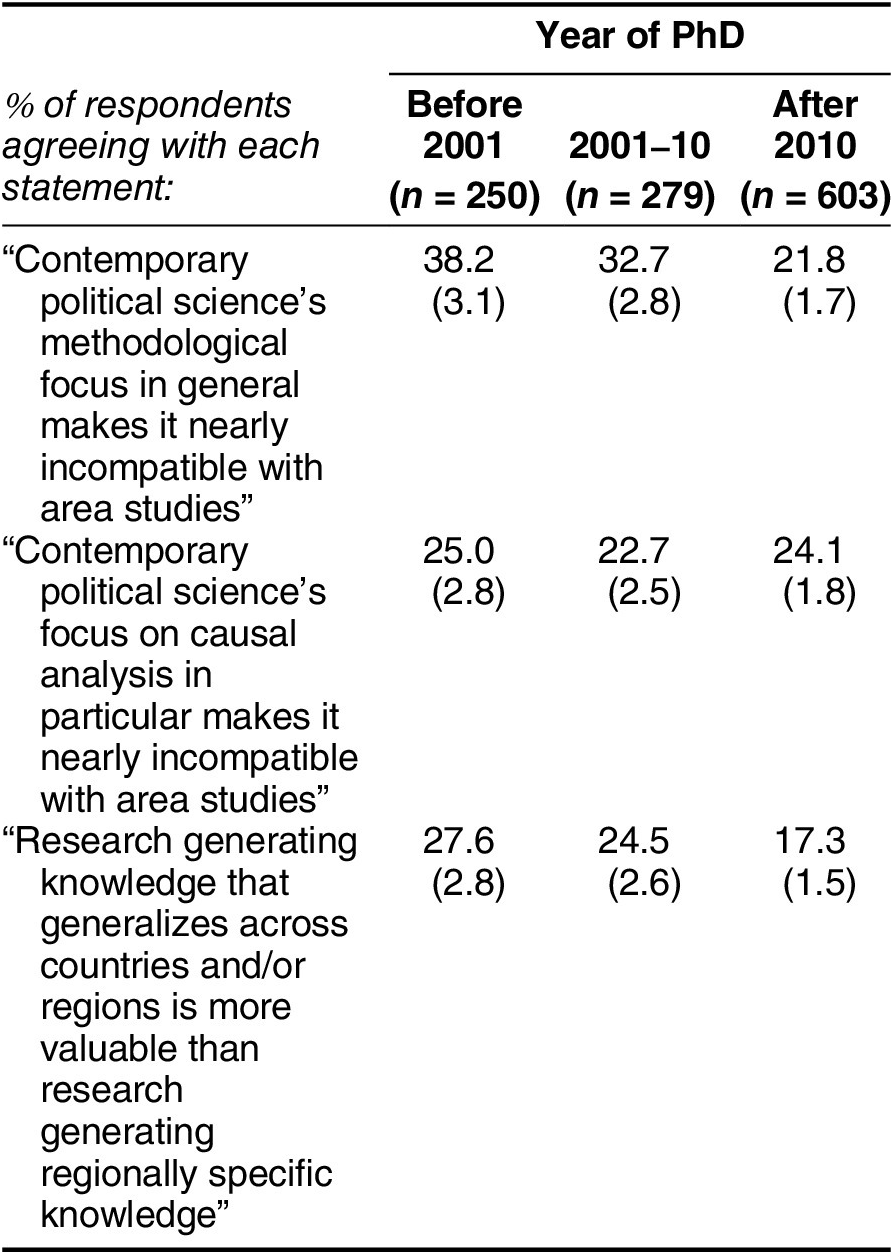


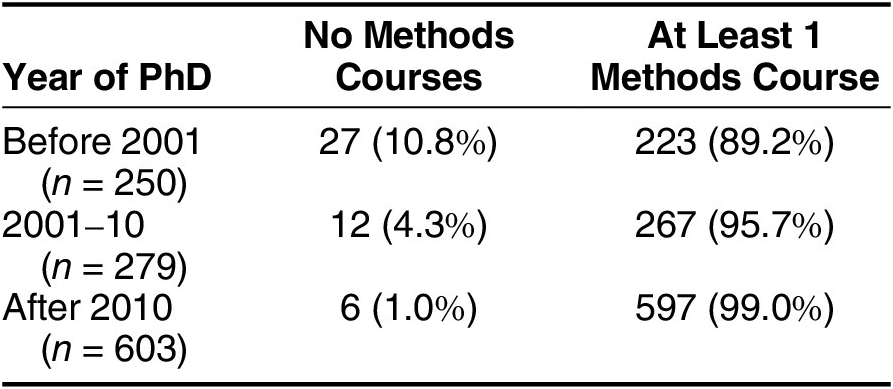


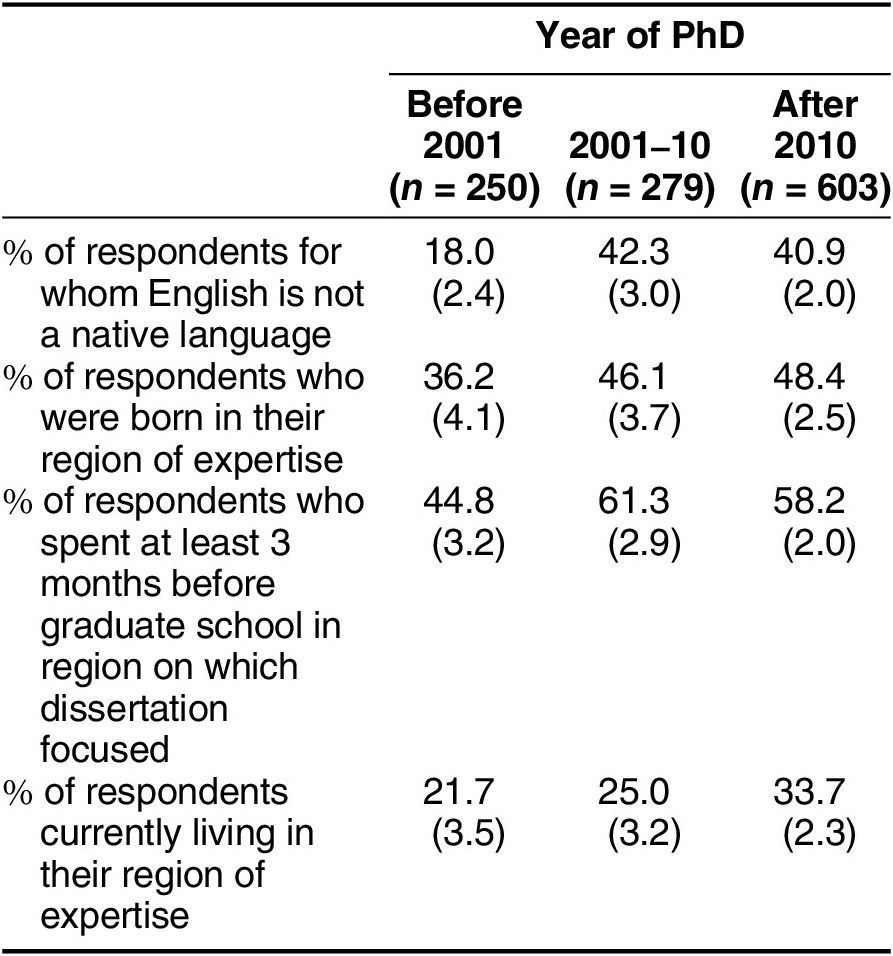


 Open access

