Introduction
A jazz performance – that is, the act of playing live jazz music by one or more amateur or professional performers – can take place in a number of arenas, each of which is situated within a specific musical, social and cultural context, with distinct characteristics and meanings. The concert stage, the dance hall, the jam session, the afterhours club, the music conservatoire, the jazz festival – all of these sites are central to jazz and its performers, some for creative reasons, others for financial reasons, others still for educational or social reasons. One other site where jazz is performed for many, if not all, of the above reasons, is the jazz competition.
While the Hungarian composer Béla Bartók reportedly proclaimed that ‘competitions are for horses, not for artists’, it cannot be denied that today they are an integral part of many a music scene. Jazz tournaments can be found throughout much of the world, each with a specific scope and focus – from soloist to big band, from amateur to professional, from local to global. Annually, they attract hundreds of contenders of whom a few are selected to perform in front of an audience of aficionados and jury members comprising high-profile jazz artists as well as representatives of the media and the creative/cultural industries. Indeed, several of the world's most prominent performers have at one point in their career participated in a jazz contest: the Jazz Hoeilaart International Contest, founded in Belgium in 1979 and since 2015 revamped under the name B-Jazz International Contest, had finalists such as Trio Töykeät (1988), guitarist Lionel Loueke (2002) and pianist Omer Klein (2011), while the Thelonious Monk Institute of Jazz International Competition, founded in the United States in 1987 and in 2019 renamed the Herbie Hancock Institute of Jazz International Competition, has yielded first-prize winners such as saxophonist Joshua Redman (1991), trumpet player Ambrose Akinmusire (2007), and vocalist Cécile McLorin Salvant (2010).
Yet, for all the importance these and other contests seem to hold for the jazz milieu, there is relatively little research undertaken on their origins, the various meanings as well as the impact they had and continue to have on various actors in the jazz community, from the performers themselves to the cities or regions that host these competitions. This article discusses the first series of jazz tournaments organised by the Jazz Club de Belgique between 1932 and 1939, highlighting its history, the role these contests played in the development of the Belgian jazz scene in this period and the way they operated as a bridge between amateur and professional, popular and elite, and local and global, among others. Furthermore, this article argues that these 1930s tournaments functioned as a prototype of early jazz festivals such as the Festival International du Jazz in Nice (1948). Indeed, these early competitions were about more than simply discovering young talents; they were festival-like – even somewhat carnivalesque – sites of dissemination, socialisation and musical tourism.
Early music competitions
In the fall of 1931, six young Parisian students, among them Hugues Panassié (1912–74) and Charles Delaunay (1911–88), established a private society dedicated to the promotion of jazz, the Jazz Club Universitaire (Dregni Reference Dregni2008, p. 55). In about a year, this association was reformed into the Hot Club de France, arguably the most famous and probably the very first such promotional organisation worldwide (Dregni Reference Dregni2008). Other countries quickly followed suit and created their own hot, rhythm or jazz clubs: the Nederlandsche Hotclub was founded in March 1933, and renamed the Nederlandsche Jazz Liga in July 1935, in the UK the so-called No. 1 Rhythm Club began its activities in June 1933, and in the Swiss city of Basel, a hot club was created in September 1934 (Wouters Reference Wouters1999, pp. 27 and 34; Schwartz Reference Schwartz2007, p. 10; Schneeberger Reference Schneeberger2006, p. 1). Initially, most clubs were devoted to informal listening sessions, but soon they began to perform a variety of intermediary functions, from publishing dedicated jazz journals to organising public jam sessions. As such, it can be argued that in some parts of Europe of the 1930s, hot clubs were among the most important propagators of jazz, both locally and internationally. This was certainly the case in Belgium, a small nation situated between the Netherlands, Germany, France, the Grand Duchy of Luxembourg and, on the other side of the English Channel, the UK.
The idea for a Belgian hot club probably originated in the fall of 1931, and in November 1932 the Jazz Club de Belgique (henceforth Jazz Club) was officially launched, a time path that coincidentally – or not – parallels that of its French counterpart (Heyman Reference Heyman2015; Anon 1932a, pp. 467 and 469). Among its nine founders were several future key figures of the Belgian interwar jazz scene, such as the trumpetist and composer Peter Packay (1904–65, real name Pierre Pacquet), writer and poet Robert Goffin (1898–1984), and Félix-Robert Faecq (1901–92) (Faecq Reference Faecq1952a, p. 10). The latter two were among the country's most important jazz promoters. While working professionally as a barrister, Goffin's combined interest in jazz and (mainly French) literature led him to be mostly active as a writer and public speaker. His 1932 book Aux Frontières du Jazz was the first serious study of jazz published in Belgium, and he gave a number of lectures, or causeries as they were then named, during club meetings or on the Belgian national radio. As such, he played a crucial part in the acceptance of jazz in interwar Belgium, yet he was more of a figurehead rather than someone who spearheaded the initiative.
This latter role was fulfilled by Faecq, who since the early 1920s undertook numerous endeavours to actively advocate for international jazz in Belgium, and Belgian jazz abroad. In October 1924, he founded a Francophone music magazine which over the course of the next seven years became fully dedicated to jazz – by 1931, Music was one of the earliest jazz journals worldwide (Heyman Reference Heyman2015). Since the establishment of the Jazz Club in 1932, this journal became its official organ, and as I stated elsewhere, Music acted as ‘the primary means of communication with and within the Belgian jazz milieu, both amateur as well as professional’ (Heyman Reference Heyman2015). The journal was just one of Faecq's many initiatives; between 1924 and 1938, he generated a steady flow of activities and businesses, all devoted to (primarily Belgian) jazz. These include his own publishing company (1925, International Music Company), a retail and wholesale store specialising in jazz and dance music in his hometown of Brussels (1926, Universal Music Store), arguably the first fully Belgian jazz recording session (1927), his own record label (1938) and, as noted, the creation of the Jazz Club (1932) (Heyman Reference Heyman2015). Yet one of the activities he felt most proud about was the organisation of a series of regional, national and international jazz competitions, with the first edition taking place in 1932 (Heyman Reference Heyman2015).
Given our competitive nature, humans have most likely been challenging each other to musical duels since the dawn of mankind. References to musical matches are scattered around Biblical and mythical texts, and they are part of many pre-literature folk cultures as well, but the earliest documented and probably first formally organised contests can be traced back to Ancient Greece. The Pythian Games were held from the 6th century BC, and were the only Panhellenic Games dedicated to music, poetry and dance (although over time athletic disciplines such as wrestling and horse racing were also included; Latham Reference Latham2011). In the Middle Ages, arts competitions featuring musical performance, composition, songwriting and poetry could be found throughout Western Europe. Welsh bardic contests, or eisteddfodau, date back to at least the 12th century and ran regularly until the Tudor period (McCormick Reference McCormick2015, p. 34). After several centuries of demise and subsequent revival in the 18th century, this tradition led to the creation of the National Eisteddfod of Wales, which was established in 1861 and continues to this day (‘History of the Welsh Eisteddfodau’ n.d.). Elsewhere in Medieval Europe, fraternal minstrel societies organised similar competitive festivals, in the Francophone regions known as puys, some of which continued in some form or another into the 19th century, in particular in the Germanic Meistersinger traditions (McCormick Reference McCormick2015, pp. 32–4).
The true predecessors of modern-day music tournaments are those of the late 19th and early 20th century, when ‘competitions became recurring events organised by newly created bureaucratic institutions in which several up-and-coming musicians competed according to predetermined rules’, as Lisa McCormick clarifies (2015, p. 38). Some early examples are the Anton Rubinstein International Competition, which ran between 1890 and 1910, the International Naumburg Competition, founded in 1925, and the International Fryderyk Chopin Piano Competition, which was created in 1927 and remains one of the world's most prestigious classical contests. Still, it seems that jazz competitions were not modelled after these classical examples, but rather after the brass band tournaments that were widespread in certain parts of 19th-century Europe, in particular in Britain – where since 1853 the British Open Brass Band Championships, quite possibly the oldest on-going music contest in the world, are held – but also in Belgium (Herbert Reference Herbert2000, p. 6).
Indeed, Faecq claimed local brass band tournaments as an inspiration, although emulating them was certainly not his primary aim (Faecq Reference Faecq1952b, p. 10). In an article series which constitute his memoirs, he explained how he first got the idea. Crucial was his realisation that amateur bands had one major advantage over professional bands: their artistic freedom (Faecq Reference Faecq1952b). Whereas professional dance bands were bound by the popular taste of the venue owners and patrons they catered for, amateurs were free to develop a variety of stylistic approaches, often taking inspiration from the latest musical trends (Faecq Reference Faecq1952b). As a result, dozens of amateur bands were active in Belgium in the early 1930s, some of whom were so successful that even their weekly rehearsals drew quite a crowd, as was the case with the Bistrouille Amateur Dance Orchestra from Brussels (Faecq Reference Faecq1952b). Therefore, Faecq assumed that staging some kind of event where such amateur bands could perform was sure to be well attended (Faecq Reference Faecq1952b). ‘By organising a mass manifestation [that] reached out directly to the large audience’, he hoped ‘to give jazz its definite impulse in Belgium’ (Faecq Reference Faecq1952b).Footnote 1 Having assisted the organisation of several amateur brass band contests, he decided this would be the ideal model, and in the spring of 1932, he set out to organise a national competition for amateur jazz bands (Faecq Reference Faecq1952b).
In doing so, he was not the first. Advertisements for jazz band contests can be found with some regularity in local American newspapers as early as 1920, but as these publications lack any detail on the goal, procedures and organisation of these tournaments, they reveal little more beyond the fact that such competitions indeed existed in cities such as Washington, DC and Baltimore (Anon 1920, p. 10; Hunt Reference Hunt2011, p. 48).Footnote 2 In Europe, the UK was among the earliest nations to hold jazz band contests, building upon its long-standing tradition of brass band competitions. The Melody Maker announced that what they believed to be the first jazz band contest in the country was to be held on 16 April 1926 in Cardiff, with among its adjudicators the ‘famous British master of rhythm’ Jack Hylton (Anon 1926a, p. 16). This claim was quickly challenged by two readers who stated that they had been involved in earlier competitions, one in September 1925 in Manchester which featured around 50 bands from the Midlands, and one in March 1926 in Bristol with as its victor a certain Laurence G. Wilms, leader of The Hawaiian Star Serenaders (Anon 1926b, p. 17). Be that as it may, the Cardiff contest of April was the only one to be covered, albeit briefly and only prior to the actual event. ‘[I]t will be a quite big affair’, anticipated The Melody Maker, with ‘[o]ver three hundred musicians […] already among the entrants’ (Anon 1926a, p. 16). While it might not have been foreseen as part of the prizes, the write-up mentions the possibility of a broadcast by the winning group ‘on the night of its success’ (Anon 1926a). In conclusion, The Melody Maker predicted that ‘in the not far distant future, contests for syncopated bands will become frequent occurrences and it is likely that they will create an even greater enthusiasm among the general public than the brass band contests’, a hope shared by Faecq more than six years later and in another country (Anon 1926a).
The first Belgian competition
The earliest jazz contests in Continental Europe were probably held in 1931. In Vienna, the first so-called Battle for the Golden Jazz Ribbon (‘Der Kampf um das “Goldene Band” der Jazz’) took place in January, while an annual series of tournaments premiered in December of that same year in Amsterdam (Anon 1931, p. 13; Wouters Reference Wouters1999, p. 35). Despite its being a national competition, this first Dutch contest, an organisation of the local society magazine Het Leven, already had something of an international character. The victor in the category of big bands (more than ten performers; other categories were middle-sized bands of seven to ten, and small bands up to six) was a 14-piece group from Belgium, led by Jack Hoedemaker (Michiels Reference Michiels2008, p. 44). As is evident from a report by Hoedemaker for Music in March 1932, the bandleader was devoted to making the most of this opportunity, driving from his hometown of Antwerp to Amsterdam to consult with the contest organisers about his possible participation (Reference Hoedemakerp. 126). Hoedemaker was allowed to participate, and of the sixteen contenders, he led the only non-Dutch aggregation. He prepared his men intensively, and in the week leading up to the actual tournament, which took place on 27 December 1931 in the Amsterdam theatre Bellevue, Hoedemaker organised daily rehearsals to ‘review the nuances, learn the solos by heart and fine-tune the ensemble sections’ (Hoedemaker Reference Hoedemaker1932). The final test was a public performance given at a charity gala the day prior to the contest (Hoedemaker Reference Hoedemaker1932).
Hoedemaker chose three compositions already well known to the band members, all written and arranged by the celebrated Belgian jazz composer Peter Packay, who was contracted by the International Music Company, Faecq's publishing firm (Hoedemaker Reference Hoedemaker1932). The bandleader felt that this particular repertoire contributed greatly to the band's success, an assessment that might be accurate, judging from the fact that other bands seem to have played mainly non-original work, often repeating the same songs such as the recently recorded tunes ‘Ich hab Dich lieb, braune Madonna’ and ‘Fiesta’ (Hoedemaker Reference Hoedemaker1932; De Jong Reference De Jong1931, p. 10). The recurrence of the latter composition, which was played at least four times, might be explained by the fact that the contest organisers initially listed a tango and a rumba among the three stipulated stylistic approaches (De Jong Reference De Jong1931; Michiels Reference Michiels2008, p. 44). After protests from jazz fans among Het Leven's readership, the obligation to perform two Latin-styled pieces was dropped, but some participants clearly chose to retain them in their band book. Hoedemaker's original and jazz-oriented repertoire made his music stand out from that of the other contenders.
In front of an audience of 2000 people of all classes and ages, so it was reported, the sixteen bands, who with the exception of Hoedemaker came from various parts of the Netherlands, played alternately on two stages between 2:50 p.m. and midnight (Michiels Reference Michiels2008; De Jong Reference De Jong1931, p. 10; Hoedemaker Reference Hoedemaker1932, p. 126).Footnote 3 The jury of five comprised musical directors active in the entertainment milieu of the Netherlands, such as Max Tak of the Theater Tuchinski or Kovacs Lajos of the dance band of the Dutch broadcasting company AVRO, but also Jan Hendrik Oostervink, the founder of a ballroom dancing school in Amsterdam, a reminder that at that time jazz music was closely connected to dancing (Hoedemaker Reference Hoedemaker1932, p. 126). Five parameters were considered: style, ensemble, technique, timbre and presentation (Hoedemaker Reference Hoedemaker1932). After a brief deliberation, the adjudicators ranked three bands for each category (Hoedemaker Reference Hoedemaker1932). As Hoedemaker's men were already back on their way home to Antwerp – an estimated seven-and-a-half-hour trip by bus – the bandleader was alone when he received the first prize in the big band category, a drum set and silver-gilded medals for all band members (Hoedemaker Reference Hoedemaker1932; Michiels Reference Michiels2008, p. 44). Clearly, Hoedemaker's strategy of intensive rehearsing and a well-chosen repertoire paid off. His report for Music offers a rare opportunity to observe such a competition from a participant's perspective, revealing how in this particular case the Antwerp bandleader prepared in a highly professional manner, with true dedication and strategic insight. While we cannot extrapolate this example to all contestants of this and later competitions, it does suggest that to many contenders such jazz tournaments were a serious affair, indeed a possible springboard to a professional career.
On 10 December 1932, about one year after the first Dutch event, the first Belgian tournament for amateur jazz bands was established in Brussels, the nation's capital. As noted, the idea originated with Faecq, who claimed his inspiration came from the brass band tournaments discussed above. The first mention, albeit only briefly, of the possible organisation of a Belgian contest stems from the April 1932 edition of Music, one month later than Hoedemaker's report of the Dutch contest in the same journal. As editor-in-chief, Faecq – using the nickname R. Verneuil – undoubtedly read this report (Heyman Reference Heyman2015). Moreover, he knew Hoedemaker in person, as the latter was also among the nine founders of the Jazz Club. With this in mind, it is very likely that Hoedemaker's experiences in 1931 to some extent guided Faecq in shaping the organisation of the first Belgian competition. Furthermore, it is hard to believe that he was unaware of the earlier British jazz tournaments as these are singled out as forerunners of the 1932 contest in its announcement in Music (Anon 1932b, p. 471). Therefore, it is safe to assume that three distinct elements inspired Faecq: previous Belgian brass band tournaments, the first jazz contest in the Netherlands in 1931 and the earlier British jazz competitions.
One of the aspects he retained from the brass band contests was having each competition followed by a ball, which usually ran from midnight to 3 or 4 a.m. with the music provided by some or all of the winning groups of that night (Faecq Reference Faecq1952b, p. 10; Contest rules 1933). Given the popular appeal of dances, this was a logical step in ensuring the contest was well-attended by a young and fashionable crowd, as such not only guaranteeing its financial viability, but also allowing for the music to be further introduced to a wide audience. Indeed, for Faecq, jazz contests were a prime medium to promote and disseminate jazz in Belgium. Not only was this one of the main goals of the Jazz Club as inscribed in their mission statement (which was co-drafted by Faecq), it was also referenced in the contest rules: ‘the jazz tournaments are organised to stimulate the zeal of amateur jazz orchestras, to create a healthy and rewarding rivalry between them, and to propagate the cause of jazz [italics added] as well as the work of our national jazz composers’ (Anon 1932b, p. 469; Programme brochure 1934).
With the grand ball in mind, Faecq rented one of Belgium's biggest ballrooms, the Palais de la Danse Saint-Sauveur in Brussels. As he needed the contest to be successful, not only for promotional purposes, but also in financial terms, Faecq sought the assistance of the ballroom's administration, which had extensive experience with organising large-scale events. They suggested attracting a major patron, and the national newspaper La Dernière Heure was found willing to fulfil this function. It did not offer any monetary or organisational support, but disseminated the call for participants and offered regular reports on its progress and results, as such ensuring the tournament received much-needed nationwide attention. Faecq himself distributed press releases to other media outlets as well, and clippings held in the Collection Robert Pernet, one of Belgium's largest jazz collections, reveal that many newspapers, regional and national, did indeed print his write-ups, often verbatim. For him, this extensive media coverage was of crucial importance as he repeatedly bemoaned the ‘anti-jazz propaganda’ in the written press (Faecq Reference Faecq1952c, p. 13). While he seems to have been exaggerating – there is not much anti-jazz to be found in contemporary newspapers, unless the lack of attention for this music should be interpreted as such – it did result in the event being completely sold out, as would almost every following edition, sometimes attracting up to 2200 patrons with many more being turned away at the door (Faecq Reference Faecq1952c).
Finally, a third partner was introduced upon suggestion of the administration of the Palais de la Danse Saint-Sauveur, who felt a part of the proceedings should be donated to charity works (Faecq Reference Faecq1932a).Footnote 4 This would not only create benevolence among prospective patrons, but also create a benefit in tax deduction, making the financial burden of this event easier to carry and allow for its continuity (Faecq Reference Faecq1952b, p. 11). Faecq chose le Conservatoire Africain, a Brussels charity society comprising high-ranking politicians and industrialists dedicated to the aid of nurseries for underprivileged children in Brussels and the Belgian Congo (with no explicit ties to any music conservatoire nor African organisation). Once more, this demonstrates his strategic vision as the society's involvement guaranteed the presence of several influential people from the city's political and industrial elite, giving jazz the necessary credibility among the upper echelons of society. Indeed, a newspaper reviewing the 1935 contest noted that, while the majority of the attendees were youngsters, several ‘venerable magistrates, professors and even politicians’ were in attendance (Anon 1935a).
In addition to these three partners, the Jazz Club was another key associate. In fact, the nascent organisation was officially presented to the public at the first contest. Furthermore, all winning bands were presented with a club banner that they could display at every performance, as such acting as a public stamp of approval from what was to become the most powerful jazz association in 1930s Belgium. The tournaments were invariably presented as a co-organisation of the Jazz Club, but Faecq made sure his name was distinctively marked in all public announcements. While his fellow board members might have offered some support, it was he that took the lead in coordinating these tournaments. Indeed, it was his ambitious vision, extensive network and tireless efforts that made these competitions possible in the first place.
From the outset, Faecq was aware of the difficulties that holding such a contest entailed, not only on an organisational level but also in terms of avoiding (the perception of) subjectivity and favouritism (Faecq Reference Faecq1952b, p. 10). In order to draft a fair and objective set of rules, he convened with a significant number of stakeholders: professional and amateur musicians, composers, critics and promotors (Faecq Reference Faecq1952b, p. 10). While he gave no names as to who these consultants were, some of them were most likely drafted to become a judge in these tournaments. Faecq aimed at having around five adjudicators, although this number at times varied slightly, between three and six. For the first few editions, he drew mainly from the local cultural industry: in the 1932 edition the clarinettist Charles Remue was the only professional musician in a jury that otherwise comprised Goffin, Marcel Cuvelier, the head of music of the Palais des Beaux-Arts, and two other important Belgian music promotors (Faecq 1952, p. 11). Soon Faecq tilted the balance in favour of performers, not only from within the country's jazz scene but increasingly from abroad too: in 1934, the Dutch trumpet player Louis de Vries, the French saxophonist André Ekyan and the British guitarist Dick Sadleir acted as jury (Programme brochure 1934).
The number of participating bands varied, but there were usually around six to ten, all categorised according to size, a practice seen earlier in the Dutch contest: five to six members, seven to nine members, and over ten members, although later only two categories were used, up to eight members and over eight members (Programme brochure 1932, 1934). Within each category, a specific type of repertoire was demanded, with each band having to perform a total of five compositions (Programme brochure 1932, 1934). There was some leeway as to what they could play: three pieces were only stylistically prescribed (a quickstep, a foxtrot and a slow foxtrot), but the two remaining ones were quite detailed (Programme brochure 1932). One of the two had to be performed exactly as in the published arrangement; the other could either be played from the sheet music or could be arranged specifically for the band (with the extra note that a professional arranger could be commissioned; Programme brochure 1932). As could be expected, the proposed music was all by Belgian jazz composers (e.g. David Bee, Gus Deloof, Robert De Kers, Fud Candrix), in line with one of the main aims of Faecq and the Jazz Club: ‘to propagate […] the work of our national jazz composers’ (Programme brochure 1934; Anon 1932b, p. 469). Unsurprisingly, Faecq's Universal Music Store was the prime location to buy the records of the mandatory music as well as the arrangements, which all belonged to the catalogue of his publishing firm, International Music Company. While his intentions for organising the contests were mainly non-commercial, he never ceased being a businessman.
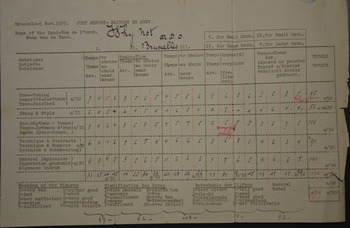
The scoring procedure was of a straightforward, rather mathematical model. Each judge was asked to grade a number of distinct categories, some of a more technical nature (e.g. accurateness of tuning, steadiness of tempo) while others focused on more creative aspects, inevitably relying on a certain degree of subjectivity (e.g. execution of style, quality of the arrangement/orchestration; Faecq Reference Faecq1952b, p. 10; also see Figure 1). All individual grades were added and an overall score for each band allowed them to be ranked per category without further deliberation by the jury.
The score sheet of Claude Bampton, one of the judges of the international/national competition in 1935. The adjudicated band is the Why Not Amateur Dance Orchestra (or A.D.O.), an eight-piece group from Brussels. It finished third (and last) in the Small Orchestra category. Coll. Fondation Roi Baudouin, Fonds Robert Pernet, MIM, bibliothèque, Bruxelles. Coll. Koning Boudewijnstichting, Fonds Robert Pernet, MIM, bibliotheek, Brussels.

As noted, the winning band of each category was offered a banner by the Jazz Club in addition the other prizes, all of which were non-monetary.Footnote 5 In most instances, these were instruments that Faecq had requested for donation from many of his suppliers of Universal Music Store (e.g. a saxophone and trumpet from Selmer), but he also offered prizes from his personal stock, such as a stack of Parlophone 78 rpm discs or music arrangements, naturally all from the catalogue of his International Music Company (Programme brochure 1932). While it might seem odd to not offer any financial rewards, high-quality instruments were arguably of more use to amateur musicians than money, even though it would leave some band members emptyhanded (for one, guitars, pianos or string basses were not among the donated instruments). Furthermore, Faecq made sure the prizes were displayed in a dedicated glass cabinet during the event, and singled them out in his press releases. Hence, this free form of promotion must have enticed certain traders to donate one or more instruments.
Six groups participated in the first edition, three each in the medium and large band categories; no groups enrolled in the combo category. As could be expected, four of these ensembles came from Brussels: in this period, jazz thrived mainly in the larger cities of Belgium with Brussels acting as its true epicentre. Subsequent editions would involve participants from other parts of Belgium as well, but most continued to hail from the country's urban regions around Brussels, Liège and Antwerp, where a multitude of bars, theatre, dance halls and clubs provided ample opportunity for amateurs to perform on a regular basis. Of the competing bands, a few comprised sidemen that eventually became established professionals in their own right, but the most noteworthy name is the first prize winner of the large ensemble category, Lucien Hirsh and His Orchestra from Liège, the biggest city in the Eastern part of the country. Its victory at the first jazz contest secured this 15-piece band a national breakthrough, and in just a few years it became one of Belgium's most popular swing orchestras. In addition, two of its sidemen, saxophonists Gene Dersin and Bobby Naret, soon made a name for themselves, and in due time both men successfully started their own big bands.Footnote 6
While this in itself suffices to retrospectively proclaim this first edition a success, for Faecq the importance lay elsewhere. As noted, he had always felt frustrated about how jazz was perceived as a marginalised genre and was mostly overlooked by the press. He felt the realisation of this competition had changed all that: ‘In a single night, the first jazz tournament erased years of anti-jazz propaganda, revealing the truth [about the success of jazz], and decisively and definitely demonstrating the public's enthusiasm for this new music’ (Faecq Reference Faecq1952c, p. 13). There could be no doubt: more contests were to follow.
The proliferation of jazz competitions
Many of the procedures and rules of the first edition were retained or changed only minimally for subsequent tournaments organised by Faecq. Indeed, the basic structure – the band categories, the jury procedures, the specifications for repertoire, and the closing ball attracting the young and fashionable – remained more or less constant between 1932 and 1939. Therefore, it is not necessary to analyse every subsequent competition in such detail as the first one. I will, however, single out some of the structural or operational changes that allowed these contests to grow both in scope and number, in the process revealing how in a few years’ time they became true international festival-like events.
As noted, by 1934, the jury comprised only international professional musicians, but the year earlier this was a mix of promotors (e.g. Goffin) and performers (e.g. the Belgian pianist Stan Brenders). Furthermore, two foreign adjudicators were included, the Dutch Bob Schrijver and the Swiss Ernest Robert Berner, both of whom were critics for leading European jazz magazines, De Jazzwereld and Jazz respectively (Programme brochure 1933). This shows the extent of Faecq's network, but more importantly it demonstrates how he sought various ways to elevate the status of Belgian jazz, its (amateur) musicians and its compositions. This was done not only through the performances themselves, but also by organising an exclusive reception, including photo opportunities, for the adjudicators, board members of the Jazz Club and selected representatives of each participating band (Communication 1934). However, from 1934 on, the jury comprised only notable national (e.g. saxophonist Jean Robert in 1937, trumpeter Deloof in 1939) and international performers (e.g. the Dutch band leader Theo Uden Masman in 1935, the French violinist Stéphane Grappelli in 1937).
The 1933 tournament saw another significant change: it was now held at the Palais des Beaux-Arts, Belgium's most prestigious classical concert venue, where two halls were rented, one for the contest and one for the grand ball. This move from a dancing to a venerable concert stage no doubt helped to raise the social status of the event. In addition, His Royal Majesty King Leopold III of Belgium annually bestowed the honorific Prix du Roi to the contestant with the highest score, giving the competition even more grandeur (Programme brochure 1932). Despite these high-brow associations, no compromises were made in terms of repertoire. A playlist for the contest and ball of 1934 exhibits many Belgian compositions alongside so-called ‘hot jazz’, for example Duke Ellington's ‘Rockin’ in Rhythm’, Jimmie Lunceford's ‘White Heat’ and Cab Calloway's ‘The Reefer Man’ (‘Liste des Oeuvres exécutées au Tournoi et au Bal du 13-10-34’ 1934). Finally, it is worth noting that every effort was made to draw bands from beyond the capital. To this end, from 1934 on Faecq offered every participant a flat-rate kilometric allowance (Anon 1934).
That same year, the first truly international jazz contest was being held, albeit not in Belgium, but in the Dutch seaside resort Scheveningen, a district of the city The Hague. Hoedemaker's entry to the 1931 competition in Amsterdam notwithstanding, this was the first tournament to attract amateur jazz bands from outside of the organising country. A total of nine groups, five Dutch, one British and three Belgian, competed in front of a four-headed jury which included Packay (which made the jury international as well). Two of the three Belgian participants were former prize winners of Belgian national tournaments, Hirsch (first prize in 1932, second prize in 1933) and The Collegians led by Jean Kluger (first prize in 1933). Kluger's band prevailed in this competition as well, and with yet another victory in 1936, it proved to be one of the most enduring ensembles in the contest industry of interwar Belgium. As can be expected, by the next decade some of his sidemen had become sought-after professionals, such as bassist René Goldstein, pianist Rudy Bruder and saxophonist Victor Ingeveldt. Kluger himself played no instrument, but during World War II he became a close associate of Faecq, and his extensive involvement with music publishing, producing and managing (of both musicians and venues) made him one of the key promotors of popular music in post-war Belgium. As exemplified by the likes of Hirsch, Kluger, their (former) sidemen and several others (e.g. pianists Yvon De Bie in 1935 and 1936, and Léo Souris in 1938 and 1939), participation in a jazz tournament was one of the proven ways to advance one's career. Through their public exposure at these contests, they were able to build an extensive network, get drafted by top-level bands and ultimately rise to the ranks of professional performers themselves.
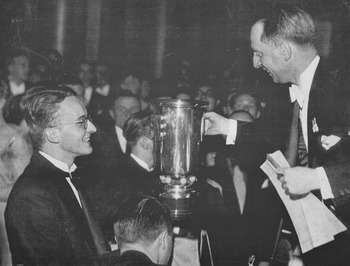
Already in 1932, Faecq had tried to draw Dutch ensembles to his tournaments in order to make it a true ‘hollando-belge’ affair, but the first genuine international competition to be held in Belgium took place in 1935 (Faecq Reference Faecq1932b). Building on his extensive network, he reached out to intermediaries from other countries, often colleagues from other hot clubs such as the Nederlandsche Jazz Liga, asking them to promote his contests, or even actively draft bands to be sent over. The 1935 edition was anticipated to be a true pan-European event, with bands from Belgium, the Netherlands, the UK, France, Switzerland and Denmark. Unfortunately, the contenders from the latter three countries cancelled, although for some future editions both France and Switzerland were represented, in addition to more British and Dutch groups. Just as was the case in the international tournament in Scheveningen the year before, the national and international contests were combined, with a rotating trophy cup for the national victors (three-time winners could keep it) while the international winners were offered a trophy cup to keep, in addition to the type of awards noted above (banners, medals, musical instruments; Programme brochure 1935; also see Figure 2).
Faecq hands the trophy for best international band to Johannes ‘Pi’ Scheffer of the Dutch band the Blue Ramblers at the 1936 tournament. Coll. Fondation Roi Baudouin, Fonds Robert Pernet, MIM, bibliothèque, Bruxelles. Coll. Koning Boudewijnstichting, Fonds Robert Pernet, MIM, bibliotheek, Brussels.

In 1936, four interesting novelties were introduced for the national/international contests. First, two to three professional guest artists or groups were invited to play at the ball to top the bill. That year, these included Fud Candrix and His Orchestra, and the newly formed jazz orchestra of the public broadcasting network led by Brenders, which gave its first public performance at the ball (Programme brochure 1936). Faecq managed to engage some of jazz's leading performers: the Quintette du Hot Club de France made its Belgium debut at the 1937 competition, while the following year saxophonist Coleman Hawkins was the featured soloist with the orchestra of Jean Omer, another one of Belgium's best big bands.Footnote 7 In an effort to top all this, attempts were made to have pianist Fats Waller perform at the 1939 edition, but eventually his European tour took place only after the competition, which that year was atypically organised in March rather than November or December (trumpeter Valaïda Snow substituted for Waller; Anon 1939; Programme brochure 1939). By adding such attractions, Faecq tried to keep every edition fresh and interesting, drawing droves of people with a range of motives: some to support their favourite contestant, others to dance, romance or socialise, others still to see their idols in real life.
Second, the contest of 1936 had an interesting new rule for the small band category (maximum eight musicians). To stimulate improvisation, such combos were obliged to play their five compositions by heart. As Faecq remembered, every contest had one or two groups that did not quite grasp what he and many other fans felt was key to genuine ‘hot jazz’, rather venturing off into a tango or some other light fare (Faecq Reference Faecq1952c). At best, they played in a style then labelled ‘straight jazz’ (or ‘sweet jazz’), where the emphasis lay less on hard-driving swing and virtuoso solos. Although a certain degree of ‘straight jazz’ was unavoidable, this new decree demonstrates that the contest clearly aimed for ‘hot’ contenders.
Third, this edition marks the first time a recording of all bands was made by the local label Regina, who not only sold these subscription-only discs for the benefit of le Conservatoire Africain, but also offered each contending group one sample (Programme brochure 1936). For most amateur bands in this era, this was an exceptionally valuable tool – as self-promotion to concert organisers or, more importantly, as a learning device. By playing back one's own performance, it would be possible to improve certain aspects such as internal balance, the use of dynamics, and microtiming.
Finally, taking public transportation to Brussels remained a daunting enterprise for fans in this era. In order to accommodate attendees from outside the capital – certainly necessary as many bands brought along their fan base – the Jazz Club, aided by its regional subsidiaries, set up a bus service from various provincial cities across Belgium to the Palais des Beaux-Arts (Advertisement 1939). In doing so, it possibly provided the first such music-based type of tourism in Belgium. However, this was bringing the people to the contests. That same year the contests would be brought to the people as well.
As noted, by 1936 several local sections of the Jazz Club had been established, following the lead of the mother organisation but dedicating their efforts to promoting jazz on a more regional scale. Some of these sections, such as those in Antwerp, Ghent and Liège, began organising regional or provincial contests, closely modelled after the tried-and-tested national competitions. For Faecq, this was yet another crucial step in the promotion and popularisation of jazz in Belgium: ‘From a propaganda point of view, [such a regional tournament] is of the highest importance as it takes place among a lay audience that still has difficulties distinguishing good jazz from dance music of bad taste’ (Faecq Reference Faecq1936, p. 9). Indeed, while urbanites had the opportunity to regularly hear jazz performances in the cities’ many bars, theatres, dance and concert halls, those living in the countryside or in smaller cities were less exposed to ‘real’ jazz – many local balls were accompanied by an ‘accordion and jazz-band’, but the ‘jazz-band’ in question was in fact a single drum set, and the music more folksy than jazzy, with polkas and waltzes being the regular repertoire (Anon 1935b). As Faecq suggested, such regional jazz competitions enabled people from the provinces to hear how jazz was supposed to sound according to its hardcore fans.
From 1936 on, jazz competitions in Belgium were organised on three interrelated levels: regional contests provided the first selection of participants for the national contests, while the victors of the national contests were allowed to participate in the international contests. Plans were made to organise other types of jazz competitions, such as a tournament for jazz pianists (in 1936) and one for jazz vocalists (in January 1937), but because of an insufficient number of candidates, none of these materialised (Contest rules 1936; Smets Reference Smets1936; Anon 1937, p. 54).
Faecq kept developing the competitions by adding certain activities that not only kept surprising (and thus drawing) the audience, but also further challenged the contenders. During the 1938 competition, various jam sessions were organised for the first time (Programme brochure 1938). The Belgian and Dutch participants could revel in ad-libbing with special guest Hawkins, the men of Omer's orchestra, and the international cast of judges (e.g. the French saxophonist Alix Combelle). Similar impromptu musical meetings undoubtedly took place in interwar Belgium, but this appears to have been the first formally organised jam session publicly announced and held in front of an audience, a contrast to usual jazz jam practices. As such, this anticipated the long-lasting and influential jam session-style concerts known as Jazz at the Philharmonic, created by native Angeleno impresario Norman Granz in 1944. According to Scott DeVeaux, ‘Jazz at the Philharmonic represented an important change in the public representation of jazz’, with the music now no longer being confined to ‘the more informal surroundings of the nightclub’ but bringing high-level, virtuoso entertainment to the concert stage (DeVeaux Reference DeVeaux1989, pp. 23 and 25). In Belgium, publicly staged jam sessions only occurred during the jazz tournaments of 1938 and 1939, and were thus unable to bring about this particular change. Yet, it can be argued that jazz contests as a whole were already achieving this since their inception in 1932.
By 1939, the competition had turned into a full-blown spectacle. The event comprised not only the contest and ensuing ball, but also a jam session, a swing dance contest, a costume contest for men in drag, and even a ‘Miss Swing’ election (Programme brochure 1939).Footnote 8 At this point we begin to see the competition take on true carnivalesque characteristics, not only in the traditional and ritualistic act of cross-dressing, but also in providing what Mikhail Bakhtin calls ‘carnivalistic mésalliances’, or the unification of presumed opposites in one and the same event: high-brow and low-brow, entertainment and art, charity and commercialism, professional and amateur, city and country, local and global, and in the form of the ‘Miss Swing’ election – and of particular interest in the male-dominated world that jazz then was – male and female (Bakhtin Reference Bakhtin1984, p. 123).
That ambitions continued to rise is demonstrated by Faecq's first contacts with the British tournament organisers, with whom he was hoping to set up a series of truly pan-European contests, alternately organised in every major capital in the continent (Faecq Reference Faecq1952c, p. 13). The main prize was to be a concert tour in the United States, certainly a formidable reward in an era when very few jazz musicians had set foot in the country of origin of their favourite music (Faecq Reference Faecq1952c). However, as another world war seemed inevitable, all plans for further contests were put on hold. By the end of May 1940, all of Belgium had been overrun by German forces, the start of an occupation that would last approximately four years. In spite of certain restrictive measures on the staging of jazz-related activities – but certainly no complete ban of the music, as I point out elsewhere – Faecq managed to host the occasional competition (in 1941 and 1944), but none of these had the same scale and impact as the interwar initiatives (Heyman Reference Heyman, Medbøe, Moir and Atton2017, pp. 86–7). By 1940 the heydays of the Belgian jazz concours were definitely over.
Conclusion: for horses?
On the surface level, music competitions seem to be about discovering new talent and offering them opportunities to further enhance their career. This certainly was the case in the jazz tournaments that took place in interwar Belgium, as evidenced by such names as Hirsch and Kluger, among others. Indeed, since 1937, this aim was made explicit in the contest's mission statement: ‘In the absence of a jazz education program at the Belgian conservatoires, [the tournaments] allow for the discovery of new, talented individuals who might successfully join the ranks of the professional Belgian jazz musicians’ (Programme brochure 1937). This was not necessarily achieved through the awarded prizes – although the anticipated concert tour to the USA might have provided an interesting impetus to one's career – but mostly by offering the contenders much-coveted publicity in newspapers and trade journals. Perhaps more important was the access they were granted to the jazz network of professional performers (i.e. judges and guest artists), intermediaries (e.g. Faecq, Goffin) and even fans present during such competitions.
However, clearly there was more at play. As noted, Faecq himself envisioned the contests as conduits for promotion, dissemination and socialisation. The former two were primarily achieved through the well-attended balls and guest performances, in addition to extensive press attention. Whether the jazz tournaments indeed played a decisive role in the dissemination and popularisation of jazz in interwar Belgium is difficult to properly assess, but Faecq himself certainly deemed them important, as demonstrated by some of his aforementioned comments (e.g. Faecq Reference Faecq1952c, p. 13). Also, it is interesting to note that he specifically aimed at giving Belgian jazz the necessary impetus through having each participating band perform one or more mandatory works by a Belgian jazz composer. Since he owned the largest catalogue of the nation's jazz composers (in his publishing firm International Music Company), his motivations might not have been entirely altruistic, yet his dedication to popularising Belgian jazz and its performers both within and outside of the country cannot be doubted.
The process of socialisation, here understood as the process through which an individual or group learns to adjust or behave according to the prevailing norms of a community, occurred on at least two levels. First, Faecq stressed the importance of the regional tournaments as these helped to educate provincial laymen, demonstrating what ‘real’ jazz should sound like and what a ‘real’ jazz fan should listen to and act like (Faecq Reference Faecq1936, p. 9). Second, amateur jazz bands, in particular those from provinces, benefitted from participating in a jazz contest in that they could hear each other perform, inspiring one another. According to the contest programmes, undoubtedly drafted by Faecq, the result of such mutual inspiration is threefold: ‘to stimulate [their] zeal, to create a healthy and rewarding emulation among them, [and] to make them acquainted with the new formulas resulting from the continuous development of jazz music’ (Programme brochure 1937).
Furthermore, as discussed before, this series of contests reveals that already in the 1930s, a significant number of the binaries that have permeated this music's history, or at least the perception thereof, have been challenged through a series of carnivalistic mésalliances. By holding the contest on a high-brow concert stage like le Palais des-Beaux-Arts, seeking alliances with venerable organisations such as le Conservatoire Africain, and being able to offer the Prix du Roi, Faecq managed to temporarily transgress the polarity between high-brow and low-brow, between jazz as popular entertainment and as an elitist art form. As such, this high/low binary so central to the reception of jazz was not necessarily resolved, but these tournaments contributed to the music's wider acceptance in Belgium. As observed, certain other divides were momentarily bridged as well: amateurs were coupled with professionals, urbanites danced together with provincials, and by attracting jazz bands from across Europe, the local and the global were brought together in one event.
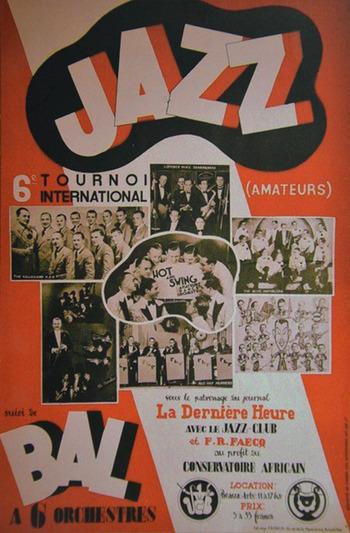
The jazz competitions that took place in Belgium and the Netherlands in the 1930s were by no means the first transnational jazz events in the world – indeed, as Bruce Johnson argues, jazz has always been diasporic, ‘invented in the process of being disseminated’ (Reference Johnson, Cooke and Horn2002, p. 39). Individual performers and (proto-)jazz bands made concert tours in nations other than their own at least as early as 1914, when the Southern Symphony Quintette, which included drummer Louis Mitchell, had a brief stint in London (Miller Reference Miller2005, p. 15–16). Better known examples are the Southern Syncopated Orchestra and the Original Dixieland Jazz Band, both of which performed in a select few European cities in 1919 (Miller Reference Miller2005, pp. 61 and 66). In Belgium, too, various American bands made regular appearances since 1920, when Mitchell's Jazz Kings commenced its first extended engagement in Brussels, and arguably similar cross-border performances took place across the world (Heyman Reference Heyman2015). However, in a number of significant respects, these interwar tournaments were pioneering initiatives in the transnationalisation of jazz, in particular in that they were the first to bring together European jazz musicians nationally and transnationally, as contestants or as judges, in a structured annual event. For example, the international contest in 1935 featured one group from the Netherlands, one from the UK, and five from Belgium (the anticipated French group cancelled at the last minute), with the jury of five originating from all of these four countries plus Switzerland (Programme brochure 1935; Figure 3).
The poster of the international competition of 1937, showing a selection of the participating bands. Coll. Fondation Roi Baudouin, Fonds Robert Pernet, MIM, bibliothèque, Bruxelles, © Peter De Greef. Coll. Koning Boudewijnstichting, Fonds Robert Pernet, MIM, bibliotheek, Brussels, © Peter De Greef.

Finally, it can be argued that these tournaments functioned as a prototype for the jazz festivals that began to emerge around the world in the late 1940s and early 1950s, such as the Australian Jazz Convention (Melbourne, Australia, 1946), the Festival International du Jazz (Nice, France, 1948) or the Newport Jazz and Folk Festival (Rhode Island, United States, 1954; Johnson Reference Johnson and Atkins2003, pp. 151–2; McKay Reference McKay and Martinelli2019, pp. 707–8). A few earlier festival-like events occurred on a one-off basis, such as the ‘Jazz Week’ organised in Sidney as early as 1919 or the 1938 Carnival of Swing held at Randall's Island Stadium (New York), but noteworthy in this context are several events that took place in Belgium in 1945 and 1948 (Johnson Reference Johnson1987, p. 4). In 1945, two festivals were held in Brussels, the Festival Internationale de Jazz on 17 June and the 1st Swing Festival on 6 December (Lenaerts Reference Lenaerts2017). A few years later, from 14 to 17 August 1948, the Festival Européen du Jazz was organised in the casinos of Knokke and Ostend, two Belgian seaside resorts (Lenaerts Reference Lenaerts2017). All three events were organised by the Hot Club de Belgique, a promotional organisation founded in 1939 by a few former members of the Jazz Club who had grown dissatisfied with the club's policy (Lenaerts Reference Lenaerts2017). During World War II, a bitter rivalry broke out between both clubs and eventually the Hot Club (during the war temporarily rebranded as Club Rythmique) prevailed (Heyman Reference Heyman, Medbøe, Moir and Atton2017, p. 91–2). The organisation of the jazz competitions (among other activities) was taken over by the Hot Club, but the procedures and design of the earlier contests remained firmly in place. Therefore, it is not unthinkable that the early festivals by the Hot Club were inspired by the Hot Club's wartime and post-war competitions, which in turn were grounded on those held by the Jazz Club in the interwar period.
Other connections between these tournaments and later festivals can be found as well. As Emma Webster and George McKay clarify, ‘[d]efining what constitutes a “music festival” is not a straightforward task’, but one way of characterising it is as a ‘venue-based series of live music events linked by a theme or genre, usually urban’, a description that certainly applies to not only the aforementioned festivals, but also to the jazz contests (Webster and McKay Reference Webster and McKay2016, p. 4). When following their further categorisation of music festivals into eight areas of value and impact, the similarities become even more evident (Webster and McKay Reference Webster and McKay2016, p. 3). The discussed Belgian jazz tournaments contained aspects relating to no less than five of these eight categories:
(1) economics and charity (Webster and McKay Reference Webster and McKay2016, p. 7) – the connection to music traders and Faecq's own businesses, the collaboration with le Conservatoire Africain;
(2) temporality and transformation (Webster and McKay Reference Webster and McKay2016, p. 10) – the creation of a temporary community of stakeholders (contenders, judges, promotors, fans) which allowed for socialisation;
(3) creativity (Webster and McKay Reference Webster and McKay2016, pp. 12–13) – the mutual inspiration among the contending bands, the ball and guest performances as a tool for developing a new audience;
(4) place-making and tourism (Webster and McKay Reference Webster and McKay2016, p. 15) – the shuttle bus service provided by the Jazz Club, the regional/provincial tournaments;
(5) mediation and discourse (Webster and McKay Reference Webster and McKay2016, p. 16) – the extensive press attention, Faecq's claim that the 1932 edition ‘erased years of anti-jazz propaganda’ (Faecq Reference Faecq1952c, p. 13).
Furthermore, a number of present-day jazz festivals contain a competitive element (e.g. the Montreux Jazz Talent Awards at the festival of the same name) while in due time some competitions transformed into genuine festivals (e.g. the Generations in Jazz Festival in Mount Gambier, Australia), providing further proof of the close link that existed and continues to exist between jazz contests and jazz festivals.
Considering all this, Bartók's claim that competitions are not for artists does hold some truth. They are indeed not just for artists – nor for horses, for that matter. Judging, ranking and awarding musical performances were only a few of the many elements at play in the Belgian interwar contests. Certainly, they allowed for a select few musicians to be discovered and build a successful career. More important still is that in one way or another they impacted many more stakeholders, including intermediaries, judges and audiences, by acting as a productive site of promotion, dissemination, socialisation, education, mediation and popularisation.
Acknowledgements
The author wishes to thank Alexander Dhoest, Sarah Hill, Matthieu Thonon and the two reviewers for their help and insights. This work was supported by the Research Foundation – Flanders.