Introduction
Alzheimer’s disease (AD) is the most frequent cause of neurodegenerative dementia, where the hallmark clinical phenotype is characterized by progressive loss of episodic memory (McKhann et al., Reference McKhann2011). Depending on the age at onset AD is classified into late-onset AD (LOAD) and young-onset AD (YOAD), with YOAD being defined by onset of symptoms before the age of 65 (Rossor et al., Reference Rossor, Fox, Mummery, Schott and Warren2010). YOAD is a less common form of AD, representing less than 10% of all cases of AD. It is estimated that up to 64% of all YOAD cases develop an atypical presentation, where memory loss is not the main symptom (Alladi et al., Reference Alladi2007; Koedam et al., Reference Koedam2010; Mendez et al., Reference Mendez, Lee, Joshi and Shapira2012). Instead, people may show progressive language impairment, as in the logopenic variant of primary progressive aphasia (lv-PPA) (Gorno-Tempini et al., Reference Gorno-Tempini2011) which is characterized by word-finding difficulties with impaired sentence comprehension due to phonological working memory deficits (Snowden et al., Reference Snowden2007). In other cases, the main clinical symptom may be difficulties with vision, as in posterior cortical atrophy (PCA) (Tang-Wai et al., Reference Tang-Wai2004), a clinical syndrome that involves progressive decline in visual processing skills and other posterior symptoms (Snowden et al., Reference Snowden2007). Additionally, for those individuals under 65, dementia phenotypes arising from frontotemporal degeneration (FTD) are as frequent as AD (Seltman and Matthews, Reference Seltman and Matthews2012; Waldö, Reference Waldö2015). FTD comprises a group of disorders affecting primarily the frontal and temporal lobes of the brain giving rise to a clinical picture of changes in personality, behavior, and language. Three main syndromes have been recognized under the FTD umbrella: (1) a behavioral variant frontotemporal dementia (bv-FTD) (Rascovsky et al., Reference Rascovsky2011) characterized by progressive changes in personality and social behavior, (2) a semantic variant PPA (sv-PPA) (Gorno-Tempini et al., Reference Gorno-Tempini2011) characterized by impaired word and object comprehension, and (3) a nonfluent variant PPA (nfv-PPA) (Gorno-Tempini et al., Reference Gorno-Tempini2011), which progresses with agrammatism and effortful, nonfluent speech (Neary et al., Reference Neary1998). Lastly, a small proportion of AD cases are inheritable, referred to as familial AD (FAD), caused by autosomal dominantly inherited mutations in one of the genes presenilin 1 (PSEN1), presenilin 2 (PSEN2), or amyloid precursor protein (APP) (Bateman et al., Reference Bateman2012; Wu et al., Reference Wu2012). Similarly, approximately 20–30% of FTD cases are inheritable, referred to as familial FTD (fFTD), the most common causes of which are autosomal dominant inheritance of a mutation in one of the genes progranulin (GRN), microtubule-associated protein tau (MAPT), or chromosome 9 open reading frame (C9ORF72) (Rohrer et al., Reference Rohrer, Warren, Fox and Rossor2013). A commonality between all of the aforementioned phenotypes is that they are less prevalent or rarer forms of dementia.
Depression, apathy, and anxiety are the most frequently reported neuropsychiatric symptoms (NPS) in dementia (Brodaty et al., Reference Brodaty, Connors, Xu, Woodward and Ames2015; Zhao et al., Reference Zhao2016) and are strongly associated with increased caregiver burden and lower quality of life in people living with dementia (Gibbons et al., Reference Gibbons2002; Gómez-Gallego et al., Reference Gómez-Gallego, Gómez-Amor and Gómez-García2012; González-Salvador et al., Reference González-Salvador2000; Greene et al., Reference Greene, Smith, Gardiner and Timbury1982; Hoe et al., Reference Hoe, Hancock, Livingston and Orrell2006; Kaufer et al., Reference Kaufer1998; Seignourel et al., Reference Seignourel, Kunik, Snow, Wilson and Stanley2008; Springate and Tremont, Reference Springate and Tremont2014). Apathy, in particular, is reported to be highly prevalent and persistent throughout the course of the disease (Van Der Linde et al., Reference Van Der Linde2016). Although these three symptoms have also been reported in rarer dementias such as YOAD (van Vliet et al., Reference van Vliet2013) and PCA (Suárez-González et al., Reference Suárez-González, Crutch, Franco-Macías and Gil-Néciga2016), there is a less research and less understanding of the neuropsychiatry of these types of dementia in comparison with the prominent body of research looking at their phenotype-specific symptoms, such as language difficulties in PPA (Gorno-Tempini et al., Reference Gorno-Tempini2004; Grossman and Ash, Reference Grossman and Ash2004) or visual impairment in PCA (Lee and Martin, Reference Lee and Martin2004; Maia da Silva et al., Reference Maia da Silva, Millington, Bridge, James-Galton and Plant2017). It is however now widely accepted that people living with these young-onset and rare dementias have needs that are specific and different from those with more typical forms, and that remain poorly understood (Ducharme et al., Reference Ducharme2014; Millenaar et al., Reference Millenaar2016). Better understanding of the particular psychological needs of this population is crucial to deliver age-appropriate support and care, and for the development of phenotype-tailored interventions.
In this piece of work, we aim to produce the first systematic review on the prevalence of depression, anxiety and apathy in FTD, atypical AD and YOAD, and inherited dementia. In doing so, we expect to gather, summarize and share the evidence produced to date in the field, so researchers and clinicians working with people affected by rare dementias have a comprehensive, updated, and descriptive piece of information that can be used to inform their research and clinical practice.
Methods
Search methods
Electronic searches
Searches were run in Embase, PsycINFO, and PubMed, from the first article found published to September 2019 and limited to peer-reviewed published articles written in English only. The search strategy and syntax were developed with the support of an expert librarian and piloted. The search keywords were translated into the different syntaxes used by the different databases and can be found in Appendix A. Results were manually deduplicated. Title, abstract, and full-text screening were carried out by JDC and SMDH.
Inclusion criteria for considering studies for this review
Types of participants
Studies were included if they measured prevalence of depression and/or anxiety and/or apathy symptoms in YOAD, PCA, bv-FTD, PPA and its variants (sv-PPA, nfv-PPA, and lv-PPA), FAD, or fFTD. In studies examining familial dementias, only NPS reported in symptomatic mutation carriers were eligible to be included in the review.
Types of studies
Studies were required to provide either a percentage of people exhibiting at least one of the NPS of interest (depression, anxiety, or apathy), or a raw figure from which a percentage could be calculated. Both cross-sectional and longitudinal studies were eligible. Intervention studies were accepted, as long as the prevalence of symptoms was presented at baseline (in which case, this would be the figure included in the review).
Measures
Studies were included providing they reported results based on a measure from which the prevalence of the symptom(s) in the sample could be obtained. A range of measures were eligible, such as validated and nonvalidated tools, and prospective and retrospective measures including observations from clinical records.
Data extraction and management
JDC extracted the data using a standard extraction form which covered the following: sample size(s), demographic information (age and disease severity), neuropsychiatric measure(s) used, prevalence of NPS, recruitment setting, the diagnostic assessment of dementia, and whether the study excluded individuals with a psychiatric history.
Quality assessment
Quality assessment was used to describe the characteristics of the body of knowledge of the frequency of depression, anxiety, and apathy in the phenotypes examined, and not to make decisions regarding the weight of different articles toward the final results.
A tailored set of criteria (Table 1) were designed for assessing the methodological quality of individual studies, given the heterogeneity of the studies retrieved and the risk of information loss by using standard measures of quality. There was a maximum possible score of 24, with higher scores indicating smaller risk of bias and therefore better-quality evidence.
Criteria used for study quality assessment

Data synthesis
Individual prevalence values were extracted by JDC from each article and collated as percentages.
Results
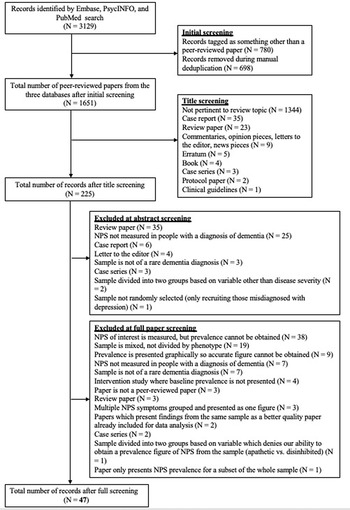
The initial search identified 3129 records, which was reduced to 1651 after first-level screening and deduplication. Forty seven were selected for full-text assessment (details shown in Figure 1).
Flow diagram of study selection.

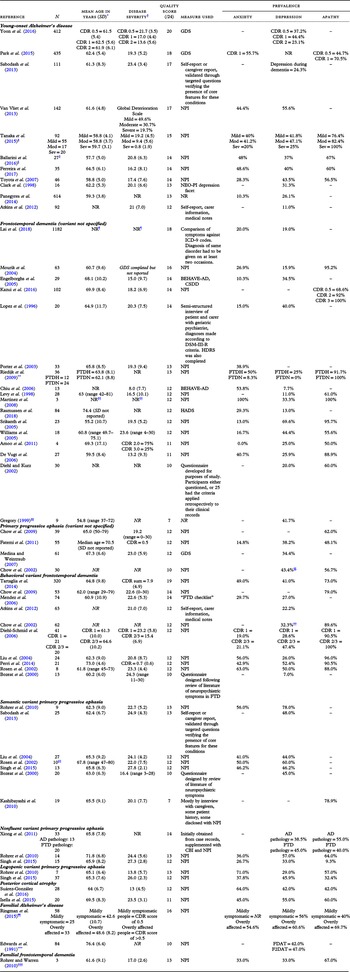
Characteristics of included studies can be found in Table 2. Thirty nine studies reported depressive symptoms, 29 reported symptoms of anxiety, and 29 reported symptoms of apathy. A descriptive overview of the data follows below, grouped into the three NPS of interest, apathy, anxiety, and depression. A final section is devoted to considering methodological issues examined in the quality appraisal.
Summary of articles reporting prevalence of anxiety, depression, and apathy in each dementia syndrome

* Mean age is followed by standard deviation, unless otherwise stated.
† Disease severity is indicated by Mini-Mental State Examination score, unless otherwise stated.
‡ Tanaka et al. (Reference Tanaka2015) divided their sample by disease severity. Mild = CDR 0.5/1, moderate (mod) = CDR 2, severe (sev) = CDR 3.
§ Ballarini et al. (Reference Ballarini2016) excluded people with nontypical Alzheimer’s presentation (i.e. PCA and lv-PPA), so report data on only young-onset Alzheimer’s disease with typical amnestic presentation.
‖ Ballarini et al. (Reference Ballarini2016) recruited 51 participants, but NPI was only conducted on 27 people.
¶ Lai et al. (Reference Lai, Kaup, Yaffe and Byers2018) reported demographic data for the entire sample (FTD, AD, Lewy body dementia, and mixed dementia) only.
** Riedijk et al. (Reference Riedijk2009) divided their sample by living situation, people with FTD who lived at home (FTDH) and people with FTD who lived in a nursing home (FTDN).
†† Martinez et al. (Reference Martínez2008) reported demographic data for the entire sample (FTD, dementia with Lewy bodies and AD) only.
‡‡ Gregory (Reference Gregory1999)’s sample consists of FTD patients including PPA presentations but only if they have behavior change too.
§§ Chow et al. (Reference Chow, Miller, Boone, Mishkin and Cummings2002) measured symptoms over illness, and symptoms at onset of illness. Prevalence for symptoms over illness is reported here.
‖‖ Rosen et al. (Reference Rosen2002) recruited 12 SD patients, but NPI data were only available and reported for 10 people.
¶¶ Ringman et al. (Reference Ringman2015) divided their sample by severity of CDR score, those with CDR = 0.5 characterized as mildly symptomatic, and those with CDR >0.5 characterized as overtly affected.
*** Edwards et al. (Reference Edwards, Larson, Hughes and Kukull1991) divided their sample by those diagnosed with FAD who had one affected relation (FDAT) and those diagnosed with FAD with two or more affected relations (F2DAT).
††† Rohrer and Warren (Reference Rohrer and Warren2010) investigated familial primary progressive aphasia, a subtype of frontotemporal dementia, caused by a progranulin mutation.
BEHAVE-AD = Behavioural Pathology in Alzheimer’s Disease Rating Scale; CBI = Cambridge Behavioural Inventory; CDR = Clinical Dementia Rating; CSDD = Cornell Scale for Depression in Dementia; GDS = Geriatric Depression Scale; HDRS = Hamilton Depression Rating Scale; NEO-PI = Neuroticism–Extraversion–Openness Personality Inventory; NPI = Neuropsychiatric Inventory; NR = not reported.
If prevalence data were stratified by severity of NPS, the figures were collated into one single prevalence figure for that sample. However, if prevalence data were stratified by severity of disease, for example, the sample was stratified according to CDR score, the figures were not collated. In cases where a study fulfilled two different scoring criteria in one category, the lower score was allocated.
Outcomes
Apathy
Symptoms of apathy appeared most frequently in studies of FTD (ranging 50–100%). All 10 FTD studies measuring apathy in FTD reported symptoms in at least 50% of their population, five of which indicated presence of apathy in at least 95% of their sample (Amoo et al., Reference Amoo2011; Diehl et al., Reference Chow, Miller, Boone, Mishkin and Cummings2002; Kazui et al., Reference Kazui2016; Levy et al., Reference Levy1998; Martínez et al., Reference Martínez2008; Mourik et al., Reference Mourik2004; Riedijk et al., Reference Riedijk2009; Srikanth et al., Reference Srikanth, Nagaraja and Ratnavalli2005). Three studies of apathy in PPA reported symptoms in 48.1–62% of patients (Chow et al., Reference Chow, Miller, Boone, Mishkin and Cummings2002; Reference Chow2009; Fatemi et al., Reference Fatemi2011). Five studies reported apathy in YOAD, ranging from 44.7% to 100% (Ballarini et al., Reference Ballarini2016; Ferreira et al., Reference Ferreira2017; Park et al., Reference Park2015; Tanaka et al., Reference Tanaka2015; Toyota et al., Reference Toyota2007). Two of these studies stratified their sample by disease severity; Park et al. (Reference Park2015) reported prevalence of apathy in patients with a CDR score of 0.5 as 45%, and 71% in those with a score of 1. Tanaka et al. (Reference Bang, Spina and Miller2015) reported apathy in 76.4% of mild, 82.4% of moderate, and 100% of severe dementia patients.
Studies of bv-FTD reported a high prevalence of apathy symptoms (Lopez et al., Reference Lopez1996), with a range of 73–100% across seven studies (Chow et al., Reference Chow, Miller, Boone, Mishkin and Cummings2002; Reference Chow2009; Diehl-Schmid et al., Reference Diehl-Schmid, Pohl, Perneczky, Förstl and Kurz2006; Liu et al., Reference Liu2004; Perri et al., Reference Perri, Monaco, Fadda, Caltagirone and Carlesimo2014; Rosen et al., Reference Rosen2002; Tartaglia et al., Reference Tartaglia2014). Diehl-Schmid et al. (Reference Diehl-Schmid, Pohl, Perneczky, Förstl and Kurz2006) stratified by CDR score, with 91% of mild patients (CDR score of 1) and 100% of moderate/severe patients (CDR score of 2 or 3) reporting symptoms of apathy. Three further studies indicated apathy in at least 90% of patients (Chow et al., Reference Chow, Miller, Boone, Mishkin and Cummings2002; Liu et al., Reference Liu2004; Perri et al., Reference Perri, Monaco, Fadda, Caltagirone and Carlesimo2014). Five studies reported apathy in sv-PPA patients with a range of 23–80% (Kashibayashi et al., Reference Kashibayashi2010; Liu et al., Reference Liu2004; Rohrer et al., Reference Kashibayashi2010; Rosen et al., Reference Rosen2002; Singh et al., Reference Singh2015). Two studies of lv-PPA reported symptoms in 32% and 57% of patients (Rohrer et al., Reference Kashibayashi2010; Singh et al., Reference Singh2015), and three studies reported symptoms in 9–64% of patients with nfv-PPA (Rohrer et al., Reference Kashibayashi2010; Singh et al., Reference Singh2015; Xiong et al., Reference Xiong2011). Xiong et al. (Reference Xiong2011) reported symptoms in nfv-PPA patients stratified by pathology, finding that 55% of those with AD pathology presented with apathy, compared with 40% of those with FTD pathology. There were fewer studies reporting apathy in other phenotypes. Two studies of PCA reported apathy in 42% and 60% of patients (Isella et al., Reference Isella2015; Suárez-González et al., Reference Suárez-González, Crutch, Franco-Macías and Gil-Néciga2016). Only one study reported apathy in FAD, with 40% of mildly symptomatic and 69.7% of overtly affected individuals exhibiting symptoms (Ringman et al., Reference Ringman2015). One study reported apathy in fFTD, with symptoms reported in 67% of patients (Rohrer and Warren, Reference Rohrer and Warren2010).
Anxiety
Thirteen studies measured anxiety symptoms in FTD, with prevalence figures ranging from 0% to 100%. However, it is worth noting that the two studies which reported symptoms in 0% (Amoo et al., Reference Amoo2011) and 100% (Martínez et al., Reference Martínez2008) of people with FTD recruited very small samples (N = 4, N = 3, respectively). Among studies with more substantial sample sizes (N = 13 and above), prevalence of anxiety in FTD was reported at a much smaller range of 10.3–53.8%, similar to that reported by the six studies of YOAD, whose findings were between 10% and 55.7% (Ballarini et al., Reference Ballarini2016; Panegyres and Chen, Reference Panegyres and Chen2014; Park et al., Reference Park2015; Tanaka et al., Reference Tanaka2015; Toyota et al., Reference Toyota2007; van Vliet et al., Reference van Vliet2013). One study reported anxiety in PPA, with a prevalence figure of 14.8% (Fatemi et al., Reference Fatemi2011).
Six studies measured anxiety in bv-FTD, reporting a prevalence range of 19–63% (Diehl-Schmid et al., Reference Diehl-Schmid, Pohl, Perneczky, Förstl and Kurz2006; Liu et al., Reference Liu2004; Mendez et al., Reference Mendez2006; Perri et al., Reference Perri, Monaco, Fadda, Caltagirone and Carlesimo2014; Rosen et al., Reference Rosen2002; Tartaglia et al., Reference Tartaglia2014). Diehl-Schmid et al. (Reference Diehl-Schmid, Pohl, Perneczky, Förstl and Kurz2006) stratified by CDR, although similar levels were found among those with CDR 1 (19%) and those with CDR 2 or 3 (21.1%). Of the more specific phenotypes, anxiety reached the highest frequency in lv-PPA patients; Rohrer et al. (Reference Kashibayashi2010) reported 71%, while Singh et al. (Reference Singh2015) reported 37.8%. This was followed by studies of PCA, reporting symptoms in 64% (Suárez-González et al., Reference Suárez-González, Crutch, Franco-Macías and Gil-Néciga2016) and 45% (Isella et al., Reference Isella2015) of patients. Four studies measured anxiety in sv-PPA patients, all of which found symptoms in approximately half of patients, ranging from 41% to 56% (Liu et al., Reference Liu2004; Rohrer et al., Reference Kashibayashi2010; Rosen et al., Reference Rosen2002; Singh et al., Reference Singh2015). Lower frequency of symptoms of anxiety was most consistently reported in nfv-PPA patients, with figures of 26.7% (Rohrer et al., Reference Kashibayashi2010) and 36% (Singh et al., Reference Singh2015) reported.
Only one study reported anxiety in FAD, reporting symptoms in 54.6% of overtly affected individuals (Ringman et al., Reference Ringman2015). The prevalence of anxiety in mildly symptomatic people was not reported. One study reported the prevalence of anxiety in people with fFTD as 33% (Rohrer and Warren, Reference Rohrer and Warren2010).
Depression
Depression symptoms were found in 7.7–69.6% of FTD patients across 15 studies (Amoo et al., Reference Amoo2011; Chiu et al., Reference Chiu, Chen, Yip, Hua and Tang2006; Diehl et al., Reference Chow, Miller, Boone, Mishkin and Cummings2002; de Vugt et al., Reference de Vugt2006; Engelborghs et al., Reference Engelborghs2005; Gregory, Reference Gregory1999; Levy et al., Reference Levy1998; Lopez et al., Reference Lopez1996; Martínez et al., Reference Martínez2008; Mourik et al., Reference Mourik2004; Riedijk et al., Reference Riedijk2009; Srikanth et al., Reference Srikanth, Nagaraja and Ratnavalli2005; Williams et al., Reference Williams, Nestor and Hodges2005). Ten studies reported depressive symptoms in YOAD, with figures of 11–55.6% reported. Yoon et al. (Reference Yoon2016) stratified by disease severity; symptoms were found in 37.2% of people with CDR 0.5, 44.4% of those with CDR 1, and 23.1% of those with CDR 2. Tanaka et al. (Reference Tanaka2015) also stratified by disease severity, reporting depressive symptoms in 41.8% of mild, 47.1% of moderate, and 25% of severe dementia. Of the remaining eight studies, two reported symptoms in less than a quarter of people (Atkins et al., Reference Atkins, Bulsara and Panegyres2012; Sabodash et al., Reference Sabodash, Mendez, Fong and Hsiao2013), five found symptoms in between one quarter and one half of people (Ballarini et al., Reference Ballarini2016; Clark et al., Reference Clark1998; Panegyres et al., Reference Ducharme2014; Toyota et al., Reference Toyota2007), and one study reported symptoms in just over half of cases (van Vliet et al., Reference van Vliet2013). Reported prevalence of depressive symptoms appeared fairly consistent across three PPA studies, with a range of 38.2–43.4% (Chow et al., Reference Chow, Miller, Boone, Mishkin and Cummings2002; Fatemi et al., Reference Fatemi2011; Medina and Weintraub, Reference Medina and Weintraub2007).
Nine studies were found to measure symptoms of depression in bv-FTD. One study reported prevalence as low as 7% (Bozeat et al., Reference Bozeat, Gregory, Ralph and Hodges2000). However, the majority of findings fell between 22–52% (Atkins et al., Reference Atkins, Bulsara and Panegyres2012; Chow et al., Reference Chow, Miller, Boone, Mishkin and Cummings2002; Diehl-Schmid et al., Reference Diehl-Schmid, Pohl, Perneczky, Förstl and Kurz2006; Liu et al., Reference Liu2004; Mendez et al., Reference Mendez2006; Perri et al., Reference Perri, Monaco, Fadda, Caltagirone and Carlesimo2014; Rosen et al., Reference Rosen2002; Tartaglia et al., Reference Tartaglia2014). Diehl-Schmid et al. (Reference Diehl-Schmid, Pohl, Perneczky, Förstl and Kurz2006) stratified by disease severity, reporting symptoms in 28.6% of those scoring CDR 1, and 47.4% of those scoring CDR 2 or 3. Of the more specific phenotypes, frequency of depressive symptoms reached the highest among sv-PPA patients, with six studies included in the review reporting a range of 44–78% (Bozeat et al., Reference Bozeat, Gregory, Ralph and Hodges2000; Liu et al., Reference Liu2004; Rohrer et al., Reference Kashibayashi2010; Rosen et al., Reference Rosen2002; Sabodash et al., Reference Sabodash, Mendez, Fong and Hsiao2013; Singh et al., Reference Singh2015). Four of these studies reported prevalence at 44–48%. Two studies of people with lv-PPA identified depressive symptoms in 29–45.9% of patients (Rohrer et al., Reference Kashibayashi2010; Singh et al., Reference Singh2015). The same two studies, along with one other, reported on depressive symptoms in nfv-PPA, finding a prevalence of 33–57% (Rohrer et al., Reference Kashibayashi2010; Singh et al., Reference Singh2015; Xiong et al., Reference Xiong2011). Xiong et al. (Reference Xiong2011) divided their sample by pathology, reporting depression in 38.5% of those with AD pathology and in 45% of those with FTD pathology. Two studies reported frequency of depressive symptoms in PCA as 42% (Suárez-González et al., Reference Suárez-González, Crutch, Franco-Macías and Gil-Néciga2016) and 55% (Isella et al., Reference Isella2015).
There were two studies of depressive symptoms in FAD patients. Edwards et al. (Reference Edwards, Larson, Hughes and Kukull1991) divided their sample by those with only one relative affected by AD and those with two or more affected relatives, and found that frequency of depressive symptoms was similar among the two groups, at 42% and 47%, respectively. Ringman et al. (Reference Ringman2015) stratified by disease severity, reporting prevalence of depressive symptoms as 56% in mildly symptomatic and 60.6% in overtly affected individuals with FAD. Only one study reported depressive symptoms in fFTD, and reported prevalence as 33% (Rohrer and Warren, Reference Rohrer and Warren2010).
Quality of studies
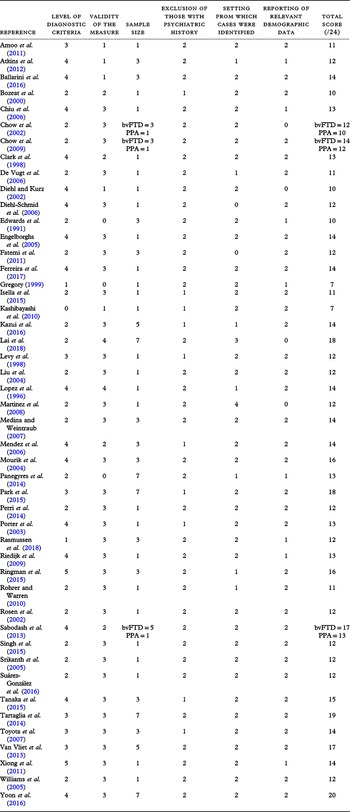
Table 3 summarizes the scoring of each article on all quality criteria. Scores ranged from 7 to 20 points (out of a maximum of 24 points). The majority of studies recruited a small sample (N < 41), with only seven studies recruiting a sample of more than 100 participants. Recruitment setting was also a common source of bias across studies. The majority of studies recruited from specialist research, or secondary/tertiary care settings. There was only one population-based study identified. Furthermore, there was some inconsistency in how NPS were measured across the articles included in the review, although the majority of studies (38/47 studies) used the Neuropsychiatric Inventory (NPI) to measure NPS.
Quality scoring of all included articles

Scoring criteria for each quality category
Level of diagnostic criteria: 0 – not adequately outlined; 1 – own criteria; 2 – published clinical criteria, possible or unspecified whether probable or possible; 3 – published clinical criteria, probable; 4 – clinical criteria and neuroimaging support; 5 – clinical criteria and neuropathological confirmation.
Validity of measure: 0 – not specified; 1 – retrospective observation of records; 2 – non-validated measure, such as interview or questionnaire; 3 – validated measure; 4 – in-depth interview with an appropriate professional to diagnose against standardized diagnostic mental health criteria.
Sample size: 1 – small (N = 1–40); 3 – moderate (N = 41–100); 5 – large (N = 101–200); 7 – very large (N ≥ 201).
Exclusion of those with psychiatric history: 1 – study excluded those with history of psychiatric diagnosis; 2 – no exclusion of those with psychiatric diagnosis.
Setting from which cases were identified: 0 – not specified; 1 – specialist research setting; 2 – secondary/tertiary care setting; 3 – primary care setting; 4 – population-based study.
Reporting of relevant demographic data (age and disease severity): 0 – age and disease severity missing; 1 – either age or disease severity missing; 2 – age and disease severity reported.
Summary
Table 4 summarizes the range of quality scores and prevalence figures of anxiety, depression, and apathy found across each dementia phenotype. Apathy was reported to be of high prevalence across all phenotypes, reported frequently in studies of bv-FTD, FTD, sv-PPA, and YOAD. Although lower than apathy, there was also evidence of symptoms of anxiety and depression across all phenotypes, with highest levels of anxiety in lv-PPA and PCA, and highest levels of depression in sv-PPA and FTD.
Summary of ranges of quality scores and prevalence of anxiety, depression, and apathy in each dementia phenotype

*One article with a sample size of <10.
†Three articles with a sample size of <10.
With regards to quality assessment, the majority of studies scored between 10 and 14 out of 24 points. The highest scoring study scored 20 points, and the two lowest scoring studies scored 7. Studies investigating YOAD populations were among those obtaining the highest quality scores, followed by bv-FTD and FTD in general. Nevertheless, a wide variability of quality was exhibited in studies involving the three patient groups. Regarding more rare phenotypes, namely PCA, PPA, and the specific PPA phenotypes (sv-PPA, nfv-PPA, and lv-PPA), along with familial dementias, the variability in the quality of studies was less, but quality assessment in these studies was generally in the middle range.
Discussion
Depression, anxiety, and apathy have been particularly frequently investigated in FTD, particularly bv-FTD, followed by YOAD, and PPA. Seven articles examined these symptoms in sv-PPA, but only two or three studies looked at lv-PPA, nfv-PPA, PCA, and FAD, and only one investigated fFTD. The differences in the number of publications across phenotypes may partly be due to the fact that behavioral symptoms are a feature of the FTD diagnostic criteria. Additionally, FTD (particularly bv-FTD) and YOAD are more prevalent than the other phenotypes included in this review, thus samples are more accessible.
Prevalence of depression, anxiety, and apathy in young-onset and rare dementias
Apathy was frequently reported across all diagnostic groups. It was reported particularly frequently in bv-FTD, which is unsurprising considering that apathy is a feature of the diagnostic criteria for bv-FTD, but not a diagnostic criterion of any of the language-led dementias (Bang et al., Reference Bang, Spina and Miller2015). This may lead to certain circularity in studies addressing apathy in bv-FTD, inflating real prevalence rates. Although slightly less frequently reported, apathy was also found in sv-PPA. Sv-PPA can develop significant behavioral symptoms over the course of the disease, which may include apathy among others. Although very few studies addressing apathy in PCA, lv-PPA, and nfv-PPA were identified, upper limits of prevalence ranges were all above 50%, with a lower limit of 32% (in the case of lv-PPA) and 42% (PCA) of individuals affected. Exceptionally, a much lower minimum value of 9.3% was identified in nfv-PPA.
Anxiety and depression were present in a lower number of individuals than apathy, but reached high upper boundaries in the ranges of prevalence in FTD and YOAD and slightly lower in PPA. When looking at the specific phenotypes, lv-PPA is the phenotype showing the highest upper limit of anxiety (71%), with lower rates of depression reported. However, sv-PPA displayed the opposite pattern, with depression present in up to 78% of the cases and anxiety in half the cases, and nfv-PPA also showing greater presence of depression than anxiety. PCA and bv-FTD both showed more frequent presence of anxiety than depression but up to half of patients in each group showed depressive symptoms. These results suggest that depression and anxiety are overlapping processes, likely sharing related underlying mechanisms.
Studies applying stratification by disease severity suggest that prevalence of apathy increases with disease progression in YOAD, FAD and bv-FTD. Studies of people with YOAD that stratified by disease severity revealed a slight reduction in symptoms of anxiety and depression across disease span. One study stratifying people with FAD by disease severity revealed a relatively steady level of depression over disease development. A study of bv-FTD indicated an increase in depressive symptoms over the disease while anxiety remained stable. Differences in the course of these three NPS across phenotypes may indicate different underlying biological mechanisms and/or different emotional reactions to the challenges arising from the specific clinical pictures. Altogether, studies involving stratification are scarce and methodologies applied are varied, even though they could provide essential input about the evolution of NPS over cognitive and functional decline. In addition, it remains unclear whether stability of symptoms in moderate and severe stages may reflect in some cases the inability of the patient to accurately convey this information due to progressive cognitive impairment, instead of actually reflecting a plateau in NPS.
Quality of studies and sources of bias
There was substantial variability in the quality of studies identified by this review. Studies examining YOAD, bv-FTD, and FTD were rated as better quality, while those of PPA (and its subvariants), PCA, and familial dementia tended to be of lower quality, with a key source of bias being the recruitment of small sample sizes.
Most of the studies reported used a validated measure, instead of the gold-standard of clinical assessment, to determine the presence of NPS. Although the majority of studies used the NPI, there was substantial variability among the remaining studies regarding the use of measurement tools. This may have added further bias to estimates of prevalence. A key limitation of standardized neuropsychiatric measures is their reliance on caregivers’ reflection. Proxy reports are frequently relied on for measuring NPS in dementia due to risk of symptoms such as cognitive impairment, poor insight and communication difficulties confounding self-report, particularly as disease progresses (Millenaar et al., Reference Millenaar2017). However, there is often discrepancy in self- and proxy-reports (Gomez-Gallego et al., Reference Gomez-Gallego, Gomez-Garcia and Ato-Lozano2015), with a trend for caregivers to over-report symptoms (Reisberg et al., Reference Reisberg, Auer and Monteiro1997). In addition, studies identified in this review used both self- and proxy-ratings, which are difficult to directly compare. Furthermore, there is a lack of purposely designed questionnaires for people with communication difficulties, which occur in PPA and other dementia phenotypes (Alsawy et al., Reference Alsawy, Mansell, McEvoy and Tai2017).
Ten articles excluded individuals with a previous psychiatric history, leading to a slightly lower quality score since figures reported by these articles might underestimate the true prevalence of NPS in the population. The majority of studies recruited from a research or tertiary care setting, with only one community-based study identified, which limits the generalizability of these results. As age and disease severity are likely closely connected with the dementia diagnosis and the occurrence of NPS, respectively, absence of relevant demographic data also reduces generalizability of findings and therefore points were deducted in the appraisal of quality of the nine studies with missing demographics. Lastly, the majority of studies included in this review relied on clinical diagnostic criteria, in which pathological confirmation was not available. Although this is considered a bias, its weight in the current study is, however, limited. This study is focused on phenotypes, not pathological types, and since the symptoms studied are dictated by the clinical picture and not by the neuropathological process driving them, the clinical diagnosis should be the standard to rely on.
Limitations
The quality categories and criteria used in this study were data-driven, that is, produced by the researcher in response to the data. These categories were not exhaustive, which means there were a number of relevant variables that may have not been considered by this review, such as the cut-off at which studies considered NPS to be present, location from which people were recruited, and the sampling procedure used (e.g. random vs. opportunity sampling). Studies that investigated only one or two of the target NPS were eligible for inclusion, meaning there is a risk of information bias depending on which NPS were being studied by each identified article; overall, depression was more frequently measured than anxiety and apathy. Furthermore, both longitudinal and cross-sectional studies were included in the review, where the former reports cumulative prevalence and the latter reports point prevalence. This may elicit bias as cumulative prevalence would likely lead to overestimation of frequencies.
Attempting to reduce a wide range of study variables into categorical scoring criteria may result in subtle differences being overlooked. It was agreed by the authors of this review that, in cases where a study used multiple corroborating methods and did not adhere to one method for all participants, the lowest score should be assigned. This, however, means that the potential additional value of corroborating multiple methods was lost.
The quality assessment conducted as part of this review was intended to be descriptive. This means that papers were given equal weighting during analysis, regardless of quality score.
The search strategy included the terms “familial,” “inherited,” and “autosomal” to elicit studies of familial dementia. However, it is possible that studies of familial dementia that did not include these terms in the title/abstract may have not been identified in the search and therefore not included in the review. Furthermore, reference lists of the identified articles were not scrutinized to identify any articles not found in the search, which may be a source of bias in terms of article selection.
Conclusion
This review has identified very few studies that measured NPS in young-onset and atypical dementias, especially in some specific phenotypes such as nfv-PPA, lv-PPA, PCA, FAD, and fFTD. In addition, the average quality of studies is moderate, and studies examining NPS over the course of disease progression are almost nonexistent. Nevertheless, depression, anxiety, and apathy seem to be very frequently reported in rare dementias.
In light of current findings, we propose a number of recommendations for planning of future studies in the field. First, large sample sizes of rare dementias are difficult to gather in a single center; therefore, multicentric collaborations are advised in order to strengthen the quality of evidence in future studies. Second, expert consensus should be obtained to harmonize research protocols of how to conduct studies on NPS in general, and in rare dementias in particular. For instance, agreement about what outcome measures to use, optimum sample size, level of description of the sample, and requirement of stratification by disease severity will facilitate design and comparison of future studies. Third, the accuracy of information provided by proxy measures might be improved by combining caregiver and patient-derived measures using purpose-built tools. Fourth, symptom-specific tools should be systematically used if we intend to progress in the understanding of depression, apathy, and anxiety (e.g. Apathy Evaluation Scale). Fifth, more research is needed about the phenotype-specific barriers to engaging in self-reports experienced by people with rare dementia, and how they can be better supported. For instance, people living with PPA face the double challenge of having cognitive difficulties and aphasia, and may benefit from the use of specific communication strategies or augmentative and alternative communication. Ensuring that participants receive adequate communication support during self-reports is a way to both facilitate their participation and increase the reliability of the data collected. Lastly, given the significant presence of depression, apathy, and anxiety across dementia phenotypes, and the largely reported role of NPS on quality of life and caregiver burden in other types of dementia (such as AD and dementia with Lewy bodies), it is advisable to include quality of life as a secondary outcome measure in studies investigating depression, anxiety, and apathy in rare dementias, and an evaluation of NPS within routine clinical assessment.
Conflict of interest
None.
Source of Funding
This work was undertaken at UCL, which receives funding from the Department of Health’s NIHR Biomedical Centre’s funding scheme.
Description of authors’ roles
SMDH designed the study, formulated the research question, and supervised data collection. JDC and SMDH developed the search strategy. SMDH, JDC, and ASG conducted the literature search, reviewed articles, and analyzed the data. JDC, SMDH, and ASG wrote the manuscript.
Appendix A. Search strategy
Embase
((“familial dementia” or “inherited dementia” or “autosomal dementia” or “young-onset dementia” or “early-onset dementia” or “semantic dementia”).tw. or Pick presenile dementia/ or “pick* disease”.tw. or exp frontotemporal dementia/ or “frontotemporal dementia”.tw. or “primary progressive aphasia”.tw. or “logopenic progressive aphasia”.tw. or “posterior cortical atrophy”.tw.) and ((exp *mood disorder/ or depression.tw. or neuropsychiatr*.tw. or “behavioural symptom*”.tw. or “behavioral symptom*”.tw. or exp *affect/ or mood.tw.) not (“behavioural variant” or “behavioral variant”).tw.)
PsycInfo
((“familial dementia” or “inherited dementia” or “autosomal dementia” or “young-onset dementia” or “early-onset dementia” or “semantic dementia”).tw. or picks disease/ or “pick* disease”.tw. or “frontotemporal dementia”.tw. or “primary progressive aphasia”.tw. or “logopenic progressive aphasia”.tw. or “posterior cortical atrophy”.tw.) and ((exp *affective disorders/ or “depressive disorder*”.tw. or depression.tw. or neuropsychiatric.tw. or “behavioural symptom*”.tw. or “behavioral symptom*”.tw. or mood.tw.) not (“behavioural variant”.tw. or “behavioral variant”.tw.))
PubMed
((familial[TW] OR inherited[TW] OR autosomal[TW] OR young-onset[TW] OR early-onset[TW] OR semantic[TW]) AND dementia[TW]) OR “pick disease of the brain”[MeSH Terms] OR “pick* disease of the brain”[TW] OR “frontotemporal dementia”[MeSH Terms] OR “frontotemporal dementia”[TW] OR (primary[TW] AND progressive[TW] AND aphasia[TW]) OR (logopenic[TW] AND progressive[TW] AND aphasia[TW]) OR (“posterior”[tW] AND “cortical”[TW] AND “atrophy”[TW]) AND (“depressive disorder”[MeSH Terms] OR depression[TW] OR neuropsychiatric[TW] OR ((behavioural[tW] OR behavioral[TW]) AND symptom[TW]) OR “affect”[MeSH Terms] OR affect[TW] OR mood[TW] NOT (“behavioural variant”[TW] OR “behavioral variant”[TW]))