

It is well recognised that having relationships outside the family becomes increasingly important during adolescence (Giordano, Reference Giordano2003). Throughout the world, the prevalence of friendships between girls and boys has increased in the past decade (Carver, Joyner, & Udry, Reference Carver, Joyner, Udry and Florsheim2003; Joyner & Kao, Reference Joyner and Kao2005). By mid-adolescence, most boys and girls have dated (Feiring, Reference Feiring1996), and many have had a boyfriend or a girlfriend at some point (Carver et al., Reference Carver, Joyner, Udry and Florsheim2003). Experiencing such relationships during this time is said to have a significant impact on many facets of psychosocial development and adjustment (Furman & Shaffer, Reference Furman, Shaffer and Florsheim2003; Poulin & Chan, Reference Poulin and Chan2010). In addition, it is believed that having a relationship with the opposite sex (OS) in adolescence plays a significant role in the development of one's identity, close relationships with friends, distortion of domestic relationships, sexual identity, academic achievement, and career and professional planning (Furman & Collins, Reference Furman, Collins, Rubin, Bukowski and Laursen2009).
The lack of research on the individual and social parameters that are believed to affect one's involvement in a relationship with the OS in adolescence is seen in all of the world's societies, but it is particularly striking in traditional Islamic societies such as Iran (Bahrami, Simbar, Vedadhir, Bukowski, & Panarello, Reference Bahrami, Simbar, Vedadhir, Bukowski and Panarello2016). Iran is a heavily populated Middle-Eastern Islamic country with a population of about 80 million people, including 13 million adolescents (Baheiraei, Hamzehgardeshi, Mohammadi, & Nedjat, Reference Baheiraei, Hamzehgardeshi, Mohammadi and Nedjat2011). In Iranian society, relationships with the OS prior to marriage are religiously and culturally proscribed. Nevertheless, as a function of increased access to global media, immigration, and communication technology, and the transmission of images and descriptions of experiences that occur in more permissive Western cultures, Iranian youth have become more oriented toward a relationship with a member of the OS (Bahrami, Simbar, & Soleimani, Reference Bahrami, Simbar and Soleimani2013; Farahani, Cleland, & Mehryar, Reference Farahani, Cleland and Mehryar2011). Due to the cultural expectations imposed on Iranian society by particular interpretations of Islamic teachings, adolescents in Iran experience a social environment that is very different from that of Western contexts (Bahrami et al., Reference Bahrami, Simbar and Soleimani2013; Bahrami et al., Reference Bahrami, Sibmar, Bukowski, Vedadhir and Panarello2016). Adolescents realise that although relationships with the OS are considered to be inappropriate in their own society, they occur frequently in other societies and can be a source of pleasure. Accordingly, the dynamics related to the decision to enter into a relationship with a member of the OS may differ substantially for Iranian youth, and perhaps Muslim youth more generally, relative to adolescents in modern Western societies (Bahrami et al., Reference Bahrami, Sibmar, Bukowski, Vedadhir and Panarello2016). On the other hand, different factors can promote and impede OS relationship in adolescents. For example, results of a study in Iran indicated that a poor understanding of perceived risks, weak religious beliefs, processes of identity formation, and low self-esteem can promote other-sex friendships in adolescents. However, factors including self-confidence, prioritising education, maintaining particular entertainment preferences, awareness of prior unpleasant experiences with boys, having strong religious convictions, and shaming from significant others may impede this relationship (Bahrami, Sibmar, Bukowski, Vedadhir, & Panarello, Reference Bahrami, Sibmar, Bukowski, Vedadhir and Panarello2016).
Research on opposite-sex relationships (OSRs) is limited by the lack of a properly constructed measure of how adolescents experience these relationships (Bahrami, Simbar, Veladhir et al., Reference Bahrami, Sibmar, Bukowski, Vedadhir and Panarello2016). In addition, it is paramount that researchers acknowledge that culture may influence the application of standardised instruments, and therefore results should be interpreted with caution when they are based on instruments developed in another culture (Bahrami et al., Reference Bahrami, Simbar and Soleimani2013). The direct use of a translated instrument may not have all the criteria necessary for the evaluation of OSRs in a different culture (Colton & Covert, Reference Colton and Covert2007). An instrument from another culture should only be used after the application of stringent methodological procedures of cultural adaptation (Soleimani, Yaghoobzadeh, Bahrami, Sharif, & Sharif Nia, Reference Soleimani, Yaghoobzadeh, Bahrami, Sharif and Sharif Nia2016). There is, therefore, a need for an instrument that takes into consideration the Iranian culture and context in order to investigate how OSRs develop, and what factors may influence these relationships. We believe factors that promote and impede OSRs are different for adolescent males and females (Bahrami, Simbar, Veladhir et al., Reference Bahrami, Simbar, Vedadhir, Bukowski and Panarello2016), so there is a need for a specific version the instrument to assess OSRs in adolescent males.
As a result, a new instrument was developed in this study to assess OSRs from the point of view of the Iranian male adolescent. It is intended that this instrument may also be used by researchers working in this area in a culture with similar characteristics. Thus, the aim of this study was to develop an instrument for the assessment of OSRs for males within the Iranian context and to evaluate its psychometric properties.
Methods
For the purpose of the present study, a mixed (qualitative and quantitative) sequential exploratory design was used. This study was conducted in two phases: a qualitative phase (designing the instrument) and a quantitative phase (assessment of psychometric properties).
Qualitative Phase: Designing the Questionnaire
The first phase consisted of a qualitative study that included interviews with male adolescents and key informants as well as a literature review. The result of this phase was item generation and a definition of OSRs for Iranian male adolescents.
Semi-structured interviews
A qualitative study using a conventional content analysis design (Graneheim & Lundman, Reference Graneheim and Lundman2004) was performed to identify the construct of OSRs among male adolescents in the Iranian socio-cultural context. The recruitment phase of the study took place in public places such as parks, cultural centres, cinemas, and coffee shops in Tehran, Iran's largest city and its capital. The participants were 21 adolescent males, between the ages of 14 and 18 years old (average 16.71 years) in high school who either have or have never experienced an OSR. In order to recruit participants and to arrange the interviews, the first author went to the aforementioned locations at different times of day and on different days of the week. Male adolescents were approached and asked if they were willing to voluntarily participate in the study. In order to ensure a representative sample, participants were assessed on as many characteristics as possible. In addition, the recruiter ensured that those who agreed to participate in the study varied in terms of their relationship status. For these reasons, the adolescents differed on several characteristics such as age, educational level of parents, socioeconomic status, and occupational status of parents.
During the interview process, data were collected up until the point of data saturation (i.e., when no new information was obtained from the participants; Ranjbar et al., Reference Ranjbar, Haghdoost, Salsali, Khoshdel, Soleimani and Bahrami2012). This point was reached after a total of 21 interviews. Each interview involved a face-to-face interaction and was scheduled at a time that was convenient for the participants. Interview questions were open-ended to allow respondents to describe their opinions, perceptions, and experiences at length. The interviewer's attention was primarily focused on identifying the deterring and encouraging factors that each interviewee perceived as being important in determining whether to enter into an OSR or not. Additionally, probing questions were used to obtain more in-depth information about each participant's experience. All of the interviews were conducted by the same interviewer (the first author). Interviews ranged in length from 30 to 60 minutes, with an average of 45 minutes. The interviews were recorded with a digital sound recorder, and immediately after each interview the recorded content was transcribed verbatim. Interviews were also conducted with 15 key informants, including reproductive health practitioners, sociologists, psychiatrists, sexologists, and religious counsellors, to gather further information for item generation.
Literature Review
Authors conducted a search for published research on instruments that assessed OSRs. Databases that provided the highest yield of citations from previous research on the study topic were chosen to compile an initial list of articles and abstracts. A variety of search terms were used to create a comprehensive collection of studies on the assessment of OSRs for the initial list. The key terms included ‘friendship’, ‘relationship’, ‘adolescents’, ‘other-sex’, and ‘opposite sex’ in databases of CINAHL, PubMed (including Medline), British Nursing Index, EMBASE, PsycINFO, GoogleScholar, and some Persian databases, including Scientific Data Base (SID), as well as Magiran. Finally, the extracted codes were used to develop items for the Opposite-Sex Relationship Questionnaire for Male Adolescents (OSRQMA).
The codes and categories extracted from the literature review were compared with the items that emerged from the qualitative study. The data were checked for credibility, transferability, dependability, and conformability, to establish the integrity of the data (Lincoln & Guba, Reference Lincoln and Guba1985).
Quantitative Phase: Assessment of Psychometric Properties
In the second phase of the study we conducted a quantitative study to evaluate the psychometric properties of the OSRQMA, including face, content, and construct validity, as well as internal consistency and construct reliability.
Face Validity Assessment
The face validity of the OSRQMA was assessed both qualitatively and quantitatively.
Qualitative face validity assessment
To assess the qualitative face validity of the OSRQMA, 10 male adolescents were invited to assess and comment on the appropriateness, difficulty, relevance, and ambiguity of the items. The participants were also asked to provide feedback about the OSRQMA and offer additional recommendations for its improvement. According to the adolescents’ comments and suggestions, typographical errors were corrected.
Quantitative face validity assessment
The item impact technique was adopted for assessing the quantitative face validity of the OSRQMA. The same 10 male adolescents were asked to determine the importance of the items. The item impact score of each item was calculated by using the following formula: Importance × Frequency (%). If the impact score of the item was greater than 1.5, the item was considered to be suitable and was maintained in the questionnaire (Polit-O'Hara & Beck, Reference Polit-O'Hara and Beck2006).
Content Validity Assessment
The content validity of the OSRQMA was also assessed both qualitatively and quantitatively.
Qualitative content validity assessment
In this step, the OSRQMA was provided to 15 experts (seven reproductive health doctorates, two sociologists, two psychiatrists, two clinical psychologists, and two sexologists), who were asked to assess and comment on the wording, item allocation, and scaling of the items (Colton & Covert, Reference Colton and Covert2007).
Quantitative content validity assessment
The quantitative content validity of the OSRQMA was assessed by calculating the Content Validity Ratio (CVR) and Content Validity Index (CVI) for the items, based on Waltz and Bausell's (Reference Waltz and Bausell1981) suggestion. Accordingly, the 15 experts were asked to rate the essentiality of the OSRQMA items. According to Lawshe (Reference Lawshe1975), when the number of panelists is 15, the minimum acceptable CVR is equal to 0.49. For CVI, we asked the same 15 panelists to rate the simplicity, relevance, and clarity of the OSRQMA items. Lynn et al. (Reference Jay Lynn, Surya Das, Hallquist and Williams2006) noted that when the number of panelists is equal to 15, items with an I-CVI value of 0.79 or greater are appropriate (Jay Lynn, Surya Das, Hallquist, & Williams, Reference Jay Lynn, Surya Das, Hallquist and Williams2006).
Construct Validity Assessment
Construct validity was evaluated with an exploratory factor analysis (EFA) with a varimax rotation on 218 male adolescents. Munro (Reference Munro2005) states that the required number of respondents for an EFA is between 3 and 10 persons per item. The Kaiser-Meyer-Olkin (KMO) test and the Bartlett's test of sphericity were used to check the appropriateness of the study sample and the model. The number of factors was determined based on eigenvalues ≥1 and a scree plot. Items with absolute loading values of 0.4 or greater were regarded as appropriate (Saggino & Kline, Reference Saggino and Kline1996).
Reliability Assessment
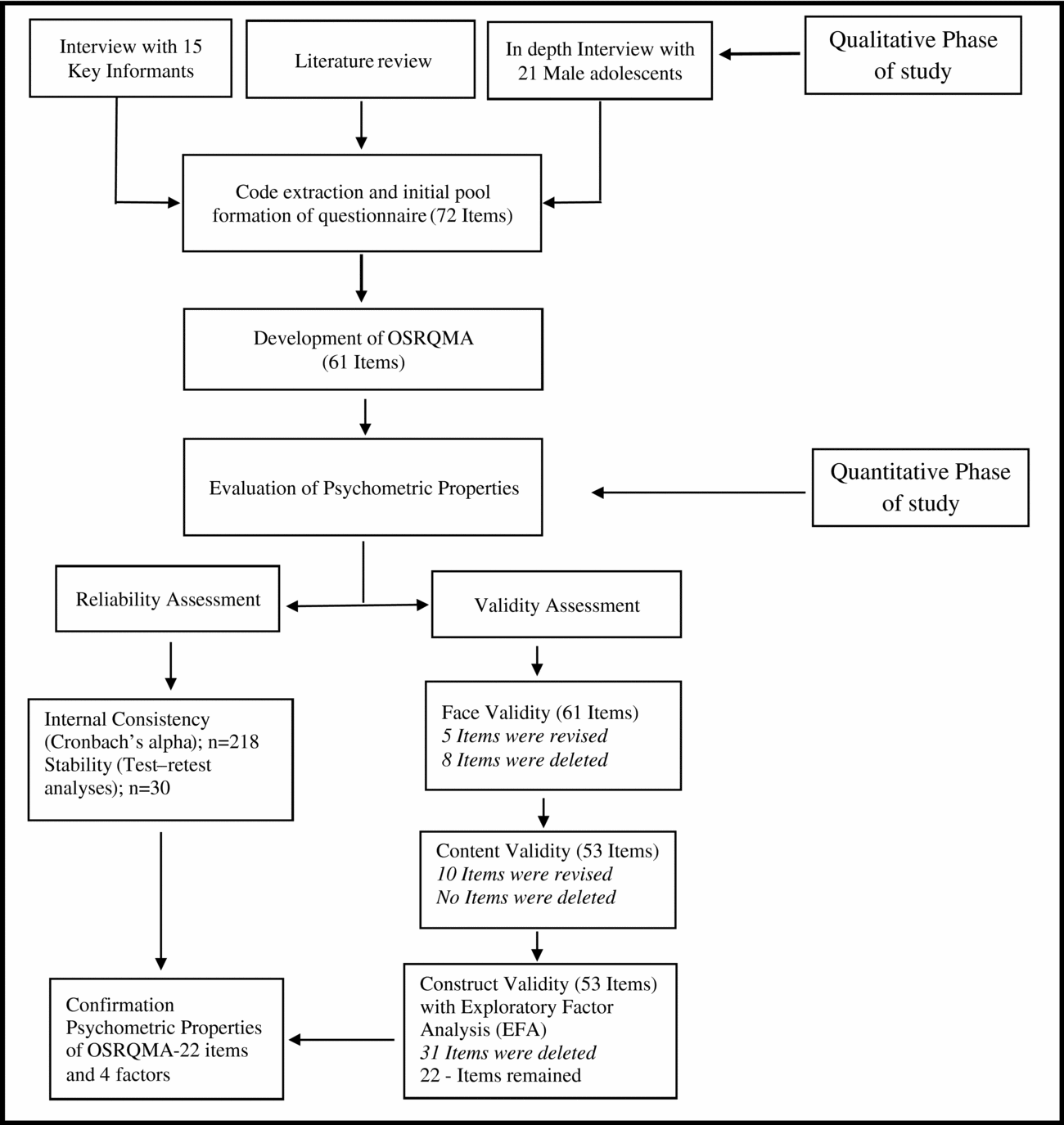
The reliability of the OSRQMA was assessed by evaluating its internal consistency by calculating Cronbach's alpha (α) and McDonald's coefficient omega (ω). Alpha values of 0.7 or greater show satisfactory internal consistency (Brunner, Nagy, & Wilhelm, Reference Brunner, Nagy and Wilhelm2012; Jorritsma, de Vries, Dijkstra, Geertzen, & Reneman, Reference Jorritsma, de Vries, Dijkstra, Geertzen and Reneman2012). Cronbach's alpha and McDonald's omega coefficient were measured for both individual subscales and for the whole questionnaire. Furthermore, the stability of the OSRQMA was evaluated using a test–retest method. The correlation of scores of the two tests, with a 2-week interval between tests, was computed for 30 respondents chosen using a convenience sampling method. A summary of the instrument development and psychometric properties is shown in Figure 1.
A summary of the instrument development and psychometric properties of OSRQMA.

Inclusion Criteria for the Study Sample in Quantitative Phase
Data were collected in October and November 2015, with an overall survey response rate of 71%. The inclusion criteria included: (1) willingness to participate in the study, (2) aged between 14–19 years, and (3) adolescents who have or have never experienced a relationship with an OS.
Ethical Considerations
The Ethics Committee of the Shahid Beheshti University of Medical Science approved the study. Aims and procedures of the study were explained to adolescents. All participants were informed that their participation was voluntary and that they were free to discontinue at any point in the study without any repercussions. Written informed consent was obtained from each participant and his parents, and the researchers indicated that all data would be kept confidential.
Results
Findings of the present study are presented in two parts: developing the instrument (qualitative phase) and assessing the psychometric properties of the OSRQMA (quantitative phase).
Qualitative Phase: Designing the Questionnaire
Information gathered from interviews with 20 male adolescents and 15 key informants, and from the literature review, led to a description of OSRs and their dimensions and properties. Furthermore, factors that promote and impede OSRs were identified. Based on these findings, the initial pool of the questionnaire included 72 items (51 items were extracted from interviews with male adolescents, 17 items from interviews with key informants, and 4 items from the literature review). The items were reviewed by the research team with regard to integrity and to find repetitive and overlapping items, which led to the reduction of items from 72 to 61 items.
Quantitative Phase: Assessment of Psychometric Properties
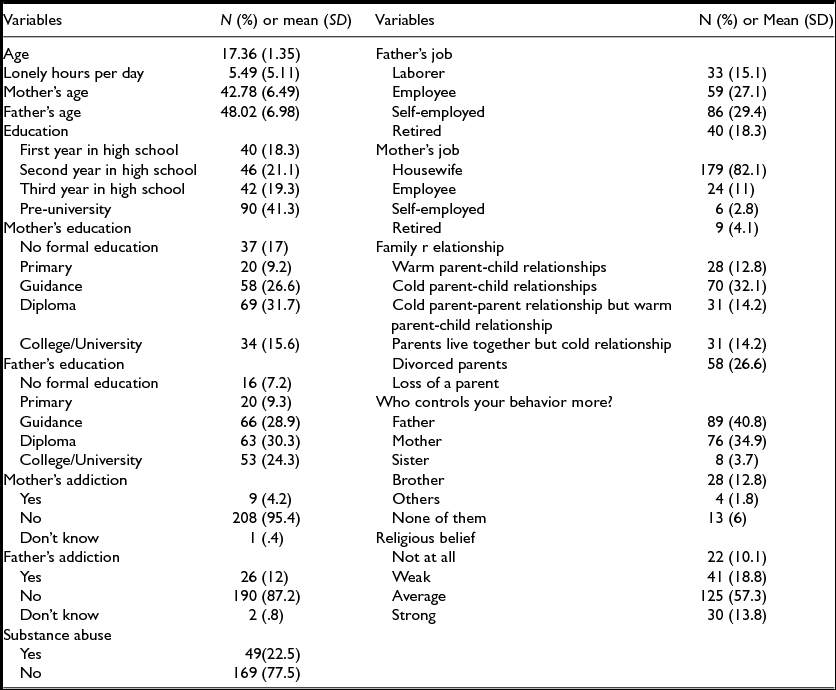
After several modifications of the generated items, a preliminary questionnaire (OSRQMA) with 61 items was prepared for assessment of psychometric properties. Table 1 shows the detailed frequencies/percentages or mean/standard deviation of the demographic information. The dataset consisted of 218 Iranian male adolescents aged 14–19 years (M = 17.36, SD = 1.35). The majority of the respondents were pre-university students (41.3%). Thirty-two percent of the adolescents lived in families with Cold parent-child relationships, and fathers controlled the behaviour of 4.8% of them.
Demographic Profiles of Respondents (N = 218)

The qualitative assessment of the OSRQMA was followed by a second stage where psychometric properties were assessed. Specifically, the questionnaire was evaluated according to its face, content, and construct validity, as well as reliability.
Face Validity
In the qualitative face validity assessment, five items were modified based on the male adolescents’ suggestions, and eight items were deleted because of overlapping content with other items. None of the items were deleted during the quantitative face validity assessment as all items obtained an item impact score higher than 1.5. The 53-item questionnaire was evaluated for content validity.
Content Validity
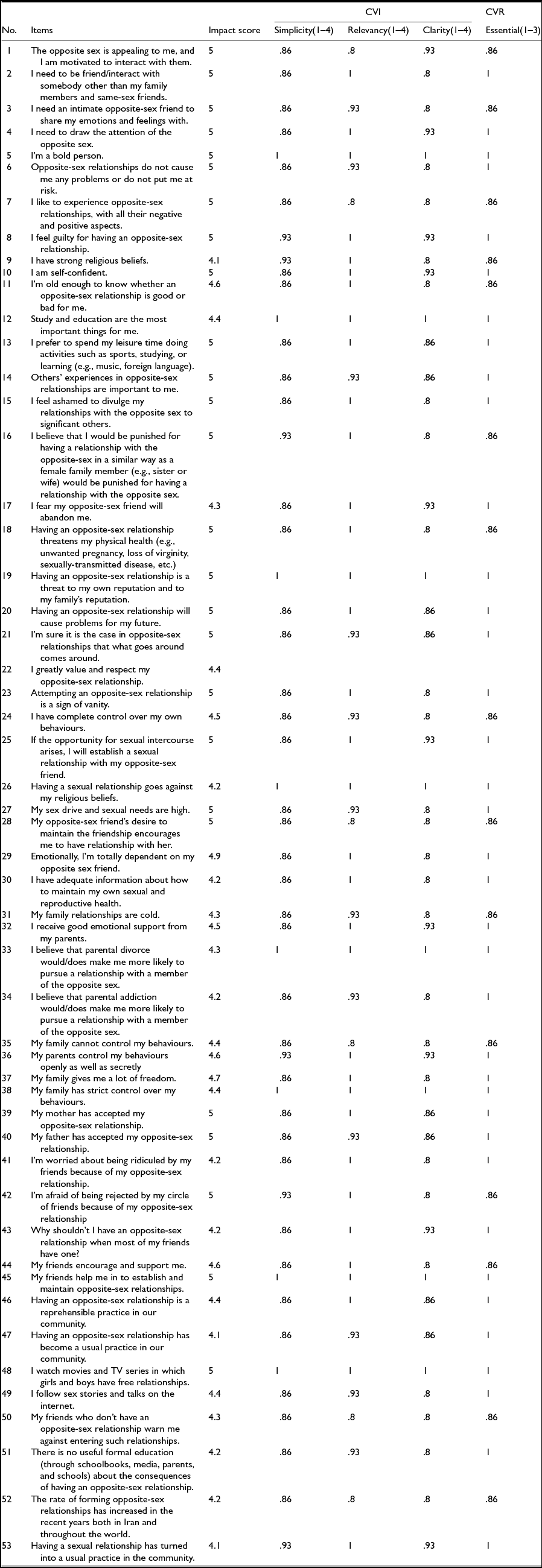
In the qualitative content validity assessment, the specialists’ perspectives led to the revision and modification of ten items. In the quantitative content validity assessment, no items were omitted as the CVR was and I- CVI were greater than 0.49 and 0.79 respectively. Thus, the OSRQMA with 53 items was evaluated for construct validity (Table 2).
The CVR and I-CVI for the OSRQMA Items (n = 15)

Note: CVI = content validity index; CVR = content validity ratio.
Construct Validity
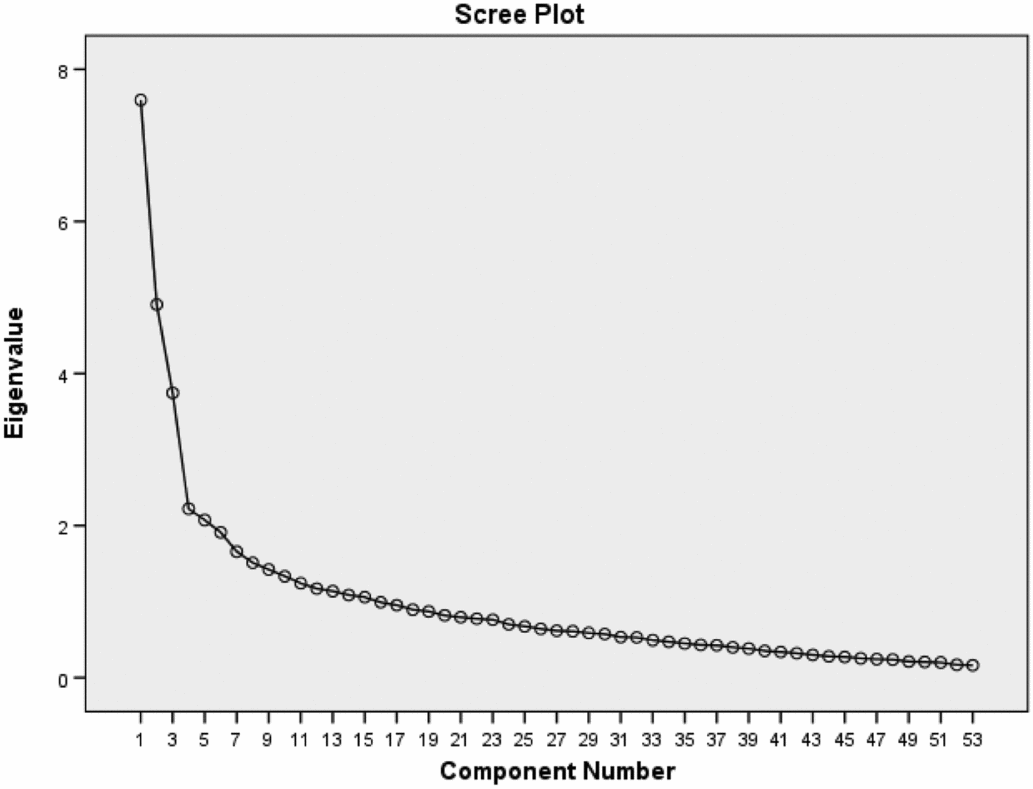
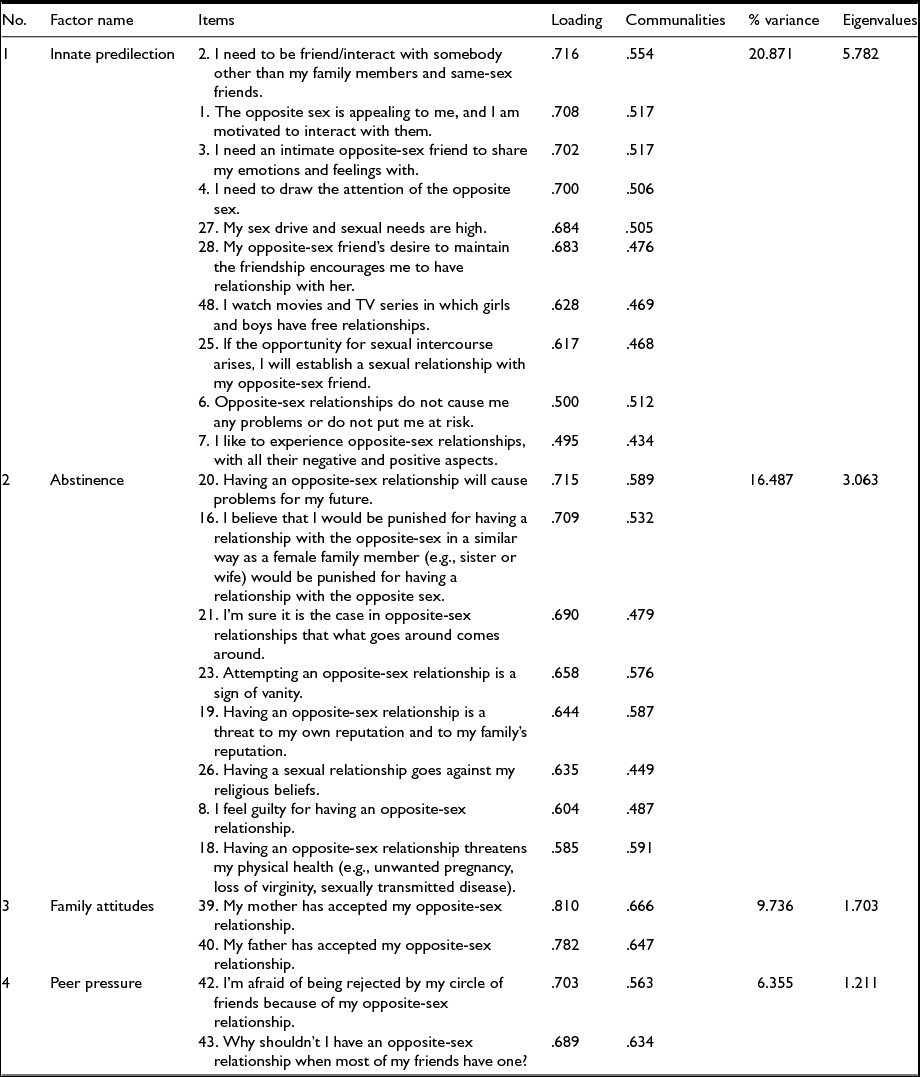
An EFA was conducted as the method of factor extraction, to identify the underlying factor structure of the OSRQMA. The Kaiser-Meyer-Olkin (KMO) coefficient was 0.765, and Bartlett's test of sphericity was statistically significant (χ2 = 9.978; df = 681, p < .001), indicating that the properties of the correlation matrix justified the conduction of a factor analysis (Hair, Anderson, Tatham, & Black, Reference Hair, Anderson, Tatham and Black1998). We identified four latent factors the extraction was based on with a varimax rotation using visual interpretation of a scree plot (Figure 2) and Kaiser's criterion for eigenvalues of equal to or greater than unity. Four distinct factors were found: a 10-item factor (comprised of items 2, 1, 3, 4, 27, 28, 48, 25, 6, 7; eigenvalue = 5.782), an 8-item factor (comprised of items 20, 16, 21, 23, 19, 26, 8, 18; eigenvalue = 3.063), a 2-item factor (containing items 39, 40; eigenvalue = 1.703), and another 2-item factor (containing items 42, 43; eigenvalue = 1.211), together accounting for 53.449% of the variance (Table 3).
Scree plot for the exploratory factor analysis of the OSRQMA.

Exploratory Factor Loadings of Items in OSRQMA (n = 218)

Reliability
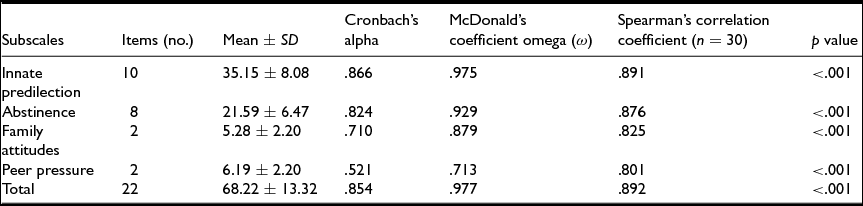
The OSRQMA's Cronbach's alpha was 0.854. McDonald's coefficient omega (ω) was 0.977. The Spearman's correlation coefficient was r = .892, p < .001, indicating that the questionnaire had a suitable stability (Table 4).
Descriptive Statistics and Reliability Measures for the OSRQMA

Description of the Instrument and Scoring Procedures
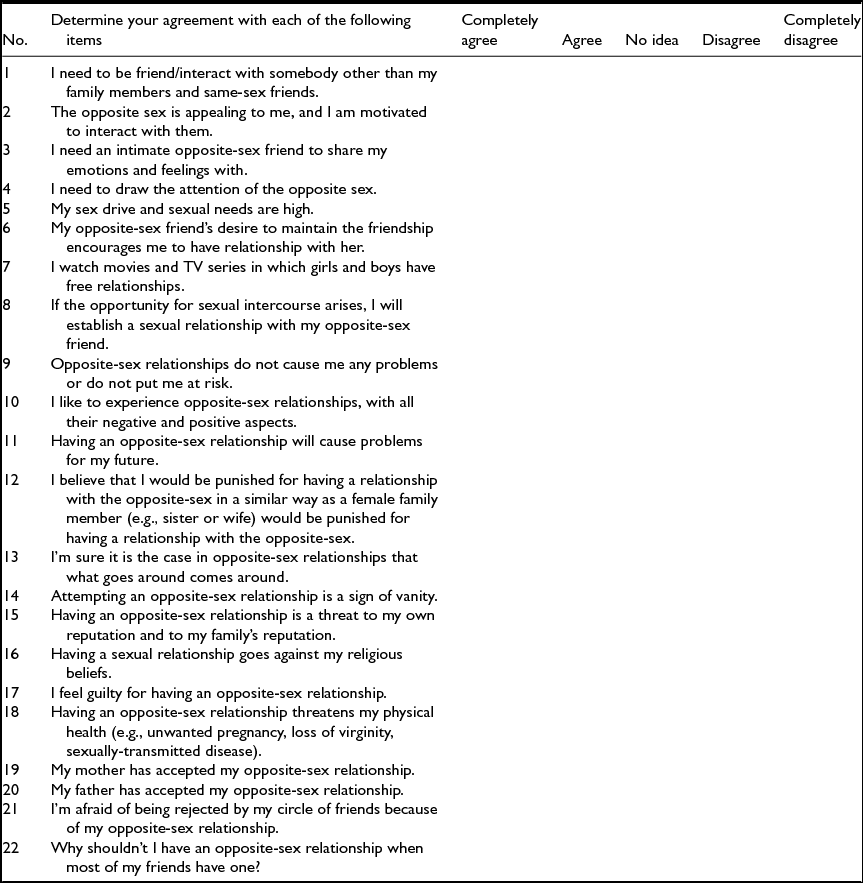
OSRQMA-22 items are scored on a 5-point Likert scale from 1 (completely disagree) to 5 (completely agree). Consequently, the total score of the scale ranges from 22 to 110. Items in questions 11–18 and 21 are reverse scored. Higher scores indicate a higher chance of an adolescent male entering into OSRs (Table 5).
Final Version of OSRQMA The following items are about personal, family, and social factors which can affect your involvement with opposite-sex relationship.

Discussion
The stages of developing and psychometrically evaluating the OSRQMA were reported in this study. To the best of our knowledge, the OSRQMA is the first valid and reliable instrument that evaluates OSRs in Iranian male adolescents. The items were generated based on a conventional content analysis in the Iranian context of adolescents, a thorough national and international literature review, and findings from qualitative interviews. The OSRQMA focuses on the factors that could increase or decrease the likelihood of a male adolescent entering into an OSR. The authors found only one other instrument entitled the Network Relationship Inventory — Relationship Qualities Version (NRI-RQV), designed by Furman, which assesses the quality of relationships in children, adolescents, and adults. This inventory includes 10 subscales, one of which was related to the observed interactions between mothers and friends (Furman & Buhrmester, Reference Furman and Buhrmester2009).
An EFA revealed a four-factor structure underlying the OSRQMA. According to the EFA, innate predilection was one of the most critical factors in a relationship with the OS for Iranian male adolescents. This factor of the questionnaire had the highest percentage of variance associated with developing an OSRs for Iranian male adolescents. It seems that entering into an OSR is facilitated and intensified by a combination of emerging needs for intimacy and dependency with persons other than family members, as well as trying to have a sexual relationship with the opposite sex (Bahrami, Simbar, Veladhir et al., Reference Bahrami, Sibmar, Bukowski, Vedadhir and Panarello2016). In addition, in recent years, the average age of onset of puberty in adolescents has decreased over the last decade (Bahrami, Soleimani, Chan, Ghojazadeh, & Mirmiran, Reference Bahrami, Soleimani, Chan, Ghojazadeh and Mirmiran2014). Together with exposure to large amounts of information through the media and social networks, the need to have a relationship with the OS in adolescence has intensified in recent years (Bahrami, Simbar, Veladhir et al., Reference Bahrami, Sibmar, Bukowski, Vedadhir and Panarello2016).
The results of the EFA showed that abstinence was a second important factor of OSRs. The item ‘Having opposite-sex relationships will cause problems for my future life’ had the highest factor loading in this domain. After innate predilection, which would be a strong facilitator promoting an OSR, abstinence acts as a barrier to impede this relationship. The results of some other studies indicated that when abstinence in adolescents is high, they were more protected against wrong behaviours or the experience of adverse consequences related to the entry into an OSR (Bahrami et al., Reference Bahrami, Simbar and Soleimani2013; Bahrami, Simbar, Veladhir et al., Reference Bahrami, Sibmar, Bukowski, Vedadhir and Panarello2016).
An EFA indicated that a third factor was family attitude. The item ‘My mother has accepted my opposite-sex relationship’ had a higher factor loading compared to ‘My father has accepted my opposite-sex relationship’. In Iranian families, there are different attitudes toward a relationship with the opposite sex in adolescents. This may be due to gender stereotyping in Iranian society, and especially refers to the role of the male adolescent's mother (according to the high loading factor of this item) in her acceptance or non-acceptance of her son/s engaging in an OSR (Bahrami et al., Reference Bahrami, Simbar and Soleimani2013). Some families do not accept these relationships and ban them from their adolescents while other families accept that a relationship with the OS is a natural process in the adolescent period and believe that adolescent males should be allowed to experience the issues and challenges of OSRs (Bahrami, Simbar, Veladhir et al., Reference Bahrami, Sibmar, Bukowski, Vedadhir and Panarello2016).
In the EFA, the fourth factor was peer pressure. The item ‘I fear that my friends expel me from their circle’ had the highest factor loading in this domain. Peer groups can have positive and negative effects on the adolescent's self-perception and wellbeing (Ellis, Chung-Hall, & Dumas, Reference Ellis, Chung-Hall and Dumas2013; Ladd, Ettekal, Kochenderfer-Ladd, Rudolph, & Andrews, Reference Ladd, Ettekal, Kochenderfer-Ladd, Rudolph and Andrews2014). Some studies have reported that children and adolescents who are rejected or mocked by their peer group experience loneliness, depression, anxiety, and low self-esteem (Chen & Graham, Reference Chen and Graham2012; Graham & Juvonen, Reference Graham and Juvonen1998). Adolescents value maintaining their relationships with their peers. Fear of being rejected by their peer group may lead them to enter into OSRs (Parvizi & Ahmadi, Reference Parvizi and Ahmadi2006).
In terms of reliability, the OSRQMA demonstrated that the instrument has good reliability among adolescents, especially when the reliability was calculated separately for each factor. It also shows an adequate correlation between the items employed. Therefore, it can be assumed that the items assess similar concepts. The results of the present study showed that all factors (except the fourth factor) have good internal consistency. The unacceptable Cronbach's alpha for the fourth factor may be because only two items remained in this factor. Cronbach's alpha is influenced by the number of items in each factor, such that if the number of items in a factor is higher it will have a higher reliability, and conversely a lower number of items will yield a lower reliability (Suhr, Reference Suhr2003). Since this factor included just two items, a low alpha is to be expected. Indeed, the limitations of Cronbach's alpha as a measure of reliability has been discussed in the literature (Sijtsma, Reference Sijtsma2009). Thus, to overcome the Cronbach's alpha limitations, this study assessed reliability using McDonald's coefficient omega as well, which showed a good reliability.
Limitations and Recommendations for Future Research
As there was no other appropriate and culturally sensitive instrument to assess OSRs in Iranian male adolescents, concurrent validity could not be examined. Since no study was found aiming to design and assess an instrument to measure OSRs, the current findings cannot be compared with those of similar instruments. The assessment of psychometric properties of this scale in other societies is therefore suggested to improve its generalisability to other contexts and cultures. Another limitation of this study was that the non-probabilistic sampling method used may limit the generalisability of the findings. However, this sampling method has been widely used in psychometric studies (Sharif Nia et al., Reference Sharif Nia, Haghdoost, Ebadi, Soleimani, Yaghoobzadeh, Abbaszadeh and Moulookzadeh2015; Soleimani, Pahlevan Sharif et al., Reference Soleimani, Pahlevan Sharif, Allen, Yaghoobzadeh, Sharif Nia and Gorgulu2016). Future researchers should use this study's structural model on samples from different cultures to confirm the stability and representativeness of our findings. Also, future studies should establish the sensitivity of the OSRQMA to changes in knowledge and skills due to educational interventions.
Conclusion
The OSRQMA-22 was useful in gaining insights into OSRs in Iranian male adolescents, and in identifying factors that promote and impede OSRs. The OSRQMA was designed and evaluated based on the Iranian context and culture and is a new instrument. Regarding the proper psychometric characteristics, it requires further convergent validation. To this end, the OSRQMA should be used by other researchers in other parts of the world with culture and context similar to Iran.
Acknowledgments
The authors would like to express their gratitude to the adolescents and their parents who participated in this study. We would also like to show our gratitude to the Professor William M. Bokowski for sharing their pearls of wisdom with us during the course of this research, and we thank great reviewers for their so-called insights.
Conflict of Interest
The authors declare that they have no conflict of interest.