Implications
The microbes in the rumen of dairy cows require cobalt (Co) to synthesise vitamin B12 which the cows then requires for efficient energy and protein metabolism, particularly during the transition from pregnancy to early lactation. This study investigated the effect of feeding different levels of dietary Co and supplementing the diet or injecting vitamin B12, and found little benefit from providing additional amounts on cow performance, health or milk quality. This information can be used to more accurately formulate diets for dairy cows to improve health and performance and reduce diet costs.
Introduction
During the transition period from late gestation to early lactation, it is usual for dairy cows to experience an imbalance between dietary energy intake and nutrient demand for milk production (Lean et al., Reference Lean, Van Saun and DeGaris2013; Raboisson et al., Reference Raboisson, Mounié and Maigné2014). This results in varying degrees of negative energy balance and consequently mobilisation of body adipose tissue (Raboisson et al., Reference Raboisson, Mounié and Maigné2014). The inability of the liver to metabolise mobilised fat can result in sub-clinical or clinical ketosis, normally defined when plasma β-hydroxybutyrate (3-OHB) concentrations are ⩾1.2 mmol/l (McArt et al., Reference McArt, Nydam, Oetzel, Overton and Ospina2013). The prevalence of sub-clinical ketosis (SCK) has been reported to be ~22% in European dairy herds (Suthar et al., Reference Suthar, Canelas-Raposo, Deniz and Heuwieser2013), whilst in North America a rate of 43% has been reported (McArt et al., Reference McArt, Nydam and Oetzel2012). Cows with SCK have been reported to have an increased odds of developing clinical ketosis, displaced abomasum and metritis of 9.5, 5.0 and 1.5, respectively (Suthar et al., Reference Suthar, Canelas-Raposo, Deniz and Heuwieser2013), and a decreased probability of pregnancy (Raboisson et al., Reference Raboisson, Mounié and Maigné2014).
Vitamin B12 has a major role in the metabolism of lipid by the liver and subsequently plays a central role in controlling SCK. One of the two main functions of vitamin B12 in the dairy cow is its action as a co-factor in the transformation of methylmalonyl CoA to succinyl CoA, which is then used in the Krebs cycle within the liver for the synthesis of glucose from propionate (McDowell, Reference McDowell2000). Insufficient tissue supply of vitamin B12 therefore results in an accumulation of methylmalonic acid (MMA) and ketones in the blood. The second role of vitamin B12 is its requirement as a co-factor for the synthesis of methionine via the transfer of a methyl group from 5-methyl-tetrahydrofolate to homocysteine (McDowell, Reference McDowell2000). Methionine is generally regarded as one of the first limiting amino acids in milk protein synthesis (National Research Council (NRC), 2001) and plays a key role in the synthesis of S-adenosylmethionine as a methyl donor (McDowell, Reference McDowell2000), and consequently has a major impact on milk production.
Within the rumen, elemental Co is used by bacteria to synthesise vitamin B12, and it has traditionally been considered that the rumen bacteria are able to synthesise sufficient amounts to meet the cows requirements over the peri-parturient period and throughout lactation, provided there is a sufficient dietary supply of Co (NRC, 2001). The current recommended level of dietary Co for dairy cows, based on NRC (2001), is 0.11 mg/kg dry matter (DM), but vitamin B12 synthesis in the rumen has been shown to increase linearly between 0.1 and 1.0 mg Co/kg DM (Tiffany et al., Reference Tiffany, Spears, Xi and Horton2003 and Reference Tiffany, Fellner and Spears2006), and growing beef cattle are known to respond to dietary Co levels up to 0.25 mg/kg DM (Stangl et al., Reference Stangl, Schwarz, Müller and Kirchgessner2000). In the well-fed dairy cow, serum vitamin B12 concentrations decline during the dry period and throughout early lactation (Kincaid and Socha, Reference Kincaid and Socha2007), but crucially, production and liver-health related responses to dietary Co spanning current recommended levels have not been determined in the transition cow, highlighting an area where investigation is required. In addition, whilst elemental Co is nontoxic, dietary Co sources have recently been reclassified under EU legislation (EU 601/2013 amended 2014) as carcinogenic, so that mineral premixes have been set to contain a maximum of 0.34 mg Co/kg DM. Rumen-protected forms of vitamin B12 are available, but given that vitamin B12 is important in rumen function, it is questionable if rumen-protected sources of vitamin B12 alone are desirable substitutes for dietary Co. Consequently, there is a need to re-evaluate dairy cow Co requirements and the benefits of vitamin B12 supplementation over the peri-parturient period in higher yielding dairy cows. The objectives of the study were to determine the effects of the dietary addition of Co, vitamin B12 or the injection of vitamin B12 in late gestation/early lactation on dairy cow metabolism, intake and performance.
Material and methods
Animals and treatments
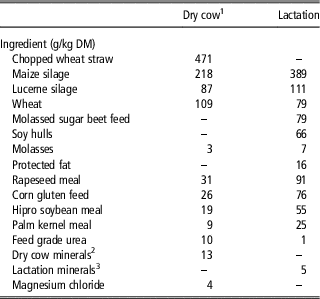
A total of 56 Holstein-Friesian dairy cows (12 primiparous and 44 multiparous) commenced the study 57 (SE±0.9) days prepartum, and remained on study until 56 days post-partum. Cows were blocked according to parity (1st, 2nd and 3rd+), and previous 305-day milk yield, and randomly allocated to one of four dietary treatments. Pregnant, non-lactating cows were housed in a free stall-building from the end of lactation (~8 weeks before calving), with ad libitum access to the same basal dry cow diet which was fed as a total mixed ration (TMR; Table 1) via a barrier with individual head locks. Approximately 3 days before calving, the cows were transferred to a straw-bedded calving yard where they remained until ~24 h post-calving. For approximately the first 7 to 10 days post-calving, cows were housed in a loose yard where they had access to a lactation TMR that contained no added Co via a feed barrier with individual head locks. Cows were then transferred to free-stall housing containing individual feeders. All cows had continual access to water.
Basal dry cow and lactation total mixed ration composition

DM=dry matter.
1 Water was added at 0.43 kg/kg DM.
2 Dry cow minerals (g/kg): Ca 20; P 60; Mg 200; Na 5; mg/kg: I 400; Se 30; Cu 750; Mn 4000; Zn 6000; IU/kg: vitamin A 800 000; vitamin D 200 000; vitamin E 10 000; biotin 75 mg/kg.
3 Lactation minerals (g/kg): Ca 180; P 25; Mg 80; Na 120; mg/kg: I 400; Se 40; Cu 1400; Mn 4000; Zn 6000; IU/kg: vitamin A 1 000 000; vitamin D 300 000; vitamin E 4500; biotin 135 mg/kg.
Before calving, the cows received one of four dietary treatments: C=no added Co; DC=an additional 0.2 mg Co/kg DM (supplied as cobalt carbonate; Anima, Krakow, Poland); DB=0.68 mg added vitamin B12/kg DM (Impextraco, Heist-op-den Burg, Belgium) or IB=injected vitamin B12 (5 ml of 1000 µg vitamin B12/ml resulting in 0.71 mg/day; AnimalCare, York, UK; intra-muscular every 7 days). The additional level of 0.2 mg Co/kg DM in DC was chosen to provide a daily Co supply approximately twice that of C, but to be within the permitted EU legal limit of 0.34 mg/kg DM. The 0.68 mg vitamin B12/kg DM provided in DB was calculated to provide a similar predicted tissue supply of vitamin B12 as DC assuming a 4% conversion of Co to cobalamin, a loss of 80% of supplementary vitamin B12 in the rumen and 10% absorption of vitamin B12 at the duodenum (Stemme et al., Reference Stemme, Lebzien, Flachowsky and Scholz2008; Girard et al., Reference Girard, Santschi, Stabler and Allen2009; Akins et al., Reference Akins, Bertics, Socha and Shaver2013). The level of injected vitamin B12 was chosen to provide a supra-nutritional tissue supply based on Girard and Matte (Reference Girard and Matte2005a), and therefore act as a positive control. All animals were individually supplemented with 200 g/day of ground wheat which acted as a carrier for treatments DC and DB by restraining each cow using the individual head-lock gates until the daily allowance had been consumed, and assuming a DM intake of 12 kg/cow per day (NRC, 2001).
From calving until ~8 to 10 days post-calving, all cows were fed a TMR (Table 1) containing no additional Co or vitamin B12. During this period, all animals were supplemented with 200 g/day of ground wheat as a carrier to provide treatments DC and DB, assuming a DM intake of ~20 kg/day (NRC, 2001), with IB receiving 10 ml of 1000 µg vitamin B12/ml injected every 7 days, resulting in 1.42 mg/day. For the remainder of the study the supplements were included into the TMR, and intake monitored using roughage intake feeders (Hokofarm, Marknesse, The Netherlands).
Experimental routine
The cows were weighed and condition scored (Ferguson et al., Reference Ferguson, Galligan and Thomsen1994) at drying off, 4 weeks post-drying off, within 24 h of calving and at weeks 2, 4 and 8 post-calving. Samples of the TMR and individual forages were collected weekly: the forage sample was oven dried and the quantity of lucerne and maize silage adjusted to achieve the desired ratio, and the TMR sample frozen at −20°C before analysis. Blood samples were collected by jugular venepuncture at 1000 h on the day of drying off, 6 weeks post-drying (~2 weeks before calving), within 24 h of calving and 2, 4 and 8 weeks post-calving. Liver samples were collected by biopsy through the 11th intercostal space from all animals at drying off and at 4 weeks post-calving; samples were snap frozen in liquid N and stored at −80°C until subsequent analysis. Cows were milked twice daily at ~0600 and 1700 h, with yield recorded at each milking, and samples taken weekly on consecutive morning and evening milkings for subsequent analysis. Additional milk samples were collected during week 7 of lactation for the determination of the fatty acid (FA) profile. Whole tract digestibility was estimated during week 7 of lactation by collecting faecal samples from each cow over 5 days at ~0800 and 1400 h (Van Keulen and Young, Reference Van Keulen and Young1977), and stored at −20°C for subsequent analysis.
Chemical analysis
Weekly TMR samples were bulked within month and analysed according to Association of Analytical Chemists (AOAC) (2012) for DM (934.01) and CP (988.05), whilst NDF and ADF were determined according to Van Soest et al. (Reference Van Soest, Robertson and Lewis1991). The determination of NDF was conducted without sodium sulphite, with α-amylase and was corrected for ash. Samples were also analysed for major and trace minerals as described by Cope et al. (Reference Cope, Mackenzie, Wilde and Sinclair2009). Plasma samples were analysed for urea, glucose, non-esterified fatty acids (NEFA) and 3-OHB (Randox Laboratories, County Antrim, UK; kit catalogue no. TP245, UR221, AB362, GL1611, FA115 and RB 1008 with an intra-assay CV of 3.5%, 1.8%, 3.0% and 4.7%, respectively) using a Cobas Miras Plus auto-analyser (ABX Diagnostics, Bedfordshire, UK). Plasma samples were analysed for minerals as described by Cope et al. (Reference Cope, Mackenzie, Wilde and Sinclair2009). Analysis of plasma vitamin B12, homocysteine, MMA, succinic acid (SA) and hepatic triacylglycerol (TAG) concentration (along with their intra-assay CV) are provided in the Supplementary Material S1. For MMA and SA, only the two most extreme treatments (C and IB) were analysed. Milk samples were analysed for fat, protein, lactose and somatic cell count by Eurofins UK (Wolverhampton, UK). Fatty acid methyl esters (FAME) in hexane were prepared from milk fat and individual FAME were determined by GLC (Hewlett Packard 6890, Wokingham, UK) fitted with a CP-Sil 88 column (100 m×0.25 mm i.d.×0.2 μm film) as described previously by Sinclair et al. (Reference Sinclair, Edwards, Errington, Holdcroft and Wright2015). Faecal samples were bulked between days and sampling times and analysed for acid insoluble ash (Van Keulen and Young, Reference Van Keulen and Young1977), ash (AOAC, 2012; 942.05), CP, NDF and ADF.
Statistical analysis
Performance and blood parameters were analysed as repeated measures ANOVA, using Genstat 17.1 (VSN International Ltd, Oxford, UK). The performance in the week before allocation was used as a co-variate where appropriate:
 $$Y_{{{\rm ijk}}} {\equals}\mu {\plus}B_{{\rm i}} {\plus}C_{{\rm j}} {\plus}T_{{\rm k}} {\plus}C_{{\rm j}} .T_{{\rm l}} {\plus}{\varepsilon}_{{{\rm ijk}}} $$
Where Y ijk=dependent variable; µ=overall mean; B i=fixed effect of blocks; C j=effect of treatment; T k=effect of time; C j.T k=interaction between treatment and time; and ε ijk=residual error. Milk somatic cell count and hepatic TAG concentrations were log-transformed before analysis to homogenise variance. A subsequent analysis of TAG levels substituted parity for treatment. Milk FA concentration and diet digestibility were analysed as a randomised block design by ANOVA as:
 $$Y_{{{\rm ij}}} {\equals}\mu {\plus}B_{{\rm i}} {\plus}C_{{\rm j}} {\plus}{\varepsilon}_{{{\rm ij}}} $$
Where Y ij=dependent variable; µ=overall mean; B i=fixed effect of blocks; C j=effect of treatment and ε ij=residual error. Results are presented as treatment means with a SED, with post hoc analysis using Tukey’s test at a 5% level of significance.
Results
Diet analysis, intake and animal performance
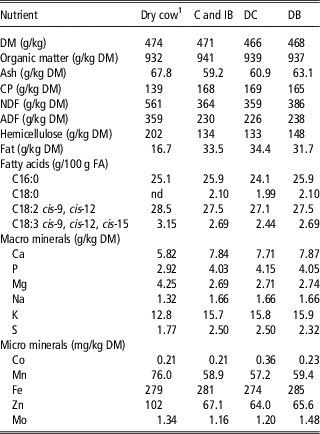
The chemical composition of the basal dry cow diet was similar to that predicted, whereas the background concentration of Co was higher in both the dry cow and lactation diets at 0.21 mg/kg DM (Table 2). The four lactation diets had a similar mean DM, organic matter (OM), CP, NDF and ADF concentration of 469 g DM/kg, 940, 168, 368 and 231 g/kg DM, respectively. The four diets also had a similar concentration of macro and trace elements. In contrast, the treatments with no added Co (C and IB) had a dietary concentration of ~0.21 mg Co/kg DM, whilst DC had almost double the dietary concentration of Co, with DB being 0.02 mg Co/kg DM higher than the Control.
Chemical and mineral composition of dry cow and lactation diets that contained no added cobalt (C), added dietary Co (DC), added dietary vitamin B12 (DB) or injected vitamin B12 (IB)

DM=dry matter; nd=not detected.
1 Dry cow treatments achieved by individually providing either C, 0.2 mg Co/kg DM (DC), 0.68 mg vitamin B12/kg DM (DB) or IB.
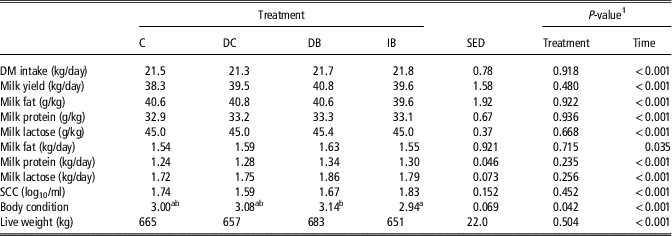
There was an increase in DM intake (P<0.001) from 18.6 kg/day during week 2 of lactation to 23.7 kg/day during week 8, with a mean intake of 21.6 kg/day over the study period, but there was no effect (P>0.05) of dietary treatment or treatment×time interaction (Table 3). Similarly, milk yield increased (P<0.001) from 30.3 kg/day in week 1 to 43.6 kg/day in week 8 of lactation, but there was no effect (P>0.05) of treatment or time×treatment interaction on milk performance or composition, with mean values of 39.6 kg/day, 40.4 g/kg and 33.1 g/kg for milk yield, fat and protein concentration respectively. There was an effect of time (P<0.001) on live weight, which increased between drying off and 4 weeks pre-calving, before decreasing immediately post-calving but there was no effect (P>0.05) of treatment, or time×treatment interaction. There was also an effect of time on body condition score (BCS) (P<0.001), which declined post-calving, and treatment, with cows receiving IB having the lowest and DB the highest BCS (P<0.05).
Intake (post-calving), milk performance and body condition (mean value pre- and post-calving) of dairy cows offered diets that contained no added cobalt (C), added dietary Co (DC), added dietary vitamin B12 (DB) or injected vitamin B12 (IB)

DM=dry matter; Scc=somatic cell count.
a,bMeans within a row with a different superscript differ (P<0.05).
1 There were no (P>0.05) treatment×time interactions.
Plasma metabolite and mineral concentrations, and hepatic triacylglycerol content
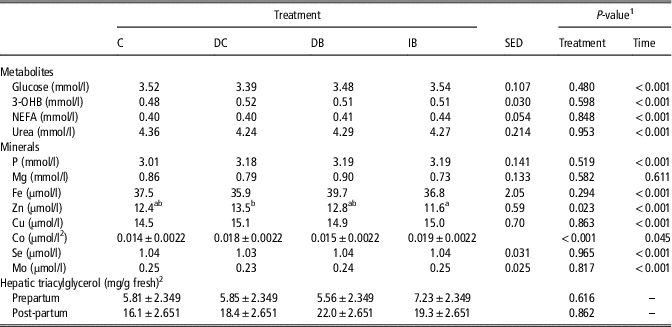
Plasma glucose concentration decreased from 8 weeks pre-calving to calving, then increased to week 8 post-calving (P<0.001), but there was no effect (P>0.05) of dietary treatment on weekly or mean concentration (Table 4 and Supplementary Figure 1a). In contrast, plasma 3-OHB concentrations increased pre-calving, with a sharp increase at calving followed by a decrease at week 2 of lactation (Supplementary Figure 1b), but there was no effect (P>0.05) of dietary treatment. There was an effect of time on plasma NEFA concentration (Supplementary Figure 1c; P<0.001), which decreased pre-calving, before increasing post-calving, but there was no effect (P>0.05) of treatment. Plasma urea concentrations declined rapidly at calving (Supplementary Figure 1d; P<0.001) but were not affected (P>0.05) by treatment. There was no effect (P>0.05) of dietary treatment on mean plasma mineral concentration, except Co, which was higher (P<0.05) in cows receiving DC or IB than C or DB, and Zn, which was higher in cows receiving DC than IB (P<0.05).
Mean plasma metabolite and mineral concentration, and hepatic triacylglycerol concentrations in dairy cows offered diets that contained no added cobalt (C), added dietary Co (DC), added dietary vitamin B12 (DB) or injected vitamin B12 (IB)

3-OHB=ß-hydroxybutyrate, NEFA=non-esterified fatty acids.
a,b,cMeans within a row with a different superscript differ (P<0.05).
1 There were no (P>0.05) treatment×time interactions.
2 Data were not normally distributed and were analysed by firstly converting to natural log. The antiln least square means along with the interval of confidence at 95% are presented.
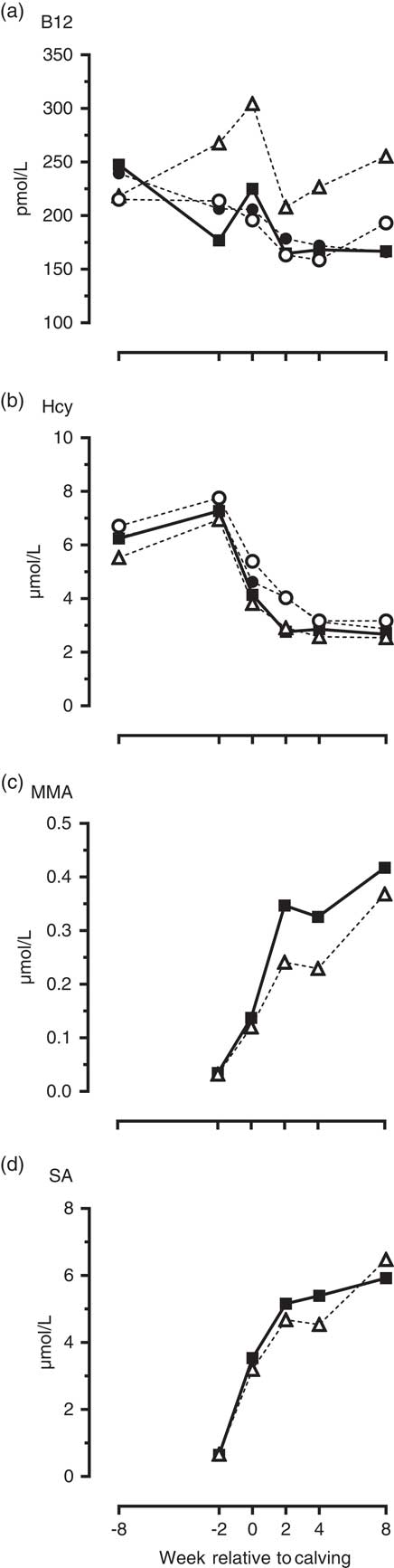
There was a treatment×time interaction (P<0.001) for plasma vitamin B12 concentration, which decreased post-calving in all treatments (Figure 1a), and overall was higher (P<0.001) in cows receiving IB than any of the other treatment groups (246 v. 192, 195 and 190 pmol/l for IB v. C, DC and DB, respectively). There was no treatment effect on plasma concentrations of homocysteine, which decreased (P<0.001) following calving (Figure 1b). In contrast, plasma concentrations of both MMA (Figure 1c) and SA (Figure 1d) increased (P<0.001) following parturition, with an interaction between treatment and time for plasma MMA concentrations (P=0.033); MMA being lower in IB than Control cows post-calving. There was no treatment effect on hepatic TAG concentrations pre- or post-partum (P>0.05); however, TAG concentrations were higher (P<0.001) in samples collected during the early post-partum period than during late gestation.
Pre- and post-partum blood concentrations of vitamin B12 (a) and secondary metabolites, homocysteine (b), methylmalonic acid (c) and succinate (d). Cows offered diets that contained no added cobalt (Co: ■), added dietary Co (●), added dietary vitamin B12 (○) or injected vitamin B12 (Δ). For plasma B12, interaction between treatment and time: P=0.007; SED=22.7. For homocysteine, main effect of time: P<0.001; SED=0.265. For methylmalonic acid, interaction between Treatment×Time: P=0.033; SED=0.031. For succinate, main effect of time: P<0.001; SED=0.231. Hcy = homocysteine; MMA=methylmalonic acid; SA=succinic acid.

Diet digestibility and milk fatty acid profile
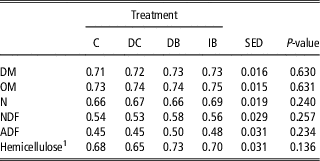
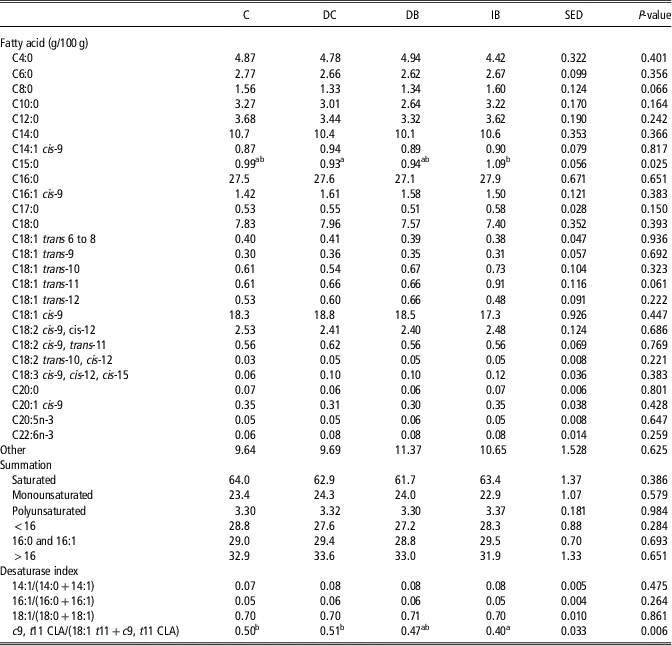
There was no effect (P>0.05) of dietary treatment on the digestibility of any of the parameters measured (P>0.05; Table 5). There were few differences in the FA profile of milk from cows fed any of the treatments, except C15:0 which was lower (P<0.05) in cows receiving supplementary Co (DC) compared with injected vitamin B12 (IB; Table 6). The desaturase index calculated using cis-9, trans-11 CLA was lower (P<0.01) in cows receiving IB compared with C or DC, but there was no other effect of dietary treatment.
Diet digestibility (kg/kg) of dry matter (DM), organic matter (OM), nitrogen (N) and fibre in dairy cows offered diets that contained no added cobalt (C), added dietary Co (DC), added dietary vitamin B12 (DB) or injected vitamin B12 (IB)

1 Calculated as NDF–ADF.
Milk fatty acid profile during week 7 of lactation in dairy cows offered diets that contained no added cobalt (C), added dietary Co (DC), added dietary vitamin B12 (DB) or injected vitamin B12 (IB)

CLA=conjugated linoleic acid.
a,bMeans within a row with a different superscript differ (P<0.05).
Discussion
To attempt to provide a low dietary Co concentration in the current study, feed ingredients were selected to be low in Co, with the mineral/vitamin supplement formulated to contain no Co. Despite this, both the dry cow and lactation control diets contained 0.21 mg Co/kg DM, above the recommended dietary requirement of 0.11 mg/kg DM stated by NRC (2001), but considerably lower than a number of similar studies that have attempted to provide low dietary Co diets (Girard et al., Reference Girard, Santschi, Stabler and Allen2009; Akins et al., Reference Akins, Bertics, Socha and Shaver2013). The addition of 0.2 mg Co/kg DM in DC resulted in a dietary concentration approximately twice that of C, but was well within the permitted EU legal limit of 0.34 mg added Co/kg DM, or the 1.14 mg Co/kg DM limit in the total diet.
Performance and dry matter intake
The peri-parturient period in dairy cows is characterised by a phase of negative energy balance as cows transition from late gestation into early lactation, with associated homeorhetic and homeostatic regulation of metabolic functions (McArt et al., Reference McArt, Nydam, Oetzel, Overton and Ospina2013). In particular, there is a substantial increase in demand for glucose for foetal growth in late pregnancy, and for the synthesis of lactose for milk production by the mammary gland in early lactation (Lean et al., Reference Lean, Van Saun and DeGaris2013). Vitamin B12, through its role as a co-enzyme for methylmalonyl-CoA mutase (EC:5.4.99.2), is crucial for the synthesis of glucose from propionate (McDowell, Reference McDowell2000), and a deficiency in this vitamin can be translated into a reduction in milk synthesis (NRC, 2001). Milk secretion also requires a considerable supply of amino acids, with methionine generally being regarded as one of the first rate limiting amino acids in most dairy cow rations (NRC, 2001), and vitamin B12 has a key role in the activity of methionine synthase (EC:2.1.1.13) which regenerates homocysteine to methionine (McDowell, Reference McDowell2000). In the current study, additional dietary Co or vitamin B12 or parenteral supply of vitamin B12 did not influence milk production or composition in early lactation. Similarly, Kincaid and Socha (Reference Kincaid and Socha2007) reported no effect of dietary Co concentration (0.15, 0.89 and 1.71 mg/kg DM) on early lactation milk yield or composition. In contrast, Juchem et al. (Reference Juchem, Robinson and Evans2012) reported a decrease in milk fat concentration, but not fat yield, when rumen-protected B-vitamins were included in dairy cow rations, although the combination of vitamins used precludes any conclusion to be drawn on the relative efficacy of vitamin B12. Duplessis et al. (Reference Duplessis, Lapierre, Pellerin, Laforest and Girard2017) also reported no effect of weekly injections of 10 mg of vitamin B12 on milk performance or composition over the transition period. Weekly intra-muscular injections of vitamin B12, however, resulted in a significant increase in energy corrected milk yield of early lactation primiparous dairy cows supplemented with folic acid and methionine in the study of Girard and Matte (Reference Girard and Matte2005a), due to a combination of an increase in milk yield and milk fat concentration, despite dietary Co levels being stated as adequate. In contrast, NRC (2001) concluded that there was no evidence of a performance response to vitamin B12 injections in dairy cows when fed adequate (i.e. above 0.11 mg/kg DM) amounts of Co. Results from the current study support that the recent EU restriction on the amount of supplementary Co that can be added to the diet should not impair dairy cow performance or health. There may, however, be some value to higher dietary levels of Co, or rumen protected vitamin B12 to increase the vitamin B12 content in milk for human consumption as suggested by Girard and Matte (Reference Girard and Matte2005b), particularly in situations where foods are fortified with folic acid.
Regulation of lipogenesis and lipolysis in the transition period involves a complex interaction between neural, hormonal and paracrine stimuli, along with immune cell migration that changes the structure and cellular distribution of adipose tissue (Contreras et al., Reference Contreras, Strieder-Barboza and Raphael2017). In the current study, both live weight and body condition score (BCS) were characterised by an increase prepartum, followed by a rapid decline post-partum, reaching a nadir at ~4 weeks post-calving. This rapid decline in body condition and live weight is greater than that reported in other studies that have investigated the effect of diet on body energy reserves where the nadir in energy balance is typically not reached until approximately week 8 to 10 post-partum (Duplessis et al., Reference Duplessis, Lapierre, Pellerin, Laforest and Girard2017). Parenteral administration of vitamin B12 resulted in the lowest mean BCS post-partum, but this was not reflected in an increase in milk or milk fat yield. Duplessis et al. (Reference Duplessis, Lapierre, Pellerin, Laforest and Girard2017) reported no benefit to injections of vitamin B12 on body condition over the transition period, although dietary levels of Co (1.45 and 1.05 mg/kg DM for the dry period and lactation, respectively) were substantially higher than that used here.
Cows fed any of the dietary treatments in the current study continued to increase their DM intake throughout the first 8 weeks of lactation, but there was no effect of dietary Co level or vitamin B12 on intake. Several other studies have also failed to demonstrate a benefit to Co supplementation or parenteral administration of vitamin B12 on DM intake either prepartum or during lactation (Girard and Matte, Reference Girard and Matte2005a; Akins et al., Reference Akins, Bertics, Socha and Shaver2013). Indeed, supra-nutritional levels of Co have been demonstrated to result in a reduction in DM intake in some studies, particularly in early lactation (Kincaid and Socha, Reference Kincaid and Socha2007).
Blood metabolites, minerals and hepatic triacylglycerol content
Poor adaptation to negative energy balance through the transition period is associated with an elevation in plasma NEFA and 3-OHB concentrations (McArt et al., Reference McArt, Nydam, Oetzel, Overton and Ospina2013). Whilst there is much debate regarding definitive cut-point concentrations of these metabolites for milk production and disease outcomes, NEFA values of 0.3 to 0.5 mmol/l prepartum and 0.7 to 1.0 mmol/l post-partum and 3-OHB concentrations of 1.2 mmol/l have been suggested as a good combination between sensitivity and specificity (McArt et al., Reference McArt, Nydam, Oetzel, Overton and Ospina2013). Based on these assumptions, mean plasma NEFA in the current study were high at drying off and again at calving, whereas mean plasma 3-OHB concentrations were always well within accepted limits. Plasma glucose concentrations were also affected by day of sampling in the current study, decreasing sharply at 2 weeks post-calving before returning to prepartum levels by week 4. There was, however, no effect of dietary treatment on any of these metabolites pre- or post-partum, and it is apparent that vitamin B12 was not limiting for cows. A number of other studies have also reported no effect of dietary Co level (Kincaid and Socha, Reference Kincaid and Socha2007; Akins et al., Reference Akins, Bertics, Socha and Shaver2013), dietary supplementation with vitamin B12 (Graulet et al., Reference Graulet, Matte, Desrochers, Doepel, Palin and Girard2007) or following parenteral administration of vitamin B12 (Akins et al., Reference Akins, Bertics, Socha and Shaver2013; Duplessis et al., Reference Duplessis, Lapierre, Pellerin, Laforest and Girard2017) on serum NEFA concentration.
A threshold for plasma vitamin B12 of 150 µmol/l has been suggested, above which there is little further benefit to milk performance in dairy cows (Duplessis et al., Reference Duplessis, Lapierre, Pellerin, Laforest and Girard2017). Plasma vitamin B12 in the current study was above this threshold in cows fed any of the dietary treatments, and were ~28% higher in cows receiving weekly injections of vitamin B12. The high demands for metabolism and secretion into milk (Kincaid and Socha, Reference Kincaid and Socha2007) may predispose higher yielding dairy cows to vitamin B12 deficiency and can be exhibited in an increase in plasma concentrations of key intermediaries in energy and amino acid metabolism. The dependency of methionine synthase and methylmalonyl-CoA mutase on vitamin B12 results in plasma concentrations of homocysteine and MMA acid being good indicators of vitamin B12 adequacy (Stangl et al., Reference Stangl, Schwarz, Müller and Kirchgessner2000). These authors reported a significant decline in both plasma homocysteine and MMA when dietary Co concentrations were increased above 0.2 mg/kg DM in growing beef cattle. However, in the current study there was little effect of supplementary Co, vitamin B12 or parental administration of vitamin B12, and supports the performance and blood metabolite results that the basal dietary Co concentration of 0.21 mg/kg DM was sufficient to meet requirements in late pregnancy and early lactation. Despite the lack of an effect of treatment on hepatic TAG concentrations in the current study, there was a 3-fold increase in concentration post- compared with prepartum (mean values of 19 and 6 mg/g liver respectively), although mean values were still within the 1% to 5% liver TAG concentration that is associated with mild fatty liver (Bobe et al., Reference Bobe, Young and Beitz2004).
Whole tract digestibility
In addition to the requirement for the metabolism of glucose and methionine in the dairy cow, vitamin B12 has been demonstrated to be an essential growth factor for efficient rumen microbial metabolism, with ruminal synthesis of vitamin B12 and subsequent flow to the duodenum being significantly related to the rate of microbial protein synthesis in the rumen (Castagnino et al., Reference Castagnino, Seck, Beaudet, Kammes, Voelker Linton, Allen, Gervais, Chouinard and Girard2016). This has been suggested to improve fibre digestion in the rumen (Lopez Guisa and Satter, Reference Lopez-Guisa and Satter1992), and increase the ruminal production of propionate in some studies (Tiffany et al., Reference Tiffany, Spears, Xi and Horton2003), but not others (Stemme et al., Reference Stemme, Lebzien, Flachowsky and Scholz2008). Increasing dietary Co concentration from sub-optimal levels has been shown to increase whole tract digestibility quadratically in sheep, being highest at a dietary level of 0.6 mg/kg DM (Wang et al., Reference Wang, Hong, Zhang, Zhu, Narenbatu and Jia2007). Similarly, Kadim et al. (Reference Kadim, Johnson, Mahgoub, Srikandakumar, Al-Ajmi, Ritchie, Annamalai and Al-Halhali2003) reported that the parental provision of vitamin B12 increased diet digestibility in goats, which was speculated to be due to an increase in intestinal absorption of nutrients or microbial production in the rumen. In the current study, digestibility co-efficients for DM, N, OM and fibre fractions were similar to that reported by others when feeding similar diets (Sinclair et al., Reference Sinclair, Edwards, Errington, Holdcroft and Wright2015), but there was no effect of dietary treatment, and it can be concluded that there was sufficient vitamin B12 available for ruminal metabolism.
Milk fatty acids
The concentration of saturated FA in milk may be reduced via the action of steroyl-CoA desaturase (SCD) on both de novo and absorbed FA such as C14:0, C16:0 and C18:0, and is responsible for the majority of the cis-9, trans-11 CLA from its action on C18:1 trans-11 (Shingfield et al., Reference Shingfield, Arölä, Ahenjärvi, Vanhatalo, Toivonen, Griinari and Huhtanen2013). Several studies have investigated the impact of the dietary inclusion, ruminal infusion or intravenous injection of Co on SCD activity, and reported a dose-dependent decrease in activity by up to 72% (Leskinen et al., Reference Leskinen, Viitala, Mutikainen, Piia, Tapio, Taponen, Bernard, Vilkki and Shingfield2016). Infusing Co does not impact on gene expression of SCD, and its effects would therefore appear to be at a post-transcriptional level (Karlengen et al., Reference Karlengen, Harstad, Taugbøl, Berget, Aastveit and Våge2012). However, in previous studies that have reported a reduction in SCD activity supra-nutritional levels of Co have been fed. For example, Karlengen et al. (Reference Karlengen, Harstad, Taugbøl, Berget, Aastveit and Våge2012) reported no effect on the milk desaturase index in cows when fed ~0.2 or 19 mg Co/kg DM, but it was reduced when 270 mg/kg DM was infused into the rumen. In the current study, there was little evidence of an effect of adding ~0.2 mg Co/kg DM, or additional vitamin B12 administered per os, on SCD activity. In contrast, SCD activity was reduced when supra-nutritional levels of vitamin B12 were injected, although few other studies have examined the effect of vitamin B12 on the activity of this enzyme.
Conclusions
A dietary Co concentration of 0.21 mg/kg DM provides sufficient Co for the synthesis of vitamin B12 required for the metabolism, performance and diet digestibility of high-yielding dairy cows. Recent restrictions on the inclusion of Co in the diet in the European Union are therefore unlikely to have an impact on intake, performance or health over the peri-parturient period, and there is little justification for the use of supplementary sources of vitamin B12.
Acknowledgements
The authors would like to acknowledge the input of Jess Marshall, Paul Daley, Rosie Barraclough and Marcus Doig for assistance with collecting and analysing the samples, and to AHDB Dairy for funding the study. W. A. D. V. Weerathilake was supported by a Commonwealth Studentship, and A. H. Brassington by a scholarship from The Perry Foundation.
Declaration of interest
None.
Ethics statement
The procedures involving animals were conducted in accordance with the UK Animals (Scientific Procedures) Act 1986 (amended 2012), and were approved by the Harper Adams University Local Ethical Review.
Software and data repository resources
None.
Supplementary material
To view supplementary material for this article, please visit https://doi.org/10.1017/S175173111800232X