Introduction
Rice–wheat is the most predominant cropping system in India. After the Green Revolution, production of these crops has increased considerably owing to an increase in the area under the rice–wheat cropping system, large-scale cultivation of new high-yielding semi-dwarf varieties, increased application of fertilizers, an increase in the area under irrigation and in the use of pesticides in these crops. Rice–wheat is a nutrient-exhaustive cropping system removing large quantities of nutrients from the soil. In India, the total annual requirement of nitrogen, phosphorus and potassium (NPK) has been reported to be 28 Mt, while only 18 Mt of NPK is actually being supplied by different fertilizer sources, thus creating a negative balance of about 10 Mt of primary nutrients (Bhatt et al., Reference Bhatt, Kukal, Busari, Arora and Yadav2016). This is a matter of great concern for achieving sustained productivity of these crops. If nutrient removal from the soil continues to exceed nutrient replenishment, it will be difficult to sustain crop productivity and soil health (Hegde and Dwivedi, Reference Hegde and Dwivedi1992; Singh and Dwivedi, Reference Singh and Dwivedi1996). Using general recommendations for NPK fertilizers has resulted in soil fatigue, proving their decreased efficiency, and thus requires upward refinement and proper balance for macro and micronutrients (Yadav and Kumar, Reference Yadav and Kumar2009). The importance of micronutrients was realized when widespread micronutrient deficiencies were observed in most soils in India where intensive agriculture is practised. This micronutrient deficiency in soil is due to continuous removal of micronutrients in large quantities from the soil because of higher biomass yield by fertilizer-responsive high-yielding varieties and increased use of micronutrient-free high-analysis fertilizers. In India, NPK are generally replenished by the farmers through different fertilizer sources, but secondary and micronutrients, especially sulphur (S), zinc (Zn), iron (Fe), copper (Cu) and manganese (Mg) are not generally replenished. In India, 44–49, 12–15, 5–6, 3–8, 33 and 11–13% of soil samples collected from different states were found to be deficient with respect to Zn, Fe, Mn, Cu, boron (B) and molybdenum (Mo), respectively (Shukla et al., Reference Shukla, Dwivedi, Singh and Gill2009; Sharma and Kumar, Reference Sharma and Kumar2016). The resultant nutritional imbalance of several essential elements may lead to antagonistic effects and deficiencies which reduce crop yield. Therefore, in recent years, crops have gradually started responding to these micronutrients (Pandey and Dwivedi, Reference Pandey, Dwivedi, Kumar, Shrotriya and Kaore1990). In order to overcome the increasing multi-nutrient deficiencies, balanced fertilization including micronutrients is of paramount importance.
The study of crop productivity and soil fertility under long-term cropping has been the subject of immense importance. In India, a long-term fertilizer experiment was first started in 1885 at Kanpur, followed by many other locations at the beginning of the 20th century. These experiments generated valuable information on the effects of organic manures and chemical fertilizers on crop yields, nutrient removal and soil properties. Under continuous cropping, changes in soil fertility and resultant crop productivity can be related to nutrient imbalances, which have been recognized as one of the most important factors limiting crop yield. With this backdrop, a long-term fertility experiment was initiated in 1984 at Pantnagar, India. The present investigation (2007–08 and 2008–09) was carried out to examine the status of micronutrient concentration in the soil after the 25th cycle of continuous rice–wheat cropping and to find out the best nutrient management practices ensuring an adequate supply of micronutrients in under a long-term rice–wheat cropping system.
Materials and methods
Climate and soil
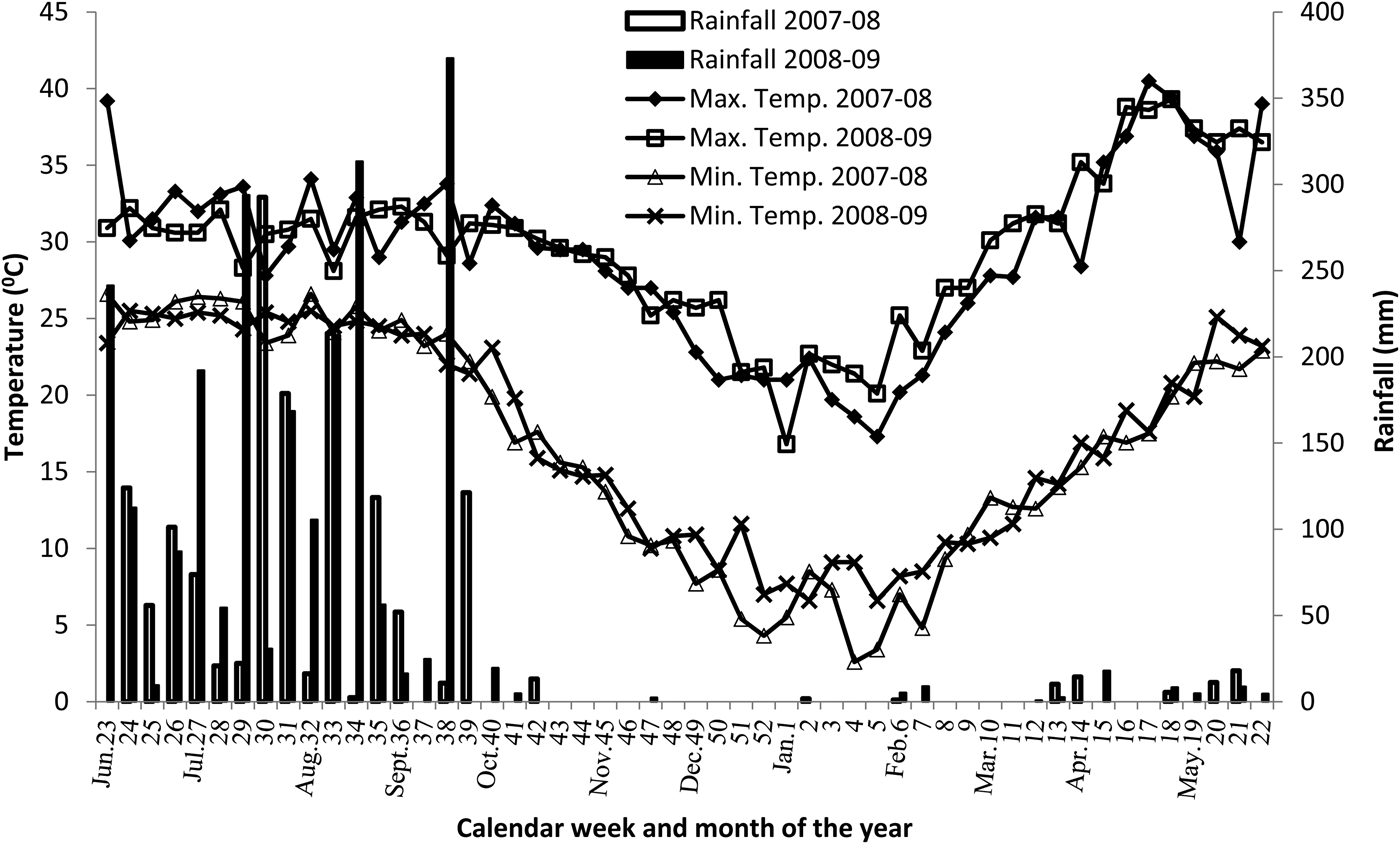
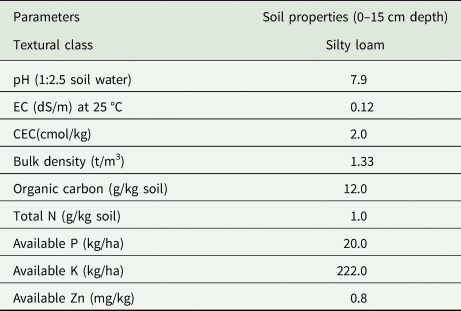
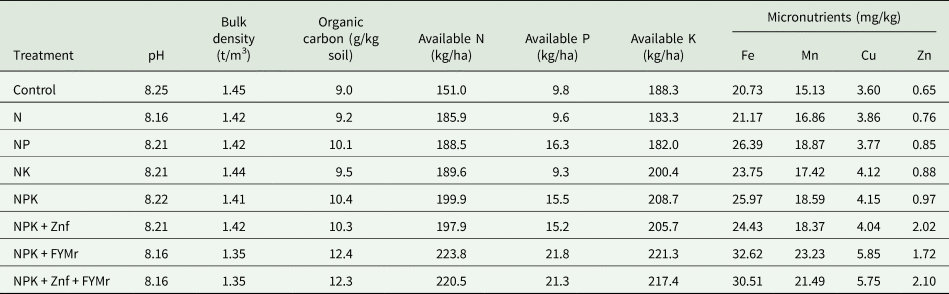
A long-term fertilizer experiment has been in progress since 1984–85 at N. E. Borlaug Crop Research Centre, G. B. Pant University of Agriculture and Technology, Pantnagar (29°N, 79°E; 244 m asl). Pantnagar is located in a sub-humid sub-tropical climate zone with hot dry summers and cool winters. Generally, a south-west monsoon occurs in the third or fourth week of June and continues through to the end of September, with its peak in July. The mean annual rainfall is about 1400 mm, of which 80–90% is received between June and September. A few showers may also be received during the winter months. Frost generally occurs towards the end of December and may continue until the end of January. The daily average minimum temperature in the coldest month varies from 1.0 to 9.0 °C, and during summer, the maximum temperature varies from 30 to 43 °C. The mean monthly rainfall and maximum and minimum temperature distribution during rice and wheat growing seasons are presented in Fig. 1. The experimental soil is silty loam of alluvial origin, relatively young and is classed as Aquic Hapludoll (Deshpande et al., Reference Deshpande, Fehrenbacher and Ray1971). The soil properties before the long-term experiment was initiated (1984) and before the start of the present research (2007) are given in Tables 1 and 2, respectively.
Rainfall and temperature distribution during the rice and wheat growing seasons at Pantnagar, Uttarakhand, India (2007–08 and 2008–09).

Soil properties before the experiment was initiated (1984)

EC, electrical conductivity; CEC, cation exchange capacity; N, nitrogen; P, phosphorus; K, potassium; Zn, zinc.
Soil properties before the present research was initiated (2007)

N, nitrogen; P, phosphorus; K, potassium; Fe, iron; Mn, manganese; Cu, copper; Zn, zinc; Znf, foliar application of zinc; FYMr, farmyard manure applied to rice.
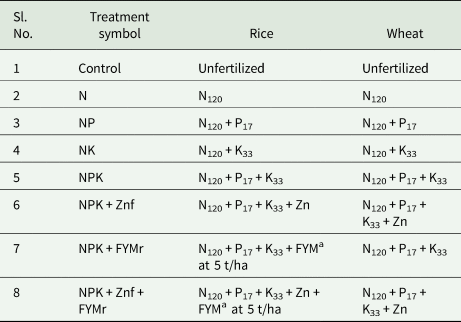
Experimental treatments and management
The experimental treatments (Table 3) were applied to rice and wheat each year since the inception of the experiment. The eight treatments were laid out in a randomized block design with four replications and a plot size of 5 m × 4 m. Fertilizer nutrient sources were urea, single super-phosphate and muriate of potash. Basal N, P and K applications were made during final cultivation, i.e. before puddling in rice and before sowing of wheat. Zinc (0.5% zinc sulphate (ZnSO4) + 0.25% slaked lime) was applied as a foliar spray (Znf) at 30 days after transplanting of rice and 30 days after sowing of wheat in specified treatments. Farm yard manure (FYM) was applied at 5 t/ha (dry weight basis) to the rice crop only (FYMr) in each year of specified treatments. The mean FYM dry matter content was 50.04% with dry matter nutrient concentrations of 4.7, 2.1, 4.3, 0.15 g/kg, 815, 181, 14 and 74 mg/kg N, P, K, S, Fe, Mn Cu and Zn, respectively. All other recommended agronomic practices were adopted throughout the crop seasons.
Details of treatments used during the experimentation

N, nitrogen; P, phosphorus; K, potassium; Znf, foliar application of zinc; FYMr, farmyard manure applied to rice.
a Farm yard manure (FYM) applied on a dry weight basis, treatments 7 and 8 were added in the years of 1987 and 1989, respectively.
For rice, individual plots of each treatment were first prepared using a power tiller and then manually with spades. Two days before transplanting, plots were flooded with water and then manually puddle and levelled. Each year, rice (var. Pant Dhan 4) was transplanted in the last week of June using two seedlings per hill at 20 × 10 cm spacing. For weed management, butachlor (50% EC) 1.5 kg/ha was sprayed 2 days after transplanting in the field and one manual weeding was performed at 35 days after transplanting to keep the experimental field weed-free. Cartap hydrochloride was applied at 20 kg/ha at growth stage (GS) 26 (Zadoks et al., Reference Zadoks, Chang and Konzak1974), as a broad-spectrum insecticide to control the incidence of stem borer. Streptocycline + copper oxychloride (15 + 500 g) in 500 litres water was sprayed for the management of bacterial leaf blight in rice. After harvesting rice in the first week of November, the same experimental plots were prepared manually with the help of spades and a power tiller without damaging the permanent layout of the experiment.
Wheat (var. PBW 373) was sown in the first week of December at 100 kg/ha in rows 22 cm apart. For weed management, sulfosulfuron (75% WG) 25 g/ha was sprayed at 35 days after sowing using 500 litres water/ha. No incidence of any insect pests or disease was noticed in wheat. Wheat was harvested in the last week of April. The crops were harvested manually by sickle, close to ground level, and the entire above-ground biomass was removed from the field. During the interval time from rice harvesting to wheat sowing and from wheat harvesting to rice transplanting, the experimental field was kept fallow. Both rice and wheat were grown under irrigated conditions. At each irrigation, rice plots were flooded to 2–3 cm and the next irrigation was given after the water disappeared. The wheat crop received five irrigations at GS13, 28, 37, 73 and 83, with 4–5 cm water applied at each irrigation. Harvesting was done manually when >90% of grains in the panicles fully ripened and were free from any greenish tint. After removing border rows and sampling area, a net plot area of 4 m × 2 m was harvested manually for yield estimation. The produce of individual plots was threshed by a Pullman thresher 2 days after harvesting, collected in cloth bags and grain weight was recorded for each treatment. Simultaneously, a grain sample (200 g) was drawn from individual plots to determine the moisture content of grains using an OSAW moisture meter (OSAW, Delhi, India). The grain yield was expressed at 14% moisture.
Soil and plant analysis
Composite soil samples from each plot were collected using a screw auger from 0 to 15 cm. The samples were air-dried in the shade on polythene sheets. After drying, samples were crushed on hard wooden slabs with the help of a wooden roller, passed through a 2 mm sieve and stored for further chemical analysis. The pH of the soil was determined using a digital pH meter with a glass electrode in a 1:2.5 soil–water suspensions (Jackson, Reference Jackson1973). Electrical conductivity (EC) was determined in 1:2.5 soil–water suspension by a conductivity meter (Bower and Wilcox, Reference Bower, Wilcox, Black, Evans, White, Ensminger and Clark1965). Micronutrient cations were determined by using diethylene triamine penta acetic acid (DTPA) extractant (Lindsay and Norvell, Reference Lindsay and Norvell1978). In this method, 10 g of soil was shaken with 20 ml DTPA extractant (pH 7.3) for 2 h and the soil suspension filtered through Whatman No. 42 filter paper. The Zn, Cu, Fe and Mn concentrations in the filtrate were determined by an atomic absorption spectrophotometer (Tandon, Reference Tandon1993). At harvest, representative grain and straw samples of rice (2007 and 2008) and wheat (2007–08 and 2008–09) were drawn from the sampling area. The grain and plant samples were dried under shade and then oven dried at 65 ± 1 °C for 48 h, ground in a stainless steel Wiley mill and digested in a di-acid mixture (3 nitric acid [HNO3]:1 perchloric acid [HClO4]) for determination of micronutrient cation (Zn, Fe, Mn and Cu) concentrations using an atomic absorption spectrophotometer (Tandon, Reference Tandon1993).
Statistical analysis
The data generated were statistically analysed using analysis of variance (Gomez and Gomez, Reference Gomez and Gomez1984). Pooled data analysis for grain and straw yield of rice from 2007 to 2008 and grain and straw yield of wheat from 2007–08 to 2008–09 was done because there were no significant interactions between year and treatments. Further, the results were compared using the least significant difference (LSD) at P < 0.05. For soil properties, treatment differences were also compared using LSD at P < 0.05 among different treatments at the end of the 25th cropping cycle.
Results
Yields of rice and wheat
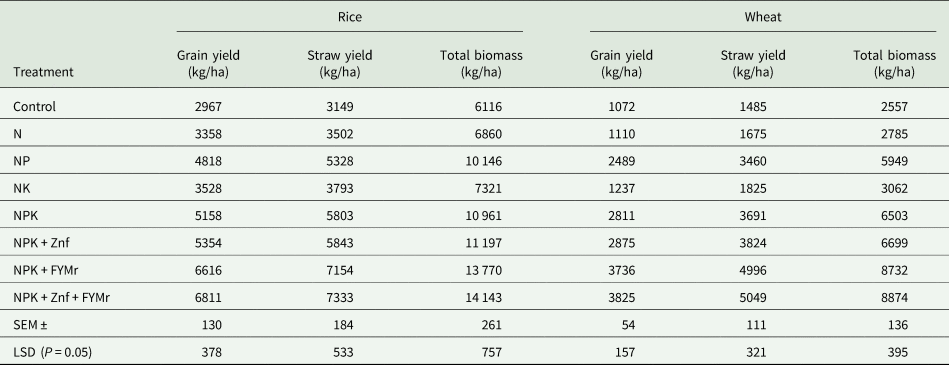
The nutrient management treatments had significant (P < 0.05) effects on grain, straw and total yield of rice and wheat. All the nutrient management treatments produced significantly higher (P < 0.05) grain yield of rice and wheat over the control, with the exception of N on the grain yield of wheat. The highest yields (grain, straw and total yield) of rice and wheat were recorded with NPK + Znf + FYMr, which were significantly higher (P < 0.05) compared to all other nutrient management treatments except NPK + FYMr (Table 4). The residual effect of FYM was found to be significant (P < 0.05) on grain, straw and total yield of wheat. The response to foliar application of zinc (Znf) in rice and wheat was non-significant (P < 0.05). The rice grain yield obtained with NPK was at par with NP, but wheat grain yield obtained with NPK was significantly higher than NP. A significant (P < 0.05) difference in grain yields was recorded for both rice and wheat with NPK over NK. The lowest grain, straw and total yield of rice and wheat were recorded with the control. Application of NPK along with FYMr + Znf or FYMr increased the grain yield of rice by 123–130 and 97–103% over the control and N treatments alone, respectively. However, wheat yield increased by 248–257 and 236–244% in NPK along with FYM (with or without Zn) over the control and N alone, respectively.
Effect of long-term nutrient supply on grain, straw and total yield of rice and wheat (pooled mean of 2007–08 and 2008–09)

N, nitrogen; P, phosphorus; K, potassium; Znf, foliar application of zinc; FYMr, farmyard manure applied to rice.
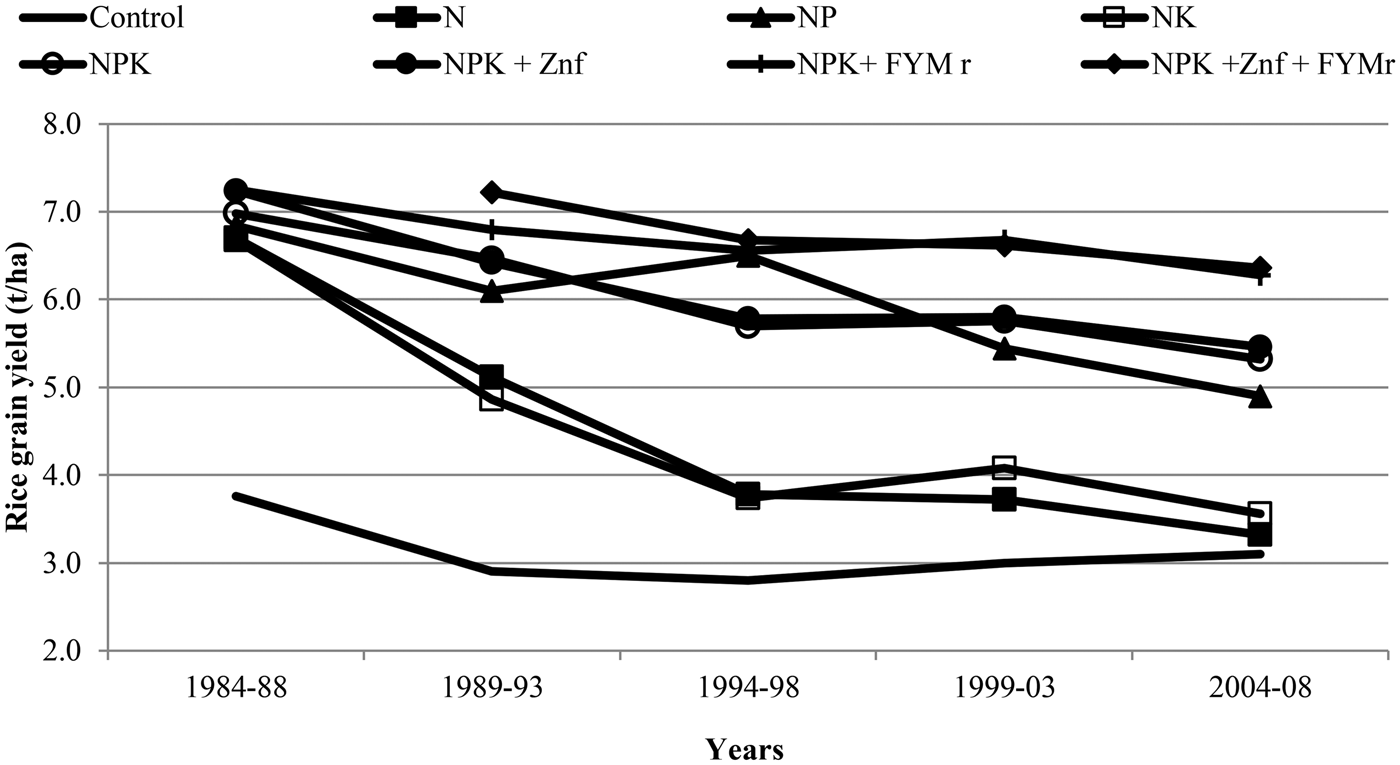
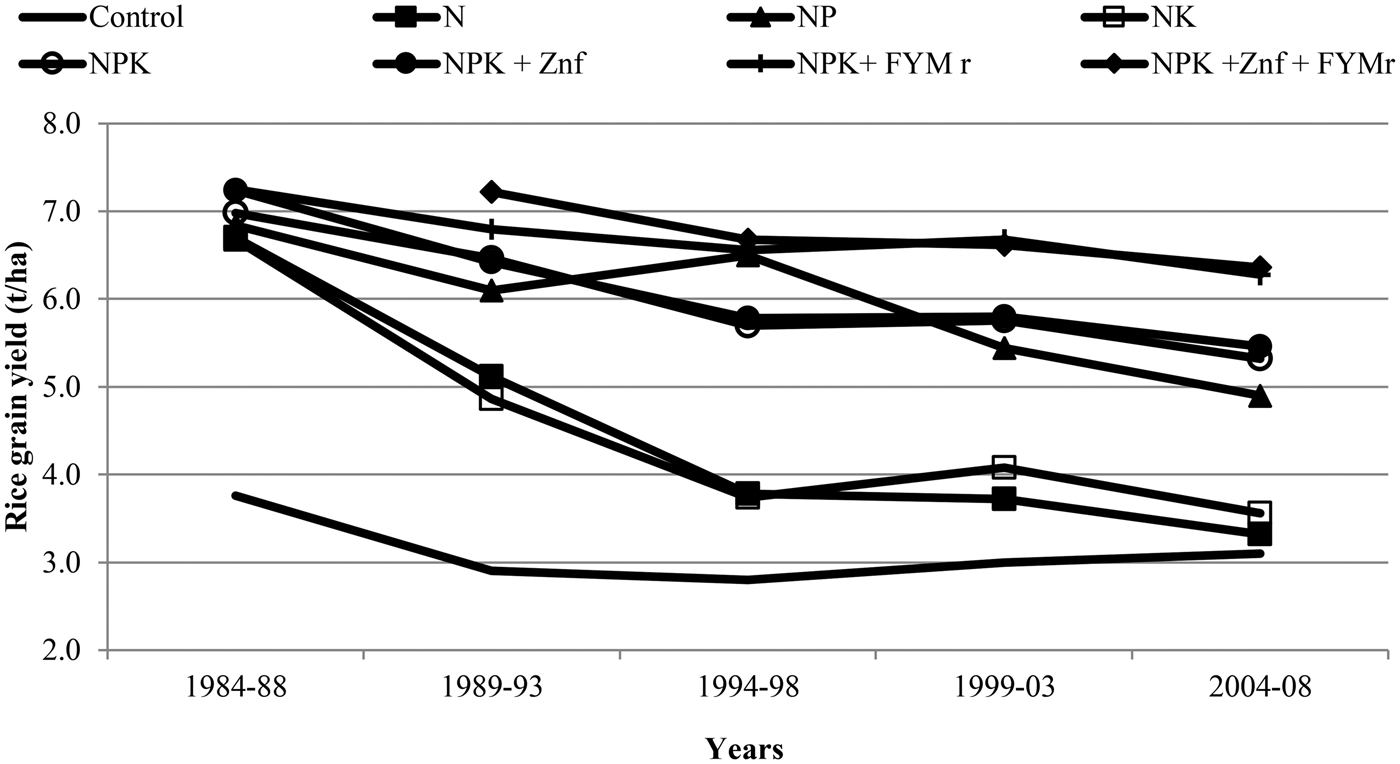
Grain yields of rice and wheat in all the treatments decreased with time during the study period (Figs 2 and 3), with the rate of decline being lowest in the FYM-treated (NPK + FYMr and NPK + Znf + FYMr) treatments and highest in N and NK.
Five-year average yield of rice in the long-term experiment (1984–2008) at Pantnagar, Uttarakhand, India.

Four-year average yield of wheat in the long-term experiment (1985–86 to 2008–09) at Pantnagar, Uttarakhand, India.

Micronutrient concentrations in rice and wheat
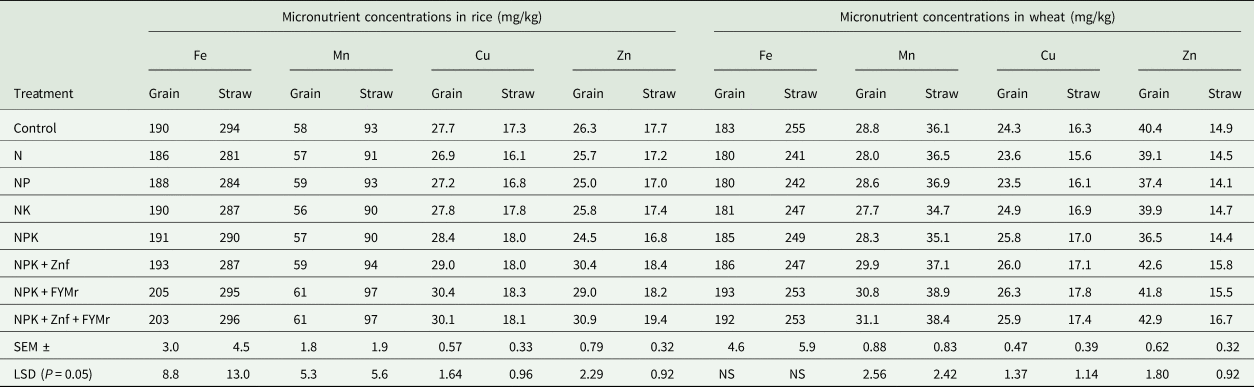
Nutrient management had a significant (P < 0.05) influence on the micronutrient concentrations in rice and wheat, except for Fe concentration in wheat. The Fe concentration in rice grain observed with the application of NPK + FYMr and NPK + Znf + FYMr was significantly higher (P < 0.05) than other treatments (Table 5). The highest Fe concentration in rice straw was observed with NPK + Znf + FYMr; however, this was only significantly higher (P < 0.05) than N alone. The Fe concentration in the grain and straw of wheat was found to be non-significant (P < 0.05). The lowest Fe concentration of rice grain and straw was obtained with the application of N alone. The highest Mn concentration in the grain and straw of rice was found with NPK + FYMr and was only significantly higher (P < 0.05) than NK in the grain and straw and N in the straw. Similar results were also recorded in wheat. The highest Cu concentration in rice grain was recorded with NPK + FYMr, which was at par with NPK + Znf + FYMr and NPK + Znf but significantly higher (P < 0.05) than all other treatments. Similarly, highest Cu concentration in the straw of rice and wheat was recorded with NPK + FYMr which was at par with NPK + Znf + FYMr, NPK + Znf, NPK and NK but significantly higher (P < 0.05) than all other treatments. The highest Zn concentration in the grain of rice and wheat was recorded with NPK + Znf + FYMr, which was significantly superior (P < 0.05) to all other treatments except NPK + Znf and NPK + FYMr. However, the application of NPK + Znf + FYMr recorded significantly higher (P < 0.05) Zn concentration in the straw of rice and wheat than any other treatment. The micronutrient concentrations (Fe, Mn, Cu and Zn) in the grain and straw of rice and wheat obtained with the control were statistically similar (P < 0.05) to N, NP and NK. The lowest Fe and Cu concentrations in rice and wheat were recorded with the application of N alone. The lowest Mn concentration in the grain of rice and the grain and straw of wheat were recorded with the application of NK, whereas the lowest Zn concentration in the grain and straw of rice and wheat were recorded with the application of NPK. Application of NPK along with FYMr + Znf or FYMr increased the Fe concentration by 7.0–7.8% in rice grains over the control. Manganese concentration in the grains of rice and wheat was increased by 4.8–5.9 and 6.8–8.1% with the application of NPK along with FYM (with or without Zn) over the control, respectively. Similarly, NPK along with FYMr + Znf or FYMr increased the Cu concentration in the grains of rice and wheat by 8.8–9.6 and 6.4–8.2% over the control, respectively. The Zn concentration was increased by 17.5 and 6.0% in the grains of rice and wheat with the application of NPK + Znf + FYM over the control, respectively (Table 5).
Effect of nutrient management on micronutrient concentrations of rice and wheat (pooled mean of 2007–08 and 2008–09)

N, nitrogen; P, phosphorus; K, potassium; Znf, foliar application of zinc; FYMr, farmyard manure applied to rice; Fe, iron; Mn, manganese; Cu, copper; Zn, zinc.
Micronutrient uptake in rice and wheat
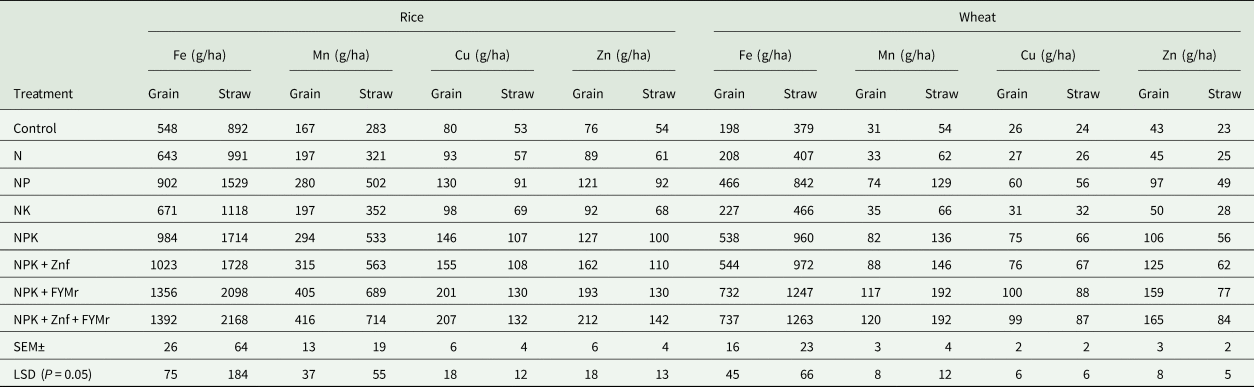
The nutrient management had a significant (P < 0.05) influence on the micronutrient uptake in rice and wheat. Uptake of Fe, Mn, Cu and Zn by grain and straw of rice and wheat with the application of NPK + Znf + FYMr was significantly higher (P < 0.05) than all other nutrient management treatments except NPK + FYMr (Table 6). The micronutrient uptake by the grain and straw of rice and wheat obtained with NPK and NPK + Znf was statistically similar except for Zn uptake, where NPK + Znf was significantly higher (P < 0.05) than NPK. The lowest uptake of micronutrients by the grain and straw of rice and wheat was obtained with the control.
Effect of nutrient management on micronutrient uptake of rice and wheat (pooled mean of 2007–08 and 2008–09)

N, nitrogen; P, phosphorus; K, potassium; Znf, foliar application of zinc; FYMr, farmyard manure applied to rice; Fe, iron; Mn, manganese; Cu, copper; Zn, zinc.
Soil pH and electrical conductivity
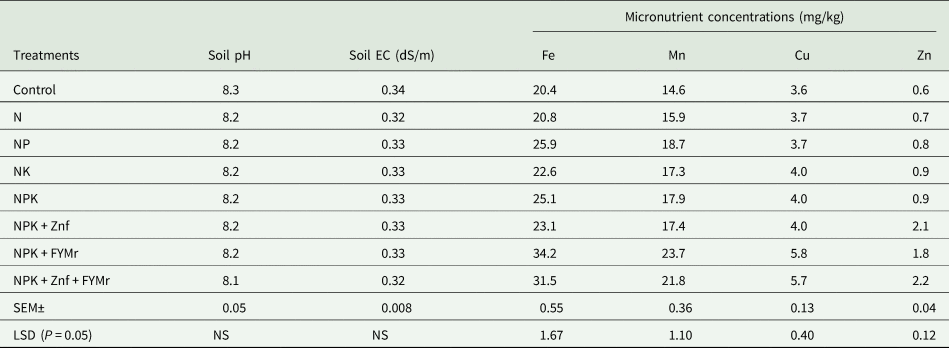
Application of fertilizer nutrients had no significant effect on soil pH or EC. However, the soil pH ranged from 8.13 (NPK + Znf + FYMr) to 8.26 (control). All the nutrient management treatments resulted in lower soil pH as compared to the control. Soil EC varied from 0.318 in NPK + Znf + FYMr to maximum 0.335 in the control (Table 7).
Effect of fertilizer treatments on soil pH, soil electrical conductivity (EC) and soil micronutrient concentrations in a rice-wheat cropping system (after the 25th cropping cycle)

N, nitrogen; P, phosphorus; K, potassium; Znf, foliar application of zinc; FYMr, farmyard manure applied to rice; Fe, iron; Mn, manganese; Cu, copper; Zn, zinc.
Diethylene triamine penta acetic acids-extractable micronutrients in soil
The nutrient management treatments had a significant (P < 0.05) effect on Fe, Mn, Cu and Zn concentrations in soil. The significantly higher (P < 0.05) concentration of Fe and Mn was obtained with NPK + FYMr compared to the other treatments (Table 7). Significantly higher (P < 0.05) iron concentration in soil was found with NPK and NP compared to the control, N, NK and NPK + Znf. All the nutrient management treatments (except N) increased Cu and Zn concentrations significantly (P < 0.05) over the control. However, the highest Cu concentration was obtained with NPK + FYMr, which was significantly higher (P < 0.05) than all other treatments except NPK + Znf + FYMr. The highest concentration of zinc was obtained with NPK + Znf + FYMr which was statistically similar to NPK + Znf and significantly higher (P < 0.05) than other treatments. Application of NPK + Znf + FYMr increased the Fe, Mn, Cu and Zn concentration by 47, 42, 60 and 223%, respectively, in the soil over the control. The lowest Fe, Mn, Cu and Zn concentrations were observed in the control.
Discussion
Grain yield of rice and wheat
The grain yield of rice and wheat after 25 years of experimentation revealed that higher production was obtained with the application of NPK + Znf + FYMr and NPK + FYMr. This could be due to continuous application of FYM which has resulted in enhanced availability of nutrients and improved physical condition of soils (Sharma et al., Reference Sharma, Chauhan and Nagarajan1999; Singh et al., Reference Singh, Sachan, Pandey and Bisht1999; Yaduvanshi, Reference Yaduvanshi2003; Sharma and Subehia, Reference Sharma and Subehia2014; Brar et al., Reference Brar, Singh, Singh and Kaur2015). In the present study, the response of FYM application (NPK + FYMr – NPK) was 1458 and 925 kg/ha for rice and wheat, respectively. Yadav and Kumar (Reference Yadav and Kumar2009) also observed a similar trend that confirms the present findings. The effect of FYM application on crop yield was greater in rice than wheat, which might be due to the fact that FYM was applied every year to the rice crop only, while in case of wheat, no fresh application of FYM was made and only residual effect of FYM was noticed in wheat. These results also agree with the earlier findings of Subehia et al. (Reference Subehia, Sepehya, Rana, Negi and Sharma2013). In the present study, the foliar application of Zn did not increase rice and wheat yields significantly (P < 0.05). However, grain yield of rice and wheat increased by 196 and 64 kg/ha, respectively, in NPK + Znf over NPK.
Micronutrient concentration and uptake
The higher concentration and uptake of Fe, Mn, Cu and Zn by crops were observed with the application of FYM along with NPK or NPK + Znf as compared to the application of mineral fertilizer alone. Similar results were also reported by Singh and Ram (Reference Singh and Ram2007). The highest total uptake of Fe, Mn, Cu and Zn was 5560, 1442, 525 and 603 g/ha, respectively, and was observed in NPK + Znf + FYMr, which may be attributed to higher yield levels of rice and wheat. Whereas, lowest total uptake of 2017, 535, 183 and 196 g/ha of Fe, Mn, Cu and Zn, respectively, was obtained in control due to lower levels of yield in rice and wheat. These results were in agreement with the studies performed at other locations (Bhardwaj et al., Reference Bhardwaj, Omanwar, Sharma and Vishwanath1994; Singh and Ram, Reference Singh and Ram2007; Behera and Singh, Reference Behera and Singh2009).
Diethylene triamine penta acetic acids-extractable micronutrients in soil
The effect of different nutrient management treatments on soil DTPA-Fe, Mn, Cu and Zn was found to be significant (P < 0.05). The application of fertilizer NPK in combination with FYM resulted in higher DTPA-Fe, Mn and Cu concentrations compared to other treatments. The plots where Zn and/or FYM were applied with NPK exhibited higher DTPA-Zn concentrations compared to the other treatments. This might be due to the fact that organic matter (FYM) is a store house of nutrients including micronutrients (815, 181, 14 and 74 mg/kg of Fe, Mn, Cu and Zn, respectively, on a dry weight basis). Moreover, organic matter supplies several complexing agents, which maintain a balanced supply of nutrients to the crop (Sharma et al., Reference Sharma, Mandal, Srinivas, Vittal, Mandal, Grace and Ramesh2005; Urkurkar et al., Reference Urkurkar, Tiwari, Shrikant and Bajpai2010). Since FYM is rich in micronutrients, it might have contributed Fe, Mn, Zn and Cu cations in the soil. Besides this, well-decomposed FYM might have been involved in the formation of chelates with organic ligands, which have lowered susceptibility to adsorption, fixation and precipitation in the soil and consequent release of micronutrients due to mineralization of FYM (Vidyavathi et al., Reference Vidyavathi, Dasog, Babalad, Hebsur, Gali, Patil and Alagawadi2012). Madhavi et al. (Reference Madhavi, Reddy and Reddy1995) reported that higher concentrations of Fe, Mn, Zn and Cu cations in the soil due to the application of organic manures were ascribed to the mineralization of organic manure, reduction in fixation and complexing properties of these manures with micronutrients. Similarly, Kumar et al. (Reference Kumar, Gupta and Bhandari2008) and Shahid et al. (Reference Shahid, Shukla, Bhattacharyya, Tripathi, Mohanty, Kumar, Lal, Gautam, Raja, Panda, Das and Nayak2016) reported that the concentrations of Fe, Mn, Zn and Cu in the soil increased with the application of FYM or green manure along with NPK as compared to NPK alone.
Considering the reported general critical limit for DTPA-Fe (4.5 mg/kg, Tandon, Reference Tandon1993), DTPA-Mn (1.0 mg/kg, De Datta, Reference De Datta1981 and 2.0 mg/kg, Tandon Reference Tandon1993) and DTPA-Cu (0.20 mg/kg, Tandon, Reference Tandon1993), the present values of DTPA-Fe, Mn and Cu are much higher than the critical limits in the soil and thus there is no stress of Fe, Mn and Cu in any of the treatments despite their removal by crops under different nutrient management treatments in the present study.
As per the reported general critical limit of DTPA-Zn of 1.66 mg/kg for rice in Molisoll and 1.20 mg/kg for wheat (Gangwar and Chandra, Reference Gangwar and Chandra1975), Zn is not deficient in treatments where FYM and/or Zn were applied along with mineral NPK. The DTPA-extractable Zn concentration increased to 2.06 and 2.16 mg/kg from its initial status of 0.8 mg/kg with the application of NPK + Znf and NPK + Znf + FYMr, respectively. However, the DTPA-extractable Zn concentration decreased to 0.65 and 0.74 mg/kg from its initial status of 0.8 mg/kg in the control and N alone, respectively.
According to Lindsay and Norvell (Reference Lindsay and Norvell1978), soils showed a deficiency of micronutrients when their extractable Fe, Mn, Cu and Zn were <2.5, 1.0, 0.2 and 0.5 mg/kg, respectively. On the other hand, Hamissa et al. (Reference Hamissa, El-Mowalhy and Salem1998) reported these levels at 2.0, 1.2, 0.5 and 1.0 mg/kg for extractable Fe, Mn, Cu and Zn, respectively. Thus, it can be stated that in the current investigation, the soil was sufficient in available Fe, Mn, and Cu while it showed low available Zn in the control, N, NP, NK and NPK treatments.
Conclusions
The present study indicates that the integrated use of mineral NPK and FYM in rice and mineral NPK in wheat, under long term, proved to be the best nutrient management strategy to improve the concentrations of micronutrient cations (Fe, Mn, Cu and Zn) in the soil and their uptake by rice and wheat.
Acknowledgements
The authors feel privileged to thank the Head, Department of Agronomy, Dean College of Agriculture and Director Research, G. B. Pant University of Agriculture and Technology, Pantnagar, Uttarakhand, India for technical help to carry out the investigation.
Financial support
None.
Conflict of interest
None.
Ethical standards
Not applicable.