Estonian-born Bellingshausen
Estonia is the native country of Fabian Gottlieb von Bellingshausen (In Russian Faddei Faddeevich Bellinsgauzen) (1778–1852). His expedition (1819–1821) approached very close to the Antarctic continent and make important discoveries, such as Peter I Island and Alexander I Coast. In the lifetime of Bellingshausen, Estonia was not independent, but today Estonians are proud of Bellingshausen and his work.
Before the International Geophysical Year
In 1931, the Soviet Union planned to send a whaling expedition to Antarctica and set up a station on Peter I Island (Belov Reference Belov1966). However, the expedition did not take place, because the Soviet Union was more interested in Arctic research. Bellingshausen and the question of who discovered Antarctica were not related in the Soviet Union until the beginning of the 1940s when 120 years had passed from the end of Bellingshausen's expedition and some publications appeared on this occasion. In this context it is important to note that the discovery of Alexander I Coast in January 1821 was according to Soviet authors the discovery of the Antarctic continent (Vvedenskii Reference Vvedenskii1941). The Americans and the British were in this period actively arguing about January 1820 when Nathaniel Palmer and Edward Bransfield were sailing near the Antarctic peninsula (Hobbs Reference Hobbs1939; A.R.H. 1939). At the international geographical congress in Amsterdam in 1938, Russians learned from Americans that Palmer had discovered the Antarctic, but they did not understand the point of the problem (compare Vvedenskii Reference Vvedenskii1941).
During the war and in the post-war period the Antarctic question was not important for the Soviet Union. Other problems were more topical. But the démarche of the Americans in the question of the Antarctic in August 1948 changed the situation (Bulkeley Reference Bulkeley2011). Bellingshausen's expedition was drawn into the political stage of the cold war (see Bulkeley Reference Bulkeley2011). The fact that the Russian expedition had taken place became a very important argument for the Soviet government, meaning that the country could not be ignored when solving the problem of the status of Antarctica. An opportunity to demonstrate its good intentions was provided by the preparations for the International Geophysical Year (IGY) during which the Russians set up their first polar station in the Antarctic continent. The name of one of the ships of the Russian South Pole expedition, Mirnyi, was a perfect fit for the name of the polar station. On the one hand, its interpretation in the Russian language symbolised peaceful intentions, on the other hand, the name Mirnyi drew the attention of the whole world, albeit indirectly, that it was the captain of this vessel, Lazarev, a Russian, who had participated in the discovery of the Antarctic.
The IGY provided Estonians with the opportunity to join Antarctic research. While in the 19th century, Baltic Germans living in Estonia founded the tradition of polar exploration in the Russian empire and were there in leading positions during the whole century, in the second half of the 20th century, an opportunity to continue the tradition founded by their fellow countrymen was provided to Estonians through Soviet polar exploration. However it is worth noting that some Estonians of over 60,000 Estonians who fled the country on its incorporation in the Soviet Union in 1940 did participate in Antarctic work from their adopted countries. From these, the only known female Estonian-born antarctic researcher, Maret Vesk from Sydney University joined ANARE (Australian National Antarctic Research Expeditions) to study liverworts (for example Post and Vesk Reference Post and Vesk1992). Ivo Meisner studied how the Antarctic Treaty system had responded to special interests when he was based at the Scott Polar Research Institute in 1986 (Meisner Reference Meisner1986).
The IGY and noctilucent clouds research
Those staying in Soviet Estonia could participate in Antarctic research as members of Soviet Antarctic expeditions. One of the first Estonians in the southern continent was Juhan Smuul, a recognised peoples’ writer, member of the Central Committee of the Communist Party of the Estonian SSR and the of the Supreme Soviet of the USSR. He participated as a special correspondent of the newspaper Pravda in the third Soviet Antarctic expedition in the vessel Koperatsiya in 1957–1958 which had to make preparations for the building of Soviet research stations for the IGY. About his voyage to the Antarctic, he wrote a book Antarctica ahoy: the ice book (in Estonian in 1959, later in English (Smuul Reference Smuul and Skvirski1964)). The fact that the book was published in twenty languages and in 1961 the author was awarded the Lenin Prize, gives evidence of the great propaganda impact of the book in the Soviet Union.
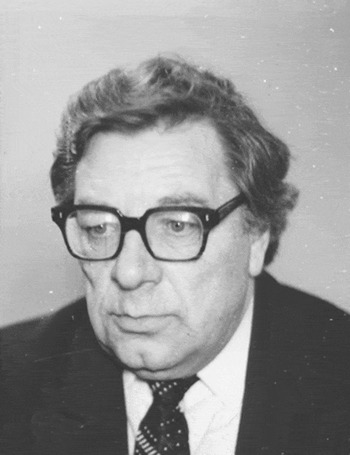
It was the atmospheric physicist and astronomer Charles Villmann (Fig. 1) working at the Institute of Physics and Astronomy of the Academy of Sciences of the Estonian SSR at Tõravere, who paved the way for many Estonian researchers and engineers to the Antarctic. Prior to Tõravere, Villmann had worked for the Institute of Geology in Tallinn, where he lacked a good basis for space observations. For that reason, he had chosen for his PhD study object noctilucent clouds arising as a result of water freezing around extremely tiny dust particles at the height of 75–90 km and being observable at twilight periods. In this period, preparing for the IGY, the USSR Academy of Sciences supported especially upper atmospheric research, including noctilucent clouds. Of special interest to Villmann were noctilucent clouds of occasional occurrence which are difficult to observe in different latitudes. In connection with the IGY, observations of noctilucent clouds were performed at about 250 stations all over the Soviet Union (Gadsden and Schröder Reference Gadsden and Schröder1989: 19). In 1957, coordinated observations of noctilucent clouds started on the international level coordinated by N.I. Grishin (Reference Grishin and Villmann1967: 6). In 1964, when the programme of observations of noctilucent clouds during the International Quiet Sun Year was approved internationally, Villmann became the coordinator of the activities of the Soviet Union observation stations. After that a Special World Geophysical Centre for Noctilucent Clouds, one of the two centres of that kind in the world, was established at Tõravere, which coordinated observations at 210 stations (detailed observations at 19 stations) of the Soviet Union (Villmann Reference Villmann1966). On his initiative, after 1965 noctilucent clouds observations were also carried out at Russian space and meteorological stations which established the stratified structure of noctilucent clouds and the nature of mesospheric polar caps (Villmann and others Reference Villmann, Vasilyev, Avaste and Eerme1973). The observations confirmed that noctilucent clouds were present in polar areas, but the orbit of space ships did not permit direct viewing, meaning that only meteorologists and geophysicists working in polar areas could do that. Villmann, who had been a Captain in the Soviet Army and was a member of the Central Committee of the Communist Party of Estonia, was a trustworthy investigator. Besides, he was a charismatic and inspiring person. To carry out his study programme, he established useful contacts with the Arctic and Antarctic Research Institute (AARI) in St Petersburg through which Estonian meteorological observers were sent to both polar regions. The Soviet Antarctic Expedition (SAE) decided in 1964 to organise observations of noctilucent clouds in three polar stations: Mirnyi, Molodhezhnaya and Novolazarevskaya (Kreem Reference Kreem1968). Owing to Villmann's project, at least ten Estonians (out of the 30 who have worked in the Antarctic) could go to Antarctica beginning from 1965. Certainly, it was observations of noctilucent clouds which became a pioneering research project of Estonians in Antarctica, although soon it appeared that observations of noctilucent clouds in Antarctica had no remarkable practical and scientific value and the number of Estonian Antarctic scientific publications in other research fields exceeded considerably those on noctilucent clouds. It is, however interesting that in May 2010 Russians restarted research on optical characteristics of mesospheric clouds at the Novolazarevskaya Station. However, the contacts which Villmann had established with the AARI remained. As a result, Estonian meteorologists and geophysicists could carry out and analyse meteorological, actinometric and ozone observations in the Antarctic. The salaries were rather high by Soviet standards and the possibility to visit foreign harbours and peep behind the ‘iron curtain’ were of importance for Soviet people. Despite these advantages, the weather and living conditions in the Antarctic were far from being favourable, especially when some accident happened. Vello Park, who has wintered in Antarctica for four times, survived in extremely severe conditions at the Vostok station, without help from April to November 1982, as the electric power station had burnt down and a small generator was available only for radio communication.
Charles Villmann (1923–1992) initiated noctilucent clouds research in Antarctica and was a trail blazer for Estonians in Antarctic research.

Further Antarctic research from Soviet Estonia
The positive experience from the activities of Estonians within Soviet Antarctic expeditions led the AARI to recruit more Estonian scientists for Antarctic research (Kaup Reference Kaup1996). Another longer research programme involving them was the analysis of climatic changes on a geological scale on the basis of investigations of the ice cores started in the 1970s. These studies were carried out under the leadership of Rein Vaikmäe of the Institute of Geology in Tallinn in collaboration with researchers from the AARI and France. Today such investigations are continued in the same institute in collaboration with Norwegian and Russian researchers. The co-author of this paper, Enn Kaup, who in 1972 studied noctilucent clouds, works for the same institute. As an atmospheric physicist by education, he worked at first as a weather observer in the Antarctic and in his free time he studied thermal and oxygen regimes of lakes. Later he studied other environmental conditions in Antarctic lakes, their biological productivity and the anthropogenic influence on them. Owing to such a novel study object, which was not characteristic of then Soviet antarctic research programs, he was invited to join the SAE no fewer than five times. Later, in 1993–2009, he joined three times in all the expedition teams of Australia and India. He has published over 70 scientific and 25 popular scientific writings on Antarctica.
Other Estonian researchers have participated in such fields as the geology of the Southern Ocean (Ivar Murdmaa, see below), hydrology of inland waters (August Loopmann, see below). Jüri Martin studied lichens and mosses in a number of locations of east Antarctica (for example Martin Reference Martin and Korchagin1975).
Antarctic research plans since the restoration of the Republic of Estonia in 1991
When the Soviet Union collapsed in 1991 the science system of the newly independent Estonia was reorganised and also deprived of the former substantial funding. To guarantee the survival of the scientific system and to continue polar research, at the initiative of the Institute of Geology an Estonian Committee for Polar Research (with Rein Vaikmäe as chairman) was set up at the Estonian Academy of Sciences in 1992 with the aim of coordinating the activities of Estonian researchers at the Scientific Committee on Antarctic Research (SCAR) and the International Arctic Science Committee (IASC). In spite of rapid economic development, Estonia has not joined the membership of these organisations. But in 2001, Estonia joined the Antarctic Treaty which is a precondition for setting up an Estonian station in the Antarctic if considered practical.
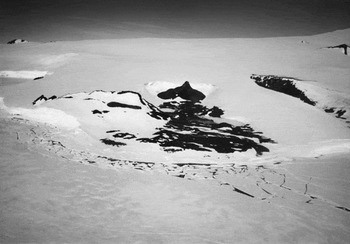
In 2002, at the initiative of Mart Saarso, adviser for the Estonian Ministry of Foreign Affairs, who led a crew in sailing a yacht around the world in 1999–2001, the Estonian Committee for Polar Research discussed the foundation of an Estonian summer station in the Antarctic. In the same year, at the meeting in Warsaw, the consultative members of the Antarctic Treaty approved the idea. During the site visit expedition of 2003, Saarso had chosen for the place of the station the coast of the Wood Bay in Victoria Land (Fig. 2). The preliminary research programme of the station included the investigation of the ecological state of inland waters and the effect of climatic changes on them; environmental changes stored in the continental ice and permafrost using isotope methods; the study of the evolution, volcanism and meteoritics in the earth crust in the region of the Ross Sea and the studies in the structure and stratigraphy of sedimentary rocks.
Estonian station site, Wood Bay. Unnamed coastal oasis ca 5 km south of Edmondson Point. Wood Bay, Ross Sea, was selected by Mart Saarso for the site of the Estonian summer station.

However, there was no financial cover for this plan and as yet there is no resolution in this concern. As finances delivered to science from the budget of the state with a population of 1.4 million were scarce, it was impossible to finance this small-capacity, but for Estonia, expensive project from the money given for scientific research. Regardless of the active popularisation of the idea of the Estonian Antarctic station since 2002 in the Estonian press, unanimous support has been achieved neither in Estonian society nor in the Estonian parliament. In general, there is no uncertainty as to the usefulness of Antarctic research, but there is no agreement whether Estonia should have its own station there or not. Research could be carried out in collaboration with some other country. Estonian Antarctic researchers accept that view, but they still consider their own station useful as from the scientific as well from the political point of view. Recently there have appeared some indicators that an agreement would be possible on the political level, too. Under the pressure of the Estonian Green Party, and to have the state budget approved, the government parties delivered from the 2010 state budget €220,000 for carrying out the environmental impact assessment of the planned Estonian Antarctic station and for making preparations for joining the Madrid protocol, etc. Another, smaller amount for such purposes was also delivered from the 2011 state budget.
Analysis of major scientific research performed by Estonians in Antarctica
In this analysis only longer term research areas are discussed and references are made to the most important or latest publications in which earlier publications can be found. Altogether Estonian researchers have produced over 130 scientific publications on Antarctica which are listed in the website http://www.gi.ee/antarktika/ajalugu.html
Geological and geophysical research
Ivar Murdmaa appears to be the first Estonian who set foot on the Antarctic continent and this he did at the Mirnyi station on 4 December 1957. As a PhD student at the Institute of Oceanology of the Academy of Science of the USSR he participated in the SAE marine expedition to study the Southern Ocean floor, specifically sediments. The studies were performed in the Indian Ocean and Pacific sectors aboard the expedition vessel Ob in 1957–1958. He delimited mineralogical provinces of the Southern Ocean on the basis of terrigenic material transported by icebergs. He also sampled and first described iron-rich sediments of novel composition which were later found to be typical of central mountain chains and hot springs of oceans. These results were later developed in a monograph (Murdmaa Reference Murdmaa1987). The Ob expedition was the beginning of Murdmaa's distinguished career as a marine geologist.
In 1963–1973, Anatoli Norman (SAE) wintered at the Novolazarevskaya station three times carrying out seismological observations. Norman (Reference Norman, Kaivo and Kaup1992) describes an interesting episode from his work in 1964 when he was able from his seismograph records to calculate (and before the news arrived) the approximate location of the Alaskan earthquake that destroyed Anchorage city.
As a member of United States Antarctic Research Program, Henn Oona wintered at the South Pole in 1964 studying auroras with a special purpose to differentiate between auroras originated by protons and electrons. During the polar day he participated in ice dating studies and later in studies of home instinct of Adélie penguins at Cape Crozier and Ross Ice Shelf. Mount Oona (2170 m a.s.l., 83°09′ S, 162°36′ E) in the Queen Elizabeth Range in the Transantarctic Mountains was named after him.
Hain Oona, the younger brother of Henn Oona, wintered at the South Pole in 1968 studying ionospheric physics. Oona Cliff (72°27′ S, 160°09′ E) in Outback nunatak group in North Victoria Land was named after him.
Mesospheric clouds and meteorological research
Ten observers performed a programme of noctilucent and mother-of-pearl clouds patrol observations set up by Charles Villmann (see above) wintering in 1965–1985 altogether 17 times at the Molodezhnaya, Bellingshausen, Vostok, Mirnyi and Leningradskaya stations. They also carried out extensive programmes of meteorological and actinometric observations. In chronological order, they were Enn Kreem (twice), Reino Eller, Rein Randmets (three times), Andres Tarand, Jaan Ojaste, Jaak Lembra, Enn Kaup, Vello Park (four times), Heino Martihhin, and Vladimir Gussev (twice). The first in this list, E. Kreem, also described Antarctic mesospheric clouds, conditions of their occurrence and evaluated the observation results. The success of observations was, however, limited due to low cloudiness and frequent blizzards in the seasons in which the clouds were visible to an observer on the ground (Dolgin and others Reference Dolgin, Voskresenski and Kreem1975).
E. Kreem also compiled the first overview of meteorological and solar radiation regimes of the Molodezhnaya region filling the gap in such data on coastal Antarctica between 39–63° E (Belov and Kreem Reference Belov and Kreem1968). Some of the winterers (for example Kreem, Kaup, Park) performed observations of total atmospheric ozone. Occasionally they too recorded anomalously low total ozone amounts, however, the ozone hole was described later in 1985 by UK scientists. In cooperation with German glaciologists, E. Kaup described the meteorological conditions on the Hays Glacier and the Vechernaya Hill in comparison with the conditions at the Molodezhnaya Station. By largely similar weather elements an average clockwise shift 30° of wind directions was observed at Vechernaya Hill compared to the Molodezhnaya Station (Kaup Reference Kaup1976).
V. Park described meteorological and living conditions at the Vostok station as the coldest place on the Earth, including after the fire in April 1982 (Park Reference Park, Kaivo and Kaup1992). During winterings in 1982–1991 aerological (Rein Männik, Alexey Dorogotovtsev, Sulo Kol'e) and meteorological (Vladimir Gussev) observations as part of SAE programs were performed in Mirnyi and Molodezhnaya stations.
Limnological and hydrological research
Limnological research started in 1972–1973 when Enn Kaup in his free time studied the year round thermal-oxygen regime and primary production in lakes of the Thala Hills, Enderby Land. Freezeout of oxygen from the growing ice cover and winter supersaturation of dissolved oxygen in the remaining lake water was found (Kaup Reference Kaup1975). Later, in 1976–1977, being supported by E.S. Korotkevich, the leader of the SAE for many years, he carried out extensive year-round research of primary production and anthropogenic eutrophication in land locked and epishelf lakes of the Schirmacher Oasis. Essential results were the recording of the world's lowest annual primary production of lake phytoplankton, 0.58 gC/m2 in Lake Verkhneye (Kaup Reference Kaup1994) and the identification of anthropogenic eutrophication in Lakes Glubokoye and Stancionnoye, for the first time in Antarctica (Kaup Reference Kaup2005). With East Germans, highly structured cyanobacterial algal mats on lake bottom were photographed (Kaup and others Reference Kaup, Probst and Gernandt1979) and later described in McMurdo dry valleys as modern stromatolites. On the basis of collected algal samples Andrus Saag contributed to the algal flora of the Schirmacher Oasis (Saag Reference Saag1979). During 1972–1977 cooperation developed with East German researchers which later resulted in a number of joint publications in German and English in the German Democratic Republic (GDR).
Lake research continued in the summer 1983–1984 in the Schirmacher Oasis and also on the perennially ice-covered mountain lakes of the Untersee Oasis, 80 km southeast of the Schirmacher Oasis. In cooperation with Russian and East German researchers, E. Kaup and the hydrologist August Loopmann performed studies which also included morphology of lake basins (bathymetric maps of 8 lakes were compiled (Loopman and others Reference Loopmann, Kaup, Haendel, Simonov and Klokov1986)), hydrochemistry, runoff (including its isotopic and nutrient composition) and water exchange of lakes (Kaup and others Reference Kaup, Haendel, Loopmann, Bormann and Fritsche1995). The loads of several lakes with nutrients were first measured and the reputation of Lake Verkhneye as that with the lowest primary productivity was corroborated. Novel views were presented on the origin and development of lakes in Antarctica (Loopmann Reference Loopmann and Martin1988). The recording of lake level, water balance, water exchange and runoff moduli on 6 lakes and catchments of the Schirmacher Oasis during the entire flow period of November-February are up to the present a rare achievement in Antarctica (Loopmann and Klokov Reference Loopmann and Klokov1986).
It was the first time that the ice cover of Obersee was penetrated and this lake was studied, while the main effort was put on Untersee. The unusual properties of these lakes included high pH 10.3–11.1 (Kaup and Haendel Reference Kaup, Haendel, Bormann and Fritsche1995), exceptional transparency of water, up to 77 m in Untersee (Kaup Reference Kaup2009), and very low phytoplankton productivity in Untersee (Simonov and others Reference Simonov, Stackebrandt, Haendel, Kaup, Kämpf and Loopmann1985).
While in 1987–1989 lake research was focussed on the land-locked and epishelf lakes of the Bunger Hills, E. Kaup also studied lakes in the Thala Hills where new data on solar irradiance, nutrients and primary production of phytoplankton contributed to understanding of these ecosystems (Kaup Reference Kaup1998, Reference Kaup2009). A. Loopmann also studied water balance of epishelf Lake Beaver with interaction of Stagnant Glacier in the Jetty Oasis, MacRobertson Land. In the Bunger Hills, properities of several freshwater and saline lakes (Kaup and others Reference Kaup, Haendel and Vaikmäe1993) and the conditions of runoff formation were studied (Gibson and others Reference Gibson, Gore and Kaup2002) and bathymetric maps were compiled (Loopmann Reference Loopmann1990).
The logistics of the SAE, in cooperation with Russian researchers, was used in the research described above. As a member of the ANARE, E. Kaup studied nutrients and the trophic state in the lakes, streams and groundwaters on Broknes of the Larsemann Hills, Princess Elizabeth Land during the seasons of 1993–1994 and 1997–1998. These surface waters were found to be impacted by four stations on a limited territory (Kaup and Burgess Reference Kaup and Burgess2002) and possibly also by climate warming (Quesada and others Reference Quesada, Vincent W, Kaup, Hobbie, Laurion, Pienitz, Lopez-Martinez, Duran, Bergstrom, Convey and Huiskes2006).
In summer 2008–2009, research on nutrients and trophic state in inland waters in the Larsemann Hills was continued by E. Kaup as a member of InSEA (Indian Scientific Expedition to Antarctica). Previous results on nutrient and major ions enrichments in active layer of lake catchments were extended. During the same season it was established that the earlier (during 1961–1984) strong effects of human impact (Kaup Reference Kaup2005) were weakened in lake waters of the Schirmacher Oasis but were still detectable in lake sediments. In general, the major achievements of Estonian Antarctic lake research belong to areas of water exchange of lakes, lake optics, primary production of phytoplankton and human impacts in lakes.
Isotope geochemical and glaciological research
The Isotope Geology Laboratory of the Institute of Geology of the Academy of Sciences of the Estonian SSR (IG ASE) started Antarctic isotope geochemical and glaciological research at the end of the 1970s. The cooperation with the AARI had developed earlier in this decade during common research in glaciers of Polar Ural and Severnaya Zemlya. Rein Vaikmäe initiated studies in three fields. The first was hydrology of Antarctic oases and lakes in cooperation with E. Kaup. The application of isotope methods in studying lakes of different genesis in Antarctic oases contributed to the clarification of the origins and transformations of these lake waters (Kaup and Vaikmäe Reference Kaup and Vaikmäe1986).
In cooperation with ice core drillers from the AARI, the genesis of the Shackleton Ice Shelf was studied. The δ18O profile through 195.7 m shelf ice drilled in 1978 indicated that it was entirely formed of local precipitation and did not get feeding from Antarctic continental ice. It was also concluded that seawater did not freeze on the bottom of shelf ice (Savatjugin and Vaikmäe Reference Savatyugin and Vaikmäe1990).
In several parts of East Antarctica, changes of glacio-climatic conditions were studied using isotope variations of shallow and deep ice cores. In 1977, the isotope profile was studied in a 809 m deep ice core drilled in a firn glacier over the subglacial depression close to Wohlthat Massif (71°05′S, 11°40′E). The average annual ice accumulation in the area was found to be 0.2 m. That rather high value of accumulation for Antarctica allowed the establishment of the region's climate history for last 5000 years using isotope profiles (Vaikmäe Reference Vaikmäe and Weller1991).
In cooperation with colleagues from the Central Institute of Isotope and Radiation Research in Leipzig (then in the GDR) the glacio-climatic history of northern and central Dronning Maud Land was studied (Hermichen and others Reference Hermichen, Kowski and Vaikmäe1990). The isotope analyses of relict ice of ancient moraine hills in Humboldt Mountains permitted the conclusion that increases in ice volumes in central Dronning Maud Land were invariably connected with cold substages (Vaikmäe and others Reference Vaikmäe, Hermichen, Kowski, Strauch and Savatyugin1991).
In the SAE field season of 1987–1988, Margus Toots from the IGE ASE participated in deep ice drilling and sampling on Dome B. The following ice core analysis was performed in cooperation with French colleagues. The isotope profile of the ice core showed for the first time in the southern hemisphere that climate warming in Antarctica at the limit Pleistocene/Holocene 15 000–10 000 years BP was interrupted by two-shape cooling. The phenomenon was earlier well-known in the northern hemisphere but convincing evidence of such climate changes in the southern hemisphere was missing (Jouzel and others Reference Jouzel, Vaikmäe, Petit, Martin, Duclos, Stievenard, Lorius, Toots, Melieres, Burckle, Barkov and Kotlyakov1995; Masson and others Reference Masson, Vimeux, Jouzel, Morgan, Delmotte, Hammer, Lipenkov, Petit, Steig, Stievenard and Vaikmäe2000). For further study of the chemical composition of that core, Jüri Ivask improved methods of analysis. The application resulted in new data on major ions in the ice cover at Dome B (Ivask and Kaljurand Reference Ivask and Kaljurand1999).
In the season of 1997–1998, Mart Nyman from Stockholm University participated in glaciological field research of SWEDARP (Swedish Antarctic Research Programme) at Amundsenisen and Heimefrontfjella in Dronning Maud Land. These were Swedish pilot studies for the EPICA programme. In the season of 2001–2002, he worked for EPICA at Dome C.
In recent years Tõnu Martma, the Institute of Geology at Tallinn University of Technology, has extended his cooperation with Norwegian and Finnish researchers from Svalbard to isotope geochemical study of snow and ice in western Dronning Maud Land (Sinisalo and others Reference Sinisalo, Grinsted, Moore, Meijer, Martma and van de Wal2007).
Conclusions
Some 135 years after Bellingshausen, Estonians returned to the scientific study of Antarctica, at first as part of the Soviet effort. When the country restored independence in 1991, it had substantial scientific competency in Antarctic research. Not to lose that knowledge but rather to develop it and to attract younger generations to Antarctic research efforts have been made to realize that competency through an Estonian Antarctic summer station. The Estonian scientific community is small in number and there are few high-level investigation topics which could be developed. Estonian society is also small and does not have sufficient means during the deep current economical crisis. Due to that, financial resources are scanty and interests of political authorities in the development of the Estonian society vary. As a result, an agreement has not yet reached as concerns the Estonian polar station in Antarctica.
Acknowledgements
The former Soviet Antarctic Expedition, Australian National Antarctic Research Expeditions and Indian Scientific Expedition to Antarctica and their members are thanked for logistical support and cooperation during expeditions. The authors gratefully acknowledge constructive criticism provided by an anonymous reviewer and by R. Bulkeley. This article was supported by Estonian Science Foundation grant No 7381 (ET) and Estonian Ministry of Education grants No SF0180049s09 (ET) and SF0320080s07 (EK).