Introduction
After the Parkland massacre in 2018, some large retailers voluntarily restricted their own gun sales. Dick's Sporting Goods has removed all guns from over 100 stores and pledged to remove them from hundreds more locations.1 Walmart has been especially pro-active in its efforts to responsibly market firearms over the past three decades — instituting a number of self-imposed restrictions, including a refusal to sell handguns, military assault rifles, high capacity magazines, and bump stocks, as well as videotaping firearm sales, “allowing only select associates who have passed a criminal background check to sell firearms,” and refusing to sell to people younger than 21 years old.2
The question looms: can corporate policies reduce the toll of gun violence?
It is too early to empirically assess post-Parkland events, but there is a long history of corporate policy changes in gun sales. Despite all of its restrictions on firearms sales, Walmart is the largest gun retailer in the country.A1 In 1994, Walmart stopped selling handguns at all of its locations in every state except for Alaska. In 2006, Walmart stopped selling firearms altogether in more than half of its stores. As shown in Figure 1, the number of Walmart Federal Firearm Licensees (FFLs) dropped from 2,900 to less than 1,300 for several years before the company reversed course in 2011 and began increasing the number of stores selling rifles and shotguns.
Variation in the Number of Walmart FFLs, 2002-2019

This article estimates the impact of these policy changes on firearm suicide and homicide. In the sections that follow, we split our analysis between the 1994 handgun policy change and the 2006 and later rifle and shotgun policy changes.
One reason for skepticism about the possible impact of voluntary corporate supply restrictions is that the United States is awash with gun dealers. There are more than 62,000 FFLs — more than the number of grocery stores or pharmacies.Reference GarfieldA2 But not all FFLs are equal. Walmart is a particularly powerful marketing force. In any given month, more than two-thirds of Americans will visit a Walmart store.A3 The elimination of a major marketer of firearms may have increased the search and effort costs of acquiring a weapon — forcing people to travel farther to find the next FFL. Walmart may have even been the only place some consumers knew they could purchase weapons. At Walmart, consumers could purchase a weapon from a trusted supplier at the same time as they shop for other household goods, instead of making a one-off trip to a specialized gun shop. The marketing restrictions of big-box retailers might not only directly reduce the supply of firearms but might also reduce the salience and normality of gun-purchasing. Walmart's FFL marketing restrictions made guns less a part of everyday life. Walmart's decisions not to sell firearms is unlikely to impact collectors or recreational hunting enthusiasts or most of the estimated two-thirds of gun owners that own multiple firearms. Reference Yamane and ParkerA4 However, marketing restrictions by major retailers might be effective at reducing gun suicide by potential victims who are not as well-informed about, or as comfortable patronizing, other firearms suppliers.
Another reason for skepticism about the possible impact of marketing restrictions on suicide is that many gun suicides are accomplished with firearms that were purchased by someone other than the person committing suicide and were purchased years in advance. One study found a median period of more than 10 years between purchase and use in suicide.Reference Cummings3 We note, however, that around 14% of firearms suicides by handgun owners occur within 30 days of the victim acquiring a handgun.Reference Studdert4 In addition, since Walmart's policy change may, for the reasons discussed above, reduce gun ownership on the margin, we expect that any effect from Walmart's market restrictions would become more pronounced after a number of years.
We find that Walmart's 1994 decision to stop selling handguns reduced firearms suicides without increasing non-firearms suicides. From 1994 to 2005, across a number of difference-in-difference specifications and after controlling for a variety of legal, social and demographic variables as well as county and time fixed effects, counties with Walmarts robustly experienced a 3.3 to 7.5% reduction in the suicide rate. This represents an estimate of at least 5,104 lives saved (425 per year). During this period, we find no corresponding increase in non-firearms suicides — suggesting that the people who, but for the 1994 policy, would have killed themselves with a gun, were not substituting to other lethal means. Using the same framework, we find no effect of the policy change on homicide rates. In contrast, Walmart's 2006 and 2011 decisions to discontinue and subsequently resume the sale of rifles and shotguns in many of its stores, taken as a whole, was not associated with robustly measured changes in homicide or suicide rates. In an intensity of treatment analysis, we do find evidence that Walmart's 2006 decision to reduce the number of its stores that sold firearms caused a statistically significant reduction in the suicide rate for counties in which Walmart did not subsequently resume firearms sales.
Literature
In 2017, 47,173 people in the United States died by suicide, over half by firearm as has been true over the past two decades, and another 14,542 individuals were victims of firearms homicide.A5 Restricting access to firearms has been shown to reduce overall suicide, not merely to shift people to a different method.Reference DeSimone, Markowitz, Xu, Gius, Webster, Vernick, Zeoli and ManganelloA6 One recent study found that having fewer licensed gun dealers in a county is associated with lower suicide rates.Reference Steelesmith5 Even if a person substitutes to another method of attempting suicide, the most common alternatives are far less lethal than guns.
Most studies of the effect of policy on firearms suicide have focused on the effects of gun control laws. There is evidence that mandatory waiting periods and some other forms of firearms laws can reduce suicide rates.Reference Edwards6 By preventing access to firearms owned by family members, safe storage laws can reduce suicides, particularly among adolescents.A7 Strengthening background checks can also reduce suicides, again by introducing barriers to easy access.Reference Sen and Panjamapirom7
State gun laws are an important control variable in estimating the effect of Walmart's policy changes, but state gun laws are of separate interest for comparing the effectiveness of private and public gun control. Studies examining individual policies are numerous and their findings are mixed.Reference Morral and SiegelA8 Studies examining the overall strictness or laxity of gun regulation generally find that suicide rates are lower where gun laws are more restrictive.8
As for homicide, previous studies have found that background checks, child access prevention laws, prohibitions, waiting periods, and policies restricting right to carry can all reduce violent crime.Reference Donohue, Aneja and WeberA9 These policies may decrease homicides by preventing impulsive purchase and use of a firearm or by decreasing firearm ownership at the margin and thus limiting the availability of guns for use in crime (either by the gun owner or by individuals that steal firearms for use in crime). However, we note that many, if not a majority, of firearms used in crime travel across state or county lines, as is the case in Chicago.A10 Due to these spillover effects, measuring the impact of county-level firearms supply shocks on crime may be significantly more difficult than measuring the effect on suicide.
Our study builds upon this literature, investigating the ability of private corporations, rather than state actors, to impact firearms suicide rates. Since suicidal impulses are so often fleeting, even short delay periods before purchasing a firearm can save many lives.Reference Luca, Malhotra and PoliquinA11 Walmart's policy change reduced the total number of FFLs, increasing the average travel time to the nearest FFL. Because the time between forming a suicide plan and acting on one is often a matter of minutes, having to drive an hour to the nearest gun store could be a real deterrent. Similarly, delaying purchase of a firearm by even this short period may prevent homicides in which a person impulsively purchases a firearm.
Reducing the number of FFLs may also decrease gun ownership by increasing the effort required to purchase a firearm. Presence of a firearm in the home significantly increases the probability of suicide.Reference Cook12 Decreasing the number of firearm owners would mitigate this risk, as people would be pushed away from this most lethal method of attempting suicide. Decreased ownership of firearms may also decrease homicides by the same mechanism or by reducing the ease by which a criminal could steal a firearm for use in homicide.
There are reasons to think the loss of just one gun retailer could similarly reduce suicide and homicide, particularly if that retailer has a significant market share or is highly visible in the area. Walmart fits the bill on both counts. Walmart stopped selling handguns in 1994 and all guns in many locations in 2006, providing two opportunities to test the impact of a large, well-known gun dealer leaving the market. We test the impact of each policy change. Because roughly 75% of suicides and 86% of crimes committed with firearms involve handguns,Reference Hanlon and ZawitzA13 we hypothesize a greater impact from the 1994 handgun policy shift.
Identification Strategy
We aim to measure the causal impact that Walmart's voluntary corporate decisions about firearms sales had on firearms suicide and homicide rates. Accordingly, our main outcomes of interest are the countylevel firearms suicide rate and county-level firearms homicide rate. By using all non-firearms suicides as an alternative outcome variable, we attempt to determine whether individuals substituted from firearms to other methods of suicide.
To determine the causal impact of each of Walmart's policy changes, we implement a Difference-in-Differences (DiD) framework comparing firearm suicide and homicide rates in counties that had Walmarts to counties that did not before and after the policy change.
Counties that had a Walmart that sold handguns in 1993 experienced a negative shock to the supply of firearms when Walmart stopped selling handguns in 1994, while those counties without Walmarts did not experience the shock. This supply shock could result in decreased availability and ownership of handguns, as well as increase the difficulty of acquiring a handgun for use in suicide or homicide. Evidence suggests that most guns used in suicides are owned by the individual who commits suicide or a person within their family.Reference Wright, Wintemute and Claire9 We therefore expect that the impact of a decrease in local firearm supply will have primarily local effects on suicide. Still, there may be some spillover effects to nearby counties, which would attenuate our results. As noted above, we expect significant spillover effects with respect to homicide since firearms used in crime typically travel across state or county lines.
To implement the DiD strategy, we estimate the following equation:

Where Y is the county firearm suicide or homicide rate, c represents the county, t is the year of observation, and w indicates whether a county had a Walmart in 1993.  and
 are dummy variables for counties with at least one Walmart in 1993 and post-1993 observations, respectively, and α is a county fixed effect. Xwct is a vector of the time-varying controls described below. When estimating this equation, we cluster standard errors at the county level.
Here, β is the post-1993 change in firearm suicide or homicide rates for counties that had at least one Walmart in 1993 relative to those that did not have any Walmarts at the end of 1993, controlling for overall trends in suicide rates, time-invariant differences in suicide rates between counties with and without Walmarts, and the time varying controls contained in Xwct. If gun suicides or homicides decreased in counties that had Walmarts at the end of 1993 relative to those that did not, we should measure a β value of less than zero.
The 1994 policy change was announced at the end of 1993, so we define the pre-policy period as 1989-1993.Reference AyresA14 The post-policy period is set as 1994-2005 (just prior to Walmart's next significant policy change). Here, it is important to have as many years as possible in the post-policy period because decreasing the supply of guns and limiting gun purchases now may prevent suicides and homicides both now and in the future — while some percentage of firearms are bought and immediately used for suicide, the median time between purchase and use in suicide is 11 years and the average time between purchase and use in crime is 9 years.A15
The same logic described above in reference to the 1994 policy change also applies to counties in which Walmart ceased the sale of all firearms in 2006. However, since Walmart no longer sold handguns outside of Alaska, this should only affect the availability of long guns. Since long guns are used in only around 25% of all suicides, 8% of all homicides and in 2006 there was only a decrease in Walmart FFLs of 59%, we expect that this effect should be significantly smaller (and more difficult to detect) than any effect measured for the 1994 policy change.A16
For the 2006 policy change, the pre-policy period is defined as 1996-2005. Since the policy was implemented in the middle of 2006, we exclude this year from the analysis as it is neither fully treated nor fully untreated. Consequently, we define the post-policy period as 2007-2016 (the last year for which mortality data is available). While Walmart reduced the number of stores operating as FFLs in 2006, the company began expanding the number of its store that sold firearms in 2011. This reversal reduces the intensity of treatment for some counties, so we include two intensities of treatment analyses to complement our main difference-in-differences results.
We note that while suicide and homicide rates have varied significantly over the past three decades, as long as our parallel trends assumption holds (see discussion below), the difference-in-differences framework should correctly measure the true treatment effect of Walmart's policy change.
To test for heterogeneous treatment effects, we employ the same framework as above, with the addition of interaction terms, as described in the Appendix.
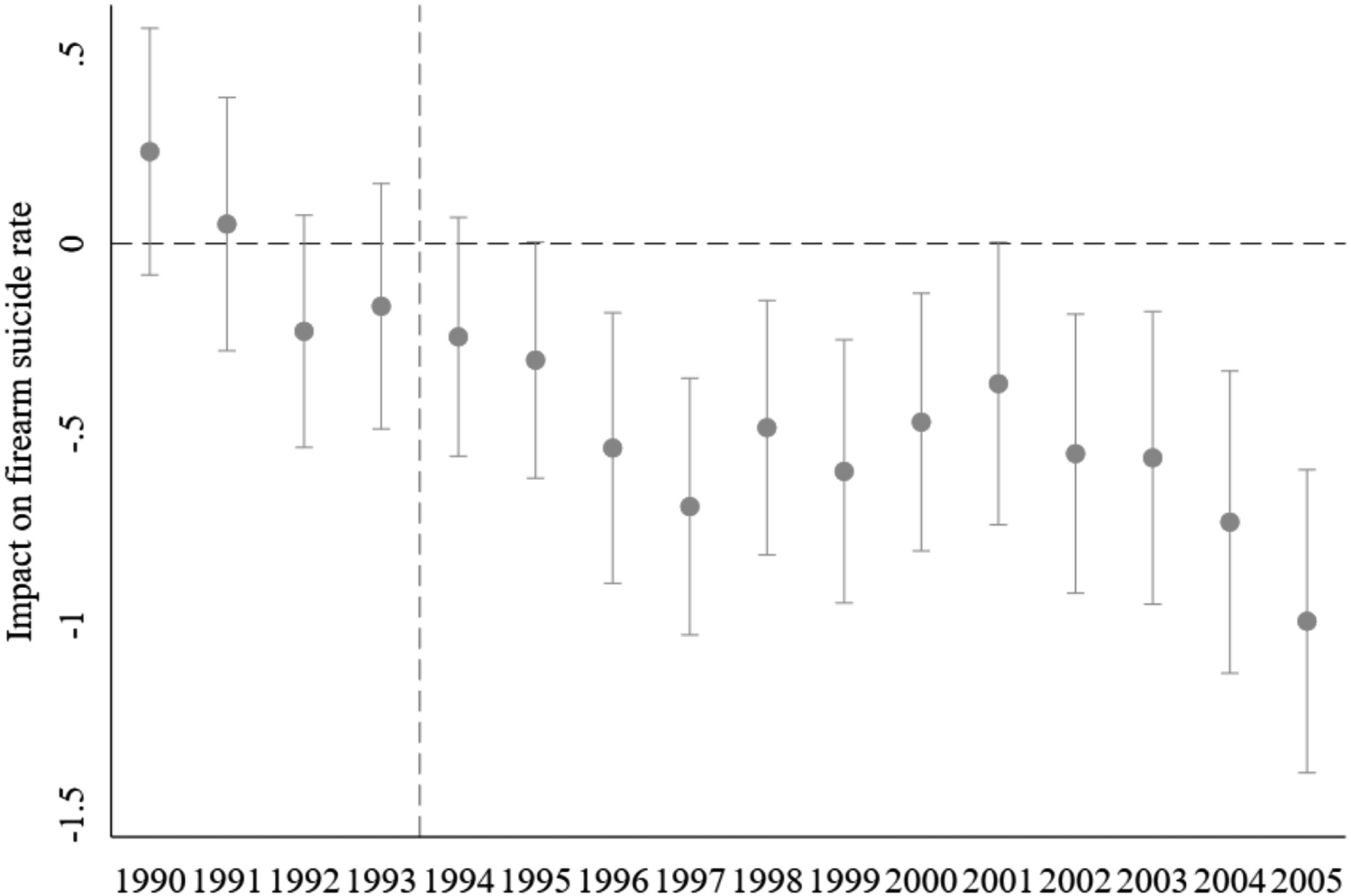
Our difference-in-differences framework described above relies on the parallel trends assumption. That is, trends in suicide rates in counties that had Walmarts prior to the policy changes were parallel to those in counties without Walmarts and, in the absence of Walmart's policy change, would have remained so. If this is not the case, then the estimated coefficients may simply be picking up on pre-existing trends and not a break from the pre-policy dynamic. To test this assumption, Online Appendix Figure 1 plots the treatment effect for each year of the 1994 analysis. Prior to the policy change, there should be no measured treatment effect and, indeed, there are no significant coefficients prior to the policy's enactment. A joint test of significance finds no evidence that the total pre-policy effect differs from zero. However, we do find evidence for some specifications that the pre-policy year treatment effects are not jointly all equal. Additional tests of the parallel trends assumption (including synthetic controls analysis) are discussed in the Online Appendix.
Data
Data on county-level suicide and homicide rates come from the Center for Disease Control (CDC) Compressed Mortality Files. This dataset provides population, firearms suicides, firearms homicides, non-firearms suicides and non-firearm homicides data at the county level from 1989-2016.A17
As a proxy for whether a county was affected by Walmart's 1994 policy change, we use whether Walmart had operated any stores in a given county by 1993.Reference Holmes10 Some of these stores may have closed by the end of the treatment period, and not all of these stores necessarily sold handguns prior to 1994, but these data provide the best available proxy for whether a county contained a Walmart that sold handguns prior to 1994 (and thus was affected by Walmart's 1994 policy change). This dataset does not include stores operated in Alaska or Hawaii, so these states are excluded from the analysis of the 1994 policy change.
For Walmart's 2006 decision not to sell firearms in some stores, we use Bureau of Alcohol, Tobacco, Firearms, and Explosives (ATF) FFL listings to determine whether a given county had a Walmart FFL in January 2006 (prior to the policy change, which was announced in April 2006).A18 Using these same data, we also observe whether a county lost a Walmart FFL once the policy went into place.
In addition to the main treatment variables described above, we use separate control variables in some of our regressions, including county population density, county unemployment rate, the share of counties' population that are (separately) veterans, white, black, age 20-64, age 65 or older, male, Hispanic, and living below the poverty line.11 As a crude measure of state law, we use an index from Everytown for Gun Safety that tracks the number of gun control laws in a given state and year. Finally, following Steelesmith, we use Census County Business Patterns data to construct a measure of social capital based on the number of recreational, personal service, religious and civil organizations per 100,000 residents. Sources for additional controls used in robustness checks are described in Appendix.
For each analysis, we filter to counties that appear in the mortality data in each year of that analysis (1989-2005 for 1994 and 1996-2016 for 2006). This amounts to 3,129 counties in the 1994 analysis and 3,134 counties in the 2006 analysis. For regressions that contain controls, we only include counties that have controls data for all years (1990-2005 for 1994 and 1996-2016 for 2006). This amounts to 2,838 counties in the 1994 analysis and 3,089 counties in the 2006 analysis.
Results
1994 Treatment Estimates
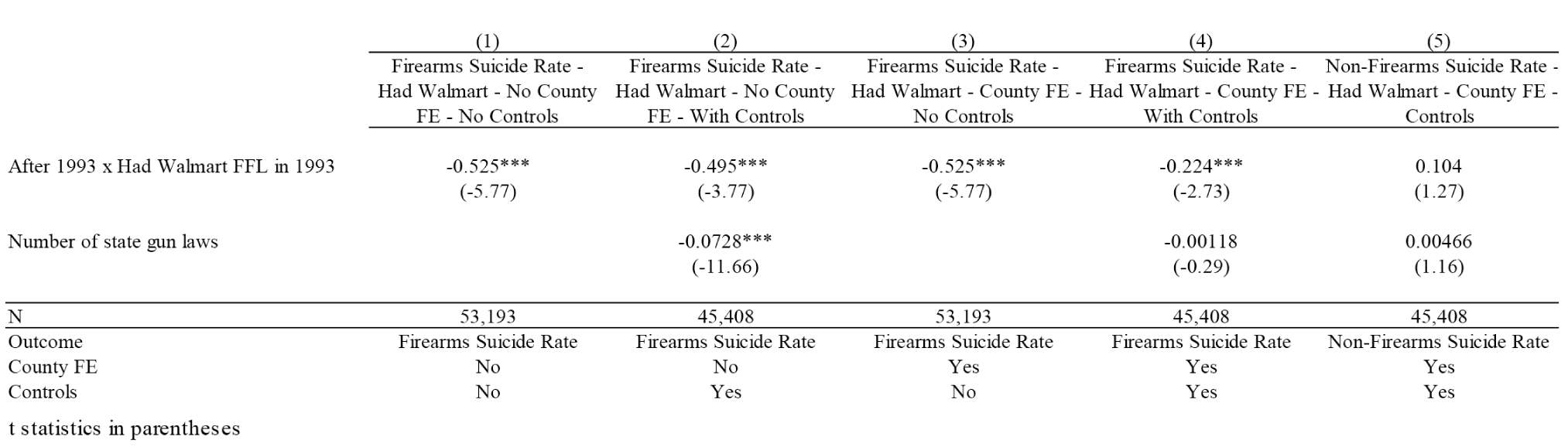
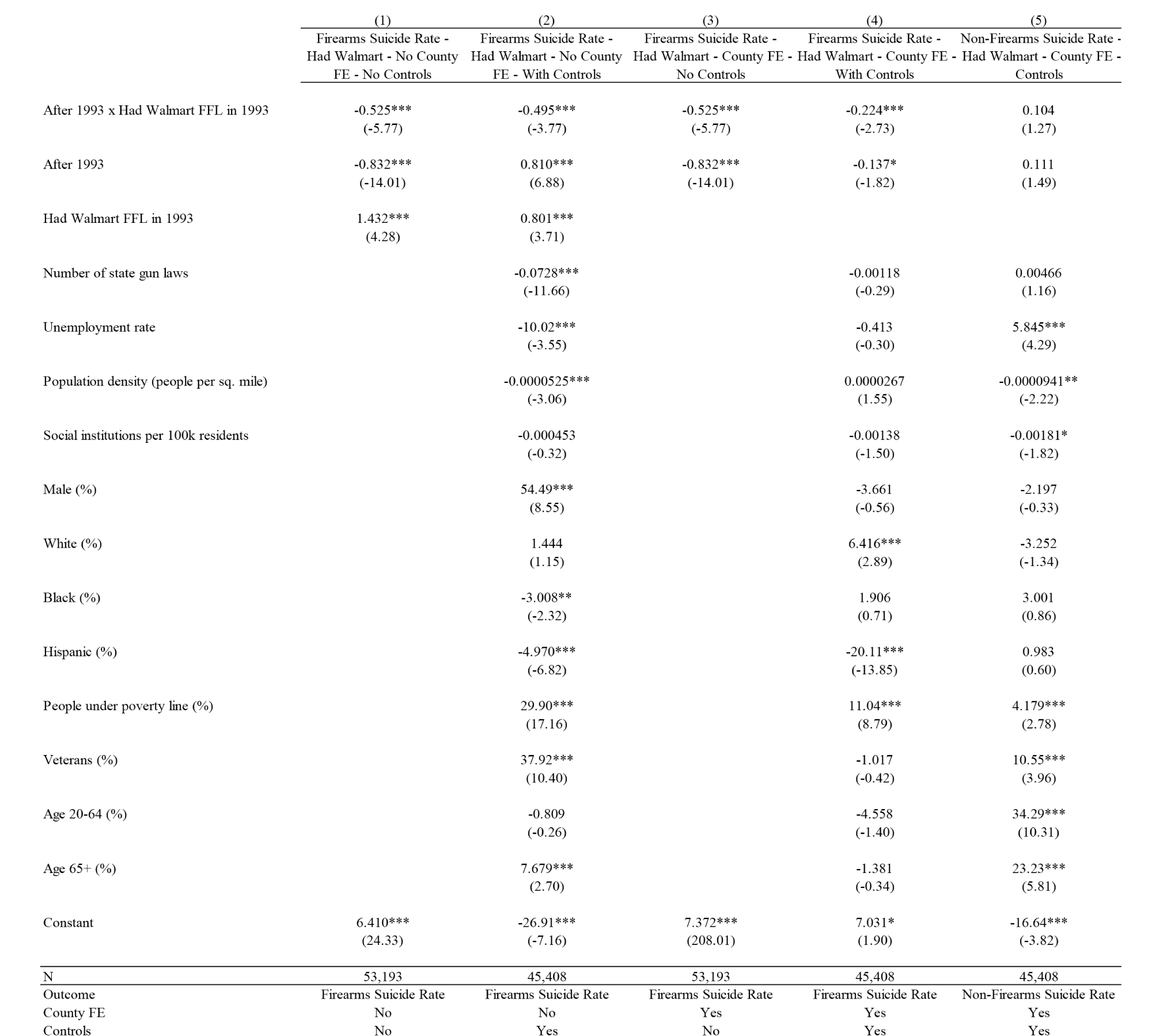
Table 1 reports the core results of our difference-in-difference analysis concerning Walmart's discontinuation of handgun sales (with full regression estimates reported in Online Appendix Table 1). Specifications 1-4 show the four possible permutations of including or excluding county-fixed effects and the 14 control variables described above. For example, Specification 1 excludes both county fixed effects and the control variables — but includes uninteracted dummy variables indicating whether the county had a Walmart in 1993 and whether the observation was after the policy took effect. Table 1 reports our estimates of the variable of interest (the interaction between these two indicator variables) which represents the policy's treatment effect on suicide rates. We find for 1994-2005 that counties that had a Walmart in 1993 experienced 0.525 fewer suicides per 100,000 residents than did counties in those years which didn't start off having a Walmart and this estimate is highly significant (p. < 1%). This estimate represents a 7.5% reduction from the baseline rate weighted average rate of 7.82 suicides per 100,000 residents that these counties experienced in the years before the policy took effect. The reduction translates annually to 998 lives saved in these counties or almost 12,000 lives saved for the 12 years estimated.
Estimates of Walmart's Decision to Stop Selling Handguns on Suicide Rates, 1989-2005

t statistics in parentheses
* p < 10%,
** p < 5%,
*** p < 1%.
Specification 2 reruns the same regression, but adds the additional control variables discussed above. The figure shows that the estimated treatment effect of the policy remains substantial (0.485 fewer suicides per 100k) and statistically significant. The figure shows that the Everytown Gun Control Law index was estimated to be correlated with reductions in the county suicide rate and is also highly significant (p. < 1%). While this measure of gun control laws is less well-identified than our DiD estimate of Walmart policy change, our estimated coefficient implies that a one-standard deviation increase in this gun law index is associated with 0.884 fewer suicides per 100k. To save space, we report the remaining control coefficients in the Online Appendix.
Specification 3 of Table 1 excludes the control variables of the second specification and instead estimates more than 3,000 county fixed effects. Even after estimating county-specific suicide tendencies, we still find that counties that had a Walmart in 1993 experienced 0.525 fewer suicides per 100,000 residents than did counties in those years which didn't start off with a Walmart. This estimate remains highly significant (p. < 1%).
Specification 4 combines both the time-variant controls and the county-fixed effects and continues to estimate a highly significant suicide reduction of 0.234 suicides per 100k residents (p. < 1%). This somewhat smaller treatment effect translates to 425 lives saved in these counties annually — or more than 5,100 lives saved cumulatively for the 12 years estimated. The figure also shows that in this specification, the Everytown Gun Control Index is no longer significant, but this result might simply be an artifact of the tendency of the index to be highly collinear with the county-fixed effects. This collinearity should decrease the precision of our estimate of the effect of gun laws on gun suicide rates, but should not affect the estimate of our main treatment effect.
Finally, Specification 5 provides evidence that Walmart policy did not cause an increase in non-gun suicides. This specification regresses the non-firearm suicide rate onto the same controls used in Specification 4 and finds that the Walmart policy caused no significant change. Stepping back, Table 1 provides evidence that Walmart's decision to eliminate handgun sales had a substantial and statistically significant impact in reducing the suicide rate, saving between 425 and 998 lives each year, without causing an increase in non-firearms suicides.
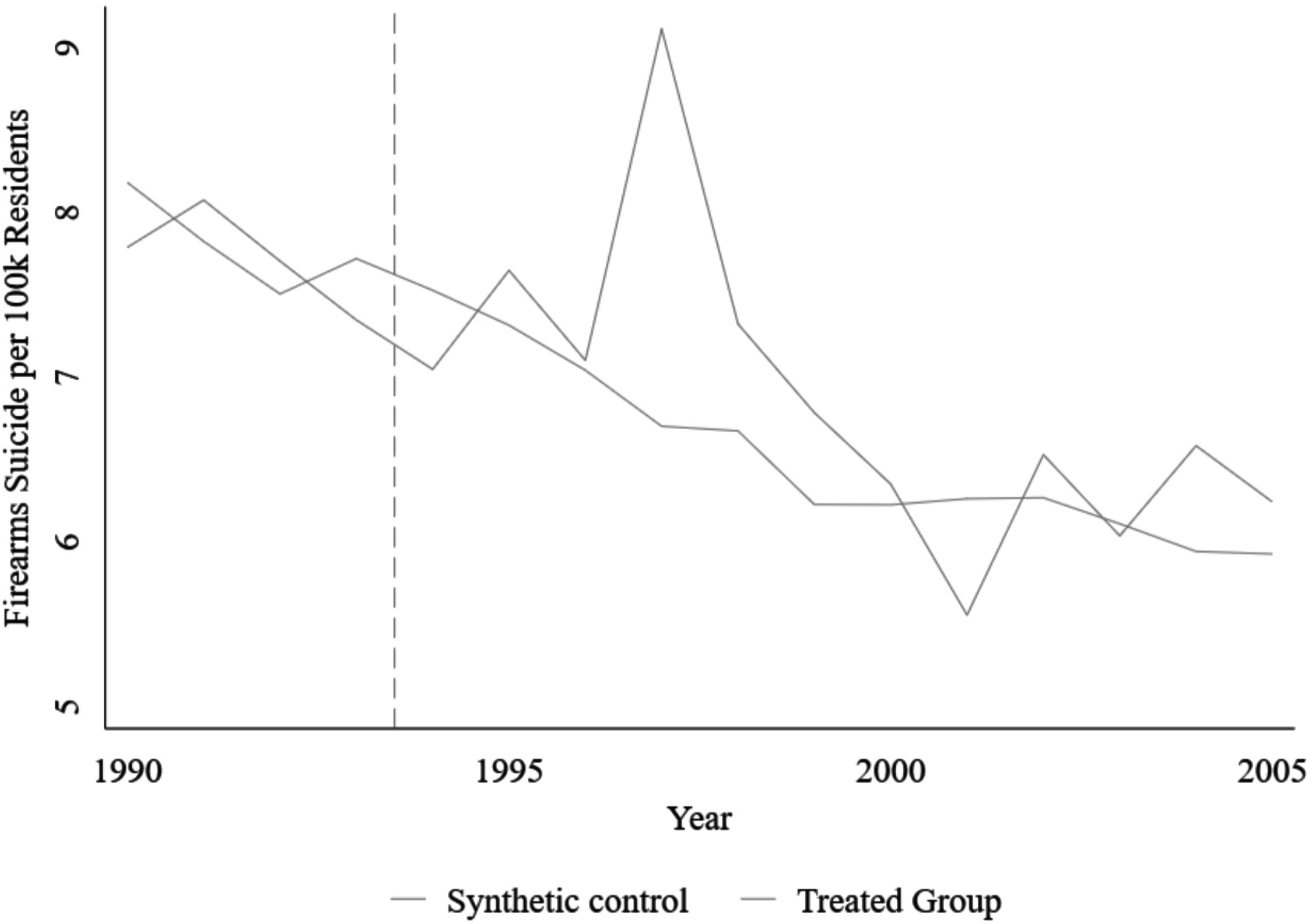
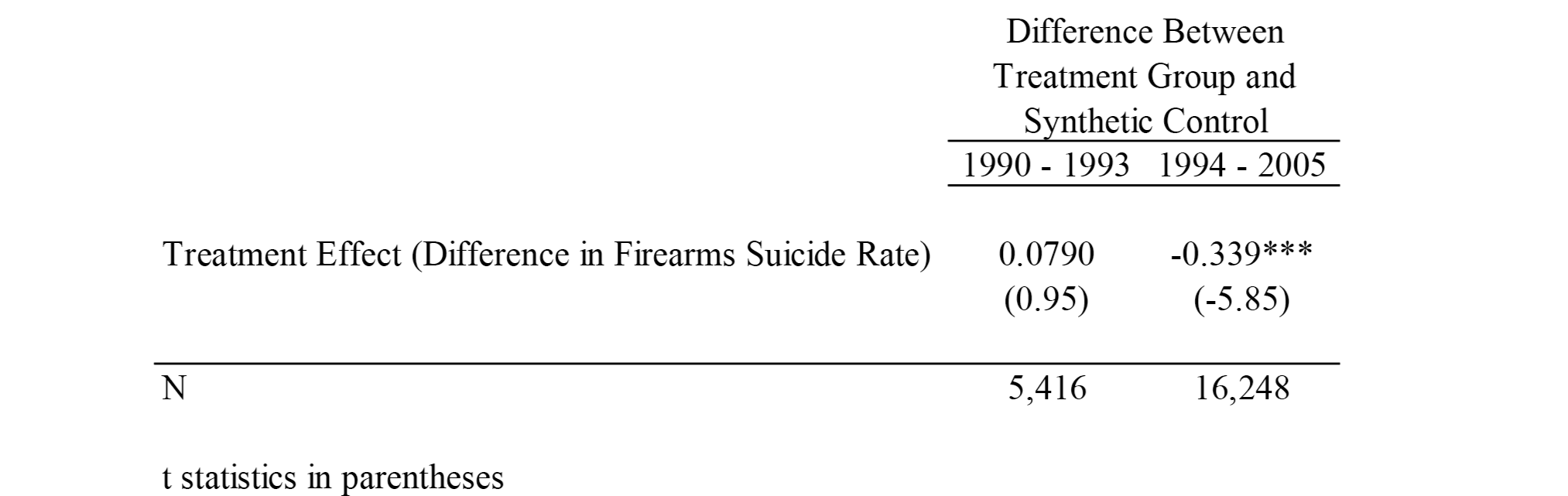
To ensure that pre-existing trends are not driving our results, we also conduct a synthetic control analysis, which finds that counties with a Walmart experienced an average reduction of 0.339 suicides per 100,000 residents after Walmart ended handgun sales. Synthetic controls results are presented in full in the Appendix.
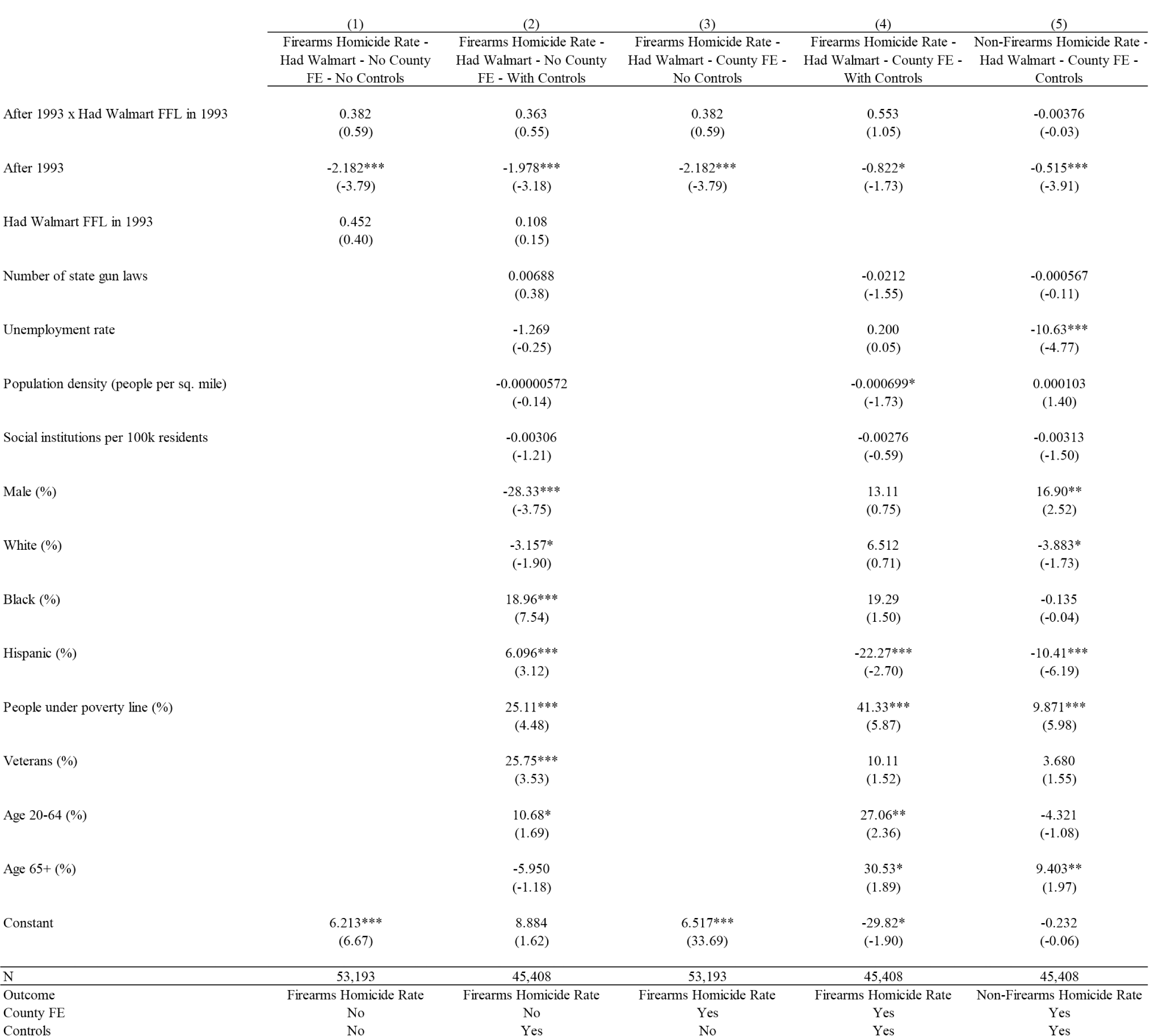
While we find that Walmart's policy change did have an impact on firearms suicide rates, we find no effect of the policy on either firearm homicide rates or non-firearm homicide rates. Online Appendix Table 3 presents our full estimates of the 1994 policy change on homicide rates.
1994 Heterogeneous Treatment Estimates
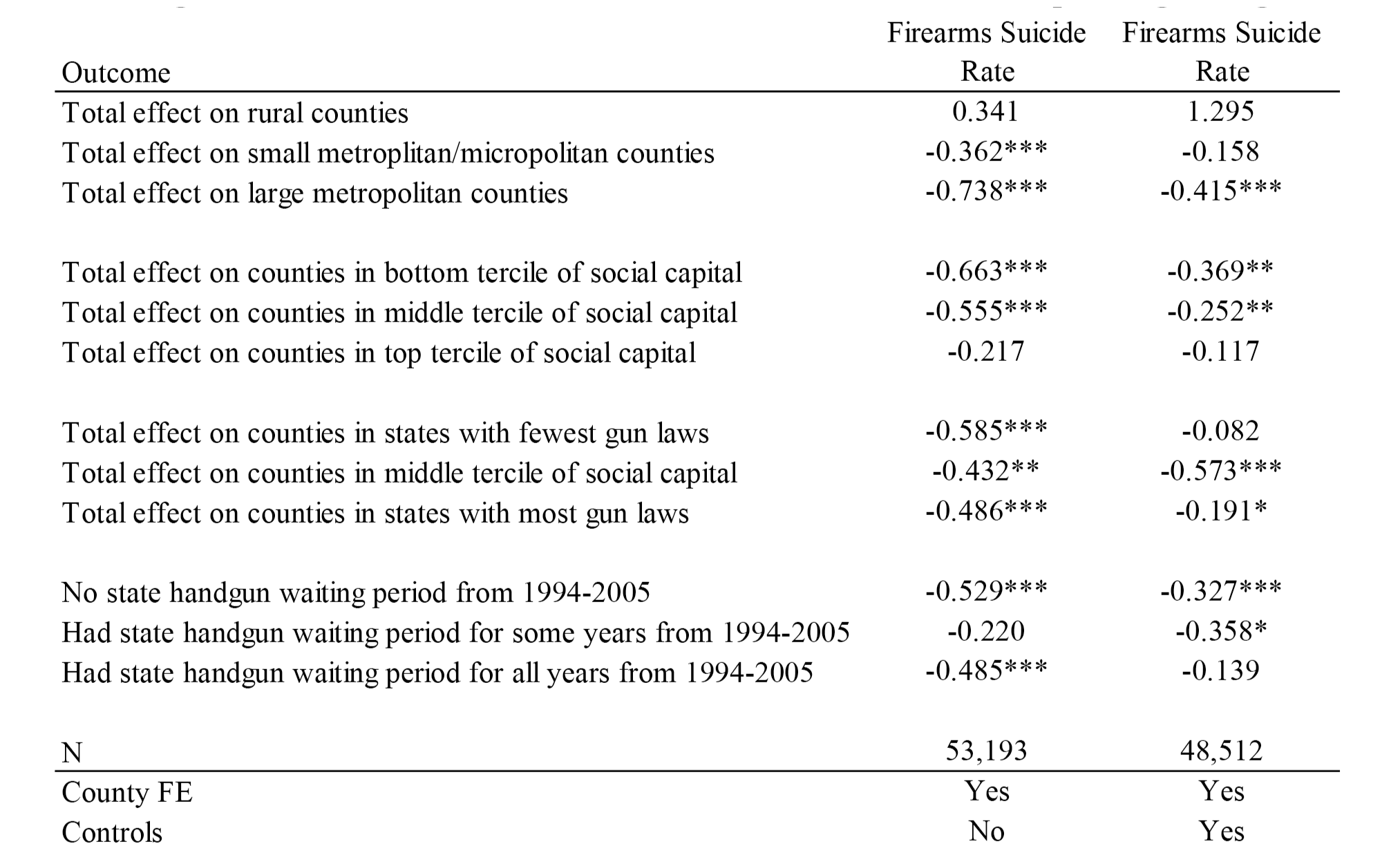
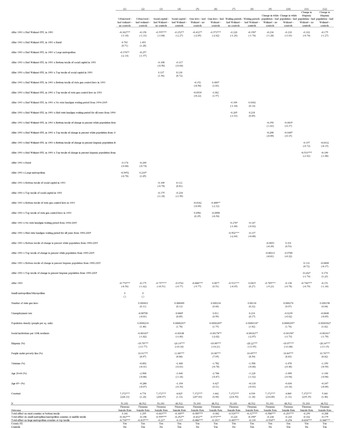
We next explore whether these estimated treatment effects of Walmart's 1994 policy varied across different types of counties. Table 2 shows the results from specifications featuring county fixed effects (analogous to Specifications 3 and 4 in Table 1) that interact the DiD treatment effects with dummy variables indicating a county's population type, social capital type, and the number of its gun laws. The figure shows the largest treatment effects are for large metropolitan counties. For example, in the first specification (with county fixed effects and no controls), the treatment effect for large metropolitan counties is estimated to be -0.738 suicides per 100k residents (p. < 1%), while the treatment effect for rural counties is not statistically distinguishable from 0. This may be due to the fact that, at least among adolescents, handguns are used in a larger proportion of suicides in metropolitan areas than they are in rural areas.A19
Heterogeneous Treatment Effects for Walmart's 1994 Decision to Stop Selling Handguns, 1990-2005

Note:
* p < 10%,
** p < 5%,
*** p < 1%
Table 2 also estimates that counties in the lowest tercile of social capital experienced the largest benefit from Walmart's 1994 policy change. For example, in the first specification, the treatment effect for the third of counties with the lowest social capital measures is estimated to be 0.741 lives saved per 100k residents, while the treatment effect for the third of counties with the highest social capital measures is not statistically distinguishable from 0.
Somewhat analogously, counties with weaker gun control laws may create more opportunities for Walmart's supply restriction to have an impact. Table 2 provides some support for this conjecture. In Column (1) of Table 2, counties with the lowest tercile of the gun laws were estimated to have a the largest treatment effect of 0.585 lives saved per 100k residents, compared with a treatment effect of 0.486 lives saved in counties with the highest number of gun laws (however, possibly because of the collinearity between county fixed effects and several of the additional control variables, this estimated effect is not distinguishable from zero in Column (2)).
This article suggests that Walmart's decision to suspend handgun sales at all of its 1,975 stores in 1994 was responsible for preventing between 500-1,000 gun suicides annually. We also find evidence, albeit less robust, that Walmart's later decision to end rifle and shotgun sales at some of its stores reduced the firearms suicide rate in counties in which Walmart did not subsequently reverse course. And while our identification strategy for investigating the causal effect of state gun laws is not as well identified, we join a host of other studies finding that stronger gun control laws are associated with substantial and statistically significant reductions in suicide as well.
2006 Treatment Estimates
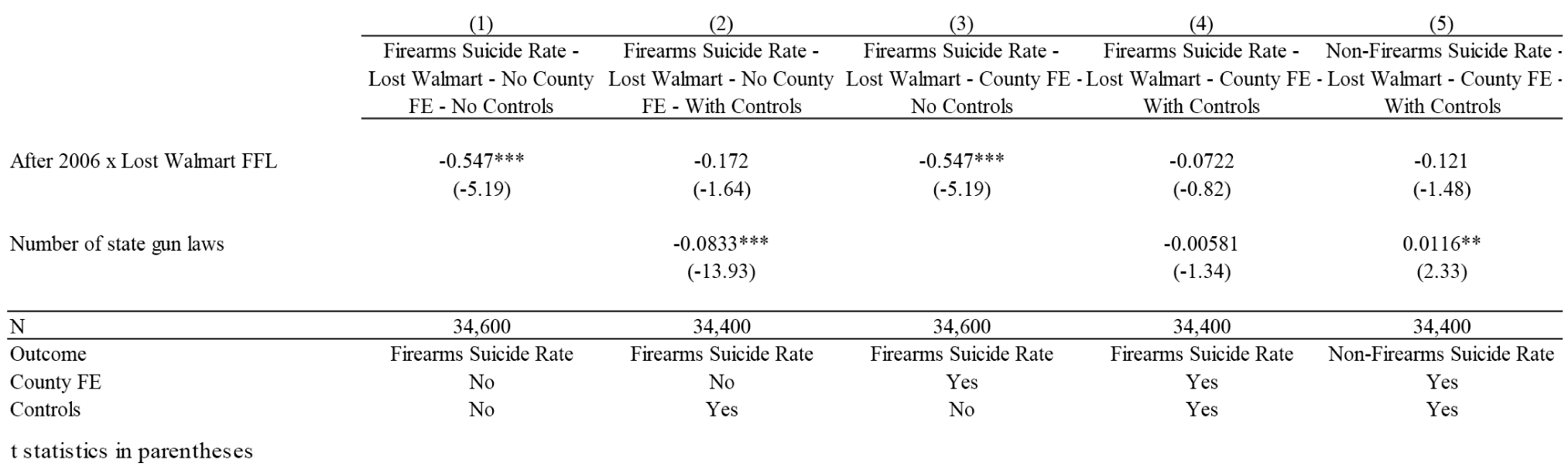
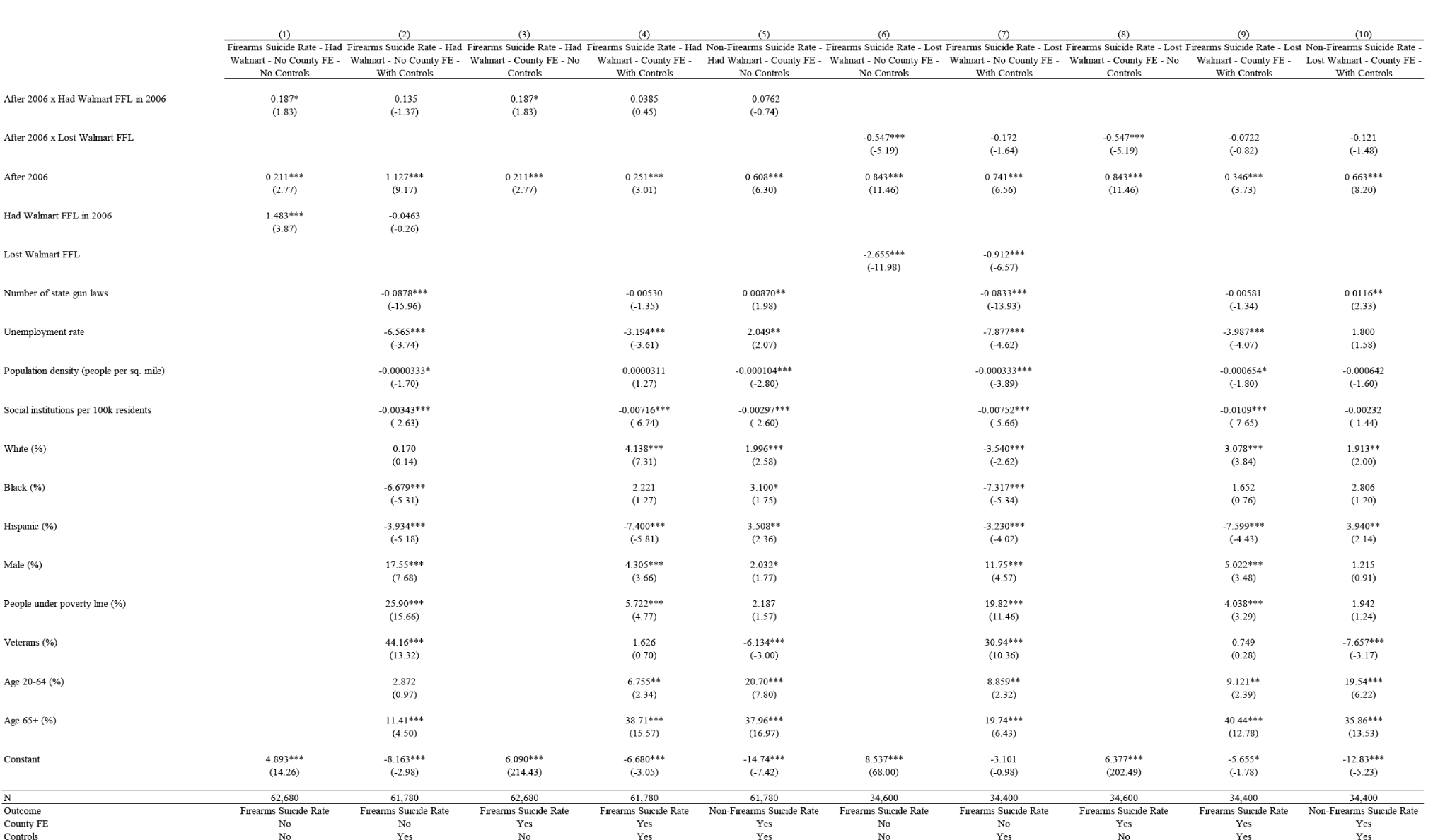
Finally, to estimate the impacts of Walmart's 2006 decision to discontinue rifle and shotgun sales at over half of its stores and its subsequent decision to expand the number of its stores selling firearms, Table 3 reports DiD treatment estimates analogous to the specifications we used to estimate the 1994 treatment effects in Table 1. In Specification (1), which excludes both county fixed effects and our other controls, we find for 2007-2010 that counties that lost a Walmart FFL in 2006 experienced 0.547 fewer suicides per 100,000 residents than did counties in those years that had, but did not lose, a Walmart FFL (p. < 1%). However, only two of the four specifications in Table 3 find a statistically significant reduction on suicides associated with Walmart's 2006 policy change, as the effect disappears when control variables are included. Specification (2) estimates that the policy caused a reduction in the suicide rate of 0.172 suicides per 100k residents (p. > 10%). This specification gives us our most reliable estimates of the impact of gun control laws — and again shows that the number of gun laws is associated with statistically significant reduction in the suicide rate similar in magnitude to the gun law effect found in Table 1 (-0.0833 vs. -0.0728).
Estimates of Walmart's Decision to Stop Selling Rifles & Shotguns in Some Stores on Firearm Suicide Rates, 1996-2016

t statistics in parentheses
* p < 10%,
** p < 5%,
*** p < 1%.
Overall, the results reported in Table 3, as well as those reported in Online Appendix Table 5, suggest that there is not robust evidence that Walmart's policy changes in 2006 and 2011, taken as a whole, reduced the suicide rate. The absence of an effect on suicide might be due to the fact that suicide by rifle is less prevalent than suicide by handgun, or because the Walmart policy of ending long gun sales in some of its stores was not maintained for a sufficient number of years in a sufficient number of stores to have a measurable impact.
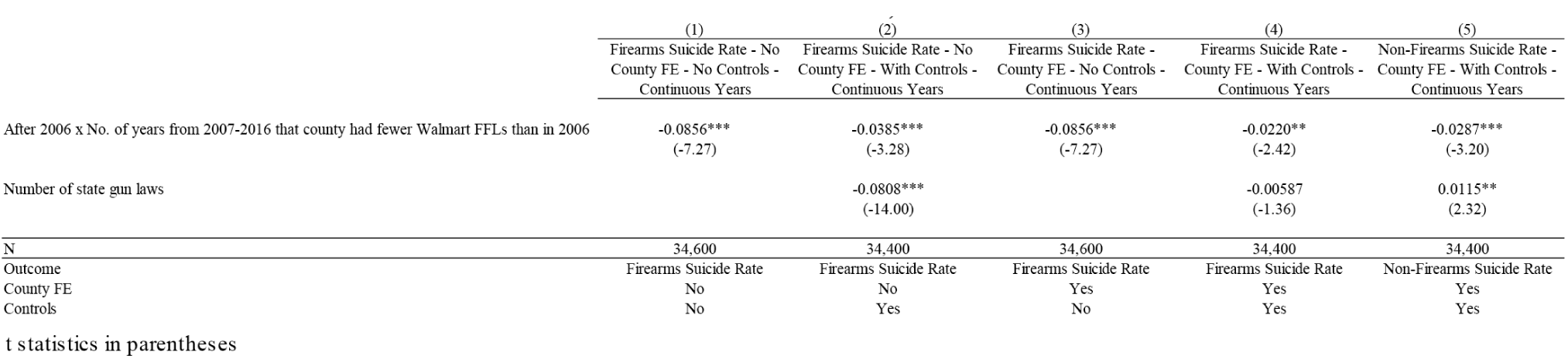
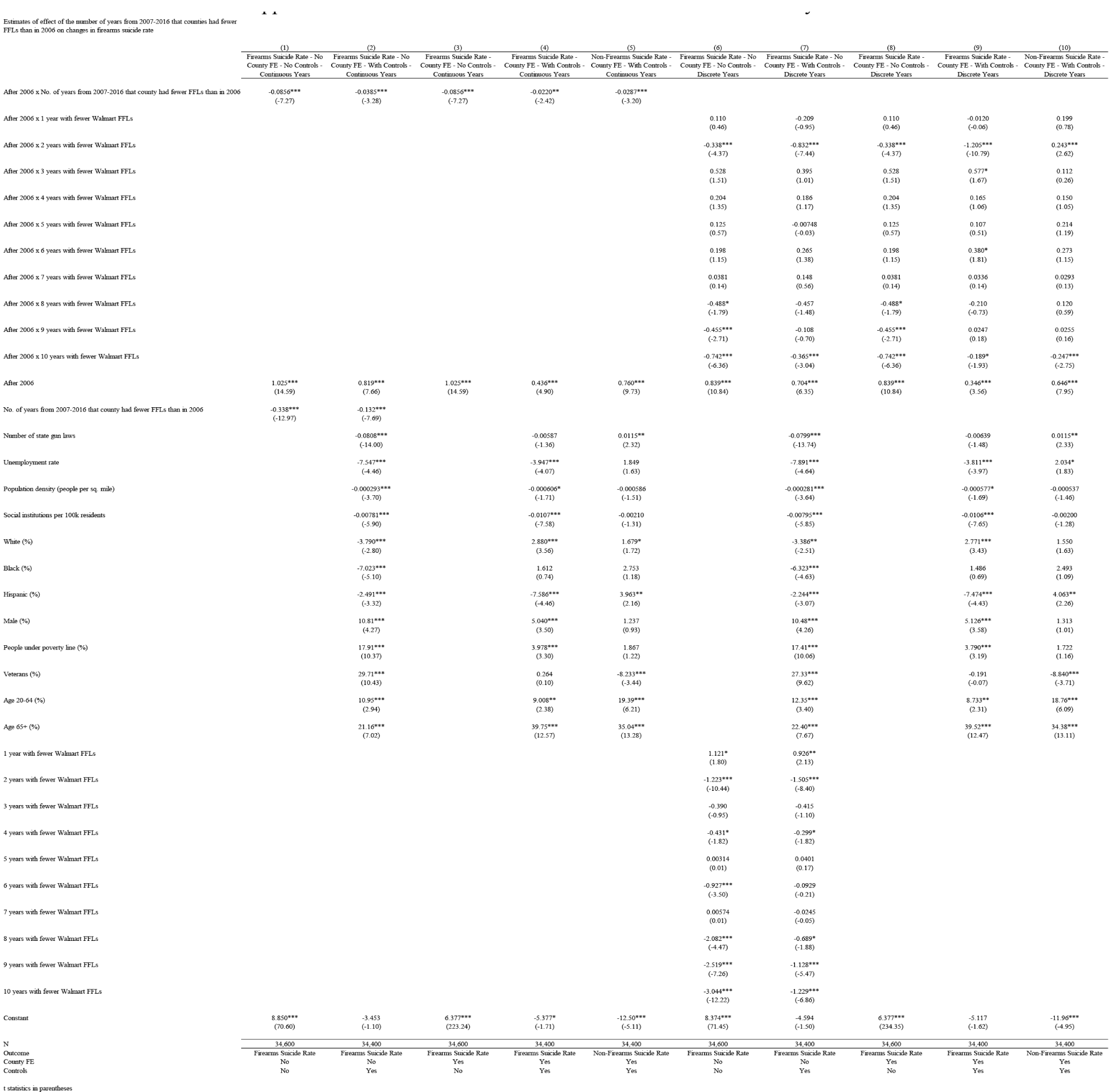
To determine whether Walmart's 2006 policy change had an effect on suicide rates in counties that experienced a reduction in Walmart FFLs for longer periods, we run several specifications replacing our binary treatment variable with a continuous measure of the number of years from 2007-2016 that a county had fewer Walmart FFLs than it did in 2006. Table 4 presents the results from these regressions, which are analogous to those presented in Figures 2 and 4. In each specification, we find that for each year that a county had fewer Walmart FFLs than it did in 2006, the county experienced a statistically significant (p. < 1%) decrease of between, on average, 0.0220 and 0.0856 suicides per 100,000 residents. However, we also find a statistically significant reduction in the non-firearms suicide rate (p. < 1%). We present additional intensity of treatment specifications that employ dummy variables for partial treatment and years of partial treatment in the Online Appendix.
Intensity of Treatment Estimates of Walmart's Decision to Stop Selling Rifles & Shotguns in Some Stores on Suicide Rates, 1996-2016

t statistics in parentheses
* p < 10%,
** p < 5%,
*** p < 1%.
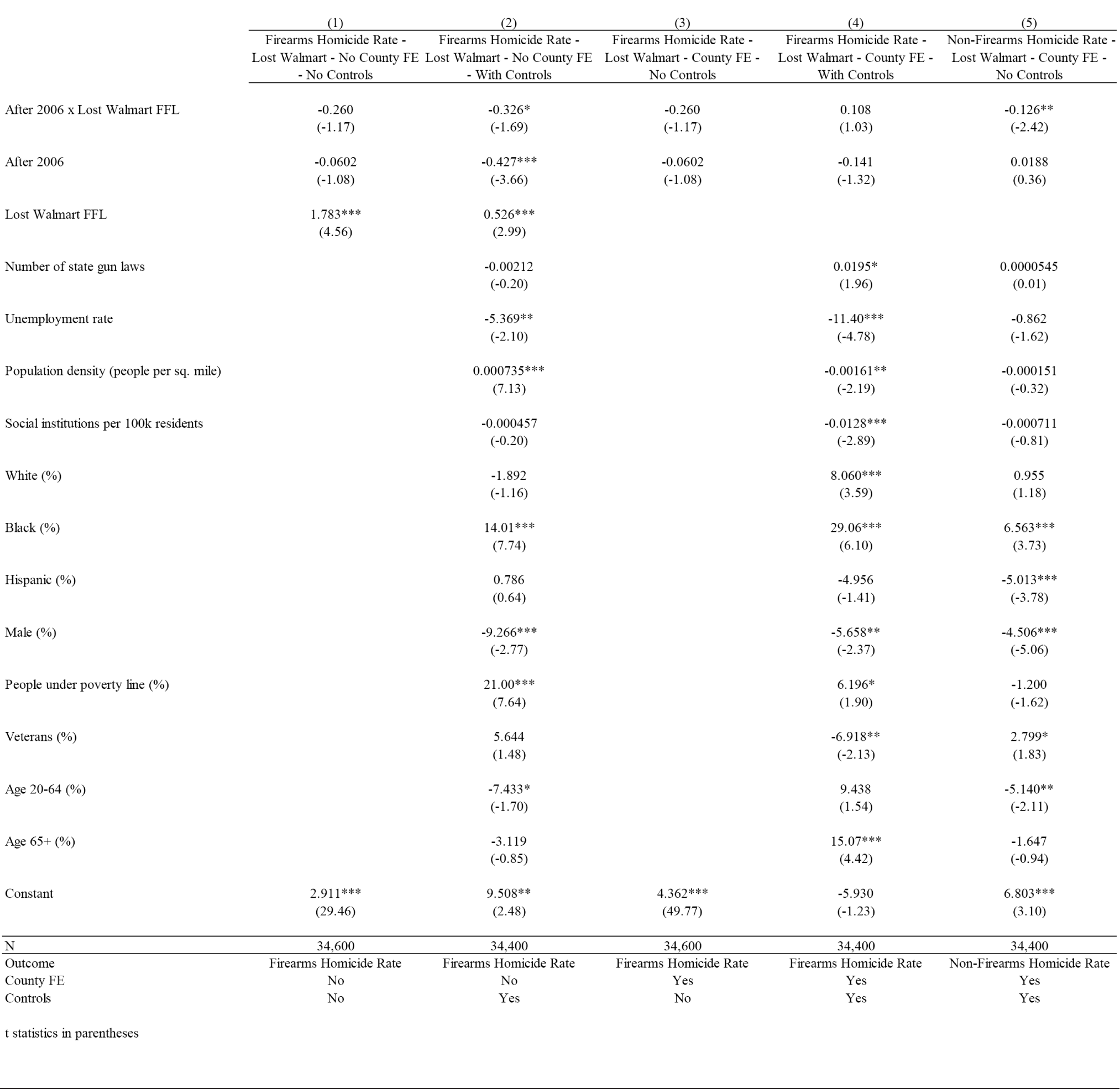
Similar to the analysis of Walmart's 1994 decision, we do not find robust evidence that Walmart's 2006 and 2011 decisions on the number of stores selling rifles and shotguns had an effect on firearms homicide rates. A full set of results for the effect of Walmart's policy on firearms homicide rates can be found in Online Appendix Table 9.
Limitations
This study is limited in part by the crude measure of gun controls used as a control variable. We do not investigate the effect of categories of gun laws and instead use an aggregate measure of the number of gun laws in a state. We are also limited by the fact that we do not measure whether counties that saw an increase in non-Walmart FFLs after Walmart's policy changes differed in their treatment effect from counties that did not see an increase in non-Walmart FFLs.
Conclusion
This article suggests that Walmart's decision to suspend handgun sales at all of its 1,975 stores in 1994 was responsible for preventing between 500-1,000 gun suicides annually. We also find evidence, albeit less robust, that Walmart's later decision to end rifle and shotgun sales at some of its stores reduced the firearms suicide rate in counties in which Walmart did not subsequently reverse course. And while our identification strategy for investigating the causal effect of state gun laws is not as well identified, we join a host of other studies finding that stronger gun control laws are associated with substantial and statistically significant reductions in suicide as well.A20
The evidence that restricting the presence of FFLs can reduce gun suicide (without increasing non-gun suicide) also might suggest different forms of public intervention. While gun-control laws are often directed at who can buy, more attention might be paid to who can sell. For example, several major cities have used imposed zoning requirements that have substantially reduced the number of FFLs within their jurisdictions.Reference Cook12 Simply imposing a local sales tax may cause FFLs to close or move beyond a city's limits — as was the case when Seattle implemented a tax on firearms and ammunition.Reference ElinsonA21
Our estimates underscore the possibility that private decisions can play an important role in mitigating the country's gun suicide crisis. Corporate leaders at other substantial retailers, such as Bass Pro Shops (which still sell handguns) and Dick's Sporting Goods (which has substantially reduced firearm sales), would do well to take note. Customers and employees of these companies would also be wise to leverage their influence to enact change.
APPENDIX Tables and Figures
Full Estimates of Walmart's Decision to Stop Selling Handguns on Suicide Rates, 1989-2005

We note that the decrease in the interaction term coefficient in Specifications (2) and (4) relative to Specifications (1) and (3) appears to be driven at least in part by controlling for the share of each county's population that is white and Hispanic (separately). In the heterogeneous treatment effect regressions presented in Appendix Table 2, we include columns for change in the share of the population that is white and change in the share of population that is Hispanic (separately). We find that counties with the largest increase in Hispanic population share and largest decrease in white population share saw the largest reductions in suicide rates.
Full Heterogeneous Treatment Effects for Walmart's 1994 Decision to Stop Selling Handguns, 1989-2005

To test for heterogeneous treatment effects, we employ the same framework as described for the DiD model, with the addition of interaction terms. between our main treatment effect and county density (large metropolitan/small metropolitan/rural), social capital (top/middle/bottom tercile), number of gun laws (top/middle/bottom tercile), share of uninsured individuals (top/middle/bottom tercile, for the 2006 analysis only), and the number of FFLs in a county prior to the policy change (top/middle/bottom tercile, for the 2006 analysis only).
To implement this analysis, we estimate the equation:

Where h is the heterogeneous treatment category and  is an indicator for each category of the heterogeneous treatment variable. To avoid collinearity, the middle category/tercile of each heterogeneous treatment is excluded from the regression, so Ω is the treatment effect for this excluded category and the two β (from the two remaining values of
 ) are the differences in treatment effects between the excluded category and each of the non-excluded categories.
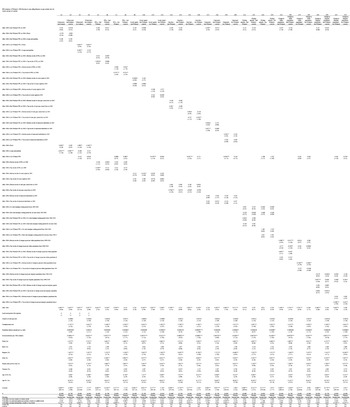
Appendix Figure 2 reports the full regression estimates underlying Main Article Table 2. We also report analogous estimates for the 2006 policy change below in Appendix Figure 8. Using F-statistics to test for equality of treatment among the subgroups presented in Main Article Table 2, we find marginally significant evidence for difference of treatment for each specification in Column (1), but no statistically significant evidence of treatment for any specification in Column (2).
DiD Estimates for had any Walmart FFLs vs. had no Walmart FFLs, 1990-2005

Graph of Synthetic Control Estimates for Firearms Suicide Rate

Full Estimates of Walmart's Decision to Stop Selling Handguns on Homicide Rates, 1989-2005

To test the parallel trends assumption underpinning our difference-in-difference framework, Appendix Figure 5 plots the treatment effect for each year of the 1994 analysis. The model presented in Appendix Figure 5 is analogous to Figure 2, Specification (3) with the treatment period dummy variable replaced by year dummy variables. Prior to the policy change, there should be no measured treatment effect and, indeed, there are no significant coefficients prior to the policy's enactment. A joint test of significance finds no evidence that the total pre-policy effect differs from zero. However, we do find significant evidence that the pre-policy year treatment effects are not all equal. Additional tests of the parallel trends assumption are discussed in the Appendix. We also run these tests for models analogous to Figure 2 Specifications (1), (2), and (4). For Specification (1), we find no evidence that the total pre-policy effect differs from zero (p. = 0.86) or that the pre-policy year treatment effects are not all equal (p. = 0.12). For Specification (2), we find evidence that the total pre-policy effect differs from zero (p. = .01) and that the pre-policy year treatment effects are not all equal (p. = .01). For Specification (4), we find marginal evidence that the total pre-policy effect differs from zero (p. = .09) and statistically significant evidence that the pre-policy year treatment effects are not all equal (p. = .03). In each case, we find significant and negative effects on firearms suicide when aggregating across all years in which the policy was in place.
Synthetic Control Results for Firearms Suicide Rate

t statistics in parentheses
As a robustness check to address any concerns about our parallel trends assumption, we conduct a synthetic controls analysis of our 1994 results, as laid out in Abadie and Gardeazabal and Abadie et al. and expanded to multiple treated units in Donohue et al. and Dube and Zipperer.Reference Abadie, Gardeazabal, Abadie, Diamond, Hainmueller, Dube and ZippererA22
Estimates of Walmart's Decision to Stop Selling Rifles and Shotguns in Some Stores on Suicide Rates

Full Heterogeneous Treatment Effects for Walmart's 2006 Decision to Stop Selling Rifles & Shotguns at Some Stores

DiD Estimates for had any Walmart FFLs vs. had no Walmart FFLs, 1997-2016

This figure replicates the analysis presented in Appendix Figure 1. In this instance, we find no evidence of an effect on firearms suicide when aggregating across all years in which the policy was in place.
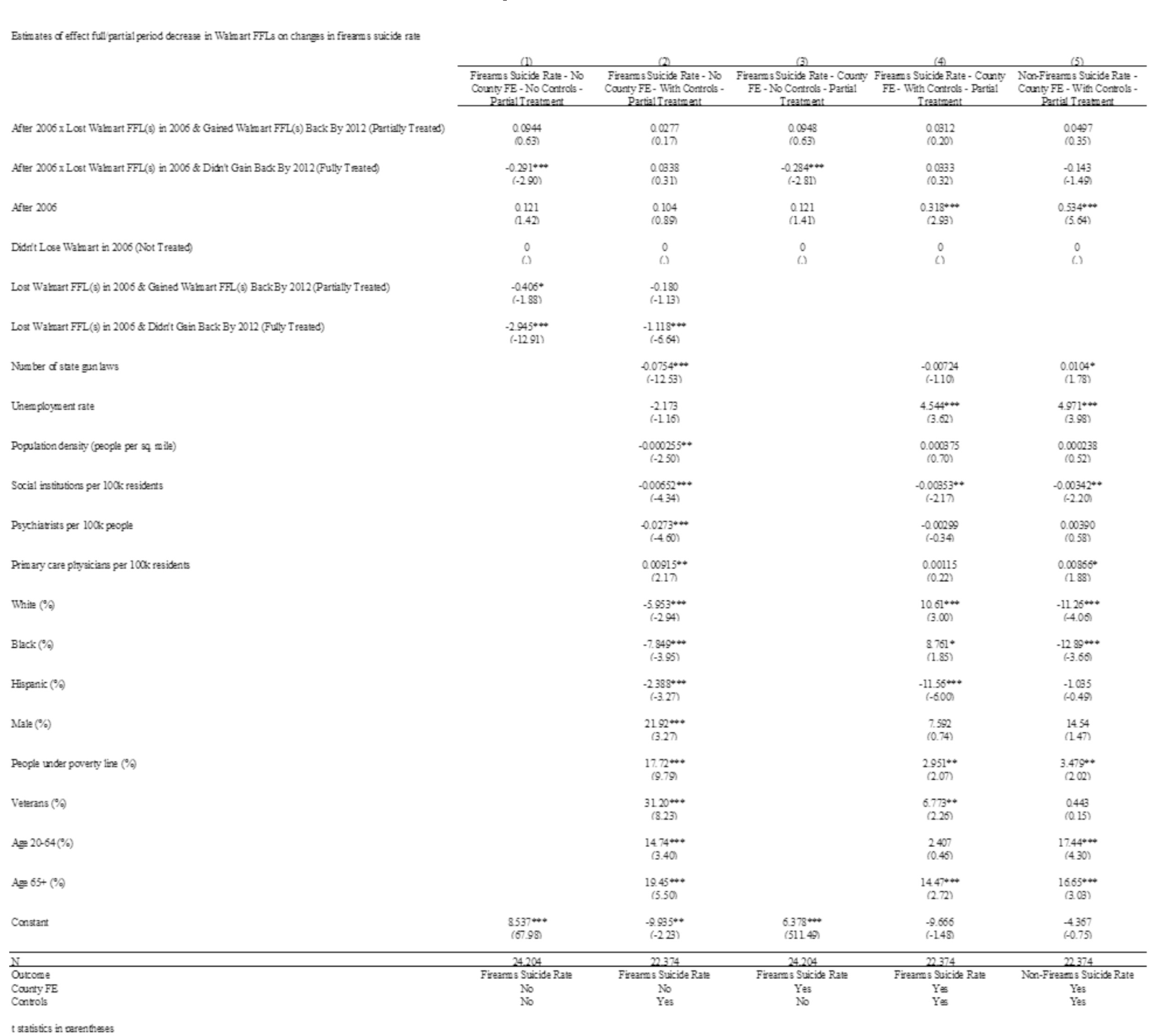
While the 1994 policy estimates in Main Article Table 1 did not distinguish between Walmart stores that were affected by the 1994 policy changes (because they originally were FFLs) and those stores that were not affected, Article Table 3's 2006 estimates only include counties that had a Walmart FFL in 2006 and distinguishes between Walmart stores that were affected by the 2006 policy changes (i.e. stopped selling rifles) and those that were not affected. In Appendix Table 7, we include analogous specification that test whether counties that had Walmart FFLs in 2006 (rather than those that both had and lost Walmart FFLs) had lower suicide rates than counties that did not have Walmart FFLs prior to the treatment period. These specifications also fail to find robust evidence that the 2006 policy caused a reduction in the suicide rate.
2006 Firearms Suicide Partial Treatment Analysis

2006 Firearms Suicide Years of Treatment Analysis

Full Estimates of Walmart's Decision to Stop Selling Rifles and Shotguns in Some Stores on Homicide Rates

t statistics in parentheses
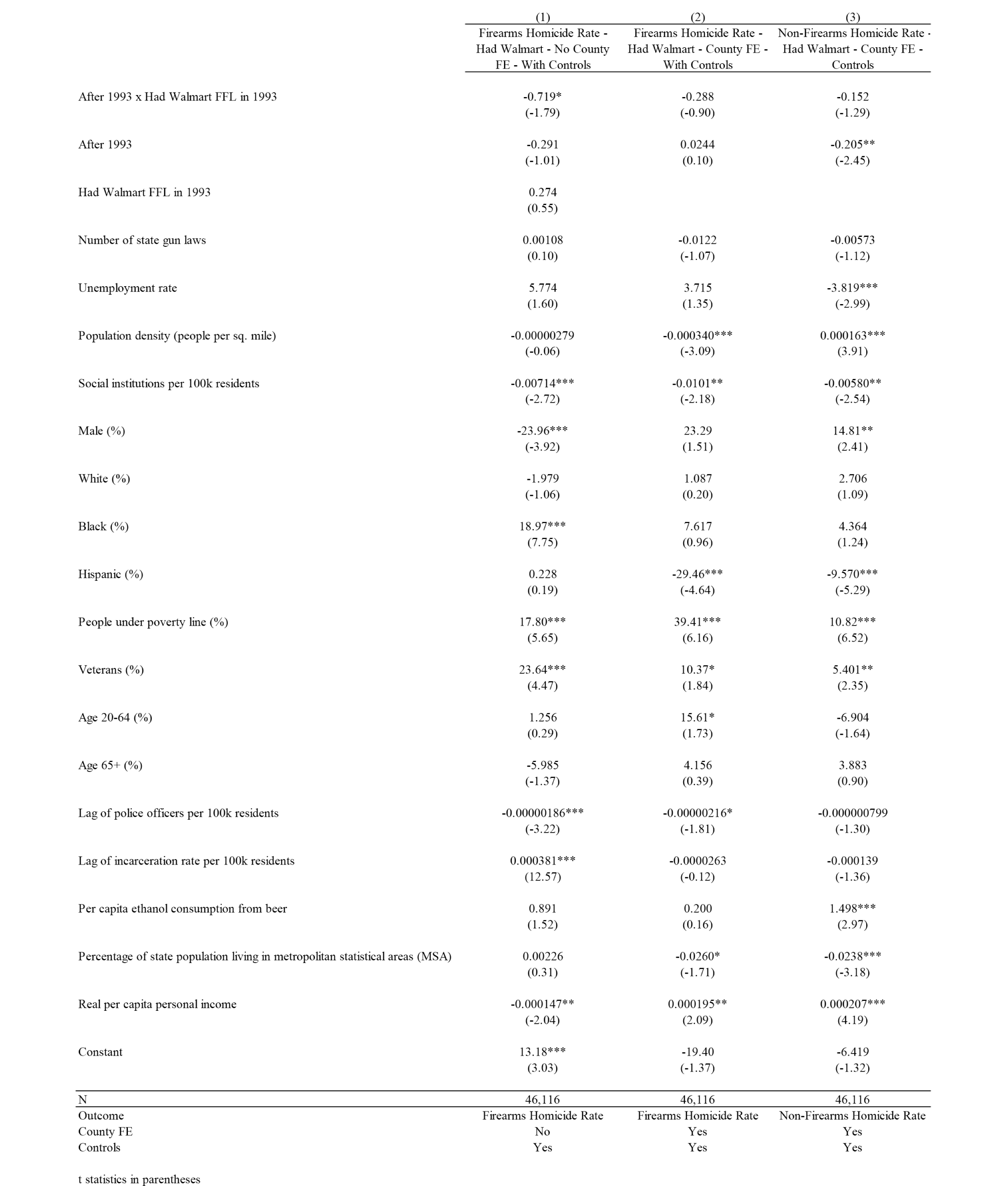
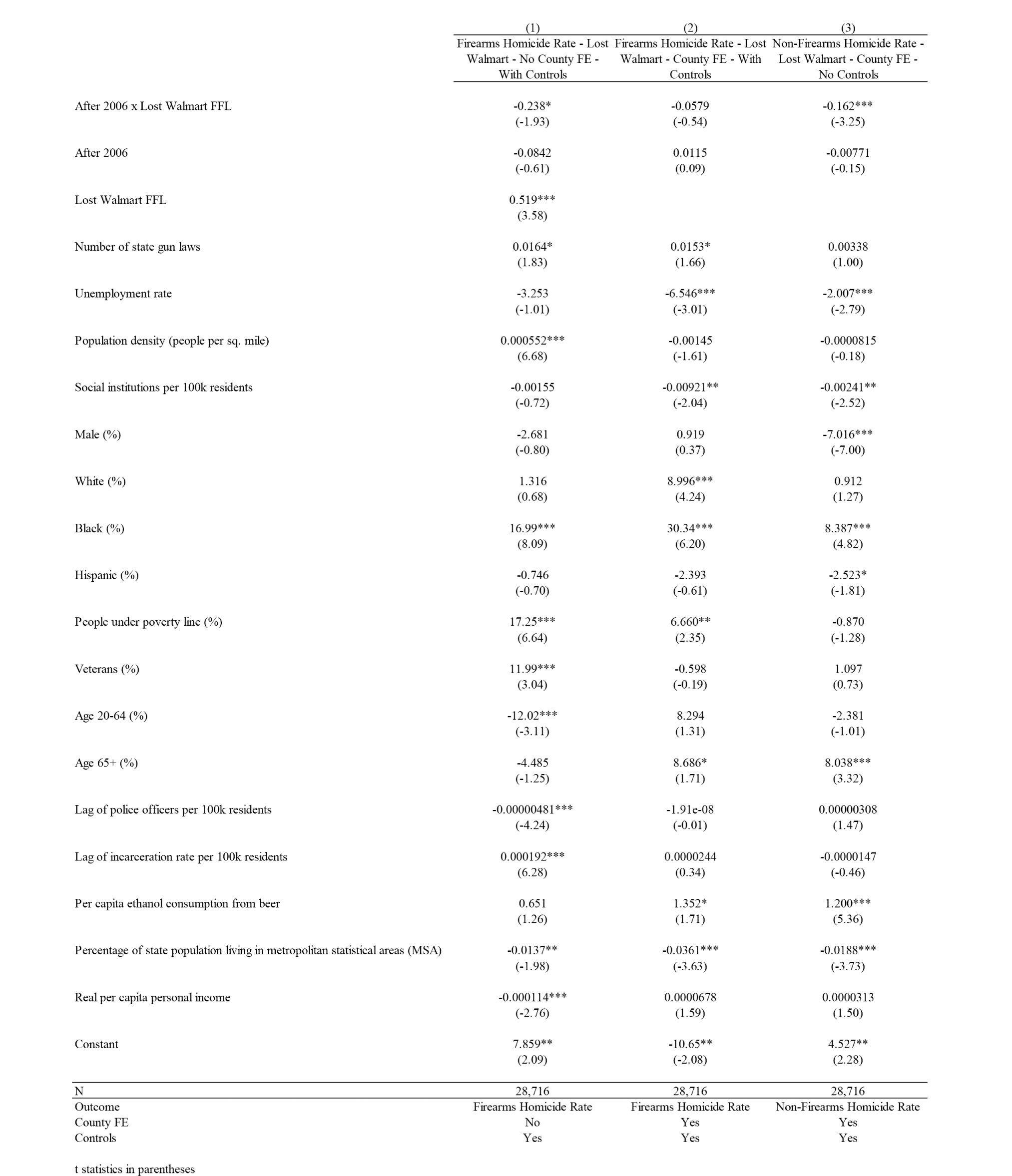
Appendix Tables 10 and 11 (pages 13-14) present additional robustness checks for the effect of Walmart's 1994 and 2006 policy changes on firearms homicide, respectively. Following Donohue et al., these regressions include additional variables that may influence firearms homicides. We control for the lagged number of police officers per 100,000 residents (from the Universal Crime Reports) and lagged incarceration rate per 100,000 residents (from the Vera Institute) at the county-level and per capita ethanol consumption from beer, percentage of state population living in MSAs, and real per capita personal income at the state level (each from Donohue et al. and aggregated from NIH, BEA, and ICPSR). Due to limitations on data availability, the analysis of the 2006 policy change only includes the years 1996-2014. The results presented in these two tables are not substantially different to those in Appendix Tables 3 and 9.
Full Estimates of Walmart's Decision to Stop Selling Handguns on Homicide Rates with Additional Controls, 1989-2005

t statistics in parentheses
Full Estimates of Walmart's Decision to Stop Selling Handguns on Homicide Rates with Additional Controls, 1996-2014

t statistics in parentheses
Data Sources
Data come from US Census Bureau, HRSA, USDA, BLS, Institute for Public Policy and Social Research, Everytown for Gun Safety, FBI, Vera Institute and Donohue, supra note A9.
2002-2016 FFL listings
FFLs listings are updated by Bureau of Alcohol, Tobacco, Firearms and Explosive (ATF) on a monthly basis. FFL listings for January of 2014-2016 were downloaded from the ATF website: https://www.atf.gov/firearms/listing-federal-firearms-licensees
FFL listings from 2002-2013 were received from the ATF through a Freedom of Information Act (FOIA) request. Data prior to 2002 was not available. The months provided through the FOIA request are February 2002, October 2003, May 2004, March 2005, January 2006, February 2007, January 2008, January 2009, January 2010, January 2011, January 2012, and January 2013.
The decline in the number of Walmart FFLs presented in Figure 1 appears to take place over two years. We believe that this is an artifact of the fact that some Walmart locations that stopped selling firearms in 2006 did not cancel their license to sell firearms and rather allowed the license to lapse sometime after February 2007.
Walmart store opening data
Data on store openings were gathered by Holmes (2011) and are available at http://users.econ.umn.edu/~holmes/data/WalMart/index.html
Census Bureau
Intercensal estimates of race, age, gender, and ethnicity are used for 1990-2010. For 2011-2014, these variables come from the 2010-2014 ACS 5-year estimates. For 2015-2018, these variables come from the 2014-2018 ACS 5-year estimates. Poverty rates for the entire period come from the Census Small Area Income and Poverty Estimates (SAIPE) Program.
Land area estimates used to determine population density are provided by Census geographic files.
Bureau of Labor Statistics (BLS)
Unemployment rates for the entire period come from the BLS.
County Business Patterns (CBP)
Using CBP data, we create a measure of social capital equal to the total number of recreational, personal services, religious, civil, and professional institutions per 100,000 residents. The dataset recorded institutions using SIC codes prior to 1998 and used NAICS codes from 1998 onward.
Our measure of social capital includes the SIC codes 72**, 79**, 84**, 86**, 0752, 4493, 4899, 6512, 6531, 6553, 6732, 7383, 7384, 7389, 7521, 8399, and 8999, as well as the NAICS codes 71****, 812***, and 813***.
Gun control laws
Data on gun control laws is sourced from Everytown for Gun Safety, as described in Siegel et al. (2017). Data is only available at the state level.
Area Health Resources Files (AHRF)
The share of residents that are veterans, the number of primary care physicians per 100,000 residents, and the number of psychiatrists per 100,000 residents for the entire period are sourced from the AHRF.
Data on the share of uninsured individuals is not available for much of the analyzed period, so it is not used as a control. We do use the share of uninsured individuals in 2005 as part of the 2006 heterogeneous treatment analysis.
Department of Agriculture
For the heterogeneous treatment effect analysis, we use rural-urban continuum codes (RUCC) created by the Department of Agriculture in order to separate out large metropolitan, small metropolitan, micropolitan, and rural counties. RUCC codes from 1993 (based on the 1990 Census) are used in the 1994 analysis and RUCC codes from 2003 (based off the 2000 Census) are used in the 2006 analysis.
RUCC codes 0 and 1 are classified as large metropolitan areas, codes 2 and 3 as small metropolitan areas, codes 4 through 7 as micropolitan areas, and codes 8 and 9 as rural.