Introduction
Salivary duct carcinoma is a highly malignant tumour arising from the ductal epithelium of the salivary gland. Salivary duct carcinoma occurs mainly in the parotid glandReference Guzzo, Di Palma, Grandi and Molinari1 and lymph node involvement is frequently observed at the time of diagnosis.Reference Barnes, Rao, Krause, Contis, Schwartz and Scalamogna2
The treatment choice of salivary duct carcinoma is wide surgical excision along with lymph node dissection followed by post-operative radiation. Despite this multidisciplinary approach, the prognosis is poor and the role of adjuvant therapy is controversial. The role of systemic chemotherapy is not established for this aggressive disease.
It has also been difficult to evaluate the role of adjuvant therapy for salivary duct carcinoma, because the incidence of salivary duct carcinoma is low. There are few papers reporting the effectiveness of post-operative radiation therapy for salivary duct carcinoma,Reference Jayaprakash, Merzianu, Warren, Arshad, Hicks and Rigual3, Reference Shinoto, Shioyama, Nakamura, Nakashima, Kunitake and Higaki4 and there is no report regarding the role of adjuvant systemic chemotherapy for salivary duct carcinoma.
In our hospital, the treatment strategy for salivary duct carcinoma was to give post-operative radiation for all cases and post-operative systemic chemotherapy for selected patients who had good performance status, following radical operation. The rationale of these adjuvant treatments was to improve overall survival. The objective of the present study was to retrospectively analyse the role of post-operative radiotherapy (RT)/chemotherapy for the treatment and overall prognostic outcome of salivary duct carcinoma patients.
Patients and methods
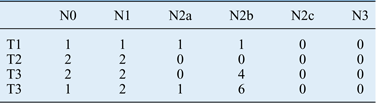
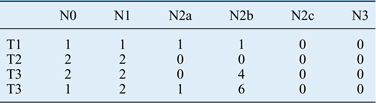
A total of 26 patients (16, parotid gland; 8, submandibular gland; 2, minor salivary gland) with salivary duct carcinoma were treated. The clinical stages were stage I, 1 case; stage II, 2 cases; stage III, 7 cases; and stage IV, 16 cases (Tables I and II).
Tnm distribution of the patients (no. of cases)
Stage distribution of the patients (no. of cases)

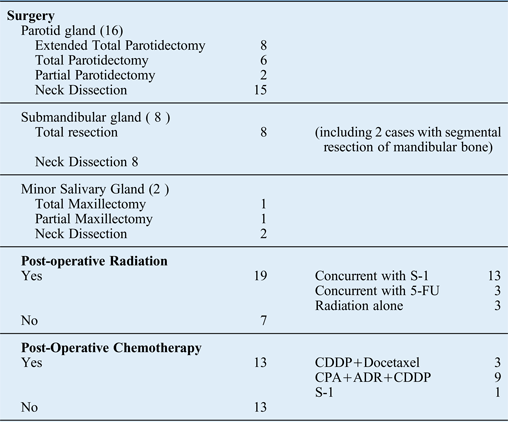
All patients underwent radical surgery with neck dissection. The type of operation depended upon the location of the primary tumour (Table III). A total of 19 patients received post-operative RT. There were seven cases who did not receive post-operative RT. The reasons for not receiving RT were high age, two cases; distant metastasis, two cases; and refusal, three cases. For those who received radiation, 13 cases were concurrent with S-1, 3 cases were concurrent with 5-FU: Fluorouracil and 3 cases were radiation alone. For patients with appropriate organ function (i.e. renal function, liver function etc.) and who were able to give their consent, post-operative systemic chemotherapy was given. Thirteen patients received post-operative chemotherapy (CDDP/DOC, three cases; CDDP/ADM/CPA, nine cases; and S-1, one case). The details of the multimodality treatment for the 26 patients are summarised in Table III.
Treatment details of the 26 patients (no. of cases)

The overall survival was measured from the time of diagnosis to the last follow up or death. Survival rates were estimated using the Kaplan–Meier method.
Results
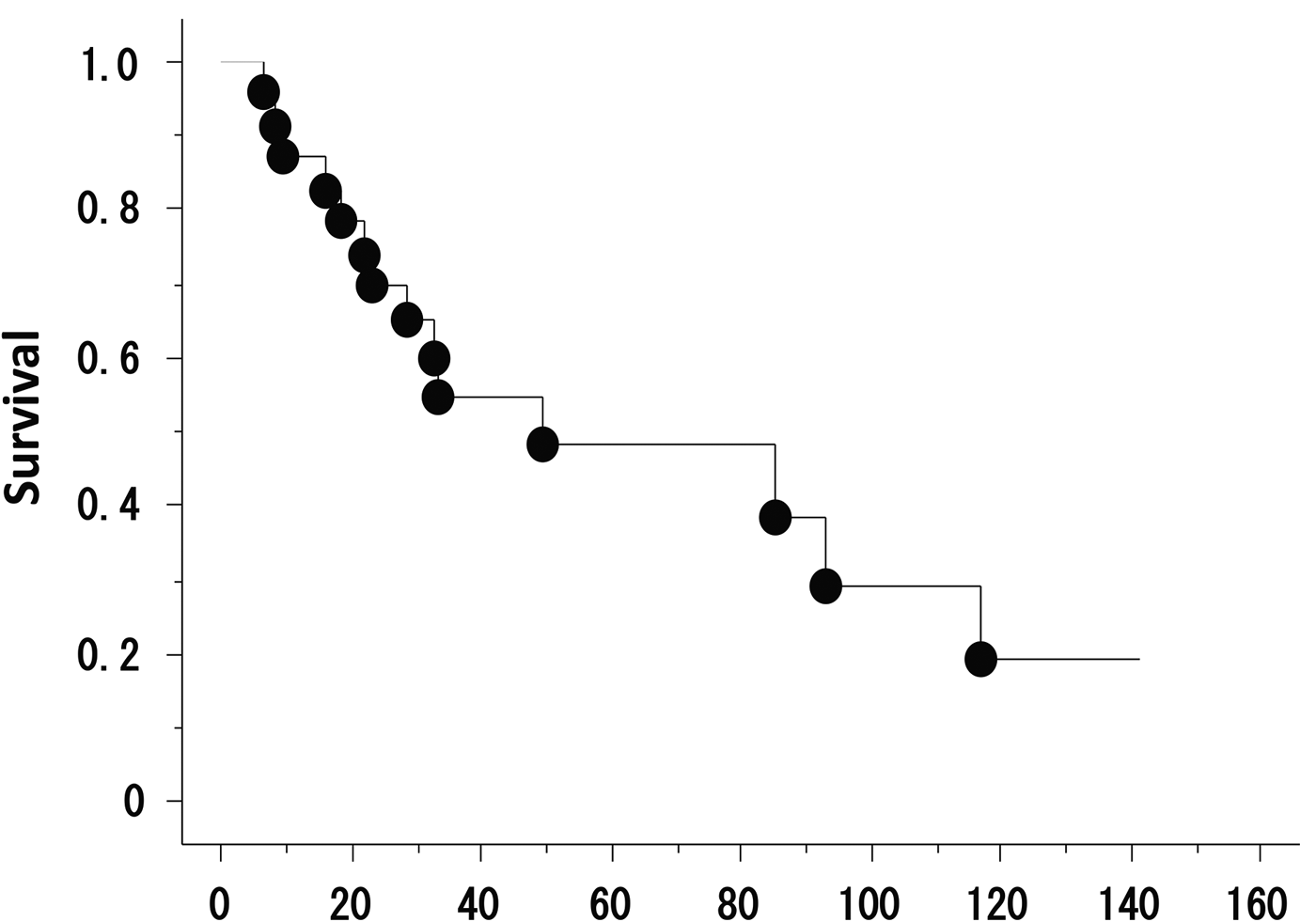
The median follow-up period was 31 months (range 4–142 months). The overall three-year and five-year survival rates were 54 and 48.1 per cent, respectively (Figure 1).
Overall survival of the patients (n = 26).
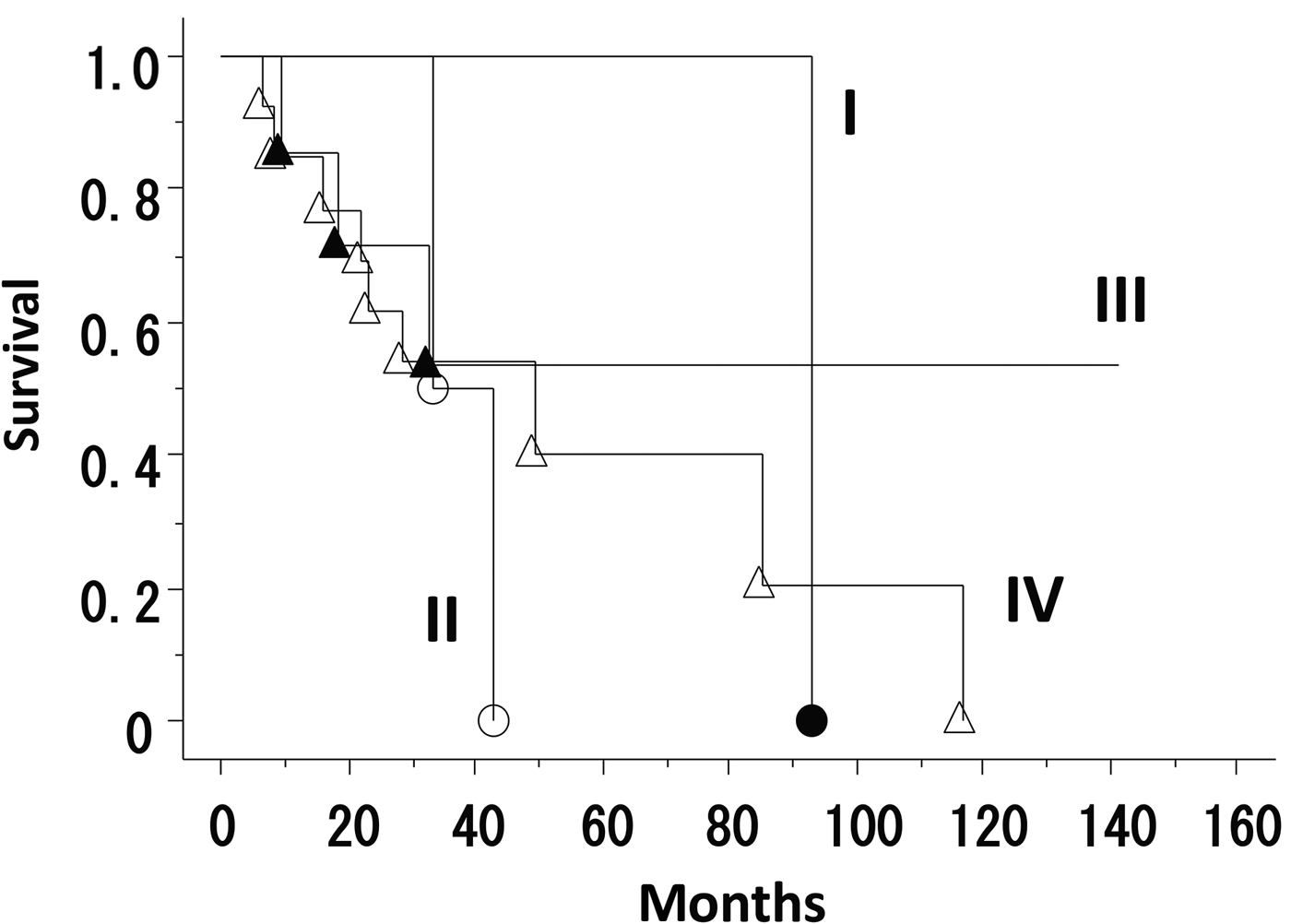
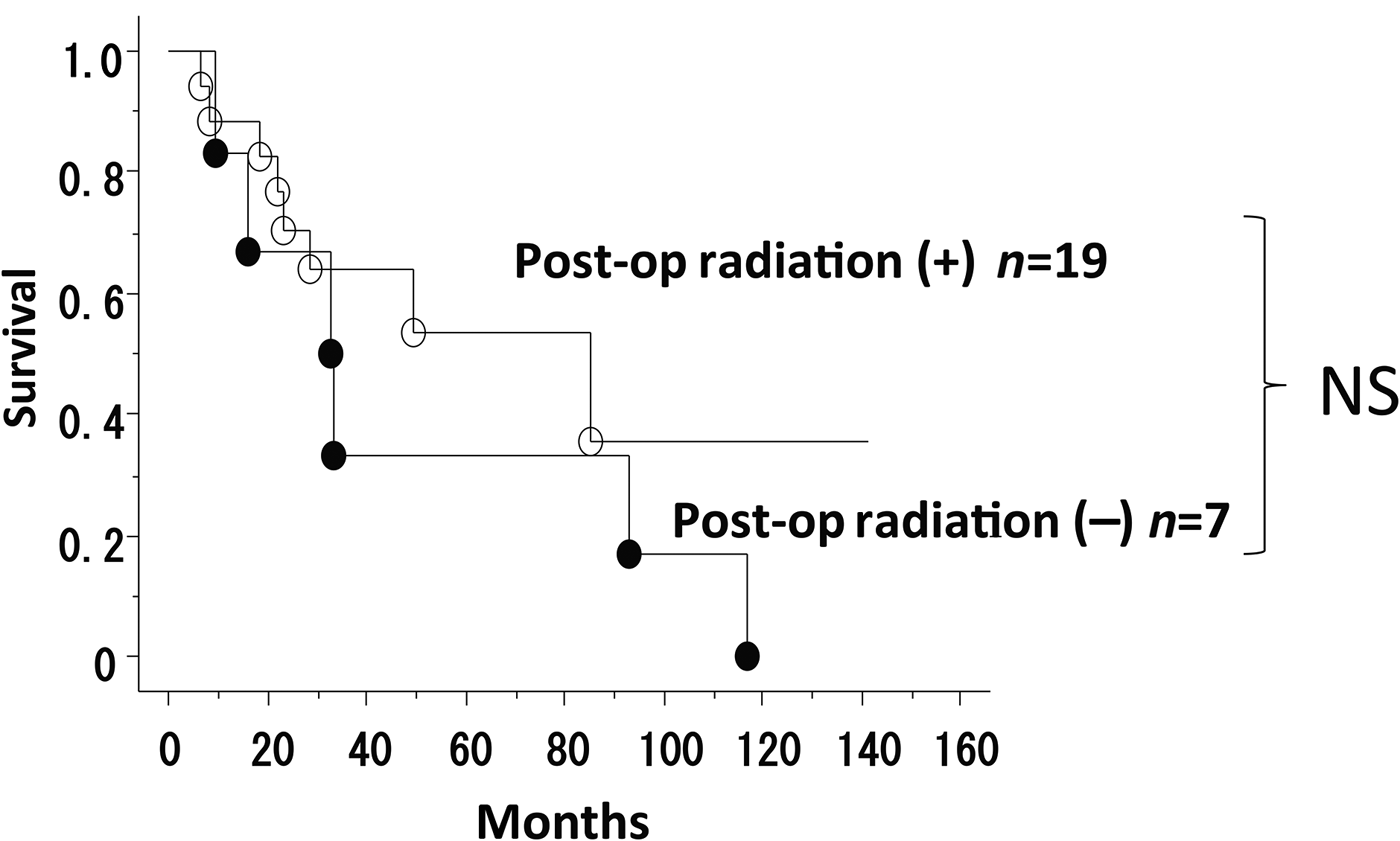
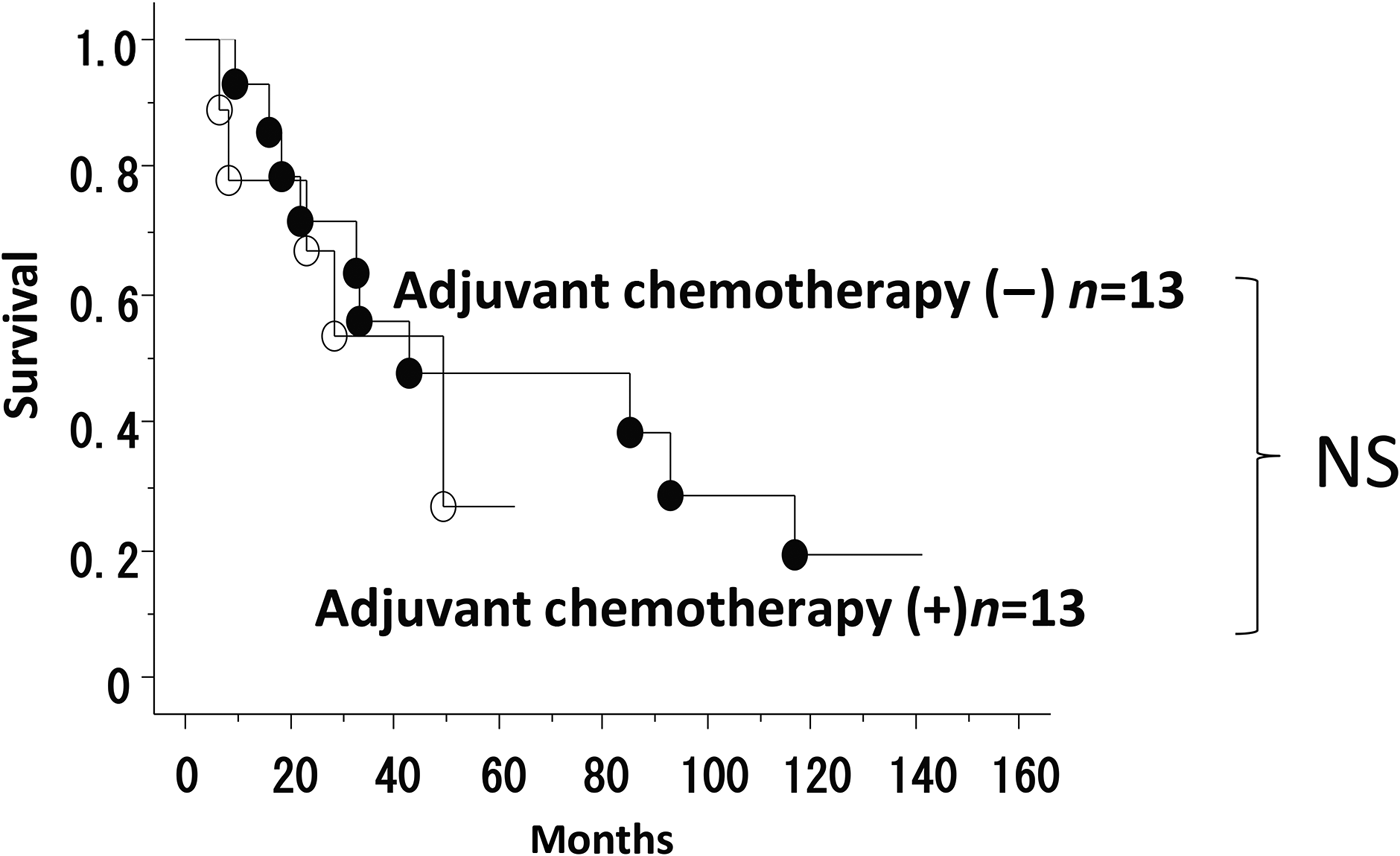
There was no correlation with the clinical stage and the patients' prognosis (Figure 2). Among the 14 fatal cases, there were 5 cases with local recurrence and 9 cases with distant metastasis. The overall three-year survival of the patients with or without post-operative RT was 64 and 33 per cent, respectively (p = 0.29; Figure 3). The overall three-year survival of the patients with or without post-operative chemotherapy was 53 and 56 per cent, respectively (p = 0.78; Figure 4). Post-operative adjuvant therapy did not benefit the patients' survival in our series.
Overall survival according to the clinical stages.
Overall survival of the patients receiving post-operative radiotherapy (RT) (n = 19) or without post-operative RT (n = 7).
Overall survival of the patients receiving post-operative chemotherapy (n = 13) or without post-operative chemotherapy (n = 13).
Discussion
Because of its invasiveness and high frequency of metastasis, salivary duct carcinoma has one of the most aggressive biological characters among salivary gland tumours. The recurrence rate is high and distant metastases occur early following initial treatment. The median overall survival has been reported to be approximately three years due to its high recurrence rate and early occurrence of distant metastasis.Reference Guzzo, Di Palma, Grandi and Molinari1
The treatment of choice for salivary duct carcinoma in the case of a resectable tumour is surgery, including dissection of the neck. Head and neck surgeons have been seeking an appropriate strategy to improve the patients' prognosis. However, the role of adjuvant therapy has been controversial. The largest study on salivary duct carcinoma to date was reported by Jayaprakash et al., who analysed the clinical outcome of 228 salivary duct carcinoma patients.Reference Jayaprakash, Merzianu, Warren, Arshad, Hicks and Rigual3 There was no benefit from post-operative radiation in their study. On the other hand, there are only a few reports indicating that post-operative RT is effective for local control of salivary duct carcinoma patients.Reference Shinoto, Shioyama, Nakamura, Nakashima, Kunitake and Higaki4, Reference Kim, Lee, Cho, Kim, Nam and Choi5 However, RT does not improve the overall survival.
This report is a single-institution retrospective review of 26 salivary duct carcinoma patients. Despite our multidisciplinary approach for salivary duct carcinoma, many patients recurred locally or with distant metastasis and we could not demonstrate a significant role for adjuvant RT or systemic chemotherapy in our study. Patient survival was better in those who received post-operative radiation (although this was not significant).
Because of its highly invasive and metastatic potential, many salivary duct carcinoma patients develop distant metastasis. Sixty-five per cent of our fatal cases were caused by distant metastasis. Targeting this metastatic potential is important for controlling this disease. There are few previous studies that have suggested the importance of effective systemic treatment in salivary duct carcinoma.Reference Dimery, Legha, Shirinian and Hong6 However, similar to other malignant salivary gland tumours, salivary duct carcinoma shows poor response to chemotherapy.Reference Dodd and Slevin7 To date, salivary duct carcinoma shows poor response to chemotherapy, and there has been no consensus regarding the role of systemic chemotherapy.
The clinical stage did not affect the outcome of the patients in our series. Consistent with our results, there are several reports that find no correlation between prognosis and tumour size in salivary duct carcinoma.Reference Lewis, McKinney, Weiland, Ferreiro and Olsen8 These findings indicate that the biological and molecular basis is influencing the aggressiveness of salivary duct carcinoma. Developing novel treatment modalities, including molecular targeting is necessary to improve the prognosis of this disease.
Recent studies seeking for novel treatment strategies for salivary duct carcinoma have focused on molecular targets. The highly invasive pathology of salivary duct carcinoma resembles high-grade ductal breast cancer in which human epidermal growth factor receptor 2 (HER-2) is commonly overexpressed. Human epidermal growth factor receptor 2 expression is associated with poor prognosis and is also a predictive factor for the response of anti-HER2 treatment by trastuzumab. There have been several case reports of the usefulness of trastuzumab in patients with HER-2-positive salivary duct carcinoma.Reference Krishnamurthy, Krishnamurty, Baker, Zhen, Lydiatt and Ganti9 Utilising trastuzumab in HER-2-positive salivary duct carcinoma cases can be considered a part of the adjuvant regimen to improve prognosis.
• This is a retrospective clinical analysis describing the effectiveness of post-operative radiotherapy and chemotherapy for patients with salivary duct carcinoma
• Post-operative adjuvant therapy did not improve the patients' survival
• Development of a novel treatment modality is necessary to improve the prognosis of this disease
Other studies indicate that androgen receptors,Reference Jaspers, Verbist, Schoffelen, Mattijssen, Slootweg and van der Graaf10 and epidermal growth factor receptor Reference Jaspers, Verbist, Schoffelen, Mattijssen, Slootweg and van der Graaf10, Reference Masubuchi, Tada, Maruya, Osamura, Kamata and Miura11 are overexpressed in salivary duct carcinoma cancer cells. Soper et al. reported the effectiveness of androgen deprivation therapy plus RT to definitively treat salivary duct carcinoma.Reference Soper, Iganej and Thompson12 Combination modalities, including molecular targeted drugs are expected to improve the prognosis of salivary duct carcinoma.
Conclusion
In our retrospective analysis, there was no benefit from post-operative adjuvant therapy for salivary duct carcinoma patients. Despite the multidisciplinary approach, most patients suffers from recurrence locally or with distant metastasis. Although salivary duct carcinoma is rare, the patients with this histology may need post-operative adjuvant treatment. Developing novel treatment modalities, including molecular targeting is necessary to improve the prognosis of this disease.