Introduction
In the United States, approximately 475,000 children 14 years of age or less are treated annually for traumatic brain injury (TBI) in hospital settings, with mild injuries accounting for 80 to 90% of those visits (Bazarian et al., Reference Bazarian, McClung, Shah, Cheng, Flesher and Kraus2005; Cassidy et al., Reference Cassidy, Carroll, Peloso, Borg, Von Holst, Holm and Coronado2004). Although recent reviews have suggested that mild TBI have little effect on children (Carroll et al., Reference Carroll, Cassidy, Peloso, Borg, von Holst, Holm and Pépin2004; Satz, Zaucha, McCleary, Light, & Asarnow, Reference Satz, Zaucha, McCleary, Light and Asarnow1997), few studies have focused specifically on what are commonly referred to as “post-concussive symptoms,” which include a range of somatic, cognitive, affective, and behavioral complaints (Yeates et al., Reference Yeates, Luria, Bartkowski, Rusin, Martin and Bigler1999). The symptoms are embodied in the diagnostic criteria for post-concussion syndrome in the International Classification of Diseases (World Health Organization, 1992) and in the research criteria for post-concussional disorder in the Diagnostic and Statistical Manual of Mental Disorders-Fourth Edition (American Psychiatric Association, 1994).
Although symptoms typically characterized as “post-concussive” are not specific to mild TBI and occur frequently in the general population (Gouvier, Cubic, Jones, Brantley, & Cutlip, Reference Gouvier, Cubic, Jones, Brantley and Cutlip1992; Kashluba, Casey, & Paniak, Reference Kashluba, Casey and Paniak2006) and in individuals with injuries not involving the head (Landre, Poppe, Davis, Schmaus, & Hobbs, Reference Landre, Poppe, Davis, Schmaus and Hobbs2006; Light et al., Reference Light, Asarnow, Satz, Zucha, McCleary and Lewis1998), research has repeatedly demonstrated that they are more common and severe in children with mild TBI (Barlow et al., Reference Barlow, Crawford, Stevenson, Sandhu, Belanger and Dewey2010; Mittenberg, Wittner, & Miller, Reference Mittenberg, Wittner and Miller1997; Ponsford et al., Reference Ponsford, Willmott, Rothwell, Cameron, Ayton, Nelms and Ng1999; Taylor et al., Reference Taylor, Dietrich, Nuss, Wright, Rusin, Bangert and Yeates2010; Yeates et al., Reference Yeates, Luria, Bartkowski, Rusin, Martin and Bigler1999, Reference Yeates, Taylor, Rusin, Bangert, Dietrich, Nuss and Jones2009). Group differences in post-concussive symptoms tend to be most pronounced shortly after the injury and resolve over time (Nacajauskaite, Endziniene, Jureniene, & Schrader, Reference Nacajauskaite, Endziniene, Jureniene and Schrader2006; Ponsford et al., Reference Ponsford, Willmott, Rothwell, Cameron, Ayton, Nelms and Ng1999).
The reasons why some but not all children with mild TBI display post-concussive symptoms are unclear. Injury severity accounts for some of the variability in post-concussive symptoms, which may, therefore, in part reflect physiological processes (Yeates et al., Reference Yeates, Taylor, Rusin, Bangert, Dietrich, Nuss and Jones2009). However, psychological factors, such as coping strategies, are also likely to play a role. A diathesis-stress paradigm may be applicable to mild TBI, such that some individuals who sustain mild TBI are more vulnerable to post-concussive symptoms (Kay, Reference Kay1992; Wood, Reference Wood2004). In other words, coping strategies may moderate the occurrence of post-concussive symptoms following mild TBI.
Lazarus and Folkman (Reference Lazarus and Folkman1984) defined coping as a reaction to stressors felt to exceed one's personal resources, creating emotional discomfort. In this context, an individual determines the level of stress and what coping resources are available and can be implemented successfully. Compas, Connor-Smith, Saltzman, Thomsen, and Wadsworth (Reference Compas, Connor-Smith, Saltzman, Thomsen and Wadsworth2001) described coping in children and adolescents as a deliberate action taken to manage one's environment, thoughts, and emotions when presented with a stressor. Coping strategies can be classified as emotion-focused versus problem-focused and as engaged versus disengaged. Emotion-focused coping attempts to moderate or eliminate the unpleasant feelings a stressor creates by expressing emotions and seeking social support (i.e., emotion-focused engagement) or by self-criticism and social withdrawal (i.e., emotion-focused disengagement). Problem-focused coping attempts to manage stress by modifying the source of the problems or through cognitive restructuring (i.e., problem-focused engagement) or by passive avoidance and wishful thinking (i.e., problem-focused disengagement).
Generally speaking, coping strategies that are problem-focused and involve engagement are associated with better adjustment, whereas strategies that are emotion-focused and involve disengagement are associated with poorer outcomes (Compas et al., Reference Compas, Connor-Smith, Saltzman, Thomsen and Wadsworth2001). In their review of the development of coping, Losoya, Eisenberg, and Fabes (Reference Losoya, Eisenberg and Fabes1998) found that greater use of problem-focused coping by children and adolescents was related to fewer emotional and behavioral concerns, social difficulties, and risky behaviors, whereas greater use of emotion-focused coping was associated with more emotional and behavioral problems. Compas (Reference Compas1987) additionally noted that children's preferred approaches to coping may be influenced by their cognitive resources (e.g., problem-solving abilities), emotional functioning, and social resources, as well as by personality traits, such as helplessness and mastery orientation.
Van Zomeren and van den Burg (Reference Van Zomeren and van den Burg1985) posited that post-concussive symptoms may be an indirect reflection of persistent efforts to cope with cognitive limitations following a TBI. Research in adults suggests that coping strategies are related to post-concussive symptoms and psychosocial outcomes in both mild and severe TBI, with emotion-focused and disengaged coping generally being negatively related to adjustment and problem-focused and engaged coping being positively related (Anson & Ponsford, Reference Anson and Ponsford2006; Bohnen, Joelles, Twijnstra, Mellink, & Sulon, Reference Bohnen, Joelles, Twijnstra, Mellink and Sulon1992; King, Crawford, Wenden, Caldwell, & Wade, Reference King, Crawford, Wenden, Caldwell and Wade1999). Although this relationship has not been examined in children with mild TBI, previous research has documented similar relationships between coping strategies and psychosocial adjustment in children with various medical and psychosomatic disorders (Compas, Boyer, Stanger, Dufton, & Cole, Reference Compas, Boyer, Stanger, Dufton and Cole2006; Grey & Berry, Reference Grey and Berry2004; Miller et al., Reference Miller, Vannatta, Compas, Vasey, McGoron, Salley and Gerhardt2009; Rollnik, Karst, Fink, & Dengler, Reference Rollnik, Karst, Fink and Dengler2001).
The goal of the present study was to examine how children's preferred strategies for coping with mild TBI are related to their post-concussive symptoms over the first year post-injury, as well as whether the relationship of coping to symptom report differs for children with orthopedic injuries (OI). We used data from a larger prospective, longitudinal project focused on the natural history of post-concussive symptoms (Yeates & Taylor, Reference Yeates and Taylor2005). Using data from this project, we have previously shown that children with mild TBI demonstrate more symptoms than children with OI and that the magnitude of group differences is related to the severity of mild TBI (Taylor et al., Reference Taylor, Dietrich, Nuss, Wright, Rusin, Bangert and Yeates2010; Yeates et al., Reference Yeates, Taylor, Rusin, Bangert, Dietrich, Nuss and Jones2009). In this study, we predicted that greater self-report of coping strategies involving disengagement (problem- or emotion-focused) would be associated with more symptoms over time, whereas greater self-report of strategies involving engagement (problem- or emotion-focused) would be related to fewer symptoms over time. We also examined whether the type of injury sustained by a child exerts a moderating effect on the relationship of self-reported coping strategies to ratings of symptoms. Specifically, we hypothesized that coping strategies would be more strongly related to symptoms among children with mild TBI than those with OI, and thus serve to moderate the group differences in symptoms previously reported in this sample (Taylor et al., Reference Taylor, Dietrich, Nuss, Wright, Rusin, Bangert and Yeates2010; Yeates et al., Reference Yeates, Taylor, Rusin, Bangert, Dietrich, Nuss and Jones2009).
Method
Participants
Participants were part of a larger prospective, longitudinal study of outcomes in pediatric mild TBI (Taylor et al., Reference Taylor, Dietrich, Nuss, Wright, Rusin, Bangert and Yeates2010; Yeates & Taylor, Reference Yeates and Taylor2005; Yeates et al., Reference Yeates, Taylor, Rusin, Bangert, Dietrich, Nuss and Jones2009). All children between 8 and 15 years of age who presented with either closed-head trauma or OI at the emergency departments at Nationwide Children's Hospital in Columbus, Ohio, and Rainbow Babies and Children's Hospital in Cleveland, Ohio, were screened for eligibility to participate. Children were included in the mild TBI group if they experienced a blunt head trauma resulting in at least one of the following three clinical features: an observed loss of consciousness; a lowest Glasgow Coma Scale (GCS; Teasdale & Jennett, Reference Teasdale and Jennett1974) score of 13 or 14; or at least two symptoms of concussion that were documented by emergency department personnel. Children were not excluded if they demonstrated intracranial lesions or skull fractures on acute computerized tomography or if they were hospitalized; however, they were excluded if they displayed any neurological deterioration (i.e., any GCS score below 13) or had any medical contraindication to magnetic resonance imaging.
Inclusion in the OI group required an upper or lower extremity fracture yielding a score of 1 to 3 on the Abbreviated Injury Scale (AIS; American Association for Automotive Medicine, 1990), which assesses the severity of injuries to specific anatomic regions on a scale of 1 to 6. Children were excluded from the OI group if they displayed any evidence of head trauma or symptoms of concussion.
Exclusion criteria for both groups included any surgical intervention; any associated injury resulting in an AIS score greater than 3; any associated injury likely to interfere with neuropsychological testing (e.g., fracture of preferred upper extremity); hypoxia, hypotension, or shock during or following the injury; alcohol or drug ingestion associated with the injury; a documented history of previous TBI requiring medical treatment; a premorbid neurological disorder or mental retardation; a history of severe psychiatric disorder requiring hospitalization; or a determination that the injury was the result of child abuse or assault.
Among children meeting criteria for mild TBI and approached about the study, 48% agreed to participate. Participation among those meeting criteria for the OI group was 35%. The most frequently reported reasons for declining to participate included scheduling difficulties, distance from the hospital, or disinterest in the study. Within the mild TBI and OI groups, participants and non-participants did not differ significantly in age, gender, ethnic/racial minority status, or census tract measures of socioeconomic status (i.e., median family income, % below poverty line, % minority).
The final sample consisted of 186 children with mild TBI and 99 children with OI. Of the 285 children who completed the initial assessment, 280 (98%) completed the assessment at 1 month post-injury (183 or 98% with mild TBI, 97 or 98% with OI), 268 (94%) completed the 3 month assessment (178 or 96% with mild TBI, 90 or 91% with OI), and 253 (89%) completed the 12 month assessment (169 or 91% with mild TBI, 84 or 85% with OI). Attrition occurred primarily because of family unwillingness to continue the study and multiple missed appointments. The analyses presented here are based on the 251 children who completed all follow-up assessments (167 with mild TBI, 84 with OI). The proportion of children who completed all follow-up assessments did not differ by group. Children who completed all follow-up assessments did not differ from those who did not do so in age, sex, pre-injury symptoms, or early post-injury post-concussive symptoms, but they were less likely to be of minority ethnic status and were of higher socioeconomic status.
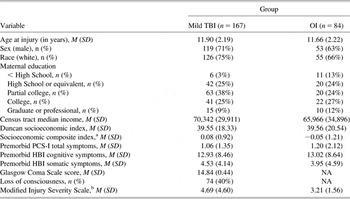
We have previously shown that the mild TBI and OI groups do not display significant differences on performance-based tests of cognitive abilities administered approximately 2 weeks post-injury (Fay et al., Reference Fay, Yeates, Taylor, Bangert, Dietrich, Nuss and Wright2010; Maillard-Wermelinger et al., Reference Maillard-Wermelinger, Yeates, Taylor, Rusin, Bangert, Dietrich and Wright2009). As Table 1 shows, the mild TBI and OI groups also did not differ on demographic variables such as age, sex, ethnic/racial minority status, or socioeconomic status. Age was distributed fairly evenly and similarly in both groups, with 52% of the mild TBI group and 56% of the OI group being less than 12 years of age. A composite measure of socioeconomic status was created by averaging sample z scores for years of maternal education, median family income for census tract, and the Duncan Socioeconomic Index, which is a measure of occupational prestige (Stevens & Cho, Reference Stevens and Cho1985); higher scores on the composite reflect higher socioeconomic status. The mild TBI group displayed greater overall injury severity as measured by the Modified Injury Severity Scale, which is an overall index derived from AIS scores, calculated as the sum of the squares of the scores for the three most severely injured body areas (Osler, Bakker, & Long, Reference Osler, Bakker and Long1997). Recreational and sports-related injuries were the most common in both groups (59% of mild TBI, 62% of OI), with falls the second leading cause (20% of mild TBI, 21% of OI). Transportation-related causes were significantly more common in the mild TBI group (15%) than the OI group (4%). These data are consistent with epidemiological studies of childhood injuries (Bazarian et al., Reference Bazarian, McClung, Shah, Cheng, Flesher and Kraus2005; Langlois, Rutland-Brown, & Thomas, Reference Langlois, Rutland-Brown and Thomas2006).
Demographic and injury characteristics for the mild TBI and OI groups

Note. TBI = traumatic brain injury; OI = orthopedic injury; PCS-I = Post-Concussive Symptom Interview; HBI = Health and Behavior Inventory; NA = not applicable.
aThe socioeconomic composite index was computed by averaging sample z scores for years of maternal education, median family income for census tract, and the Duncan Socioeconomic Index, which is a measure of occupational prestige (Stevens & Cho, Reference Stevens and Cho1985).
bThe group difference in the Modified Injury Severity Scale is significant (p < .05); all other group differences are non-significant.
Procedure
Approval from institutional review boards, along with parental consent and child assent, were obtained before participation. Children were scheduled for an initial assessment no later than 3 weeks post-injury; 88% were completed less within 2 weeks post-injury (M = 11.35 days; SD = 3.42). Children rated their current preferred strategies for coping with their injury and their current post-concussive symptoms at the baseline assessment and again at 3 and 12 months post-injury. An additional set of ratings of post-concussive symptoms was obtained at 1 month post-injury.
Measures
Coping strategies
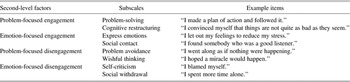
Children's preferred strategies for coping with their injuries were assessed using the Coping Strategies Inventory (Tobin, Holroyd, & Reynolds, Reference Tobin, Holroyd and Reynolds1984), which asks children to think about a specific stressor (in this case, their injury) and rate how much they use a variety of coping strategies. The Coping Strategies Inventory is a self-report questionnaire consisting of 40 items with a 5-point rating scale, ranging from “not at all” to “very much.” Eight subscales and four second-level factors, each composed of two subscales, have been identified through hierarchical factor analysis (see Table 2; Tobin, Holroyd, Reynolds, & Wigal, Reference Tobin, Holroyd, Reynolds and Wigal1989). The model reflects the assumption that children's repertoires of coping strategies vary and that the use of one strategy does not exclude the use of another. For example, both emotion-focused engagement (e.g., expressing emotions openly) and problem-focused disengagement (e.g., wishing a miracle would happen) may be used to cope with the same stressor. Exploratory factor analysis of the data from the current sample substantially replicated the previously identified factor structure.
Second-level factors and subscales of the Coping Strategies Inventory

Note. Items from the Coping Strategies Inventory appear with permission from Tobin, Holroyd, and Reynolds, Reference Tobin, Holroyd and Reynolds1984, from their unpublished manuscript, Ohio University, Athens, Ohio.
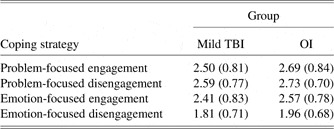
The Coping Strategies Inventory has shown satisfactory reliability and validity in children with chronic illness (Armstrong, Lemanek, Pegelow, Gonzalez, & Martinez, Reference Armstrong, Lemanek, Pegelow, Gonzalez and Martinez1993), as well as in other pediatric populations associated with potential compromise of cognitive functioning, including HIV (Bachanas et al., Reference Bachanas, Kullgren, Schwartz, Lanier, McDaniel, Smith and Nesheim2001) and sickle cell disease (Casey, Brown, & Bakeman, Reference Casey, Brown and Bakeman2000; Thompson, Gil, Burbach, Keith, & Kinney, Reference Thompson, Gil, Burbach, Keith and Kinney1993). To limit the number of predictors in the current data analyses, we chose to focus on the four second-level factors. The internal consistency coefficients for the four factors were within a range that is typically considered acceptable (i.e., Cronbach's α from .72 to .84), as discussed by Bland and Altman (Reference Bland and Altman1997) and George and Mallery (Reference George and Mallery2003). The four factors showed medium to large positive zero-order correlations (Cohen, Reference Cohen1988), ranging from .34 to .56 in the mild TBI group and from .24 to .45 in the OI group. Doubly-repeated-measures multivariate analyses of variance showed that the OI group had modestly but significantly higher mean scores on all coping dimensions than the TBI group, although the groups displayed substantial overlap in their distributions of scores. The group difference did not vary across time. Because the groups were well matched on other demographic variables, the differences in coping may reflect the different nature of the injuries with which the children were faced. Given the minimal group differences in coping and stability of coping across time, only children's baseline reports of preferred coping strategies were included in the current analyses to assess the relationship of coping to post-concussive symptoms over time. Group mean scores and standard deviations for each of the four coping dimensions at the baseline assessment are presented in Table 3.
Mean scores and standard deviations of second-level factors of the Coping Strategies Inventory by group

Note. TBI = traumatic brain injury; OI = orthopedic injury; scores reflect average rating for all items on scale, with ratings from 1 (“not at all”) to 5 (“very much”).
Post-concussive symptoms
Children's post-concussive symptoms were assessed using the Health and Behavior Inventory (HBI; Ayr, Yeates, Taylor, & Brown, Reference Ayr, Yeates, Taylor and Brown2009) and the Post-Concussive Symptom Interview (PCS-I; Mittenberg, Wittner, & Miller, Reference Mittenberg, Wittner and Miller1997; Mittenberg, Miller, & Luis, Reference Mittenberg, Miller and Luis1997). The measures differ in administration format (written vs. oral), response format (graduated rating vs. yes/no), and scoring (symptom frequency vs. symptom count), and so provide overlapping but distinct types of information.
The HBI consists of 50 items that describe a variety of cognitive, somatic, behavioral, and emotional symptoms. It is administered in written form, and the frequency of each symptom over the past week is rated on a 4-point scale, ranging from “never” to “often.” The HBI was developed based on previous research on children with moderate to severe TBI (Barry, Taylor, Klein, & Yeates, Reference Barry, Taylor, Klein and Yeates1996; Yeates et al., Reference Yeates, Taylor, Barry, Drotar, Wade and Stancin2001), as well as on a review of research using post-concussive symptom checklists with adults (Axelrod et al., Reference Axelrod, Fox, Less-Haley, Earnest, Dolezal-Wood and Goldman1996; Cicerone & Kalmar, Reference Cicerone and Kalmar1995; Gerber & Schraa, Reference Gerber and Schraa1995; Gouvier et al., Reference Gouvier, Cubic, Jones, Brantley and Cutlip1992). In the present study, scales representing cognitive and somatic symptoms were used as dependent variables. The scales were derived from factor analyses based on the ratings of children with mild TBI; the scales are robust across raters and occasions, whereas scales involving emotional and behavioral symptoms are not (Ayr et al., Reference Ayr, Yeates, Taylor and Brown2009). Total scores on both the cognitive and somatic symptom scales demonstrated high internal consistency across raters and assessment occasions (Cronbach's α from .83 to .95 for parents’ ratings and from .86 to .91 for children's ratings). We have previously demonstrated group differences on the HBI in the current sample (Fay et al., 2010; Taylor et al., Reference Taylor, Dietrich, Nuss, Wright, Rusin, Bangert and Yeates2010).
The PCS-I is a structured oral interview that asks raters to report the presence or absence of 15 symptoms during the preceding week. Internal consistency and reliability of the PCS-I were demonstrated in previous research (Mittenberg, Wittner, & Miller, Reference Mittenberg, Wittner and Miller1997; Mittenberg, Miller, & Luis, Reference Mittenberg, Miller and Luis1997). Total scores representing the number of symptoms endorsed displayed satisfactory internal consistency across raters and assessments (Cronbach's α from .78 to .82 for parents’ ratings and from .70 to .77 for children's ratings). We have previously demonstrated group differences in total scores reported on the PCS-I (Taylor et al., Reference Taylor, Dietrich, Nuss, Wright, Rusin, Bangert and Yeates2010; Yeates et al., Reference Yeates, Taylor, Rusin, Bangert, Dietrich, Nuss and Jones2009).
The three measures of post-concussive symptoms (i.e., HBI somatic symptom score, HBI cognitive symptom score, PCS-I total score) were significantly correlated. The correlations for the three child ratings at the initial assessment ranged from .67 to .71 in the mild TBI group and from .57 to .66 in the OI group.
Data Analysis
To examine the relationship of children's preferred coping strategies to their perceptions of symptoms over time, each measure of post-concussive symptoms (i.e., PCS-I total score, HBI cognitive symptom score, and HBI somatic symptom score) was subjected to a repeated-measures analyses of variance using a multivariate, general linear model approach that avoids the statistical assumptions usually associated with repeated-measures analyses (McCall & Appelbaum, Reference McCall and Appelbaum1973). The longitudinal ratings from each symptom measure (i.e., baseline, 1 month, 3 months, 1 year) were treated as repeated measures. Independent variables included four continuous scores representing each of the second-level dimensions on the Coping Strategies Inventory (i.e., emotion-focused engagement, problem-focused engagement, emotion-focused disengagement, or problem-focused disengagement), as well as group (mild TBI vs. OI) and time since injury (2 weeks, 1-month, 3-month, and 12-months post-injury). Time since injury was treated as a within-subjects variable. This design allows for the unique variance in post-concussive symptoms explained by each dimension of coping to be determined after taking into account the three remaining dimensions. Age at injury, race (white vs. non-white), and the composite measure of socioeconomic status were included as covariates in all analyses.
Interaction terms for group × coping and group × coping × time were included for each of the four coping strategy scores. Interaction terms for group × time and coping × time were also included but were not a primary focus of this study. Significant interactions of group × coping or group × coping × time would indicate that the relationship of coping strategies to symptoms varied across the two groups and, in some cases, across time. The interactions would also indicate that group differences in symptoms vary as a function of coping strategies (i.e., coping moderates the effects of mild TBI), again in some cases across time.
Results
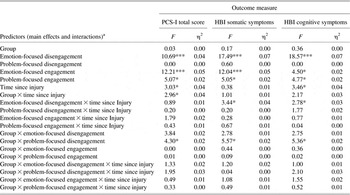
The results of the analyses are summarized in Table 4. Children's reports of both emotion-focused engagement and emotion-focused disengagement were positively related to their ratings of cognitive and somatic symptoms on the HBI and the total number of symptoms on the PCS-I. These relationships were reflected in significant main effects for both forms of emotion-focused coping for all three measures of post-concussive symptoms. The effect sizes were small to medium in magnitude, based on their associated η2 values. The relationships did not vary by group; none of the interactions involving group and emotion-focused strategies was significant. Collectively, the two dimensions of emotion-focused coping accounted for 9–12% of the variance in children's symptoms across time. Thus, emotion-focused coping, whether it involves engagement or disengagement, is associated with more symptoms for both types of injury.
Results of repeated-measures multivariate analyses of variance based on child symptom ratings

Note: PCS-I = Post-Concussive Symptom Interview; HBI = Health and Behavior Inventory. η2 is a measure of effect size, and represents the amount of variance accounted for by the specific effect; Cohen (Reference Cohen1988) defines .01 as a small effect, .06 as a medium effect, and .14 as a large effect.
aAnalyses also included age, race (minority vs. white), and the composite socioeconomic status index as covariates. The tests for those effects and the interactions of the covariates with time since injury are not reported for the sake of space. The complete results are available from the authors.
*p < .05
**p < .01
***p < .001
The relationship between emotion-focused disengagement and cognitive and somatic symptoms as reported on the HBI decreased over time. This was reflected in significant coping × time interactions for those two measures that were small to medium in magnitude, accounting for an additional 3–4% of the variance in cognitive and somatic symptom ratings. In both instances, partial correlations between emotion-focused disengagement and post-concussive symptoms declined gradually across time. For instance, the partial correlation of emotion-focused disengagement with the HBI cognitive score was .29 [95% confidence limit (CL), .17, .41] at the initial assessment, .21 (95% CL, .09, .33) at 1 month, .19 (95% CL, .06, .31) at 3 months, and .08 (95% CL, -.05, .21) at 12 months, after controlling for group membership, race, socioeconomic status (SES), age at injury, and the other forms of coping. Thus, although children's reports of emotion-focused disengagement were significantly positively related to their symptom ratings, the relationship decreased over time for both types of injury.
Children's reports of problem-focused engagement strategies were associated with lower ratings on all three symptom ratings. The relationship was small in magnitude, but held for both groups, accounting for approximately 2% of the variance. The partial correlations between problem-focused engagement and the three measures of post-concussive symptoms (averaged across the four occasions) ranged from −.15 (95% CL, −.27, −.02) to −.16 (95% CL, −.28, −.03) after controlling for group membership, race, SES, age at injury, and the other three forms of coping. This finding is consistent with our hypotheses, and suggests that following either mild TBI or OI, children who endorse problem-focused engagement also report less severe and fewer symptoms.
In contrast to these main effects, the relationship between problem-focused disengagement and symptoms varied according to the type of injury. This was reflected in small but significant group × problem-focused disengagement interactions for ratings of somatic and cognitive symptoms on the HBI. In the mild TBI group, strategies involving problem-focused disengagement were associated with more post-concussive symptoms; partial correlations were .15 (95% CL, −.01, .30) with the total PCS-I score, .11 (95% CL, −.05, .27) with the HBI somatic score, and .15 (95% CL, −.01, .30) with the HBI cognitive score (symptom ratings were averaged across the four assessment occasions). In contrast, in the OI group, problem-focused disengagement was negatively related to symptoms; partial correlations were −.13 (95% CL, −.35, .11) with the total PCS-I score, −.20 (95% CL, −.36, .10) with the HBI somatic score, and −.14 (95% CL, −.41, .04) with the HBI cognitive score. In other words, when children with mild TBI reported using more problem-focused disengagement to cope with their injury, they reported more post-concussive symptoms, whereas when children with mild OI reported using more problem-focused disengagement, they reported fewer symptoms.
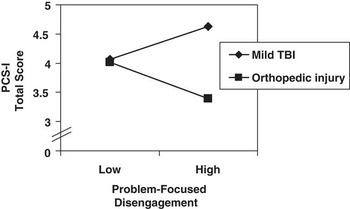
An alternative way to portray these interactions is to describe problem-focused disengagement as moderating group differences in symptoms. To explore the nature of the moderation, we divided children into those who reported low versus high use of problem-focused disengagement by splitting the entire sample at the median for their score on that coping dimension. The repeated-measures analyses of variance were then repeated using the identical independent variables and covariates, except that the dichotomous variable representing problem-focused disengagement was substituted for the original continuous variable from which it was derived. In those analyses, the group × problem-focused disengagement interaction was significant for the PCS-I total score, F(1,235) = 5.13, p < .05, and the HBI cognitive score, F(1,235) = 3.87, p < .05. The interaction involving the HBI somatic score was only marginally significant (p < .08), probably because of the loss of power inherent in dichotomizing a continuous variable. In all cases, though, group differences were larger for children reporting high levels of problem-focused disengagement than for children reporting low levels. Figure 1 illustrates the interaction for the PCS-I total score, using marginal means based on a model containing the same variables as the primary analysis. The results of these analyses indicate that group differences in symptoms are more pronounced among children who report greater use of problem-focused disengagement than among those who report less use.
Mean child PCS-I total scores (possible range 0–15) averaged across all assessment occasions as a function of group membership for children with low and high levels of problem-focused disengagement. Subgroups were formed based on a median split for the problem-focused disengagement score for the entire sample. Similar interactions were obtained for the Health and Behavior Inventory (HBI) Somatic Symptom score and the HBI Cognitive Symptom score.

The covariates included in the analyses also accounted for significant variance in symptom reports. Socioeconomic status was negatively related to ratings of cognitive and somatic symptoms on the HBI, so that higher socioeconomic status was associated with fewer self-reported symptoms. Age was negatively related to ratings of total symptoms on the PCS-I, so that older children reported fewer symptoms. Two of the covariates showed significant interactions with time since injury. Age interacted with time since injury in ratings of cognitive symptoms on the HBI, such that age was negatively related to cognitive symptom ratings at 1 month and 3 months post-injury, but slightly positively related at baseline and 12 months. Thus, lower socioeconomic status and younger age predicted more post-concussive symptoms, although the relationship between age and symptom report varied over time.
Discussion
The current findings suggest that children's self-reported coping strategies are related to their ratings of symptoms following mild TBI and OI, largely in similar ways. We hypothesized that strategies emphasizing disengagement would predict more post-concussive symptoms and those emphasizing engagement would predict fewer post-concussive symptoms. However, the results suggest that the critical distinction instead may be between emotion-focused and problem-focused strategies. Emotion-focused strategies were associated with higher levels of self-reported symptoms in both groups, whether they involved engagement or disengagement. In contrast, coping strategies that involved problem-focused engagement were associated with decreased self-report of symptoms, again in both groups. Collectively, the three coping dimensions accounted for approximately 10–15% of the variance in children's self-reported symptoms. These findings suggest that a stated preference for coping strategies such as problem-solving and cognitive restructuring following traumatic injury may be more effective in limiting post-injury symptoms than strategies focusing on the emotional consequences of the injury.
Only problem-focused disengagement had a significantly different relationship to symptoms in the mild TBI and OI groups. Consistent with our predictions, self-reports of problem-focused disengagement were associated with more symptoms in the mild TBI group; contrary to expectations, however, problem-focused disengagement predicted fewer self-reported symptoms in the OI group. Thus, a preference for problem-focused disengagement may be detrimental for children with mild TBI, but beneficial for children with OI. The reason for this finding is unclear. However, perhaps attempts to avoid or deny that an injury occurred may be effective after a mild orthopedic injury, which is likely to have limited sequelae. In contrast, avoidance or denial may be less effective in coping with stress after a mild TBI, because it will in some cases be associated with persistent symptoms. In any case, the effects of mild TBI on children's post-concussive symptoms are more pronounced when children endorse higher levels of problem-focused disengagement.
More generally, the results suggest that children's self-reported coping strategies are linked to outcomes of mild TBI in a manner largely similar to that observed in other pediatric medical conditions (Compas et al., Reference Compas, Boyer, Stanger, Dufton and Cole2006) and following adult TBI (Malia, Powell, & Torode, Reference Malia, Powell and Torode1995). That is, emotion-focused strategies are generally associated with poorer adjustment and more complaints, and problem-focused engagement generally is related to better adjustment and fewer complaints. Clinically, the results suggest that interventions designed to prevent or ameliorate post-concussive symptoms should focus on identification of children with mild TBI who use maladaptive coping strategies, such as emotion-focused strategies and problem-focused disengagement, and help them develop strategies that encourage problem-focused engagement. These notions are consistent with research in adult mild TBI showing that cognitive–behavioral therapy is effective in preventing or alleviating post-concussive symptoms (Mittenberg, Canyock, Condit, & Patton, Reference Mittenberg, Canyock, Condit and Patton2001).
The current study has several potential limitations. Recruitment rates for the mild TBI and OI groups were both below 50%, and may, therefore, limit the generalizability of the results. However, non-participants did not differ from participants demographically. Relatively greater attrition of children of lower SES and ethnic minority status may also have introduced bias. In future research, efforts to improve participation and retention might include conducting data collection via home visits, increased personalization of contact and follow-up with families, and financial incentives, as well as obtaining support from respected community organizations or the children's schools (Cauce, Ryan, & Grove, Reference Cauce, Ryan and Grove1998; Yancey, Ortega, & Kumanyika, Reference Yancey, Ortega and Kumanyika2006).
Another potential limitation is that we relied on questionnaires to assess coping strategies. Children's self-reports on questionnaires may not necessarily predict their actual use of coping strategies. Nevertheless, questionnaires are still the predominant method of assessment (Compas et al., Reference Compas, Connor-Smith, Saltzman, Thomsen and Wadsworth2001). Moreover, alternative approaches for collecting data on coping strategies, such as structured interviews and behavioral observations, have received limited validation, and are problematic in that many coping strategies involve internal cognitive or emotional processes rather than overt behaviors.
Finally, the nature of children's injuries could have affected their ratings of coping strategies, because they were assessed by asking them to make ratings in reference to their specific injuries. However, group differences in coping were modest in magnitude, and the groups displayed significant overlap in the distributions of their ratings. Thus, group differences in coping are unlikely to account for the current findings.
Regardless of these shortcomings, the current findings provide insights into the relationship between children's coping strategies and outcomes in pediatric mild TBI. Future research should further clarify this relationship by incorporating a developmental perspective on the measurement of coping. Research suggests that age plays a role in the selection and implementation of coping strategies (Band & Weisz, Reference Band and Weisz1988; Compas et al., Reference Compas, Connor-Smith, Saltzman, Thomsen and Wadsworth2001; Donaldson, Prinstein, Danovsky, & Spirito, Reference Donaldson, Prinstein, Danovsky and Spirito2000; Losoya, et al., Reference Losoya, Eisenberg and Fabes1998), with the use of more complex cognitive skills hypothesized to emerge in early to middle childhood (Compas et al., Reference Compas, Connor-Smith, Saltzman, Thomsen and Wadsworth2001), around the age of our youngest participants. Environmental factors, such as children's dependence on their caregiver (Compas, Reference Compas1987) and family functioning (Ganesalingam et al., Reference Ganesalingam, Yeates, Ginn, Taylor, Dietrich, Nuss and Wright2008), may also influence children's coping with post-concussive symptoms.
Future research on coping in pediatric mild TBI should also examine the relationship between the cognitive deficits that can occur following TBI and use of coping strategies. Compas and Boyer (Reference Compas and Boyer2001) proposed a model of stress in which children's attention to environmental stressors and internal sensations interacts with their approach to coping with stress. The mild attentional difficulties and executive dysfunction that can occur acutely following a mild TBI may have adverse effects on a child's ability to develop effective coping strategies. Indeed, executive dysfunction has been shown to be related to coping problems in childhood acute lymphoblastic leukemia (Campbell et al., Reference Campbell, Scaduto, Van Slyke, Niarhos, Whitlock and Compas2009).
In summary, the current findings demonstrate that children's self-reported coping strategies are associated with their ratings of post-concussive symptoms following traumatic injuries, both positively (i.e., emotion-focused coping) and negatively (i.e., problem-focused engagement). The findings also indicate that the effects of mild TBI on children's self-reported post-concussive symptoms may be exacerbated by coping strategies characterized by problem-focused disengagement. The broader implication of these results is that injury-related factors alone are not likely to be sufficient in accounting for post-concussive symptoms following mild TBI, but that child characteristics such as coping strategies also contribute to injury outcomes.
Acknowledgments
The larger project from which the research was derived was supported by grants R01 HD39834 and K02 HD44099 from the National Institute of Child Health and Human Development to the second author. The authors have no conflicts of interest.