Introduction
In human–computer interaction, the design of an effective interface is a critical task because it requires a deep understanding of the end-users' characteristics in order to meet their needs and preferences (Faghih et al., Reference Faghih, Azadehfar, Reza and Katebi2014; Al-Samarraie et al., Reference Al-Samarraie, Sarsam and Guesgen2016). This means that services and facilities need to be presented for users in a simple and intuitive manner. Otherwise, users of the system may experience unsatisfactory behaviors. The interaction process of a user with the interface involves both human and systems components. Providing an effective interaction, often, requires an interface that meets certain perceptual, cognitive, and cultural properties of human information processing (Proctor and Vu, Reference Proctor and Vu2006; Alsswey et al., Reference Alsswey, Al-Samarraie, El-Qirem, Alzahrani and Alfarraj2020). Users interact with the interface differently based on their cultural differences and values such as religion, language, and habits (Alsswey et al., Reference Alsswey, Umar and Al-Samarraie2018b). Considering these differences in the design of user interface (UI) could be essential for its acceptance and usability (Khaddam and Vanderdonckt, Reference Khaddam and Vanderdonckt2014). The epistemology of Arab culture tends toward a reflection of Islamic values, which also shape the social learning process itself (Abokhodair and Vieweg, Reference Abokhodair and Vieweg2016). This is why not all cultural aspects (e.g., images, symbols, or phrases words) acceptable in Western countries are accepted by individuals of other cultures. For example, the use of cash boxes, as a symbol for saving money for children, in the form of pig heads is not preferred and is avoided to some extent in the Arab world.
Based on statistics in 2017, the population of Arab countries totaled around 421 million, which constitutes 5.6% of the world population. Arab countries have witnessed a rapid growth in technology take-up. Currently, there are more than 175 million Arabs using the internet. Hence, developing a set of guidelines for the design of an interface based on Arab culture is likely to enhance the usability and satisfaction of the user. However, the process of tailoring an interface for a particular user group is a challenging task (Richer and Drury, Reference Richer and Drury2006; Sarsam and Al-Samarraie, Reference Sarsam and Al-Samarraie2018). The first challenge is to know “what are the cultural aspects that need to be investigated”, while the second challenge is “how to implement the cultural values into the design of an interface”. This has been further discussed by Jones and Marsden (Reference Jones and Marsden2006) who argued that supporting mobile technology use requires looking at people's culture to continue their learning conversations across contexts. Therefore, this study provides an in-depth understanding of the role of culture in the design of UI based on Hofstede's dimensions. These guidelines are believed to help designers make optimal decisions while designing an interface for mobile applications. This study also explored how the design of the cultural-based interface would influence Arab users' satisfaction. The remainder of this paper is structured as follows: the following two sections describe the background of this study and the proposed design guidelines; next two sections present the evaluation method of this study and the descriptive results; the last two sections discuss the obtained results and future works and address the practical implications (Jones and Marsden, Reference Jones and Marsden2006).
Background of the study
Culture
Culture is defined as a combination of certain beliefs, customs, values, and attitudes that distinguish individuals of one group from another (Hofstede, Reference Hofstede2001). The word “culture” has many definitions based on the context of use (Fulk, Reference Fulk, Momma and Matto2008). In general, the reason behind using cultural models is to understand specific cultural differences that can be used for classifying a group of people. Cultural models such as Hall (Reference Hall1976); Hampden-Turner and Trompenaars (Reference Hampden-Turner and Trompenaars1993); Hofstede (Reference Hofstede2001) and others have been commonly used in the literature for various purposes. Hofstede's model is among the key models used for studying human–computer interaction and cross-cultural challenges in UI design.
Our review of the literature (e.g., Islam and Bouwman, Reference Islam and Bouwman2016; Saidin et al., Reference Saidin, Singh and Drus2017; Sherman and Craig, Reference Sherman and Craig2018) showed that culture became a vital aspect in the design process of a system. Marcus (Reference Marcus and Stephanidis2000) claimed that cultural preferences can even differ from one country to another. For example, color symbolism arises from political, religious, historical, and linguistic associations, which results in a wide range of cultural connotation, both from positive and negative perspectives. In addition, America symbolizes itself with red, white, black, and yellow colors, while China uses blue, red, white, black, and yellow. This is because in Buddhism, yellow is considered the color of humility. In Christianity, white is commonly used to express clear morals. However, in the Islamic culture, green and black colors are commonly used. These differences can stretch deeper than it looks; they present different cultural values, thus different preferences. Based on this, Marcus et al. (Reference Marcus, Baumgartner and Chen2005) reviewed the culture dimensions proposed by Hofstede (Reference Hofstede2001) and claimed that culture might be related to one's choice of design elements. This led us to consider the following hypothesis:
H01: There is no significant difference in users' satisfaction with regard to their cultural differences when using UI-based culture.
Age has also been found to influence individuals' decision to use or adopt technology. For example, Burton-Jones and Hubona (Reference Burton-Jones and Hubona2005) stated that age can be used as a measure of personal resources (or perceived behavioral control). This assumption was based on Venkatesh and Morris's (Reference Venkatesh and Morris2000) research who argued that age reduces perceived behavioral control because self-efficacy and cognitive skills decrease as people age. In addition, previous studies have also shown that design preferences can be found among different age groups (Chadwick-Dias et al., Reference Chadwick-Dias, McNulty and Tullis2002). Overall, preferences for UI design can be said to be influenced by the age group of individuals. Therefore, the following hypothesis was shaped:
H02: There is no significant difference in users' satisfaction with regard to their age group when using UI-based culture.
Hofstede's dimensions of the Arab culture
Hofstede (Reference Hofstede1980) conducted an empirical study on cultural attributes by analyzing data collected from surveying 53 countries between the years 1968 and 1972. The survey questions were designed mostly to measure work-related values and identify national-level cultural characteristics that are common among all respondents (Hofstede, Reference Hofstede1980). The analytical dimensions are as follows:
1. Individualism versus collectivism: This dimension is associated with the integration of individuals into primary groups. Individualism is where people give the priority to themselves and their interests, while in collectivism, the group is given more priority than self-interest.
2. Power distance: Refers to the members of society who face unequal distribution of power such as social status and prestige, mental or physical abilities, law, and wealth.
3. Uncertainty avoidance: Related to the level of vulnerability or stress in a society in the face of an unknown future. Uncertainty avoidance can be defined as the extent to which members of a certain culture group feel threatened by ambiguity and try to avoid it.
4. Masculinity versus femininity: Related to the separation of emotional roles between women and men in different societies. Masculine societies are characterized by values such as gender roles, ambitions, and the acquisition of wealth. For example, in Jalapates culture, women are not allowed to work on certain jobs.
5. Long-term versus short-term orientation: Focuses on peoples' efforts either in the future, present, or past. Long-term orientation takes place when people focus on the future and are willing to delay short-term social success, or even short-term emotional gratification in order to prepare for the future. Short-term orientation takes place when people give attention to the present or the past more than the future.
6. Indulgence versus restraint: Related to gratification versus control of basic human desires related to enjoyment of life.
From Hofstede's perspective, Figure 1 shows a cultural comparison between China, Finland, Arab countries, and World average. Although the Arab world is composed of 23 countries, the cross-cultural comparison of Hofstede's dimensions clearly shows the uniqueness of the Arab world as a single state.
Hofstede's five cultural dimensions.

From Figure 1, it can be clearly seen that Arab countries do not share common values in cultural dimensions with other countries like China and Finland. For example, compared with Finland, Arab culture was found to have a higher power distance, higher individualism, higher masculinity, and lower uncertainty avoidance. Despite these cultural differences, there seems to be some similarities between Arab countries from traditional, linguistic, and religious perspectives. Moreover, religion is determined as one of the most vital factors shaping Arab culture. Islam as a religion is symbolized by certain cultural features such as honor, loyalty, flexibility, and trust (Shahin and Wright, Reference Shahin and Wright2004; Kalliny and Gentry, Reference Kalliny and Gentry2007). In addition, Arab society is still regarded as more conservative than Western society (Benaida, Reference Benaida2014). The cultural dimensions of Hofstede show that the power distance score for the Arab world was 80%, which is considerably high because, in the Arab world, decisions and orders are made by leaders and then delegated to subordinates to execute the directives. In the uncertainty avoidance dimension, the Arab world scored 68%. This score may represent the act of an individual taking minimum risks to perform a task rather than trying new methods. And on the individualism dimension, the Arab world scored 38%, which mainly due to its collectivist society where the concept of “togetherness” is considered very important for Arab countries. In addition, the Arab world on the masculine dimension obtained a score of 53% due to gender equality. Finally, there were no scores available for the long-term orientation dimension of the Arab culture. Since Arab culture encourages planning, it can be considered as a long-term planning culture (Obeidat et al., Reference Obeidat, Shannak, Masa'deh and Al-Jarrah2012).
Culture and UI design
Many human–computer interaction researchers (e.g., Ackerman, Reference Ackerman2002; Dormann and Chisalita, Reference Dormann and Chisalita2002; Marcus and Hamoodi, Reference Marcus and Hamoodi2009) have concluded that certain cultural aspects can be used in the design of UI. This includes studies on Web design based on Hofstede's dimensions. For example, Callahan (Reference Callahan2005) carried out a study on the design of university Websites in different countries. The findings showed that white, purple, or blue were the commonly used colors in Malaysian Websites (a low power distance country), while in Sweden (a feminine country), white background was commonly used in the design of their university Websites. Also, Marcus and Krishnamurthi (Reference Marcus and Krishnamurthi2009) conducted a study in Japan, Korea, and the United States to examine the UI components of social networking sites (SNSs). They observed the symmetrical design for Korean SNS (high uncertainty avoidance) and asymmetrical design for USA SNS (low uncertainty avoidance). The findings showed that several differences in design preferences, such as color and image, were related to certain cultural values.
Investigating the cultural aspects that affect UI usability such as font, color, and language is crucial to enhance the acceptance of the system (Evers and Day, Reference Evers and Day1997). Several studies (e.g., Mushtaha and De Troyer, Reference Mushtaha and De Troyer2007; Al-Badi, Reference Al-Badi2009; Alostath et al., Reference Alostath, Almoumen and Alostath2009; Tolba and Mourad, Reference Tolba and Mourad2011) have been conducted to develop strategies for cross-cultural UI design, especially in Website design and desktop PCs. The reported findings from these studies confirmed that addressing cultural differences in the design of an interface would improve system acceptance, usability and help users to effectively interact with the system. For example, every color is regarded as an important cultural aspect and can be used to communicate particular feelings and meanings. Individual preferences for colors and shapes strongly depend on a different variety of factors such as culture, gender, social bias, and psychological conditions (Long, Reference Long2017). India commonly uses red and saffron color in the design of their Websites to represent purity and sensuality, dynamism, and fertility (Weay et al., Reference Weay, Abdullah, Masood and Muniandy2015).
Language, on the other hand, has a direct impact on the usability of any UI (Khanum et al., Reference Khanum, Fatima and Chaurasia2012), and it is determined as the backbone of communication for users with the interface. It plays a significant role in expressing certain feelings, ideas, senses, emotions, and messages. Therefore, using a suitable language when designing an interface can increase users' interaction with the system.
Images are also perceived differently by various cultures (Cyr et al., Reference Cyr, Head and Larios2010). Ross and Gao (Reference Ross and Gao2016) stated that images may help enhancing user experience and thus having an important impact on the design of UI. In some cases, the design of an image may be offensive for people from other cultures. For example, some types of images are not acceptable in the Arab world (e.g., images of portraying drinking behavior). For this reason, images used in the design of Websites and applications should be culturally sensitive.
The design of a page layout received a great attention recently, particularly when designing an application for multiple cultures (Ross and Gao, Reference Ross and Gao2016). It consists of several units that are arranged in a convenient way within the interface in order to help users easily find relevant links, menus, icons, and other UI components. Therefore, it is necessary to keep the application simple and clear to facilitate its usage by a wider community of users. In addition, some cultures view content differently from others, for example, Arab people read from right to left, whilst British, Americans, Japanese, and others read from left to right.
The literature also showed the role of icons and symbols in the design of UI. Icons are commonly used to express information about the functionality of the system without using words (Czaja et al., Reference Czaja, Rogers, Fisk, Charness and Sharit2009). Still, end-users may face difficulties in recognizing certain icons in different situations in which the meaning of an icon may be interpreted differently from one culture to another. For example, Korean users tend to recognize more standard icons than American users, while Americans tend to recognize abstract icons more than Koreans (Kim and Lee, Reference Kim and Lee2005). In addition, font is an important element in designing mobile UI because it directly affects individuals' moods, feeling, silliness, elegance, agitation, friendliness, and joy (Strizver, Reference Strizver2014). Font also plays a significant role in facilitating users' navigation, buttons selection, headings, contents, and other important components. Therefore, font should be used appropriately according to the legibility and usability of the interface.
Finally, the information architecture components are used by designers to decide which information the user should see and what types of activities a user may attempt. These components are also used to link all elements of the interface such as icons, layouts, colors, and buttons based on their relative importance to other visual elements. To enhance user interaction with the environment, a higher degree of attentiveness and thoroughness is needed (Farage et al., Reference Farage, Miller, Ajayi and Hutchins2012). From the literature's point of view, cultural values of an interface can be characterized by symbols and icons, font, language, images, and color. In countries with high uncertainty avoidance like in most Arab countries, the interface should be designed with a focus on color, language, and image in order to enhance the usability and user acceptance of the interface. In this study, UI components such as messages and labels, images, information architecture, layout, icons, language, color, and font were considered in developing culturally based design guidelines for Arab users.
UI design components
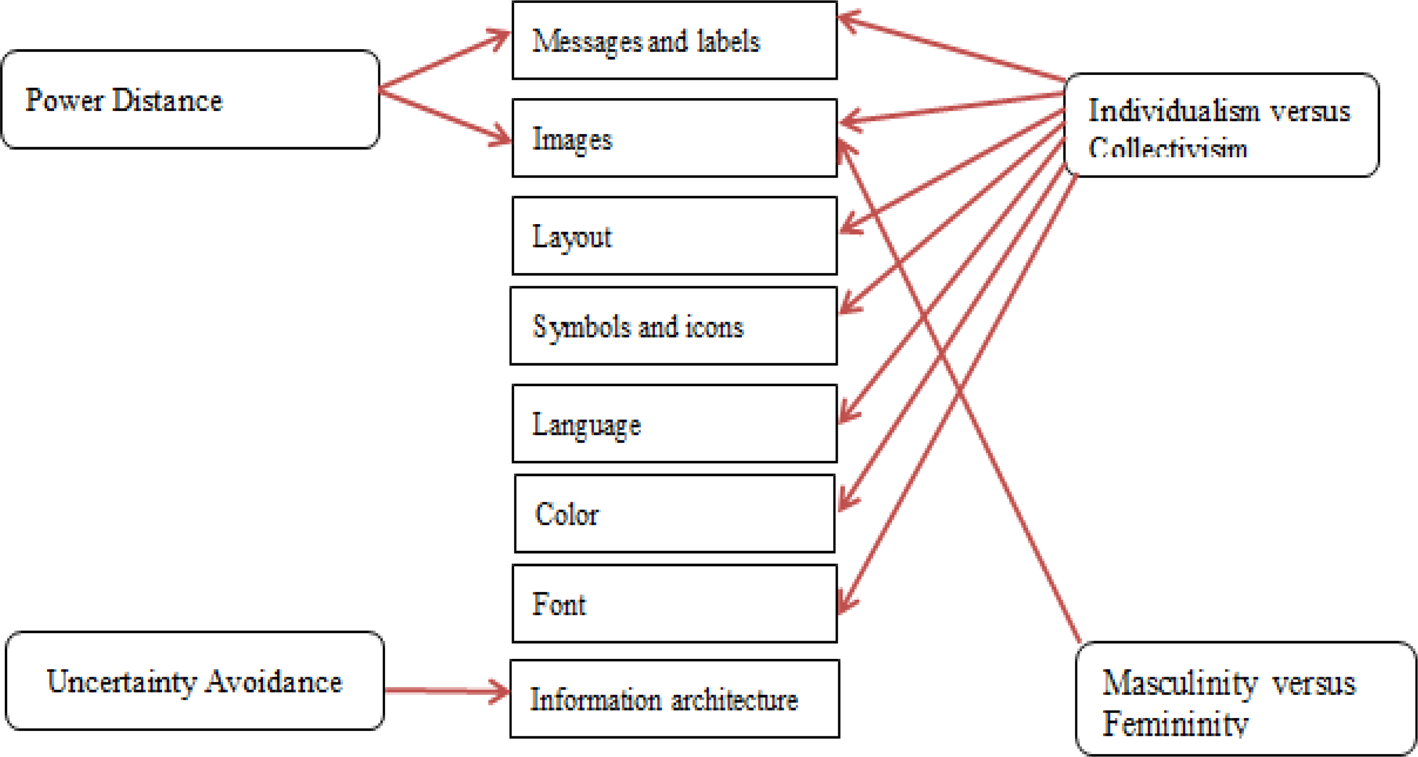
The relationships between the identified UI components and Hofstede's dimensions are mapped in Figure 2. Based on Hofstede's dimensions of culture, this study hypothesized that UI components (messages and labels, images, information architecture, layout, icons, language, color, and font) and cultural dimensions (power distance, uncertainty avoidance, individualism versus collectivism, and masculinity versus femininity) would influence UI usability and satisfaction.
1. Power distance: This dimension was incorporated into the design of UI by categorizing system users into several groups based on the level of privileges for using the system. UI components such as images, messages, and labels should be considered during the design process. Images should be designed to represent important sources of strength. Several researchers supported the use of images in UI design. For example, Geissler (Reference Geissler2001) reported that images and labels in the interface may create positive feelings and responses among users.
2. Uncertainty avoidance: Based on Hofstede's dimensions, Arab society does not like to take a risk and prefers to use traditional and established methods rather than trying out new ways. To apply this dimension in the UI design, designers should consider the properties of information architecture during the design process by avoiding complex screens and menus, unclear language, uncommon icons and symbols, and inconsistent grouping functions. Meanwhile, designers should also focus on simple design properties, in order to avoid confusion among users of the system (Pearson and Pearson, Reference Pearson and Pearson2008; Farage et al., Reference Farage, Miller, Ajayi and Hutchins2012).
3. Individualism versus collectivism: Hofstede (Reference Hofstede2001) stated that individuals in Arabic society have a high concern for devotion, reputation, dignity, shame, honor, and pessimism. Previous studies such as Barber and Badre (Reference Barber and Badre1998) and Khanum et al. (Reference Khanum, Fatima and Chaurasia2012) stated that color is one of the strongest cultural aspects that represents different meanings. Colors (e.g., green, blue, and black) that represent the Arab culture and their habits are inherited from the Islamic eras. As such, this dimension was linked to six UI components, namely color, language, layout, icons and symbols, font, and images. This mapping is supported by Marcus and Hamoodi (Reference Marcus and Hamoodi2009) and Mushtaha and De Troyer (Reference Mushtaha and De Troyer2012) who reported that Arabs prefer green and blue colors because they represent their culture. In addition, Khanum et al. (Reference Khanum, Fatima and Chaurasia2012) stated that language is the backbone of communication on any interface and has a direct impact on the user's perceived usability of it. In addition, Ahmed ALsswey et al. (Reference ALsswey, Naufal and Bervell2018a) reported that language is one of the most vital cultural aspects that reflect the identity of societies which may positively influence users' acceptance of a system. Thus, the use of Arabic language in the design of UI was due to its role in enhancing the acceptance and satisfaction of users when interacting with the display. The display of the content could be arranged from right to left (Ross and Gao, Reference Ross and Gao2016). In fact, using layouts to display information from right to left can help meet the demands of Arab readers, which are mainly derived from their religious beliefs. The literature also showed the role of using icons and symbols in UI design. Previous studies noted that icons have a direct correspondence with the elements of an interface, particularly through saving space and conveying information about the functionality of the system without using words (Rigou et al., Reference Rigou, Sirmakessis, Ventura, Fernández, Antonopoulos and Voros2019). Also, icons and symbols allow immediate recognition and better recall, and create certain visual effects (Horton, Reference Horton1991; Gefen et al., Reference Gefen, Karahanna and Straub2003). Fisk et al. (Reference Fisk, Rogers, Charness, Czaja and Sharit2009) indicated that when the meaning of an icon or a symbol is relevant to users' culture, they are likely to be satisfied. Avoiding unacceptable symbols in Arab culture is also important and could enhance user acceptance of the technology because Arab users tend to avoid products or technologies that contain culturally offensive images, such as pig head and the Star of David. Finally, Arabic fonts were also found to be an important UI component for Arab users. In many cases, interface designers tend to use Arabic fonts that are difficult to read or understand (Khanum et al., Reference Khanum, Fatima and Chaurasia2012). The Arabic font design must also be treated carefully because the characters in the Arabic language have overhanging and looping features in which few typographers have a native understanding of the script.
4. Masculinity versus femininity: Hofstede's dimensions revealed that Arab society has a more equal and balanced relationship between male and female. Using pictures of both males and females together in the design of an interface (i.e., applications, systems, and Websites) is likely to achieve a balance. Table 1 presents the proposed UI design guidelines based on Hofstede's dimensions for Arab users.
The relationship between Hofstede's dimensions and UI components.

Proposed guidelines

Thinking-aloud method
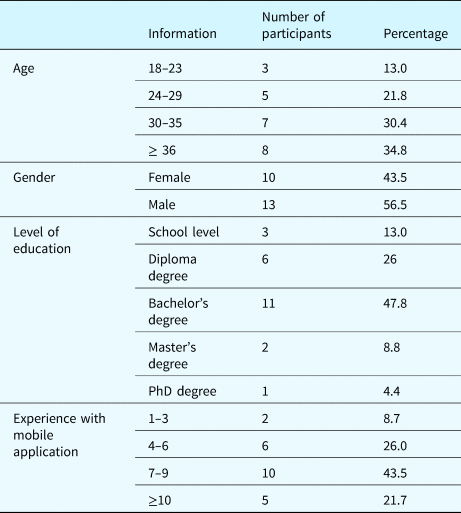
In this study, a think-aloud approach was used to collect information about the participants' perceptions of cultural aspects in UI design. Think-aloud is a research method in which participants speak aloud any words in their mind as they complete a task (Charters, Reference Charters2003). A total of 23 Arab users were recruited in the design phase. These interviewees were randomly selected, in which they were from various age groups and education levels. Each interviewee was given an information sheet describing the purpose of the study. In addition, a consent form was administered to each participant, which was signed and returned before the interview. Each interviewee was knowledgeable that the interview session would consist of two parts: demographic assessment (Part A), and design preferences (Part B) related to language, color, layout, information architecture, font, images, labels and messages, and symbols and icons. Table 2 shows the general demographic characteristics of interviewees.
Demographic characteristics of interviewees

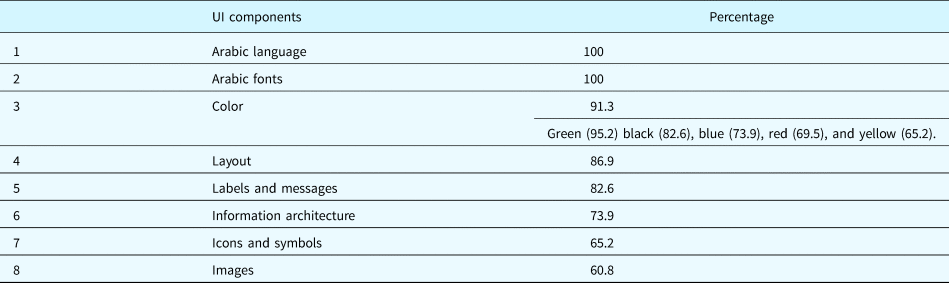
As shown in Table 2, the majority of participants were older than 36 years (n: 8; 34.8%). As for gender distribution, out of the 23 participants, 13 of them (56.5%) were male and 10 (43.5%) were female. In terms of users' experience with mobile applications, the mainstream of users (n: 10, 43.5%) had experience between 7 and 9 years. Table 3 shows the relevant statistics related to UI design preferences obtained from the participants.
Thinking-aloud method statistics

In this study, we performed the think-aloud method in two steps. First, we gathered data from the 23 participants during a think-aloud session. Here, we made sure that all the questions asked were as infrequently as possible because participants may easily get distracted when engaging in a problem-solving activity (Ericsson and Simon, Reference Ericsson and Simon1998). Then, follow-up questions about UI design components were asked. Other UI components, such as links and navigation, were ignored due to the limited evidence found in the literature about their role in Arab society.
When the participants were asked how the design elements can be used to ensure a culturally acceptable design, they identified that Arabic language and font type “ ” to be the most important cultural elements in UI design. In addition, some interviewees (n: 8) recommended a font type of “
 ”, while the majority preferred “
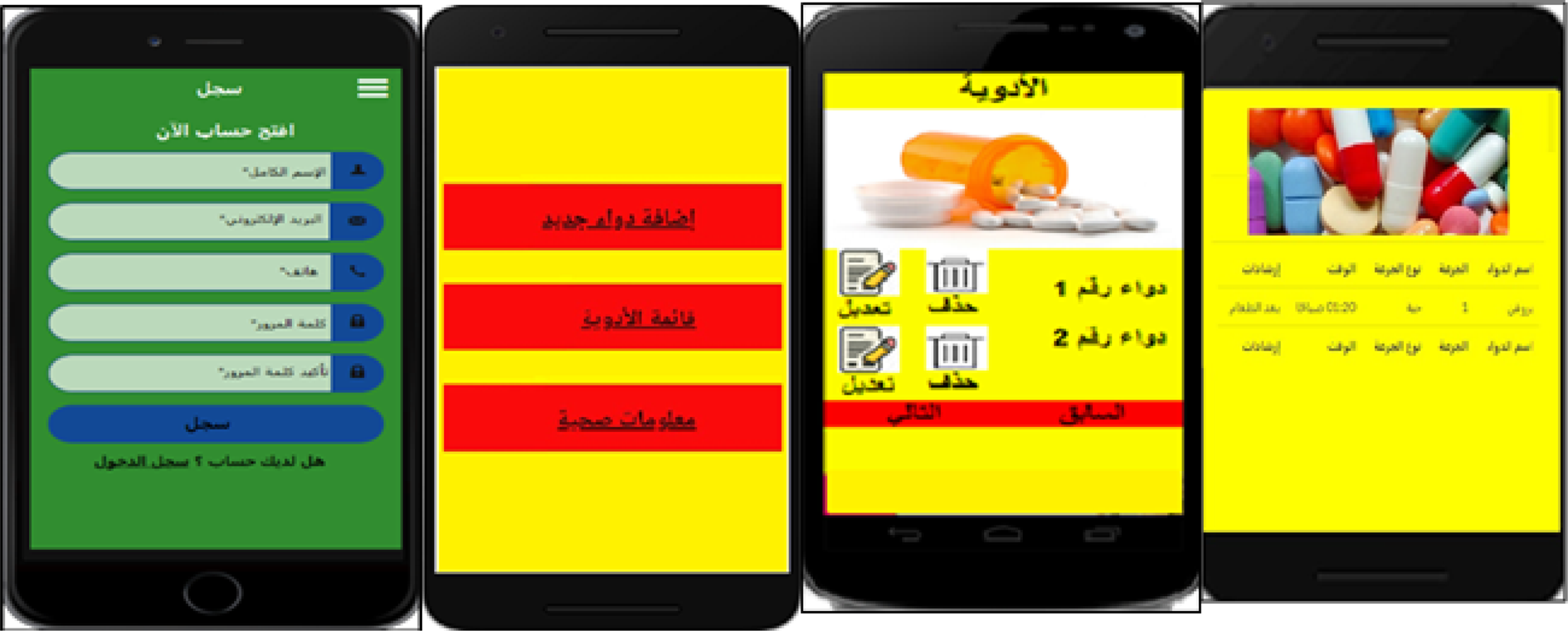
 ” font type. When the participants were asked about the color choice, the majority (95.2%) showed preferences for green, followed by black (82.6%), blue (73.9%), red (69.5%), and yellow (65.2%). As for the layout, 20 interviewees (86.9%) showed high preference for layout from right to left, in view of their reading style. In addition, a total of 19 interviewees (82.6%) agreed about the importance of labels and messages in the design of UI. They reported that labels and messages should be clear, simple, and short. By contrast, 17 interviewees (73.9%) highlighted the importance of information architecture, particularly to ensure consistency and continuity of the design. Finally, a total of 15 interviewees (65.2%) reported the importance of designing icons and symbols to be in line with the cultural values and customs of the Arabic world. Based on these suggestions, we designed a culturally mobile platform (mHealth) for Arab users to learn about various healthcare topics. Figure 3 shows the main screens of the proposed mHealth application.
The proposed mHealth application.

Method
Descriptive statistics analyses were used to investigate Arab users' satisfaction level with mHealth application. In addition, the Friedman test was also used to explore differences in-between cultural and age groups.
Instrument
For the UI evaluation process, a questionnaire was used to obtain quantitative data from the selected sample. The questionnaire used in this study was adapted (Chin et al. Reference Chin, Diehl and Norman1988). The first section of the questionnaire obtained the participants' background information. In the second section, 15 closed-ended items were distributed to the participants to evaluate the usability of the proposed mHealth UI design-based culture. For this, the Questionnaire for User Interface Satisfaction (QUIS) was used to measure users' attitude toward six interface factors [language (2 items), font (3 items), icons and symbols (3 items), layout (2 items), color (2 items), and overall application (3 items)]. The rating scale for the items was based on the 5-point Likert scale: strongly disagree, disagree, not sure, agree, and strongly agree.
Sample and data collection
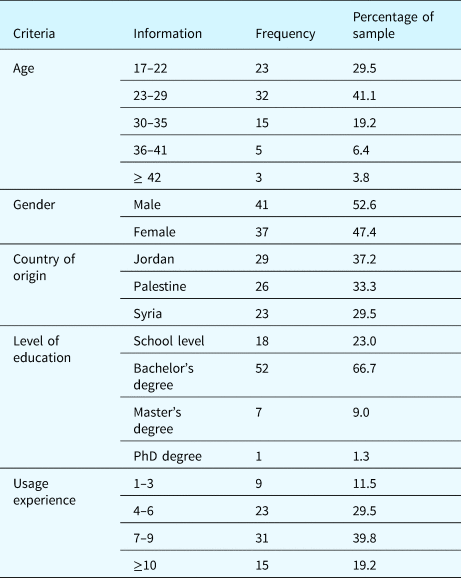
In this study, the target population was Arab users from three different Arab countries (e.g., Jordan, Syria, and Palestine) with experience in using mobile applications. This study employed a purposive sample technique to recruit the participants for this study. A total of 110 questionnaires were distributed and only 89 questionnaires were returned, which represent 80.9% of total responses. Out of the 89 questionnaires returned, 11 questionnaires were not answered fully, leaving us with 78 questionnaires for data analysis. Based on Table 4, the mainstream of the participants (n: 32 or 41.1%) were within the 23–29 age group, followed by 23 participants (29.5%) who were within the ages of 17–22 years, 15 participants (19.2%) within the ages of 30–35 years, 5 participants (6.4%) within 36–41 age group, and only 3 participants (3.8%) were equal or over 42 years old. In addition, 41 (52.6%) participants were male and 37 (47.4%) were female. A total of 29 (37.2%) participants were Jordanian, 26 (33.3%) Palestinian, and 23 (29.5%) Syrian. The mainstream of the participants (n: 31 or 39.8%) reported to have 7–9 years of experience in using mobile applications, followed by 23 participants (29.5%) who had 4–6 years of experience.
Demographic information of the participants

Results
The reliability test using Cronbach's alpha was conducted to assess the consistency and internal reliability of the items used in this study. The overall reliability result was 0.843 indicating acceptable reliability value (van Griethuijsen et al., Reference van Griethuijsen, van Eijck, Haste, den Brok, Skinner, Mansour and BouJaoude2015).
Descriptive statistics
Descriptive analysis was used to analyze the collected data from the evaluation survey. The satisfaction level of the participants was determined by the interval level equation which was adapted from Landell (Reference Landell1997) and applied by several authors (Awajan and Dweik, Reference Awajan and Dweik2010; Pihie and Bagheri, Reference Pihie and Bagheri2012; Azman et al., Reference Azman, Silva, Samah, Man and Shaffril2013; Saari and Mat Rashid, Reference Saari and Mat Rashid2013; Wimolmas, Reference Wimolmas2013):
 $$\eqalign{{\rm Interval}\;{\rm level} &= {\rm maximum}\;{\rm point} \cr &\quad -{\rm minimum}\;{\rm point/number}\;{\rm of}\;{\rm levels}}$$
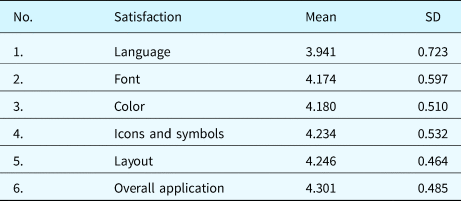
By applying the above equation, the interval level can be calculated as follows: 5–1/3 = 1.33. Constructs were evaluated at three levels of satisfaction: low level (1–2.33), moderate level (2.34–3.67), and high level (3.68–5). The highest value indicates high satisfaction of users with the mHealth UI, whilst the lowest value indicates low satisfaction of users with the mHealth UI. The values shown in Table 5 indicate that the participants had a high level of satisfaction with the UI design for mHealth application with a mean value of 4.17 (SD: 0.560). All the mean values for the satisfaction items were in the range of 3.94–4.30. The overall users' satisfaction of mHealth based on the proposed culturally design guidelines recorded a highest mean value ( $\bar{{\rm x}}\colon 4.30$; SD: 0.485), followed by layout (
 $\bar{{\rm x}}\colon 4.24$; SD: 0.464), icons and symbols (
 $\bar{{\rm x}}\colon 4.23$, SD: 0.532), and color (
 $\bar{{\rm x}}\colon 4.18$, SD: 0.510), respectively. The choice of language recorded the lowest mean value (
 $\bar{{\rm x}}\colon 3.97$; SD: 0.703). Based on these, it can be said that Arab users were strongly satisfied with the UI design-based culture.
Descriptive statistics results of Arab users' satisfaction with the mHealth UI

Friedman test
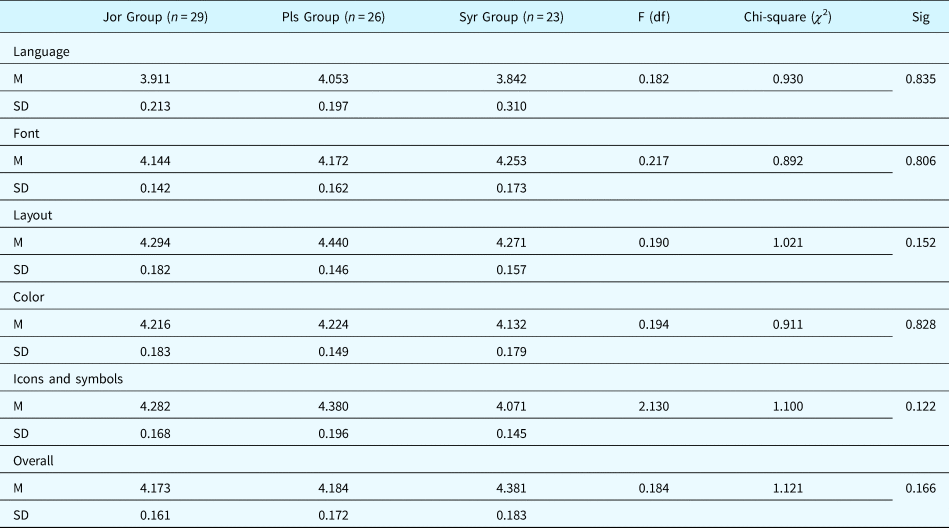
The Friedman test was employed to examine for any statistically significant differences in Arab users' satisfaction with regard to their country of origin (Jordan = Jor, Palestine = Pls, and Syria = Syr). It was essential to test whether in-between cultural preferences across countries exist or not between users from different Arab countries. For the grouping effects on the language used in the design of the UI, the results (see Table 6) indicated no significant differences among Jor, Syr, and Pls groups [χ 2(0.182) = 0.930, p = 0.835]. This may be related to the fact that most of Arab countries share the same language (Arabic language). The results also showed no significant differences in users' preferences for the font type among Jor, Syr, and Pls groups [χ 2(0.217) = 0.892, p = 0.806]. This can be due to the users' familiarity with the " " font type in reading. In addition, there were no significant differences between groups with regard to the layout design [χ 2(0.190) = 1.021, p = 0.152], which is due to that Arab people read and write from right to left. Regarding the choice of color, there were no differences among groups [χ 2(0.194) = 0.911, p = 0.828]. It is possible that the chosen colors have the same meanings for all Arab countries because they were shaped based on the Islamic standards in the past. For the grouping effects on users' choice of icons and symbols, the results showed no significant differences among groups [χ 2(2.130) = 1.100, p = 0.122]. This can be linked to the fact that Arab cultures are, for the most part, traditional and involves many practices and norms revolving around Islamic beliefs and customs. Finally, for the grouping effects on the overall application design, we also found no significant differences among groups [χ 2(0.184) = 1.121, p = 0.166]. This was expected because Arab users, in general, share similar Islamic values, thus shaping their cultural preferences toward the design of UI. We also carried out Dunn–Bonferroni post hoc tests and there were significant differences between the Jor Group and the Syr Group (p = 0.032), the Pls Group and the Syr Group (p = 0.014) with regard to the role of color in UI design. The Dunn–Bonferroni test also showed no significant differences between the three cultural groups with regard to the language used in the design of UI, layout, icons and symbols, and overall perception of UI design. However, these non-significant results may be due to certain cultural associations which participants from different countries share. For example, cross-language similarity may have created a sense of control over the interface. It is also possible that the choice of font and layout in UI design for the Arabic culture have remained basically unchanged, thus no significant differences can be established. It is also worth noting that icons and symbols are routinely applied across a wide range of user interfaces to increase users' familiarity and confidence.
Friedman test results for country of origin

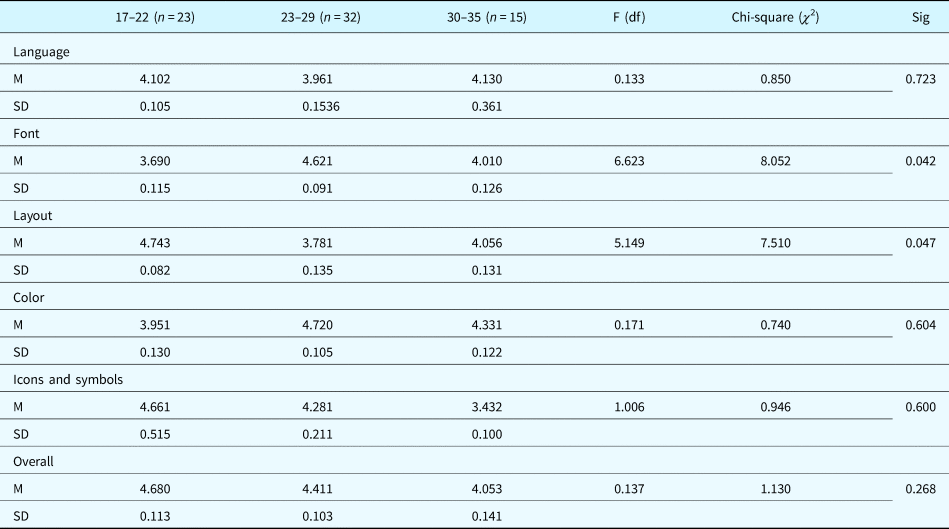
The Friedman test (see Table 7) was also used to examine for any statistically significant differences in Arab users' satisfaction with regard to their age group (18–23; 23–29; and 30–35). Age groups greater than 36 were not considered in this test due to the small number of participants. Users' satisfaction with the language used in the design of the UI was not significant among the three age groups [χ 2 (0.133) = 0.850, p = 0.723]. As for the font type used in the design of UI, the results showed significant differences among users [χ 2(6.623) = 8.052, p = 0.042]. In addition, there were significant differences between groups with regard to the layout design [χ 2(5.149) = 7.510, p = 0.047]. Regarding the choice of color, there were no differences among groups [χ 2(0.171) = 0.740, p = 0.604]. As for users' choice of icons and symbols, the results showed no significant differences among groups [χ 2(1.006) = 0.946, p = 0.600]. The results showed no significant differences with regard to overall application design [χ 2(0.137) = 1.130, p = 0.268]. The Dunn–Bonferroni test was also used to determine differences between users' UI satisfaction with regard to their age groups. The results showed a significant difference in font type between the 17–22 group and the 30–35 group (p = 0.022). We also found a significant difference in users' satisfaction with the layout between the 17–22 group and the 30–35 group (p = 0.010). However, we did not find any significant differences between the three age groups with regard to their perception of the language used, color, icons and symbols, and overall satisfaction of the interface. These non-significant results can be due to the reasons discussed above.
Friedman test results for age group

Discussion and future works
This paper examined the role of Hofstede's dimensions of Arab culture in an attempt to develop UI design guidelines for Arab users. The literature was used as the main source for extracting the UI design elements. Then, a thinking-aloud method was used to conceptualize the design components for Arab culture. These components were mapped across the dimensions of power distance, individualism and collectivism, uncertainty avoidance, and masculinity versus femininity.
The result of users' satisfaction toward the cultural-based mHealth UI design was high. This indicates that the integration of certain cultural values into the design of UI would enhance users' abilities to effectively use technologies. The findings showed that the design layout was highly perceived by Arab users when using mHealth application. It is assumed that using a layout that meets users' cultural and emotional needs may facilitate their information processing and enable them to maintain cognitive consistency. In addition, the design layout of most mobile applications is from left to right, which does not reflect their own culture. This finding on the design of the UI layout is supported by Ross and Gao (Reference Ross and Gao2016), who stated that following a specific culture that is recognizable by specific user groups is essential for promoting the adoption of a new system.
The results also showed that both icons and symbols were highly perceived by Arab users. One reason to this is that the intended context can be recognized more quickly with icons and images than by reading a text message or label (Al-Samarraie et al., Reference Al-Samarraie, Eldenfria, Price, Zaqout and Fauzy2019b, Reference Al-Samarraie, Eldenfria, Zaqout and Price2019c). This finding is in line with the work of Meyer and Bernier (Reference Meyer and Bernier2010) and Al-Samarraie et al. (Reference Al-Samarraie, Eldenfria, Dodoo, Alzahrani and Alalwan2019a) which states that product design should consider and be compatible with the targeted culture and social values. Arab users also showed a high satisfaction level toward the chosen UI colors. This finding also supported by different previous studies on the role of color in designing cultural-based interface, such as that by Plass (Reference Plass1998) and Walton et al. (Reference Walton, Vukovic’ and Marsden2002). These authors recommend the need for designing products that are restricted to a particular culture or group of cultures. In addition, this finding is in line with the work of Hasan et al. (Reference Hasan, Al-Sammerai and Kadir2011), who stated that red and yellow are frequently used in Arab culture to attract the attention of people.
The choice of font type and language in the design of UI also recorded a high score of satisfaction among users. This indicates that using local language in UI design is essential for ensuring the acceptance and success of any technology and product in society-specific cultural practices (Hudson and Hall, Reference Hudson and Hall1997; Mirri et al., Reference Mirri, Roccetti and Salomoni2018). The findings are also supported by few previous studies on the use of formal language in UI design. For example, Medhi et al. (Reference Medhi, Patnaik, Brunskill, Gautama, Thies and Toyama2011) stated that the usability of an interface improves when the designer or developer considers the native language of the end-users. In order to confirm whether differences in users' satisfaction were constant across countries of similar culture, we used the Friedman test. The results showed no significant differences exist among groups with regard to users' satisfaction with the interface. This is due to that Arab countries are determined as one unit that share the same cultural aspects, religious beliefs, and customs (Shahin and Wright, Reference Shahin and Wright2004; Kalliny and Gentry, Reference Kalliny and Gentry2007; Benaida, Reference Benaida2014). In addition, differences in users' satisfaction with regard to their age groups were also examined. In terms of language, color, icons and symbols, and overall satisfaction with the use of UI design-based culture, the results showed no significant differences between different age groups. However, significant differences were found among users with regard to the font of the UI. This can be reasoned to that individuals' preferences to different font types may vary depending on their age group. For example, younger individuals tend to use smaller font size than individuals of other age groups (Darroch et al., Reference Darroch, Goodman, Brewster and Gray2005). The results also showed significant differences between groups with regard to the layout design, which can be linked to that younger users are more used to modern design layout than other age groups.
Despite these findings, this study has some limitations that could be considered in future work. First, four out of six dimensions of Hofstede were used in this study. As per Hofstede's (Reference Hofstede2001) study, the rest of the dimensions were not applied because limited information was gathered from Arab countries. In addition, the proposed guidelines may not provide a full picture regarding the relationship between culture and design of UI in Arab countries. Second, the UI design was limited to the Arab culture, therefore making it difficult to generalize the results to populations of other cultures. Based on these limitations, it is proposed that future studies may employ other cultural models like Hall (Reference Hall1976) to design culturally UI guidelines. Future studies may also consider examining the acceptance of users toward culturally UI design among users of different cultures.
Practical implications
Since many countries in the Arab world lack usability guideline to support usable and effective mobile app UI design, this study findings add new insights into the design of Arabic UI by introducing new design guiltiness that are relevant to users of certain cultural backgrounds. For example, using Arabic language with certain type of fonts in the design of mobile UI can give an accurate expression to users which can be characterized by clarity, serenity, quality, and integrity of the structures. This is because Arabic font has several different types and styles rated from easy-to-read (e.g.,  ) to hard-to-read (e.g.,
 ). This study also adds to the current Nielsen's usability guidelines in that it shows the importance of color choice in the design of UI for Arab users, offers clarity of view, attracting the attention of users, aesthetics and expression of many different meanings according to their culture. In addition, this study provides clue to UI designers about the importance of avoiding certain symbols when designing interfaces for Arab users. Based on these, it can be said that the implications of the proposed culturally UI design provide substantial benefits not only for the designer or developer of mobile applications but also for the users of mobile applications. Numerous practical suggestions, such as encouraging users to use applications and systems in relation to their cultural values may reflect positively on their technological applications. The following is a summary of the proposed guidelines:
1. Language: Using formal language and common words in UI design will improve understanding of the content and consequently decrease the time for a user to learn the system.
2. Font: Avoiding the use of font types that may cause users to avoid the system is essential in the design of UI.
3. Color: Using culturally colors in the Arab world such as green, blue, and black can increase users' satisfaction with the system by increasing their level of attention and concentration on the task at hand.
4. Layout: The choice of the layout should be based on the target culture of the specific language society because the arrangement of UI components may influence users' abilities to process information effectively.
5. Information architecture: Using a simple design (relevant function groups) can help users become more effective in their information searching. The design also should be centered around theory, research, and practice to properly reflect the requirements of the different cultures.
6. Symbols and icons: Using symbols and icons that are relevant to the target cultural and religious values can increase users' satisfaction with the system.
7. Label and messages: Using feedback messages and clear labels in the design of any interface might increase users' confidence in using the system.
8. Images: Images should reflect the collectivist nature of Arab people. For example, UI designers should avoid images of women wearing short or skimpy clothes as it is not common for women in the Arab world.
Financial support
This research was supported by the Deanship of Scientific Research at AL-Zaytoonah Private University of Jordan Research No. 2020-2019-32/16.
Conflict of interest
The author(s) declared no potential conflicts of interest with respect to the research, authorship, and/or publication of this article.
Ahmed Alsswey obtained his PhD in Multimedia (Human–Computer Interaction) from University Science Malaysia in 2019 from Malaysia. MSc in Computer Information Systems in 2007 from Jordan. He is now working as Assistant Professor in the Department of Multimedia Technology at AL-Zaytoonah University of Jordan. He doses research in HCI, Informatics, Educational Technology, and Computer Graphics. His current research focuses on the design of UI based on certain psychological characteristics, software quality, and virtual reality.
Hosam Al-Samarraie is an academic member of staff at Coventry University, UK. Prior to joining Coventry University, he worked for 7 years at Universiti Sains Malaysia. His research is interdisciplinary in nature in that it pivots on the integration of various aspects of human–computer interaction, technology utilization, and behavioral modeling with emphasis on visualization, managing, clustering, and prediction of individual behaviors/factors in different situations. He is also interested in UX/UI and how central they are to one's perception, satisfaction, and interaction. His recent projects have focused primarily on the use of machine learning and multicriteria decision-making methods to analyze, model, and predict key aspects related to users' design preferences, visual interaction, and technology utilization.
APPENDIX: Questionnaire for User Interface Satisfaction
Language
1. Using formal language in this interface improves my understanding of the content.
2. Using common words in this interface decreases the time for a user to learn the app.
Font
3. Using common font type in this interface would be easy for me to understand the contents of this app.
4. The font used in this app is readable and clear.
5. This design avoid the use of common font types that may cause me to avoid using it.
Color
6. The color of components in this design is clear.
7. The color of the interface components is attractive.
Icons and symbols
8. The icons and symbols used in this app are easy to recognize.
9. The icons and symbols used in this app are relevant to my culture.
10. The icons and symbols used in this app are common.
Layout
11. The design of this app is simple and not complex to use.
12. The app is easy to navigate.
Overall
13. The design of this app is satisfying.
14. The design of this app is wonderful.
15. The design of this app is flexible.