Introduction
A large number of depressive patients (33%) do not respond to an antidepressant treatment even after more than four trials with conventional treatment methods (Rush et al. Reference Rush, Trivedi, Wisniewski, Nierenberg, Stewart and Warden2006). For these patients suffering from treatment-resistant depression (TRD), deep brain stimulation (DBS) is currently under research as a new treatment method. Different brain regions, namely the subgenual cingulate cortex, the nucleus accumbens, the anterior limb of the capsule interna, and the supero-lateral branch of the medial forebrain bundle (slMFB) have been stimulated with antidepressant results in about 40–70% of the patients (Lozano et al. Reference Lozano, Mayberg, Giacobbe, Hamani, Craddock and Kennedy2008; Malone et al. Reference Malone, Dougherty, Rezai, Carpenter, Friehs and Eskandar2009; Bewernick et al. Reference Bewernick, Hurlemann, Matusch, Kayser, Grubert and Hadrysiewicz2010; Bewernick et al. Reference Bewernick, Kayser, Sturm and Schlaepfer2012; Bewernick et al. Reference Bewernick, Kayser, Gippert, Coenen and Schlaepfer2017a, Reference Bewernick, Kayser, Gippert, Switala, Coenen and Schlaepferb).
There are individual reports of changes in the patients’ social behavior after the treatment of Parkinson's diseases with DBS of the subthalamic nucleus (STN) (Schüpbach et al. Reference Schüpbach, Gargiulo, Welter, Mallet, Béhar and Houeto2006; Glannon, Reference Glannon2009; Pham et al. Reference Pham, Solbakk, Skogseid, Toft, Pripp and Konglund2015). These observations raise the question, whether DBS can induce changes in personality in TRD, but the relationship between DBS and personality has not been assessed systematically until now. Probably, stimulation of different target sites could influence personality uniquely, and thus the assessment of personality could be an important aspect of the side-effect profile of the respective target. For example, the slMFB as a key structure of the reward system (Coenen et al. Reference Coenen, Panksepp, Hurwitz, Urbach and Mädler2012) could have a special influence on extraversion.
It is obvious that the constructs of depression and personality are overlapping and difficult to dissociate. Depression and personality are correlated, and it is known that depressive patients score higher in neuroticism and lower in extraversion and conscientiousness compared with a healthy normative sample (Kotov et al. Reference Kotov, Gamez, Schmidt and Watson2010). Personality dimensions are discussed as a predictor for the antidepressant response (Huys et al. Reference Huys, Bartsch, Koester, Lenartz, Maarouf and Daumann2016), and changes in the personality profile have been described in responders (Bagby et al. Reference Bagby, Quilty and Ryder2008).
Two hypotheses on the relationship of personality and depression are discussed: the ‘state model’ assumes transient, state-dependent changes of personality related to the severity of depression. In the contrary, irreversible, long-term changes of personality after depressive episodes have been proposed in the ‘scar model’ (Klein et al. Reference Klein, Kotov and Bufferd2011). Furthermore, it is debated that if the patients are able to judge their personality validly during a depressive episode (Bagby et al. Reference Bagby, Rector, Bindseil, Dickens, Levitan and Kennedy1998; Klein et al. Reference Klein, Kotov and Bufferd2011).
This study explored (1) how DBS of the slMFB is associated with personality in patients suffering from TRD. Furthermore, we investigated (2) the association between personality and depression and treatment response and (3) compared patients’ self-ratings of personality with observer ratings to obtain information on the validity of the self-ratings of depressive patients.
Methods and materials
Patients
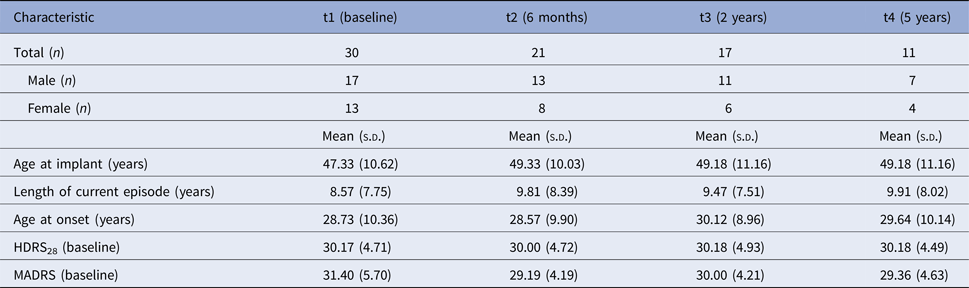
At baseline, we included 30 patients suffering from TRD (13 females, 17 males, mean age 49 years). Patients were eligible for inclusion if they were between 20 and 70 years of age and had received a primary diagnosis of major depressive disorder (MDD), determined according to the criteria of the Diagnostic and Statistical Manual of Mental Disorders, Fourth Edition [DSM-IV; assessed with Structured Clinical Interview after DSM-IV SCID-I]. Selection criteria were a minimum score on the 24-item Hamilton Depression Rating Scale (HDRS24) of 21 and a score in Global Assessment of Function (GAF) below 45. Further inclusion criteria were at least four episodes of MDD or chronic episodes over 2 years; more than 5 years after the first episode of MDD; failure to respond to adequate trials of primary antidepressants from at least three different classes; adequate trials of augmentation/combination of a primary antidepressant using at least two different augmenting/combination agents; an adequate trial of electroconvulsive therapy (more than six bilateral treatments); an adequate trial of individual psychotherapy (more than 20 sessions, cognitive behavioral therapy, cognitive behavioral analysis system of psychotherapy); and no psychiatric co-morbidity and drug-free or on stable drug regimen at least 6 weeks before study entry. Exclusion criteria were current or past non-affective psychotic disorder; any current clinically significant neurological disorder or medical illness affecting brain function, or severe personality disorder (assessed with SCID-II). All patients to be included in the study had severe TRD (for demographic details, see Table 1). Treatment resistance was assessed with the antidepressant treatment history form (Sackeim, Reference Sackeim2001).
Demographic and clinical characteristics

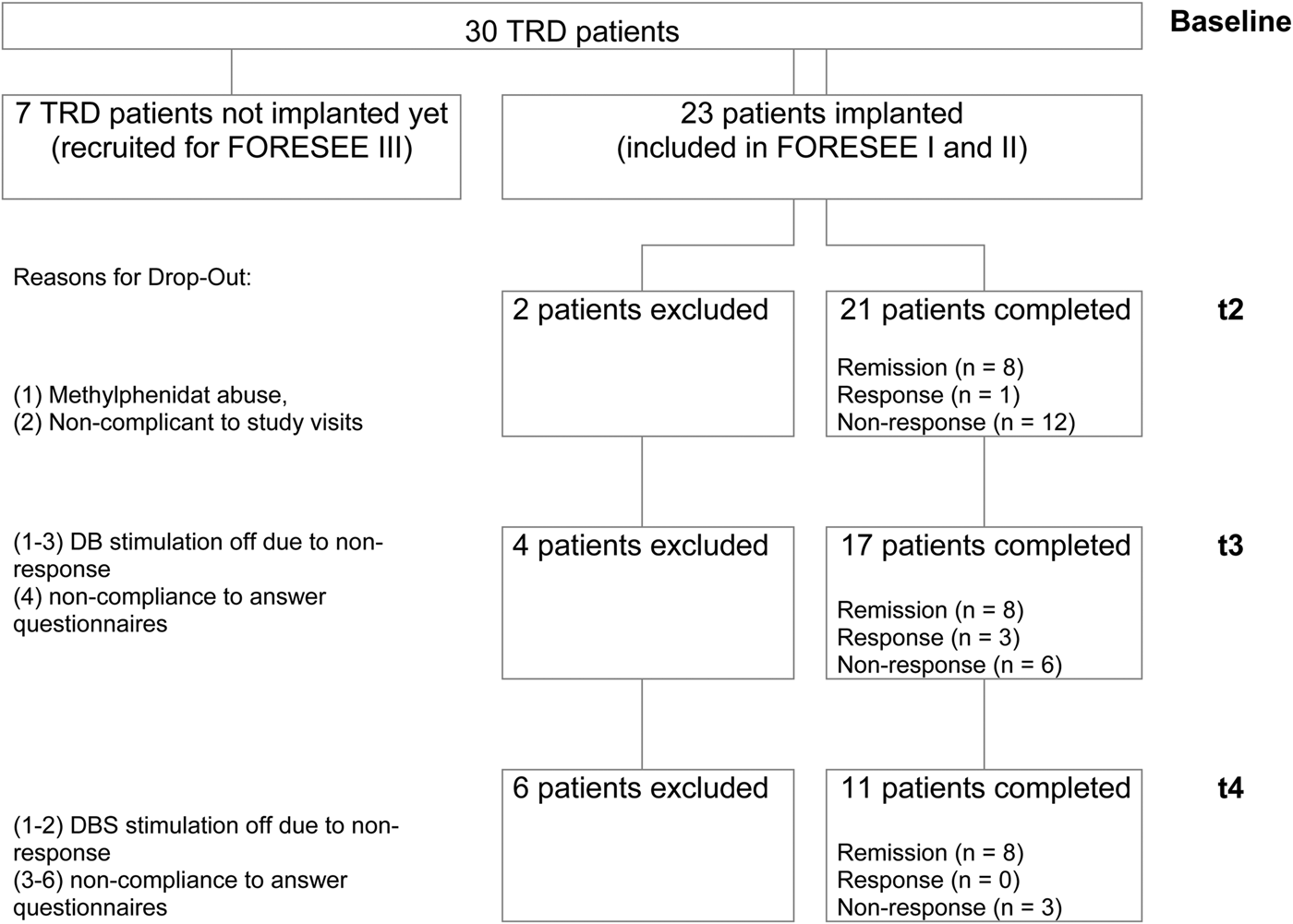
At baseline, patients were included from three different studies: patients of the study FORESEE I (n = 7) were implanted in the years 2011/2012 (registered at clinicaltrials.gov with the identifier NCT01095263), patients of the study FORESEE II (n = 16) were implanted in the years 2014/2015 (registered at clinicaltrials.gov with the identifier NCT01778790), patients of the study FORESEE III (n = 7) were not implanted yet, so that they could only be included in the baseline analysis.
In the follow-up, several patients (n = 12) had to be excluded from the analyses because DBS was stopped due to non-response (n = 6) or because of non-compliance to answer the questionnaires (n = 5) and methylphenidat abuse (n = 1). In the last observation, 5 years after the onset of DBS, data of 11 patients could be evaluated (Fig. 1).
Flow of patient number included from baseline to t4.

Assessment and study protocol
The patients were assessed before DBS (baseline), 6 months after the onset of DBS (t2), 2 years after the onset of DBS, (t3) and up to 5 years after the onset of DBS (t4). Relatives were asked to rate the personality of the patients at baseline (during the depressive episode) retrospectively and at t4.
Data of 14 relatives or significant others could be included in the baseline analyses, and data of nine relatives could be included in the follow-up analyses at t4. The relatives were included in the analysis because they knew patients better than, for example, the investigator team and inter-rater reliability could be evaluated to prevent a possible depression-induced rating bias (Bagby et al. Reference Bagby, Rector, Bindseil, Dickens, Levitan and Kennedy1998; Klein et al. Reference Klein, Kotov and Bufferd2011). Self- and observer personality ratings are known to be highly correlated (Connolly et al. Reference Connolly, Kavanagh and Viswesvaran2007).
Personality was measured with the German version of the NEO-Five-Factor Inventory (NEO-FFI; Borkenau and Ostendorf, Reference Borkenau and Ostendorf2008). The NEO-FFI is a self-rating instrument. For the observer rating, the items were transformed in the third person. The NEO-FFI consists of five factors: neuroticism, extraversion, openness to experience, agreeableness, and conscientiousness.
Depression was assessed with the HDRS (Hamilton, Reference Hamilton1960) and the Montgomery–Åsberg Depression Rating Scale (MADRS; Montgomery & Asberg, Reference Montgomery and Asberg1979). Both instruments are observer-rating depression scales and measure the severity of the depression in clinical samples. On the basis of these instruments, the depression can be classified as mild, moderate, or severe.
Additionally, patients were asked in a half-standardized interview if they perceive changes in personality since the onset of DBS.
Statistical analysis
Depression outcome was analyzed using Student's t test for dependent samples comparing baseline v. t2, t3, and t4. Baseline personality profiles were compared with a healthy normative sample with Student's t test for one sample corrected for multiple comparisons (Bonferroni correction). Change of personality was analyzed using Student's t test for paired samples comparing baseline v. t2 (n = 21). This analysis was performed extra besides analysis of variance (ANOVA) over all four time points, because ANOVA can only include complete data sets. Change of personality over four time points was analyzed with ANOVA for repeated measures and the factor TIME (n = 14). Results are reported with Greenhouse–Geisser correction, because of the small sample size.
Correlation analyses of personality traits and severity of depression were performed for the outcome 6 months after the onset of DBS (t2) with Pearson's correlation coefficient. Analyses were performed for t2 because of small variance in depression severity at baseline and because of small sample sizes at t3 and t4 (n < 20). Baseline personality dimensions were correlated with the reduction of depressive symptoms 6 months after the onset of DBS for the evaluation of predictors of antidepressant response.
Reliability of the self- and observer ratings was analyzed with Cronbach‘s α for the NEO-FFI. Patients and observers were compared at baseline and at t4. Self- and observer ratings of each personality dimension were correlated using Spearman correlation because of the small sample size. Finally, the average values of self- and observer ratings were compared using Student's t test for paired samples.
Interviews were analyzed using qualitative content analysis (Mayring, Reference Mayring2010).
Results
Demographic and clinical characteristics
The patients (n = 30; 13 women and 17 men) were in average 47 years old at the implantation (s.d. 10.62) and had a mean onset age of the first depressive episode of 29 years (s.d. 10.36). The mean length of current depressive episode was 8.6 years (s.d. 7.75). At t4, 11 patients were included at the long-term outcome. Compared with the 30 patients at baseline, there is no significant change seen in the demographic variables (Table 1).
Clinical outcomes
Depression
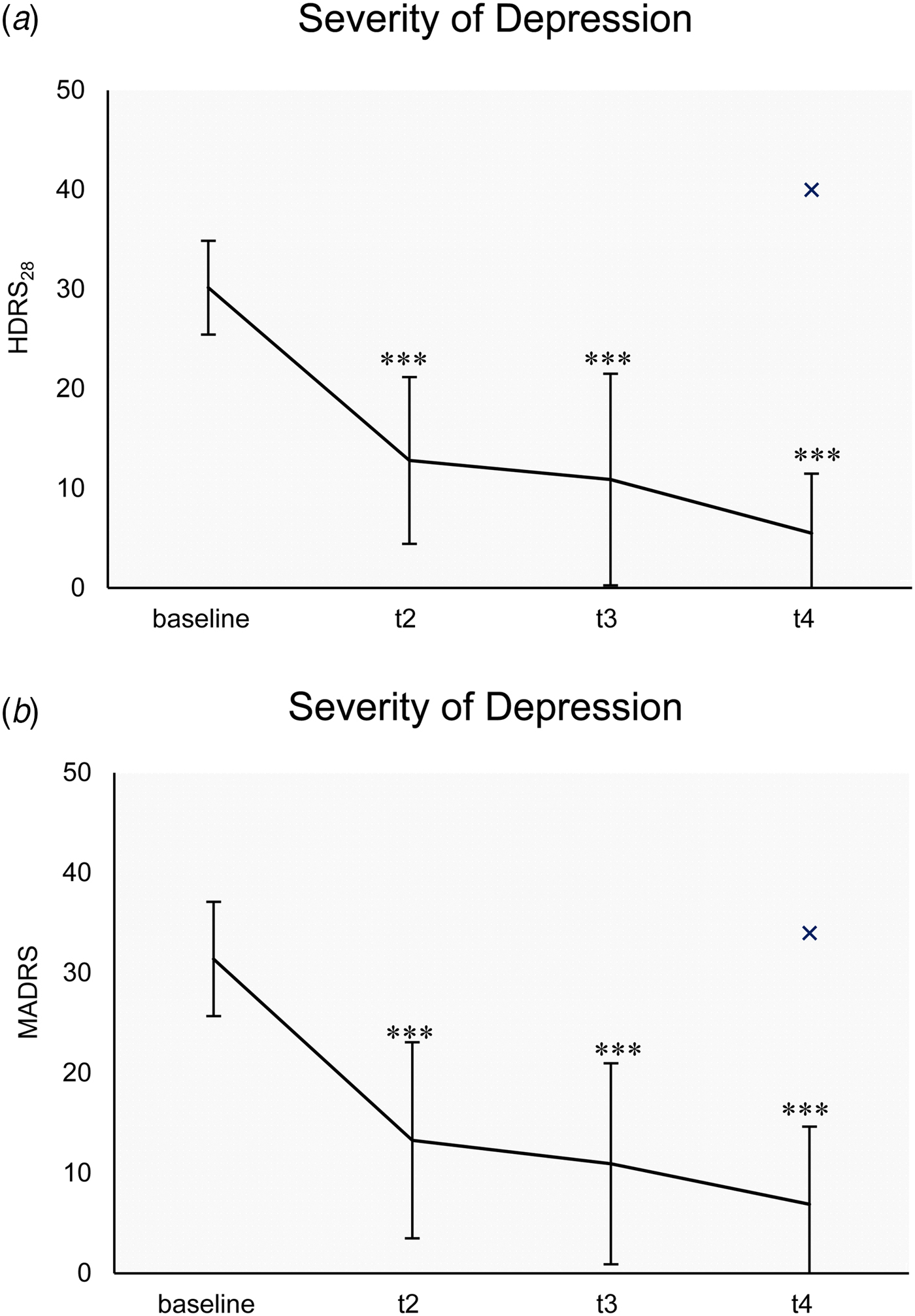
At baseline, the mean score of HDRS28 was 30.17 (s.d. 4.71) and the mean score of MADRS was 31.40 (s.d. 5.70) both indicating severe depressive symptoms. Six months after the onset of DBS (t2), the mean score of HDRS28 [t (20) = 7.80; p < 0.001] and the mean score of MADRS [t (20) = 7.69; p < 0.001] were significantly reduced compared with the baseline. At t3, HDRS28 [t (16) = 7.14; p < 0.001] and MADRS [t (16) = 7.227; p < 0.001] as well as at t4 for both HDRS28 [t (10) = 5.38; p < 0.001] and MADRS [t (10) = 6.40; p < 0.001], the reduction of severity of depression was significant compared with the baseline scores (Fig. 2). At t4, there was one non-responder, showing outlining scores (HDRS = 40; MADRS = 34). The other 10 patients had an average HDRS28 of 5.50 (s.d. 5.99) and MADRS of 6.90 (s.d. 7.75).
(a) Severity of depression (mean and standard deviation) as measured with the Hamilton Depression Rating Scale (HDRS_28). Student's t test, baseline v. t2, t3, and t4; ***p < 0.001. (b). Severity of depression (mean and standard deviation) as measured with the Montgomery–Asberg Depression Rating Scale (MADRS). Student's t test, baseline v. t2, t3, and t4; ***p < 0.001.

Personality
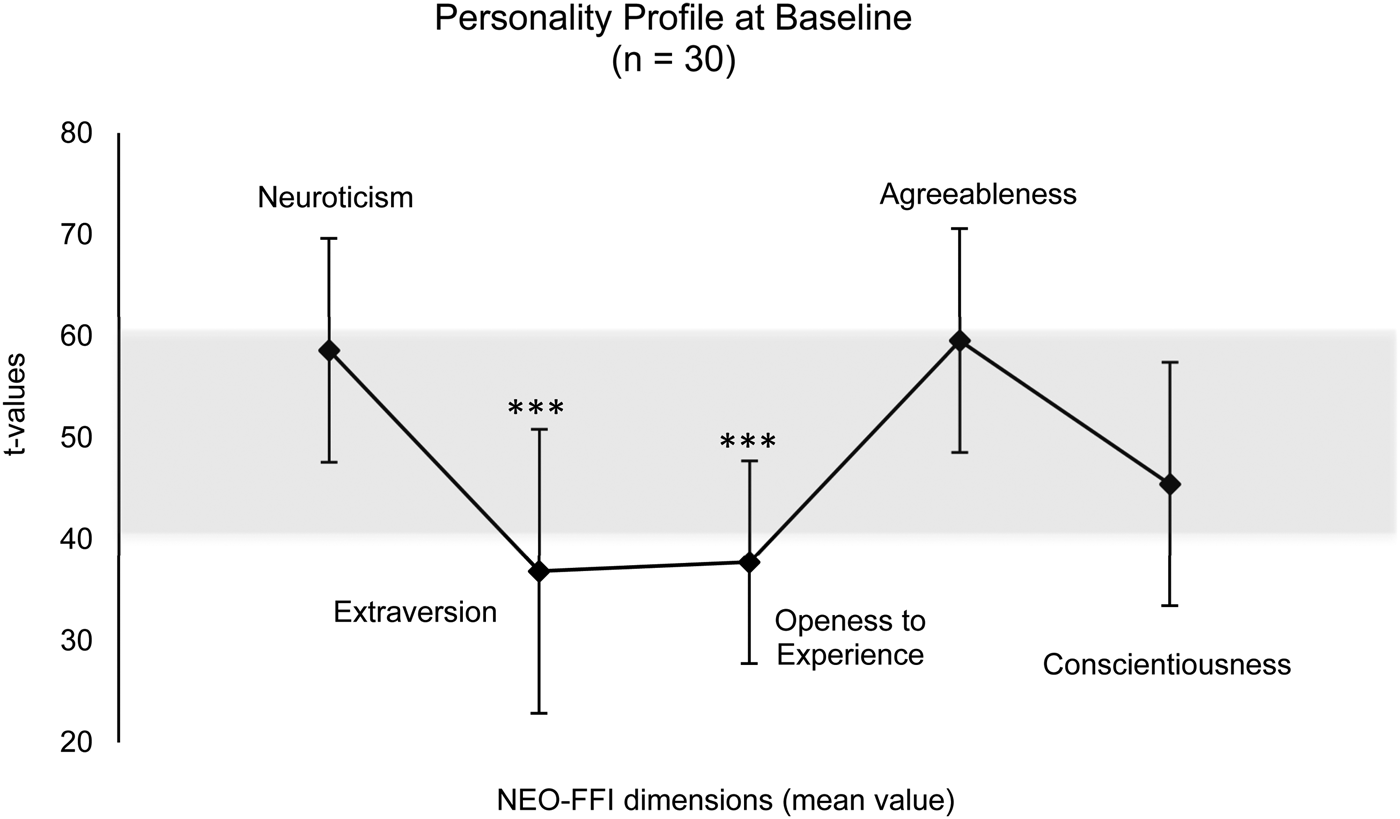
The personality profile of chronic, severe TRD patients (n = 30) was compared with the healthy normative sample (M = 50; s.d. = 10) (Fig. 3). At baseline, TRD patients showed significantly reduced scores in extraversion [t (29) = −5.20; p < 0.001], openness to experience [t (29) = −6.96; p < 0.001], and conscientiousness [t (29) = −2.04; p < 0.05] as well as increased scores in neuroticism [t (29) = 4.45; p < 0.001] and agreeableness [t (29) = 4.58; p < 0.001].
Personality dimensions at baseline. TRD patients (n = 30) compared with the healthy normative sample (mean and standard deviation). ***Clinically significant (more than one standard deviation, s.d. 10). Data within the gray-shaded area are within the range of the healthy normative sample.

Comparing patients’ scores to standard values (t-values), patients scored statistically significant lower in extraversion and openness to experience. All other measures were within the range of one standard deviation and thus not judged as clinically deviant (>1 standard deviation lower than the mean).
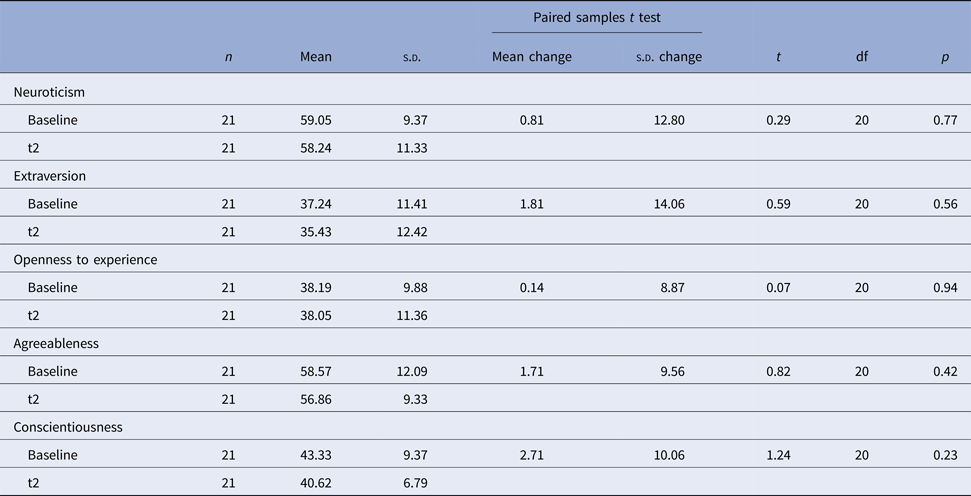
No change was found in any personality dimension from baseline to 6 months follow-up (t2) in the group analysis (n = 21) (Table 2). The scores in neuroticism [F (2.29, 22.89) = 1.82; p > 0.05], extraversion [F (2.09, 20.89) = 0.21; p > 0.05], openness to experience [F (2.31, 23.11) = 0.14; p > 0.05], agreeableness [F (2.52, 25.18) = 1.09; p > 0.05], and conscientiousness [F (2.52, 25.16) = 1.07; p > 0.05] (n = 11) did not change significantly at any time point after the onset of DBS.
NEO-FFI personality scores at baseline and 6 months after the onset of DBS (t2)

Mean, number of patients in analysis (n), standard deviation (s.d.), two-tailed paired t test with scores at baseline and 6 months after the onset of DBS.
Dropouts did not differ in baseline personality from study terminators as assessed with t tests.
Personality and depression
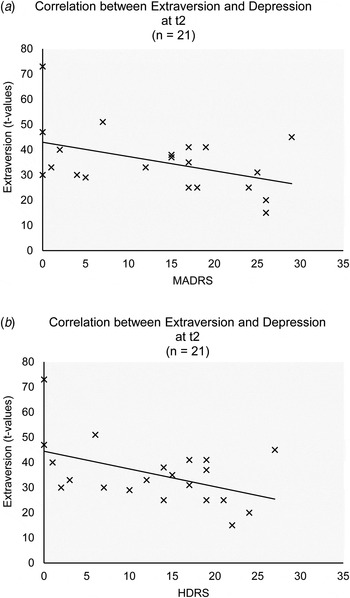
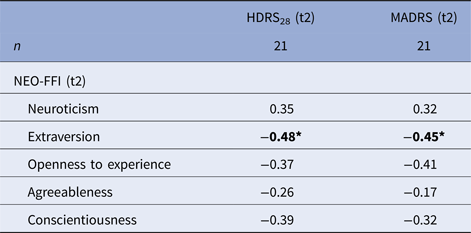
Extraversion was negatively correlated with HDRS28 (r = −0.48, p < 0.05) and MADRS (r = −0.45, p < 0.05) 6 months after the onset of DBS (t2) (Fig. 4). Lower severity of depression was associated with a higher score in extraversion (t2) but not with other personality dimensions (Table 3).
(a) Correlation analysis of extraversion and severity of depression. Pearson correlation, extraversion × HDRS28 (r = −0.48, p < 0.05). (b) Correlation analysis of extraversion and severity of depression. Pearson correlation, extraversion × MADRS (r = −0.45, p < 0.05).

Pearson correlation of personality traits and severity of depression (t2)

*p < 0.05.
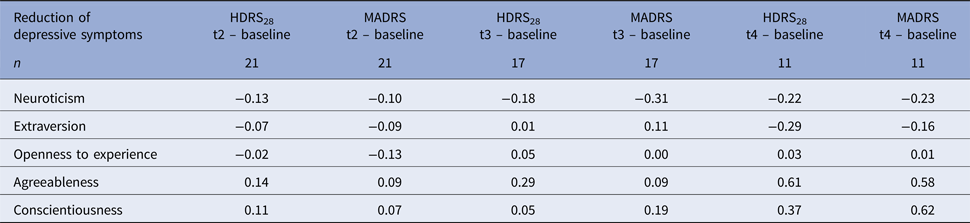
None of the five dimensions of personality at baseline was able to predict the antidepressant response as calculated in a correlation analysis (Table 4).
Personality dimensions at baseline as predictors of response (Pearson correlation)

Self- and observer rating of personality
In an explorative analysis, personality ratings of patients and their relatives were assessed at baseline (n = 14) and at t4 (n = 9). Cronbach's α (α = 0.74) at baseline and at t4 (α = 0.65) demonstrate a good inter-rater correlation between patients and their relatives in NEO-FFI. The Spearmen non-parametric correlation also demonstrated a significant positive correlation between ratings at baseline (r s = 0.58; p < 0.001) and at t4 (r s = 0.49; p < 0.001). We refrained from inter-rater correlation sub-analyses of dimensions because of the limited sample size.
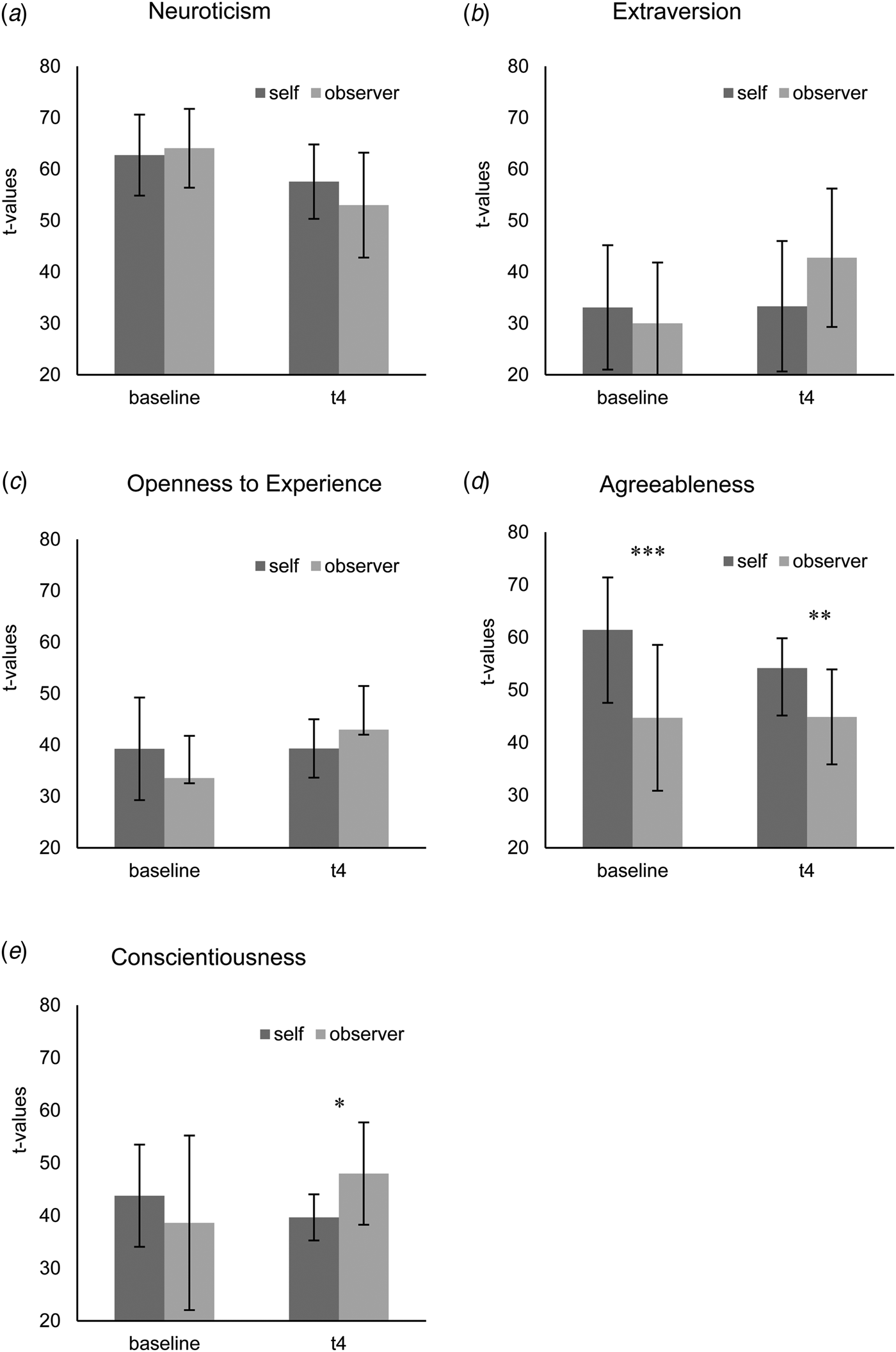
Group analysis of differences in the mean scores showed significant differences between the average rating of self- and observer rating only in agreeableness at baseline and in agreeableness and conscientiousness at t4 as assessed with Student's t test for paired samples: patients rated themselves at baseline [t (13) = 4.60, p < 0.001] and at t4 [t (8) = 4.49; p < 0.01] as more agreeable and less conscientious than their relative [t (8) = −2.52; p < 0.05]. See Figure 5a–e for a detailed descriptive analysis of the ratings for the five dimensions of personality.
(a–e) Average values (with standard deviation) of self- and observer ratings compared with Student's t test for paired samples. In this analysis, only patients with a corresponding observer rating could be included (n = 14). ***p < 0.001; **p < 0.01, *p < 0.05.

Discussion
In this study, we analyzed (1) the effect of DBS of the medial forebrain bundle on the personality dimensions neuroticism, extraversion, openness for experience, agreeableness, and conscientiousness in patients suffering from chronic, severe TRD. Furthermore, we investigated (2) how personality, depression severity, and the antidepressant response are associated and (3) compared patients’ self-ratings of personality with observer ratings to obtain information on the validity of self-ratings of depressive patients.
Effect of DBS of the slMFB on personality
To our knowledge, this is the first study assessing effects of DBS on personality in a standardized way. DBS was not associated with a change in personality per se. There was no difference between the dimensions of personality at baseline compared with 6 months, 2 and 5 years after the onset of DBS. This is in contrast to findings in STN-DBS in Parkinson's disease where significant changes in personal and socio-professional adjustment (Schüpbach et al. Reference Schüpbach, Gargiulo, Welter, Mallet, Béhar and Houeto2006) as well as changes in patients’ thoughts and personality (Glannon, Reference Glannon2009) have been reported. It is not known, if these reported changes can be attributed to DBS per se, to the response to a new situation, to a change in the severity of Parkinson's symptoms, or to a change in medication (e.g. tapering down of dopamine agonists).
Furthermore, these findings in neurological indications have contributed to a debate about ethical implications of DBS (Schermer, Reference Schermer2011). A strong concern in public debates and in patients applying for DBS is that DBS might alter their body conceptualization, induce the ‘feeling of strangeness’, lead to a ‘biographic disruption’, or to a change in personality (Schüpbach et al. Reference Schüpbach, Gargiulo, Welter, Mallet, Béhar and Houeto2006). Another question is how the patient himself perceives the changes in personality, mood, behavior, or cognition – as disruptive and disturbing or as positive (Synofzik & Schlaepfer, Reference Synofzik and Schlaepfer2008).
The stability of the personality profile with slMFB-DBS demonstrated here can only be related to stimulation of the present brain target, the slMFB. The slMFB is a key structure of the reward system, mediating its effects by dopaminergic transmission (Coenen et al. Reference Coenen, Panksepp, Hurwitz, Urbach and Mädler2012). One function of dopamine is promoting exploration behavior and it has been linked to extraversion as well as reward sensitivity (DeYoung, Reference DeYoung2013). DBS of other targets might have a different influence on personality.
Association between personality and depression
There was no change of personality in the group analysis, but extraversion showed an association with the severity of depressive symptoms during DBS: extraversion and scores of HDRS and MADRS were negatively correlated, indicating that patients who had a lower severity of depression showed high scores on extraversion. This finding is in line with studies reporting high correlations between personality dimensions and the severity of depression (Chioqueta & Stiles, Reference Chioqueta and Stiles2005; Jylhä & Isometsä, Reference Jylhä and Isometsä2006). It is discussed that whether an antidepressant treatment or the antidepressant response can change the personality profile (Costa et al. Reference Costa, Bagby, Herbst and McCrae2005; Klein et al. Reference Klein, Kotov and Bufferd2011; Karsten et al. Reference Karsten, Penninx, Riese, Ormel, Nolen and Hartman2012). In this study, the personality profiles did not change systematically with the antidepressant response. In favor of a scar effect of depression are the following findings: extraversion was significantly lower at baseline compared with the healthy norm but did not change overall, although most patients responded to the treatment. Patients were already depressed at baseline, thus prospective long-term studies would be adequate to decide between scar and state theories.
Previous studies have also demonstrated a correlation between neuroticism and the severity of depression (Du et al. Reference Du, Bakish, Ravindran and Hrdina2002; Chioqueta & Stiles, Reference Chioqueta and Stiles2005; Jylhä & Isometsä, Reference Jylhä and Isometsä2006), which could not be confirmed in this study. An explanation could be the lack of clinically deviant scores of neuroticism at baseline, the high response rate of patients, a small variance in the severity of depression, or the small sample size. It could also underline the scar effect of depression on neuroticism. TRD patients have been suffering from depression for a very long time [average of 8.6 years (s.d. 7.75)]. The severity and chronicity of the depressive symptoms could explain the difference to studies reporting a change of neuroticism if depressive symptoms are reduced (Corruble et al. Reference Corruble, Duret, Pelissolo, Falissard and Guelfi2002; Du et al. Reference Du, Bakish, Ravindran and Hrdina2002; De Fruyt et al. Reference De Fruyt, Van Leeuwen, Bagby, Rolland and Rouillon2006; Tang et al. Reference Tang, DeRubeis, Hollon, Amsterdam, Shelton and Schalet2009). This hypothesis can be supported by a study that treated TRD patients with repetitive transcranial magnetic stimulation without any change of personality traits (McGirr et al. Reference McGirr, Van den Eynde, Chachamovich, Fleck and Berlim2014).
In the current study, personality dimensions at baseline did not predict the antidepressant response. Other studies reported that higher scores in neuroticism and lower scores in extraversion at baseline were associated with a smaller antidepressant effect (Klein et al. Reference Klein, Kotov and Bufferd2011).
In this study, neuroticism was less increased than in other studies of depressed patients and the response and remission rate of patients was very high. These facts combined with the small sample size could explain the lack of statistical significance of our results.
Self-ratings and observer ratings
It is well known that self- and observer ratings are correlated in the healthy population (Connolly et al. Reference Connolly, Kavanagh and Viswesvaran2007). It is questioned, if patients are able to judge their personality accurately during an acute depressive episode because of a possible depression-induced rating bias (Bagby et al. Reference Bagby, Rector, Bindseil, Dickens, Levitan and Kennedy1998; Klein et al. Reference Klein, Kotov and Bufferd2011). There are only a few studies comparing self- and observer ratings of depressive patients and their relatives (Riemann et al. Reference Riemann, Angleitner and Strelau1997; Bagby et al. Reference Bagby, Rector, Bindseil, Dickens, Levitan and Kennedy1998; McCrae et al. Reference McCrae, Costa, Hr̆ebíc̆ková, Urbánek, Martin and Oryol2004). Bagby et al. (Reference Bagby, Rector, Bindseil, Dickens, Levitan and Kennedy1998) reported a very high correlation for most personality dimensions, but differences between patients and relatives were seen in extraversion. In the present sample, a good inter-rater reliability was found between patients and their most significant relative (e.g. partner, close friend) at baseline and also after 5 years of DBS. This underscores that patients are able to judge their personality in a depressive episode as well as during recovery. Only in the dimension of agreeableness, patients scored themselves higher than their relatives at baseline as well as after 5 years. Most studies found decreased agreeableness in depressive patients (Kotov et al. Reference Kotov, Gamez, Schmidt and Watson2010). Possibly, a selection bias could explain these results: patients were selected when they seemed very compliant to the study and many patients had good social skills and social support in spite of the chronicity and severity of the disease.
Personality of depressive patients compared with the healthy normative population
In this study, patients suffering from TRD differed statistically from the healthy population in all five dimensions of personality. In line with other studies, a typical personality profile of depression with reduced extraversion, reduced conscientiousness, and elevated neuroticism was found (Petersen et al. Reference Petersen, Bottonari, Alpert, Fava and Nierenberg2001; Tang et al. Reference Tang, DeRubeis, Hollon, Amsterdam, Shelton and Schalet2009; Kotov et al. Reference Kotov, Gamez, Schmidt and Watson2010). This broadens the results from less severely affected patients also to treatment-resistant patients.
Openness to experience and extraversion were reduced more than one standard deviation from the mean of the healthy population. The low score in openness to experience is discussed to be specific for patients with TRD (Takahashi et al. Reference Takahashi, Shirayama, Muneoka, Suzuki, Sato and Hashimoto2013).
Possibly, the reduced extraversion and openness to experience can be explained by the behavioral approach to depression by Lewinsohn, hypothesizing a relationship between positive reinforcement and depression (Lewinsohn, Reference Lewinsohn1974). The Lewinsohn's reward model of depression (1974) describes depression with a reduction in the availability of positive, reinforcing stimuli and less searching for new (positive) situations. These factors result in less experience of reward as a key component for the development and maintenance of depression.
Interestingly, the personality profile of TRD patients showed less extreme deviations from the norm than one might expect for severe, chronic depression (Petersen et al. Reference Petersen, Bottonari, Alpert, Fava and Nierenberg2001; Du et al. Reference Du, Bakish, Ravindran and Hrdina2002; Cuijpers et al. Reference Cuijpers, van Straten and Donker2005; Tang et al. Reference Tang, DeRubeis, Hollon, Amsterdam, Shelton and Schalet2009; Kotov et al. Reference Kotov, Gamez, Schmidt and Watson2010). Possibly, the personality profile in our sample could represent a protective factor, because it allowed a better coping with a severe, chronic depression. Higher scores in neuroticism have been associated with a higher incidence of suicidal behavior in individuals (Fergusson et al. Reference Fergusson, Woodward and Horwood2000). Another explanation for the clinically moderate deviance in the profile of personality could be a selection bias; patients with severe comorbidities and personality disorders have been excluded from the study. Patients with comorbid personality disorder and major depression as well as patients with only the diagnosis of a personality disorder showed higher levels of neuroticism than patients with only major depression (Morey et al. Reference Morey, Shea, Markowitz, Stout, Hopwood and Gunderson2010).
Ethical and practical implications
It could be demonstrated that DBS of the slMFB did not change the personality profile, but personality was associated with the severity of depression. Antidepressant treatments, including psychotherapy and pharmacotherapy, aim to normalize symptoms such as depressed mood, cognitive deficits, and lack of motivation, which are also discussed as central aspects of personality (Synofzik & Schlaepfer, Reference Synofzik and Schlaepfer2008). Tang et al. (Reference Tang, DeRubeis, Hollon, Amsterdam, Shelton and Schalet2009) reported changes of personality due to selective serotonin reuptake inhibitors and due to cognitive therapy that were greater than with placebo medication. In this light, DBS of the slMFB can be considered to be an effective antidepressant treatment method without a manipulation of personality per se.
It is ethically relevant how patients judge possible changes in personality associated with an antidepressant treatment (Synofzik & Schlaepfer, Reference Synofzik and Schlaepfer2008). After 5 years of DBS, patients were asked in an explorative analysis how they perceived their personality during the study. Seven patients described positive changes, while two patients described no personality changes. Positive changes were an increase in ‘self-confidence’, ‘activity’ as well as ‘energy’, which were associated with the reduction of depressive symptoms and which were experienced as ‘a return to the person they were without depressive symptoms’.
The small sample size limits the generalizability of our results. Nonetheless, we could replicate a relationship between high levels in extraversion and low severity of depression. Because of the exclusion of personality disorder and severe psychiatric comorbidities (see Schlaepfer et al. Reference Schlaepfer, Bewernick, Kayser, Mädler and Coenen2013 for details on inclusion and exclusion criteria) for details on inclusion and exclusion criteria, this sample might not be representative for all severe TRD patients where comorbidities are the rule (Fava, Reference Fava2003). This may explain some differences in results compared with less severe and differently selected samples in other studies. On the other hand, the present sample constituted of extremely treatment-resistant patients and a large number of patients responded to the treatment, so any scar or state effect of depression on personality should be observable.
Conclusion
The present study demonstrates that DBS of the slMFB was not associated with changes in personality dimensions of TRD patients. In accordance to the literature, patients who were less depressive with DBS showed higher levels of extraversion, similar to the healthy population. The high inter-rater correlation between patient's self-description of personality with the description of their closest relative showed that patients are able to assess their personality in an acute depressive episode.
Highlights
• DBS of the medial forebrain bundle does not change personality.
• The severity of depression is correlated with extraversion but not with neuroticism.
• Personality does not change with the antidepressant treatment effect; this points towards a scar effect of depression.
• Patients differ from healthy subjects in their personality profile and are similar to patients with milder forms of depression.
• TRD patients are able to judge their personality in a valid way.
Acknowledgement
We thank patients and their relatives for participating in this study, for their motivation and trust.
Conflicts of interests
This investigator-initiated study was funded in part (DBS device, battery exchange, medical costs, and limited support for study nurse) by a grant of Medtronic to Dr Schläpfer and Dr Coenen. All other authors state no conflict of interest. The sponsor had no influence on the design and conduct of the study; collection, management, analysis, and interpretation of the data; and preparation, review, or approval of the manuscript. All other authors declare no conflicts of interests.