

A growing number of Indigenous Peoples have called for the rematriation of their seed “children” from museums and other institutional repositories (DiCarlo Reference DiCarlo2023; Herrighty and Hill Reference Herrighty and Hill2024; Herrighty et al. Reference Herrighty, Kapayou, Camacho, Nair, Hill, McDaniel and Winham2022; Hill Reference Hill2017). Museums and archaeological repositories in the United States hold Indigenous agricultural seeds, but how much of this material is housed in these institutions, the what its condition is, and what—if any—protocols exist for accessing this material is unknown. The lack of information about location, condition, and protocols mirrors issues with other Indigenous collections and makes reconnection difficult (Anderson Reference Anderson, Chris and Gerstner2013; Anderson and Atalay Reference Anderson and Atalay2023).
Seeds are protected under Article 31 of the Declaration of the Rights of Indigenous Peoples (United Nations 2007) as Indigenous intellectual property, but they are not explicitly protected under US legal mechanisms despite their centrality to many Indigenous communities’ cultural heritage, religions, and food and economic systems (Herrighty and Hill Reference Herrighty and Hill2024; Hill Reference Hill2017). Although seeds do not easily fit under legal categories established for cultural property law, there are increasing arguments that they constitute “cultural patrimony” under the 1990 Native American Graves Protection and Repatriation Act (NAGPRA). Since the passing of this legislation in 1990, there have been efforts to restore Indigenous control over other cultural materials in US institutions, which have led to repository-specific guidelines on descendant-community access and traditional care practices (Colwell-Chanthaphonh et al. Reference Colwell-Chanthaphonh, Ferguson, Lippert, McGuire, Nicholas, Watkins and Zimmerman2010; Kreps Reference Kreps, Smith and Akagawa2008, Reference Kreps2015; Local Contexts 2023; Nash and Colwell Reference Nash and Colwell2020). Seeds or plant materials found in medicine bundles and in funerary contexts are protected by NAGPRA and other repository-specific protocols for the management of culturally sensitive items, but seeds or other-than-human ancestors found outside of these contexts are rarely addressed in these policies or guidelines (Ward et al. Reference Ward, Arterberry, Aguilar, Patton, Cain, Jones and Taylor2025). One consequence of this oversight has been that specific protocols for stewarding Indigenous seeds and mandatory consultation requirements regarding research involving these materials have yet to be developed. Although the 2024 revisions to NAGPRA regulations established duty-of-care regulations requiring consultation around collections care and exhibition protocols, it is unclear what the implications of these changes are, given that the revisions are relatively untested at present (Haas et al. Reference Haas, Morgan, Lofaro, Thomas, O’Donnell, Schreiner and Panther2025).
To better understand the magnitude of this issue that has yet to be addressed, we developed the Indigenous Seeds Survey in 2024 as part of a larger research initiative, “Revitalization of American Indian Food Systems,” funded by the Rockefeller Foundation led by Michael Kotutwa Johnson, assistant professor and cooperative extension specialist in the Indigenous Resilience Center at the University of Arizona—and 250th-generation Hopi dryland farmer. The survey was developed in collaboration with colleagues in Indigenous Data Sovereignty (IDSov), Stephanie Carroll (Ahtna-Native Village of Kluti-Kaah) and Jane Anderson; and in archaeology, Matthew Rowe. This project focused on enhancing long-standing Indigenous foodways, characterizing the diversity of Indigenous seeds held in museums and universities, and strengthening Indigenous governance of Indigenous agricultural data. The goal of the survey was to build a preliminary understanding of the scope of Indigenous seed holdings and related protocols in non-Indigenous institutional repositories.
We distributed this instrument to repositories that may hold Indigenous seeds and plants in their collections and have protocols in place related to their management. The survey results offer an initial snapshot of Indigenous seed holdings in the United States and indicate areas of potential vulnerability and pathways toward improving protections of these items and increasing Indigenous descendant-community access. We suggest that critically examining issues around Indigenous seed holdings is vital for archaeologists and museum professionals to meet their professional and ethical obligations to these materials and to Indigenous communities and Tribal Nations. They are also necessary for institutional adherence to the CARE Principles for Indigenous Data Governance, a cornerstone for achieving Indigenous Data Sovereignty (Carroll et al. Reference Carroll, Hudson, Holbrook, Materechera and Anderson2020, Reference Carroll, Herczog, Hudson, Russell and Stall2021; Global Indigenous Data Alliance 2019).
In this article, we begin by providing an overview of the role of Indigenous agricultural seeds and plants in Indigenous North American communities as well as the increasing risks of research on and expropriation of Indigenous food plants. We then explain the goals and methods of the Indigenous Seeds Survey. From there, we describe the survey’s results, including an inventory of domesticated and wild Indigenous food seed and plant specimens housed in respondent institutions. We describe trends we observed relating to specimen storage and care practices, catalog record and database accuracy and accessibility, and researcher and community access. Based on these findings, we then present several proposals for archaeologists and museum professionals to mitigate some of the risks associated with Indigenous seed and plant holdings. We conclude this article by reiterating the values of Indigenous seeds and plants, the risks of their mismanagement, and the potential contributions of archaeologists and museum staff to ameliorate the ongoing and historic harms of Indigenous seed and plant collection and stewardship. This article supports ongoing calls to radically reorient archaeological understandings of nonhuman life and to uphold the concomitant ethical obligations that arise from the recognition of Indigenous plant personhoods.
Seed Persons and Products
Indigenous seeds are integral to the efforts of Indigenous seed keepers, who seek to maintain and revitalize Indigenous seed-keeping knowledge and practices. Indigenous seeds and plants are items of cultural, personal, and religious significance, and they can remain viable and retain genetic memory for centuries under appropriate storage conditions (e.g., Sallon et al. Reference Sallon, Solowey, Cohen, Korchinsky, Egli, Woodhatch, Simchoni and Kislev2008). Industrial agricultural corporations are increasingly in search of hardy crop species resistant to the effects of climate change, causing the huge number of seeds and plant parts held in museums and herbaria to be at increasing risk of expropriation (McCune Reference McCune2018; Robinson Reference Robinson, Drahos and Frankel2012). The fact that many historic Indigenous seeds held in institutional repositories can be germinated or hold extractable genetic information demands investigation into the risks around management of these seeds. Simultaneously, the viability and genetic memory of Indigenous seeds also hold immense potential for the revitalization of many Indigenous agricultural systems and plant-related practices (Colwell and Nash Reference Colwell, Nash, Meloche, Spake and Nichols2020; Herrighty and Hill Reference Herrighty and Hill2024). The varied roles seeds play across these communities of practice require careful attention so as to understand what is at stake in stewarding Indigenous-sourced seeds and plant genetic materials.
For many Indigenous knowledge keepers, seeds are nonhuman persons and relatives who have the potential to rekindle historic agricultural practices and support Indigenous wellness and food sovereignty efforts (Hill Reference Hill2017; Johnson Reference Johnson2023). As plant persons, these seeds are also in relation with seed keepers as ancestors and children, and the removal of seeds from Indigenous communities has been likened to the theft of Indigenous children taken to boarding schools (Colwell Reference Colwell2015; Johnson Reference Johnson2023).
Colonial destruction of Indigenous foodways has had devastating impacts on Indigenous health and sovereignty. This ha taken shape through diverse practices including land allotment and fractionation, outright removal of people from lands, management and prohibition of hunting and foraging practices, enforcement of particular Western agricultural practices, and widespread climatic degradation (Carlson Reference Carlson1981; Hill Reference Hill2017; Nazarea Reference Nazarea2005). Some foodways were rendered impossible, whereas others were specifically banned. Subsequent expropriation of Indigenous food plants through unethical ethnobotanical collection, salvage ethnography, and private collecting has taken countless seeds from Indigenous communities that now continue to experience food insecurity and chronic health conditions and that struggle to maintain plant-based practices (Colwell Reference Colwell2015; Sowerwine et al. Reference Sowerwine, Mucioki, Sarna-Wojcicki and Hillman2019; Whyte Reference Whyte, Rawlinson and Ward2016).
The collection of Indigenous materials by non-Indigenous peoples and organizations rapidly expanded in the late nineteenth century, thoroughly enmeshed with the formalization of anthropological disciplinary practices and modern ethnobotany (Bye and Linares Reference Bye and Linares2021; Cornish and Nesbitt Reference Cornish, Nesbitt and Salick2014). Huge numbers of plant and food specimens were gathered by private collectors or as part of expeditions sponsored by large museums, such as George Gustav Heye’s Museum of the American Indian or the Field Museum’s Herbarium and Economic Botany collections—endeavors primarily motivated by desires to obtain specimens of “disappearing” Indigenous cultural heritage and to develop thorough scientific inventories of plant life (Belovari Reference Belovari2013; Cornish and Nesbitt Reference Cornish, Nesbitt and Salick2014; Lothrop Reference Lothrop1957; Nesbitt and Cornish Reference Nesbitt and Cornish2016; Pepper Reference Pepper1916). Federal agencies, such as the Bureau of Indian Affairs (BIA) and the US Department of Agriculture, also commissioned collecting expeditions to develop scientific understandings of Indigenous foodways, often to hone assimilative programming (e.g., compulsory agriculture) and to catalog potential food resources (Bye and Linares Reference Bye and Linares2021; see also Palmer Reference Palmer1871). In the twentieth century, this work continued and resulted in massive collections that remain at archaeological and ethnobotanical repositories throughout the United States and abroad.
Indigenous descendants and allied scholars are now interrogating these collection practice histories and are utilizing botanical collections to reinterpret their own histories and archaeologies, as in the case of the Hopi Plant Collections at the University of Michigan’s Museum of Anthropology and the Crow Canyon Archaeological Center’s Maize Repository work (see Crow Canyon Archaeological Center and the Hopi Cultural Preservation Office 2023; Jolie Reference Jolie2025; Joseph et al. Reference Joseph, Mathews, Cuerrier and Boulos2025; Leonard Reference Leonard2024; McCune Reference McCune2018; Rodriguez Reference Rodriguez2025; Young and Sekaquaptewa Reference Young, Sekaquaptewa and Hays-Gilpin2021). Indigenous community members and scholars are also examining possibilities for returning seeds to their historic caretakers (Tsosie and Johnson Reference Tsosie and Johnson2025; Valeriote Reference Valeriote2021). This has the potential to not only rekindle these human–plant relationships but also contribute to food sovereignty, economic development, cultural resurgence, and cultural heritage preservation efforts (Anderson et al. Reference Anderson, Gumbs, Hudson, McAlvay and Leonard2025; Corntassel Reference Corntassel and Turner2020; Corntassel and Bryce Reference Corntassell and Cheryl2012; Herrighty and Hill Reference Herrighty and Hill2024; Nazarea et al. Reference Nazarea, Rhoades and Andrews-Swann2013). In the context of decolonizing and cultural resurgence work, the process of returning seeds is frequently described as rematriation, an Indigenous feminist paradigm informing an embodied praxis of reconnection and care according to Indigenous protocols (Anderson and Atalay Reference Anderson and Atalay2023; Gray Reference Gray2022; Herrighty and Hill Reference Herrighty and Hill2024).
Indigenous seeds, once the target of nineteenth- and twentieth-century collecting efforts, are now in the crosshairs of plant genetics researchers who are increasingly engaged in identifying climate-hardy (e.g., drought-tolerant) species that may have other desirable qualities, such as nutrient density and palatability. The diversity of Indigenous plant species and varieties enables resilient crops that can thrive in conditions that are increasingly inhospitable for the few patented species that are planted in large-scale industrial operations and that require extensive amendments and irrigation (Curry Reference Curry2022). Although some of this research is conducted to understand historic foodways and domestication processes, especially in the case of paleoethnobotanical research, much is conducted by researchers funded by federal agencies and agricultural corporations seeking to patent these seeds and profit from their sale. Such practices have been described as “biopiracy” or “bioprospecting” (Das Reference Das2020; Hayden Reference Hayden2003; Moran et al. Reference Moran, King and Carlson2001; Robinson Reference Robinson, Drahos and Frankel2012), and this wide literature points to both extractive practices and the failure to provide proper acknowledgment or return of any benefit back to source communities where both the plant relatives and the knowledge about plant relatives’ health and food properties originate (Hayden Reference Hayden2005, Reference Hayden2006).
Some Indigenous food plant species have already been implicated in these endeavors, such as the “Anasazi Bean,” an easily digested variety that was allegedly found by a southern Colorado farmer in an ancient clay pot that he germinated and subsequently sold (see Nabhan Reference Nabhan1977). Now the bean variety is sold by a handful of non-Indigenous companies that are profiting off the knowledge of Ancestral Puebloan seed keepers. Although such stories of germinating ancient seeds can be murky in specific details, this phenomenon is indeed possible (Black Reference Black2012; Mubarak and Harrison Reference Mubarak and Harrison2021).
Intense interest in the viability of ancient seeds has been spurred on through research “resurrecting” ancient seeds and “recovering” ancient DNA (Andreasen et al. Reference Andreasen, Manktelow and Razafimandimbison2009; Godefroid et al. Reference Godefroid, Van de Vyver, Stoffelen, Robbrecht and Vanderborght2011; Nakahama et al. Reference Nakahama, Hirasawa, Minato, Hasegawa, Isagi and Shiga2015; Smolikova et al. Reference Smolikova, Leonova, Vashurina, Frolov and Medvedev2020). Famous examples of such “resurrections” include the germination of 1,200-year-old lotus seeds held in fruits (Shen-Miller et al. Reference Shen‐Miller, Mary Beth, Schopf, Clarke and Berger1995, Reference Shen-Miller, J. William, Garman, Cao, Ouyang, Zhou, Southon and Liu2002) and 2,000-year-old date-palm pits (Gros-Bathazard et al. Reference Gros-Balthazard, Flowers, Hazzouri, Ferrand, Aberlenc, Sallon and Purugganan2021; Sallon et al. Reference Sallon, Solowey, Cohen, Korchinsky, Egli, Woodhatch, Simchoni and Kislev2008, Reference Sallon, Cherif, Chabrillange, Solowey, Gros-Balthazard, Ivorra, Terral, Egli and Aberlenc2020). The possibility of using herbarium species for such experiments to examine evolutionary histories and bolster conservation efforts for species with limited genetic diversity has already been investigated (Albani, Carta, et al. Reference Albani Rocchetti, Carta, Mondoni, Godefroid, Davis, Caneva and Albrecht2022; Albani, Davis, et al. Reference Albani Rocchetti, Davis, Caneva, Bacchetta, Fabrini, Fenu and Foggi2022; Albani et al. Reference Albani Rocchetti, Brancaleoni, Caneva, Cona, Fabrini, Fraudentali and Galasso2024; Christie et al. Reference Christie, Pierson, Holeski and Lowry2023; Nualart et al. Reference Nualart, Ibáñez, Soriano and López-Pujol2017). In these analyses, seeds are often referred to as “resources” that have been overlooked until now (Nesbitt Reference Nesbitt, Salick, Konchar and Nesbitt2014), a radically different perspective from treating seeds as persons who have agency and require care and respect.
Archaeologists have long approached plant materials using these logics of plants as data sources—inert materials that help researchers triangulate dates of human activities and that must only be handled specially to prevent contamination of subsequent sampling. In this article, although we also refer to Indigenous seeds and plants using the terminology that accords with these logics—including “materials,” “specimens,” and “objects”—we also offer the disruptive terms of “seed relatives,” “seed ancestors,” and “seed persons,” which better reflect Indigenous conceptions of plant personhood and agency. Similarly, we use English common names and Latin names to refer to plant species rather than Indigenous names, because we are not focused on seeds from one particular Indigenous Nation, though we encourage naming specific Indigenous plants using Indigenous languages when possible (e.g., using the Anishinaabe word manoomin to refer to wild rice in the Great Lakes region).
Current endeavors to identify and expropriate Indigenous plant genetics tasks Indigenous community members, researchers, and allies with examining the myriad ways that Indigenous seeds could be considered Indigenous data, Indigenous cultural and intellectual property, and items of cultural patrimony (Anderson Reference Anderson2009, Reference Anderson and Wright2015; McCune Reference McCune2018; Tsosie and Johnson Reference Tsosie and Johnson2025; United Nations 2007). In order to better understand the potential risks of expropriation of Indigenous plant genetics and seeds—and the possibilities for seed rematriation—our team seeks to provide clarity around the scope of this issue by sharing information on the amount and types of Indigenous seeds that are currently housed in museums and repositories in the United States. In conducting this research, we also gained insights into the process of finding and accessing information about Indigenous seeds, which will contribute to future efforts to devise strategies to both protect seeds and meet Indigenous descendant-community expectations regarding access and data sovereignty.
Methods
We developed the Indigenous Seeds Survey in 2024 as part of a larger research initiative funded by the Rockefeller Foundation and led by Michael Kotutwa Johnson, with colleagues in IDSov, Stephanie Carroll and Jane Anderson. This project, the “Revitalization of American Indian Food Systems,” focused on strengthening Indigenous food systems, identifying the types of seeds held in non-Indigenous repositories, and enhancing Indigenous governance of Indigenous agricultural data. The goal of the survey was to build a more comprehensive understanding of the scope of Indigenous seed holdings in institutional repositories. We targeted institutional collections managers across a target sample of 85 institutional repositories primarily in the US Southwest.
We initially distributed an information request letter, which included the survey questions and a link to the online Qualtrics survey, to curators and collections managers at these institutions in April 2024, and we received numerous responses and follow-up questions between April and August 2024. The letter presented an overview of our research goals and solicited responses to questions about their Indigenous agricultural seed and plant holdings, their protocols for care of these specimens, and their protocols for researcher or descendant-community access to these specimens. The Qualtrics survey asked the same questions as those contained in the letter, with space for detailed written responses and options to upload any protocol documents.
Institution Sampling
To identify non-Tribal museums, universities, and archaeological repositories that might hold seed specimens collected from Indigenous communities, the group gathered information through independent research and through conversations with former staff at Crow Canyon Archaeological Center, who in 2023 completed their publicly available Maize Database Project, which sought to identify Indigenous maize/corn specimens housed in US Southwest repositories to facilitate research and descendant-community access. Because that project was focused solely on maize, our team decided to include all 47 of these institutions in our own sample given that they could hold other non-maize agricultural plant specimens from Indigenous communities regardless of their response to the Crow Canyon survey. Through independent research, we also identified 38 other institutions in the US Southwest region that reported holding some Indigenous materials in their object collections. Although we focused primarily on larger repositories to develop a baseline understanding of these issues, there are many other organizations that did not receive the survey that warrant attention in future studies, such as ethnobotanical reference collections housed in university labs.
Of the total sample (n = 85), 71 of these institutions are in the southwestern United States, and they are likely to hold well-preserved Indigenous seed stock based on the persistence of Indigenous agricultural systems in this area, arid climatic conditions that facilitate seed preservation (and potential viability), and the legacy of extensive archaeological research undertaken in this region (see Figure 1). We also contacted 14 institutions in cities across the United States that have served as major repositories for Indigenous cultural materials gathered in ethnographic and archaeological collections. Confining our sample to institutions in the United States facilitated analysis of museum procedures within a shared national legal framework. These institutions are a mix of public museums, university museums, land management agencies (e.g., the Bureau of Land Management and the National Park Service), herbaria, regional archaeological repositories, and private museums. We did not include Tribal Museums, because we were seeking information on the Indigenous seeds held in non-Native institutions.
Geographic locations of institutions included in the Indigenous Seeds Survey sample.

Figure 1 Long description
Geographic Locations of Institutions (n = 85) A pie chart with labeled slices of different colors and a separate legend box. Slice labels on the pie chart: Colorado, 21 New Mexico, 18 Arizona, 11 Utah, 9 Other, 9 Texas, 7 Nevada, 5 Massachusetts, 3 Washington DC, 2 Legend box entries: Pennsylvania, 1 California, 1 Connecticut, 1 Illinois, 1 Michigan, 1 Missouri, 1 New York, 1 Oklahoma, 1 Washington, 1.
The Indigenous Seeds Survey
The 12-question survey focused on Indigenous seed–holdings information, format and searchability of collections records, protocols for specimen care and storage, protocols for researcher and descendant-community access, and permissions for future contact or publication of data (see Table 1).
Indigenous Seeds Survey Questions.

Table 1 Long description
The table lists twelve numbered survey questions for institutions about plant specimens sourced from Indigenous communities, including seeds and plant parts. It begins by requesting the institution’s name, then asks whether such specimens exist in the collection and whether they are digitally catalogued or searchable. Several questions focus on access, requesting internal records and any care and management protocols, as well as protocols for research or descendant community access. It also asks whether any specimens have been dated or otherwise analyzed. The final questions address permissions to name the institution in future publications and whether follow-up contact is allowed, including requesting staff contact details if follow-up is permitted. The table presents prompts only and does not include responses or results.
Note: All questions included multiple-choice response options (e.g., “yes,” “no,” “don’t know”), a text entry field for further details, and option to upload relevant documents.
After the distribution of the survey in April 2024, we received follow-up questions from institutions about the specific species in which we were interested. We then developed and distributed a list of 52 species of interest and relevant search keywords (see Supplementary Table 1). In this study, we defined Indigenous seeds and plant parts as seeds and plant materials that were directly developed by Indigenous peoples in North America (i.e., historic and contemporary domesticated species) or wild plants that were significant food sources for Indigenous peoples in North America. Seed custodians from Indigenous communities tended many varieties of plants not readily recognized as “domesticated” by Western scientific standards, but based on Indigenous communities’ role in their perpetuation and their dependence on these food plants (e.g., wild rice / Zizania spp. / manoomin), our team decided to include these species in the search terms. Our team also included plant specimens, plant parts, altered plant parts (e.g., cordage, baskets, plum stone dice, etc.), and burned specimens in these search terms given that recent DNA-extraction techniques could recover genetic information from these materials. By including the wild species and nonseed and burned plant parts in the survey, these findings provide a holistic characterization of Indigenous food plant holdings.
Survey Analysis
Information from the survey responses were organized and analyzed by Charlotte Dawson and Jewel Cummins to provide a snapshot of the current status of seed holdings and management in US institutions. Our team created an Excel spreadsheet database to store information about these institutions and to analyze their responses using frequency distribution tables and pivot tables. Inventories of Indigenous seed and plant holdings were primarily provided in a spreadsheet format, and they included information on the object type, though the level of detail was highly variable (e.g., five beans, box of botanicals, etc.). To conduct a count of seed and plant specimens, we utilized the object names and descriptions, which sometimes contained multiple species. Given that few of the items had accurate counts of specimens (e.g., two corn kernels, bag of seed, vial of beans, etc.), our count is a count of each cataloged item that contains the species of interest. It is not reflective of the exact number of seeds, parts, and more in each cataloged item. Future research, including visits to repositories, would allow for verification of species identification and actual counts of seed specimens. The survey results described below represent the information shared with us at the close of the survey in August 2024.
Survey Results
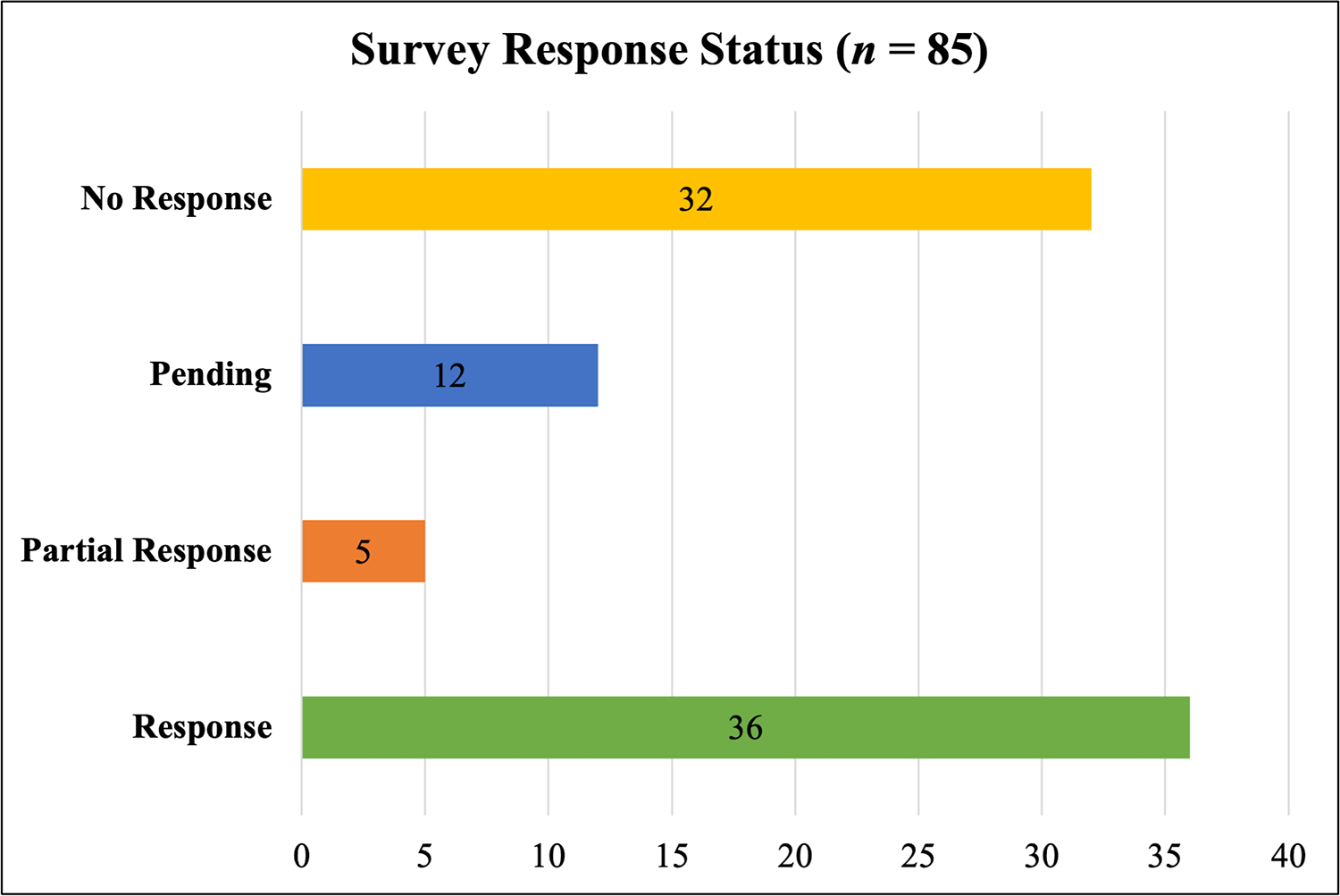
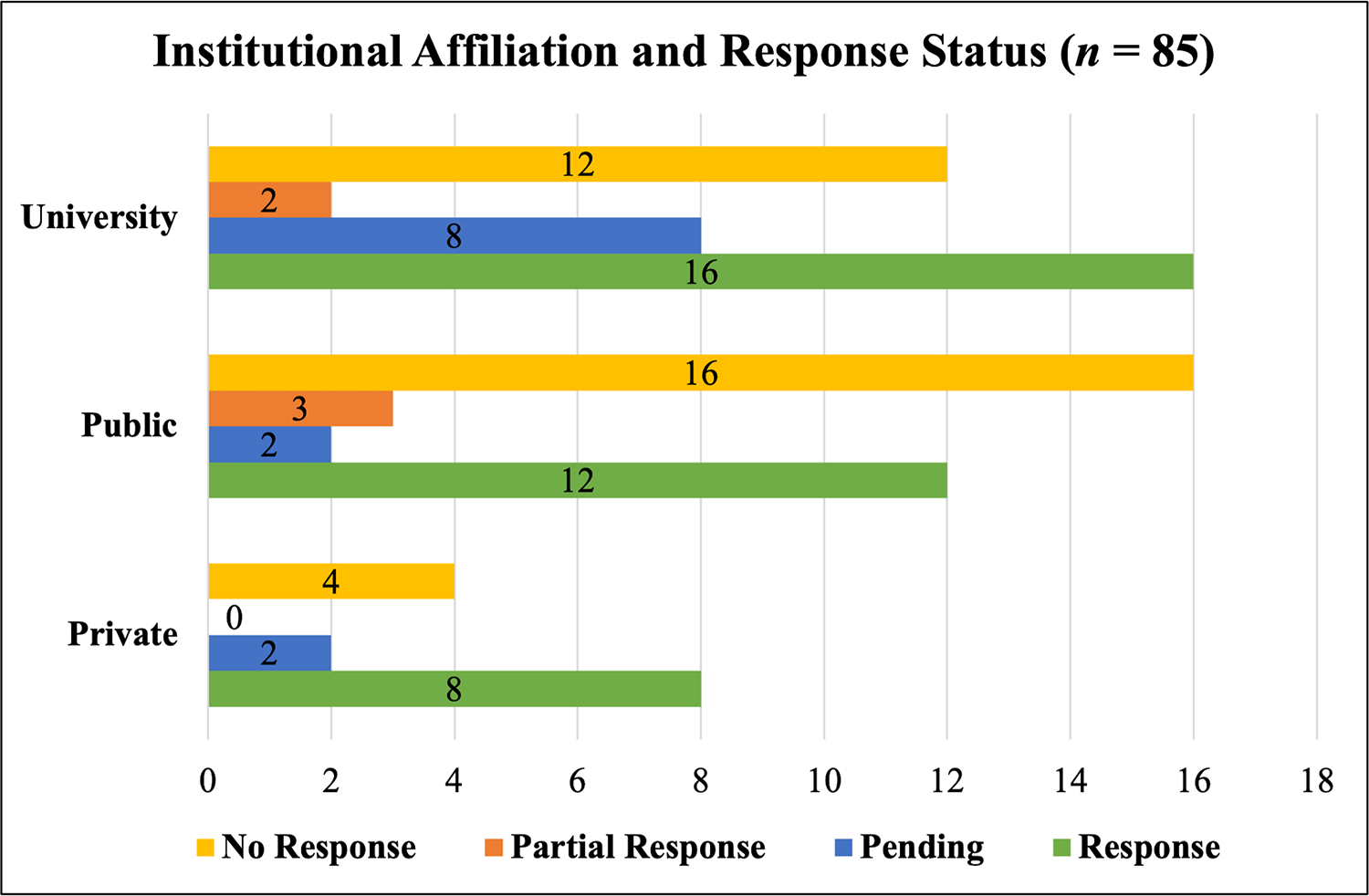
Our team received responses from 53 institutions, of which 36 provided responses to all questions, five provided a partial response, and 12 indicated their response was pending (see Figure 2). Of those that fully or partially responded to our survey, eight were private institutions, 15 were public institutions, and 18 were university-affiliated institutions (see Figure 3). These numbers were roughly proportional to the affiliations of the 85-institution sample; consequently, institutional affiliation does not appear to have any relationship to response status. The survey results showed that 31 respondent institutions did house Indigenous seeds and plant parts, and that two respondent institutions did not know. Again, institutional affiliation did not appear to have a clear relationship to the reported presence or absence of Indigenous seeds in collections.
Institutional responses to the Indigenous Seeds Survey.

Figure 2 Long description
Survey Response Status left parenthesis n equals 85 right parenthesis. Horizontal bar graph with four categories on the vertical axis: No Response, Pending, Part ial Response, Response. Horizontal axis tick labels: 0, 5, 10, 15, 20, 25, 30, 35, 40. Bar values shown inside the bars: No Response 32; Pending 12; Part ial Response 5; Response 36.
Institutional affiliation and response status to the Indigenous Seeds Survey.

Figure 3 Long description
The horizontal stacked bar graph titled Institutional Affiliation and Response Status left parenthesis n equals 85 right parenthesis. X axis label: none. X axis range: 0 to 18. Y axis label: none. Categories on the y axis: University, Public, Private. Legend entries: No Response, Part ial Response, Pending, Response. University: No Response 12; Part ial Response 2; Pending 8; Response 16. Public: No Response 16; Part ial Response 3; Pending 2; Response 12. Private: No Response 0; Part ial Response 4; Pending 2; Response 8.
Institutional Holdings
The 31 respondents who indicated their institutions did house these materials shared varying degrees of information—eight institutions sent us detailed catalog information, four sent us lists of species known to be present in collections, and four shared online catalog search tools. The institutions that shared online collections search pages stated that there was not a clear way to find the exact materials we were looking for and recommended inquiring further with collections managers. Six other institutions indicated they would send us collections records but needed more time to do so. The remaining eight institutions that did have seed holdings either required an official research request or were unable to share information due to inaccessible collections records.
The nine detailed inventories of Indigenous seed and plant holdings were all drawn from digitized catalog information databases, though data present varied substantially across inventories. All inventories contained catalog numbers, information related to collection context (i.e., archaeological provenience or ethnographic/ethnological provenance records), the geographic context of the item (i.e., where it was found or collected), and an object description (e.g., object type, material, object name, etc.). There was great variability in information related to dating, object ownership, object identification, object counts, documentation of extant research on items, and cultural affiliation or culture of origin. As a result of the disparate levels of research and documentation related to these items, other qualities are unclear or mislabeled in inventories, such as the status of seeds as either desiccated, burned/charred, waterlogged, or mineralized. This description is vital to understanding the potential viability of seeds and the possibility of analytical testing such as aDNA extraction or absolute dating. Data is also inconsistent across different forms of records: whereas specific item labels and bags may contain precise information, catalog records may have less detailed or less accurate information. Many archaeological repositories catalog items by larger containers that hold multiple different items. Digitized catalog records may only capture a small portion of the actual contents of these boxes.
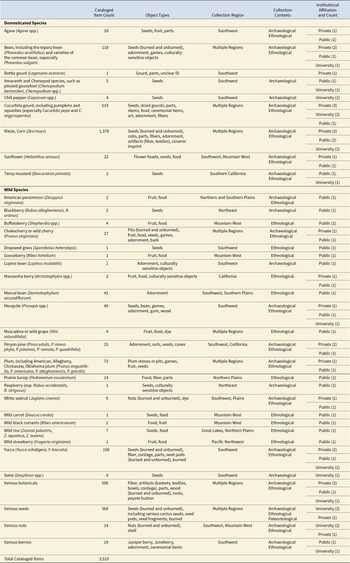
Using the detailed catalog information that was shared by eight institutions, we identified the number of cataloged items present for each species on our list, the types of items, the collection context (archaeological, ethnographic), and the geographic context of the item (see Table 2). The catalog information varied in detail across institutions, and the “Cataloged Item Count” listed in Table 2 merely indicates that any amount of a species is accounted for in a cataloged item and that the actual amount of material listed could range from a single bean to a bag of a “large number” of seeds. Many specimens were also unidentified, indicating that there may be many more of these species present in the collections than is presently recorded.
Seed Holdings Identified in Catalog Information Shared by Respondent Institutions.

Table 2 Long description
The table lists plant species represented in respondent institutions’ catalog records and summarizes, for each species, the number of catalogued items, object types, collection regions, collection contexts, and the number of institutions by affiliation type. Total catalogued items are 3,519 across domesticated and wild species. Maize has the highest count at 1,378 items, followed by Cucurbita gourds at 619; other large categories include various botanicals at 598 and various seeds at 368. Among domesticated species, beans total 118 and yucca totals 108, while several domesticated entries have very small counts such as bottle gourd with 1 and tansy mustard with 2. Wild species counts are generally lower, with notable exceptions including mesquite pods at 45, mescal beans at 41, plums at 72, and wild cherry at 26. Collection regions are often listed as multiple regions or the Southwest, and contexts are primarily archaeological and ethnological, with paleontological appearing only for the “various seeds” category. Institutional affiliation is reported as counts of private, public, and university respondents per row, and some rows show multiple affiliations contributing to the same species. Counts reflect catalogued items rather than unique specimens, and object types vary widely, including seeds, food remains, fibers, adornment, games, and culturally sensitive materials.
The most common species present in these records recognized as “domesticated” were corn (Zea mays; n = 1,378), Cucurbita gourds (Cucurbita spp.; n = 619), beans (Phaseolus spp.; n = 118), and sunflowers (Helianthus spp.; n = 22). Items containing corn and gourds had the largest range in object types, which included seeds (burned and unburned), plant parts (e.g., dried gourds, husks), fibers, prepared food (e.g., meal, flour, cakes, roasted seeds), ceremonial items, cordage, and adornment (e.g., beads). Some of these items were labeled as culturally sensitive, and they could be part of items such as medicine bundles or found in funerary contexts and therefore subject to NAGPRA. Corn, beans, and Cucurbita gourds were sourced from multiple geographic regions across the United States, whereas other domesticated species in these records were sourced primarily from the Southwest, some of which were sourced from the Mountain West. Most of the domesticates were part of archaeological and ethnological collections, whereas the small number of chili pepper (Capsicum spp.) and amaranth/chenopod (Chenopodium spp.) specimens were only gathered through archaeological activities.
Species commonly accepted as “wild” were generally fewer in their numbers than domesticates. The most prevalent species were yucca (Yucca spp.; n = 108), wild plums (Prunus spp.; n = 72), mesquite (Prosopis spp.; n = 45), mescal beans (Dermatophyllum secundiflorum; n = 41), choke cherry / wild cherry (Prunus virginiana; n = 27), piñon pine (Pinus spp.; n = 15), and prairie turnip (Pediomelum esculentum; n = 14). The plums and chokecherries / wild cherries were most often present as pits/stones used as dice or found as food waste in archaeological contexts. Aside from the archaeological context of these prevalent species, many of the wild species were part of targeted ethnological collecting in the early twentieth century and were in the form of prepared foodstuffs, such as dried strawberry (Fragaria virginiana) cakes.
For the four institutions that shared information about their seed and plant holdings but did not provide detailed catalog information, they did confirm which species were housed in their collections (see Supplementary Table 1). In this group, beans, Cucurbita gourds, and corn were the most frequently held specimens, whereas other species were less consistently present across these institutions. At least 23 separate species were accounted for in these collections.
Although reported specimens across all institutions include many altered plant parts and seeds, there is a vast amount of unaltered seeds in these collections that could potentially remain viable. Specimen dates were not always available, but some ranged from 2600 BP to the early twentieth century. These many thousands of ancient seeds and plant parts hold diverse information and memories about past climates and seed keepers—memories that could be reawakened.
Storage and Care
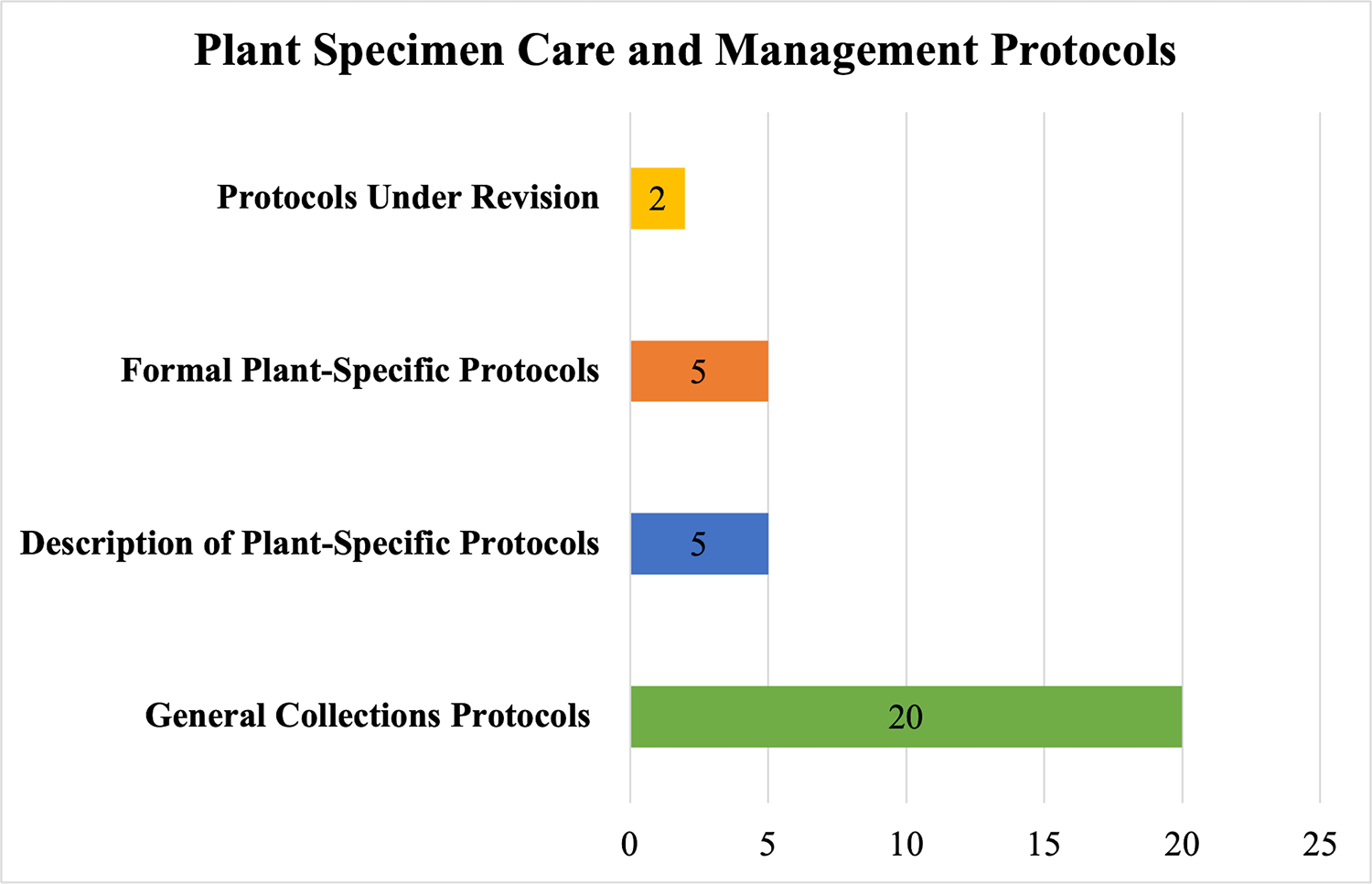
Responses also provided information on storage and care protocols for Indigenous seed and plant materials. Nineteen respondents indicated that their institution has specific management protocols for plant specimens, whereas 12 replied that they did not, and one replied that they did not know. In sorting this data, it became clear that nine institutions had specific management protocols for plant materials in their collections; five of these wrote brief descriptions of their procedures in the survey, and four attached plant-specific care protocol documents. Twenty institutions did not have specific procedures for plant materials but followed their institutions’ general collections care policies. Two institutions were in the process of revising their policies and were unable to share them at the time of the survey (see Figure 4). None reported having specific cultural care protocols in place for the management of plant specimens (i.e., specific care procedures following descendant-community protocols, which could include “feeding” objects and smudging storage areas).
Institutional protocols for plant specimens and general collections care.

Figure 4 Long description
The bar graph title reads Plant Specimen Care and Management Protocols. The horizontal axis shows 0, 5, 10, 15, 20, 25. The vertical axis lists Protocols Under Revision, Formal Plant minus Specific Protocols, Description of Plant minus Specific Protocols, General Collections Protocols. Bar values shown are: Protocols Under Revision 2; Formal Plant minus Specific Protocols 5; Description of Plant minus Specific Protocols 5; General Collections Protocols 20.
Storage and care procedures were almost identical across institutions and included maintaining botanical materials in sealed envelopes or vials in a dark, climate-controlled environment. General protocols within these types of institutions holding collections not specific to seed and plant holdings include regular monitoring for pest infestation in facilities, disaster prevention in facilities, and careful or supervised handling with clean hands or nitrile gloves. None of these protocols are specific to or effective for preserving viable seeds. Although storage in climate controlled and pest-free environments may maintain sample size and preserve aDNA quality, much cooler temperatures would help to preserve viability of any desiccated seeds (De Vitis et al. Reference De Vitis, Hay, Dickie, Trivedi, Choi and Fiegener2020). Some institutions follow storage and care protocols developed by outside organizations, including the Bureau of Land Management, Missouri Botanical Gardens (MBG), the Department of Interior Museum Program, National Park Service Museum Management Program, and the American Institute for the Conservation of Historic and Artistic Works. Some of these protocols are specific to preserving plant materials, such as the MBG protocols, but even these plant-specific protocols do not consider colder storage temperatures.
Seed and plant materials are generally overseen by museum staff, with large institutions deferring to the conservator or collections manager for storage and care decisions. A few institutions referenced poor funding and lack of trained staff as reasons why they may not strictly adhere to botanical care protocols. For example, one respondent stated that they had “no written policy, though we try to follow best practice on our minimal budget and volunteer staffing” (ID42). It seems that funding and staffing could be areas of vulnerability for the long-term maintenance of seed collections, along with storage conditions that may quicken the deterioration of once-viable desiccated seeds.
Catalog Data and Records Accessibility
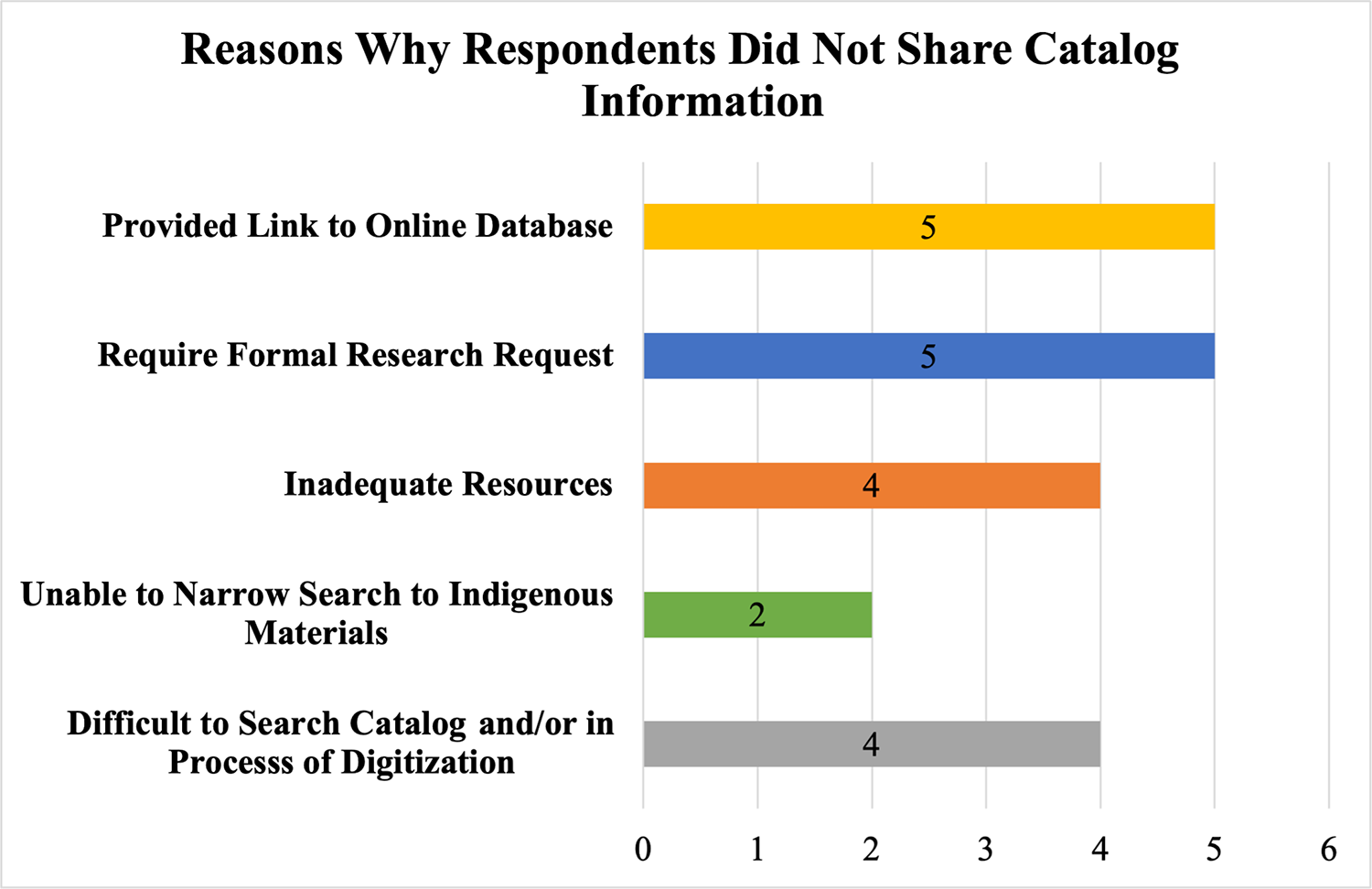
Survey responses also discussed issues around collections records quality and accessibility. Based on responses from 31 institutions—17 of which provided information on specific seed and plant holdings with varying degrees of detail—our team examined common themes across received responses and seed inventories. Respondents cited a variety of issues that impact and often limit access to information, such as inaccurate data, research records not attached to catalog entries, and a lack of associated cultural affiliation to indicate appropriate cultural protocols for seed stewardship. In addition to the challenges of incomplete records, four respondents reported that they were unable to provide the requested information because their current records were being digitized or were otherwise difficult to search. Two indicated that although they did have digitized records, they could not search for materials specifically from Indigenous sources. Four reported that they lacked appropriate resources, including funding and staffing, to complete our information request. Five required formal research requests to provide us with detailed catalog information. And five repositories provided links to their online catalog databases that contained publicly accessible information on some materials in their collections (see Figure 5).
Reasons why respondents did not directly share catalog information through the survey.

Figure 5 Long description
Reasons Why Respondents Did Not Share Catalogue Information. Horizontal axis label: none. Horizontal axis range: 0 to 6. Vertical axis label: none. Bar categories and values: Provided Link to Online Database: 5. Require Formal Research Request: 5. Inadequate Resources: 4. Unable to Narrow Search to Indigenous Materials: 2. Difficult to Search Catalogue and or in Process of Digitization: 4.
When asked if their institution had specific protocols for researcher or descendant-community access, 22 institutions responded “yes,” eight responded “no,” and two responded “don’t know.” The next question asked if we could have access to these protocols, to which 21 institutions said “yes,” two said “no,” and one said “don’t know.” Respondents from 18 institutions uploaded specific access protocol documents that detailed researcher access and descendant-community access procedures. Six institutions provided written descriptions of their access protocols, and two did not provide any information on access protocols. Twelve of these policies specifically described protocols for descendant-community access and use of collections. These protocols apply to all of their collections and are not specific to Indigenous plant materials. In our sample, there were no specific protocols for access to Indigenous plant materials outside of those covered by NAGPRA that were found in funerary contexts or were part of manufactured artifacts that are objects of cultural patrimony. Most access protocols followed standard research access request requirements, including information on the researcher, their institutional affiliation, the purpose of the research, and the necessity of their methods (especially in the case of destructive sampling). One collections manager for a state archaeological repository suggested that our team could potentially access historic seeds for a grow-out of heritage plants by completing a standard destructive sampling request. Outside of NAGPRA-related protocols, the vast majority of respondent institutions did not have specific protocols for descendant-community or Tribal Nation consultation or access. This demonstrates a clear area of risk for expropriation of seeds, in that research may be conducted without required descendant-community consultation or permissions. Further research to analyze collections policies would clarify their impacts on the different avenues through which Indigenous seeds may be accessed.
Pathways Forward
Based on these survey results, our team has identified initial pathways forward that archaeologists and museum professionals should consider in work involving Indigenous seed and plant materials. Our initial recommendations are pertinent to issues of acquisition, curation, and access and data management. Importantly, in every category below, IDSov can be addressed. Ten respondent institutions indicated that they were in the process of revising or restructuring their online cataloging systems or collections policies. One respondent stated that they had no protocols or experience but that they “would be interested in learning about recommendations in this area to honor descendant communities” (ID42). Given these ongoing and nascent efforts, our suggestions are offered at a time of potential transformation.
Acquisition and Descendant-Community Consultation
It is clear from the surveys that the majority of seeds and plant remains in our sample institutions came from either early twentieth-century ethnobotanical work or archaeological projects (see Supplementary Table 2). Yet, contemporary archaeological activities including research, compliance, and site-monitoring activities are an active pathway through which Indigenous cultural materials enter repositories—especially in institutions that serve as archaeological repositories for state and federal land-management agencies. Given that only 12 survey respondents reported having written protocols specific to descendant-community access, it is critical to facilitate additional layers of consultation and access throughout earlier phases of archaeological activities. We recommend that discussions of Indigenous plant materials be included in the consultation and collaborative processes with descendant communities and Tribal Nations already required under the National Historic Preservation Act (1966), the National Environmental Policy Act (1969), and NAGPRA (1990).
Consultation about seeds should include sharing information with descendant-community members about the presence of these materials, given that they may be used in ceremony or other cultural practices. It should also include information on the potential viability of desiccated seeds and the possibility of genetic research on plant materials—concerns that are akin to those related to the excavation of and research on ancestral human remains. Discussions around future genetic research using botanical materials should also include concerns around potential expropriation of that genetic information. Directly addressing these risks related to plant and seed collection—including pollen samples—can open lines of communication about the importance of these materials in communities before they are removed and constrained by institutional policies regarding curation, access, and use.
Practicing archaeologists who might interact with these materials may also consider further implementing best practices with respect to in-field or lab identification and recordkeeping. This should include implementing new best standards around IDSov—including the use of the Local Contexts Traditional Knowledge (TK) and Biocultural Notices (BC)—which constitute the first step of recognizing Indigenous rights and interests in the data and catalogs (Local Contexts 2025). The TK and BC Notices allow researchers to make connections to Indigenous communities immediately by sharing critical project metadata and indicating that these data may require community-specific protocols for management and future use. Communities may then create TK and BC Labels for data that specifically outline those rules and protocols.
Careful consideration should also be made to the descriptors used to label samples that may include seeds or plant parts to enhance capacities to locate these specimens at a later date. One survey respondent exemplified this issue in their own collections, stating that “most collections in our care that contain seeds do not have that information listed even in the artifact catalogs; these are more likely to be cataloged as soil samples or flotation samples” (ID74). Information should also be consistent across different records, including artifact bags, logs, databases, site records and forms, and repository submission forms and boxes. Three survey respondents highlighted the ongoing importance of these records in repository contexts: one reported the continued use of artifact catalogs in their efforts to digitize their catalogs; another indicated that their records are currently organized by archaeological site, without the capacity to search for particular artifacts across sites; and the third reported that “uncataloged materials can only be accessed here as paper excavation records” (ID65). Adherence to the recordkeeping practices described above will facilitate accurate recordkeeping and the accessibility of information for collections managers and descendant-community members. Practicing archaeologists seeking help or guidance on identification, labeling, and recordkeeping best practices should consult with information professionals, particularly those trained in Indigenous perspectives at the start of the project.
Curation
For collections managers and curators at institutions that hold Indigenous plant specimens, these survey results echo ongoing calls to maintain accurate and accessible collections records and to promote formal collaboration with Indigenous descendant communities. We also suggest that staff consider the risks of current standards for botanical material storage.
Survey responses indicated that issues related to records accessibility present significant barriers for collections managers as well as researchers and descendant-community members. Four institutions indicated that although they were willing to share seed inventories, they were limited in their capacities to do so because their records were either in paper copies, in the process of being digitized, or were otherwise difficult to search. Here are some examples:
The majority of our records are stored in our database. However, we are currently in the process of transferring information from an older (legacy) database to a newer, more relational database. The records in the older database are not currently useful for finding information (ID66).
We have some of our collections in a database and are currently working on uploading information about all our collections to this database, but a full catalogue is likely years away. . . . We welcome specific requests for particular archaeological sites, as that is how most of our records are currently organized. We don’t currently have a way to search our collections specifically for a particular type of seed or plant part (ID43).
Many items in our collections have been radiocarbon dated, but we don’t currently have the ability to search or sort for items that have been dated or the result. This will be a function of our new database; however, compiling, standardizing, and entering all that data will take a very long time (ID74).
Our online database does have digital catalogues for collections. Currently, the database is undergoing a massive record cleanup, and artifacts are being added at an individual object level; whereas in the past, projects and artifacts were lumped together with limited information/provenance. It will take years to accomplish, but we are able to look up seeds and find results. The herbarium has not been analyzed nor catalogued since the 1980s (ID56).
Two institutions with digitized catalog databases indicated that they had no way of searching for items specifically from Indigenous communities:
We definitely have plant specimens sourced from Indigenous communities in our Anthropology collections. Our Botany Department also cares for specimens that may have come from Indigenous communities, but many of these collections have not been catalogued to the level where they could be clearly associated with Indigenous communities (ID29).
Many but not all [specimens] are digitally catalogued. There is not currently an easy way to search for specimens that were sourced from Indigenous communities . . . (ID46).
And finally, four institutions were unable to share inventories because they lacked adequate resources—often a result of staff turnover, understaffing, or disorganized records. Two respondents explain this:
As a repository, we have many databases from different agencies that include varying levels of detail. Museum faculty/staff changed completely last fall, and we are hoping to rectify this issue. However, it is a massive undertaking for our small institution with one full-time staff member and a director (ID48).
There are very few [seed specimens] in our database. We are still working through the back log of excavations from 40 years ago. Mentions of many of these species are in field notes (ID41).
Issues around accessibility of records also extend to nonspecialist user experiences of digitized catalogs. Five respondents provided links to their online catalog databases that contained publicly accessible information on some materials in their collections. Two online databases did not provide clear options to search for items sourced from Indigenous communities, whereas others did provide this information, yet they were still challenging to navigate. Search results were not readily useful for our research, but the process of navigating these sites also made clear to the team how difficult it would be for descendant-community members to access information unless they had a very clear idea of the specific collections held in that repository. Such responses confirm key insights in the IDSov literature that Indigenous collections are hard to find within existing search tools, partly because of a lack of proper provenance information (Anderson et al. Reference Anderson, Hudson, Johnson and Riddle2024; Hudson et al. Reference Hudson, Anderson, Taitingfong, Martinez and Carroll2023). The proper disclosure of Indigenous collections is a first step in meeting obligations under the CARE Principles, and a key tool in meeting these are through the Local Contexts Disclosure Notices for institutions and researchers (Liggins et al. Reference Liggins, Hudson and Anderson2021; Local Contexts 2025). The lack of disclosure and findability creates barriers to community access and correspondingly precludes the inclusion of culturally appropriate protocols for seed stewardship and access, which further renders seeds vulnerable to inappropriate care and use.
Although creating and organizing digitized databases containing catalog information is a huge task, for those institutions that are currently planning or undertaking this process, we suggest that they consider a few items that would facilitate seed research, access, and protection. This includes indicating certainty about information (i.e., species identification and counts, dating, whether burned/unburned, etc.), attaching or clearly referencing associated research records, connecting with Indigenous communities that might want to include their Traditional Knowledge and Biocultural Labels within records, and indicating potential source communities or descendant communities when possible.
We also encourage curators and collections managers to examine any protocols they may have in place for descendant-community engagement throughout collections curation, conservation, access, and research procedures and to consider how they should address concerns regarding seed genetic information and viable specimens. Given that some of these materials may also be protected under NAGPRA as cultural patrimony, collections managers should consider the specific guidance for the handling and care of Indigenous seeds as persons and relatives, and they should consider the implications of the 2024 revisions for duty-of-care practices (Anderson et al. Reference Anderson, Gumbs, Hudson, McAlvay and Leonard2025). For institutions that already engage in collaborative work with Indigenous descendant-community members, staff should encourage the establishment of written procedures to guide future interactions and ensure consistency. We recommend that these procedures include definitions of stakeholder groups, such as “descendant communities,” rather than navigating community engagements on a case-by-case basis. The following examples demonstrate the risk of inconsistent institutional practices without written procedures:
We do not have specific protocols for research or descendant-community access but do request tribal permissions for any potentially sensitive (items that may be NAGPRA eligible or that we have been told may be culturally sensitive by tribal members through consultation or more informal discussions) (ID43).
[Institution Name] has many rules, procedures, and policies for research in our collections, and especially rigorous standards for approval of any type of destructive sampling (e.g., sampling for DNA analysis) and storage/access for resulting data. We also have policies regarding access to collections and archives (see above)—exceptions may be granted to “qualified researcher” policies in the case of access requested by descendant community members (ID74).
Given that only nine respondent institutions had specific protocols for care of plant materials, we also recommend that curators consider Indigenous plant and seed storage conditions, especially if there are large amounts of potentially viable, unburned, desiccated seed stock in their collections, which are more often part of ethnographic and ethnobotanical collections. Most respondents reported following their general collections care procedures. As one explains, “We adhere to general preventive conservation methods, including temperature and humidity control, pest management, and archival housing standards. We do not have specific protocols for seeds in our collections” (ID66). Though species vary in their storage needs—including moisture, temperature, and oxygen availability—most seeds benefit from refrigeration or freezing when stored long term in seed banks (De Vitis et al. Reference De Vitis, Hay, Dickie, Trivedi, Choi and Fiegener2020). Staff should continue to store other botanical remains in climate-controlled, pest-free spaces, but they should also consider possibilities for colder storage temperatures. Two separate institutions stated that they consult external manuals developed by the Missouri Botanical Garden, which could be a useful example for curators interested in developing plant-specific protocols.
Collections Access and Data Management
Maintaining protective practices already in place concerning research and destructive sampling requests will continue to facilitate the preservation of Indigenous plant materials, but further consideration is needed regarding issues of data ownership and use arising from plant genetic research. Given that Indigenous agricultural plants were developed by Indigenous seed keepers over generations, curators should treat this as a key IDSov concern. The 24 researcher and descendant-community access protocols that survey respondents shared (18 formal protocol documents and six write-in responses) included procedures for all collections and did not contain any information specific to Indigenous plant materials beyond the obligations for NAGPRA-eligible items that included seed and plant parts.
Most access protocols followed standard research access request requirements, including information on the researcher, their institutional affiliation, the purpose of the research, and the necessity of their methods (especially in the case of destructive sampling). Given that only five institutional policies required descendant-community review for destructive sampling requests, research with plant specimens appears relatively unchecked at present. Most of the repositories that did address descendant-community review of research requests house agency-owned collections with their own protocols pertaining to consultation, but a small number of other institutions also held strong standards, as exemplified below:
In 2021, we updated our policy for access to the collection. Consultation with Indigenous communities is a required step in the application process. A Collections Research Request form must be completed and submitted for all research inquiries that require access to the collections. Non-invasive techniques including, but not limited to, 3-D scanning, pXRF, and X-ray, as well as invasive techniques, including, but not limited to, radiocarbon dating, compositional analysis, DNA, and isotopic analysis require the completion of the Analysis Request Form (ID64).
Such procedures provide opportunities for thorough community and institutional review of research requests, but few institutional policies included explicit statements on data ownership and sharing for research with their collections. Only six protocols required research data sharing, and nine only required either institutional credit lines in publications or sharing of resulting research publications. This demonstrates a serious gap in protections, given that there are no specific policies in place surrounding genetic information gathered from Indigenous-developed seeds and plants.
Specific policies regarding research with Indigenous plant material could follow frameworks for research with items deemed culturally sensitive but not overtly covered by NAPGRA to address concerns over descendant-community input and data ownership and sharing. Given that there is active interest in these genetic materials to support research on climate-resilient agriculture, these topics should be promptly addressed to avoid further expropriation of Indigenous knowledges and materials. This is especially in the context of increasing digital sequence information and expectations arising from the current active negotiations around the Nagoya Protocol, the Convention on Biological Diversity, Digital Sequence Information, and benefit sharing (Coltman et al. Reference Coltman, Hudson, Mika, Matthews, Anderson, Kusabs, Riddle and Golan2025; Golan et al. Reference Golan, Riddle, Hudson, Anderson, Kusabs and Coltman2022; Liggins et al. Reference Liggins, Hudson and Anderson2021).
Conclusion
Archaeologists and museum professionals can play a critical role in bringing issues related to Indigenous seed and plant holdings to the forefront of our professional praxis through active consultation with descendant communities, purposeful disclosure of these valuable collections, and intentional curatorial practices. To increase responsible and ethical institutional practice regarding Indigenous seed and plant curation, archaeologists and museum professionals should consider adopting new protocols pertaining to cultural care and actively engage in descendant-community consultation, which also specifically explains the risks and value of seed and plant collection. Accurate and organized recordkeeping practices that include Indigenous provenance information will be key for these collections into the future.
The results of our survey demonstrate that there are vast amounts of Indigenous plant-related materials and seeds housed in museums and archaeological repositories, most of which are domesticated agricultural plant remains gathered through historic ethnobotanical collecting expeditions as well as historic and contemporary archaeological activities. These findings indicate that there are many issues around Indigenous plant collection and stewardship that create areas of vulnerability, such as unclear and disorganized recordkeeping and warm storage conditions. Although other institutional practices already in place—such as research access protocols—have been successful in preserving botanical materials, further protections must be considered in the wake of increasingly available and accurate DNA extraction technologies, rising demand for climate-hardy seed stock, and growing demands for rematriation of seeds by their Indigenous caretakers.
We suggest that archaeologists and museum professionals take steps to ensure community awareness about issues of seed viability, genetic research, and data ownership and management while also establishing or improving written procedures for ethical stewardship of Indigenous seed and plant parts. Based on our survey results, there are very few museum protocols specific to the care and management of plant specimens, which would help to solidify standard practices pertaining to storage and genetic data management. Our recommendations for museum professionals are drawn from a small sample of survey responses and would be strengthened by further research on written collections-management policies. More holistic research on institutions’ written policies would enable us to identify specific best practices for facilitating descendant-community input and access and protecting plant materials from degradation and expropriation within these types of institutions.
For many Indigenous peoples, seeds and plants are living persons—kin that are central to subsistence, religious life, cultural practices, and balanced ecosystems. The role of plants and seeds in Indigenous communities highlights the sharp cultural divide between these groups and the logics underlying mainstream archaeological and museum practices that treat seeds as materials and data sources. This study provides a glimpse into the types and numbers of these plants housed in US repositories and the complexities of stewarding plant persons with significant cultural and economic value. As many Indigenous community members, collaborative archaeologists, and museum professionals seek to engage in more ethical practices surrounding Indigenous cultural materials, attention must be paid to Indigenous plants and seeds, especially as they relate to NAPGRA or international legal standards regarding Indigenous intellectual and cultural property.
Diversity within and between Indigenous communities demands long-term relationships to identify the importance of these materials to each community and relevant stewardship practices. As pressures mount for Indigenous communities to bring home their seed relatives, for industrial agriculture participants to develop climate change–resilient seed stock, and for US archaeological repositories to steward their collections despite increasing funding precarity, Indigenous seed stewardship protocols must be strengthened, and rematriation must be prioritized. The findings of this survey point toward pathways to examine these tensions and toward possible solutions to enhance descendant-community control of plant and seed materials.
Acknowledgments
We would like to thank Mark Varien and Grant Coffey of the Crow Canyon Archaeological Center for sharing their work on the Crow Canyon Maize Database Project. Their maize-holding repository list provided the basis of our own institutional repository sample. We are grateful for their willingness to share their work and facilitate further research on Indigenous seed holdings in US institutions. We would also like to thank the respondents to the Indigenous Seeds Survey, the anonymous reviewers for their insightful comments, and Mario Macías-Ayala for translating the abstract. A permit was not required for this research.
Funding Statement
This work was supported by the Rockefeller Foundation under Grant FO-Grant-0002115. Stephanie Carroll and Jane Anderson contribute under the NSF AccelNet Grant 2412372. Jane Anderson also contributes under the NSF Center for Braiding Indigenous Knowledge Grant 2243258.
Data Availability Statement
The Indigenous Seeds Survey was conducted using Qualtrics and over email, with responses recorded in an Excel spreadsheet. This spreadsheet is available as Supplementary Table 2, with identifiable information (names, affiliations, addresses) changed to numbers or redacted to maintain confidentiality. Internal catalog records contain culturally sensitive information, so they are not shared by these authors but are accessible via research request to institutional repositories.
Competing Interests
The authors declare none.
Supplementary Material
The supplementary material for this article can be found at https://doi.org/10.1017/aap.2026.10163.
Supplementary Table 1. Presence of plant species in four respondent institutions that did not provide full specimen inventories. Blank cells indicate that this information was not provided by the respondent institutions.
Supplementary Table 2. Indigenous Seeds Survey responses, with identifying information removed to protect confidentiality.




 Open access

