Thistle (Cynara cardunculus) flower has been traditionally used as a milk coagulant in artisanal cheese-making for centuries across the Mediterranean basin, West Africa and Southern Europe (Roseiro et al., Reference Roseiro, Barbosa, Ames and Wilbey2003a; Roseiro et al., Reference Roseiro, Gómez-Ruiz, García-Risco and Molina2003b; García et al., Reference García, Rovira, Teruel, Boutoial, Rodríguez, Roa and López2012; Liburdi et al., Reference Liburdi, Boselli, Giangolini, Amatiste and Esti2019). The process involves extracting specific enzymes from the thistle flower, which facilitate milk coagulation and curd formation. The use of vegetable rennet (VR), such as C. cardunculus L. or Cynara humilis L., in cheese-making has deep historical roots in these regions (Roseiro et al., Reference Roseiro, Barbosa, Ames and Wilbey2003a; Tejada et al., Reference Tejada, Abellán, Cayuela and Martínez-Cacha2006; Galán et al., Reference Galán, Prados, Pino, Tejada and Fernández-Salguero2008; García et al., Reference García, Rovira, Teruel, Boutoial, Rodríguez, Roa and López2012; Liburdi et al., Reference Liburdi, Boselli, Giangolini, Amatiste and Esti2019; Vergara-álvarez et al., Reference Vergara-álvarez, Arteaga-Márquez and Hernández-Ramos2019; Manuelian et al., Reference Manuelian, Boselli, Vigolo, Giangolini and De Marchi2020; Colombo et al., Reference Colombo, Cimino, Bruno, Hugo, Liggieri, Fernández and Vairo-Cavalli2021; García-Gómez et al., Reference García-Gómez, Vázquez-Odériz, Muñoz-Ferreiro, Romero-Rodríguez and Vázquez2021). VR, also referred to as a plant-based coagulant, is distinct from vegan cheese, which contains no animal-derived proteins. VR, valued for its easy availability and distinct flavour, was integral to traditional cheese-making practices throughout the medieval period. However, as dairy production became increasingly industrialised, its use gradually diminished, with animal-derived rennet dominating due to its greater consistency and effectiveness.
In recent decades, there has been a renewed interest in thistle rennet, driven by a growing consumer preference for traditional, sustainable and vegetarian-friendly food production. Increasing health awareness, environmental and ethical considerations are reshaping dietary choices, often reducing consumption of animal-based products in favour of more sustainable alternatives (Schiano et al., Reference Schiano, Harwood, Gerard and Drake2020; Drigon et al., Reference Drigon, Nicolle, Guyomarc’, Gagnaire and Arvisenet2023; Ruby et al., Reference Ruby, Graça and Olli2024. At the same time, there is a rising appreciation for high-quality dairy products, particularly those linked to biodiversity, health benefits and animal welfare (Naspetti et al., Reference Naspetti, Mandolesi, Buysse, Latvala, Nicholas, Padel, Van Loo and Zanoli2021; Merlino et al., Reference Merlino, Renna, Nery, Muresu, Ricci, Maggiolino, Celano, De Ruggieri and Tarantola2022; Mandolesi et al., Reference Mandolesi, Naspetti, Arsenos, Caramelle-Holtz, Latvala, Collado, Orsini, Ozturk and Zanoli2024). Cheese remains a core food item in many diets worldwide, second to fresh milk in dairy consumption (FAO, 2022). While Western countries continue to lead in per capita cheese consumption, demand is also rising in regions such as Asia (OECD/FAO, 2022; Statista, 2023). Although the market is mainly dominated by cow’s milk cheeses, the production and consumption of sheep and goat cheeses are steadily increasing (Almeida and Simões, Reference Almeida and Simões2018; Atlantic Corporation, 2021). This trend is largely attributed to their distinct sensory characteristics, superior nutritional value and association with more traditional and natural production methods (Ryffel et al., Reference Ryffel, Piccinali and Bütikofer2008; Vargas-Bello-Pérez et al., Reference Vargas-Bello-Pérez, Tajonar, Foggi, Mele, Simitzis, Mavrommatis, Tsiplakou, Habib, Gonzalez-Ronquillo and Toro-Mujica2022; Mandolesi et al., Reference Mandolesi, Naspetti, Arsenos, Caramelle-Holtz, Latvala, Collado, Orsini, Ozturk and Zanoli2024). Sheep and goat dairy products hold significant cultural importance in the Mediterranean basin, where a wide range of high-quality traditional cheeses are produced. Many of these products are protected by geographical indication schemes such as protected denomination of origin (PDO) or protected geographical indication, which safeguard their authenticity and regional heritage (Mandolesi et al., Reference Mandolesi, Naspetti, Arsenos, Caramelle-Holtz, Latvala, Collado, Orsini, Ozturk and Zanoli2024). Although sheep and goat milk cheeses are widely acknowledged for their health benefits and lower environmental impact, they occupy a relatively small market segment. Producers in this sector often face limited production capacity, modest profit margins and workforce shortages (De Devitiis et al., Reference De Devitiis, Bimbo, Viscecchia, Nardone, Seccia, Monacis, Albenzio and Santillo2023). With appropriate investment and innovation, these cheeses could reach a broader audience and increase their market visibility. The adoption of VR, such as thistle rennet, not only encourages more sustainable production methods but also helps safeguard the time-honoured qualities of these cheeses and has the potential to expand their market share, inspiring the industry with new opportunities.
Spain and Portugal boast the widest variety of sheep and goat cheeses made with VR (Roseiro et al., Reference Roseiro, Barbosa, Ames and Wilbey2003a, Reference Roseiro, Gómez-Ruiz, García-Risco and Molina2003b; Almeida and Simões, Reference Almeida and Simões2018). These cheeses contribute to culinary heritage and the socio-economic stability of rural areas, where traditional cheese-making remains an important livelihood (Tejada et al., Reference Tejada, Gómez and Fernández-Salguero2007; Colombo et al., Reference Colombo, Cimino, Bruno, Hugo, Liggieri, Fernández and Vairo-Cavalli2021). This framework underscores the value of these cheeses beyond their culinary appeal.
While animal-based rennet (i.e., a mixture of different enzymes extracted from the inner mucosa of the fourth stomach of calves) has long been the industry standard, there is increasing interest from dairy supply chain stakeholders in VR (Almeida et al. Reference Almeida, Gomes, Faro and Simões2015; Almeida and Simões, Reference Almeida and Simões2018; Nicosia et al., Reference Nicosia, Puglisi, Pino, Caggia and Randazzo2022). This shift is driven by industrial requirements (e.g., limited availability of calf rennet and rising production costs) and the broader global expansion of cheese markets, which necessitate new sources of milk-coagulating enzymes (Liburdi et al., Reference Liburdi, Boselli, Giangolini, Amatiste and Esti2019). Furthermore, evolving consumer preferences, motivated by health concerns, dietary choices (e.g., vegetarianism), ethical considerations and religious dietary laws (e.g., Judaism and Islam), have positioned VR as a preferred alternative over microbial and genetically modified (GM) rennet (Roseiro et al., Reference Roseiro, Barbosa, Ames and Wilbey2003a; Aquilanti et al., Reference Aquilanti, Babini, Santarelli, Osimani, Petruzzelli and Clementi2011; García et al., Reference García, Rovira, Teruel, Boutoial, Rodríguez, Roa and López2012; Allen et al., Reference Allen, Goddard and Farmer2018; Almeida and Simões, Reference Almeida and Simões2018; Nicosia et al., Reference Nicosia, Puglisi, Pino, Caggia and Randazzo2022; Ritota et al., Reference Ritota, Di Costanzo, Rampanti, Aquilanti, Bande De León, Tejada, Psomas, Al Mohandes Dridi and Manzi2025). Cheeses made with VR are particularly valued for their distinctive flavours and textures, which result from the specific enzymatic activity of the plant. This growing demand suggests promising opportunities for thistle rennet within the dairy sector, aligning with broader trends towards natural, sustainable and ethically produced foods.
Despite the potential of VR, there are some technical limitations to its widespread industrial application. Variability in the availability of flowers and the lack of standardisation in flower extracts present challenges, as factors such as plant ecotype, maturity stage and moisture content influence the performance of coagulation efficacy (García et al., Reference García, Rovira, Teruel, Boutoial, Rodríguez, Roa and López2012; Almeida and Simões, Reference Almeida and Simões2018). These inconsistencies can impact cheese texture and quality, making thistle rennet more suited to small-scale artisanal cheese-making rather than large-scale industrial production (Roseiro et al., Reference Roseiro, Barbosa, Ames and Wilbey2003a, Reference Roseiro, Gómez-Ruiz, García-Risco and Molina2003b). However, advancements in technology and research processing techniques may help overcome these challenges, paving the way for greater adoption of VR in commercial cheese-making.
To our knowledge, the literature lacks studies regarding consumer acceptance of VR in cheese-making. While sensory evaluations conducted by experts indicate that cheeses made with VR are well received (Roseiro et al., Reference Roseiro, Barbosa, Ames and Wilbey2003a; Galán et al., Reference Galán, Prados, Pino, Tejada and Fernández-Salguero2008), more empirical evidence is needed regarding consumer preferences. Studies suggest that VR significantly influences cheese’s organoleptic and textural properties (Tejada et al., Reference Tejada, Abellán, Cayuela and Martínez-Cacha2006, Reference Tejada, Gómez and Fernández-Salguero2007; Almeida and Simões, Reference Almeida and Simões2018; Colombo et al., Reference Colombo, Cimino, Bruno, Hugo, Liggieri, Fernández and Vairo-Cavalli2021). These cheeses often exhibit distinctive flavours with an intensified taste profile, described as having a ‘slightly piquant aroma’ (Galán et al., Reference Galán, Prados, Pino, Tejada and Fernández-Salguero2008). Due to the highly intense proteolysis, VR cheeses tend to develop a more homogeneous and creamy texture than cheeses made with animal rennet (AR; Roseiro et al., Reference Roseiro, Barbosa, Ames and Wilbey2003a; Tejada et al., Reference Tejada, Abellán, Cayuela and Martínez-Cacha2006). Similarly, Galán et al. (Reference Galán, Prados, Pino, Tejada and Fernández-Salguero2008) found that cheeses made with VR are softer and have a more buttery texture than those made with AR.
Understanding consumer acceptance of cheeses made with thistle rennet is crucial to support the sustainable production of traditional dairy products and to guide effective strategies for introducing plant-based coagulants into broader markets. This study assesses consumers’ acceptance and perceived value of traditional cheeses made with thistle rennet in three Mediterranean countries: Italy, Spain and Tunisia. A two-step research design was implemented, combining focus group (FG) discussions with a standard hedonic test and a choice experiment to measure consumer willingness to pay (WTP) for cheeses made with different rennet types (Krueger, Reference Krueger, Morgan and Krueger1998; Stefani et al., Reference Stefani, Romano and Cavicchi2006; Canavari et al., Reference Canavari, Drichoutis, Lusk and Nayga2019; Castellari et al., Reference Castellari, Ricci, Stranieri, Marette, Sarnataro and Soregaroli2019; Mandolesi et al., Reference Mandolesi, Naspetti, Arsenos, Caramelle-Holtz, Latvala, Collado, Orsini, Ozturk and Zanoli2024). The study aims to contribute to the limited but growing body of research on plant-based alternatives in cheese-making by providing insight into consumer perceptions of VR. The findings can support the development of sustainable, culturally significant dairy products while addressing evolving consumer expectations.
Materials and methods
Given the lack of prior research on consumer acceptance of VR, this study adopted a two-phase approach. First, a qualitative method using FGs was employed to explore consumers’ knowledge, attitudes and perceptions regarding VR and its application in cheese-making (Krueger, Reference Krueger, Morgan and Krueger1998; Mandolesi et al., Reference Mandolesi, Naspetti, Arsenos, Caramelle-Holtz, Latvala, Collado, Orsini, Ozturk and Zanoli2024). In the second phase, a valuation experiment was conducted to assess both hedonic preferences and WTP for VR cheeses (Stefani et al., Reference Stefani, Romano and Cavicchi2006; Napolitano et al., Reference Napolitano, Braghieri, Piasentier, Favotto, Naspetti and Zanoli2010; Braghieri et al., Reference Braghieri, Girolami, Riviezzi, Piazzolla and Napolitano2014). Participants evaluated two traditional cheeses, feta and queso de Murcia, produced with either VR or AR. Feta cheese was included in all three countries (Italy, Spain and Tunisia) to allow cross-country comparisons. In contrast, queso de Murcia, due to its strong regional specificity and limited familiarity outside its production area, was tested only in Italy and Spain. The study’s tasting methodology was informed by the expectancy-disconfirmation model (Oliver, Reference Oliver1980) and the assimilation/contrast theory (Napolitano et al., Reference Napolitano, Caporale, Carlucci and Monteleone2007; Vitale et al., Reference Vitale, Kallas, Rivera-Toapanta, Karolyi, Cerjak, Lebret, Lenoir, Pugliese, Aquilani, Candek-Potokar, Gil and Oliver2020), which are widely used in sensory research to examine how information shapes consumer expectations and product evaluations. In this framework, disconfirmation refers to the positive or negative difference between expected liking, based solely on information, and blind liking, based on tasting without information: positive disconfirmation occurs when the product is liked more than expected, whereas negative disconfirmation occurs when it is liked less. Assimilation occurs when actual liking scores move towards the direction of consumers’ expectations after receiving information, whereas contrast occurs when scores shift in the opposite direction. In this study, these concepts were applied to evaluate how information about rennet type influenced consumer liking.
Following the hedonic evaluation, consumers’ WTP was measured through experimental auctions that involved actual monetary transactions (de-Magistris and Gracia, Reference de-Magistris and Gracia2016; Canavari et al., Reference Canavari, Drichoutis, Lusk and Nayga2019; Vecchio and Borrello, Reference Vecchio and Borrello2019). The WTP was conducted across all three countries but was limited to feta cheese. The overall study design, combining FGs and experimental evaluations, is summarised in Fig. 1.
Two-step approach: Focus groups and experimental evaluations.

Figure 1 Long description
The Focus Group section explains its use to explore consumer knowledge, attitude and perception about cheeses made with virtual reality, involving two focus groups in each country (Spain, Italy, Tunisia) with a total of 55 cheese consumers. The Product Tasting section describes its purpose to explore consumer liking of virtual reality cheeses through three steps: blind, expected and actual liking, with 100 participants in each country (Spain, Italy, Tunisia) for a total of 300. The Auction section details its use to assess consumer willingness to pay for virtual reality and augmented reality cheeses with actual monetary transactions, involving 100 participants in each country (Spain, Italy, Tunisia) for a total of 300.
Focus groups
FGs were conducted to facilitate an in-depth discussion on VR among cheese consumers, allowing insights to emerge naturally from the group interaction (Krueger, Reference Krueger, Morgan and Krueger1998). The objective was to uncover unexpected perspectives and attitudes through open dialogue.
Each FG session followed a structured discussion guide (Prince and Davies, Reference Prince and Davies2001; Boddy, Reference Boddy2005), ensuring consistency across all locations. The guide, standardised and translated into the native languages of the participants, enabled a uniform approach across the study sites. It included an introduction outlining the research objectives and probing questions to assess knowledge and preferences regarding traditional local cheeses and the cheese-making process. The final section focused on rennet, particularly VR, with participants receiving a brief explanation of different rennet types to stimulate discussion. This phase aimed to explore general acceptance, motivations and barriers to using VR in traditional cheese production. All sessions were audio- or video-recorded, lasting between 90 and 120 min.
The study was conducted in three Mediterranean countries (Italy: IT, Spain: ES, and Tunisia: TN) between February and May 2022. Two FG sessions were held in each location: Ancona (IT), Murcia (ES) and Sousse (TN), all urban or peri-urban areas. Each session included 8–12 participants, selected based on their role in household food shopping. To encourage participation, participants received a small incentive (e.g., a package of assorted cheeses and monetary compensation), following standard practices in qualitative consumer research. The sample was balanced in gender and age, encompassing younger and older adults. Participants were recruited using a convenience sampling approach, similar to the subsequent consumer panel, through university staff, students and local residents. Participants included regular and occasional cheese consumers, while individuals with food allergies, intolerances, or professional ties to farming and the food industry were excluded. The sample also reflected diverse dietary habits, including omnivores and vegetarians.
A total of 55 participants took part in the qualitative phase of FGs: 21 in Italy, 18 in Spain and 16 in Tunisia. Women comprised 54.55% of the sample, with a mean age of 39.36 (SD = 14.46). Regular cheese consumers comprised 65.27% of the group, while vegetarians accounted for 21.82%. The findings from this exploratory phase informed the design and interpretation of the subsequent quantitative study on consumer preferences and WTP.
Hedonic test and WTP
Products
Feta (PDO) cheese was selected for the tasting sessions due to its international recognition and widespread popularity across all participant countries, making it a suitable candidate for cross-national comparisons. As feta cheese is traditionally produced with AR, it provided a meaningful reference for evaluating the sensory impact of VR. The control feta cheese was produced using AR, while the experimental variant was coagulated with VR derived from Cynara humilis flowers. Both versions were produced in October 2022 at a dairy facility in Vela, Ioannina (Epirus, Greece), and matured in brine until shipment in December 2022.
Similarly, queso de Murcia al vino (PDO) was selected for its distinct characteristics and traditional production process. The control sample was produced using AR and 100% goat’s milk from the Murcian-Granadine breed. This was pressed, washed and uncooked cheese underwent maturation for 45 days for pieces exceeding 500 g and 30 days for smaller formats. A defining feature of this cheese is its rind, which is washed with red wine sourced from the PDO regions of Murcia (Jumilla, Yecla and Bullas). Production took place in September 2022 at a dairy in Caravaca de la Cruz (Murcia, Spain), following the specifications outlined by the PDO queso de Murcia al vino Regulatory Board. The cheese underwent approximately 1 month of ripening, reaching maturity by October 20, 2022.
All cheese samples were prepared in a single batch at the respective dairies under strictly standardised conditions and distributed to all participating countries for hedonic testing. Uniform raw materials, processing parameters and maturation protocols were applied to minimize production variation, and all samples were portioned and presented identically to participants. On the day of testing, feta cheese was sliced into 1-cm cubes, while queso de Murcia al vino was portioned similarly. Each sample was placed on a small transparent plate without seasoning and labelled with a unique three-digit randomised code for traceability. Samples were served in a randomised order to mitigate bias. Still water and unsalted bread were provided to cleanse participants’ palates between tastings, ensuring an unbiased sensory evaluation.
Experimental design
For the quantitative phase (hedonic tests and experimental auctions), a larger sample of 300 participants (100 per country) was recruited using a non-probabilistic convenience sampling approach. These participants were separate from those involved in the FGs. Recruitment targeted university staff, students and residents via volunteer mailing lists, ensuring that all participants were regular cheese consumers responsible for household food purchases. Hedonic testing was conducted in controlled university or sensory laboratory facilities in each country (Ancona, Murcia and Sousse), under standardised conditions to minimise environmental and contextual bias. Selection criteria included age and employment status quotas to achieve a diverse sample, and a snowball sampling technique was employed to meet recruitment targets. To encourage participation, both monetary and non-monetary incentives were provided. The final sample characteristics are described in Table 1. The gender distribution was nearly equal across countries. Overall, 91% of participants were regular cheese consumers, with 9% classified as occasional consumers. The majority (64%) were employed, while the remaining participants were students, unemployed or retired. Regarding education, 65% held at least a bachelor’s or master’s degree; only 2% of participants identified as vegetarians.
Socio-demographic features of the subjects participating in the hedonic test

Table 1 Long description
The table reports socio-demographic characteristics of participants from Spain (ES), Italy (IT) and Tunisia (TN) involved in the hedonic test. Each country includes 100 participants. Mean age was 42.71 ± 15.58 years in Spain (range 20–80), 45.86 ± 16.21 in Italy (20–76), and 38.65 ± 12.54 in Tunisia (21–69). Male participants were 59 in Spain, 41 in Italy and 36 in Tunisia, while female participants were 41, 59 and 64, respectively. Vegetarian participants were 3 in Spain and Italy, with none reported in Tunisia. Regular cheese consumers were 95 in Spain, 94 in Italy and 84 in Tunisia.
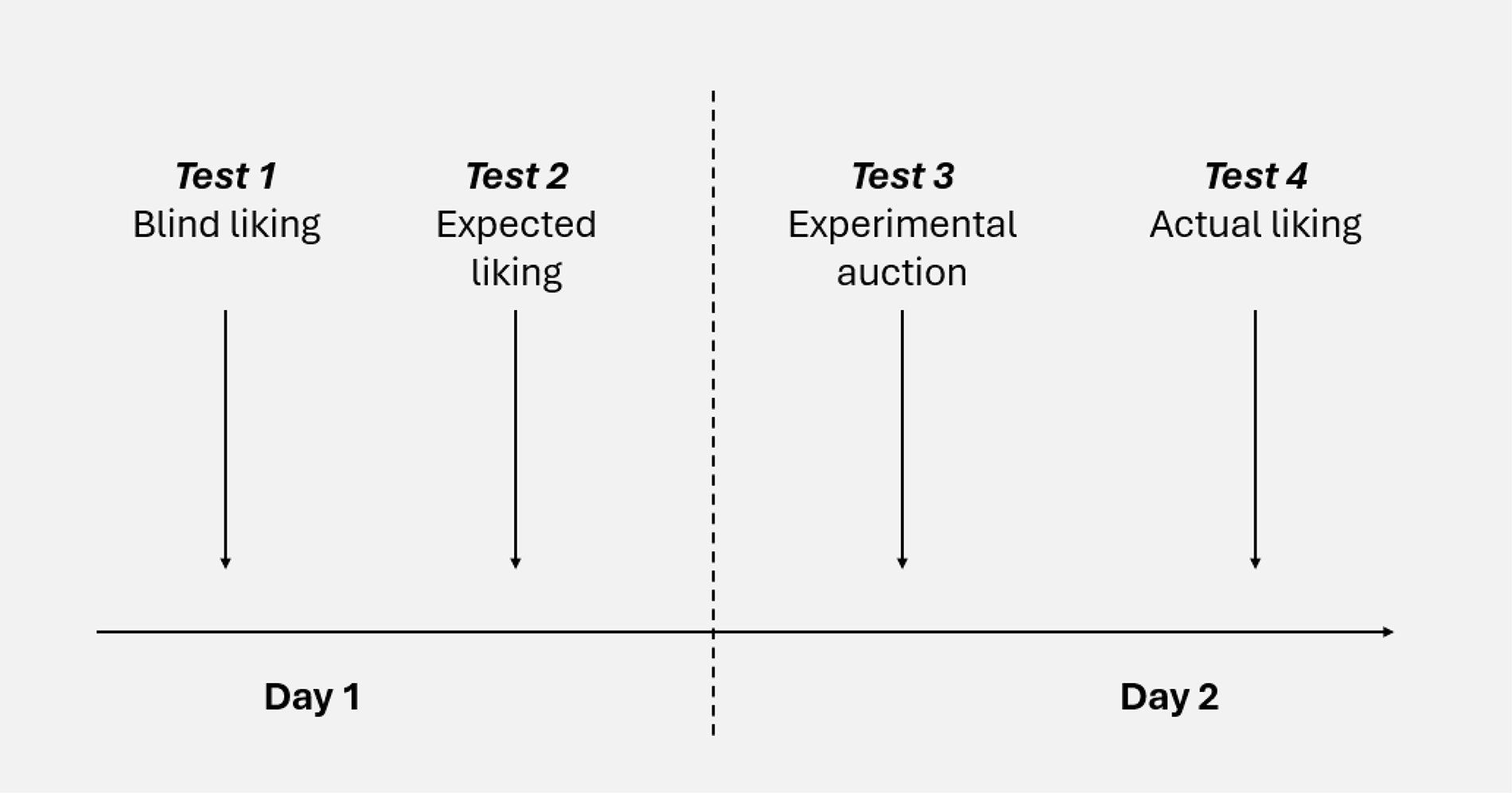
Product tasting and experimental auctions were planned over 2 days, as illustrated in Fig. 2. On Day 1, two hedonic tests were performed. In Test 1 (blind liking), participants performed a blind sensory evaluation of both experimental (VR) and control (AR) cheeses to assess perceived liking without prior information. Liking was rated using a 9-point Likert scale, ranging from ‘dislike extremely’ to ‘like extremely’, with ‘neither like nor dislike’ as the midpoint (Napolitano et al., Reference Napolitano, Braghieri, Piasentier, Favotto, Naspetti and Zanoli2010). In Italy and Spain, participants evaluated feta and queso de Murcia cheeses, whereas in Tunisia, only feta was tested. To counterbalance order effects, half of the participants in Italy and Spain sampled feta first, followed by queso de Murcia, while the other half followed the reverse order.
Hedonic tests and WTP sequence.

Figure 2 Long description
On Day 1, Test 1 is labeled Blind liking and Test 2 is labeled Expected liking. On Day 2, Test 3 is labeled Experimental auction and Test 4 is labeled Actual liking. The timeline is divided by a vertical dashed line between Day 1 and Day 2, with arrows pointing downwards from each test label to the respective day.
In Test 2 (expected liking), participants assessed their expected liking based solely on information regarding rennet type, without product tasting. Each participant received neutral written information describing AR and VR. For the AR, the description was: ‘Rennet is a set of enzymes used to separate milk into solid curds (for cheese-making) and liquid whey, which is often discharged. AR is prepared from the stomachs of ruminant animals, such as cows, sheep, or goats.’ For the VR: ‘Rennet is a set of enzymes used to separate milk into solid curds (for cheese-making) and liquid whey, often discharged. VR is prepared from flowers and young leaves of spiny perennial plants (commonly known as thistles), both wild and cultivated.’ After reading the information carefully, participants expressed their expected liking using the same 9-point scale.
On Day 2, Tests 3 and 4 were conducted with the same participants. Test 3 consisted of an economic evaluation of VR and AR cheeses through experimental auctions, where actual monetary transactions were made (Lusk and Shogren, Reference Lusk and Shogren2007; de-Magistris and Gracia, Reference de-Magistris and Gracia2016; Canavari et al., Reference Canavari, Drichoutis, Lusk and Nayga2019; Grandini et al., Reference Grandini, Medici, Canavari, Palmioli, Mercati, Catorci and Scocco2022). Feta cheese made with VR and AR was selected for experimental auctions. The auctions followed a first-price sealed-bid format (Greenwald and Oyakawa, Reference Greenwald and Oyakawa2017) and focused exclusively on feta cheese across all countries. This choice was deliberate: feta was the only cheese evaluated in all three countries, enabling consistent cross-country comparisons of WTP. Including queso de Murcia could have introduced confounding effects due to its regional specificity and limited familiarity outside Spain. Before the auction, participants were asked to read the auction guidelines carefully. Each session involved two auctions: one for a sample of 100 g of VR feta and another for a sample of 100 g of AR feta. Both (VR and AR) feta samples were identical in size, weight and packaging. To familiarise participants with the auction mechanism and reduce potential bidding bias, two preliminary training auctions using candy bars were conducted before the actual cheese auctions, allowing participants to practice the bidding procedure (Paterson and Clark, Reference Paterson and Clark2020). The auction procedure included four steps: (1) facilitators showed the product to the participants; (2) participants privately recorded their maximum bids; (3) facilitators announced a starting price of €0.25/100 g (reported on a chalkboard) and increased it by €0.25 every 10 s, with participants standing if they were still willing to pay and sitting if not; and (4) the last person standing, indicating the highest bid, won the auction. In each session, only one of the two auctions (VR or AR) was binding. The binding auction (VR or AR) was randomly selected at the end of the session, after both auctions had been completed. Therefore, there was only one winner for each session. The winner was drawn randomly from the pool of winners for two or more participants with the highest equal bids. The winning bidder paid the market price for the cheese, while all other participants paid nothing and received no product. Bids were expressed in euros per gram, except in Tunisia, where the dinars are the local currency. To facilitate the analysis, results are reported in euros.
Finally, the effect of information on actual acceptability was investigated in Test 4. Participants simultaneously received the VR cheese sample for tasting and the product information sheet on VR, similar to that used in Test 2. After reading the information, participants tasted the product and rated their liking using the same 9-point scale as the previous tests. The actual liking condition was intentionally applied only to VR cheeses, as the information treatment was designed to test the impact of a less familiar and innovative production attribute. AR cheeses, representing the conventional and well-known standard, were therefore not included in the actual liking condition. As in Test 1, participants in Italy and Spain tasted VR feta and VR queso de Murcia cheeses in a balanced order of presentation, while participants in Tunisia evaluated only VR feta. All hedonic tests and experimental auctions were conducted in controlled sensory laboratories under standardised conditions between November and December 2022.
Statistical analysis
Collected data from hedonic testing and WTP were analysed statistically using Stata (version 17). Liking scores and WTP data were analysed separately by country. Liking scores were analysed to determine consumers’ preferences for cheese made with VR and AR under different conditions (tasting only, information only, and tasting with information) (Napolitano et al., Reference Napolitano, Braghieri, Piasentier, Favotto, Naspetti and Zanoli2010). Two-sample t-tests for paired samples were used to evaluate differences between mean scores obtained for each product in the liking assessment and WTP analysis. Also, a simple linear regression was implemented to better understand consumers’ WTP for VR feta cheese.
Results
FG key themes
Four main themes emerged from FG discussions: the primary drivers behind traditional cheese consumption; participants’ understanding of cheese-making processes and their views on rennet; the incentives and obstacles influencing their willingness to consume cheeses made with VR; and potential strategies for effectively promoting these alternative cheeses.
Drivers of traditional cheese consumption
When asked to identify their preferred typical and local cheeses, participants almost converged around both aged and fresh varieties. Popular choices included pecorino sardo cheese, feta, manchego and other local artisanal sheep and goat cheeses. The taste was the primary driver of purchasing, with cheeses being mainly described as ‘good’, ‘strong’, ‘unique’, and offering a ‘different flavour’. Some participants, especially in Italy and Tunisia, emphasised that goat and sheep milk produce more distinctive cheeses than cow milk: ‘I believe that goat or sheep milk gives more appreciable cheeses than cow milk’ (TN, P2, M, Reg). Health reasons were a secondary motivation to purchase, particularly in Italy, where participants view sheep and goat cheeses as ‘more natural’ and ‘healthier’ than cow cheeses. Healthiness is sometimes linked with high quality and origin of ingredients and artisanal production methods: ‘I am interested in the origin … try to buy cheeses from Spain’ (ES, P2, F, Reg)Footnote 1 , ‘I trust only in local and traditional cheeses; I purchase cheese locally produced’ (IT, P7, M, Reg). Local production was also valued, with participants expressing a preference for buying directly from trusted farmers and cheesemakers: ‘I like to know about the history of a product directly from the cheesemaker if possible’ (IT, P2, F, Reg). Origin, artisanal methods and recipes further influenced purchase decisions.
Cheese-making knowledge and rennet perception
Most participants had limited knowledge about cheese-making, and rennet was unfamiliar to many. After being shown the definitions of rennet, some were surprised – for instance, one participant wanted to learn which type of rennet was used in their preferred cheese. VR was largely unknown, though some vegetarians had encountered it, and most participants were open to tasting or buying cheese made with it. GM rennet, however, was the least favoured, particularly in Italy and Spain. Only a few participants from Italy and Tunisia understood that rennet is essential for milk coagulation in cheese-making. After receiving definitions of rennet, some were surprised to learn about its animal origin and the existence of different types of rennet (animal, vegetable, microbial, or GM rennet). For example, one participant expressed the desire to learn more: ‘I didn’t know about those differences, and now I want to know which type of rennet is used for the cheese that I buy the most’ (ITA, P3, M, Reg), while another stated, ‘I did not know about rennet either’ (ES, P2, F, Reg). VR was largely unknown, though some vegetarians encountered it, and most participants were open to tasting or buying cheese made with it. GM rennet was the least favourable option compared to the other types, especially in Italy and Spain.
Barriers and motivations surrounding cheese made with VR
Most participants viewed VR favourably; with particular appreciation for the flavour, it imparted to the cheeses produced using it. However, concerns about preserving the original taste and flavour of the cheeses usually purchased emerged as a potential barrier to adopting VR cheeses. Some believe that VR, such as thistle rennet, could affect the organoleptic characteristics of cheese: ‘For me, the use of vegetable rennet affects the taste of the cheese because flowers, leaves, and plants have diverse properties and, of course, they differ from the rennet extracted from the stomach of ruminants’ (IT, P11, M, Reg) and ‘If they have the same taste, I will choose the vegetable’ (ES, P10, F, Occ), and others worried about potential changes in consistency or conservation.
Health aspects were briefly discussed, with a few participants linking VR to fat levels. However, a considerable number felt they needed more information on the nutritional profile before making their choice. Sustainability and ethical considerations were also significant factors, especially among Tunisian participants who valued VR for its alignment with Halal dietary standards: ‘If I can protect animals with my food habits, I will care more about the type of rennet used in the cheese I consume’ (IT, P10, F, Reg), ‘From an ethical point of view, it is preferable to know the origin of the rennet rather than the type of milk from which a cheese is made’ (ES, P5, M, Reg).
While many participants viewed VR cheeses as part of a niche market, especially suitable for organic and speciality shops, they expressed a WTP a higher price if these cheeses demonstrated superior quality, taste and sustainability benefits. However, participants stressed the importance of clear communication about the health, environmental and ethical advantages to influence their purchasing decisions: ‘If it is significantly more expensive, I will not buy them’ (ES, P8, F, Reg), ‘For me, this cheese is a niche; I think that I cannot find cheese made with VR in supermarkets. I perceive that this cheese is particularly suitable for organic consumers’ (IT, P6, F, Reg), ‘Accessibility (being found in supermarkets), is the main barrier’ (ES, P3, F, Reg), and ‘If the product is better in terms of sustainability and animal welfare, and those aspects are communicated, I believe that people will spend more for it’ (IT, P1, M, Reg).
Strategies for promoting VR cheeses
Participants suggested several strategies when asked how to promote the purchase of VR cheeses. The first key point was the necessity to have clear and positive information. One participant emphasised the impact of information on consumer behaviour: ‘For me, knowing a product’s possible benefits (or risks) affects purchasing decisions, like for palm oil. Before the scandal, no one cared whether this ingredient was in a product’ (IT, P1, M, Reg). Participants also underscored the importance of clear labelling, especially regarding positive production characteristics, such as ‘animal friendly’, ‘sustainable’ and ‘natural’. Precise communication is essential to avoid consumer confusion, particularly about the term ‘vegetable’. One participant stated: ‘I believe people might associate vegetable rennet with vegan food, which could confuse those without enough information. It is important to clarify the difference’ (IT, P10, F, Reg), and another added: ‘If the term “vegetable cheese” is not regulated, consumers might assume that it is plant-based’ (ES, P5, M, Reg).
The final theme was health. All participants were keen on the potential health benefits of VR cheeses, focusing especially on the product’s nutritional quality. One participant explained, ‘I would like to know if vegetable rennet can help produce healthier cheeses. That would strongly motivate me to buy’ (IT, P6, F, Reg).
Consumers’ liking
Feta cheese results
The ratings assigned by participants to AR and VR feta across all countries are summarised in Table 2. Both samples received scores well above the neutral midpoint of the scale (5 = ‘Neither pleasant nor unpleasant’) for perceived liking (without prior information). Overall, in the blind tasting, the liking for VR was slightly lower than AR, except in the TN sample. Both expected liking scores also exceeded the midpoint. However, the expected liking for VR was significantly higher than for AR in only two countries: IT p < 0.01 and TN (p < 0.0001). In Spain, the expected liking was slightly higher for AR, though the difference was not statistically significant.
Feta acceptability scores (mean ± standard deviation) for the blind, expected, actual liking and their differences

Table 2 Long description
The table measures feta acceptability scores across blind, expected, and actual liking conditions for three countries: ES, IT, and TN. Significant differences are observed in expected minus blind liking scores for TN (AR) and IT (AR), with effect sizes of 0.6088 and 0.2632, respectively. Actual minus blind liking scores show significant differences for TN (VR) with an effect size of 0.4468. Expected liking scores are generally higher than blind scores, particularly in TN (VR). Actual liking scores are not applicable for AR conditions. The data suggests that expectations influence liking, with TN showing the most pronounced differences across conditions.
Note: Effect sizes (Cohen’s d, within-subject) are reported in brackets for statistically significant differences only.
a Expected minus blind liking scores.
b Actual minus blind liking scores.
c Actual minus expected liking scores.
* p < 0.05, **p < 0.01, ***p < 0.0001.
Comparisons between different information conditions are also given in Table 2. VR expected liking scores based on only information were significantly higher than blind liking (perceived liking, tasting without information), especially in ES (p < 0.01) and TN (p < 0.0001). Regarding AR cheese, expected liking scores were higher in ES (p < 0.01), while they were lower in IT (p < 0.01) and TN (p < 0.05). Actual liking scores were compared with both blind liking and expected liking. The results showed that actual liking of VR was significantly higher than blind liking in each country, with varying levels of significance (ES: p < 0.05; IT: p < 0.01; TN: p < 0.0001), showing that information was able to affect actual liking. Actual liking was higher than expected liking only in TN (p < 0.05). No significant differences were identified in the ratings concerning gender, working status, or educational level.
Queso de Murcia al vino cheese results
The ratings provided by participants for AR and VR queso de Murcia al vino cheese in Spain and Italy are summarised in Table 3. Similar to the results for feta, consumers rated all queso de Murcia samples well above the neutral midpoint (5 = ‘Neither pleasant nor unpleasant’) for perceived liking. The results showed that AR samples received significantly higher scores than VR under blind tasting conditions (p < 0.0001). For expected liking, both AR and VR samples were rated above the central point, with different results across the two countries. In Italy, expected liking for VR was significantly higher than for AR (p < 0.05), while in Spain, expected liking for AR was slightly higher than for VR. However, this difference was not statistically significant.
Queso de Murcia al vino acceptability scores (mean ± standard deviation) for the blind, expected, actual liking and their differences

Table 3 Long description
The table measures the acceptability scores of Queso de Murcia al vino across different conditions: blind, expected, and actual liking, comparing vegetable-rennet (VR) and animal-rennet (AR) experiences in Spain (ES) and Italy (IT). AR scores for blind liking are significantly higher than VR scores in both countries, with ES showing a mean of 7.33 and IT a mean of 7.00, both with high statistical significance. Expected liking scores are generally higher than blind scores, except for IT in AR, which shows a significant decrease. Actual liking scores are only available for VR, with IT showing a higher score than ES. Differences between expected and blind, actual and blind, and actual and expected liking scores reveal significant effect sizes, particularly in IT for AR conditions. These findings suggest that AR samples showed higher blind liking scores than VR samples under blind tasting conditions in both countries but may not consistently improve expected or actual liking across countries.
Note: Effect sizes (Cohen’s d, within-subject) are reported in brackets for statistically significant differences only
a Expected minus blind liking scores.
b Actual minus blind liking scores.
c Actual minus expected liking scores.
* p < 0.05, **p < 0.01, ***p < 0.0001.
Results of the comparative analysis showed that expected liking scores of VR were higher than blind liking scores in all countries (Table 3). There was a significant difference in ES (p < 0.01). However, actual liking scores were higher for AR cheese than expected liking scores (IT: p < 0.0001). Comparison of actual liking scores with both blind liking and expected liking showed that actual liking of VR cheese was significantly higher than blind liking in both countries, with different levels of significance (ES: p < 0.01; IT: p < 0.0001), and it was higher than expected liking only in IT (p < 0.01).
WTP results for feta cheese
A total of 100 bids were collected and analysed separately in each country. Table 4 reports the minimum, maximum, mean (± standard deviation) and median bids for VR and AR feta cheeses.
Bids in each country for AR and VR feta cheese (prices expressed in €/100 g)

Table 4 Long description
The table reports minimum, maximum, mean (± standard deviation) and median bids for Feta cheese in Spain (ES), Italy (IT) and Tunisia (TN), comparing vegetable-rennet (VR) and animal-rennet (AR) samples. In Spain, bids ranged from 0 to 5 €/100 g for VR (mean 1.62; median 1.50) and from 0 to 4.8 €/100 g for AR (mean 1.66; median 1.50). In Italy, bids ranged from 0 to 7 €/100 g for VR (mean 2.03; median 1.75) and from 0 to 6 €/100 g for AR (mean 1.84; median 1.55). In Tunisia, bids ranged from 0.3 to 1.77 €/100 g for VR (mean 0.81; median 0.75) and from 0 to 1.95 €/100 g for AR (mean 0.76; median 0.75).
In Italy, the maximum bid for the VR feta was €7/100 g, with a minimum of €0 and an average bid of €2.03/100 g; the median was €1.75/100 g. For AR feta, the maximum bid was €6/100 g (minimum €0), with an average bid of €1.84/100 g and a median of €1.55/100 g. WTP in Italy was significantly higher for VR feta than for AR feta (p < 0.01; Cohen’s d = 0.2906). Women were significantly more willing to pay for VR feta than AR feta (p < 0.001), while no gender difference was observed among men. Among active workers, WTP for VR feta was also higher than for AR feta (p < 0.001).
In Spain, the maximum bid for VR feta was €5/100 g, with a minimum of €0, an average bid of €1.62/100 g and a median of €1.50/100 g. For AR feta, the maximum bid was €4.8/100 g (minimum €0), with an average of €1.66/100 g and a median of €1.50/100 g. No significant differences between VR and AR feta were observed.
In Tunisia, bids were collected in Tunisian dinars and later converted to euros (1 TN dinar = €0.30). The maximum bid for VR feta was €1.77/100 g, with a minimum of €0.3/100 g, an average bid of €0.81/100 g and a median of €0.75/100 g. For AR feta, the maximum bid was €1.95/100 g (minimum 0), with an average bid of €0.76/100 g and a median of €0.75/100 g. No significant differences between VR and AR feta were observed.
Across countries, socio-demographic variables generally did not affect WTP, except for the gender and employment effects observed in Italy. WTP was also analysed in relation to expected, blind and actual liking scores. The results showed that the WTP increased with expected liking, but this effect was only significant in Italy: WTP increased by €0.29/100 g for each one-point increase in perceived pleasantness on a 9-point scale (p < 0.01). Alternative model specifications, including Tobit and quantile regressions, were run as robustness checks and led to consistent conclusions, but are not reported in detail, as they do not alter the main findings.
Discussion
This study explores consumer acceptance of traditional cheeses made with thistle rennet, revealing complex patterns of perception across Italy, Spain and Tunisia, using a mixed-methods approach that combined FGs with hedonic tests and experimental auctions. As the first cross-national study investigating consumer acceptance of VR cheeses, it provides valuable insight for producers and retailers in this niche market. Findings indicate that both intrinsic attributes (e.g., taste, nutritional properties and rennet type) and extrinsic factors (e.g., labelling, price and origin) strongly influence consumer decision-making, with taste remaining the primary driver of cheese purchases, consistent with previous studies (Ryffel et al., Reference Ryffel, Piccinali and Bütikofer2008; Ribeiro and Ribeiro, Reference Ribeiro and Ribeiro2010; Mandolesi et al., Reference Mandolesi, Naspetti, Arsenos, Caramelle-Holtz, Latvala, Collado, Orsini, Ozturk and Zanoli2024). However, concerns persist regarding the potential impact of plant-derived coagulants on the original taste, aroma and texture of cheese, mirroring findings in earlier research (Almeida and Simões, Reference Almeida and Simões2018; Colombo et al., Reference Colombo, Cimino, Bruno, Hugo, Liggieri, Fernández and Vairo-Cavalli2021; Tejada et al., Reference Tejada, Abellán, Cayuela and Martínez-Cacha2006, Reference Tejada, Gómez and Fernández-Salguero2007). As a result, taste can act as both a motivator and a barrier to consumption (Mandolesi et al., Reference Mandolesi, Naspetti, Arsenos, Caramelle-Holtz, Latvala, Collado, Orsini, Ozturk and Zanoli2024), with some consumers reluctant to try cheeses obtained with alternative rennet types.
The hedonic assessment revealed positive reception of VR cheeses, particularly feta and queso de Murcia al vino cheeses, with both cheeses rated above the midpoint on a 9-point scale for perceived liking, indicating a good eating experience (Roseiro et al., Reference Roseiro, Barbosa, Ames and Wilbey2003a; Galán et al., Reference Galán, Prados, Pino, Tejada and Fernández-Salguero2008). These findings align with Tejada et al. (Reference Tejada, Gómez and Fernández-Salguero2007), who showed that goat and ewe milk are more suitable for VR, as their caseins result in cheeses with better taste attributes and reduced bitterness from hydrophobic peptides (Tejada et al., Reference Tejada, Abellán, Cayuela and Martínez-Cacha2006).
Beyond sensory quality, health-related and ethical factors emerged as influential for the acceptance of VR cheeses (Grunert et al., Reference Grunert, Bech-Larsen and Bredahl2000; Ryffel et al., Reference Ryffel, Piccinali and Bütikofer2008). FG discussions highlighted a preference for production methods perceived as ‘natural’ and associated with ethical farming and small-scale dairy production, especially for PDO-certified cheeses (Di Monaco et al., Reference Di Monaco, Di Marzo, Cavella and Masi2005; Stefani et al., Reference Stefani, Romano and Cavicchi2006; Braghieri et al., Reference Braghieri, Girolami, Riviezzi, Piazzolla and Napolitano2014; Mandolesi et al., Reference Mandolesi, Naspetti, Arsenos, Caramelle-Holtz, Latvala, Collado, Orsini, Ozturk and Zanoli2024).
A comparative analysis of blind sensory evaluations of AR and VR cheeses revealed no significant differences for feta across the three countries (Vioque et al., Reference Vioque, Gómez, Sánchez, Mata, Tejada and Fernández-Salguero2000). In contrast, for queso de Murcia al vino, AR cheese was rated significantly higher than its VR counterpart in Italy and Spain. This outcome is likely due to the stronger flavour impact of VR in this cheese type, which some consumers may perceive as less appealing (Vioque et al., Reference Vioque, Gómez, Sánchez, Mata, Tejada and Fernández-Salguero2000; García et al., Reference García, Rovira, Teruel, Boutoial, Rodríguez, Roa and López2012; Colombo et al., Reference Colombo, Cimino, Bruno, Hugo, Liggieri, Fernández and Vairo-Cavalli2021; García-Gómez et al., Reference García-Gómez, Vázquez-Odériz, Muñoz-Ferreiro, Romero-Rodríguez and Vázquez2021; Nicosia et al., Reference Nicosia, Puglisi, Pino, Caggia and Randazzo2022). Using VR, particularly with cow’s milk cheeses, may introduce an undesirable bitter taste during ripening (Tejada et al., Reference Tejada, Abellán, Cayuela and Martínez-Cacha2006; Galán et al., Reference Galán, Prados, Pino, Tejada and Fernández-Salguero2008). Since sensory preferences are closely linked to familiarity (Ojeda et al., Reference Ojeda, Etaio, Valentin, Dacremont, Zannoni, Tupasela, Lilleberg and Pérez-Elortondo2021), Spanish consumers – who are more accustomed to the traditional sensory profile of queso de Murcia – were less tolerant of taste deviations under blind conditions. This effect may also be reinforced by the fact that queso de Murcia al vino is a PDO cheese with a well-defined traditional production method and sensory profile, which likely shapes highly specific consumer expectations.
Expectations regarding liking differed across countries and cheese types. Italians and Tunisian participants anticipated greater linking for VR cheeses than for AR cheeses, both for feta and queso de Murcia. This pattern likely reflects a stronger sensitivity to information related to production methods, as observed during FG discussions. Despite limited knowledge of cheese-making processes and the role of rennet (Bimbo et al., Reference Bimbo, Bonanno, Nocella, Viscecchia, Nardone, De Devitiis and Carlucci2017; Del Toro-Gipson et al., Reference Del Toro-Gipson, Rizzo, Hanson and Drake2021), consumers revealed a strong preference for VR, associating it with health, ethical and natural production values (Grunert et al., Reference Grunert, Bech-Larsen and Bredahl2000; Roseiro et al., Reference Roseiro, Barbosa, Ames and Wilbey2003a; Allen et al., Reference Allen, Goddard and Farmer2018). In contrast, expected liking scores among Spanish consumers slightly favoured AR cheeses, suggesting that sensory appeal and product familiarity may play a more influential role in shaping expectations (Moskowitz, Reference Moskowitz1995; Napolitano et al., Reference Napolitano, Braghieri, Piasentier, Favotto, Naspetti and Zanoli2010) than information about production methods (Stefani et al., Reference Stefani, Romano and Cavicchi2006). Overall, providing information about rennet significantly impacted consumer preferences (Napolitano et al., Reference Napolitano, Braghieri, Piasentier, Favotto, Naspetti and Zanoli2010). When comparing blind tasting with informed evaluations, significant increases in consumer satisfaction were observed, with VR cheeses receiving liking scores close to or above ‘7’ (‘Pleasant’) for feta cheese and queso de Murcia al vino cheese across all countries investigated. These results confirm the importance of extrinsic information in shaping hedonic responses, particularly for novel or less familiar food products.
The economic analysis revealed that Italian consumers were more willing to pay for VR cheeses, aligning with FG results in which Italian participants associated these products with higher quality, artisanal production and ethical value (Stefani et al., Reference Stefani, Romano and Cavicchi2006). Taken together, the cross-country comparison suggests that WTP and sensory liking are driven by partially different mechanisms. In Italy, higher willingness is primarily linked to positive expectations and value-based attributes rather than purely sensory performance. In contrast, in Spain, the lack of a sensory advantage for VR cheeses in blind tasting – particularly for queso de Murcia – was mirrored by the absence of a WTP premium, suggesting that sensory familiarity remained the dominant driver of consumer preferences. The Tunisian sample provides an additional and distinctive perspective, highlighting the role of religious and ethical motivations in shaping acceptance of VR cheeses. For Tunisian consumers, interest in VR cheeses seemed to be strongly associated with Halal dietary requirements, as VR avoids animal-derived enzymes that may not comply with religious standards (Almeida et al. Reference Almeida, Gomes, Faro and Simões2015; Manuelian et al., Reference Manuelian, Boselli, Vigolo, Giangolini and De Marchi2020; Nicosia et al., Reference Nicosia, Puglisi, Pino, Caggia and Randazzo2022). Unlike Italy and Spain – where ethical motivations coexist with strong sensory expectations – in Tunisia, religious acceptability represents a primary prerequisite for product consideration. In this context, the relatively high liking scores observed after tasting suggest that once potential concerns related to rennet origin are addressed, Tunisian consumers may evaluate VR cheeses positively. Despite relatively high liking scores, no WTP premium emerged in Tunisia. This may partly reflect economic factors, as average bids were substantially lower than those observed in the European samples, potentially limiting consumers’ ability to pay higher prices even when product appreciation is high.
Overall, the results indicate that traditional cheeses made with VR from Cynara humilis are generally well perceived by consumers and show potential for market expansion. Transparent labelling and targeted marketing strategies that emphasise artisanal quality, ethical production and cultural heritage may enhance their appeal, particularly for small-scale local producers. As with other speciality foods, promoting the culinary heritage and traditional production methods associated with VR cheeses could increase their appeal (Stefani et al., Reference Stefani, Romano and Cavicchi2006).
Enhancing consumer awareness of VR through education and effective communication is essential for expanding its market beyond vegetarian and ethically motivated consumers. In Italy and Spain, ethical concerns such as animal welfare emerged as key factors, whereas in Tunisia, participants expressed interest in VR cheeses for religious reasons, including compliance with Halal dietary requirements.
However, a notable challenge identified was consumer misunderstanding: some participants confused VR cheese with fully plant-based (vegan) products. This highlights the importance of clear labelling, educational initiatives and credible certification schemes to clarify distinctions, prevent misconceptions and support broader market adoption (Grunert et al., Reference Grunert, Bech-Larsen and Bredahl2000; Di Monaco et al., Reference Di Monaco, Di Marzo, Cavella and Masi2005; Espejel et al., Reference Espejel, Fandos and Flavián2009; Napolitano et al., Reference Napolitano, Braghieri, Piasentier, Favotto, Naspetti and Zanoli2010; Braghieri et al., Reference Braghieri, Girolami, Riviezzi, Piazzolla and Napolitano2014). Notably, recent dietary trends have led to a decline in conventional milk consumption, in favour of plant-based alternatives, often without awareness of micronutrient differences between dairy and plant-based products. This shift has contributed to a negative perception regarding the health benefits of cheese (Grunert et al., Reference Grunert, Bech-Larsen and Bredahl2000; Guerrero et al., Reference Guerrero, Guàrdia, Xicola, Verbeke, Vanhonacker, Zakowska-Biemans, Sajdakowska, Sulmont-Rossé, Issanchou, Contel, Scalvedi, Granli and Hersleth2009; Allen et al., Reference Allen, Goddard and Farmer2018). Communication strategies that clarify the nutritional, ethical and cultural value of VR cheeses could help counteract these misconceptions and support their broader adoption (Almeida and Simões, Reference Almeida and Simões2018).
Improving sensory quality of VR cheeses remains fundamental for building trust and long-term acceptance (Embling et al., Reference Embling, Neilson, Mellor, Durodola, Rouse, Haselgrove, Shipley, Tales and Wilkinson2024), while the distinctive taste profiles of VR cheeses could contribute to a more diverse cheese market (Tejada et al., Reference Tejada, Abellán, Cayuela and Martínez-Cacha2006). Future studies could explore the effectiveness of different communication strategies or labelling approaches in shaping consumer acceptance, as well as additional sensory characteristics to enhance product development.
The study presents some limitations. First, participants were predominantly highly educated, which may not fully represent broader consumer trends. Increasing the sample heterogeneity to include a more diverse range of participants could offer deeper insights into differences across consumer segments. The study is based on a convenience sample of 100 consumers, mainly university staff, students and local residents. While this approach is common in exploratory sensory research, it may limit the representativeness of the findings and introduce bias due to the relatively high educational level of participants (Coleman, Reference Coleman2018). Convenience samples are frequently employed in consumer and marketing studies, with student participants being particularly prevalent (Peterson, Reference Peterson2001). While this may constrain the generalisability to a wider population, it improves internal validity by providing a relatively uniform group and minimising confounding factors such as variations in education or food culture. The inclusion of clerical staff and local residents was intended to slightly broaden sample diversity and reduce this limitation. Prior studies suggest that convenience samples can yield findings broadly consistent with those obtained from more representative samples (Miller, Reference Miller2007). However, increasing the sample heterogeneity in future studies could offer deeper insights across consumer segments. A further limitation concerns differences between the qualitative and quantitative samples. In the FGs, the proportion of vegetarian participants was higher than in the hedonic test and WTP experiment. This reflects the exploratory nature of qualitative research, where the aim is not statistical representativeness but the inclusion of diverse viewpoints. Vegetarian participants were intentionally included in the FGs to capture perspectives particularly relevant to VR cheeses, which are often associated with ethical and dietary considerations. In qualitative discussions, even a small number of participants from specific dietary groups can enrich the debate and highlight motivations that may not emerge in a more homogeneous sample. In contrast, vegetarians represented only a small share of participants in the quantitative phase, which was designed to capture mainstream consumer responses rather than to compare dietary subgroups. While this difference in composition should be considered when interpreting the qualitative themes, it does not affect the interpretation of the WTP results, which are based solely on the quantitative sample. Second, while feta cheese was chosen to facilitate cross-country comparisons, future research could focus on cheeses that are more specific to national contexts (e.g., Pecorino cheese in Italy). Given that acceptance is closely linked to familiarity, investigating locally consumed cheeses may yield more accurate assessments of preference and WTP.
Conclusion
Vegetable-rennet cheeses demonstrate strong potential within niche and sustainability-oriented markets. Although the findings are not fully generalisable due to the use of a convenience sample from three European countries, they highlight the positive perception and growing appeal of thistle-based VR cheeses. Taste remains the primary determinant of consumer choice, and well-crafted VR cheeses can offer a unique sensory profile that meets consumer expectations (Ryffel et al., Reference Ryffel, Piccinali and Bütikofer2008; Almeida and Simões, Reference Almeida and Simões2018). Ethical considerations, such as animal welfare and Halal compliance, further shape preferences and can enhance market appeal (Allen et al., Reference Allen, Goddard and Farmer2018).
Providing information about VR production significantly enhances consumer appreciation, highlighting the importance of communication, transparency and accurate labelling in product differentiation. Targeted marketing emphasising artisanal quality, ethical production and traditional heritage can further foster broader adoption of VR cheeses.
Challenges remain, including limited awareness of VR, potential sensory differences and the need for standardisation in production. Addressing these through educational initiatives, targeted marketing and sensory optimisation could further increase acceptance. Further research should explore regional differences, communication strategies and product innovation to support broader adoption of VR cheeses in mainstream and specialty markets.
Funding statement
This research was part of the PRIMA program (call 2018) supported by the European Union ‘Valorisation of thistle-curdled CHEESEs in MEDiterranean marginal areas’ (https://veggiemedcheeses.com/).
Competing interests
The authors declare that they have no known competing financial interests or personal relationships that could have appeared to influence the work reported in this paper.
Ethical statement
The experimental procedure was approved by the Research Ethics Committee of the Università Politecnica delle Marche (approval certificate no. 0019876) in accordance with the principles of the Declaration of Helsinki.
CRediT authorship contribution statement
Conceptualisation: Raffaele Zanoli; Data curation: Emel Ozturk, Serena Mandolesi, Simona Naspetti and Raffaele Zanoli; Investigation: Emel Ozturk and Serena Mandolesi; Methodology: Raffaele Zanoli and Serena Mandolesi; Formal analysis: Serena Mandolesi and Raffaele Zanoli; Project administration: Raffaele Zanoli; Validation: Raffaele Zanoli and Simona Naspetti; Writing – original draft: Emel Ozturk and Serena Mandolesi; Writing – review & editing: Simona Naspetti and Raffaele Zanoli; Supervision: Raffaele Zanoli.
Data availability statement
Data will be made available on request.