
Deregulation and economic liberalization deeply transformed financial relations in emerging markets in the 1990s. Among the sectors most affected by these changes was the financial services industry in transition economies, notably countries such as India that have a high level of state ownership. During the initial stage of liberalization, state-owned commercial banks and insurance firms gradually begin to lose the implicit protection given by regulatory barriers to entry. In turn, de novo domestic private and foreign banks and insurance firms often continue to have their range of opportunities limited by an uncertain regulatory regime and by market factors. Despite the presence of ample literature on barriers to entry and the challenges of new entry (Alhadeff Reference Alhadeff1974; Berger et al. Reference Berger, Bonime, Goldberg and White1999; Bhaumik and Mukherjee Reference Bhaumik, Mukherjee, Banerjee and Richter2003; Carow Reference Carow2001; Claessens and Laeven Reference Claessens and Laeven2003; Claessens, Demirgüç-Kunt, and Huizinga Reference Claessens, Demirgüç-Kunt and Huizinga1998; Curry and Rose Reference Curry and Rose1984; Faruqi Reference Faruqi1994; Hannan and Prager Reference Hannan and Prager1998; Hoschka Reference Hoschka1992; Rose Reference Rose1992; Vives Reference Vives1990), comparatively little attention has been paid to the factors that generate political opposition to specific types of reform and that have an effect on the establishment of barriers to entry.
The literature on entry deterrence has tended to attribute the emergence of barriers to entry purely to economic factors, often labeled “primitive variables” in the economics literature. These include brand loyalty, legal and regulatory restrictions on entry (Bain Reference Bain1968; Heggestad and Rhoades Reference Heggestad and Rhoades1976; Stigler Reference Stigler and Stigler1968), interfirm deterrence through pricing limits, excess capacity, and noncapital precommitment (Dixit Reference Dixit1980). The entry deterrence literature has also analyzed the effects of barriers to entry on technical and allocative efficiency (Bresnahan and Reiss Reference Bresnahan and Reiss1991; Demsetz Reference Demsetz1982), innovation (Geroski Reference Geroski1991), as well as consumer welfare (Von Wizsaker Reference Von Wizsaker1980).
Other approaches to the study of entry deterrence—notably those that use premises derived from neo-institutional economics—have used a wider range of policy-related explanatory factors, often labeled “ancillary variables.”Footnote 1 Such studies of optimal institutional change have especially drawn attention to a wide spectrum of variables that are likely to emerge to challenge a smooth transition process and subsequently in the implementation of second-generation reforms. These variables include political competition among pressure groups and the threat of regulatory capture (Becker Reference Becker1983; Stigler Reference Stigler1971), inefficiencies in the collusion among politicians based on suboptimal incentives that originate in an inflexible constitutional design (Laffont Reference Laffont2000), and the distorting relationship between rent-seeking bureaucracies and profit-maximizing agents (Basu, Bhattacharya, and Mishra, Reference Basu, Bhattacharya and Mishra1992; Hellman Reference Hellman1998; Krueger Reference Krueger1974; Sarte Reference Sarte1999; Shleifer and Vishny Reference Shleifer and Vishny1994). Although theoretically useful to explain how barriers to entry can generate differences in the speed of reforms across different economies, these approaches have not been able to provide an adequate explanation for differences in outcomes that emerge within the same industrial sector in the same economy.
Overall, the challenges posed by the effect of new entry and the growth of new firms on an existing market structure have been well developed in the comparative institutional analysis literature on early transition. Likewise, some intersectoral studies in comparative political economics, often using India as a case study, have attempted to explain how barriers to entry can generate differences in the speed of reforms across different industries (Sáez Reference Sáez2001, Reference Sáez2004; Sáez and Yang Reference Sáez and Yang2001). Other related work (Shafer Reference Shafer1994) has identified intersectoral differences as a cause of variation in the developmental trajectories of similar developing countries. Others have offered some framework to explain why some types of sectoral reforms have been controversial, whereas others have not (Armijo and Jha Reference Armijo and Jha1997). Nevertheless, these studies have not provided a satisfactory answer as to why critical differences in political opposition can emerge within the same industrial sector during periods of economic reform. In this sense, the experience of the financial services industry in India may provide an important empirical breakthrough for a larger theoretical question relating to intrasectoral variation.
In this article, I will argue that an analysis of varying degrees of state ownership in different subsectors within the financial services industry provides an important explanatory variable for eventual political opposition that built during the deepening and implementation of second-generation reforms in India. However, it will be shown that these differences in initial conditions can only provide a partial explanation for the differences in barriers to entry in the financial services industry in India. Equally important are a mix of political and ideological factors that shaped the level of opposition to reform in that country. As will be shown throughout this article, the connection between external pressures and resistance to the opening of the financial services industry is also major causal factor for the differing rates of financial services liberalization. In this sense, this article attempts to offer a new perspective on the relationship between barriers to entry and the implementation of second-generation reforms by examining structural as well as institutional factors.
Building on theoretical insights from the literature on new entry, the article will show why some barriers to entry were present in India as the reform process was undertaken. In order to provide empirical support for this theoretical construct, I will use measures of market segmentation and market concentration to show how specific forms of state ownership helped promote divergent types of political opposition that built in India during the decision-making stages of reform and eventually during the implementation of second-generation reforms. The article will then suggest that the experience of financial services reform in India offers important lessons for the neo-institutional economics literature on early transition.
Economic Liberalization and Barriers to Entry in India's Financial Services Sector
India's Market Structure prior to Liberalization
Until the gradual liberalization of the market in 1991, the Indian financial services industry was one of the most restrictive among nonsocialist economies. In this article, the term “financial services sector” will refer specifically to a combined set of industrial subsectors: banking and insurance. Although it could be conceivable to categorize banking and insurance as forming parts of different industrial sectors, they are widely considered to be part of the same sector. For instance, the World Trade Organization's services sectoral classification list only identifies two types of financial services: (1) all insurance and insurance-related services, and (2) banking and other financial services. Under the heading of “all insurance and insurance-related services,” the WTO includes life, accident, and health insurance services; non-life insurance services; reinsurance and retrocession; and services auxiliary to insurance, including brokering and agency services. The WTO's list for banking services (excluding insurance) is more extensive and includes acceptance of deposits and other repayable funds from the public; lending of all types; financial leasing; all payment and money transmission services, guarantees, and commitments; trading for one's own account or for the accounts of customers; money brokering; asset management; settlement and clearing services for financial assets; and provision and transfer of financial information. For the sake of brevity, then, banking and insurance will be considered to be part of the same financial services sector.Footnote 2
Prior to the 1991 reforms, the commercial banking and insurance sectors in India had stringent barriers to entry (Banerjee and Richter Reference Banerjee and Richter2003; Bhaumik and Mukherjee Reference Bhaumik, Mukherjee, Banerjee and Richter2003; Sinha Reference Sinha, Banerjee and Richter2003; Wilson Reference Wilson1987). Generally, barriers to entry are understood in the industrial organization literature to mean any factor that increases the unit production cost of new entrants. It encompasses any impediment that imposes a cost on new entrants, but not on incumbents. Against the backdrop of India's reform process, this study specifically highlights the entry barriers to local markets imposed on foreign and domestic private firms and competition rules.
The banking and insurance sectors exhibited differing levels of state ownership. In 1990, scheduled and nonscheduled banks dominated India's commercial banking sector. Within the category of scheduled banks, commercial banks were classified as either public-sector or private-sector banks. Among public-sector banks, the State Bank of India and its affiliates, together with nineteen nationalized banks and other scheduled commercial banks, dominated bank holdings. In 1990, prior to liberalization, extremely limited participation was permitted to twenty-four small private commercial banks and to nineteen foreign banks. Foreign banks were allowed to operate as representative offices or as branches and subsidiaries (i.e., Indian firms under foreign control). The law also allowed limited participation in locally controlled banks. Both domestic private banks and foreign banks operated under strict supervision by central banking authorities. As will be shown later, the rather limited participation by small private banks and the presence of foreign banks in India prior to the 1991 liberalization represents an important ex ante situation in terms of state ownership and regulation in these two areas of financial services.
During the preliberalization stage, state-owned insurance companies also heavily dominated India's insurance sector. Like the banking sector, the insurance sector had stringent barriers to entry, largely stemming from the nationalization of the insurance sector in 1972. Under the provisions of the General Insurance (Business Nationalization) Act of 1972, 107 firms were nationalized. After the nationalization of the insurance sector, a centralized institution, the General Insurance Company (GIC), was set up for the purpose of supervising, controlling, and engaging in general insurance business transactions. The erstwhile 107 nationalized companies were restructured to form subsidiaries of GIC. These included the National Insurance Company, New India Assurance Company, Oriental Insurance Company, and United India Insurance Company. From the time of nationalization until the reform period in 1991, the general insurance market was split into these four GIC subsidiaries. In addition, life insurance continued to be handled by the Life Insurance Corporation of India (LIC), a state-owned enterprise that had been operating since 1956. Unlike the case following the partial nationalization of the Indian banking sector, no private domestic or foreign participants were allowed to operate in India, neither in life nor in general insurance.
As a consequence of these barriers to entry, the banking system and nonbank (insurance) sectors in India were highly underdeveloped, with low levels of banking and insurance market penetration. Moreover, state-owned commercial banks and insurance companies had low product diversification, marginal profitability, and low operational efficiency. In addition, India's barriers to entry themselves drew concern from U.S. trade officials. For instance, in 1989, the U.S. Trade Representative invoked Section 301 of the U.S. Trade Act of 1974 to seek retaliation against India for practices that “unreasonably” restricted U.S. exports. Among the foreign practices that the U.S. Trade Representative found wanting in India were “[b]arriers to trade in services, specifically, the closure of India's insurance market to foreign insurance companies.”Footnote 3
The 1991 Crisis and Challenges to Second-Generation Reforms
The 1991 balance of payments crisis prompted the government of India to undertake a series of corrective measures to provide short-term macroeconomic stabilization and long-term structural adjustment. In any transitional economy that undertakes crisis-driven liberalization, the initial stages of second-generation reforms—particularly once the crisis subsides—become increasingly difficult to implement because of resistance to reform from interest groups, incumbent domestic producers, labor unions, or the bureaucracy. What is peculiar about the experience of the financial services industry in India is that the actual observed outcomes of opposition to reform differed considerably. I suggest that the differences partially stem from differing levels of state ownership.
In order to show the differences in initial conditions prior to the 1991 reforms, my study uses two standard indicators of market concentration to show that India's banking sector was substantially less concentrated than the insurance sector at the beginning of the economic liberalization period. The two indicators of market concentration are the Herfindahl index and the M-concentration ratio.Footnote 4 These two crude indicators of industrial sector market concentration ought to provide an important causal mechanism for gauging differences in the timing and speed of reforms in a given industrial sector, if only because the transaction costs of reforming a monopoly or duopoly differ significantly from those of reforming a highly disaggregated market structure.
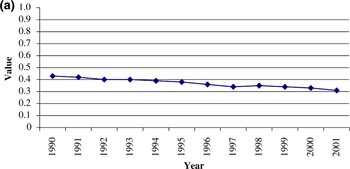
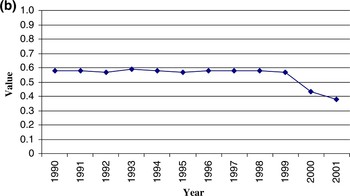
Using the Herfindahl index, I show that market concentration in the insurance sector was most pronounced before liberalization, given that it was a classic example of a duopoly (with the LIC being the only player in the life insurance business and the GIC being the only player in the non-life or general insurance business) (see figures 1a and 1b).
Herfindahl index of market concentration in the Indian banking sector, 1990–2001. Source: Calculations by the author based on Reserve Bank of India data.

Herfindahl Index of Market Concentration in the Indian Insurance Sector, 1990–2001. Source: Calculations by the author based on Insurance Regulatory and Development Authority data.

The Herfindahl index also shows that over the last few years, the insurance sector has experienced a rapid decline in market concentration, largely as a result of the delinking of the subsidiaries of the GIC coupled with the large number of new entrants.
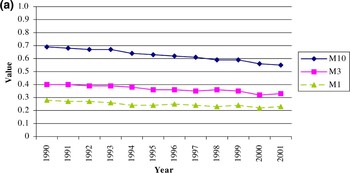
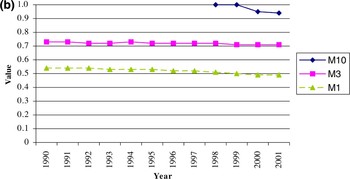
Nevertheless, other measures of market concentration (in this case, the M-concentration ratio) show that the insurance industry remains highly concentrated, mostly because a few players continue to hold a dominant share of insurance sector assets (see figures 2a and 2b).
M-concentration ratio in the Indian banking sector, 1990–2001. Source: Calculations by the author based on Reserve Bank of India data.

M-concentration ratio in the Indian insurance sector, 1990–2001. Source: Calculations by the author based on Insurance Regulatory and Development Authority data.

As figure 2b shows, compared to the banking sector, there has been little diminution over time in insurance sector market concentration. Clearly, these are crude measures of determining the degree of industrial concentration. However, they are certainly persuasive indicators of a higher degree of market concentration in the insurance sector, particularly when compared to the banking sector.
Given the differing levels of market concentration and market segmentation, it is no coincidence that banking sector reforms were implemented rapidly during the initial stages of economic liberalization in India. As discussed in Sáez (Reference Sáez2004, 44–51) and in Williamson and Zagha (Reference Williamson and Zagha2002, 9–11), much of the focus of the initial steps in banking reform was geared toward redressing perceived weaknesses in the operation of public-sector banks. To that effect, banking reform proposals aimed to enhance the credit capabilities of state-owned banks by reducing the statutory liquidity ratio and the cash reserve ratio. At the same time, banking reform proposals aimed to loosen other monetary policy instruments, such as interest rates. Based on the recommendation of the Committee on Financial System (popularly known as the Narasimham Committee), a significant deregulation of interest rates took place. The initial stage of banking reform was also accompanied by the imposition of more stringent rules regarding public disclosure. India's banking and regulatory system was strengthened with the creation of the Board of Financial Supervision.
The more notable developments regarding banking reform relating to entry deregulation took place with respect to the proposed entry of de novo domestic banks and foreign banks. In 1993, the Reserve Bank of India (RBI) issued guidelines under which new domestic private sector banks could be established. Under these guidelines, approval was granted for the operation of new foreign banks or bank branches. Upon approval by the RBI, foreign banks could be established as wholly owned subsidiaries. Likewise, banking reform led to a reduction, up to 33 percent, in the state's overall equity stake in the nationalized banks. In turn, foreign banks, with approval by the RBI, could purchase a share of India's nationalized banks. However, in order to tackle the continuing problem of poorly performing state-owned banks, the Narasimham Committee eschewed further nationalization and instead recommended a deeper institutional transformation of India's state-owned banks, one that could be achieved by a process of mergers and acquisitions. For its part, the Confederation of Indian Industry (CII) went further and proposed that some poorly performing public-sector banks, such as the Indian Bank, United Commercial Bank, and United Bank of India, be closed down or privatized.
The rapid implementation of most banking reform proposals was a response to continual complaints by consumers about the state of banking services, particularly in comparison to the provision of such services by domestic private banks. More importantly, the push for deregulation of the banking sector was prompted by the recognition among domestic economic advisors in the Ministry of Finance and members of the aforementioned government committees of the need to raise total banking assets and improve the efficiency state-owned commercial banks.
However, it was also understood that improvements in efficiency could entail initial economic costs, particularly in light of India's inflexible labor mobility laws. This perception was shared by the banking industry's regulator, Chakarvarthy Rangarajan, who served as governor of the RBI from 1992 to 1997. Leading the Indian delegation at the annual meeting of the World Bank Group's Board of Governors, Rangarajan stressed that “our reforms have accorded special attention to the financial sector” (IMF 1997, 4). Noting improvements in banking prudential standards, he underlined, “Let me not give the impression that we do not face any policy challenges. Very recently, we have had to deal with the problem of coping with a large wage settlement for government employees” (5).
At the same time, there was considerable concern among bank employees' union representatives and some members of Parliament about the proposed reform of public-sector banks through privatization or closure, as proposed in the report of the CII's Task Force on Non-Performing Assets. According to Sridhar (Reference Sridhar2000), that report galvanized concerns about the potential negative effects of privatizing or closing poorly performing public-sector banks to a wider constituency. Notably, two competing business associations—the Federation of Indian Chambers of Commerce and Industry and the Associated Chambers of Commerce and Industry—opposed the CII's conclusions. Sridhar reports that the former suggested that “the closure of banks would have an adverse impact on depositors, clients, borrowers and employees. It also pointed out that the extreme option of closure would erode people's confidence in the banking system” (2000, 106). Faced with “the threat of a potentially sharp escalation of conflict forced the CII to beat a retreat on December 20,” just a week after the release of the CII Task Force report.
Initially, insurance sector liberalization appears to have taken a similar path to that of banking sector liberalization. Based on the recommendations of the Malhotra Committee, there were proposals for review of the existing regulatory framework and calls for operational improvement of the existing insurance providers. In 1993, a government committee headed by R. N. Malhotra was formed for the purpose of evaluating the insurance industry. A year later, the Malhotra Committee issued a set of recommendations relating to the proposed changes to government involvement in the insurance sector, recommending a decrease in government ownership of no more than 50 percent. It also proposed that private domestic companies be allowed to enter the sector, provided that no company was allowed to deal with life and general insurance through a single entity.Footnote 5 The Malhotra Committee also recommended that foreign companies enter the insurance sector, so long as they collaborated with a domestic partner.
Unlike the case of banking reform, though, insurance sector reform was not implemented rapidly. Based on the recommendations of the Malhotra Committee, an interim regulatory institution, the Insurance Regulatory Authority, was established. In contrast to the implementation of reforms in the banking sector, there was little appetite for rapid reform in the insurance sector. From 1996 to 2003, the insurance industry's chief regulator, N. Rangachary, often publicly lamented the low quality of service and the lack of competition within the insurance sector. However, believing that the principal role of insurance was to redeem contract provisions, he was not disposed to increase foreign insurance participation until such companies were able to prove that they intended to establish long-term commitments in India.
Further hindering an increase in the number of participants in the insurance industry was the failure to explicitly define in law the requirements of newly formed entrants. For instance, a second government committee, the Mukherjee Committee, was established in 1996 for the purpose of providing specific criteria for such institutions. Nevertheless, the recommendations of the Mukherjee Committee were not made public until December 2003.
Moreover, efforts to introduce legislation regarding insurance sector deregulation in the Lok Sabha were frequently tabled, largely as a result of intense opposition to the draft legislation from leftist political parties. In March 1999, the government of India's cabinet finally approved the Insurance Regulatory Authority bill. However, the multiparty governing coalition, the National Democratic Alliance (NDA), collapsed after one of its allies withdrew support for the coalition. The reintroduction of the insurance reform bill—once the NDA was able to form a government later that year—prompted a walkout by legislators who were opposed to the proposed legislation. Fear that entry deregulation in the insurance sector would result in massive job losses also impelled trade unions to organize massive protests outside the lower house of the Indian Parliament. Surprisingly, opposition to the proposed liberalization of the insurance sector also came from within the ranks of the NDA. For instance, members of the Hindu nationalist radical group, the Rashtriya Swayamsevak Sangh (National Volunteers Society, or RSS), organized protests against insurance deregulation. More significantly, the Sthaniya Lok Adhikar Samithi (Local People's Rights Committee), a conglomeration of white-collar trade unions led by the Shiv Sena, also impeded each step of the proposed insurance reform legislation.
It was not until November of 1999, with the passage of the Insurance Regulatory Development Authority (IRDA) Act, that the first set of legislation was passed dealing with insurance reform. Under the provisions of IRDA, entry restrictions on domestic players were lifted. In sharp contrast to the case of banking reform, insurance sector reform focused more on regulation than on liberalization. In parliamentary debates, then–Finance Minister Yashwant Sinha tried to minimize opposition to the insurance bill by stressing that it would not lead to direct private-sector entry into the sector. He argued emphatically that “the Government has no intention to privatize LIC and GIC. We are not even going to dilute the Government's holdings in the LIC, GIC” (Lok Sabha Reference Sabha1999, 240). Foreign equity participation in the insurance sector was permitted up to 26 percent of equity share capital (including equity stakes by nonresident Indians and overseas corporate bodies). In 2000, the first foreign insurance companies were granted licenses to form alliances with Indian partners.
Aside from the equity cap for foreign entrants, many life insurance products were subject to fixed premium rates set by the Tariff Advisory Commission. Some premia for non-life insurance products, though, were opened to competition.Footnote 6 Despite the promise of liberalization, private investor participation in the insurance sector remains subject to significant operational restrictions. For instance, private investors can only participate in either the life or the general insurance segment. Thus, corporations that intend to enter the life insurance market cannot simultaneously enter the general insurance market. This operational restriction is extremely significant because private-sector firms typically provide both life and general insurance (which includes the potentially lucrative health insurance sector).
In the case of India's financial sector reform, political backlash to reform was bifurcated as a result of two distinctive types of regulatory structures. In the case of the banking sector, the RBI had a track record as a well-respected regulator. In the case of the insurance sector, there was no independent regulator until the passage of IDRA in 1999, which coincided with the contentious legislative debates surrounding other elements in the insurance bill discussed earlier. Given its longevity, the RBI was to mask the more politically damaging facets of banking reform (namely, those pertaining to market access by foreign and domestic private companies) by issuing internal guidelines. As an existing regulator, the RBI had the authority to enforce these guidelines without having to subject its decision to legislative debate. In contrast, the politically contentious facets of insurance reform regarding new entry were discussed concurrently with the parliamentary debates relating to the establishment of an independent regulatory authority.
The case of India's financial sector reforms also illustrates the amorphous yet enduring power of external pressures. As I discussed earlier, pressures to open the insurance sector to foreign competition became linked with the imposition of U.S. trade restrictions on India as early as 1989. After 1991, these pressures took the form of leading American insurance companies, notably American International Group (AIG), actively lobbying the Indian government to open the insurance sector to foreign competition. For instance, Carla Hills, the former U.S. Trade Representative who initiated the Super-301 trade penalties against India, later became a member of the board of governors of AIG. Moreover, Frank Wisner became vice chairman for external affairs at AIG shortly after he served a tour of duty as U.S. ambassador to India (1994–97).
Similarly, the comparative ease of reform in the banking sector was facilitated by the availability of growing international consensus on financial architecture, particularly as it pertained to the introduction of prudential measures to safeguard the soundness of the financial system. These norms, such as those relating to prudential regulation and capital adequacy, had essentially become guidelines for public policy makers since the Committee on Banking Regulations and Supervisory Practices of the Bank for International Settlement released its report in 1986. In contrast, Indian public policy makers could not find an equally tangible set of norms relating to reform of the insurance sector.
International financial institutions have also played an active role in promoting banking sector liberalization in India. Although a highly contentious decision, India joined the WTO following the enactment of the General Agreement on Trade in Services (GATS) in 1995 in the aftermath of the Uruguay Round. Under the WTO's four modes of supplying services, cross-border supply and the establishment of a commercial presence in a market became instrumental in providing guidelines for the ongoing reform of the banking sector. As provided for in Article II of the GATS, general obligations, which apply directly and automatically to all members and services sectors, were more developed in the banking sector at the time of India's membership in the WTO. Member states are required to provide “treatment no less favourable than that accorded to like services and services suppliers of any other country.”
Although the insurance industry would also be directly covered by these GATS modes, India's commitments regarding market access and national treatment were laid down separately in individual country schedules. At the time of India's accession, the banking sector was already far less restrictive to foreign competition than the insurance sector. Taking advantage of the provisions of Article XVI (2) of GATS, market access in the insurance sector could be subject to differences in the types of limitations present in its negotiated commitment without violating India's basic obligations under the GATS. Accordingly, India's final list of Article II exemptions, at the time of its accession, reflected this disparity when it provided that, in banking services, India would provide “favorable treatment in respect to licenses for entry and expansion in the form of branches will be granted,” whereas for the insurance sector, it merely aimed to provide “favorable treatment relating to approval for the establishment of commercial presence including foreign equity participation by foreign service suppliers in Indian companies will be granted.”Footnote 7 It was not until 1997, after extensive sectoral negotiations, that India decided to withdraw its most-favored-nation, sector-specific exemptions based on reciprocity.
The Expected Costs Associated with the Politics of Redistribution
An important explanation for the differentials in the rate of reform in the insurance and banking sectors could be what is termed the “expected costs of redistribution.” In the case of financial sector reform in India, it is apparent that the concern for potential for job losses was a driving force in stalling reform in the insurance sector. The controversial nature of the legislation delayed the implementation of key provisions in IRDA. For instance, it was not until 2002, with the passage of the Insurance Amendment Act, that the four independent insurance subsidiaries of the GIC were completely delinked from their parent company. Since the opening of the insurance sector to private players, the four GIC subsidiaries have been restructured and converted into fully independent insurance companies. In turn, the GIC was also converted into a national reinsurer.
The state-owned financial services industry employs more than 1 million people. Most of these public-sector employees work in the banking sector. The state-owned banking sector employs more than 800,000 people, while the insurance sector employs about 200,000 people. Therefore, the greatest concerns about potential job losses should have come from the financial services subsector with the highest aggregate employment—in this case, the banking sector. Likewise, it could be assumed that public-sector employee trade unions would oppose the enactment of certain types of second-generation reform legislation based on the perception that new entry by foreign and domestic private competitors would result in massive job losses in the state sector. Paradoxically, public employee trade unions offered stiff resistance to insurance reform proposals dealing with foreign entry, yet offered no comparable opposition to new entry in the banking sector. The reason for this paradox may be what Dani Rodrik (Reference Rodrik1996) terms a “political cost–benefit ratio.”Footnote 8
Using an example relating to opposition to price reform, Rodrik argues that some reform projects “tend to generate a lot of redistribution relative to their efficiency benefits” (1996, 28). In this sense, the aggregated utility losses of the losers in the reform process can outweigh the anticipated efficiency gains stemming from reform. Having shown the relationship between the two indicators of market concentration in the banking and insurance subsectors and the timing of reform, it is apparent that these market concentration variables increase the costs of reform, and therefore they have an impact on the overall political cost–benefit ratio. In addition, the differential outcomes in the level of opposition to insurance reform (compared to the opposition to banking reform) could be explained by the expected losses in income in the insurance industry, rather than by the level of aggregate employment in each of these two subsectors.
The prospect of job losses is a critical element in the literature on industrial organization during reform periods. In this setting, one of the motivating factors for the breakup of oligopolistic industries is that industry concentration can aggravate employment fluctuation. This perspective, voiced in a seminal article by Gardiner Means (Reference Means1936), assumes that prices and wages are not optimally responsive to fluctuations in demand in oligopolistic industries. Later empirical tests by Steven Lustgarten and Allan Mendelowitz (1979), though, suggest the reverse, principally that highly concentrated market structures correspond with macroeconomic stability and fewer employment fluctuations. In their view, this trend is most apparent in industries with high positive covariance, “where technological change results in a relative reduction in the production-worker force” (Lustgarten and Mendelowitz Reference Lustgarten and Mendelowitz1979, 300).
Prompted by a growing concern with the accumulating nonperforming assets of weak state-owned banks, the process of financial services liberalization in India emerged out of express government concerns to increase the operational efficiency of state-owned banks. As discussed by James Hanson (Reference Hanson, Krueger and Chinoy2003) and Lawrence Sáez (Reference Sáez2004), this goal was to be achieved in the early 1990s through a voluntary retirement scheme aimed at lowering employment costs. As Hanson reports, the payment of a substantial retirement bonus “was sufficiently attractive for the union members to back it wholeheartedly” (2003, 116). In contrast, state-owned insurance companies were not initially required to adopt this organizational downsizing scheme. Against the backdrop of the controversial Third WTO Ministerial Conference in Seattle, the issue of potential job losses in the Indian insurance sector (as a result of the expected competition from foreign firms) was often mentioned in parliamentary opposition to insurance reform bills. Defending the need for reform, Finance Minister Yashwant Sinha argued that the “LIC and GIC are not only fully prepared but will be able to meet any kind of competition from any quarter successfully and there is no danger of their business going down. Therefore, the question of the workers of LIC and GIC losing their jobs is again misplaced. As a result of this competition, there is not going to be any displacement of the workers of LIC and GIC” (Lok Sabha Reference Sabha1999, 240).
Instead of adopting an organizational downsizing scheme, state-owned insurance companies first attempted to improve operational efficiency through internal staff redeployment, largely accomplished by transforming clerical staff into sales and marketing executives. By avoiding initial attrition through a voluntary retirement scheme, however, employees in the insurance sector became more vulnerable to long-term job losses once insurance reform legislation was enacted in 1999. These developments must have signaled to public employee trade unions that aggressive entry by foreign insurance competitors could lead to massive staff reductions in the public-sector insurance industry, mostly because it was perceived to be the industry with the greatest likelihood to suffer from reform. Eventually, a special voluntary retirement scheme, almost identical to the one offered a nearly decade earlier in the banking sector, was introduced for public-sector employees in the four public-sector general insurance companies.
The differences in the expected cost of reform in the financial services industry, both in the expected employability and anticipated loss of income in the insurance sector, can be partially attributed to the low level of market segmentation, even within the ambit of state-owned insurance companies. More significantly, because of the peculiarities of the insurance industry in India, workers in the insurance sector would have more difficulty with initial job mobility than their banking sector counterparts. In the banking sector, by contrast, with its ongoing foreign and private domestic presence, new entry represented potential medium-term opportunities for alternative employment.
The experience in the financial services sector in India suggests that whenever there is less market concentration among incumbents, sectoral reform leading to new entry may be more welcome because de novo domestic and foreign entrants can be seen as sources of alternative employment. Although some authors (Hanson Reference Hanson, Krueger and Chinoy2003; Sáez Reference Sáez2004) have continued to decry the high wage costs of state-owned banks (relative to their profit levels), the employment trade-offs associated with a policy of industrial deconcentration have been minimized in the banking sector as a result of gradual corporatization of some public-sector banks and the positive impact of technological change on productivity.
Theoretical Lessons from the Experience of Financial Services Reform in India
The experience of India defies conventional theoretical explanations about potential differentials in barriers to entry in the financial services sector. Colin Mayer and Damien Neven (Reference Mayer, Neven, Giovannini and Mayer1991) argue that banks are different from other forms of financial services intermediation by virtue of the systemic risks they face. They show that the systemic risks of contagion are greater for banks than for other forms of financial services; thus, the regulation of nonbank financial services concerns efforts to minimize market failures resulting from asymmetric information between investors and firms. Therefore, Mayer and Neven contend, the regulation of financial services is in large part concerned with reducing barriers to entry. However, they stress that negative externalities in banking sector reform could result in systemic market failure; for that reason, they argue that the appropriate design and implementation of regulations ought to be more stringent for banks than for nonbank financial institutions.
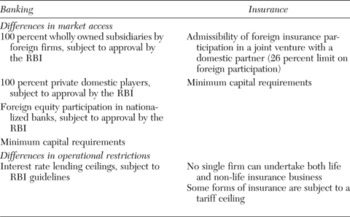
In light of this theoretical perspective, the asymmetry in the rate of reform and the differentials in the existing barriers to entry between the banking and the insurance sectors can be perplexing. Given Mayer and Neven's explanation, banking regulation in India—by virtue of its potential systemic costs—should have been more cautious. In India's case, this is clearly the reverse. As discussed earlier, banking reform was far less controversial than insurance reform. As table 1 shows, participants in the banking sector in India enjoy fewer restrictions on market access and fewer operational restrictions than do participants in the insurance industry.
Differences in market access and operational restrictions in the banking and insurance industries.

These startling differences in outcomes could be linked to differences in institutional arrangements. Douglass North defines institutions as the “rules of the game in a society or, more formally, are the humanly devised constraints that shape human interaction” (North Reference North1990, 3–4). Building on North, recent advances in the literature on endogenous institutional change (e.g., Greif Reference Greif2006; Greif and Laitin Reference Greif and Laitin2004) have formally redefined institutions as “a system of human-made, nonphysical elements—norms, beliefs, organizations, and rules—exogenous to each individual whose behavior it influences that generates behavioral regularities” (Greif and Laitin Reference Greif and Laitin2004, 635). In the foregoing analysis, I have drawn a distinction between the development of formal, consciously designed institutions and the players of the game who can act as agents of institutional change. The focus of this article has been on the legislative aspects of institution building in the financial services industry.
In this environment, the trajectory of the reform process in India can be simplified as a set of specific stages as follows:
R 0 = proposal for reform
R 1 = creation of a government committee to propose formal recommendations
R 2 = release of recommendations by a government committee
R 3 = introduction of legislation
R 4 = passage of legislation
R 5 = implementation of reform legislation
Under the theoretical prism of neo-institutional economics, at each stage of the reform process (especially during the initial stages, R 0–R 4), incumbents have an incentive to act opportunistically. In this setting, each agent chooses an action in accordance with a given expectation of gain so that the adaptation by incumbents to the continuously changing conditions introduced by reform is minimized. Their behavior is balanced by the interests of the challengers (i.e., possible new entrants) who seek to realize the desired end of the reform with the lowest possible cost.
In this light, some plausible explanations derived from the neo-institutional economics literature—namely, regulatory capture or the role of rent-seeking bureaucracies—fail to explain the differences in the levels of political opposition that built around insurance reform. If insurance sector bureaucrats were rent seeking, then why were they not correspondingly rent seeking in the banking sector? Likewise, if interest groups (i.e., public-sector trade unions) successfully captured public policy in the insurance sector, then why were they ineffective with respect to banking reform?
If institutions are viewed as the equilibrium outcome of a repeatedly played noncooperative game (Schotter Reference Schotter1981, 155), then the experience of banking and insurance sector reform in India is illustrative of the endogenous challenges that confront emerging markets as they attempt to enact second-generation reforms. As the case of India shows, unexpected political opposition can present coordination problems ab initio that result in the subsequent distortion of market activities and disrupt the implementation of second-generation reforms.
The configuration of the regulatory structure that emerged in the financial services industry in India has been explained using a mixture of primitive variables and ancillary policy variables. I have suggested that two ex ante economic conditions—namely, market segmentation and market concentration—in conjunction with ancillary policy variables—namely, the costs associated with the politics of redistribution and differences in the institutional structure that fomented reform—best predict the ex post regulatory structure that emerged during the reform process. Therefore, although the existing rules of the game may shape the incentives of the players to embrace or reject new entrants into the market or to limit market access in other ways, I have argued that the existing rules of the game are partially determined ex ante through original conditions in the market. However, equally important are ancillary policy variables that help define and reshape the nature and extent of political opposition to reform.
One explanation for the difference in the rates of reform between the banking and insurance sectors could lie in the degree of market segmentation prior to the undertaking of reforms. In each industry, there will be a finite number of agents. The efficiency of the market depends on the ability of goods and services to flow freely from one region to another and between agents. These may not be restricted because of market fragmentation (as a result of the lack of information or natural switching costs, absence of an effective law for enforcing contracts, etc.). In the case of the financial sector industry in India, the banking sector, although still largely controlled by the state-owned sector, has a greater number of players.
As discussed earlier, initial market conditions alter the perceived consequences of policies and the enforcement mechanism during the implementation stage. As illustrated by the effort to scuttle insurance reform, lower market segmentation and higher market concentration by incumbents may have led to protracted negotiations in the political market, reduced commercial presence by new entrants, and increased operational restrictions to service providers. However, equally important in altering the trajectory of reform of the financial services industry were internal and external political pressures.
As I have shown—with the case of the financial services industry in India—there are very different rates of implementation of reform, particularly in the development of prudential regulatory norms, the enactment of effective supervisory and enforcement mechanisms. The free entry by foreign and domestic competitors can be synchronized to variations in market conditions and to regulatory structures prior to the undertaking of reforms.
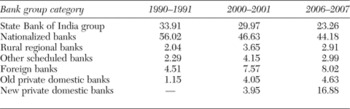
As a direct result of entry deregulation, the proportion of total banking assets changed considerably in a ten-year period (see table 2). In 1990, a year prior to the reforms, the State Bank of India group accounted for 33.91 percent of total banking assets and nationalized banks accounted for 56.02 percent. Other scheduled commercial banks accounted for 2.29 percent of total banking assets. Finally, the proportion of total banking assets held by foreign banks was 4.51 percent, while old private domestic banks only held 1.15 percent.
Percentage of total banking assets by bank group category.

Source: Reserve Bank of India, Statistical Tables Relating to Banks in India, 1990–91, 2000–01, and 2006–07.
As table 2 shows, by 2001, the proportion of total banking assets of the state-owned nationalized banks and the State Bank of India group had declined to 29.97 percent and 46.63 percent, respectively. In contrast, there was an increase in the proportion of total banking assets of foreign banks and old private banks to 7.57 percent and 4.05 percent, respectively. During the reform period, new domestic private banks were created, which accumulated more than 3.95 percent of total banking assets in 2001. As table 2 shows, though, new private domestic banks have experienced spectacular growth in recent years. By 2007, new private domestic banks accounted for 16.88 percent of total banking assets in India, surpassing those held by old private domestic banks, other scheduled banks, and foreign banks.
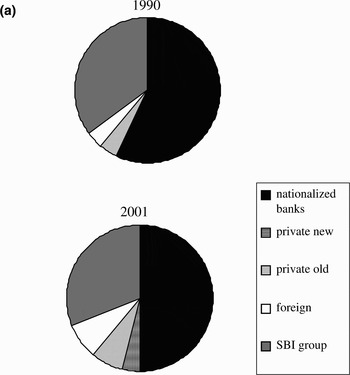
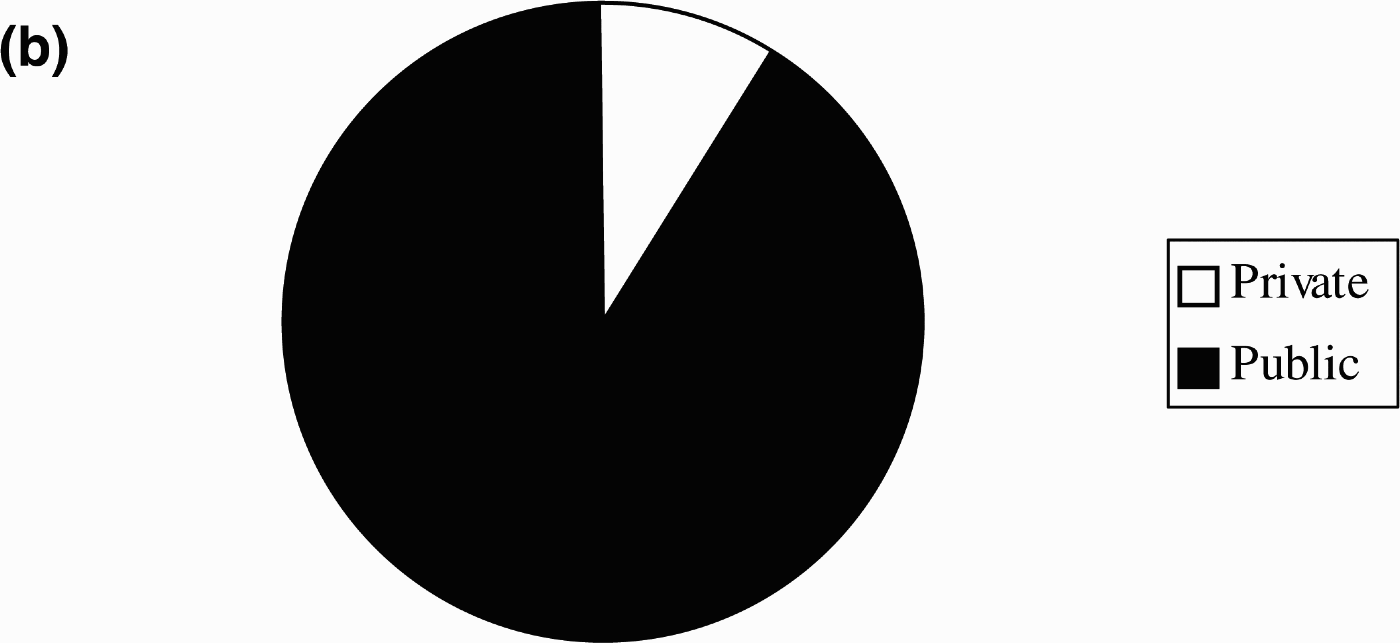
The first decade of deregulation and economic liberalization resulted in a gradual increase in the share of foreign banks and new domestic private banks as a proportion of total banking assets in India. There has been a corresponding decline in the market share of state-owned banking institutions, notably the nationalized banks, with a corresponding decline in market share by the State Bank of India group. Figure 3a shows that the private sector is increasing its proportion in the distribution of total banking assets in India.
Market segmentation of India's scheduled commercial banks, 1990 and 2001. Source: Calculations by the author based on Reserve Bank of India data.

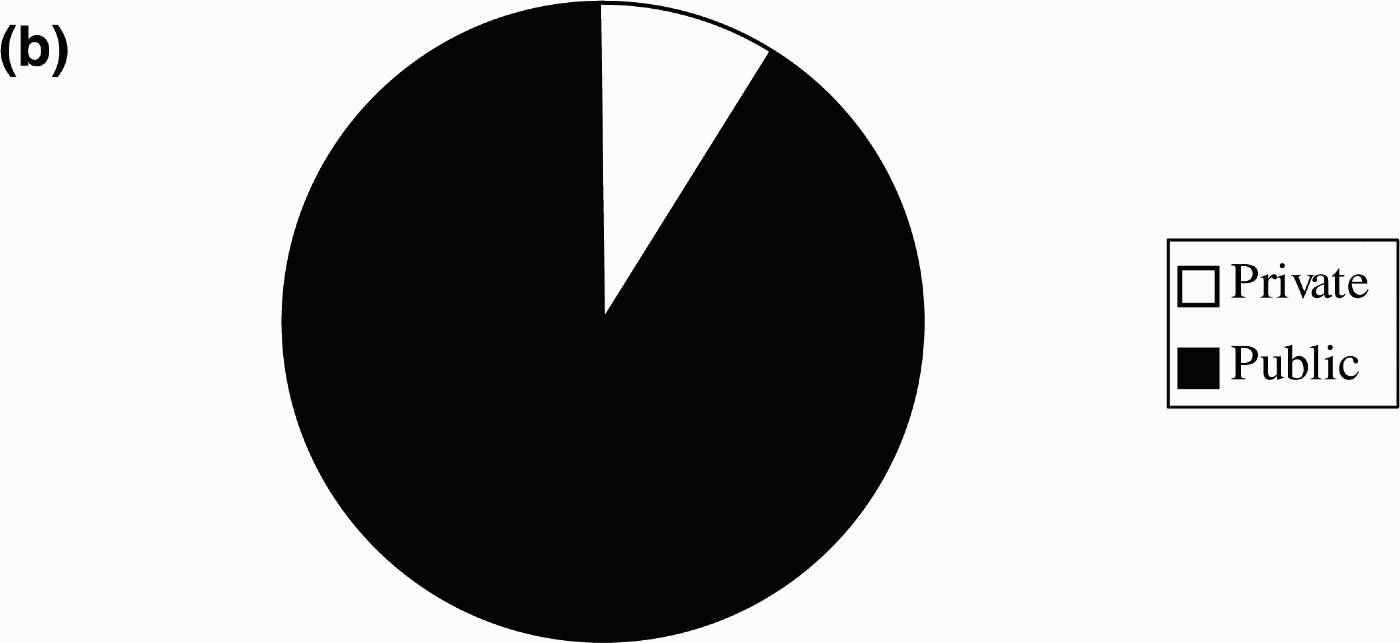
In contrast, during the first decade since economic liberalization efforts were undertaken in India, there was no decline in the share of state-owned insurance companies as a proportion of total insurance assets. Only recently, with the gradual deregulation of the industry, has there been a noticeable growth in private-sector presence in the insurance industry in India. As figure 3b shows, this impact has been quite dramatic.
Market segmentation in the insurance industry in India, 2002. Source: Calculations by the authorbased on Insurance Development and Regulatory Authority data.
One of the most notable effects of the process of financial liberalization, as shown earlier in table 1, has been the rapid decline of market concentration in the banking industry, particularly the increasing share of domestic private banks and foreign banks. It is worth noting that the presence of domestic private and foreign players in the insurance industry has been less dramatic. As of June 2004, there were fourteen life and thirteen non-life insurance companies operating in India (see table 3).
Number of newly formed insurance companies.

Source: Insurance Regulatory and Development Authority.
In the short period since the implementation of IDRA, private players have aggressively enhanced their market presence. In 2002–3, private players captured 10 percent of the market. As table 3 shows, the premium income earned by private players has nearly tripled, from 5 billion rupees in 2001–2 to 13 billion rupees in 2002–3.
Premium income revenues.

Source: Insurance Regulatory and Development Authority.
Although overall premium income has increased, the liberalization of the sector does not appear to have diminished the capacity of public-sector companies to participate in the market. This development may be attributed to the reality that new entrants in this sector would hardly take away market share very quickly because existing insurance policies would have to lapse. Likewise, an increase in insurance sales set up by private operators requires product differentiation by the consumer.
To date, there appears to be little evidence that penetration by foreign insurers into the Indian insurance industry has led to massive layoffs. Nevertheless, labor unions, such as Centre for Indian Trade Unions, the Hind Mazdoor Sabha, and the All India Trade Union Congress, have been galvanized by the implementation of the provisions of IRDA, as well as by proposals to privatize more public-sector undertakings. In May 2003, these organizations staged a nationwide strike that paralyzed the financial sector.
Conclusion
One of the most critical elements in the literature on comparative political economy is the effort to explain differences in the timing and speed of economic reforms across different countries. Some of this literature has attempted to carry this examination further by considering differences across countries within the same industry and within the same country across sectors. Using the case of the financial services industry in India, in this paper I have shown that there can also be critical yet unexplained differences in the reform process within the same industrial sector within the same country.
I have attempted to show that banking sector reform was undertaken with promptness, certainly relative to the speed of insurance sector reform. Moreover, although there has been a great deal of controversy surrounding the implementation of financial regulatory and supervision of banks in India, the initial stages of banking reform were far less controversial in nature. In contrast, the legislative efforts to introduce insurance sector reform were frequently delayed, largely as a result of well-organized political opposition to the reforms. Similarly, implementation of insurance reform remains far from controversy free.
In this article, I have argued that several factors could account for the disparate outcomes in banking and insurance reforms. First, I have shown that initial conditions—namely, market segmentation and market concentration—may help explain the controversy-free process of banking reform and the development of virulent opposition to insurance reform. Within the context of India, both market segmentation (i.e., a higher share of state ownership and a lower number of participants in a given industry) and market concentration (by the top players in a given industry) appear to partially account for the differences in the speed of reform in the financial services industry.
I have also offered two ancillary policy explanations for the divergent nature of political opposition to financial services liberalization. I have argued that the example of banking and insurance reform in India suggests that expected costs associated with the politics of redistribution as well as internal and external political pressures had a determining impact on the course of financial services reform. I have also stressed the importance of the difference in the internal and external political constraints that faced the banking and insurance sectors. In the article, I specifically highlighted the differences that emerged as a result of the contrast in the enactment of effective supervisory and enforcement mechanisms. As was shown, the existing banking industry's regulator was able to bypass congressional obstacles by issuing potentially controversial measures on foreign and private domestic entry as internal guidelines. In contrast, the insurance sector guidelines for foreign entry had to be issued simultaneously with the creation of an insurance industry regulator. At the same time, although external pressure to open the insurance sector did not have much impact, I have shown that the timing of India's accession to the WTO enabled policy makers to set different rules regarding the establishment of a commercial presence in the insurance market.
It must be stressed, however, that the importance of original conditions, anticipated costs of reform, and the types of internal and external pressures outlined in this paper do not imply that the prereform period was an institution-free state of nature. It does not suggest either that all four factors cited as contributing to the building of opposition to reform in the financial services industry in India must be present before political opposition to any type of sectoral reform builds up. However, if an industrial sector has identical market conditions (if measured in terms of market segmentation and market concentration) prior to the undertaking of second-generation reforms, then the expectation would be that political opposition to reform could build at similar levels based exclusively on the expected costs of reform and the internal and external pressures discussed here.
Acknowledgments
This manuscript was last presented at the Center for the Advanced Study of India's workshop on economic reforms, human development, and governance in India. I wish to thank John Echeverri-Gent, Francine Frankel, and the workshop participants for their perceptive critiques. Earlier versions of this paper have also been presented at Stanford University and at the London School of Economics. Accordingly, I wish to thank Rafiq Dossani and the participants of Stanford University's Asia Pacific Research Center and Razeen Sally and the members of the London School of Economics International Relations Department for their comments and suggestions.

![[PCBR = 1/2 \left[{\sum\nolimits_j \left \vert \Delta income_j\right\vert - net gain \over netgain}\right]\comma \;](https://static.cambridge.org/binary/version/id/urn:cambridge.org:id:binary:20151127062435874-0622:S0021911809990805_eqnU3.gif?pub-status=live)