Accumulating evidence demonstrates that dysregulated functioning of the hypothalamic–pituitary–adrenal (HPA) axis – an important component of the physiological stress response – is linked with poorer physical health, neurological changes, and increased mental health symptoms (Turner et al., Reference Turner, Smyth, Hall, Torres, Hussein, Jayasinghe and Clow2020). With regard to mental health symptoms, uncertainty remains as to whether HPA axis dysregulation is a cause, correlate, or result of psychopathology (Bhagwagar & Cowen, Reference Bhagwagar and Cowen2008). In addition, early stressors such as child maltreatment appear to cause perturbations in HPA axis functioning (Tarullo & Gunnar, Reference Tarullo and Gunnar2006) and increased vulnerability to mental health problems (Koss & Gunnar, Reference Koss and Gunnar2018). However, evidence indicates that not all stressors, or maltreatment types, impact the HPA axis similarly (Reilly & Gunnar, Reference Reilly and Gunnar2019; Trickett, Gordis, Peckins, & Susman, Reference Trickett, Gordis, Peckins and Susman2014). In addition, puberty increases sensitization of the HPA axis (Romeo, Reference Romeo2010) and this may be critical to consider when assessing the link between stress reactivity and mental health. Therefore, the current study sought to examine whether the associations between cortisol response, depressive symptoms, and posttraumatic stress disorder (PTSD) symptoms differ based on type of maltreatment and pubertal development. Depression and trauma symptoms are most commonly linked with HPA axis dysregulation, and evidence in adults points to opposite associations – that is, depressive symptoms and disorders are linked with hyper-reactivity and PTSD symptoms are linked with hypo-reactivity (Meewisse, Reitsma, De Vries, Gersons, & Olff, Reference Meewisse, Reitsma, De Vries, Gersons and Olff2007; Stetler & Miller, Reference Stetler and Miller2011). As such, clarifying these associations in adolescence, a time of increased incidence of these mental health symptoms (Kwong et al., Reference Kwong, Manley, Timpson, Pearson, Heron, Sallis and Leckie2019), is critical to advance our understanding of the interplay between the stress system and mental health.
Links Between the Stress System and Mental Health
Across human and animal species, when presented with a challenge or threat, a cascade of biological activities leads to sympathetic–adrenal–medullary axis release of catecholamines such as epinephrine, followed by the production of glucocorticoids such as cortisol by the HPA axis (Juster et al., Reference Juster, Seeman, McEwen, Picard, Mahar, Mechawar, Lupien and Cicchetti2016). In the short term, these stress responses are adaptive, but sustained or repeated threats may carry a cumulative toll on physiological systems that may increase vulnerability to depression and PTSD symptoms (McEwen & Seeman, Reference McEwen and Seeman1999). Cortisol is one of the most commonly used measures of HPA axis functioning, in part because it is easily accessible in saliva. In addition, cortisol follows a diurnal pattern, with higher levels upon waking and lower levels at night (Gunnar & Talge, Reference Gunnar, Talge, Schmidt and Segalowitz2007). However, the literature is rife with different measures of cortisol, including basal, diurnal, cortisol awakening response (CAR), and reactivity in response to a stressor, which are likely contributing to some of the inconsistencies observed in studies linking HPA axis functioning with mental health. Dysregulated HPA axis functioning can be indicated by both hyper- and hypo-reactivity (Koss & Gunnar, Reference Koss and Gunnar2018). Past studies have shown that HPA axis hyper-reactivity is indicated by higher basal cortisol, a steeper slope from morning to evening, higher CAR, and greater output during a laboratory stressor. Conversely, hypo-reactivity has been indicated by lower basal cortisol, a flatter slope form morning to evening, lower CAR, and lower output during a laboratory stressor. Critically, each of these measures indicates something slightly different about the functioning of the HPA axis and the body's response to stress. Furthermore, these measures may not have the same etiological or correlative relationship with depression and PTSD symptoms (Adam et al., Reference Adam, Quinn, Tavernier, McQuillan, Dahlke and Gilbert2017; Jonsdottir, Halford, & Eek, Reference Jonsdottir, Halford, Eek, Kristenson, Garvin and Lundberg2011).
In a recent meta-analysis, depression was associated with hyper-reactivity of the HPA axis among adults, as measured by a basal or dexamethasone suppression test (Stetler & Miller, Reference Stetler and Miller2011) – a finding mirrored in children and adolescents for basal, CAR, and dexamethasone suppression test cortisol (Adam et al., Reference Adam, Doane, Zinbarg, Mineka, Craske and Griffith2010; Lopez-Duran, Kovacs, & George, Reference Lopez-Duran, Kovacs and George2009). A limitation of the extant evidence is that few studies have examined the link between cortisol response to a psychological stressor and depression/depressive symptoms. One study of preschoolers found that those with diagnosis of major depressive disorder (MDD) showed increasing cortisol in response to arrival at the laboratory and separation from the caregiver, in contrast to the no-disorder and psychiatric comparison groups who showed decreasing cortisol (Luby et al., Reference Luby, Heffelfinger, Mrakotsky, Brown, Hessler and Spitznagel2003). The groups showed no differences in cortisol in response to the subsequent frustration task. Conversely, in a sample of adolescents, those who met criteria for MDD had similar decreases in cortisol in the pre-stress period as the nondepressed controls, but higher reactivity in response to the stressor (Rao, Hammen, Ortiz, Chen, & Poland, Reference Rao, Hammen, Ortiz, Chen and Poland2008).
Studies of HPA axis functioning and PTSD symptoms in adults generally show hypo-reactivity is associated with trauma symptoms, but only for certain subgroups (Meewisse et al., Reference Meewisse, Reitsma, De Vries, Gersons and Olff2007; Pan, Wang, Wu, Wen, & Liu, Reference Pan, Wang, Wu, Wen and Liu2018). Among children, evidence indicates lower CAR, higher evening cortisol, and greater cortisol suppression following dexamethasone in those with PTSD symptoms compared with controls (Kirsch, Wilhelm, & Goldbeck, Reference Kirsch, Wilhelm and Goldbeck2011). Studies specifically using a psychological stressor found exaggerated cortisol reactivity among adults with PTSD symptoms and diagnoses (Bremner et al., Reference Bremner, Vythilingam, Vermetten, Adil, Khan, Nazeer and Charney2003; Elzinga, Schmahl, Vermetten, van Dyck, & Bremner, Reference Elzinga, Schmahl, Vermetten, van Dyck and Bremner2003; Liberzon, Abelson, Flagel, Raz, & Young, Reference Liberzon, Abelson, Flagel, Raz and Young1999). A small study of adolescent females found no association between cortisol reactivity and PTSD symptoms (MacMillan et al., Reference MacMillan, Georgiades, Duku, Shea, Steiner, Niec and Schmidt2009). This paucity of reports leaves a gap in our understanding of the association of HPA axis reactivity with PTSD symptoms among adolescent males and females.
Moderators of the Link Between HPA Axis and Mental Health
Maltreatment type
Experiences of child maltreatment are known to affect both the HPA axis and mental health (Koss & Gunnar, Reference Koss and Gunnar2018). Although the literature points to maltreatment in general to be associated with a pattern of blunted or hypo-reactivity (Bunea, Szentágotai-Tătar, & Miu, Reference Bunea, Szentágotai-Tătar and Miu2017), far fewer studies have examined the effect of specific types or patterns of maltreatment. One such study found that children who experienced both physical and sexual abuse demonstrated a pattern indicative of hypercortisolism while a subgroup of physically abused youth showed hypocortisolism (Cicchetti & Rogosch, Reference Cicchetti and Rogosch2001). Other evidence suggests that those with physical and/or sexual abuse have the most blunted reactivity to a social stressor compared with those who experienced emotional abuse and/or neglect (Trickett et al., Reference Trickett, Gordis, Peckins and Susman2014). Further complicating these associations, interaction effects between maltreatment and internalizing symptoms may account for variability in cortisol. For example, depressed maltreated children had lower morning cortisol than nondepressed maltreated children and were more likely to show a rise from morning to afternoon – the opposite of the expected diurnal rhythm (Hart, Gunnar, & Cicchetti, Reference Hart, Gunnar and Cicchetti1996). Maltreated children with clinical-level internalizing and externalizing problems did not show the expected diurnal decrease in cortisol, whereas those with only externalizing problems did, indicating that internalizing problems are correlated with HPA axis dysfunction (Cicchetti & Rogosch, Reference Cicchetti and Rogosch2001). In addition, maltreated children with a PTSD diagnosis had higher concentrations of 24-h urinary free cortisol than did those in the control group (De Bellis et al., Reference De Bellis, Baum, Birmaher, Keshavan, Eccard, Boring and Ryan1999). Conversely, a small study of 92 adolescent females found a blunted pattern of cortisol reactivity for maltreated girls, regardless of depressive or PTSD symptoms (MacMillan et al., Reference MacMillan, Georgiades, Duku, Shea, Steiner, Niec and Schmidt2009). Overall, the data indicate that maltreatment may moderate the association between internalizing symptoms and HPA axis regulation, wherein there is an amplification of the typical associations between depressive and PTSD symptoms and neuroendocrine functioning. However, much uncertainty remains regarding the importance of different types of maltreatment for delineating the associations between HPA axis functioning and mental health.
Pubertal development
Pubertal development has been investigated only minimally in relation to HPA axis dysfunction, but likely has a significant role in the link between HPA axis functioning and mental health (Dahl & Gunnar, Reference Dahl and Gunnar2009). Data indicate that the HPA axis goes through a period of increased sensitization during puberty. Both human and animal studies have shown that stress reactivity increases throughout puberty and adolescence (Klein & Romeo, Reference Klein and Romeo2013; Romeo, Reference Romeo2010), and this sensitization may precipitate some of the developmental increases in psychopathology. In addition, there is some evidence that puberty opens a window of potential recalibration following early life stress, suggesting that HPA axis dysregulation may be normalized given an appropriately supportive environment (Gunnar, DePasquale, Reid, & Donzella, Reference Gunnar, DePasquale, Reid and Donzella2019; Howland, Donzella, Miller, & Gunnar, Reference Howland, Donzella, Miller and Gunnar2020). These developmental shifts in the HPA axis have been primarily observed using basal cortisol; only a handful of studies indicate how cortisol reactivity may change based on pubertal development (Gunnar, Weerka, Frenn, Long, & Griggs, Reference Gunnar, Weerka, Frenn, Long and Griggs2009) or how puberty may alter the associations between cortisol reactivity and psychopathology. In a study of preschoolers, third, sixth, and ninth graders, prepubertal dysphoric children (preschool and third graders) showed hypo-reactivity to a stress challenge while postpubertal dysphoric adolescents showed hyper-reactivity (Hankin, Badanes, Abela, & Watamura, Reference Hankin, Badanes, Abela and Watamura2010). Similarly, a study of adolescent females found that onset of MDD was associated with hypo-reactivity in early pubertal girls but hyper-reactivity in later pubertal girls (Colich, Kircanski, Foland-Ross, & Gotlib, Reference Colich, Kircanski, Foland-Ross and Gotlib2015). Thus, some of the inconsistencies in the prior literature may be due to differences in pubertal stage that were not accounted for, which points to the importance of considering this developmental change.
The Current Study
The functioning of the HPA axis appears to play a role in the etiology and maintenance of depressive and PTSD symptoms (Ehlert, Gaab, & Heinrichs, Reference Ehlert, Gaab and Heinrichs2001). In adulthood, symptoms of depression and PTSD seem to have opposite associations with HPA axis functioning (Meewisse et al., Reference Meewisse, Reitsma, De Vries, Gersons and Olff2007; Stetler & Miller, Reference Stetler and Miller2011), while the direction of these associations among adolescents is less clear. In addition, few studies have attempted to reconcile these differences specifically for cortisol reactivity to a psychological stressor – a measure that may be most indicative of acute stress system functioning. Adolescence is a time of increased sensitivity of the stress system, thereby leading to increased incidence of mental health symptoms that also occur during this developmental period (Dahl & Gunnar, Reference Dahl and Gunnar2009; Gunnar et al., Reference Gunnar, Weerka, Frenn, Long and Griggs2009). The impact of different experiences of maltreatment may also lead to different associations between the HPA axis and mental health, as research suggests that neglect may have different effects on the stress system compared with sexual and physical abuse (Tarullo & Gunnar, Reference Tarullo and Gunnar2006). To address these gaps in the literature, the current study examined the potential bidirectional associations between cortisol reactivity, PTSD symptoms, and depressive symptoms for early adolescents across two time points, 1 year apart. Multiple-group path models were used to test the pathways for different constellations of maltreatment experiences to clarify how early experiences may shape the links between HPA axis reactivity and mental health prior to and during puberty. Given the inconsistency or lack of empirical guidance for hypothesis generation, these analyses were largely exploratory.
Method
Participants
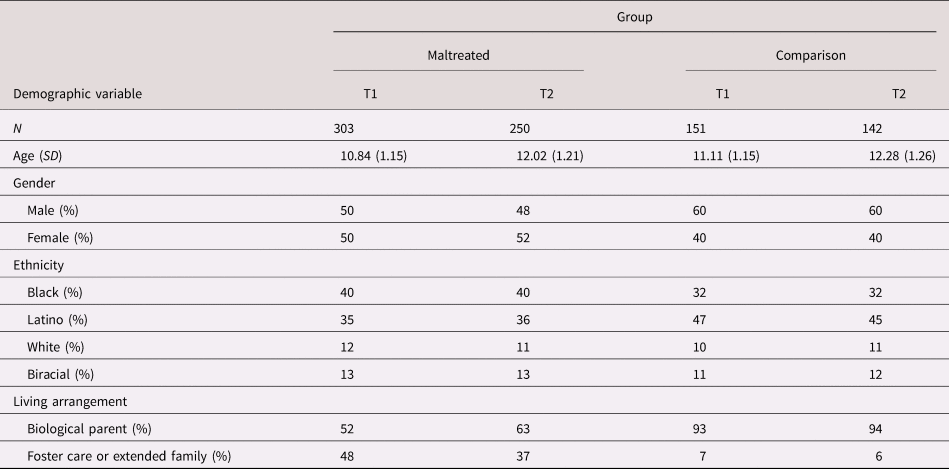
Data were taken from baseline (Time 1, hereafter called T1) and second (Time 2, hereafter called T2) assessments of an ongoing longitudinal study examining the effects of maltreatment on adolescent development; the study design and methods are reported in full elsewhere (Negriff et al., Reference Negriff, Gordis, Susman, Kim, Peckins, Schneiderman and Mennen2020). Recruitment was conducted from 2002 until 2005, with 454 adolescents aged 9–13 years enrolled into the baseline assessment (T1; 2002–2005; n = 303 maltreated, n = 151 comparison; 241 males, 213 females; M age = 10.95, SD = 1.13). T1 was followed by three additional assessments with the full sample. T2 (2003–2006; M age = 12.11, SD = 1.19), T3 (2005–2008; M age = 13.69, SD = 1.39) and T4 (2009–2012; M age = 18.24, SD = 1.47) occurred approximately 1 year, 1.5 years and 4.4 years following each prior assessment. Demographics of the sample at T1 and T2 are provided in Table 1.
Sample characteristics for Time 1 (T1) and Time (T2)

Recruitment
The maltreatment group (n = 303) was recruited from active cases in the Children and Family Services (CFS) agency of a large city on the west coast of the United States. The inclusion criteria were: (a) a new referral to CFS during the preceding month for any type of maltreatment (e.g., physical neglect, physical abuse, sexual abuse, emotional abuse); (b) age 9–12 years (some turned 13 between first contact and actual study visit); (c) identified as Latino, Black, or Caucasian/non-Latino (as these were the three largest race/ethnic groups represented in the child welfare population in the study location); (d) residing in one of 10 zip codes in a designated county at the time of referral to CFS. With the approval of CFS and the Institutional Review Board of the affiliated university, potential participants were contacted and asked to indicate their willingness to participate.
The comparison group (n = 151) was recruited using names from school lists of children aged 9–12 years residing in the same 10 zip codes as the maltreated sample. With approval of the Institutional Review Board of the affiliated university, caretakers of potential participants were contacted and asked to indicate their interest in participating. To ensure the fidelity of the comparison sample, caretakers were asked about involvement with CFS and none indicated prior or current contact with CFS.
Upon enrollment in the study, the maltreatment and comparison groups were compared on demographic variables. The two groups were similar in age (M = 10.93 years, SD = 1.16), gender (53% male), race (38% Black, 39% Latino, 12% biracial, and 11% Caucasian), and neighborhood characteristics (based on census tract information) (Negriff et al., Reference Negriff, Gordis, Susman, Kim, Peckins, Schneiderman and Mennen2020). However, they differed in terms of living arrangements: 93% of the comparison group lived with at least one biological parent compared with 52% of the maltreatment group.
Attrition
The attrition rate between T1 and T2 was 13.4% (n = 61). Attrition analyses indicated that participants who did not take part in the study at T2 were more likely to be in the maltreatment group (odds ratio = 4.38, p < .01).
Procedure
Assessments were conducted at an urban research university under approval by the Institutional Review Board of the affiliated university. After assent and consent were obtained from the adolescent and caregiver respectively, each completed questionnaires and tasks in separate rooms during a 4-hour protocol. The measures used in the current analyses represent a subset of the questionnaires administered during the protocol. Both children and caregivers were paid for their participation according to the guidelines of the National Institutes of Health standard compensation for healthy volunteers.
Stress paradigm and saliva collection
During the scheduling phone call, caregivers were told that the child should not eat or drink anything (other than water) for 4 hours prior to the study visit. This information was also included in a confirmation letter and a reminder phone call. During the visit, children indicated medications currently being taken (including steroids, inhaled medications, or creams/lotions), and other variables that might affect cortisol concentrations.
Six saliva samples were obtained over 90 min: the first was collected at the beginning of the assessment (45 min prior to the stressor), the second was collected immediately after a 5 min relaxation protocol that included soft music and a still slide of a beach scene (10 min prior to the stressor). Adolescents then engaged in the TSST-C, a version of the Trier Social Stressor Test (TSST) modified for children (Buske-Kirschbaum, Jobst, Psych, Wustmans, & Kirschbaum, Reference Buske-Kirschbaum, Jobst, Psych, Wustmans and Kirschbaum1997). During this procedure, participants were read the beginning of a story, given 5 min to develop the next part of the story, and then spent 4 min presenting that story to an interviewer and a panel of two judges who maintained neutral facial expressions throughout the task. Next, the youth performed a challenging 4-min serial subtraction task in front of the judges. The third saliva sample was obtained immediately after the stressor was complete, and the fourth, fifth, and sixth samples were taken 10, 20, and 30 min after the end of the stressor, respectively.
Saliva samples were collected via passive drool through a short straw into a vial. Data collection occurred primarily in the afternoon, with an average start time of 2:45 pm (SD = 73 min, range = 12:24–5:27 pm). Saliva samples were immediately frozen and subsequently transported on ice to Salimetrics LLC, State College, PA and stored frozen at −80°C until assayed for cortisol. On the day of testing, all samples were centrifuged at 3000 rpm for 15 min to remove mucins.
Although the TSST was performed at both T1 and T2, the likelihood that possible change in HPA axis reactivity was due to habituation to the task was minimal. Studies have shown that habituation can be prevented with intervals of more than 4 months between assessments (Foley & Kirschbaum, Reference Foley and Kirschbaum2010), and the interval in this study was greater than 1 year. The participants were given the same story task at both time points; however, they were given a harder subtraction task because they were older at the second wave.
Measures
Cortisol
Raw cortisol values (in μg/dl) were truncated if out of range (>3 SDs above the mean value for each time point) – a common approach with extreme cortisol values (e.g., Dettling, Gunnar, & Donzella, Reference Dettling, Gunnar and Donzella1999). Between three and nine samples were dropped at each time point; in total, 16 youth (approximately 5% of the sample) had out-of-range values at one or more time point. Cortisol values were then log-transformed to adjust for skewness. The area under the curve with respect to ground (AUCg) – a measure of total cortisol excretion/output across the laboratory task including baseline levels – was calculated using logged values and following the trapezoidal formula supplied by Pruessner, Kirschbaum, Meinlschmidt, and Hellhammer (Reference Pruessner, Kirschbaum, Meinlschmidt and Hellhammer2003), and included Spit 2 to Spit 6. Spit 1 was excluded because it was the initial sample at the beginning of the assessment, which may have reflected stress associated with activities outside the lab. We assessed AUCg for those using inhalers (n = 67), cream medicines (n = 43), and steroid medications (n = 3), and found no significant differences between those taking medications and those who were not. Based on these findings, we chose not to drop any participants based on medication use.
Maltreatment classification
Research assistants abstracted information from child welfare case records obtained for the time period prior to study enrollment in order to quantify maltreatment experiences (see Negriff et al. (Reference Negriff, Gordis, Susman, Kim, Peckins, Schneiderman and Mennen2020) for details of the record abstraction). Briefly, retired CFS social workers recovered the documentation for all referrals, reports, and court records for each child in the study. The information in these records was coded by trained research assistants using the Maltreatment Case Record Abstraction Instrument (MCRAI). For most participants, 5 years of previous records were available from CFS, although for some youth, data were available since birth. For each child welfare report, a child could have one to four separate types of maltreatment victimization (i.e., physical abuse, emotional abuse, sexual abuse, or neglect). To categorize maltreatment, a hierarchical variable was created: (a) sexual abuse (other types may be present) (n = 60), (b) physical abuse (emotional abuse or neglect could be present) (n = 121), (c) emotional abuse (neglect could be present) (n = 45), and (d) neglect (no co-occurring maltreatment) (n = 57). This approach to categorization of maltreatment types was used because the data indicated that 70% of the maltreatment group experienced more than one type of maltreatment, evidence that sexual abuse in particular has a unique impact on the HPA axis (Fogelman & Canli, Reference Fogelman and Canli2018; Trickett, Noll, Susman, Shenk, & Putnam, Reference Trickett, Noll, Susman, Shenk and Putnam2010), and that sexual abuse in combination with physical abuse may also be substantively different than other maltreatment types (Cicchetti & Rogosch, Reference Cicchetti and Rogosch2001; Trickett et al., Reference Trickett, Gordis, Peckins and Susman2014). This categorization also allowed us to create a group that had suffered neglect only, based on previous findings that neglect has substantively different effects on the stress system than other maltreatment types (Reilly & Gunnar, Reference Reilly and Gunnar2019).
The average number of CFS reports for participants was 3.7 (SD = 2.7) within 4 years prior to enrollment in the study. According to the MCRAI coding, 70% of the sample experienced neglect, almost 57% experienced emotional abuse, more than 50% experienced physical abuse, and almost 20% experienced sexual abuse (Kim, Mennen, & Trickett, Reference Kim, Mennen and Trickett2017).
Pubertal Development Scale
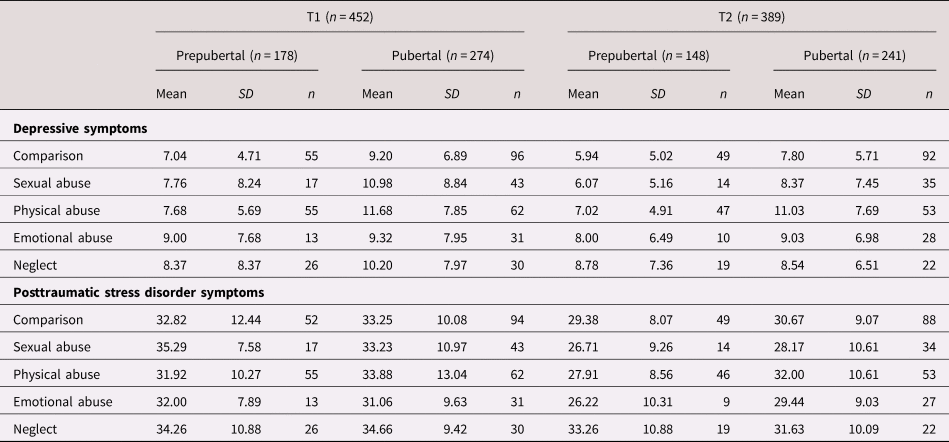
At T1 participants reported their level of development on five physical changes associated with pubertal development (height spurt, body hair, skin changes, breast growth/deepening of voice, menarche/facial hair) on a 4-point scale ranging from 1 = has not yet started to 4 = has completed (Petersen, Crockett, Richards, & Boxer, Reference Petersen, Crockett, Richards and Boxer1988). The Pubertal Development Scale scores were converted to a 5-point scale to parallel the Tanner stages (Shirtcliff, Dahl, & Pollak, Reference Shirtcliff, Dahl and Pollak2009). Prepubertal was classified at Tanner 1 (n = 178) and pubertal was classified as Tanner 2 or higher (n = 274) based on the definitions of each stage developed by Marshall and Tanner (Reference Marshall and Tanner1969, Reference Marshall and Tanner1970). Given that there may have been changes in pubertal classification from T1 to T2, we chose to use T1 in part because there were very few that were prepubertal at T2 (n = 66) and using T2 pubertal stage would inaccurately indicate pubertally-related changes in the HPA axis at T1.
Depressive symptoms
Adolescents completed the 27-item Children's Depression Inventory (Kovacs, Reference Kovacs1981, Reference Kovacs1992). They rated statements such as “I am sad all the time” and “I feel like crying every day,” on a 3-point scale for the past week (range of possible scores = 0–54). Cronbach's alpha was .86 for T1 and .83 for T2. The Children's Depression Inventory has been shown to have good test–retest reliability; scores have been shown to range from .76 to .82 (Saylor, Finch, Spirito, & Bennett, Reference Saylor, Finch, Spirito and Bennett1984; Smucker, Craighead, Craighead, & Green, Reference Smucker, Craighead, Craighead and Green1986).
PTSD
Symptoms of PTSD occurring in the past couple of months were assessed using the Youth Symptom Survey Checklist (Margolin, Reference Margolin2000). This is a 17-item self-report measure of symptoms from the diagnostic criteria for PTSD found in the Diagnostic and Statistics Manual of Mental Disorders IV-TR, such as hyperarousal, avoidance/numbness, and re-experiencing. Whereas most PTSD measures ask about symptoms related to a specific event, this questionnaire is not anchored to any specific traumatic event. Answer options range from 1 = not at all to 4 = almost always. The total score was used for this analysis (17 items; α = .88) and could range from 17 to 68.
Covariates
Gender was reported by the caregiver/parent at enrollment and was an open question phrased as “What is the gender of your child?” Similarly, race/ethnicity was reported at T1 by the parent and coded for this analysis as White versus minority (Black, Latino, biracial).
Data Analysis
Analysis of variance was used to test mean differences between the five groups (comparison, sexual abuse, physical abuse, emotional abuse, neglect). Post hoc comparisons were used to determine significant pairwise comparisons. This was conducted for the total sample and by pubertal group (prepubertal vs. pubertal).
Cross-lagged multiple-group path models in Mplus 7.0 were used to test the main effect of T1 cortisol AUCg on T2 depressive symptoms and T2 PTSD symptoms. The model also included the main effects of T1 depressive symptoms and T1 PTSD symptoms on T2 cortisol AUCg. Within time covariances between all three variables and T1 to T2 autoregressive effects were also included. The model was run first for the total sample controlling for race, gender, and pubertal stage. The model was estimated with all parameters freely estimated for all five groups (comparison, sexual abuse, physical abuse, emotional abuse, neglect), then the parameters from T1 cortisol AUCg to T2 depressive symptoms and T2 PTSD symptoms were restricted to equality. A significant decrement in the chi square (χ2) value indicted a moderation effect. If a moderation effect was indicated, pairwise comparisons were conducted to determine which groups were significantly different from each other using two-group multiple-group models.
Next, the same analyses were completed stratified by pubertal group. The multiple-group model was run separately for the prepubertal and the pubertal group. Our choice to stratify was due to the small cell sizes for each maltreatment group with each puberty category and the likelihood of low power to detect significant three-way interaction effects. We also tested the model including time since waking as a covariate but found no substantive differences in the parameter coefficients and so report only the original models described above.
Full information maximum likelihood (Arbuckle, Reference Arbuckle, Marcoulides and Schumacker1996) was used to handle variable-level and longitudinal missingness. Fit indices such as the χ2 goodness-of-fit statistic, the root mean square error of approximation (RMSEA), and comparative fit index (CFI) were used to evaluate the fit of the model to the data. Overall, an adequate model fit is indicated by a nonsignificant χ2, RMSEA of .08 or smaller, and CFI above .90 (Browne & Cudeck, Reference Browne, Cudeck, Bollen and Long1993). However, because χ2 is nearly always significant for sample sizes above 400 (Bentler & Bonett, Reference Bentler and Bonett1980), we relied on the other fit statistics to evaluate the fit of the model (Bentler, Reference Bentler1990). Corrections for multiple comparisons were addressed using Holm's step-down method (Holm, Reference Holm1979).
Results
Descriptives
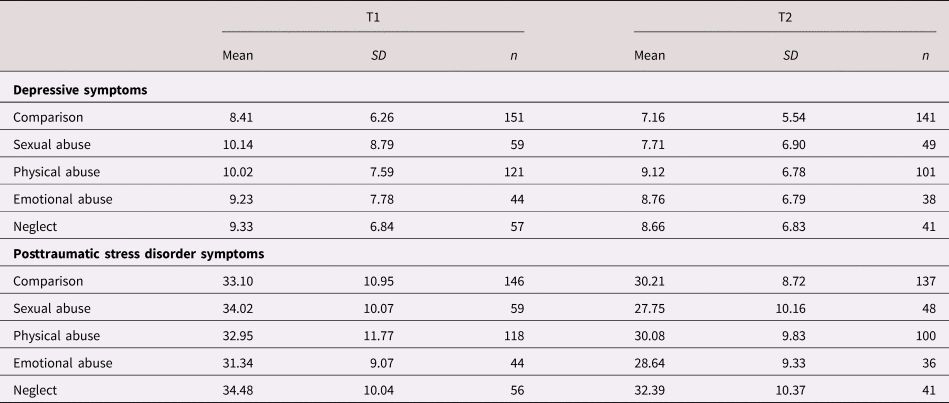
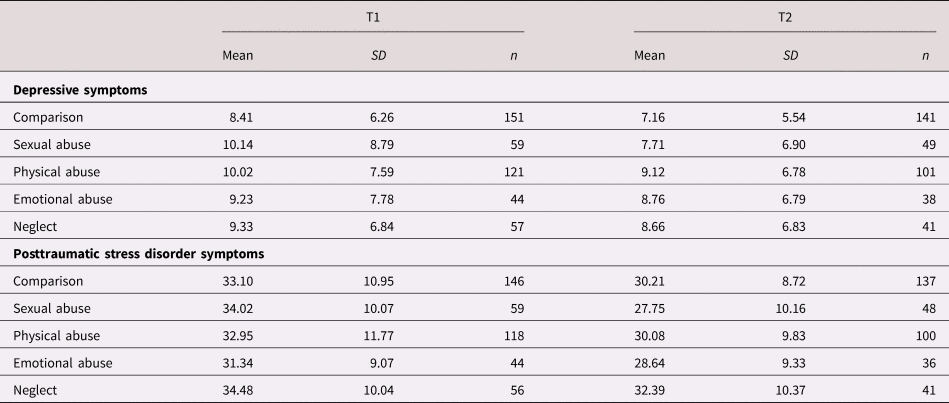
Descriptive statistics can be found in Table 2 for the total sample and Table 3 by pubertal status. Bivariate correlations showed significant associations between T1 cortisol AUCg and T1 PTSD symptoms (r = .11, p < .05) and T2 cortisol AUCg and T2 depressive symptoms (r = −.12, p < .05). Analysis of variance was used to test the mean differences in mental health outcomes between the maltreatment type groups (comparison, sexual abuse, physical abuse, emotional abuse, neglect). No significant differences were found for the total sample or when split by pubertal group (Table 3).
Mental health outcomes by maltreatment type for total sample (T1 = Time 1; T2 = Time 2)
Mental health outcomes by maltreatment types for prepubertal versus pubertal groups (T1 = Time 1; T2 = Time 2)
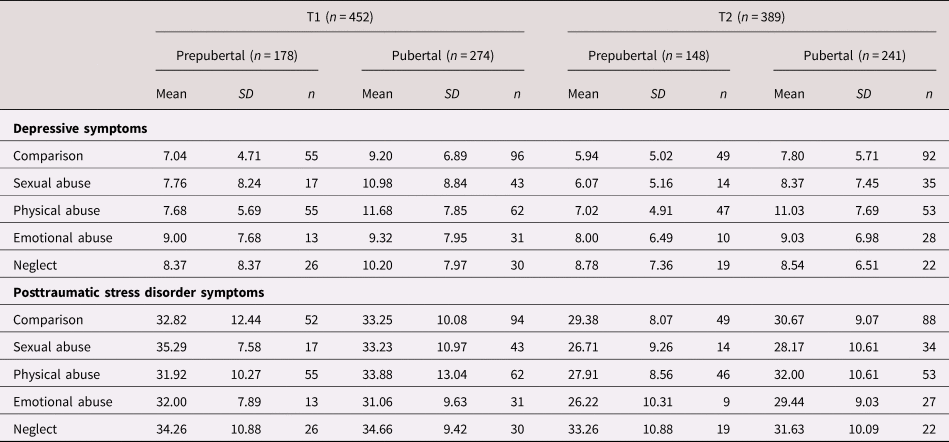
Note: There were 82 who changed from prepubertal to pubertal between T1 and T2. Analysis of variance was used to test mean differences in the outcomes by maltreatment type. No significant differences were found.
Path models: Total sample by maltreatment type
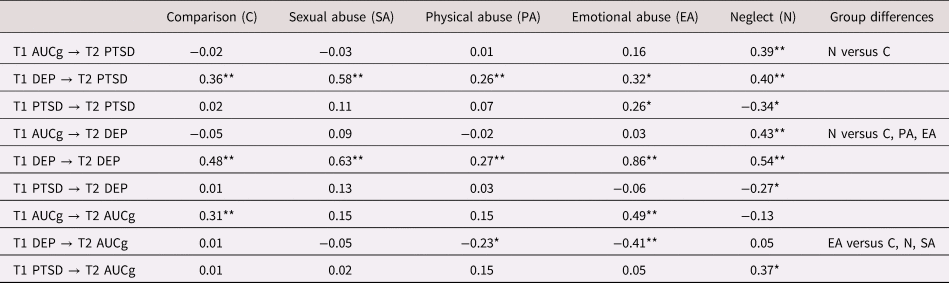
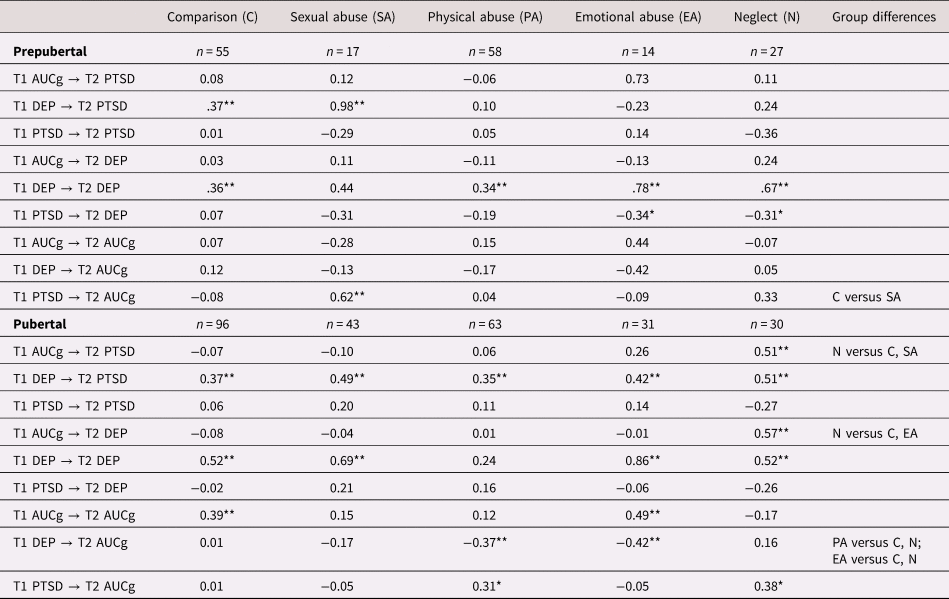
The five-group (comparison, physical abuse, sexual abuse, emotional abuse, neglect) multiple-group path model for the total sample fit the data well (χ2 = 39.41 (24), p = .02; CFI = .95; RMSEA = .08). When the paths from T1 cortisol AUCg to T2 depressive symptoms and T2 PTSD symptoms as well as T1 depressive symptoms to T2 cortisol AUCg were restricted to equality across all five groups there was a significant decrement in the model fit (Δχ2 = 35.65 (19), p < .05). To decompose the interaction effects, we performed pairwise comparisons for each possible two-group pairing. The unrestricted parameter estimates and any significant pairwise interaction effects are shown in Table 4.
Standardized parameter estimates from multiple-group path model: Total sample

Note: *p < .05, **p < .01; T1 = Time 1; T2 = Time 2. Covariates were sex, race, and T1 pubertal stage. AUCg = cortisol area under the curve with respect to ground; DEP = depressive symptoms; PTSD = posttraumatic stress disorder symptoms. All group differences were tested using χ2 one-degree-of-freedom test and were significant at p < .05.
For the neglect group, there were significant associations between T1 cortisol AUCg and both T2 PTSD (β = .39, p < .01) and T2 depressive symptoms (β = .43, p < .01). The direction of the coefficients indicated that higher cortisol was associated with higher depressive and trauma symptoms at T2. All other groups had nonsignificant parameter estimates. The parameter from T1 cortisol AUCg to T2 PTSD symptoms was significantly different from the comparison group (Δχ2 = 5.82 (1), p < .05) but none of the other maltreatment groups. The parameter from T1 cortisol AUCg to T2 depressive symptoms was significantly different from the comparison group (Δχ2 = 10.35 (1), p < .01), the physical abuse group (Δχ2 = 5.71 (1), p < .05), and the emotional abuse group (Δχ2 = 4.37 (1), p < .05).
Both the emotional abuse and physical abuse groups showed a significant association between T1 depressive symptoms and T2 cortisol AUCg (emotional abuse β = −.41, p < .01; physical abuse β = −.25, p < .01). The emotional abuse group parameter estimate was significantly different from that of the comparison (Δχ2 = 6.45 (1), p < .05), sexual abuse, (Δχ2 = 5.01 (1), p < .05), and neglect groups (Δχ2 = 5.36 (1), p < .05), but not different from the physical abuse group (Δχ2 = 1.19 (1), ns).
Stratification by pubertal status
Prepubertal
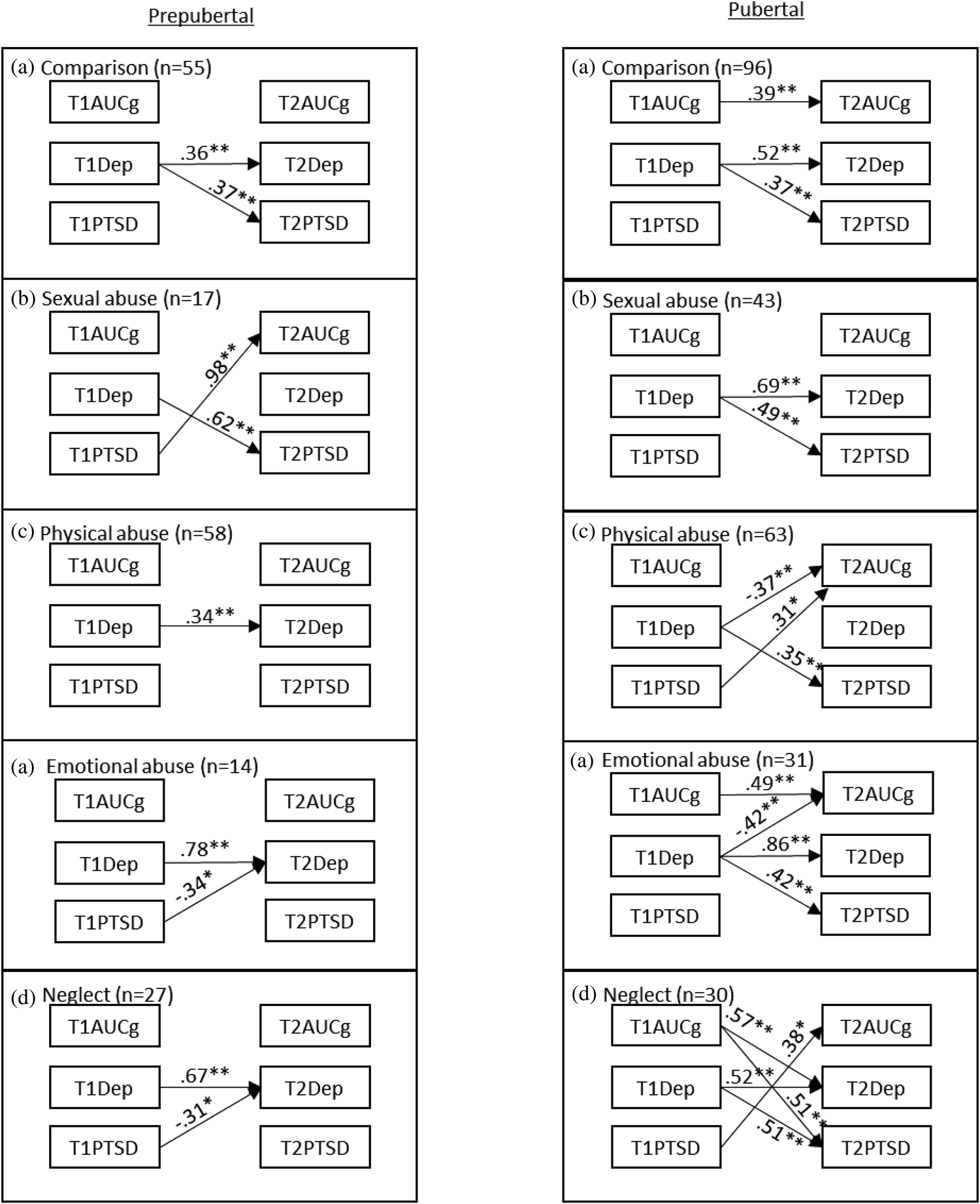
There was only one parameter moderated by maltreatment group. For the sexual abuse group, the path from T1 PTSD symptoms to T2 cortisol AUCg was significantly different from the comparison group (Δχ2 = 5.25 (1), p < .05). The coefficient indicated that higher PTSD symptoms at T1 was associated with lower cortisol output at T2 (β = .62, p < .01). There were no other significant associations between cortisol, depressive symptoms, and PTSD symptoms (see Table 5 and Figure 1).
Standardized parameter estimates from multiple-group path model: Prepubertal versus pubertal

Note: *p < .05, **p < .01; T1 = Time 1; T2 = Time 2. Model controlled for gender and race. AUCg = cortisol area under the cruet with respect to ground; DEP = depressive symptoms; PTSD = posttraumatic stress disorder symptoms. All group differences were tested using a χ2 one-degree-of-freedom test and were significant at p < .05.
Pubertal
The majority of interaction effects seen in the model with the total sample were replicated in the pubertal group with the addition of some new interactions (Table 5 and Figure 1). Specifically, for the neglect group there were significant associations between T1 cortisol AUCg and both T2 depressive symptoms (β = .51, p < .01) and T2 PTSD symptoms (β = .57, p < .01). Again, this finding indicated that, for neglected adolescents, higher cortisol output at T1 was linked with higher depressive and PTSD symptoms 1 year later. The parameter coefficient from T1 cortisol AUCg to T2 PTSD symptoms in the neglect group was significantly different from the parameter in the comparison group (Δχ2 = 9.19 (1), p < .01) and sexual abuse group (Δχ2 = 4.41 (1), p < .05). In addition, the parameter coefficient from T1 cortisol AUCg to T2 depressive symptoms was significantly different for the neglect versus comparison (Δχ2 = 10.51 (1), p < .01) and emotional abuse groups (Δχ2 = 5.92 (1), p < .05).
Multiple-group models by maltreatment type, stratified by prepubertal versus pubertal.
Note: *p < .05, **p < .01.

The emotional abuse and physical abuse groups had significant associations between T1 depressive symptoms and T2 cortisol AUCg (emotional abuse β = −.42, p < .01; physical abuse β = −.37, p < .01). The parameter estimate for the emotional abuse group was significantly different from the comparison group (Δχ2 = 5.89 (1), p < .05) and the neglect group (Δχ2 = 8.51 (1), p < .01). The physical abuse group was also significantly different from the comparison group (Δχ2 = 4.71 (1), p < .01) and the neglect group (Δχ2 = 7.27 (1), p < .01).
Discussion
The present study examined the effects of different types of maltreatment experiences on the longitudinal associations between cortisol response and depressive and PTSD symptoms. A particular focus was on examination of these relationships for youth prior to versus during puberty. This approach was bolstered by the pattern of findings being driven by the pubertal group and underscores the importance of pubertal development in understanding links between HPA axis functioning and mental health symptoms over time. In addition, the relations between cortisol, depression symptoms, and PTSD symptoms differed depending on what type of maltreatment the youth had experienced, with hyper-reactivity linked with subsequent PTSD and depressive symptoms for neglected youth but depressive symptoms predicting subsequent hypo-reactivity for the physical abuse and emotional abuse groups.
Most of the significant links between cortisol and mental health symptoms emerged in the pubertal sample. The significant effects for the pubertal group appeared to drive the significant findings among the total sample, whereas, in the prepubertal group, few significant links emerged. However, we must consider that this finding may be due to the larger sample size of the pubertal group. Nonetheless, the emergence of significant effects only within the pubertal group is consistent with the literature suggesting that puberty brings changes in links between the HPA axis and psychiatric symptoms. Evidence suggests that puberty is associated with an increase in the reactivity of the HPA axis, and heightened stress reactivity contributes to vulnerability for the development of psychopathology (Dahl & Gunnar, Reference Dahl and Gunnar2009; Gunnar et al., Reference Gunnar, Weerka, Frenn, Long and Griggs2009; Spear, Reference Spear2000). For example, Colich et al. (Reference Colich, Kircanski, Foland-Ross and Gotlib2015) reported that early pubertal cortisol hypo-reactivity but later pubertal hyper-reactivity predicted depression in at-risk females and hypothesized that the HPA axis reorganization during puberty accounted for these differences. Our findings align with this conceptualization and provide further support of the developmental changes in HPA reactivity as critical to our understanding of the increase in mental health symptoms during adolescence.
With regard to maltreatment type, our results indicate that adolescents with neglect experiences had particularly strong associations between cortisol response and both depressive and PTSD symptoms compared with those with other maltreatment types and the comparison group. Specifically, higher cortisol output at T1 predicted higher levels of depressive symptoms and PTSD symptoms at T2 only among the neglected youth in the pubertal group. Among the prepubertal youth, no significant links emerged between those variables. The association between higher cortisol output and depressive symptoms only among the pubertal youth is consistent with other findings regarding links between hypercortisolism and depression only among youth at more advanced pubertal development and adults (Colich et al., Reference Colich, Kircanski, Foland-Ross and Gotlib2015; Gong et al., Reference Gong, Duan, Su, Wan, Xu, Tao and Sun2019). This supports the model of increased reactivity of the HPA axis as a condition of vulnerability to psychopathology. The relation between cortisol levels and PTSD symptoms is complex; researchers have reported a positive association between urinary cortisol and PTSD symptoms (Delahanty, Nugent, Christopher, & Walsh, Reference Delahanty, Nugent, Christopher and Walsh2005; Rasmusson et al., Reference Rasmusson, Lipschitz, Wang, Hu, Vojvoda, Bremner and Charney2001), but results have been quite inconsistent regarding the relation between HPA axis function and PTSD symptoms (Shea, Walsh, MacMillan, & Steiner, Reference Shea, Walsh, MacMillan and Steiner2005). In the current study, the links were again only significant among the pubertal sample, consistent with the idea that the reorganization of this system leads to a reliable association becoming apparent only as youth develop through puberty.
The absence of an association between cortisol at T1 and depressive and PTSD symptoms at T2 for the physically, sexually, or emotionally abused groups was unexpected. These differences may reflect the impact different types of maltreatment experiences have on the HPA axis. As proposed by the Dimensional Model of Adversity and Psychopathology, experiences of threat (e.g., physical abuse) have systematically different effects on physiological and neurological systems than experiences of deprivation (e.g., neglect) (McLaughlin & Sheridan, Reference McLaughlin and Sheridan2016). We must also consider that the trauma associated with physical, sexual, and emotional abuse may be more chronic and severe than neglect, leading to an allostatic downregulation of HPA axis activity (Carpenter et al., Reference Carpenter, Tyrka, Ross, Khoury, Anderson and Price2009; Cicchetti, Rogosch, Gunnar, & Toth, Reference Cicchetti, Rogosch, Gunnar and Toth2010; Shea et al., Reference Shea, Walsh, MacMillan and Steiner2005; Trickett et al., Reference Trickett, Noll, Susman, Shenk and Putnam2010). In addition, our categorization of maltreatment included the possibility of co-occurring maltreatment in the sexual, physical, and emotional abuse groups. This likely resulted in more variability in abuse experiences and HPA axis functioning among these maltreatment groups, thus contributing to a null association with PTSD and depression symptoms. There were, however, main effects of depressive symptoms at T1 on cortisol at T2 only among the physically and emotionally abused groups. Specifically, among the pubertal youth, higher depressive symptoms at T1 was associated with lower cortisol output at T2. This finding may seem contrary to expectations as one might expect that higher levels of depressive symptoms would covary with higher cortisol later. High levels of depressive symptoms at T1 may indicate a history of more severe trauma and support the idea of initial hyper-reactivity in the HPA axis with subsequent attenuation.
The link between PTSD symptoms at T1 and cortisol at T2 provides an exception to the general finding that these relationships emerge primarily among the pubertal youth. In particular, the link between PTSD symptoms at T1 and cortisol at T2 emerged among sexually abused prepubertal youth but not sexually abused pubertal youth. This is difficult to explain, but is likely due to differences in the links between the stress system and mental health prepuberty versus during puberty. In addition, only finding this association for sexually abused youth may be because the more chronic and severe nature of this type of abuse may initially trigger hyperactivation of the stress system and comorbid PTSD symptoms, with eventual downregulation shown by an absence of association in the pubertal group. Sexual abuse in particular has been linked with initial hyper-reactivity followed by attenuation (Trickett et al., Reference Trickett, Noll, Susman, Shenk and Putnam2010). The links between PTSD symptoms and cortisol have yet to be fully explicated. Acute versus chronic and complex trauma may lead to changes in the functioning of this system. These complexities, which are hard to measure and impossible to control, lead to complex patterns and inconsistencies in findings across studies and necessitate replication.
Limitations
We must consider a number of limitations when interpreting our findings. For cortisol reactivity, we used a measure of AUCg. Many other measures of cortisol are possible and thus the findings likely only generalize to this particular measure. We also acknowledge there are known gender differences in the sensitivity of the HPA axis to stress as well as in vulnerability to depression. Although we could not probe for interaction effects by gender due to the small cell sizes for each maltreatment type, this would be an important avenue for future research. There was also a higher percentage of females than males in the pubertal group and, while we controlled for gender, it still may indicate the findings were driven by the pubertal females. In terms of investigating maltreatment types, we created hierarchical maltreatment categories based on empirically and theoretically based associations with HPA axis functioning. The sexual abuse group was more likely a poly-victimization group than any other category. As such, the clarity of sexual abuse in particular may have been obscured. Other meaningful categorizations of abuse may clarify these relations. In addition, we could not access maltreatment case records to account for maltreatment occurring between T1 and T2. We also recognize that approximately half of the maltreatment group resided in a foster home or with extended family, while nearly all of the comparison group lived with a biological parent. This may also contribute to differences in stress system activation. Of note, we only used case-record reported maltreatment in this study. We acknowledge that self-reported maltreatment may also be useful in understanding associations between HPA axis functioning and mental health. The comparison of these associations for official versus self-report is an avenue for future research. We were also unable to test for three-way interaction effects for pubertal status (instead stratifying the analyses) given the small cell sizes. Small cell sizes for maltreatment types may have precluded significant associations in the prepubertal group. We encourage researchers to further test the differences between prepubertal and pubertal youth. We also recognize the limitations of cross-lagged models. There have been several critiques of this method regarding the interpretability of the model and the inability to parse time-variant versus time-invariant components of measured variables (Berry & Willoughby, Reference Berry and Willoughby2017; Hamaker, Kuiper, & Grasman, Reference Hamaker, Kuiper and Grasman2015). Lastly, instances of maltreatment in the comparison group may have gone unreported to child welfare. However, contamination in our comparison group would likely only serve to muddy group differences, not contribute to the significant findings (Shenk, Noll, Peugh, Griffin, & Bensman, Reference Shenk, Noll, Peugh, Griffin and Bensman2015).
Conclusions
This paper provides the first examination of longitudinal links between HPA axis reactivity and depressive and PTSD symptoms among youth with different types of maltreatment histories and at different stages of pubertal development. The findings suggest that, in contrast to studies focusing only on the cumulative effects of maltreatment, focusing on specific types of maltreatment elucidates different associations between HPA axis functioning and depressive and PTSD symptoms. Neglect has received relatively less emphasis as a maltreatment type in the extant literature, but our results indicate that youth with this experience have particularly strong associations between HPA axis reactivity and mental health symptoms. In addition, the findings clarify the need to consider that reorganization of the stress system during puberty may lead to different links between cortisol reactivity and mental health than those observed prior to this developmental period.
Funding Statement
This research was funded by grants from the National Institutes of Health (K23HD041428 to E. B. Gordis, Principal Investigator; R01HD39129 and R01DA024569 to P. K. Trickett, Principal Investigator), the USC Urban Fellow Faculty seed grant (to E. B. Gordis, Principal Investigator), and an Alcoholic Beverage Medical Research Foundation Research Grant (to E. B. Gordis, Principal Investigator).
Conflicts of Interest
None.