





Introduction
Primary caregivers of patients with malignant glioma (PwMG) report heightened emotional distress due to the unique demands of caring for someone with an advanced cancer and neurocognitive decline. Specifically, the progressive, terminal nature of a malignant glioma, the extent of caretaking responsibilities required for a patient experiencing rapid neurocognitive and functional decline, and the demands of navigating a complex healthcare system all contribute to reduced quality of life in these caregivers (Schubart et al. Reference Schubart, Kinzie and Farace2008; McConigley et al. Reference McConigley, Halkett and Lobb2010; Minaya Flores et al. Reference Minaya Flores, Berbis and Chinot2014; Baumstarck et al. Reference Baumstarck, Chinot and Tabouret2018; Sacher et al. Reference Sacher, Meixensberger and Krupp2018). Indeed, caregivers experience anxiety, depression, and death anxiety at higher rates than PwMG, with our team reporting 68–79% of neuro-oncology caregivers endorse moderate-to-severe death anxiety (Choi et al. Reference Choi, Stone and Kim2012; Baumstarck et al. Reference Baumstarck, Leroy and Hamidou2016; Halkett et al. Reference Halkett, Lobb and Shaw2017; Willis et al. Reference Willis, Ravyts and Lanoye2022, Reference Willis, Mladen and Rodin2024a; Braun et al. Reference Braun, Aslanzadeh and Thacker2021). Unlike generalized anxiety, which reflects excessive worry across a range of concerns, death anxiety is specifically centered on mortality and encompasses existential fears related to impending loss, loss of meaning, limited time, and suffering (Krause et al. Reference Krause, Rydall and Hales2015; Loughan et al. Reference Loughan, Aslanzadeh and Brechbiel2020). Although death anxiety affects both patients and caregivers, it is experienced differently across these groups; among caregivers, death anxiety often centers on concerns about the impending loss of a loved one, the finite nature of remaining shared time, and the potential for the patient to experience suffering, loss of dignity, or a traumatic dying process (Willis et al. Reference Willis, Ravyts and Lanoye2022, Reference Willis, Mladen and Rodin2024a). Despite the clear need for supportive care in this population, there is a paucity of evidence-based interventions designed for caregivers of PwMG, including interventions specifically targeting death anxiety (Boele et al. Reference Boele, Rooney and Bulbeck2019; Heinsch et al. Reference Heinsch, Cootes and Wells2022; Jones et al. Reference Jones, Pinkham and Wallen2022). Therefore, further intervention development tailored to the needs of malignant glioma caregivers is warranted.
CALM (Managing Cancer and Living Meaningfully) is a brief, supportive-expressive, evidence-based intervention for reducing depression and death anxiety in advanced cancer patients that may also be beneficial for malignant glioma caregivers (Hales et al. Reference Hales, Lo, Rodin, Holland, Breitbart, Butow, Jacobsen and Loscalzo2015). As an existential psychotherapy, CALM provides reflective space to discuss both practical and existential concerns, categorized into 4 broad domains: (1) symptom management and communication with healthcare providers; (2) changes in self and relationships with close others; (3) spirituality, sense of meaning, and purpose; and (4) the future, hope, and mortality (Nissim et al. Reference Nissim, Freeman and Lo2012; Lo et al. Reference Lo, Hales and Rydall2015). The number of sessions and time spent on each domain is tailored to the needs of each individual. Findings from a recent proof-of-concept trial of CALM in PwMG suggest CALM is feasible and acceptable, with preliminary reductions in death anxiety (Loughan et al. Reference Loughan, Willis and Braun2022b). Although patients are encouraged – though not required – to invite their caregiver to attend CALM sessions alongside them (Hales et al. Reference Hales, Lo, Rodin, Holland, Breitbart, Butow, Jacobsen and Loscalzo2015; Lo et al. Reference Lo, Hales and Rydall2015), caregivers’ participation in CALM has yet to be empirically evaluated.
There are several reasons to believe that CALM may be particularly well suited to address the existential concerns experienced by malignant glioma caregivers. Notably, prior research suggests that patients with moderate levels of death anxiety derive the greatest benefit from CALM (Rodin et al. Reference Rodin, Lo and Rydall2018). Because the majority of malignant glioma caregivers fall within this range, they are well positioned to benefit from the intervention (Willis et al. Reference Willis, Ravyts and Lanoye2022, Reference Willis, Mladen and Rodin2024a). Through the cultivation of “double awareness,” CALM encourages individuals to balance the realities of advanced illness and mortality while simultaneously remaining engaged in meaningful aspects of life, relationships, hope, and the present moment (Colosimo et al. Reference Colosimo, Nissim and Pos2018). Caregivers often navigate a similar tension as they confront the patient’s prognosis while striving to preserve normalcy, provide care, maintain hope, and remain present in the time that remains. Patients have described the benefits of CALM as helping them prepare for the future, discuss difficult topics with loved ones, and navigate concerns related to end-of-life (Nissim et al. Reference Nissim, Freeman and Lo2012). Because caregivers often confront similar existential concerns regarding the anticipated loss of their loved one and express challenges with communication regarding end-of-life (Applebaum et al. Reference Applebaum, Kryza-lacombe and Buthorn2016), CALM may potentially address important unmet emotional needs among caregivers, and this, in turn, may support their bereavement process following the patient’s passing. However, caregivers’ experiences with and perceptions of CALM have not been empirically evaluated.
Given this gap in CALM’s program of research and its potential to reduce caregivers’ death anxiety regarding the patient’s mortality, the current study sought to understand caregivers’ perceptions of CALM with the ultimate goal of optimizing CALM to the specific needs of malignant glioma caregivers. Recommendations from the National Institutes of Health (NIH) Obesity-Related Behavioral Intervention Trials (ORBIT) model (Czajkowski et al. Reference Czajkowski, Powell and Adler2015) for behavioral intervention development highlight the importance of engaging stakeholders early in the optimization process, prior to piloting or evaluating the efficacy of an intervention. Therefore, the purpose of this Phase 1a Define trial (Czajkowski et al. Reference Czajkowski, Powell and Adler2015) was to elucidate malignant glioma caregivers’ perceptions of the standard CALM protocol, the relevance of the 4 CALM domains for caregivers, and caregivers’ recommendations for tailoring the intervention (e.g., content, timing, and format) to their needs.
Methods
Participants and procedures
This study was approved by the institutional review boards of Virginia Commonwealth University and Massey Cancer Center (HM20022584). We recruited participants using a convenience sampling approach; specifically, we recruited bereaved malignant glioma caregivers via word-of-mouth at an National Cancer Institute (NCI)-designated Cancer Center and by posting advertisements in online neuro-oncology bereavement groups in April 2022. We chose to recruit bereaved caregivers given their ability to recount the entire malignant glioma treatment trajectory. Interested bereaved caregivers contacted a trained member of the study team and were enrolled if they met the following inclusion criteria: (1) identified as the primary caregiver of a patient with malignant glioma who died between 6 months and 3 years prior to study enrollment; (2) adults aged >18; (3) proficiency in English; and (4) ability to attend a virtual focus group using videoconferencing.
After obtaining consent, participants were assigned to one of four 90-minute, semi-structured focus groups (n = 4–8), conducted synchronously via videoconferencing (Willemsen et al. Reference Willemsen, Aardoom and Chavannes2023). Focus groups were moderated by a doctoral student in clinical psychology (K.D.W.) and a process observer (A.R.L.) who both had previous experience conducting focus groups in neuro-oncology. Focus group assignment was based on participant availability and order of enrollment rather than purposive sampling or assignment. Prior to the focus group, participants were asked to read an investigator-provided informational handout on the standard CALM intervention, which was reviewed at the start of each focus group. Subsequently, the moderator led a guided discussion of caregivers’ reactions and recommendations for optimizing CALM using a semi-structured interview guide, actively solicited input from quieter participants, and redirected discussion when necessary to ensure no single participant dominated the conversation. Example questions included “How do you think the standard CALM intervention would be beneficial or harmful to caregivers?” and “What other topics would be beneficial for caregivers to talk about with their loved one?” No new themes emerged during the final focus group, suggesting saturation had been achieved.
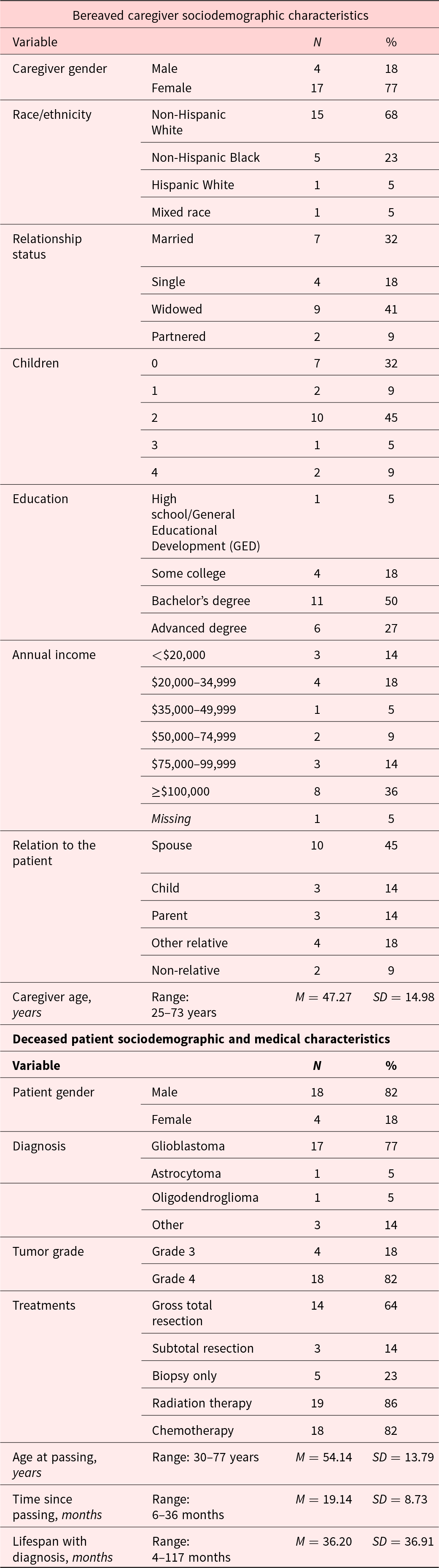
Finally, participants completed self-report measures assessing their sociodemographic characteristics, the medical characteristics of the deceased patient, and their current psychological functioning (Table 1) via a secure online data collection system (REDCap; Harris et al. Reference Harris, Taylor and Thielke2009). Surveys included the Patient Health Questionnaire-9 Item (PHQ-9; Thekkumpurath et al. Reference Thekkumpurath, Walker and Butcher2011), Generalized Anxiety Disorder-7 Item (GAD-7; Spitzer et al. Reference Spitzer, Kroenke and Williams2006), Two Track Bereavement Questionnaire for Complicated Grief (TTBQ-CG31; Rubin and Bar-nadav Reference Rubin, Bar-nadav and Neimeyer2015), Functional Assessment of Chronic Illness Therapy Spiritual Well-Being Scale (FACIT-Sp; Peterman et al. Reference Peterman, Fitchett and Min2002), Posttraumatic Growth Inventory (PTGI; Tedeschi and Calhoun Reference Tedeschi and Calhoun1996), and Quality of Death and Dying Questionnaire (QODD; Downey et al. Reference Downey, Curtis and Lafferty2010). These validated measures demonstrate good-to-excellent internal consistency (Cronbach’s αs generally >0.80), with higher scores indicating greater depression, anxiety, complicated grief, spiritual well-being and posttraumatic growth, and perceived quality of death and dying, respectively. Participants were remunerated $20 for their participation.
Bereaved caregiver and deceased patient characteristics (N = 22)

Table 1 Long description
Counts and percentages describe bereaved caregiver and deceased patient characteristics, plus ranges, means, and standard deviations for ages and time measures. Caregiver gender was 4 male at 18 percent and 17 female at 77 percent. Race and ethnicity were 15 Non Hispanic White at 68 percent, 5 Non Hispanic Black at 23 percent, 1 Hispanic White at 5 percent, and 1 Mixed Race at 5 percent. Relationship status was 7 married at 32 percent, 4 single at 18 percent, 9 widowed at 41 percent, and 2 partnered at 9 percent. Children were 0 for 7 at 32 percent, 1 for 2 at 9 percent, 2 for 10 at 45 percent, 3 for 1 at 5 percent, and 4 for 2 at 9 percent. Education was 1 High School or GED at 5 percent, 4 Some College at 18 percent, 11 Bachelors Degree at 50 percent, and 6 Advanced Degree at 27 percent. Annual income was 3 under 20,000 dollars at 14 percent, 4 from 20,000 to 34,999 at 18 percent, 1 from 35,000 to 49,999 at 5 percent, 2 from 50,000 to 74,999 at 9 percent, 3 from 75,000 to 99,999 at 14 percent, 8 over 100,000 at 36 percent, and 1 missing at 5 percent. Relation to the patient was 10 spouse at 45 percent, 3 child at 14 percent, 3 parent at 14 percent, 4 other relative at 18 percent, and 2 non relative at 9 percent; caregiver age ranged from 25 to 73 years with mean 47.27 and standard deviation 14.98. Patient gender was 18 male at 82 percent and 4 female at 18 percent; diagnosis was 17 glioblastoma at 77 percent, 1 astrocytoma at 5 percent, 1 oligodendroglioma at 5 percent, and 3 other at 14 percent. Tumor grade was 4 grade 3 at 18 percent and 18 grade 4 at 82 percent; treatments listed were 14 gross total resection at 64 percent, 3 subtotal resection at 14 percent, 5 biopsy only at 23 percent, 19 radiation therapy at 86 percent, and 18 chemotherapy at 82 percent. Age at passing ranged from 30 to 77 years with mean 54.14 and standard deviation 13.79; time since passing ranged from 6 to 36 months with mean 19.14 and standard deviation 8.73; lifespan with diagnosis ranged from 4 to 117 months with mean 36.20 and standard deviation 36.91.
Data analytic plan
We used thematic, deductive, latent qualitative analysis to understand participants’ reactions and recommendations for optimizing CALM (Braun and Clarke Reference Braun and Clarke2006). A trained research assistant first transcribed and deidentified each focus group before uploading the transcript to NVivo v12 software. A study team consisting of trained doctoral, medical, and post-baccalaureate students followed the Braun and Clarke protocol for thematic analysis (Braun and Clarke, Reference Braun and Clarken.d.): First, the team collaboratively developed a codebook after 3 team meetings. Using this codebook, 2 team members independently coded each transcript to ensure reliability, and the moderator (K.D.W.) coded all transcripts to support content integrity. Identified discrepancies after the first round of coding were discussed in subsequent team meetings. After discrepancies were resolved, final inter-rater reliability demonstrated excellence across all 4 transcripts (M Kappa = 0.86, range = 0.80–0.94). Lastly, to further characterize the sample, we used SPSS v26 (IBM Corp. Released 2011) to report descriptive statistics for caregiver sociodemographic characteristics, deceased patient medical characteristics, and caregiver-reported psychological outcome data.
Results
Participant characteristics
Twenty-eight individuals completed screening; of these, 24 met eligibility criteria and enrolled. We did not include 2 enrolled participants in final quantitative analyses as they failed to attend a focus group, yielding a final sample size of 22 bereaved caregivers of PwMG. Most participants were middle-aged (M age = 47.27 years, SD = 14.98), female (77%), non-Hispanic White (68%), widowed (41%), spouses (45%), college educated (77%), and worked either part-time (32%) or full-time (27%). Most deceased patients were men (82%) diagnosed with a glioblastoma (77%). The average time that had elapsed since the patient’s passing was 19.14 months (range = 6–36 months). In terms of psychological functioning, caregivers reported, on average, mild symptoms of both depression (PHQ-9; M = 9.49) and generalized anxiety (GAD-7; M = 7.95). Although mean scores fell below the suggested clinical cutoff for complicated bereavement (TTBQ-CG31; M = 2.93), approximately 23% of the sample was at elevated risk. Total spiritual well-being scores in this sample (FACIT-Sp; M = 28.46) were substantially lower than those of a sample of active neuro-oncology caregivers (Piderman et al. Reference Piderman, Radecki Breitkopf and Jenkins2015). Total posttraumatic growth scores were in the moderate-to-high range (PTGI; M = 63.06), with Life Appreciation (M = 3.82) and Personal Strength (M = 3.09) emerging as the highest PTGI subscales. Caregivers varied in their ratings of the quality of the patient’s death and dying experience (QODD; M = 47.89; SD = 21.91), though item-level data suggested greatest distress related to incontinence and patients’ concerns about being a burden at end-of-life (Table 2).
Psychological functioning of bereaved caregivers (N = 22)

Table 2 Long description
Psychological measures are summarized with observed and possible ranges, plus mean and standard deviation for each measure. GAD 7 has an observed range from 0 to 21 out of a possible 0 to 21, mean 7.95 and standard deviation 5.59. PHQ 9 has an observed range from 0 to 23 out of a possible 0 to 27, mean 9.49 and standard deviation 6.75. FACIT Sp Total has an observed range from 19 to 43 out of a possible 0 to 48, mean 28.46 and standard deviation 7.88. PTGI Total has an observed range from 13 to 97 out of a possible 0 to 105, mean 63.06 and standard deviation 22.32. TTBQ CG31 Total has an observed range from 1.81 to 4.31 out of a possible 1.00 to 5.00, mean 2.93 and standard deviation 0.72. QODD Total has an observed range from 14 to 88 out of a possible 0 to 100, mean 47.89 and standard deviation 21.91.
GAD-7 scores of 0–4, 5–9, 10–14, and 15–21 indicate minimal, mild, moderate, and severe anxiety, respectively (Spitzer et al. Reference Spitzer, Kroenke and Williams2006); PHQ-9 scores of 0–5, 5–9, 10–14, 15–19, and >20 indicate minimal, mild, moderate, moderately-severe, and severe depression, respectively (Thekkumpurath et al. Reference Thekkumpurath, Walker and Butcher2011); Higher FACIT-Sp total scores reflect greater spiritual well-being (Peterman et al. Reference Peterman, Fitchett and Min2002); PTGI total scores >46 suggest moderate-to-high overall posttraumatic growth (Jansen et al. Reference Jansen, Hoffmeister and Chang-claude2011; Mazor et al. Reference Mazor, Gelkopf and Mueser2016); TTBQ-CG31 total scores >3.40 indicate clinical symptoms of complicated bereavement (Rubin and Bar-nadav Reference Rubin, Bar-nadav and Neimeyer2015); Higher QODD total scores indicate a better caregiver-reported quality of the patient’s death and dying experience (Downey et al. Reference Downey, Curtis and Lafferty2010).
Caregiver reactions to CALM
I think that [CALM] presents almost a forcing function to have some of those conversations that are hard to have. I think when you’re in sort of that caregiving triathlon era, it’s like one appointment after the next, after you’re sort of like going from one thing to the next, and you don’t always prioritize sitting down and diving into these things. (34-year-old woman, spouse)
Participants shared their initial reactions to the intervention, including ways in which they may have benefited from participating in CALM and concerns regarding the standard CALM protocol. See Table 3 for example quotes and frequency of codes.
Caregivers’ positive and negative reactions to CALM

Table 3 Long description
Caregiver reactions are grouped into positive and negative codes, each paired with a code frequency percentage and an example quote with the speakers age, gender, and relationship. Positive reactions list five codes: allows caregivers to feel supported at 16.01 percent; allows caregivers to feel more prepared at 9.17 percent; provides personalized care specific to brain cancer at 5.86 percent; improves patient caregiver communication at 5.41 percent; and caregivers benefit by patient participation at 2.11 percent. Negative reactions list five codes: emotional readiness of caregiver and or patient at 3.25 percent; fears of burdening the patient at 2.01 percent; patient would have been unable to participate at 1.84 percent; and ambiguous or neutral reaction at 1.49 percent. Example quotes describe reasons such as wanting someone to talk to, feeling less lost, valuing neuro cancer experience, prompting hard conversations, wishing the patient had participated, lacking time during intensive care, preferring denial, avoiding making the patient feel like a burden, the patient being unable to engage, and being open if offered but not seeking it out. Speakers in the quotes include spouses and one friend, with ages ranging from 25 to 64 years.
Positive reactions
Participants mostly shared positive evaluations of CALM. They believed that CALM might have improved their communication with the patient, supported them emotionally, and better prepared them for the future trajectory of their loved one’s illness, rendering them more effective in their role as a caregiver. Many appreciated that CALM was specifically designed to address common issues related to advanced cancer. Furthermore, some caregivers believed that even if they had not participated, they might have still experienced benefit indirectly from the patient’s individual participation in CALM.
Negative or neutral reactions
Participants also noted concerns about CALM. Most notably, many worried they may not have had the time or energy to participate given the demands of caregiving for a PwMG. Others noted that they might not have been emotionally prepared to engage in conversations about mortality or, alternatively, their loved one may not have been emotionally ready or cognitively capable of having these conversations during the disease. Lastly, participants expressed concern that sharing their feelings in joint sessions could potentially overburden the patient, who was also managing significant emotional distress.
Relevance of CALM domains for caregivers
I also found it was really hard to kind of prepare for death while still having hope … There just has to be this perfect balance of pulling you out of your denial enough to see what’s really happening in front of you, even though you don’t want to see it. That has to be part of the CALM … It’s the hope and the reality that just they don’t go together and it’s kind of black and white. It has to be one or the other. For me, I never found the middle place until probably, you know, he was non-responsive for days before he passed away. (51-year-old woman, spouse)
Participants also provided examples of how the standard domains and processes (i.e., mentalization, double awareness) of CALM were relevant to their experience as caregivers (Table 4).
Relevancy of original CALM domains and proposed new domains for caregivers

Table 4 Long description
Rows are grouped by CALM Domain and two proposed domains, and each row lists a code with its frequency percentage plus an example quote with the speakers age, gender, and relationship. Domain 1 codes range from medical knowledge at 16.16% down to medical decision making at 4.30%, alongside communication with providers at 9.76%, negative encounters at 7.41%, and positive encounters at 6.52%. Domain 2 includes relationship with patient at 19.64% and relationship with themselves or caregivers identity at 19.64%, plus relationship with other family members at 9.86%, loneliness or isolation at 11.87%, relationship with friends at 5.06%. Domain 3 lists caregiver sense of meaning or purpose at 5.20%, patient sense of meaning or purpose at 4.50%, and spirituality or religion at 5.44%. Domain 4 includes double awareness at 15.52%, death anxiety or anticipatory grief at 13.18%, end of life preparation at 11.91%, preparing for financial or legal affairs at 5.55%, uncertainty of future at 5.55%, hopes for the future at 3.97%, information about prognosis or progression at 2.88%, and reassurance to patient at 1.76%. Proposed Domain Caregiver Burden includes emotional stress of caregiving at 19.40%, feeling overlooked at 4.02%, personal needs health and other responsibilities at 3.97%, trouble asking for help at 2.08%, and financial burden at 1.88%. Proposed Domain Bereavement includes desire for continued psychological support during bereavement at 10.25%, emotional manifestations of grief at 7.89%, loss of meaning or identity after the patients death at 7.84%, changes to social relationships after patient death at 3.10%, evidence of posttraumatic growth at 1.67%, and changed perceptions of death itself at 1.48%.
Domain 1: Symptom management and communication with healthcare providers
Many found the practical, medical aspects of Domain 1 to be relevant. First, participants noted they struggled most with obtaining medical knowledge about the disease. Some relied on providers, and others used online resources, yet all desired more information about the diagnosis and disease trajectory. Relatedly, participants reported challenges with communicating with providers due to the complexity of medical information, limited access to providers as non-patients, the providers’ reliance on patients to provide medical updates, and caregivers’ concern that candid communication might undermine the patient’s hope. Lastly, participants provided examples of positive and negative encounters with medical providers as well as challenges related to medical decision-making.
Domain 2: Changes in self and relationships with close others
Aspects of Domain 2 were also viewed as relevant to the caregiving experience. Many described difficulties adjusting to the relationship changes following the patient’s neurocognitive decline. Moreover, caregivers consistently expressed challenges with juggling their responsibilities as a caregiver with their relationships with friends and family. A large proportion of codes reflected caregivers’ loneliness during their active caregiving phase. Lastly, participants described identity changes following the diagnosis, characterized by both appreciation and ambivalence toward the caregiving role.
Domain 3: Spirituality, sense of meaning, and purpose
Under the umbrella of Domain 3, participants noted how they struggled to make sense of the disease and continue to live meaningfully while caregiving. Although caregiving often became their newfound purpose, they struggled to find ways to remain in the present given their concern about disease progression and eventual mortality of the patient. They also discussed their discomfort in witnessing the patient struggle to maintain purpose as the disease progressed. Lastly, participants described both positive and negative experiences related to their own spirituality.
Domain 4: The future, hope, and mortality
Participants connected strongly to Domain 4, frequently endorsing death anxiety and anticipatory grief. Many believed that having space to discuss fears related to the patient’s mortality would have been beneficial. Participants also reported feeling unprepared for the patient’s end of life and expressed a desire for both emotional and practical support, including guidance on legal and financial matters and strategies for providing reassurance to the patient. They described the pervasive uncertainty that accompanies the course of malignant glioma. Nevertheless, participants emphasized the importance of maintaining hope, even in the context of advanced illness and end-of-life care.
Proposed new domains
Sometimes we forget that after people pass away, we still need the support, and so having a booster session or having those additional sessions after could be helpful because we get kind of forgotten about after people die like, “oh they’re dead, okay.” (30-year-old woman, daughter)
Beyond the 4 CALM domains, participants described additional concerns specific to the caregiving experience: (1) the multifaceted burden of caregiving and (2) bereavement following the patient’s death. These themes were classified as potential new domains for optimizing CALM for caregivers (Table 4).
Caregiving burden
Participants described various sources of burden. First, they reported complicated emotional reactions over the disease course, including feeling shocked, overwhelmed, powerless, and guilty. Beyond the emotional stress of caregiving, participants explained that their role impacted their ability to take care of themselves. They noted impairments in their overall health, social relationships, household chores, and other duties, including parenting and work responsibilities. They noted financial stress related to leaving their jobs to become full-time caregivers and paying for expensive medical care and equipment. Many caregivers described difficulties with asking others for help, despite their many demands, due to guilt and the inability to clearly articulate their needs. Overall, they felt their burden was overlooked, especially by medical teams as the focus was primarily on the patient.
Bereavement
The decision to recruit bereaved caregivers facilitated discussion about grief. Beyond feelings of sadness, loss, and yearning, there was evidence of guilt and trauma, and many only attempted to make sense of the disease and their role after the patient’s death. Some demonstrated posttraumatic growth, expressing gratitude for their unique role in the patient’s life. More commonly, however, participants noted that their sense of identity, purpose, beliefs, and their relationships changed for the worse after the patient’s passing. They agreed that psychological support during the bereavement period is essential, as the patient’s death continued to impact their well-being up to 3 years later.
Caregivers’ recommendations to improve CALM and other psychological interventions
I think there is probably in each of these domains, a space to have a solo conversation that’s more caregiver focused as well as a group conversation. I think sort of different angles of the same things would be discussed … Along with the mortality again, together conversations are fine, but I think also separate conversations would be very much warranted. You know, you have very different fears. (34-year-old woman, spouse)
Lastly, participants shared recommendations to improve the timing, initial presentation, format, and delivery of CALM to increase caregiver engagement and circumvent potential logistical concerns. Participants frequently advised that a member of the patient’s medical team should introduce CALM around the time of diagnosis – or very soon after – and then continually remind families of this treatment option throughout the disease course. Many believed they would have been more willing to participate if a member of the medical team described this as part of a holistic approach to the patient’s care. There were differing opinions regarding the optimal format of CALM (i.e., as a dyadic or as an individual treatment); participants felt that some conversations should happen dyadically, and others might be best without the patient present. They noted that the focus of sessions would depend on the stage of disease, yet many argued that facilitation of difficult, end-of-life conversations was essential. Others hoped for more tangible, skills-based education for stress management, coping, finances/legal affairs, and caregiving duties. In terms of delivery, the option for telehealth was supported and acknowledged as critical for caregiver engagement. Others suggested that CALM could be delivered during patient medical appointments or after normal business hours, when the caregiver had more availability. Some recommendations extended beyond the scope of CALM, including the development of a caregiver telephone hotline, educational handouts for caregivers, and a list of psychotherapy “homework questions” for both patients and caregivers to answer in their own time (Table 5).
Recommendations to improve CALM and other psychological interventions

Table 5 Long description
Caregiver recommendations to improve CALM are listed with code frequency percentages and paired example quotes. Six recommendation categories are shown. Recommendations for timing of CALM in the disease course are 22.22 percent, with a quote describing introducing CALM after the initial shock and reintroducing it later. Recommendations for content of sessions are 15.51 percent, with a quote asking to include stress management. Recommendations for how to introduce services are 11.14 percent, with a quote preferring the service to be offered directly by a doctor, therapist, spouse, or outreach rather than a flyer. Recommendations for independent versus joint sessions are 10.24 percent, with a quote describing both solo caregiver focused conversations and joint conversations. Recommendations for improving logistical concerns are 8.51 percent, with a quote requesting virtual options alongside in office sessions. Novel ideas are 5.92 percent, with a quote suggesting homework questions to guide difficult conversations.
Discussion
The burden of a brain tumor often weighs heavily on the caregiver, and extant research highlights the discrepancy between the stated needs of caregivers and available, evidence-based interventions for this at-risk population (Boele et al. Reference Boele, Rooney and Bulbeck2019). One specific challenge that caregivers face is death anxiety about the patient’s impending mortality (Applebaum et al. Reference Applebaum, Kryza-lacombe and Buthorn2016; Willis et al. Reference Willis, Ravyts and Lanoye2022, Reference Willis, Mladen and Rodin2024a). Although an evidence-based treatment for death anxiety currently exists and encourages caregiver participation (Hales et al. Reference Hales, Lo, Rodin, Holland, Breitbart, Butow, Jacobsen and Loscalzo2015), CALM primarily focuses on the needs of patients and its suitability for caregivers has not been assessed. The current research program ultimately seeks to evaluate the efficacy of CALM for caregivers of PwMG. As a first step, this investigation conducted a qualitative Phase 1a Define trial (Czajkowski et al. Reference Czajkowski, Powell and Adler2015) to better understand caregivers’ perspectives and recommendations for optimizing CALM ahead of pilot testing.
The relevance and potential benefit of CALM for caregivers
The bereaved caregivers in this study provided myriad examples of how the 4 CALM domains were highly relevant to the malignant glioma caregiving experience, echoing prior findings among active neuro-oncology caregivers. First, participants recollected the challenges of navigating the patient’s diagnosis and the medical system at large (Domain 1). Consistent with previous research, their greatest concern was the lack of medical knowledge about the patient’s symptoms and treatment, leading caregivers to feel unprepared, powerless, and inadequate in their roles (Coolbrandt et al. Reference Coolbrandt, Sterckx and Clement2015; Mohammed et al. Reference Mohammed, Swami and Ashley2018). Second, it was evident from the focus groups that the caregiving role naturally creates new and often challenging relational dynamics – with the patient, with other family members, with peers, and within themselves – causing the caregiver to feel extremely isolated (Domain 2; Schmer et al. Reference Schmer, Ward-smith and Latham2008; Wasner et al. Reference Wasner, Paal and Borasio2013). Caregivers also described profound challenges related to Domain 3, noting that while the caregiving role often became their primary source of meaning, they often had trouble making sense of the experience and witnessing patients’ own struggles with purpose as the illness progressed (Applebaum et al. Reference Applebaum, Kryza-lacombe and Buthorn2016). Next, while participants reiterated the importance of having hope throughout the disease trajectory, they also felt a need to balance hope with the reality of the disease (e.g., progressive neurocognitive decline, lack of curative treatment options, impending mortality), a process known as “double awareness” in CALM (Domain 4; Colosimo et al. Reference Colosimo, Nissim and Pos2018). Participants recalled feeling both practically and emotionally unprepared for the patient’s death (McConigley et al. Reference McConigley, Halkett and Lobb2010), with many strongly endorsing experiences consistent with death anxiety (e.g., consuming preoccupations with the patient’s mortality; Domain 4). Taken together, these 4 areas of distress suggest that CALM is relevant and holds promise as a supportive intervention for caregivers of PwMG.
Participants also underscored the potential benefit of CALM for caregivers. Many felt that CALM would provide specialized emotional support, allowing them to feel more prepared and effective in their roles. Caregivers appreciated that CALM provides a safe opportunity to approach “difficult conversations” that the dyad may otherwise avoid. Patients who have participated in CALM have expressed similar benefit (Nissim et al. Reference Nissim, Freeman and Lo2012), and the importance of these possibilities cannot be overstated for several reasons. First, dyadic statistical models suggest that caregiver and patient distress are interdependent, such that targeting caregiver distress may also improve the patient’s quality of life (Baumstarck et al. Reference Baumstarck, Leroy and Hamidou2016, Reference Baumstarck, Chinot and Tabouret2018; Braun et al. Reference Braun, Aslanzadeh and Thacker2021). Second, preliminary research by Boele et al. found that for every 1 unit increase in caregiver mastery, there was a 16.1% risk reduction in patient mortality while controlling for patient age, Karnofsky Performance Status, surgical outcome, and postsurgical treatment (Boele et al. Reference Boele, Given and Given2017; Boele et al. Reference Boele, Weimer and Zamanipoor Najafabadi2022). Finally, despite the exorbitant rates of caregiver distress (Choi et al. Reference Choi, Stone and Kim2012; Baumstarck et al. Reference Baumstarck, Leroy and Hamidou2016; Halkett et al. Reference Halkett, Lobb and Shaw2017; Willis et al. Reference Willis, Ravyts and Lanoye2022, Reference Willis, Mladen and Rodin2024a; Braun et al. Reference Braun, Aslanzadeh and Thacker2021), there continues to be a dearth of evidence-based interventions designed specifically for neuro-oncology caregivers (Boele et al. Reference Boele, Rooney and Bulbeck2019; Heinsch et al. Reference Heinsch, Cootes and Wells2022; Jones et al. Reference Jones, Pinkham and Wallen2022). Overall, in tandem with CALM’s relevance, these potential benefits provide strong support for proceeding with optimizing CALM for malignant glioma caregivers.
Challenges and potential adaptations to CALM for caregivers
In addition to its perceived benefits, participants also identified challenges to caregivers’ participation in CALM and provided recommendations to address these hurdles when possible. First, to combat their time and energy limitations, participants recommended that appointments be offered at non-traditional times, including via telehealth after normal business hours and in-person during patient routine scans. This is a similar finding to Halkett et al. (Reference Halkett, Lobb and Shaw2018), who found that many malignant glioma caregivers preferred impromptu, drop-in counseling services (Halkett et al. Reference Halkett, Lobb and Shaw2018). Another concern involved the dyadic nature of CALM. Participants worried about the patient’s emotional readiness and/or cognitive ability to participate, though previous research suggests that the vast majority of neuro-oncology patients are cognitively capable and derive benefit from participating in CALM therapy (Aslanzadeh et al. Reference Aslanzadeh, Braun and Brechbiel2022; Loughan et al. Reference Loughan, Willis and Braun2022b, Reference Loughan, Braun and Lanoye2025). To address this concern, participants recommended that medical providers initially promote CALM therapy at diagnosis and continually re-offer these services over the course of the disease. This would provide the dyad more opportunities to participate together and to choose the most appropriate time to initiate services, as each disease trajectory is unique. They also recommended that CALM be offered individually to both the patient and the caregiver, should some topics be too sensitive to discuss dyadically (e.g., mortality, caregiving burden). This recommendation aligns with prior feedback from PwMG, who have recommended both individual and dyadic psychological support sessions as part of comprehensive care (Loughan et al. Reference Loughan, Reid and Willis2022a; Willis et al. Reference Willis, Reid and Fox2024b). Lastly, a small number of caregivers indicated that they may have avoided CALM due to a preference for “living in denial.” Future trials should continue to examine how best to present CALM, for whom it is most appropriate, and at what point in the treatment trajectory the intervention is most indicated.
Participants discussed 2 topics unique to the caregiving experience that are not currently formally encapsulated in the standard CALM intervention: (1) caregiver burden and (2) bereavement. Although caregiver burden is likely related to each of the 4 domains of CALM, the extent of burden described by the participants in this study suggests that an additional domain may be warranted to optimally support this population. Consistent with previous research, participants described caregiver burden as overwhelming emotional stress, the inability to take care of oneself mentally and physically (e.g., get enough sleep), juggling multiple roles, and managing financial strain (Choi et al. Reference Choi, Stone and Kim2012; Dunn et al. Reference Dunn, Aouizerat and Langford2013; Pawl et al. Reference Pawl, Lee and Clark2013; Sherwood et al. Reference Sherwood, Price and Weimer2016; Bayen et al. Reference Bayen, Laigle-donadey and Prouté2017; Jeon et al. Reference Jeon, Dhillon and Koh2021). Consistent with participants’ recommendations, malignant glioma caregivers may also benefit from learning evidence-based coping strategies (e.g., for reducing stress, improving sleep, utilizing social support) in addition to the supportive-expressive psychological support found in CALM.
Secondly, caregivers reflected on the challenges related to bereavement, including feelings of grief, loss of identity, and continued isolation. Limited studies of bereaved neuro-oncology caregivers similarly report prolonged grieving periods and complex feelings of inadequacy, guilt, regret, confusion, anger, gratitude, and depression (Piil et al. Reference Piil, Nordentoft and Larsen2019; Lobb et al. Reference Lobb, Halkett and McDougall2023). Prior work further suggests that caregivers often lose social networks during the illness due to caregiving demands and struggle to reconnect following the patient’s death (Piil et al. Reference Piil, Nordentoft and Larsen2019; Reblin et al. Reference Reblin, Wells and Zebrack2025). Although some aspects of bereavement may be addressed within CALM Domain 4 (e.g., reassuring the patient about the caregiver’s future), results of this study – along with previous patient feedback advocating for continued caregiver support – suggest that ongoing psychotherapy following the patient’s death is warranted (Willis et al. Reference Willis, Reid and Fox2024b).
Limitations and future directions
This study represents an important first step toward investigating CALM therapy’s relevance to caregivers in neuro-oncology and informing future optimization; however, several limitations warrant consideration, and additional steps are needed prior to randomized testing. Most notably, the sample consisted of bereaved rather than active caregivers; it remains unclear whether the proposed recommendations will be feasible or require further adaptation for individuals actively providing care. Immediate next steps include collecting parallel data from active neuro-oncology caregivers and synthesizing these findings with the present results to inform an optimized caregiver-adapted CALM protocol, which can then be tested and refined through open pilot and feasibility/acceptability trials (NIH ORBIT Model Phase 1b–2; Czajkowski et al. Reference Czajkowski, Powell and Adler2015). Future research should also identify which caregivers derive the greatest benefit from CALM and establish appropriate screening approaches (e.g., death anxiety, depression) to identify those most likely to benefit from the intervention. Additionally, although the sample included racially and ethnically diverse caregivers, greater attention to other underrepresented groups (e.g., non-affluent and young adult caregivers) is needed. Finally, because some participants were recruited from online support groups, self-selection bias toward caregivers experiencing greater distress is possible; however, levels of psychological functioning in this sample were broadly consistent with prior reports (Piil et al. Reference Piil, Nordentoft and Larsen2019; Lobb et al. Reference Lobb, Halkett and McDougall2023).
In addition to these future intervention development efforts, further quantitative exploration into the mental and physical well-being of bereaved caregivers is warranted. Only 5 studies to date have investigated bereaved neuro-oncology caregivers, and most involved qualitative analyses (Piil et al. Reference Piil, Nordentoft and Larsen2019; Lobb et al. Reference Lobb, Halkett and McDougall2023). Further examination of the relationships among these outcomes and the risk and protective factors of bereavement will provide valuable information for future intervention development. For example, future studies might explore whether caregiver death anxiety during the patient’s lifetime impacts caregiver well-being during bereavement.
Clinical implications
Results of this study provide valuable clinical insights for supporting neuro-oncology caregivers. It is important to recognize that CALM may address only a subset of caregivers’ supportive care needs (Piil et al. Reference Piil, Juhler and Jakobsen2016; Boele et al. Reference Boele, Rooney and Bulbeck2019). Indeed, the themes identified in the current study reveal that educational interventions, family therapy, group and/or peer support, sleep interventions, stress management, early palliative care, and grief counseling are all important components of comprehensive care for caregivers. This is exemplified in the University of California, San Francisco’s Gordon Murray Caregiver Program, the first neuro-oncology-specific caregiver clinic, which delivers interdisciplinary, longitudinal support across the disease trajectory (Page and Chang Reference Page and Chang2017). Compared with many existing psychosocial interventions, which often do not explicitly address mortality or provide a shared space for patients and caregivers to engage in these conversations together, participants recognized that CALM offered a unique opportunity to openly discuss fears related to the patient’s mortality while simultaneously fostering meaning, hope, and connection in the present. Thus, with modest refinements to improve the content and delivery, CALM is a promising avenue for addressing malignant glioma caregivers’ persistent distress related to the patient’s mortality. At a minimum, caregivers expressed a desire for increased support related to end-of-life concerns, yet a recent survey suggests that most neuro-oncology providers feel uncomfortable discussing death with patients and families (Sizoo et al. Reference Sizoo, Pasman and Buttolo2012). As summarized by a bereaved caregiver in a recently published qualitative study, “a psychologist should have been provided to us through palliative care” (p. 4; Lobb et al. Reference Lobb, Halkett and McDougall2023). Until CALM is formally optimized to the needs of this group, clinicians should work together to address the aforementioned support needs of malignant glioma caregivers – including their ubiquitous death anxiety.
Conclusions
CALM therapy might be a viable treatment for addressing the emotional needs of caregivers of PwMG, including their death anxiety. Bereaved caregivers in the current study had mostly positive impressions of CALM; the domains were deemed applicable to their experience and addressed needs that are often underrecognized within the current healthcare system. However, future optimizations of the standard CALM intervention were suggested, including changes to its delivery and content. In addition, because caregivers often do not prioritize their own needs, supportive services should be introduced early and reinforced throughout the disease trajectory, and medical providers should also promote the importance of interventions like CALM to families. Future studies should integrate these findings with the perspectives of active malignant glioma caregivers in order to create a final, optimized protocol, which can then be evaluated in an open pilot and subsequent randomized controlled trials. Although CALM might not be a stand-alone solution for addressing all caregiving needs, this work represents an important step toward supporting the frequently “forgotten patient” in cancer care: caregivers.
Data availability statement
Data available upon reasonable request.
Acknowledgments
We thank Drs. Sarah Barrett, MD, and Karen Lo, MD, for their contributions to the qualitative coding; we also would like to thank the bereaved caregivers who participated in this study.
Funding
This project was supported by the Alice F. Chang Cancer Wellness Grant from the American Psychological Foundation (K.D.W.).
Competing interests
The authors declare none.


 Open access

