Introduction
Sub-Antarctic islands are interesting evolutionary entities due to their various geological origins (continental or volcanic) and histories (glaciation and volcanism) (Chown et al. Reference Chown, Gremmen and Gaston1998). Moreover, these islands are isolated from continents, implying restricted gene flow which ultimately results in high levels of species endemism (Emerson Reference Emerson2002). Sub-Antarctic Marion Island (46°54′S, 37°45′E) is the larger of two islands comprising the Prince Edward Island group. Prince Edward (46°38′S, 37°57′E), the second island in this group, is separated from Marion Island by c. 19 km. Similar to most other Southern Ocean Islands, the Prince Edward Island group has a volcanic origin (Hänel & Chown Reference Hänel and Chown1998, McDougall et al. Reference McDougall, Verwoerd and Chevallier2001) and based on recent K–Ar dating, Marion Island is estimated to be ~0.45 million years old (McDougall et al. Reference McDougall, Verwoerd and Chevallier2001). As such, the biota on this island is probably representative of recent (post-Pleistocene) colonization events (Verwoerd Reference Verwoerd, Van Zinderen Bakker, Winterbottom and Dyer1971, Chown Reference Chown1994).
Vegetation and habitat types are greatly influenced by soil moisture and wind exposure on Marion Island. Seven community complexes have been described which include salt-spray (Crassula moschata; restricted to shorelines), biotic (Callitriche antarctica–Poa cookii; along the shoreline and inland near animal activity), fernbrake (Blechnum penna-marina; drained slopes on the lowland), Acaena magellanica–Brachythecium (near mires and slopes), Juncus scheuchzerioides–Blepharidophyllum densifolium (wet peat), polar desert (at high altitudes) and fellfield (Andreaea–Racomitrium crispulum; exposed rocky environments) (Smith & Mucina Reference Smith, Mucina, Mucina and Rutherford2006). Fellfield, arguably one of the oldest community complexes on sub-Antarctic islands (Scott Reference Scott1985), consists of low plant cover dominated by the flowering vascular cushion plant, Azorella selago Hook. f. (Apiaceae) (Frenot et al. Reference Frenot, Gloaguen, Cannavacciuolo and Bellido1998, Gremmen & Smith Reference Gremmen and Smith2004). Azorella selago is a long-lived species that colonizes deglaciated areas (Frenot et al. Reference Frenot, Gloageun, Picot, Bougere and Benjamin1993, Reference Frenot, Gloaguen, Cannavacciuolo and Bellido1998) and is also associated with the development of landforms such as vegetation banked terraces and patterned ground (Boelhouwers et al. Reference Boelhouwers, Holness and Sumner2003). Invertebrate population densities inside plants are much higher than in the surrounding epilithic biotope; for example, 16 000 ind m-2 have been reported for the prostigmatid mite Eupodes minutus Strandtmann and 6000 ind m-2 for the springtail Cryptopygus dubius Déharveng (Barendse & Chown Reference Barendse and Chown2001). Azorella selago is considered a keystone species since it forms nutrient-rich environments for microarthropod communities and epiphytic plants (Huntley Reference Huntley1972, Barendse & Chown Reference Barendse and Chown2001, Hugo et al. Reference Hugo, McGeoch, Marshall and Chown2004, le Roux & McGeoch Reference Le Roux and McGeoch2004), significantly increasing the level of biodiversity associated with fellfield habitat at high altitudes (McGeoch et al. in press).
Despite the clear functional significance of A. selago to sub-Antarctic ecosystems and geomorphology, very little is known about the reproductive biology and population dynamics of the species (Frenot & Gloaguen Reference Frenot and Gloaguen1994, le Roux & McGeoch Reference Le Roux and McGeoch2004). For example, attempts to germinate seeds of the species have been largely unsuccessful, and the seed embryo appears to require time (under currently unknown conditions) to mature after release (Frenot & Gloaguen Reference Frenot and Gloaguen1994). In addition, plant size is not always an accurate estimator of plant age because of high between-site differences in plant growth rates (le Roux & McGeoch Reference Le Roux and McGeoch2004). On Marion Island, the frequency of young A. selago plants in sampled plots was found to be extremely low (le Roux & McGeoch Reference Le Roux and McGeoch2004) and successful establishment events are thought to be patchily distributed in both time and space. Cushion plants in general (for example Azorella Lam., Plantago L., Draba L., Werneria Poche and Arenaria L.) are known to have two distinct growth forms, i.e. discrete cushions and continuous mats (also referred to as cultivated beds by Heilbron Reference Heilbron1925 and carpets by Huntley Reference Huntley1972).
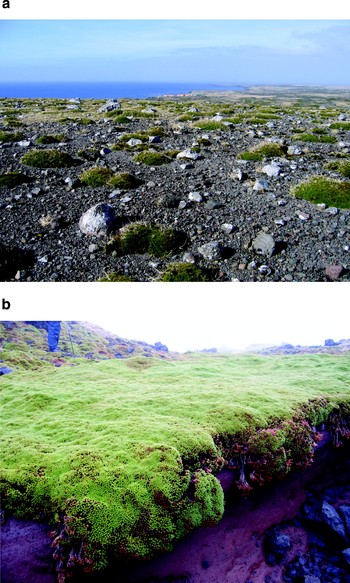
In A. selago, discrete cushions take the form of generally low growing, compact, circular plants that become hemispherical, irregular or crescent shaped as they age (McGeoch et al. in press) (Fig. 1a). In fellfield habitats, these discrete plants are evenly to randomly positioned within an epilithic biotope (le Roux Reference Le Roux2004). Mats are characterized by large (sometimes several tens of metres in length and/or breadth) contiguous areas completely covered by A. selago (Huntley Reference Huntley1972) (Fig. 1b). Cushion plants in the family Apiaceae are known to commonly develop into multiple (genetically similar) plants from a process of fragmentation, where parts of the plant die off creating open areas and separate fragments (or clones, as the fragments are genetically identical individuals) of the plant survive independently (Heilbron Reference Heilbron1925, Armesto 1980). This would mean that other individuals (plants with different genotypes) could establish between genetically similar cushions but this hypothesis has not yet been tested. Therefore, it is currently not known whether mats consist of a single very large cushion individual, or whether several individual plants merge, interdigitating to form a continuous mat. This same question was raised decades ago by Heilbron (Reference Heilbron1925) for Ecuadorian cushion plants, including Azorella species. In the Andes of southern Peru ‘individual’ plants of Azorella compacta Phil. have been reported to spread over areas of 30 m2 (Ralph Reference Ralph1978), although this conclusion was based entirely on anecdotal observation. It therefore seems that the question has not yet been satisfactorily answered. Given the complexity and extensive nature of A. selago's stem and root structure (Huntley Reference Huntley1972), and the destructive sampling required to examine it, the use of molecular techniques provide a potentially effective tool for understanding the growth dynamics of the species. In addition, an understanding of the growth dynamics of Azorella in mat form is critical for population genetics and phylogeographic studies since both these investigations assume sample independence, i.e. samples must be confidently attributed to distinct individuals (rather than clones or individuals that have been formed vegetatively). Our first aim was therefore to investigate the growth dynamics of A. selago in mat form.
a.Azorella selago growing in fellfield habitat (discrete growth form). b.Azorella selago mat growth form, where a single mat covers a large contiguous area.

At the island scale, environmental factors (especially high speed winds) in combination with historical events (glaciation and volcanism) and local topography have been shown to significantly influence the genetic population structure of the mite, Eupodes minutus, one of the species inhabiting and sampled from A. selago cushions across Marion Island (Mortimer & van Vuuren Reference Mortimer and van Vuuren2007). Genetically unique populations were found between the south-western and south-eastern sides of the island for this mite species. However, it remains uncertain whether the phylogeographic pattern of inhabitant species (like E. minutus) coincides with the pattern of the host plant (A. selago). Our second aim was thus to describe the phylogeographic population structure of A. selago across Marion Island and to compare this to the patterns previously described for E. minutus.
Chloroplast intergenic spacer regions have been used to investigate intraspecific genetic variation in plants, for example in various flowering plants (e.g. Kress et al. Reference Kress, Wurdack, Zimmer, Weigt and Janzen2005, Lorenz-Lemke et al. Reference Lorenz-Lemke, Madder, Muschner, Valeria, Stehmann, Bonatto, Salzano and Freitas2006), soybeans (Xu et al. Reference Xu, Abe, Kanazawa, Gai and Shimamoto2001) and tropical canopy trees (Hamilton Reference Hamilton1999, Hamilton et al. Reference Hamilton, Braverman and Soria-Hernanz2003). These non-coding regions experience limited selection which lead to the accumulation of polymorphisms, which make them ideal markers to use in population level studies (Hamilton Reference Hamilton1999). Amplified fragment length polymorphism (AFLP), which generates an anonymous multilocus DNA profile (fingerprint) for each individual (Vos et al. Reference Vos, Hogers, Bleeker, Reijans, van de Lee, Hornes, Frijtes, Pot, Peleman, Kuiper and Zabeau1995), has been shown to be useful for individual identification (Rosendahl & Taylor Reference Rosendahl and Taylor1997, Majer et al. Reference Majer, Lewis and Mithen1998), studies of relatedness and parentage (Krauss Reference Krauss2000, Madden et al. Reference Madden, Lowe, Fuller, Coe, Dasmahapatra, Amos and Jury2004) as well as at the population (Shim & Jorgensen Reference Shim and Jorgensen2000, Tremetsberger et al. Reference Tremetsberger, Stuessy, Guo, Baeza, Weiss and Samuel2003) and species level (Ishida et al. Reference Ishida, Hatorri, Sato and Kimura2003, Pfosser et al. Reference Pfosser, Jakubowsky, Schlüter, Fer, Kato, Stuessy and Sun2006). Therefore we used sequence (trnH-psbA chloroplast intergenic region) as well as AFLP data to address the aims of this study, i.e. 1) to examine the growth dynamics of Azorella in mat form, and 2) to assess the phylogeography of A. selago across Marion Island.
Material and methods
Sampling
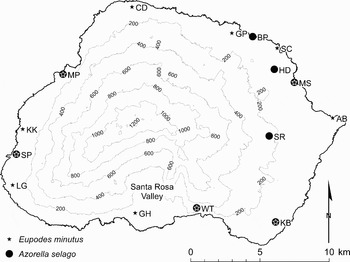
To investigate the growth dynamics of mats, we selected a large A. selago mat on the south-western side of Marion Island at Swartkops Point (see Fig. 2), and sampled plant material from systematically positioned stations on the mat. A portion of a large mat (>5 m × 10 m) growing between two black lava ridges was sampled (4.5 m × 7.5 m sampled). The sampled portion, situated in the middle of the mat, was divided into 1.5 m × 1.5 m (or 2.3 m2) grids (see Fig. 3). Leaves were sampled from within each grid (n = 15). In the absence of any comparable data for A. selago, and to determine the range of genetic similarities for known individuals, we included an additional five discrete cushion individuals from the same locality. We specifically chose individuals from the same locality as the mat to minimize the influence of environmental and other demographic factors (such as past population expansions or bottlenecks) on the genetic variation present in different populations. The objective was to use the genetic similarity of known, unrelated and discrete individual plants as a benchmark against which to identify potential individual plants within the mat. Plants were collected at least 5 m apart to maximize the chance that they represented discrete individuals (genotypes).
Positions of the sampling sites of Azorella selago specimens across Marion Island namely Blue Petrel Bay (BP; 46°50′48″S, 37°49′06″E), the hydro-electrical dam (HD; 46°52′04″S, 37°50′21″E), the Meteorological Station (MS; 46°52′34″S, 37°51′30″E), Stoney Ridge (SR; 46°54′40″S, 37°50′06″E), Kildalkey Bay (KB; 46°58′01″S, 37°50′31″E), Watertunnel (WT; 46°57′30″S, 37°46′01″E), Swartkops Point (SP; 46°55′28″S, 37°35′44″E) and Mixed Pickle (MP; 46°52′20″S, 37°38′21″E). The mat was also sampled at SP. The sampling sites of the previous phylogeographic study on Eupodes minutus are also indicated namely Cape Davis (CD; 46°49′41″S, 37°42′14″E ), Goney Plain (GP; 46°50′40″S, 37°47′55″E), Ships Cove (SC; 46°51′14″S, 37°50′30″E), the Meteorological Station, Archway Bay (AB; 46°53′56″S, 37°53′42″E), Kildalkey Bay, Watertunnel, Grey Headed (GH; 46°57′43″S, 37°42′31″E), La Grange Kop (LG; 46°56′40″S, 37°35′32″E), Swartkops Point, Kaalkoppie (KK; 46°54′30″S, 37°36′05″E) and Mixed Pickle. The map was adapted from Gremmen & Smith Reference Gremmen and Smith2004.

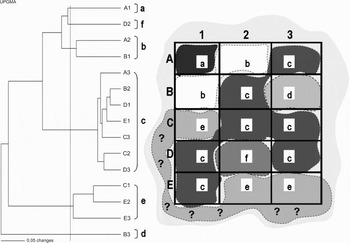
UPGMA tree constructed for the Azorella selago mat from Swartkops Point. The dotted line indicates the genetic cutoff value for individuals. Also shown, is the transect with the 2.3 m2 grids situated in the middle of the mat. The corresponding individuals (a–f) are indicated on both the tree as well as the grid. Based on the tree results, potential A. selago individuals (genotypes) in the mat are indicated with different shading. The “?” symbolize hypothetical growth of individual (e).

The work reported here forms part of a larger project aiming to document the spatial distribution of both genetic and ecological variation for various species (plants and invertebrates) across Marion Island. Specifically, our aim here is to provide an initial framework for a larger and in-depth study that will document genetic and ecological variation for Azorella at various spatial and hierarchical scales. For the phylogeographic study, we included individuals from eight sampling localities across Marion Island. These were Blue Petrel Bay (n = 10), the hydro-electric dam (n = 7), the Meteorological Station at Transvaal Cove (n = 2), Stoney Ridge (n = 4), Kildalkey Bay (n = 2), Watertunnel (n = 3), Swartkops Point (n = 5) and Mixed Pickle (n = 11) (see Fig. 2). Within a locality, care was taken to select individual cushions which were at least 5 m apart. All the plant material was dried and stored with silica gel at room temperature until assayed.
DNA extraction
To extract genomic DNA from dried A. selago leaves, we followed the CTAB protocol (Doyle & Doyle Reference Doyle and Doyle1987). In short, leaves were submerged in liquid nitrogen and ground with a mortar and pestle before incubating in 500 µl of CTAB buffer (100 mM Tris-HCl, ph8.0; 1.4 M NaCl, 20 mM EDTA; 2% CTAB; 0.2% mercaptoethonal) at 65°C for one hour. An equal volume of chloroform-isoamylalcohol (24:1) was added, followed by DNA precipitation with absolute ethanol. The DNA pellet was rinsed with a wash buffer (1 part ammonium acetate: 3 parts ethanol) and resuspended in 200 µl deionised distilled water.
Sequencing of trnH-psbA
The trnH-psbA chloroplast intergenic region was selected given that it has a moderate to high rate of evolution (Hamilton et al. Reference Hamilton, Braverman and Soria-Hernanz2003). The utility of this marker for fine-scale genetic analyses of A. selago was determined by selecting a few random samples for sequencing. For the mat (at Swartkops Point), five samples were selected, namely A1, B2, C3, D2 and E1 (see Fig. 3). An additional two samples from the region of the Meteorological Station on the island were included to determine if adequate genetic variation existed in this chloroplast intergenic region for subsequent phylogeographic analyses (these two sites are at opposite sides of Marion Island) (Fig. 3). A 412 bp fragment was amplified and sequenced using the primer pair trnH (GUG) and pbsA (Hamilton Reference Hamilton1999). PCR reactions were carried out using 10 ng of genomic DNA under the following cycling conditions: 94°C for 1 min, (94°C for 30 sec, 55°C for 30 sec and 72°C for 45 sec) for 35 cycles with a final extension step at 72°C for 5 min. The PCR products were purified with the Wizard SV Gel and PCR cleanup system (Promega, Madison, USA) following the manufacturer's instructions. The forward primer (trnH (GUG)) was used for sequencing with half-reactions of BigDye® Terminator 3.1 mix (Applied Biosystems, Warrington, UK). Purified products were run on an ABI 3100 automated sequencer (Applied Biosystems, Warrington, UK). Sequence electropherograms were checked and edited with BioEdit 7.0.5 (Hall Reference Hall2005).
AFLP fingerprinting
The advantages of the AFLP technique are that it requires only small quantities of DNA, no prior knowledge of the genome size and, in contrast to DNA fingerprinting, is a reliable and repeatable method (see Mueller & Wolfenbarger Reference Mueller and Wolfenbarger1999, Meudt & Clarke Reference Meudt and Clarke2007). AFLP represents a dominant marker system where alleles are scored as present (1) or absent (0). Perhaps the most serious limitation of this technique is that error rates are noticeably high (1.9–2.5%) (Bensch & Akesson Reference Bensch and Akesson2005). Such high error rates create problems when the objective is individual identification (as is the case here) and in this respect, one has to expect mismatches when assigning genotypes. To compensate for the error rate in our analyses of growth dynamics, we estimated genetic similarity of unrelated discrete individuals (from the same locality) to be a benchmark against which to distinguish individual plants in the mat.
For the AFLP benchmarking, we used a commercial kit from Applied Biosystems (Warrington, UK). The genomic DNA (500 ng) was digested and ligated for 3 h at 37°C in the presence of 1U MseI, 5U EcoRI, 1U T4 ligase, 10X DNA ligase buffer with ATP, 0.5 M NaCl, 1 mg ml-1 BSA and the double stranded adaptors. A small quantity (4 µl) of the undiluted ligated DNA fragments was pre-amplified. The preselective amplification reaction was diluted 10-fold and used in the selective amplification step. Initially, 24 primer combinations were screened.
For the analyses of the mat, we selected eight primer combinations (Eco-ACC/Mse-CAA, Eco-ACC/Mse-CAC, Eco-ACC/Mse-CAG, Eco-ACC/Mse-CTA, Eco-ACC/Mse-CTC, Eco-ACC/Mse-CTG, Eco-ACC/Mse-CTT and Eco-ACT/Mse-CTC). For the phylogeographic question, we selected four reproducible primer combinations (Eco-ACC/Mse-CAC, Eco-ACC/Mse-CTA, Eco-ACC/Mse-CTG and Eco-ACC/Mse-CTT). The fluorescently labelled selective amplification products together with an internal size standard (500 Rox, Applied Biosystems, Warrington, UK), were run on an ABI 3100 automated sequencer. The raw data were manually checked and edited with Genemapper 3.7 (Applied Biosystems, Warrington, UK). We verified the reproducibility of our results (both the population structure as well as the mat) by repeating all benchmarking experiments for 17% of all individuals (i.e. these individuals were independently extracted, digested, ligated and amplified twice for all primer combinations).
Data analyses
The trnH-pbsA sequence data were aligned with BioEdit 7.0.5 (Hall Reference Hall2005) and alignments were confirmed by eye. To verify the authenticity of our sequence data, sequences were compared to those deposited in GenBank through BLAST searches. The presence of indels and/or nucleotide substitutions was assessed using PAUP* (Swofford Reference Swofford2000).
For AFLP fingerprinting, data matrices were constructed using Genemapper 3.7. To calculate the error rate associated with scoring, all A. selago individuals were scored twice (by EM) and the resultant two data matrices compared. Additionally, 16% of all data was scored independently by BJvV and EM. The error rate associated with AFLP data is an important consideration, especially when attempting to identify individuals and describe spatial genetic variation. For both data sets, an error rate of 2.1% occurred when 16% of the raw data was compared. Although noticeably high, this rate falls within those reported in the literature (e.g. ~1.3–2.6% error rate, Bonin et al. Reference Bonin, Bellemain, Eidesen, Pompanon, Brochmann and Taberlet2004; 1.9–2.5% error rate, Bensch & Akesson Reference Bensch and Akesson2005).
Azorella selago mat – AFLP data
The uncorrected pairwise genetic distances separating the 15 samples taken from the mat were calculated using PAUP* (Swofford Reference Swofford2000). These distances (Nei Reference Nei1978) were then used to construct an ultrametric tree using the Unweighted Pair Group Method with Arithmetic Mean (UPGMA). Individuality within the mat was based on a comparison to the genetic distances separating known individuals, i.e. discrete cushion plants a minimum of 5 m apart (n = 5, Swartkops Point). The lowest genetic distance separating all known individuals was used as the cutoff value to assign genetic identity to samples taken within the mat. In other words, samples within the mat were assumed to be from a single Azorella plant if they were genetically more similar than the lowest genetic distance separating any of the known individuals.
Phylogeography – AFLP data
Although our aim was not a comprehensive phylogeographic study across Marion Island, the inclusion of geographically distant samples (close to the maximum distance possible between sites on the island) does allow us some inference about the genetic population structure of the species across the island. To determine whether our data were more structured than random data, we calculated the overall F ST as well as population pairwise F ST values in Arlequin 3.1 (Excoffier et al. Reference Excoffier, Laval and Schneider2005). A hierarchical Analysis of Molecular Variance (AMOVA) provided information on how the overall variation was partitioned within and among populations. Significance values for the F-statistics were obtained from 1000 random permutations of the data. Genetic distances (Nei Reference Nei1978) as well as gene flow between sampling localities were calculated in POPGENE1.32 (Yeh et al. Reference Yeh, Yang and Boyle1999). Because the small sample sizes did not always allow meaningful calculations of standard diversity indices at the population level, we also combined all samples and regarded Marion Island as a single population. We estimated expected heterozygosity (H E) and gene diversity for all samples in Arlequin 3.1.
Results and discussion
Sequence data revealed genetic invariance for A. selago (GenBank accession number: EF614999) collected from two geographically distant localities, despite the trnH-psbA chloroplast intergenic region having a moderately high rate of evolution (Hamilton et al. Reference Hamilton, Braverman and Soria-Hernanz2003). In the absence of any insertions/deletions or nucleotide substitutions, we conclude that the resolution obtained from this marker was insufficient to allow fine-scale genetic analyses. As such, the trnH-psbA region was excluded from further analyses. In contrast, the AFLP data provided sufficient resolution and, based on this marker system, we clearly show that the A. selago mat consists of multiple individuals rather than a single individual. Also, significant population substructure exists within A. selago across Marion Island. Both these findings have significant implications, and are discussed in more detail below.
Stevens et al. (Reference Stevens, Hunger, Hills and Gemmill2007) have recently highlighted the potential for natural cross contamination, an important consideration when studying genetic patterns. Specifically, in addition to unexpectedly high levels of genetic variation these contaminants would result in erroneous spatial patterns of genetic variation. Whereas such natural contaminants are readily detected with sequence data, it remains impossible to reliably exclude these from fragment data (see Stevens et al. Reference Stevens, Hunger, Hills and Gemmill2007). With respect to the present study, we argue that our results are free of the confounding effects of natural contaminants for several reasons. First, individual Azorella plants (both from the mat (individual (a), (c) and (f) in Fig. 3) as well as from a different locality (Meteorological Station) on Marion Island) were sequenced for a chloroplast marker. When our sequences were compared to sequences in GenBank (BLAST searches), our sequences were most similar to members of the plant order Apiales as would be expected. Secondly, the levels of genetic variation observed in our study was not unexpectedly high and fell within the range reported for other vascular plants (see for example Pfosser et al. Reference Pfosser, Jakubowsky, Schlüter, Fer, Kato, Stuessy and Sun2006).
Azorella selago mat
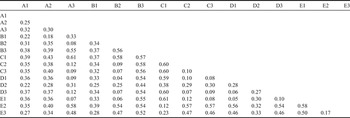
The eight AFLP primer pairs produced 112 reliable polymorphic bands for the 15 samples taken from the mat (fragment sizes ranged from 75 bp to 500 bp). Uncorrected pairwise distances separating these samples ranged from 0.05 (D1 and E1) to 0.61 (A3 and C1). When considering the five known discrete individuals from Swartkops Point, the eight primer pairs produced 137 polymorphic bands. The uncorrected pairwise distance between these five Azorella plants ranged from 0.21–0.75. Given that the lowest uncorrected sequence divergence separating known individuals was 0.21, and that the error rate estimated for our data was 2.1%, we used this value (0.21) as the cutoff point below which samples were assumed to belong to the same plant (thus being genetically more similar than the lowest divergence separating known individuals as well as that a difference of 2.1% might be accounted for by the error rate in the scoring of polymorphic bands). Applying this value to the mat, six distinct genotypes were identified (see Table I and Fig. 3). The highest genetic distance separating samples from within the mat (0.61 between C1 and A3; see Table I) is comparable to the highest distance separating known individuals from Swartkops Point (0.75). In addition, when reanalysing the mat data for the identical four markers included in the phylogeographic study, divergences within the mat ranged from 0.05 (between C3 and B2; C3 and D1; C3 and E1 as well as C2 and D3) to 0.63 (C1 and C2), which is comparable to values estimated for individuals across Marion Island (range from 0.05–0.70).
Uncorrected pairwise genetic distances between the Swartkops Point A. selago mat samples. Single individuals have a p-distance larger than 0.21.

We argue that two, not necessarily mutually exclusive, processes can be proposed to explain the growth dynamics of Azorella mats as uncovered by our genetic analyses. These are the process of fragmentation and interdigitated growth of individuals. Most cushion plants are known to experience fragmentation over time (Armesto et al. Reference Armesto, Arroyo and Villagrán1980). Within the dead part of the cushion, the older stems ultimately disintegrate and are blown away, leaving two separate parts of the original cushion that are of course genetically identical. The availability of open areas within and between cushion individuals allows other individuals (with different genotypes) to establish between these fragments and subsequently merge into a mat form (Armesto et al. Reference Armesto, Arroyo and Villagrán1980). Alternatively, it is possible that over time a high density of individual cushions merely merge to form a continuous structure, or mat, without fragmentation being part of the process. To illustrate these two processes, we refer to individual (e) in Fig. 3. Individual (e) is found in grids C1, E2 and E3. This individual could have been separated due to fragmentation, thus, individuals (c) and (f) established within the dead parts of individual (e). However, since the samples were collected from the middle of a large mat (as opposed to the edge of the mat), we cannot rule out that individual (e) might form an enlarged cushion that grows around the borders of the sample grid (see Fig. 3). Our sampling of this mat therefore does not allow us to distinguish these two processes, and further investigations at a much larger scale are needed. Nonetheless, these results clearly demonstrate that mats are formed by more than a single individual and, at least in this case, by multiple genotypes.
Regardless of which processes are responsible for mat formation, favourable environmental conditions play an important role in the establishment of A. selago (Frenot et al. Reference Frenot, Gloageun, Picot, Bougere and Benjamin1993, le Roux Reference Le Roux2004). We argue that optimum weather and substrate conditions are necessary for individual plants to flourish and essentially merge into a mat form. Azorella selago's range extends from sea level to c. 800 m above sea level, with mat formation being prevalent in drainage lines of mid-altitude fellfield habitats (see also Heilbron Reference Heilbron1925), particularly on the western side of the island (M.A. McGeoch, personal observation). In addition, most of the discrete cushions on Marion Island range, on average, from 0.40–1.15 m in diameter and their size in open fellfield habitat appear to be related to the distance and size of neighbouring cushions (le Roux & McGeoch Reference Le Roux and McGeoch2004). The extent of an individual genotype in the mat sampled here stretched across a distance of 7.5 m and 4.5 m (Fig. 3, individual or genotype (c)), which is far larger than any discrete cushion plant recorded on the island (le Roux & McGeoch Reference Le Roux and McGeoch2004, M.A. McGeoch, personal observation). The largest discrete cushions recorded to date, almost all of which have lost their circular shape and become crescent shaped or irregular, are in the order of 2–3 m in maximum diameter. However, fairly narrow (< 1.0 m) strips of continuous A. selago vegetation are also found in association with vegetation banked terraces on some fellfield sites and vegetation strips on scoria cones on the island (Holness Reference Holness2001, Boelhouwers et al. Reference Boelhouwers, Holness and Sumner2003). The AFLP results thus suggest that at least one of the processes proposed above is involved in A. selago mat formation, i.e. several different genotypes merge to form the mat. This may result either from interdigitation and/or fragmentation. Furthermore, individual plants in mats grow larger than discrete cushion individuals.
In addition to A. selago playing a keystone role on Marion Island, evidence suggests that this species is increasingly susceptible to ongoing climate change in the region (le Roux & McGeoch Reference Le Roux and McGeoch2008, McGeoch et al. in press). The species is predicted to experience increased competition from faster growing species responding to rising temperatures with more vigorous growth and an upward shift in elevation (le Roux & McGeoch Reference Le Roux and McGeoch2008). Azorella selago has also been shown to be drought sensitive with increased stem death predicted under the current drying trend being experienced on the island (le Roux et al. Reference Le Roux, McGeoch, Nyakatya and Chown2005, le Roux & McGeoch Reference Le Roux and McGeoch2008). Studies such as the one presented here are thus essential to understand better this functionally important and apparently threatened species.
Population structure
Four primer pairs were selected to provide insight into the phylogeographic structure of A. selago across Marion Island. These primer pairs produced 120 reliable polymorphic bands for 42 specimens included from eight sampling localities. In general, we found that the genetic diversity of A. selago across Marion Island was high. The gene diversity was 1.0 which indicates that all of the individuals included had a unique genotype (see Pfosser et al. Reference Pfosser, Jakubowsky, Schlüter, Fer, Kato, Stuessy and Sun2006). This is not surprising given that AFLP data generates a unique fingerprint for each individual, and one would not expect these to be identical unless plants reproduce clonally (see Pfosser et al. Reference Pfosser, Jakubowsky, Schlüter, Fer, Kato, Stuessy and Sun2006 for a similar finding). Since special attention was given to sampling individual plants (discrete cushions were sampled at least 5 m apart), this analysis essentially confirms the individuality of all our specimens. Genetic distances among individuals ranged between 0.05 (two individuals sampled at the hydro-electric dam and Blue Petrel Bay) and 0.70 (two individuals sampled at the hydro-electric dam and Mixed Pickle). This result also demonstrates that A. selago is not commonly clonal, at least not over distances greater than 5 m.
Considering all A. selago sampled across Marion Island, AMOVA indicated that most of the variation was within populations (sites) (89.9%) with the remaining 10.1% between populations. The distribution of variation for this species is very similar to that reported for Dystaenia ibukiensis (Yabe) Kitag., also a member of the Apiaceae, distributed throughout Japan (Pfosser et al. Reference Pfosser, Jakubowsky, Schlüter, Fer, Kato, Stuessy and Sun2006). These authors reported 18.7% of the variation among populations with 81.3% of the variation within populations. Similarly, we argue that the high genetic diversity (genetic distance range of 0.05–0.7 as outlined above) and large number of polymorphic fragments found for Azorella cushions (gene diversity of 1.0) on Marion Island suggest a high degree of outcrossing and that vegetative reproduction, or fragmentation, may be largely confined to fine scales (<5 m) and possibly within mat growth forms.
F ST was significant (F ST = 0.101, P = 0.01), indicating population substructure across Marion Island. Although our sample sizes were generally less than 10 plants per population rendering population level analyses problematic, we nonetheless compared all populations in a pairwise manner (see Table II for pairwise F ST values and genetic distances between populations). Two localities were significantly differentiated; these are Mixed Pickle which differed from > 70% of the populations and Watertunnel which differed from > 40% of the populations (Table II). In the region of Mixed Pickle, situated on the western side of the island, multiple volcanic and glacial events have been documented, especially at Triegaardt Bay (geographically < 1 km from Mixed Pickle). Similar to the western side of the island, multiple catastrophic events also occurred in the vicinity of Crawford Bay (Watertunnel is situated on the bay) (McDougall et al. Reference McDougall, Verwoerd and Chevallier2001). We argue that these catastrophic events, coupled with harsh environmental conditions and complex topography, have significantly impacted on the population structure of these populations, essentially isolating them from other populations in the region.
A matrix indicating genetic distances (below the diagonal) and pairwise FST values (above the diagonal), for all the A. selago populations across Marion Island.

* P <0.05, **P < 0.01.
The average gene flow across the island was low overall (the number of migrants per generation between the populations sampled estimated at 0.74 (Yeh et al. Reference Yeh, Yang and Boyle1999)). However, this ranged from 0.3 (between Kildalkey Bay and the Meteorological Station at Transvaal Cove) to 5.3 (between Blue Petrel Bay and the hydro-electric dam). Given that the central part of Marion Island (above c. 760 m a.s.l.) is frequently snow covered (this area is described as a polar desert; Smith & Mucina Reference Smith, Mucina, Mucina and Rutherford2006) and is devoid of any vascular plant growth, it is very unlikely that migration occurs across these high altitude areas. We therefore speculate that most of the migration occurs along the coast. Interestingly, higher levels of gene flow (range from 1.3–5.3) were found around the northern side of the island (from Swartkops Point to the Meteorological Station) compared to lower levels (generally less than 1 individual per generation) along the southern side of the island (again measured from Swartkops Point to the Meteorological Station). This might be explained by the topography and history of the island. Although the northern side of the island experienced multiple volcanic eruptions, these are all relatively old (Pleistocene) compared to the southern side of the island where both older as well as very recent eruptions have been documented (Pleistocene and Holocene) (McDougall et al. Reference McDougall, Verwoerd and Chevallier2001). In terms of topography, the southern side of the island is much more inhospitable compared to the northern side with large areas, including Santa Rosa Valley, which that are virtually devoid of vascular vegetation.
Substructure was similarly reported for E. minutus populations across Marion Island (Mortimer & van Vuuren Reference Mortimer and van Vuuren2007). For this microarthropod, the localities of Kildalkey Bay (south-eastern side of Marion Island) and La Grange Kop (south-western side of Marion Island) were significantly different from each other and it is argued that past climatic events, in combination with harsh weather conditions, have played a major role in shaping the genetic diversity across the island (Mortimer & van Vuuren Reference Mortimer and van Vuuren2007). Our findings for Azorella, although not identical to those reported for E. minutus, are nonetheless largely congruent in that climatic and environmental conditions appear to cause population substructure across the island. However, for both these studies robust statistical conclusions are somewhat hampered by small sample sizes. In spite of this limitation, the population substructure found is significant. What is needed is a larger study including more populations and larger sample sizes for Azorella to further investigate the phylogeographic patterns of this species across Marion Island.
To conclude, we found that the A. selago mat consisted of multiple individuals, some extensive, which we ascribe to either the process of fragmentation and/or to a high density of individuals merging to form the mat. The phylogeographic structure of A. selago indicates significant population substructure in the species across Marion Island. Substructure has similarly been described for E. minutus (sampled exclusively from Azorella cushions) as well as other small invertebrates on the island (Cryptopygus antarcticus travei Déharveng and Tullbergia bisetosa (Börner) (Myburgh et al. Reference Myburgh, Chown, Daniels and van Vuuren2007)). We suggest that additional studies of a similar nature (including more markers and greater sample sizes) should be implemented to confirm the findings presented here.
Acknowledgements
This project was funded by a National Research Foundation (South African National Antarctic Programme) grant (Gun 2069543) to BJvV and MAM. The Department of Environmental Affairs and Tourism: Antarctica and Islands are acknowledged for logistic support. Antarctic Science Ltd provided a travel grant to Elizabeth Mortimer. Peter le Roux, Mawethu Nyakatya and Marienne de Villiers are thanked for field assistance on Marion Island. Carel van Heerden and Daleen Badenhorst provided help with the AFLP analyses. Steven Chown, Peter le Roux as well as anonymous referees are acknowledged for comments, discussions and valuable insight.