Introduction
Late-life depression is a serious public health concern affecting the quality of life of older people and those who care for them. Among older adults, depression is associated with increased morbidity and mortality, greater disability in activities of daily living, higher levels of medical comorbidity and a greater dependence on personal care and health services (Engberg et al., Reference Engberg, Sereika, Weber, Engberg, McDowell and Reynolds2001; Evers et al., Reference Evers, Samuels, Lantz, Khan, Brickman and Marin2002; Watson et al., Reference Watson, Garrett, Sloane, Gruber-Baldini and Zimmerman2003). Although estimates tend to vary, it is well documented that the prevalence of clinical depression and depressive symptomatology among older adults living in residential care settings are far higher than that of the general population of older people (Ames, Reference Ames1991; Alexopoulos et al., Reference Alexopoulos, Buckwalter, Olin, Martinez, Wainscott and Krishnan2002; Blank et al., Reference Blank, Gruman and Robinson2004; Davison et al., Reference Davison, McCabe, Mellor, Ski, George and Moore2007).
Evidence demonstrates that treatment for late life depression is effective in alleviating symptoms and reducing the burden of care (Anderson, Reference Anderson2001; Baldwin et al., Reference Baldwin, Chiu, Katona and Graham2002), but that there is a poor prognosis for recovery and an increased reliance on health care for untreated depression (Baldwin et al., Reference Baldwin, Chiu, Katona and Graham2002). Past studies suggest that the recognition of depression among older adults living in residential and community care settings is poor, with a substantial proportion of depressed care recipients not receiving treatment for their symptoms. For example, in a recent study by Davison et al. (Reference Davison, McCabe, Mellor, Ski, George and Moore2007), 16.9% of residents in low-level residential aged care met DSM-IV criteria for major depressive disorder (MDD), yet less than half of these residents had been diagnosed and treated. Similarly, in their study of older adults who received care in their own homes, Bruce et al. (Reference Bruce2002) found that only 22% of those who met the criteria for MDD were receiving treatment. These findings are consistent with those of previous studies (Crawford et al., Reference Crawford, Prince, Menezes and Mann1998; Goodwin and Smyer, Reference Goodwin and Smyer1999; Teresi et al., Reference Teresi, Abrams, Holmes, Ramirez and Eimicke2001; Brown et al., Reference Brown, Lapane and Luisi2002; Watson et al., Reference Watson, Garrett, Sloane, Gruber-Baldini and Zimmerman2003), suggesting that the failure to recognize and treat depression in elderly care recipients is a significant and widespread problem.
The focus of the current paper is on the extent to which professional carers are adequately trained to detect depression among their elderly care recipients. Because professional carers have regular personal contact with frail older adults, they are in the best position to be able to detect and monitor depressive symptoms (Banerjee, Reference Banerjee1993; Crawford et al., Reference Crawford, Prince, Menezes and Mann1998; Mellor et al., Reference Mellor, Davison, McCabe and George2008a). According to recent research, less than half of professional carers working in residential and community care settings have had any formal training in depression (Bagley et al., Reference Bagley2000; Walker and Osgood, Reference Walker and Osgood2000; McCabe et al., Reference McCabe, Davison and Mellor2006; Reference McCabe, Davison, Mellor and George2008a), and most are not confident in identifying symptoms of depression, nor in distinguishing depression from other conditions such as dementia or anxiety (McCabe et al., Reference McCabe, Davison, Mellor and George2008a; Davison et al., Reference Davison, McCabe, Mellor, Karantzas and George2009). Many professional carers and general practitioners (GPs) view depression as a natural part of aging or as a normal emotional response to one's life changes (Alexopoulos et al., Reference Alexopoulos, Buckwalter, Olin, Martinez, Wainscott and Krishnan2002; Schwenk, Reference Schwenk2002; Marelli and Tanner, Reference Marelli and Tanner2005; Davison et al., Reference Davison, McCabe, Mellor, Karantzas and George2009), suggesting a general lack of awareness regarding mental health among professionals who provide care for older adults.
Previous studies have shown that training can improve the knowledge and confidence of health care specialists in detecting symptoms of depression (Walker and Osgood, Reference Walker and Osgood2000; Rosen et al., Reference Rosen, Mulsant, Kollar, Kastanga, Mazumdar and Fox2002; Boyle et al., Reference Boyle, Roychoudhury, Beniak, Cohn, Bayer and Katz2004; Mayall et al., Reference Mayall, Oathamshaw, Lovell and Pusey2004). In light of this, a number of authors have recommended that professional carers need to receive specific training in detecting signs of depression, with the aim of improving recognition rates and treatment of depression in aged care (NIH Consensus Conference, 1992; Teresi et al., Reference Teresi, Abrams, Holmes, Ramirez and Eimicke2001; Alexopoulos et al., Reference Alexopoulos, Buckwalter, Olin, Martinez, Wainscott and Krishnan2002; McCabe et al., Reference McCabe, Davison, Mellor and George2008a; Davison et al., Reference Davison, McCabe, Mellor, Karantzas and George2009). Carers have themselves expressed a desire for such training, with a focus on how to distinguish depression from other conditions common among the aged (e.g. dementia, chronic pain) and on ways of communicating about depression, both with the older adults in their care and with other health professionals and care staff (McCabe et al., Reference McCabe2004).
As a part of this training, the attitudes of professional carers toward depression also need to be addressed because they are vitally important in the detection and treatment of depression. Negative attitudes regarding late-life depression and its treatment are reported to be widespread in aged care settings and are a major barrier in recognizing and responding to signs of depression in care recipients (Haddad et al., Reference Haddad, Walters and Tylee2007). Previous studies investigating the views of care recipients and their families about the quality of care they receive have revealed that professional carers often avoid or dismiss the discussion of emotional symptoms, and appear reluctant to involve themselves in care that is related to non-physical symptoms (Waller and Hillam, Reference Waller and Hillam2000; Mellor et al., Reference Mellor, Davison, McCabe and George2008b). Care staff were perceived by family members to be disinterested or unconcerned about depressive symptoms in their care recipients and tended to portray an attitude of hopelessness or resignation regarding recovery, which in turn contributed to poor monitoring and treatment response (Mellor et al., Reference Mellor, Davison, McCabe and George2008b). The reluctance of older care recipients to openly discuss symptoms of depression with GPs and professional carers who hold negative attitudes regarding late-life depression may also be a major impediment to the detection and treatment of depression in aged care.
In response to the reported lack of knowledge regarding depression and perceived barriers to care, a comprehensive training program for professional carers was developed. The beyondblue Depression Training Program (McCabe et al., Reference McCabe, Davison, Mellor and Russo2008b) was designed to improve professional carers’ knowledge of and attitudes toward depression, and to enhance their skills and self-efficacy in detecting depression and monitoring the treatment response. The program was also designed to improve and facilitate communication between senior staff and medical professionals (GPs, psychiatrists) regarding the mental health needs of care recipients. Separate training manuals were developed for staff working in residential and community settings, with similar content but different examples and case studies to reflect the specific characteristics of each setting. Additional content focusing on assessment skills and effective communication with medical professionals was included for professional carers in senior positions (Registered Nurses in residential care and Care Managers in community care). The basic training program was designed to be delivered over four 90 minute sessions, while the advanced training program (for RNs and Care Managers) included the four 90-minute sessions plus an additional two sessions of two hours’ duration each.
The basic four-session packages for personal care assistants (PCAs) and direct caregivers provide instruction in the use of standardized procedures for the identification of depression and how to respond appropriately to signs of depression, in particular, referring this information on to senior staff.
Session 1 introduces caregivers to the nature and prevalence of depression, suicide rates in the elderly, and the impact of depression on the physical health of this population. Caregivers are taught about the symptoms that are most likely to present in a depressed older care recipient. An emphasis is placed on deconstructing the myth that depression is “part of getting old” and importance is placed on understanding that depression is common, yet treatable, among older people.
Session 2 aims to improve caregivers’ skills in recognizing indications of depression in older adults. Caregivers are taught how to use a simple checklist to help in the routine detection and monitoring of these symptoms. Case studies are used to provide examples of symptom patterns and to provide the opportunity for participants to practice the application of their new knowledge to detect depressive symptoms. These case studies also provide the opportunity for participants to discuss difficulties that may arise in recognizing depressive symptoms among older people. A particular focus is on the ways in which older people may mask symptoms of depression, and on the use of appropriate communication with older care recipients to elicit signs of depression in its early phases.
Session 3 aims to teach caregivers how to respond appropriately to care recipients who present with symptoms of depression. Also, caregivers are taught skills in detecting depression in care recipients who present with dementia. Case studies are presented to facilitate discussion of issues that may arise in such cases. Finally, discussion centers on the issue of overlap between anxiety and depression.
Session 4 focuses on referral procedures and day-to-day management of people with depression. Caregivers are taught a standardized procedure of referral to senior personnel, to facilitate the early detection and treatment of older people with depression. Case studies are presented and discussed, and any issues that arise are addressed. The ways in which caregivers can help clients with depression is outlined and discussed, with a focus on individualized activity scheduling.
The additional advanced sessions (Sessions 5 and 6) for RNs and Care Managers focus on assessment skills and include training in the use of two validated screening tools, as well as skills in collecting a psychiatric history for new care recipients. In addition, these sessions teach skills in interfacing with health care providers and in implementing strategies to help older people with depression.
Session 5 aims to teach participants how to identify depression in care recipients with dementia. Case studies are discussed to address any issues that arise in working with this group. This session also aims to improve participants’ assessment skills, with training focused on the use of two validated screening tools: the short form of the Geriatric Depression Scale (GDS-15; Yesavege et al., Reference Yesavage1982) and the Cornell Scale for Depression in Dementia (CSDD; Alexopoulos et al., Reference Alexopoulos, Abrams, Young and Shamoian1988). Staff are given training in administering the CSDD through the use of a semi-structured interview with the care recipient and combining this with observations of the care recipient when calculating ratings.
Session 6 aims to teach skills in interfacing with health care professionals such as GPs and mental health specialists. Participants receive training in how to collect a psychiatric history with new care recipients, and they practice using the validated screening tools introduced in session 5.
Within both the basic and advanced training program, worksheets are included in the manual to record changes in older peoples’ presentation. These worksheets are designed to be used in routine practice by professional caregivers in order to facilitate early detection of depression, monitor treatment response, and to facilitate communication with medical professionals.
The beyondblue Depression Training Program was evaluated with a sample of 52 professional carers from community care (13 Care Managers and 13 direct carers) and residential settings (10 RNs and 16 PCAs), with promising results (McCabe et al., Reference McCabe, Russo, Mellor, Davison and George2008c). Knowledge of depression and self-efficacy in detecting and responding to depression were significantly higher for all participant groups following completion of the basic training program. At post-program follow-up participants were more likely to feel that older depressed people could be helped (i.e. that depressive symptoms could be alleviated by intervention) and less likely to view depression as a normal reaction to life changes (e.g. the loss of one's spouse). Participants also felt more confident in recognizing depression and distinguishing it from other conditions such as dementia and anxiety, knowing who to speak to if they suspected a care recipient was depressed, and knowing how to discuss mental health concerns with care recipients and to monitor their treatment response (McCabe et al., Reference McCabe, Russo, Mellor, Davison and George2008c).
The results of this preliminary study provided evidence that training in depression increases the knowledge and self-efficacy of professional carers working with depressed older people. However, the results were limited by the lack of a control group and the small sample size. In addition, this preliminary study did not assess attitudes to depression, nor whether the benefits of training translated into increased referral for depression to medical services.
The purpose of the current study was to conduct a controlled trial of the beyondblue Depression Training Program to determine whether training in depression leads to increases in professional carers’ knowledge about late-life depression, their self-efficacy in detecting and managing depression in their care recipients and their attitudes towards late-life depression, as well as examining any changes in referrals for depression. Specifically, it was hypothesized that when compared to a wait-list control group that received no training, aged care staff would: (i) demonstrate improved knowledge of late-life depression, (ii) report improved self-efficacy in relation to caring for older people with depression, (iii) demonstrate fewer negative and more positive attitudes to the care of older people with depression, and (iv) demonstrate a higher number of referrals to medical services for depression.
Methods
Participants
The participants in this study were 244 professional carers, consisting of 216 females and 28 males, who ranged in age from 19 to 71 years, with a mean age of 43.74 years (SD = 12.25). Participants worked in either community care (N = 53) or residential care (N = 191) settings. Among those working in community care, 23 were direct carers (low-level) and 30 were Care Managers, and of those working in residential care 120 were personal care assistants (PCAs, low-level) and 71 were registered nurses (RNs, high-level). The length of time participants had worked in aged care ranged from two months to 40 years, with a mean length of employment of eight years (SD = 8 years).
Measures
Pre-Program, Post-Program and Three-Month Follow-Up Questionnaire
Demographic information regarding the gender, age, workplace, and job title of participants was collected. Participants were asked to report the length of time they had worked in age care, as well as the type and duration of any formal training they had undergone, including any previous training in depression.
Knowledge of depression was assessed using the “Knowledge of Late-life Depression” scale (Davison et al., Reference Davison, McCabe, Mellor, Karantzas and George2009). This questionnaire contains 23 items that evaluate carers’ knowledge of depression among older people and their skills in working with depressed older people. Participants were asked to indicate their level of agreement with each of the statements on a four-point Likert scale ranging from “strongly disagree” (1) to “strongly agree” (4). The questionnaire contains items such as “Older people who complain of feeling down are often just looking for attention” and “Depression is a normal reaction to changes of old age”. Total scores can range from 23 to 92, with higher scores representing a higher level of knowledge about depression. Responses to eight items are reverse scored. A Confirmatory Factor Analysis of this measure resulted in excellent fit χ2 (31, N = 320) = 36.473, p > 0.05; CFI = 0.983; TLI = 0.976; RMSEA = 0.023; SRMR = 0.040.
Self-efficacy of caring for depressed older people was assessed with the “Confidence in Working with Depressed Older People” questionnaire (McCabe et al., Reference McCabe, Russo, Mellor, Davison and George2008c), which evaluates carers’ level of self-efficacy in working with depressed care recipients. Two versions of this subscale were used: a 14-item version for direct carers and PCAs and an 18-item version for Care Managers and RNs. Participants responded to the items using a four-point Likert scale ranging from “not confident” (1) to “very confident” (4).The scale contains statements such as “In knowing which signs to look for to tell if an older person might be depressed, I feel . . .” and “I know what to do if I suspect an older person I provide care for might be depressed”. The additional items on the subscale for care managers and RNs assessed carers’ confidence in assessing background information and liaising with family members, GPs, and other mental health professionals. Possible total scores range from 14 to 56 for direct carers and PCAs, and from 18 to 72 for care managers and RNs. Higher scores represent greater self-efficacy in working with depressed care recipients. Scores on the additional items for care managers and RNs were also calculated separately and ranged from 4 to 16.
Attitudes towards late-life depression were assessed with the Depression Attitude Questionnaire (DAQ; Botega et al., Reference Botega, Mann, Blizard and Wilkinson1992), a 20-item scale that was initially designed to assess the attitudes of GPs towards depression, and has since been used in research with various carer groups including nurses and psychiatrists. Responses to items were made on a five-point Likert scale, with a score of (1) indicating “strong disagreement”, a score of (5) indicating “strong agreement”, and a score of (3) being “neither agreement nor disagreement”. A factor analysis conducted on the DAQ by Haddad et al. (Reference Haddad, Walters and Tylee2007) resulted in three factors encompassing: (1) negative attitudes towards depression and its treatment, (2) positive attitudes towards working with depressed care recipients, and (3) attitudes towards deferring to a specialist. The first factor included statements such as “becoming depressed is a natural part of being old” and “psychotherapy tends to be unsuccessful with depressed patients”. The second factor included statements such as “I feel comfortable in dealing with depressed patients’ needs”, and the third factor included statements such as “psychotherapy for depressed patients should be left to a specialist”. Scores for negative attitudes towards depression and its treatment range from 6 to 30, with higher scores indicating more negative attitudes. Scores for positive attitudes towards working with depressed care recipients range from 3 to 15 with higher scores indicating more positive attitudes. Scores for attitudes towards deferring to specialists range from 3 to 15, with higher scores indicating a more favorable attitude towards deferring.
Procedure
Approval to conduct this study was obtained from Deakin University's Human Research Ethics Committee and the management boards of each participating aged care service. Managers from these agencies were contacted initially and agreed to allow aged care staff members to be approached to participate in this study. The researchers were provided with the contact details of professional carers from residential and community aged care services within each facility and invited these carers to participate in the study. Managers facilitated the research by informing professional carers of the study both informally and at staff meetings, and by allowing a member of the research team to approach all staff members. Facilities that agreed to participate were then randomly allocated to either the treatment group or a wait-list control group. The facilities in the control group were provided with the opportunity to participate in training once the initial training program had been completed by participants in the treatment group. Staff were provided with paid staff relief to attend the training program.
Participants in both the treatment and control groups completed the questionnaire at three time points: prior to the study commencing, on completion of the training program (or six weeks later for participants in the control group), and again three months after completing the training program. Pre- and post-program questionnaires were completed in the presence of a member of the research team and took around 10 to 15 minutes to complete. Follow-up questionnaires were mailed to participants who were then asked to complete and return them by reply paid post.
Results
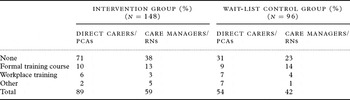
Table 1 summarizes previous training in depression received by the participants. One third (33.3%, n = 81) of participants reported that they had received previous training specific to depression, and of these 24.7% (n = 20) had received training at their current workplace and 56.8% (n = 46) received training as part of a formal training course. The remaining 18.5% (n = 15) of participants who had received previous training specified “other” ways they had received training. Two-thirds (66.7%, n = 162) of the entire sample had not received any previous training in depression.
Previous training in depression

PCA = Personal Care Assistant; RN = Registered Nurse.
Data were analyzed using SPSS 15.0.1 for Windows statistical package. Preceding all statistical analyses, missing values were identified and replaced using mean substitution, differentiated by carer type.
Knowledge, efficacy and attitudes regarding depression
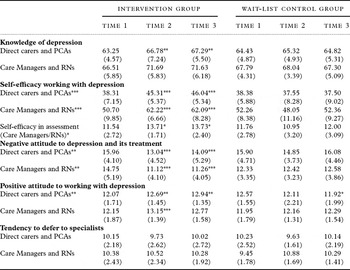
Table 2 summarizes the scores on the measures obtained by participants at pre-test, post-test, and follow-up. Separate analyses were conducted for more junior staff (direct carers and PCAs), and senior staff (RN and care managers). In each case a 3 (time) × 2 (group) mixed design Multivariate Analyses of Variance (MANOVA) was performed to examine differences over time (pre-program, post-program and three-month follow-up) between the treatment group and the control group on the five dependent variables (knowledge of depression, self-efficacy in working with late-life depression, negative attitudes towards late-life depression and its treatment, positive attitudes towards working with depressed aged care recipients, and attitudes towards deferring to specialists).
Mean scores and standard deviations at pre-program, post-program and three-month follow-up

Mean difference from baseline score significant at *p < 0.05, **p < 0.01, ***p < 0.001.
PCA = Personal Care Assistant; RN = Registered Nurse.
Direct carers and PCAs
The MANOVA examined group differences for direct carers and PCAs on the outcome variables over three time points: pre-program, post-program and three-month follow-up. A significant interaction effect was found between group and time, F(10, 29) = 3.13, p < 0.01. The univariate results demonstrated significant group differences over time with regard to knowledge about depression, F(2, 76) = 6.76, p < 0.01, self-efficacy, F(2, 76) = 10.28, p < 0.001, negative attitudes towards depression and its treatment, F(2, 76) = 7.41, p < 0.01, and positive attitudes towards working with depressed aged care recipients, F(2, 76) = 7.54, p < 0.01. There were no significant effects with regard to carers’ attitudes towards deferring to specialists, F(2, 76) = 0.38, p > 0.05.
Examination of the mean scores for direct carers and PCAs on these outcome variables shows that, for those who received training, scores tended to improve post-training (either increased or decreased depending on the direction of the scale), and these improvements were maintained at three-month follow-up. For carers who did not receive training, scores on all outcome variables were relatively unchanged over the three time points. Paired samples t-tests were performed to explore whether changes in the mean scores of the outcome variables over time were significant. For carers who received training the improvements in scores from baseline to post-training, and baseline to three-month follow-up, were significant for all outcome variables, whereas the only significant change in mean scores over time for carers who did not receive training was on positive attitudes towards working with depressed clients at three-month follow-up, and this represented a decrease in positive attitudes over time (see Table 2.).
RNs and Care Managers
The MANOVA examined group differences for care managers and RNs on the outcome variables over three time points, pre-program, post-program and three-month follow-up. A significant interaction effect was found between group and time, F(10, 21) = 3.74, p < 0.01. Univariate effects revealed significant group differences over time with regard to self-efficacy, F(2, 60) = 9.15, p < 0.001, as well as the additional items on the self-efficacy scale measuring senior carers’ confidence in conducting assessments and interfacing with health care specialists, F(2, 41) = 4.39, p < 0.05. A significant effect of training was also found with regard to negative attitudes towards depression and its treatment, F(2, 60) = 4.10, p < 0.05, over the three time points. There were no significant effects with regard to knowledge about depression, F(2, 60) = 1.05, p > 0.05, positive attitudes towards working with depressed aged care recipients, F(2, 9860) = 0.92, p > 0.05, or carers’ attitudes towards deferring to specialists, F(2, 60) = 2.71, p > 0.05.
Examination of the mean scores for care managers and RNs on these outcome variables shows that, for those who received training, self-efficacy scores increased and negative attitude scores decreased post-training, and these improvements were maintained at three-month follow-up. The same pattern of improvement is also observed for knowledge about depression and positive attitudes. The mean scores for carers who did not receive training remained relatively unchanged over the three time points. Subsequent paired samples t-tests revealed that for carers who received training the improvements in scores from baseline to post-training and baseline to three-month follow-up were significant for knowledge about depression, self-efficacy, and negative attitudes, whereas only the post-training change in mean scores was significant for positive attitudes. For carers who did not receive training there were no significant changes in mean scores over time (see Table 2.).
Referrals for depression made by professional carers
Carers were asked to report whether they had referred any clients for depression within the previous two weeks and this information was collected at three time points: pre-program, post-program and three-month follow-up. Table 3 summarizes the findings. It was expected that participation in the beyondblue Depression Training Program would increase carers’ knowledge and confidence in detecting depressive symptoms among their clients, and that this would have an effect on the number of referrals made. In the two weeks before the study commenced, 14 (10.07%) of the carers designated to the treatment group had made referrals and 15 (16.30%) carers assigned to the control group had made referrals. Results indicate that participation in the training program led to a slight increase over time in the percentage of carers making referrals for depression (13.11% at post-program, and 14.63% at three-month follow-up), while the percentage of carers making referrals who did not receive any training in depression decreased over time (11.11% at post-program, and 6.90% at three-month follow-up).
Referrals for depression made by professional carers

Discussion
Previous research has indicated that, in general, professional carers lack knowledge and self-efficacy in relation to late-life depression, which, in combination with negative attitudes, is a major factor in low rates of detection of depression among elderly care recipients in both residential and community care settings (Banerjee, Reference Banerjee1993; Schwenk, Reference Schwenk2002; Davison et al., Reference Davison, McCabe, Mellor, Karantzas and George2009). Research also demonstrates that appropriate training is capable of improving detection rates (Walker and Osgood, Reference Walker and Osgood2000; Rosen et al., Reference Rosen, Mulsant, Kollar, Kastanga, Mazumdar and Fox2002; Boyle et al., Reference Boyle, Roychoudhury, Beniak, Cohn, Bayer and Katz2004; Mayall et al., Reference Mayall, Oathamshaw, Lovell and Pusey2004). In light of the findings of McCabe et al. (Reference McCabe, Russo, Mellor, Davison and George2008c), it was expected that professional carers who participated in the beyondblue Depression Training Program would demonstrate a significantly greater improvement in knowledge about depression than carers who did not receive training.
Direct carers and PCAs who participated in the training demonstrated a significant increase in knowledge about depression scores at post-program testing and three-month follow-up. Direct carers and PCAs who did not participate in the training showed no improvements. While there was no overall group effect over time for knowledge about depression scores for RNs and Care Managers who participated in training and those who did not, for those who completed the training, the improvements in their knowledge scores at post-training and at three-month follow-up relative to baseline were found to be significant. Differences in the mean knowledge scores of high-level carers who did not receive training were not found to be significant. This may suggest that, while for both groups of high-level carers knowledge scores tended to change over time, only those who participated in the beyondblue Depression Training Program demonstrated a significant improvement in their knowledge about depression. Overall, these results provide evidence for the benefits of training on knowledge of depression (Walker and Osgood, Reference Walker and Osgood2000; Rosen et al., Reference Rosen, Mulsant, Kollar, Kastanga, Mazumdar and Fox2002; Boyle et al., Reference Boyle, Roychoudhury, Beniak, Cohn, Bayer and Katz2004; Mayall et al., Reference Mayall, Oathamshaw, Lovell and Pusey2004) and reaffirm the finding of McCabe et al. (Reference McCabe, Russo, Mellor, Davison and George2008c) that the beyondblue Depression Training Program is effective in improving professional carers’ knowledge of late-life depression.
A lack of confidence among carers in their ability to detect and respond to signs of depression in their clients has also been noted as a major barrier to the treatment of late-life depression in aged care settings (Davison et al., Reference Davison, McCabe, Mellor, Karantzas and George2009). Carers themselves, as well as care recipients and their families, have commented that, in general, professional carers are unsure about what signs to look for, how to talk to care recipients about psychological problems, and what steps to take when depression is suspected (McCabe et al., Reference McCabe, Davison, Mellor and George2008a; Mellor et al., Reference Mellor, Davison, McCabe and George2008a; Reference Mellor, Davison, McCabe and George2008b). As a result, carers tend to avoid rather than engage with depressed care recipients. The beyondblue Depression Training Program aims to improve the self-efficacy of professional carers working with depressed older people by improving their understanding of depression and providing effective tools for communicating concerns about depression with care recipients, senior staff and health professionals.
The results of the current study demonstrate that the depression training program was effective in improving the self-efficacy of professional carers working with late-life depression. Both low-level and high-level carers who participated in the training program demonstrated significant improvements in self-efficacy over time while for carers at both levels who did not receive training there were no significant changes in self-efficacy. This is a promising finding, as carers who are more confident in their knowledge and abilities are more likely to look for and respond to signs of depression in their clients. Care Managers and RNs completed additional training in conducting assessments of care recipients, including taking a psychiatric history and screening for depression, and in liaising with health care professionals. Results demonstrated that participation in the advanced version of the depression training program significantly improved high-level carers’ self-efficacy in these tasks, while high-level carers who did not receive training demonstrated no change in their self-efficacy. Given these findings, it is highly recommended that carers of all levels receive training that provides simple and effective strategies for detecting and responding to late-life depression as this improves carers’ confidence and will likely result in improved detection rates for depressed care recipients.
The attitudes of professional carers are important determinants of treatment outcomes for care recipients. Negative and unhelpful attitudes towards mental health problems, including depression, are widespread and are likely to be associated with under-recognition and inadequate treatment responses (Haddad et al., Reference Haddad, Walters and Tylee2007). Care recipients and their families have been critical of the attitudes of professional carers towards depression, stating that carers tend to avoid rather than engage with depressed care recipients, or respond to depressive symptoms by encouraging care recipients to “cheer up” (Mellor et al., Reference Mellor, Davison, McCabe and George2008a; Reference Mellor, Davison, McCabe and George2008b). These reactions are common and are most likely a consequence of the lack of knowledge and confidence of professional carers in their ability to respond appropriately to depressed care recipients. This is the first study to examine the effect of depression training on improving carers’ attitudes towards late-life depression.
Results of the current study show that participation in the beyondblue Depression Training Program improved carers’ attitudes towards late-life depression. For both low-level and high-level carers, negative attitudes towards depression and its treatment were significantly reduced following training and this improvement was maintained at three-month follow-up. Carers who did not receive training reported no significant changes in negative attitudes over time. This suggests that carers who receive training in depression are less likely to view depression as a sign of weakness or to feel that late-life depression is inevitable or untreatable in aged care recipients.
Direct carers and PCAs who participated in training also demonstrated an increase in positive attitudes towards working with depressed aged care recipients that was maintained at three-month follow-up. Conversely, low-level carers who did not receive training demonstrated a decrease in positive attitudes over time. While there was no overall group effect for positive attitude scores over time for RNs and care managers who participated in training and those who did not, for those who completed the training, the increase in positive attitudes at post-program testing was significant. This effect was not observed for the comparison group of carers. The improvement in positive attitude scores observed for direct carers and PCAs indicates that training in depression can increase carers’ views that engaging with, and responding to depressed care recipients is both helpful and rewarding. Such views are likely to increase carers’ willingness to involve themselves in the psychological concerns of care recipients and thus improve treatment outcomes for clients.
Finally, it was expected that carers who participated in the beyondblue Depression Training Program would make more referrals of care recipients for depression than those who did not receive training. In the three months following completion of the training program the number of professional carers making referrals for late-life depression increased by 5.4%, while for carers who did not participate in the training the number making referrals decreased by 9.5%. It is difficult to know whether these differences are the result of training or whether they reflect actual differences in the numbers of care recipients requiring referrals over the course of the study. However, given that the increase in referrals made by carers who participated in the training program occurred alongside an increase in their knowledge and confidence in responding to signs of depression, it may be reasonable to conclude that the increase was associated with participation in the beyondblue Depression Training Program. This proposition is supported by evidence from previous research demonstrating a link between poor recognition and referral rates for depression in aged care settings, and a lack of training in depression among professional carers (Crawford et al., Reference Crawford, Prince, Menezes and Mann1998; Goodwin and Smyer, Reference Goodwin and Smyer1999; Teresi et al., Reference Teresi, Abrams, Holmes, Ramirez and Eimicke2001; Brown et al., Reference Brown, Lapane and Luisi2002; Bruce et al., Reference Bruce2002; Watson et al., Reference Watson, Garrett, Sloane, Gruber-Baldini and Zimmerman2003; Davison et al., Reference Davison, McCabe, Mellor, Ski, George and Moore2007).
Despite these positive findings, there were some limitations to this study. First, it should be noted that although there were statistically significant improvements in the knowledge, confidence and attitudes of carers working with depressed older adults, some of these changes may not be considered clinically significant improvements. For instance, at post-program testing, direct carers and PCAs demonstrated an average improvement in knowledge scores of 3.53 on a scale of 23 to 92, and for positive attitudes the mean improvement was only 0.62 on a scale of 14 to 56. While both of these changes were statistically significant, they may not represent a clinically meaningful difference. An increase in the percentage of carers making referrals for depression after participating in training may provide some support for the clinical effectiveness of the beyondblue Depression Training Program, however this increase was only slight and the accuracy of referrals made was not established.
One suggestion for improving gains in carers’ knowledge, confidence and attitudes towards depression following training in depression is to provide refresher courses. Additional training following participation in the initial program provides the opportunity to reaffirm what was learned and to address any issues (e.g. workplace practices or gaps in knowledge) that may reflect barriers in applying new knowledge and skills. It is also recommended that future research includes follow-up assessment of care recipients to determine whether or not the statistically significant improvements in carers’ knowledge, confidence and attitudes translate to meaningful clinical improvements for the people for whom they care (i.e. accurate detection and appropriate treatment of depressive symptomology).
There was a substantial drop-out rate over the course of the study. By the time follow-up testing was conducted, three months after training, 92 participants had left the study, equating to a drop-out rate of 37.7%. This is potentially problematic for the interpretation of follow-up effects, as it is unknown why these participants decided to leave the study. While there is a high turnover of staff in the aged care sector, these dropouts may represent a particular cohort of carers who saw little benefit in, or held negative views of the training program. Secondly, those who did participate agreed to do so voluntarily, and therefore the sample of professional carers in this study may not be representative of all carers working in aged care settings. It is possible that those who volunteered for the study were carers who were motivated and engaged in their roles working with older adults. It is important that training in depression be targeted at those carers who appear less engaged in their work, as it is these carers who are most likely to lack the knowledge and skills necessary when working with depressed care recipients.
Conclusion
The need for training specific to mental health issues for professionals working in aged care has been well documented. The current lack of training has been identified by researchers, aged care professionals and care recipients as a key cause for the under-recognition of late-life depression and poor treatment responses in aged care settings. Overall, this study has demonstrated that the beyondblue Depression Training Program is capable of improving carers’ knowledge about depression, their self-efficacy in responding to signs of depression and their attitudes towards working with depressed aged care recipients. In addition, the current study has provided evidence that training in depression can increase the number of carers making referrals for depression. It is anticipated that these improvements will lead to better treatment outcomes for aged care recipients with depression, and further research is recommended to investigate the validity of this claim.
Conflict of interest
None.
Description of authors’ roles
David Mellor was chairperson of the project team and was part of the project team involved in designing and supervising the project. Marita McCabe coordinated the research project and was the main supervisor of the project. Tanya Davison, Kuruvilla George, Gery Karantzas and Melanie Kiehne were members of the project team.
Acknowledgments
This study was supported by a grant from “beyondblue” – the national depression initiative. We wish to thank Benetas Aged Care and Uniting Aged Care Services who were our partners in the project, and the management and staff of facilities that took part in this study as well as the staff who facilitated the project.