Introduction
Plants have a wide range of pests and diseases, and they have protected themselves by evolving defence mechanisms (Dicke, Reference Dicke2009). Plants can use several constitutive defences, such as physical barriers that prevent pathogen penetration or arthropod access to tissues (Walling, Reference Walling2000), and induced mechanisms (Simpson et al., Reference Simpson, Gurr, Simmons, Wratten, James, Leeson and Nicol2011a). The latter are defined as improvements of the plant's defensive capacity against diseases and pests, which are acquired after appropriate stimulation (Ramamoorthy et al., Reference Ramamoorthy, Viswanathan, Raguchander, Prakasam and Samiyappan2001). The stimulation of these defences is induced by some molecules called elicitors (Hahn, Reference Hahn1996). Induced resistance can activate two main signalling pathways: systemic-acquired resistance and induced systemic resistance. The first is mediated by salicylic acid dependent processes, whereas the second by the jasmonic acid (JA) and ethylene sensitive pathway (Walters et al., Reference Walters, Ratsep and Havis2013).
Elicitors have been widely studied in plant pathology. A list of elicitors, employed in different plants against several pathogens, is available in Walters et al. (Reference Walters, Ratsep and Havis2013). The induced systemic resistance pathway can be triggered as a result of the interaction with beneficial microorganisms, which act as elicitors (Carvalhais et al., Reference Carvalhais, Dennis, Badri, Tyson, Vivanco and Schenk2013). Among these elicitors, Trichoderma spp. is one of the most studied. Trichoderma strains generally elicit induced systemic resistance and activate priming responses in the plant (Hermosa et al., Reference Hermosa, Viterbo, Chet and Monte2012). A number of authors recognized that Trichoderma strains are able to induce JA synthesis involved in induced systemic resistance development (Nawrocka & Malolepsza, Reference Nawrocka and Małolepsza2013). Djonović et al. (Reference Djonović, Pozo, Dangott, Howell and Kenerley2006), using specific inhibitors of JA/ethylene synthesis, showed that signalling pathways transduced by these molecules may be involved in the defence effect of Trichoderma virens (Mill., Giddens & Foster) against Colletotrichum graminicola (Ces.) G.W. Wilson in maize (Nawrocka & Malolepsza, Reference Nawrocka and Małolepsza2013). Moreover, Shoresh et al. (Reference Shoresh, Yedidia and Chet2005) reported the involvement of JA and ethylene in the effect of Trichoderma spp. against Pseudomonas syringae pv. lachrymans. Finally, Perazzolli et al. (Reference Perazzolli, Roatti, Bozza and Pertot2011) highlighted that Trichoderma harzianum T39 is an important elicitor of grapevine resistance by means of the involvement of JA and ethylene signals in the defence responses against downy mildew.
For the mitigation and control of fungal and bacteria disease, also silicon has been reported as an effective tool (Bakhat et al., Reference Bakhat, Bibi, Zia, Abbas, Hammad, Fahad, Ashraf, Shah, Rabbani and Saeed2018). Vivancos et al. (Reference Vivancos, Labbe, Menzies and Belanger2015) showed the tolerance increase of silicon-treated Arabidopsis thaliana (L.) Heynh against powdery mildew, whereas Conceicao et al. (Reference Conceicao, Felix, Mariano, Medeiros and Souza2014) found that the disease caused by Xanthomonas translucens pv. undulosa (Smith, Jones & Reddy) in wheat was reduced by the application of calcium silicate (Bakhat et al., Reference Bakhat, Bibi, Zia, Abbas, Hammad, Fahad, Ashraf, Shah, Rabbani and Saeed2018).
Herbivore-induced plant volatiles represent one of the main defence strategies that plants implement to control herbivores (Dicke, Reference Dicke2009). Plants respond to herbivore feeding damage by producing mixtures of volatiles that are characterized by a considerable level of specificity in blend composition. They can not only differ in the quantity of volatiles released (per unit of biomass) but also in the composition of the volatile blend (Dicke & van Loon, Reference Dicke and van Loon2000). The induced emission of plant volatiles attracts natural enemies and it occurs in response to herbivore attacks; beyond parasitoids and predators, volatiles can display an effect also on herbivores (Heil, Reference Heil2008). Nevertheless, it is difficult to predict whether herbivores are repelled or attracted to herbivore-induced plant volatiles, because the cues may represent weakened plants, but also plants that are less attractive from a nutritional point of view (Dicke & van Loon, Reference Dicke and van Loon2000). Under natural conditions, herbivore oral secretions induce the activation of signal transduction pathways. Indeed, the production of herbivore-induced plant volatiles is mediated by phytohormones such as JA, salicylic acid and ethylene (Dicke, Reference Dicke2009). It has also been demonstrated that an herbivore species uses jasmonate and salicylate to activate cytochrome P450 genes that are associated with detoxification either before or concomitantly with the biosynthesis of allelochemicals; the ability to ‘eavesdrop’ on plant defence signals protects the phytophagous against toxins produced by host plants (Li et al., Reference Li, Schuler and Berenbaum2002).
Elicitors as a tool in integrated pest management have not fully explored. There is a growing interest in the potential field use of elicitors in applied entomology, including silicon (Si). The primal role of Si as beneficial element for plants under a range of abiotic and biotic stresses is beyond doubt (Reynolds et al., Reference Reynolds, Keeping and Meyer2009; Bakhat et al., Reference Bakhat, Bibi, Zia, Abbas, Hammad, Fahad, Ashraf, Shah, Rabbani and Saeed2018). A number of studies have shown increased resistance of plants treated (soil and/or foliar application) with silicon to insect herbivores and other arthropods, such as folivores, borers, phloem and xylem feeders, mites and nematodes. The majority of studies were carried out following a two trophic level design, whereas few studies considered species belonging to the third trophic level (Reynolds et al., Reference Reynolds, Padula, Zeng and Gurr2016). Besides silicon, also biotic elicitors, such as T. harzianum T22, showed to enhance tomato indirect defences against aphids (Coppola et al., Reference Coppola, Cascone, Chiusano, Colantuono, Lorito, Pennacchio, Rao, Woo, Guerrieri and Digilio2017).
The aim of this study was to evaluate the role of Trichoderma spp. and silica gel (a specific silicon compound), including their combination, to induce defence mechanisms in vine plants (Vitis vinifera L.). In particular, a laboratory experiment was performed to detect the production and dynamic of JA, before and after Plasmopara viticola (Berk & Curtis) inoculation. A field experiment was carried out in order to assess if field treatments of silica gel and Trichoderma in vineyard, alone or in combination, are able to affect the attraction of natural enemies or herbivores. Our hypothesis is that treatments of Trichoderma or silica gel, modifying the JA dynamics, could change the attractiveness of the plants towards beneficial insects, boosting the indirect resistance mechanisms of the plants. We considered the vineyard as case study, for its economic importance and for evaluating the potential use of elicitors to induce a multi-task resistance, including attraction to beneficial insects for pest suppression (this study) and in the perspective of a future use for mitigation of fungal diseases, which are very damaging in grapevines. In fact, elicitors may represent a valid alternative to fungicides, including copper, which is the only allowed effective fungicide against downy mildew in Italian organic viticulture. The use of copper has been recently dropped by the European community at a maximum of 4 kg per ha per year in Italy and alternative tools to reduce its use represent a recent challenge in viticulture scenario.
Materials and methods
Laboratory experiment
Plant material and product application
We performed trials using 20 vines, 2 years old, cv. Sangiovese grafted onto K5BB grown in pots 14 × 14 × 16 cm3 containing about 2.8 litres of peat mixed with expanded clay. We grew vines in open frame and each potted vine was watered daily by a drip irrigation system. We set up four treatments: (i) Trichoderma product; (ii) silica gel; (iii) combination of Trichoderma product + silica gel and (iv) untreated control. Trichoderma product consists of Remedier®, a commercial formulation of Trichoderma asperellum ICC012 and Trichoderma gamsii ICC080 (Gowan Italia, Faenza, Italy). We incorporated Remedier into the soil at 89 mg l−1 soil (250 mg per vine) per plant, immediately before transplantation of plants in the pots. Silica gel is a specific silicon compound containing treated amorphous silicates, quartz sand and diatomaceous earths (Siqur Salute, Vigonza, Italy). We applied silica gel by means of foliar spray at 0.12 g l−1 aqueous solution of micronized powder at the stage of ten leaves per shoot, and one shoot per vine.
Artificial inoculation
We performed the experiment in a growth chamber and used five vines per treatment. We performed artificial inoculation of P. viticola on each vine of the four treatments, 21 days after silica gel application. We made the inoculation by spraying the abaxial surface of leaves with conidial suspension at 106 sporangia of P. viticola per ml, assessed in a Thoma cell counting chamber (a laboratory tool for counting suspended cells in a given volume) (Hajji-Hedfi et al., Reference Hajji-Hedfi, Regaieg, Larayedh, Chihani and Horrigue-Raouani2018). We grew vines under controlled conditions with a light cycle of 8/16 night/day at 25°C and about 220 µmol m−2 s−1 of photosynthetically active radiation. We constantly maintained inoculated plants in a wet chamber (plastic bag) until the evasion of sporangia of the pathogen on the leaf generally noticed at 6 days after inoculation.
Biochemical analysis
We evaluated the production of methyl jasmonate (MeJa) in treated and control leaves, collected before and after the artificial inoculation and stored at −80°C until use. We performed each sampling by taking one leaf per plant, for a total of five leaves per treatment, each leaf representing a repetition. For each treatment and time of sampling, we collected leaves of the same type and position in the plant. We used the samples before the artificial inoculation to evaluate the MeJa production at time 0 and considered the basal production of JA by plants, only due to the application of the products. For each treatment, we evaluated the production of MeJa by collecting leaves for the first 4 days after inoculation.
We performed the analysis of MeJa by means of a solid phase microextraction (SPME) system (Zadra et al., Reference Zadra, Borgogni and Marucchini2006) purchased from Supelco (Bellafonte, PA, USA) in the headspace followed by gas chromatography.
For each sample, we ground 0.5 g of tissue of a single leaf in liquid nitrogen. Then, we suspended the sample in 1 ml of 30% NaCl and immediately subjected it to the headspace extraction by stirring for 30 minutes at 67°C. We extracted the MeJa delivered in the head space with a fibre coated with PDMS 100 µm film thickness mounted on a manual fibre SPME holder.
We performed GC analyses using a Varian CP-3800 gas chromatograph (Varian Inc., Palo Alto, CA) equipped with a 1177 split/splitless injector, a 30 m × 0.25 mm i.d., 0.25 µm, CP-Sil8CB capillary column (Varian), a FID detector and Star Chromatography Workstation software 5.51 (Varian Inc.). We directly made desorption of the fibre into the injector port for 5 min at 250°C in splitless mode. The injector split/splitless programme mode was: 0–5 min splitless; 5.01–5.75 min at 1:50 split ratio. We programmed the column oven at 60°C (1 min) to 280°C (2 min) at 25°C min−1. The temperatures of the injector port and detector were 250 and 280°C, respectively. We used helium as a carrier gas and maintained its pressure constant at 10.0 psi (1 ml min−1). After desorption, we cleaned the fibre with an additional step of desorption at 250°C for 15 min.
We performed standard curve adding a known amount of a solution of 1.03 g ml−1 MeJa (Sigma-Aldrich, St. Louis, MO, USA) to a 1 ml of 30% NaCl in distilled water. For each run, we calculated the area of a well recognizable peak at 5.8 min and converted peaks of the samples to milligram by comparing with the standard curve. The values are presented as mg of MeJa per g of leaf tissue.
Before the use, we activated the new fibre by placing it at 250°C in the oven of a gas chromatograph, according to the instructions of the manufacturer.
Field experiment
Vineyard characteristics
We carried out the trial in an organic commercial vineyard located in Monteveglio, Province of Bologna (Northern Italy). We considered a representative cultivar of this grape area as ‘Pignoletto’, 20 years old, spurred cordon trained. The experimental site was characterized by simple habitat complexity; scarce woody vegetation and hedgerows were present in the perimeter and around the vineyard.
Experimental planning
The experiment included four treatments: Trichoderma (T), silica gel (S), Trichoderma plus silica gel (T × S) and control (C).
In the field trial, we used the same Trichoderma and silica gel commercial formulations of lab experiment. For Trichoderma, we used a concentration of 2.5 kg hl−1, applying 2 litre per vine plant on soil with an injector pole. We sprayed silica gel on vines foliage at inflorescences swelling, using 12 g of silica gel per hl. We performed the treatment with Trichoderma on 4th of May (BBCH 53), while we sprayed silica gel on 20th of May (BBCH 61). In T × S treatment, we carried out both soil and foliar application with Trichoderma and silica gel respectively. We made no applications in the control. We carried out each treatment in plots of 90 m2. The minimum distance among each plot was 20 m, using a complete randomization. We carried out five replicates per treatment; each replicate was represented by six plants.
Arthropod sampling
We used two transparent sticky traps (12 × 15 cm2) for each treatment replicate to sample insects, for a total of 40 traps per each sampling date. We made traps in laboratory using glue (Tanglefoot) applied only on one side in order to simplify their management. We selected transparent sticky traps in order to avoid distortion in captures due to a potential colour attraction towards flying insect (Irvin et al., Reference Irvin, Bistline-East and Hoddle2016). Moreover, non-attractive sticky traps used in this study can be considered an effective trapping method to sample parasitoid taxa, as demonstrated in the experiments carried out in Australia (Simpson et al., Reference Simpson, Gurr, Simmons, Wratten, James, Leeson and Nicol2011a, Reference Simpson, Gurr, Simmons, Wratten, James, Leeson, Nicol and Orreb).
We placed sticky traps at 1.50 m high on vines foliage after 11 days from elicitor treatment. We collected traps after 7 days, and this procedure was repeated in three consecutive weeks (7-14-21 June), for a total of 120 sticky traps in the whole experiment. For each sampling date, we collected traps, moved to laboratory and checked under a stereomicroscope. We identified all the arthropods captured to family, superfamily, sub-order and orders.
Data analysis
Laboratory experiment
For the post-infection phase, we studied the effects of silica gel (S) and Trichoderma (T) on JA production by means of repeated measures analysis of variance (ANOVA). We considered silica gel and Trichoderma as ‘between-groups’ factors (with two levels each) and included days after P. viticola infection as repeated measures (‘within-group’ factors). We also tested all the possible interactions. Given that the interaction silica gel × Trichoderma × days post infection was statistically significant (i.e. the trend in time of JA production was different among treatments), we ran a factorial ANOVA for each one of the days post-infection. In this model, we considered silica gel and Trichoderma as factors and we also included the interaction silica gel × Trichoderma. We performed factorial ANOVA also for the pre-infection phase.
Field experiment
We considered various data structures for beneficial insects collected by sticky traps and final selection of error distribution was based on lowest Akaike's information criteria values. The data were analysed by generalized estimating equations with negative binomial error distribution and log link function. We considered the number of individuals for each taxon as the dependent variable; we used silica gel and Trichoderma as fixed factors, whereas we considered sampling dates as repeated measures. We tested the interactions silica gel × Trichoderma × dates, silica gel × dates, Trichoderma × dates and silica gel × Trichoderma as well.
We carried out statistical analysis with IBM SPSS statistical packages and Statistica version 10 software (StatSoft™).
Results
Laboratory experiment
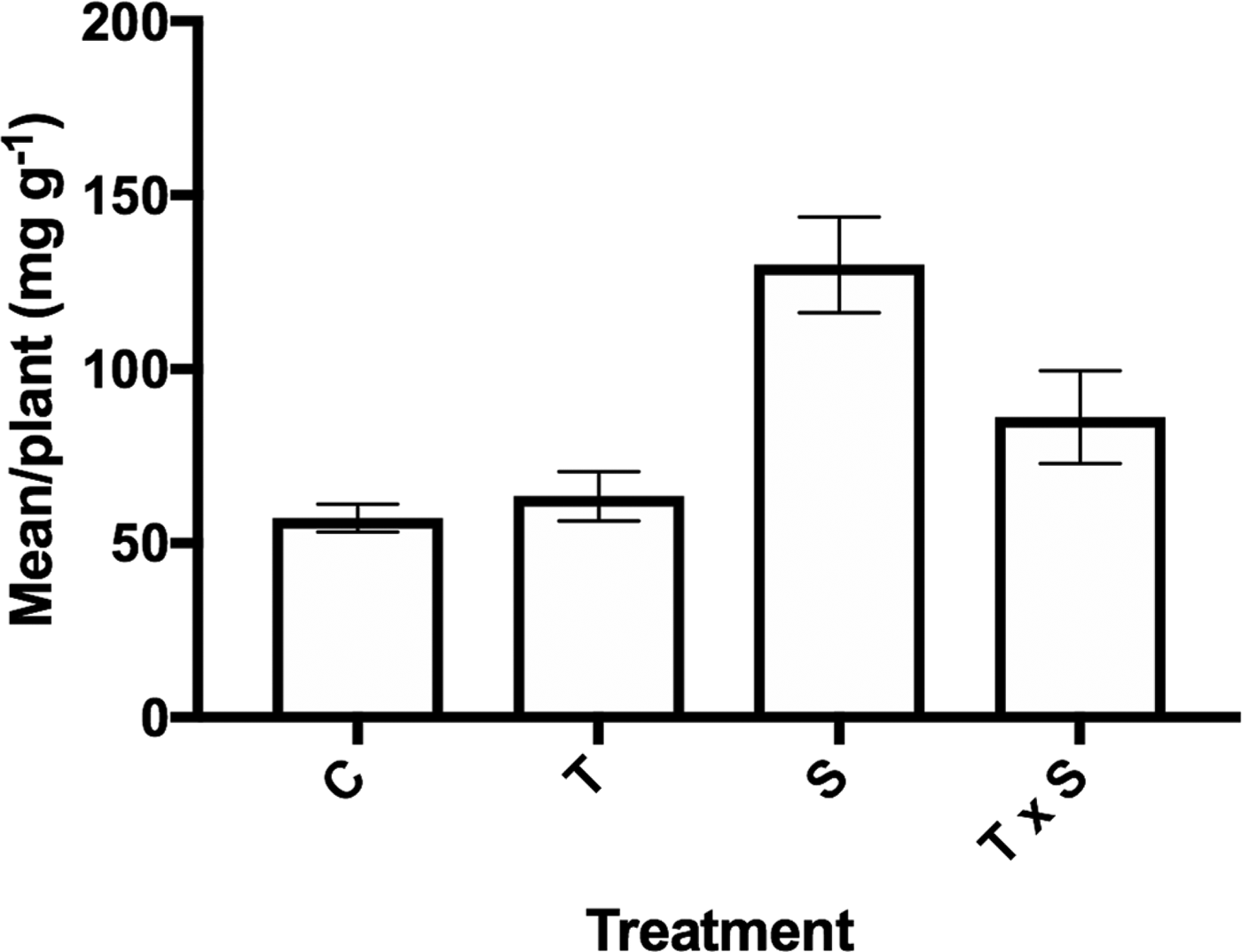
In the pre-infection phase, silica gel showed a significant effect on JA production (df = 1; F = 22.823; P < 0.001), while Trichoderma did not affect the production of JA (df = 1; F = 2.114; P > 0.05); a significant Trichoderma × silica gel interaction was detected (df = 1; F = 4.990; P < 0.05), showing that JA synthesis caused by silica gel was affected by the presence of Trichoderma. In particular, in Trichoderma × silica gel treatment the JA production was higher than control and Trichoderma alone, but lower than recorded with silica gel alone (fig. 1).
Mean JA production per plant (each plant represented by one leaf) in each treatment and their combination, before P. viticola infection. C, untreated control; T, Trichoderma treatment; S, silica gel treatment; T × S, combination of Trichoderma and silica gel.

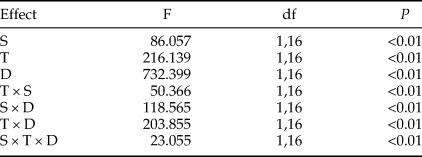
Regarding the post-infection phase, repeated measures ANOVA showed a significant effect of days, silica gel, Trichoderma and also the interactions between them (table 1).
Repeated measures ANOVA results concerning JA production after P. viticola infection.

S, silica gel treatment; T, Trichoderma treatment; D, days.
P value shows a significant effect of days, silica gel, Trichoderma and all the interactions between them.
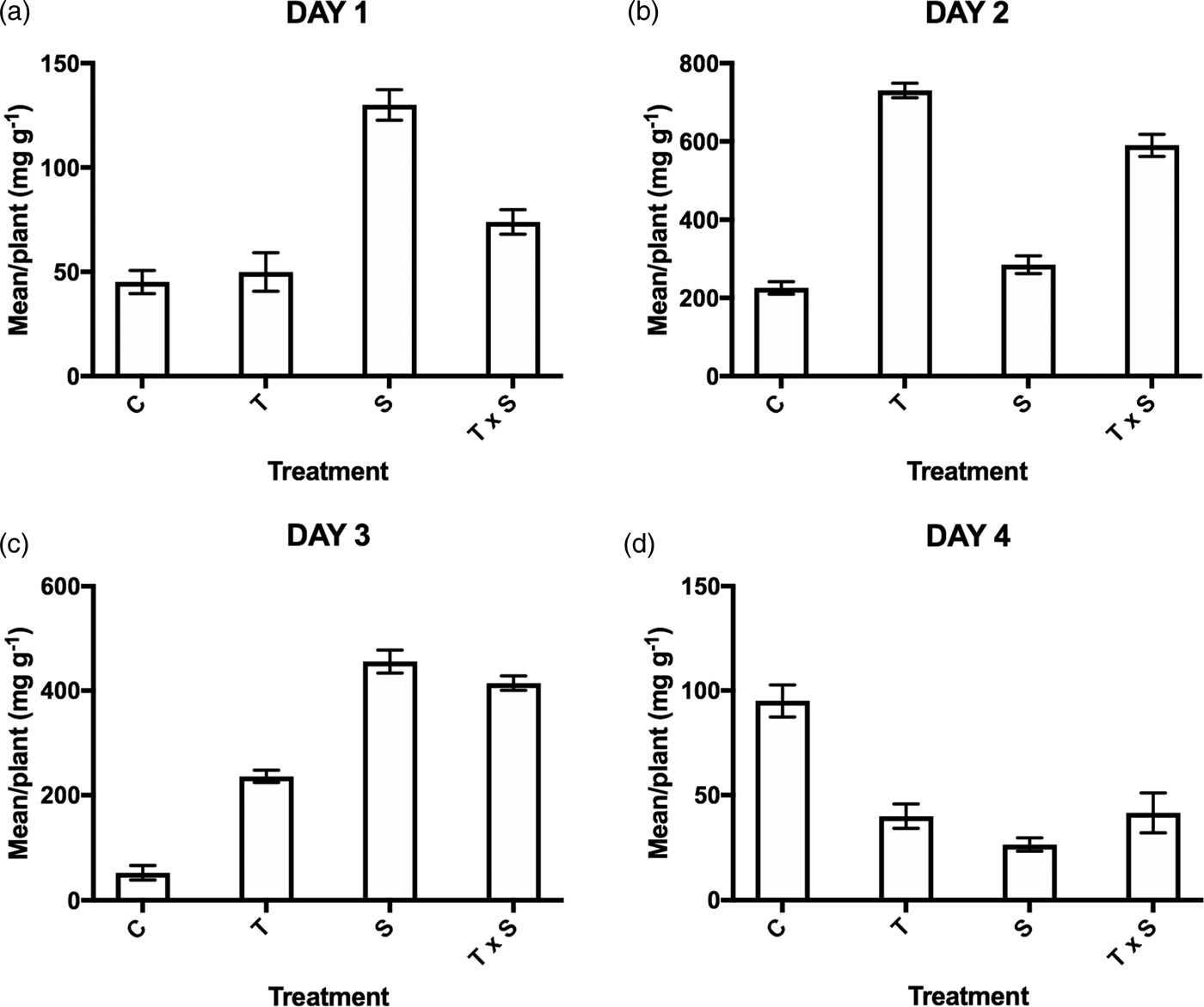
In the first day after inoculation, silica gel induced the highest level of JA production in the plants. Silica gel had a significant effect on the level of JA (df = 1; F = 36.211; P < 0.001), as well as Trichoderma × silica gel (df = 1; F = 6.095; P < 0.05), which presented an intermediate JA level production between silica gel and Trichoderma. On the other hand, Trichoderma did not show any significant effect (df = 1; F = 4.078; P > 0.05) (fig. 2a).
Mean JA production per plant (each plant represented by one leaf) in each treatment and their combination in 4 days after P. viticola infection. C, untreated control; T, Trichoderma treatment; S, silica gel treatment; T × S, combination of Trichoderma and silica gel.

Trichoderma caused a significant increase of JA production 2 days after inoculation (df = 1; F = 271.25; P < 0.001), inducing the highest JA level production among treatments. Also Trichoderma × silica gel induced a significant increase of the phytohormone (df = 1; F = 14.84; P < 0.01), whereas silica gel had no significant effect in this day (df = 1; F = 0.02; P > 0.05) (fig. 2b).
In the third day after inoculation, JA production changed again. Silica gel significantly increased the JA level (df = 1; F = 94.652; P < 0.001), more than the other two treatments, which had still significant effect on JA production (T: df = 1; F = 27.774; P < 0.001; T × S: df = 1; F = 34.794; P < 0.001) (fig. 2c).
Finally, control had a higher level of JA production compared with other treatments in the fourth day, even though silica gel and Trichoderma × silica gel had a significant effect on the phytohormone production (S: df = 1; F = 15.864; P < 0.01; T × S: df = 1; F = 16.075; P < 0.01) (fig. 2d).
In conclusion, Trichoderma showed a peak of JA production 2 days after P. viticola infection and, after this increase, the level of JA decreased in the following days. On the other hand, the trend of silica gel seems to be more constant over time, with a peak on the third day after infection. Finally, Trichoderma × silica gel seems to present an intermediate trend between T and S, which clearly highlights the interaction between Trichoderma and silica gel.
Field experiment results
Faunistic analysis
A total of 41,456 arthropods were collected using sticky traps in three sampling dates. Diptera represented 96% of the collected individuals, while Hymenoptera accounted for 1.74% of the total. Nematocera were the most numerous taxon of Diptera sampled (98.23%) followed by Phoridae (1.39% of Diptera); other Diptera (Stratiomydae, Empididae, Agromizidae, Opomyzidae, Drosophilidae, Tachinidae, Sphaeroceridae) accounted for relative abundances lower than 1%. Within Hymenoptera, Mymaridae family was the most represented (48.19%), followed by other Chalcidoidea (28.19%), Braconidae (8.61%) and Ichneumonidae (1.53%). Finally, Thysanoptera represented the third abundant order (1.03% of the total). Other taxa such as Coleoptera (Coccinellidae and Staphylinidae) were poorly represented, with relative abundances lower than 1% of the total.
Data analysis was performed only for Mymaridae, other Chalcidoidea and Ichneumonoidea (Braconidae and Ichneumonidae), being the most abundant Hymenoptera taxa and for their important role in sustaining ecosystem services in vineyard. For statistical analysis, Braconidae and Ichneumonidae were pooled into the superfamily of Ichneumonoidea, due to the low number of specimens collected for these families.
Mymaridae is an important family of leafhoppers parasitoids, such as Empoasca vitis Goëthe. Other Chalcidoidea and Ichneumonoidea include several parasitoids of many vineyard pests, including Planococcus ficus Signoret and Lobesia botrana (Denis & Schiffermüller).
Functional analysis of the effect of elicitors and their combination on insect taxa
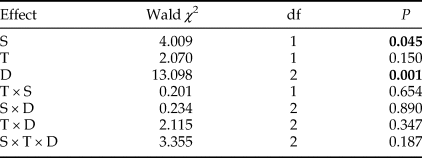
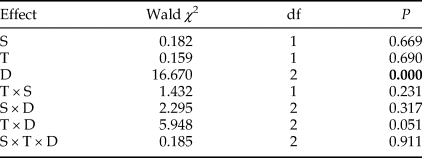
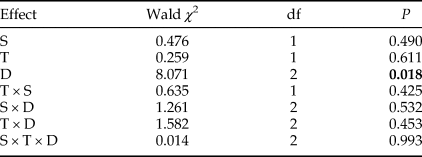
Tables 2–4 show the results of the generalized estimated equations with negative binomial error distribution analysis.
Generalized estimating equations results for Mymaridae.

S, silica gel treatment; T, Trichoderma treatment; D, dates.
P value shows that silica gel significantly attracts Mymaridae parasitoids.
Generalized estimating equations results for other Chalcidoidea.

S, silica gel treatment; T, Trichoderma treatment; D, dates.
All treatments do not show any significant effect in attracting this taxon.
Generalized estimating equations results for Ichneumonoidea.

S, silica gel treatment; T, Trichoderma treatment; D, dates.
All treatments do not show any significant effect in attracting this taxon.
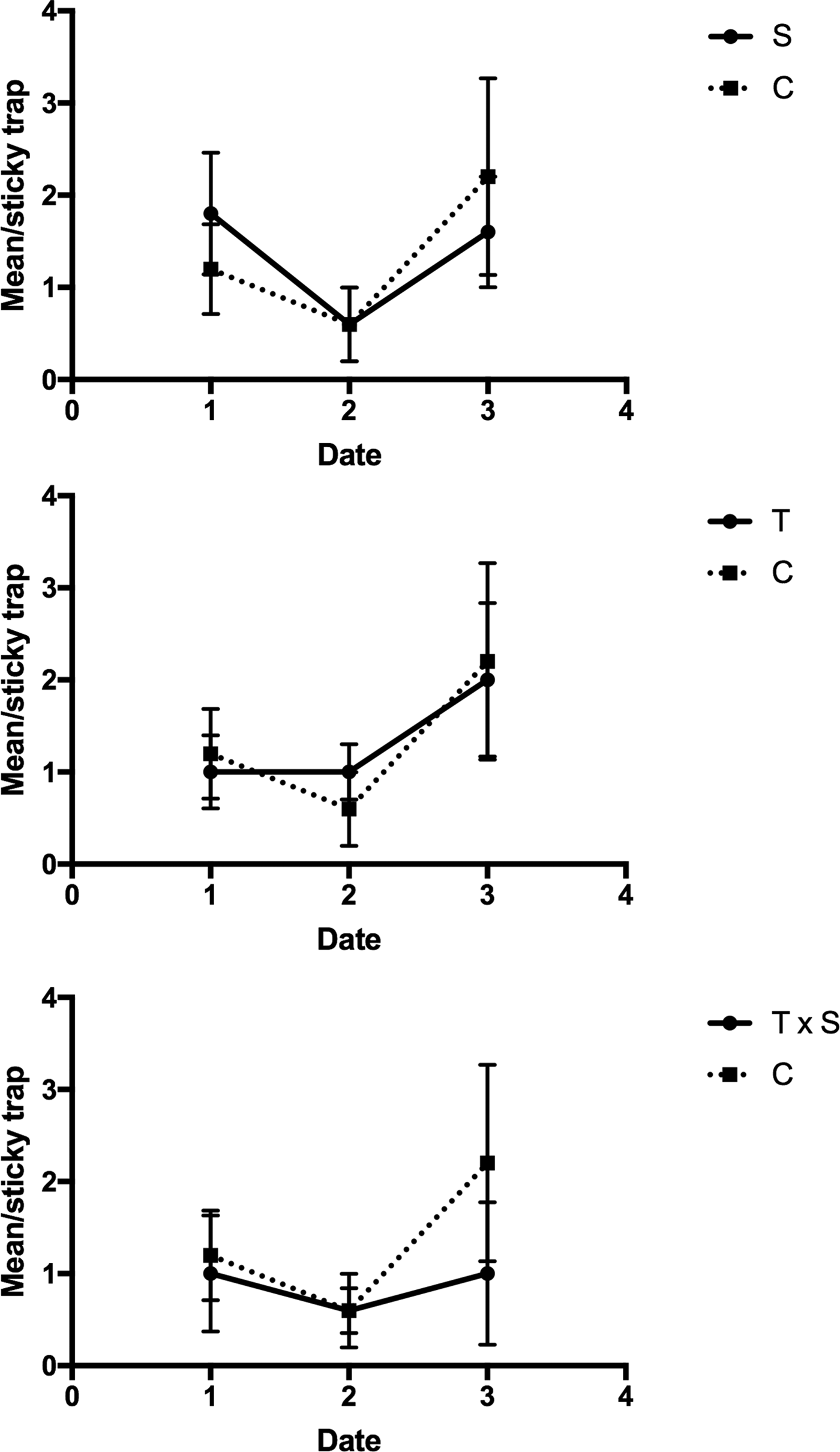
Silica gel treatment demonstrated to significantly boost (P < 0.05) the captures of Mymaridae (Hymenoptera). The other two taxa, including other Chalcidoidea and Ichneumonoidea, did not show any significant attraction towards plants treated with Trichoderma and silica gel. Only time (dates) had a significant effect on all three taxa (tables 2–4).
Mymaridae
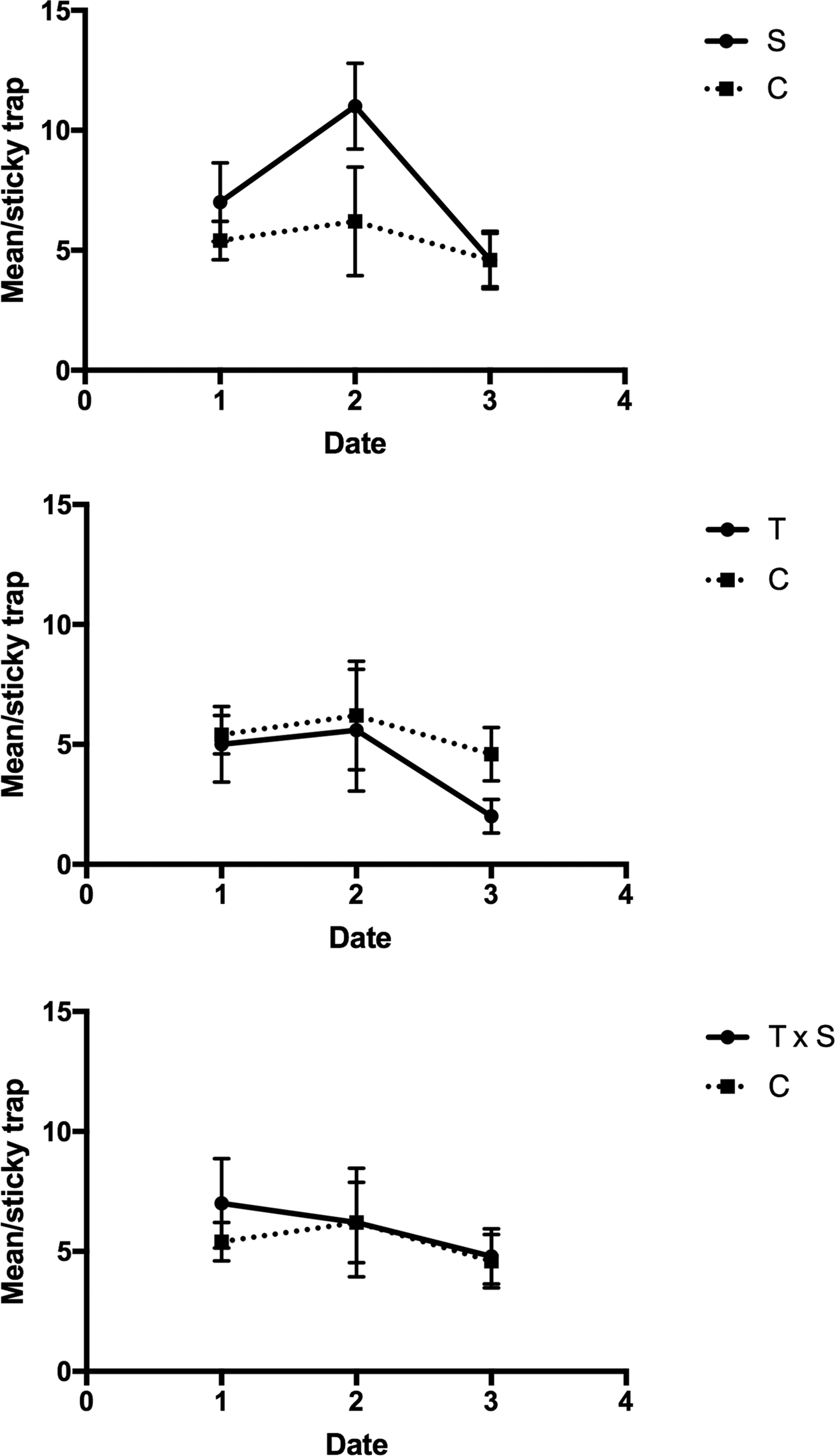
The significant attraction of silica gel towards Mymaridae (table 2) can be evinced by the main effect, which compares the mean captures between treatments with and without this elicitor. Indeed, there were 6.77±0.7 (SE) Mymaridae in treatments containing silica gel, but only 4.8±0.7 (SE) in treatments without the elicitor. The increase of captures seems to be noticeable mainly in the second date (14th of June) (fig. 3), though the interaction between silica gel and date was not significant.
Plants treated with Trichoderma captured less Mymaridae than control, but this variation was not statistically significant (fig. 3 and table 2). Also the interaction between Trichoderma and silica gel was not significant (fig. 3).
Mean captures of Mymaridae per sticky trap in each treatment and date. Bars represent the standard errors of means (for full dataset, see Supplementary Table 1). C, untreated control; T, Trichoderma treatment; S, silica gel treatment; T × S, combination of Trichoderma and silica gel.

Other Chalcidoidea
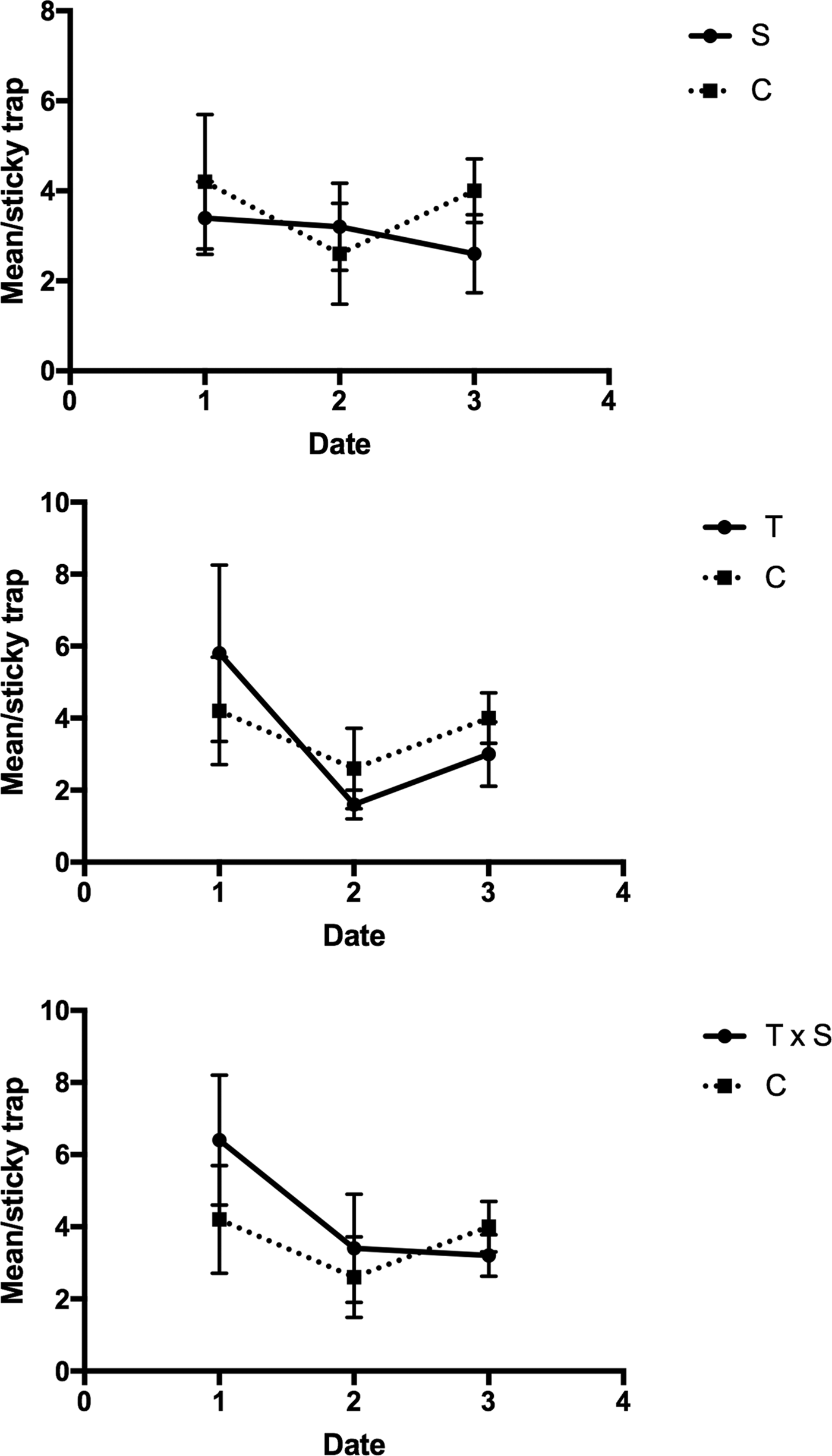
For the other Chalcidoidea taxon, silica gel and Trichoderma did not show any significant increase of captures (table 3). The mean captures during the three dates were lower in Trichoderma treatment than the control, with the exception of the first one (fig. 4). Finally, there was a higher number of captures in Trichoderma × silica gel treatment than those of the control, though interaction between the elicitors was not significant (table 3; Fig. 4).
Mean captures of other Chalcidoidea per sticky trap in each treatment and date. Bars represent the standard errors of means (for full dataset, see Supplementary Table 1). C, untreated control; T, Trichoderma treatment; S, silica gel treatment; T × S, combination of Trichoderma and silica gel.

Ichneumonoidea
Both treatments did not display any significant effect on Ichneumonoidea (table 4). Also Trichoderma × silica gel and control did not present any significant differences, but Trichoderma × silica gel tended to have lower means than the control in all three dates (fig. 5).
Mean captures of Ichneumonoidea per sticky trap in each treatment and date. Bars represent the standard errors of means (for full dataset, see Supplementary Table 1). C, untreated control; T, Trichoderma treatment; S, silica gel treatment; T × S, combination of Trichoderma and silica gel.

Discussion and conclusions
Laboratory experiment showed that silica gel and Trichoderma triggered defence mechanisms, confirming previous studies (Fauteux et al., Reference Fauteux, Rémus-Borel, Menzies and Bélanger2005; Perazzolli et al., Reference Perazzolli, Roatti, Bozza and Pertot2011; Nawrocka & Malolepsza, Reference Nawrocka and Małolepsza2013; Wang et al., Reference Wang, Gao, Dong, Sun, Shen and Guo2017; Bakhat et al., Reference Bakhat, Bibi, Zia, Abbas, Hammad, Fahad, Ashraf, Shah, Rabbani and Saeed2018). The dynamic of JA production in silica gel-treated plants was different in comparison with those treated with Trichoderma. In particular, silica gel produced a higher level of JA in comparison with control before P. viticola inoculation. Trichoderma did not show a significant increase of JA compared with the control before P. viticola infection, triggering the production of JA only after inoculation. Therefore, only a priming effect was showed for Trichoderma, with the highest peak of JA production 2 days after infection, which in turn activate the plant defence as faster and/or more intense responses to the pathogen attack, with the production of JA (Tucci et al., Reference Tucci, Ruocco, De Masi, De Palma and Lorito2012). The production of JA by Trichoderma only lasted for a limited period, associated with the infection.
On the contrary, silica gel seems to be effective at enhancing plant defence pathways, both before and after P. viticola inoculation.
The field study demonstrated that captures of Mymaridae were higher in the plants treated with silica gel elicitor in comparison with those of control. In particular, the increase of Mymaridae captures in silica gel treatment was evident in the second sampling date. This peak can be explained by the JA dynamic evinced in the laboratory study, both before and after infection. Indeed, the enhance of Mymaridae capture in silica gel treatment seems to coincide with JA production peak of silica gel after 2–3 days from pathogen inoculation. Actually, a slight infection appeared around 9th of June, exactly in the week of the second sampling, which occurred between 7th and 14th of June. However, Trichoderma did not show any attraction or repulsion towards the studied taxa. Actually, according to Mymaridae captures, it seems that the triggering of JA due to infection can attract Mymaridae only if preceded by a production of JA before the infection, as it is recorded for silica gel especially, while the combination Trichoderma × silica gel does not seem sufficient to achieve the same effect.
Only few earlier studies have been conducted about the effects of elicitors on insects. Rostás and Turlings (2008) showed that maize plants treated with benzo-(1,2,3)-thiadiazole-7-carbothioic acid S-methyl ester (BTH), after caterpillar infestation, boosted more females of the braconid parasitoid Microplitis rufiventris Kok. (Hymenoptera: Braconidae) than untreated plants (Sobhy et al., Reference Sobhy, Erb, Lou and Turlings2014). Moreover, Sobhy et al. (Reference Sobhy, Erb, Lou and Turlings2014) demonstrated that foliar application of BTH enhanced the attractiveness of Spodoptera littoralis Boisd. (Lepidoptera: Noctuidae) infested plants to three different parasitoid species (M. rufiventris, Cotesia marginiventris (Cresson; Hymenoptera: Braconidae) and Campoletis sonorensis (Cameron; Hymenoptera: Ichneumonidae)). Similar to BTH, also laminarin attracted two parasitoid species to herbivore-induced plants.
Also, about silicon only few experimental studies are known. Moraes et al. (Reference Moraes, Goussain, Basagli, Carvalho, Ecole and Sampaio2004) tested the Si effect on natural enemies, demonstrating detrimental results of Si on the pest Schizaphis graminum (Rondani) (Hemiptera: Aphididae), but no effect on natural enemies. Another study showed that silicon applied to plants with a consequent pest infestation enhances the attractiveness of plants to natural enemies (Kvedaras et al., Reference Kvedaras, An, Choi and Gurr2010). The adult Dicranolaius bellulus (Guérin-Méneville) (Coleoptera: Melyridae) were significantly more attracted to cucumber plants infested by Helicoverpa armigera (Hubner) (Lepidoptera: Noctuidae) larvae and supplied with potassium silicate, than pest-infested and untreated plants (Kvedaras et al., Reference Kvedaras, An, Choi and Gurr2010). Lastly, in a field experiment, predation was higher for infested and potassium silicate-treated plants (Kvedaras et al., Reference Kvedaras, An, Choi and Gurr2010). Moreover, Liu et al. (Reference Liu, Zhu, Zhang, Han, Reynolds, Zeng, Wu, Shao, You and Gurr2017) demonstrated that both adult female of Trathala flavo-orbitalis (Cameron) (Hymenoptera: Ichneumonidae) and Microplitis mediator Haliday (Hymenoptera: Braconidae) manifested greater attraction to the herbivore-induced plant volatile blend of rice plants infested with their own insect hosts and treated with a sodium metasilicate (Na2SiO3) hydroponic solution compared with Na2SiO3-untreated and infested plants.
Under the condition of our field study, silica gel proves to be an effective elicitor and to have a great capacity of attractiveness to Mymaridae. Therefore, our hypothesis is that silica gel, by means of JA production, induces the release of herbivore-induced plant volatiles.
Trichoderma, on the other hand, did not show any significant effect on the studied taxa. The priming effect of this elicitor that occurred after P. viticola infection could explain this result. This study confirmed the elicitor effect of Trichoderma on JA production as strongly affected by the presence of the infection. Moreover, this effect lasts a limited time compared with silica gel, probably too short to influence the attractiveness or repulsion of the investigated insects. However, T. harzianum T22 boosted aphid parasitoid attraction towards ‘elicitor treated and infested plants’ compared with ‘untreated and not infested ones’ under controlled conditions (Coppola et al., Reference Coppola, Cascone, Chiusano, Colantuono, Lorito, Pennacchio, Rao, Woo, Guerrieri and Digilio2017).
Silica gel did not show any effect on other Hymenoptera parasitoids, including Ichneumonoidea. In the experimental vineyard, Ichneumonoidea were characterized by a relative low level of captures depending on the scarce presence of hosts or by the lack of biodiversity near the vineyard. Indeed, in the perimeter area there were not hedgerows or woody vegetation. Several studies highlighted the importance of non-crop habitats in enhancing parasitoid populations (Thomson & Hoffmann, Reference Thomson and Hoffmann2009; Simpson et al., Reference Simpson, Gurr, Simmons, Wratten, James, Leeson, Nicol and Orre2011b; Loni & Lucchi, Reference Loni and Lucchi2014; Hassan et al., Reference Hassan, Pervin, Mondal and Mala2016). Otherwise, Mymaridae, which is an important family of leafhoppers parasitoids, were captured in higher numbers on sticky traps, in comparison with other parasitoid taxa. Thomson & Hoffmann (Reference Thomson and Hoffmann2010) demonstrated that the spatial scale at which non-crop vegetation influences beneficial abundance may differ. For parasitoids, the spatial scale is variable and associated with their size which influences their dispersal activity. Therefore, we hypothesize that Mymaridae, being a group of small natural enemies, are more closely tied to habitat resources than larger parasitoids (i.e. Ichneumonidae and Braconidae) that need to be preserved by larger undisturbed areas (Thomson & Hoffmann, Reference Thomson and Hoffmann2010). The abundance of small parasitoids may be more influenced by local features, such as ground cover and floral resources (Smith et al., Reference Smith, Hoffmann and Thomson2015).
Our preliminary field experiment should be replicated under other field conditions, in order to study potential effect of elicitor attraction on natural enemies in different receiving environments. Considering that the capture efficiency can be affected by the abundance of beneficial populations, including Hymenoptera parasitoids, other field trials could evoke different results. Also, the integration of agroecology and chemical ecology, including the testing of other elicitors, represent a potential strategy to implement conservation biological control (Simpson et al., Reference Simpson, Gurr, Simmons, Wratten, James, Leeson, Nicol and Orre2011b). Recently, applications of synthetic plant volatiles as attractants for beneficial insects were tested by field studies (James & Price, Reference James and Price2004; Simpson et al., Reference Simpson, Gurr, Simmons, Wratten, James, Leeson and Nicol2011a; Lucchi et al., Reference Lucchi, Loni, Gandini, Scaramozzino, Ioratti, Ricciardi and Shearer2017). Moreover, the use of cover/plants management is considered an agroecological technique to enhance the vineyard functional biodiversity (Duso et al., Reference Duso, Torresan and Vettorazzo1993, Reference Duso, Malagnini, Paganelli, Aldegheri, Bottini and Otto2004, Reference Duso, Pozzebon, Kreiter, Tixier, Candolfi, Bostanian, Vincent and Isaacs2012; Gurr et al., Reference Gurr, Scarratt, Jacometti and Wratten2007; Thomson & Hoffmann, Reference Thomson and Hoffmann2007; Altieri et al., Reference Altieri, Nicholls, Wilson and Miles2010; Burgio et al., Reference Burgio, Marchesini, Reggiani, Montepaone, Schiatti and Sommaggio2016). For this reason, using elicitors as an attractant for natural enemies and flowering plants to provide them food and shelter, represents potential to reduce the lag between the build-up of natural enemies and taking control of pests (Simpson et al., Reference Simpson, Gurr, Simmons, Wratten, James, Leeson and Nicol2011b). In this way, the ‘attract and reward’ approach could be an efficient tool for enhancing conservation biological control.
Moreover, further research should be addressed to quantify the influence of elicitors also on intensity of ecosystem services, including parasitization or predation. Besides the quantitative analysis of arthropod fauna dynamics, further studies should be addressed to assess the precise role of ‘attract and reward’ approach in parasitism rate of the most damaging pests of vineyard, including L. botrana, P. ficus and leafhoppers. Overall, this field experiment, whether confirmed in other contexts, could represent a potential strategy in the frame of the modern approach of integrated pest management.
Supplementary material
The supplementary material for this article can be found at https://doi.org/10.1017/S0007485319000075