Introduction
The ever-increasing population and rapid decline in quality stock are putting pressure on forest stands and causing climatic disturbances. In 2018, India imported forest products, logs and wood products (other than logs), amounting to USD 2073 million, USD 1052 million, and |USD 1021 million, respectively (Global Agriculture Information Network, 2019). By 2025, the gap between demand and supply for round wood will be approximately 22.4 million m3 (Srinivasan et al., Reference Srinivasan, Varadha Raj and Eswari2018). Demand is expected to rise further as technology advances and trade, and tariffs become more convenient. To fill this void, short rotation and fast-growing species must be the focus (Khan and Chaudhry, Reference Khan and Chaudhry2007). Furthermore, such species may be an essential keystone for conservation and climate change. Hence, there is a necessity to adopt species like Melia azedarach L., which possess highly desirable features like high productivity, greater biomass, short rotation, wider adaptability and faster-growing habit.
Melia azedarach L. commonly known as Persian lilac or China tree (English), Bakain (Hindi), Maha Neem (Odia), belongs to the prime family Meliaceae is a fairly large, deciduous tree with a height of 7–12 m. but exceptionally can grow up to 45 m. (Duong et al., Reference Duong, Missanjo and Matsumura2017), and cylindrical straight bole up to 9 m. (Troup, Reference Troup1921). Being a light-demanding species, it grows vigorously in wide forest types and can thrive in various edaphic and environmental conditions. Further, tree requires least cultural efforts and low maintenance costs, making them more adaptable to small and marginal farmers. This species has been acknowledged as a source for plywood industries (Rahman et al., Reference Rahman, Asaduzzaman, Rahman, Das and Biswas2014) and recognized suitable for pulp, paper, furniture, agricultural tools, home construction and packaging case industries (Venson et al., Reference Venson, Silva Guzmán, Fuentes Talavera and Richter2008; Duong et al., Reference Duong, Missanjo and Matsumura2017). Additionally, it has been revealed that species contains analgesic, antibacterial, antifungal, antifeedant, antioxidant, anti-inflammatory, anti-diabetic and hepatoprotective properties (Nivedita et al., Reference Nivedita, Radha, Megala and Nithya2019).
Reproductive knowledge of tree species is crucial for comprehending pollination and breeding systems (Tandon et al., Reference Tandon, Shivanna and Mohan Ram2003), managing and recovering threatened species (Kuniyal et al., Reference Kuniyal, Bhadula and Prasad2003; Murugan et al., Reference Murugan, Shivanna and Rao2006), and improving desired traits and developing new varieties (Khanduri et al., Reference Khanduri, Kumar and Sharma2016). Details related to floral biology permit learning about population viability and its gene flow, which is necessary for wild species conservation (Marten and Quesada, Reference Martén and Quesada2001; Lee et al., Reference Lee, Ng, Saw, Lee, Muhammad, Naoki, Yoshihiko and Koskela2006). Similarly, the successfulness of reproductive cycle depends upon detection of phenology, intensity and duration of flowering, which may impact the population of pollinators and frugivores relying on plant species (Newstrom et al., Reference Newstrom, Frankie and Baker1994). Apart from this, reproductive biology is a prerequisite for developing breeding strategies. Henceforth thorough information on reproductive biology and plant breeding systems is crucial for creating an efficient approach to developing successful breeding and conservation strategies. However, Persian lilac has not been explored for varying research dimensions, including phenology, floral architecture and breeding system. Moreover, hybridization-related techniques, including phenology, pollen storage, viability and cross-ability assessment, are minutely uncovered and have minimal information available in public domain with special reference to eastern coastal plains of India. Therefore, it needs systematic investigation and multifaceted research activities to uncover crucial information. Keeping the preceding in mind, a detailed study on reproductive biology of M. azedarach has been undertaken. On that account, the present investigation on M. azedarach intended to elucidate (a) floral morphology, structure, period of anthesis and stigma receptivity, (b) pollen studies and (c) pollination and breeding system. The outcome of the study aid in filling the knowledge gaps and unravelling crucial facts, which will assist in planning and developing strategies for effective and efficient conservation. This would also pave the way to a sustained generation of raw material for commercial usage in future industries and regeneration for habitat enrichment.
Materials and methods
Study location
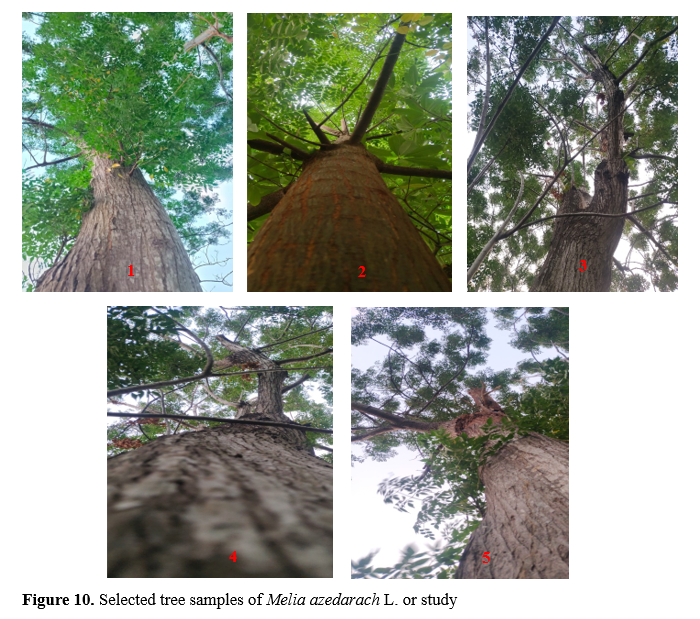
The current investigation was undertaken in and around Odisha University of Agriculture and Technology, Bhubaneswar. The area is situated between 20° 15′ 52″ N latitude and 85° 48′ 43″ E longitude and receives an average annual rainfall of 1550.2 mm. During summer, the mean monthly maximum and minimum temperature ranged from 45.6 to 34.5°C, respectively, while corresponding winter temperatures varied from 28.3°C maximum and 16.7°C minimum. Five trees of M. azedarach, were selected for their accessibility, convenience and representing normal growth conditions free from biotic disturbances. These trees, aged approximately 7 to 8 years old exhibited height ranging from 10 to 15 metres and diameters from 22 to 43 cm. They were studied continuously for two years (2021 and 2022) with a special focus during flowering season.
Phenology
Phonological events of initiation of flowering primordia, bud break, flowering duration, peak flowering period, fruit set, and maturity were recorded from five labelled trees. Floral observations were performed every morning throughout the flowering season, while fruit features were observed once a week starting from mid-February 2022 and continuing throughout the current and subsequent year till the ripening of fruits. In addition, flower colour was observed by photographing flowers of the flowering plant using a good quality digital SLR (Nikon D300).
Floral architecture
The qualitative and quantitative pattern of floral morphology was characterized by inspecting 150 flowers in 15 randomly selected inflorescences (10 flowers per inflorescence) from five different plants. Branches were tagged prior to the formation of floral buds, and observations were made regularly. Morphological characteristics including inflorescence type, flower colour, number of sepals, and petals per flower were inspected thoroughly. The structure and dimensions of floral components such as sepal, petal, stamen and pistil were observed and recorded under a microscope. In contrast, the number of floral buds per inflorescence was determined with simple counting.
Breeding system
The following characteristics were investigated to understand the nature of breeding system operative in this species:
Anthesis and anther dehiscence
Anthesis was observed in 20 randomly selected inflorescences (04 from each sampled tree) during the peak season of flower opening. Flowers were inspected at various time intervals throughout the day to record number of flowers opening in each time interval, i.e., 06:00–08:00, 08:00–10:00, 10:00–12:00, 12:00–14:00, and 14:00–16:00. To minimize duplication and overcounting, opened flowers were marked with permanent markers at 2-hour intervals, and that same flower was used for recording the time of anther dehiscence.
Pollen production
The noon loop method was applied to assess pollen production. Anthers were collected from mature floral bud shortly before the anther dehiscence and were crushed to liberate total pollens in 0.5 ml of distilled water along with a drop of Tween-20. The solution was made homogenized, and pollen count was carried with Haemocytometer (Waller et al., Reference Waller, Ritchie and Holderness1998). The average pollen production (P a) per anther was calculated by applying following formula:

Where Tp = Total number of pollens in five drops; N = Total number of counting samples (slides); and n = Total number of drops.
Pollen grains per flower were computed by multiplying the number of pollen grains present per anther with number of anthers per flower. Similarly, pollen production within a tree (P t) was estimated by multiplying number of inflorescences/trees (It), number of flowers per inflorescence (Fi), number of anthers/ flowers (Af), and number of pollen grains per anther (Pa) together.

Pollen viability and germination
Pollen viability was examined using in vitro aceto-carmine staining. Pollen grains were properly mixed with acetocarmine solution and allowed to stain for 10 min. Deeply stained, normal-looking pollen grains were tallied as viable, whereas faintly stained, empty, shriveled grains were recorded as non-viable.
To study the pollen germination, pollens were collected from freshly opened flowers of sampled trees and were immediately tested in customized media such as indole 3 acetic acid (IAA), indole 3 butyric acid (IBA), and naphthalene acetic acid (NAA) at concentration of 50, 100 and 150 μl l−1 each. After being placed in a medium, pollen grains from each solution were kept in an incubator and tested for germination at 2, 4, 6, and 8 h. The pollen germination was observed using a microscope (Brewbaker and Kwack, Reference Brewbaker and Kwack1963).
Pollen: ovule ratio
Pollen–ovule ratio was calculated using Cruden's (Reference Cruden1977) method, which is as follows:

Stigma receptivity
Stigma receptivity was analysed with H2O2 following the method of Dafni Reference Dafni1992. Bubbling in the presence of hydrogen peroxide is considered a positive result (Osborn et al., Reference Osborn, Kevan and Lane1988).
Floral visitors
On each sampled tree, flowers were observed for pollinator visits between 06:00 and 18:00. The pollinators' foraging habits, number of visits and relative abundance were recorded. During the foraging time, i.e., between 06:00–18:00, insects were trapped using insect capturing nets (sweep nets) and polythene bags. Dried specimens of unknown insects were put on distinct rectangular papers for further identification, while the double mounting technique was employed for little insects.
Breeding behaviour
Determination of breeding behaviour was established with the following pollination treatments: (1) Natural pollination (NP): Buds were selected, counted, tagged and left as such for natural pollination; (2) Self-pollination (SP)/Autogamy: Buds in an inflorescence were selected, and covered with butter paper bag without emasculation prior to anthesis; (3) Open pollination (OP)/Xenogamy: Mature buds were emasculated, tagged and left as such for pollination. Concurrently, surrounding buds and flowers were removed to reduce the possibility of geitonogamy. The Fruit set percentage was calculated by counting number of fruits set in each pollination treatment.
Data analysis
The SPSS version 29 (SPSS, Chicago) statistical package was used for data analysis. The standard error of the mean was calculated for each floral architectural trait and presented as ± SE (N = 150). As the difference in flower production among studied years was insignificant and statistical at par the data were pooled and presented. The result of the fruit set percentage was transformed (Sokal and Rohlf, Reference Sokal and Rohlf1995) and then ANOVA was performed to compare the fruit set percentage between various treatments at a 5% probability level.
Results
Phenology
The observations on flowering phenology indicated that M. azedarach formed floral buds as small protruding structures with the commencement of new leaves in the last week of February. The Proportion of floral buds increased gradually in number and reached a peak during the first week of March. Floral buds were purplish-blue and commenced their opening during mid-March and continued until May with a peak in late March (Table 1). The trees remained in bloom for 14 to 18 days, with an average of 15 days. Fruiting commenced in the first week of April and matured during November, where it was utterly ripened from December to January. Hence, completion of a single reproductive cycle takes an average duration of 12−13 months (Table 1). In addition, it was observed that abundant flowering and fruiting occur in both the studied years, consequently, seeds were available each year profusely.
Phenological events of M. azedarach L

Notes: I: Period of 2021–22; II: Period of 2022–23
Floral architecture
Maha Neem was found to bear deep violet to whitish violet, slightly fragrant, 14.99 ± 0.05 mm long and 17.01 ± 0.08 mm wide flowers arranged in a cymose inflorescence, which were recognized as a hermaphrodite, actinomorphic and pedicelled. Calyx of the flower was discovered to be 5–7 lobed, 1.70 ± 0.05 mm long, 1.00 ± 0.05 mm wide, ovate to oblong in shape, and tomentose (Fig. 1A, Table 2). The corolla appeared to have 4 to 6 petals, each measuring 14.53 ± 0.18 mm in length and 3.52 ± 0.04 mm in breadth (Fig. 1B, Table 2). Petals were found to be linear, spathulate, concave, pubescent on the exterior, and puberulous inside. Stamens were featured as ten dentate with a staminal tube rough textured, ribbed, basically gibbous and apically dilated or wider by bearing exserted and pubescent anthers. The most striking feature was alteration in staminal tube colour with age. The staminal tube of Maha Neem was pale purple during anthesis and turned moderate purple and finally dark before withering (Fig. 2). Likewise, the pistil had 3–8 locules (Fig. 1H), a superior and rectangular ovary, a cylindrical or slightly tapering style, and five serrated capitate stigmas. The stamen length was measured between 6.97 and 7.39 mm, with a mean value of 7.16 ± 0.05 mm, while width ranged from 2.66 to 2.91 mm, with a mean value of 2.79 ± 0.02 mm (Fig. 1C). Similarly, the pistil length varied from 6.72 to 7.01 mm, with a mean value of 6.87 ± 0.02 stamen, while pistil width was assessed between 0.64 and 0.95 mm, with a mean value of 0.83 ± 0.02 (Fig. 1D; Table 3).
Microscopic view of floral whorls (Sepal (A), Petal (B), Pistil (C), Stamen (D),); Longitudinal view of mature anther (E); Longitudinal view of dehisced anther (F); Stigma morphology during receptivity (G); Ovules in flower (H).

Floristic features of M. azedarach L

Notes: CL, Calyx length; CW, Calyx width; PL, Petal length; PW, Petal width; SL, Stamen length; SW, Stamen width; PiL, Pistil length; PiW, Pistil width
Sequence of staminal tube development in M. azedarach flowers from bud to anthesis.

Floral characteristics of M. azedarach L

Notes: N, Sample size; It, Inflorescence per tree; Ft, Flowers per tree; Pa, Pollens per anther; Pf, Pollens per flower; Pi, Pollens per inflorescence; Pt, Pollens per tree; P/O, Pollens – ovule ratio.
Anthesis and anther dehiscence
The observation started with the flower opening initiated with a slit at the bud's top, which widened gradually and took 2 h for complete opening (Fig. 3). Maximum flowers per inflorescence were opened during 6:00–10:00 am, which accounted for 81.33 of the totals and peaked between 8:00 and 10:00, while no substantial flowers opened after 12 pm (Fig. 4). Anthers were observed to dehisce either during or shortly before anthesis. Moreover, the flowering pattern was asynchronous and took an average of 17 to 20 days to reach the flower opening stage.
Sequence of flower opening (anthesis) in M. azedarach L.

Anthesis in Melia azedarach in relation to time interval.
Notes: a: 06:00–08:00; b: 08:00–10:00; c: 10:00–12:00; d: 12:00–14:00; e: 14:00-16:00, A: 13–16 March; B: 17–20 March; C: 21–24 March; and D: 25–28 March.

Pollen biology
The average number of inflorescences produced per tree was 42.41 ± 5.26, whereas mean total flower production per inflorescence was 383.47 ± 16.33, and the average flower production per tree was 15,927.73 ± 1470.82. The pollen production per anther oscillated between 594 and 663 with an average of 636 ± 12.21, while pollen grains per flower and inflorescence were 6370 ± 121.94 and 24.49 × 10⁵ ± 99,855, respectively. Likewise, number of pollens per tree was 10.19 × 10⁷ ± 95.37 × 10⁵ (Table 3). The number of ovules in each flower varied from 3 to 8, with a mean value of 5.81 ± 1.14 (Fig. 1H, Table 3). Hence, Pollen: ovule ratio was 1096.38 ± 108.70, which indicated the possibility of autogamy (Table 3).
The shape of pollen grains appeared to be spherical in shape. Pollen viability was found 96.67 ± 1.6% to 98.26 ± 1.2% viable at the time of anthesis. Subsequently, pollen viability was examined with a 3 h difference. It remained almost identical (95.12 ± 1.14) after 3 h of anthesis. Pollen viability was reduced to 57.18 ± 5.91 and 33.38 ± 6.2 after 6 and 9 h of anthesis, respectively. No further viable pollen was recorded after 9 h of anthesis. Additionally, pollen germination was not observed in any of the concentrations mentioned.
Stigma receptivity
The stigma of a freshly opened flower was found receptive and continued up to 15 h after anthesis. To investigate stigma receptivity prior to anthesis, bud was divided into nine stages depending on their maturity and development (Fig. 5). Genital organs, i.e., stamen and pistil, marked development during stage 3 and thereafter (Figs 2 and 6). Stigma started active bubbling during stage 8 and after that, i.e., 2 to 3 days before attaining anthesis, indicating receptivity of stigma. During its receptive phase, stigma was found to be wet, green and oily, while a dry and shrunken state confirms the end of stigmatic receptivity (Fig. 1G).
Sequence of floral bud development in M. azedarach L.

The sequence of pistil development in M. azedarach flowers from bud to anthesis.

Floral visitors
Insect orders such as Hymenoptera, Diptera, Thysanoptera and Lepidoptera were noticed and identified from the flowers of M. azedarach (Fig. 7). The most common visitors to flowers were Apis spp. and syrphid flies. Attractive colour and subtle aroma were the prime reasons for a floral draw. Maximum visits in terms of numbers occurred between 8 am and 10 am, which coincided with anthesis period; however, infrequent visitors were observed during the evening (14:00 to 16:00), as illustrated in Fig. 8. In addition, observations of floral visitors are summarized in Table 4.
a. Apis spp. visiting the flower of M. azedarach; b: Thrips (Liothrips morulus) identified from the M. azedarach flower.

Frequency of the numbers of floral visitors in Melia azedarach L.

Floral visitors of Melia azedarach L

Breeding behaviour
One-way ANOVA result showed that fruit sets under natural pollination (NP) were significantly higher compared to open pollination (OP) or cross pollination (F = 101.42, P = 0.00). However, there was no substantial variation reported in fruit set percentage under natural pollination as well as self-pollination (SP) (F = 2.08, P = 0.158), which is strong evidence in favour of self-pollination. Interestingly, 1.65 per cent of fruit set was recorded in exposed emasculated flowers (open pollination), demonstrating the ability of cross-pollination. The proportion of fruit set was deficient; fruit set percentages of NP, SP and OP were 6.60, 5.77 and 1.65%, respectively (Fig. 9).
Effect of pollination treatments on the fruit sets of Melia azedarach L.

Discussion
Flowering phenology and reproductive biology are crucial for planning conservation strategies, efficient breeding approaches, and large-scale cultivation measures (Khanduri et al., Reference Khanduri, Sukumaran and Sharma2019). The current study provides in-depth details on reproductive biology of M. azedarach L. Floral phenology of M. azedarach under Bhubaneswar locality demonstrated that flowering began in the middle of March and continued until May, with a peak in late March (Table 1); However, Syamsuwida et al. (Reference Syamsuwida, Palupi, Siregar and Indrawan2012) observed flower initiation in August and this process progressed through generative buds to flower burst, typically from September to October. Subsequently, early fruits began to form in October to November, with fruits reaching physiological maturity during January to February. Similarly, Cavusoglu and Sulusoglu (Reference Cavusoglu and Sulusoglu2015) studied floral phonological growth of M. azedarach in Turkey, and reported bud development during Mid-March, followed by onset of first flowering in late April coincided with leaf development. Full flowering was observed till the end of May concurrently with the presence of old fruits from the previous year still on the tree. Generally, flowering pattern in M. azedarach, was asynchronous, i.e., new flowers were developing at different times on the same individual, resulting in flowers with all stages of development apparent within an inflorescence. Therefore, it is challenging to determine particular climatic factors causing flowering. However, climatic factors like temperature, precipitation, elevation, soil water availability, and day length may influence and stimulate floral initiation (van Schaik, Reference van Schaik1993).
M. azedarach produces cymose, most often axillary inflorescences bearing deep violet to pale violet, faintly scented flowers. The floral characteristics and inflorescence are almost identical to those of other closely related species in the genus, like Melia dubia, as reported by Johar et al., Reference Johar, Dhillon, Bangarwa and Ajit2015. There were minute variations in blossom size and colour among plants during a similar season. It appears that microclimatic changes and genetic makeup of plants caused such variations. Syamsuwida et al. (Reference Syamsuwida, Palupi, Siregar and Indrawan2012) in Maha Neem (M. azedarach), Johar et al. (Reference Johar, Dhillon, Bangarwa and Ajit2015) in Malabar Neem (Melia composita), and Dhillon et al. (Reference Dhillon, Bisla and Hooda2004) in Neem (Azadirachta indica) recorded similar observations. In addition, the current study, along with previous observations by Troup (Reference Troup1921) found no evidence supporting the andro-monoecious categorization of M. azedarach. However, Styles and Khosla (Reference Styles, Khosla, Burley and Styles1976) had categorized it as an andro-monoecious species based on the production of two types of flowers (hermaphrodite and male), but contrary to these assertions, this study failed to uncover any distinct features among the flowers of the species.
Anthesis, anther dehiscence and receptivity of stigma are extremely important events in flower developmental process, as well as determining factors of pollination success. Maha Neem followed a diurnal pattern of anthesis, with a peak occurring between 8:00 and 10:00 am, coinciding with anther dehiscence, and rather no substantial flower opening after 12 pm (Fig. 4). Our finding is consistent with the research of Johar et al., Reference Johar, Dhillon, Bangarwa and Ajit2015, who found similar diurnal anthesis in another species under Melioideae i.e. M. dubia. Our study also revealed that stigma starts receptivity before anthesis and continues its invitation up to 12 h after anthesis, whereas anther begins dehiscence during or shortly before anthesis. A similar report on stigma receptivity spans from 8:00 am to 11:00 am, exhibiting a receptivity rate of 66%, which subsequently decreases to 40% by noon on M. azedarach (Syamsuwida et al., Reference Syamsuwida, Palupi, Siregar and Indrawan2012). Pollen from freshly dehisced anther was highly viable, with a viability range of 96.67 ± 1.6 to 98.26 ± 1.2 per cent. However, its viability deteriorates further, and no viable pollen was noticed after 9 h of anthesis. Hence, Pollens from recently opened flowers and emasculation prior to reaching stigmatic receptivity, typically 4 to 5 days before anthesis, are very important for effective and successful hybridization in M. azedarach.
Pollen features viz. number of pollens per flower, pollen: ovule ratio, and viability were found to be sufficient for fertilization in M. azedarach. The number of flowers/trees and overall pollen output/tree varied among individuals. A higher number of primary and secondary branches maximizes total flower production, which in turn maximizes total pollen output, resulting in pollen competition and successful fertilization. A great load of pollen also increases competition among male gametophytes to fertilize the available ovules and improves seed quality (Tangmitcharoen and Owens, Reference Tangmitcharoen and Owens1997). Based on observations during the study, the total fruit set (reproductive success) from the available flowers was substantially low, because a notable number of flowers fell prematurely, impeding successful reproduction. Generally, increased number of primary and secondary branches maximizes overall flower production, consequently enhancing total pollen output and facilitating successful fertilization, which in turn promotes fruit set and reproductive success. Khanduri et al. (Reference Khanduri, Sukumaran and Sharma2019) similarly identified a robust positive correlation (r = 0.989) between lateral shoot production and total inflorescence yield in trees. There was a positive relationship between stigma morphological characters and receptivity. Stigma was found to be wet, green and oily during its receptive phase, while a dry and shrunken state confirms the end of stigmatic receptivity. Khanduri et al. (Reference Khanduri, Sukumaran and Sharma2019) also found a connection between stigmatic morphological traits and its receptivity with straight style, enlarged moist stigma, oily and green in C. capitata. Similarly, Pollen viability was negatively related to effective pollination period, i.e., time elapses between pollen shedding and fertilization success. During this time, pollen grains were subjected to various environmental stresses, particularly temperature and humidity, which may have hampered their ability to produce vigorous offspring. Pollen germination was attempted with various concentrations (50, 100 and 150 μl) of IAA, IBA and NAA, but no pollen germination was found in any of the concentrations mentioned. It could be due to the refined morphological and functional characteristics of stigma (Arceo-Gomez et al., Reference Arceo-Gómez, Martínez, Parra-Tabla and García-Franco2011; Aronne et al., Reference Aronne, Giovanetti and De Micco2012; Smitha and Thondaiman, Reference Smitha and Thondaiman2016). The anatomical features of sexual organs, such as pollen and stigma and pollen-stigmatic interaction, should be explored in detail to comprehend pollen germination thoroughly.
Pollination experiments revealed that M. azedarach is primarily a self-pollinated species where the majority of fruits are produced by self and natural mechanism of pollination and only a few under open pollination. The non-significant difference in fruit set under natural and self-pollination suggests self-compatible and spontaneous autogamy of M. azedarach (Fig. 9). Similar obligate reliance on autogamy in M. azedarach has also been supported by Syamsuwida et al. (Reference Syamsuwida, Palupi, Siregar and Indrawan2012) and Waites and Agren (Reference Waites and Agren2006) and they expect that the position of anther and stigma makes it possible. Self-pollination may be caused due to homogamy, which is occurrence of genital organs maturity, viz., stamen, and pistil at the same time. Further, temporal overlapping of stigmatic receptivity and dehiscent anther promotes self-pollination significantly. On the other hand, fruit set in exposed emasculated flowers demonstrates cross-pollination ability in Maha-Neem. Gituru et al. (Reference Gituru, Wang, Wang and Guo2002) stated that densely crowded flowers attract floral visitors and pollinate open flowers present in inflorescence. Likewise, insects were predominately visiting M. azedarach during anthesis, which may have aided fruit set in open emasculated flowers. Pollinator attraction, defined as the diversity and frequency of floral visits, was found to be limited in M. azedarach; however, subtle aroma and attractive flower colour encourage the probability of floral visits and subsequent fruit set through xenogamy. Peak visits observed during the period between 8 am and 10 am, coinciding with period of maximum anthesis and minimal during afternoon period (Fig. 8). Observation of floral visitors revealed that Maha-Neem is entomophilous, frequently visited by Apis and Syrphid flies. Nevertheless, lower pollen counts and a lack of nectar reward resulted in fewer butterfly sightings. These observations concur with Styles and Khosla (Reference Styles, Khosla, Burley and Styles1976), who also reported frequent visiting of bees, flies, butterflies and thrips in M. dubia and M. azedarach respectively.
Conclusion
The floral biology and breeding system of M. azedarach study revealed that floral architecture of the species supports autogamy pollination. Therefore, seeds can be adopted to achieve true-to-type genotype or accession. However, species can also sustain hybridization with a systematic breeding technique, which involves early-stage emasculation, typically 4 to 5 days before anthesis, and pollens from freshly opened flowers since pollen loses its viability quickly. Our findings also demonstrated a positive correlation between number of flowers, inflorescence numbers, pollen production and ultimately reproductive success. In addition, it was observed that abundant flowering and fruiting occur both years, consequently, seeds were available each year profusely. Information on reproductive biology of M. azedarach can be helpful for setting up conservation and effective management strategies, as well as controlled crossing programmes for producing interspecific hybrids and sustainable cultivation of lucrative commercial species.
Supplementary material
The supplementary material for this article can be found at https://doi.org/10.1017/S1479262124000376
Acknowledgments
The authors are grateful to the Head of the Department of Forest Biology and Tree Improvement, Odisha University of Agriculture and Technology (Odisha), India for providing the necessary facilities during the study. The authors also duly acknowledge the use of the facilities provided by the State Forest Department, Government of Odisha, India.
Authors contributions
Experimentation including conception and design - S.R.M; Data collection and analysis – S.K.D and M.R.K; Writing and original draft preparation- S.R.M and H.D; Final review and editing- S.R.M and S.K.D Authors have read and approved the final manuscript.
Funding statement
This research received no specific grant from any funding agency in the public, commercial, or not-for-profit sectors.
Competing interests
The authors declare that they have no conflict of interest.